#oneaday Day 782: Is It Worth Complaining?

20120311-020858.jpg

I had an interesting discussion on Twitter earlier with Peter Skerritt of Armchair Analysis and Craig Bamford of Leveling Criticism. Peter argued that gamers had made their bed with regard to questionable business practices surrounding downloadable content, preorder bonuses and all of the other annoyances which this particular generation of consoles has developed — that since so many people have bought into these schemes over the last few years that it's now too late to go back, that any sort of "action" is not worth taking, and that anyone feeling the need to speak out about it should understand that doing so will have negligible effect.

Craig, meanwhile, countered that "'shut up and consume' is just greasy", noting that Mass Effect 3's controversial day-one DLC "prompted a huge backlash which the company had to expend serious PR resources to fix."

I'm not going to get back into this specific argument here, but I did want to address some more general points which Peter, Craig and I discussed. Namely, the question of whether or not it's worth complaining about something.

It's easy to complain about things on the Internet. Start a blog or a Twitter account. Rail against anything you find personally objectionable. Talk up the people who agree with you and either ignore the people who disagree or get into very loud and public slanging matches with them. "Internet Rage" is its own meme now, though ultimately the concept of "the Internet being angry at something" has arguably done more harm than good to the concept of actual, genuine protest.

The trouble is that there's an element of bandwagon-jumping. With any kind of disagreement, most people are going to come down on one side of the fence or the other. In the case of Internet arguments, those who are skilled in rhetoric will have very little difficulty in recruiting people for their side, as all it takes, in some cases, is a particularly persuasive YouTube video or an article featuring carefully massaged statistics to get people onside. People are lazy. If you lay an argument out on a plate for them, relatively few of them will have the inclination to go and research things for themselves. 'Twas ever thus, and we even see this in the professional specialist press to a certain degree.

It loses its effect after a while, though. Words are just words, after all, and as any protestor worth their salt will undoubtedly tell you, actions speak far louder than words.

Or do they? I haven't bought Mass Effect 3 but do I think EA give a shit about that fact? No, because a healthy number of people have bought Mass Effect 3, and those are the only people that EA care about. Those are the people that say to EA "what you're doing is acceptable, please do it more." It's not just something that happens in video games. It happens with all sorts of shady business practices. The more people just accept something as "that's the way it is" (houuuuuaaahhh!), the more likely companies are to want to keep pushing the boundaries a little bit further each time, like a toddler trying to figure out exactly how naughty is too naughty, only with millions of dollars instead of plastic things made by Fisher-Price.

Does that invalidate the criticisms that those people who object to it have? Does the fact that, say, EA has no need to take those people's criticisms into account mean that they should stop speaking out against those things which they find unacceptable or distasteful?

Absolutely not. For if those people stop complaining, then we have no dialogue. We have no discussion, no debate. We simply blindly accept, consume, bend over, take it. You may be happy to blindly accept, consume, bend over, take it. You may believe that there are more important things to worry about in the world than whether or not a software company squeezes an extra $10-$20 out of its most loyal fans. You may believe the lines spun by public relations in an attempt to limit the damage done to a brand's reputation. But that doesn't mean that the people who don't feel the same as you should be silenced. State your case. Come out from your corner fighting. You might change their mind — though given my experience of debates like this, you probably won't — or you might at least give them an alternative perspective to consider, even if they ultimately end up feeling the same way.

In short, I believe that yes, it is worth complaining. In the video games case, Peter argued that complacency is what has led consumers to the point they are at now, where buying a $60 game is no longer the end point of the relationship between the customer's wallet and the publisher's pockets — it's the beginning. If that's the case, though, while it may be too late to salvage matters with regards to things like DLC, preorder bonuses, shady sales practices and all manner of other considerations, surely that's a sign that consumers upset by all this should be more vocal in order to preempt publishers attempting to take advantage of them any further in the future?

Those expressing upset and annoyance at what they see as unfair shifts in business practices are now often accused of being "entitled". But that's simply lazy rhetoric. There's a big difference between being "entitled" (typically used in this context to mean "expecting something for free") and having very valid concerns about getting value for money or being treated fairly as a consumer. In the Mass Effect 3 case, no-one's expecting something for free. They want to pay for the game, to support the developer, but they don't want to be treated like idiots and/or bottomless cash pits in the process. Personally speaking, I don't think it's unreasonable or "entitled" to expect a complete product when you hand over your money for it. But, well, we've been over that already and I know far too well how futile it is for both sides to try and convince the other of their viewpoint.

The point: complaining or protesting may not have a direct or immediate effect. But it ensures that we continue to discuss, debate and consider things a little more carefully than we would otherwise if there was a complete consensus of opinion. It keeps things interesting, it prevents people from becoming too complacent and it allows people to retain their individuality rather than being treated as an amorphous mass of identical, anonymous "consumers".

Sounds better than the alternative to me. But then you probably disagree. In which case you're wrong, you entitled twat.

#oneaday Day 771: The Trouble With Kotaku Might Not Be Quite What You Think

20120228-123237.jpg

Yesterday, Internet Rage focused the full power of it's +5 Cannon of Ranting at Kotaku, and not for the first time. On this particular occasion, the problem was this article, by all accounts a rather obnoxious piece by comedian Kris Kail describing the fact that he supposedly managed to get laid several times in a room filled with Sonic the Hedgehog memorabilia.

The article drew heat for several reasons. Firstly, it was simply quite bad taste. Secondly, it was rather obnoxiously self-congratulatory, and a thinly-veiled attempt for Kail to sell more copies of his book Slacker's Paradise. Thirdly, and this is the thing that Kotaku has most commonly taken flak for in the last few years, it was really only tangentially related to video games.

Editor-in-chief Stephen Totilo took to Twitter shortly after it became very clear that reaction to the article's publication was almost universally negative. His response, though, was somewhat curious, as it seemed like he was apologising for something different to what everyone was upset about.

"The only person who has to apologize for stories on Kotaku is me," he tweeted. "It was my call to run the Sonic story. I had expected it to come off as funnier. That was an error of judgment. But, more significantly, I owe our readers an apology for okaying a story that implies all gamers are straight men. I should've caught that. It's no small thing. No article on Kotaku should make you feel that you don't count as a gamer. If one does, that is my fault and inconsistent with Kotaku values. I must also add that humor and writing about sex isn't off-limits at Kotaku. We just have to do it right and not forget our own standards."

While it's good that Totilo responded so quickly to criticism, certainly on my Twitter feed the fact that the article was supposedly assuming an all-straight male readership wasn't really the issue — rather, it was the poor taste and seemingly rather pointless nature of the article on a site which is supposedly about video games.

But that got me to thinking. What is Kotaku really trying to do?

Then a theory hit me. It became obvious what Kotaku seemingly wants to do, despite its half-hearted attempts to be "inclusive" to everyone. It wants to be a "men's magazine" a la FHM, Maxim et al, but one that focuses on games. Were the site to be branded as such and have the confidence in its content to say "yes, we are specifically aiming at a straight male demographic" then articles like the above actually wouldn't be all that out of place. Those who didn't fit into that core demographic might not enjoy that sort of content, sure — but if the site was obvious enough about its intentions, it wouldn't provoke nearly as much ire.

There's precedent for this sort of thing, too. A good few years back now, there was a short-lived magazine from PC Zone and Maxim UK publisher Dennis known as Escape. It focused on video games, Internet culture and the Web's formative years alongside the usual scantily-clad ladies found in more "general interest" men's mags like its stablemate Maxim. It's a real shame it's not around any more. There's actually arguably a place for a publication like that on newsstands today.

Because you know what? It was pretty good. It brought together Things That Men Like under one convenient header. Games. The Web. Girls. Sports. "Alternative" culture. It took a few risks with its content, too; most memorable for me was the occasion when they quasi-scientifically attempted to test the theory that video games were better than sex by wiring up my brother to a heart monitor and then making him have sex, wank, talk to a stranger, play a video game and bungee jump. Surely a high point in his career. (Bungee jumping "won", by the way.)

I can't help but feel that the "blog/news aggregator" format for gaming sites has had its day, and that the way forward is for outlets to specialise both in their content and their core demographic. Video game culture is all-encompassing nowadays, covering men, women, kids, adults, straight, gay, trans, nerd, enthusiast, casual, PC, console, any combination of identifying characteristics you might name. As awesome as that is for the cultural penetration and acceptance of gaming as a mainstream medium, it does mean that you start to get to a stage where you can't please everyone. So why not focus on a specific demographic? If you're up-front and honest about being, say, a "men's" site and focusing on content as such, those people who have no interest in straight male-focused content can move on to any of the bajillion other sites out there (it's not as if we have a shortage, after all) while those who enjoy that sort of thing can stick around without feeling "guilt".

Some sites are already wise to this. We have GayGamer.net specifically choosing to cater its audience towards (I quote) "boys who like boys who like joysticks and girls who like girls who like rumble pads". We have Gamers With Jobs specifically catering towards the older gamer who doesn't necessarily have the time to play everything but enjoys some mature discussion. We have Girl Gamer, specifically aimed at female players. And doubtless there are numerous others catering specifically to other markets, too.

So why doesn't Kotaku bite the bullet and make a bold shift in editorial direction, specifically stating that it is going to court the straight gamer market above all else?

The answer is sadly probably the most simple one. Hits. By attempting to be "universally appealing" (and, as we've seen, often failing) Kotaku aims to get the largest possible audience of people who are just interested in "video games" as a general, amorphous concept. More hits means more advertising revenue means the site can continue to grow and be a household name in gamer culture. At the same time, controversies such as that which occurred yesterday over this article attract people to the site, in much the same way as the Daily Mail posts deliberately contentious headlines in order to direct outraged traffic their way. Any publicity is good publicity, as they say.

It's a cynical view, perhaps, but it's also not an unreasonable assumption to make given Kotaku's recent history. Consider, however, something that Arthur Gies of Vox Games said on Twitter last night:

You know what brings people to content? Good writing. You know what else brings people to content? Outrage. Which would you rather support?

There is a place and a demographic for content such as the Sonic the Hedgehog piece we saw yesterday. But that place is not on a site which purports to be universally appealing to all gamers.

The solution to this is one of rebranding and targeting that specific audience without guilt or apology — but sadly, I can't help but feel it's a bit too late for Kotaku now.

#oneaday Day 765: Social Overload

20120222-235815.jpg

It may be simply my "over 30s" grumpiness starting to show, but I'm starting to find "brands'" use of social media to be immensely irritating. And even more irritating is the fact that their techniques seem to work — which, of course, perpetuates the whole hideous cycle until someone snaps and goes on a mad katana rampage.

I'm talking primarily about that faux cheerfulness that pretty much every brand page out there shows when addressing its audience. "Hey [insert collective noun here that is tangentially related to being a fan of the product in question]! [exclamation mark is important to show enthusiasm] We thought it'd be a great idea to [adopt some out of date Internet meme/take goofy photos of our office/make a cringeworthy video] so we did! And here's the proof! [insert link to photo/video/blog post]".

Getting your audience to engage with you is one thing. Getting them to engage with you on a meaningful level is an altogether different thing. I genuinely once saw the The Sims 3 Facebook page ask the community what their favourite colour was. Nearly a thousand people replied. I "Unliked" them shortly after that.

As I'm writing this, I'm trying to pin down exactly what it is that riles me so about this sort of thing. After all, the very fact that nearly a thousand people wanted to tell the faceless Sims 3 page that their favourite colour was, in fact, blue shows that it's a system that seems to work. But does it have any value whatsoever? Does feeling like a brand is someone you can "talk to" help you feel any more fondness towards the product in question, or is it simply a novelty and a means of building community?

It depends on how you handle it, of course. If a question posed by a brand page is the start of a larger discussion which representatives of the brand then participate in, then it's a good thing, in my opinion. However, for the most part in my experience, these sort of posts tend to just be "post something that lots of people won't be able to resist replying to or Liking, light the blue touch paper and stand back". After the initial question is posted, the brand steps back and doesn't participate in the discussion any further, leaving the community to fight each other over whether or not the man who said pink was his favourite colour is gay or not.

The side-effect of all this relentless posturing by brands is that it leads to a feeling of saturation. By way of example, I've been so bombarded with teaser videos, images, exhortations to "celebrate FemShep Friday" and numerous other pieces of detritus that I've, ironically, lost any enthusiasm I may have had for Mass Effect 3 and probably won't be buying it.

"Ignore it," you may say. "Unlike it. Unfollow it."

Believe me, I have. But sometimes you need to venture on to those pages to find out useful pieces of information — like, say, release dates — and end up having to mine your way through pages and pages of completely, utterly worthless nonsense in order to find anything relevant. That, surely, isn't how it's supposed to work. Or perhaps it is, and that's why I don't work as a "social media guru" or whatever.

On the flipside to all this, companies seem to be a lot better at using Twitter in a manner which doesn't infuriate me. The very way in which Twitter works — you don't see replies from people/brands you are following that are directed to people you aren't following yourself — means that a lot of this unnecessary noise is filtered out. And the fact that tweets are, by their very nature, somewhat transient means that there's no means for a 1,000-post comment thread discussion on favourite colours to take place. This is a Good Thing.

The best brands on Twitter do one of two things: post relevant information at a steady pace for you to check out at your leisure (see: feeds from websites or companies that have regularly-updating news) or use Twitter for one of its primary functions — as a means of communication.

In the former case, what you essentially get is a bit like an RSS feed relating to the product or company you're interested in. In the latter case, you get some of the most helpful customer support I've ever had the pleasure to experience.

Take the poor souls over on the XboxSupport Twitter account, for example. These absolute saints have to deal with bombardments of questions every day, and somehow they still manage to remain polite, professional and — most importantly — get straight to the point. Ask them a question and they'll do their best to answer you in a single tweet, and often very quickly, too. What you don't get from them is vapid crowd-baiting questions or upselling suggestions to check out/buy additional products.

A lot of other companies have cottoned on to this in the last couple of years. I was particularly impressed with Orange's support Twitter account, which helpfully resolved an issue I had tried (and failed) on several occasions to sort out over the phone. Xbox Support, too, have been great, and I'm sure there's plenty of other examples out there.

I suppose there's a lesson in all this somewhere. I should probably resist that inviting-looking Like button at the top of Facebook pages I can see are filled with vapid nonsense, and stick to only following things that actually provide useful information. Otherwise all that ends up happening is you feel completely burned out by the multisensory marketing bombardment you experience on a daily basis — and you end up hating things that you formerly liked. (Sorry, Mass Effect. It's not you, it's me.)

#oneaday Day 747: I've Already Done A Post Called "Fun With Portals" So Use Your Imagination

20120204-234514.jpg

Can you imagine how awesome it would be if portals were real? Portals as in the portals from Portal, not portals as in Web portals. I know those exist.

Let's consider a few real-world applications of said portals.

For starters, assuming the technology could be modified to create more than two portals, a worldwide transportation network — perhaps attached to some large chain of fast food restaurants or coffee shops — could easily be set up. Imagine how much easier it would be to get around and visit friends if you could simply step through a portal in your local Starbucks and come out in a different Starbucks somewhere else. (Pedants may suggest a portal in your own home might be more useful, but that is obviously then open to abuse. Public portals are the way forward in this instance.)

Second of all, the creation of a real-life Resident Evil-style Item Box, where the inordinately huge number of possessions that you dumped inside are inexplicably available any time you open an identical-looking box somewhere else. This would make getting furniture home from Ikea considerably easier. Perhaps they could even sell the boxes in question, allowing users to then drop any future furniture purchases in the public box in store and have it immediately pop out at the other end. (Those who live with others may wish to warn their housemates if they are going to do this, however, for seeing a fully-formed bookcase suddenly bursting out of the floor may be somewhat terrifying for those with weak constitutions.)

Thirdly, those finding the development of an exercise routine troublesome due to lack of space can make themselves an infinite running track in even the smallest of apartments simply by placing two portals opposite one another. Obviously ensure the floor space between the two portals is clear and you have understanding neighbours if you do not live on the ground floor, but you can then run to your heart's content without ever having to go outside and worry about the general public laugh at your pathetic speed and wobbling man-boobs. (Assuming you're a gentleman, of course.)

Fourthly, the Walk of Shame after a particularly rambunctious night on the town can easily be dealt with by simply popping one portal on your bedroom wall before you leave, and then, when the night/sex is over, simply pop the other portal on a wall near the situation you would no longer like to be physically present in. (Do then remember to either close the portals or put the second portal somewhere else so that the person/situation you are attempting to escape from is unable to follow you into your bedroom.

Fifthly, stairs could become a thing of the past. You know when something you really need/want is at the opposite end of your house and your own laziness precludes you from climbing the stairs to go and get it? Simply ensure you leave a portal upstairs at all times, and then fire the other one immediately in front of you. Wander through and voila — no unnecessarily tiring stair-climbing to worry about. (If you are performing this operation primarily to get food, be aware that you will probably get fat if you're not even getting the exercise that climbing your stairs provides.)

It should, by now, be abundantly clear that real-life portal technology would be useful, practical and not at all intrusive. FOR SCIENCE.

#oneaday Day 742: Being a Treatise on the Nature of Friendship in the Digital Age

20120131-010259.jpg

Today was a good day, because I took the relatively rare opportunity to take a friendship with an "Internet Friend" to the next level — real friendship. Speaking face to face. Being able to see each other, and having to actually speak words instead of typing things.

My erstwhile Internet Friend Holly and I had been conversing online for some time after a chance encounter — as I recall, it was a Twitter follow and a question on Tumblr that has long since been lost among pictures of cats and pushed Formspring answers. Regardless of exactly how it happened, we got chatting, and we did that Internet Friends thing of talking a whole bunch, going quiet for days, weeks, months at a time, and then picking up where we left off without too much difficulty. A familiar story to many of you reading this, I'm sure.

As it happens, Holly used to live where I now live (not literally in the same house, that would be super-weird). As such, she decided to come on down to visit her friends who are still in the area now she's elsewhere in the country. And we decided that it might be fun to meet each other and hang out.

Now, anyone who's ever broached the subject of a real-life meetup with an Internet Friend, whatever the motives for doing so might be, will doubtless be aware of that feeling of unease and anxiety that comes as the date for your meeting approaches. (Or perhaps it's just me. For the sake of this entry, however, I am going to assume you know what I'm talking about.) Will your friendship successfully carry over into the real world? Will you be able to make the same jokes you do on Twitter/Facebook/Tumblr/text message/however you've been conversing previously? Will the other person take one look at you, think you're some sort of hideous freak and run screaming out of the door?

Statistically, this is fairly unlikely to happen — in my experience, anyway. Out of all the Internet Friend meetups I have had over the years (and I've had a surprising amount, now that I come to think about it), only one encounter was a failure, and even then, it wasn't completely disastrous — we just didn't click in person for whatever reason. Past successful meetups saw me attending a showjumping event; getting married (though, granted, that didn't end all that well, but that's not the point under scrutiny here); flying to Toronto to play a ton of boardgames, see the sights and get sunstroke at the zoo; flying to Boston for super nerd-convention PAX East; having someone other than my brother and his family to visit when I'm in California (not that I don't enjoy seeing my bro!); and, indeed, my current living situation and relationship with Andie can also be attributed to a successful Internet Friend meetup.

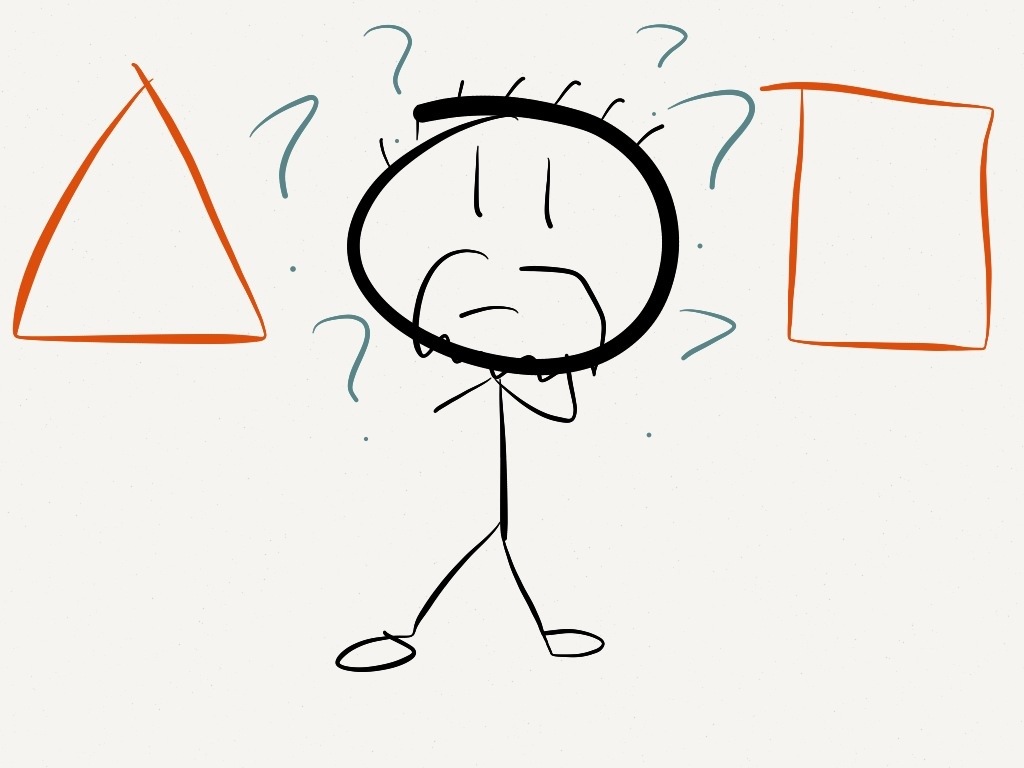
That one failure has haunted me a bit over the years, though. Despite all the other successful encounters, I still think back to that awkwardness I felt when I met Julia for the first time, and how awful I felt on the way home, thinking that all our long, heartfelt emails to one another had turned out to be essentially worthless. As those who know me well (and regular readers) will know, I am not the most confident person in the world, so to feel rejected like that — regardless of whether she had actually rejected me or it was simply my own social ineptitude that had caused the awkwardness — well, it hurt, quite a bit. As such, any time I've had the opportunity to meet up with someone I get on well with from the Internet, I've always been wary. All my insecurities and neuroses about my appearance, my personality and everything else all come out to play, and I find myself wondering if meeting is actually a good idea or not. In short, I worry the situation in the image above is what will happen.

Fact: it usually is a good idea to meet, and the situation in the image above is, mercifully, fairly rare. Look at it this way: you get on well online for a reason. For most people (those who aren't making a specific effort to troll, anyway), their online persona is a pretty true representation of the person they are — often sans any insecurities they have in face to face meetings. And if you get on well when speaking in text, it's pretty likely that you will get on in person, too.

You're doubtless waiting on tenterhooks to know whether or not Holly and I hit it off, then. (Maybe not.)

We did. We managed to easily fill several hours of conversation on a variety of topics, and both left feeling good that we'd done that. We're hopefully going to do it again before she has to depart back to far-off climes (relatively speaking). I'd call that a successful Internet Friend meetup, then, resulting in a real-life friendship. Hurrah!

So there you have it. You can make a Real Friend out of an Internet Friend. But you probably knew that already.

#oneaday Day 739: I'm Flickin' Me Net

20120128-003638.jpg

I mentioned it briefly yesterday, but I feel some good, old-fashioned enthusing about Netflix is in order. I know, I know, you American types have been enjoying its streamtastic charms for a very long time now, and us Brits have been watching enviously for the whole time (and occasionally trying to do clever things to see if we can get signed up) — but now, we have it too.

And it's awesome.

As I've noted on some post back in the dim and distant history of this blog, I'm not huge on movies. It's not that I don't like them, it's that I'd rather spend two hours at a time doing something else. I'm not sure why this is. Perhaps there's something in my brain that sets me up to enjoy interactive, rather than passive entertainment — I'll happily sit and play one game for hours at a time, after all. But that doesn't explain why I might take a new TV show discovery and devour large proportions of a season at once (see: Community). That's no more interactive than a film, and yet I have no qualms in doing that.

I think my main bugbear with movies has historically been their perceived "value" when buying them to put on your shelf. I have a bookcase in front of me at the time of writing — look, it's over there — that is almost filled with DVDs. (The bottom two shelves are console games.) Of those DVDs, the only ones that I think I have watched more than once or twice are the TV show box sets. The movies I've kept around… well, I'm not sure why, really, since I certainly haven't watched Human Traffic for a very long time, and my copy of Hot Fuzz actually remained shrink-wrapped for a considerable period, too (it was cheap in HMV, then it was on TV, so I didn't really need to watch the DVD). I guess there's some sort of curious feeling of "attachment" to many of these movies, like I remember the time I bought them and associate them with a particular period in my life. As such, it's never really occurred to me to get rid of them, even though I rarely watch them.

The age of Netflix, however, has me rethinking this. Now for a few quid a month I have instant access (assuming I have an Internet connection) to a pretty huge library of movies and TV shows. Some are complaining that the selection is a little limited at this time — and perhaps it is if you're a big film buff, but it's certainly more than satisfactory for me at the moment. And the reason I mention the "perceived value" vs "time constraints" thing above is that I've been more than happy to just sit and watch a movie on Netflix, because I know that I haven't spent £[x] on it, and have to feel obliged to enjoy it.

It's the same for the TV shows, as it happens. I've been meaning to check out Twin Peaks for a very long time, for example — even more so since I played Deadly Premonition — but never got around to picking up the DVD set. It always seemed a bit expensive for something that was — to me, anyway — an unknown quantity. Would I like it? (As it happens, I love it, 90s hairstyles and all) Would it be worth the money, or would I be stuck wishing I'd spent my £[x] on something better?

This consideration is now irrelevant. Like Spotify allows me to check out music that I might not have felt inclined to buy outright, Netflix allows me to broaden my tastes in film and TV shows without any risk of feeling like I've wasted my money. And through the "creepy" (no it's not) autoshare to Facebook facility, I have plenty of opportunity to check out what my friends are watching, start some discussions about it and become more "well read" in the media of TV and film.

So, then, fellow Brits; if you have a decent Internet connection and like watching people perform for you inside your TV, PC, iPad or iPhone, I suggest you get yourself signed up for a free trial. For me, it's been worth it purely for the iPad compatibility — Netflix on iPad in bed has revolutionised insomnia.

#oneaday Day 738: Diversifying

20120126-220014.jpg

In a recent blog post, one Ben Goldacre described Spotify's auto-sharing behaviour as "creepy" and called for greater transparency in opt-out procedures. While I don't disagree that users should have the option of whether or not to share what it is that they're doing, I do disagree with the good Doctor's assertion that showing off your tastes to others is somehow "creepy" or "wrong".

The reason I don't find it either of those things is because of discovery. Spotify is built in such a manner that it's easy to check out an artist or album you're unfamiliar with in a risk-free environment. You don't drop any money on the album directly, so if you wind up hating it, you haven't lost out. And if you end up loving it, you can whack it in a playlist or star it for future reference.

Combine this ease of trying things outside of your usual comfort zone with social features and you get a powerful tool to expand your own tastes. Because music is an ever-present part of society these days — silence, it seems, is frowned upon by most people, particularly those of more tender years — conversations about what artists are awesome are less common than they once were in the age of buying CDs (and, heaven forbid, cassettes). Music is just there for many people — a disposable thing that people may well have a strong connection to but perhaps don't always think to actually discuss,

What Spotify's sharing feature does is allow you to see what friends have been listening to and, if it takes your fancy, jump right in there and have a listen yourself. I've discovered more than a few new favourites this way, and I'm certain other people will have been curious about some of my tastes too. I don't have any objection to people seeing what I've been listening to and I'm certainly not ashamed of it. The same is true for Netflix, newly launched in the UK and nicely integrated with Facebook to allow you to share what you're watching. On the whole, I'm much more inclined to pay attention to new releases if my friends are enjoying them rather than if they're simply "critically acclaimed". See: The Squadron of Shame

Goldacre suggests that people will make judgements based on what you have been listening to, and your playlists which, if you weren't already aware, are made public by default. And perhaps people will — but the attitude I have always taken with personal taste is that it is just that: personal. If you're the sort of person who ridicules someone else just because of what music they listen to, how they dress, or their appearance… I probably don't really want to know you. Everyone is free to make their own choices with regard to what entertains them (unless, you know, if you're into something fucked up and illegal) and so people should not feel ashamed or embarrassed to share what it is that they have been enjoying.

In fairness, it's entirely possible that there is the scope for cyber-bullying among schoolkids based on what they might have been listening to with Spotify, or the content of their playlists. But there's the scope for cyber-bullying based on their photos, their status updates, all the other stuff that's on Facebook, too. This isn't excusing it. However, it does mean that Spotify itself isn't some sort of creepy bully-magnet. As with all forms of social media and teens interacting with others on the Web, it's important for parents to be involved and aware of what their offspring are up to. If it looks like causing a problem, they should be familiar with the options that are there to protect people — and Spotify has those options if, for whatever reason, sharing things does become a problem. But someone's listening habits are public by default — and why shouldn't they be? There's nothing to be ashamed of there.

Perhaps I have a naïve view of social media and sharing information on the Web. But I just don't see how sharing your entertainment consumption is particularly harmful. Sharing deeply personal information, yes. But the fact that you listened to the Lazy Town soundtrack today? For me, that's the start of an interesting conversation, not something creepy.

#oneaday Day 737: Attack of the Clones

20120125-220706.jpg

So it seems that Zynga, lords of the social gaming space, are cloning Nimblebit's Tiny Tower. This isn't the first time Zynga has ripped off someone else's game and removed all trace of personality from its visuals, and it certainly won't be the last. The different this time is that people are actually taking notice, because Tiny Tower, for all its faults — and it has many, that not even its glorious retro pixel art aesthetic can counter — was extremely popular, made Nimblebit a fair amount of money and was even chosen by Apple as its iPhone game of the year.

Zynga's new game is called Dream Heights and one of the guys from Nimblebit conveniently compared it to his game here. As you can see, it has pretty much all the gameplay of Tiny Tower with none of the visual appeal.

Now, in the mainstream games market, this sort of thing is generally frowned upon quite a bit. For all of the complaining that the big shooter franchises all look very similar, they at least try to differentiate themselves with how they play, the modes they offer and the like. Battlefield 3 offers a very different experience to Call of Duty. I don't care for either of them, but I can appreciate that each appeals to a different subsection of the audience,

In mobile and social gaming, however, developers and publishers seem to have no such scruples. In my current position writing game reviews for Inside Social Games and Inside Mobile Apps, I regularly see games that are almost identical to each other. Most of them follow the FarmVille model to one degree or another — you click on things, there's a countdown timer before you can click on them again to get a reward, there's a list of insultingly simple "quests" on the left side of the screen, you get experience points every time you exhale and, generally speaking, the game is designed to be a series of not very well disguised Skinner boxes.

Other popular genres include the growing hidden object genre, where you're sent into a cluttered room/street/train carriage and tasked with locating lists of completely arbitrary items, with scenes tied together by an often flimsy excuse for a plot. Just in the last couple of weeks, Zynga released Hidden Chronicles on Facebook, only to be followed this week by the almost identical World Mysteries from Brazilian developer Vostu. See, it's not just Zynga doing it — it goes both ways, too.

Fans of Spry Fox's fun puzzle game Triple Town on Facebook and Google+ may also want to check out Yeti Town on iOS by the obnoxiously-named 6waves Lolapps. This game has drawn criticism for ripping off Triple Town completely and releasing on iOS before Spry Fox were ready to release their own iOS version of their game. You may argue that Spry Fox should have been quicker off the mark in getting their iOS version to market, but it's hard to believe that 6waves Lolapps came up with an identical concept (not almost-identical, identical) completely independently of Triple Town.

Independent developer Vlambeer ran into this issue last year when, like Spry Fox, they were beaten to the punch on an iOS game. Gamenauts' Ninja Fishing hit the App Store shortly before Vlambeer was ready to release its own title Ridiculous Fishing, itself a reimagining-cum-sequel of its earlier Web-based title Radical Fishing. I'm very pleased to see that Vlambeer will be speaking publicly about this debacle at GDC this year.

Where does it end, though? Games are a creative art form and for all these clones to hit the market is to do the medium a disservice. You don't get books hitting store shelves where an author has simply done a Find and Replace on all the characters' names from someone else's work, nor do you get movies which are simply shot-by-shot reconstructions of another movie. We get remakes, sure, but at least those are usually reimagined for a contemporary audience — and they're being honest about their source material rather than attempting to pass themselves off as a completely new product.

This practice needs to stop. Unfortunately, cloning, it seems, is already an established part of mobile and social game development. In the long term it will only hurt everyone's business.

So devs? Be bold. Come up with an original idea. Don't call your game "innovative" if it's the same as something someone released last week, and the week before, and the week before. Try something new. Break out of established conventions. The most memorable games in the mainstream are the ones which tried something new. The moment we see a successful social game break out of the market's conventions is the same moment we'll see people willing to be a bit less cynical and a bit more enthusiastic to see what this burgeoning industry has to offer.

#oneaday Day 729: Stop SOPA, Read Books

So apparently a bunch of the Internet has blacked itself out in protest against the insanity that is SOPA. It's a move that I fully support and endorse, as SOPA is a piece of crap that, while (arguably) well-intentioned, is completely impractical with the digital world we take for granted today.

That's all I'm going to say on the politics of the matter for the moment, since there are plenty of other commentators out there who can doubtless discuss it in much greater detail than me. As a Brit, too, I'm not someone who will be directly affected by the law, but as we all know by now, the proposed measures will have a knock-on effect that could throw the whole online world out of balance.

What I wanted to talk about was how Wikipedia's blackout has affected the stupid people of the world. Not sure what I'm talking about? Give @herpderpedia a follow on Twitter and you'll quickly see what the problem is.

Wikipedia is an excellent and useful resource, of that there can be no doubt. But the level to which people have come to rely on it is perhaps a little worrying. To some people, it's almost as if Wikipedia is the only source of information. (People who think this are probably the same people who believe that Facebook is "the Internet")

There are, however, many more sources of information in the world than Wikipedia. Many more sources of information in the world than the Internet, for that matter. (Engage Old Fart mode) When I was at school, we had no Internet. Imagine that, you teenage morons! No Internet! If I got a bit of homework to "research" something, then I had to pick up an actual book and look through it. I had to know my alphabet well enough to look stuff up, and I had to know how to spell the thing I was looking up. Dark times? Not really, it was the norm; we accepted it. When the Internet came along, it was a source of information in addition to the knowledge we had in books, not a replacement. When I presented that homework to the class, it was written in my own words, showing my understanding. It wasn't a printout from Wikipedia.

And yes, when I worked as a teacher, on more than one occasion (more than ten, in fact) I received homework from students who thought that I wouldn't recognise a printout from Wikipedia. It showed absolutely no understanding on their part besides the most basic of net-savviest — an important skill in today's society, for sure, but not what I was looking for with the assignments in question.

Technology breaks. Open forms of media are unreliable. Every so often someone will come along and want to censor things. I'm not saying books are immune to these issues, but at least you can still read them when the power goes off.

SOPA sucks. Fortunately, it looks like it might not get through — though we're still a long way off victory at this time. Instead of bitching about not being able to cheat at your homework, try opening one of those dusty old books on your shelf and looking up the thing you want to know more about.

Magic, isn't it? Knowledge without electricity. Who would have thought it?

#oneaday Day 708: Stupid O' Clock

It's, once again, stupid o' clock in the morning, but this time The Old Republic isn't to blame. At least, not directly — no, instead, this evening/morning's lateness is due to the long-awaited return of the Squadron of Shame SquadCast.

The Squaddies are some of my most long-standing friends, and people I speak to in some capacity pretty much every day. I'd even go so far as to say that they're probably the best friends I have, despite the fact that we're several thousand miles apart and see each other face to face rarely — and in some cases, we still haven't met in person.

From humble beginnings as a loose community on 1up.com's message boards to a more organised "club" on the site and, eventually, cutting loose into the big wide world by ourselves, we've stuck together through thick and thin, through life's big moments and its little pleasures. And between us, we've built friendships that have endured, remained strong through various adversities, and grown stronger over the years.

This, people, is the power of the social Web. It's not about building a "voice for your brand". It's not about "engaging with your audience". It's not about "leveraging somethingorother". And it's certainly not about "monetization strategies". It's about socalisation, society, people. It's easy to forget that with the amount of information we're voluntarily bombarded with on a daily basis. We willingly subject ourselves to a barrage of stimuli from a diverse array of sources — some of which are real people acting with real honesty; others of which are real people holding up a façade in an attempt to be someone they're not; others still of which are people acting as the voice of a brand, attempting to bring a face to the faceless corporate world.

Events which transpired today showed the potentially disastrous consequences of acting as the voice of a brand, not of an individual. Ocean Market(t)ing [sic] president Paul Christoforo descended into childish insults and poorly-spelled, poorly-articulated attempts to assert his authority and regain his credibility when confronted with an irate customer. The email exchange has, thanks to its posting on Penny Arcade earlier today, gone viral, and Christoforo has become the object of ridicule. It isn't the first time this has happened, and I fear very strongly for Christoforo's future job prospects after this debacle, particularly as so many employers are now taking social media "output" into account when considering applicants for positions. Don't get me wrong, Christoforo was a dick, but is it really fair to potentially jeopardise his whole future over things that clearly happened in the heat of the moment.

Somewhere along the line, I believe we've lost our way with the social Web. We made the critical mistake of letting the marketers and businessmen take charge of something which should bring people together. Rather than situations like that which brought me and the Squaddies to each other, we get popular brands asking facile questions and the eager hordes responding in all-lowercase, thereby indirectly promoting the brand in question. We get people carefully guarding the way the represent themselves online so as to protect their personal brand. We get situations spiralling out of control, such as that seen with Christoforo and his customer earlier today.

It's not all doom and gloom, of course; to imply that the world is going to hell in a handcart purely because of the presence of marketers is foolish. But it would do many people well to, once in a while, remember what the "social" bit of "social media" really means. Does it mean telling the faceless drone behind the The Sims Facebook account that your favourite colour is indeed green? Or does it mean striking up conversation, getting together, finding new people that you want to spend time with?

I'd opt for the latter every time. And now I need to go to bed before I pass out.