#oneaday Day 924: Hey Daily Mail, This Isn't Okay, And It Isn't Funny Any More

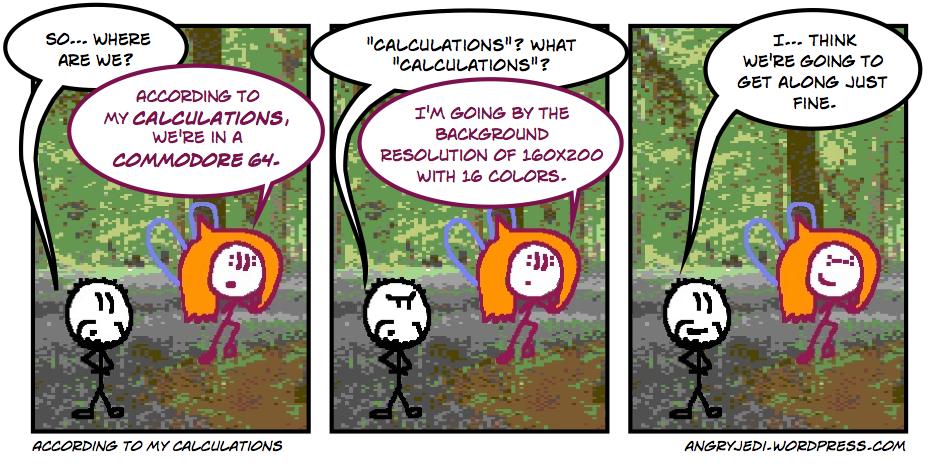
[Note: This will probably go without saying if you read the whole post, but the cartoon above obviously does not reflect my own opinions, and is a parody of what I am about to describe below.]

The Daily Mail has long endured a popular perception as the racist, old, slightly mad uncle of the British newspaper industry. Regularly spouting crap on all sorts of subjects and displaying astonishing hypocrisy on plenty of issues, The Daily Mail has always been sort of tolerated as a kind of national institution we're all slightly ashamed of — and one that we all secretly enjoy getting comically angry at.

With some recent articles, however, I think it's time that people actually started getting properly angry at the Mail. The first of these two articles is no longer available on the Mail website — presumably after a ton of complaints — but is by far the worst example of a Mail correspondent poking the fire with some frankly astounding racism. You can read the article via FreezePage here.

"The NHS did not deserve to be so disgracefully glorified in this bonanza of left-wing propaganda," wrote correspondent Rick Dewsbury as the headline to his piece ostensibly focused on the Olympic opening ceremony. He then launched into a lengthy diatribe regarding the incompetence of NHS staff in the case of Kane Gorny, a diabetic who died due to neglect by hospital staff. A tragic case, sure, but hardly evidence that the NHS — regarded by many as a rather good aspect of this country — is worthy of "shame" as Dewsbury seems to believe.

Dewsbury's article then continued on its rambling way, pausing to note that the athletes' parade featured "banana republics and far-flung destinations nobody has ever heard of or even cares for" and later decrying the "multicultural equality agenda" that he found "painful to watch."

"It was the absurdly unrealistic scene — and indeed one that would spring from the kind of nonsensical targets and equality quotas we see in the NHS — showing a mixed- race middle-class family in a detached new-build suburban home, which was the most symptomatic of the politically correct agenda in modern Britain," wrote Dewsbury. "It is likely to be a challenge for the organisers to find an educated white middle-aged mother and black father living together with a happy family.

"Almost, if not every, shot in the next sequence included an ethnic minority performer," he continued, as if this was somehow a bad thing. "The BBC presenter Hazel Irvine gushed about the importance of grime music (a form of awful electronic music popular among black youths) to east London."

Yes, there was a lot of "multiculturalism" in the opening ceremony, but here's the thing: the Olympic stadium is in the east end of London, which is a particularly multicultural part of an already very multicultural city. To deny that people with non-white skin live in London — and, for that matter, are capable of integrating with Caucasians — is blinkered at best, amazingly racist at worst. Britain as a whole is filled with a diverse array of people from all over the world, and to deny this is to deny what has become part of our national identity — something which the Daily Mail regularly claims to want to defend.

Let's get one thing clear: this is Not Okay, free speech be damned. It is Not Okay for someone to write a piece for a national newspaper's website displaying such flagrant disregard for certain parts of the population. It is Not Okay for someone to use their racism as a rather tenuous part of their argument against something which a lot of people believe is actually quite a good thing. It is Not Okay to speak of camera shots including "ethnic minority performers" in a disparaging tone, as if they had no right to be there.

And it is Not Okay to refer to a non-British Olympic competitor who happened to beat the GBR contender (who still won a medal) as "some bitch from Holland" — which is exactly what Jan Moir did in a separate piece — which also gave an undue amount of attention to whether or not certain athletes and presenters had had any cosmetic work done. (The piece is still up here; FreezePage here; a screengrab can be seen here if it does get pulled or ninja-edited, or if the FreezePage is unavailable.)

The Olympics are about the world coming together in peace and competing against one another in sporting events. It's always touching to see competitors from "rival" nations competing with good sportsmanship rather than animosity, and the whole event is, by its very nature, inclusive and — yes — multicultural. To complain about a "multicultural equality agenda" and to refer to a foreign competitor as "some bitch" is just awful. It really is.

It's obvious why the Mail does this, of course — to get hits. They know that people will get fired up and upset about these issues. They know that the articles will be shared across social networks with people making indignant comments — but they still get their page views and ad revenue every time it happens. It's become a depressingly predictable trend that people have just been putting up with until now.

But it needs to stop. Whatever "comedy value" the Daily Mail's flagrant racism once had — if indeed it ever had any — has no place in modern society. This isn't "political correctness," as Dewsbury would put it — it's just common decency, acceptance and tolerance. It's 2012. We should be over the "skin colour" and "horrible foreigners" thing by now. But sadly, it seems, some people really aren't.

Screw the Daily Mail. It's stuck in the past, just like that racist old uncle lying in his hospital bed, his bigotry tolerated because "he's old" or "he's ill" or "he doesn't know what he's saying". Unfortunately, the Daily Mail knows exactly what it is saying, which is why this keeps happening.

It's Not Okay. And it's time that those of us with a sense of common decency about us should start speaking up a bit more about this rather than just laughing it off as we have done in the past.

#oneaday Day 919: Friendship Is Magic

I've been delving a little into the Brony community recently. As an open and "out" fan of My Little Pony: Friendship is Magic, I felt it behooved me (no pun intended… all right, maybe a little) to actually try and engage with the wider community of fans. As such, I Googled for Brony communities and came across the Friendship Is Magic forum, which I promptly signed up for.

I haven't been an active member of a forum since, ooh, about 2006 or so, I guess, when I was a relatively well-known member of the Times Educational Supplement forums. They were a good place to blow off steam about educational and general life issues as well as just chatting to like-minded people from a pretty wide variety of backgrounds — albeit usually with an interest or involvement in the teaching profession. I haven't logged in there for a very long time now for a multitude of reasons, just one of which is the fact that social media has mostly taken over the functions that dedicated online communities once had.

But I was determined to make a go of it on Friendship is Magic. I introduced myself in the relevant section and started replying to a few threads. While I don't think I've made a "name" for myself as yet, I like to think that my relatively few contributions so far have been noticed — and meanwhile, it's given me a good opportunity to observe the Brony community from within.

You see, I had no idea what a "Brony" really was. Who are these people? Are they actually anything like me, or is the only thing we have in common a love of a show that is ostensibly for little girls? I was hoping to find out through joining the forum — and, as an aside, keeping an eye on the results of the intriguing Brony Study research project, which has been aiming to clarify attitudes both towards the community from without, and towards various pertinent issues surrounding the fanbase from within.

Thus far my (purely anecdotal) observations have been interesting. Bronies cover a wide and diverse array of human beings — young and old, male and female, and varying degrees removed from what society would deem "normality". Some Bronies use 4chanesque dialect ("newfags", "copypasta" et al), others use a clear, straightforward and polite means of communication. Some Bronies like to act "in character" and roleplay their original pony creations on the forum as a means of escapism; others are simply themselves; others still take the middle road and incorporate Ponyville dialect ("everypony", "fillies and colts" et al) into their posts. Some Bronies love the show and actively participate in the huge creative community that has sprung up around it; some simply appreciate the content that others have created; others have no interest in it whatsoever.

In short, there's not really a single unifying characteristic that it's possible to point to and say "that's a Brony" — besides an appreciation for My Little Pony: Friendship is Magic, of course, and a seemingly-genuine sense of tolerance, acceptance and understanding, regardless of a person's background and regardless of the depth of their affection for the show and its surrounding subculture.

Then, of course, there's Rule 34, the aspect of the fandom that tends to get the most attention from outside. (If you don't know what Rule 34 is, you need to brush up on your Rules of the Internet. Borderline NSFW and will probably offend everyone. No porn, though.) Indeed, when radio personality Howard Stern set out to explore the fandom in a recent show, an undue level of attention was given to certain parts of the community who generally prefer their activities to be kept behind a closed stable door, shall we say. This naturally and understandably upset those Bronies who don't participate in that particular aspect of the fandom, and even prompted voice actor Tara Strong (who voices series protagonist Twilight Sparkle) to defend the entire community (and particularly the "Rule 34" crowd) on Twitter.

While the "Rule 34" stuff isn't to my taste, I'm not about to denounce anyone for either enjoying or being involved in making it. It's easy enough to avoid if you don't want anything to do with it, and it's there if you do. If it's not hurting anyone, then knock yourself out, I say. Live and let live. Stern's logic was based on a flawed assumption: the idea that if one fan likes something that is seen as "deviant" in some way, then clearly they all do! This is clearly, as I've seen even in my limited dealings with the community at large, absolute nonsense. Bronies, just like any community, come from a wide variety of backgrounds and each indulges in their passions to a varying degree. No-one's approach to their fandom is "wrong" — assuming it's not causing anyone (including the person themself) any distress — and if it's a good outlet or means of getting away from the stresses of the day then, well, keep on cloppin'.

…wait, clopping means what?

#oneaday Day 914: Chinese Whispers

Twitter was angry today. There was some degree of justification — the horrific shooting in Aurora at the screening of the new Batman movie had emotions running high, and I certainly don't begrudge anyone that. But it demonstrated, once again, some of the dangers inherent in social media — a force which should, by all accounts, be a positive thing.

Misinformation spreads like wildfire on the Internet thanks to services like Twitter. People post things without thinking, without bothering to back things up with research and evidence. Journalists encourage this, with TV news being a particular offender, inviting people to contribute their own thoughts on a particularly pertinent story using hashtags. It thus becomes something of a challenge to determine exactly what the facts are, and what is simple hyperbole dreamed up by the increasingly-hysterical mass of people who suddenly all think that They Know Best.

I shan't talk too much about the Aurora shooting specifically here because I haven't read up on all the gory details myself as yet. I will refer to a couple of other recent incidents where this phenomenon became particularly apparent, however.

Most recently was the "Arctic Ready" campaign, in which Shell apparently made the amateurish misstep of opening up a slogan competition on a controversial subject — drilling in the Arctic — to the public. The "Let's Go! Social" gallery page promptly became filled with anti-drilling, environmentalist slogans and it looked, by all accounts, to be one of the most colossal fuck-ups in social marketing history.

Except that it wasn't. It was actually a genius piece of social marketing, but not by Shell. No; the whole thing was, in fact, a clever ruse by Greenpeace, who then went on to troll Shell even further by picking a "winner" from the supposed competition and putting it on a billboard right outside Shell's Houston headquarters.

It should have been pretty obvious to anyone who stopped to think about the whole thing for a moment that this clearly wasn't Shell's doing. The kind of people who handle social media marketing are generally fairly savvy sorts (though there are exceptions) and would have stepped in to deal with the mass trolling of the supposed competition. In fact, they would have probably removed it altogether fairly sharpish. They certainly wouldn't have left it up for several weeks, opened up a new Twitter account just to repeatedly request that people don't retweet "offensive" adverts and generally keep poking the fire.

Unfortunately, it wasn't obvious to a lot of people. It caught people out not once, but twice — first, when the "Arctic Ready" site first appeared, and again a few weeks later when the Twitter account appeared. People posted, retweeted and commented without stopping to think about whether or not it was real. Others who were wise to it posted, retweeted and commented about how it was clearly fake. But amid all the noise from both sides it became impossible to differentiate who was talking sense and who was simply repeating the digital equivalent of what they had heard down the pub while drunk.

The Shell incident isn't the only one either. The "Today Is The Day They Went To In Back To The Future Part II" hoax has been around twice, too. Both times it caught people out. Why? Because, again, no-one bothered to check. No-one took a moment to fire up the movie and take a look. If they had, they would have seen that the claims made by whoever started that ridiculous rumour on each occasion were patent nonsense.

It happens in journalism too, and particularly in games journalism. One site posts a "Rumour:" or "Report:" story, and others pick up on it. The content spreads and becomes somewhat distorted over time. It happened today with a story from MCV which, as it turned out, apparently misreported the facts in the first place (or rather, more accurately, posted a story with a misleading headline) and was then sourced by Destructoid and a ton of other sites. This then inspired Ben Kuchera, official unelected and self-styled arbiter of How To Do Games Journalism On The Internet, to pen this piece bemoaning the whole situation, and by God I hate agreeing with Ben Kuchera — but he had a point. With a bit of research (or indeed just carefully reading the quotes that MCV included in its own piece) it's clear that the "story" (or, more specifically, the headline) that was going around simply wasn't true.

It's exhausting at times to keep up with all this stuff, and while it's great to be able to tap the pulse of everyone at the same time on a hot topic, it's less great to find yourself in the world's biggest game of Chinese Whispers. So do me a favour. Before you blindly retweet something that seems a little "off", take a minute and check to see whether or not it's actually genuine.

#oneaday Day 909: The Internet Is As Big As You Make It

Over the years, my Internet habits have changed significantly. This has been at least partly due to changes in technology over the years, but I still find it an interesting observation to think back on how times have changed since I first "got online."

My earliest experiences were with CompuServe which, for the unfamiliar, was somewhat like an online "walled garden". It included much of the things we take for granted on the Internet today — email, topic-specific forums, places to download stuff, real-time chat and probably, if you looked hard enough, something which could be used by someone as porn. Initially, you were limited to talking only to other CompuServe subscribers, but over time access opened up: firstly to allow emailing to Internet email addresses, and eventually to access the Web proper. I remember vividly trying (and failing) to get the browser Mosaic to work with CompuServe.

At this time, since I was just a kid and living at home, my Internet (or equivalent) access was severely limited. I had to plan out what it was I was going to look at (usually the Gamers' Forum and occasional delves into the "CB Simulator" — aka real-time chat rooms — to try (and fail) to pick up girls. (a/s/l?)

Over time, the Internet opened up to all, and we were all able to gain access to the information we wanted and some we didn't. The best free porn sites were (apparently) passed around in the schoolyard; the best sites to download shareware games were common knowledge; little communities started to spring up as people figured out things like "forums", "personal homepages" and "search engines".

Fast forward to today and, with an Internet that is growing at a frightening rate, I find myself limiting what I'm doing to a very small number of sites. Despite becoming increasingly irritated with it, I check Facebook. I check my GMail. I check in on the Squadron of Shame Squawkbox if there's been a new post. I write this blog. Occasionally I might check a gaming site for news of something I'm interested in, but that's really about it. I tweet from my phone and everything else that I really want to do is covered by those sites — and Google if I can't find the information I'm looking for straight away. I find myself going around and around and around the same sites over and over, hoping that something new and interesting has come up in the five minutes since I last looked. (It never does.)

One thing I've found myself not using anywhere near as much as I used to is dedicated, specific communities. Every time I find a forum that looks vaguely interesting, I might check it out and post there for a few days and then promptly forget all about it — even if it's a community I have little doubt that I'd really enjoy being a part of. This is kind of sad, since it limits my contact with people who are specifically in to the exact same things as me, but it's primarily a result of the fact that forum software tends to not play overly-nice with mobile devices — which, nine times out of ten, is the place where I want to be casually browsing. (Okay, a lot of forums bring up that annoying popup about Tapatalk, which I've never tried and might be the best thing ever, but still.)

It's mostly a time issue. I have lots of things I want to do every day, and I rarely (no, make that never) get to do all of them. So far as "priorities" go, checking forums, posting things and getting to know yet another online community is not particularly high up the list.

Perhaps it should be. There are a lot of things I am into that I would like to talk more about with others. Without thinking very hard, I can immediately point to both My Little Pony and The Secret World as communities I would like to be more involved with. And there are doubtless more out there. When I think about how vapid and pointless 95% of the conversations on Facebook are, I do sometimes wonder if my "social" time online could be better spent in a more focused community rather than browsing creepy baby photos posted by people I haven't seen since school.

Perhaps I should leave my own prejudices at the door and jump in to one of these communities to see what will happen. You never know where new friends are lurking, after all.

#oneaday Day 902: Follow the Rules (That Haven't Been Written Yet)

I've been playing a bunch more of The Secret World today and I stand by my initial impressions that it's a significant step, nay, leap forward for the MMORPG genre. My only slight criticism would be that so far I've had very little incentive to actually play alongside other people, but 1) this is nothing unusual for modern MMOs and 2) I haven't tried any "dungeon" missions yet.

It's in the Investigation missions that I mentioned yesterday where the game truly distinguishes itself. I shall try and resist spoiling specifics at this point, but completing one today involved searching for something in the game world, finding a laptop (password-protected, natch) and then having to break into it. The clue on the computer was vague at best, and there was nothing in the immediate vicinity to help. A little exploration was required, and then some actual honest-to-goodness deduction and lateral thinking on the part of the player. It was a true case of "I wonder if this works… holy crap, it does." As I say, spoiler-free, but it involved the sort of shenanigans normally reserved for "alternate reality games". Which is impressive stuff.

What all this clever puzzle-solving leads to, though, is something of a dilemma for the community. In other MMOs, the General chat channel is the home for people asking how to do things — when it's not the home of teenage boys soliciting sex from hot female Night Elf avatars, of course. It's sort of expected that if you ask a question such as "where is quest objective x?" that you'll get a straight answer. And that's fine — a lot of MMOs are still a bit clunky on the whole "user-friendliness" part and thus often forget to point the player in the right direction, necessitating either a lot of tedious searching the game world or simply asking other players.

In The Secret World, however, the confusion inherent in these Investigation missions is part of the appeal. The sense of satisfaction when you unravel one of the game's cryptic clues is unprecedented in the usually rather predictable MMO genre. Assuming you worked it out yourself, of course — and herein lies the problem.

Players coming to The Secret World straight from titles like World of Warcraft and Star Wars: The Old Republic will come to General chat or the dedicated Help channel and pose the usual sorts of questions. One of two things then almost inevitably happens — 1) someone posts the answer and everyone then yells at them for spoilers. 2) someone posts a vague clue and the new player then gets annoyed at not being able to get a straight answer.

Actually, this is an exaggeration — so far, from what I've seen, the vast majority of the community is on the side of "give hints, not answers" and only a few people ruin that. The trouble is, if you happen to glance at General chat when one of these people is spoiling a quest solution — perhaps unintentionally — then you can't unsee it. You'll know forever that Dr Bannerman's computer password is — wait, hang on, you won't get it out of me that easily!

Funcom's GMs are apparently being pretty strict about those they catch posting spoilers in the chat channels, so hopefully the community will be "trained" out of that particular practice sooner rather than later. The trouble is, tempers often run unchecked online, meaning that some people will fly off the handle to a disproportionate degree at these spoiling types — who, in many cases, simply hadn't yet got a handle on the game etiquette. Sure, it's common sense that in a game with a heavy puzzle-solving component that people might not want to just hear the answers blurted out, but it's entirely possible for the reasons I mentioned above that people may not have considered this. Getting yelled at and verbally abused by people isn't going to help them change their behaviour — it's simply going to make them defensive and often lash out back at their "aggressors", thereby perpetuating a cycle of people bitching and complaining at each other unnecessarily.

In many ways, it's the same as in teaching. In the classroom, if you spot someone misbehaving — or if another child comes up and "tells on" the miscreant, the worst possible thing you can do is yell, shout, scream and otherwise draw attention to their inappropriate behaviour. In many cases, the child was simply seeking attention, so to succeed so completely — even if it's with negative attention — will not train them to behave more appropriately in the future. Instead, a more assertive approach is the way to play it — take the child aside and discuss quietly and discreetly with them why what they did was wrong rather than encouraging them to get upset and strike back.

Now, obviously most of the players of The Secret World are a little older than primary school children (hopefully), but this approach is still a sound one. If someone behaves inappropriately — such as by posting spoilers — it may be easy to simply publicly shame them in General chat with an "FFS" and a few choice expletives, but all that will do is make them call you a "moron" (or worse) and ensure that you both end up on each other's Ignore lists. Instead, a simple, polite private message explaining why what they did was inappropriate or unacceptable is the way forward. No malice, a simple — but assertive — desire to help them out and make the experience more pleasant for everyone involved. Easy, right? Well, it should be. In practice it doesn't always work that way, but people will settle down over time as the "norms" of the game community are established.

The way online communities interact with one another is something that's always been fascinating to me, and the fact that The Secret World is even running into this issue at all shows what a big shift away from conventional, predictable MMO thinking it really is. The community is going to have tom come up with established conventions and ground rules — perhaps policed by GMs in the early stages — and those used to a different set of norms will have to adjust and adapt appropriately.

Anyhow. That's that. If you haven't figured it out already, The Secret World is most definitely worth your time and money, particularly if you have the slightest interest in Lovecraftian horror, or if you enjoyed Funcom's adventure titles The Longest Journey and Dreamfall. While it has its flaws and its bugs, it's certainly a far more interesting experience than the vast majority of other online titles out there, and I recommend you give it a shot — even if you're not normally into MMOs.

#oneaday Day 892: In Memory of Floppy Drives

20120629-015705.jpg

I was struggling to think of something to write about until an offhand comment on Twitter got me thinking about, of all things, floppy disk drives.

I miss floppy disk drives.

No, wait. Bear with me. Not in practical terms — I'm sure no-one misses the days when games had a whole disk just for their intro sequence, or the era when Microsoft Office came in a box roughly the size of a Borg Cube — but in terms of… of… you know what? It's hard to describe exactly, so let me just wax nostalgic about a few things.

I used to find something oddly comforting in the sound of floppy drives whirring away doing their thing. Every floppy drive sounded different, too — the ridiculously huge 810 drive for the Atari 8-bit computers snarked and farted; the later 1050 was a little quieter (though had squeaky mechanical parts sometimes); the external floppy drives for the Atari ST made a pleasant frog-like croaking noise; the internal Atari ST drive was subtler, giving the occasional chug; and the drives in our first PCs were pretty quiet, putt-putt-putting away, usually installing something.

Their uses varied over the years, too. Up until DOS and Windows-based PCs started to take off as a serious gaming platform and required you to install everything, pretty much all software ran directly from floppies, making it necessary to have lots of those big plastic disk boxes (inevitably full of pirated software) — organised alphabetically if you wanted to remain sane. In practical terms, this meant things often took quite a long time to load, which brings us to something that is all but forgotten these days except in the most inefficiently-programmed and/or massive video games: the loading screen.

Loading screens used to be the place where the graphic artist for the game could really let rip and show off what they could do with the limited colour palette and resolution of the hardware they were working on. My most fondly-remembered loading screens were the work of Herman Serrano, a dude who could really make the Atari ST sing. (Visually. Whatever the visual equivalent of singing is. Oh, be quiet.) He did good loading screens for companies such as Argonaut and Psygnosis, and always signed his name prominently on them, which is something you don't see these days, either. Often they were just pixel-by-pixel recreations of the box art, but sometimes there were variations, and it was fun to look carefully at them, pick out the details and spot the occasional Easter eggs. You didn't have much choice, really, since there was nothing else you could do while it was loading.

While games still ran from floppies, loading breaks — now considered to be a thing of great evil that should be avoided at all cost — were considered something of a perk, as they generally indicated that you had done something good. This was true whether you were playing an Infocom text adventure on the Atari 8-bit or a LucasArts adventure on the Amiga. If the disk started chugging immediately after you did something, you were usually on to a winner. (Unless you were playing a Sierra game, of course, in which case it was entirely possible it was simply loading one of its many elaborate death scenes for your long-suffering character.) Some emulators of old systems even allow for the simulation of these loading breaks for the fully-authentic experience — though without the sound of a disk drive chugging away it loses something.

So yes. I miss floppy drives. I don't begrudge the 21st century's massive storage capacities and lightning-fast access, of course, but I do miss that comforting feel of sliding a disk into a slot with a satisfying "clunk", turning the computer on (yes! Remember having to turn the computer off every time you wanted to run something else?) and then sitting listening to the distinctive mechanical whirrs, groans and farts of the disk drive as it loaded whatever it was you wanted to play or use.

Rest in peace, floppy drives. You're missed!

#oneaday Day 888: Avatars, Masculinity, Femininity, Wish-Fulfilment, Self-Expression and Fantasy

20120625-020219.jpg

My fine friend Jenn Frank (for my money, one of the most interesting people on the Internet, given the many and varied conversations we've had over the years) reminded me of a discussion we had back in 2009. You can find it in the comments here.

Basically, the discussion centred around "avatars" — custom characters that you design to represent yourself online or in a video game. I raised the point that, generally speaking, if given the option, I would go for a female character. There then followed a discussion about the reasons for this.

I'm trying to pin down the reasons for this in my own head and there are lots of them. It's not a simple thing. I can't discuss any of this from a feminist perspective as I'm not well-read enough in feminist theory, nor indeed do I know enough about gender studies and whatnot to draw any firm conclusions. I do, therefore, apologise to those more "in the know" than me if any of this post comes across as ill-informed — but I'm not trying to write an academic paper, here. What I am trying to do is "think out loud" and explain myself a little. Then doubtless someone will come along and make some incisive interpretations of my words. (That or call me something uncomplimentary. Or both.)

Let's start with a little context. I am a man. I identify myself as male and have all the appropriate dangly bits to back up this assertion. (Actually, I feel weird when I hear parents talk to their kids and refer to me as "that man" but that's a whole other issue to do with how mature I do/don't feel.)

Despite my self-identification as male, I don't do many things that I (personally, I mean) would equate with the amorphous and stereotypical concepts of "masculinity" or "maleness". I don't like sports (I particularly loathe the soccerball), I have only a passing interest in cars, I prefer to avoid conflict (and particularly the threat of physical violence) whenever possible, I am not very assertive and I have never been sexually aggressive. On the flip side, I like "geeky" things, I certainly wouldn't turn down the opportunity to drive a fast "small penis compensation" vehicle such as a Ferrari and I find "traditionally beautiful" women sexually appealing. Naturally, there is nothing to stop women from liking any of those things I've just described (and indeed I know plenty of women who do), but let's, for the sake of argument, call them stereotypically "masculine" or "male" things.

Conversely, I do do many things that I (again, using my own personal definitions, stereotypes and prejudices rather than more fair and balanced definitions thereof) would regard as "feminine" or "female". I am emotional and sensitive (though I find expressing some emotions such as excitement to be difficult), I like to talk about feelings and innermost thoughts with people I trust, I enjoy My Little Pony, I respond strongly to works of art (particularly music, film and games) designed to elicit an emotional reaction and, as a child, I always preferred solitary imaginative "narrative-style" play rather than group physical activities.

Somewhere between those two extremes, too, is the fact that I am extremely introspective — to a fault, sometimes — and find myself relentlessly examining myself (not physically, except, you know, every so often to make sure I don't have bollock cancer), attempting to predict the future of social interactions or going over past interactions in my head. I'm not sure if that's a stereotypically male or female thing to do, so I'll call that a neutral influence for now.

On the whole, though, I think the more "feminine" influences in terms of the way I do things and respond to things tend to win out. As a result, despite being comfortable, secure and happy in the fact that I am male (there are things about myself I am not happy about, of course, though those have nothing to do with gender) I find myself somewhat drawn to the female perspective on things. Not exclusively, obviously, but that influence is most certainly there.

Now let's look a little about avatars and what they mean.

An avatar is how you choose to represent yourself. It might be in public if you're playing an online game or using a social network, or you might be the only person seeing it if you're playing a single-player role-playing game such as, say, Dragon Age.

There are several ways you can approach the creation of an avatar, and I find myself doing them all at different times.

Firstly, there's self-expression. Your avatar is used as a means of expressing something about yourself. It could be simply depicting yourself as literally as possible, or it could be using an image to demonstrate how much you like something.

Secondly, there's wish-fulfilment — using your avatar to change your self-representation or idealise yourself.

Thirdly, there's pure fantasy — going completely off-piste and into the depths of your own imagination.

For self-expression, I can think of a number of examples. I use my real picture in a few places, though as someone who is not overly confident in their own appearance I generally try and avoid this whenever possible. Instead, very often I'll use images of things I like to represent myself as — the most frequent ones to appear in the last few years being Phoenix Wright from the Ace Attorney series and Fluttershy from My Little Pony. I use Phoenix Wright simply because I think he's a great character and love the series he's from; I use Fluttershy as a projection of my own real-life social anxiety.

For wish-fulfilment, the best example I can think of is back when I used to spend a fair amount of time in online virtual world Second Life. My avatar there was like me, but not quite. He had a skin that looked like me, but his body shape wasn't as fat. He had hair that I could plausibly pull off, but would never have the guts to ask a hairdresser for. Personality-wise (for it is impossible to play Second Life and not find yourself playing a role to at least a small degree) he was like me — open and honest, a bit shy in new situations — but more confident in who he was than the "real" me. In short, he was my own idealised view of myself — the person I wanted to be. I learned a few things from him, though not enough to overcome my considerable arsenal of neuroses. I was happy inhabiting his skin, because he was me, with a few tweaks here and there.

For fantasy, I turn to everything else. The first time I played a female character in a video game was the original Baldur's Gate. At the time, I didn't have any sort of ulterior motive in mind, I just thought it would be an interesting change from the usual musclebound male hero. Of course, in Baldur's Gate, your choice of avatar is largely confined to the portrait you use, the colours you have on your armour and the voice set you use, but nevertheless, this is where it started.

Thus "Amarysse" was born, and this remains the name I have used for pretty much all my female protagonist characters in every RPG I have played since. (If she has a surname, it's always "Jerhynsson", because "Jerhyn" was the name of the only minor character from Diablo II I could remember. There is literally no logic more complicated than that at work, though I'm not sure why I chose Diablo II as source material.)

Amarysse doesn't have a specific personality as it depends entirely upon how the protagonist character in these RPGs has been written, but, depending on the customisation options I have access to, she usually has long red hair, a curvy (though not fat) figure, a lot of charisma (in BioWare titles, this means taking as many points in Persuasion as possible… always) and a seductive voice. She is several things to me: firstly, and most shallowly, she's my fantasy woman in every respect; secondly, she is all the things that I am not. She is female, attractive (according to self-perception — I have a distorted and negative view of my own aesthetic value meaning I consider myself unattractive even though I know there are people who disagree), confident, assertive, dominant, in control, flirtatious and often sexually aggressive should the game provide the option to act in such a manner. She kicks ass, takes names and isn't afraid to say exactly what she wants, in short. I admire her a great deal, both from a shallow, libido-led red-blooded heterosexual male perspective, and from the angle that I wish I "was her".

I've taken this somewhat further on a couple of occasions in Second Life (though not for a good couple of years now) by creating a female avatar alongside my "regular" male one. (She's not called Amarysse Jerhynsson there, though, so don't go looking for her.) This female avatar began as an experiment. Second Life is about doing whatever you want, after all, so I decided I wanted to see what life was like as a woman. I wasn't going to be a man playing a woman; so far as everyone who met my female avatar was concerned, I was all woman. No-one ever called my supposedly female gender into question once, despite the fact that I said prominently in my profile that I would not talk about my "first life" (a Second Life term to describe "reality") at all — which, in the strange world of Second Life, usually means that people have something to hide. I even made a few friends (all female — or at least represented as such) in the process, though eventually I felt bad about deceiving them and disappeared quietly.

My conclusions from playing this female avatar were interesting. Like Amarysse's many forms, this avatar was pure fantasy. But since there was no prescripted "narrative" to follow, I had to choose how I was going to represent her. This attractive, curvy redhead didn't look like the sort of person to be a shy, retiring wallflower (especially not in the clothes she tended to wear in the locales she frequented) so it made no sense to overlay my real-life (or wish-fulfilment) personality over the top of her. Instead, I decided that here was a woman who was confident in herself and assertive enough to walk into the middle of a room and simply start talking to someone she liked the look (or profile) of. Sometimes she was ignored, sometimes she got into a good conversation, sometimes things took an altogether different turn which we shan't get into here. The important thing is that it felt different to be her. I wasn't me, suffering from crippling social anxiety when faced with the prospect of talking to strangers. I was this strong, confident woman. When ignored or rejected, it didn't hurt, because that wasn't what she would feel — even if it was what I would feel. She was not only my fantasy woman, but she was also my own fantasy personality — perhaps the person I wished I could be, or simply a person I knew that was very different to who I was. I'm not sure.

Anyway. There is a point to all this, at least I think there is: the reason I like to play female characters. I've already said it, actually, but I'll repeat it for good measure. There are two reasons, in fact: firstly, it's a simple, shallow expression of my own fantasy woman; secondly, it allows me to truly be someone that I am not in almost every way possible. I habitually use games as my primary form of recreation and a means of escapism, so I find a good way of escaping everyday life and the things I don't like about myself is to play someone that is so completely different from me. I don't feel any "dissonance", though; it simply becomes an alternate persona.

Perhaps the character traits of my fantasy female characters lie dormant within me after all, and all I need to do to feel better about myself is figure out how to coerce them to the surface. I did, after all, say at the beginning of all this that I identify more strongly with the stereotypically "feminine" aspects of my personality than the "masculine" ones (and, as I've said, I use those terms loosely as gender definitions are somewhat fluid in this more enlightened world we live in today) so perhaps there's something to this.

Working all that out, however, is probably something best left to someone with a qualification in psychology!

#oneaday Day 885: Foul-Smelling Vagina

20120622-013552.jpg

There, that got your attention, didn't it? Mention a stinky faff in your headline and everyone suddenly takes note. I'll remember that for the future.

Anyway, I do actually sort of want to talk about fragrant fannies today, but not in quite the way you might be expecting. I am instead referring to the social media backlash which "intimate hygiene" product line Femfresh encountered today on its Facebook page.

There were a number of reasons that Femfresh drew the ire of the Internet community today, but one of the most common complaints was its cover photo. Here it is:

Apparently, it seems a lot of ladies find the company's seeming inability to use "adult" words for their respective minges somewhat patronising — and before I go any further, I will point out that my use of various offensive euphemisms throughout this post is purely for facetious comedy value (and variety) rather than any ulterior motive — and thus took umbrage with Femfresh's page as soon as they saw the top of it. (Quite what they were doing on it in the first place is their business and their business alone.)

Not only that, but it seems that on the whole (shush!) women are, in fact, rather well-educated about what is and isn't appropriate to smear over or stick up their flange. "Bacterial vaginosis" is the result of using the wrong things, it seems, and no, I haven't Googled that because I don't want to. Don't let me stop you from doing so, however, if you're curious. Just don't come crying to me if Google Images decides to serve you up some tasty treats.

Anyway. Here are a few choice comments from the public:

"I call it a vagina because I'm not 12 years old and because I love it I'll go nowhere near this vile 'care range. Cheers."
— Holly Rae Smith.

"Are you kidding me? Trivialising something innately precious by calling it something so thoroughly ridiculous offends me and, believe it or not, all the posters on this page. Did you not perform any market research on this area and then develop a communication and marketing strategy? It appears not otherwise you wouldn't have received such an insane backlash on your attempts to flog a thoroughly unnecessary and damaging product…"
— Helen T

"Just to clarify, is Femfresh for vaginas or vulvas? Because your ad says vagina, which implies your product is a douche, in which case you're advertising a harmful product. If it's for vulvas only, change the words you're using to make it clear."
— Kirsten Hey

I shan't talk any more about the science of quim because I'm not a gynaecologist (I can, however, spell gynaecologist without using spellcheck) but I will focus on the larger issue here, which is that social media advertising campaigns can and will go very, very wrong if they're not thought out effectively. Instead of simply advertising their (apparently controversial) product, Femfresh made the mistake of attempting to engage with their "fans" when there was really no need to. By actively encouraging people to comment on their posts (and by posting vapid, patronising nonsense) they essentially brought about their own downfall. Everyone has been talking about Femfresh today, and they haven't come off too well. "All publicity is good publicity" doesn't really apply when the vast majority of those "publicising" your product are pointing out proven health risks.

The broader issue here is that social advertising should not be "essential" as so many advertisers seem to believe it to be. On Facebook, you can "Like" everything from HP sauce to a favourite video game. Doing so used to simply be a means of self-expression — quite literally, demonstrating that you liked something. Now, publicly "Liking" something is inviting the brand in question to bombard you with crap, ask you asinine questions at all hours of the day in an attempt to "build a community" around things that really don't need a community built around them. If people honestly think that their lives are going to be enriched when they click "Like" on the page of a thing that they're quite fond of, they are sorely mistaken.

Those who have "Liked" (or at least come across) Femfresh have taken a stand against this sort of pointless nonsense that is infesting social media like, well, bacterial vaginosis. In this case, it's because the advertising was both patronising and inaccurate. For less contentious products, it's going to be harder to train people to not be corporate shills — the last post on Pepsi's Facebook page has 1,094 "likes" and 74 comments, for example, none of which say anything remotely meaningful — but it seems we're starting to see a backlash of people who are no longer willing to be an unpaid part of a product's promotional team. I've certainly started "unliking" pages on Facebook that post nothing but pointless questions or fill-in-the-blank exercises rather than useful information (although seriously, what "useful information" could the official social media presence of HP Sauce ever really give you?) and I'd encourage others to do so too. This form of social advertising adds nothing of worth to society and, as Femfresh have seen today, can be completely counter-productive for the brand in question. (I guess there's an argument for the fact that today's debacle may have educated some women about bacterial vaginosis, but still.)

I'll leave you with this:

#oneaday Day 876: Gamers, Men, Everybody... Stop Being a Dick

20120612-233522.jpg

I have mentioned these issues a couple of times over the past few days but I've come to the conclusion that they're actually making me feel a bit depressed. I know that there's little point in getting depressed or upset over "the way the world is" and there are far bigger problems in the world, etc. etc. but, I mean, wow. Something really needs to be done.

I am referring primarily to the treatment of Anita Sarkeesian, better known on the Interwebz as Feminist Frequency, the author of a number of feminist perspective critiques on popular culture. Sarkeesian recently launched a Kickstarter campaign to fund her newest piece of research and criticism, dubbed simply "Tropes vs. Women in Video Games". The proposed series of videos Sarkeesian is intending to produce will deconstruct the most commonly-seen female character tropes in video games, highlighting recurring patterns and discussing them rather than simply pointing the finger and going "LOOK! THIS IS BAD."

The response to Sarkeesian's campaign was both good and bad. On the positive side, the campaign was fully funded in the first 24 hours, and since that time a number of "stretch goals" have been smashed, allowing Sarkeesian to produce a much larger amount of content than initially proposed.

On the negative side, this happened. And this happened.

I really shouldn't be astonished by things that people say on the Internet any more, given that it is widely regarded as a wretched hive of &c &c despite all the lovely and intelligent people who also populate it. But these incidents really bothered me. They happened quickly and relentlessly… and they were clearly organised — likely by noted Internet cesspits 4chan and 9gag. This fabulous piece by Foz Meadows sums up the key aspect of the problem, I think: in attempting to defend themselves against accusations of sexism, misogyny and the promotion of a rape culture, those who deliberately and maliciously harassed Sarkeesian resorted to, you guessed it, sexism, misogyny and the promotion of a rape culture.

Sarkeesian's suffering isn't in any way the only time this has happened, of course, though it may have been the most high-profile one in recent weeks. The Hitman: Absolution trailer I mentioned a few posts ago stirred up plenty of controversy, and anyone speaking out against it tended to get shouted down by people who couldn't see the problem with it in the most abusive manner possible. Disagreements and differences in taste; threatening others and calling them abusive names because of those disagreements is not.

Even princess of geekdom Felicia Day wasn't immune to this bullshit. Her recent video "Gamer Girl, Country Boy", released as part of her entertaining "Flog" series on Geek & Sundry, attracted a swarm of completely unprovoked hateful comments. The hornets' nest had already been stirred up, so another target for their ire was just a happy bonus. Whatever you think of Day's past work, it should be clear to most people that there's clearly not a malevolent bone in her whole body, and the whole incident clearly upset her very much. I'm not "white knighting" here, it's a clear and simple fact. Who wouldn't be upset by an organised campaign to troll and flame something you'd worked hard on?

All of this is just a bit much to take. I've always been someone who likes to try and see the best in people — to a fault, really — but to see that some people hiding behind that ever-present veil of anonymity prove themselves to really be complete and utter cunts doesn't make me feel great. Obviously my own take on the matter pales in comparison to what Sarkeesian, Day and anyone else who has suffered at the hands of these trolls must be feeling about all this, but it's genuinely upsetting to know that there are people that vile and disgusting out there — people who supposedly share the same passions and hobbies as I do.

It needs to stop. That will only happen with concerted efforts from everyone involved, and it goes back to what school always told you about handling bullies. Be assertive, but not aggressive. Tell the bully that what they are doing is upsetting and unpleasant. And tell someone else. Don't be afraid to talk about it. Don't suffer in silence. Because while someone (or, indeed, a thrown-together Internet lynch mob) being a complete arsehole can utterly ruin your day, week, month, year, it's infinitely worse if you have no-one to turn to for support.

Let's stamp this odious attitude out. Freedom of speech is one thing; using said freedom to intimidate, harass and silence others is not its intention. I fully support and endorse Sarkeesian's Kickstarter campaign, and while I won't insist that you do so too, I would certainly like to encourage you all to stand up to bullying when (not if, sadly) you see it happening — even if it's not directly involving you. Good Samaritan and all that.

Above all, don't be a dick. And if it all gets a bit much, then pay this site a visit.

#oneaday Day 872: Haters Gonna Inspire Worldwide-Trending YouTube Videos

I really love it when someone I know achieves success with something. That's why it was so utterly delightful to see something that a friend from university worked on gradually spread around the world today.

I am talking, of course, about this video, which if you haven't watched yet… well, you just should. (Probably NSFW.)

I don't know Isabel Fay (the lead performer) directly, but I do know one Mr Tom Hopgood, who co-produced the piece and has worked very hard with Isabel and the rest of the team at Clever Pie TV to produce some high-quality comedy skits over the last few years. Today, it seems, all that hard work really paid off.

I watched it happen over the course of the day. Another university friend shared the video. I expected this. But then someone who, to my knowledge, had no direct connection to Tom or Isabel shared the video, which surprised me. Then I shared it after watching it and finding it hilarious.

Then I went and did some work. As the day progressed, I saw the video start appearing in various tweets along with Facebook and Google+ posts.

Then Stephen Fry shared it, which is pretty much a guarantee that you're going to be a sudden global sensation, at least temporarily. Sure enough, a lot of the YouTube comments indicated that Stephen Fry sent them.

As it gets close to bedtime, I see more and more people still sharing it, including other unrelated Twitter followers. It truly is something which has spread worldwide and has enjoyed universal appeal among everyone I know online. This is delightful to see.

It's especially delightful to see as it was absolutely perfectly timed. I have a feeling it was just a happy coincidence that it happened to appear on everyone's radar today, but after reading this depressing post over on Feminist Frequency regarding the harassment, misogyny and silencing tactics the author had endured after promoting her upcoming research and video series, it just seemed perfectly, perfectly apt. Perhaps the fact that hateful comments on the Internet are very much at the forefront of people's minds right now meant that it resonated more than it might have done otherwise.

Or, you know, perhaps it's just a great piece with an infuriatingly catchy melody.

Whatever the reasons were for the video enjoying the success it has done so far (and still is — Twitter mentions of it are still flowing in even as I type this) don't really matter, though. I'm absolutely stoked for Isabel, Tom and the rest of the Clever Pie gang, and though I haven't seen Tom for a large number of years now I'm very proud to say that I have both known and worked with him. I have photos to prove it and everything.

I hope this is the beginning of something really big for Clever Pie. If they can continue to tap into relevant topics like this, then they've got it made. "Thank You Hater!" manages to be both topical and timeless at the same time — Internet trolls are always going to be an issue, but they're particularly prominent in people's minds right now for various reasons.

Enough gushing. Time for the weekend. Have a good one, everyone.