1906: Tune Out, Jump In

There's something to be said for "unplugging" to various degrees now and again. Some people take this to an extreme and go out into nature without any electronic devices chirruping in their pocket; others might take a more modest approach. But it's a good thing to do now and again, particularly when it comes to the always-on nature of the modern Internet.

I wrote a few days ago about how I'm coming to resent my phone and the compulsions it gives me to pick it up and check it even if nothing interesting is happening on the Internet. Between Reddit and Twitter — I've successfully purged almost all trace of Facebook from my life — I find myself drawn to look at what people have been saying, even if it's been literally minutes since I last did so. There's rarely anything interesting going on, to be perfectly honest, and even on days like today, where there was a temporary brouhaha over one of Polygon's staff members having conveniently acquired the domain name for an upcoming new Lego game the day before it was announced (hmm…) it's questionable as to how much "value" all that sort of thing is actually adding to my life. (Though I guess you could say the same about anything.)

Since my Xbox 360 controller bit the dust last night, meaning I can't play Final Fantasy XIV this evening — I've been playing with controller for far too long to ever be able to switch to keyboard and mouse, even temporarily — I decided to curl up with my Vita and spend some time with a game I've had on the go for quite a while but still not got around to finishing: Senran Kagura Shinovi Versus. I also decided that I was going to sit and play it with headphones on rather than playing through the Vita's admittedly not-all-that-bad-but-still-nothing-compared-to-something-good internal speakers. I also decided that I was going to concentrate on it and not even think about grabbing my phone during loading breaks.

It will doubtless not surprise you to note that the experience was considerably enhanced by the combination of these factors. The use of headphones meant I could enjoy the game's excellent soundtrack and voice acting to the full without disturbing anyone — and also without anyone or anything disturbing me. In turn, this "cutting myself off" from the outside world through headphones made it a lot easier to not give a shit about anything my phone was doing. And by not fiddling with my phone during any sort of downtime like loading breaks or whatever, the whole thing was considerably more immersive.

I've long been a fan of playing games on headphones, ever since I first discovered Wolfenstein 3D and Doom had true stereo sound. It's cool to play on a big speaker system, sure, but sometimes nothing at all compares to being able to completely shut yourself off from everything going on around you and lose yourself in something entertaining and immersive. It doesn't have to be a game, either; it could be a podcast, an audiobook, a favourite album — the important thing is making sure that you're free of external stimuli, and can simply concentrate fully on the thing you're trying to give your attention to.

So now, having broken my concentration to come and extoll the virtues of this practice for you all, I think you all know what I'm going to head back upstairs and do right now.

No, not that, you filthy pervert. (Insert predictable comment about Senran Kagura here.) I'm off to go and see how the Gessen Girls' Academy story of Senran Kagura Shinovi Versus ends. I may be some time!

1906: Waifu Wednesday

There's a sort of tradition among anime and game fans on Twitter — well, game fans who are into the Japanese end of the spectrum, anyway — called Waifu Wednesday, which is often used as a simple excuse to post lots of pictures of anime girls the posters in question find attractive, but sometimes also used as a means of celebrating a favourite character for more than just their physical appearance. Perhaps their story arc resonated with the person who posted it. Perhaps they simply liked them as a person. Perhaps they represented an ideal they wanted to aspire to. Whatever the reasons, Waifu Wednesday is a thing, and, well, why not here too?

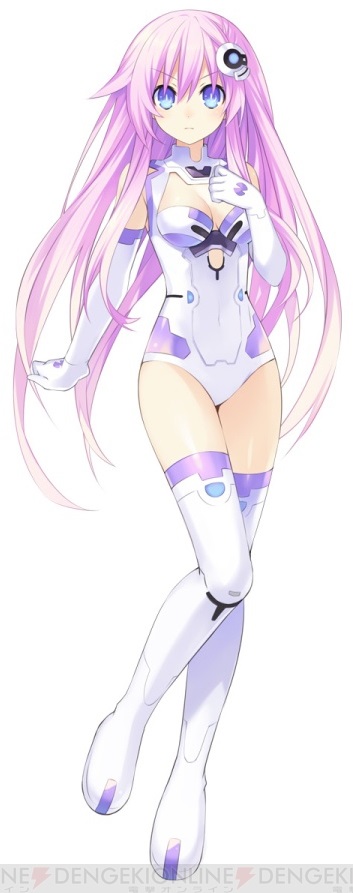
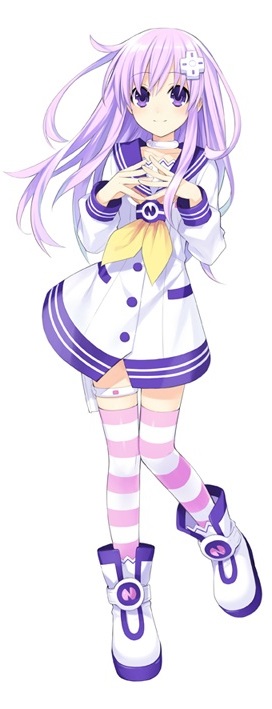
Nepgear-mk2For today's Waifu Wednesday, then, I think I want to talk about Nepgear, pictured to the right.

Nepgear, as those of you paying attention to my deviant, disgraceful taste in video games will already know, is the protagonist of Hyperdimension Neptunia mk2 (and its recent remake Hyperdimension Neptunia Re;Birth2) and the sister of series protagonist Neptune. Specifically, she's Neptune's younger sister; in the series' tradition, she is the personification of a specific game platform, in this case the Sega Game Gear to Neptune's… well, Sega Neptune.

Nepgear isn't the only younger sister character to make an appearance in the series. Sony PlayStation personification Noire — who you better believe will be the subject of a future post like this, because she's one of my favourite characters in the series aside from Nepgear here — has a younger sister called Uni, who represents Sony's handhelds the PSP and Vita. Nintendo Wii personification Blanc, meanwhile, has two younger twin sisters called Rom and Ram, who between them represent the two screens of Nintendo's handhelds the DS and 3DS.

The fact that these characters are personifications of well-known brands and platforms is one of the most well-known things about the Hyperdimension Neptunia series, but it's also one of the least important things about them; it makes up little more than their concept and, in some cases, influences aspects of their design or basic personality type.

The reason I like Nepgear so much is because I can see a certain amount of myself in her. Obviously I'm not a young, pretty, skinny girl — I'm pretty much the exact opposite of her in that regard — but I find her personality and the way she goes about her business to be eminently relatable. Why? She's awkward, she's nerdy, she's lacking in self-confidence and often finds herself the butt of jokes: these are all traits I became aware of in myself when I was younger, and which persist to this day.

It's not just about "negative" traits, though. Although often doubting her own abilities, for example, Nepgear is someone who will try her very best and follow through on a plan when she makes it, even if things don't go entirely as envisioned. She tries hard to do the right thing in all situations — though doesn't always succeed — and makes an effort to bring people together and ensure they are getting along with one another. Obviously she then goes on to fight giant robots and evil goddesses and whatnot, which are parts of my life that haven't happened as yet, but, without wanting to sound too arrogant, for the most part she represents some of the aspects of myself that I actually quite like.

Nepgear-full_form-transform_formAside from the relatable aspects, Nepgear is just an altogether pleasingly wholesome character; she's cute, sure, and in her transformed "Purple Sister" form (left) she ups the sexy quotient considerably, but she has never been a character that attempts to take advantage of either her cute or sexy aspects.

Instead, well, I've already used the word wholesome above, but it really is the best way to describe her. She's someone who is very pleasant to spend time in the virtual company of, and she's just plain nice. The kind of person who would always have tea and cake for you if you stopped by; the kind of person who remembers your birthday; the kind of person who does random acts of kindness without any expectation of reward — and who often doesn't receive any kind of reward for her hard work.

In many ways, poor old Nepgear is one of the most "normal" people in the entirety of Hyperdimension Neptunia, and she suffers a bit for it. There's a running gag in the games that followed her starring role in mk2 where she's paranoid about everyone thinking that she's "boring" and, when you compare her to the other characters in the series — particularly the pure, unbridled chaos that her sister Neptune tends to create in her wake — it's perhaps easy to see why she worries.

But even if she goes unappreciated in her own dimension(s), certainly appreciate Nepgear, and thus it's with pleasure that I give her the dubious honour of a Waifu Wednesday post on this little backwater blog.

1905: Gr8 B8 M8

At the time of writing, the biggest hotness in gaming — at least so far as the press is concerned — is From Software's latest game Bloodborne.

Bloodborne is a big release for Sony's PlayStation 4 platform and the latest unofficial installment in the notorious "Souls" series that previously brought us Demon's Souls, Dark Souls and Dark Souls II. (And, if you're a From software purist, the King's Field series, too.)

The Souls series is one that I have tried on a couple of occasions to get into, but never really managed to click with. I played a bit of Demon's Souls when it came out after I heard a friend enthusing about it — I was particularly enamoured with its creative online features — but set it aside quickly after I became frustrated at having to repeat the same 30 minutes of gameplay over and over and over again just for, in some cases, taking a wrong turning and running into an enemy that is, I later learned, intended to act as a signal that You Should Not Be Going This Way. I tried it again recently and got a little further, but didn't really feel much in the way of incentive to go back — it's very light on explicit narrative (although very strong on implied narrative), and I'm someone who pretty much needs an explicit narrative push as an incentive to continue playing something — so I'm probably going to call it a day where I am. I decided to give the series another go when Dark Souls first appeared on PS3 and Xbox 360, but found myself similarly frustrated and not really enjoying myself, and consequently I haven't touched Dark Souls II and have no intention of ever playing Bloodborne.

All this is a little besides the point I want to talk about today, but I just thought I'd slot it in anyway for context. The short version is that while I respect the Souls series for what it's doing, I don't really personally enjoy it. And that's fine; I don't expect everyone to enjoy every game out there, but at least to give things a chance before writing them off. And, for me, the Souls series has had its chance, but I certainly don't begrudge anyone who does enjoy it their enjoyment.

Instead, what I did want to talk about today relates tangentially to the Souls series — and specifically Bloodborne — right now, but is a fairly widespread issue at any given point. And that's the fact that, given the majority of the Internet's continued reliance on ad-based revenue models, if something is the latest hotness, then that thing needs to have the absolute shit covered out of it to ensure people keep coming back day after day to, in theory anyway, devour every little piece of Bloodborne (or whatever the latest greatness is at the time you're reading this if it's far in the future) information that there is out there… even if said information isn't particularly interesting or adds anything meaningful to broader gaming discussion.

The reason I bring this up is today I saw a headline on one site that simply read something along the lines of "You can complete Bloodborne even if you've never beaten a Souls game". Now, that may be true — I can't comment with any authority on whether Bloodborne is more or less accessible than the Souls games — but frankly, I'm not sure I really care, and thus I don't really know who this article is for. The people who like Souls games are probably on board with Bloodborne already, while the people who don't like Souls games — like me — have had three games (plus DLC) to try and learn to love them; in other words, if they're not already on that train, they're probably not taking that trip.

Again, though, the amorphous audience that article is for is besides the point: it's a symptom of the aforementioned issue where whatever is "big" at any given moment has to have hundreds of articles written about it at every opportunity, even if said articles don't really add anything to broader gaming discussion. And the sole reason is to try and attract people to the page and consequently earn some ad revenue. It is, in theory, providing people with the content they "want" to read, but in fact it's more focused on the potential revenue that can be brought in by the eyes on the page.

Clickbait, in other words, though perhaps not in quite such a hyperbolic manner as sites like Buzzfeed and its ilk employ.

For a business, it is, of course, important to try and make money through appropriate means. But in doing this, the online press — and the games press in particular — does a disservice to its audience, because unfortunately when you're writing informative articles or criticism, you can't simply ignore your audience and focus on the bottom line, because otherwise you'll end up without an audience. And it may be the case that the audiences for a lot of sites really are lapping up anything Bloodborne-related with aplomb, however vapid it might be. But I know I'd much rather see two things than the situation we have at the moment, where every major site's front page is practically interchangeable with one another: I'd like to see different sites covering different games at different times, and I'd like to see much broader coverage of the medium as a whole, perhaps with more sites specialising in particular genres, subject matter, types of game or even theoretical/ideological viewpoints.

In order for that to happen, though, we need a fundamental rethink of how we consume content on the Web, and a fundamental rethink of how content creators can make money from that content. Because as wonderful as it is for people to do things "for the love", it would be even more wonderful for people to be able to make a living out of doing the things that they enjoy — and that they're good at. At the moment, people who are writing for sites are mostly slaves to the SEO stats, with occasional exceptions, and that's a real shame.

We are starting to see steps in the right direction, at least. Services such as Patreon, IndieGogo and Kickstarter provide alternative means for people and companies to get some money coming in. Several sites have experimented with subscription models, with varying rates of success. And the audience's growing dissatisfaction with the big names in the business over the course of the last couple of years has encouraged smaller sites to take some bold steps to distinguish themselves and make themselves unique: specialising and declaring that they're going to focus on a particular type of content; listening to what the audience says it wants (and, importantly, doesn't want!) and providing that rather than relying on provocative clickbait or predictable coverage of The Latest Big Releases; exploring alternative revenue streams other than just ads; and giving voices to people — and viewpoints — outside the sometimes rather incestuous-seeming echo chamber that is the inner circle of professional games journalism.

We're certainly a far cry from the golden age of newsstand games magazines, where individual publications had very distinctive voices, styles and ways of covering games. I don't know if we'll ever be able to go back to something along those lines, but I'd much prefer it to what we have today.
1902: Further Adventures in Gamarket

As I continue to make progress through Hyperdevotion Noire, it becomes more and more apparent that the team behind the Neptunia series as a whole simply loves gaming. And there are few places where this is more apparent than in Tsunako's wonderful character designs and the series' trademark sharp writing that brings them to life.

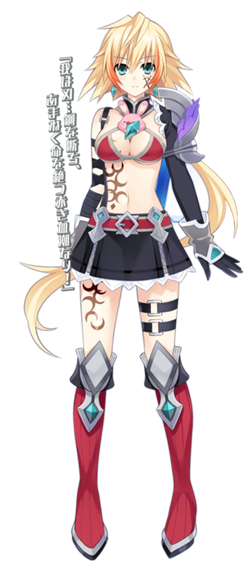
einalTake Ein Al on the right here. As you can probably infer from both her name and design, she is intended to be the personification of the Final Fantasy series.

Her hairstyle and green eyes are intended to call to mind past (and arguably most famous) Final Fantasy protagonist Cloud Strife from Final Fantasy VII, while her asymmetrical costume is reminiscent of the clothes worn by the cast of Final Fantasy X, particularly that of protagonist Tidus (for the asymmetry) and central cast member Lulu (for the use of belts and buckles in places you perhaps wouldn't normally find them).

There's a recurring crystal motif on her jewellery and the accents on her clothes — anyone who has been playing Final Fantasy for some years will be familiar with the crystal imagery used in most installments — and the single "wing" on her left shoulder is presumably a reference to the series' most famous final boss anthem, Final Fantasy VII's wonderful One Winged Angel. Meanwhile, the rabbit-like creature on her chest is clearly an homage to the series' recurring "Moogle" creatures, who often provide some much-needed levity to the games' typically serious storylines.

But Ein Al's homage to her source material doesn't stop with her appearance; as previously noted, it extends to how she is written, too. Introduced to the player as she's partway through a rather childish battle of one-upmanship with the character Estelle, who personifies the similarly long-running game series Dragon Quest, we quickly discover that Ein Al has a flair for the overdramatic — some might call it melodramatic — and often finds herself called out for being incomprehensible due to her insistence on staying "in character" at all costs. It's not a coincidence that both of these things are criticisms that are regularly levelled at the Final Fantasy series as a whole, and of course her intense rivalry with Estelle mirrors the longstanding feud between diehard fans of both Dragon Quest and Final Fantasy, with each believing that their series of choice is somehow "best".

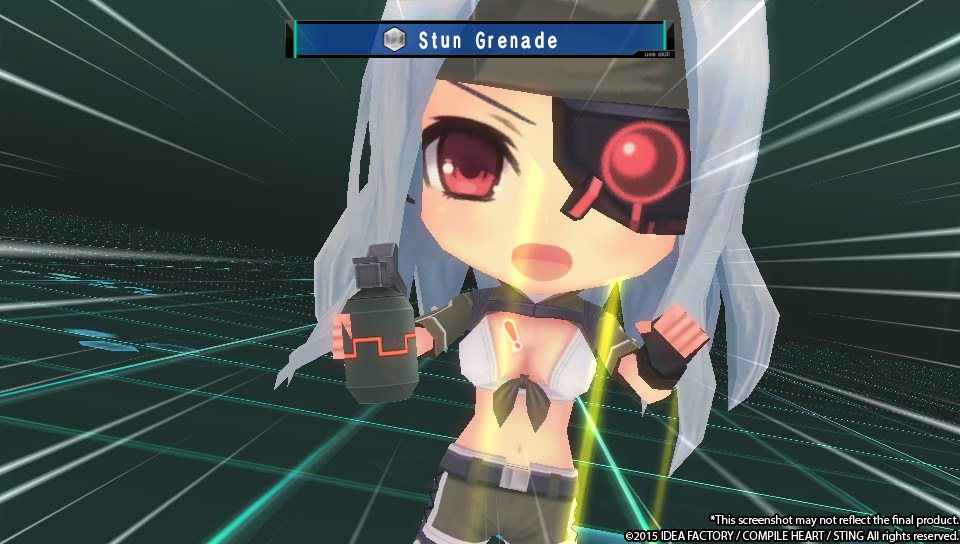
lidHyperdevotion Noire is packed with characters like Ein Al who beautifully encapsulate their source material while being their own entertaining figures in their own right. Lid, pictured to the left, is another great example. She personifies the stealth-centric Metal Gear series with obvious visual elements such as her cybernetic eye, bandana and use of the exclamation mark motif — a recurring visual element in the Metal Gear series, much like Final Fantasy's use of crystals — on her breast tattoo, but also reinforces this with more subtle character traits like her habit of mispronouncing words when she is stressed or nervous — perhaps a reference to Metal Gear Solid 2's notorious "Fission Mailed" section which is deliberately designed to confuse, upset and stress out the player.
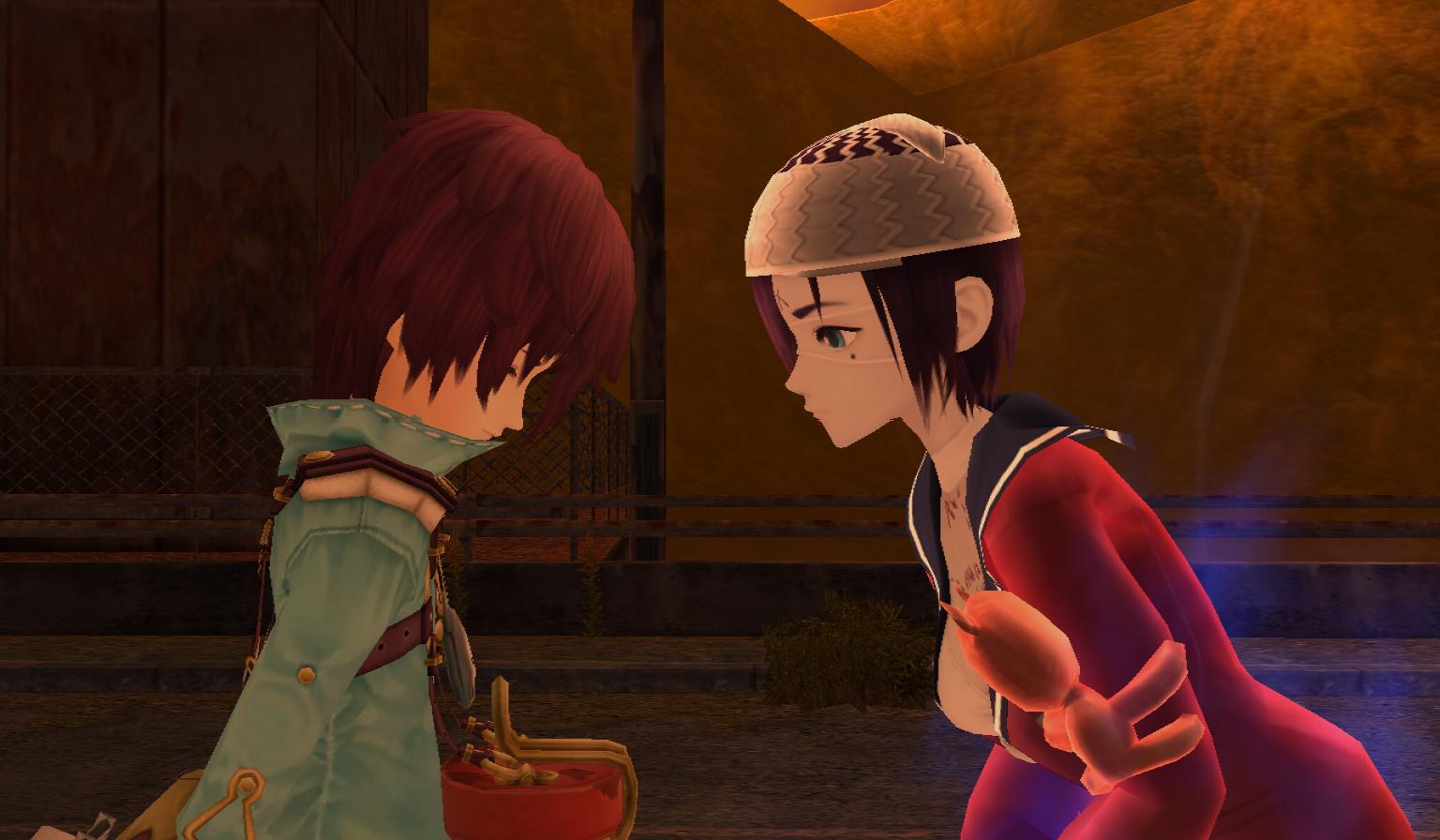
Lid's homage to her source material carries across into her game mechanics, too. She's a character who excels at being away from the front line, instead preferring to attack from afar using throwing knives and stun grenades — and, like her counterpart Solid Snake from the Metal Gear Solid series, she makes creative use of cardboard boxes to conceal herself and incapacitate the enemy with surprise attacks. In the mission where you first encounter her before you recruit her, you have to play appropriately stealthily to even get near her; careless movement will put you in the line of fire of devastating cannons, much as not having full awareness of your surroundings in Metal Gear Solid tends to lead to a quick and painful death even at the hands of the game's most "grunt-like" enemies.

Hyperdevotion Noire is a little different from the mainline Neptunia series in that there's a little less focus on the central goddesses — who each personify the major console platforms rather than individual game series or companies — and more focus on a large cast of these incidental characters. Each of the game's chapters focuses on a few of them and explores them in enough detail for those who are familiar with the source material to give a knowing smile while simultaneously making them appealing characters to those who are just enjoying them at face value. After that, they're into your party, and the game moves onwards at a pleasingly brisk pace without getting too hung up on any particular characters. It's a rather "episodic" approach, and it works rather well; those who make use of favourite characters and build up their relationship values in combat are rewarded with short bonus scenes, too, so it's not just a case of the characters joining the party and then being completely forgotten about.

This right here is the main reason I love the Neptunia series. It's easy to dismiss it as silly, boobylicious fanservice, but like so much else tossed aside like that by mainstream critics, there's a hell of a lot more going on there than you might think. And I will continue to enjoy it for as long as they keep making them.

1900: 20th Century

Post 1900. Feels like a significant number. I feel I should do something significant, but I'm not sure what.

Perhaps a reintroduction for those who are just joining me, and an explanation of what that "1900" is all about.

Hello. I'm Pete. I've been writing on this blog every day for the past 1900 days. It initially started as a Twitter-based challenge called #oneaday in which the participants were challenged to write absolutely anything every day for a year. I joined a little late, only hearing about it midway through January of 2010, but I decided it was something I wanted to be a part of, so I jumped in. Not everyone who started made it to the end of the year — hell, some people didn't make it to the end of January — but I did. So I carried on. And on.

And now here I am, over five years later, still doing this for my own amusement more than anything else, but also as a means of self-expression, catharsis, stress-relief or simply a place to enthuse about things I'm excited about when no-one else wants to listen. I do that last one a lot.

The last five years have been a rocky road, and not in the pleasant chocolatey way. I'm still in the midst of a fairly unpleasant time of my life thanks to not currently having a regular source of income after a series of unfortunate and horrible episodes of being screwed over, though hopefully the income situation will change soon following some recent events.

I live in a house that I own with my fiancee Andie; we're getting married in June of this year. We have two rats called Clover and Socks. We would like either a cat or a dog, but haven't decided which yet, and figure the former in particular might be an unwise choice while the rats are still around — which hopefully they will be for at least a little while yet.

I'm a musician. Piano is my first instrument, and recently I actually bought my first real (albeit cheap and slightly battered) piano, having been getting by on an electric piano for the last few years — it's just not the same. I also play the clarinet and saxophone; just recently, I've been doing some clarinet teaching for the first time in years in some local primary schools. While sort of fun, it's also been reminding me why I don't want to go back to classroom teaching ever — oh, yes, I'm a qualified classroom teacher with a specialism in music.

I play a lot of Final Fantasy XIV. My character's name is Amarysse Jerhynsson, and you can find her on the Ultros server. To my surprise, Andie started playing a little while back and now possibly plays even more than I do, even coming raiding with me on Sunday nights.

I love Japanese games. I often celebrate them on this blog, but also write about them in more detail on my other site MoeGamerI set up MoeGamer after being laid off from Eurogamer offshoot USgamer last year. I don't get to update it as often as I'd like to — at least partly because lots of Japanese games are pretty long and I like to have beaten them before I write about them in detail! — but it provides a means of continuing the thing I enjoyed best about my time at USgamer: my weekly JPgamer column, in which I regularly enthused about the Japanese games that other publications ignored at best, ridiculed at worst.

Aside from Final Fantasy XIV, I am currently playing Hyperdevotion Noire and Senran Kagura Shinovi Versus on Vita. I am absolutely loving both. Noire is a surprisingly competent strategy RPG (or unsurprisingly, if you're more familiar with developer Sting than I am) featuring characters who have become firm favourites over the last couple of years. Senran Kagura, meanwhile, continues the series' tradition of blending enjoyably cheeky fanservice with genuinely good stories about the nature of good and evil, what it means to be a shinobi and how you go about finding your place in the world.

I am fat. I have recently started attending Slimming World sessions and have so far lost over 2 stone in 10 weeks, so that's going quite well. I don't know if I'll be able to keep up that pace, but if I can get even vaguely close to my self-imposed target I'll be happy.

I am depressed, and have lost at least one job as an indirect result of this. Recently, I finally plucked up the courage to go to the doctor and talk about it. The doctor complimented me on my thoughtful, philosophical attitude towards it — she caught me on a good day — and prescribed me some anti-anxiety meds. I can't say whether or not they're actually doing anything yet, but, well, baby steps and all that.

To the person who came to this blog by searching for "video games with a lot of pantyshots", may I recommend the Dead or Alive series, Rival Schools on the PSone, Senran Kagura, and any visual novel that errs on the side of "eroge" without getting into weird shit.

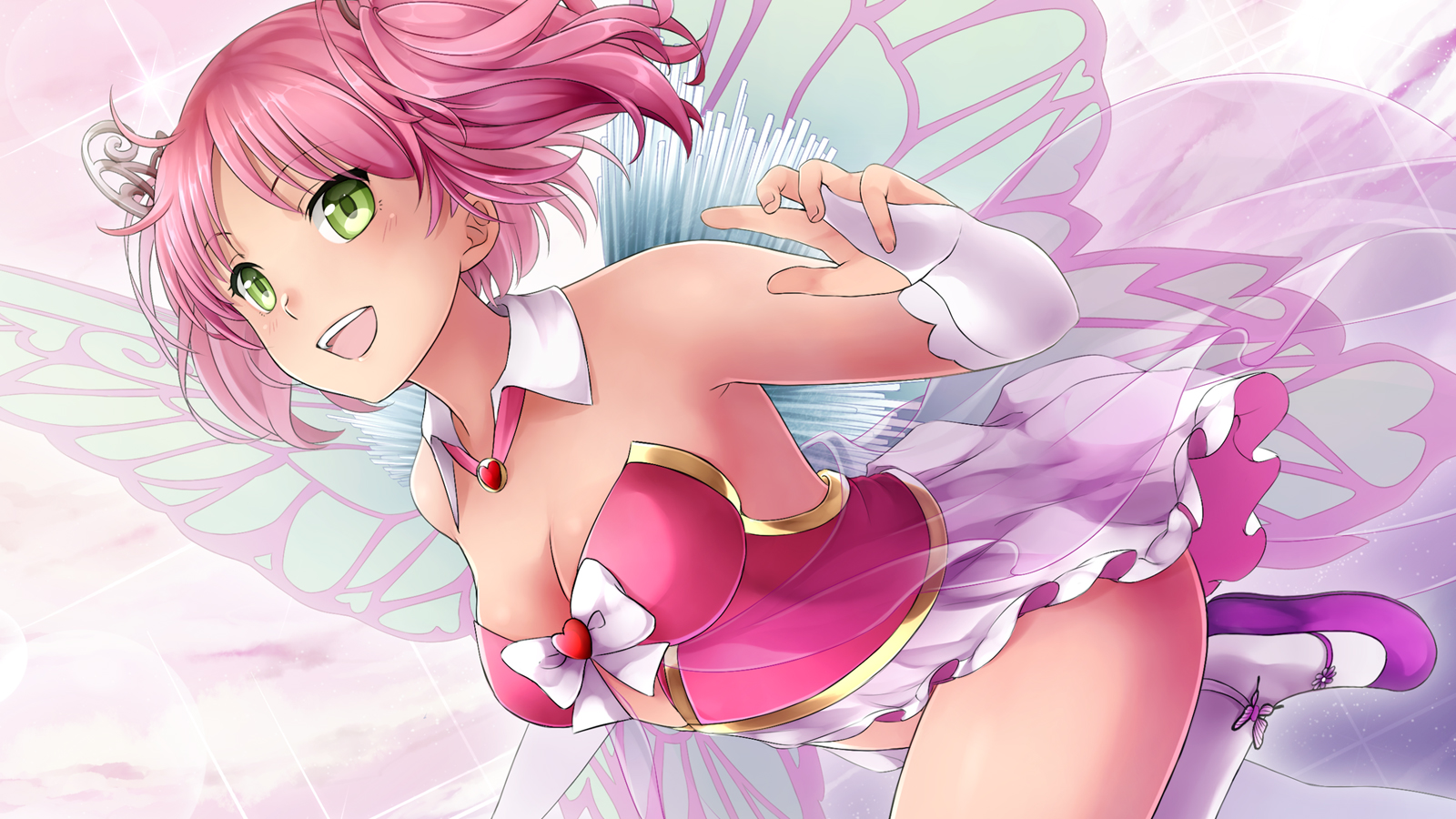
To the person who came to this blog by searching for "huniepop kyu", this is for you.

This is Kyu, the magic fairy who's going to make you better at talking to girls.

To the people who have been following along for the last 1900 days, thanks for indulging me for so long. To the people who have joined me recently, hello, welcome, and perhaps you understand me a little better now.

1898: A Realm Concluded

It was an interesting day for Final Fantasy XIV today, as it saw the release of Patch 2.55, also known as Before the Fall Part 2. This was a highly anticipated patch primarily for the fact that it promised to bring the A Realm Reborn storyline to a conclusion as well as set up the events of the upcoming expansion pack Heavensward, due out in June.

So far as "game content" goes, there wasn't a huge amount of new stuff in this one — the main attraction was the one new Trial on the Steps of Faith, which we'll talk a little about in a moment. But "content" was never really the intention of this patch; it was always intended to be a narrative-centric patch to send off Final Fantasy XIV version 2.x with a suitable bang and prepare the playerbase for what might await them in Heavensward.

I shall endeavour to refrain from major spoilers in this post, but a few mild ones may slip in.

The storyline for Before the Fall Part 2 primarily concerns the Dravanian Horde's initial assault on the isolated land of Ishgard, a nation which was once part of the Eorzean Alliance alongside Ul'Dah, Gridania and Limsa Lominsa, but which subsequently closed off its borders and effectively locked the majority of its people inside its city walls. The Dravanians — who are big fucking dragons — have been making incursions into Ishgardian territory for some time thanks to a longstanding war between the two nations, and indeed the adventurers of Final Fantasy XIV repel their attacks on a number of occasions through the dungeons you challenge over the course of your career.

This time it's different, however; there's rumblings of one of the Great Wyrms making an appearance, and before long due to various unfortunate circumstances and villainy, the Ishgardian protective wards on the giant bridge The Steps of Faith are under assault from Vishap, probably the biggest enemy in the entire game, and his assembled Dravanian forces. The new Trial sees you and seven companions battling Vishap as he makes his inexorable progression across the Steps of Faith, hopefully taking him down before he breaches Ishgard's last line of defence.

Following the pattern of past patches, this big battle (and it's a pretty huge, quite challenging battle) isn't the endpoint of the story; far from it, in fact. The overall conclusion to the A Realm Reborn storyline is quite genuinely shocking, surprising, dramatic and emotional. Oh, and long; the game warns you before triggering these cutscenes that you're going to be sitting and watching for quite some time. It's a worthy watch, though, and it drives home the fact that on the whole, A Realm Reborn has done a significantly better job with storytelling than pretty much any other MMO out there. You'll care about these characters and what happens to them — be it triumph or tragedy, and for sure there's a bit of both in the ending.

The finale isn't perfect — some have already criticised the parts where it takes agency away from the player character, though it didn't personally bother me all that much — but it forms a fitting conclusion to A Realm Reborn, bringing a sense of closure to the storylines that have been running for the last couple of years now while simultaneously building anticipation for Heavensward through the introduction of some new characters, the reintroduction of some we haven't seen for a while and an extremely intriguing cliffhanger right at the very end.

Now all we have to do is wait until June to find out what happens next… although in the meantime, we still have the Final Coil of Bahamut to defeat, so I'm sure that will keep us busy until the expansion arrives!

1897: Ruins of the Moon

It occurs to me that I never gave some final thoughts on Fragile Dreams after I finished it the other day, so I shall do my best to rectify that right now. There will be spoilers ahead!

Fragile Dreams wasn't a particularly outstanding game from a mechanical perspective — its use of the Wii Remote and Nunchuk combo made combat in particular extremely cumbersome, a fact not helped by the extremely limited repertoire of moves available for each weapon and the seeming inability to dodge quickly — but it nonetheless proved to be a consistently compelling experience from start to finish.

Fragile Dreams also didn't quite match up to its own ambition in storytelling: the final hours descend somewhat into your fairly typical "madman wants to destroy the world" (in this case, destroy the world again) scenario, and the overall plot itself is riddled with holes and inconsistencies. But again, this certainly didn't diminish from the overall experience.

Fragile_Dreams-thumb-550x361-27947

Fragile Dreams was an oddly beautiful game. Despite being a low-resolution Wii title, it looked good. It had a distinctive aesthetic all of its own, and immediately set itself apart from other post-apocalyptic adventures by the simple use of colour and contrast throughout. There's a fair amount of crawling around in the dark by torchlight, but the game sensibly breaks this up with some colourful segments. Escape from a subway system earlier in the game and you're treated to the gorgeous, rich colours of dawn in the sky. Pick your way through a forest to a secluded hotel and you're surrounded by lush greenery. It's a far cry from the greys and browns that usually come with the post-apocalyptic territory, and it made the game less of a chore to play than the trudging through endless wastelands of something like the Fallout series.

There were some interesting characters, too. Much of the story is about protagonist Seto's desire to find someone with whom he can share his experiences — to laugh, to cry, to point out how beautiful something is. The characters he does run into throughout the course of the story all provide him with a certain degree of companionship, but none are quite the same as actual human company.

First he runs into what appears to be a piece of military hardware called "Personal Frame" or "PF", which has its own artificial intelligence and personality. PF provides good company for Seto for a few hours as he explores, and it's clear that Seto starts thinking of "her" (for although she looks like a backpack-mounted radio, she has a female voice) as a friend. This friendship is cut short, however, when PF's battery runs out and she "dies", leaving Seto all alone once again.

Then he runs into Crow, a somewhat androgynous-looking boy who appears to have cats' eyes and fangs. Crow initially antagonises Seto by stealing his locket — which is full of precious memories, including a screw he took from PF's "body" — and this results in a chase all over the abandoned theme park Crow calls home. Crow eventually admits defeat after taking a nasty fall from the park's Ferris wheel; seemingly against all odds, he survives, and claims to accept Seto as a friend, even going so far as to steal his first kiss because "that's what friends do" — something which Seto is somewhat surprised by, but which he doesn't reject outright. It becomes clear that all is not quite right with Crow, however, as many of the things he says are direct quotations from a children's storybook Seto finds a little earlier; indeed, Crow's true nature is revealed later when Seto discovers him slumped in a room with hundreds of discarded robotic bodies: Crow is indeed a robot, and their budding friendship is once again cut short as his batteries expire, leaving him, like PF, as an empty shell devoid of life and consciousness.

fragile-dreams-screenshots-11

Seto's next encounter is with Sai, the ghost of a young woman who appears to have committed suicide or at least succumbed to a drug addiction; this isn't made outright explicit, but can be easily inferred from the pills scattered around her dead body and the syringes, tourniquets and other paraphernalia littering the room. Sai doesn't mention this and Seto clearly doesn't understand it, so nothing more is said; the two develop a close and honest friendship as a result, with Sai accompanying Seto for most of the rest of the game from this point onwards. Again, though, although Sai and Seto become fast friends, it's not quite the same as real human company for Seto; in a heartfelt speech to Sai, Seto admits that he just wants to share his experiences with someone else, to feel their warmth, to feel like he isn't alone, and for that, a ghost just isn't going to cut it, hence his game-long search for the mysterious silver-haired girl Ren.

The characters are all interesting, unconventional and have plenty left open to interpretation, and this is something of a pattern for the game as a whole. One of the strongest pieces of narrative design in the game comes through the use of "memory items"; bits and pieces of junk that Seto comes across in his journey that have the last memories of the dying world's inhabitants infused into them somehow. Some of these are mundane, some of them are profound, some of them form part of a larger story, some of them hint at the truth behind the situation in which the world finds itself. There's a sequences of recollections between a young woman whose legs became paralysed when she was a little girl and her botany-obsessed childhood sweetheart Mao that is particularly heartbreaking, for example.

After a while, then, you start to build up a very vivid mental picture of the game world both as it exists now and as it existed prior to the disaster that wiped everyone out. It's pretty bleak and lonely, but also fascinating to explore, and one of the most interesting things about the experience is how many unanswered questions it leaves at the end. Whether this is intentional or simply due to the writers not having thought about it — a bit of both, I feel, if an interview I read a few days ago is anything to go by — doesn't really matter in the end, since it's this thought-provoking nature that will keep you thinking about Fragile Dreams long after you've finished it.

1896: Mastering War

Ahead of the release of Final Fantasy XIV's expansion Heavensward, I've been levelling some of the other classes that I either haven't touched or had only levelled a little bit. Today I reached level 50 on my fourth battle class: Warrior. (My previous 50s were Black Mage, White Mage and Paladin, in that order; I now play Paladin more than anything.)

Warrior is one of the two tank jobs in the game — i.e. their job is to maintain the attention of enemies and get punched in the face so the rest of the party doesn't get punched in the face. Having gained a lot of experience with how Paladin does things, I have to admit I was somewhat skeptical about how different Warrior could possibly be. After all, their reason for existing is the same, and it's not like damage-dealing classes where you can make a distinction between ranged and melee characters; a tank is, by its very nature, a melee class.

I've been pleasantly surprised by how different it feels, though. This is down to several factors, both mechanical and aesthetic.

On the mechanics front, Warrior initially appears to be a more complex class to play. Whereas Paladin only really has two main "combos" of abilities to worry about — one for single-target threat generation, one for maintaining your stock of MP so you can keep aggro on larger groups — Warrior has several more, each of which has its own function. There's a basic aggro-generating combo that is the backbone of your single-target tanking, but there are also two combos that branch off the damage-increasing "Maim" skill, one of which reduces the enemy's damage output, another of which reduces their resistance to a particular kind of damage while increasing the healing you receive. Alongside this, fighting as a Warrior in your tank stance builds up stacks of "Wrath" which, when they reach five, can be expended for one of several special abilities.

So, to put things simply, there are more buttons to press as Warrior — or, more accurately, more different combinations of buttons to press according to the situation. Paladin is mostly about managing your defensive abilities to mitigate as much damage as possible; there's still an element of this with Warrior, but it's a much more aggressive, active class with self-heals and attacks that inflict various status effects.

Aesthetically is the other big different. Although most classes in Final Fantasy XIV work off a 2.5 second global cooldown (i.e. 2.5 seconds has to elapse before you can use another ability) and consequently play at the same "pace", Warrior and Paladin feel worlds apart due to their animations and sound effects. Paladin's sounds are higher in pitch, the animations more fluid; Warrior's animations look more cumbersome and make lower-pitched, heavy-sounding impacts. The reason for this big difference is the difference in weapons, of course — Paladins use a one-handed sword and shield, while warriors use axes as big as themselves — but it's surprising quite how pronounced the contrast is between the two classes, even though the basic "pace" of how they play is very similar.

Having got Warrior to 50, I'm not sure if I'll do much more with it, but I'm glad I've experimented with it and now have the flexibility to use it in endgame content when I want to. Overall I prefer the faster-feeling fluidity of Paladin, plus I know that class a lot better and thus feel more confident using it in difficult fights, but I'm not going to rule out a bit more axeplay in the future!

What's next? Probably Bard, which I've already got to level 40; while a ranged DPS like my Black Mage, Bard plays very differently owing to the fact you don't have to stand still to use abilities and don't have as much of a set skill rotation as Black Mage does. After that it's on to the classes I haven't used much or at all before: Monk, Dragoon, Ninja and Arcanist (which becomes both Scholar and Summoner).

1895: More Noire

Been playing some more Hyperdevotion Noire today, so I make no apologies for spending another post talking about it.

I am enjoying it a whole lot so far, and although I'm still relatively early on in the game, the interesting mission and map design is starting to shine through as the game adds more and more map gimmicks and mechanics to take into account while playing.

Of the last few missions, I've played, for example, one saw my party of four (Noire, Neptune, Vert and Blanc) fighting against the emphatically-not-Chun-Li-oh-wait-she-clearly-is "road pugilist" Lee-Fi. She was on the far side of a large arena whose walls were electrified, which means that knockback attacks had a use beyond simply getting enemies away from you. Some of the floor was electrified, too, necessitating careful route planning and an understanding of the game's "orientation" system, whereby the direction a character is facing when they start moving (you can change it freely) determines the initial direction they move if the target space is not in a straight line from their current position.

This was followed up by a fight against the emphatically-not-Solid-Snake-with-tits-oh-wait-she-clearly-is superspy Lid, whose battlefield was riddled with booby-traps, necessitating, again, careful navigation while fending off her supporting units. Two strips of the battlefield are also covered by large, heavy damage-dealing cannons, too, though once you notice that they can only fire in a straight line immediately in front of them it's easy enough to avoid them.

This was then followed by a battle against the Agarest-inspired character Resta, who was on the other side of a huge chasm, the only means of traversing which was a rickety railway carriage that could only hold three of your four party members at once. Resta also has an absolutely devastating super-move which obliterated my party in a single turn by dropping giant explosive bunches of bananas on their heads, so after my second "Game Over" of the game (the first being not paying attention to the cannons in Lid's stage) I realised that it was essential to take her down in a single turn and not get distracted by her supporting units, since the mission objective was simply to defeat her, not everything on the map.

Thus far the game has put up a reasonably stiff challenge. The first couple of missions are deceptively simple, but beginning with the Lee-Fi fight, things have been getting noticeably more difficult — and a little more gradually than most Neptunia games, which are somewhat notorious for inconsistent difficulty spikes throughout most of the experience, then becoming ridiculously easy once you pass a particular level threshold. The difficulty hasn't been insurmountable, though, and the new mechanics have been introduced gradually enough that I haven't felt as overwhelmed as I have done in similar games like Advance Wars and Fire Emblem, where I often can't work out why my strategy failed when it inevitably does. Here, failure seems to generally be the result of not paying enough attention — and given that you can examine all the units on both sides of the battle before you start fighting, there's really no excuse for the mistakes I have made up until this point; I've certainly learned to carefully survey the battlefield before charging in now!

I've always quite liked tactics games and even finished Final Fantasy Tactics way back in the day, but Hyperdevotion Noire is the first one I feel like I'm understanding a little better. It's designed well, plays well, looks great and features probably my favourite cast of characters in gaming. What's not to like?

1894: Goddess Black Heart

Finally got around to firing up the rather grandiosely titled Hyperdevotion Noire: Goddess Black Heart today, and I'm pleased to report that thus far it appears to be excellent.

scr15

For the unfamiliar, Hyperdevotion Noire is another installment in my perennial favourite game series Hyperdimension Neptunia, or more accurately, it's one of several "spinoff" games that have broken free of the main continuity… not that Neptunia has ever been a series particularly concerned with internal continuity. In other words, it stands by itself as its own self-contained story, though naturally you'll probably get more out of it if you're already familiar with the characters and concepts involved.

Unlike most of the Neptunia games, Hyperdevotion Noire puts, oddly enough, PlayStation personification Noire in the leading role. Unfolding in a separate, parallel setting to the main Neptunia games (the land of "Gamarket" instead of "Gamindustri"), Hyperdevotion Noire opens with Noire dominating much of the world with her superior military might, army of generals (each of whom represents a well-known game series, such as the Metal Gear-inspired girl named "Lid" seen in the screenshot below) and overwhelming support from the people. Unfortunately, her position as top dog isn't to last; after being tricked into releasing the power of her "Shares" — the source of a Goddess' power in the Neptunia universe — monsters run amok in her city, people disappear and her once-trusted generals start fighting among themselves. It's up to Noire — along with the rest of the Neptunia gang, who show up pretty near the beginning of the whole affair — to sort out the mess she had a part in creating, find out who the mysterious woman "Eno" who set these events in motion is (hint: she looks uncannily like recurring series villain Arfoire) and ultimately unite Gamarket.

It's up to you, meanwhile, to take care of Noire and help her out as she goes about her business. Yes, like fellow spinoff Hyperdimension Neptunia: Producing Perfection, Hyperdevotion Noire puts the player in the game as a first-person protagonist rather than simply telling the story of the main cast. Recruited as Noire's secretary shortly after meeting her, you're tasked with managing the party, strategising in battle, renovating and decorating Noire's headquarters and helping her make appropriate policy decisions as the citizens of Lastation come to her with requests.

scr19

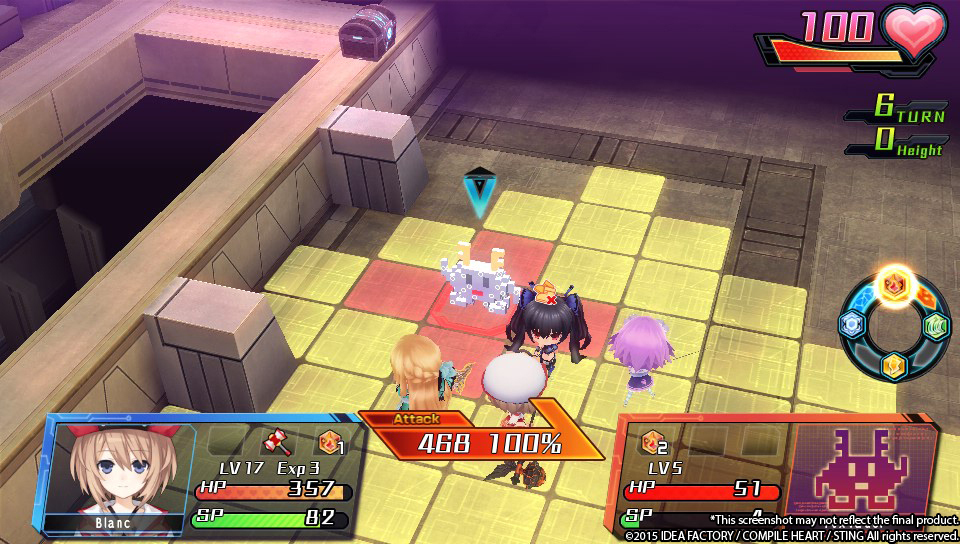
The meat of the game comes in the battle sequences. Rather than being a dungeon-crawling, item-gathering/crafting RPG as the mainline Neptunia installments are, Hyperdevotion Noire is a strategy RPG, developed by Sting (of Gungnir, Knights in the Nightmare and Yggdra Union fame). Mainline Neptunia games have always had a slight element of tactics to their battle sequences thanks to positional bonuses, cleaving attacks and formation skills, but battles in those games are generally pretty short; punctuation to dungeon crawling. In Hyperdevotion Noire, a single battle represents a complete encounter and provides you with specific objectives: sometimes you'll simply have to defeat all enemies; sometimes you'll have to defeat a specific enemy; sometimes you'll have to complete objectives before a specific number of turns pass.

The game does a good job of introducing concepts to you gradually, and there's a bunch of interesting systems at play. Core to the game is the "Lily Boost" system, whereby characters can power up their relationship values with other characters, earn "Lily Points" and reduce the cost of their special moves by triggering their skills when adjacent to other characters, which causes the supporting characters to give the acting character an adorable little peck on the cheek. Chu! Although cheeky and flirtatious, the system adds an interesting dynamic to battles: you have to think very carefully about both turn order and formation when setting up attacks, especially when you're dealing with enemies who can hit several tiles at once. It's no good getting all set up for a four-way snog if an enemy with a massive cleave is just going to kill all of you at once when it comes to their turn, after all.

That's not all to think about, though. Battle maps include treasure chests in awkward-to-reach locations, which you'll need to acquire before completing your objectives if you want the goodies therein. A Final Fantasy X-style "Overkill" bonus rewards you with rare drops if you defeat an enemy with far more damage than you need to. Maps have variable elevation and environmental hazards — both of which can be conveniently bypassed if you switch the goddess characters into their flying "HDD" forms, but in order to do this you'll need to build up the Lily Points gauge first, and then it only lasts for three turns, so you need to make the most of it. Setting a specific character as the "leader" of the squad confers special bonuses (and, sometimes, penalties) on the group as a whole. Characters each have their own array of "challenges" to complete, each of which rewards them with significant stat bonuses.

scr13

There is a hell of a lot of game here. This is nothing new for a Neptunia game — I've easily spent over 100 hours on the last few installments in an attempt to get the Platinum trophies and hidden goodies — but considering this is a "spinoff" game and not technically part of the main series, it's impressive. I'm only a short way in to the overall plot so far, but I'm already enjoying both the narrative and gameplay sides; it's shaping up to be a fine installment in a favourite series, and all the more noteworthy for doing something a little bit different.