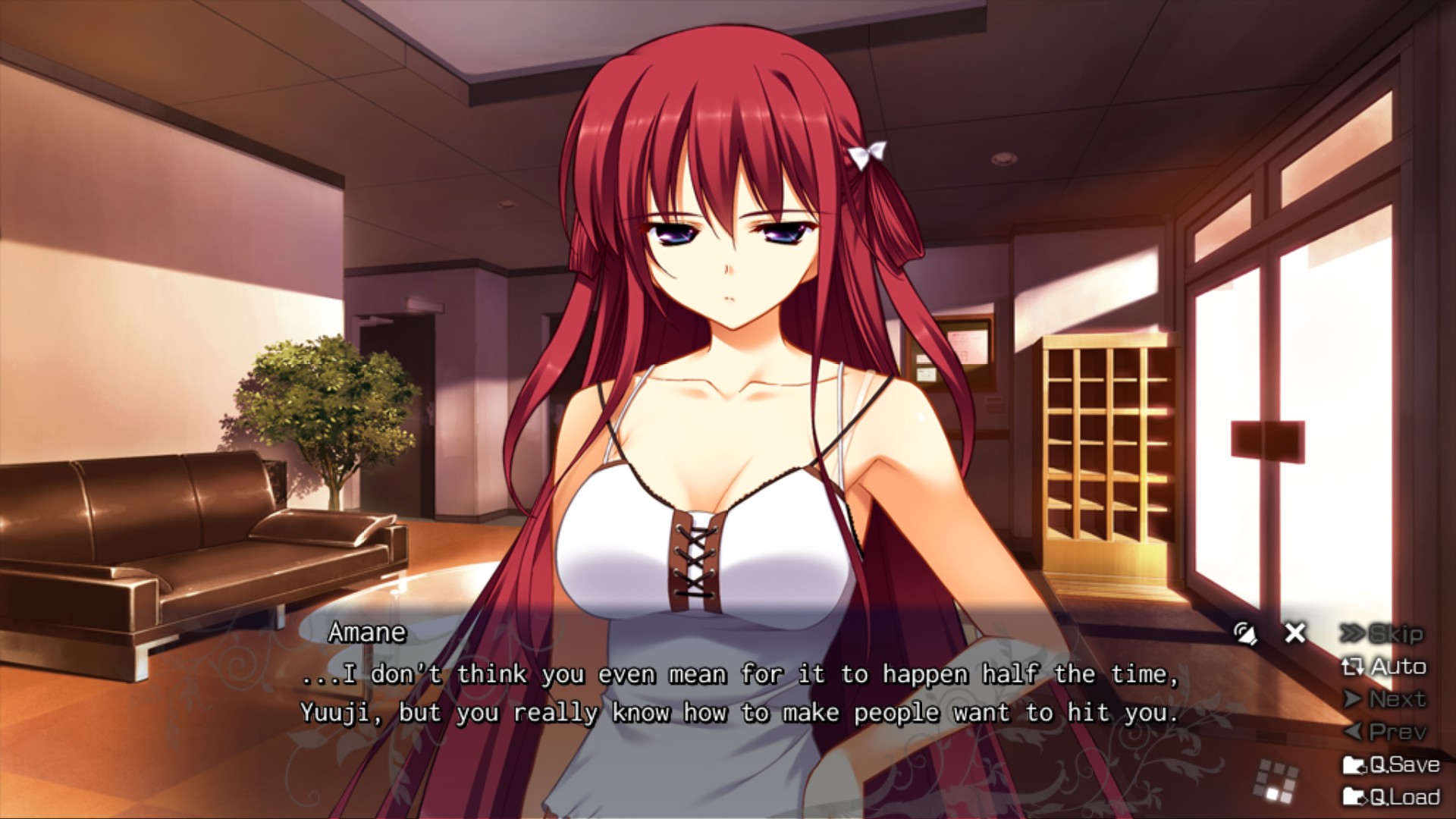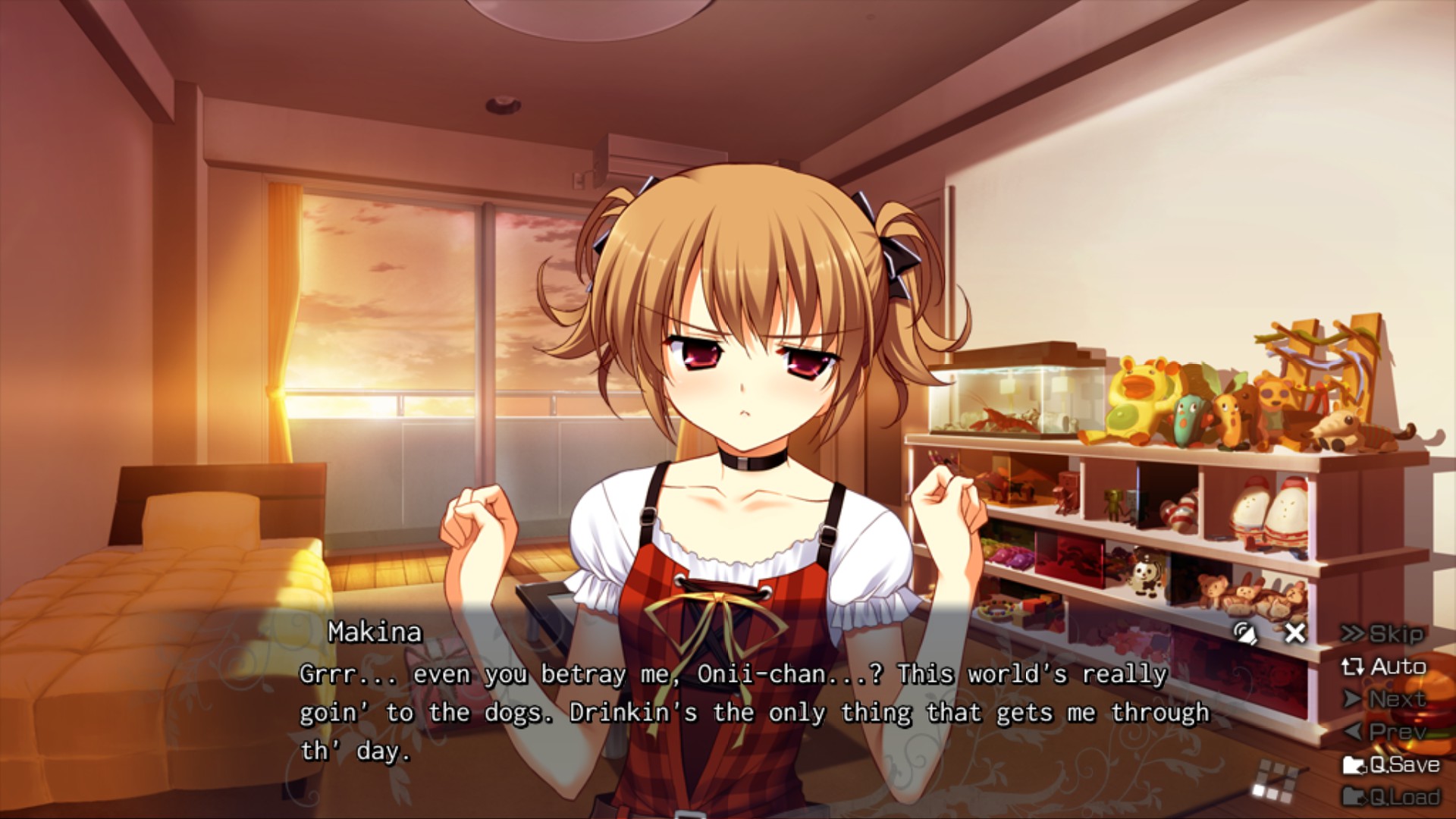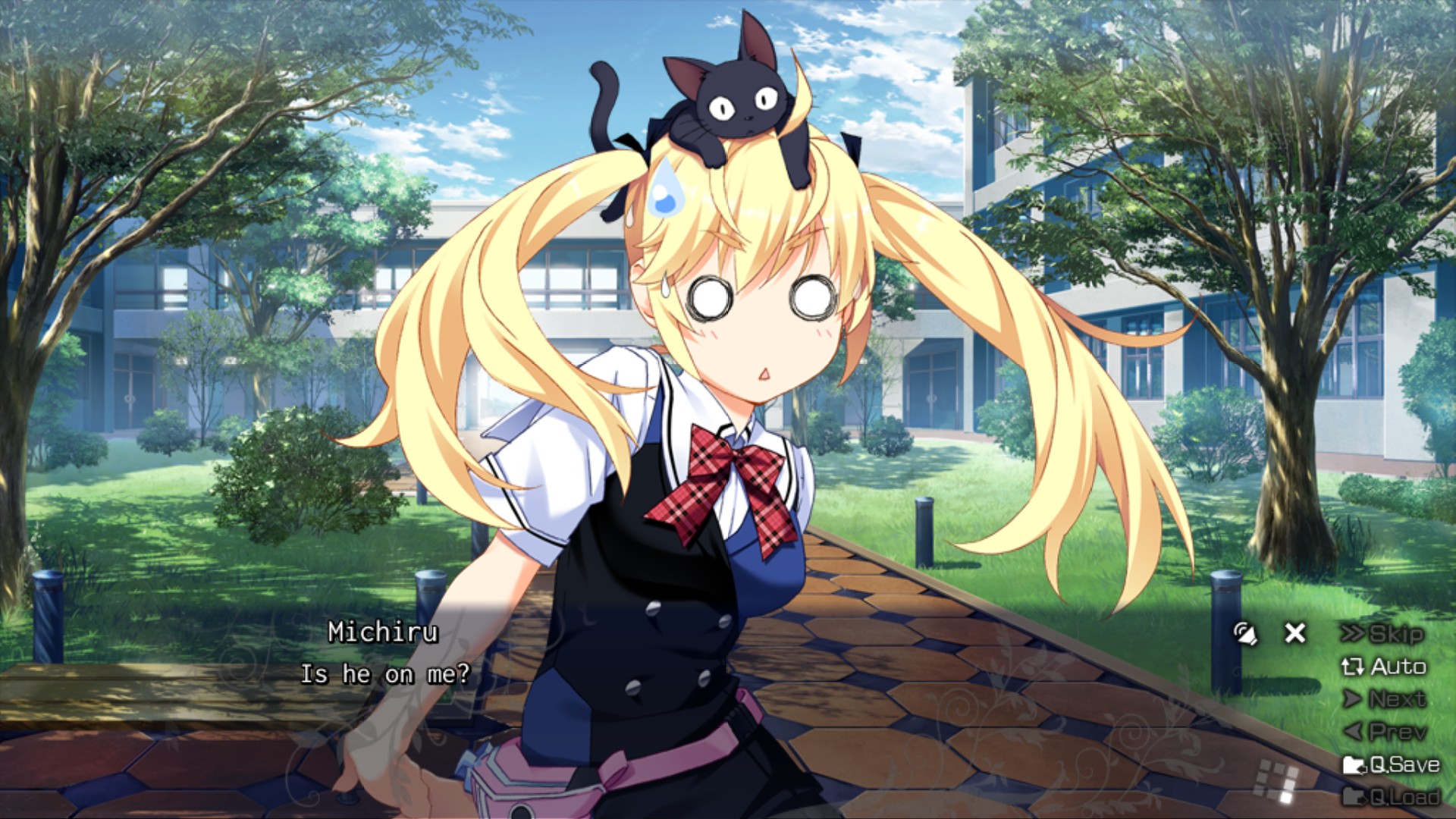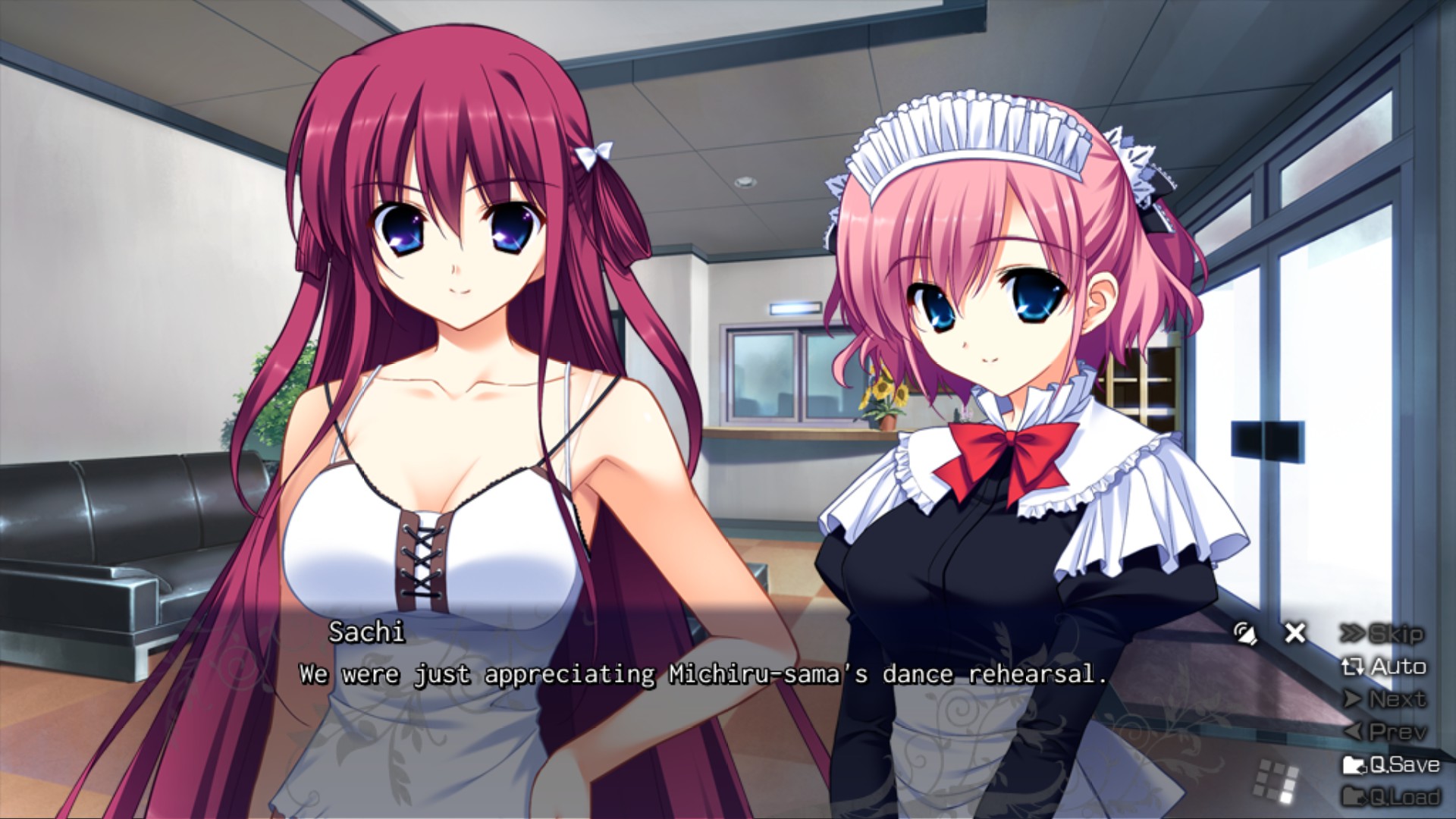
I'm coming up on the Platinum trophy for Hyperdevotion Noire on Vita, and I've asked myself more than once why I was doing it, given that it's completely unnecessary to fully appreciate the game, and has extended what would probably be a 40-50 hour game well over the 100 hour mark.
Despite questioning my motivation a few times, I've never found myself resenting the game, somehow — this is partly because I undertook the most grindy of grinds for the Platinum trophy while watching several seasons of Community on Netflix (#teamhandheld) and consequently wasn't just staring at a screen repeating the same actions over and over again, which is essentially what I was required to do to get 20+ of the trophies in the list.
Now I'm approaching the end of that epic grind, I'm glad that I've done it. It hasn't been difficult in the sense of the game being difficult to complete — on the contrary, once all the characters are level 99 you can steamroller pretty much everything in the game with a few exceptions — but it has been challenging from the perspective of committing to the long-term goal and seeing it through to its conclusion.
This raises an interesting point about the nature of "challenge". When we talk about "challenge" in games we're normally referring to something along the lines of Dark Souls, which requires you to understand its systems thoroughly, otherwise it will punish you until you mend your ways and play better. But "challenge" can exist in other ways, too. It can refer to subject matter that makes you uncomfortable — not generally a problem with the Neptunia series, though mk2 does some interesting things with the squick factor and some people still won't check the series out because of assumptions about fanservice. It can also refer to the challenge of making it through something lengthy and weighty, or holding out in a test of endurance, such as I've been doing with Hyperdevotion Noire.
And that, I think, is why I've been doing the Platinum grind. The challenge factor. Overcoming challenges is satisfying, even if they're more endurance than skill. Endurance and patience are worthwhile traits, and I've noted on a number of past occasions that I feel my experiences with role-playing games over the years — and my willingness to see them through to the end, even if they have a three- or four-digit hour count — have helped me train these particular abilities in myself. And these abilities are something that transfers across to life at large; it can be difficult to wait for things, or hold out against something that is proving to be an obstacle, but with patience and endurance in spades, you can usually overcome most challenges.
Anyway. After all that, I will say that I will be glad to finally see that Platinum trophy pop in Hyperdevotion Noire, because it means I'll finally be able to put that game to bed and move on to something else without feeling like I need to try and get anything else out of it. And, as I've noted before, it feels good to know that trophies are used as metrics by developers and publishers — unlikely though it might be, someone might see my Platinum trophy in the game and recognise that it is something only achieved by people who have truly engaged with it and want to see everything it has to offer.
Also I can't break my streak of Platinum trophies on Neptunia games now, can I?
Metal Gear Solid V: The Phantom Pain is out this week and… I'm not excited at all.
Me not being excited at the latest big new release is nothing new, of course, but this is Metal Gear we're talking about. I was a huge fan of both Metal Gear Solid and its sequel Sons of Liberty, but kind of fell off the wagon a bit before Snake Eater came out and have still never even touched Guns of the Patriots despite owning a copy. (I fully intend to play them at some point, I might add; I just haven't done so yet.)
The Phantom Pain feels a bit different, though. My friend Chris and I have been discussing this recently and trying to pin down exactly what it is that's bothering us both about it — particularly as we're both fans of the older Metal Gear Solid games as well as Kojima's batshit craziness.
I think the best way of summing up my feelings towards The Phantom Pain right now is to simply say that everything I hear about it sounds like almost the exact opposite of what I want from a Metal Gear Solid game. Past games were short, tightly focused, highly linear, well-directed experiences that had the pacing and structure of a (particularly long) movie. They kept you always moving onwards because there weren't any unnecessary side missions or distractions; sure, there were a few secrets here and there that you could dig up if you wanted to, but for the most part things like Sons of Liberty's dog tags were largely only there for the completionists; I didn't care about the stats screen at the end of the game — I just liked enjoying the story, and Kojima's vision for how that story should be presented.
The Phantom Pain, meanwhile, abandons the tight linearity in favour of an open-world environment and (apparently) upwards of 30 hours of gameplay compared to its predecessors' 6-10. This set off warning bells as soon as it was first announced, I must confess, and what I'm hearing so far isn't making me feel much better about it. Open worlds are cool technical achievements when done well, but they also often make for rather drab "gameplay by numbers" as you spend all your time looking for little icons on the map, completing arbitrary objectives and killing the pacing of the story, since open world games never, ever have any sense of urgency about them — they tend to be the very worst examples of "the world needs saving, but Armageddon will wait until you're good and ready".
Other things that I'm not a fan of the sound of so far are the microtransactions and the resource-gathering, base-building element. I don't know much about either, to be honest, and it may well be that neither are particularly intrusive to the gameplay experience as a whole, but I don't like what I have heard so far. I still believe that microtransactions have absolutely no place in a full-price brand-new triple-A game — if you want to get me to pay extra, provide me with some worthwhile content, not a means of paying to win. As for the resource-gathering element, a friend posted a screenshot on Twitter that looked to all intents and purposes like the message you get when logging into a grind-heavy Facebook or mobile game for the first time each day — yes, it's a Daily Bonus, with rewards for logging in frequently and so forth. Not exactly what I have in mind when I think of the traditionally single-player, offline, "just you and Kojima" experience that is the previous Metal Gear Solid games, though granted I never delved into Metal Gear Online while it was a thing.
Then there's the fact that several reviews have mentioned the fact that there's more gameplay than cutscenes, and that the series' iconic codec conversations have been replaced by cassette tapes that you can listen to while you're walking around doing things. To be honest, a lot of things are making it sound more like a Splinter Cell game than a Metal Gear Solid game, and this is enormously offputting — Splinter Cell is one of those series that I respected for what it was doing, but just didn't enjoy at all, and I always greatly preferred Metal Gear's distinctly "comic book" approach to military espionage action, with all its supervillains, quasi-supernatural powers and giant walking nuclear warhead-equipped death tanks.
I don't know. I'm sure I'll end up playing The Phantom Pain at some point, but that time is not right now; the hype is just too much at the moment, and the things I do hear are offputting. I also want to play Snake Eater and Guns of the Patriots (and possibly Peace Walker) before I play The Phantom Pain, too, so I feel it's going to be a while before I jump into Kojima's swansong for Konami — if indeed I ever jump in at all.
We'll see. I'm keeping half an eye on people's reactions to the game now it's in the hands of American players, but unfortunately as I've said so far, the things I have heard aren't making me want to dash out and grab it as soon as it hits store shelves.
I'm also kind of bummed that Until Dawn came out last week and is promptly going to be forgotten about amid Metal Gear Solid mania — why the hell didn't they hold that one back until Halloween? Who knows why these people do anything?
I've been really enjoying Until Dawn so far. Not only is it one of the most impressive-looking games I've seen for a very long time — the lighting, character models, animation (particularly facial expressions) and overall cinematography are all gobsmacking — it's also one of the best "interactive movies" I've ever played, outdoing all of David Cage's work in terms of coherence, tension and emotional impact. (And I'm one of the people who actually likes Cage's work!)
I'm really pleased with how well it balances the interactivity of a game with the storytelling of a movie. Choices you make throughout are meaningful, and are often referred to later through conversations or consequences. Plus, even though everyone knows the worst possible thing you can do in a horror movie is "just go and see what that was", the game encourages and rewards exploration with hidden collectible items aplenty, each of which contribute to your clue database and help to unravel the several mysteries at the heart of the narrative.
One of the most interesting things about the game is how your choices affect the characters themselves. Each character has a series of "stats" reflecting things like how honest, brave, romantic and funny they are, and the way you choose to have them behave throughout the game affects these stats, which in turn determines how they behave in certain other situations. Alongside these stats are relationship values that increase and decrease according to your choices throughout the game — again, with consequences at certain junctures according to how much the characters like each other.
The game makes effective use of its multiple characters as a means of presenting the player with different perspectives on the story. Individual characters by themselves might not know exactly what is going on, but by seeing what is happening to each of them, you can start to put the pieces together yourself. Like a visual novel, the game also encourages repeat playthroughs to discover all the collectible clues and piece together what happened, and I can already see a number of obvious branching points based on decisions I've made — with some of the more drastic choices resulting in the (apparent) death of one or more of the characters. (I say "apparent" because the game has pulled the "that person couldn't have survived that… unless…" thing more than once so far — plus it's apparently possible to get through the whole thing with everyone surviving.)
It makes nice use of timed decisions and quick-time events, too. Quick-time events are loathed and detested by an awful lot of people, but I've actually rather liked them since the phrase was coined way back in Shenmue. Until Dawn makes relatively sparing use of them throughout, and they help add a great deal of tension to already nerve-wracking scenes that have made my palms sweaty more than once. Perhaps the best part of the game's use of quick-time events, however, is the fact that the game occasionally requires you to not do anything at all — literally. "DON'T MOVE!" urges the screen, and the game begins tracking your real-life movement through the motion sensors in the controller. It's hyper-sensitive, too, so the slightest movement and you'll be discovered. (You can, of course, cheat the system by resting your controller on something, but it's more fun to grip it tightly in your hands and hold your breath.)
On that note, it's also gratifying that in a number of situations, not making a choice is also a valid choice. I liked this when I saw it in visual novel/interactive anime School Days HQ; I liked it when Telltale used it in some of its games; and I like it very much here. Until Dawn takes School Days' approach on a number of occasions — presenting you with a single (rather than binary) choice on screen and giving you a few seconds to decide whether or not to do it. These choices usually involve choosing whether or not to use violence to solve a situation and have tight timers, so you have to think fast about what the consequences might be — or simply throw caution to the wind and try to deal with whatever happens a bit later.
I have a few more chapters of the game still to go, and the story has thrown up some interesting twists that I sort of half-saw coming but wasn't sure about — I'm generally not all that great at spotting twists ahead of time, I must confess — so I'm intrigued to see where it all ends up, and who, if anyone, is going to walk away from that mountain retreat.
It's been a great experience so far, and I can heartily recommend it to anyone looking for something a bit different from the usual "run and gun" nature of triple-A spectacles.
I grabbed a copy of new PS4 game Until Dawn today. I haven't been following the development of this game at all, but what little I had heard of it sounded enormously intriguing, so I decided to give it a shot.
For those as yet unfamiliar, Until Dawn is an interactive movie-type game in the vein of David Cage's works Heavy Rain and Beyond: Two Souls in that it's heavily story-based, extremely linear and the decisions you make throughout are extremely important to how the whole thing concludes. Like Cage's work, too, there's absolutely no guarantee that all the cast are going to make it to the end, either.
Unlike Cage's work, however, which draw influences from noir and a few other sources, Until Dawn is very much designed in the mould of '90s-era teen slasher horror films. This type of movie is something of a lost art these days, with modern horror films tending to adopt more of a "horrorporn" approach with lots of gore and sadism, whereas teen slasher films were often witty and incisive as much as they were scary and horrific. (This isn't to say that modern horrorporn films don't have anything to say, of course — quite the contrary — but teen slasher films were very much their own distinct subgenre.)
The game opens with a bunch of teenagers spending a winter retreat up at a cabin in the mountains. Before long, Bad Shit starts happening and two of the party are dead — though their bodies are never found by either the authorities or their friends. The story then jumps forward to a year later, where the same group are revisiting the cabin on the anniversary of the two girls' disappearance, and it's clear that something odd is going on — though the early hours of the game are somewhat slow-paced, with only a few cheesy jump scares to keep you on your toes.
One interesting aspect of Until Dawn is its structure. While largely chronological and episodic in nature — each episode even starts with a "Previously on Until Dawn" recap — the game is punctuated by some interesting fourth wall-breaking sections in which a psychoanalyst appears to be speaking directly to the player. Whether or not this is actually the case remains to be seen, but in the same way that Silent Hill: Shattered Memories made use of the psychoanalysis session as a narrative framing device, so too does Until Dawn use your answers to the frankly rather creepy shrink's questions to subtly tweak and tailor the experience. Often, these changes aren't even commented on, leaving you in the distinctly uneasy position of wondering if you were imagining how you thought you remembered things from before, or if the game is just messing with you.
To say too much more would be to spoil it — and anyway, I'm only up to the third chapter so far — but I'm very, very impressed so far. It's by far the most "next-gen" game I've seen so far with regard to graphical fidelity and particularly facial animation. It's also nice to see other developers experimenting with the interactive movie format as David Cage has done in the past; Cage's work often draws heavy criticism (though I'm very fond of both Heavy Rain and Beyond: Two Souls) but the underlying principles of making meaningful narrative choices and interacting with the on-screen action are sound. I'm very intrigued to see where it all goes, and can confidently already recommend the game to anyone out there with a PS4 who enjoys a strongly narrative-driven experience.
Whew, that got pretty heated, huh? I make absolutely no apologies for yesterday's post: it needed to be said, and I stand by every word of it. To reiterate: if you don't like ecchi content in your games, that's absolutely A-OK. The second you start branding people who do like ecchi content in their games as paedophiles, though, that's when you cross a line from "opinionated person" into "total cunt".
I'm really disappointed to hear of the number of NeoGAF bans that have resulted from the article I mentioned yesterday. (Still not going to link to it.) Quite a few friends — and quite a few new acquaintances — all found themselves banned simply for expressing dissent or dissatisfaction with the article, often in a polite manner. And no, that's not just excuse-making — they really were polite about it. More polite than I was yesterday, anyway.
I've never been a member of NeoGAF. Not through lack of trying, though every time I have tried, my email address hasn't been "good enough" for them to allow me in, whatever the hell that means. In one particular instance, it took nearly two years for my "application" to be rejected; I didn't try again after that.
If it hadn't been Omega Labyrinth, some other game would have been the victim of the latest round of outrage — and, it has to be said, likely a beneficiary of a ton of awareness it wouldn't have had otherwise, so it's not all bad.
NeoGAF is regarded by many as the de facto gaming community online. It's where all the game journalists from the mainstream publications hang out, it's where game developers and publishers hang out — in short, it's a huge, centralised place to talk about games. Or at least, it should be: in the last few years, however, there's been an increasingly tight leash put on exactly what is and is not acceptable to talk about there — and, relevant to what we've been talking about, a lot of the stuff that is outright banned from discussion falls under the Japanese gaming umbrella.
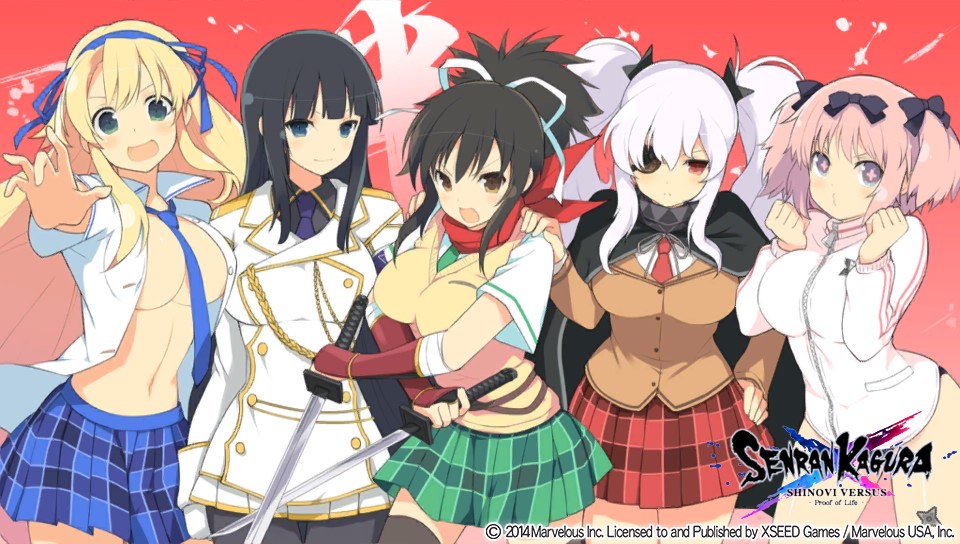
Trouble is, from what I can tell as an outsider to the overall community, there is pretty much no rhyme or reason to what is and is not acceptable. Senran Kagura is acceptable, it seems — or, at least, it was; a significant number of participants in the long, active Senran Kagura thread got banned as part of this latest nonsense — but something like Criminal Girls is not. Japanese games are the only games that appear to be subject to this much scrutiny; big Western games are discussed without any issues whatsoever, regardless of if they have any sexual or violent content in them.
I don't want to dwell too much on NeoGAF because, as I've already said, I'm not a member there and so cannot comment with authority from the perspective of an actual community member. What I do want to talk about, however, is the broader problem that NeoGAF's situation and yesterday's debacle really highlights: the fact that it's deliberately (and, I'd argue, maliciously) creating a divide between different "strata" of people who enjoy video games. In other words, if you like one of the "approved" games, you're absolutely fine; you can continue discussing games and gaming culture as much as you like. But if you like one of the "forbidden" games — regardless of the fact that these games are not illegal, are not banned and are sold at retail — then your opinion is, it seems, automatically invalid; you're not welcome to discuss it in the Internet's equivalent of "polite society" and are instead forced underground to find cliques and subcultures who will accept you for your tastes, rather than everyone being in a happy melting pot respectfully exchanging opinions and learning from one another.
Dungeon Travelers 2 was the last game to come under the microscope for being responsible for all society's ills. Unfortunately for the outrage brigade, it turned out to actually be a really good game, too.
As I've argued before both here and over on MoeGamer, this situation does a lot of creative works an enormous disservice. In my last ever JPgamer column at USgamer, I commented on the fact that a lot of the games that are habitually branded as "creepy" (or worse) by mainstream critics actually tick a considerable number of the boxes that these people tend to want to see as evidence that gaming is "growing up".
Female protagonists? Or at least women in important positions with regard to the narrative? Sure; check out the Neptunia series, Omega Quintet, Criminal Girls, the Agarest series, Akiba's Trip, Monster Monpiece, Moe Chronicle, Demon Gaze, Dungeon Travelers 2.
Unconventional storyline that isn't simply "solve all your problems by punching/shooting/swording them to death"? Sure! Check out the Atelier series, Recettear, the Ar Tonelico series and plenty more.
Ambitious narrative themes? Sure! Take a look at The Witch and the Hundred Knight (coming soon to PS4!), Time and Eternity, Senran Kagura, Criminal Girls, Ar Tonelico…
You get the idea: these games don't get anywhere near enough credit and are, more often than not, either ignored or derided by people purely on the grounds that they're open and up-front about — in most, not all cases — wanting to indulge in a bit of light-hearted, cheeky teasing as part of their overall aesthetic. In some cases, the ecchi content is even used genuinely effectively to depict the growing relationship between characters; Time and Eternity and Demon Gaze were both particularly good in this regard, reflecting the protagonist's sexual frustration and the growing relationship of trust and love between the player character and their main quest-giving "contact" Fran respectively.
Now, as Brad Gallaway wrote in his absolutely exemplary review of Dungeon Travelers 2, "people who are allergic to skin-heavy content might have a hard time getting past it to enjoy the game underneath. And honestly, that's all right. I've always said that not every game is right for every person, so bouncing off of Dungeon Travelers 2 for that reason alone would be totally understandable." This is the point that appears to be most frequently missed: games are not always for everyone. Sure, there are plenty of box-ticking focus-grouped triple-A games out there that are designed to appeal to the broadest possible demographic: they have to, because they cost an absolute fortune to make, so they'd better sell through multiple millions of copies to prove all the developers' hard work wasn't for naught.
I was specifically forbidden from even mentioning Monster Monpiece during my time at USgamer because of its provocative artwork — despite the fact that it's a really interesting collectible card game.
But here's the important thing: not every game is like that, nor should it be. Games with ecchi content are designed for a specific audience — and that audience cannot simply be defined or written off as "horny teenage boys", as it usually is, though they are certainly part of it. In reality, the market for otaku games is male and female; young and old; straight and gay; trans and cis; and made up of pretty much each and every race, nationality and religion. The one thing they have in common? They like what they like. Simple as that. And these games are designed to push their buttons without caring what people outside that existing niche think of them. And that's absolutely fine.
Tastes in art are complex, fluid, ever-changing, and one person can be into lots of things. You can enjoy high-class art and the most lowbrow of entertainment, and I know plenty of people who do. Likewise, you can also choose to enjoy just high-class art or just the most lowbrow of entertainment, or something middle-of-the-road. In the world of games, you can be someone who plays every "walking simulator" out there and believes they're the future of interactive entertainment. You can be like my Dad, and only ever play Microsoft Flight Simulator. You can play nothing but hidden object adventure games. You can be someone who just plays Call of Duty with their friends on weeknights. You can be someone who has invested a thousand or more hours into Dota 2. Or you can be someone who enjoys games where anime girls have breasts and flash their panties.
Or — and here's how you get the richest possible experience from one of the most exciting and complex forms of creative media in the world in 2015 — you can be into multiple things, and you can be open to new experiences. You don't have to like everything, and you almost certainly won't. That's all absolutely, completely and utterly fine; the diversity in tastes is one of the best things about modern gaming, and the fact that month after month, all manner of different tastes are specifically catered to by developers and publishers is absolutely brilliant.
I maintain that anyone who hates Neptunia needs far more joy in their life.
What's emphatically Not Okay by any stretch of the imagination is, as we've already said, shaming people for what they are into, regardless of what it is. Don't like anime panties? Fine. Don't throw horrible names at people who do. Don't like Gone Home? Also fine; likewise, don't throw horrible names at people who do. Don't like Call of Duty? Also fine… you get the idea, no? To sum up: don't be a total cunt.
A little respect goes a very long way. And gaming culture as a whole is not remembering that fact right now, and it saddens me greatly. Let's all try and do our bit to make our wonderful medium a little bit better for everyone, shall we?
Earlier today (or possibly yesterday, I think), a former colleague posted a piece on a site I used to work for bemoaning, not for the first time, the amount of "ecchi" content in modern Japanese games, particularly dungeon-crawling RPGs. (I'm not going to link to it.)
The piece did have an interesting point to make, which was to conjecture that many creators are interested in making sexually explicit — outright pornographic — games rather than just flashing the odd pair of panties like they do nowadays, and that it's the current strict censorship laws in Japan coupled with the platform holders' stranglehold on what sort of content does and doesn't get approved for sale that is holding this back from happening. I'm not sure I entirely agree with this — the nature of ecchi as opposed to hentai is to tease and titillate rather than be outright explicit, erotic, masturbation material — but it was an interesting point to consider.
Unfortunately, he then went off the deep end with accusations of games like Dungeon Travelers 2 — a game that, by all accounts from people who have played it and not pontificated for thousands of words about How Bad And Wrong Anime Panties Are, is very good indeed — being "borderline child pornography". When called out about it on social media and in comments, he then took to his personal blog to wag his fingers and make some snide remark about the current situation with former "Face of Subway" Jared pleading guilty to numerous child sex-related charges and how, given that situation, people really shouldn't be defending games that "advocate child molestation".
For fuck's sake.
I feel like I have written this post a thousand times over by now, but it seems that I need to write it again, if only to blow off the steam I've had building up inside my head all day. So this may get a little bit angry, and for that I make no apologies whatsoever.
For fuck's sake.
The "child pornography" line is one that is usually trotted out by people who want to criticise Japanese media without knowing anything about it. Yes, Japan has plenty of morally questionable material — to Western sensibilities — readily available. Yes, Japan was somewhat "late to the party" when it came to legislating against this sort of thing. Yes, Japanese creators still produce media that would simply be illegal in Western countries. But Japan is also a different culture. And this isn't excusing any of the things that I personally find morally repugnant — because there are plenty of things I want nothing to do with, just as there are plenty of aspects of Western culture I want nothing to do with — but it is worth considering when contemplating whether or not you should tarnish an entire country's cultural output with as scathing a brush as "paedophilia".
The assumption that "if you're into ecchi games, you're a paedophile" makes — mistakenly — is that people who enjoy this sort of thing cannot distinguish between fantasy and reality. I can guarantee you — speaking from experience — that a considerable proportion of people who like to take a walk on the ecchi side of life are doing so because it entertains them, not because it arouses them. Ecchi games are refreshingly frank, honest and open; ecchi games often have strong characterisation and realistic depictions of how relationships progress — including sexual encounters (or implied sexual encounters at the very least); ecchi games are completely up-front about what they are, and unashamed of that fact. More often than not, ecchi games are having fun with sex. They're using it in a cheeky way, or in some cases as a means of exploring characters. (Criminal Girls is a great example of the latter, with the characters' reactions to the light S&M scenes throughout changing as they grow and mature as people, and their relationship with the protagonist changes.)
What these games are emphatically not is a means for people who want to abuse children to get their rocks off. And this also means that people who enjoy these games are emphatically not paedophiles, or "advocates for child molestation". Do you seriously fucking believe that because someone made use of a silly game mechanic in Omega Labyrinth that they're going to go out and start squeezing the tits of random girls on the streets? Do you seriously fucking believe that someone finding a hand-drawn character in a game — with nothing whatsoever real about them except their voice actor, who is inevitably an adult — attractive in some way means that they're going to be pulling up a dirty old van outside schools and kidnapping children?
In other words, if you must acknowledge them at all, how about you criticise things you don't like without fucking insulting the people who do like them? That would be simply lovely.
I am absofuckinglutely sick of having to defend my hobby against people who take the lazy, "moral majority" approach and decry something they don't like as being "sleazy" or "skeevy" or, as we've seen above, far worse. In my experience, the Japanese games and anime enthusiast community are some of the nicest, most articulate, most friendly, most passionate people I have ever met. Through my coverage of Japanese games back when I was on USgamer — I'm sure fucking glad all the time and effort I spent on that wasn't a complete fucking waste of time — I've made some great and doubtless lifelong friends. And, moreover, I've been exposed to some really, genuinely great games — and not one of them has made me want to go out and fuck kids. Not even a little bit. How about that?
Compare and contrast with these puritanical fuckwits who just want to brand everything not on their Pre-Approved List of Things That Are Super-Rad!! as somehow Bad, Wrong and Problematic, and, well, I know which side I'd rather be on. I'll be over here with my fellow deviants, thank you very much.
Astute long-term readers will notice that I haven't been talking much about Final Fantasy XIV recently. And the reason for that is simple: I just haven't been playing it that much.
It's not that I've gone off the game per se — I still see myself playing it for many years to come — it's more that I've got out of it what I wanted to get out of it so far. The Heavensward storyline was exciting and dramatic — and, for my money, better than A Realm Reborn's main quest — and the Alexander raid dungeon was an enjoyable challenge, though we're still yet to clear its Savage incarnation.
Trouble is, outside of levelling alternate classes there's not a huge amount to do at level cap right now.
This is the exact situation A Realm Reborn (and, I imagine, most MMOs) found itself in at launch, of course; the difference here, however, is that whereas it took me a good few weeks to make it to 50 in A Realm Reborn — I reached the level cap a while after the more dedicated players in my Free Company — I got through Heavensward pretty quickly. This was deliberate, of course; I binged on the new story content because it was enjoyable and interesting, and also because I wanted to see everything that the expansion pack had to offer. I also wanted to avoid inadvertently being spoiled on the storyline, since Final Fantasy XIV is that rare example of an MMO where the story is actually worth paying attention to and even told pretty well.
Consequently, I got to the "end" a lot more quickly than I did with A Realm Reborn, and consequently I've found myself with a lot more "dead time" with stagnant content. Sure, I could run Alexander over and over again to try and get some more gear sets. Sure, I could level other classes — I probably will do this at some point. Sure, I could run the current two level 60 dungeons over and over to get as many Tomestones of Esoterics as possible to gear up one or more classes.
Trouble is, I simply don't have a lot of motivation to do so right now. And that's sort of fine by me, really; whenever I play an MMO I always find myself in a weird place where I'm really enjoying the experience of playing the game and getting good at it — I maintain that Final Fantasy XIV is one of the few games I genuinely consider myself to actually be pretty good at — but also feeling a strange sense of "guilt" that I'm not playing any of the other million and one games that have been staring at me from my shelves for the last few years. Conversely, I play a game that isn't Final Fantasy XIV and I feel a similar sense of "guilt" that I'm not playing Final Fantasy XIV more. I can't win. Stupid brain.
On balance, though, this "dead time" is actually proving to be rather welcome, as since I have little inclination to log in right now for anything other than my weekly raiding commitments — and the group as a whole is pretty half-hearted about the whole thing at the moment, to be honest — I am having plenty of time to delve into other experiences. I managed to get the Platinum trophy on Omega Quintet. I'm working on the Platinum trophy for Hyperdevotion Noire. I am loving the shit out of Sword Art Online on PS4. And I'm also really enjoying Splatoon, Heroes of the Storm and any number of other games right now.
The trouble with any hobby that has a lot of different elements to it — be it gaming, music, reading, movies or whatever — is finding that perfect balance where you can enjoy all those different elements at different times and not feel like you're neglecting any of them. Right now, even though I know that I don't have much motivation to play Final Fantasy XIV, I still feel like I'm neglecting it because I'm not logging in to talk to my friends. So perhaps I still haven't quite found the right balance there. But eh. I'm not going to worry about it for the moment — a new content patch for the game might rekindle my interest for a while, but in the meantime I'm going to cut right back and enjoy the other experiences I have on the go right now.
Another Sword Art Online Re:Hollow Fragment post, I'm afraid, but, well, deal with it; it's good, I'm enjoying it, and I want to talk more about it.
I was describing the game to a friend earlier and the thing that struck me is how utterly different from your typical JRPG it is. It's extremely non-linear at heart — that is to say, there are a number of parallel linear objectives to follow at any given moment, but it's always entirely up to you which one you pursue at any given moment, or even whether you pursue them at all or just decide to grind out a few levels fighting powerful enemies.
So far the "main" quests I've encountered include the ascent of Aincrad, which is the way you "beat" the game; the storyline that unfolds as you unlock access to each part of the Hollow Area; the "Grand Quest" which mysteriously appears on one trip to the Administration Area; and a line of waifu-specific objectives that demand you go into the Hollow Area with a specific companion and complete a particular kind of Hollow Mission, the exact details of which are usually given in fairly vague terms, so you have to figure out exactly which missions will fulfil their criteria for yourself.
In my relatively brief session on the game earlier, I chose to forego the waifu quests I had previously been working on (largely because I couldn't find a Hollow Mission that involved fighting kobolds or goblins to progress Silica's questline) and instead continue with the Grand Quest. This part of the game — which I believe was added in a free update post-release on the original Vita version — involves entering a mysterious new part of the already mysterious Hollow Area, known as the Abandoned Area, and promises the reward of powerful new Sword Skills that you can't get anywhere else.
The Abandoned Area is introduced to you with a beautiful garden, one end of which is dominated by an enormous pair of doors — doors which are, of course, locked. However, since Sword Art Online is well and truly aware that it is a game, it very much follows the rules of a game, and consequently there are two obvious depressions in the door where "something" most certainly fits. And, wouldn't you know it, there are two pathways out of the garden, each of which leads to a different "dungeon" area — one in some fiery caves, another in the mountains. And oh! It just so happens that your map indicates that there's a powerful Area Boss waiting in the furthest reaches of each of these areas. Guess what you have to do to progress the Grand Quest?
It's not just as simple as wandering in and smacking the boss about a bit, though, not least of which because the bosses are challenging encounters with plenty of mechanics to figure out. In order to even get at the boss of the fiery cave area, you need to complete a number of different Hollow Missions that reveal some interesting facts about the local fauna — most notably the explosive bugs that become petrified when they die, and which conveniently explode with sufficient force to knock down walls when triggered by the correct catalyst. Once you've discovered this useful piece of information, you then have to scour the area for other instances of these petrified bugs, blow them up and see if they reveal a convenient pathway through to the boss.
The mountain area is similar in execution, though it is set up in such a way as to prevent you from progressing too far without completing the fiery caves first — you need a key item to melt open a door that is frozen shut. In this area, however, you quickly encounter the Area Boss without too much difficulty, who promptly screeches at you with a noise so terrible you're forced to retreat. The challenge here, then, is to uncover a means of protecting yourself against his powerful sonic attacks. I'm yet to discover exactly what that means is, but it will almost certainly involve a convenient Key Item somewhere, because that's how games work and, as previously noted, Sword Art Online is very much aware that it is a game.
The fiery cave area boss — dramatically known as Gaiard the Volcano — is a great fight that is far more than simple hack and slash. It's a fight where you'll have to pay attention to what moves are coming up — they are telegraphed in various ways — move carefully to avoid them, order your companion around (assuming you brought one with you) and take every opportunity you have to get in your most powerful attacks. It's an intense fight that really doesn't let up for a moment; opportunities to attack are short and easy to miss if you're not paying attention, and you need to keep a close eye on your partner's condition, too; letting them die is as instant a Game Over as if you died yourself. It's extremely satisfying when you finally clear it, however; it took me a good few attempts, but like the very best boss fights, it never felt like I was being smacked around by cheap, unfair moves — I learned something every time and progressed a little further, until eventually I was able to counter almost all his earth-shaking attacks and take full advantage of the openings that were presented throughout the battle.
If you're the sort of person who enjoys setting their own objectives and pursuing things in whatever order they like, then, Sword Art Online Re:Hollow Fragment is something that will very much appeal. Plus I was delighted to see today that it appears to be a top-seller on PSN right now, which means that it's a game that is getting noticed, played, enjoyed and promoted by people who like it. That makes me really happy; while it is far from the most technically proficient game in the world — the upscaled PSP graphics and somewhat inconsistent frame rate will be a culture shock for many — it's a beautifully designed, enormously addictive and extremely playable game that I can see myself spending a very long time with before I move on to something else.
Been playing a bit more Splatoon, and I really like it for a number of reasons. Turns out that Nintendo's first real foray into the dedicated online multiplayer sphere (as opposed to titles like Super Smash Bros. and Mario Kart, which include online but don't make it a focal point) is a really solid effort that does things a bit differently from the norm and is consequently a better, friendlier, more accessible experience as a result.
Splatoon's structure may seem restrictive to those who have been raised on more well-established shooter franchises. You can't purchase any new weapons or other equipment (each piece of which confers a buff of some description, and which can be levelled up at least once to unlock additional abilities) until you hit level 4, and until you hit level 10 you're restricted to playing just the "Turf War" battle mode.
In practice, though, this all works really well. Turf War — a mode where whichever team covers more of the map with their colour after three minutes wins — is a good introduction to the game, emphasising how it's important to work together as a team. By the time you hit Rank 10, at which point Ranked Battles with different rulesets unlock, you should be pretty comfortable with how the game works and perhaps even have found a favourite weapon style.
The other interesting thing about how Splatoon works is that rather than throwing all the maps and modes into the rotation and making people either vote on them or set up their own lobbies, it simply uses a small, rotating roster: two maps for Turf War, two more for Ranked Battle, and one of the available game modes chosen for Ranked Battle too. Every few hours this rotates.
This is also an excellent system. It encourages you to familiarise yourself with the maps, and since there are only two in a given set at any point, if you settle down to play a few games, you'll get the opportunity to learn their intricacies rather than being forced into always playing community favourite levels until the end of time.
So far I've only played the Splat Zones mode in Ranked Battle: a variant on King of the Hill in which you have to take control of one or more zones by painting its floor in your colour to score points. It's a different experience to Turf War; while Turf War is usually on the move, often with a scuffle over the map's middle ground, Splat Zones forces you to both go on the offensive and defensive according to the position you're in. Taking advantage of the squids' abilities to hide under their ink makes for some enormously satisfying stealth "kills" (sorry, "splats") and there's a real sense of fun when you manage to outwit an opponent who's been giving your team grief.
I haven't yet had the courage to jump into some games with the folks on the /r/splatoon Discord server, but they seem like a friendly bunch open to giving advice, so I may look into that in the next few days. After all, I am level 12 now; that's at least a bit fresh, I think…
Been playing some more Sword Art Online Re:Hollow Fragmentfor the past few days, and I'm thoroughly enamoured with it. It's quite unlike any RPG I've played before, though I must say, it does a pretty good job with the whole "simulated MMO" deal, particularly as you can even play it in cooperative multiplayer.
I've mostly been exploring the "Hollow Area" part of the game, which is the vast new section originally added in the Vita version of the game; the original PSP version only covered the last 25 floors of Aincrad up to the final boss on Floor 100. Aincrad is a mostly linear experience; the Hollow Area, meanwhile, though gated by story progression in a few places, is much more non-linear in nature since you can freely move between regions, take on any "Hollow Missions" you choose or simply explore, fight monsters and seek treasure.
Interestingly, this aspect of the game is the one area where Re:Hollow Fragment differs from a real MMO: while the first time you enter a new zone in an MMO you'll probably take some time to explore and map it fully, most MMOs design their areas in such a way as to be easily navigable by large groups of people, and once you've been everywhere, you've been everywhere; no further exploration needed. When it comes to dungeons, any kind of exploration is usually discouraged entirely in favour of a linear sequence of encounters culminating in one or more highly scripted boss fights. There's nothing wrong with this; when it comes to herding a group of players towards their objective together — particularly when they might not be able to communicate with one another due to issues such as the language barrier, console players not having a keyboard to hand or people simply being unwilling to talk — it's best to keep things as simple as possible so no-one gets lost, everyone can have a good time and work their way through efficiently.
Since Re:Hollow Fragment doesn't have to worry about "real" players (for the most part — multiplayer assumes you're already familiar with how the basic game works) it's free to be a bit more interesting with its areas. So we have mazes, networks of caves, perilous clifftops (that you can fall off and die instantly) and dungeons with multiple routes and secret passages, many of which you'll need to pay return visits to at a higher level to get the most out of. It's an absolute pleasure to explore, and all the more rewarding when you come across a powerful monster to fight or a treasure chest containing an awesome treasure item.
The "powerful monster" aspect is worthy of some note. I'd heard a few people compare this game to Monster Hunter when it first came out; I haven't played Monster Hunter myself so can't comment with a huge amount of authority, but it never struck me as a particularly obvious comparison to make. That is, until I started ranking up some of the regions in the Hollow Area and coming across the "NM" (Named Monster) and "HNM" (Hyper Named Monster… I think?) encounters, which pit you against powerful, boss-tier enemies that demand a little more than just hack and slash. Now I kind of Get It… that moment when you think "That thing looks awesome… let's kill it!"
That said, the game isn't particularly hack and slash even with its trash mobs, anyway; it has an interesting combat system based around a combination of carefully timed button presses (Phantasy Star Online-style) and skills with cooldowns a la traditional MMOs. While Kirito starts a fair distance down the Dual Wielding path he's depicted following in the anime, you're free to change to any other weapon type whenever you like, and in fact if you want to farm Skill Points to learn new abilities, you're going to need to do that, since Skill Points are earned most reliably by levelling up weapon proficiencies. What's nice is that each weapon type has its own unique set of skills to learn along with its own unique animations and timings for "Exact Attacks". Branching off each weapon type are support skills, too, ranging from healing and buffing to passive abilities that improve your overall position in battle.
Then there's the Implementation system, which works alongside the skill system. While the skill system is presented as being part of the Sword Art Online game Kirito and his friends are trapped in, the Implementation system is the game's equivalent of turning on Google Labs in GMail; it tasks you with "researching" various things during Hollow Missions (and only during Hollow Missions) and then rewards you with experimental game adjustments — anything from stat buffs to the ability to receive new item drops from NMs and HNMs — and even entire new game systems, such as the Original Sword Skill system, which essentially allows you to record a "macro" of your favourite skills and chain them together at will. The challenges you'll be tasked with completing range from the simple (defeat 20 enemies) to the infuriating and time consuming (land 200 perfectly timed Exact Attacks) but the rewards are very much worth it, and this array of challenges — there are well over a hundred of them in total, I believe — give the game a great deal of variety as it becomes less about simply hacking your way through monsters as quickly as possible, and more about defeating them in specific ways in order to efficiently complete these research objectives.
Perhaps one of the most interesting things about Re:Hollow Fragment is the fact that all this stuff is technically optional. All you have to do to finish the game is climb to floor 100 of Aincrad, beat the last boss and hooray, you win. Any RPG player worth their salt knows that making a beeline straight for the final boss is rarely a good idea, though; sure, you might clear the game quickly, but you'll also miss out on potentially some of its coolest aspects. As such, I'm unsurprised to have found myself well and truly captivated by exploring the Hollow Area, while my progress on Aincrad has stalled after just two floors. The Assault Team don't seem to mind, though, and the game's generous complement of waifus are more than happy to accompany me on my various adventures, so all's well.
I can see myself spending a long time with this game, and I'm actually keen to play some more multiplayer (particularly as two trophies relate to multiplayer sessions — though you can play "solo multiplayer" in a party with your characters from single player) — it's been a very pleasant, enjoyable surprise so far, and I'm looking forward to continuing to explore its hidden depths. And then jumping right into Lost Song when it comes out in a few months!