2154: Another Xenoblade X Post

0154_001

In conversation with a friend the other day, I realised one of the things I really like about Xenoblade Chronicles X: it feels like a new perspective on a genre of game I liked but was never particularly good at: the strategy/management/"god-game" genre, particularly with a sci-fi focus. Stuff like Alien Legacy, Outpost and its ilk.

The "new perspective" I mention refers to the fact that rather than acting as an overseer to your colonisation efforts, taking a somewhat detached view of everything that is going on and rarely, if ever, getting up close and personal with your colonists, Xenoblade Chronicles X sees you right in the middle of things. You're not running the colony as such, but everything you do has such a significant impact on the game world that you might as well be.

The feeling of "being inside" a strategy game is further compounded by the game's FrontierNav system, which uses the Wii U's GamePad to display a hex-based map of the planet Mira, the game's setting. Through methodical exploration and completion of objectives, you gradually "conquer" Mira hex by hex, setting up an infrastructure in the process. Placing data probes not only allows you to generate passive income of both credits and the raw material Miranium, it also allows you to collect rare resources from specific hexes, store more Miranium, increase the output of connected probes and all manner of other things. There's actually a rather deep metagame of chaining probes together to maximise your income between all your sites.

And it's important, too; this isn't an RPG where you can just grind out money until you can afford the best equipment in the game. Instead, this passive income is one of the only ways for you to be able to afford things, and Miranium is incredibly important for a wide variety of purposes: investing in arms manufacturers to unlock new gear, upgrading existing equipment, crafting new items and donating to various causes in exchange for credits and other rewards.

Early in the game, this metagame doesn't seem all that important, since you quickly find yourself with far more money than you know what to do with, meaning you can spoil yourself rotten on gear purely for aesthetic value thanks to the game's "fashion gear" system. Once you gain the ability for you and your party members to use the giant walking mechs called "Skells", though, your expenses start to mount up. Miranium is used to refuel them, while credits are needed to purchase frames, armour and weapons for them. Multiply these expenses by all the party members you want to equip with Skells (which is probably all of them eventually) and you'll be spending a lot of money in total — but these investments are ultimately for the good of the colony as a whole.

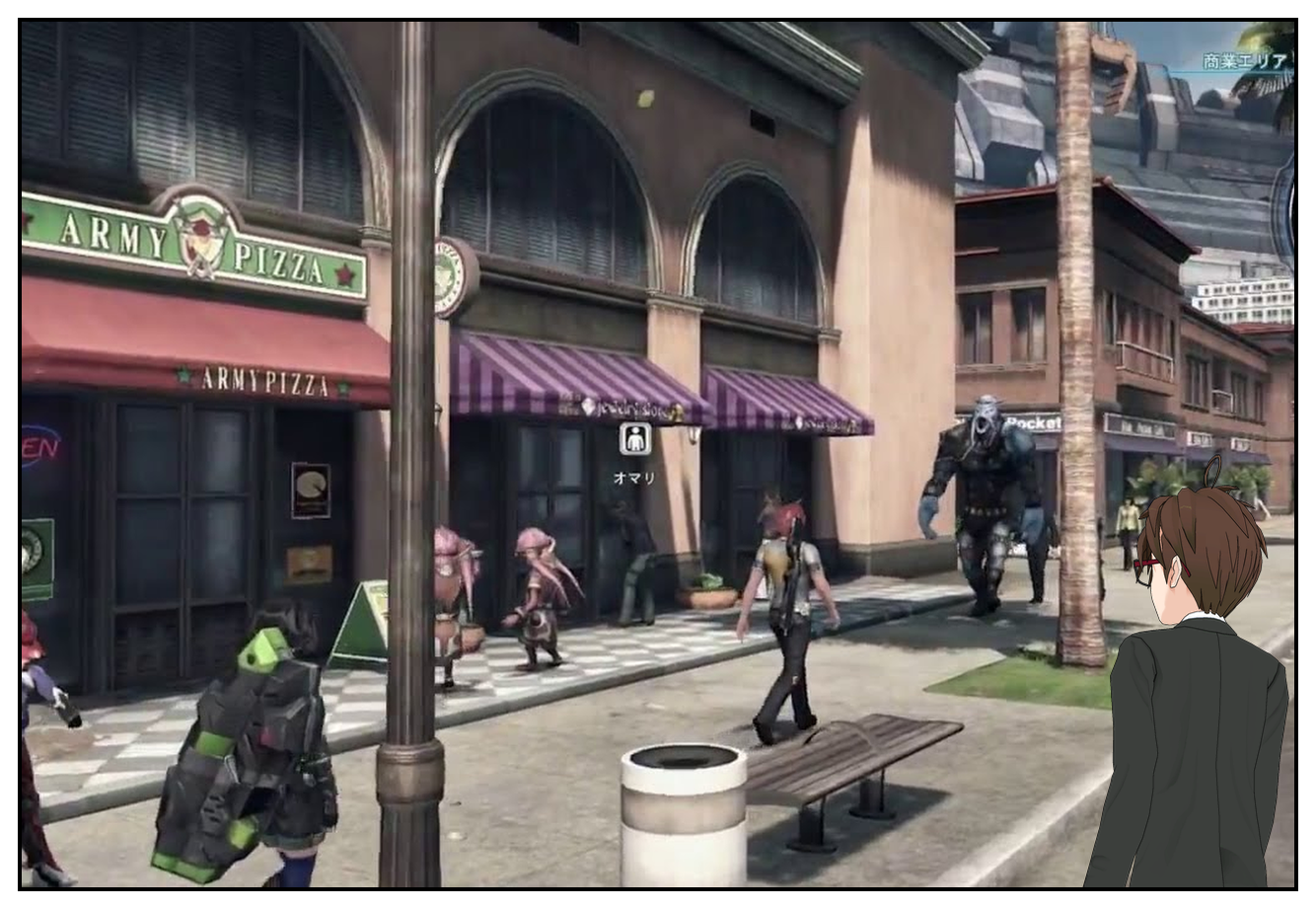
What's really interesting about Xenoblade Chronicles X compared to many other open-world games — and particularly MMOs, which it's most commonly compared to — is the fact that, as mentioned earlier, your actions have a clear and tangible effect on the game world as a whole over the course of the whole story. For example, one chain of sidequests sees you helping to gather resources to build a water purification plant out in the wilds of Primordia; later, you're sent there to investigate an incident out there, and it's actually there on the lake where there was once just a rocky beach. Characters that were once standing around in town are now there, and it has its own little plotline to follow.

You're not alone on Mira, either; the main scenario introduces you to a few members of other alien races on the planet — both indigenous and extraterrestrial — but there are plenty more sidequests that bring you into contact with all manner of other weird and wonderful peoples, and completing their requests causes them to immigrate to your colony. Once they're there, they set up shop in a particular area and you'll see them wandering the streets. Many of them provide beneficial services to the colony as a whole, and so your experience grows.

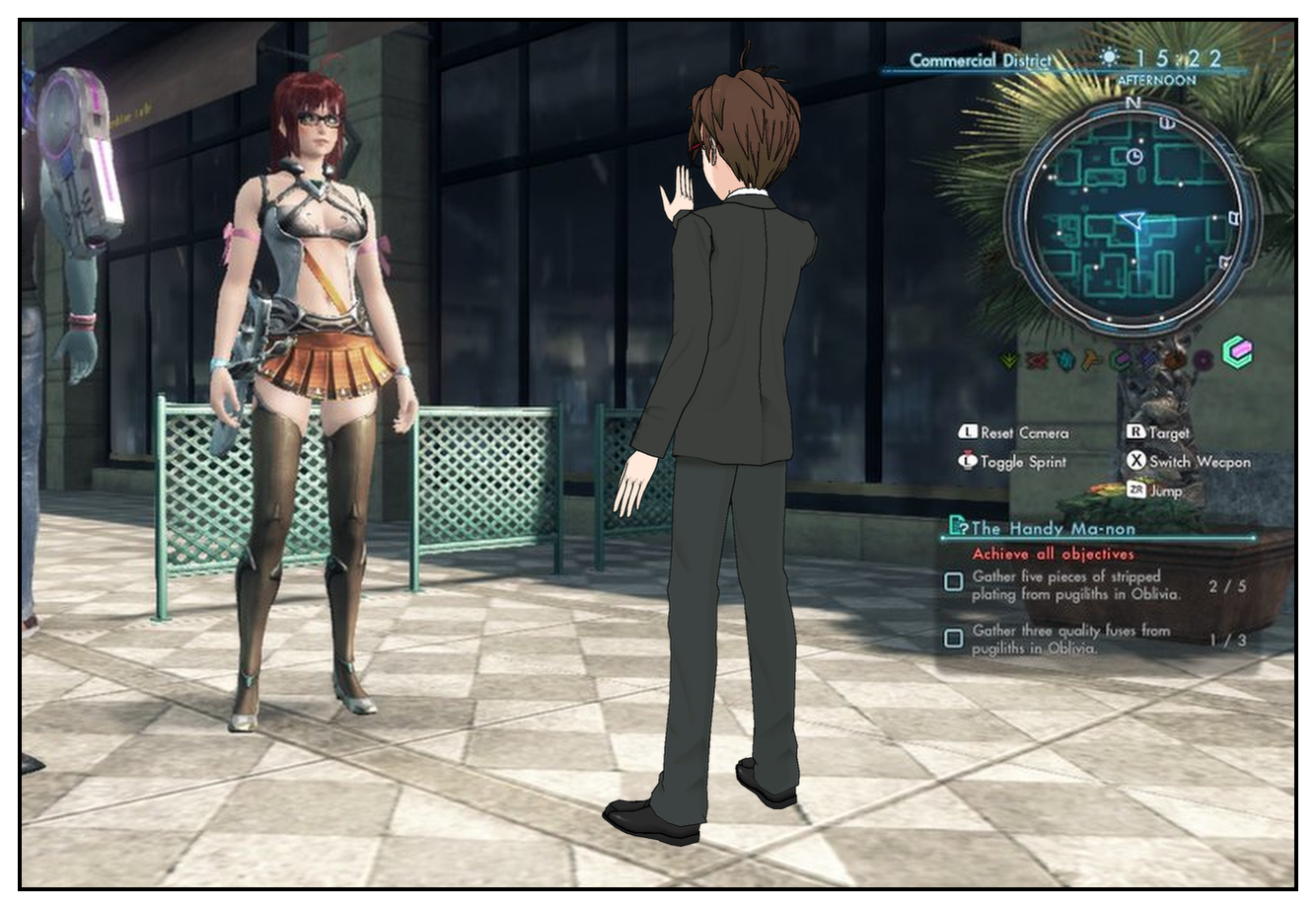
It's a really satisfying, organic sense of progression through more than just bars getting longer and numbers getting bigger. There's a wonderful sense of New Los Angeles becoming a real, living place, with people going about their business and clashing cultures learning to understand one another. It is, by far, the heart and soul of Xenoblade Chronicles X, which doubtless won't be entirely to everyone's taste — particularly those who prefer more structured linearity in their RPGs — but, for me, it's basically created the sci-fi game I always wanted to play: a game where I not only get to build a colony on a new world, but where I get to actually run around inside that colony, meet people, help them, go out into the world and make an impact on said new world as I help humanity spread its wings in its new home.

Did I mention Xenoblade Chronicles X is an amazing game? No? Go buy it now. I want more of this sort of thing, please.
2153: Should You Buy a Wii U?

0153_001

The temptation to make this post just the word "YES" in 120-point bold underlined text is enormous, but most people will probably need a bit more convincing than that.

So, going against everything I learned about writing headlines — "never write a headline that is a question that can be answered with a single word" — I shall now attempt to explain to you why the Wii U is a really solid investment, certainly as much and possibly even more so than the Xbox One and PlayStation 4.

Hardware

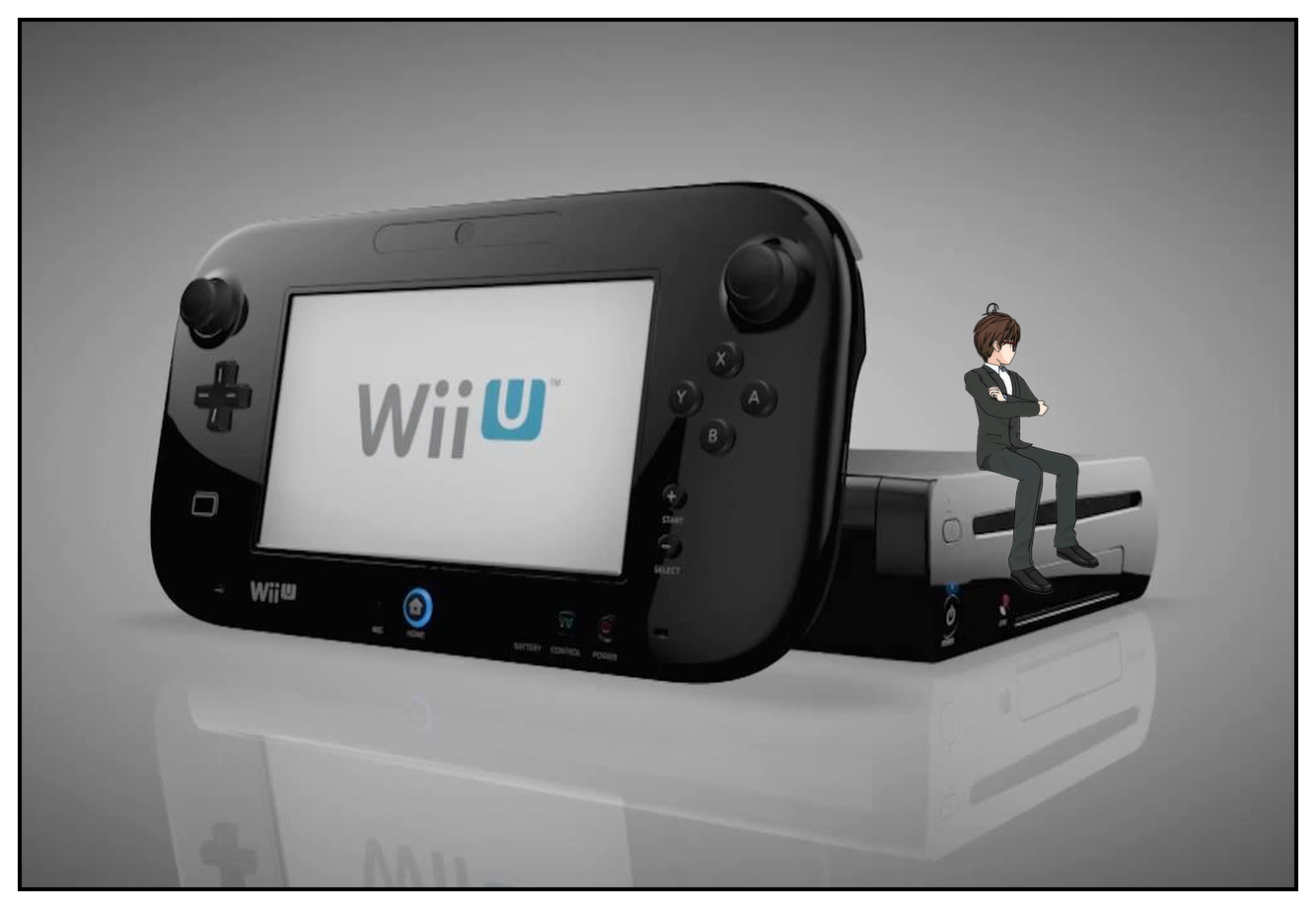
The Wii U hardware may not pack as much of a punch as its competitors in this generation, but it's a nice bit of kit. The console itself is a pleasant, shiny black box with subtle lights on the front, and it will look good under pretty much anyone's TV. The accompanying GamePad is also an intriguing-looking piece of kit that is sure to be a conversation piece for people visiting your living room, and its second-screen functionality is impressive.

The Wii U doesn't have the flashing disc slot that the original Wii did for notifications while it was turned off; instead, the GamePad can light up with announcements about new patches, new content and new releases. These announcements also appear as a banner ad on the Quick Start screen when you first turn the console on, so it's usually pretty easy to find the thing that was announced.

The GamePad itself is a surprisingly pleasant controller, even with its enormous size. Its triggers are comfortable and ergonomic, despite not being that nice brand of squishy analogue that Microsoft in particular has specialised in, and all the buttons are easy to reach by people with normal-sized hands. The only slight adjustment some people may have to make is the fact that the A, B, X and Y buttons are presented in a mirrored arrangement to how they are found on the Xbox controllers (they go "YXBA" instead of "XYAB") but this will be nothing new to anyone who had a SNES.

The Wii U Pro Controller is a really nice controller, too. It doesn't come with the console, but it's a worthwhile investment for those who don't get on with using the GamePad as a controller, or simply as an extra controller for multiplayer games. Modelled somewhat on the shape of the Xbox 360 controller, it lacks analogue triggers but makes up for this with a much nicer D-pad than anything Microsoft has ever come up with, and a built-in rechargeable battery immediately puts it ahead of both the 360 and One controllers.

You can also use your old Wii Remotes, Nunchuks and Balance Board accessories on compatible games, which is a nice nod to backward compatibility that both the Xbox One and PlayStation 4 lack. That said, some games don't support some of the older, more specialised controllers such as the Classic Controller and Classic Controller Pro, so check the packaging for the games or reports online before expecting to jump into multiplayer. One example I can think of is Ubisoft's ZombiU, which supports Wii Remote and Nunchuk, but not the Classic Controller or Classic Controller Pro; for a second player to play with a controller, they must use the Wii U Pro Controller.

The only real letdown so far as hardware is concerned on the Wii U is the pitiful 32GB storage space it comes with. Fortunately, this is easily upgradeable using any standard USB hard drive, and this is highly recommended, even if you generally only play disc-based games — patches, DLC and optional "fast loading" content for larger games can chew through that available space incredibly quickly.

Oh, there's also no Ethernet port; you're stuck with wireless networking only by default, but a third party USB-to-Ethernet converter box works absolutely fine for those who prefer the stability and speed of a wired connection.

OS and Online

The Wii U's OS is a natural evolution from the Wii's "Channels" setup and is rather similar to the 3DS. One screen — the TV by default — shows a splash screen with your own Miis and others from the Internet — assuming you're connected — along with icons representing popular games at the time and related Miiverse posts selected randomly from the community. The other shows a customisable grid of the disc you have inserted into the console and any software you have downloaded. There are also icons for the various tools the system offers.

The Wii U's online service is a significant improvement over past iterations of Nintendo Network. Friend Codes are out of the window, replaced instead by the much easier to share Nintendo Network ID. Online activity is pushed into the background and is completely unobtrusive, perhaps to a fault; the only way you will know friends are online in many cases is if a game directly notifies you, or if you happen to press the Home Button and see a notification.

You're also pretty limited in what you can do with friends. You can see what they're playing and hit a link to it in the eShop, save their Mii to your console, and view their Miiverse profile, but that's about it. There's no chat, no messaging, nothing like that. For the most part, this is fine, since any Nintendo games that offer online functionality are generally designed to be played without requiring direct communication, but the option would have perhaps been nice. There are alternative solutions, though, so it's not exactly a dealbreaker, particularly for those who prefer to play solo.

Miiverse is an interesting idea, with communities for most games as well as more general topics. It's a good place to find comments and some surprisingly impressive fan-art for games, but its execution is a little slow and clunky to make it something most people will want to dip into on a whim. It can be a good place to find information, though, and it's always interesting to see what people are saying about a game. The latest version of the Miiverse software also allows you to save screenshots and keep a "Play Journal" with annotated screenshots, which is a nice evolution of the notes page in the back of old game manuals.

The eShop is a well-designed storefront that makes discovering new things to play quite easy. A colourful front page features new releases — including, in many cases, music from the games — as well as links to the store's various sections. A solid search function allows you to find what you're looking for, but browsing can throw up some interesting surprises too.

The selection available is pretty good, though prices are not particularly competitive with physical editions and in some bizarre cases, digital versions even cost more than their physical counterparts. A big highlight of the platform is the Virtual Console section, which includes games from older systems ranging from the NES to the Nintendo 64 and even the previous-generation Wii, though the selection here is relatively small. It's worth noting that switching the Wii U into "Wii Mode", though, allows you access to the older system's much more substantial Virtual Console library, though you'll have to satisfy yourself with playing these versions in 480p rather than the lovely sharpness of 1080p, but in the case of retro titles this may not be a dealbreaker for many of you.

The main issue with the Wii U's online functionality is that not much of it is explicitly explained. There's a very convenient image sharing website that allows you to quickly post screenshots to Facebook, Twitter and Tumblr, for example, but you won't know it's there unless you happen to peek into the system's default web browser bookmarks. A bit of experimentation — or perhaps being told about these things by friends — will reveal what it offers, though.

Games

This is the highlight, really. While the Wii U's overall library is very small compared to the Xbox One and the PlayStation 4, its quality is pretty consistently excellent. Here are some personal recommendations:

Super Mario 3D World — one of the best Super Mario games in years, Super Mario 3D World takes the isometric perspective of the 3DS game Super Mario Land and presents the player with more complex, longer levels and a wide variety of mechanics to learn and play with. It's a beautifully presented game with wonderful graphics and music (and a somewhat redundant "cooperative" multiplayer mode that doesn't really add much to the game) that is an essential purchase for anyone with a Wii U.

Super Smash Bros. for Wii U — Super Smash Bros. remains one of the most accessible fighting games out there, but its hidden depths mean that it is one of the most consistently popular titles on the tournament circuit, too. It's a tremendously fun game, and in terms of the sheer amount of content you get both on the disc and available as downloadable content, it's hard to think of a fighting game with more to offer both solo players and parties of fighters.

Mario Kart 8 — It's Mario Kart, so not much more needs to be said, really; it runs beautifully, it has some wonderfully inventive tracks (with more available via optional DLC) and it has an excellent online mode.

Super Mario Maker — It's wonderful to see a resurgence of the "Construction Kit" genre of games, and Super Mario Maker is a wonderfully accessible, friendly opportunity for people to try their hand at making 2D platformer levels with a Super Mario Bros, Super Mario Bros 3, Super Mario World or New Super Mario Bros U aesthetic. Even if you have no intention of creating levels, though, the sheer volume of custom levels available online is enough to keep any platform game fan busy, and the game's voting system ensures that badly designed levels drop to the bottom of the rankings pretty quickly.

Splatoon — The shooter for people who don't like shooters. Splatoon is a lovely twist on the team-based multiplayer shooter genre in that it's never just about killing the other team; rather, it's about claiming territory by painting it. A wide variety of weapon types and other equipment keep the game interesting in the long term without unbalancing it, and the fact the game is continually expanding over time means that it's always… fresh.

Xenoblade Chronicles X — If you've read my posts over the last few days about this, you already know how I feel about this. It's one of the most spectacular games I've ever encountered, one of the biggest open worlds I've ever seen and one of the best realisations of "sci-fi" in video games of all time. It's not a game for the faint-hearted as it is absolutely riddled with interlocking mechanics that you need to figure out for yourself in most cases, but it's a significant step forward for the role-playing game genre and absolutely one of the best games I've ever played.

NES Remix — Enjoy retro games but can't quite face playing a whole one through? Enter the NES Remix series, two games that feature numerous snippets of various popular Nintendo games, coupled with bizarre challenges and sometimes complete revamps of how you play them. Can you get through Super Mario Bros. backwards as Luigi? Can you perform perfectly in Excitebike? Can you do anything involving Zelda II without wanting to throw things? SNES Remix now please, Nintendo…

Conclusion

Yes.

2152: Skelleton Crew

0152_001

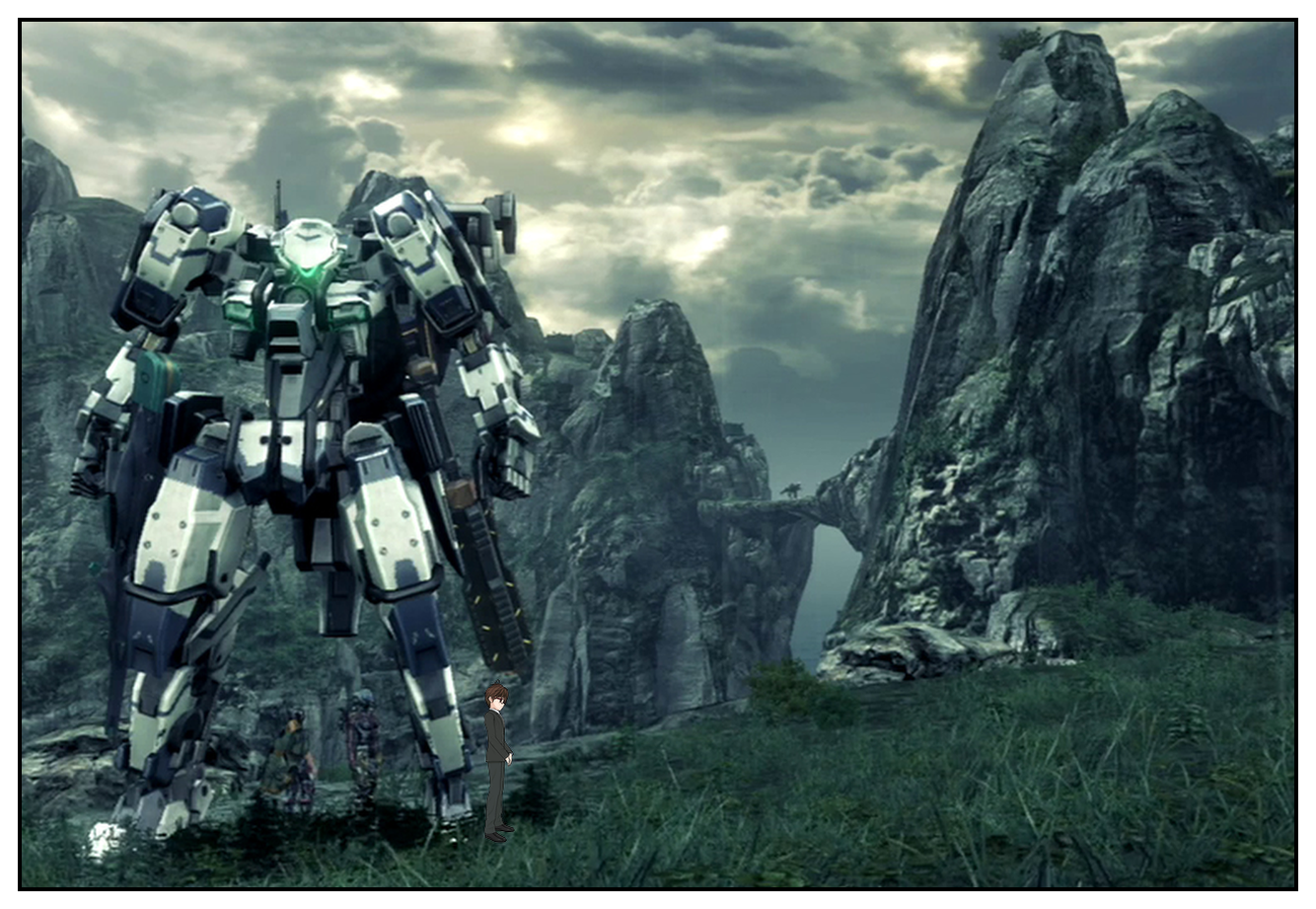
I've finally reached a point in Xenoblade Chronicles X where I can start using "Skells", the game's giant robot mech thingies that bring to mind Xeno series progenitor Xenogears. I'm not sure I've mastered them at all yet, but they certainly add some interesting things to the mix — and, like most things in Xenoblade Chronicles X, you're left to experiment a bit rather than having every piece of information you need spoon-fed to you.

A Skell is separate from your character; it's effectively a new party member that replaces one of the on-foot characters. To acquire one, you need to complete the main scenario up and including Chapter 6, then complete the Skell License quest in the BLADE Barracks, which tasks you with completing an appropriate objective for each of the Divisions. Once you've done this, you'll be generously provided with your first Skell for free, which allows you to get a feel for things somewhat. You and your party members will have to reach level 30 before you're able to make use of any more Skells, though — but when all characters are at the appropriate level you can have an entire party of Skells when necessary.

That "when necessary" part is important; while it can be most enjoyable to go stomping all over everything and overkilling them with a giant robot, Xenoblade Chronicles X's enemies and level scaling take size as well as level into account. In other words, let's say you're level 25: on foot, you can happily take down things around your own level — perhaps even slightly above — of a similar size to you. Tackle anything bigger, though, like the giant insects that you'll see in Primordia, and you'll almost certainly get flattened.

This is where Skells come in. Adding just one Skell to a party tips the balance in your favour, because a Skell is stronger than a person, and its simple presence increases the passive defense value of everyone on foot in the party. Adding more than one Skell to your party increases your overall total power level considerably. To give an idea of the difference it makes, earlier tonight I was reasonably comfortably taking on large enemies over 10 levels higher than me using two Skells: a Heavy-type one on my character, and the default (actually not very good) freebie you get on Elma. The two on-foot party members were usually KO'd by the time the fight was over, but since even KO'd members get experience for kills in Xenoblade Chronicles X — assuming the whole party doesn't wipe — this wasn't really a problem.

So Skells allow you to take on enemies that are both higher level and larger than you. They don't make you invincible, though; you have to be a bit careful. Running out of HP in your Skell doesn't kill you, but it does destroy the Skell, forcing you to continue the fight on foot. What happens then depends on if you pass the "Soul Challenge" reaction test as you eject from the Skell: get a Perfect rating and you're fine, though you'll still have to go back to base to pick up your repaired Skell; get a Good rating and, again, you'll be fine, but you'll lose one insurance "point" from your Skell when you retrieve it — once these are all gone, you either need Salvage Tickets or deep pockets to recover your wreck; miss the Soul Challenge completely and you'll eject from your Skell with 1HP, which is seriously dangerous.

Skells have a few interesting mechanics in battle. Firstly, they can Bind enemies that are Staggered. Stagger is a status effect that is usually a cue to use an Art that has the Topple effect, knocking the enemy to the floor and giving you a few seconds of uninterrupted pummelling as they try to get back to their feet. Bind, meanwhile, temporarily puts the Skell out of action while it holds the enemy in place, but the enemy is completely disabled for longer than your typical Topple effect. Successfully Binding an enemy also restores some of your Skell's fuel, which is necessary to use it in battle (and, later, fly).

The second interesting Skell mechanic is called "Cockpit Time", and it's awesome. Randomly throughout the battle, the camera will zoom inside your Skell's cockpit to show your character sitting in the seat, working the controls and generally wrecking the enemy's shit. When this happens, you are temporarily invincible and all your skill cooldowns reset, meaning you can immediately use them all again without having to wait. It happens at random, but it can make a huge difference, particularly in longer fights.

The third Skell mechanic worth playing with is Overdrive. On-foot characters can use Overdrive when they build up 3,000 TP and can then get various bonuses by stringing longer and longer combos together. Skells, meanwhile, build up GP rather than TP by fighting — and much quicker than on-foot characters — and, again, can trigger Overdrive when this reaches 3,000. Skell Overdrive doesn't have a combo counter; instead, it just has a timer that randomly extends when it expires, possibly according to how much punishment you've been dishing out in the meantime. Combine Overdrive with Cockpit Time and you become an absolutely unstoppable killing machine for a few seconds. The feeling of power is simply marvellous.

I haven't yet looked into optimising my Skells; the interesting thing about them is that the various weapons you equip to their hardpoints correspond to Arts you can use in battle, so optimising presumably means finding a good balance of stats, damage types, special effects, augments and Arts types. By tweaking your loadout, you can also effectively change the "role" of your Skell in a party situation; loading up on weapons with a Taunt ability turns you into an effective tank, for example, while other weapons come with Arts that can apply debuffs, affect enemy and party stats or boost damage from particular aspects of the enemy. It's all very deep and customisable.

I'm yet to find quite the right balance between being on foot and being in my Skell — I'm sure there's some sort of benefit to fighting on foot, perhaps against smaller enemies — but it's been really interesting to explore so far. At 50 hours into this incredible game, I feel like I'm still learning things. And that's pretty awesome.

2149: Helping your Squad in Xenoblade X

0149_001

Been dabbling with and investigating Xenoblade Chronicles X's online functionality today, so I thought I'd share some findings, because the game itself doesn't make things entirely clear if you don't know where to look for information. Said online functionality is possibly the most interesting use of connectivity in an ostensibly single-player RPG since the Souls series, though, so it's worth exploring.

Squads

A Squad is a group of up to 32 players who are effectively put together in a "lobby" of sorts. You don't actually play together for the most part, but the 32 players in a Squad can communicate with each other through the BLADE Report system, and the avatars of Squad members will show up in each other's games.

Whenever you start a new session of Xenoblade Chronicles X, you have three choices:

  • Lifehold Squad indicates that you want to focus on single-player activities, so you won't be bothered too much by the online functionality.
  • Conquest Squad indicates that you're open to cooperative online shenanigans.
  • Friend Squad allows you to join a Squad a friend is a member of.

Note that a Squad isn't persistent, so you don't need to take note of the Squad number you join. If you want to play with friends, just use the Friend Squad mode. Otherwise, use the Conquest Squad mode if you want to play with others, and Lifehold Squad if you want to focus on soloing.

Communicating

The BLADE Report system allows you to communicate with others in your Squad. It's anonymous for the most part, so some players have taken to "signing" their messages. With only 48 characters to play with per message, though, space is at a premium.

Use BLADE reports to offer advice, ask questions or brag. If asking a question, be as specific as you can within the character limit, since it may not be obvious what you're talking about if you're vague.

You can also communicate with other players when you're in a Squad Mission by using the Emotes palette on the GamePad. Some emotes are purely animations, but most of the first page of them have accompanying voice clips.

Scouting

"Scouting" refers to hiring other players' characters into your party, and making yourself available for hiring in turn.

There are two means of Scouting: via the Scout console in NLA's Administration District, and by running into an avatar randomly around NLA or in the field. Friends' avatars seem to show up more frequently around the entrance to BLADE Barracks, assuming you're in a Squad with them, so if you want to deepen your Affinity with a friend's character, this is the easiest place to find them.

Scouting through the Scout console will cost you credits according to the level of the character you're hiring, but you'll be able to keep them in your party for longer — generally 120-240 minutes. Scouting via running into a character in the field or around NLA is free, but they only stick with you for half an hour.

While partying with Scouted characters, you'll notice a small white gauge under their portrait. This is their Scout Level, which will increase the more you complete activities with them. Increasing Scout Level nets you various rewards and also allows you to do more things together — just raising it from 1 to 2, for example, allows for use of the Personal Greeting instead of the Public Greeting.

To make yourself available for Scouting — you'll receive rewards if other players hire you — use the Scout console and the Manage Registered Avatar option. Also check the Settings menu; there's an option in there to automatically update your Scout avatar when you save your game.

Squad Tasks

Periodically, a Squad Task HUD element will appear in the lower right of your screen. This details several tasks for the Squad as a whole to complete before a timer expires: they will either involve killing enemies (yellow, orange or red icons) or collecting Collectibles (blue icon).

In order to see what each task is, hold R and tap L to cycle through the tasks. Note that you won't get any help on where to find the targets, so ask your comrades using a BLADE Report if you're not sure.

Yellow Hunt targets ask you to kill any enemies of a broad group such as Piscinoids, Humanoids or Mechanoids. Orange Hunt targets ask you to kill any enemies of a subgroup, such as Duogills, a subgroup of Piscinoids. Red Hunt targets ask you to kill a specific enemy, usually a Tyrant. Generally speaking, yellow targets will require the Squad to down 20 enemies of the relevant type, orange needs 10 and red needs 5.

Contributing to and clearing Squad tasks will net you Reward Tickets, which can be traded in at the Network Console in your BLADE Barracks. The rewards are mostly crafting materials, but this can be an easy way to acquire quest items or materials you need to develop or upgrade equipment without having to hunt hundreds of monsters or pray for good luck when grabbing Collectibles.

It's in everyone's interest to complete the Squad Tasks, so be sure to use BLADE Reports to tell others where targets are and encourage cooperation.

Squad Missions

Squad Missions are cooperative multiplayer missions for between one and four players. A Squad Mission opens up whenever one of the Squad Tasks is cleared — you'll know this has happened because the greyed-out "SQUAD MISSION" text on the Squad Task HUD will turn blue and start to pulse. The more Squad Tasks the Squad clears, the more Missions will open up — and the better rewards will be on offer.

To start a Squad Mission, go to your BLADE Barracks and use the Network Console, then choose Squad Missions to see what is available. Time Attack missions unlock after Chapter 4 when you fight the first major story boss, and Support Missions unlock after you clear the main story.

A Squad Mission has a minimum level and a sync level. You must meet the minimum level requirement to start the mission, and if you exceed the sync level you will be synced down to it for the duration of the mission.

When starting a Squad Mission you have the option of completing it with your current party (which could consist of NPCs and Scouted player avatars) or to actively recruit. If you choose the latter option, all players in your Squad will receive a notification that you are recruiting for a Squad Mission and have the opportunity to join you if they meet the requirements.

When you start a Squad Mission, you'll be placed in a new instance of your BLADE Barracks Network Room. When other players show up, they'll automatically appear in your party. You can start the mission by using the door near the Network Console, or if you're not the party leader — i.e. you joined another player's recruitment drive — you can indicate you are ready by attempting to use the door. Players who are ready will have a green checkmark on their portraits in the party list, and the icon over their heads will pulse. If you're leader, it's your call as to whether or not you start a mission without a full complement of four people or wait for reinforcements.

Once the mission is underway, you have a limited amount of time to complete the objectives in the lower right of the screen, and a limited number of retries — usually 3. A retry is used up when a player chooses to respawn rather than waiting for a comrade to resurrect them; when the last retry is used, the mission will automatically fail, so if you're down to the last one, don't attempt to respawn unless you're sure everyone else is about to die.

On the subject of resurrecting other players, remember that you need 3,000 TP to get someone up. The quickest way to build up TP is to use your melee weapon, even if you're a ranged class such as Enforcer, Psycorruptor or Mastermind. Resurrecting another character will usually trigger a Soul Challenge, too, so be ready to hit B at the right time to give them some free healing. If you have any direct healing Arts, too, now would be the time to throw them at the person you just got up.

Divisions

At midnight every real world day, Division Spoils are dished out. Rewards on offer include consumable or saleable items and can be very useful in your adventures. The exact rewards available are determined by the Division rankings for the previous day, and ranking is determined by how many BLADE Points each Division earned collectively. You earn BLADE Points for pretty much any activity you do in the game, but you earn significantly more for the two "specialist" tasks each Division is known for.

BLADE Points are also used to rank up within BLADE, so it's in your interest to pick a Division that fits with what you enjoy doing most. You can change at any time, though, so don't sweat the initial decision too much.

Divisions also have support effects. You can take advantage of these by talking to your Squad's characters in the field or in NLA, or they will activate automatically under certain circumstances — check the icons under the minimap to see which are currently active for you.

Conquest and Nemesis

Completing Squad activities will fill the Conquest gauge, which you'll see on the Squad selection screen. When this is full, a Global Nemesis will appear as a Squad Mission and be available for a limited time — generally several real world days.

Fighting a Global Nemesis is a case of dealing as much damage to it as possible before your pretty much inevitable defeat. The more HP gauges you deplete, the better your rewards will be when the Nemesis period is over, or in the unlikely event that it is completely defeated.

You can't just spam the Global Nemesis mission and chip away at its overall total HP, though (known as RP, for some reason) — you need BLADE Medals to jump in to a Nemesis encounter. These are acquired through completing Squad Tasks and Squad Missions, so if you want to take on these powerful enemies, jump into the online stuff and help out other players whenever you can!

2148: Xenoblade X Tips and Tricks

0148_001

I've been playing Xenoblade Chronicles X for about 25 hours so far, and I've picked up a few tips and tricks along the way. I will now share them with you, in case you're a newcomer to the game somewhat daunted by the sheer scope of what's on offer.

Your character

  • Don't sweat early decisions like which Division to join too much; you can change most things later. About the only thing you can't change is your character's basic appearance.
  • Progression is measured in three main ways:
    • Your character level (sometimes referred to as your "inner level") which increases with experience points gained, and affects your base capabilities.
    • Your class rank, which increases with class experience, and which unlocks new Arts and Skills as you rank up. When you reach rank 10, you unlock one or more new classes in that particular tree.
    • Your BLADE level, which increases with BLADE points, acquired through pretty much everything you do in the game, and which unlocks new facilities in the Barracks as well as allowing you to level up your Field Skills. The rate at which you acquire BLADE points for various activities is determined by your Division, so pick a Division that encourages you to do the things you enjoy the most for fastest progress.
  • Speaking of Field Skills, level up Mechanical first, since you'll always need this to install probes.
  • You can change class at any time. Note that each class has its own signature pair of weapons, so ensure you have appropriate gear before changing.

Equipment

  • Determine whether your class's strengths are in ranged or melee combat — this is partly determined by the weapons you use, and partly by the Arts you have equipped. Focus on acquiring equipment that plays to your strengths; for example, the Enforcer class tree particularly specialises in ranged combat, so pick equipment that emphasises your Ranged Attack and Ranged Accuracy stats.
  • A higher Attack value on a weapon isn't necessarily better; check the attribute of the weapon, too. Sometimes a weapon with a non-physical attribute and a lower Attack score can be more effective than a physical weapon with a higher Attack attribute; insectoid enemies, for example, are weak against Thermal damage and strong against standard physical damage.
  • The colour of a piece of equipment indicates its rarity and quality. White equipment is basic, green is Unique, blue is Rare, yellow is rarer (I've forgotten the official term offhand) and orange is Intergalactic.
  • Augments are important. Two weapons that look the same but have different augments can have a very different impact on your character. Using the ranged Enforcer class as an example again, there's not a huge amount of point equipping a gun that boosts your Melee Attack stats; better to play to the class's strengths and try to boost range.
  • Don't forget Augments can be upgraded at the AM console in NLA. You'll need Miranium and crafting materials to do this. By upgrading Augments, you can make a piece of equipment several orders of magnitude better than it was when you first acquired it, but note that there's a maximum total number of times each weapon can be upgraded.
  • New equipment will become usable every 5-10 levels or so, but you should also make sure you level up the AMs by using their equipment and donating Miranium to unlock additional options within each "tier" of equipment.

Combat

  • The most important thing in combat is positioning. Try and put yourself to the side or rear of the enemy whenever possible, as this boosts accuracy and damage. Use the Sprint function liberally in battle to change position quickly, and take note of the position indicator at the bottom right (the thing that says something like "FRONT / MIDDLE") — this indicates your relative horizontal and vertical positions to the enemy. Ideally, you want to be at "BACK / ABOVE" and least ideal would be "FRONT / BELOW".
  • When using Arts, there's really no reason not to go for positional bonuses when available. Familiarise yourself with your equipped Arts outside of battle and be prepared to shift your position to unleash them from the appropriate location.
  • For Arts that offer bonuses for things like Aura use, keep an eye on your TP meter, because you may need that TP for something other than an Aura at some point.
  • Pay attention to Soul Voice; it's the main way of keeping your party standing. When a character calls out to you, match the colour of their speech bubble to the colour of an Art for a bonus effect and a small heal to both you and the person calling out. (Appropriate arts will also pulse on your action palette to allow you to pick a suitable one to use.)
  • Set up your own character's Soul Voice to play to your party's strengths. If you're rolling with a group of melee specialists, you're not going to be much help yelling for them to use ranged Arts. Also take the time to customise the four Custom Voice options to suit your play style; there's some really nice effects in there, such as temporarily invincibility if you Sprint for three seconds.
  • Hit every Soul Challenge you can. Not only does this trigger a Soul Voice from your character, it also does a significant heal on the whole party. In longer fights against tougher foes, it is essential you hit these, so practice that timing!
  • Watch your enemies closely. There are no telegraph markers for most attacks, so you'll need to learn the visual cues to avoid taking too much damage. A helpful indicator is whether the position indicator is flashing red or not; if it is, you're in melee range, and will be hit by melee Arts. You'll hear a buzzer sound when you enter melee range, too, so take a step or two back if you're wielding your ranged weapon at the time.
  • Breaking enemy appendages is useful for several reasons. Firstly, the more appendages you break, the more damage the enemy takes. Secondly, certain special attacks are tied to particular appendages. Thirdly, breaking an appendage usually triggers a Soul Voice. Fourthly, breaking specific appendages allows you to acquire specific drops from the enemy related to that appendage.

Exploration

  • You're actually fairly mobile even on foot. Sprint when you can, because not only do you move faster, but you also jump significantly higher. This is useful for hopping over obstacles or "mountain goating" up cliff faces.
  • Install every probe you can. Every successfully installed probe nets you Miranium and credits income, but also acts as a fast travel location.
  • Probe sites shoot a beam of light into the sky to help you find them. If you know you're in the right hex but can't see the beam of light, look up to see if it's on top of a mountain or cliff, and if you still can't see it, it's probably underground in a cave somewhere.nearby.
  • When you install a probe, the hexes around it on the Segment View map reveal their main feature. To complete a hex's Sector Recon, you need to complete the objective indicated by the icon. A page icon indicates a mission takes place there (but doesn't necessarily start there); a sparkle icon indicates a specific treasure to be found; a monster icon indicates the Tyrant in that hex must be defeated.
  • NPCs with recon info will have a gold smiley face speech bubble icon over their heads. Walk near them to eavesdrop on their conversation and automatically update your map. The hex they referred to will be marked with "New" on the GamePad; tap it once to reveal the details, and it will be marked with a checkmark to show you've read the information but not yet acted on it.
  • The world layout isn't like an MMO, with "levelled" zones; instead, each hex on the map has an overall danger level in relation to your character's inner level. Don't be afraid to go into areas with higher level enemies, because sometimes you need to pass through these to get to where you're going. Do take care around enemies with red eye or lightning bolt icons, however; steer clear of them to avoid detection.
  • If you see something that looks interesting, go and check it out. It might be a landmark, scenic viewpoint or unexplored area, and these are all worth experience.
  • Grab every Collectible you see lying around on your way to a destination. Some are used as quest items; some are crafting materials; some are simply things to put into your Collectopedia. Curators in particular also gain a decent amount of BLADE points per Collectible acquired.

Online

  • It's worth playing online if you can, since there are helpful rewards available, including:
    • Division Spoils, which unlock at midnight each day according to the total number of BLADE points each division acquired
    • Squad Tasks, which are shared objectives (usually killing specific enemies or types of enemy) that reward everyone in a Squad with Reward Tickets for completing them
  • Reward Tickets can be traded in for a huge variety of material items. If a quest or upgrade is calling for a specific item and you don't feel like killing hundreds of enemies in the hope of a rare drop, see if you can afford it with your Reward Tickets; just use the terminal in the BLADE Barracks to check.
  • If you're stuck on something, try sending a Free Report asking for help; someone might have an idea. Free Reports have a very tight character limit, but be as specific as you can, since it may not be obvious where you are or what you're talking about.
  • Don't forget to register your character as scoutable at the console in the Administration District. You can also hire other players' characters here, and you can also team up with other players' characters if you come across them in the field. Note that they'll only stick with you for half an hour if you do this, whereas hiring them from the console will keep them with you for 2-4 hours depending on their Scout Level. The former is free, however; the latter can get expensive!
  • To encourage other players to scout your character, be sure to customise your Public and Personal greetings as well as your Fashion Gear. Having a distinctive character means people are more likely to pay attention and hopefully hire you.

Think that'll do for now. More tips once I get a bit further and unlock Skells!

2146: More Xenoblade

0146_001

Pretty much all I've done today is finish off a bit of work I had to do and play Xenoblade Chronicles X, so I'm going to talk a bit more about my experiences with the latter.

If yesterday's entry didn't already make it clear, I love it. It's actually not the kind of RPG I traditionally used to love, so this surprises me; it's open world, it's non-linear, it's nowhere near as story-centric as many other RPGs out there… but it's compelling, addictive and beautiful.

I think one of the things I like most about it is that it feels something like the realisation of a longstanding fantasy. Let me explain.

Way back in secondary school, I was renowned among the teaching staff as someone who put way too much effort into creative writing assignments, usually delivering pages and pages of epic prose where my classmates would put in maybe one or two at most. I can still remember most of these stories I wrote, from early example Timeslip (a riff on Back to the Future, which my friend Daniel was obsessed with, that featured a time-travelling lorry rather than a DeLorean, and what was essentially Rainbow Road from Super Mario Kart to represent the pathways between times) to later pieces such as my A-Level English Language assignment, where I delivered a surprisingly confident but harrowing first-person stream-of-consciousness narrative from the perspective of a girl who was raped.

Anyway. One of the stories I wrote — I forget exactly when, but I do remember writing it — was called Colony. Having somewhat grand plans for what I had written, I had tagged it Chronicles of the Scorpio, Book 1, despite having not even finished the entire story of Colony. That is beside the point; what is important is what Colony was about.

Colony was loosely inspired by a PC CD-ROM game I'd been playing called Alien Legacy. This concerned an interstellar colonisation ship waking up its crew a long way from where they were supposed to be, and the crew and colonists having to make the best of the situation in which they found themselves. Colony featured a similar kind of situation, with the UNS Scorpio finding itself pulled through a wormhole into (if I remember correctly) the Beta Caeli star system, which conveniently had an M-class planet for humanity to plant itself on. The remainder of the story — which I finished — described the colonists' struggle for survival as they discovered they were not entirely alone on this planet, and so on and so on.

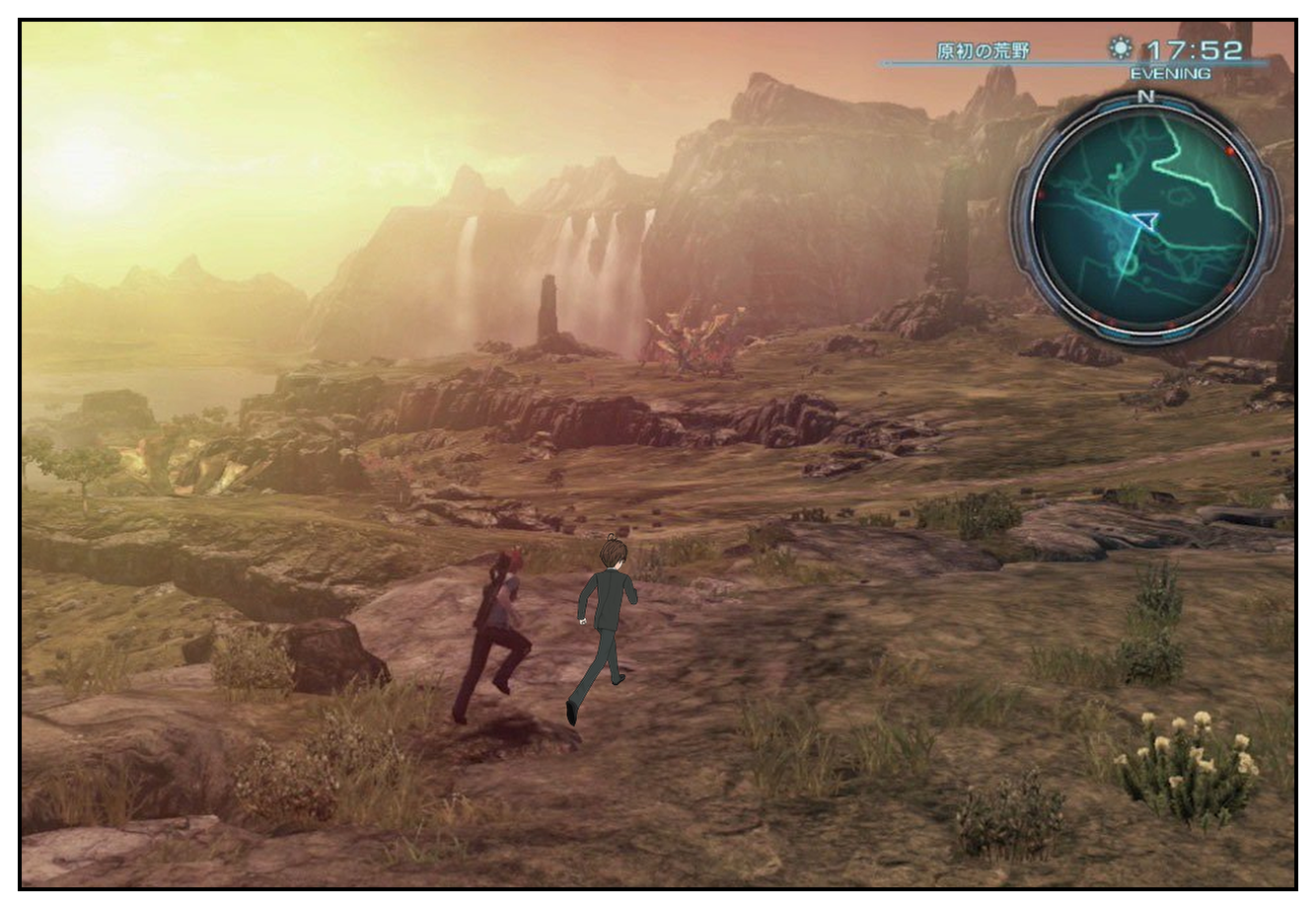
To the point, then: the thing I like about Xenoblade Chronicles X is that it feels like I'm exploring that story: one that's been stuck in my head since I was a teenager. I don't think I've ever played a game with such a brilliant sense of exploration, discovery and having to fend for yourself on a very alien world, and Xenoblade Chronicles X's handcrafted setting puts the randomly-generated locales of Minecraft and its ilk to shame by being absolutely fascinating to explore. The experience of surveying planet Mira is exactly how I pictured the characters in Colony spreading out from their initial base camp to discover exactly where they had landed.

There's so much to do, with an excellent sense of constant progression. You can follow the story missions — something that I haven't done much yet so far — or you can make an effort to survey as much of the planet as possible. It's extremely satisfying to take a look at the Segment Map on the GamePad screen and see a number of little checkmarks indicating that you've completed that particular area… but it's also somewhat daunting to see how many other areas don't have little checkmarks in them and realise quite how much there is left to do.

I am fine with this, though. The sheer amount of stuff to do in Xenoblade Chronicles X distinguishes it significantly from MMORPGs, which is what it's getting most frequently compared to: rather than grinding out the same content over and over again in an effort to get an incrementally small reward and creep up in power week by week, you can pretty much always be doing something different and be making progress somehow: you can be levelling up your character, or increasing the rank of your current class, or increasing your rank in the BLADE organisation, or earning money, or gathering resources, or researching weapons for the arms manufacturers, or… you get the idea.

The online seems like fun, too, though I've only dipped my toes into it so far. Taking the form of short, instanced missions for up to four players at once, the Squad Missions feature allows you to play with others and cooperate to take down some tough challenges together. The game is set up in such a way that direct communication isn't necessary, with characters instead using the "Soul Voice" system to automatically shout out things to each other and boosts to your abilities being appropriately applied if you respond correctly to these shouts. It's also possible to communicate through emotes and, if you so desire, the slightly clunky "Free Report" system, which is not quite real-time text chat, but it's testament to the game's solid systems that four strangers can come together and take on some significant challenges without any need for voice or text chat to coordinate things. I wonder if this will still be the case at higher levels? We shall see, but being only level 15 so far, I have a way to go yet!

Anyway. If you've been dithering over whether or not Xenoblade Chronicles X is worth a purchase, stop; it absolutely is. (And, to answer a question from the comments yesterday, no you don't need to play Xenoblade Chronicles first, because they're two completely independent games.) It's one of the most ambitious, impressive RPGs — no, games, full stop — that I've ever played, and it deserves a big, appreciative audience. I'm telling you now, games industry; if this game gets passed over in Game of the Year talk, we are going to have some serious words…

2145: Xenoblade Chronicles X First Impressions

0145_001

So, Xenoblade Chronicles X came out today, and I picked up a copy.

Is it any good? Well, after eight hours of play in one day, I think it's fairly safe to say that yes… yes it is.

38 words is not quite enough to articulate why this game is worth your time and attention, however; so I shall attempt to elaborate somewhat. I wrote a little the other day about how much I enjoyed the previous Xenoblade Chronicles game on the Wii, and much of that still applies, though as I suspected from what I'd heard prior to release, Xenoblade Chronicles X is a bit of a different beast to its predecessor.

Let's start from the beginning, then. Xenoblade Chronicles X casts you in the role of a survivor of a spaceship crash on the planet Mira. The game begins with you being rescued from your stasis escape pod and emerging into this strange new world with no recollection of who you are/were. You're surprised to discover that the remnants of humanity have been somewhat busy in the intervening two months between the ship crashing and your rescue, but you quickly adjust to life in New Los Angeles, a city constructed from the wreckage of your former ship's habitation module.

In those two months, it seems said remnants of humanity have organised themselves in what appears to be a fairly efficient manner. Of chief importance to the building of humanity's new life on Mira is the organisation known as BLADE, which stands for Building a Legacy After the Destruction of Earth, but which everyone just calls Blade, because that's cooler.

BLADE is responsible for most of the day-to-day running of life on Mira for humanity. Its employees go out and explore the world, gather materials, keep the more feisty members of the local fauna in check, deploy probes and set up resource infrastructures. It doesn't take long for you to be inducted into the ranks of this group, and before long you're swearing allegiance to one of the "Divisions", which determines the most efficient means you have of ranking up within the BLADE organisation, though regardless of your allegiance you're free to pursue any activities you see fit.

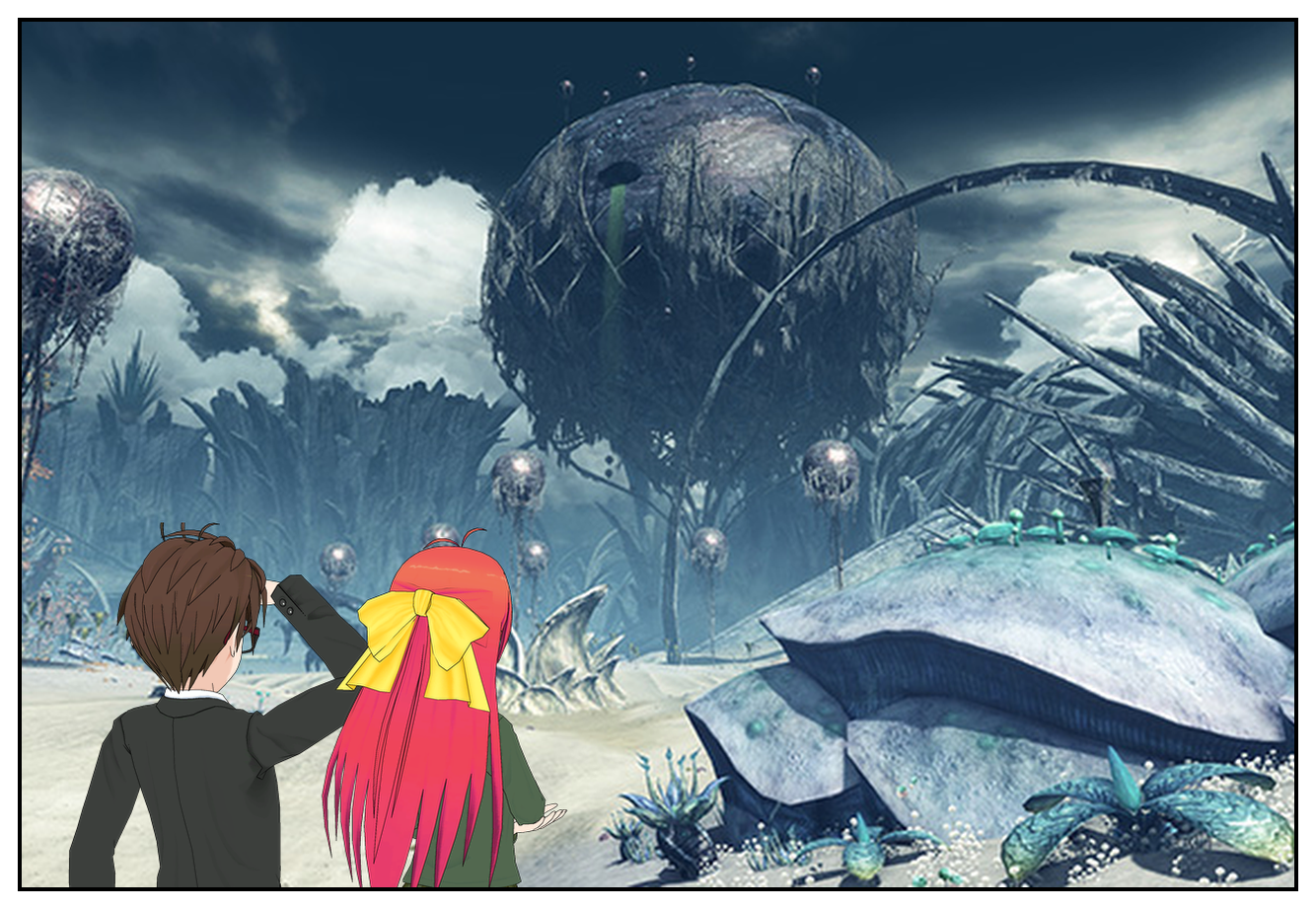
Once you step outside New LA onto Mira proper, there's plenty to do. Like the previous Xenoblade game, the world is strewn with collectables that can be put into the Collectapedia; there are plenty of enemies to fight of all shapes and sizes — with the biggest being some of the biggest… things I've seen in any video game ever, including Shadow of the Colossus — and there's a ton of exploration to be done. By wandering around, you'll discover landmarks, sightseeing spots, unexplored areas such as caves and ruins, places to install mining equipment and all manner of other things.

When you get into combat, you're presented with a system somewhat like the previous game's, but with a number of refinements. Of chief importance is the "Soul Voice" system, whereby party members can chain attacks together by shouting things out during battle based on various trigger conditions. By using the appropriate Arts when your companions yell out the relevant things (which are colour-coded to make things easier for you) you can achieve various helpful bonuses and special effects. Likewise, when you perform a particular ability and then hit the B button at just the right time, you can encourage your allies to trigger a Soul Voice in the same way. Combat feels fluid and interesting, and the fact you can switch between ranged and melee weapons at will means you can tweak your playstyle how you see fit — a fact that is further compounded by the array of different character classes on offer, which you're free to switch between whenever you like.

There's also some online functionality that is pretty interesting. After clearing the third chapter of the main story, you sign up for a "Squad", which is an online group of up to 32 players. Once you're in a Squad, you receive notifications about their achievements and gain the ability to make "reports" about things that go on around the world, things you've done or simply to chat. You can trade things with other players, too, and there are communal Squad objectives to complete collectively as a group.

For those who want to take things a step further, there's a full multiplayer mode where you can take on Squad Missions together in parties of up to four people. These tend to be short, timed missions where you have to achieve specific objectives such as defeating enemies, but playing alongside other people and chaining your Soul Voice effects into each other has a markedly different feel from playing with the AI characters. It's also a good opportunity to admire other players' custom avatars, since the game features a vanity system whereby you can wear one set of gear for its stats, then apply the appearance of a different set for your own custom outfit.

Xenoblade Chronicles X is a game that appears to be incredibly daunting in its scope, with numerous intertwining game systems that, after the initial few story chapters, it leaves for you to explore for yourself rather than guiding you through by the hand. The electronic manual is essential reading, since not everything in the game is explained in tutorials, and there are a few bits and pieces that will doubtless prove bewildering without explanation.

So far I've had an absolute blast, though. The environments are spectacular, the creatures are weird, wonderful and gigantic, the combat is fun, the story is enjoyable, the characters are pleasant to hang around with, and the setting is well-crafted with a pleasing sense of coherence to the whole thing.

In short, it's pretty gobsmacking, not only as a game in its own right, but in how much of an improvement over its predecessor it is, too. And it's doubly impressive for being quite this spectacular on the Wii U, by far the least powerful of the current generation of consoles. Frankly, if this game doesn't shift a few Wii U systems, nothing will, because I find it hard to believe anything more impressive will be squeezed out of Nintendo's hardware.

2144: Link's Awakening

0144_001

Closing in on the end of The Legend of Zelda: Link's Awakening, and I've really enjoyed it — quite possibly more than A Link to the Past, which was previously one of my favourite Zelda games alongside Majora's Mask.

I haven't quite finished it yet so I'm not sure of the complete "truth" behind everything, but I'll comment on what I have seen so far, which is up to about halfway through the eighth dungeon, Turtle Rock.

One of the things I like a lot about Link's Awakening is its strange blend of melancholy and silly humour. This is something that Nintendo has been quite good at with the Zelda series in particular, but it's particularly pronounced in Link's Awakening. The frequent suggestion that everything that is going on is a dream of the "Wind Fish" — and whether or not this is the case is yet to be revealed to me, so no spoilers, please! — allows the game to throw in peculiar and unconventional things along the way, as well as cameos from numerous other Nintendo characters.

Pleasingly, these cameos don't feel overly forced and, in most cases, aren't shoehorned in — they're just there. For example, there are characters who look like Mario and Luigi, but they're never referred to as such. There's a Yoshi doll in one of the shops that kicks off one of the major sidequests in the game. Mr Write from the SNES version of SimCity is there, indulging in a romantic, long-distance letter-writing relationship with a young goat-woman, who is misrepresenting herself using a photograph of Princess Peach. Goombas show up in several dungeons as enemies, as does a monsters that looks and acts remarkably like Kirby. The list goes on.

Another thing I like is how the game blends elements of the original Legend of Zelda and A Link to the Past. There's the stronger sense of narrative from the latter coupled with the challenging but satisfying exploration of the former. Dungeons incorporate the side-view "cellars" from the original Legend of Zelda, but in a more fleshed-out manner — rather than simply being somewhere that you either get an item or find a route to another part of the dungeon, these cellars are often mini platforming challenges in their own right that make use of the "Roc Feather" item that allows Link to jump manually for, so far as I can remember, the only time in the series.

The dungeons are beautifully designed, too. While their layout is simpler than their counterparts in A Link to the Past, being single-screen rooms rather than larger, scrolling rooms, navigating them is a pleasure, and very often the game rewards experimentation with its mechanics, and even demands it in places. This is not a game that holds your hand in the slightest, which I appreciate, but I also very much appreciate that the game does have the facility for you to get a hint or two to nudge you in the right direction if you're really struggling.

For me, the only slightly underwhelming part has been the bosses, which, although decent enough, don't seem to be quite as interesting and challenging as those seen in some other Zelda games, and several of them are reused once or twice in later dungeons. At least they're better than the ones from the original Legend of Zelda, mind, and there are a few interesting mechanics to play with on some of them. I also like the use of "mid-bosses" in dungeons as well as the big bosses at the end; I'm a fan of boss fights in general, so getting more than one per dungeon is something I enjoy.

Anyway. I'm hoping I finally beat the game this evening, because when I get home from holiday, it's going to be Xenoblade Chronicles X time for the foreseeable future, and I'd just feel bad if I got this far in Link's Awakening and didn't see it all through until the end!

2143: Anticipating Xenoblade

0143_001

I'm picking up a brand new game release on Friday. It's not often I buy a new game the moment it's released, but in the case of Xenoblade Chronicles X, I feel almost obliged to, given that it's not only a game that's been a long time coming, but also a game that's likely to be one of the most impressive titles for Nintendo's underappreciated Wii U console — much like its predecessor was for the original Wii.

I don't know a lot about Xenoblade Chronicles X as yet save for the fact it's a bit of a departure from the style of the previous game; I've been deliberately avoiding too much coverage of it because it's one of those titles for which I'm keen to go in almost completely blind, much as I did with Xenoblade Chronicles. I can, however, talk a little bit about my memories of Xenoblade Chronicles, and why they lead me to anticipate Xenoblade Chronicles X quite so much.

I'm not massively familiar with the overall Xeno metaseries. I played Xenogears back when it was originally released on PS1 and enjoyed it a lot, despite its rushed second disc. To date, I know nothing at all about the Xenosaga series, and my next contact with the overall Xeno quasi-franchise was Xenoblade Chronicles on Wii. Again, I came to this knowing almost nothing about it save for the fact it was one of three games for the Wii that a pressure group known as "Operation Rainfall" had been encouraging Nintendo to bring to the West, the others being The Last Story from original Final Fantasy creator Hironobu Sakaguchi, and the unconventional, wonderful Pandora's Tower from Ganbarion.

In other words, I picked up Xenoblade Chronicles based entirely on hearsay — people whose opinion I respected said that it was an important release, and that as someone who enjoyed JRPGs, I would do well to check it out. It was also noteworthy in that it actually made it to Europe before North America, which is not something that tends to happen all that often with localisations, and its dub featured English, rather than American, voiceovers — a fact which gave it a considerable degree of charm as well as inadvertently creating a number of memes that persist to this day, including "I'm Really Feeling It" and "Now it's Reyn Time", the former of which was helped enormously by protagonist Shulk's inclusion in the Wii U version of Super Smash Bros.

Anyway. Booting up Xenoblade Chronicles for the first time, I was confronted by a JRPG experience quite unlike any other JRPG I'd played to date. Well, that's not quite true; it was a bit like Final Fantasy XII in many ways, but it definitely had its own unique identity that combined influences from traditional, story-heavy Japanese role-playing games; open-world, mechanics-centric Western role-playing games; and the sheer, daunting amount of content found in your typical massively multiplayer online RPG.

Of particular note was its combat system, which is the main aspect that Xenoblade Chronicles X carries across from its predecessor. Allowing you to take direct control of any of your current three party members, gameplay changed significantly according to how you chose to play each character. Each party member had a fairly obvious "role" in the party that they were supposed to play, but there was a decent amount of customisation between learning new Arts and Skills for them, as well as the limited number of Arts the characters could have equipped (and, thus, usable) at any given moment.

Combat was much more than simple hack-and-slash; in fact, simply running up to an enemy and hoping to whittle down its health was an invitation to disaster, even early in the game. Instead, you needed to know your characters' abilities, including positional bonuses, and make appropriate use of them at the right times. This is where MMO influences showed themselves once again; since you were only controlling a single character, you had to trust that your AI-controlled companions were up to the task of doing their job — which, to their credit, they usually were — while you concentrated on doing yours.

I typically played as Shulk for most of the game; Shulk, in party-based MMO terms, would have been a melee DPS class somewhat akin to a rogue, dragoon or monk in Final Fantasy XIV. In other words, his abilities were largely focused on both dealing damage and inflicting debuffs on enemies, and many of them were conditional on him being in a particular position in relation to the enemy. One of his Arts required him to hit an enemy from behind, for example, while another had bonus effects when used from the side. Mechanics such as this kept combat dynamic and interesting rather than simply having two groups hacking away at each other until one or the other's HP ran out.

Then there was the world. Oh, goodness, the worldXenoblade Chronicles was running on one of the weakest consoles of that particular generation, but it managed to be one of the most impressive games there was in terms of scope and visual design. Unfolding on the overgrown, long-dormant bodies of two mysterious giant mech-type things known as the Bionis and the Mechonis, Xenoblade Chronicles' world combined the realistically natural with the fantastic to create an absolutely beautiful, memorable world with some genuine landmarks that were worth seeking out just to admire the visual majesty of. I still remember vividly the first time I came across Makna Falls and had to stop and just admire this beautifully crafted environment for a few moments; it was somewhere I'd want to actually go in reality, such was its beauty.

To reiterate an earlier point, I know very little about Xenoblade Chronicles X, and that includes details about its world. If it's half as interesting and thrilling to explore as its predecessor, though, I'm excited to jump in and start running around… and later, to start stomping around it in the big mech-like Skells.

Xenoblade Chronicles X is out on Friday. There are online and multiplayer features in the game, so if you're planning on playing it and would like to do stuff with me, let me know and we can exchange Wii U friend details.

2141: #NotAllZeldas

0141_001

I've been continuing my leisurely jaunt through Nintendo's The Legend of Zelda series for the last few days, and have finished A Link to the Past and started on Link's Awakening. The degree to which I'm enjoying these games suggests to me that this is something I should have probably done quite some time ago, but no matter; the nice thing about the Zelda games, I'm discovering, is that despite their technical limitations in their older incarnations, they are mostly pretty timeless experiences that stand up very well today.

The other thing I've discovered is that the oft-mentioned criticism that "every Zelda game is the same", at least with regards to plot — a criticism that I have myself leveled at the series in the past — is actually complete bollocks. Don't believe me? Let's take stock.

The Legend of Zelda: Ganon kidnaps Zelda. Link has to save her and defeat Ganon. This is the wafer-thin plot that everyone assumes is the same in every subsequent Zelda.

The Adventure of Link: The Link from the first game seeks to awaken a Zelda who is not the Zelda from the first game by taking magic crystals to palaces. Meanwhile, Ganon's followers seek to resurrect their pig-faced twat of a master by sprinkling Link's blood on Ganon's ashes.

A Link to the Past: A Link from several eras prior to the first two Zelda games follows his uncle into battle having received a telepathic message from yet another Zelda, who is a descendant of seven wise men who sealed away the Demon King Ganon. Ganon is trapped in the Dark World, which was once the Golden Land, where the Triforce lay. Link takes up the Master Sword to strike down Ganon and return the Dark World to its former status as the Golden Land, and to undo the damage Ganon's machinations have done to the Light World.

Link's Awakening: The Link from A Link to the Past washes up on a mysterious island and is not immediately beset by requests for help from anyone called Zelda, instead finding himself meeting a cast of weird and wonderful characters and given the inevitable quest to clear out a bunch of dungeons, this time to "wake the Wind Fish" and escape the island.

Ocarina of Time: A Link from several eras before A Link to the Past and even more eras prior to The Legend of Zelda becomes aware that there is something special about him after a somewhat humble beginning in his forest village. He witnesses how Ganondorf, leader of thieves, becomes Ganon the Demon King, and through somewhat convoluted means involving time-travel, gives Ganon a right good kicking. Possibly. If he doesn't, A Link to the Past happens. If he does, Majora's Mask might happen, or Wind Waker might happen. It all gets a bit complicated here.

Majora's Mask: The young Link from Ocarina of Time finds himself drawn into a strange other land called Termina, which is set to be destroyed in a horrible cataclysm in three days' time thanks to the machinations of the peculiar Skull Kid, who has decided it would be a really good idea to call the moon down from the sky to blow everything up. Link, being a pro at this time-travel thing by now, repeatedly cheats death for everyone in Termina by rewinding time to the beginning of this three-day period until he can finally prevent the disaster from occurring. (It's a tad more complicated than this.)

I could go on, since there are a lot more Zelda games than these six, but I won't for now. Suffice to say, the assumption that "all Zelda games are about rescuing Zelda and killing Ganon" is completely mistaken, with the series actually having a rather complex and fascinating timeline if you care to explore it in detail. The nice thing about it, though, is that if you don't care to explore it in detail, each game stands perfectly well by itself without requiring any prior knowledge of its prequels, sequels or parallel timeline tales that the series has exploded into over the years.

Whether this complexity was entirely intentional or more of an "oh shit!" response to the folks at Nintendo realising they'd fucked up their own canon repeatedly isn't entirely clear. But it works for me, and the more I explore the Zelda series this time around, the more I'm glad I'm coming to it when its hype is at a somewhat more temperate level. It means I can explore — or revisit, in some cases — these games with relative "beginner's mind", and make up my own mind up about what I'm playing.

So far, I'm enjoying the experience a lot. Whether I'll make it through all of the Zelda games released to date — all of the good ones, anyway; I doubt I'll touch those CD-i monstrosities — remains to be seen, but I'm hopeful about my progress so far.

Now, back to Link's Awakening…