2288: Star Fox Zero Isn't Too Hard, We've Just Grown Complacent

0288_001

A much-mocked Polygon non-review of Nintendo's new Wii U title Star Fox Zero criticised the game for being a "miserable experience" on the grounds that it was too difficult. The article's author Arthur Gies cited the game's controls as a sticking point for him, and indeed the most vocal critics of the new game — most of whom, it has to be said, haven't actually played it — constantly point to the control scheme as the reason the game is somehow "bad".

Well, having cleared the main game three times now (with my last run unlocking a bunch of hidden levels) I can confirm my initial impressions of the game: the controls are really not a big deal, and in fact, for my money, are better than the inherent limitations of the fixed aiming reticle from the previous installments, allowing you to shoot in one direction while flying in another.

I don't want to get hung up on the controls, though. I do, however, want to address the question of it being "too hard" because, having hurled a number of choice swear words both at Andross the first time I reached the final boss and at the optional hidden boss on Corneria when I first came across it, I realised I was encountering something that has become quite unfamiliar in a lot of modern games: the game putting up a bit of resistance to the player and challenging them to get better at it, rather than just brute-forcing their way through.

(That said, Star Fox Zero does have Nintendo's "pity powerup" system that they introduced in the Mario games a while back, in that if you fail a mission repeatedly, you have the option to collect a powerup at the start of the mission that makes you completely indestructible in exchange for your score not being recorded. Gies did not mention this in his not-review, but it's surely pretty plain to see that this option would allow even the most incompetent moron to clear the game without too much difficulty.)

So no. Star Fox Zero isn't too hard; we've just become accustomed to console games — particularly high-profile, big budget and/or first party productions — holding the player by the hand and going out of their way to make sure the player gets to see everything without giving up in frustration. The difference between a Dungeons and Dragons Dungeon Master (who wants the players to see their adventure through, albeit with a few obstacles in their way) and an actual adversarial player in a role-playing or board game situation (who wants to defeat their opponent and claim victory), if you will. Star Fox Zero takes the latter approach; most other games of today take the former. (Which is fair enough, when you think about it — given the astronomical budgets of modern triple-A games, it's not at all surprising that developers want to make sure that players get to see all the stuff they've spent time, effort and money creating.)

There are exceptions to this rule, of course, the most well-known being From Software's Souls series, which is legendarily unforgiving and demands that players practice each and every encounter until they can complete it perfectly. Many independently developed games, too, err on the side of punishing difficulty, particularly if they're going for an old-school feel to their gameplay as well as old-school visuals, as is (still) currently fashionable in that particular part of the games biz. But for the most part, a game on the scale of Star Fox Zero — that is to say, a high-profile, potential system-seller from a first-party publisher — is more likely to err on the side of giving the player a theme park ride: it seems dangerous and challenging at first, but in actual fact, the player is a lot more safe (and constrained) than it might initially seem. Star Fox Zero, meanwhile, gleefully allows the player to fail, and continues to hide things from the player even once you've beaten the final boss.

Take the hidden levels, for example — a wonderfully old-school nod to the previous games in the series. You are never given an explicit warning that a trigger point for one of these is coming up — you're expected to notice the cues for yourself and act accordingly, and if you miss them, well, you miss them; no awesome secret level where you get to play as Peppy taking down a this-totally-isn't-a-Super Star Destroyer-honest for you. (Delightfully, Peppy joyfully shouts "Barrel roll!" every time you do a roll while you're playing as him.)

On top of that, clearing the game for the first time unlocks Arcade Mode, which challenges you to play from the start of the game to the end with no continues and the ability to only stock one spare life if you successfully manage to collect three gold rings. This mode isn't actually any harder than the main game (in which you can freely select any level you've previously cleared) but the added pressure of having to do it without fucking up (well, without fucking up too much) makes it feel like it's slapping you around a bit, though the satisfaction of seeing a mounting high score makes it eminently worthwhile. And, in a pleasant homage to classic arcade games such as Out Run, this mode records an independent high score for each and every possible route through the game you can take, and there are quite a few different alternative routes throughout.

So no; Star Fox Zero isn't too hard. But it is a game that you can fail at, or be bad at. And it's kind of telling that we've reached a point where, outside of the Souls series and a few other exceptions here and there, this has become unusual to some people.

2287: Deep Dungeon is Exactly What FFXIV Needs

0287_001

I got burnt out on Final Fantasy XIV a little while back and haven't felt particularly tempted to go back since — especially since my Free Company had been less than conversational for the last few months, making even the social aspect of the game less worth logging in for than it had been.

At PAX East this week, Square Enix announced an exciting new plan for some future content that has me clamouring to get back to the game once it releases: a new type of activity called Deep Dungeon, which will be familiar to fans of both Final Fantasy Tactics' Midlight's Deep optional dungeon and Final Fantasy XI's Nyzul Isle.

It sounds as if Deep Dungeon is going to be a discrete type of activity for players to participate in, with the eventual plan presumably being to have a number of different dungeons for players to challenge. Initially, there will be just one, called Palace of the Dead.

The reason this excites me so much is because it shakes up the established formula of Final Fantasy XIV — which, don't get me wrong, I like very much, but just needed a break from, thanks to the necessity of grinding the same content week after week in order to obtain the next incremental upgrade. Unlike the current substantial array of static content available in the game, Deep Dungeon has a strong random element, plus a great deal more flexibility than the rest of the game's reliance on the MMO "Holy Trinity" of tank, healer and DPS.

Deep Dungeon sees you and up to three friends tackling a randomly generated dungeon. It also has its own progression system separate from the main game's experience and item levels, mitigating the issue the game currently has of a significant proportion of players outgearing the majority of the current content. The in-game reasons for this are that the dungeon saps your character's strength, and in order to power back up again you'll have to make use of items you find within the dungeon itself, progressing and regaining your strength as you proceed.

If it's anything like Final Fantasy XI's Nyzul Isle — which FFXI veterans inform me, it sounds very much like — then each floor of the dungeon will not only be randomly generated, but it will also have various objectives to complete, as well as challenging boss fights every so often. It sounds like a lot of fun — and I really like the fact that it's seemingly flexible enough to cater to any party makeup from 1-4 players, hopefully leading to some interesting combinations of classes exploring the depths. All-tank runs? Bring it on!

I have questions that will hopefully be answered in the coming months: firstly, what will the point of Deep Dungeon be? Will it be another means of acquiring progression currency, or will it be a completely separate activity? My main concern with it is that it ends up being a Diadem, which sounded awesome in concept but turned out to be a bit toss when it was actually released. Part of this was down to player attitudes, admittedly, rather than any real fault with the content itself, but hopefully the smaller scale of Deep Dungeon will mitigate this risk somewhat.

To be honest, if Deep Dungeon proves to be a significant enough challenge with enough variation on each run, I can see it becoming one of my main activities in Final Fantasy XIV, particularly if I have the option of running it either solo or with friends. And with the promise of score rankings coming in a future update, there's the distinct possibility of some friendly competition, too.

The first Deep Dungeon, Palace of the Dead, is due to arrive in the game as part of Patch 3.35. I'm planning on jumping back into the game around Patch 3.3 to find out what happens next in the main scenario quest — the story is getting very interesting — but if Deep Dungeon lives up to its potential, 3.35 will see me getting back into things in a big way.

Please don't mess it up, Yoshi-P and co. I have faith in you!

2285: A Day with Star Fox Zero

0285_001

My copy of Star Fox Zero arrived today, and I've spent most of today playing it. Here are some thoughts, organised under various headings for your convenience.

Is it Star Fox?

Most definitely yes. Combining the basic core mechanics from Lylat Wars/Star Fox 64 (most notably the scoring system) with a number of levels and encounters inspired by the original Starwing/Star FoxStar Fox Zero is very much a Star Fox game that knows its roots, knows what the people want and delivers on all fronts.

You want specifics? Okay. The forced-scrolling stages are as pure a Star Fox experience as you're going to get. Learnable groups of enemies (chainable for high scores and bonuses), environmental obstacles, hidden collectibles, alternative routes triggered by various actions you take in the level — it's all here. On top of that, clear inspiration has been drawn from the SNES original with levels based primarily around simple (albeit beautifully textured) geometric shapes in awkward arrangements — plus the final boss battle against Andross is, of course, against a giant head that spits flat blocks at you.

Not only that, but there are plenty of direct quotes and callbacks to the old games, both in dialogue and music, and the end sequence is pretty much a shot-for-shot recreation of the N64 game's ending.

So why not just play Lylat Wars?

Well, besides the fact that Star Fox looks glorious and spectacular in HD, there's plenty of new stuff, too. The most notable addition is the ability for vehicles to transform. The Arwing fighter can turn into a bipedal walker for more precise navigation through confined spaces — ideal for blowing up capital ships from the inside, say — and the Landmaster tank is able to turn into a bomber aircraft for a limited period. There's also a helicopter-like vehicle called the Gyrowing that can move and strafe in all directions, and this also comes with an attached robot-on-a-string called Direct-i that can either be used to grab objects (like conveniently placed bomb boxes) or sneak into tiny holes to hack computers or grab secret shiny things.

As a result of the varied vehicle lineup, stages have much more variety than the previous games. There's a much stronger emphasis on the free-roaming All-Range Mode when you're in the Arwing, and there are some dogfights throughout the game that rival the Ace Combat series for twisty-turny lock-on fun.

What about those controls?

People have been making much too big a deal about these. They're really not that complicated — and not that different from the N64 version, for that matter.

Here's how they work in the Arwing: left analog stick turns and climbs or dives. Right analog stick rolls, boosts and brakes, fulfilling the role that the C-buttons had on the N64 pad. ZR fires your guns — tap for rapid-fire laser, hold for lock-on charged shot.

Simple, right? The thing that people are getting hung up on is the addition of motion controls using the GamePad. These work by making your aiming reticle independent from the way your ship is facing, allowing you to move in one direction and shoot in another, eliminating the problem the past games had of forcing you to be in a potentially inconvenient position on the screen if you wanted to hit something in an awkward place. Much like the motion controls in Splatoon, these are surprisingly sensitive and precise, and can be re-centred at any time if you find your hands drifting from their original position. They're really not a big deal, though; you can get through the vast majority of the game without needing the added precision of aiming using them.

A slightly bigger adjustment for some people will be switching your attention between the TV and the GamePad screens during play, because you'll need to. The GamePad displays a first-person cockpit view of whatever vehicle you're in, while the TV screen usually displays a rear view of your vehicle, but has the option of switching you into a '90s flight sim-style Target Lock mode, which keeps both your ship and the thing you're targeting in view, meaning that the camera won't necessarily stay behind you. Most of the time, this is optional, but there are a number of boss battles in particular where you're forced into Target Lock view, which is your cue to keep one eye on the TV to recognise your relative position, but give most of your attention to the cockpit view on the GamePad. This is particularly important in the final battle, in which important elements are only visible through the cockpit view on your GamePad, but where dodging some of the boss' attacks is considerably easier from the Target Lock view, which gives you an overview of the action.

Once you become accustomed to using Target Lock view in combination with the cockpit view on the GamePad, you can have a full awareness of your position relative to the enemy on the battlefield, and position yourself accordingly. There's a small learning curve, but the payoff is great — plus it makes the TV screen really fun to watch for anyone sitting with you.

Does Peppy say "do a barrel roll"?

Of course he does.

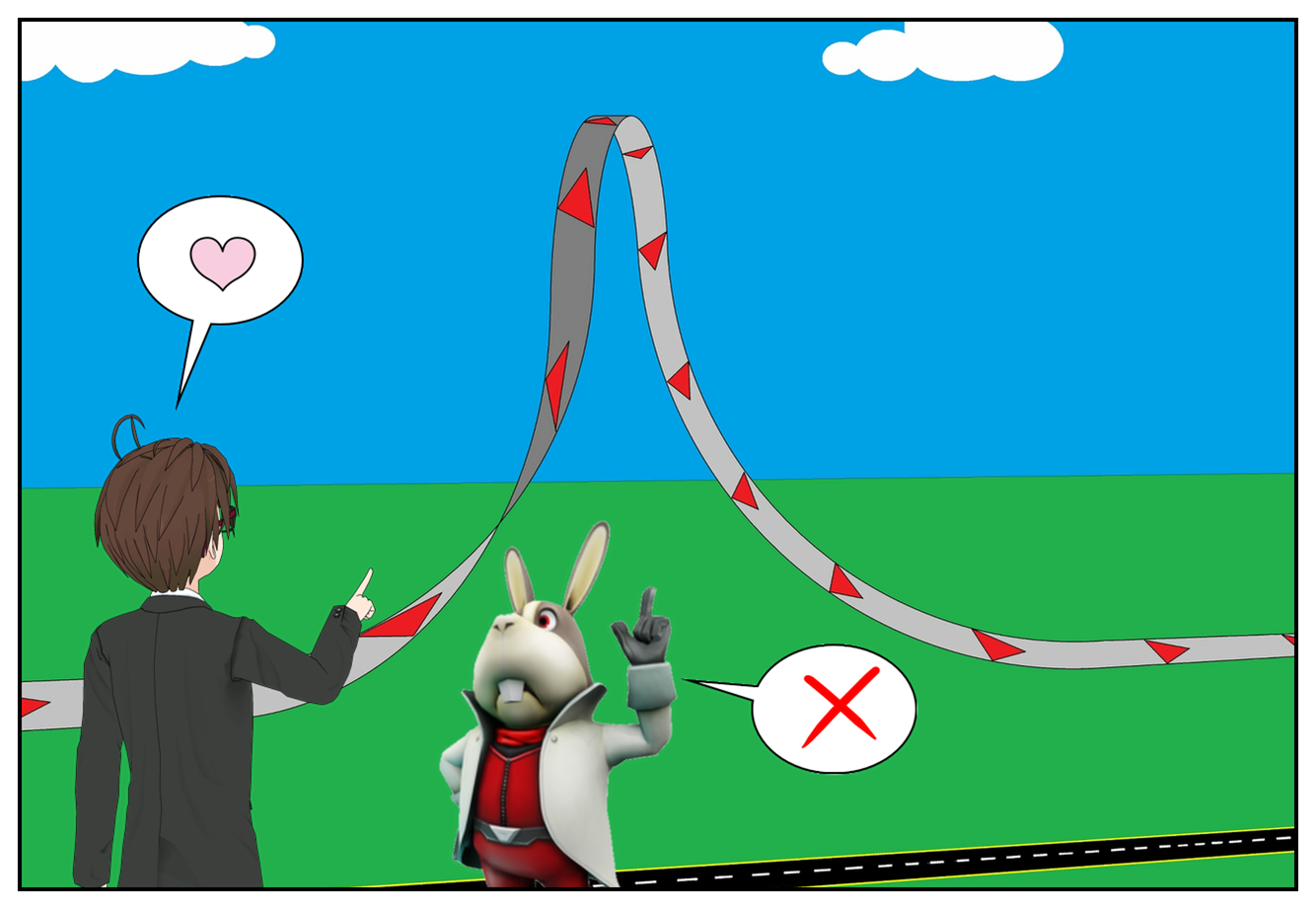
Is the "barrel roll" still not actually a barrel roll in aeronautical terms?

Correct. This is a barrel roll.

I heard this game's really short.

You haven't played many shoot 'em ups, have you? Star Fox Zero is actually pretty long by shmup standards, at a couple of hours from start to finish, but the point is not to play it once and never touch it again. The point is to replay it to find alternative paths, secret levels, hidden collectibles and the five medal conditions on each stage… then replay it some more in the "Arcade Mode" that unlocks after clearing the main game once to beat your best clear times and scores. There's plenty to do.

What is Star Fox Guard?

Ah yes. I actually hadn't heard of this at all until I preordered my copy of Star Fox Zero, but conveniently the edition of the game I got came with a physical copy of Star Fox Guard as well, which, it turns out, is a fun game in its own right, too.

Star Fox Guard is… kind of a tower defense game in that you have a thing you need to protect against being destroyed by evil things, and you have other things that shoot stuff at the evil things in order to prevent them reaching your thing.

Where it differs from your usual tower defense affair is that you're in direct control of all your towers. Twelve of them, in fact, scattered around maps of various layouts, and all of which have a camera attached to them. During a level, you'll have to keep an eye on twelve screens at once (thirteen if you count the GamePad map) and switch focus to one at a time in order to shoot incoming enemies manually.

Another twist is that you don't have to destroy all the enemies: the only enemies necessary to destroy to clear each level are the "Combat" variety, which will immediately destroy your core if they reach it. There's a specific number of these you'll need to defeat on each level, and once you reach it, the level is over immediately. All other enemies are "Chaos" enemies, which have various abilities that interfere with your cameras and towers, but which can't destroy your core directly. Some blow up and knock out nearby cameras completely for a few seconds; others spew gas that ruins your visibility; others still replace your camera's view with intermittent nonsense.

Unusually, there are also boss fights, in which you use your twelve cameras to take down a single large enemy, which may or may not have minions.

There's also a levelling system, which unlocks new types of camera and weapon to use — including some that can lock on to multiple enemies or slow enemies down — and a selection of Extra missions that add additional objectives or mechanics to the mix. Then when you're done with all that, you can create your own Squads of robots you've unlocked by progressing through the game and design your own fiendishly difficult waves of enemies for other players around the world to challenge, and you can challenge other players' Squads too.

While simple in execution, Star Fox Guard has has a surprising amount of care and effort put into it, and I can see it being an entertaining little diversion.

Is it good, then?

It's not an exaggeration to say that Star Fox Zero is the Star Fox game I've been waiting for since Lylat Wars. While it doesn't do anything particularly interesting with the story — it's a remake/reboot rather than a sequel — Star Fox has never been about narrative and characterisation. Instead, it's about satisfying, spectacular, cinematic space combat, and in that regard, it well and truly delivers.

Not too hard?

No. If you think it is too hard, you have no business reviewing games.

Right then.

Okay.

Thank you.

You're welcome.


Barrel roll diagram by ZaerethOwn work, CC BY-SA 4.0.

2284: Nights of Azure: Encounter in the Abyss

0284_001

I only have a couple of trophies left before I have the Platinum on Gust's action RPG Nights of Azure, and I'm coming away from the game very impressed. I wasn't quite sure what to make of it to begin with — though I adored its aesthetic and narrative — but once I got my head around its unconventional systems and subversions of standard RPG mechanics, I was well and truly enraptured.

The game has excellent combat. I was concerned that it would be a little hack-and-slashy when I first started playing, but as it progresses and you open up more and more systems and options for yourself, it becomes really interesting. In fact, oddly enough, one game that I'm constantly reminded of while I'm playing Nights of Azure is Final Fantasy XIV, of all things; while the two games may not appear to have much in common initially, one being an action RPG and one being a hotbar-and-cooldown-based MMO, I maintain that Nights of Azure is what Final Fantasy XIV would play like if it was a single-player action game.

Perhaps I should clarify that. Both are based on making good use of a gradually expanding roster of abilities that you unlock bit by bit as you progress through the game, rather than outright customisation (though Nights of Azure has considerably more customisation when it comes to equipment than FFXIV, with up to four items being equippable, each having both an effect on Arnice's stats and some sort of special effect). Both are based on a combination of open world adventuring (albeit in Nights of Azure's case, said "world" being just one town) and linear dungeons with boss encounters. And in both cases, said boss encounters are based heavily on learning the boss' attacks, how to avoid them, making sure you don't stand in area of effect markers, and recognising when it's safe to attack.

This latter aspect is particularly apparent in the later hours of the game and especially the "epilogue" chapter after you beat the final boss for the first time. The "epilogue" is actually a retread of the last chapter with some additional content and the ability to raise Arnice to the level cap of 11 rather than the previous 10; she also gains the ability to transform into Nightmare form as well as her previous Demon, Moon Rabbit, Phantom and Armour forms. More importantly, totally completing this final chapter unlocks the "true" ending, which I haven't seen yet, since I'm cleaning up the last few trophies first.

Throughout the game, there are a number of boss battles. These are all very good and have a nice amount of variety between them, but for me, the absolute highlight of the game's battles has been the optional "Abyss" battle in the Arena. The Arena is initially designed as a place to practice the various techniques you'll need to use in the game, ranging from chaining long combos to defeating enemies using only your summoned Servans. "Abyss", meanwhile, is the culmination of everything you've learned, in theory, pitting you against the toughest individual foe in the game over the course of several phases; a fight that rivals some of Final Fantasy XIV's raid bosses in its complexity.

Let me explain how I beat the fight and you'll see.

Your opponent is a demon girl fiend — Yfritte, I believe, though don't quote me on that. She's a level 11 opponent — enemies in the game go up to level 15, and your Servans can level this high with an appropriate ability, though Arnice herself can only level to 11. Unlike similar-looking enemies you might have encountered elsewhere in the game, Yfritte (as we'll call her, even if she isn't) has about a bazillion HP and, it becomes clear immediately after engaging her, isn't going to go down without one hell of a fight.

You start across the Arena from Yfritte with no Servans summoned. I summoned all my Servans immediately — my main party consisting of Alraune (healer), Plumie (ranged damage dealer), Toy Trooper (group of damage dealers) and Toy Sentinel (single damage dealer, hits lots of times) — and straight away set off Toy Trooper and Toy Sentinel's Burst attacks to deal some initial damage to Yfritte.

Using Arnice's Blood Sword, I alternated between using the Special attack, which knocks Yfritte down for a couple of seconds, and the Weak attack, which, with the Vlad's Crest item I had equipped, restored Arnice's SP quickly enough to perform Special attacks almost indefinitely, effectively stun-locking Yfritte. This process repeats until about 80% of her HP, at which point she summons two Manticores.

The Manticores can Paralyse you and your Servans, so it's a good idea to have status-repelling abilities or equipment on at least Arnice and your healer. They also have a nasty multi-hit fire breath attack, so staying behind or to the side of them is a good idea. Continue alternating Weak and Special attacks to repeatedly knock them down until Arnice's Transformation bar fills, at which point the combination of Servans I had equipped allowed me to transform into the speedy Moon Rabbit form.

Moon Rabbit's Special attack needs 100SP, but it's a huge area-effect attack that hits lots of times — and, with Vlad's Crest equipped, this means that 100SP is regenerated almost immediately if you hit more than one target with it. It also inflicts Bleed for some damage over time, so it's good for upping your average damage per second. I repeatedly triggered Moon Rabbit's Special Attack, taking care to catch Yfritte and the two Manticores in the AoE, until the transformation ran out, by which point the Manticores were dead and Yfritte had a chunk of life missing.

There now follows a short phase where Yfritte is by herself. She flings missiles at you from a distance, some of which home in on you, and sets off close-range area effect abilities when you're up close, some of which are powerful enough to one-shot Arnice. Distract her with your Servans — use Alraune's Mega Heal to top up their HP if necessary — and return to the Weak-Special combo to keep her off-balance.

After a while, she'll summon a huge number of level 1 Shadows. Move away from Yfritte and hack and slash through the Shadows to build up both SP and the Transformation bar. It's potentially worth unsummoning your Servans at this point, as the Shadows don't hit hard and if you keep clear of Yfritte (and avoid her missiles) you won't take a lot of damage. Plus when you re-summon the Servans, they'll have full SP again, although their HP will be where you left it, so be ready to heal if necessary.

I had a second deck of Servans set up to transform Arnice into Nightmare form, so I took the opportunity to use this powerful transformation once the bar was full. Nightmare form has a wide arc ranged attack that hits multiple times as its default weak attack, so spamming this and avoiding Yfritte's missiles does a significant amount of damage in a short space of time. Once I was safely in Nightmare form, I switched back to my initial deck, summoned Alraune for healing purposes just in case a shot got through, and prepared for the next phase.

The next phase comes when Yfritte summons a huge blue area of effect marker on the ground. This inflicts poison and is also slippery ice, so having status resist abilities or equipment is a good idea, particularly on Alraune. The Mermaid's Tear item completely nullifies any area-effect abilities, so this effectively allows Alraune to shrug it off and continue healing you. Don't summon any other Servans until the AoE disappears, since they're dumb enough to blindly charge straight into it, get poisoned and die straight away. Once it goes away, however, go nuts; return to the Weak-Special combo to knock Yfritte off balance until the next phase starts.

Next up, Yfritte summons a doll who chucks toys at you, which can be easily avoided, and a spirit-type who we'll affectionately refer to as the "bullet hell fairy". Kill the doll first, since it's not got many HP and will go down quickly. The bullet hell fairy is a little more troublesome, since she repeatedly summons large groups of bullets which then explode for significant damage. You can see where they're going to appear and get out of the way of them; use the Follow command on Servans to get them out of harm's way. They're always in the same formation: one at "twelve o'clock", then two more at "eight" and "four". Take care to continue dodging Yfritte's bullets and close-range AoEs while you deal with the fairy.

By now we're getting close to the end, but there's still a couple of phases to go. Yfritte will do another big AoE — red this time — so deal with it the same way: unsummon everything except an immune Alraune and perhaps pelt Yfritte from afar with the Blitz Shooter if she refuses to come out of her little safe space. When the AoE disappears, you're on the home straight.

Yfritte will summon some Shadows again — level 7 this time, so they don't go down so easily. Re-summon your Servans and get them to hack and slash their way through the hordes, though keep an eye on where Yfritte is so you don't get caught out by a one-shot AoE at this late stage in the fight. Build up SP with Weak attacks and clear an area with a Special from the Blood Sword, preferably catching Yfritte on the outside of it so you can knock her down for a bit of damage. Repeat until you charge up another transformation; it's a good idea to pick Moon Rabbit for this one for the large Special AoE, though Nightmare works too, since its ranged attack covers a wide area. Basically you want to rip through as many Shadows as possible while still hitting Yfritte in order to keep your SP topped up.

Towards the end of the fight, Yfritte will summon a Stone Hellion — the same really annoying ones that were in earlier Arena battles, equipped entirely with nothing but one-shot abilities with huge AoEs. Fortunately this one goes down a little easier than the boss-class ones in earlier battles, so catch him in a Moon Rabbit Special if you can while continuing to hit Yfritte. Take care to avoid all his big AoEs — Moon Rabbit's speed is really helpful here — and continue pelting Yfritte with everything you've got while making sure to stay clear of her bullets and AoEs as well as ensuring you don't get overwhelmed by shadows… and eventually, hopefully, you will prevail with time to spare.

2283: Emergency, Emergency, Incoming Enemy Fighters

0283_001

Star Fox Zero is out this week. This game has kind of snuck up on me, but I'm very excited to give it a go, because I love Star Fox.

Or, well, I love the original Star Fox/Starwing and the N64 sequel/remake/reboot/whatever it was Star Fox 64/Lylat Wars — I must confess, I never played the more recent games on the Gamecube and DS, partly because they weren't particularly well received and partly because they didn't quite sound like what I wanted from a Star Fox game, which is to say, a solid rail shooter in '90s arcade style.

I vividly remember playing the original Star Fox (in Japanese) for the first time. Having been playing computer games on the Atari ST, I was already used to what was supposedly Star Fox's biggest innovation: polygonal 3D graphics. And, in fact, in many regards, the polygonal graphics found in Atari ST games were often more complex and impressive than those found in Star Fox, though there were a few fancy tricks that Nintendo's game used sparingly that absolutely couldn't have been done on the ST, most notably some occasional texture mapping and the combination of hardware-scaled sprites with the polygonal ships and structures.

The fact that I wasn't as immediately gobsmacked by Star Fox's graphics as I felt like I was supposed to be didn't matter, though, because everything else about that game made up for its relatively simplistic polygons. The spinning, digitised speech-accompanied launch sequence that reminded me of an arcade game; the incredible music; the G-LOC-style zooming in and out of the cockpit in the spaceflight sections — all of these things combined to give me an experience on a home console that, while I recognised wasn't quite up to the standard of arcade games — most notably in terms of frame rate, resolution and screen size — certainly came damn close, reminding me in particular of Namco's Starblade, particularly in the first-person spaceflight sections.

Lylat Wars was interesting because there were a lot of things it did better than its predecessor, and some things it did worse. Most notably, the graphics were considerably better, with the game being probably one of the most visually impressive games on the N64, and the music was fairly atrocious, making use of Nintendo's dreadful MIDI synth chip that it used throughout most of the N64 era, which somehow managed to sound worse than the wonderful wavetable synthesis music of the previous generation's SNES. Thanks to its inclusion of digitised speech throughout instead of nonsensical babbling, Lylat Wars was also the birthplace of what was arguably one of the first ever gaming memes in the form of "Do a barrel roll!" — though my friends and I always preferred "You've gotta use the boost to get through!" for some reason.

I'm looking forward to trying out Star Fox Zero for myself, an am unperturbed by question marks over its strange-sounding control scheme; Splatoon's control scheme sounds strange on paper, and that certainly works extremely well, so I'm open to being convinced. I'm also reassured that Arthur Gies of Polygon hates it, because Arthur Gies of Polygon hates anything fun.

Game assures me that my copy has been shipped so if I'm lucky it might even arrive a day early tomorrow… if not, expect some first impressions on Friday.

All ships check in!!

2279: Matchmaking: A Great Way to Waste Time

0279_001

I downloaded the Doom beta on PS4 earlier out of curiosity. I hadn't heard particularly positive things about it — though admittedly, this was mostly from disgruntled PC players who were whining about the lack of mod support and how it was "obviously built for consoles" — but as someone who actually used to really like Doom, I was interested to take a look.

I booted up Doom, fiddled around in the options a bit, took note of the entertaining options to weather, dirty up and scuff your armour in character customisation — not to mention painting it lurid shades of pink and purple — and then jumped into the multiplayer playlist.

Then, I waited.

And waited some more.

And then a bit more.

Well, okay, this perhaps makes it sound a bit longer than it actually was: it was probably less than five minutes in total, all told. But that was five minutes utterly wasted in which I wasn't doing anything apart from staring at the screen and perhaps rotating my character model a bit.

My mind was cast back to a comment someone I follow on Twitter made a while back, whose sentiment was along the lines of "rather than wasting your time with endless, pointless matchmaking games, throw yourself into enjoying games with stories; games with clear beginnings, middles and ends". At the time, I thought it a slightly extreme viewpoint, since I have enjoyed multiplayer matchmaking games in the past, but on reflection, he was absolutely right: for me, right now, matchmaking multiplayer games are a total waste of time and energy for what I find to be a subpar, unsatisfying experience compared to something that is either a bit more structured or something that has immediacy.

Doom isn't the only game where I've encountered the tedium of waiting for matchmaking queues. Playing a damage-dealing class on Final Fantasy XIV often leads to long queues for dungeons — although at least in that game, you can do other stuff in the open world while queueing, though there are a few limitations on your activities to prevent your queue popping and you being unavailable. Grand Theft Auto Online is particularly unpleasant to try and find a matchmaking session in, since it's riddled with people who pop into a lobby, then quit out again after five seconds if it's not already full. And I'm sure there are plenty of other examples, too.

So, I think I've had enough. I've felt a slight temptation to check out things like Doom and even the more recent Call of Duty games in the recent past, but on reflection, I feel they'll only frustrate me: time spent "waiting for players…" is time not spent enjoying a story in a single-player game, or trying to beat a high score in an arcade game, or chasing trophies in a game I've reached the post-game for.

This isn't to say I'm not going to play multiplayer at all, mind you: TrackMania Turbo has an excellent multiplayer where you can just jump in and out of player-made rooms at will, with no waiting around for there to be "enough" people to play. And I have a lot of fun playing Grand Theft Auto Online with my local friends. Those represent two different ways of having a fun online experience without getting matchmaking systems involved.

Strangers who are beyond that great wall of matchmaking, then? Fuck 'em; I've got better things to do than wait for them to show up to my party.

2278: Difficulty Switch A and B

0278_001

Spending a bit more time with Atari Vault over the last few days makes me appreciate one of the most interesting things about the 2600 — and something that, to my knowledge, hasn't really been done on any other console since: its use of difficulty switches and game selectors.

It wasn't unusual to see 2600 cartridges promising "9 video games" or similar on their front covers; by modern definitions, this wasn't entirely accurate, as each cartridge did indeed contain just one game, but tended to have multiple variations available to play. In some cases, these variations were minor — difficulty modes, essentially — but in others, they changed the gameplay fairly drastically. And along with these selectable games, the 2600 also afforded both players the opportunity to select their difficulty independently of one another.

Handicap systems are still found in modern multiplayer games in various ways, the most common of which being racing games' tendency to give the pack's back markers a slight speed boost to allow them to catch up a bit. But on the 2600, this was a revolutionary feature: by setting difficulty levels independently for each player, it became possible for experienced players to play "fairly" with newcomers, youngsters or those who simply didn't have quite the same dexterity and/or ability to handle those horrible Atari joysticks.

The ways that the difficulty switches were implemented varied from game to game. In the case of Air-Sea Battle, for example, the difficulty switches allowed players to set the size of their bullets independently — less experienced players could have larger bullets, making it easier to hit the targets. In Combat, the difficulty switches adjusted the speed of the player's bullets — more experienced players could choose to have slower shots, making it easier for their opponent to dodge. (Of course, you could then tweak the difficulty further by playing one of the variants where you could "bend" your shots around corners by steering after firing.)

It's a really interesting idea, and one of the coolest things about the 2600. I knew about the existence of these switches before — I've played some 2600 games before — but it hasn't been until I've actually started investigating some of these games in detail that I've really appreciated the surprising amount of interest and flexibility that they bring to these rough-looking but surprisingly fun old games.

Plus another nice feature of 2600 games I've discovered is that they're straightforward and easy to learn enough that my wife and I can play together without me having to spend hours explaining how to do things, or for us to play with an enormous skill imbalance thanks to the fact I have more experience than her. Thanks to the 2600's switches, we can tweak the experience to one that we both find challenging, but fair — and, it has to be said, the 2600 had some enormously fun two-player games that, while simple, can get very, very competitive very quickly!

2277: That Girl's in Lesbians with That Other Girl

0277_001.png

Playing through Gust's latest game Nights of Azure, I was struck with how… explicit the romantic relationship between the two heroines is. I don't mean sexually explicit; I mean that the fact that the two of them even have a romantic relationship is acknowledged at all.

Yuri (lesbian) themes are frequently a part of Japanese popular media — an interesting fact to toss back at those who are keen to paint the nation as being somewhat less than progressive when it comes to attitudes towards gay people. Indeed, while "real world" Japanese society in general may not appear to look on homosexuality with as tolerant an eye as we like to think we have here in the West, it's clear that there's plenty of the old "public face, private face" going on, since there are a ton of creators who are obviously fascinated with the idea of same-sex relationships — both male-on-male and female-on-female.

The thing that struck me about Nights of Azure's depiction of its central relationship is the fact that, as I noted above, it's pretty up-front about it. This is noteworthy because although yuri themes often make an appearance in Japanese popular media, they're often more implied than explicit, with it often being left up to the audience (and fan artists) to explore these relationships further.

Take something like popular anime Love Live. Even the most casual viewer will notice the blossoming relationship between Maki and Nico by the end of the run, but the show never particularly draws attention to it; it's just sort of there. Likewise, the Senran Kagura series features a number of obviously romantic relationships between many of its all-female cast members, but it's rare for these to be acknowledged or not "laughed off" by the characters — though, interestingly, latest installment Estival Versus did feature a scene where one character specifically called out Asuka and Homura for being so obviously gay for each other, even if they'd never properly admit it. And the Neptunia series is riddled with yuri undertones, ranging from Nepgear and Uni's heartwarming relationship to Noire's obvious but perpetually unspoken interest in Neptune — and, in most recent installment Megadimension Neptunia V-II, K-Sha's obsession with Noire, though this particular instance was an explicit admission of lady-love.

Nights of Azure, though… it's right there from the beginning, and it develops over the course of the game. Several other characters comment on it. And, most tellingly, there are outright romantic scenes between protagonist Arnice and other leading lady Lilysse. The two share moments of intimacy with one another that, on reflection, are actually quite unusual to see so explicitly depicted in games: in one scene, Arnice comforts an upset Lilysse by draping her arms around her neck from behind and holding her close; in another, the two dance together, their devotion to one another immediately apparent from the way they look at each other. And after a particularly heartfelt make-up session after a dispute between the two, we see them waking up in bed together, having obviously slept facing one another holding hands. (There's no yuri sexytime, though; it's not that kind of game.)

As with other Japanese games that feature yuri themes, Nights of Azure treats its central relationship with the appropriate amount of respect: that is to say, it's just there, and no-one thinks it's anything unusual. A couple of male characters are introduced by hitting on Arnice, but once they see she and Lilysse are obviously involved with one another, they back off — not with an "oh, wow, you're gay" sentiment, but with a simple recognition of "oh, well, you're together" that would have been the same if either of the two ladies involved were the opposite gender.

This is the sort of progressiveness and diversity that is a very positive part of the modern games industry — however, sadly, given Nights of Azure's status as a niche title that a significant number of people probably haven't even heard of, it's a game that you likely won't hear many games writers from big sites talking about.

Consider this my small attempt to acknowledge and celebrate the good that this game is doing, then, and rest assured that Nights of Azure is very much worth your time as an action RPG as well as an interactive lesbian experience.

2276: Video Computer System

0276_001

As I wrote in a few posts recently, I've been checking out the new Atari Vault compilation on Steam. Rather than talking about a specific game today, I wanted to talk a little bit about the value of the compilation as a whole, and why I'm enjoying exploring it.

Atari Vault is a compilation of somewhere in the region of 100 Atari games from the '80s. The bulk of the compilation consists of VCS 2600 games, but there are some arcade games in there too, including the likes of Crystal Castles, Missile Command, Major Havoc and Liberator.

I've owned a number of previous similar compilations in the past, and have typically gravitated towards the arcade games, since they seem more "palatable" from a modern perspective than the extremely primitive-looking 2600 games. I recall growing up with the Atari 8-bit home computers, and in comparison to those, 2600 games looked primitive even back at that time when it was relatively current, and as such, I've always found them a little offputting. I've made a specific effort to explore them a bit more this time around, though, and I've been pleased to discover some really interesting games.

Take Haunted House, for example. This is a fairly straightforward top-down "find all the things" game with an intriguing twist: you're in the dark. With your character represented as nothing more than a pair of eyes, you navigate around by either bumping into walls or lighting matches to illuminate the area immediately around you. A single game of Haunted House requires that you find all the pieces of a… thing… an urn? And you have to do so while using as few matches as possible and losing as few lives as possible, for this being a haunted house, it has a number of unpleasant beasties lurking around just waiting to nibble on you.

Or take Save Mary, a prototype game that never saw commercial release, but which presented an interesting twist on vaguely Tetris-ish block puzzles. The eponymous Mary is trapped at the bottom of a pit which is slowly filling with water. You control a crane and have to drop blocks into the well for Mary to climb up. You need to get her high enough to be able to grab her with the crane and save her. Once you've done this, you have to do it again, only with significantly more awkward-shaped blocks. The peculiar variation on the typical block puzzle formula is the fact that Mary has a mind of her own (albeit a predictable one) and you have to be careful not to squish her with the blocks you drop as she wanders back and forth trying to get to high ground.

Or how about Atari Video Cube, a really simple but surprisingly compelling puzzle game loosely based on Rubik's Cube? Controlling a weird little man (who has a name and a backstory and everything, though I can't remember it offhand), it's your job to pick up coloured squares from each of the 3×3 faces of the cube and lay them down so that each side is a solid colour. To make this more difficult, to pick up a coloured tile, you have to swap it with the one you're holding, and to make it even more difficult, you can't walk through tiles that are the same colour as the tile you're holding, even if they're on a different face of the cube.

The 2600 back catalogue appears to be filled with these sorts of interesting little games that we'd probably find laughable if released as full-scale, full-price commercial releases today, but as part of this compilation, they provide a surprising amount of entertainment value — and, in some cases, represent types of games that are very much deserving of a modern remake.

My only issue with them from a modern viewpoint is the fact that 2600 games tend to end rather abruptly, regardless of whether you "win" or "lose", and this can sometimes make victories over a particularly difficult level feel a bit less than satisfying. Still, this was from an age where gaming was quite a social pursuit — many of the 2600 games are very much designed to be played together with a partner — and so, I feel, a key part of the fun back then must have been making your own fun with the games to a certain extent; similar to how a tabletop game doesn't automatically set off fireworks as soon as you win, neither does a 2600 game. The celebrations and victory rewards are entirely up to you; I recommend betting each other a slice of pizza or a big lump of cake on a game of Combat and see how much you like each other by the end of the evening!

2275: A Need for Progression

0275_001

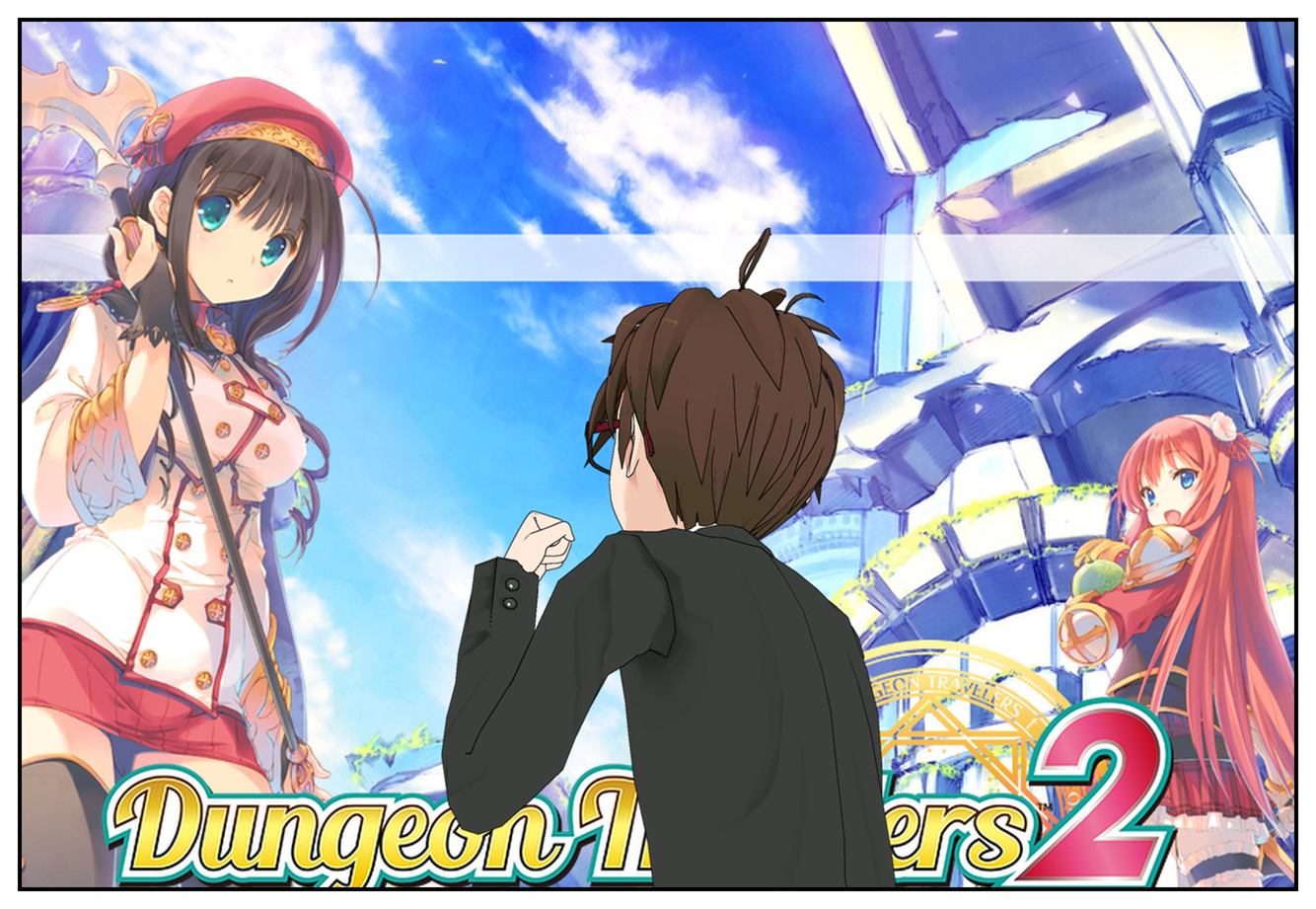
Playing some Dungeon Travelers 2 this evening, I found myself pondering exactly why I have, so far, spent 130 hours on this game — the longest I've ever spent on a single-player RPG, I believe — while a short time back, I decided that I really needed to take a break from Final Fantasy XIV, which was previously something of a life and free time-devourer.

On reflection, it comes down to a need for progression; more specifically, a need for a near-constant feeling of progression.

Herein lies the main reason I've set Final Fantasy XIV aside for the time being, and it's by no means an issue exclusive to that game, either — it's a genre-wide thing with all MMOs. And that issue is that once you reach "endgame" level — i.e. you hit the level cap, and progression becomes about acquiring better gear and taking on tougher challenges rather than earning experience points and levelling up — progression stops being constant and instead comes in fits and starts, in extreme cases, with instances of actually improving coming weeks apart from one another.

To put this in some sort of context for those who are unfamiliar with MMO endgames: you have several means of acquiring new gear at the level cap in Final Fantasy XIV. You can loot it from dungeons, which is based on random drops. You can acquire it from the raid dungeon Alexander, but this requires strategically acquiring items from its various floors, because you are limited in what you can acquire each week and different bits of gear require different numbers of items. You can acquire it using Tomestones of Esoterics, which have no limit on how many you can acquire per week. You can acquire it using Tomestones of Lore, of which you're limited to collecting 450 per week. You can take on the lengthy Anima Weapon quest. Or you can acquire it by running the top-tier challenging stuff such as the latest Extreme primal fights or Alexander on Savage difficulty.

Part of the issue here, I guess, is that everyone generally wants to go for the biggest upgrade possible at any given time, and it's these bigger upgrades that you're somehow limited in, meaning progress is artificially constrained. In order to earn a piece of body armour using Tomestones of Lore, for example, which is among the best equipment in the game right now, you need at least two weeks to earn the 825 or so Tomestones required, since you're capped at 450. In that intervening period, all you're doing is grinding for no discernible gain: the actual gain comes only when you've finished the process and you get your shiny new armour. (And then moan about it not having the stats you want, probably.)

Now, this sort of design is a key part of how MMOs generally keep people engaged over a long period — if everyone could get the best possible gear immediately, they'd complain about having "not enough content" more than they do already (which is a lot), and that is obviously undesirable for the development team, who are put under pressure to put out more content more quickly, which inevitably leads to quality suffering. Instead, these moments of progression are significant, but time-consuming: they have a noticeable impact on your character's abilities, but only after a long period of doing the same things over and over again until you've earned enough whatevers to get your doohickey.

That sort of treadmill progression had started to become a little less enjoyable to me than it had been, particularly as the current endgame of Final Fantasy XIV now has a number of different grindathons required to get the best possible gear. And so I put it down for now and instead focused on Dungeon Travelers 2's postgame (actually bigger than the main game) which is also a grindfest, but which is considerably more appealing to me right now for that feeling of constant rather than sporadic progression.

Progression in Dungeon Travelers 2 comes in several forms. The most obvious is in the earning of experience points and levelling up: finishing the main story will get you to about level 50, but the postgame will take you to the cap of 99 by its conclusion. This means that rather than hitting a level cap early and progression slowing by very nature of one of its sources being cut off, there's the constant satisfaction of earning experience points right up until the end of the game. And if you're still hungry for more, a "Level Reset" system allows you to discard those hard-earned levels in favour of some bonuses to the character's base stats if they had reached a high enough level, meaning you can level them up all over again and they'll be marginally better.

That's not the only means of progression, though. Gear is another important aspect of progression in Dungeon Travelers 2, much like other dungeon crawlers. The gear system is very interesting, in fact, since it's based around just a few base items, and then built upon with an enchantment system. What happens is you have a piece of base gear (say, a piece of leather armour) which has a bonus value attached to it (say, +5). The bonus indicates how much better than its base incarnation it is, and the value can keep going up and up and up. In order to make it go up, you have to enchant your gear using the Sealbooks you acquire by defeating sets of 9 of each monster in the game. Each of these Sealbooks has a level, and when you use it to enchant a piece of gear, two things happen: the bonus goes up by the tens value of the Sealbook's level (up to a maximum of 5 for books of level 50 and above) and one or more of the Sealbook's special effects (ranging from bonuses to stats to special effects such as regenerating health and TP each turn) is attached to the piece of gear.

Here's an example. I have a set of Leather Armour+40. I run across the wandering blacksmith in a dungeon, who allows you to enchant your gear. I use a level 50 Sealbook to enchant the armour, which increases its bonus to +45 and attaches a DEF Up and Elemental Resistance Up effect to it, making it considerably more defensive than before. Then I use another level 50 Sealbook of the same type to boost it to +50 and keep the same enchantments. Then I use a different Sealbook of a level higher than 50 (to increase the bonus, the Sealbook must be of a higher level than the bonus' current value) to boost it to +55 and add a Max HP Up effect to my existing DEF Up and Elemental Resistance Up effect, since equipment over +50 can have three, not two, effects attached to it. By this point, I've run out of money for the moment, so I take my leave of the bear blacksmith (yes, really) and proceed on my way, secure in the knowledge that I could upgrade that armour twice more before it becomes "capped" and I'd have to start looking for a stronger base item to progress further gear-wise.

These two systems intertwine so that you're always making one form of progress or the other. Levelling is quite slow in Dungeon Travelers 2 compared to more conventional JRPGs, but it has a noticeable impact, particularly on your characters' maximum HP. In the meantime, you can partly plug the gap for an underleveled character by giving them gear with huge bonuses — there's no level restrictions on equipping items — but you'll need to level them to ensure their survival and their usefulness in most cases.

But that's not all, either. The third means of progression in Dungeon Travelers 2 is simply getting further through the dungeons. Every expedition, you'll manage to get a bit further, perhaps even unlocking a shortcut allowing you to get to the new stuff more quickly next time you head in. Perhaps you'll beat a boss. Perhaps you'll find a nice piece of treasure. Perhaps you'll run into an area that has different enemies to the start of the dungeon. Point is, there's always something to discover, and while you're still wandering around grid-based mazes, swearing at one-way doors and teleporters and fighting battle after battle, at no point are you doing exactly the same thing over and over. You're not running the same dungeon time after time; you're discovering new parts of these sprawling mazes. You're not fighting the same bosses; you're taking on progressively more difficult challenges. And yes, you are grinding, but you're not doing so on a treadmill: you're always moving forwards.

This, I've come to the conclusion, is important to me, and it's why I'm not feeling the MMO thing right now. It's also why I've repeatedly bounced off the Souls series, despite trying to like them several times: those games are so heavily based on learning through repetition that I quickly get frustrated with the lack of forward momentum and tend to put them down after being smacked off a cliff by an armoured douchebag with a hammer for the umpteenth time, only to get smacked off a different cliff by a different armoured douchebag with a hammer on the way to reclaim my hard-earned souls and effectively undo the potential for progression I had before the unfortunate incident.

Nah. Give me a constant feeling of moving forward; that's what I really crave from my RPGs these days. And Dungeon Travelers 2 is very much scratching that particular itch right now.