#oneaday Day 116: Hacked Off

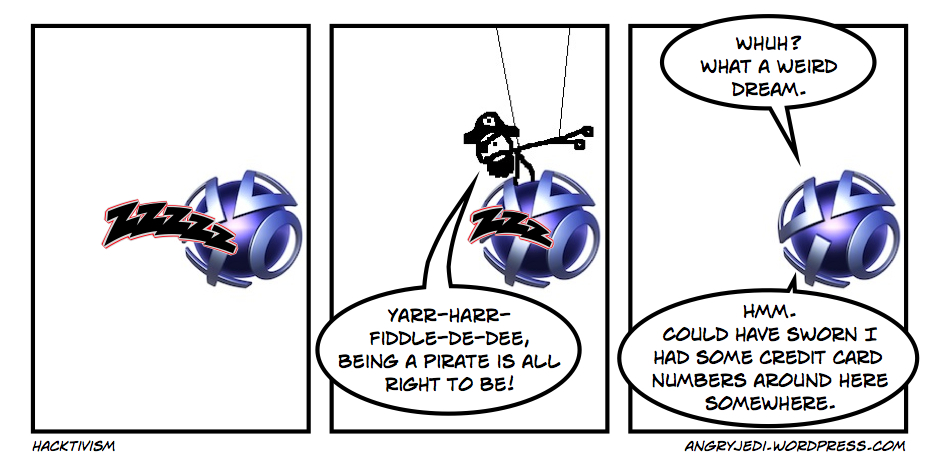
So, Sony fucked up. Pretty bigstyle. And yet I find myself less angry at them and their incompetent handling of the situation and more angry at the fact this situation even arose in the first place.

I'm talking, of course, about hackers. Hacking, despite people not really knowing what it is outside of representations that they've seen in movies, is one of the things people are most paranoid about in the online age — and with Sony's PR disaster in full swing at the minute, it's easy to see why, as people frantically cancel their credit cards and change all their passwords on the offchance that some bearded, smelly loser (not me) may pick their personal details to commit fraud with.

In practice, it seems that a lot of hacks are committed to make a point rather than cause damage as such, whatever Introversion Software's excellent Uplink might have you believe. But for a service as inoffensive as PSN, it just seems spiteful to attack it. Anonymous had its high-profile throwing-toys-out-of-a-pram moment a week or two ago but they claim they're not responsible for this latest incident as they're supposedly "on the side of the consumer". That and everyone was yelling at them for fucking up PSN when people just wanted to get online, play stuff and buy stuff.

I guess it's just like any other crime — crime shouldn't happen, but it does, whether it's in the real or virtual world. However nice it'd be to imagine a Star Trek-esque future where crime and war between humans is a thing of the past, it's not going to happen — or at least, not for a long time. As long as there are people out there who feel a misplaced sense of "entitlement" — whether it's to get their hands on software they haven't paid for, to steal people's personal information or just to fuck everyone else's enjoyment up — then we can never feel completely "safe" and confident.

Which is a shame, really, isn't it? So much of new technology is genuinely awesome when used properly. Were the threat of hacking and other technology crime not present, the capabilities of devices could be even more awesome. But as it is, so much time and money has to be spent on installing cutting-edge security into every single device we own that things are probably held back from where they could be if security wasn't such an issue.

Oh, I know. It's nice to want things, and some sort of Utopia would supposedly get boring quite quickly, but I'd certainly like to enjoy it, if only for a while. But it's never going to happen — the world is full of just enough arseholes to make life less enjoyable for the majority, non-arsehole population out there.

So, arseholes, a big fuck you, and I hope your cock falls off. Into a fire. Which someone then douses with acid, mistaking it for water. And then feeds you the remains. And then jams a really sharp spike right up your bum-hole.

Yeah.
#oneaday, Day 111: Chaos, The Battle of Wizards

It's a sad but true fact that returning to the games of your youth usually ends in disappointment as you realise that gaming has moved on a lot, and those games never got a re-release on Xbox Live Arcade or the like for a very good reason — they're not very good.
But there's a few exceptions. Specifically, anything made by Julian Gollop is still just as fresh as it was back then.

How do I know this? Thanks to the Elite ZX Spectrum Collection app for iPhone. This app features a decent Spectrum emulator and a selection of games, most of which can be bought via in-app purchase in packs of six. One such pack is a Julian Gollop pack, which contains five fantastic strategy games and one utterly awful bouncy-ball atrocity, the less said about which the better. At least — hopefully — after that, Gollop figured out what he was good at and what he wasn't.

The games included in the pack are Chaos, Lords of Chaos, Rebelstar and its sequel and Laser Squad. I can't remember what the bouncy one is called but it involved catching balloons and wasn't fun at all.

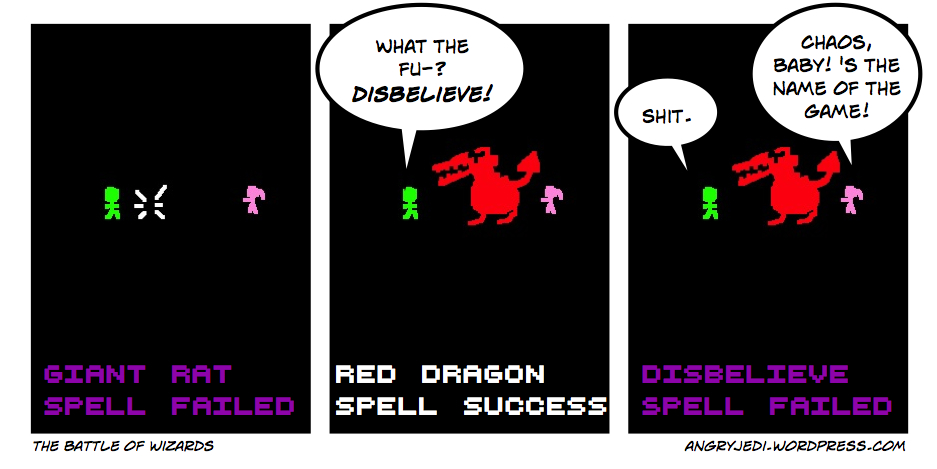
The strategy games, on the other hand, are another matter. Chaos is the simplest of the bunch, with Teletext-quality graphics and feeble beep-and-fart type sound effects, but it's an immensely competitive game that supports up to eight players. It works well as a "pass the phone" game, too. And casting a Gooey Blob that gets out of hand never gets old.

The remaining games are all fundamentally very similar, featuring the same basic gameplay mechanics and gradually-improving graphics. In fact, if you've played the X-COM games, you've played these games too. That's no bad thing, though, because X-COM is awesome. Featuring turn-based multiplayer action, they're, in many ways, virtual boardgames that don't demand any throwing of dice or getting out a billion pieces or avoiding bumping the table or spilling curry on them or anything like that. And the Spectrum controls, while a little clunky, manage to work pretty effectively on the iPhone app. It helps that the keys are labelled, rather than my first experience with Chaos on a PC based emulator, where my friend Sam and I spent a good half an hour or so attempting to work out by trial and error what keys did what.

So if you're jonesing for more X-COM and don't object to playing on a touchscreen, then grab the Elite ZX Spectrum Collection and the Julian Gollop pack. I can guarantee that you won't be disappointed, and you'll be surprised that retro gaming can still be fun, deep and rewarding rather than vaguely upsetting.

Day 459

#oneaday Day 108: Fun with Portals

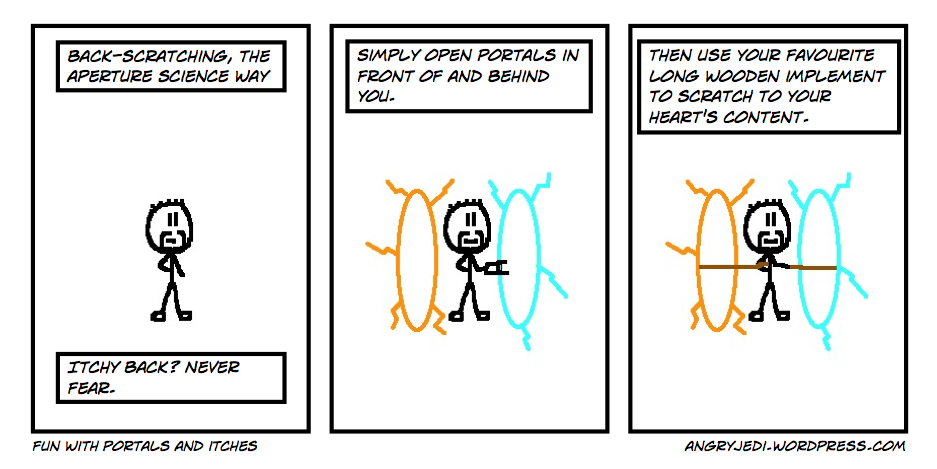
So everyone's going mental about Portal 2's imminent release. And with good reason—Portal was awesome, after all, and evidence that a good quality game that tells an interesting story doesn't have to be long and drawn out. Many called it a "gaming short story" and no-one seemed to mind the fact that it was maybe just 3 or 4 hours long.

The fact that it used the first-person perspective to make something that didn't involve killing things was perhaps the best thing. It was a genuine bona fide puzzle game that used some creative game mechanics to get you thinking about things in ways that you probably hadn't done since the days of Spectrum games where you fell off the bottom of the screen and reappeared at the top.

I thought I wasn't that interested in the sequel, but everything Valve's been doing with their ARG and the Potato Sack Pack nonsense has got me pretty fired up about the whole thing. So I guess their marketing works. Kudos to them for both being clever, and double kudos to them for highlighting the great work of today's indie developers as part of the marketing effort. The fact that I apparently accidentally set my phone alarm to be Still Alive from Portal probably hasn't helped matters. Have I been viral-marketing myself? Apparently so.

Trouble is, of course, that Portal 2 is a new game and, as you know, I have an enormous backlog to get through that wasn't helped by the fact that Dragon Age II proved to be just a little bit too much to resist. But then Portal 2 is short. And it has co-op, so it's sociable. Also, it is Portal, which despite being from one of the most successful developers in the universe has the feeling of an indie title about it and therefore feels like it should be supported whenever possible.

Dilemmas.

Also, my birthday is coming up. It's on the 29th. I will be turning 30. If anyone is looking for inspiration for exciting presents to buy me to celebrate the survival of three decades, I certainly wouldn't object to a copy of Portal 2 on PS3. Just tell me if you're doing that, though, so I don't feel the inexorable draw towards my nearest game retail establishment to procure my own copy in the next few days.

In the meantime, I will be sitting here listening to Jonathan Coulton music and singing along. And possibly replaying Portal. Several times. And each time wishing that I was actually playing Portal 2.

I'm really not helping myself here. GLaDOS is in my brain. Singing.

Day 456

#oneaday Day 106: A Wealth of Useless Knowledge

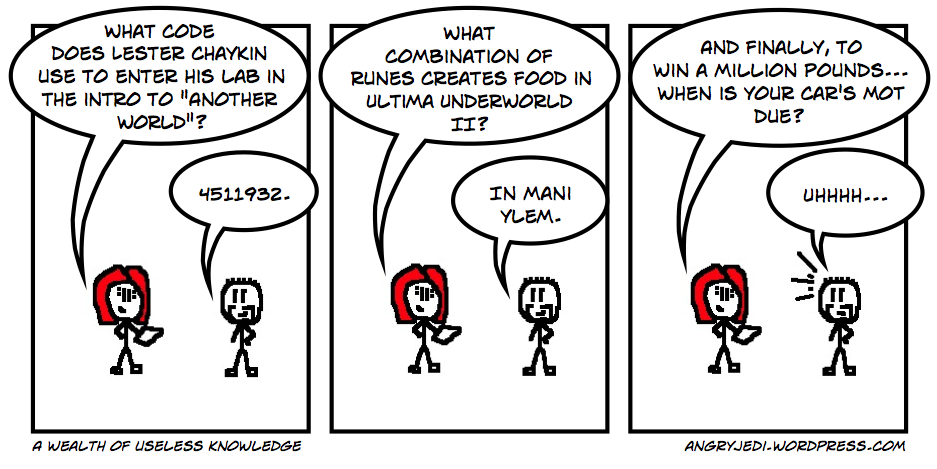
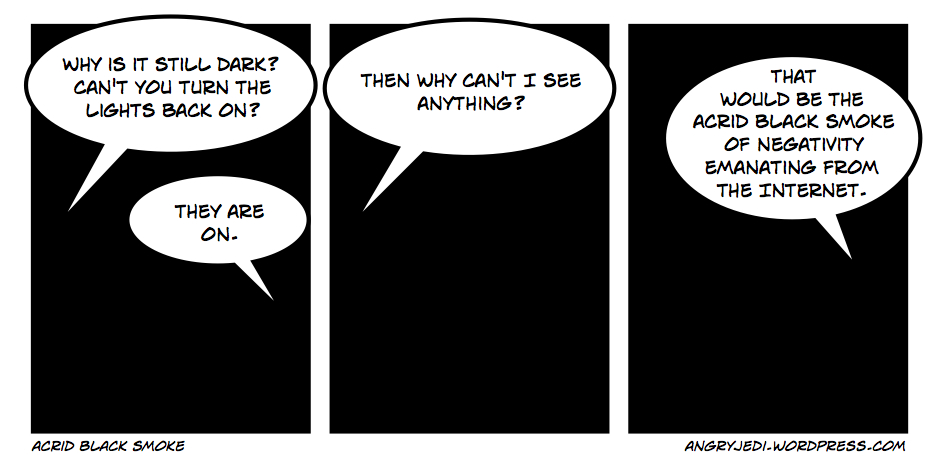
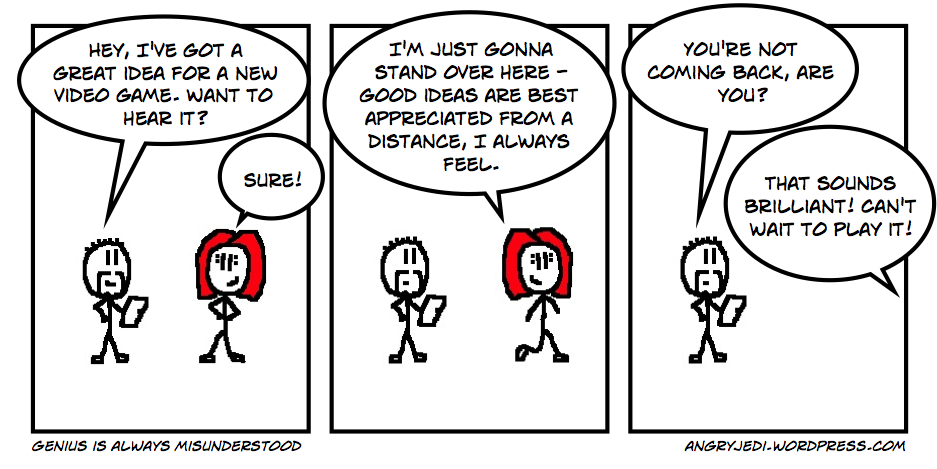
The above comic isn't actually that far from the truth. (I remembered the code from Another World but had to look up the Ultima Underworld II spell. I at least remembered that "ylem" was one of the runes, however.) All this leads me to the conclusion that our brains are clearly wired up all wrong, and we need some sort of GMail Labs-style multiple inbox feature in order to appropriately prioritise the things that enter our brain and the things that we can safely delete when there's something very important to remember, such as girlfriends' birthdays. (November 19. I sacrificed the cheat code for Sonic 2 to make way for this information.)
I'm not sure if everyone else's brain works in this way or if it's just a side-effect of being a massive nerd. But most people have something that they're extremely interested in, and will remember all sorts of useless facts about to bore their friends with down the pub. If you're lucky, you'll be friends with people who also know useless facts. If you're unlucky, you'll have all this knowledge squirrelled away with no-one to share it with—which is why the Internet exists, of course. And if you're particularly unlucky, you'll be friends with someone who's an even bigger nerd than you and is fond of correcting you every time you slightly misquote Ghostbusters. (Seriously. Fuck that guy.)

But I don't think it's necessarily a bad thing. Imagine how dull life would be if the only things wedged into your long term memory were your unique taxpayer reference number, your national insurance number, every password you've ever used and the sites they work for, and those arbitrary user IDs online banks insist on you using rather than allowing you to pick your own ID that you might be able to remember. And, of course, your car's MOT expiration date. (Sometime in August. I think.)

No. I'd much rather have cool stuff lodged in my brain that I can surprise and delight people with. (I have nerdy friends who find the fact I can remember Lester Chaykin's keycode from Another World immensely amusing… possibly at my expense, but I don't care at this point. Embrace who you are, I say.) Cool stuff in your brain allows you to become An Authority on a subject. And being An Authority is fun, because it means people come and ask you stuff about things you're interested in. It's like having people respect you and your opinions.

And sure, not everyone necessarily understands why you're so obsessive about Buffy the Vampire Slayer/Final Fantasy/Dungeons and Dragons/the collected interactive works of Jane Jensen/Minecraft/Twilight/Formula 1/porn stars of the 1980s/the board game Agricola. But it's important to you, and it gives you something to explore when you haven't got anything better to do—and something with which to bond with like-minded people via the Internet (or even real life if you're very, very lucky.)

It must be kind of sad to not have anything to obsess over. Do those people have any fun?

#oneaday Day 104: Acrid Black Smoke

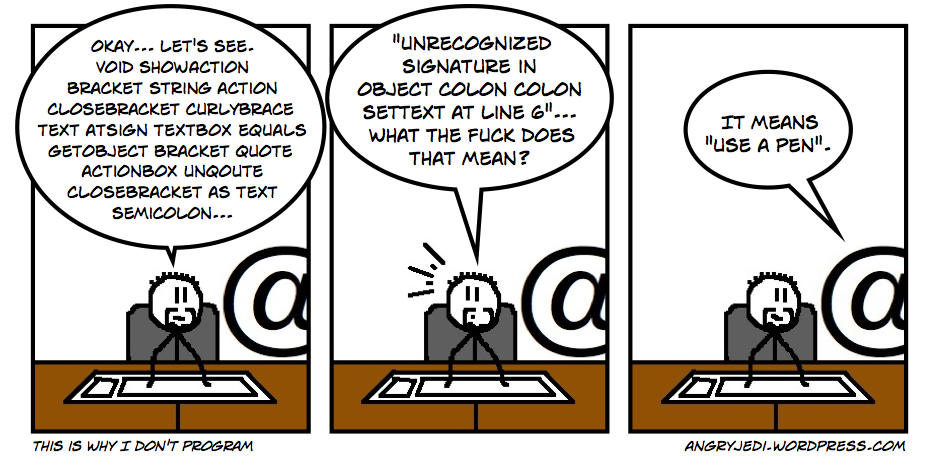
Earlier today, a story broke that divided opinions somewhat. The point and content of the story at this stage isn't especially important or relevant to what I'm particularly interested in right now, but the gist of the arguments that people are having is that it was a report based on anonymous sources that sounded like "just another rumour".
And perhaps it was. Or perhaps it wasn't. Anonymous sources aren't the most convincing sources of information to some people, thanks mostly to their anonymity. But these are people who would likely be immediately fired if their names were attached to things which are—presumably—supposed to stay secret for now.

Again, not the point I'm trying to make.

The point I am trying to make is the surprising amount of negativity the story in question attracted, and the subsequent high-school clique-style bitching and sniping that ensued on Twitter between high-profile members of the industry for the next few hours. People laugh and joke about passive-aggressive status updates from people who want to bitch about someone without naming them—"I wish SOMEONE would stop being such a jackass!"—but this was taking it to a whole new level, with, in some cases, high profile representatives of respected publications taking the passive-aggressive approach and arguing with thin air, presumably to try and make some kind of point.

I'm not going to name and shame anyone because there's no point in doing that and it wouldn't achieve anything. All I am going to say is that any time something like this erupts, I'm surprised and disappointed in people. Perhaps the story in question will turn out to be nothing—or perhaps it will turn out to be something big. Regardless, it was a rumour, and an interesting one at that, and people will want to know it. The original article made it very clear that it was a rumour based on things that anonymous sources had said. People can make their own minds up whether or not to believe it, but there's really no need for all the bitching and sniping.

It is, sadly, a hallmark of the Internet, though; comment sections were described on a radio show earlier today as "the bottom half of the Internet" due to their relentless negativity—a fact which made Charlie Brooker sit up and take notice, unsurprisingly. But why? Why the hate? Why the behaving like teenage girls?

Perhaps I'm just too much of a nice guy. I don't hate anyone, and I respect the work of others. I'll slag something off if it's genuinely bad, but I don't hate things for the sake of hating them like some people seem to. And whatever the reason for people's reactions to the story which broke earlier (still not getting into it!) there's certainly no reason for the ugly and thinly-disguised jealousy which has been evident this evening.

If people could just be a bit nicer to each other and a bit less negative about everything, the whole world would be a much more pleasant place.

It's nice to want things.

Day 452

#oneaday Day 100: What a Novelty

[Side note: Day 100! Yay. This marks my 448th day of blogging every day. I've been half-tempted to start numbering the posts from when I originally started again, but then that will just get confusing. Perhaps I'll put the total number at the end of each post or something. I don't have an eventual goal number in mind—I fully intend to keep doing this until I can't do it any more, for whatever reason. But given that I continued writing through the disastrous events of last year, it'll take something pretty severe to stop me being here every day. Now, on to your regularly scheduled blog post.]
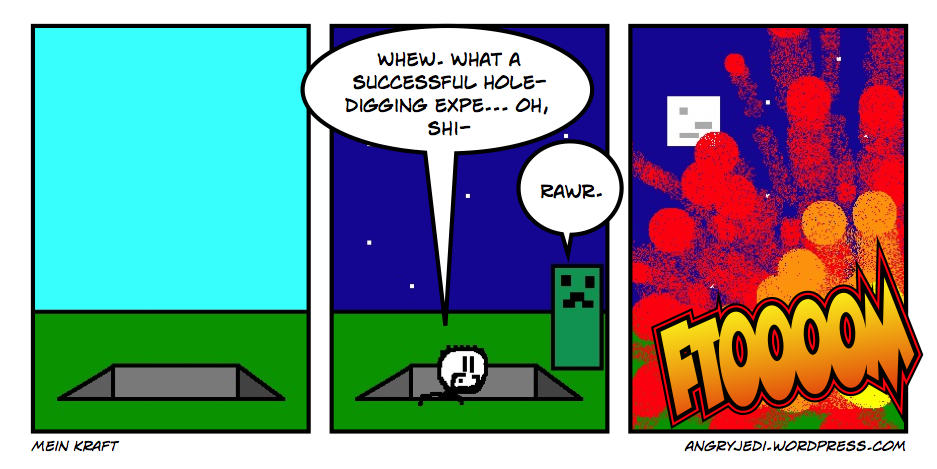
I can't program. Actually, that's a lie; I wrote a very good Treasure Hunt game in ATARI BASIC once. It used Graphics Mode 2, a custom character set, featured a randomly-generated playfield and custom sound effects. Okay, it perhaps wasn't "very good" but it was at least a completed project. Since then, though, my programming knowledge has tailed off somewhat. It's when everyone stopped using line numbers that it got confusing. I know ditching line numbers was actually a good thing in that you could more easily insert code where it needed to go rather than having to resort to increasingly-convoluted GOSUB/RETURN subroutines, but as soon as all these punctuation rules started to come in? Hmmm.

Perhaps it's just that I haven't spent enough time trying to learn one language. I spent a bit of time doing JavaScript and managed to get some fancy DHTML working, but have since forgotten it. I did some Java once, though it didn't do much. I worked my way through the first two chapters of a C# (pronounced "C-sharp", for anyone who had been wondering about it for as long as I had before I eventually found out) book and thought I was doing pretty well until I got to the first "independent project" type chapter and completely failed to produce the program required.

This is why I enjoy tools that allow you to express your creativity without having to know how to write a complete program. Sure, if you need to do something exciting, you can (and probably will) delve into scripting, but for the most part, the built-in tools are enough to get something up and running.

Over the years, I've used many different tools like this. By far my most beloved (and now outdated) is Klik & Play from Clickteam, which later became Games Factory and Multimedia Fusion. These required absolutely no programming knowledge whatsoever and simply a logical mind to figure out a series of "When this happens, make this happen" statements. Winner. And surprisingly flexible.

I'm also a big fan of the RPG Maker series, especially the later ones that do include a scripting language that allows people far cleverer than me to completely replace the game's battle system with something cool.

Most recently, I've come across Novelty, which is a tool for making Japanese-style visual novels. This is a completely free application—though still in beta—and is one of the most polished pieces of free software I've ever seen. It's incredibly flexible and allows for everything from barely-interactive "click to continue" visual novels that don't require any player decisions, to more in-depth Phoenix Wright-style affairs with buttons, hotspots, branching story paths and all sorts. There's not only a scripting language, but also an impressive markup language for creating graphical assets. There's no need to delve into these if you don't want to, of course, but for "power users" they'll be a boon I'm sure.

My only trouble with tools like these is that I have trouble getting started on something. I get some grand plan in my mind and either end up getting daunted by all the preparatory work which will need to be done (gathering/creating assets, planning and whatnot) or find myself starting, getting too ambitious and bumping into an insurmountable roadblock.

Still, it's nice to know these tools are out there for creative types. I have idle plans to experiment with making some sort of visual novel, but whether or not that will ever happen is anyone's guess.

void blog(string bollocks)
{
     Object@ myBlog = GetObject("Blog");
     if (myBlog !is null)
     {
            myBlog.SetText(bollocks);
     }
}

See? No problem at all.

blog("Cock! Piss! Partridge!")

Day 448

#oneaday Day 99: Mein Kraft

Yes, I have discovered Minecraft. Minecraft, despite being an indie game and therefore something I should technically automatically be championing, going by past experience, is something which I've always had something of a curious resistance to. It hasn't been by choice, though—the reason I haven't been playing Minecraft is not the same as the reason I'm not playing Call of Duty, for example.

In fact, if anything, it's more to do with the fact that when I finally gave in to peer pressure and bought a copy a number of months back, I only had my netbook with me and it ran like ass on there. And then it ran like ass under OS X on my Mac at home, too. For literally months and months I'd been saying to myself "I should really install it on the Windows partition of my Mac and try it properly…"

Well now I have. And what do you know? It's rather good, though it's the kind of game that appears to—at least in its current beta stage—be very much "what you make of it".

If you're one of the few people who hasn't contributed to developer Notch's millions so far, here's a brief rundown. You are dropped into a randomly-generated world made entirely of blocks of various materials. You have nothing to your name except a punching fist that can knock down trees. It's up to you to survive, because every night, the nasties come out and will do their best to kill you.

That's about it—but the main appeal of the game in its present state comes from the fact that once you've built yourself a secure shelter, it's time to start exploring the world and building stuff. You can create structures either by hollowing out existing terrain or by collecting resources and stacking them to build things—kind of like pixelated Lego blocks.

Then there's the "craft" part of the title—you can make items. The daunting part of the game for new players is the fact that no help is given when you start the game—without looking at sites such as the excellent Minecraft Wiki, you'd be expected to figure out how to make tools for yourself. And given that even making the simplest tools requires several steps (punch trees for wood, craft wood into planks, build workbench from planks, craft planks into sticks, combine sticks and planks in various arrangements to produce tools) it's arguably something of a long shot to expect people to do this for themselves.

Or is it? Steven Johnson argues in Everything Bad is Good for You that the cognitive processes you go through when figuring out stuff like this for yourself are very beneficial—good "brain exercise". You use past experience from previous games and other things you've done in the game you're playing to draw conclusions for yourself about what to do next. And sure enough, I found that once I'd started playing a bit and got the basics down, I started naturally experimenting with different arrangements of materials to see what they produced. Some things worked, some things didn't. If something doesn't work, you don't lose anything, either, so the game is set up to encourage exploration and experimentation.

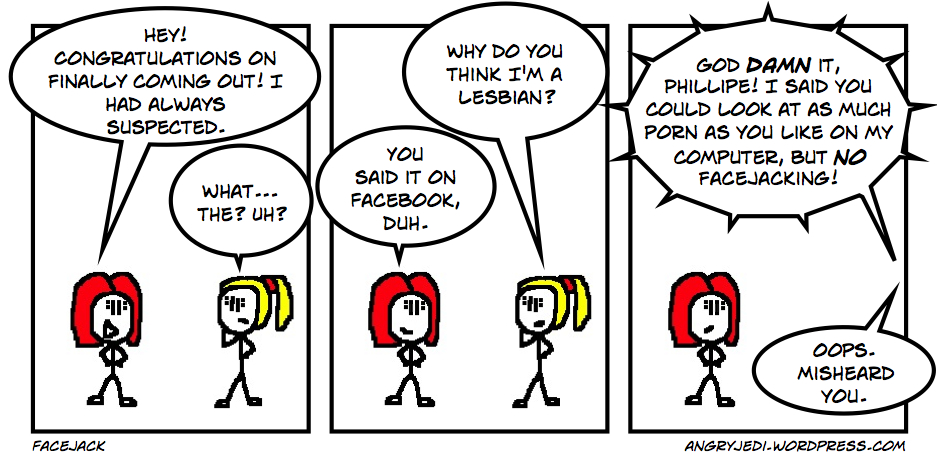
There's also an element of risk, though. Death isn't permanent—but it does cause you to drop all your stuff and potentially lose it. If you've spent a long time collecting things, this can be a real pain, especially if you were exploring a long way from your home spot. Then there's the fact that the game's most notorious enemies, the "Creepers", explode when they get near you. Not only does this cause significant damage to you, it also blows big holes in the things you've built.

But rather than being frustrating, most players simply take this as a sign that they need to defend their homes a little better. Perhaps they should make them harder to get to, or plant some cacti to put off enemies, or build some weapons and armour.

The possibilities are pretty extensive, and I'm looking forward to exploring the game further—and seeing where Notch takes it in the future. The game comes out of beta on the 11th of November this year, so if you want to pick it up for its current reduced price (25% off the full price) then get over there now.

#oneaday Day 98: Inappropriate Soundtracks

Music's a powerful tool for emotional manipulation. You can use it to make people laugh, cry, jump, be scared, be excited and get tingly feelings in those hairs on the back of their neck.
You can also misuse it, with varied results, such as this video I made more to test the iPhone's ability to upload directly to YouTube more than anything — hence the crappy picture and sound quality.

Yes, that is indeed Crackdown 2 featuring the Lazy Town soundtrack, a choice which both confused and delighted the YouTube community and has meant that I still get random, sporadic comments on this video to this day.

It… kind of works, though, doesn't it? Happy, bouncy music for a happy, bouncy agent leaping around collecting shiny orbs. Of course, it completely changes the character of the game — but then Crackdown 2 is a game that isn't particularly strong on the narrative front anyway. If anything, it encourages this sort of messing around.

There's certain genres I won't touch with custom soundtracks. RPGs, for example. While RPGs often have repetitive soundtracks that you listen to on repeat for 40-100 hours, for the most part I like to experience them the way the composer intended. It's like a movie; you wouldn't replace the soundtrack from Shawshank Redemption with Kylie Minogue, would you? It would completely undermine the experience. As RPGs tend to be story-heavy, I prefer not to undermine the experience with a custom soundtrack — many of them are more than capable of undermining themselves with ridiculous plot twists, of course.

But driving games are another matter. Ever since the original Xbox launched the custom soundtracks feature, it's pretty rare that I'll play a driving game with the music included on the disc. (This is at least partly because the vast majority of driving game soundtracks are complete garbage, but that's a little beside the point.) I wrote the other day that I wished for a bit more "drama" in my driving games, and that no-one seemed keen to follow through on the idea. What I can do, though, is put ludicrously overdramatic soundtracks over my driving games, producing results like this. Much more epic, I'm sure you'll agree.

Okay, I shamelessly stole the idea to use the Plunkett and Macleane soundtrack from Top Gear, but they used it because it works. Also recommended: Neodämmerung and/or Navras from The Matrix Revolutions, anything from the Shadow of the Colossus soundtrack, anything from the Castlevania soundtracks since Symphony of the Night and… well, anything epic, really.

I suggest you try it next time you fire up a racing game. You'll have much more fun and your races will carry that much more "weight". You can imagine that you're racing to survive or something. (Obviously if you're playing Split/Second, which already has an excellent cinematic soundtrack, you literally are racing to survive in many cases.) You can imagine your own reason for driving shiny cars very fast. If you're the sort of person like me who enjoys driving shiny cars very fast but would prefer it very much if there was a reason beyond "to win", then this approach will sort you right out.

Any recommendations for other games with inappropriate soundtracks? I'm all — wait for it — ears.

#oneaday Day 96: Don't Take It Personally, Babe

The thing I like about games that are a bit off the beaten track is the fact that they're not afraid to break with every gaming convention under the sun in order to try something a bit different. Objectively, sometimes they're not great "games" in the traditional sense, but they are definitely worthwhile experiences that explore interesting new ways of telling stories.
One "author" who produces such games is Christine Love, who is fond of creating ren'ai titles. For the uninitiated, ren'ai games have strong plot elements of romantic love. They're not necessarily dating sims or hentai games—though some are—but all of them have a narrative which explores love and emotions. Final Fantasy VIII, for example, is regarded as a ren'ai game. Stretching the definition somewhat, you could even argue Silent Hill 2 has elements of the genre.

The appropriately-named Love's titles, however, are much more up-front about their intentions. Digital: A Love Story and the oddly-named Don't Take It Personally, Babe, It Just Ain't Your Story are two games which go about telling a ren'ai tale in similar, though markedly different fashions. Both of them revolve heavily around the use of technology and its role in interpersonal relations.

I'll resist spoiling either of them, but I think they're well worth exploring for anyone interested in the "visual novel" genre—anyone who liked games such as the Ace Attorney series, 999 or Hotel Dusk, for example.

Digital: A Love Story sits you at the desk of an Amiga (or rather, a non-copyright infringing equivalent) five minutes into the future of 1988. Purely by interacting with your computer and dialling up a number of virtual BBS systems, a genuinely compelling tale is told without any graphics whatsoever. You don't "break character" for a single instant in the game, and it's this gameplay "hook" that keeps you playing to see what's going on. I'll say nothing else, as that would spoil it. But it's excellent—if only for nostalgia value. It happens to tell a good story, too.

Don't Take It Personally… is a little different. Taking a more Japanese style to its art, it looks like a dating game, though it isn't one. Casting players in the role of John Rook, a 38-year old double divorcee who came to high school teaching in 2027 as part of a mid-life crisis, it tells a tale which explores interpersonal and social issues that you don't generally see in games. It's a relatively simplistic visual novel in terms of gameplay, with only a few choices to make, but like Digital, it's the story that matters. And it's told in a very interesting way through three different "layers". There's the face-to-face action, where the player, as John, sees and hears what's going on in front of him. John also has access to his students' Facebook-like social network, though, and is able to read any of his students' communications—even the private ones—giving an ethically-questionable insight into what they're thinking and what is really going on behind the dramas that unfold. And thirdly, this game features possibly the only time you'll ever see 4chan (sorry, "12channel") being used as a Greek chorus.

Both games have a "message" and while Don't Take It Personally in particular is a little heavy-handed with it towards the end, it's cool to see games trying to say something a little more than the usual melodrama.

So check 'em out. They take, like, two hours at most each. And they're free. You love free stuff, right?

#oneaday Day 95: Car Pee Gee

There's a ton of things that people haven't tried in the world of video games—mostly because of certain assumptions that are made about the people who play them, or more specifically, the demographics of who plays what.

Let's take the racing game genre as an example. It's generally assumed that racing games will be played by petrolheads of varying degrees. The überhardcore petrolheads who actually know what a limited slip differential is rather than just treating it as a powerup will be into the Forza Motorsports and Gran Turismos of the world. Those who just enjoy flinging cars around corners are built for the Ridge Racers, Need for Speeds and Project Gothams of the world.

And that, it seems, is the limit of what the market assumes to be "people who like racing games". But I like racing games, and I wouldn't describe myself as a particular petrolhead as such. I also like other genres, and I would pay good money for a game that fused together some different genres and gave racing games a bit of personality. Because let's face it, however good the driving action is, the in-between races bit of most racing games is about as interesting as a spreadsheet. Sure, it might have a soundtrack by Junkie XL or The Prodigy, but it's still dull as ditchwater and completely character-free.

I want a racer with a plot. I'm not talking about half-assed efforts like Need for Speed Underground or Ridge Racer Type 4. I'm talking about a game where the unfolding storyline is just as important as throwing a BMW M5 around a 90-degree corner. It's been tried once before with TOCA Race Driver, but to my knowledge, never again since. There's also Square's Racing Lagoon, but good luck finding a copy of that ever.

No; what I envision is something along the lines of the old Wing Commander games, where there's an unfolding story and some good character interaction punctuated by, in this case, racing rather than space-shooty-bang-bang action. If your character has been talking to a rival racer and talking smack to them in these interstitial "plot" sequences, it's going to make you feel all the more inclined to do your very best against them when you see their name flash up over the top of their car in the middle of a race. Perhaps you could have a co-driver sitting in the car with you talking to you and making comments as you race as well as helping you out by warning you of upcoming corners and hazards.

Unfortunately, I doubt it's ever going to happen, because most racing games these days are treated as triple-A titles, which means that they get tightly focus-grouped and marketed at a specific demographic: the petrolhead.

I want to play the racing game for the RPG fan, the interactive movie fan, the adventure game fan. There's no reason why either side of the experience has to be compromised—just replace the battles from a JRPG with races. Why shouldn't it work?

Oh well. I can dream on.