#oneaday Day 806: Shadow Hearts: Covenant: A Scoreless Review

20120404-003526.jpg

Shadow Hearts: Covenant (aka Shadow Hearts II) is, quite simply, a must-play JRPG. Whether you're a devoted fan of the genre or a jaded veteran who decries its supposed lack of innovation in recent years, there is a ton of stuff for you to like in this epic PlayStation 2 title from Nautilus (née Sacnoth).

Let's rewind a moment before we get into specifics. Is it necessary to have played the original Shadow Hearts to appreciate its sequel? As you'll recall, I noted that the previous game hadn't aged hugely well, with its pixelated prerendered backdrops, wooden animations and low-budget voice acting bearing the brunt of the ageing process. It's still a solid game, but those who expect a bit more than a PS1 RPG that runs at 60 frames per second may find themselves suffering from culture shock for a little while — whether or not that culture shock is insurmountable depends entirely on the individual.

To answer the question, though, yes and no. That may be a copout answer, but it's true. Shadow Hearts: Covenant's story stands completely by itself as a self-contained tale, but it also follows on directly from the first game's narrative. There are a number of shoutouts throughout the course of the adventure which refer back to prior events, characters and locations, too, which will delight series veterans. In short, if you can't stomach the old-school sensibilities and aesthetic of the original, you can jump into Covenant without guilt, but those who are willing to play the two games one after the other will have an altogether deeper experience to appreciate.

What makes Covenant a more easily-palatable title than its predecessor, however? Many things, starting with the presentation. Rather than taking the old-school approach of polygonal characters on a prerendered backdrop, Covenant features fully 3D environments, albeit with preset camera angles a la Final Fantasy X. The characters have been infused with a great deal more detail, too, with hair and fur looking particularly good, and some excellent animations thanks to motion capture. Alongside this, the voice acting has been given a kick up the arse, with a full English dub, fully-voiced cutscenes for the more important story scenes and none of the original's corner-cutting. Were it not for the lack of widescreen support, this game wouldn't look out of place today being released alongside titles like Xenoblade Chronicles and The Last Story.

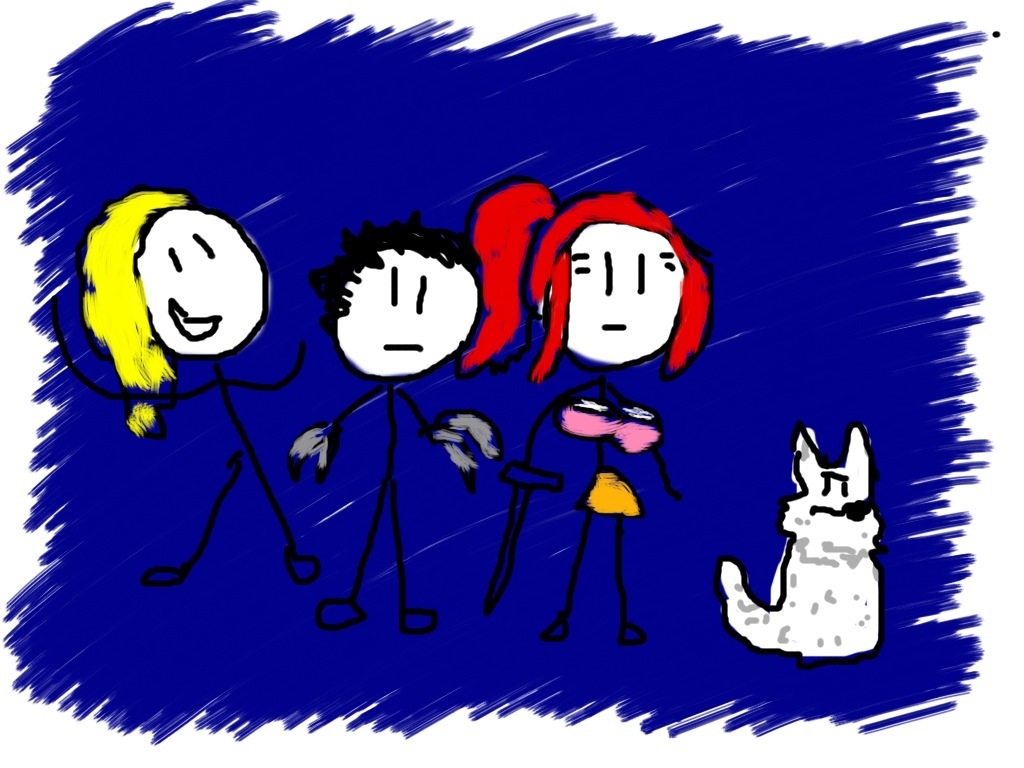
Like its predecessor, Shadow Hearts: Covenant revels in the fact it has an eccentric cast who rarely fall into standard JRPG tropes. While protagonist Yuri initially appears to be the moody "Squall" type, he quickly shows himself to be a deeply-nuanced character who undergoes some significant development over the course of the story. As he's joined by the other cast members, who include a puppeteer, an exotic dancer/fortuneteller/aromatherapist, a female German World War I officer (whose nationality and occupation quickly becomes completely irrelevant) and a fricking wolf among others, it becomes abundantly clear that we're not dealing with a conventional sort of JRPG setup here. To its credit, the game plays things admirably straight all the way through, which makes its more humorous scenes all the more effective — and proves that it's not afraid to make its characters suffer a little along the way in the name of drama. It doesn't descend into exaggerated melodrama at any point, and for the most part resists the temptation to get too wacky. Characters occasionally make a few "fourth wall"-breaking comments, though these are spread far enough apart to be effective and amusing rather than feeling like the game is going "LAUGH, DAMMIT!" A few characters are a little underdeveloped and underused over the course of the story (and one in particular is introduced much too late to give the player a chance to get to know them as well as the others) but this is a relatively minor niggle — those who are most important to the narrative are well-defined, deep, likeable cast members whom it's a pleasure to spend time with.

An RPG often lives or dies by its story, and thankfully Covenant provides a good one that I won't spoil here. But those who play for the joy of discovering things and building up an unstoppable fighting force won't be disappointed, either, for Covenant provides a brilliant combat system that puts many recent titles to shame. Based around the cool "Judgement Ring" system of the original game whereby successful actions are determined by timed button presses, and featuring multi-character combos, an array of wonderfully silly character-unique abilities and a flexible but simple magic system that allows for the detailed customisation of characters, Covenant is a satisfying game to play even during plot downtime. While each "dungeon" only contains maybe three or four different types of enemy tops (plus a boss, usually), combat is such a joy and the encounter rate is so finely tuned that it never becomes a chore. The fact that grinding seems relatively unnecessary if you take a little time to go and do some sidequests — which are worth doing, incidentally, as they feature some of the best scenes in the game — is also a pleasing development.

In short, the whole thing comes together to create a joyful whole that will keep you busy for about 40-60 hours depending on how much optional stuff you want to do. It's a good length — while it's approximately twice the length of its predecessor, it never feels like it's outstaying its welcome, with a wide variety of locations to explore, treasures to find and creatures to fight. Completionists who like to explore and find all the hidden secrets in a game will be amply rewarded, while those who simply want to charge ahead with the plot won't find themselves punished for wanting to progress.

As I said at the beginning, Shadow Hearts: Covenant is, quite simply, a must-play JRPG. Should you have the opportunity to pick up a copy, do so. I'm disappointed I didn't take the time to explore this series sooner, as it's shot to somewhere around the top of my list of favourite games of all time. I am, however, very glad that I took some time away from the mainstream, from current-generation consoles and from the shitstorm surrounding Mass Effect 3 to immerse myself in a true, underappreciated classic. You should try it, too.
#oneaday Day 802: On 'Entitlement', and How the Games Industry May Have Brought This on Themselves

20120331-013201.jpg

Yet another op-ed discussing the controversy of Mass Effect 3's ending dropped today, this time from Gamesindustry.biz. In it, author Rob Fahey notes that "the advent of the Internet generation has done something deeply unpleasant and disturbing to the word 'fan'", going on to describe how the word has gone from meaning "I like this, it speaks to me on some level, I enjoy it, and I'm willing to spend money on it and advocate it" to "I like this, and thus it belongs to me, I own it, and I deserve a say in its future and its direction."

I don't argue with Fahey's key point here — that there are people out there who believe that they should have a say in the way their favourite franchises are run — but I do object to several things about this article. My main point of contention is that the tone of the piece is yet another example of the games press being unnecessarily confrontational towards members of the public, lumping everyone who disliked Mass Effect 3's ending together into one homogenous group. In reality, it's rather different — while it's true that there are people who have gone to the extremes of setting up petitions and complaining to official bodies over the ending, there are also people out there who dislike the ending because it's badly written, because it feels half-finished, because it feels like an excuse to tack on the obnoxious "Hey! Buy DLC!" dialog box after the ending, and many other valid reasons to say it is a bit poo. (I'm paraphrasing from discussions with several friends and podcasts I've listened to here, as I have not played the game and, as you likely know very well by now, will not be doing so.)

Fahey does, however, then touch on an important subject which I believe is what has led us to this whole mess in the first place over the course of the last few years.

"Game companies are excited, delighted, by the idea of having loyal fans," he writes. "Game companies have engaged with their fans, closely and directly. They nurture their communities. In BioWare's case, and God knows they're probably regretting this now, they openly talked about how important fan feedback is to them, about how Mass Effect was a series driven by its fans. It's become a creed, a mantra. The fans are important. We love our fans. We listen to our fans. Tell people that often enough and they start to believe you — and on the Internet, there are a whole lot of people who don't need much of a push to believe that they're important and must be listened to."

This is correct, but it is not the fault of the fans themselves. Rather, this situation has been exacerbated by the direct engagement with the audience that Fahey notes above. Fahey does concede that the industry has "forgotten that creativity isn't about the audience, first and foremost, it's about the creator" but seemingly shies away from what has actually caused this problem.

Two words: social media.

In BioWare's case, their seemingly exemplary social media strategy of direct, personal engagement with fans has actually turned out to be their downfall. Let's take a look at a bit of background to this.

For starters, a while back the company's own social media coordinator Erika Kristine took the bold step of providing an open link to her own personal Facebook profile. Fans were able to befriend her and talk to her directly — though, disappointingly, as an attractive female, many of the comments she ended up getting on her page and photos tended to be of the "ur so beautiful" creepy variety rather than people wanting to engage with her. Perhaps unsurprisingly, her personal Facebook presence appears to have vanished, to be replaced by a "fan page" which hasn't been updated since November of 2011. The damage was done, though — longtime fans knew that Erika, a human being, was in charge of BioWare's social media, and thus opened the gates for "negotiation".

Then there was the FemShep incident. What was previously a quirky subculture of the Mass Effect community — the cultish love for the female incarnation of Commander Shepard, voiced by Jennifer Hale — was adopted as a marketing tool by EA and BioWare. We started to get promises of FemShep trailers, FemShep art on the box, FemShep this, FemShep that. The whole thing came to a head with the odious "beauty pageant" public vote where subscribers to BioWare's Mass Effect page on Facebook were able to vote on which of a variety of computer-generated hotties — very few of which are actually possible to create using the in-game character creation tools — would become the "official face of FemShep". When the community objected to the fact that a "predictable" blonde, blue-eyed FemShep was winning the competition, the company opened another round of voting, this time providing a choice of hair colours for the same model FemShep. (We ended up with a redhead — a decision I applaud, but that's beside the point.)

These aren't isolated incidents, and they're not limited only to BioWare and EA. Most major game publishers these days have hopped on the social media audience engagement bandwagon and regularly post questions, invite feedback and hold votes for everything from which athlete should be on the front cover of this year's Madden game to what colour Serah's panties should be in the inevitable upskirt scene in Final Fantasy XIII-2. All right, I made that last one up, but given that Konami promoted NeverDead with an interactive picture where the game's heroine Arcadia stripped off more and more clothing as more people Liked the page, it's not beyond the realm of possibility. This revolting marketing ploy has thankfully disappeared now the game's page has moved to Timeline view.

Given the way developers and publishers interact with their fans, though, is it any wonder that some have started to feel like they have the right to exert some degree of "crowdsourced control" over their favourite franchises? If they can influence what FemShep looks like, why can't they influence the ending of Mass Effect 3?

In short, the industry has backed itself into this corner and no amount of complaining about how "entitled" the more vocal fans are is going to change that. These fans may well have a sense of entitlement, but that has come from somewhere — it hasn't just appeared from thin air. And no-one seems willing to acknowledge this fact, perhaps largely because it's much too late to do anything about now. Pandora's Box has been opened, Liked and Shared with eleventy bajillion people around the world, and it's going to be very difficult to close it again.

In order to fix this, developers and publishers need to take a step back from their audience, to stop engaging with them quite so directly and to stop soliciting feedback on every little irrelevant detail of, say, how many tassels there should be on the new Assassin's Creed dude's hoodie. If developers don't want a repeat of this whole Mass Effect 3 fiasco, then they need to stand back behind a barrier that carries a big sign reading "Look, chumps, we made this, and we hope you enjoy it. You're free to not enjoy it if you so please, but it is what it is — finished, complete, tied up with a pretty pink bow. If you enjoy it? Great. We'll keep making more if you keep buying them. If you don't like it? Don't buy it, then we'll know we need to do something else."

"This isn't a situation that'll change overnight," concludes Fahey's piece, "not least because immense inertia defines the role of 'fans' in our industry — but it's important for game creators to realise that things don't have to be this way. Engagement with fans doesn't have to mean letting the lunatics run the asylum, or even giving them the impression that they've been given the keys to the office."

His conclusion here is valid — this is exactly what game creators need to do. You can't crowdsource a big-budget game and expect it to come out coherently, so don't encourage people to think that's an option. However, the fact that some people have already come to that conclusion thanks to social media oversaturation doesn't make them "sociopaths", as Fahey calls them — it means that they have been brought to that conclusion via precedents set by the people they are complaining to. Similarly, those who simply dislike the ending on the grounds that it's just not very good — particularly when the rest of the series is used as a yardstick to measure it against — aren't being "entitled" or "sociopathic", they're just rather unfortunately finding their opinions lumped in with those who are taking more extreme arguments.

I hope the industry learns from this experience, but I have a suspicion it won't.

#oneaday Day 797: Enthusing Regarding Shadow Hearts: Covenant

20120326-020545.jpg

Haven't written about what I've been playing for a little while, so here's an update.

I'm currently playing Shadow Hearts: Covenant, aka Shadow Hearts II. If you've been reading my previous entries, you'll know that this is the second entry in a PS2-based RPG series published by Midway (in Europe, anyway) and developed by Nautilus (nee Sacnoth). If you haven't been reading my previous entries… uhh… Shadow Hearts II is the second entry in a PS2-based RPG series published byMidway (in Europe, anyway) and developed by Nautilus (nee Sacnoth).

Jesting aside, Shadow Hearts II is a significant upgrade over its predecessor. Where the original Shadow Hearts could have easily been a PS1 game, with its prerendered backgrounds, polygonal characters and turn-based combat, Shadow Hearts II is not only a fine example of a PS2 game, but a game which still stands up remarkably well today regardless of platform. Replacing the original game's prerendered vistas with a 3D world full of dynamic (but still game- rather than player-controlled) camera angles is the most obvious difference, and it's striking what a change it provides. Shadow Hearts didn't look bad but it did suffer a little from characters standing around somewhat woodenly when having conversations. Shadow Hearts II, by comparison, takes a much more cinematic approach to its presentation and looks great as a result. It helps that the character models are fantastic and well-animated, too — this really is a great-looking PS2 title.

Going hand-in-hand with the cinematic presentation of the visuals is the move to the game being mostly voiced rather than almost entirely text-based. This has the sad side-effect of meaning it's no longer possible to rename your characters, but since the original Shadow Hearts featured a voiced ending sequence in which the default names of the characters were used even if you'd played for over 30 hours with a party sporting a completely different nomenclature… well, I can deal with that. The voice acting is mostly decent, but pays absolutely no attention whatsoever to the countries that the cast members are supposed to be from. Leading lady Karin, for example, is supposed to be German, but she sure doesn't sound it. It doesn't take long for the suspension of disbelief to kick in, however, as you immerse yourself in Shadow Hearts' surreal parallel reality in which World War I is happening at the same time as Bad Shit is going down with demons and monsters. Eventually the fact that everyone from a wide range of different nations all sounds American ceases to matter, and the fact it's set in the real world alongside real-life historical events and figures becomes almost incidental. It just becomes a cool JRPG story in which the place names sound very familiar.

I'm not going to talk too much about plot here as I'll save that for a post once I've finished the game, so instead I'll now dwell a little on some mechanical highlights from the game — specifically, the combat system.

Shadow Hearts featured a functional, fun combat system that didn't deviate hugely from the traditional turn-based "heroes line up one side, enemies line up the other, polite violence ensues" system used by many RPGs over the years. The main twist on the formula was the use of the Judgement Ring, which required carefully-timed button presses to ensure the success of actions. More powerful, complex moves required more button presses, while the use of the Ring also allowed the designers free reign to throw in a variety of unconventional status effects besides the usual Poison, Paralyse and the like. Some enemies might make your Ring very small, for example (stop sniggering at the back) while others might make it spin very fast. It was a pleasing extra layer of interactivity atop an otherwise fairly conventional battle system.

Shadow Hearts II keeps the good bits of the original — the Judgement Ring and the need to keep an eye on your party's emotional as well as physical state during combat — while completely shaking up the core battle mechanics. No longer do both sides stand still waiting to be smacked across the face. Instead, characters move around the battlefield to make use of their abilities, and various different types of attack allow the player a degree of control over the battlefield. If you see a bunch of enemies lining up for a concerted attack, for example, then you can perform some sort of explosive move that scatters them and prevents them from unleashing said attack.

This system is given a whole new layer of depth by the Combo mechanic. Characters (player or enemy) who are standing directly adjacent to one another are eligible to participate in a "Combo" attack. This still takes place in a turn-based manner, but allows characters to take their turns outside of the usual order determined by their agility statistic. Repeatedly wailing on a single enemy with several characters also gradually increases the damage inflicted, with more and more total hits contributing to a bigger and bigger damage bonus, particularly if you combine this with knocking the enemy up against a wall. It's immensely satisfying to pull off successfully, and adds a much greater degree of strategy to battles. Do you risk characters being knocked out in favour of unleashing a four-man combo? Or do you keep someone held back on healing duty while the others batter the enemies with magic and a giant frozen tuna? Karin's sanity is a bit low — can you risk her going Berserk after she's done her job in the combo?

Alongside the excellent combat comes a fine system of character development. Player characters may equip "Crests", which allow them to cast spells. Almost any character may equip any combination of Crests, so long as their total level doesn't exceed their "capacity" statistic. This allows you to set up characters as healers, buffers, offensive mages or any mix you please.

This doesn't make characters interchangeable, however — far from it. Alongside the Crest Magic system is the Personal system, which features a unique mechanic for every character. Karin must collect Wagner scores to inexplicably teach her new swordplay moves. Friendly wolf Blanca (incidentally, one of the most subtly hilarious characters of any game I've ever played) powers up his special moves through defeating rival wolves from around the world in one-on-one combat. Vampiric wrestler Joachim learns new moves from his "Teacher", real-life wrestler The Great Gama. Not only that, though, but he occasionally suffers uncontrollable transformations into a golden bat, an invisible form or a superhero alter-ego according to his biorhythms. Highlight of this "Personal" system, however, though, has to be Gepetto the puppeteer, who fights using his slightly creepy kid-like doll Cornelia, who gets new dresses infused with new magical capabilities by taking cards with naked, muscle-bound male pinups on them to a rather effeminate French tailor who persistently follows the party around from location to location. No, I'm not making any of this up.

Herein lies the genius of Shadow Hearts II. It is filled with inspired lunacy, and every time you think you've got the hang of its peculiar mindset, it throws something newly bizarre into the mix. And the best thing about it is that it plays it all so straight, so deadpan. These strange systems are just how things work — no explanation required. In the case of Joachim's transformations, for example, the game doesn't even bother to mention that this might happen at some point, or even explain it when it does happen for the first time. Instead you're left gazing at your battle screen, bewildered as to why a party member has inexplicably turned into a bat without warning. Fortunately, there's an in-game help facility which does explain these quirky little features, but in a way it's more fun to discover things for yourself and only resort to the help if you find yourself really confused.

It's proving to be an utterly brilliant game so far, then. I've no idea how far I am off finishing it — I'm about 40 hours in and have been on the second disc of two for a little while, so I'm guessing there's not that much left — but I'm certainly going to continue to enjoy the ride while I can. And if you get the chance to, you absolutely should play this and its predecessor, too.

#oneaday Day 794: Brilliant Game Idea, No Technical Talent? No Problem!

20120323-001935.jpg

I've mentioned a number of times on this 'ere blog that I don't really have the knack of programming. I can sort of do it if I have plenty of reference material to hand or if I'm following a tutorial, but it's the sort of thing that if I don't do it regularly, it just all falls out of my head and makes a mess on the carpet.

Despite not being able to program, however, that hasn't stopped me from wanting to make my own games at times, and I know at least a few of you reading might be interested in how to go about doing that for yourself. So I thought I'd gather a bit of information regarding game maker packages that I've used in the past (or at least heard of) in the hope that you might find something that tickles your fancy.

So without further ado, then, here goes.

Clickteam products: Games Factory, Multimedia Fusion

My first experience with making games that weren't written in Atari BASIC was with Clickteam's Klik and Play, an application for Windows that allowed you to create games without any knowledge of programming whatsoever. The program actually contained everything you might need to get creating straight away — it included basic art tools, a library of sound effects and music to use in your games as well as plenty of example sprites, background art and interface elements.

Klik and Play's strength was in its ease of use. Handling all aspects of how a game worked was very much like a logic puzzle, or a series of "If… Then…" statements. For example "If" the player presses the fire button, "Then" the spaceship they control should shoot a missile. "If" an enemy collides with the spaceship, "Then" a fart sound should be played and the player's lives should be reduced by one.

One great thing that Klik and Play did was provide several means to determine all the possible conditions you might want to test for in your game. You could create the statements manually if you knew in advance what was going to happen, or you could enter the "Step Through Editor", start your game running and every time something that hadn't happened before happened for the first time, Klik and Play would ask you what you wanted it to do. After a short while of using this tool, you started to think logically about all the possible things that might happen throughout the course of a single screen of the game you were making, and your efficiency would skyrocket. Of course, even when you know what you're doing this is still considerably slower than a C++ wizard coding their own routines, but for those of us who always put curly braces in the wrong place, it was a godsend.

The only downside to Klik and Play was that it was fairly limited in what it could do. There weren't many global variables to store information in, for example, making more complex games difficult to create. And file management for save games and the like was practically non-existent. You were pretty much limited to making simple arcade games — not that this was necessarily a bad thing.

Many of these issues were resolved by subsequent releases in the series. First came The Games Factory, which added more global variables, the ability to have a scrolling screen for levels that were bigger than a single screen in size, and more sophisticated event handling. This was then followed by Multimedia Fusion, which added even more high-end features designed for people who wanted to build full applications and screensavers rather than just games. Most recently, Clickteam have launched The Games Factory 2 and Multimedia Fusion 2 as two separate products (with Multimedia Fusion having a pro-level "Developer" version available) which are available from their official website. The latest versions feature the ability to export to Flash for publication on the Web, and iOS app format. Android and XNA (Xbox 360) support is reportedly on the way.

RPG Maker

I mentioned this yesterday, but it's worth putting in this list simply because of how full-featured it is. Having gone through a number of previous iterations on both PC and consoles, Enterbrain's role-playing game construction kit RPG Maker is now one of the most flexible but easy-to-use game making tools on the planet. It doesn't even have to be a role-playing game that you make with it — if you're looking to create a visual novel or top-down perspective adventure game, it's a great solution for that, too.

RPG Maker comes with a ton of preset graphics, sounds and music for you to use in your own games allowing you to get started straight away. All you need to do is draw the maps, write the story and test it out, all of which can be done via the program's simple interface. Meanwhile, more advanced users can easily add custom graphics, sounds, music, enemies, items, equipment and characters, and people who actually know a bit of coding can even rewrite the game engine using the program's "RGSS" scripting language to create brand new menu and battle systems. And don't worry if you don't have a clue how to do that yourself but find the built-in systems to be not so good — using community-developed scripts has long been an expected part of RPG Maker development. The community is lively, helpful, full of ideas and covers a broad range of talents — so if you have a great idea for a story but have no idea how to write original music or draw custom graphics, you can probably find someone to help you out.

RPG Maker's latest version is known as RPG Maker VX Ace and is the version to go for out of the three currently available on the official website.

Adventure Game Studio

Free tool Adventure Game Studio allows you to create point and click adventure games of the LucasArts or Sierra ilk. There's a little bit of a learning curve involved in getting started with this one, and it doesn't come with many sample resources to get started with, so you'll have to draw your own graphics (or recruit a friend who knows what they're doing).

Once you get the hang of it, though, you'll be able to create convincing point-and-click adventures featuring plenty of dialogue (fully voiced if you have friends willing to step in for voice acting duties) and object-based puzzles. Lest you worry about the quality of a free tool, Adventure Game Studio has been used to create a number of very well-received projects, including the popular Ben There, Dan That! games.

AGS is free, unlike the previous titles on this list. Get it here.

Ren'Py

Ren'Py is a visual novel engine designed for creating combinations of text, music, sound effects and visuals to tell a story. It's relatively simple to use to get a basic non-interactive story up and running, and a bit of experimentation will get you putting together multi-path adventures with plenty of choices in no time. Like AGS, though, it doesn't come with many sample resources, so you'd better get handy with a Wacom tablet and scribbling some art before you get started on putting your game together. That or, again, ask a friend.

Despite the inherent (and usually deliberate) limitations of the visual novel genre, Ren'Py is a surprisingly flexible tool. For some great examples of what's possible with it, check out Christine Love's three games Digital: A Love Story, Don't Take It Personally, Babe, It Just Ain't Your Story and Analogue: A Hate Story, all of which were created using Ren'Py (and all of which employ some fascinating storytelling techniques that are unique to the interactive medium).

Ren'Py is also free. Grab it here.

Other stuff I haven't tried

There's a wealth of other free and paid game making software out there, most of which I haven't tried. Here's a few you may want to take a look at.

Game Maker from YoYoGames is well-regarded as a flexible tool which can be used to make a wide variety of different games for the Web, standalone release or mobile release.

Stencyl is a tool designed to make it easy to create Flash, iOS and Android games without the need for coding.

GameSalad is a Mac-only product similar to Stencyl, designed for making iOS, Web and standalone games without needing to know coding.

The Game Creators carry a range of products for aspiring developers of various experience levels, ranging from those who have an idea of how to work with BASIC to those who simply want to draw a map for a first-person shooter and run around in it.

If you've come across any more, feel free to share in the comments for the benefit of anyone else who may be interested.

#oneaday Day 793: It Takes More Than Seven Days to Build a World

20120322-012449.jpg

I'm making a game. This is not the first time I have said these words, nor will it be the last time, but I have a good feeling about this one. A vision. Only one past amateur development project I worked on (known as Pie-Eater's Destiny) was ever completed (twice if you count the subsequent "Gold Edition" remake) and a third (The Adventures of Dave Thunder) was going extremely well but then unfortunately lost when an old computer died without warning. (Note to self: BACK THE FUCK UP) This one, though, feels like an idea that has legs, and I'm looking forward to bringing it to life, to mix metaphors for a moment.

No, you won't be getting any details on what this project is just yet save for the fact that I'm using it as a means of trying out the latest version of Enterbrain's excellent RPG Maker software, RPG Maker VX Ace. I've used several iterations of this package over the years and each has its own quirks and foibles. Previous version RPG Maker VX turned out to be a bit of a misstep which seemingly stripped out features rather than adding them, but from my limited experience so far, VX Ace seems to be an excellent piece of software with plenty of flexibility.

One of my favourite parts of creating a game — or indeed any story, since I typically have aspirations to create narrative-focused games, even if I never finish them — is creating the world and the characters who populate it. When building a map in RPG Maker, I'll find myself visualising its context in the world — in the case of a village or town, I'll think to myself "right, this person lives here, this person runs this shop, follow this path and you'll get to…" and so on. In the case of a dungeon I'll resist the temptation to use the random map generator and instead design a dungeon which makes some degree of contextual sense, even if it may descend into bizarreness at times. (The lava flow in the opening "wine cellar" dungeon at the beginning of The Adventures of Dave Thunder was a particular highlight, which our hero lampshaded quite nicely at the time he came across it for the first time, as I recall.)

I've always been this way with level construction. The earliest instance I can remember was Wolfenstein 3D, whose map editor gave me many, many hours of enjoyment and, thanks to CompuServe, even netted me $200 when ten of my levels were included in the official Apogee "Super Upgrades" expansion pack for the game. When building my selection of maze-like levels for id's Nazi-bashing shooter, I enjoyed thinking of the "real" context for these rooms and tunnels. As such, I ended up with some memorable "setpiece" confrontations (or as close as you could get to a "setpiece" in Wolf3D's limited engine, anyway) — the one that sticks in my mind most is the one where you've crept through some moss-filled corridors in search of a Nazi secret base and open a door only to discover that a briefing is apparently in progress. One of the "officer" enemies was standing at the front of the room next to a "map" texture, and the rest of the room was full of the standard trooper soldiers all facing him. (I wasn't a monster for game balancing; I provided the player with a chaingun and plenty of ammo before sending them in to mow down this little gathering. Hey, I was a teenager. Subtlety wasn't in my vocabulary.)

The point is, I found myself thinking carefully about every block I put down, every object on the map. Everything had a purpose, a place, a story behind it. I enjoyed visualising that world in my mind and then bringing it to life on my computer screen. It was inordinately satisfying to be able to hoon around a world of my own creation and think this came from my BRAIN. I feel the same way every time I create a new map in RPG Maker, every time I make a track in TrackMania, every time I build something in Minecraft. And if I had any clue whatsoever how 3D level editors worked (I've tried and failed numerous times) I have no doubt I'd feel the same way there too.

As you may have gathered, today has been about world-building. I've only created a tiny, tiny piece of what will eventually become this game's world, but already it's bringing those old feelings back. Hopefully they'll provide the motivation to take me through to actually finishing a game project for once.

#oneaday Day 792: When Play Feels Like Work, It's Time to Stop Playing

20120321-002219.jpg

Asynchronous games are a great idea. At the time of writing, everyone is jizzing all over Draw Something (and quietly hoping that Zynga doesn't acquire the developer in order to monetize the game out of the arse even more than it is already) — the latest in a long line of successful mobile asynchronous games that include Hero Academy, the With Friends series and, on a smaller scale, various board and card game adaptations.

Now, in theory, the fact that you can play a turn-based game with someone on the other side of the world at a pace which suits both of your busy lifestyles is a great one. And sure enough, it most certainly is a great thing. Games which previously proved impractical to organise when players span various different timezones are suddenly accessible to all and sundry, and your mobile device becomes a portal to a wide variety of social, multiplayer experiences that you can share with your friends.

Trouble is, everyone wants to get in on this action, meaning that whatever flavour of the month asynchronous hit there is will promptly bombard you with notifications and game requests as absolutely everyone on your Facebook friends list suddenly wants to play. And God help you if you post your username for such a game on Twitter.

Now, having a bunch of people to play against should be a great thing, particularly in a game that occasionally offers such a fascinating glimpse into people's minds as Draw Something does. But, you know, it all gets a bit too much sometimes. When you have twenty people taking their turns in Draw Something, twenty more begging you to play Words With Friends, twenty more wanting you to play Hero Academy, it's easy to find yourself overwhelmed with notifications and game requests, and find yourself spending hours at a time just catching up with games — and meanwhile your opponents are also taking their turns, meaning sometimes it's almost impossible to catch up. You can always exercise self-control, of course, and only accept the number of games you know you can handle — even going so far as to uninstall the games you know you don't want to play, perhaps — but there's always that element of peer pressure going on.

I can't help feeling that developers of these games could do a bit to help out here. The simple addition of a "privacy" button that automatically blocks all new game requests but allows current games to continue would be a good one, for example, or perhaps a hard (and reasonable — perhaps user-customizable) limit on how many games can be running concurrently. At the moment, I often find myself letting games expire accidentally due to the fact that a bajillion notifications come in at once, I have no time to deal with them at the time, and they form a backlog which would require a considerable number of minutes to clear. It's at that point that play starts to feel like work, and that's a situation you shouldn't find yourself in.

When something becomes an effort to play and there's no discernible payoff for doing so, that's when you have to question why you're playing in the first place. The thing with all these asynchronous games is that victory is a very hollow experience — win or lose, after a brief "You Win!"/"You Lose!" message, the first thing most players will do is immediately hit the "Rematch" button. Most don't even do any particularly detailed stat-tracking, meaning you can't even gloat over your winning streak against your friend. Some, like Draw Something, don't even make it clear whether or not you're supposed to be competing against or cooperating with your friend, and then patronise you with primary school-esque "Good Try!"s when you get one wrong. (Notable exceptions: the adaptations of card and board games such as Carcassonne and Ascension do a good job of both stat-tracking and providing a good victory screen for winners to gloat over and losers to quickly skip past.)

These games have their markets, though. They let people connect with one another in new ways, and they open up the medium of gaming — specifically, multiplayer gaming — to massive new audiences. That's a great thing for the industry as a whole, but there's only so many "It's your turn!" notifications I can take before I go completely mental.

#oneaday Day 791: Give Me More J

20120320-013144.jpg

The Squadron of Shame recently tackled the subject of Japanese role-playing games in the first of a new format show that we're experimenting with. You can check out the show here, or if you're on something Flash-enabled, you can use the fancy-pants player below. (If you're not, you'll simply see a white space, for which I apologise.)

If I had to pick a favourite genre of interactive entertainment, it would, without doubt, be the Japanese role-playing game. I came to the genre relatively late (yes, I was one of those people who discovered RPGs in general through Final Fantasy VII) so I didn't really have the NES-era epiphany of realising that RPGs were the only genre of games that were attempting to tell a story — for a while, at least. I also didn't discover the earlier Final Fantasy games until much later, though I have, to date, played every one of them (except XIV) and have finished most of them. I still have V and VI outstanding. Shameful, I know.

There's something about the JRPG genre that has resonated with me ever since I first got off that train in Midgar and that awesome music started up, though. For one, I find the sort of over-the-top wackiness and melodrama that typifies the genre to many people to be entertaining and fun to get invested in. For another, I have absolutely no objection to a bit of moe in my games, and generally find anime characters of this type very appealing despite the fact that in many ways they're just as generic and widespread as the bald space marine with no neck. And for yet another, I enjoy the creativity frequently on display in the genre, both from an artistic and a narrative perspective.

It's a cliché to say that Japanese RPGs are clichéd, and a lot of people who accuse the genre of that probably haven't played one for a while. Sure, there are certain thematic elements and tropes which many of them have in common, but all are unique in some way. I can remember pretty much every JRPG I've played over the years in great detail — contrast this with the fact that there are a whole bunch of shooters I struggle to distinguish from one another, and it's pretty rare than I can even remember characters' names from Western RPGs like The Elder Scrolls. Each JRPG has its own unique cast of characters who are (in most cases) well-developed and display plenty of growth and change over the course of the story. Sure, some of them start their journeys as unlikable arseholes (Squall from FFVIII and Neku from The World Ends With You spring immediately to mind) but having a strong emotional reaction to a character — "I really don't like this guy" — is surely a sign that the writers have done their job well. It's sometimes a difficult experience to play a game with a seemingly dislikable protagonist, but often this is a sign that he's going to go through some experiences to soften that stony heart of his, and I'm a big fan of that particular narrative trope.

Leaving narrative aside, I've always been a fan of the often abstract, creative battle systems that populate Japanese role-playing games. This is perhaps best exemplified by the Final Fantasy series, which significantly shakes up its core mechanics with every single instalment. Don't believe me? Here's how the battle system and related mechanics differ from game to game:

  • Final Fantasy — Traditional D&D-style turn-based combat without movement. Spells split into levels, like D&D, and characters have a limited number of casts per level that increases with their character level. Characters have set classes and, later in the game, may promote these to "prestige" classes.
  • Final Fantasy II — Turn-based combat, but progression is tied to an Elder Scrolls-like system whereby using something makes it improve. Whack things with a sword and your sword skill will increase. Take a lot of damage and your hit points will increase. Use a lot of magic and your magic points will increase. This system proved rather divisive at the time, and predated Bethesda's implementation of a very similar levelling system into its flagship Western RPG series by six years.
  • Final Fantasy III — Turn-based combat, with progression tied to a "Job" system where characters could switch classes almost at will, allowing players to dynamically build a party to fit the situation at hand.
  • Final Fantasy IV — The first appearance of "Active Time Battle", the almost-real-time-but-not-quite system which has been present in most of the subsequent titles. Progression and skill unlocks were static and unique for each character.
  • Final Fantasy V — The Job system returns in a much more well-implemented fashion. Players may develop Jobs at will, and may also equip certain skills that they have learned from another Job to build multi-purpose characters.
  • Final Fantasy VI — Each character has unique special abilities but everyone has the opportunity to learn the same spells by fighting with "Espers" equipped.
  • Final Fantasy VII — The Materia system allowed for deep customisation of characters with a slightly puzzly element — how best to fill the available slots in a character's weapon and armour?
  • Final Fantasy VIII — By drawing magic out of enemies and "junctioning" these spells to statistics, players could create powerhouses that made their character level practically irrelevant. A bizarre and abstract system that didn't quite work.
  • Final Fantasy IX — Characters learned skills from their equipment. Once they had learned the skill, they could use it any time, otherwise they had to keep the equipment in question in use to perform the action.
  • Final Fantasy X — A brief break from the Active Time Battle system brought a clever turn-based system where certain actions could rearrange the turn order. Also saw the first appearance of a non-traditional levelling system in the form of the "Sphere Grid"
  • Final Fantasy X-2 — A return to the Active Time Battle system and a variation on the Job system came with X-2's Dressphere setup, whereby each of the game's three playable characters could equip several Jobs and switch between them mid-battle.
  • Final Fantasy XI — The first MMO entry in the series had another variation on the Job system whereby a single character had levels in every Job, but could only have one active at a time, with a "Sub-Job" becoming available after some progression had been made and allowing characters to use skills from this second Job.
  • Final Fantasy XII — Taking the combat of XI and applying it to a single-player game allowed XII to have a real-time feel while still feeling strategic, as players were able to pause the game to issue commands to characters while battling without being sent to a separate screen. Progression was split between a traditional levelling system and the "License Grid", whereby characters had to purchase licenses to use specific pieces of equipment and abilities, then purchase the equipment and abilities separately.
  • Final Fantasy XIII — Active Time Battle on a separate combat screen returns, this time with players taking control of a single character in fights that focus more on carefully-timed Paradigm Shifts (effectively Job changes by another name) rather than using specific abilities. Had a distinctly unconventional levelling system whereby characters could gain levels and abilities from six different classes independently.
  • Final Fantasy XIII-2 — Similar to XIII, but with only two characters available. Players could catch various monsters to fill the third party slot. Characters could once again develop down the six different paths, though monsters had a fixed class which could also be developed. Unlike XIII, where you were stuck playing as the party leader, in XIII-2 you could switch between the two characters at will, and one of them getting knocked out did not mean failure.

As you can see, Final Fantasy is a series which has evolved significantly over the years, and yet many accuse Square Enix of letting it stagnate. Sure, they've arguably made a few missteps over the years — XII, XIII and XIII-2 have all proven somewhat divisive in particular (though I enjoyed all three of them) — but one thing that the Final Fantasy team really can't be accused of is sitting on their laurels and churning out the same old thing year after year. The same is true for many other JRPG developers. It's one of the richest, most creative genres out there.

So why has it fallen from grace? A combination of factors. With the increasingly-busy lives people lead today, a 100-hour game is no longer necessarily seen as a good thing. Budgets for high-definition games spiral out of control, making the production of an HD JRPG an impractical prospect for many studios, particularly when they can't necessarily count on huge sales numbers to recoup their expenditure. (This is perhaps why MonolithSoft and Mistwalker chose to release the gobsmackingly brilliant Xenoblade Chronicles and The Last Story on the Wii rather than the more popular/"hardcore" Xbox 360 and PS3.) And the eye of "the average gamer", whoever that might be, has drifted towards the West these days for the majority of their gaming fixes, rather than the East as once was.

There's still a rich back catalogue of excellent titles out there to explore in this deep genre, however — even more so if you learn Japanese. I'm making a point to go back and revisit some titles I missed the first time around at the moment — having recently played Shadow Hearts I'm now on to its excellent sequel, for example — and I'm having a great time. For the vast majority of these games, they're a reminder of a simpler time — no "Your friend is online!" notifications, no party chat invites, no DLC, no controversy over endings even when they sucked — and they're great.

So while the rest of the Internet yells and screams about each other about Mass Effect 3 (still!) I'm more than happy to immerse myself in a world of HP, MP, Attack, Magic, Item, Escape.

#oneaday Day 787: Shadow Hearts: A Scoreless Review

20120316-014112.jpg

Shadow Hearts for the PS2 is a game which seems to be almost universally adored by everyone who has played it. It's certainly a far cry from the reaction its PS1 predecessor Koudelka got, for sure, proving that yes, sometimes developers do learn from their mistakes.

Is it worth playing in 2012, though? That's one of the questions I set out to answer when I eschewed the latest and greatest in fancy-pants HD gaming and booted up Sacnoth's classic for the first time. I'd never played it before, so coming to it as a 2012 gamer would be my first experience — hopefully allowing me to determine whether or not it's still worth your time.

First impressions are striking, and not necessarily in a good way. We're in full-on old-school JRPG mode here, with polygonal characters wandering around on top of pixelated prerendered backdrops, occasionally stopping to perform a canned animation and generally not looking overly natural in their surroundings. Couple this with that much-maligned mainstay of Japanese roleplaying games, the random battle, and you have an experience which takes a little getting used to if you're accustomed to the ways in which the genre has grown, changed and adapted over the years.

Once you get your head into the mindset of how things work, though, all that culture shock quickly fades away. The characters may have somewhat wooden animations, but they're detailed 3D models with plenty of personality, and they provide the party you eventually assemble over the course of the game's 30 hours or so with a distinctive look. When combined with the good quality localisation job which has been done on the game's dialogue, the game's cast comes together as a loveable, memorable crew of misfits that is all the more notable for not relying on traditional JRPG archetypes.

The plot, too, is interesting and unconventional, blending real-world events from the early 20th Century with pure fantasy that occasionally drifts into Lovecraftian "it came from beyond the stars" territory, though with a slightly light-hearted edge on everything. It works well, and all the more so for the fact that it doesn't feel the need to necessarily spell things out for the player. You can tell that we're dealing with some sort of twisted alternate history here when we see how comfortable everyone is with the use of magic, for example — there are no exaggerated "Wow, you have amazing special powers!" scenes when new characters join the party, even when protagonist Yuri reveals the ace up his sleeve: his ability to transform into slobbering death monsters.

The characters' special abilities are what provides depth to the game's combat system. Characters tend not to be single-minded specialists, but often have a range of skills that unlock over the course of the game which can be applied to a variety of situations. Even leading lady Alice, who is set up pretty early on to be your stock "healer" character, has some entertaining tricks which she can perform — and she's not the only one with the ability to heal, either. Even some of Yuri's monster forms have the ability to heal, meaning the player can stick with a party arrangement that works for them — or that is simply made up of characters they find appealing. Given Yuri and Alice's importance to the overarching plot, however, most players will likely find themselves spending the majority of their time in the game with these two and one of the four other characters in the third slot.

Combat unfolds via a rather sedate turn-based system. There's no time bars here, just a simple behind-the-scenes initiative calculation determining who gets to go next. There are two twists on the traditional turn-based combat formula, however: sanity, and the Judgement Ring.

Sanity points gradually drain over the course of a fight, reflecting the mental strain battling horrific eldritch monsters has on the human psyche. Running out of sanity points causes the character to go Berserk, attacking enemy and ally indiscriminately accompanied by the word "Violently" curiously emblazoned in the air over their head. In a nice nod to characterisation through statistics, different characters have varying pools of sanity points according to their own mental faculties. Alice, for example, being a bit of a scaredy-cat girly-girl at times, has a very small pool of sanity points, while Yuri, who is wandering around with a variety of monsters living in his psyche, has a very large pool which he expends any time he turns into a monster — presumably a rather traumatic experience.

Meanwhile, the Judgement Ring is the mechanic which drives the whole game. Rather than simply hammering the Attack button to get through fights as quickly as possible, the Judgement Ring is a timing-based system that requires players to accurately tap the X button on their controller in time with a predefined pattern. Said pattern varies according to what the player is trying to do — using an item only requires one tap, for example, while the characters' later special abilities may require three or four carefully-timed taps in total. It's a simple means of making combat feel significantly more interactive than turn-based titles otherwise can, and it's also used outside of combat to resolve situations which would be handled by a dice-based "skill check" in a tabletop RPG — kicking down a door, negotiating for better prices in a shop, perfomring a task which requires endurance.

Whether or not you'll find Shadow Hearts to be a palatable play experience in 2012 will depend a lot on your patience. While the random encounter rate isn't overly high, you can expect exploration of the game's world to be frequently interrupted by battles with enemies — and, as is common for this breed of role-playing game, you'll see the same enemies and groups of enemies quite a lot over the course of a dungeon. Boss battles, meanwhile, are generally fairly lengthy experiences, partly to put a bit of pressure on the game's sanity system. Later conflicts can feel like they're dragging on a bit, particularly once you've managed to acquire some equipment for the party which allows them to shrug off things like status effects. The requirement to use the Judgement Ring with each ability use and attack helps keep things moving, but a few of the later bosses just go on a little bit too long to be comfortable or fun. The final boss is particularly prone to this, it has to be said, as it's something of a damage sponge. In a game where three-figure damage is considered a strong hit, taking down something with over 10,000 hit points is a task you'd better set aside plenty of time for.

Presentation has also moved on significantly since the game's original release back in 2001. Video sequences feature characters with that obvious sort of "rendered on the cheap" animation, and the voice acting is woefully inconsistent. Some English characters speak with an American accent, and others speak English at times and then yell something in Japanese in the middle of battle. The slightly rough edges do give the game a certain degree of charm, however, and the lengthy sequence where an old lady reads you a ghost story — complete with vocalised sound effects — is extremely memorable.

All in all, though, Shadow Hearts' charms considerably outweigh its idiosyncracies, and the game remains fun, entertaining and engrossing today. While it's not the most technically polished, high-budget JRPG — something which was apparent even back on its original release, especially when compared to Final Fantasy X, which came out the same year — it's certainly one of the most memorable. And, crucially, by clocking in at around 25-30 hours, beating the game is well within the reach of even people who like to go outside sometimes. In these days of everyone seemingly being increasingly busy, the importance of brevity shouldn't be underestimated.

So should you check it out in 2012 if you've never played it? Sure, but do be prepared for that initial culture shock as you adjust to the Way We Did Things over ten years ago. Times have changed, for sure.

#oneaday Day 786: On Endings

20120315-010927.jpg

I'm not going to discuss Mass Effect 3's ending here, largely because, as you all know, I have not played the game, nor will I be doing so. I have, however, been reading up on it and I understand that it is SUPER-MILD SPOILER rather bittersweet — or just plain bitter, if you prefer to look at it that way. /SUPER-MILD SPOILER

There's been a ton of coverage regarding fan outcry over the ending. For the most part, those complaining about the ending (and even, in some cases, petitioning BioWare to change it) have been held up as figures of ridicule, the exemplification of that overused and increasingly meaningless word "entitlement". Some professional industry commentators have even taken to insulting and verbally abusing people who believe that the ending is "wrong", with one notable example referring to anyone who had criticised either Mass Effect 3's controversial DLC strategy or its ending as "whiny fucking babies". (That netted an instant total loss of respect and an unfollow from me, incidentally, not that the person in question likely cared.)

Other outlets took a slightly more measured approach to criticising this group, noting that forcing BioWare to change its creative work according to public opinion rather than steadfastly sticking to the ending it chose to write would cause Mass Effect to cease being art and to simply be another product. (I would argue — and have done — that it's already there, but that's a whole other issue.) Meanwhile, articles like this one, that offer a well-considered message of support to disenfranchised fans, are rather more rare.

I'm not quite sure where I stand on the debate. From what I understand of the ending, the thing that people are most upset about is the fact that it appears to render most of the decisions made throughout the course of the entire three-game series completely irrelevant. Given that this "decision-making, choose-your-own-adventure then deal with the consequences" nature has been a key selling point for the entire Mass Effect series, I can see why people would be pissed off about it. And if this truly is the case (still haven't played it, remember) then I'd be inclined to come down on the side of supporting those who are upset at the ending.

On the flip side, I have nothing against a bittersweet ending. In fact, some of my favourite endings over the years have been bittersweet ones. (Spoilers ahead. Highlight the text to read it. Mobile users, copy and paste the white text into a note or something.) Take Conker's Bad Fur Day, for example, where despite kicking all kinds of ass throughout the course of the game, culminating in an epic battle spoofing Alien, Conker's girlfriend, whom he has simply been trying to make it home to for the whole game, is still dead. Or Final Fantasy XIII-2 (another game which saw a bit of fan upset regarding the ending, though not to the degree of spawning a petition) where Serah dies in Noel's arms, having suffered a vision just like all the Yeuls the duo had seen throughout the course of the game — a possibility which the game had set up and repeatedly reminded the player of throughout. Or To The Moon, where the old man dies and it's still massively upsetting despite the fact you've known for the whole game it's going to happen. Or how about Persona 3 (I haven't played FES yet so don't spoil it if I'm wrong here!) where it's rather strongly implied that the protagonist dies peacefully on the school rooftop surrounded by his friends. Or Persona 4, where after spending a year with people, building up close friendships, solving a series of horrible murders and eventually saving the world, you have to leave them all behind by getting on a train and not looking back. I even loved Fallout 3's original ending, where the player character dies a horrible, painful death in a radiation-filled room while saving everyone else. Or… you get the idea by now, surely.

I liked all of those endings. I thought they were effective and, in many cases, quite moving. I think the difference we're seeing with Mass Effect 3, however, is that the ending is being seen as rather at odds with the way the rest of the game — nay, series — has played out to date, and fans feel that they are being cheated out of the choice of ending that they want, deserve, whatever you want to call it. Of course, there is a very complicated flowchart in a ring binder somewhere in BioWare HQ that maps out all the possibile decisions players might have made over the course of the three Mass Effect games, and attempting to untangle that in order to produce an ending that would satisfy everyone would be absolutely impossible.

Without getting into spoiler territory here, though, I feel it would at least have been possible for there to be one or two alternative ways for the saga to end besides those which are already there — and which are, from what I've read, relatively similar in their execution, if not their consequences and eventual outcome. It seems very strange for BioWare to do this given that they've been so good at endings in the past — look at the variety of ways Dragon Age: Origins can conclude, for example, whereby the player is pushed towards the final battle of the game, making it seem like a linear run to the finish, but is then thrown a number of massive decision points that significantly affect exactly how the ending goes down. The outcome is the same in each case, but the means by which it is achieved is enormously different — and, more to the point, is dependent on player choice as well as how they have played their character up until that point, factors which Mass Effect fans feel that the trilogy's conclusion is not taking into account.

Basically, I can see both sides of the argument here, though both sides also have a lot to learn about respectful debate. Many in each camp are making valid points which then have all credibility removed when someone causes things to descend into name-calling and hair-pulling. A debate over something like this should be interesting and exciting, not leaving everyone involved and any onlookers feeling faintly disgusted and ashamed. A game provoking such discussion should be celebrated; instead, this whole episode is proving to be something of an ugly blot on gaming history.

#oneaday Day 785: The Case of the Disappearing High Street

20120314-021213.jpg

The oft-mentioned "economic downturn" (which has been turning downwards for so long surely it's completely upside down by now) has had wide-ranging effects — or, at the very least, things have happened which people feel can be attributed to said economic downturn. A lack of jobs meaning highly qualified people are forced to sit at home in their pants watching The Jeremy Kyle Show. Currency devaluation and something about inflation, which I shan't pretend to understand even a little bit. And, of course, the demise of the High Street.

To be fair, online shopping has been providing a compelling reason not to go and shop on the High Street for a number of years now, but as the news channels attempt to sex up incredibly boring financial stories with words like "CRISIS" and various incomprehensible graphs plummet inexorably downwards, the demise of in-person shopping could very much become a reality.

The latest casualty of various financial implications is the Game Group, who run both Game and Gamestation, the two main video game retailers here in the UK. Over the course of the last couple of weeks, major publishers and suppliers have pulled out of their deals with the two chains, preorders for big hits like Mass Effect 3 and the like are not being honoured, the company's share price has plummeted to something obscenely low and it's looking increasingly likely that the whole thing will go into administration, potentially leaving around 6,000 people out of a job. Which would suck.

For any Americans reading, Game is essentially our equivalent of GameStop. And while it's prone to many of the same problems GameStop has in the U.S. — inflated prices for preowned games, being bugged to preorder, a not-terribly-generous reward card scheme — it's been a fixture on the British high street for many years now, and the go-to destination for people to get the latest releases. Gamestation, meanwhile, was formerly the second-biggest game store chain, with a somewhat more grungey feel inside its various shops. It used to carry proper retro stuff — we're talking right back to Super NES and the like here — though that side of things has dried up a little in recent years, though you can still find the odd rarity. Game acquired Gamestation back in 2007, but kept the separate brand as a distinct shopping experience.

Both carried a wide variety of new games, preowned titles and gaming-related crap like Pokemon toys and Sackboy plushies. Until recently, they always seemed to be doing a roaring trade any time I paid them a visit — this perhaps partly being due to the fact that they were pretty much the only recognisable video game specialist retailers in the UK (barring second hand-only stores like Pink Planet and CEX).

Now, though, it's an altogether different story. The carefully-crafted music playlist playing through the store's speakers has been replaced by whatever the employees want to listen to (the other day, I heard some awesome metal versions of Nintendo themes, which made me wonder why on Earth they didn't do that more often); the employees seem a little downcast, particularly when people come in asking about (occasionally ill-informed) stories they'd read on the Internet; and the shelves are noticeably empty of the week's big releases. Every new day, it seems, sees a new publisher reporting that its latest titles will not be available on Game Group shelves — in just the last week or so, I've seen reports of EA, Capcom and Tecmo Koei pulling out before everything goes really tits up.

It's sad to see a once-proud retailer in what is clearly its death throes, and it's doubly sad when you think of the thousands of people nationwide who will likely be out of a job when the shit hits the fan. But as a consumer, it's worth noting that now is a great time to go and pay a Game or Gamestation a visit, because the stores are desperately trying to get rid of the masses of preowned games cluttering up their shelves. And you probably already know what that means — ludicrous savings.

In the last week, for the price of two brand new console games I've managed to acquire 17 games across several different platforms, many of which I've been meaning to try out for quite some time but couldn't really justify dropping £40 on. That's a pretty frickin' awesome deal, and while none of that money I spent makes it back to the publishers and developers of the titles in question thanks to the fact they're all preowned, frankly I don't really care at this point. I've long been a supporter of the used games market — over the years, it's been the source of some of my most beloved and rarest titles, which, in many cases, I've come to long after the game is out of print anyway.

But I digress. It's looking very much like Game is not long for this world, and once it's gone there will be very few places you'll be able to physically walk into to buy a new video game. What will take the place of these stores on the High Street?

Clothes shops, no doubt. One sector that remains resolutely safe from the "threat" of digital distribution.