#oneaday Day 828: It's Time to Get Over the Graphics Thing

20120426-001100.jpg

I read this piece on Game Informer tonight. It made me cross. If you can't be bothered to read it yourself, the gist of the piece is that Xenoblade Chronicles, one of the best games of the generation (in my humble opinion, anyway) "deserved better than what [Nintendo] forced [it] to be."

To be fair to the author Chris "Warcraft" Kluwe, he does commend the game's strengths: its excellent world, its inventive, creative ideas; even going so far as to say that the game had the potential to be "this generation's Final Fantasy VII". But to say that the Wii "laughs at [developer MonolithSoft's] dreams… and flushes them down the toilet of GameCube-era hardware Nintendo likes to call cutting edge" is a spectacularly blinkered viewpoint.

The fact is, it's unlikely that Xenoblade Chronicles (and its spiritual successors The Last Story and Pandora's Tower) would ever have been released had it not been for the Wii. The Wii's lower demands in terms of asset production means that a sprawling, ambitious game such as Xenoblade Chronicles can be produced on a fraction of the budget of an HD title. Even then, though, MonolithSoft had to cut corners; the "gasping fish mouths bobbing up and down through beautifully crafted dialogue" that Kluwe refers to are a symptom of this.

The sad fact is that Japanese role-playing games are not the unstoppable juggernaut they once were. Where once they were a system seller, now they are a niche interest at best. The "mainstream" has shifted well and truly to the West; even Square Enix's venerable Final Fantasy series is seen as little more than a particularly well-polished curio these days. Big-budget role-playing titles for HD consoles such as Lost Odyssey and, to a lesser extent, titles like Nier (aside: which I'm currently playing and is awesome) struggle to find a substantial audience (compared to "triple-A" titles, anyway) and, by extension, the ability to recoup the enormous spend necessary to craft a beautiful world in high definition and 5.1 surround sound. So developers and publishers simply aren't taking the risk because it's, well, too risky.

But the Wii gives them a platform to make these titles without having to spend as much money and time on the creation of assets. It's not a case of Nintendo "shackling an obviously talented team like MonolithSoft to the ball and chain of the Wii because [they] want to sell waggle" (for just one of many things wrong with that statement, Xenoblade Chronicles features no waggle whatsoever). It's a case of Nintendo giving talented teams the opportunity to do what they do best and then release them to a market of enthusiasts who are still clamouring for these titles. Yes, the Wii has a lot of waggle-based crap. But it also has an impressive library of Great Games That Absolutely Fucking No-One Has Ever Heard Of Ever Because They're A Bit Weird Or Nichey And Have 480p Visuals.

Just because JRPGs don't sell well compared to titles like Call of Duty and Mass Effect doesn't mean that no-one wants to play them any more. In fact, the audience for the genre is probably actually the same size that it's ever been; the difference is that the Call of Duty players have sprung up around them and outnumber them considerably. Given the simple choice between making something that will make fans happy and something that will make a metric fuck-ton of money, the vast majority of publishers will take the latter option. That's simply "good business", and there's nothing wrong with that at all — developers gotta eat, after all. But to deride Nintendo for providing a platform eminently suited to developers who actively want to create niche titles for console — games which often provoke intense passion among their fans (as you can probably tell from this post) — is simply ridiculous.

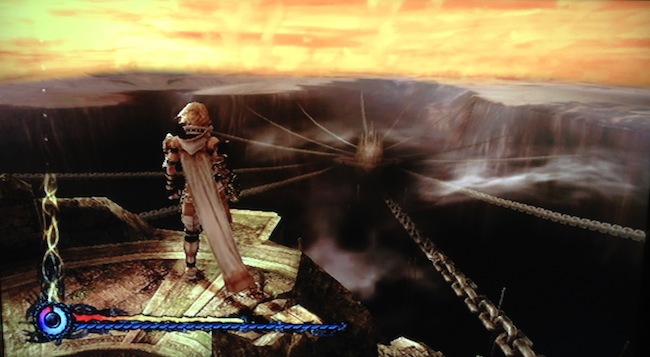
It's an age-old adage in the games industry that graphics do not maketh the game. Never has it been more true than in this strange period where we have two HD consoles and one SD system. Would Xenoblade Chronicles, The Last Story and Pandora's Tower have been better games had they been released on the Xbox 360 or PlayStation 3? Absolutely not. (Pandora's Tower, in fact, would have been considerably inferior due to the fact it actually makes good use of the Wii's unique control scheme.) They would have been better-presented games, sure, but the core gameplay in all three cases is brilliant — and, to add insult to injury, the graphics for all three aren't even what you could possibly describe as "bad" — just low-resolution. There's a difference — sadly, one seemingly lost on many reviewers who describe their visuals as "muddy" or "poor" and, in many cases, knock a point off the final score in punishment. I defy anyone who has stood on the Makna Falls overlook in Xenoblade Chronicles, seen the beautiful afternoon sunlight and shadows in the castle courtyard in The Last Story or stood atop the Observatory gazing towards the Thirteen Towers at sunset in Pandora's Tower to say that these games have "poor" visuals.

As such, I implore those of you who are gamers to stop caring so much about titles having pin-sharp graphics, fully orchestrated soundtracks and a voice cast of Major Hollywood Talent. Yes, these things make games more impressive and exciting to watch and play, but given the choice between a world made up of nothing but HD first-person shooters starring Morgan Freeman (with the world's population of racist teenagers on backing vocals via Xbox Live) and a world where I can play 100+ hours of Xenoblade Chronicles in 480p with a selection of unknown (but excellent) British voice actors, I know which I'd rather spend my time in.

That's just me, though. I illustrate my blog with stickmen, so take my word with a pinch of salt if you wish.

(Edit: Here's an unedited picture of Pandora's Tower running in 480p taken with my iPhone camera. Looks pretty lovely to me.)
#oneaday Day 827: You Should Back Republique on Kickstarter if You're an iOS Gamer -- And Perhaps Even if You're Not

20120425-005649.jpg

I backed the highly promising-looking project Republique on Kickstarter recently. Despite it looking like a high-quality endeavour from a reputable team (including former Halo 4 creative director Ryan Payton, no less) it's struggling to reach its goal of $500,000 — as of the time of writing, it's sitting at $86,477 with 16 days left to go.

For the unfamiliar, Republique is a bold attempt to create a "triple-A" game experience on iOS. The goals that the team hopes to achieve include designing a game specifically for touch-based devices; creating an intense action game without a focus on killing; creating a game with a believable, non-sexualized female lead; exploring "heavy" topics and saying something "meaningful"; and pushing cutting-edge graphics on mobile devices.

All reasonable ambitions, you might think. The thinking behind the game's design is that "gamers will embrace iOS when more games are made for them."

That, unfortunately, is where the problem lies — a lot of people are still resistant to the idea that a mobile device can play host to a "proper" game — i.e. one that you play for more than five minutes at a time, that doesn't feature a three-star rating system on every level and doesn't offer the possibility of purchasing in-game currency for faster progress. (That said, the ever-greedy EA has been sneaking the latter mechanic into some of its recent games, much to the chagrin of people who hate that sort of thing, particularly when they've already spent $60 on the game itself, but that's beside the point.)

To look at the popular titles on the App Store, you'd be forgiven for thinking that these naysayers had a point. Of the top free iPhone games at the time of writing, pretty much all of them are either casual or social fare, riddled with microtransactions and designed more as a moneymaking "service" than anything with meaningful gameplay. (Yes, even the ridiculously popular Draw Something falls into this category.) Paid apps don't fare much better, either, with the super-casual (and a bit rubbish) Angry Birds Space topping the charts, closely followed by numerous other lightweight titles.

This isn't to say there are no "core" titles on iOS. Far from it, in fact — Square Enix, for example, has put out some excellent role-playing titles including Final Fantasy I, II and III, Chrono Trigger, Chaos Rings and Final Fantasy Tactics. Sega has rereleased a number of its old Genesis titles including strategy RPG classic Shining Force. EA has put out mobile adaptations of its popular franchises such as Dead Space, Mass Effect and numerous others. But why do these titles flounder — relatively speaking, anyway — when compared to more casual fare?

It's a simple numbers game. Not everyone who owns an iOS device is a "core" gamer. Angry Birds et al have their place among those of us who don't know what RPG, HP, MP or FPS stand for, or who think "bullet hell" refers to driving through a particularly unpleasant part of Manchester in the middle of the night. As it happens, these more casual players probably outnumber the more dedicated "core" types to whom "triple-A" titles such as Republique might be marketed to. As such, they appear to dominate the charts on a regular basis.

Does that mean that "core" developers should give up and not even bother trying to put together something impressive on mobile platforms? Absolutely not, though they should be aware of what they're getting into and the problems they will have to overcome in the process.

Firstly, one of these "core" titles probably isn't going to top the charts. The Angry Birds series, for example, has enjoyed well over half a billion downloads in its lifetime and made developer Rovio a worldwide phenomenon in the process. Its simple gameplay and premise mean that anyone can pick it up, play and have fun. (Unless you're me. I hate that stupid game.) Conversely, a "core" title likely has a barrier of entry — "you must be this familiar with video games to ride", if you will. Not only that, but its audience must be people willing to sit down with a game for more than a few minutes at a time while they're waiting for a bus, waiting for the kettle to boil or waiting for their bowels to evacuate.

Secondly, iOS players are curiously resistant to what they see as "high" prices. Square Enix's titles, for example, have caught frequent flak for being anywhere between $8.99 and $17.99. Compared to a new release on PC, console, Vita or 3DS, however, these prices are still eminently reasonable — but they're expensive compared to the $.99 you pay for Angry Birds, and the fact that they're deeper, more impressive, bigger-budget experiences than Rovio's avian-flinging nonsense isn't often taken into account.

The problem here is that in order for a "triple-A" iOS title with high production values to be successful, it will need to overcome that particular resistance that players feel to paying more than, say, $5 for a game. The Kickstarter for Republique will provide those who pledge $10 or more with a copy of the full game when it's released — and going by the pattern of other successful video game Kickstarters, the full version will likely cost more than this "backer's rate". We're likely looking at $15-20 at least, and that's a price point that takes the game well and truly out of "impulse purchase" territory.

Or does it? Consider Thatgamecompany's recent PS3 release Journey. This game costs $15 and lasts approximately two hours. People have been willing to part with this much money for what they already know is a two-hour experience simply because other people have said it is good. In many cases, people have done this without a second thought — going into the game with "beginner's mind" is regarded as an important part of the experience. Does the virtue of the fact that Journey is a game presented on a large television screen make it inherently more valuable than a portable title for a multipurpose mobile device? It's certainly perceived that way, but why on Earth should that be so?

As the Camouflaj team say on their Kickstarter page for Republique, though, developers need to take more risks if "triple-A" gaming on iOS is to be taken seriously. Lengthy, deep games can and do work on the platform, even if they don't chart very highly compared to casual and social juggernauts. The most important considerations for any developer thinking about doing this, however, should be designing it specifically for the device. That means building a game around a touch-based interface, not putting in crappy virtual joypads with no tactile feedback. A game with touch controls needn't be shallow — games such as Undercroft that recreate what would have been the mouse-driven interface of old PC games work well, for example, so there's plenty of scope there.

From what I know of the team behind Republique, I believe that they have a good idea of what they're doing. I believe that their game could prove to be an excellent example of what mobile platforms is capable of for "core" gamers. And I simply believe that the project should be supported, not because I want to see an end to the casual titles on mobile — they have their place — but because as a format, mobile devices' capabilities are more than broad enough to cater to more than a "lowest common denominator" audience. It should be supported because it's a worthwhile project that, if successful, will benefit mobile gaming in general in the long run — not just iOS. That means you embittered Android types upset that this title doesn't mention your chosen platform at all should consider throwing a few quid their way, too. Vote with your wallet, as they say.

Check out the Republique Kickstarter and pledge a donation here.

#oneaday Day 824: Pandora's Tower: A Scoreless Review

20120421-230108.jpg

Pandora's Tower, the last of the three "Operation Rainfall" JRPGs for the Wii, is a beautiful game in many ways: visually, mechanically, thematically and in the simplicity of its execution. It's a fitting sendoff to three of the finest games of the entire console generation — and, indeed, some might say, to the Wii itself.

In Pandora's Tower, you take on the role of Aeron. Aeron is a quiet sort of chap, though not quite entirely mute. Aeron is in love with Elena, who is a singer from the "wrong side" of the war that our hero was involved with. She's also, thanks to a series of events which come to light over the course of the story, cursed to turn into a slobbering monster unless Something is Done. That Something, as revealed by a peculiar frog-like woman named Mavda who inexplicably carries her gigantic, incomprehensible skeletal husband in a cauldron on her back, is to consume the flesh of twelve "Masters" who reside in the Thirteen Towers, a mysterious structure suspended across the top of a seemingly bottomless chasm known as The Scar.

Thus begins Aeron's adventure, which is roughly equal parts dating sim, Ico and Shadow of the Colossus with a splash of Zelda here and there. It's up to the player to guide Aeron through the Thirteen Towers in an attempt to lift the curse from Elena while simultaneously ensuring that his beloved still loves him by showering her with gifts and affection.

The exploration of the towers makes up the meat (no pun intended) of the gameplay in Pandora's Tower. Unfolding from a series of non-controllable but dynamic camera angles, Aeron must work his way through the challenges that each tower confronts him with, smash the chains which lock the Master's door shut and then kick some serious ass.

Aeron is initially armed with a sword and the Oraclos Chain, an implement that symbolises the bonds between people and the power held within them. Using the chain, it's possible for Aeron to hookshot into far-off areas, tie up monsters, pull remote switches, tie things to other things and generally cause plenty of mischief. While it's tempting to charge in and simply attempt to hack-and-slash your way through the game's combat, the melee weapons Aeron acquires are in many way the least important things in his arsenal. Rather, the chain is the key to keeping Aeron out of harm and the numerous denizens of the Towers at bay.

By aiming the chain using the Wii Remote's pointer function (or the right analogue stick on the Classic Controller), it's possible for Aeron to attach the chain to all sorts of things. Hook it on to a handhold and he'll pull himself up Batman-style. Clip it on to a switch and he'll be able to pull it from afar. Attach it to a monster and it'll provide him with a suitably unfair advantage to exploit depending on which part of the monster it is hooked on to. Pull it taut and a "chain strength" gauge will gradually power up, enabling it to stay attached to things for longer or do more damage if jerked away suddenly with a flick of the wrist. It's a relatively simple mechanic — point, shoot and tug — but executed extremely well, making brilliant use of the Wii's unique control scheme without overusing any of its gimmicks. The variety of creative methods in which the chain is used throughout the game help keep it fresh despite the fact that Aeron doesn't really learn any new moves over the course of the game.

It quickly becomes apparent after a short period of play that combat is not the main focus of Pandora's Tower, however. Rather, it is an environmental puzzle game where the challenge is to determine how to reach a destination which is often in sight but tantalisingly out of reach. The fixed camera angles are used effectively to point the player in the direction of a puzzle's solution, helping to eliminate the frustration of pixel-hunting found in some games with a freely-controllable camera. The only slight issue with these is that sometimes enemies like to hide off-screen in the "changeover" point between camera angles, but they can usually be dragged around to where the player wants them using the chain.

The puzzles gradually ramp up in difficulty with each new tower at a good pace but never feel unfair — and there's an enormously satisfying sense of achievement when you figure out a particularly troublesome solution. This comes to a head with the game's Master battles, which are similar in concept to the Colossus battles in Shadow of the Colossus — each Master has a specific weak point which must be exploited through manipulation of the environment, spotting the patterns in their attacks and sometimes figuring out a quicker way to achieve something that initially seems obvious. The battles are more puzzles than anything, with a big part of the challenge being in figuring out what on Earth you're supposed to do, because the game certainly isn't going to tell you or hold your hand — a real strength of the experience and a big contributing factor to the aforementioned sense of satisfaction.

The dungeoneering segments are exceptionally well-designed, in short. This is a good thing, because not only does Aeron have to find his way to the Master's chamber alive, he also has a time limit to contend with. While he's in the Towers, Elena's curse is constantly progressing, with her inexorable descent into disgusting sliminess measured by an ever-ticking meter in the corner of the screen. Should this meter run out, Elena is beyond help and the game is over, so Aeron has to carefully manage his time between pushing forward in the tower he's currently exploring, and returning to Elena to temporarily stave off the curse using meat acquired from the tower's normal enemies.

Rather than this mechanic forcing the player to backtrack completely at regular intervals, however, the dungeons are designed in such a way that solving puzzles often opens up shortcuts to and from Elena. Find your way to a difficult-to-reach ledge and your reward will often be a ladder you can kick down or a locked door you can batter open, shaving valuable minutes off your time when you return to the tower once more.

Returning to Elena never feels like a chore, however, because Aeron's interactions with her are as well fleshed out (again, no pun intended) as the dungeoneering segments. When back at the couple's "home base", Aeron is able to chat with Elena, ask her to translate books and texts he's found in the towers and around their base, occasionally ask her specific questions about recent events and give her gifts. Most of these interactions have an effect on an "affection bar" at the side of the screen, which denotes how much Elena likes Aeron and also determines which of the game's endings will unfold once the story comes to its conclusion.

Aeron doesn't say much, but the player gets to know a great deal about Elena over the course of the story. She's a well-defined character with her own history, likes and dislikes, all delivered in an adorable soft Yorkshire accent. She does have something of a tendency to slip into sexist stereotypes — one exchange between her and Aeron sees her asking what he'd like her to concentrate on in the base, with the available options being "cooking", "cleaning" and "sewing" — but let's not forget that she can turn into a slobbering evil monster at a moment's notice, which does kind of undermine her "demure housewife" persona. To her credit, though, she does always feel bad whenever she makes a mess or breaks a gift as a result of her transformation.

Alongside interacting with Elena, Aeron is also able to call upon the mysterious Mavda between sorties to the towers. Mavda acts as a shop, crafting station, source of information and means of upgrading weapons, and there's a surprising amount of depth to these mechanics. Upgrading weapons, for example, usually requires several different components. If the player hasn't managed to find certain specific components, it's often possible to craft them using other pieces of detritus that they've picked up over the course of their last dungeon crawl. Certain components may only be found in certain towers, as each is themed after a particular element and contains its own distinctive monsters. Finding all the pieces for a particular weapon upgrade becomes a sidequest in itself, though it's a completely optional one that players don't need to engage in in order to be victorious.

These mechanics are all very well and good, but in the "HD age" a big determining factor in whether or not a person will take to a new game comes in its presentation. Pandora's Tower does not disappoint in the least: it is a lovely-looking game. Forget the fact it's running in 480p resolution on the Wii; this ceases to matter within a few short minutes of starting to play. This is a game with exceptional art design. Aeron is a young, fresh-faced youth with intricately-designed armour. Elena is a pure-faced, simple beauty, which makes her monstrous transformations all the more traumatic to witness. Mavda and her skeletal spouse are by turns grotesque and compelling. Outside the observatory that Aeron and Elena call home during their quest, lush green grass and cloudless blue skies fade into golden sunsets and deep navy nights. Inside their temporary quarters, everything is suffused with a warm, homely sepia glow. Within the towers, beams of light pierce the gloom through long-broken windows, brightly-coloured crystal formations cast strange glows on everything around them and the emerald green of natural foliage contrasts starkly with the dull greys and browns of the stone bricks that make up the tower surrounding it.

And the sound. Oh, the sound. Based largely on classical themes including Dies Irae from Verdi's Requiem and Liszt's Liebestraum No. 3, the soundtrack to Pandora's Tower is not the sort of in-your-face electronica-and-electric-guitars chaos typically associated with modern Japanese games — rather, it gives the game a unique atmosphere all of its own, filled with drama at some times, overflowing with love and tenderness at others. It perfectly reflects the small-scale, intimate tone of the game's narrative and rounds out a complete package that is beautifully, distinctively presented.

Pandora's Tower is a worthy successor to Team Ico's classic titles in many ways. It's a well put together game with exceptional presentation, a touching, intimate story and a sense of personal drama and emotion far removed from the ever-increasing stakes of mainstream titles. It's not just a fine Wii game, it's a fine game, full stop, and deserves to be looked back on in the future as a title that dared to try something a little different from the norm, with great results.

Time will tell if that's how history will treat Pandora's Tower, or whether it's doomed to be one of those increasingly-rare games that is always talked about in sentences that begin with "I wish I'd played…"

I know I'm glad I played it. If you get the chance, you should too.

#oneaday Day 823: Information Diet

20120421-013424.jpg

Know what I hate? Chavs. Know what else? Teaching. Know what else? We could be here a while. I'll tell you. Press embargoes.

I get why they happen, obviously — publishers and their PR people want to ensure that coverage of something is coordinated nicely so that everyone gets suitably whipped up into a frenzy all at the same time. But there's an unfortunate side-effect if you happen to, say, follow a bunch of different video games outlets at the time a major announcement happens: everyone bellows the same fucking thing at the exact same fucking time.

It's happening more and more nowadays, too. The most notable examples that stick in my head in recent memory are Assassin's Creed III and Borderlands 2, both titles that I have a passing interest in but find myself becoming curiously resistant to the more and more I get battered in the face with the same information from slightly different angles.

I think, on the whole, this is the "problem" I have been having with mainstream gaming overall. There's too much information out there — too much coverage, too many "behind the scenes" videos, too many "exclusive" interviews, too many press releases announcing a single screenshot (yes, that is a real thing I received today and I have no shame in naming Square Enix as the perpetrator). After a while, you become completely saturated with information about a product and subsequently have absolutely no inclination to want to touch it, ever. This was a big part of why I didn't want to play Mass Effect 3, for example — EA's appalling behaviour was just the straw that broke the camel's back, really.

I feel for my friends who work in games PR for "B-tier" games, too. It's hard enough to get a title like, say, Risen 2 noticed at the best of times but when you're competing with everyone beating themselves into an orgasmic and/or angry frenzy over Mass Effect 3, there's little hope for your title outside of groups of people like me who have forsaken the mainstream in favour of enjoying less heavily marketed titles.

Conversely, the games I have been playing and enjoying are the ones where information has been trickling out slowly, usually straight from the developers mouths without dribbling through the PR sieve. Take the "Operation Rainfall" RPGs Xenoblade Chronicles, The Last Story and Pandora's Tower (which I'm currently playing), for example — these received very little in the way of press attention despite being fantastic games. The aforementioned Operation Rainfall, a grassroots campaign to get these three excellent games localised and released in Europe and the US, received plenty of press, but information on the games themselves was conspicuously absent. As a result, I was able to go into all three of them pretty much blind and have a fantastic experience in the process — a big part of what made all of them great is the sense of discovery inherent in all of them. That just doesn't happen if you've been smothered in information for the six months leading up to the game's release.

As a result of all this, I've come to a decision, and if you're feeling the same way as me, I recommend you follow it too.

Cut back. Cut out the crap. If you follow a buttload of games journalists and outlets on Twitter, unfollow them. If you want some gaming news, pick one outlet and keep it on your follow list, but chances are if you follow lots of gaming fans, someone will retweet the news as it happens anyway. Otherwise, go seek out the news when it's convenient for you. Check the sites when you feel like it. Subscribe to their RSS feeds. Use Google Currents or Flipboard to receive information in an easily-digestible format. Receive information on your terms, not that of a carefully-crafted PR campaign.

This doesn't have to apply just to games — it can apply to pretty much anything that suffers from the problems described above. Film, TV, celebrity news, business, tech… anything, really.

I'm going to give this a try. It will doubtless initially feel somewhat weird to not see some familiar faces and logos in my Twitter timeline, but I have a strange feeling that I'll be a lot happier, less frustrated and less cynical as a result. Check back with me in a week or two and we'll see.

(If you're one of the people I do happen to unfollow, it's nothing personal. You just might want to consider getting separate professional and personal accounts!)

#oneaday Day 822: Xoom, Xoom, Xoom, Xoom, I Want You In My Room

20120420-012830.jpg

I've been spending quite a lot of time with my shiny (well, rather fingerprinty now) new Motorola Xoom since it arrived the other day, and I have to say I'm a big fan. While Android seems to be a little more clunky than iOS, particularly prone to slowing down for no apparent reason on occasion, I'm appreciating the things it does do. Having a fully-customisable homescreen is very pleasant, certainly, and the cool quasi-3D effect it does with the wallpaper is pretty neat.

What's becoming abundantly clear to me as I continue to use it, however, is that using it simply feels very different to the iPad. It might be the fact it's designed to be used in landscape as opposed to the iPad's default portrait orientation; it might be the unique array of apps on offer on both devices; it might be a combination of interface elements. I'm not sure exactly what it is, but I can say that both devices certainly have a place in my life at this moment for different reasons — and also that getting the Xoom has caused my desire for a 3rd-gen iPad to drop to zero.

If anything, the Xoom seems particularly suited for more "serious" tasks (and by "serious" I mean "not games") — I'm particularly fond of using it for Twitter, chat, email and that sort of thing. Google Currents has become my go-to app for reading the daily news. The built-in "share" functionality, which allows you to easily send stuff from one app to another easily, is pretty neat. The keyboard I have installed, which lets you type by drawing wiggly lines rather than tapping keys, makes me feel like a wizard, particularly with the sparkly particle pattern that comes from aforementioned wiggly pattern. And the inclusion of a USB port (albeit a micro-USB one that requires an adapter for pretty much every peripheral ever, making one wonder exactly why they didn't just put a regular USB port on it) means that it's possible to do things like hook up a keyboard and practically use the damn thing as a sort of laptop.

A big draw for me was the thriving emulation scene on Android, however. Within a few short moments of getting the device up and running I had downloaded NES, SNES, Mega Drive and arcade machine emulators and a few minutes later had successfully transferred my collection of ROM files of dubious origin. What I have now is a portable gaming device that plays pretty much any NES, SNES or Mega Drive game, and a whole heap of arcade games.

This… is awesome. I hadn't anticipated quite how awesome this was going to be, but the ability to play Final Fantasy VI while on an exercise bike at the gym, or Elevator Action while on the toilet, or Golden Axe while waiting for the kettle to boil… well… yes. It's awesome. The fact you can hook up a USB controller (or, for that matter, Wii Remote with Classic Controller via Bluetooth) and play these games as they were meant to be played — with actual buttons rather than floaty, crappy touchscreen controls — is a happy bonus. The fact you can use floaty, crappy touchscreen controls at times when having a controller is not convenient or socially acceptable is also most welcome.

I'm certainly not going to become one of those gits who bangs on about how much better Android is than iOS because there are things that both do far, far better than the other. But I've been very pleasantly surprised by my first experience with an Android device, and the fact it's turned out to be a portable retro-gaming powerhouse is just a happy bonus, really. Now I can finally get around to beating all the Final Fantasy games that are still on my "to-do" list. (V and VI, as it happens. Also Chrono Trigger, which may as well be a Final Fantasy game.) And, as previously mentioned, playing Elevator Action on the toilet.

Now, if you'll excuse me…

#oneaday Day 821: There are Bigger Problems in the World, Like Your Face

20120419-014338.jpg

Second only to the patented "Everyone Is So Entitled These Days And Should Just Shut Up" argument-defuser is the ever-faithful "Everyone Should Realise That There Are Bigger Problems In The World And Should Just Shut Up" conversation-closer.

I shan't get into the former here — everyone has talked it to death and should just shut up — but I feel I should address the latter, since I saw it come up on Twitter earlier today. (And, if you're reading this and you know that you used it, fear not — this isn't a personal attack on you by any means, just my own thoughts on that particular argument.)

The trouble with the "Everyone Should Realise That There Are Bigger Problems In The World And Should Just Shut Up" argument (hereafter referred to as ESRTTABPITWASJSU) is that it assumes that people who are commenting on or complaining about something are equating their personal reaction to something that is "close" or "important" to them with something that is unquestionably a Big Problem For The World.

This is not the case at all. Recent examples where the ESRTTABPITWASJSU argument has been applied include independent game developer Phil Fish's ill-advised admonishment of the entire Japanese game development community in a very public place (and subsequent beratement of those who criticised him on Twitter, culminating with him leaving the social network altogether); and public reaction to the Mass Effect 3 ending. I have no desire to beat those particular drums in any great detail for now, so let's put the specifics aside for a moment.

Yes. There are bigger problems in the world than both of those things. There are people losing their homes and livelihoods to the economic crisis. There are people in the world with not enough food or water. There are places in the world where diseases go unchecked. There are countries that are ruled by people with only their own interests at heart, not those of their people. There are wars being fought in the name of… what? And there are people who get so passionate about their religious beliefs that they blow themselves up in the name of their god, usually killing many other people in the process.

These are big problems. They are fucked up, massive, humongous problems that we, as individuals, can do very little about. Sure, we can throw our money at charities and, if we're feeling particularly activist-y, attempt to take some sort of action against. But realistically (or pessimistically, if you prefer) there is very little that Josephine McAveragepants can do about these things since she does not run a government and/or army and/or bank. The problems become so massive that they take on an unreal quality — they often feel like they take place in a parallel reality distant from our own.

This is why people prefer to turn their attentions to problems they feel they can solve, or that they feel they can at least have an impact on. They have every right to do that. They may often have selfish interests at heart, but recent examples of organised action aimed at these relatively minor issues have proven that it's far from being isolated individuals shouting and screaming about Games for Windows Live in Dark Souls or whether the Mass Effect 3 ending constituted false advertising (apparently, according to one Better Business Bureau blogger anyway, it does, believe it or not) — these are groups of people who are prepared to stand up and be counted in order to tackle problems they feel like they can face.

It's an idealistic, utopian vision to believe that people (read: the Internet) will rise up together and do something about the bigger problems in the world than the ones they have successfully tackled to date. Maybe it will happen one day. Maybe these small "victories" will give some people the confidence to try something bigger, a little piece at a time. Protesting, say, a war is a bigger deal than signing a petition against the ending for a video game. Some people may be scared to jump in at the deep end, particularly with the apparent risk to life and limb frequently presented by the media, so they take the "safe option". They feel like their voice is being heard, but relating to an issue which is smaller, closer, more relatable.

The key thing, though, is that none of these people who are sweating the small stuff are saying that the issues they feel strongly about are more important than the Bad Shit Happening Everywhere Else In The World.

No-one is equating those things except, ironically, in many cases, those people making use of the ESRTTABPITWASJSU argument.

#oneaday Day 815: Pandora's Tower -- Some First Impressions

20120413-014116.jpg

So, the third of the three "Operation Rainfall" titles is finally upon us here in the UK (well, technically tomorrow, but Amazon were good enough to ship it to me a day early), completing the Holy Trinity of Wii-based Japanese role-playing games that many are lauding as the real last hurrah of Nintendo's system. (I've actually lost count of how many times people have referred to Wii games as the system's "last hurrah" or similar, but with Wii U on the relatively near horizon, it might actually be true this time.)

Like its predecessors Xenoblade Chronicles by MonolithSoft and The Last Story by Mistwalker, Ganbarion's Pandora's Tower is far from what you'd call a conventional JRPG. In fact, of the three titles, Pandora's Tower is the least traditionally RPG-ish and will likely prove to be the most divisive due to its curious mix of game styles. That's not to say it's bad — far from it, in fact — but those coming in and expecting a traditional globetrotting adventure with a cast of loveable misfits will find themselves surprised by what they discover.

Pandora's Tower tells the story of a pair of young star-crossed lovers named Aeron and Elena. Aeron, the player character, doesn't say much besides the odd grunt and "yes" but is clearly devoted to Elena. Elena, meanwhile, has a bit of a problem; she's cursed. And, as curses go, this one's a doozy — she's slowly turning into a slobbering monster with icky skin and tentacles wriggling out of her shoulder. Discovering the nature of the curse at a harvest festival, Aeron and Elena flee into the wilderness accompanied by a strange old crone named Mavda who inexplicably carries a jar on her back containing an enormous skeletal man who occasionally babbles indecipherable gibberish. Madva reveals that there is one way to break the curse — for Elena to eat the flesh of twelve "masters" who reside in twelve towers that make up an imposing-looking fortress hovering over a terrifying-looking abyss known as The Scar.

As you have probably surmised, this is where the player comes in. Elena, being rather delicate and demure when she's not slobbering and betentacled, isn't exactly equipped to go monster hunting, so it's up to Aeron to take his improbably large sword, magic chain (provided by Mavda) and floppy hair (model's own) into the aforementioned towers to defeat the masters, rip out their "master flesh" and feed it to Elena (who was, at least until this whole mess started, a vegetarian for religious reasons) in order to save her from a hideous fate. Simple, right? All in a day's work for an almost-mute hero.

Gameplay evolves in several discrete sections, and it's the combination of these factors that makes Pandora's Tower such an original, distinctive experience. If you were to boil it down to video game math, then the following equation would probably cover most of what I've experienced so far:

(Castlevania: Lords of Shadow – Patrick Stewart) + Ico + Shadow of the Colossus * Zelda + dating sim = Pandora's Tower

There are two main components to gameplay: dungeoneering and downtime. During downtime, the player may, as Aeron, hang out with Elena in their makeshift hideout, ask her about the lore of the world, shower her with gifts, feed her various meaty treats and throw her untranslated texts so she can make herself useful. Aeron may also call up Mavda, who appears to perpetually live outside the back door of the hideout, and buy things from her, get her to craft and repair items, get her to upgrade equipment and offload excess meat. She'll also pay Aeron for any texts he's found — including newly-translated ones from Elena — which provides the player with a decent income stream if they take the time to explore and discover things. That completionist's nightmare — the "percentage completed" gauge — makes an appearance in the game's menu so those who want to make sure they get the full experience can see at a glance how close they are.

All this downtime activity isn't just for show — most of the Elena-related activity affects the couple's relationship, and providing certain gifts also causes her to spruce up the hideout with her own personal touches. The game's ending is supposedly determined by the relationship value between the two by the time the story comes to an end, so it's in players' interests to ensure that they keep their lady sweet.

Upon leaving the hideout and heading for one of the dungeons, however, gameplay takes a decidedly different turn. It becomes a combination of third-person combat and environmental puzzle solving. Aeron may attack beasties with his sword and unleash combos, but it's the chain that provides the most interesting gameplay possibilities. By aiming the chain with the Wii Remote's pointer (or the right analogue stick on the Classic Controller) and attaching it to enemies, environmental structures and all manner of other things, Aeron is able to cause all kinds of mischief. And there's plenty of scope for creative silliness, too — try attaching one end of the chain to one enemy's legs and the other to another enemy's face, for example.

Aeron's goal in each dungeon is, like a Zelda game, to unlock the boss chamber and then defeat said boss. Rather than relying on a huge inventory of items, however, the majority of the game's puzzle solving comes from creative use of the chain. Sometimes you'll be pulling levers with it, sometimes you'll be throwing chunks of ore into soft walls to use as hooks to grapple on to, sometimes you'll be tying sentient plants to pillars and chopping them to bits before they burrow into the ground. And you'll often be using the chain to rip out gobs of flesh and other crafting ingredients from fallen enemies, because Elena's curse isn't waiting for you.

No, indeed — a timer in the corner of the screen shows the progress of Elena's transformation. It can be reset by grabbing some tasty meat and taking it back to her, but this requires you to make your way back through the dungeon you've just battled your way through, then delve back into it once you've given her her treats. Fortunately, the dungeons are designed in such a way that progressing further in them allows you to set up various shortcuts, and knowing the layout of them a bit better also allows you to romp through them fairly quickly. Progress doesn't reset upon leaving the dungeon, so it's perfectly feasible to unlock the boss room, go back, feed Elena and then go kick some boss ass.

It becomes an exercise in time management — can you make it through the boss fight before Elena goes all tentacly? (Should she find herself going all tentacly, this does, as you may expect, have an adverse effect on the couple's relationship.) Or should you play it safe and head back with a bag full of meaty treats? This constant weighing up of pros and cons is further exacerbated by the fact that Aeron can only carry so much crap in his bag at once, necessitating a return to the hideout every so often to offload junk or craft it into useful items. This does, however, provide an opportunity for Aeron and Elena to spend some time together and improve their relationship, so it's not a wasted trip — though the traipsing back and forth may annoy some.

There's a lot to do, but the dungeons (at least the two I've completed so far) are well-designed and satisfying to figure out. A real sense of urgency is provided by the curse timer ticking away in the corner of the screen, and I can only imagine how the intensity of this will increase as the dungeons grow in complexity. The story is told in a less "in your face" manner than a lot of other games, with a strong focus on the relationship between Aeron and Elena, and a lot of environmental storytelling through discarded notes and architectural design. It's an intimate sort of game, by turns lonely and daunting in the dungeoneering segments and heartwarming when the couple is together. At its heart is the tale of a relationship between two people and the lengths people will go to for love — an experience that, so far at least, is altogether unlike any other Japanese role-playing game or action adventure that I've played in recent memory.

In short, it's a fitting dénouement to the "Operation Rainfall" trio of titles — and to the Wii's catalogue in general. It's actually pretty remarkable that three of the best "core" games of the generation are on a system that many people denounce as being "kiddy", "casual" or a waste of time — or dismiss outright for not being HD. Deprive yourself of these three games simply on the grounds that they don't look as good as, say, Mass Effect 3 and you're depriving yourself of three distinctive, bold and original titles that are the perfect antithesis to the "cookie-cutter" approach of triple-A development and publishing. I hope beyond hope that their small but loyal fanbases will be enough for these studios to be able to keep doing what they do.

Further thoughts on Pandora's Tower will follow when I've beaten it. In the meantime, if you're American, go pick up a copy of Xenoblade Chronicles before it becomes impossible to find, and be sure to support Xseed's release of The Last Story — and whoever picks up Pandora's Tower — when they show up later this year.

[Edit: Apologies — I misread some recent news that made it look as if Xseed was bringing Pandora's Tower to the US later in the year. It seems the status of that title's US release is still somewhat up in the air — but we can hope!]

#oneaday Day 811: Some Handy Tips for Those of You who Wisely Picked Up Xenoblade Chronicles This Weekend

20120409-010604.jpg

Bought a copy of Xenoblade Chronicles? Firstly, well done. Secondly, it's rather good, isn't it? Thirdly, you've probably noticed that it's a massive, sprawling, deep game with lots of things to think about.

Being a grizzled old veteran who has played the game to death already, I thought I'd share a few tips to help you along the way. I'll try and remain spoiler-free in the process, and I won't be giving plot walkthroughs or anything like that — just general tips. Bulleted tips, even. Here we go.

(Note: If you're not playing Xenoblade Chronicles, this will all mean nothing to you. I'll be back in the normal world tomorrow.)

  • Pick a good, complementary party, but don't be afraid to experiment. You can make most combos work — and in fact to max out Party Affinity you'll probably have to — but a safe option is to have a tank (Reyn or Riki), damage dealer (Shulk, Dunban or Melia) and healer (Sharla or, to a lesser extent, Melia). Note that you don't need to have Shulk in the party, but it's easier to deal with visions if he is.
  • Don't forget to level up your Arts. You gain AP with every successful combat and these can be used to power up each character's Arts — the special abilities that they are able to use in combat. Don't forget to drop into the menu regularly to spend these AP — which each character has their own individual bank of — on improving their abilities, because the game sure won't remind you. On that subject…
  • Pick Arts that complement each other. Depending on your party lineup, ensure that you have Arts picked that work well together. Don't worry about changing around Shulk's Arts, since he has a fixed arsenal. But depending on who else is there and what they're capable of, pick ones that work well together. A good combo is to ensure that between all three members, you have the ability to Break, Topple and Daze an opponent. By doing this to an enemy that isn't immune, you buy yourself a good few seconds of uninterrupted beatdown time, which is very helpful on baddies with high HP. Note that most — but not all — bosses and Unique Monsters tend to be immune to Break and Topple.
  • In Chain Attacks, colour is everything. The other thing you should consider when preparing your party's Arts is to make sure that you have appropriate colours covered to unleash a decent Chain. The colours typically correspond to what the Art does — red ones tend to deal direct damage, pink ones tend to inflict Break, green ones tend to Topple and blue ones tend to be restorative or supportive — so a good thing to do is to ensure your whole party has at least one red Art equipped in order to do a damaging Chain Attack. When you start the Chain, choose a red Art to kick off, then when it switches to the next character, choose one of their red Arts and so on. Bear in mind that according to both random chance and Party Affinity, you may have the opportunity to continue the chain after everyone has had one go, so it's worth having more than one of the same colour if you can spare the slots.
  • Skills aren't as complicated as they look. The tutorial for the Skill system makes it sound bewildering, but think of Skills as passive bonuses and you'll be fine. Picking a character trait to focus on provides a bonus to a particular stat, then all SP earned (also after combat) will be applied to that particular skill branch. When sufficient SP have been earned, that bonus or passive ability starts to take effect automatically. Note that each character starts with three Skill paths, but has the opportunity to unlock up to two more through quests.
  • Skill Links let characters use each others' Skills. This is the complicated bit. You've probably seen that killing bosses nets you Affinity Coins. These are used to let characters "borrow" each others' Skills, thereby enabling them to get passive abilities they wouldn't normally have access to. For example, if Reyn has learned the skill to equip heavy armour, another character who is normally limited to light armour can Skill Link with Reyn in order to also be able to equip heavy armour. The number of skills characters can borrow from each other is determined by the number of Affinity Coins you have and the Affinity between the characters attempting the Link. Speaking of which…
  • Build up Party Affinity as much as you can. Your characters fight better alongside each other if they actually like each other. They also say different things in battle or when they jump in to conversations. There are lots of ways to improve this. Firstly, put the characters you're trying to develop the relationship between in your active party. Make the character you want to see the most gains the leader, since when party members jump into conversations, it improves Affinity with this person. Hit as many Burst Affinity button prompts in battle as you can. Encourage characters who are suffering from low Tension in battle (they'll have a purple cloud behind their face in the interface — run up to them and press "b" to whisper some sweet nothings at them). Don't forget to go and do Heart to Hearts when you have sufficient Affinity between two characters — these provide massive Affinity boosts even if you balls them up. And don't forget that you can gift Collectibles to characters via the Inventory menu — the game forgets to mention how to do this. Select an item, choose a character to gift it to and you'll see the affinity gain (or loss) it generates. For hints on what might be good items to give different characters, check the Achievements menu or think about the characters' personalities.
  • When hunting, use the reload trick. Saving your game then immediately loading it causes the monsters in a zone to refresh, so if you've run out of mobs you need to bash over the head for a quest, save and reload to respawn them. If you're hunting a Unique Monster and there's no sign of it in the place where it's supposed to be, do the same thing for a chance of respawning it.
  • If looking for specific weather, use the clock. Advance time from day to night (or vice versa) until you get the weather conditions you're after. Note that "thunderstorm" is a different weather condition to "raining".
  • Talk to everyone with a name. Speaking to a named NPC adds them to your Affinity Chart and sometimes improves your Area Affinity. When your Area Affinity levels up (it doesn't tell you when this happens, so check the Affinity Chart regularly), new quests become available, and named NPCs also get new items to trade with you. It's possible for every single person on the entire Affinity Chart to be joined to at least one other person by the end of the game, so consider that a challenge if you're a completionist.
  • Collect collect collect! Collect every sparkly blue blob you see. Not only will it help you fill the Collectopaedia, there's usually a questgiver somewhere nearby who will pay you good money for them. Or you can always gift them to characters.
  • Trading is usually a quicker way to fill the Collectopaedia. If you're struggling to find a specific collectible item in the field — and some are considerably rarer than others — then try trading with named NPCs instead of talking to them. When trading, offer them goodies that are considerably higher in value than the thing you're looking to grab — double is usually a safe bet — and they'll often throw in an extra free gift, too. Note that NPCs' inventories expand as Area Affinity improves. Their tradable items always come from the zone in which they are found.
  • Don't forget about Gems! Equipping gems in slotted items can make the difference between triumphant victory and crushing defeat. Note that bonuses to stats have a cap — if the bonus turns green in the menu, equipping further gems won't have any effect. Pick gems that help strengthen a character's particular specialisms rather than compensate for weaknesses — e.g. apply Muscle Up gems to Reyn to increase his physical defense to make him a better tank, add Strength Up gems to Shulk to make him deal more damage. Remember that Unique items (the ones with "U" on their icon instead of "S") have preset gems that cannot be removed.
  • Explore everywhere. Discovering new Locations, Landmarks and Secret Areas is a good non-combat way to gain experience points, plus it has the positive side-effect of filling in your map and providing you with places to fast-travel to. You might also be surprised where questgivers are hiding.
  • Do every quest you can. It may be time-consuming, but questing builds up Area Affinity and provides you with some good rewards that often negate the need to go equipment shopping. The stock "Monster", "Collection", "Search", "Material" and "Challenge" quests you get in every zone also provide a good way to get to know an area. Be sure to talk to the questgiver for these questlines several times as you can normally pick them all up at once — and you don't have to return to them to complete them. Never sell quest items — they'll be marked in the menu — or items you've seen in visions. You can get them back, but it'll be a waste of time, particularly if they end up being rare items. For quests with multiple outcomes, there are no "bad" consequences, just differing rewards.
  • Backtrack! When the story advances, that's usually a good cue to wander around the areas you've already visited and see if any new quests have popped up — some appear based on story progress rather than Area Affinity. Fortunately, the skip travel feature makes this a painless process. If you're not sure who to talk to, try looking for people on the Affinity Chart who don't have any links yet. There are some quests you can miss — these are marked with a stopwatch in the quest log. There's generally a pretty obvious mini "point of no return" before these expire, however, so be sure you've cleaned up your quest log before you answer "yes" to any important-sounding questions.
  • Don't rush. Xenoblade Chronicles is a big-ass game and there's a lot to see and do. Playing as a moderate completionist, it took me 101 hours to beat on my first playthrough, and I could have easily spent a lot longer. While it may be tempting to rush forward into the next plot beat, bear in mind that the quests, exploration and incidental combat is all there to provide a painless means to ensure you're strong enough to tackle the challenges the story quests provide you with. You'll be around the level 80 mark by the time you're on the home straight if you're doing it right — you'll hit a wall and be forced to grind (or backtrack and do all the stuff you missed!) for a little while if you haven't. That said…
  • Don't feel you have to get everything. Beat the game and you can do a New Game+ with all your levels, equipment and Party Affinity intact, but quests, Area Affinity and everything else reset to normal. Now you can rampage through the world with impunity and concentrate on picking up as many quests and entries on the Affinity Chart as you can rather than running away from red monsters.

Above all, enjoy. This is one of the best RPGs of all time, and it's wonderful to see so many people on my Twitter feed are playing and loving this at the moment. Stick it out to the end — it's a long road, but it's very much worth it.

#oneaday Day 809: PAX Pact

20120407-023755.jpg

Disclaimer: I'm aware that I wrote almost exactly the same post as you're about to read at this time last year, and for that I make absolutely no apologies.

It's PAX East time! Yay! I'm not there! Boooo.

I've not been to many conventions or big shows like that over the years, so I have very fond memories of those I have been able to attend. My decision to attend PAX East in 2010 was very much a spur of the moment thing — I'd decided I wanted to leave my primary school teaching job because I'd given it a chance and determined it wasn't for me, I was trying as hard as I could to pursue a career in the Writing Words About Games industry, and I was feeling a bit miserable and lonely. So, with a little financial help, I flew across the pond to Boston and went to my first big show in America.

It was an exciting time for a number of reasons. I'd just started working for Kombo.com which, while it didn't pay particularly well, provided me with a position where I could legitimately say I was a professional member of the games press. I knew that a large number of my buddies from communities such as Bitmob and The Squadron of Shame would be in attendance, so I'd have the opportunity to meet some people face to face. And I always love the opportunity to visit the States. I'd never been to Boston before, and while I was under no illusions that I'd be seeing much of the city while I was there, I was looking forward to being Somewhere New.

It was also terrifying. As a sufferer of social anixety at the best of times, the prospect of meeting people I'd only ever talked to on the Internet in the past was a scary one. What if we didn't get on? What if it was a massive disaster and it destroyed the carefully-cultivated relationships we'd built up with one another? What if I had nothing to say? What if I got lost and it was actually because they wanted to lose me? All these thoughts whirled around my head as I was on the plane, but I was very happy to discover that PAX was, in fact, a happy, inclusive and wonderful place for geeks of all descriptions to call home — whether they were someone who just liked video games or was also into collectible card games, role-playing games, board games, cosplay, the history of technology… anything like that.

That word — "home" — is an important one. Because it felt good to be there. It felt like a world which I wanted to belong to, surrounded by people that I wanted to be with. It was a world that accepted and embraced each other's differences and brought people from many different walks of life together in the name of common interests. Perhaps most importantly, it made friendships real. It's all very well chatting to people online on a regular basis, but once you've spent time with those people in person — seen them, heard them, hugged them, tickled their beards in a homoerotic manner where applicable — your friendship is on a different level. I haven't seen some of those people I met at PAX East 2010 in person since that weekend two years ago, but in many ways I feel closer, more connected to them than many of my — for want of a better word — "real" friends. Perhaps it's because they're also "Internet friends" that I speak to most days via Twitter, Facebook and G+.

Whatever the reason, knowing that lots of people I know are at PAX East right now and undoubtedly having a great time (and/or queueing for hours) makes me a bit sad — not that they're there, obviously, but that I'm not there with them.

I propose a pact, then, faraway friends: PAX East 2013. Be there. You have a year to prepare. Get cracking.

#oneaday Day 808: Xenoblade Chronicles is Out Tomorrow, and Here's Why You Should Play It

20120406-005656.jpg

As a European, I was lucky enough to be able to play the Nintendo-published, MonolithSoft-developed Wii role-playing game Xenoblade Chronicles last year. It ended up being my favourite game of 2011, and many North American gamer friends were suitably jealous that I had been able to play it through while they hadn't. I didn't feel too guilty, though, because North America has its own branch of Atlus and doesn't have to depend on other publishers to bring titles like the Persona series over.

But I digress. Xenoblade Chronicles is out tomorrow — April 6 — in North America, and here is why you should play it if you're an American. Or even if you're not.

The Japanese role-playing game genre is often accused of stagnation and a lack of innovation. This is, in fact, not particularly true — even the much-maligned Final Fantasy XIII was trying things which other role-playing titles hadn't attempted before. Okay, they weren't always successful, but it was at least attempting to innovate.

The real issue is actually that for whatever reason, Japanese role-playing games (and, to a certain extent, Japanese-developed games in general) have lost the resonance they once had with the core gamer audience in the West. Players are quick to judge them as clichéd and derivative before moving on to whichever game starring men in armour with guns is the flavour of the week. Specific attempts by Japanese developers to create games that appeal to Westerners end up having limited niche appeal despite their quality (see: Platinum Games' Vanquish, which isn't an RPG but demonstrates the point effectively) or end up being laughable attempts to pander to the Japanese image of what a Westerner supposedly wants (see: The Last Remnant).

Xenoblade Chronicles is a remarkable game because it nails that balance between Western and Japanese sensibilities, making a game that combines the positive aspects of WRPGs (freedom, exploration, a degree of sort-of-non-linearity) with those of JRPGs (stronger storytelling, more memorable, well-defined cast members, a firm sense of being unafraid to continually up the ante). The result is quite brilliant, and a significant step forward for the genre in one possible direction it way wish to take in the future.

The game casts players in the role of Shulk. Initially, he seems like every other teenaged JRPG hero, but a number of aspects make him stand out. He doesn't whine. He's not moody or angsty. He's just a guy, but he has a personality. He has friends, too, who form your early party in the game, and these, too, don't fall into the trap of clichéd character archetypes. This pattern continues throughout the course of the whole game. Even the "small furry thing" character introduced later in the story isn't typically irritating — he's quirky and silly, sure, but his character is defined well, and he proves to be more than just a means through which to provide silly slapstick gags.

The diverse, likeable cast you find yourself travelling with over the course of Xenoblade Chronicles' lengthy adventure provides several highlights to the game experience. Firstly, and most simply, they're a good ensemble cast who help drive the story forward. That's not their only function, however. As you might expect from an RPG, they each have their own role to play (natch) in combat, and finding the best combinations of three characters to take into battle is a key part of the experience. This affects not only your battle effectiveness, but also one of many stats that the game tracks in the background — Affinity.

Affinity is, quite simply, how much characters like each other. Characters with high Affinity with one another fight better alongside each other, but as their relationship develops, they also have the opportunity to participate in numerous "Heart to Heart" events that are scattered around Xenoblade Chronicles' vast world. These short sequences provide the opportunity for two party members — not necessarily including protagonist Shulk — to spend a little alone time with one another and get to know each other a little better. These typically involve multiple-choice conversations, providing the "correct" answers to which will give a big boost to the pair's Affinity with one another. (Giving "incorrect" answers often provides very amusing exchanges and still gives a smaller Affinity boost, however, so you shouldn't feel like you have to reach for the walkthroughs immediately.)

Affinity doesn't just affect combat and unlock Heart to Hearts, however; there's a host of little touches in the game that it affects, most notably during and after combat. Rather than simply yelling individual stock "battle victory" phrases, characters will often have short conversations with one another. This banter between characters is a real highlight of the experience, and while you will have heard everything they have to say a good few times by the end of the game, they remain entertaining and endearing.

Speaking of combat, Xenoblade Chronicles' battle system is a refreshing change from the turn-based systems that Japanese role-playing titles usually adopt. You control a single character out of the three in your active party, and are able to freely move around during combat. You and your party lock on to a single enemy at a time and automatically attack it, though many battles involve multiple assailants. In order to gain the upper hand in battle, it becomes necessary to make use of the unique skills the character under your control has.

Most characters have more skills than it's possible to hold in the "quickbar" at the bottom of the screen, so it becomes possible to customize the way they play to your own personal style. Some skills manage aggro, some attack areas, some provide more damage or inflict status effects when unleashed from beside or behind an enemy. Some skills are dependent on other characters doing things like knocking the enemy down or stunning them, and the AI which controls the other two party members does an absolutely astounding job of keeping up with what you're doing and understanding the strategy you're going for. It's very rare that you will be cursing the game for causing you to fail — more often than not it's a result of you either adopting a poor strategy, or simply needing to go and do something else for a while until you're a little stronger. This doesn't mean you have to resort to grinding, either — inevitably there will be some quests you have missed that you can go back and do, and returning to earlier-visited locations often throws up even more things to do.

Another great thing about the combat is that you can elect to control any of the game's cast in battle, not just Shulk. Each character plays in a significantly different manner to all of the others, so if you find yourself getting bored of the same old skills over and over, simply switch to another character for a brand new experience. Fed up of tanking? Spend some time with Sharla, a ranged character with healing abilities. Or Melia, a magic-user who can summon elementals that either provide ongoing buffs or can be "unleashed" to deal direct damage. Or the aforementioned small furry creature, whose skill names are genuinely hilarious.

Perhaps the strangest but coolest innovation in the combat, however, is the fact that you're occasionally presented with "visions" of the immediate future, usually when a character is either about to die or be afflicted with a debilitating status effect. A countdown timer starts, and you're given the opportunity to either do something to take attention off the enemy's target or warn another party member. If you do the latter, you're able to pick one of the warned character's skills to unleash — usually either a healing or aggro-management skill — and hope for the best. If you do the former, you have until the countdown timer depletes to do something very special, or your party member will suffer their grisly fate. It's a neat system that isn't overused.

Outside of combat, there's plenty to do, too. Exploring each of the game's massive zones rewards you with experience points and uncovers part of the map as you discover each sub-area. There are collectible items scattered around each area at random, with rewards on offer for collecting whole sets. Those who find item-hunting frustrating, however, may instead complete these quests by trading with other non-player characters. There are rare monsters to take down, loot to find, secret locations to discover. Xenoblade Chronicles' world is more than just a pretty backdrop for combat — it's a rich, beautifully-rendered environment in which to spend time, and it looks gorgeous. This may be a Wii title, and it may have been even more lovely to see it in HD, but it doesn't detract from the fact that the hugely-varied vistas you find yourself running and fighting over throughout the course of the game look simply magnificent. There's a waterfall you'll come across partway through the game which is genuinely breathtaking to look at, for example — you'll know it when you see it.

If the game's combat, quests and exploration aren't enough for you, there's also a deep Achievement system to delve into. Since these Achievements aren't online-connected, they're simply there as challenges for you to undertake, and all provide you with experience point rewards. In essence, they're mini-quests (although some will take you the majority of the game to complete) and rarely feel as "gratuitous" as some examples seen on Xbox Live and PSN. Rather, they provide yet another means of getting an enormous amount of entertainment out of an already vast, sprawling title.

This isn't even getting started on the deep crafting system, which allows characters to team up to create enhancements for their weapons and armour, with the results of their collaborative efforts dependent on their Affinity and compatibility with one another. Or the fact that the game allows you to change the time and fast-travel at will, eliminating a lot of the inconvenience and backtracking endemic to the genre. Or the colony-building minigame. Or the fact the voice acting is all British rather than American, giving the game a unique aural aesthetic in a genre typically dominated by whiny teenagers and squeaky-voiced females. Or the fact that when you're all done, you can New Game+ it and do the whole thing again with your levels, Affinity and a suitably broad spread of awesome equipment intact — something I will be doing when North America gets its hands on the game tomorrow.

Xenoblade Chronicles is, in short, a magnificent evolution of the Japanese role-playing game genre. While it's easy to dismiss it as "an offline MMO" or "a Final Fantasy XII wannabe", the reality is something quite different. This is truly a game that is greater than the sum of its already-fantastic parts, and one which will have you bellowing "Now it's Reyn time!" at your friends for months to come.

(Grab yourself a copy soon, though, as this is the kind of game that will get pretty tough to find pretty quick.)