#oneaday Day 845: Endless SPAAAAAACE

20120513-022002.jpg

As I believe has been well-documented on this very site a number of times, I am not very good at strategy games, be they of the board- or computer-based varieties. I have trouble prioritising what I want to do, and as soon as I do decide upon a course of action, some asshole other player comes along and beats the shit out of me before I have a chance to follow through on my master plan.

So it was with some trepidation that I decided I would give Endless Space a go. I've been playing a bit of Starbase Orion on iOS recently and, having recently won my first game (against one Easy-level opponent) I felt I wanted to investigate the space-based 4X genre a little further.

Aside: If you, like me, constantly forget what "4X" stands for, it means "explore, expand, exploit and exterminate" and is used to describe strategy games that involve a combination of building, expansion, collecting resources and military conflict. They're typically (though not always) turn-based in execution due to the amount of micromanagement necessary to keep an empire running smoothly, and depending on the game, victory can generally be attained in several ways. Sid Meier's popular Civilization series is one of the best-known examples.

With me? Good. Endless Space is an upcoming space-based 4X game from French indie developer Amplitude. You can preorder the game right now and jump into an impressively-complete alpha build and, in an interesting twist on the usual development cycle, participate in the decision-making process as the game gets closer to release. I shan't go into detail on that side of things right now (though I may in the future as it's a very cool idea to get the community involved in development) but I will talk a little about the game itself and how I've found it after a few hours of taking it for a spin earlier.

Endless Space, like many other games of its type, takes place in a randomly-generated galaxy. You're given a starting colony and a meagre supply of ships to get yourself up and running, and from there it's all about the empire-building. Scout out new systems, send colony ships to the richest-looking planets, then build, expand and conquer until you are the undisputed ruler of the Universe. Easy enough, right?

Unlike some similar titles, Endless Space's map is based around specific routes between star systems. (In Starbase Orion, for example, ships can move between any systems that are in range via the most direct route.) Because of this, it's much more straightforward to figure out how to defend yourself because attacks will only be coming from certain angles. Blockade your systems that are on the front line, then figure out a pathway through your opponent's defences that will whittle them down piece by piece. In some ways it reminded me of the excellent board-game adaptation of Blizzard's StarCraft, which is well worth a punt if you have a few hours (and a very big table) to spare.

The basic mechanics are similar to the classic Civilization titles. Each colony under the player's control produces food, industry, science and "dust", which is the currency used in the Endless Space universe. Food leads to population growth. Industry is used to build things — the more industry, the quicker things are built. Science is used to research new technologies. And dust is used for all sorts of purposes — hurrying production, upgrading ships and all manner of other things. Each colony in a star system adds to that system's pool of food, industry, dust and science (referred to in-game as "FIDS"), and each system may then use said pools to upgrade its population, contribute to the empire's overall research progress, build ships or build improvements to that specific system. It's simple to understand in practice, particularly if you've played Civilization before.

An interesting twist on the usual formula comes in the form of "hero" units, who are generated every few turns and may be hired for a fee of dust up front, then paid a salary each turn. Heroes come in two main forms: system governors and admirals. The former provide various bonuses to FIDS and morale in the system they're assigned to, while the latter may be used to take command of a fleet of ships and make them more powerful. As they do their jobs, they level up and may be customised with various abilities to specialise them or make them better generalists. They can be shuffled around the player's empire at will, too.

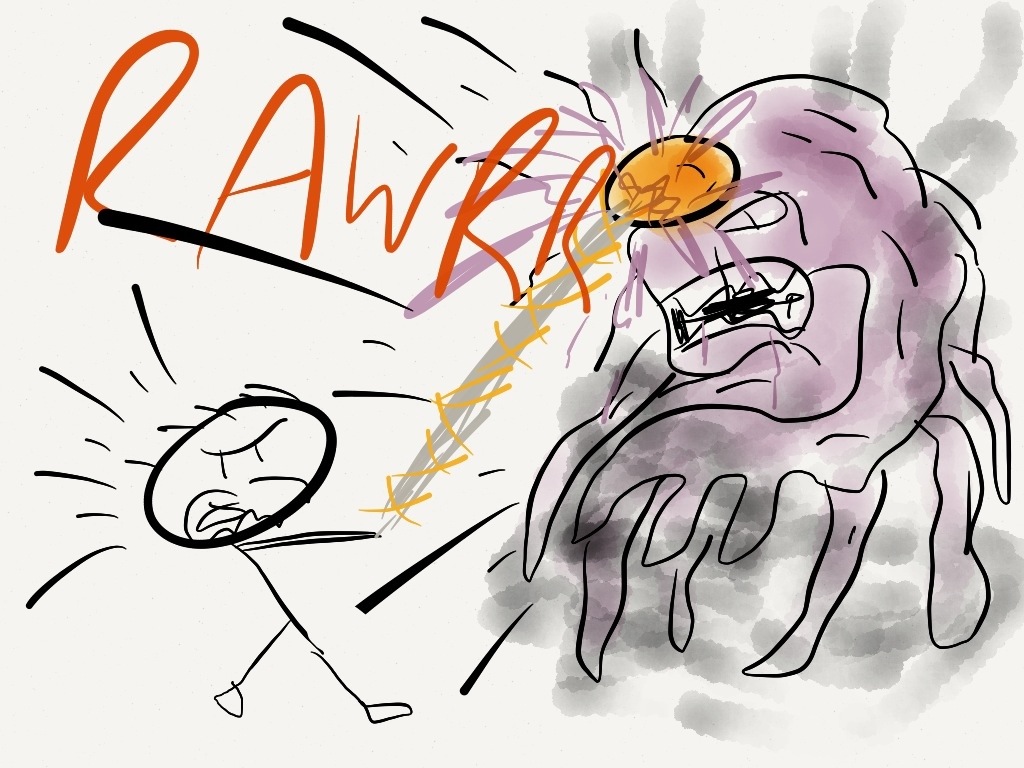
Combat, too, takes an intriguingly unconventional approach. Rather than going outright real-time such as in Sins of a Solar Empire, or almost completely hands-off as in Starbase Orion, Endless Space's combat takes a curious "cinematic" approach. A combat encounter unfolds over a set period of real time which is divided into several phases. There are a few seconds at the beginning of combat while both fleets approach each other, then the battle progresses between long, medium and short-range phases. The player may play a "card" on each of these three phases which provides numerous special effects. Cards have categories, too, and certain categories cancel out the other player's abilities. This gives an element of uncertainty to the combat, though the "combat preview" window, which estimates the player's chances of victory prior to the combat unfolding, is a pleasing addition, as are the Battlestar Galactica-style cinematic combat sequences (complete with ethnic instruments) and ability to completely skip the combat scene altogether if it looks like being a complete whitewash.

I haven't played a game through to completion yet, but I've been enjoying what I've tried so far. I don't feel overwhelmed with things to worry about and I don't feel I'm being "left behind" by the computer players. (I may feel differently if I get stomped on by one of them — my closest neighbour declared war on me just because I forcibly removed one of his scout ships from my border system with a fleet of destroyers.) The "hero" mechanic adds a cool sense of progression and the way the game is presented is simple, clear and easy to understand while remaining aesthetically impressive, with smoothly-animated, attractive UI elements, excellent background music and atmospheric sound effects.

If this is an alpha version, I very much look forward to seeing how the game evolves over the coming months. If you have the slightest interest in the turn-based strategy genre, I'd strongly suggest you give it a shot — and thanks to my good buddy Alex for the recommendation.

Check out the game here and preorder on Steam to get access to the alpha build.
#oneaday Day 840: Adventures on Environ

20120508-011145.jpg

[Explanatory note: One of my favourite things about procedurally-generated games like roguelikes, Minecraft and indeed A Valley Without Wind is the sense of emergent narrative they generate. While light on explicit narrative, the story of the player's own journey through the game becomes compelling in its own right. It's a big part of what makes story-light titles such as Demon's Souls so entertaining, too, if you're willing to invest in them.

What follows is the story of my first forays into the world of Environ via A Valley Without Wind. Some artistic license has been taken for brevity's sake but this is more or less how my early play sessions have unfolded.

Additional note: All names in this piece are exactly as they appeared in the game thanks to its glorious random name generator.]

Yan Sadovski awoke with a start in a snowfield. Spitting out the wet slush as it melted on his face, he unsteadily pulled himself to his feet and surveyed his surroundings.

Snow and ice as far as the eye could see.

This was nothing unusual, of course, for the world had been enveloped in a new ice age certainly for as long as he could remember. But something didn't seem quite right. He couldn't quite put his finger on what it was, but something was very much amiss, and he had a strange feeling that something terrible had happened. If only he could remember what.

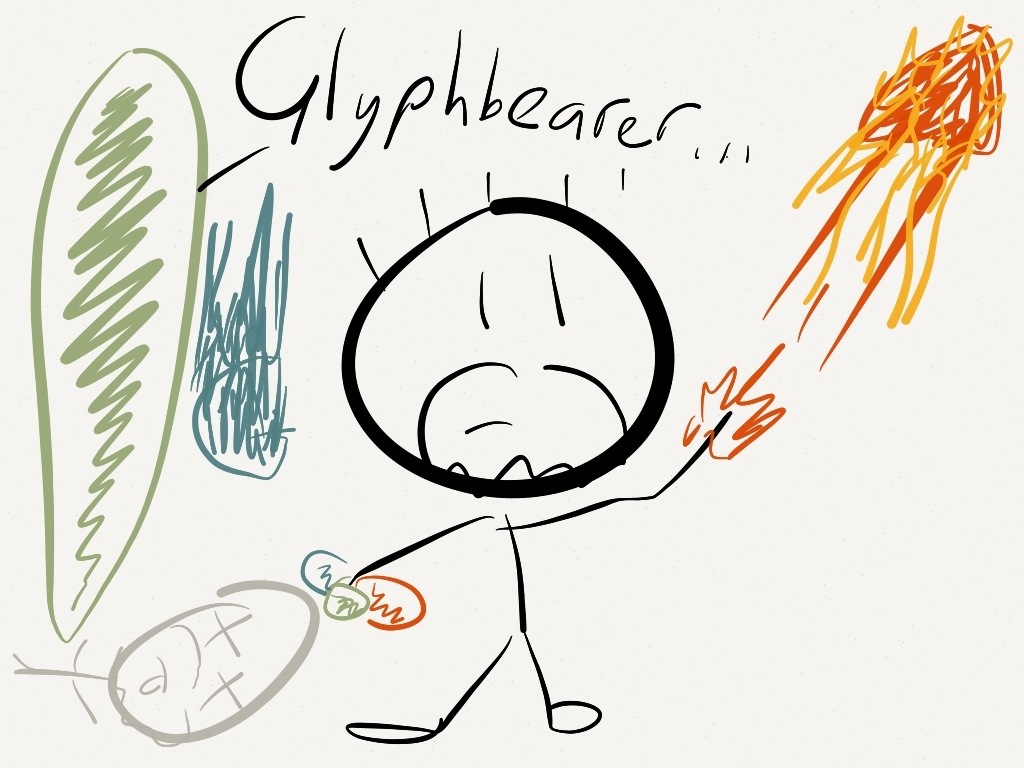
Flexing his fingers within his snowsuit which had been keeping him warm for however long he had been unconscious outdoors, he experimentally cast the "fire touch" spell that momentarily set his hand ablaze — one of the first spells his people learned, but a useful one.

Good, he thought. That's still fine.

It was then he felt the strange presence behind him — a floating, glowing object depicting strange symbols.

Glyphbearer, said a resonant voice inside his head.

"What?" said Yan aloud, feeling immediately foolish, for there was no-one to speak to.

Wherever he turned, the glyph seemed to float behind him, meaning he couldn't get a good look at it. He shrugged and started trudging onwards through the snow in what he hoped was the right direction to get back to civilisation.

Gravestones littered the path here and there, marking the spots where previous Glyphbearers had fallen. Inscribed upon them were warnings and advice — "don't forget your wooden platforms", "don't jump into big holes unaware of what lies ahead", "don't forget a light source". He didn't know who had left the gravestones, but he felt it wise to follow their instructions, particularly as they always seemed peculiarly relevant to the situations in which he found himself.

Before long, he came upon the mouth of a cave. Curiosity getting the better of him, he walked inside and began to investigate.

The cavern was filled with strange mushrooms, lumps of rock and solid veins of purest gemstone. Greedily running his hands over the veins and letting the energy of elemental fire flow through his fingers, he gathered up the gemstones only to discover the strange glyph sucking them inside itself. He had no idea where the tiny, strange, floating object was putting them, but he had little doubt that they were safe.

Making a note of where the entrance was in his mind, Yan proceeded deeper into the caverns. Before long, he came upon what looked like a long-abandoned spellgem workbench — and it still held a selection of gems. He picked them up, the glyph "pocketing" them once again, and felt a rush of mystical energy flowing through him. Concentrating intently, he summoned forth a boulder of solid rock, flinging it into the air. Then a fireball, scorching the chill air as it passed. Then a ball of lightning, electricity cracking and fizzling around him as he chuckled to himself.

Satisfied with his haul, he picked his way through the caverns, back in the direction of the entrance. But he was no longer alone; the robots had come. The endless mechanical hordes had been blighting humanity throughout this new ice age, and now they were here, too. Grimacing, Yan fired off a bolt of lightning at the approaching mech, watching satisfied as it exploded into pieces. But still they came, in greater numbers.

Before long, he was surrounded. White metal robots jabbed him with their spears, while their red brethren — superiors? he thought — assaulted him with flaming masses.

He could feel his life slipping away as the machines continued their relentless assault. He was in pain, and he knew at that instant that he was never going to find out what disaster had befallen the lands.

Blackness.

Nothingness.

Anger.

Taquesha Garrett opened her eyes and found herself standing in a snowfield. She had no idea how she had got here, and no idea what the strange floating object behind her was. She sensed great power emanating from it, however, and sensed it wanted to accompany her.

She started walking through the snowfield in what she hoped was the right direction. Passing a small cave entrance, she hesitated for a moment, feeling an inexplicable sense of dread and rage emanating from within, before picking up the pace and moving on a little faster.

Before long, she came to an open area. A loud "thumping" noise was disturbing the peace, and it wasn't hard to see the source — a giant robot roaming the landscape. Figuring it was too strong to challenge by herself, she carefully and stealthily found a route past it without attracting its attention, and shortly afterwards found herself in a sorry-looking village.

A long-haired man staggered up to her. "What have we done?" he cried. "We must put our trust in the Ilari!"

Taquesha frowned, and followed the man's frantic gesturing to what passed for the village square, where three enormous crystals stood, glowing softly in the moonlight. She walked up to them and immediately felt a sense of warmth, concern and trust emanating from them.

Glyphbearer, they said in her mind. You have come.

She said nothing — she had no idea what she might be able to converse with these mysterious entities about — but in a flash, she understood her mission, if not the circumstances which had led to it.

The Overlord would fall. And these shattered lands would know peace.

She didn't know what the words that had burned themselves into her brain knew until she left the village for the first time, only to discover a strange sight. In one direction, lush green unspoiled forest. Behind her, the glacial fields she had grown up with. To the north, barren desert. And to the south, what looked like a junkyard.

Her studies of magic had given her a good working knowledge of how to craft her own spellgems, so she resolved to equip herself with some stronger magics before taking on this mysterious "Overlord", wherever he might be.

For the next few days, she explored the local area, poking her head into long-abandoned buildings and looting them of any valuables within. There was no sign of any human life anywhere save for the sole survivor she had seen back at the village. What had happened here?

In the distance, violent wind and rainstorms buffeted the landscape. She knew that if only she were able to push the winds further away from the settlement, she'd be able to better judge her surroundings and her eventual goal.

The Ilari, she thought. Maybe they can help.

She returned to the village and rested, then asked the strange crystal ones if they could help her with the wind.

Seek the wisdom of an Aquaurgist, they replied. Taquesha frowned in response. The other survivor in the village didn't seem to be much for working with water — he was more of a wood specialist, judging by the number of logs he'd chopped since she'd been there. But where to find an honest-to-goodness Aquaurgist in this strange, shattered land?

It took time, but she eventually discovered a survivor holed up in an abandoned town. Promising to protect the frightened, bearded man from the monsters that terrified him so, she led him back to the village, where he began work with the Ilari immediately on summoning the materials needed for the construction of a wind shelter.

A short time later, Taquesha had braved the howling winds and acidic rain and successfully constructed the shelter. Its vast blades span majestically through the air, and the storm, as if frightened, backed away from it, far towards the horizon.

For a time, life was good. Taquesha spent her days gathering materials for the good of the village and to assist her with her spellgem research, but one day cruel Fate decided that her time was up.

She'd snuck into a run-down warehouse, feeling confident that she'd be able to find a stash of unspoiled supplies within. Inside, it was dark, and the air was thick with tension. She knew that she'd have to be very careful here, or the strange creatures lurking in the darkness would surely destroy her.

She tensely picked her way through the first few rooms of the building safely, but before long she'd attracted the attention of a strange, fiery beast. Its roaring, in turn, brought others like it running, and as her body was wracked with pain from the burning embers striking her skin, she found herself melancholy.

It wasn't supposed to end this way, she thought. I was supposed to defeat the Overlord and save these lands. I've done so much for them already, and this is how–

Darkness.

Silence.

Rage.

Phlegethon Gogola suddenly awoke in an unfamiliar village, his long, unkempt beard and hair blowing in the chill wind of the disconcerting icy surroundings. Behind him floated a strange, unfamiliar object that unnerved him somewhat. But at the same time, he suddenly found himself with a sense of purpose.

Glyphbearer, came a voice in his head. It is time for you to begin your adventure.

Phlegethon grunted to himself. Adventure was all very well and good, but he was damned cold. He wouldn't be going far unless he could find some way to protect himself from the elements…

#oneaday Day 839: So Binary Domain is Kind of Awesome

20120507-015626.jpg

I got a few games for my birthday this year from generous people taking pity on my advancing years. I've waxed lyrical about A Valley Without Wind for quite some time now and I haven't yet got to Legend of Grimrock (oh, but I most certainly will) so that leaves Binary Domain to talk about.

Binary Domain is a third-person shooter from Sega. Created by Toshihiro Nagoshi, the producer of the excellent Yakuza series, it spins an interesting sci-fi tale about "Hollow Children" — robots designed to look like humans and programmed to believe they are human. Taking on the role of one Dan Marshall (not, sadly, the British developer of point-and-click adventure funfests Ben There, Dan That and Time Gentlemen, Please!), it's up to the player to kick lots of robot bottom on the way to tracking down the supposed creator of these illegal, ethically questionable droids.

Binary Domain could so easily have been shit. It's a game about futuristic soldiers shooting robots — you can't get much more cliched than that, after all. And yet it has a huge amount of charm coupled with an addictive quality that keeps you playing just to see what happens next.

Technically speaking, Binary Domain is a squad-and-cover-based third-person shooter, which probably makes it sound very much like Gears of War, a series which I loathe and detest. (Well, to be fair to it, I only loathe and detest the first one, but that put me off ever playing the other two.) But in execution it manages to be so much more than the thick necks and testosterone of Epic's title, and in the process it highlights the differences between Japanese and Western development. It's also helping further cement the feeling I've been having recently that Japanese games are, for the most part at least, preferable to Western — for me, anyway.

But what sets it apart from Marcus Fenix's opus of "eat shit and die"? Quite simply, characterisation. Dan begins the game as a bit of a dick, but in an endearing way rather than as an unlikeable, bland macho asshole. He's accompanied through the introductory mission by "Big Bo", a walking tank of a man who has a bit of an attitude himself. When the two are together, they crack jokes and make irreverent comments just like they're a pair of best friends in a bar together. They have a relationship beyond "Cover me!", in short, and that makes them interesting to hang out with, even if they're both quite sexist, a bit racist and generally loutish in their attitudes.

A short way into the game, Dan and Bo meet up with the rest of their team, which includes the businesslike ex-MI6 dude Charlie (who doesn't know who James Bond is); the strong, silent Brit woman Rachael; and the sexy Chinese girl Faye. These disparate characters' personalities all clash a little with one another, which again makes their interactions extremely entertaining to witness.

"Hmm, she reminds me of someone," says Bo to Dan upon meeting Faye for the first time. "A movie star or something."

"C'mon, Bo, you and I both know the only movies you watch are porn," chuckles Dan, who promptly receives a sharp dig in the ribs from his friend. "Oh… OH. Right."

Once the team is assembled, Dan is regularly invited to take two of them with him, and each have their own unique conversations with each other and our hero. Again, these exchanges are a real highlight of the experience, and show what a massive difference it makes when you bother to spend some time on your characters. If you're going to be battling giant spider robots with people, it's better they be people that you actually like, right?

There's an interesting twist, too — when characters speak, Dan can respond to them either by using a simple multiple-choice system or by actually speaking his response into a gimmicky voice-recognition system which I switched off almost immediately. (When your voice-recognition system picks up gunfire from the game and thinks you're saying the word "fuck", you have a problem, as entertaining as that might sound.) Dan's responses will affect the other characters' "trust level" with him, with them being more likely to successfully follow his orders if they trust him more. I'm guessing there will be some sort of story payoff for high trust levels, too, though I'm not far enough into the game to say with certainty yet.

As the different characters all clash somewhat, though, certain responses might piss one off while pleasing another. Crack a joke with Bo about getting crabs from a hooker and Faye might get sniffy. Tell Charlie to go fuck himself with his overly-serious military-speak and he'll get annoyed, but Bo will laugh. Your performance in combat affects these trust ratings, too — clip your teammate with a bullet and they'll get angry, but save them from certain death or pull off a particularly impressive feat and they'll give you the credit you deserve.

In this sense, Binary Domain sometimes feels like it's a role-playing game very vaguely following the Mass Effect mould. This feeling is further compounded by the ability to equip characters with stat-boosting nanomachines and upgrade weapons as well as the inclusion of "social" areas that are just about walking around talking to people, but when it comes down to it, the game is unashamedly a linear, Japanese, third-person shooter. While not quite as insanely frenetic as Sega's previous shooter title Vanquish, Binary Domain has its fair share of ridiculousness, usually in the form of giant robots which must be defeated by dropping heavy things on them, blowing bits off them, leaping onto their back Shadow of the Colossus-style or all manner of other shenanigans. It's a spectacle, as thrilling to watch as it is to play, and I'm having a blast with it so far.

Binary Domain received middling reviews on its original release, with the PC version (which I'm playing) catching particular flak for including most of the PC-specific visual and control options in a separate program rather than in the game itself. I feel that this has been focused on rather too much, frankly, as it's an issue players will encounter precisely once, before they even start playing. Once the game is set up to your liking, it looks great, sounds great and runs smoothly, which is all I ask for.

These middling reviews, however, are likely to see the game relegated to obscurity before very long. Already people are saying that they'll wait for it to become a "bargain bin title" before picking it up, purely based on reviewers' comments. And herein lies the problem: people criticise the increasing "blockbuster culture" of video games, pointing to titles like Call of Duty and Halo as symptomatic of everything that is wrong with the industry, but as soon as something that provides a different take on an established formula comes along, like Binary Domain does, no-one is willing to buy it new and take a chance on it. Thus these great games get pushed to the back of the community's consciousness, while those with the biggest marketing budgets continue to dominate year after year.

From my couple of hours' experience with it this evening, I can happily say that Binary Domain is well worth picking up now, since it's a fun, entertaining, spectacular and satisfying game that, sadly, looks set to join Vanquish and Alpha Protocol in the box marked "Sega Games That Were Actually Brilliant That No-One Played".

Make a difference. Vote with your wallet. Support awesome new games that aren't "blockbusters". Please?

#oneaday Day 838: Still No Wind Here

20120505-233946.jpg

As promised, here are a few further thoughts on A Valley Without Wind, given that I've inadvertently spent most of today playing it.

First up, having read a few reviews around the Web which focused heavily on the visual side of things, I direct you to this post. Get over it. Not everyone has the budget to make something that looks like Final Fantasy XIII, and it's not as if AVWW's visuals are bad per se, they just look like something out of a PC game from the 1990s, shortly after we discovered Super VGA. If "8-bit" can be an acceptable aesthetic (and I shan't get into a rant on the misuse of that term here) then why not "mid-90s PC game" if the graphics don't actually hurt the experience?

Secondly, the music. You will, as the cliche goes, love it or hate it. Here's a simple test. Do you like chiptunes and electronica? You will like the music. If you do not like chiptunes and electronica, you will probably want to switch it off and listen to something else. (I love chiptunes and electronica.)

Those two glaringly obvious points which most reviews seem to focus on aside, let's discuss the gameplay a little more.

Following an initial tutorial which introduces key gameplay concepts to the player with various gravestones sarcastically describing how various predecessors could have avoided their fate, the player reaches a settlement. This is a sorry affair to begin with, with only a single, bedraggled-looking survivor staggering around it, but a selection of basic buildings already constructed and ready to go. Three of the giant crystalline "Ilari" life-forms are here, and later in the game they'll provide a means to purchase items, build things and cast far-reaching spells. To begin with, their most important function is to restore your hit points.

Leave the settlement and you'll be taken onto a grid-based randomly generated world map. Each tile has a particular terrain type which controls the type of enemies that will spawn there, the items you'll discover and, if you're lucky, the survivors you might come across. Each region comes from a specific time period — the game's story centres around the concept of the world being "shattered" both geographically and temporally — and this comes into play with some of the missions later.

When exploring a region, you'll come across buildings. You can enter every single one of them. Most of them are sprawling mini-Metroidvania adventures in their own right, but for the most part you'll be seeking out the "stash" rooms that contain plenty of treasure. These are conveniently marked on the graph-like abstract dungeon map in the corner of the screen, which shows the connections between rooms but not their exact layout. A key part of gameplay is "scouting" buildings, which means delving in just far enough to reveal the rest of the map — rooms that are within two "connections" of the one you're in appear without you having to go to them — and then weighing up whether it's worth exploring further.

The buildings are rather abstractly designed (not to mention having TARDIS-like properties), and call to mind retro classics such as Jet Set Willy, where a "real world environment" was simply a room with obstacles in it and various graphics representing toilets and televisions scattered around the place. They're far from "believable" environments, but it doesn't matter — you're playing a side-on platform game, so there's a limit to how realistically these structures can be designed anyhow. I'd rather have something that is interesting to explore than something where every building is the same.

Missions play a key role in progression. You'll come across missions either on the world map or tucked away inside buildings. These whisk the player off to a unique, special area and challenge them with a specific task. Sometimes you might be climbing a linear tower and bashing bosses on the way up. Another time you might be defending storage silos from incoming meteors like a Missile Command platformer. Another time you might be tasked with removing the "anachronisms" from an area, which involves figuring out which monsters don't "belong" in the region you're in and eliminating them. Destroying all the correct monsters concludes the mission. Destroying an incorrect monster spawns two more, either, both or neither of which may also be an anachronism. Yet another time you might be challenged with getting through a "one shot, one kill" dungeon where either you or the enemy grazing their knee results in instant death.

As you progress through the game, death becomes an increasingly frequent occurrence. When a character dies, they're gone for good, leaving behind a tough-to-defeat vengeful ghost at the location where they shuffled off the mortal coil. Fortunately, you don't lose all the stuff you've spent hours accumulating — you simply lose any upgrades you might have applied to that character's health, attack power and mana pool and have to pick a new playable character. As you rescue survivors from different time periods, you gain access to a range of characters with varying abilities — those from an "ice age" era, for example, are resistant to the cold, while those who are not will require special equipment to explore cold environments effectively.

The eventual goal is to storm into the local Overlord's lair and kick him squarely in the balls. Said Overlord has a bunch of lieutenants, too, who can either be knocked off individually before taking on the Overlord or battled at the same time as the big boss man. You can theoretically walk straight into the Overlord's lair from the beginning of the game, but you'll be ill-equipped to deal with the challenges therein. Instead, it's advisable to complete a bunch of missions to raise the continent's "civilisation level" (thus affecting both the strength of the enemies and the potential rewards on offer) while also collecting the raw materials required to buff up your character's spells. And rescue survivors. And build buildings. And construct wind shelters to push back the wind storms that buffet the region, making exploration difficult. And track down "mystery rooms" to find clues describing exactly what the hell happened to the world to get it in this state. And… you get the idea. There is a shitload of things to do, and completing the first continent then invites you to do it all again in a more diverse array of environments.

The sheer amount of things that there are to do can make the game seem like a daunting prospect. The game often draws comparisons to other open-world freeform adventures such as Minecraft and Terraria and that feeling of being alone in a vast, terrifying world is very much present and correct here. Focus on completing a few simple tasks, though — the game is good enough to suggest some to you — and things will gradually start to fall into place.

A Valley Without Wind is an ambitious title that tries very hard and while it's true there are elements of the experience that could do with a little refinement, it's a very memorable, compelling and addictive game that produces some excellent emergent narrative. Best of all, though, is the fact that the developers are still working on it, meaning the game experience will grow, change and evolve as time goes on. If it's this intriguing now, I can't wait to see what the game looks like in a few months or years.

#oneaday Day 837: No Wind Here

20120505-011701.jpg

My fine friend Alex picked me up a copy of the unusual A Valley Without Wind for my birthday — thank you, good sir! — and I had a brief foray into its strange world this evening. Obviously I haven't spent that much time playing yet, but it's certainly been enough for me to determine it's a game I look forward to exploring further.

AVWW is a procedurally-generated Metroidish platformer with spellcasting, building, collecting and resource management. The concept sees the player taking the role of one of several random (and disposable) characters and exploring a vast 2D world in an effort to take down "The Overlord".

In order to accomplish this, the player must explore the overworld, find their way into abandoned buildings that are remnants of the "old world" to recover supplies, delve into caves to find gems and other resources, and ultimately build up a settlement and their own power.

As you progress through the game, you acquire new "spell gems" which allow you to cast various magics. You can also upgrade your abilities with various materials and take on missions to provide a sense of "structure", but otherwise the game is very open and free, and the developers claim that it's both impossible and impractical to explore every nook and cranny of the randomly-generated world.

The game takes place on a series of 2D maps, with different "rooms" (actually scrolling regions) connected to one another by doorways and cave entrances. Exploring these rooms and the way they're connected to each other is a key part of the experience. A helpful minimap system helps you figure out where to aim for, where resources are located and where strong boss enemies can be found.

Interesting things come about when the player dies. The game features permadeath of sorts, but the game isn't over when a character bites it. Instead, the world lives on but the player starts a new character. There's even the chance to come across the ghost of your old character.

Then there's a multiplayer option, which I haven't investigated as yet, but the prospect is intriguing in a Minecraft sort of way — a procedurally generated world with multiple players running around finding resources and killing enemies? Sounds awesome.

There's an element of the "roguelike" genre about the game, and as regular readers will know, I'm a big fan of that sort of thing. The fact the game has a convincing sense of structure while still being put together almost completely at random is an impressive achievement, and I look forward to seeing if the game manages to maintain a sense of pace and direction throughout. It's obviously designed to be replayed, too, as there are a wide array of difficulty settings for both the combat and the platforming sections separately.

Further thoughts to follow when I've spent a bit more time with the game! (And you can expect more on Nier shortly, too — though this may well be in the form of a Squadron of Shame SquadCast.)

#oneaday Day 835: I Finished Nier

20120503-020725.jpg

As the heading says, I have indeed finished Nier… once, anyway. I'm going to hold off on doing a "review" as such for the moment, however, for several reasons. Firstly, a full understanding of the game is only attained following several playthroughs. And secondly, Nier is a fine example of how the "reviewing" system we use most of the time is, at times, flawed.

Nier enjoyed mediocre review scores on its original release, netting a Metacritic average of 68. As people who care about such things will tell you, 68 is not "bad" if you're taking 50 to be "average", but unfortunately no-one does. The assumption is made by most people that anything under 80 is not really worth bothering with, and anything 90 or higher is an essential purchase.

But in my experience, it's often in these slightly lower areas that you get the most interesting games. They may be rough around the edges, they may not be perfect, but by golly they have soul.

If you were judging Nier purely mechanically, it's easy to see why it attained the mediocre review scores it did. There are a very limited number of environments to explore which you spend a lot of time backtracking through. The environments are pleasant enough, but not that interesting. The enemies are repetitive. Combat can be a bit clunky. Most of the magic spells are fairly useless. The AI partners you pick up over the course of the game are completely useless. Most of the game's quests involve either killing things or fetching things. Choices you make don't matter. And the "real-time" mechanic for growing crops is just ridiculous.

The thing is, though, play Nier and become invested in its story, and absolutely all of these factors cease to matter completely. Nier tells an interesting, mature, emotional tale, and it tells it well with a small cast of well-defined, unique (and bizarre) characters — and a much larger supporting cast who make the bleak, far-future world of the game seem all the more believable. It piles on the darkness but knows how to lighten the mood with a pithy comment or two at just the right moment. It constantly does things you don't expect — with the story, with the characters, with the style of gameplay, even with the camera angles. It encourages the player to get inside the head of this unyielding, determined protagonist and almost "method act" their way through the game as he toils and struggles to save his daughter.

Do Nier's occasionally-clunky mechanics and sometimes-repetitive gameplay make it a "bad" title? Absolutely not. They may, however, put off the less patient players out there — and that's fine. Those who stick with it will find themselves enjoying a surprisingly creative adventure, while those who chose to forgo the game's hidden charms and depths for whatever reason doubtless have plenty of other things they'd like to spend their time playing.

The sad thing, though, is that the mediocre review scores were probably enough to put a lot of people off even trying the game in the first place. Why bother buying and playing a "68" when you could play a "90"? This problem becomes compounded when you take into account the fact that a lot of publishers make strategic decisions about what franchises they want to explore further — and in extreme cases, which development studios get to keep taking home their paycheques — based on Metacritic scores. Do you think we'll ever get another Nier (or at least a game like it)? Probably not. Why? Because it's too risky. Nier has its fans, sure, but they number relatively few, and aren't necessarily going to be enough to let the game make a profit.

I'm glad Nier exists, though. It's evidence that all hope is not lost for creativity, maturity and a desire to do something a little bit different, even in these days of budgets spiralling out of control and a growing desire to create games that are "services" rather than "creative works".

Nier most certainly is a creative work, a labour of love, and it should be applauded for that.

#oneaday Day 833: Some Further Thoughts on Nier

20120501-010050.jpg

I haven't yet finished Nier, but I thought I'd take a moment to write a little more about it since I've been playing it quite a bit over the course of the last week or so.

Nier is a game that rewards patience and perseverance. The game's enormous number of completely optional sidequests is testament to this fact. These sidequests tend to fall into one of several categories — gathering materials, killing things or delivering things. There are a couple of outliers (one of which I'll discuss later) but for the most part they are mechanically very simple, and usually simply involve beating up a bunch of monsters or running from one place to another.

In gameplay terms, they're very boring, and this is one of the reasons why Nier received rather mediocre reviews on its original release. But thematically, they are entirely appropriate. Nier himself is known among his peers as "that guy who will do anything" and so is regularly called upon by various villagers to do things for them. Some are respectful and kind about this, others less so.

The key thing about the gruelling experience that is attempting to 100% the sidequests in Nier is that it reflects Nier's own struggles. Life in his world is hard, and everyone has to pull together in order to survive. This sometimes means knuckling down and doing things you don't really want to do, or things that are time-consuming, or things that are expensive. By completing these quests you may not be directly making Nier himself any stronger, but you as the player come to understand his strength of character and his resolve to do the right thing. Couple this with Grimoire Weiss' sarcastic comments about the inane nature of the tasks his companion is asked to complete (which reflects what the player might be feeling about taking on such seemingly meaningless missions) and you have a very clever piece of characterisation and storytelling that would only really be possible in the medium of video games.

Some aspects are just ridiculous, however, the most notorious of this being the farming minigame, where Nier is able to grow various crops outside his house and then harvest them, hopefully for profit. The thing is, these crops grow over the course of a day or so of real time, meaning that anyone getting serious at farming is going to have to do one of two things: play Nier for weeks at a time, or take the path of least resistance (which I don't know anyone who has played the game that hasn't done) and start messing around with your console's clock. I can't speak for the process on PS3 as I haven't tried it, but on Xbox this is an unnecessarily cumbersome experience that involves quitting the game entirely, turning off the Internet connection (to stop the clock being automatically set), resetting the time and then reloading the game. It works, though, and allows for a considerable amount of harvesting in a very short period of time.

One quest in the game (and a related achievement/trophy) practically requires that you do this. It involves cross-breeding various colours of flowers in order to produce rare breeds. The trouble is, the game doesn't explain how this works anywhere, and debate still seems to rage on the Internet at large as to what is actually necessary in order to perform this task in the most efficient manner possible. In some senses, this could be argued to be another aspect of the game inviting the player into Nier's shoes and tasking them with finding out how this flower cross-breeding works, then applying that knowledge in the game — because it sure as hell isn't going to tell you.

How anyone was expected to do that without a strategy guide to hand is anyone's guess. Still, even when simply following instructions on how to do it (with something along the lines of a 10% chance of success each time) it's strangely satisfying when it does all come together.

I'm about 77% of the way through the sidequests in the game now, meaning that shortly I'll be able to pursue the rest of the game's main plot, which has been both interesting and unconventional for a Japanese game so far. I'll talk more about that when I come to do more of a "review" of the entire experience, however. The game also supposedly encourages repeat playthroughs (minus the sidequests, thankfully) to get to several different endings, but how this actually works I haven't found out yet.

In fact, I've managed to remain completely spoiler-free for the entire game so far, meaning I've been able to appreciate all the game's unexpected and bizarre things as they happen. This has been a big part in why I have come to regard the game so fondly; though the characters, writing and music are all excellent too. Again, though, further thoughts on these when I've actually beaten the whole thing.

For now, I have some white moonflowers to harvest, if you'll excuse me.

#oneaday Day 829: Nier: Some Early Impressions

20120427-003819.jpg

I've been playing Nier, a game I've been meaning to try for absolutely ages and struggled to find a copy of. As it happens, my local second-hand games emporium had a copy, allowing me to sample its delights. Like many titles I've wanted to try for a while, I've managed to go into the experience with a relative sense of "beginners' mind", allowing me to enjoy it as if it were "new", so to speak. This, I feel, is a key part of the Nier experience, since it continually throws you curveballs as you play, remaining constantly surprising.

At its heart, Nier is a simple action RPG, but to call it that is to do it a gross injustice. The hack-and-slash combat may be a bit simple, but when combined with the variety of bizarre magical attacks Our Hero gains the capability to perform over the course of his adventure, the gameplay is shaken up regularly enough to keep you questioning exactly what sort of game it is that you're really playing.

So far I've experienced open-world "run around and kill shit to get their stuff" gameplay; lots of "fetch quests"; side-on platforming sections; top-down Zelda-style sections; fishing; "bullet hell" shooter sections… and I have little doubt that the game has further surprises along the way.

Nier subscribes to the "less is more" viewpoint by taking place in a relatively limited geographical area. Within these relatively few zones, however, lots of things happen. Locals have their own little questline stories to follow, many of which end in surprisingly bleak tragedy. Some people drop a few hints about Nier's curious far-future setting. It's quite a believable world at times, and your attachment to it as a player grows as Our Hero tries his very best to Do Good.

One of my favourite things about the game so far has been the stark contrast between the random errands you find yourself doing for locals and the more intense, "main story" stuff which tends to culminate in ridiculously over the top boss fights. For the best part of 10 hours, for example, I barely gained any experience points whatsoever, instead choosing to pursue quests. In the process I acquired plenty of items and money, but most importantly I learned a great deal about the world of Nier and its characters. It's a vaguely similar approach to what The Last Story does with its completely optional, often seemingly reward-free sidequests on Lazulis Island. By immersing yourself in the lives of the characters going about their day to day life, their struggles carry greater meaning when things start to get a bit crazy.

The writing is worthy of note, too. Early in the game, Our Hero acquires a sentient magical book known as Grimoire Weiss, and there are some extremely well-scripted sequences between the two of them prompted by all sorts of things — starting a new quest, going fishing, coming across a new location. The very British-seeming sarcasm of Weiss is juxtaposed beautifully with Our Hero's stoic determination — but Nier himself isn't above the odd sarcastic comment. "Try not to get crushed!" yells Weiss during an intense boss battle that carries the risk of being crushed. "That's good advice, thanks," spits Our Hero sarcastically as he rolls to escape the aforementioned fate.

I'm given to understand that there are numerous endings to the game requiring several playthroughs to fully appreciate, so I'm going to reserve full judgement and further comment on the game until I've done exactly that. I will say, however, that I am having a blast with it so far, and am even enjoying running back and forth doing errands for the people of Nier's world.

Expect further bulletins as events warrant!

#oneaday Day 828: It's Time to Get Over the Graphics Thing

20120426-001100.jpg

I read this piece on Game Informer tonight. It made me cross. If you can't be bothered to read it yourself, the gist of the piece is that Xenoblade Chronicles, one of the best games of the generation (in my humble opinion, anyway) "deserved better than what [Nintendo] forced [it] to be."

To be fair to the author Chris "Warcraft" Kluwe, he does commend the game's strengths: its excellent world, its inventive, creative ideas; even going so far as to say that the game had the potential to be "this generation's Final Fantasy VII". But to say that the Wii "laughs at [developer MonolithSoft's] dreams… and flushes them down the toilet of GameCube-era hardware Nintendo likes to call cutting edge" is a spectacularly blinkered viewpoint.

The fact is, it's unlikely that Xenoblade Chronicles (and its spiritual successors The Last Story and Pandora's Tower) would ever have been released had it not been for the Wii. The Wii's lower demands in terms of asset production means that a sprawling, ambitious game such as Xenoblade Chronicles can be produced on a fraction of the budget of an HD title. Even then, though, MonolithSoft had to cut corners; the "gasping fish mouths bobbing up and down through beautifully crafted dialogue" that Kluwe refers to are a symptom of this.

The sad fact is that Japanese role-playing games are not the unstoppable juggernaut they once were. Where once they were a system seller, now they are a niche interest at best. The "mainstream" has shifted well and truly to the West; even Square Enix's venerable Final Fantasy series is seen as little more than a particularly well-polished curio these days. Big-budget role-playing titles for HD consoles such as Lost Odyssey and, to a lesser extent, titles like Nier (aside: which I'm currently playing and is awesome) struggle to find a substantial audience (compared to "triple-A" titles, anyway) and, by extension, the ability to recoup the enormous spend necessary to craft a beautiful world in high definition and 5.1 surround sound. So developers and publishers simply aren't taking the risk because it's, well, too risky.

But the Wii gives them a platform to make these titles without having to spend as much money and time on the creation of assets. It's not a case of Nintendo "shackling an obviously talented team like MonolithSoft to the ball and chain of the Wii because [they] want to sell waggle" (for just one of many things wrong with that statement, Xenoblade Chronicles features no waggle whatsoever). It's a case of Nintendo giving talented teams the opportunity to do what they do best and then release them to a market of enthusiasts who are still clamouring for these titles. Yes, the Wii has a lot of waggle-based crap. But it also has an impressive library of Great Games That Absolutely Fucking No-One Has Ever Heard Of Ever Because They're A Bit Weird Or Nichey And Have 480p Visuals.

Just because JRPGs don't sell well compared to titles like Call of Duty and Mass Effect doesn't mean that no-one wants to play them any more. In fact, the audience for the genre is probably actually the same size that it's ever been; the difference is that the Call of Duty players have sprung up around them and outnumber them considerably. Given the simple choice between making something that will make fans happy and something that will make a metric fuck-ton of money, the vast majority of publishers will take the latter option. That's simply "good business", and there's nothing wrong with that at all — developers gotta eat, after all. But to deride Nintendo for providing a platform eminently suited to developers who actively want to create niche titles for console — games which often provoke intense passion among their fans (as you can probably tell from this post) — is simply ridiculous.

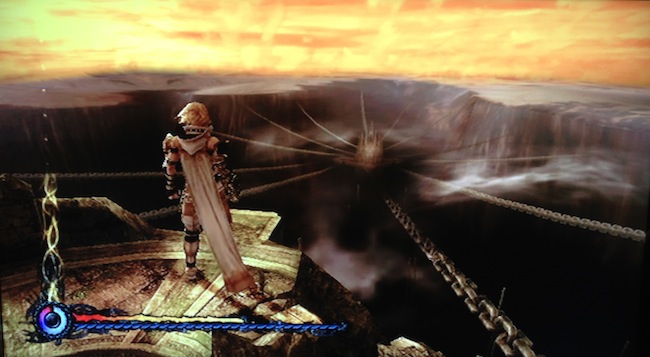
It's an age-old adage in the games industry that graphics do not maketh the game. Never has it been more true than in this strange period where we have two HD consoles and one SD system. Would Xenoblade Chronicles, The Last Story and Pandora's Tower have been better games had they been released on the Xbox 360 or PlayStation 3? Absolutely not. (Pandora's Tower, in fact, would have been considerably inferior due to the fact it actually makes good use of the Wii's unique control scheme.) They would have been better-presented games, sure, but the core gameplay in all three cases is brilliant — and, to add insult to injury, the graphics for all three aren't even what you could possibly describe as "bad" — just low-resolution. There's a difference — sadly, one seemingly lost on many reviewers who describe their visuals as "muddy" or "poor" and, in many cases, knock a point off the final score in punishment. I defy anyone who has stood on the Makna Falls overlook in Xenoblade Chronicles, seen the beautiful afternoon sunlight and shadows in the castle courtyard in The Last Story or stood atop the Observatory gazing towards the Thirteen Towers at sunset in Pandora's Tower to say that these games have "poor" visuals.

As such, I implore those of you who are gamers to stop caring so much about titles having pin-sharp graphics, fully orchestrated soundtracks and a voice cast of Major Hollywood Talent. Yes, these things make games more impressive and exciting to watch and play, but given the choice between a world made up of nothing but HD first-person shooters starring Morgan Freeman (with the world's population of racist teenagers on backing vocals via Xbox Live) and a world where I can play 100+ hours of Xenoblade Chronicles in 480p with a selection of unknown (but excellent) British voice actors, I know which I'd rather spend my time in.

That's just me, though. I illustrate my blog with stickmen, so take my word with a pinch of salt if you wish.

(Edit: Here's an unedited picture of Pandora's Tower running in 480p taken with my iPhone camera. Looks pretty lovely to me.)

#oneaday Day 824: Pandora's Tower: A Scoreless Review

20120421-230108.jpg

Pandora's Tower, the last of the three "Operation Rainfall" JRPGs for the Wii, is a beautiful game in many ways: visually, mechanically, thematically and in the simplicity of its execution. It's a fitting sendoff to three of the finest games of the entire console generation — and, indeed, some might say, to the Wii itself.

In Pandora's Tower, you take on the role of Aeron. Aeron is a quiet sort of chap, though not quite entirely mute. Aeron is in love with Elena, who is a singer from the "wrong side" of the war that our hero was involved with. She's also, thanks to a series of events which come to light over the course of the story, cursed to turn into a slobbering monster unless Something is Done. That Something, as revealed by a peculiar frog-like woman named Mavda who inexplicably carries her gigantic, incomprehensible skeletal husband in a cauldron on her back, is to consume the flesh of twelve "Masters" who reside in the Thirteen Towers, a mysterious structure suspended across the top of a seemingly bottomless chasm known as The Scar.

Thus begins Aeron's adventure, which is roughly equal parts dating sim, Ico and Shadow of the Colossus with a splash of Zelda here and there. It's up to the player to guide Aeron through the Thirteen Towers in an attempt to lift the curse from Elena while simultaneously ensuring that his beloved still loves him by showering her with gifts and affection.

The exploration of the towers makes up the meat (no pun intended) of the gameplay in Pandora's Tower. Unfolding from a series of non-controllable but dynamic camera angles, Aeron must work his way through the challenges that each tower confronts him with, smash the chains which lock the Master's door shut and then kick some serious ass.

Aeron is initially armed with a sword and the Oraclos Chain, an implement that symbolises the bonds between people and the power held within them. Using the chain, it's possible for Aeron to hookshot into far-off areas, tie up monsters, pull remote switches, tie things to other things and generally cause plenty of mischief. While it's tempting to charge in and simply attempt to hack-and-slash your way through the game's combat, the melee weapons Aeron acquires are in many way the least important things in his arsenal. Rather, the chain is the key to keeping Aeron out of harm and the numerous denizens of the Towers at bay.

By aiming the chain using the Wii Remote's pointer function (or the right analogue stick on the Classic Controller), it's possible for Aeron to attach the chain to all sorts of things. Hook it on to a handhold and he'll pull himself up Batman-style. Clip it on to a switch and he'll be able to pull it from afar. Attach it to a monster and it'll provide him with a suitably unfair advantage to exploit depending on which part of the monster it is hooked on to. Pull it taut and a "chain strength" gauge will gradually power up, enabling it to stay attached to things for longer or do more damage if jerked away suddenly with a flick of the wrist. It's a relatively simple mechanic — point, shoot and tug — but executed extremely well, making brilliant use of the Wii's unique control scheme without overusing any of its gimmicks. The variety of creative methods in which the chain is used throughout the game help keep it fresh despite the fact that Aeron doesn't really learn any new moves over the course of the game.

It quickly becomes apparent after a short period of play that combat is not the main focus of Pandora's Tower, however. Rather, it is an environmental puzzle game where the challenge is to determine how to reach a destination which is often in sight but tantalisingly out of reach. The fixed camera angles are used effectively to point the player in the direction of a puzzle's solution, helping to eliminate the frustration of pixel-hunting found in some games with a freely-controllable camera. The only slight issue with these is that sometimes enemies like to hide off-screen in the "changeover" point between camera angles, but they can usually be dragged around to where the player wants them using the chain.

The puzzles gradually ramp up in difficulty with each new tower at a good pace but never feel unfair — and there's an enormously satisfying sense of achievement when you figure out a particularly troublesome solution. This comes to a head with the game's Master battles, which are similar in concept to the Colossus battles in Shadow of the Colossus — each Master has a specific weak point which must be exploited through manipulation of the environment, spotting the patterns in their attacks and sometimes figuring out a quicker way to achieve something that initially seems obvious. The battles are more puzzles than anything, with a big part of the challenge being in figuring out what on Earth you're supposed to do, because the game certainly isn't going to tell you or hold your hand — a real strength of the experience and a big contributing factor to the aforementioned sense of satisfaction.

The dungeoneering segments are exceptionally well-designed, in short. This is a good thing, because not only does Aeron have to find his way to the Master's chamber alive, he also has a time limit to contend with. While he's in the Towers, Elena's curse is constantly progressing, with her inexorable descent into disgusting sliminess measured by an ever-ticking meter in the corner of the screen. Should this meter run out, Elena is beyond help and the game is over, so Aeron has to carefully manage his time between pushing forward in the tower he's currently exploring, and returning to Elena to temporarily stave off the curse using meat acquired from the tower's normal enemies.

Rather than this mechanic forcing the player to backtrack completely at regular intervals, however, the dungeons are designed in such a way that solving puzzles often opens up shortcuts to and from Elena. Find your way to a difficult-to-reach ledge and your reward will often be a ladder you can kick down or a locked door you can batter open, shaving valuable minutes off your time when you return to the tower once more.

Returning to Elena never feels like a chore, however, because Aeron's interactions with her are as well fleshed out (again, no pun intended) as the dungeoneering segments. When back at the couple's "home base", Aeron is able to chat with Elena, ask her to translate books and texts he's found in the towers and around their base, occasionally ask her specific questions about recent events and give her gifts. Most of these interactions have an effect on an "affection bar" at the side of the screen, which denotes how much Elena likes Aeron and also determines which of the game's endings will unfold once the story comes to its conclusion.

Aeron doesn't say much, but the player gets to know a great deal about Elena over the course of the story. She's a well-defined character with her own history, likes and dislikes, all delivered in an adorable soft Yorkshire accent. She does have something of a tendency to slip into sexist stereotypes — one exchange between her and Aeron sees her asking what he'd like her to concentrate on in the base, with the available options being "cooking", "cleaning" and "sewing" — but let's not forget that she can turn into a slobbering evil monster at a moment's notice, which does kind of undermine her "demure housewife" persona. To her credit, though, she does always feel bad whenever she makes a mess or breaks a gift as a result of her transformation.

Alongside interacting with Elena, Aeron is also able to call upon the mysterious Mavda between sorties to the towers. Mavda acts as a shop, crafting station, source of information and means of upgrading weapons, and there's a surprising amount of depth to these mechanics. Upgrading weapons, for example, usually requires several different components. If the player hasn't managed to find certain specific components, it's often possible to craft them using other pieces of detritus that they've picked up over the course of their last dungeon crawl. Certain components may only be found in certain towers, as each is themed after a particular element and contains its own distinctive monsters. Finding all the pieces for a particular weapon upgrade becomes a sidequest in itself, though it's a completely optional one that players don't need to engage in in order to be victorious.

These mechanics are all very well and good, but in the "HD age" a big determining factor in whether or not a person will take to a new game comes in its presentation. Pandora's Tower does not disappoint in the least: it is a lovely-looking game. Forget the fact it's running in 480p resolution on the Wii; this ceases to matter within a few short minutes of starting to play. This is a game with exceptional art design. Aeron is a young, fresh-faced youth with intricately-designed armour. Elena is a pure-faced, simple beauty, which makes her monstrous transformations all the more traumatic to witness. Mavda and her skeletal spouse are by turns grotesque and compelling. Outside the observatory that Aeron and Elena call home during their quest, lush green grass and cloudless blue skies fade into golden sunsets and deep navy nights. Inside their temporary quarters, everything is suffused with a warm, homely sepia glow. Within the towers, beams of light pierce the gloom through long-broken windows, brightly-coloured crystal formations cast strange glows on everything around them and the emerald green of natural foliage contrasts starkly with the dull greys and browns of the stone bricks that make up the tower surrounding it.

And the sound. Oh, the sound. Based largely on classical themes including Dies Irae from Verdi's Requiem and Liszt's Liebestraum No. 3, the soundtrack to Pandora's Tower is not the sort of in-your-face electronica-and-electric-guitars chaos typically associated with modern Japanese games — rather, it gives the game a unique atmosphere all of its own, filled with drama at some times, overflowing with love and tenderness at others. It perfectly reflects the small-scale, intimate tone of the game's narrative and rounds out a complete package that is beautifully, distinctively presented.

Pandora's Tower is a worthy successor to Team Ico's classic titles in many ways. It's a well put together game with exceptional presentation, a touching, intimate story and a sense of personal drama and emotion far removed from the ever-increasing stakes of mainstream titles. It's not just a fine Wii game, it's a fine game, full stop, and deserves to be looked back on in the future as a title that dared to try something a little different from the norm, with great results.

Time will tell if that's how history will treat Pandora's Tower, or whether it's doomed to be one of those increasingly-rare games that is always talked about in sentences that begin with "I wish I'd played…"

I know I'm glad I played it. If you get the chance, you should too.