1487: Uchikoshi's Last Reward

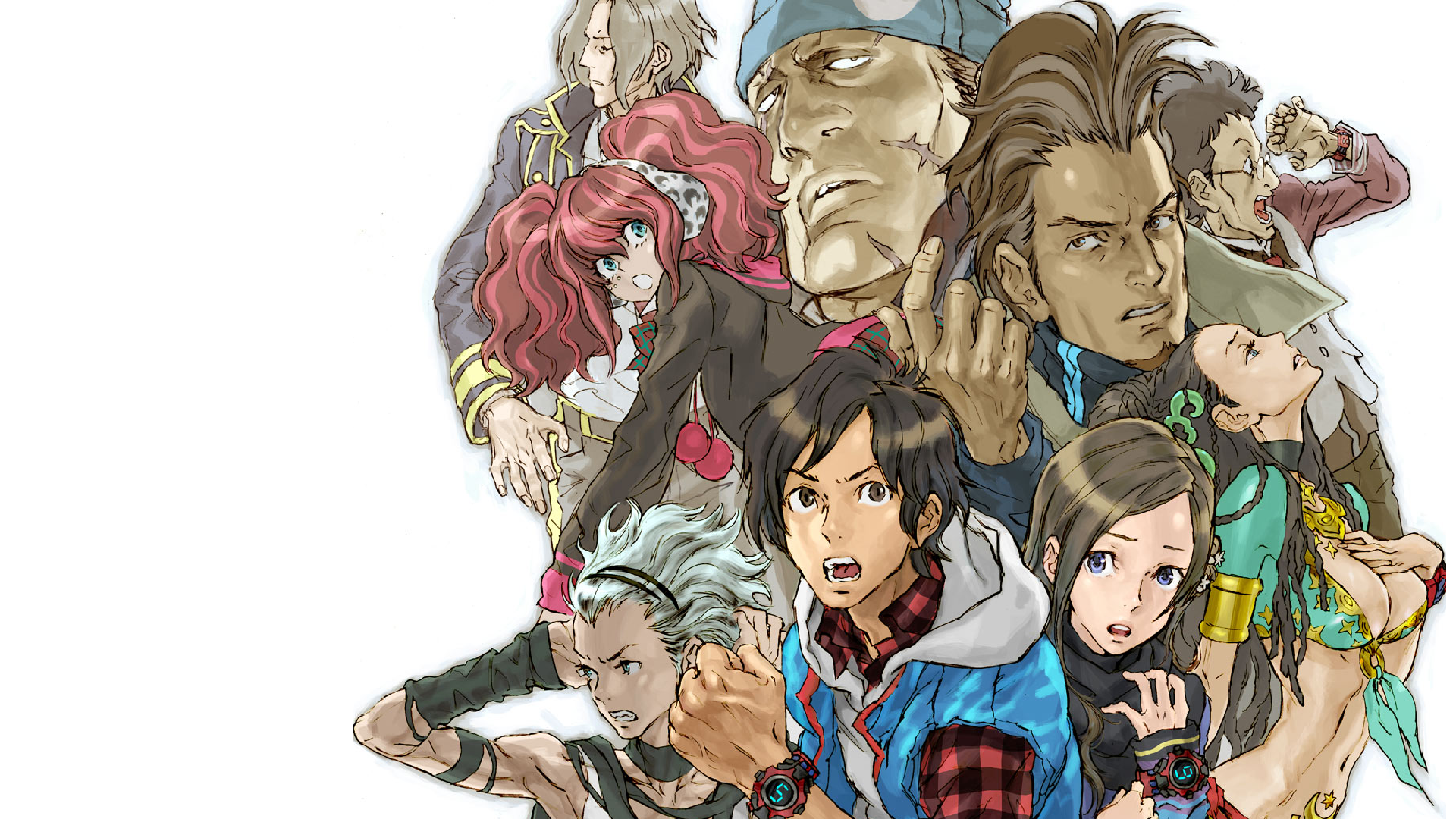
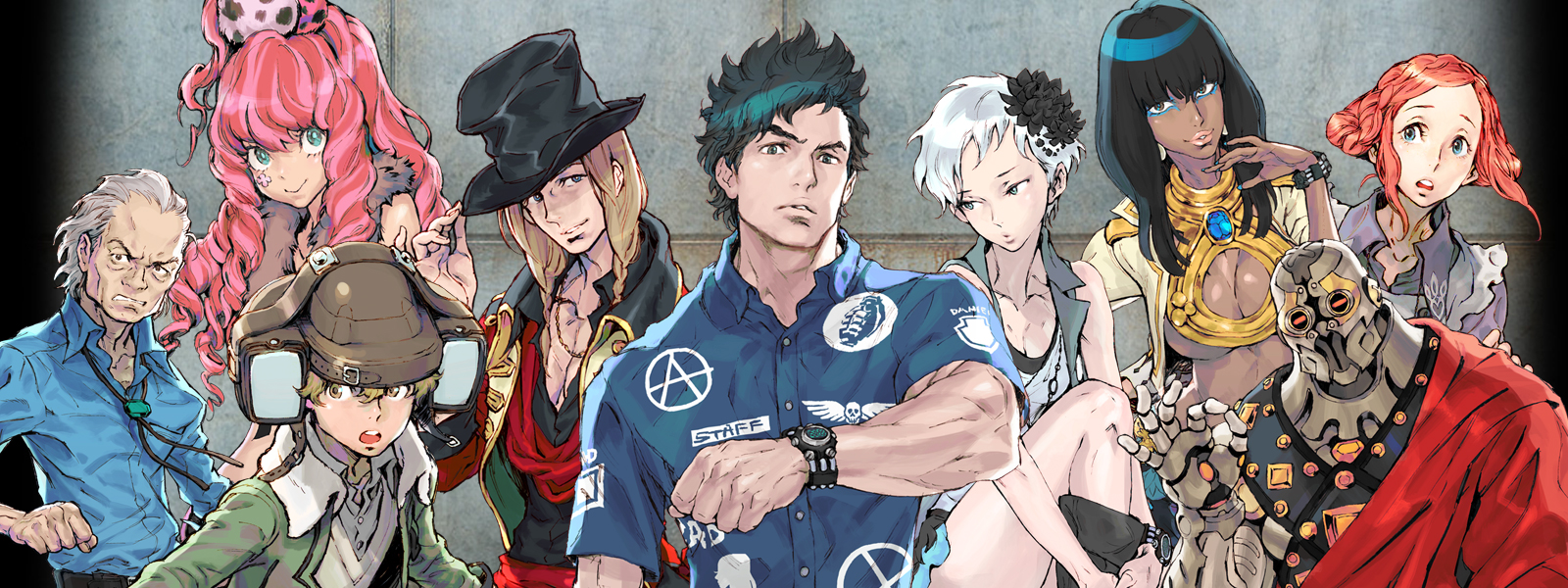
Kotaro Uchikoshi, the creator of the two Zero Escape games 999 and Virtue's Last Reward, opened an English language Twitter account today, even despite his own admission that his English is not all that great. Still, he felt compelled to communicate directly with his fans since, surprisingly, it seems the majority of the Zero Escape fanbase is actually in English-speaking territories — and that neither 999 or Virtue's Last Reward sold well enough in Japan to make a third and final installment in the series possible in the immediate future.

This is… distressing to see, frankly. Uchikoshi's Twitter feed is heartbreaking to read. Even through the occasionally slightly broken English — his English is certainly better than my Japanese, mind — it's clear that there stands a passionate man who would like nothing better than to realise his grand vision for his magnum opus, a man constantly frustrated by the realities of the modern games biz — key word "biz" — and a man who genuinely feels bad that he's letting his fans down. I find it incredibly sad that someone doing such wonderfully distinctive things with interactive storytelling has been put in such a position in this, an age where story-centric games such as Gone Home, The Stanley Parable and numerous others can be held up and celebrated — even declared "Game of the Year" in some quarters of the Internet. Surely the modern industry is diverse enough to support both the Titanfalls of the world and a third installment in the Zero Escape series?
999-pic

Perhaps it is — in fact, given the outpouring of support I've seen for it today, I know it is — and Uchikoshi simply hasn't yet found the right route to market. Despite the bleak, apologetic nature of his tweets, it's clear that he hasn't given up hope as yet. Following a heartfelt plea for any prospective investors to contact him directly via Facebook (I'm providing the link there on the off-chance that anyone rich is reading and feels like funding Zero Escape 3) he attempted to reassure fans that Zero Escape 3 "will definitely be released somehow, someday!" And I'd like to believe that he's right.

The question is "how?" Uchikoshi claims that he's considered crowdfunding but was concerned that it wouldn't be "persuasive" enough, but this may partly be due to the fact that crowdfunding is still yet to make a huge impact in Japan; it's still primarily a Western thing, with the exception of a few Japanese developers like Nigoro (though still in collaboration with Western publisher Playism, I might add) turning to the platform to fund projects such as La-Mulana 2. I would have thought that Kickstarter would be an ideal solution for Uchikoshi to clearly solicit and demonstrate fans' support for the Zero Escape series, but this may not help the situation in his native Japan, which is where the problems really are. I'm assuming there are some sort of rights issues involved with developer Spike Chunsoft that prevent him from striking out on his own and making Zero Escape 3 as an independent developer, or releasing 999 and Virtue's Last Reward (and Zero Escape 3) on PC, or…

Well, anyway. Sadly, I don't have the power to do anything about the situation. But it will be absolutely criminal if someone with as clear an artistic vision as Uchikoshi isn't able to realise his creative visions due to matters of "business". This is something I hope that the industry as a whole can solve together; regardless of whether or not you liked 999 and Virtue's Last Rewardyou can hopefully agree that the gaming landscape is a richer place with titles like them in it. Creative, interesting games should be encouraged and rewarded; instead, if we're not careful, we'll drive people like Uchikoshi away forever and be stuck with an vicious cycle; an endless of soulless but profitable games, and no-one wanting to rock the boat by doing something a bit different.
Zero-Escape-Virtues-Last-Reward-Review-Topper

That's a Doomsday scenario, obviously, and unlikely to happen, particularly while the Western indie space is flourishing to such a degree. Now we just need the East to follow suit.

I wish Uchikoshi the best of luck in his endeavours to get Zero Escape 3 into the hands of those of us who really, really want to see it, and would urge you to support him in any way you can if you believe in interesting, distinctive games that do some truly creative things with the medium as a means of interactive storytelling.
1485: Trigger Happy Havoc

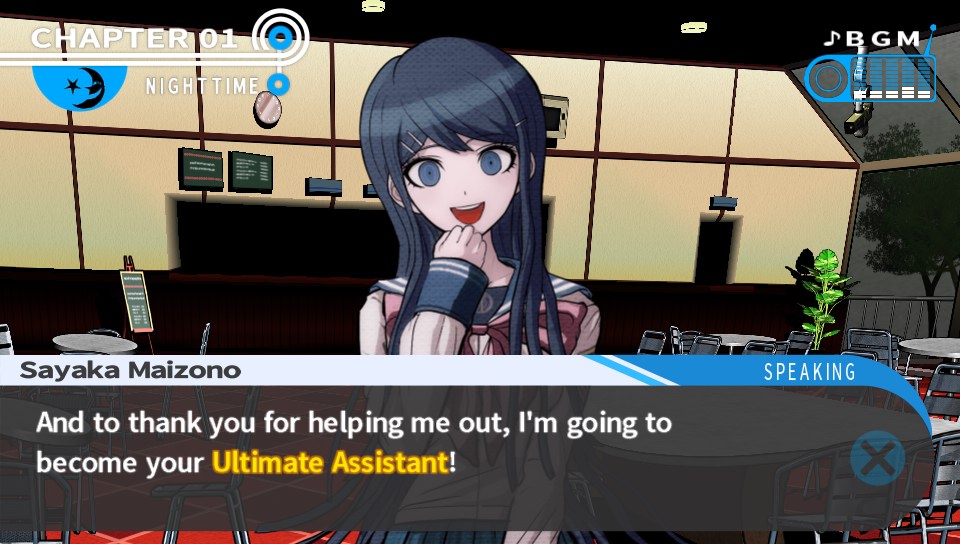
I've been refraining from talking about it until I put my review up, but now that's safely filed, I feel I should enthuse somewhat about Danganronpa: Trigger Happy Havoc.

For the uninitiated — and all the people who constantly claim they have no idea what Danganronpa is — allow me to explain.

ADOOOOORABLE.
ADOOOOORABLE.

It's a visual novel-cum-adventure game from Spike Chunsoft, the developers who brought us the Zero Escape series that consists of 999 and Virtue's Last Reward. Its concept is something of a cross between Corpse Party and Zero Escape: a disparate group of individuals are kidnapped, trapped in an enclosed environment (in this case, a twisted, not-quite-right version of a school, hence the Corpse Party comparisons) against their will, and then presented with a series of challenges between them and their final escape. In Zero Escape's case, this was a matter of solving puzzles and choosing the correct path to the end; in Danganronpa's case, meanwhile, it's a little more complex.

The game's Zero-equivalent Monokuma — a far more in-your-face and sinister antagonist than the largely hands-off Zeroes — challenges the game's cast to a "killing game" in which anyone who successfully gets away with murder graduates from the twisted school and gets to escape; meanwhile, everyone else gets "punished" by, well, being killed. Conversely, should the "Blackened" murderer be found out, they get punished, but the remaining students don't get to escape — they just have to continue their school life.

The game unfolds over a series of chapters, each of which involves the surviving members of the cast investigating the mysterious school, trying to get to the bottom of what is going on and then, subsequently, investigating a murder that happens. This is then followed by a "class trial" in which everyone argues and yells at each other and, if you've done your job correctly, the culprit is identified and punished. In between these phases, you get short periods of "Free Time" in which you can hang out with the remaining characters to build up your relationships, which subsequently unlocks "skills" for use in the trial segments.

Ooh, I know, I know. It's... [SPOILERS]
Ooh, I know, I know. It's… [SPOILERS]
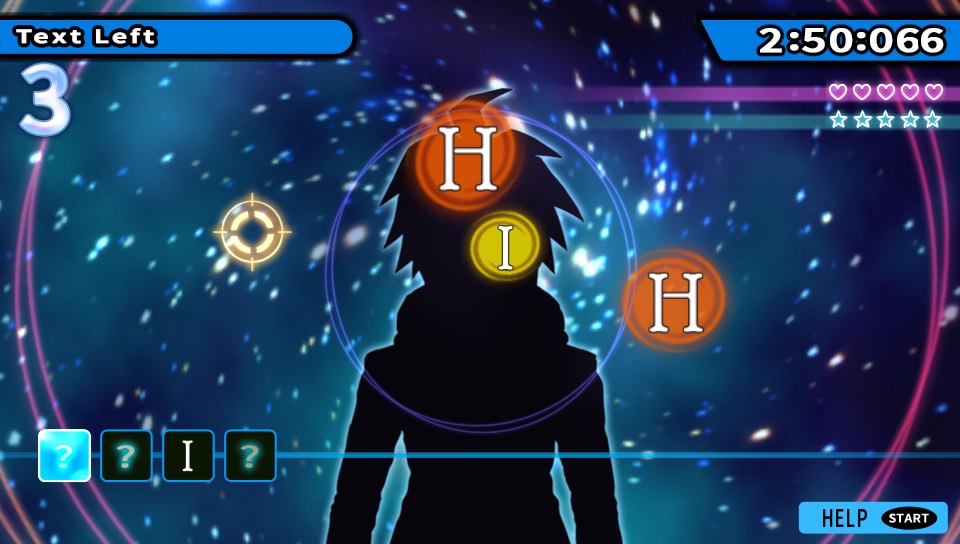
The trials themselves are a far cry from Ace Attorney territory. The majority of them revolve around a mechanic called "Non-Stop Debate" in which the characters continue speaking their lines whether or not you're ready to continue, and you have to shoot down "weak points" in their arguments with the "truth bullets" you gathered over the course of your investigation. On the default difficulty, for the majority of the game you'll only have to identify which statement to shoot down with a single truth bullet; on harder difficulty levels (and at certain, critical moments on normal difficulty) you'll also have to choose the correct truth bullets to refute the statements you think are false. This then gets even more complicated as the game progresses as people start shouting over the top of each other, represented by irrelevant "noise" statements floating across the screen and getting in the way of the things you actually want to shoot down.

This Hangman game has a lot more at stake than a stickman's life.

These arguments are supplemented by Hangman-like sequences in which you have to recall specific pieces of information by spelling them out, rhythm action sequences in which you struggle to make yourself heard over someone's constant objections and, at the end of each "case," a Trauma Team-style summing up of exactly what happened by assembling a comic strip depicting the events leading up to the murder, and what happened after that.

It's a fascinating game; perhaps not as "clever" as 999 and Virtue's Last Reward, but that's no bad thing — while 999 and Virtue's Last Reward specialise in bending your brain around complicated narratives with peculiar structures, Danganronpa's relatively straight line to the finish still manages to have plenty of surprises, twists and turns along the way, and has no qualms whatsoever about killing off its main cast with alarming rapidity.

In short, my review has hopefully already made this abundantly clear, but if you have a PlayStation Vita and the slightest interest in intriguing, compelling murder mysteries, you should abso-posilutely pick up a copy of Danganronpa this week. No, I don't care if you're already playing Bravely Default. No, I don't care if you're getting stuck into Lightning Returns. Danganronpa is fantastic, and I don't mind admitting that I want as many people as possible to play it so we continue to see more and more games like this in the West.

1462: Filthy Lucre

lucreThere are many things that bug me about free-to-play games — specifically, those of the mobile and Facebook variety — but one of my biggest bugbears is the ability to purchase in-game currency. Frustratingly, this is an option that has transcended its free-to-play origins and is now starting to infest other types of game — including full-price retail games on the new consoles.
The ability to purchase currency is usually touted as a time-saving feature that eliminates the need for grinding. In some cases, it's simply that — an option. In others, it becomes abundantly clear before very long that the game's economy has been balanced on the assumption that most players probably will purchase in-game currency at some point, and consequently those who just want to play the game without having to get their credit card out every ten minutes can just go fuck themselves.

Now, in many ways, choice is a good thing. Not everyone has time to spend earning virtual money in games to achieve somethingorother. But does that mean they should have the option to spend real money in order to get ahead in the game? I'm not so sure.

You see, the second you put that option there, it devalues the efforts of those willing to put in the work to earn the money themselves. Why would you bother working for something if you can just throw money at it, effectively paying to not play the game?

The reason I bring this up is that my Free Company in Final Fantasy XIV has started saving up for a medium-sized plot of land on which to build a house for guild activities. We already have a small plot, but the shed-like house that fits on the small plots is already full to bursting with the furniture that the crafters have been churning out. Consequently, active members of the guild have been working together to earn money in order to purchase one of the larger plots, which allows you to build significantly larger houses.

This evening, we spent a couple of hours in a "spiritbonding party" — we grouped up together, equipped with items of jewelry that weren't part of our normal equipment loadout, and then proceeded to battle hordes of monsters until said pieces of jewelry were "spiritbonded" to us — a mechanic in Final Fantasy XIV that means you can then break the item of equipment down and turn it into "materia". Materia are items that can be socketed into pieces of equipment for various stat bonuses, and certain among them — particularly the better ones — sell for pretty high prices due to their usefulness in completing the high-level "A Relic Reborn" quest that culminates in a character acquiring their almost-best weapon.

As you may have surmised already, someone in the guild had the bright idea of mass-producing a bunch of these jewelry items, taking them to an area with enemies that respawned quickly, and then indulging in some mass Water Sprite genocide until we had all Spiritbonded with the items enough to turn them into materia. We could then sell the resulting materia and plough some (or all, depending on how generous we were feeling) of the profits into our fundraising efforts for the new house.

The point is, while the act of going through the spiritbonding process is rather tedious — it largely involves killing lots of things that you're way overpowered for — it was something that brought a lot of us together for an enjoyable time. The experience was meaningful, worthwhile and even fun for the fact we were working together on it, even though the actual things we were doing were pretty mindless. And, when each of us successfully and finally spiritbonded with the items we had equipped, there was a feeling of achievement; a feeling of achievement that amplified considerably when the little message popped up on screen some time later saying that the materia we created had sold for a respectable amount of money; a feeling of achievement that amplified even more when voluntarily donating some of our own in-game currency to the guild coffers.

Everything I've described above would have been utterly meaningless had the option to purchase currency been in there. Attaining the medium-sized house would have felt like a hollow victory, as we wouldn't have done it through our skill and dedication to the game — we'd have done it through how deep our collective pockets are. That carries no meaning in the game world; one of the nicest things about Final Fantasy XIV's land of Eorzea is that the real world never intrudes. There's no "cash shop", the game never once asks you for your credit card details — you set up your subscription before you start playing — and once you're in the virtual world, everything you do relates to the virtual world somehow. It's a highly immersive experience, and one of the best things about the game.

Drop in a "Buy Gil" button and that goes out of the window. When working hard to attain something challenging in the game that costs a lot of money, the thought would always be there: "I wonder if I should just pay up and get it instead." And sure, it's certainly nice in the short term to be able to buy your way to victory — but in the long run, it's much more satisfying to know that everything you've achieved is because you've put the effort in.

A bit like life, you know.

1458: Wonderful!

tw101I was fortunate enough to catch a pricing error on Nintendo's Web store yesterday — I didn't even know they had a Web store until yesterday, incidentally — that enabled me to score copies of The Wonderful 101 and Pikmin 3 for Wii U for just £8.95 each. It was touch-and-go as to whether Nintendo would honour these low prices, as it is any time a pricing error such as this comes up, but fortunately they honoured my purchase and I'm now the proud owner of digital copies of both of the aforementioned games. (I'd normally prefer physical, but my Wii U isn't exactly heaving with other downloads, so I can live with these two being boxless.)
You may ask why I didn't already own these two games, given that many Wii U owners regard one, the other or both as among the best games on the console. Well, the simple answer is that I wasn't sure if I'd like either of them — and certainly not enough to drop £50 on them. £8.95, while a relatively high price compared to what you can pick up in a Steam sale, is well within "impulse purchase" territory, however, and I was happy to give them both a go for that price.

I tried The Wonderful 101 tonight. I have enjoyed the Platinum games I've played to date — particularly Bayonetta, which in retrospect is probably one of my favourite games of the console generation just gone — but had heard that this was somewhat challenging and tough to get to grips with. As such, I approached it with a certain degree of trepidation.

It is somewhat challenging and tough to get to grips with, but much like Bayonetta rewarded you spending some time with it and getting to know how everything worked, so too does this game — and it doesn't take all that long to get your head around what's going on enough to improve your end-level ranking by a considerable degree.

For the uninitiated, The Wonderful 101 is a bizarre game in which you play a small army of superheroes as they attempt to fend off an alien invasion. The entire band moves as a group following whichever character is currently marked as the "leader", and various button presses can cause their formation to expand or contract.

The key mechanic in combat is making use of the "Wonder Line", which allows you to do various things with your small army of minions. By drawing shapes on the touchscreen of the Wii U GamePad or twiddling the right stick in various ways, you can perform "Unite" attacks — drawing a circle causes a number of the party to form a giant fist, for example, while drawing a straight line allows them to form a sword. You can also stretch your line of heroes over gaps and up walls to make bridges and ladders, too, and in order to snag some of the levels' secrets it's entirely necessary to do this.

The game is obviously very different to Bayonetta, which focused on a single character with a diverse variety of skills, but it also has a number of things in common with its spiritual precursor. For starters, all the enemies have distinctive "tells" to show when they're about to attack, and by learning these you'll know when to dodge and when to make use of the hilarious "Unite Guts" move, in which the entire party morphs into a giant pudding and shields against an attack. In Bayonetta, dodging attacks was key to the experience as it allowed you to trigger "Witch Time" in which time slowed down and you could send your score into orbit; in The Wonderful 101 it's a much more practical affair — it simply prevents you from taking damage, though in some cases, successfully blocking can rebound projectiles back at enemies or flip armoured vehicles onto their rooves.

I've only played two levels so far — both of them twice — but having got a handle on how everything works relatively quickly I now feel I "get" what the game is doing and look forward to trying more. I don't know if I'll end up obsessing over it quite as much as I did with Bayonetta when that first came out, but it's certainly got a lot of the same ingredients — and if you're a Wii U owner who has enjoyed Platinum's other work, I'd say you probably can't go all that far wrong with this.

1443: Death to the Chimera

It's another Final Fantasy XIV post, I'm afraid, but I feel compelled to share the experience I just had, as I think it's something that's going to stick with me for some time.

A bit of context, first, for those who don't play. My character is primarily a Black Mage, which is part of the group known as "DPS" (damage per second" or damage dealers. I don't have a lot of health, but my spells do hit hard and do a considerable amount of damage. When playing as a member of a party, I rely on the "tank" character to keep the enemies' attention off me, and occasionally the assistance of a healer to keep my health topped up if I do happen to get hit by something. For the most part, my responsibility is to avoid getting hit as much as possible, and to simultaneously ensure that I'm doing as much damage as possible.

I'm at level 50 on my Black Mage, which means I'm no longer gaining experience and have instead been gathering better and better equipment. My average item level is now 71, which is significantly stronger than where you are when you first hit 50 — though the effectiveness of all said equipment is scaled down accordingly if you happen to run a dungeon that's lower than level 50.

Which, as it happens, is exactly what I was doing earlier. I decided to run the dungeon Cutter's Cry, because I was well behind on my "Hunting Log" for the Immortal Flames Grand Company, and wanted to actually polish it off and make some progress. (In the game, your Hunting Log is a checklist of specific monsters to defeat, with rewards on offer for completing items on the list, and larger rewards on offer for completing a complete difficulty rank. The Grand Company is an organisation tied to one of the three main city-states in the game, and is effectively where your character pledges their allegiance to.)

Our run through Cutter's Cry didn't go as smoothly as it could have done. Our tank — the guy who stands at the front and gets hit, as well as the guy who generally leads jaunts through dungeons — wasn't especially skilled, and was having trouble maintaining the attention of monsters that really wanted to chomp on our healer's testicles. I spent a lot of the dungeon casting my Sleep spell to take a bit of the heat off the party and allow us to concentrate on a single monster at a time, and it overall seemed to work pretty well, with a few minor mishaps along the way.

We eventually reached the dungeon's boss monster Chimera, albeit with a different healer to the one we started with, who disconnected. Our first attempt failed miserably in a matter of seconds. The second, however, is where things got interesting and exciting.

It was going reasonably well for a while. We were doing decent damage to the Chimera, and the tank was successfully maintaining the attention of the enemy, allowing the party's Bard and I to pelt it from a distance with arrows and fireballs respectively.

Then something went horribly wrong. The tank didn't quite move far enough to get out of the path of one of the Chimera's special attacks, and hit the deck. The Bard followed shortly afterwards, leaving just me and the party's healer to deal with a by now very pissed off Chimera.

I thought this would almost inevitably be the end, but on a slightly selfish whim I decided to see what I could do. We'd already whittled the beast's health down to an amount that certainly looked doable, so I started alternating running away from it and flinging a few spells at it whenever it stopped to try and do one of its special attacks. The healer cottoned on quickly to what I was doing, and supported my efforts while the tank and Bard lay on the floor — the fight's too hectic to make raising party members practical, particularly if the tank's down.

The Chimera's health bar continued to deplete, and I somehow remained standing, successfully dodging each and every one of his special attacks and only occasionally taking damage from an occasional claw swipe. Meanwhile, I'd continue to electrocute him with my Thunder spells — which causes him to continually take small amounts of damage over a short period of time — and pelt him with fireballs whenever I had enough distance between us to make casting practical and safe-ish.

Finally, his health was into the "holy shit, are we actually going to pull this off?" territory — and conveniently, the party's Limit Break bar was fully charged at this point. (The Limit Break bar builds up gradually through combat, and any one party member can trigger it once it's charged high enough for a powerful special ability according to what class they are — in the case of Black Mage, it summons, as you might expect, a devastatingly destructive spell.)

"Limit Break!" called the party members. I was skeptical as to whether or not it would do enough damage, but I put some distance between the Chimera and I, waited for the perfect moment and then began casting.

The screen exploded in fire and my speakers erupted with the sounds of falling meteorites… and then there was a deafening screech as the beast collapsed to the floor and dissipated into a cloud of aether. The Chimera was down!

"Holy shit," said the fallen Bard afterwards as the healer helped him to his feet. "Good job."

I don't often like to toot my own horn, but in this case? Yeah, I have to agree.

1439: Titanic

Been making good progress with Final Fantasy XIV over the last few days and once again I'm pleasantly surprised by how much I've taken to the multiplayer-centric endgame content.

Tonight's job — the last-but-one step in the quest to acquire the almost-but-not-quite-ultimate weapon for my level 50 Black Mage class — was to fell Titan in his "Hard Mode" fight, a notoriously difficult boss battle that I had a considerable degree of uneasiness about going into — and which I was terrified of the prospect of jumping into with strangers.

As it happens, the fight wasn't all that scary if you know what you're doing — much like every other fight in the game. You'd think I'd have learned that by now.

Titan, like Ifrit and Garuda before him, is one of the "Primals" — major bosses that crop up over the course of Final Fantasy XIV's main story, and a good opportunity to test your party's skills against one very strong opponent without having to run through a long dungeon first. The battles against them — known as "trials" in game parlance — tend to be unfold in deceptively simple boss-fighting arenas, but the simplicity of the environment is to ensure there's nothing to distract you from the important thing: paying attention to what your opponent is doing.

Ifrit, Garuda and Titan all have abilities that are far beyond almost anything else you fight in the game, and a party that doesn't know what it's doing can wipe out very quickly if they're not careful. They're highly mobile fights that demand you recognise your opponent's attack patterns and know how to counter them — and how to avoid them. Titan in particular is highly dependent on the party being able to avoid a relentless string of devastating attacks — and the healers being able to deal with the few, less-damaging attacks that are unavoidable for the whole party.

Aside from Titan, I spent a bit of time playing with the Conjurer class earlier — this is the healing class that later becomes White Mage, but also has a few offensive skills, too. It's an interestingly distinctive class to play when compared to Black Mage, and a good demonstration of how Final Fantasy XIV makes even ostensibly similar classes play markedly differently from one another.

Black Mage and its predecessor Thaumaturgist involve highly destructive spells that cost large amounts of magic points to cast. The key mechanic to get your head around with Black Mage is the balance between "Umbral Ice" and "Astral Fire" — the former causes your ice-based spells to cost more to cast, but increases your magic points regeneration enormously, while the latter causes fire-based spells to cost more to cast and deal considerably more damage, and also stops all magic points regeneration. Essentially, Black Mages have a limitless pool of magic points that mean they can continue casting indefinitely, so long as they make the switch between Umbral Ice and Astral Fire at appropriate junctures — and, at higher levels, make good use of the MP-free, instant-cast spells that occasionally trigger.

White Mage and its predecessor Conjurer, meanwhile, are very different. Spells are considerably cheaper to cast, but there's no Umbral Ice mechanic to quickly regenerate magic points in a hurry — so you have to manage your spellcasting a little more carefully. The class also has an interesting "stance switch" option, allowing the white mage to swap their Intelligence (determines spell damage) and Mind (determines healing power) stats around, effectively making them either damage- or healing-focused at the touch of a button. And then, of course, there's the fact that white mages are mainly regarded as healers rather than damage dealers, and as such you have to be a lot more aware of people around you so you can heal them. The tradeoff for this, of course, is that people tend to like you because you can stop them from dying — and, once you reach a high enough level, you can even bring them back from the dead.

I jumped into one of the short party-based "Guildhests" earlier on to have a go at healing as part of a group with a relatively straightforward challenge. The party I was with was clearly very inexperienced — the fighter charged ahead without waiting for me to cast protection spells on him, and the damage-dealing mage seemed to take as much damage as he inflicted. I managed to keep everyone alive, though, and my reward from these random strangers whom I'll probably never see again was three "Player Commendations" — a new system introduced in the latest patch which allows players to show their appreciation for random teammates they were matched up with through the Duty Finder system. It's a very nice, friendly addition to the game, and I can't deny feeling a pleasantly warm and fuzzy feeling inside after a successful dungeon run when I see that little "You have received a player commendation" message in my chat window. Even better when there's more than one.

Anyway. With Titan down, the only thing left for me to do to get my Black Mage relic weapon is to collect 400 more Allagan Tomestones of Philosophy by running dungeons — should be easy enough. Once I've done that, I'll be well on the way to being appropriately geared for the Binding Coil of Bahamut, the most difficult dungeon in the game… or I can just start working on one of the other classes, with the eventual goal of getting their Relic weapons, too.

This post was probably indecipherable to those of you who don't play Final Fantasy XIV but eh. Whatever. Tomorrow I'll write about kittens or something.

1438: Mario Time!

Finally picked up Super Mario 3D World today with some of our Christmas money. (Andie spent all hers on Lego; I still have some left, which I'm probably going to spend on board games.)

What do you know? It's fantastic, and to be honest I feel a bit sorry for anyone playing through the PlayStation 4 or Xbox One's weak launch lineup in preference to the variety of really great games available for Wii U this Christmas time, with Super Mario 3D World certainly being a candidate for strongest of a strong bunch.

I've played through two "worlds" so far, and already it's shown considerably more invention and creativity than almost any other game I've played in recent memory. Nintendo just gets "fun". The Mario devs know what would be enjoyable and memorable to play, and they implement it in such a way that it manages to be consistently surprising and delightful even as you continue to progress through the levels. Rarely does it become predictable, and rarely does it get so hung up on a single trick that it becomes stale or boring; often, you'll come across an enemy or trap that shows up maybe once or twice and is then never seen again — a far cry from some other games that repeatedly fling the same generic tricks and traps at you over the course of a lengthy adventure.

The thing I particularly like about Super Mario 3D World and its predecessor Super Mario 3D Land for the 3DS is how intuitive it is. You'll very rarely be given an explicit tutorial or an insultingly simple level to teach you how things work; rather, you'll immediately be given a new item and it be implemented in such a manner that you can't help but figure out how it works and what it's for straight away. Beautiful game design.

Take the very first level: almost right off the bat, you're given Super Mario 3D World's new power-up, the cat suit. You're not explicitly told how the cat suit works — how you can run up the walls, how you can "pounce" while you're in the air — but the way the first level is designed encourages you to try these things out for yourself. You'll naturally discover how the mechanics work, and it's always pleasing and delightful to do so. The first time I found that wearing the cat suit allowed Mario and friends to climb up the flagpole at the end of the level for an easy gold flag put a genuine smile on my face.

The presentation is immaculate, too. A rock-solid 60fps; some well-designed, clear visuals; a minimal but informative interface; and some really, really great music performed on real instruments — Super Mario 3D World is without a doubt one of the most polished Mario games I've seen in recent memory, though I understand the Super Mario Galaxy games — which I'm yet to play — probably give it a run for its money, albeit in standard definition.

I'm looking forward to playing more, but I flattened the GamePad battery playing earlier. Perhaps I should invest in one of those new high-capacity batteries!

1435: Something to Try This Steam Sale

"Lock up your wallets," the tired old joke goes, "it's Steam sale time." And indeed, the Steam holiday sale is a great opportunity to pick up tons of games for not very much money.

The trouble is, the Steam sale tends to encourage people to pick up as many games as possible, then never get around to playing them. In previous Steam sales, I've probably gathered sufficient games to keep me busy for literally years now — to such a degree that it's now quite hard to find something new I might want to buy when a new sale comes around — and yet have still only barely scratched the surface of the games I own.

A lesser-appreciated thing that you can do around Steam Sale time, though, is try out something that you might not have given a chance normally. Perhaps it's in a genre you don't normally like, or you've been put off by mixed or middling reviews, or you're simply not sure if you'll enjoy it from what other people have told you about it.

The Steam sale is the perfect time to take a chance on these games, though, and see how well you get on with them. If you like them, great! Keep playing! And if you don't… well, you've only spent a few quid on them at most — at least if you've obeyed the Unwritten Law of Steam Sales, which is to not buy anything unless it sees a larger-than-50% discount — preferably 75% off.

One might argue that demos fulfil much the same function as what I'm proposing here, but demos don't often give you the full picture of how a game plays in the long term — often, they provide a simple slice of gameplay divorced from its surrounding context, which in many cases doesn't do it any favours, particularly if the game itself is a complex one. Grabbing a copy of a game you've been on the fence about for a few quid, meanwhile, allows you to jump into the experience with beginner's mind, try it out for yourself and give it a fair shot without having to worry about it "expiring" or anything just as it starts getting interesting.

I've got my eye on a few things I might be interested in trying this Steam sale, and they're all titles I probably wouldn't buy under normal circumstances.

First up, I grabbed XCOM the other day, since everyone says it's great. I don't know if or when I'll get around to playing it, but it's nice to have the option.

Second, I'm interested in taking a look at WarGame: AirLand Battle after a friend of mine expressed some interest in potentially playing it multiplayer sometime. Military war games aren't usually my thing, but that may be just because I haven't tried many of them in the past. AirLand Battle sounds like it does some interesting things that I quite like the sound of, but I'm worried I'll be embarrassingly shit at it and never be able to get anywhere.

Thirdly, I have the original version of Sins of a Solar Empire in physical format and quite liked it, but didn't get super-into it. The latest version Rebellion is in the Steam sale, and I'm umming and ahhing over giving it another shot — particularly since, again, it's something I might be able to play with friends.

Finally, Divinity: Dragon Commander looks like an enjoyable time, featuring, as it does, jetpack-wearing dragons, political intrigue, RPG elements atop a strategy game. I saw a very early version of this back at Gamescom in 2010 and liked it a lot, so I'd be interested in giving the full version a go.

If the price is right on any of these over the course of the Steam sale — they're all a little high at the time of writing — then I'll more than happily give them a go. Who knows? I might find a new favourite among them. Why don't you try doing the same?

1434: Free Company

The Internet is by turns a strange and wonderful place, filled with all manner of people from fair to foul. Wander inadvertently into the wrong corner of it and you'll find yourself surrounded by some of the very worst people in the world; somewhere else and you'll find people who will go on to become lifelong friends.

Online gaming is somewhat troublesome in this regard at times, particularly for those of us who struggle somewhat in social situations. The prospect of talking to strangers in an online game is, to me, pretty much as frightening as the prospect of walking up to a random stranger in a bar — particularly if voice chat is involved. With text chat, it's somewhat easier since you have more time to consider your responses, but the inability to express your tone of voice can sometimes lead to misunderstandings, and it's still nerve-wracking to, say, ask a favour of someone.

This is something that's held me back a little from fully enjoying some online games, because sooner or later you're going to have to play with people you don't know personally. Your friends won't always be available to play with you, or you might need more help than your friendship groups can provide, or you might be playing a game mode where you're organised into teams. Whatever the reason, it can be anxiety-inducing.

In the case of MMOs, you have to put your virtual life in the hands of strangers quite often, whether it's for running a dungeon, beating a boss or getting a piece of equipment crafted. It's easy to forget that a lot of people playing these games are in a similar situation where they need help from others to progress, and thus it's in their interests to be nice to one another.

There are, of course, exceptions. The team-based e-sports games Dota 2 and League of Legends have notoriously "toxic" (the word that's most commonly bandied about) communities that are somewhat unforgiving of newcomers attempting to learn the game "in the wild," as it were. MMOs, too, have elitist players who are quick to complain at those whom they do not think are playing the game "properly", and players who are impatient with newcomers just trying to have fun and learn how to get through some of the tougher dungeons and fights.

I get it. It's frustrating for these people, who want to play in a particular way, to find themselves having to change their play style to support someone who's perhaps less familiar with a particular challenge. But there's really no excuse for rudeness.

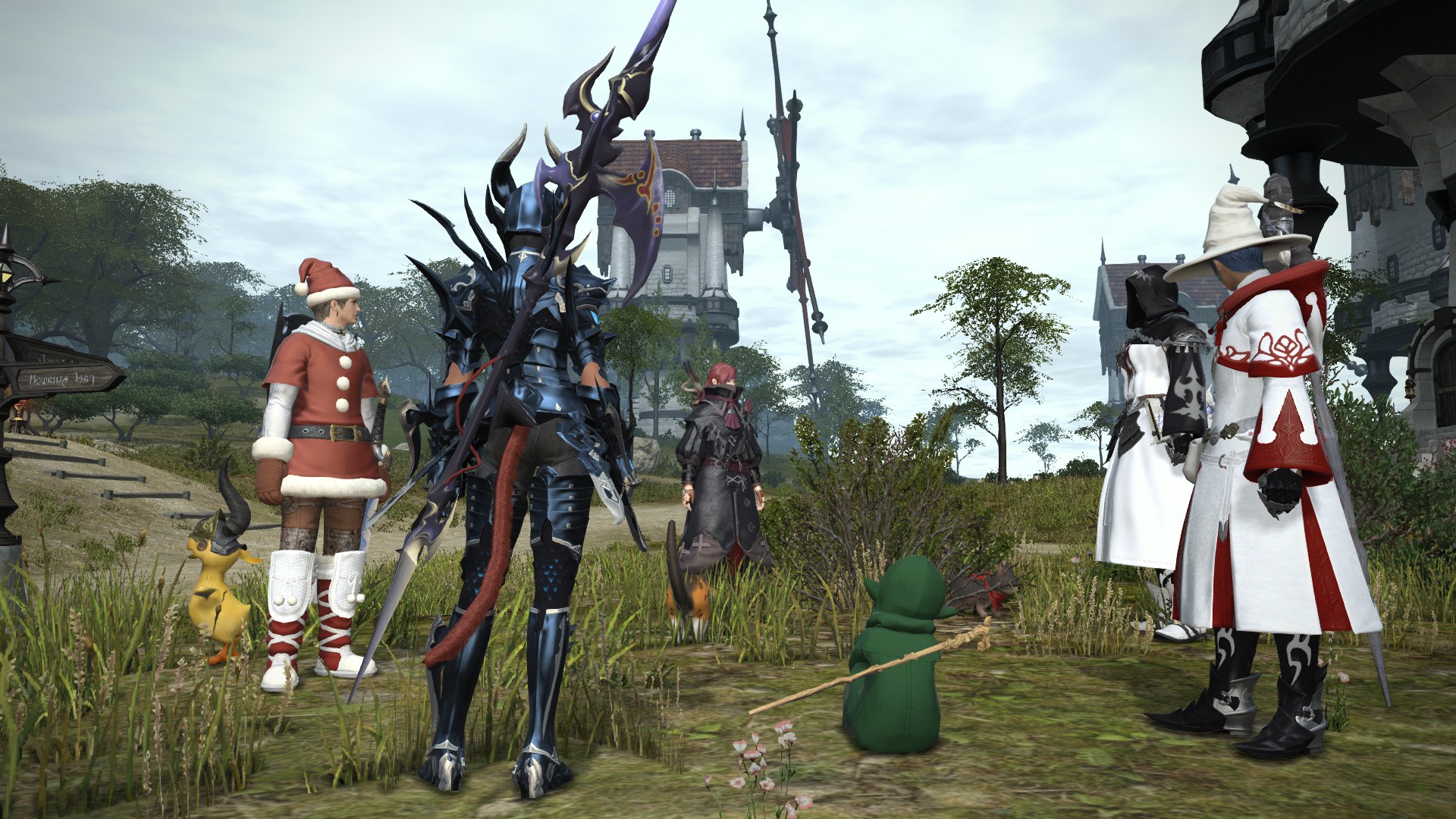
That's me in the big black coat in the background.

I've been extremely lucky with my time in Final Fantasy XIV so far. While most of my runs through dungeons and boss fights have been with friends, the few times I've dared to jump into the Duty Finder alone and be grouped up with strangers have been very pleasant surprises. Pick-up groups (or PUGs, as they're sometimes called) have a rather poor reputation in most MMOs, and indeed in Final Fantasy XIV's case most people seem to have at least one tragically amusing Duty Finder story where they played with someone who was just a colossal dickhead. I'm glad to have escaped that fate to date — but it also makes me extremely nervous about "going solo", as it were: in other words, braving things like the new Duty Roulette system, which picks a random dungeon for you and three other random players to play in exchange for some very generous rewards, and indeed other group-based content I need to complete in order to proceed further in the game.

Which brings me on to my main point: how grateful I am to have a group of regular players whom I enjoy playing with, and whom I like. I'm a member of the "Giant Bomb" Free Company after being invited by someone I know through some combination of 1up, Twitter, The Squadron of Shame and possibly some other places — I forget the exact details — and am very happy that what I originally hoped would transpire when I started playing Final Fantasy XIV — that I'd make some friends with whom I felt comfortable playing — has indeed come to pass.

The interesting thing is that I don't really know anything about the people I'm playing with, so they're basically still "strangers" to me — just strangers I'm somewhat more familiar with. I'm not an active member of the community on the Giant Bomb website, so outside of my friend who originally invited me in the first place, I can't relate any of these in-game names to real names or even usernames.

It sort of doesn't matter, though; when we're online in FFXIV, we're there to play FFXIV. There's the occasional mention of real-life things — usually when someone has to go and make dinner, or go out, or whatever — but for the most part, conversation in the game is about the game. We're all enthusiastic and passionate about the game, and we all enjoy talking about it, whether that's sharing our thoughts on the new content in the latest patch, sharing strategies for clearing dungeons, or collaborating on group projects such as the Free Company house and the various weird and wonderful objects therein.

I'm really very grateful to these people for making my experience with the game so enjoyable and welcoming, and the pleasant feeling of friendship and camaraderie I have with these folks is the main thing that keeps me coming back to the game time after time. Final Fantasy XIV is a great game in its own right, but when played with the right people, it becomes even more enjoyable — even for an old hermit like me.