1831: Second Fantasy

When I've had a free moment to sit down with the Vita, I've been continuing my Final Fantasy marathon with the second game, the imaginatively titled Final Fantasy II.

Final Fantasy II came to Western shores considerably after its original release; it wasn't until the PlayStation release of Final Fantasy Origins that we'd get to play it in English for the first time, but, like its predecessor, it's subsequently been enhanced and ported to a variety of different platforms. I've been playing the PSP version via the Vita, which, again like its predecessor, incorporates a bunch of extra content, though I'm yet to encounter any of it aside from the entrance to an ominous-sounding (and huge-looking) optional dungeon.

Final Fantasy II is thought of in somewhat mixed terms by many people, to put it politely. It's absolutely hated by others, and those who like it are in something of a minority. I'm one of them, though; it's an interesting game, and while its mechanics don't quite work as well as they could, it was a bold experiment whose systems we can still see at work today in games like The Elder Scrolls and its ilk.

Final Fantasy II's unique selling point was that it had no experience points and no levels. Instead, you levelled up individual skills and stats by making use of them. Want to get stronger? Hit things. Want to get better at casting spells? Cast more spells. Want to be able to take more damage? Take some damage. It's quite logical when you think about it, though it does tend to encourage a certain degree of gaming the system, and there's a number of glaring flaws in it, too, such as the fact that characters in the back row of your party (which one of them is in by default at the start of the game) will never take any damage except from things that affect the whole party, and thus their HP counts will be left trailing considerably behind the rest of the group. The game is also somewhat notorious for seemingly encouraging players to attack their own party members in the name of boosting their HP quickly.

The PSP version maintains this peculiar levelling system, but so far I haven't really encountered a major issue with it, and like the PSP version of Final Fantasy I, the pacing feels like it may have been tweaked slightly, though this is only my gut feeling rather than being based on any research. But it certainly feels like the game's been made to push you onwards rather than force you to grind; fight a number of battles, and your characters' HP totals will increase naturally, for example, even if they haven't taken any damage recently. You still need to make use of appropriate actions to build up your stats, but there's a certain degree of natural progression that comes from just playing the game.

The interesting thing about Final Fantasy II's system is that it essentially allows you to build your own characters — something that wasn't really possible in its predecessor aside from choosing which three of the four available spells for each magic level your White and Black Mages got to choose from — by naturally moulding them to fit your play style. Because of the flexibility of the system, this also means that you can create unstoppable, multi-talented characters who are strong, tough and capable of flinging devastating magic spells around when required. (In fact, the game's ultimate magic requires that your character has advanced in as many different areas as possible in order to power itself up.) In practice, though, you'll probably tend to find that the characters naturally evolve according to how you use them.

In my party, for example, I have protagonist Firion as a fighter/white mage type character, or probably a Paladin in Final Fantasy terms. He is good at fighting with swords and using shields, but is also able to cast White Magic spells such as Cure, Life and Protect. Several of these spells start off being next to useless — Protect often "misses", for example — so you need to get him to "practice" them in the field to make them worthwhile additions to your arsenal. Taking the time to do that is eminently worth it, however.

The other interesting thing about Final Fantasy II that is unrelated to its unusual progression system is the fact that it's so story-heavy compared to its predecessor. Final Fantasy I was essentially a case of "Bad shit is happening in the world! Go explore and stop it!" and little else; Final Fantasy II, meanwhile, has named characters, events, cutscenes and a genuinely interesting ongoing plot. It's not what you might expect from your typical NES-era game, in other words; and with its new coat of paint in its more recent PlayStation and PSP incarnations, it actually stands up pretty well as a modern RPG.

I'm enjoying it, in other words, but I still have a long way to go yet!

1829: Life with the Hunies

I took a gamble a while back and Kickstarted a game that looked potentially interesting. Dubbed HuniePop, it promised a Western take on dating sims combined with an anime-inspired aesthetic, and the team behind it appeared to be taking it seriously as a project. I tossed them my money and watched the development with interest as the team provided regular updates on what was going on and how development was going.

HuniePop finally released this week, and I've been playing it a bit. And, although it's the sort of thing that will make the social justice dickparade froth at the mouth (and indeed already has been, from what I've heard) it is, in fact, a whole lot of fun.

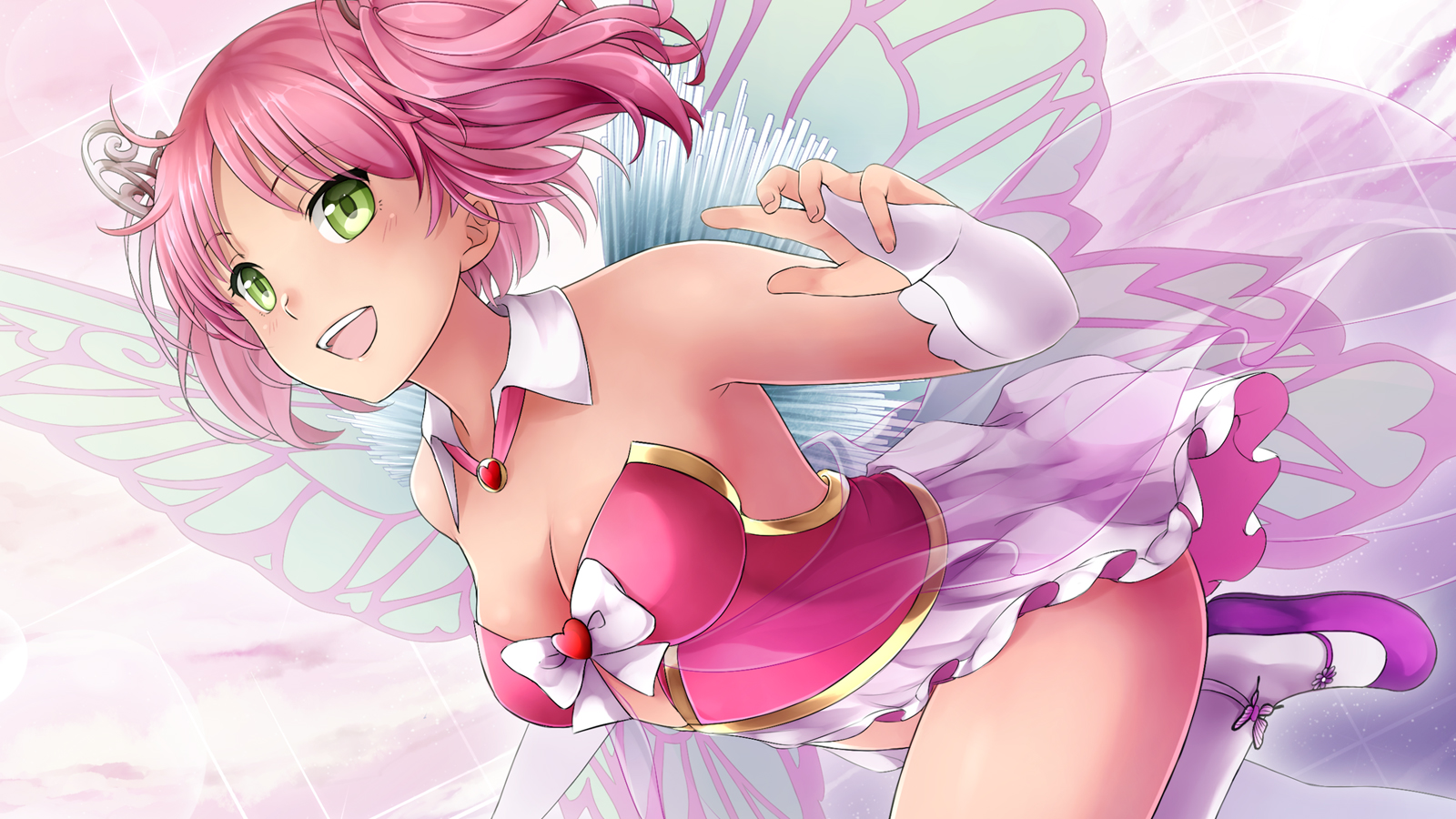
This is Kyu, the magic fairy who's going to make you better at talking to girls.

Unlike many "dating sims", which typically go down the visual novel route, HuniePop is a combination of mechanics from Dead or Alive Xtreme and Puzzle and Dragons. In other words, you move from place to place, buy gifts for characters and interact with them in order to build up your relationship values and other stats, then play an enjoyable little match-3 puzzle game to determine how successful your date with the girl you've been interacting with was.

It's a simple idea, but it's handled quite nicely. There's not a lot of ongoing plot throughout the game, but the girls have all been given their own distinct personalities, and are all introduced through a short, amusing scene where they interact with one of the other cast members. The "Western" angle comes in when these distinctly anime-esque characters open their mouths: rather than adopting the usual anime tropes seen in this sort of thing (tsundere, imouto, kuudere and so forth) the characters are… well, very Western. And very human. And not necessarily immediately likeable.

Take the character Audrey as an example. Audrey is quickly set up to be the Queen Bitch of the cast when you're introduced to her by witnessing her yelling at her hairdresser (also one of the game's dateable girls) with a string of obscenities and frankly rather unreasonable behaviour. Then once you start chatting to her she continually puts you down as some sort of colossal douchebag that won't get out of her way (largely because, well, you're pestering her with inane questions, so it's sort of justified) and threatens to "punch you in the dick" any time she gets too hungry to even think about doing anything else.

HuniePop's characterisation gives its characters some very human, relatable flaws without exaggerating too much.
HuniePop's writing gives its characters some very human, relatable flaws without exaggerating too much.

The other girls are a little more approachable than the rather abrasive Audrey, but they each have their own interesting quirks, and their personality traits affect the puzzle part of the game to a degree, too. The coloured tiles you're matching in the puzzle sequences represent different character traits such as sexuality, flirtatiousness, talent and romance, and each girl responds particularly well to one and not particularly well to another, with bonuses to matches made in those colours you've spent some "Hunie" (acquired by talking to the girls and saying the "right" things) building up the relevant stats for. Later "dates" with the girls — the ones that have the potential to lead to naughty picture shenanigans — have very difficult target scores to obtain, so you'll have to take full advantage of these systems to be successful.

HuniePop is charming, cheeky, lewd, rude and a whole lot of fun. It doesn't give a fuck what people think of it, and I think that's great — although in a pleasing nod to inclusiveness, you can play the game with your character as either male or female, with the girls becoming homosexual if you choose the latter option. While it may not have the narrative depth or character development of a more visual novel-style approach to the dating game, it's a solid and enjoyable game in its own right, and I'm glad I Kickstarted it. I can see it providing a good few hours of entertainment yet.

1828: #FFXIV Before the Fall: Some Initial Impressions

There are spoilers for Final Fantasy XIV's latest patch ahead. You have been warned!

Before the Fall released today, opening the final chapter on Final Fantasy XIV's 2.0 storyline and preparing to usher in the age of Heavensward. For those who have been following the game, you'll know that major version updates such as this one — updates that come every three months like clockwork — tend to include a whole host of exciting new things to do, and this one is certainly no exception. In fact, I think I'd go as far as to say it is the absolute best update Final Fantasy XIV has received since its (re)launch in August of 2013.

I haven't been through everything yet, but here are a few thoughts on what I have taken on so far.

The Wanderer's Palace (Hard)

Many FFXIV players have fond (and not-so-fond) memories of The Wanderer's Palace, since it's the first level 50 dungeon you get to run that isn't story-related. Back in the 2.0 days, before Roulettes and Challenges and all manner of other weekly bonuses, speedrunning Wanderer's Palace (or WP, in FFXIV player parlance) was a popular pastime as it was a quick and efficient means of earning the "Tomestones" used to purchase gear post-level 50. It was also noteworthy as being a dungeon that featured the iconic recurring Final Fantasy enemies the Tonberries — a popular creature owing to their extreme cuteness and propensity to inflict horrible, horrible violence on people with kitchen knives.

In the original WP, the Tonberries were the bad guys. You fought a bunch as you progressed through the dungeon, were pushed ever onwards by giant Tonberry Stalkers that you couldn't kill, and eventually killed the Tonberry King at the end of the dungeon. WP's Hard incarnation, meanwhile, sees the Tonberries freed of the curse brought about by their King's rancour, and in need of help from an invading force of Mamool Ja beastmen.

With Tonberries being such a popular Final Fantasy mainstay, naturally players jump at the opportunity to "Save the Tonberries!" and thus I can see WP Hard being a favourite dungeon of many people — particularly as it's very well designed indeed. Its encounters are well-paced and interesting, and the dungeon does an excellent job of introducing a variety of mechanics throughout that are eventually all used in its final boss fight. It's a satisfying dungeon, and its "victory" cutscene is one of the most grin-inducing things in the entire game, so be sure not to skip it!

Amdapor Keep (Hard)

Poor old Amdapor Keep has had a rough life. Originally the toughest 4-player dungeon in the entire game at FFXIV's 2.0 release, it was subsequently made considerably easier until now, with most dedicated players outgearing it by a considerable margin, it is but a shadow of its former self.

Which, of course, is where Amdapor Keep (AK) Hard comes in. Because it's hard.

I must confess that having run it twice today I still don't really know how the first boss works, but I haven't had any trouble clearing — perhaps after a wipe or two if the party is new. It's cool to see the dungeon running with its creepy theme and a "headless horseman" boss, though; it looks great.

The second boss was a highlight for me, particularly as the first time I ran it my friend was bellowing "Whooo! BOOGYMAN!" in my ear. Because the second boss is indeed the Boogyman, and he enjoys hiding in the shadows, only to be revealed by a pulse of light from an enterprising (and irradiated) adventurer. "What you can't see cannot hurt you," he taunts, shortly before he hurts you very badly indeed.

The best thing about the dungeon, though, is the "gauntlet" before the final boss. Trapped in a room with fiery walls and four Demon Walls closing in on you, you're challenged to take down an intense few waves of enemies before you get squished between our demonic friends. It's exciting, and every time I've done it so far it's been thrillingly close to complete failure when we pulled it off — though I'm sure it will get easier with time (and gear).

The final boss, whom I now can't call anything but "Firedad" after a friend misread his name earlier, is a distinctly Kefka-esque entity with some nasty attacks. It's an extremely well-designed, challenging but enjoyable encounter, and a fitting finale to a difficult but satisfying dungeon. Good stuff.

The Keeper of the Lake

The main "story dungeon" for Before the Fall is essentially a lightweight Praetorium, complete with overdramatic music and tons of Imperials to fight. It's an extremely attractive dungeon with a variety of different landscapes to enjoy as you climb up its towering structure, but the real highlight is the final boss encounter against Midgardsormr, a giant and rather terrifying dragon who is so big you can only fight his head… and his two smaller dragony friends that wake up over the course of the fight.

The encounter is a good one because there's lots to do. There are many different things to dodge, and it keeps you on the move throughout. It's no "tank and spank" encounter, in other words, and while not particularly mechanically complex, it's a real challenge.

In fact, it's a good example of what appears to be a recurring theme for this patch: challenge. In previous patches, people were well overgeared for the dungeons the moment they were released, but this time around even those who are sporting item level 120-130 gear are being given a run for their money with some tough encounters. I'm pleased to see this; one of the most common criticisms levelled at FFXIV is that it's too easy — despite having one of the most notoriously challenging endgame raids in the entire MMORPG genre — and these dungeons more than make up for this.

Speaking of which…

The Chrysalis

The "secret" Trial that was teased prior to release is a fight against an Ascian, and unlike the pathetic dickslapping you give Lahabrea at the end of Praetorium, this one actually puts up one hell of a fight.

It's mechanically fairly simple, as the Trials go, but it's a challenge to coordinate, since the damage comes thick and fast and the healers need to keep on their toes to keep both themselves and the tanks standing, particularly once our Ascian friend starts casting Quake III to damage everyone.

One of the most enjoyable parts of the fight comes where the boss slows down time by sucking you into an aetherial rift, and you're pulled into an inverted-colours landscape where all your buffs and debuffs last ten times longer than they would normally. And yes, this includes things like Paladin's invincibility buff Hallowed Ground, which literally makes you invincible for this entire phase if you pop it just before getting sucked in.

Again, like Keeper of the Lake, The Chrysalis is a challenging fight that keeps players on their toes, unlike a number of the earlier story encounters. (Leviathan in particular springs to mind; it's all but impossible to fail that Trial unless you are a terrible, terrible player.)

World of Darkness

The main event for many people in 2.5 is the grand finale to the Crystal Tower side story, a sprawling homage to Final Fantasy III in which three parties of eight players each (making a total of 24 players, maths fans) journey through the Labyrinth of the Ancients to the base of Syrcus Tower, climb Syrcus Tower and eventually leap through a tear in reality to pay a visit to the World of Darkness.

The previous two parts of Crystal Tower have been enjoyable raids designed to be completable by casual players. They demand significantly less in the way of coordination than The Binding Coil of Bahamut does, but they still put up a fight with complex, interesting mechanics that people need to understand.

World of Darkness dials this up to the maximum though, with some of the most interesting fights I've seen in all of Final Fantasy XIV outside of Coil. A particular highlight is the battle against Cerberus, in which a key mechanic is one of the three parties of eight getting shrunken down to tiny size and eaten by Cerberus, at which point they beat him up from inside his stomach before being vomited back out as the giant hellhound howls in pain. Meanwhile, the other two parties need to take advantage of the distraction created by the stomachache you cause and chain him back up again. It's unlike anything else in the rest of the game, and it's absolutely great.

The final battle against Cloud of Darkness is a good one, too. Again, not hugely mechanically complex, it's a thrilling, exciting battle where there's a lot more to do than just fling fireballs at the boss or poke it with pointy things. There are lasers to dodge, snakes to whack and clouds to disperse, and while it's challenging — particularly while people are still learning these encounters — it's a lot of fun. We finished our run with less than 10 minutes left on the clock.

Urth's Fount (Odin)

The Trial against Odin, last seen at the FanFest live events, is an enjoyable battle against one of the game's most notorious "FATE" bosses that has been in the game since launch. Odin shows up every few (real-time) days and terrorises one of the areas of the Black Shroud forest, at which point scores of adventurers dogpile him in an attempt to defeat him before he unleashes his devastating Zantetsuken move, killing everyone. (In many cases, it's a lot more likely that he completely eviscerates everyone well before he starts charging up Zantetsuken, but I have been present for several victories over him.)

The Trial version of the encounter uses many of the same things you see in the FATE battle, but by limiting it to eight players makes it seem a lot more manageable. The main tank takes a lot of damage, so the healers have a big challenge, and everyone else has tons of AoE skills to avoid throughout the fight, so it's another one where you can't be standing still for too long.

Ultimately, it's not a very difficult fight so long as you're used to dodging things, but it is an enjoyable one. It's nice to finally lay the smack down on Odin once and for all — although the post-quest cutscene neatly explains how and why even after you defeat him he keeps showing back up in the Black Shroud again and again and again.


There's a lot more I haven't explored as yet. Tomorrow is a day for the Hildibrand questline, a real highlight of the game for many people, and for checking out the new "Slaughter" mode in Player vs Player play, which sounds like it might be a lot of fun. For now, though, I've been playing all day, so it's probably time I got some sleep!

1827: Before Before the Fall

Well, here we go. The servers are down for maintenance, to come back up in 11 hours at the time of writing, and then the grand finale of Final Fantasy XIV: A Realm Reborn will be officially underway. I'm excited.

Before the Fall is the official name for patch 2.5 for Final Fantasy XIV's wonderful reboot A Realm Reborn, and it brings the main story that launched back in August of 2013 to a close… almost. Actually, tomorrow's release is just the first of three parts to the finale which is going to unfold over the course of the next three months, ultimately leading into the official expansion pack Heavensward, which is estimated to arrive sometime around April. (Just in time for my birthday!)

2014-07-24_00001

Why am I excited? Well, aside from the fact that Final Fantasy XIV's ongoing story has actually been very good, it's also the first time I've played a game like this through one of its transitional periods from "vanilla" to "expansion". I played a bunch of World of Warcraft back in the day, but it wasn't until Wrath of the Lich King was out that I actually made it to the level cap, and by then I already had two expansions worth of content to work through owing to the fact I had played it somewhat sporadically rather than with any great sense of commitment. Final Fantasy XIV, by contrast, is a game that I've been playing since its beta period back in 2013, and have been in love with ever since — partly due to the fact that it's simply a very good, very well-designed game (for the most part, anyway — everyone who plays has at least one thing they'd change if they had the choice!) but also due to the fact I've been lucky enough to have a regular group of people to play alongside, many of whom have been there since day one.

That sense of camaraderie, of having been through things together, of having "seen some shit", can't be understated. We may just be people scattered around the world playing a game together, but we've done a lot of different activities together. We've struggled from level 1 to level 50; we've put an end to Ultima Weapon's reign of terror; we've flattened the Primals of the land several times over; and we've started (or, in some cases, finished) to discover the truth behind elder Primal Bahamut and the fallen moon Dalamud. We've gathered legendary Relic weapons and powered them up through numerous lengthy and demanding quests; we've (well, I've) spent more time than strictly necessary putting together the perfect "look" to go adventuring with; we've crafted thousands upon thousands of metal ingots, meat pies, magic potions and deadly weapons. It hasn't always been easy, it hasn't always even been fun, but a core of us have stuck together through thick and thin and forged some close friendships as a result. And, of course, this happened.

2015-01-07_00002

This is, I'm aware, the third Final Fantasy XIV post I've done in a row — and with the patch launching tomorrow I can pretty much guarantee there's at least a couple more still to come. What that should tell you is what an entertaining and fun part of my life it's become over the course of the last year and a half or so; at this stage, it's more than just a video game: it's an activity I can enjoy with friends, and one I hope I can continue to enjoy in this way for many years to come.

Twelve bless you, Yoshi-P; you've done the Final Fantasy name proud and created an experience pretty much unlike anything else I've ever enjoyed in all of gaming. Here's to many more years of adventuring.

1826: Nael Deus the Darnus Things

Sunday night is raid night!

Sunday nights are rapidly becoming a highlight of my gaming week. It's the first time I've had a dedicated static raiding group to play an MMO with, and Final Fantasy XIV's raids are one hell of a lot of fun if you're with the right people — people who know their stuff, but who aren't above having a bit of fun with the experience.

For those who are less up on the MMO lingo, a "raid" is differentiated from regular dungeons and other, more casual-friendly multiplayer content by virtue of its difficulty, which primarily comes from the need to be organised, communicate and take responsibility for the things you're supposed to be responsible for. There's little room to be "carried" in raids, particularly if you're playing content that's on the (relative) bleeding edge, though if you're playing older stuff that people have since outgeared (and, in Final Fantasy XIV's case, the raid itself has also been made easier over time, too) there's a certain amount of margin for error.

Tonight our regular group tackled the final two Turns in the Second Coil of Bahamut, the second of three hardcore raids that are currently in Final Fantasy XIV. These raids are multi-part challenges that task eight players with working together coherently, and get consistently more challenging as you go through. The final Turn in each Coil is the most difficult by far, taking in very complicated mechanics and demanding that everyone is playing at absolute peak potential. A big stumbling block for a lot of players is Turn 5, the last Turn in the first Binding Coil of Bahamut, in which you take on the very angry dragon Twintania, but we successfully cleared that a while back without too much difficulty. The Second Coil of Bahamut is significantly more difficult throughout for the most part, but we've gradually worked our way through each Turn in… well, turn, and now we've arrived at the next big wall to scale: Turn 9 (also known as The Second Coil of Bahamut, Turn 4).

Turn 9 is the most complicated fight I've attempted in Final Fantasy XIV to date. It's an incredibly daunting prospect, but it's a good example of what raiding is all about. It's not a fight you can just jump into and hope for the best; it's a fight where you need to know what you're doing, what you're responsible for and how to deal with the various situations the encounter presents you with.

Turn 9 is so complicated because, like most fights in the game, it unfolds over the course of several discrete "phases", but unlike many other fights in the game, each phase is completely different from the previous and would be mechanically complex enough to be a single conventional encounter in its own right. Tonight, we spent nearly an hour attempting it, and we managed to just about get our heads around the first phase after a bit of practice and a lot of initial bewilderment. There's a hell of a lot going on, and it's initially very difficult to work out what you might be doing wrong when everyone suddenly dies at a moment's notice. As you try again and again, though, you start to notice things; you start to recognise patterns in the boss's attacks, you start to be able to predict what's coming next and you figure out the best way for you to successfully handle your own responsibilities, until eventually you reach a stage where you can effectively run it on autopilot.

This is the way to handle Turn 9. Because it's so long and daunting, it's not an encounter you can just give people a simple explanation of and plough through without any difficulty. Rather, it takes time to learn each phase and to perfect the way your own unique group composition handles it. Getting things right is exciting and enjoyable, and successfully reaching a milestone in the fight — like the changeover between phases — is cause for celebration.

This evening, we successfully cleared the first phase, which involves everything from trying not to get meteors dropped on your head while ensuring that they are dropped in helpful positions for later to getting zapped with a rather unpleasant Thermionic Beam. Oh, and the main tank (which, for part of our run, was me) keeps exploding throughout the fight, too, which is nice for them. It's tense, and a lot of pressure on everyone, but it's a huge amount of fun to challenge with people you've come to know, enjoy the company of and trust.

I'm really looking forward to our next attempt, when we'll hopefully be able to survive for more than ten seconds when a bunch of nasty golems appear and try to kill us!

1825: The Happy Couple (or: How I Proposed For Real in #FFXIV)

It occurs to me that a Big Life Event happened during the period when I was doing creative writing on this blog, and thus those of you who only keep tabs on what I'm up to through this site won't be aware of it. So now seems like as good a time as any to share the happy news that Andie and I got engaged, and we're getting married in June of this year.

You probably want an engagement story, don't you? Well, all right, then. Settle down and I'll tell you one.

2015-01-03_00001

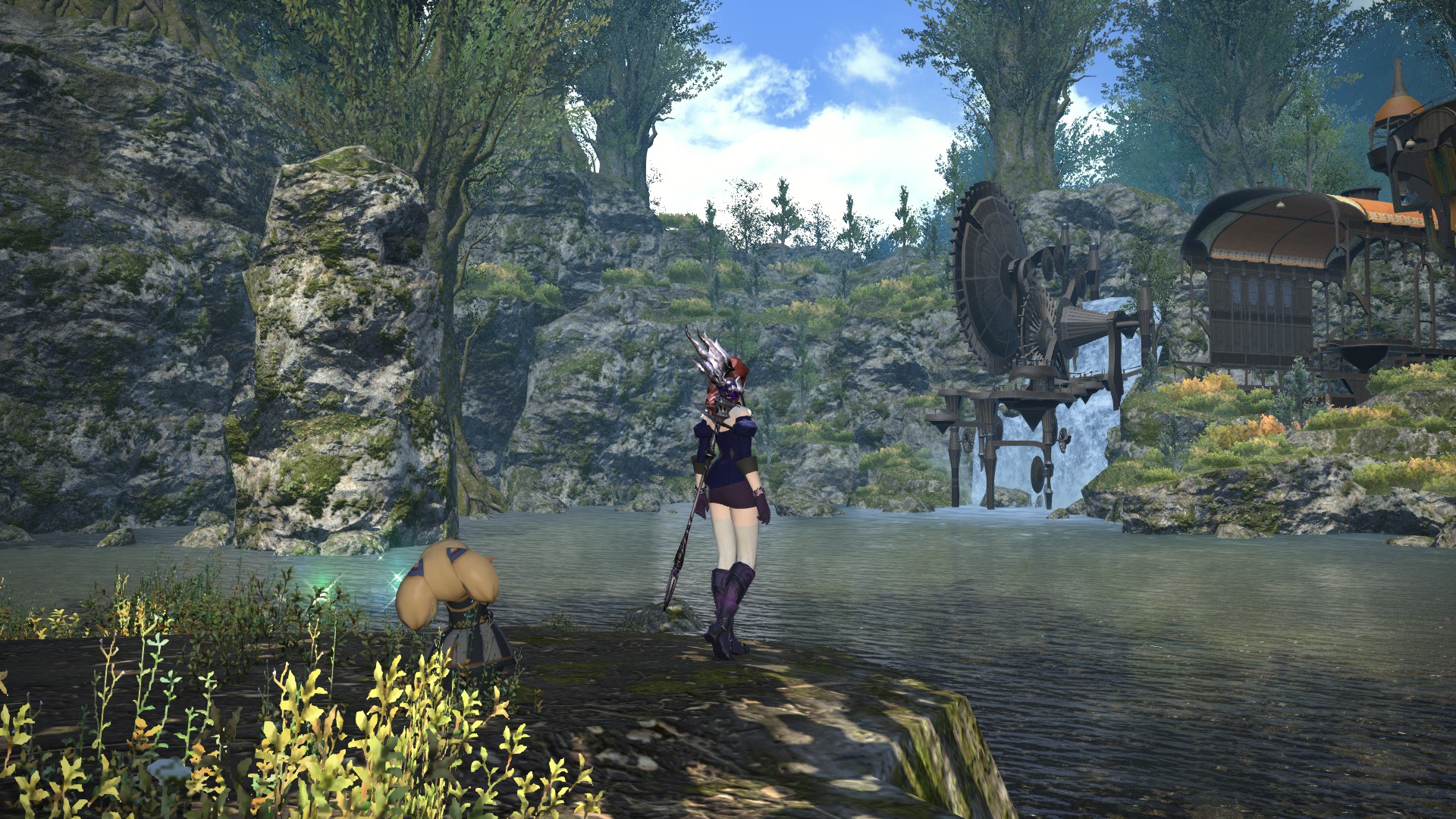
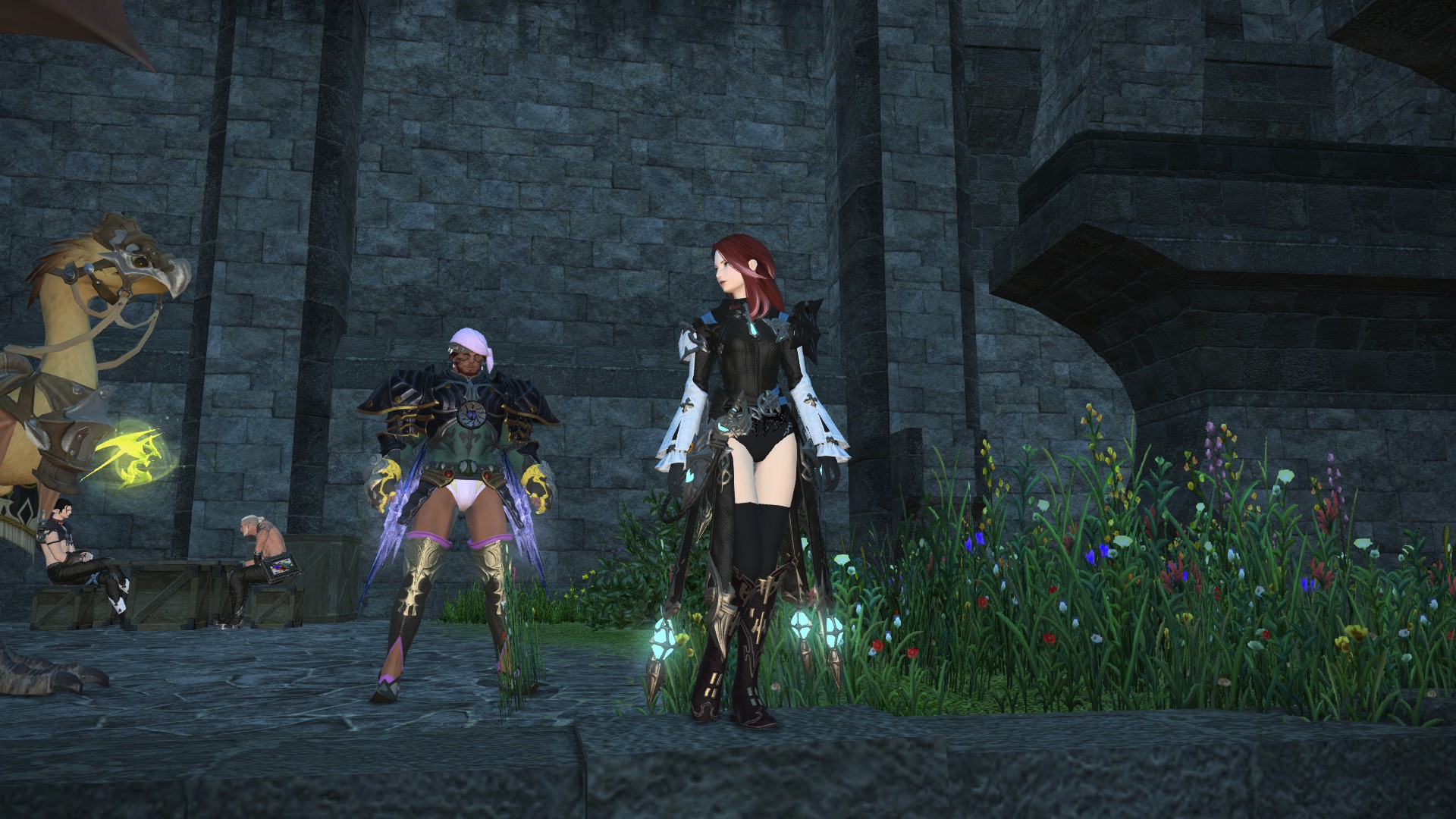
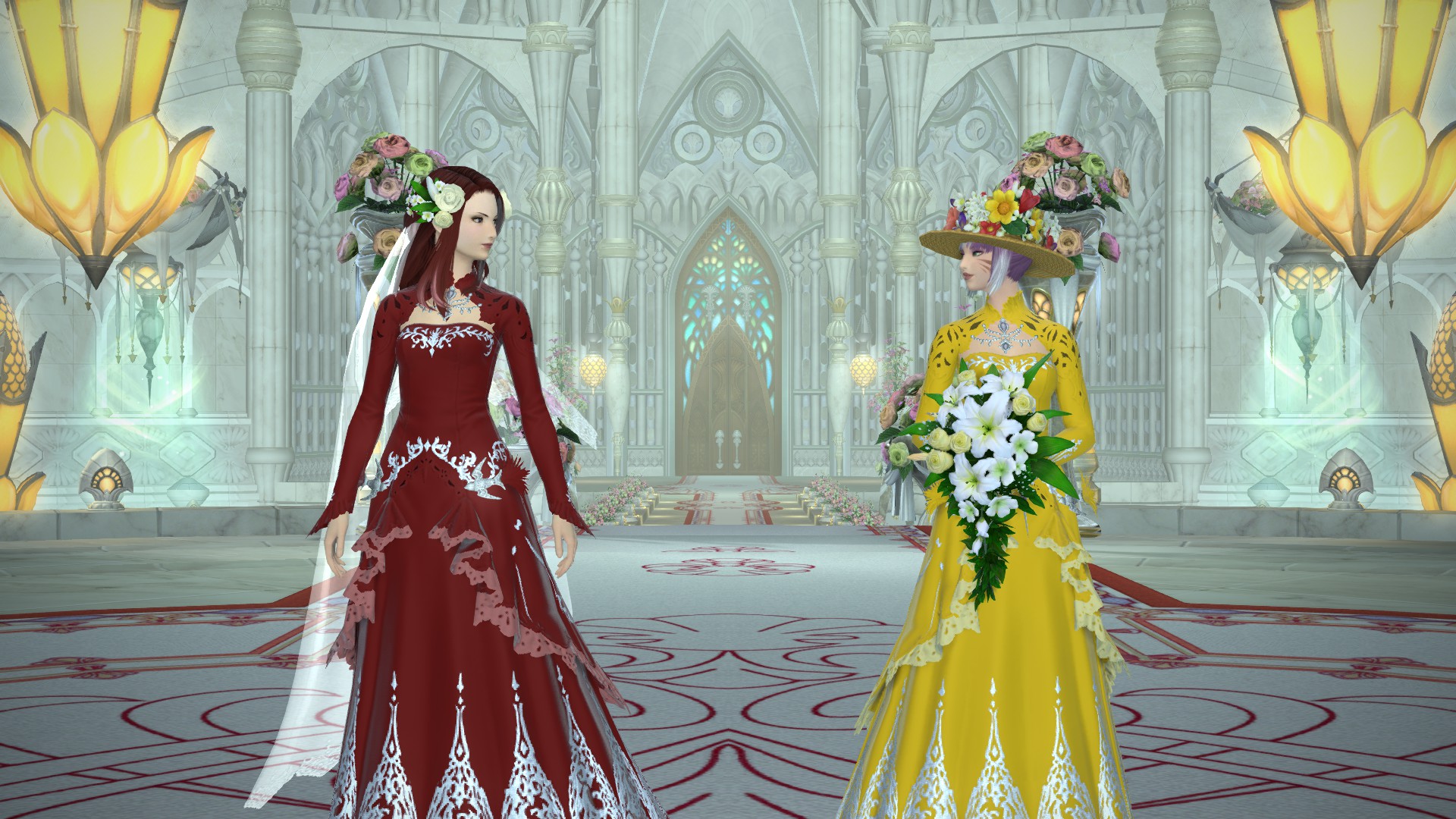
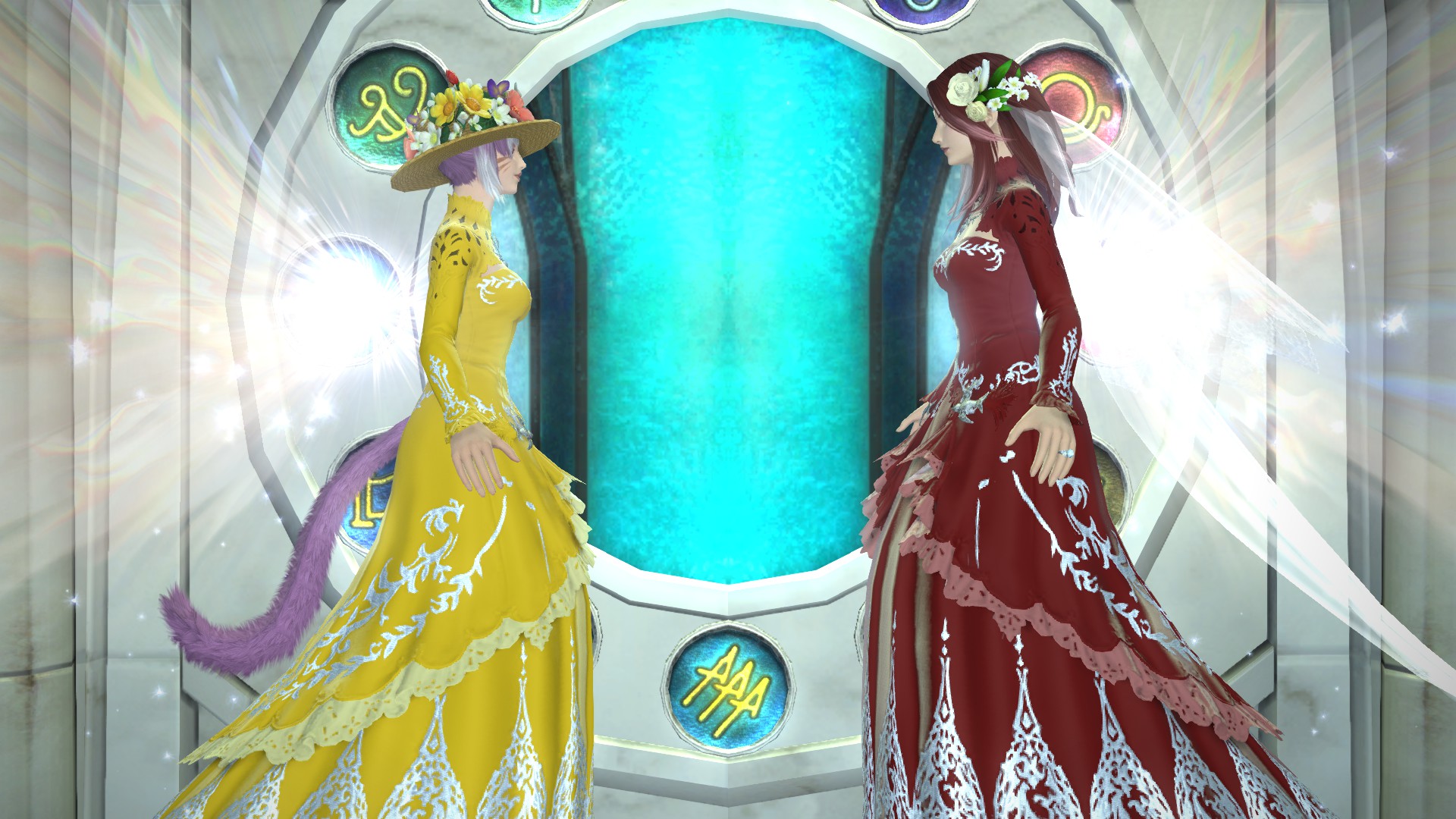
As regular readers will know, Andie and I are both regular players of the massively multiplayer online RPG Final Fantasy XIV: A Realm Reborn. In a recent patch, developer Square Enix added the facility to perform a "Ceremony of Eternal Bonding" with a partner in the game — getting married, in other words. Any character can marry any other character, no matter their gender or race, making it a wonderfully inclusive part of a game that was already extremely inclusive to begin with. I mention this latter fact because Andie and I both play female characters: mine is Amarysse the Hyur Midlander (essentially a relatively normal-looking — albeit "Final Fantasy attractive" — human-type female), while Andie's is W'khebica the Miqo'te (a race of people with cat ears and tails).

As soon as the Eternal Bond stuff launched, Andie and I knew that we wanted to indulge in it. It's ultimately a silly thing that doesn't have a huge amount of relevance to the game as a whole — your main benefits for getting married are that you get a ring that allows you to teleport to your spouse's side once every 30 minutes and, depending on which package you signed up for, some of which cost real money, a selection of goodies including wedding attire, a two-seater chocobo mount and a minion to give to all your guests when they attend your ceremony — but we still wanted to do it. I also think it's quite a nice way to acknowledge a real-world relationship in the game itself — though, of course, there are plenty of people who are getting married just for fun.

Anyway. Andie and I got up early on Boxing Day to book our ceremony. Yes, you actually have to book; ceremonies occur at specific times on specific dates, so we had to get in early in order to get a practical slot. Given that we play alongside a lot of Americans, we wanted to book it for an America-friendly time that was also not in the middle of the night for us, so we eventually settled on Saturday January 3 in the evening our time, since you have to book at least a week in advance.

2015-01-03_00009

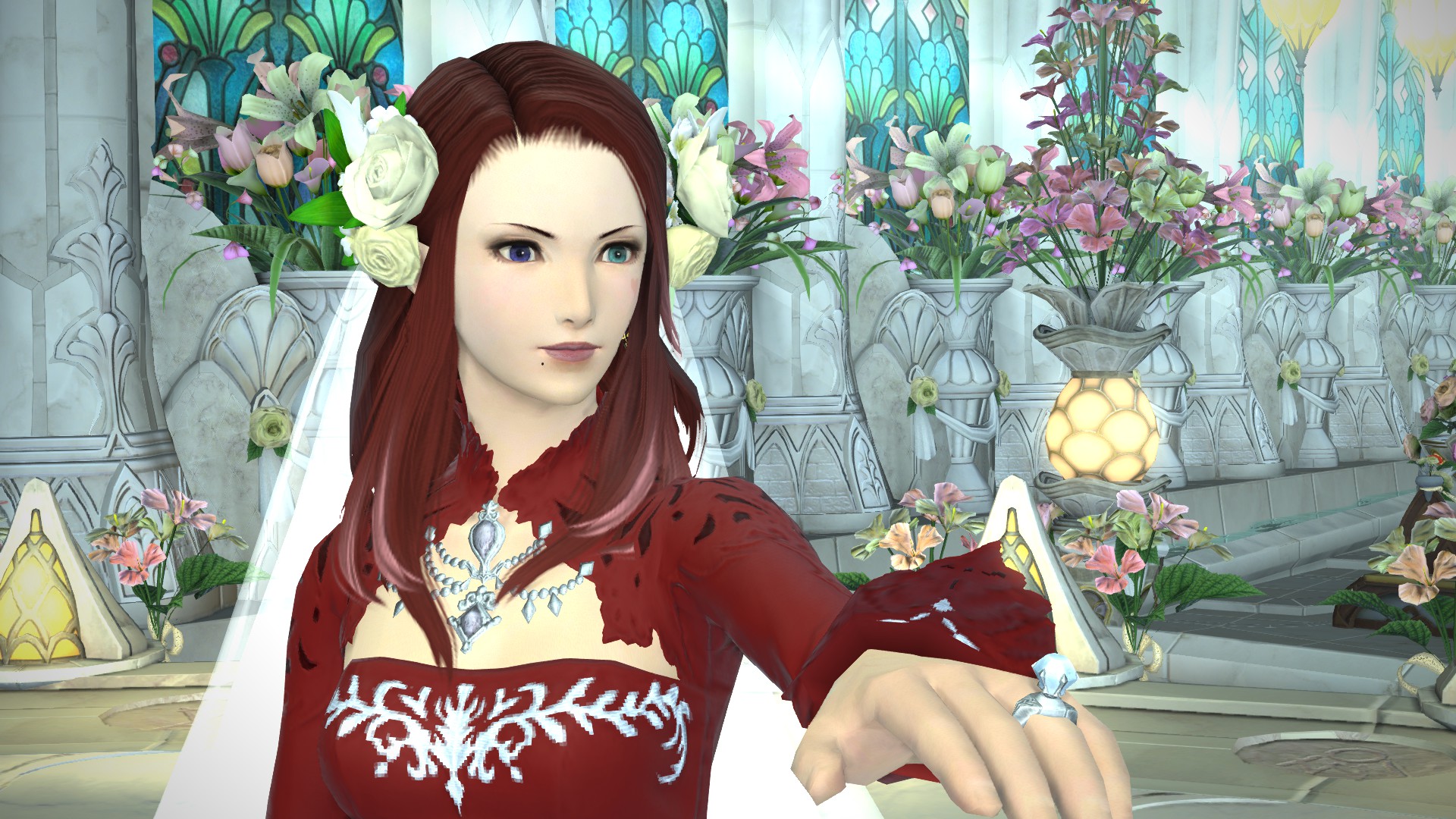
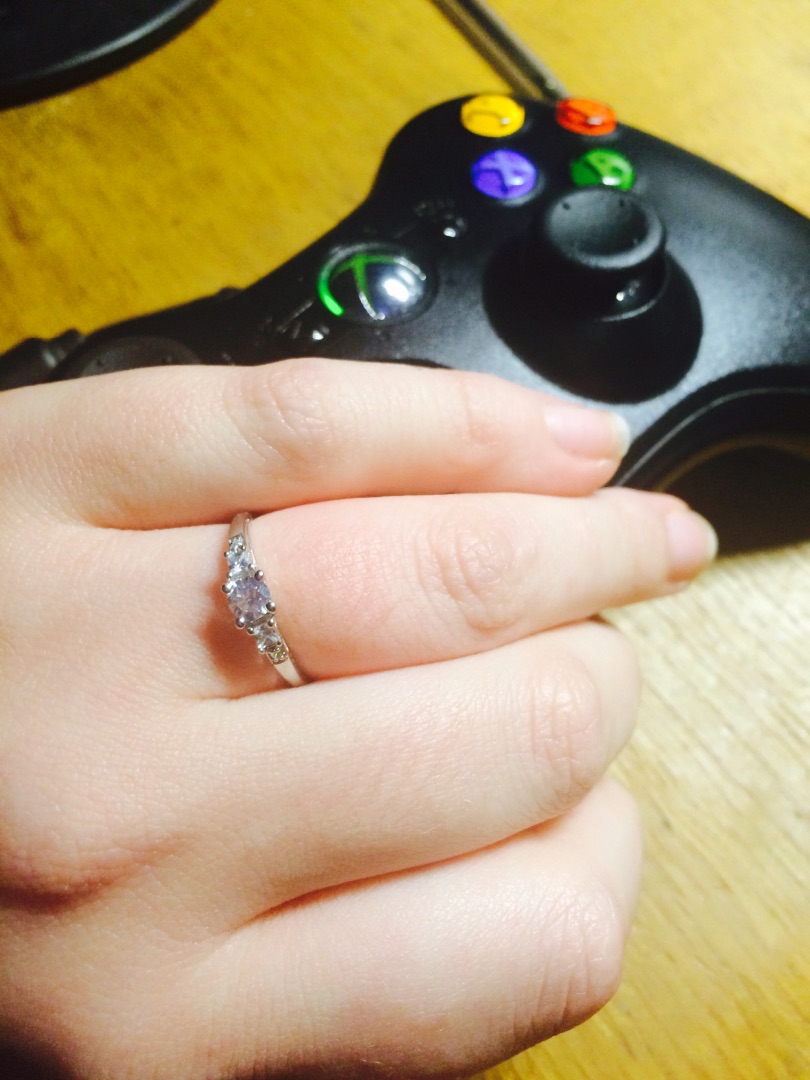
Now, since we'd been talking about getting in-game married ever since the possibility was launched, I'd been pondering secret plans in the run-up to this, and decided that yes, I wanted to put those plans into motion. I had not-particularly-subtly hinted to Andie that I might be interested in buying her a shiny ring, and invited her to indicate a selection of acceptable choices that would not cause me to be thrown out on the street or anything. I did some research, shopped around and eventually settled on one that she'd indicated she particularly liked. I finished work early on New Year's Eve and snuck into town to see if they had one in stock. They did, but not in the right size; I bought it anyway, as it was more that I wanted to have it as a symbol to go with the proposal than something I could put on her finger right away. (It transpired that she put it on anyway, got it stuck and we eventually had to go to A&E to get the damn thing off again! We now have one in the correct size.)

That was that; the plan was in motion, and there wasn't really any turning back now. Well, sure, I could bottle it and save the ring for another occasion, but really, honestly, our in-game ceremony felt like an ideal time to do it.

I set to work determining how I was going to do it, including worrying rather more than I probably needed to about whether I should actually ask the question in the game's text chat function, or just disappear from my keyboard for a few moments and ask her in person. (When we're both playing, she's on her computer upstairs while I'm downstairs in the living room, so it's not as if I could have just turned to her and asked her.) Eventually, I wrote a speech that I felt expressed what I was feeling adequately (albeit perhaps overdramatically) and resolved to deliver it during the twenty-minute period of the in-game ceremony where you are invited to exchange your vows with your partner. Most players who are doing the wedding thing for fun skip over this part or just allow their friends to set off some fireworks, cheer, whoop and holler, but it seemed like the ideal moment to me. So that was what I decided to do.

2015-01-03_00013

The day came, and we both logged on to play as normal. While it was tempting to surprise everyone with what I was up to, I decided that it would be prudent to share my plans with at least a couple of people so that I could ensure we had a decent turnout to our ceremony, and that people knew they had to behave themselves appropriately. I sent a "whisper" (private message) to my friend Cyra (aka Phil; we actually met him in the real world a while back when he happened to be in London the same day we went down to see the Distant Worlds concert) and informed him of my plans. He squee'd a bit (well, in a sort of manly way) and then told me to leave it with him; he'd inform some of the other regulars in our Free Company (guild) and between them they'd make sure people were 1) at the ceremony and 2) behaving themselves.

The appointed hour came, and Andie and I rode to the Sanctum of the Twelve in the East Shroud. Our friends were already gathered outside, and one had been crafting multiple copies of a hat that Andie's character habitually wears, then handing them out to the guests, so we were confronted with a crowd of people all wearing flowery hats. Then it was time to go in; Andie and I were escorted to our separate rooms to get ready, while the guests were taken to their separate waiting room to wait for us both to indicate that we were ready. We both changed into our wedding dresses, rang our Eternity Bells to indicate that we were ready, and then the ceremony began.

Conveniently, Cyra/Phil recorded the whole thing. You can watch it on his Twitch page, because WordPress doesn't want to embed the video for some reason. 🙂

And, well, this happened.

ring

1824: First Fantasy

I finished Final Fantasy I last night, bringing the first chapter in my Final Fantasy marathon to a close. And you know what? I really, really enjoyed it.

This may have something to do with the fact that I was playing the PSP version, also known as Final Fantasy Anniversary Edition, which has been substantially tweaked and rebalanced from both the original NES release and the subsequent enhanced PSone Final Fantasy Origins version, which I played last time I beat this first installment.

While there's an argument that it's worth experiencing the game in its original, purest, grind-heavy and rather difficult form — complete with its Vancian Magic system, just one of many influences the game drew from Dungeons & Dragons — the PSP version proved to be a lot more enjoyable generally. The pacing was better, there was a lot less running around in circles grinding — the original required you to do this to even beat the first boss, which appeared before the game's title screen — and the more traditional Magic Points system made some of the more lengthy encounters and dungeons later in the game somewhat more feasible.

Those late-game dungeons — four of which were added in the Game Boy Advance Dawn of Souls release of the game and the last of which was added in the Anniversary Edition release — proved to be really great, if a little bizarre. Collectively dubbed the Soul of Chaos, the first four extra dungeons live up to their name by tasking you with exploring 5, 10, 20 and 40 floors that feature set layouts but randomised floor orders and available treasures. There's not really a coherent theme to the dungeon floors as such — although the less interesting floors tend to be of an appropriate element to the dungeon's name: fiery caverns in Hellfire Chasm, for example — but the chaotic, unpredictable nature of them is what makes them interesting. On one floor you might be exploring a cave; the next you might be paddling a canoe around a flooded village; on the next, you might be attempting to navigate a maze of bookshelves while scholars mumble about their research and get in your way.

The final new dungeon, known as the Labyrinth of Time, was the most interesting by far, however. The Labyrinth of Time creates a new dungeon each time by picking ten different "puzzle floors" out of a selection of 30, then challenging you to beat these puzzles against the clock and with one or more of your abilities sealed off. The more abilities you seal off — and the more useful they are — the more time you have available to complete a floor. Run out of time and a dark miasma descends, damaging you every second and increasing the number of monsters you encounter.

The puzzles vary from simple observation puzzles, in which you have to answer questions about something you've just seen, to challenging physical tasks such as marching in line with a group of NPC soldiers. Like the Soul of Chaos dungeons, they have little to do with the overall Final Fantasy story — what little story it has anyway — but they're immensely enjoyable and challenging to complete. And then at the end of it all you have Chronodia, one of the toughest bosses in the game, to fight for ultimate bragging rights… oh, and the best sword in the game, too.

The first time I played Final Fantasy I, with the Origins release, I did so in order to understand the series' roots, and sort of had a good time, but found it a bit of a chore after a while. The PSP version, meanwhile, I found genuinely enjoyable, even from a modern perspective, and was inspired to go on and complete the game's most challenging content. I have absolutely no hesitation in recommending it to anyone looking for a fun portable RPG experience — and those of you without a PSP can even play it on your phone.

Onwards to Final Fantasy II, then, which I remember enjoying quite a lot the first time I tried it (again, with Origins) but which is widely regarded to be one of the worst installments in the whole series thanks to its bafflingly bizarre mechanics. For Fynn! Wild Rose!

1821: Interlude at the House on the Hill

It's late and I'm very, very tired so I will continue the creative writing tomorrow. Apologies to anyone following and absolutely desperate to know what happens next. (This also gives me a day to figure out what happens next, which is probably "cheating", but whatever.)

Instead, I wanted to talk a little about a board game I got for Christmas and had the opportunity to try out for the first time this evening. It's called Betrayal at House on the Hill, and it's a game I've had my eye on for a while since seeing it on Wil Wheaton's board gaming show Tabletop.

Betrayal at House on the Hill is an unusual and peculiar game in that it's sort of two games in one. The first part is purely exploration and treasure hunting: you and up to five friends explore a creepy old randomly-generated house, collecting treasures and "omens" and having various events occurring — some good, some bad, some strange.

At a particular point, "the haunt" begins. The longer the initial phase goes on, the more likely the haunt becomes, since its likelihood of occurring is tied to the number of omen cards in play at any one time. (Omens, despite their, well, ominous name, often take the form of useful items, so it's actually in your interest to collect them, even with the inherent risk they carry.)

When the haunt begins, several things happen. First of all, one of fifty different scenarios is chosen according to the omen drawn and the room it was discovered in. Next, at least one of the players becomes a traitor. In most scenarios, it's known which player is the traitor, but there are a few examples of "hidden traitor" scenarios where one person is secretly working against the others.

At this point, the remaining players and the traitor are, as you might expect, in direct opposition to one another, but the interesting thing when compared to other, mechanically similar games such as Descent or other dungeon-crawlers with an "evil" player is that the two groups don't have all the pertinent information about one another: each side has a book revealing only information relevant to their side, and the rest they must figure out themselves. This includes, in the heroes' case, how strong, fast and intelligent the monsters they're facing are, and even what the traitorous player's end goal might be. Likewise, the traitor doesn't necessarily know what the players are up to, though his material might give him a bit of a clue — and the players' behaviour might give him even more of a clue.

As an example, the scenario we picked this evening saw one player come across a madman in the house's basement, which triggered the haunt. Zombies rose from the dead, and the original player character was killed, leaving the traitorous player in control of the madman and the zombies. His objective was simply to kill all the other players — a task which he completed fairly effectively and efficiently. Our objective as the heroes, meanwhile, was to trap the zombies by luring them into rooms that had been important to them in life — we knew which rooms these were, but the traitor did not, and there were specific rules about how the zombies moved that allowed us to "pull" them in particular directions through careful, strategic movement.

Unfortunately, things did not go all that well. My character died almost immediately after the haunt began having been flung into the basement earlier, not being able to find the way back up the stairs, getting surrounded by zombies and finally, embarrassingly, succumbing to nothing more than the heat from a furnace beneath the mansion. The others, variously, were eaten by zombies and brutalised by the madman, leading the traitorous player to a convincing victory.

I enjoyed the game a lot. The rules are straightforward and quick, turns are snappy and the split-personality nature of the game makes it very interesting. The 50 different scenarios coupled with the randomly generated nature of the house means that there's a whole lot of replay value, too, so I'm looking forward to giving it another go sometime soon.

1805: Christmas is Over

Well, it's the evening of Sunday December 28, and I'm counting down the hours until I have to get up at some ungodly hour in the morning and trudge all the way to work. (Okay, I drive most of it, but there's still an honest-to-goodness half-hour trudge at the other end, which I'm really not relishing in the current cold weather.)

The Christmas break has been nice, and the fact I'd spent the previous few months at work, away from home (as opposed to working from home as I was previously) has made me appreciate it somewhat more. I've enjoyed the time off, I've enjoyed having the opportunity to just relax without the pressure to "do" anything, and I've enjoyed having the time to indulge in some favourite games, TV shows and anime without time commitments.

I finished the Hanzou story in Senran Kagura Shinovi Versus today — that's one of the four stories in the game. I enjoyed it a lot; gameplay-wise, it's a significant improvement on the first game thanks to its jump to 3D, and its narrative is interesting. Throughout the course of the story, we learn some new things about the main cast as well as get introduced to the newcomers in this particular installment: the girls of the Gessen shinobi school, and the new members of the Hebijou school that Homura and her gang hailed from in the original game before being exiled following the events at Burst's finale.

My initial reaction to the Hanzou story was that I was slightly disappointed there weren't more of the visual novel sequences giving background on the girls and how they were feeling about various things — but on balance, I think there was a good amount. The game didn't try to do too much: it introduced one major plot/background point per character through several of these sequences peppered throughout the course of the entire narrative arc, and the rest of the story was delivered through snappy but enjoyable talking-heads sequences that were just about characters talking to one another, not narration. It worked well, and it teased just enough information about the Gessen girls to make me want to find out more about them: fortunately, I can now do just that by playing through their story, followed by Hebijou and finally Homura and her friends in the Crimson Squad.

I also, as we saw yesterday, made a start on Final Fantasy. I'll be writing more about that as I make more progress through it, though with my intended creative writing project in January this will likely be over on the Squadron of Shame forums rather than here.

I've also watched some anime for the first time in what feels like months; I've been continuing with the farming-themed series Silver Spoon, which was recommended to me by some anime-loving friends, and I've been reminded what a good show it is. It has an enjoyably understated plot about a teen boy feeling somewhat out of his depth in an agricultural academy, and some appealing, entertaining characters who occasionally reference recognisable anime tropes without being defined by them. There's one character in particular who looks like he would be more at home in a series like Dragon Ball Z, for example, so seeing him mucking out cows and working with chickens is rather entertaining, to say the least!

Anyway. Early-ish night for me tonight due to the aforementioned Danger of Work bell tolling, so I'll sign off there and simply say I hope you all had as restful and pleasant a Christmas as I had, and are looking forward to a good new year.

1804: First Fantasy

PSN finally came back up after some "hacker"-induced downtime over the Christmas period, so I took the opportunity to start filling my brand new 64GB memory card with Final Fantasy games — specifically, I-IX and Tactics, though there will also be a copy of the X/X-2 remasters added to that shortly, particularly if they end up in the PSN store's sale.

I made a start on Final Fantasy today. I've played this a couple of times over the years, though never the original NES version. Rather, my past forays into it have been on the Final Fantasy Origins version on PlayStation 1, an upgraded port with 16-bit-style visuals and a significantly enhanced soundtrack over the bleepy, blurpy NES chiptunes of the original. (It was also bundled with a similarly upgraded port of Final Fantasy II, which was also the first time that game had ever made it outside of Japan.)

This time around, however, I'm playing the PSP version on my Vita. I wasn't expecting anything particularly different from the Origins version, but already something feels a little different. The pacing feels better when it comes to levelling; it seems to take a lot less time to gain a level, leading to significantly less running around in circles fighting armies of wolves just to beef yourself up enough to enter the first dungeon. The magic system's adoption of a more traditional magic points system rather than the NES original's D&D-style "you can only cast this level of spells this many times" mechanic also makes White and Black Mages seem somewhat less useless, which is nice.

The original Final Fantasy is an odd beast, really. It's unmistakeably a Japanese role-playing game in look and feel, but it's clearly heavily inspired by Western fantasy, even going so far as to directly reference numerous Dungeons and Dragons elements such as monsters, races and the like. It's abundantly clear that Final Fantasy is Dungeons and Dragons through a Japanese lens, in other words, and it works rather well. It's actually relatively rare for Japanese role-playing games to play the fantasy tropes completely straight these days, as they often tend to incorporate elements of sci-fi along the way, making for a curiously distinctive mix of influences. Nowhere is this more apparent in the evolution of the Final Fantasy series over the years, which has all but abandoned its roots with the most recent installments — with the exception of XIV, which is deliberately very true to said roots, directly referencing past games at numerous junctures throughout.

The limitations of video game storytelling in the era when it was originally released are still apparent in the PSP rerelease, but the gameplay additions at least make it significantly more playable to a modern audience. I'll be interested to see what tweaks — if any — have been made to the somewhat idiosyncratic Final Fantasy II for its PSP incarnation, but I have quite a journey ahead of me before I can start that particular adventure.

For now, it's time to let Garland try and knock me all down… I have a suspicion he will be unsuccessful in his efforts, and the lovely Princess Sarah will be returned to her rightful place in Cornelia Castle before long.