I'm probably going to do a "big" writeup on Final Fantasy XIV: Dawntrail when I've actually beaten the main story, but I thought I'd post some musings this evening.
For the unfamiliar, Dawntrail is the fifth expansion to Final Fantasy XIV after Heavensward, Stormblood, Shadowbringers and Endwalker. It was in an interesting position before it started, because Endwalker, as the name suggests, brought the story of Final Fantasy XIV, as it had existed right from the abandoned version 1.0, to a very definitive conclusion.
Without getting too much into specifics for the sake of spoilers, I'll say that they handled it in probably the best way they could have done: treat the new storyline as basically a complete fresh start. You cross the ocean to be far away from the landmass and surrounding islands the base game and previous five expansions (mostly) took place on, and come to learn about a territory we, as players, have previously not really heard much about.
One of the interesting things about Dawntrail is the timing of its release. I don't know how much of it was deliberate, but given that the first half of the game is very much about overcoming prejudice and standing together for the good of everyone, it feels… timely, given the various things that are happening around the world right now. It feels like it's going "this is how things could be if people would just stop being dicks to each other", and it's honestly nice.
Again, without spoiling things, this is just half of Dawntrail, however. I would forgive anyone for thinking that the first half of Dawntrail is a bit "slow" in comparison to previous Final Fantasy XIV expansions, but that's entirely deliberate. Since the overall story is basically something of a "reboot" — or perhaps it's more accurate to call it a "sequel" — it makes sense that there needs to be plenty of work done to establish the new setting and its important characters. Sure, plenty of old favourites crop up, because it wouldn't be Final Fantasy XIV without them, but you spend a lot of your time with the new cast.
Stick with that relatively "peaceful" first half, though, and things get Very Real beyond that halfway point. If you were concerned that Dawntrail wouldn't conclude with some sort of earth-shattering cataclysm for the Warrior of Light to avert in cooperation with her trusty companions, then rest assured that cataclysmic happenings are very much in evidence, and they hit all the harder for how long you spent getting to know everyone in the first half.
Again, this feels timely. After the game goes "this is how things could be", it then goes "and this is also how things could be", working on the assumption that something goes horribly wrong somewhere. The message of mutual cooperation and overcoming prejudice is still very much in evidence, but it takes on something of a new meaning in the context of the game's second half.
That's all I'll say for the moment, because I'm a relatively short way into that second half, and I feel I stopped this evening just before what is going to be a fairly critical moment. (It is late and the cat is bugging me to go to bed.) It's definitely living up to the standards of its illustrious predecessors, though, and I'm glad about that. I've spent so much time in Final Fantasy XIV now, it's like a long-running TV show; I want to keep following these characters, learning about the world they inhabit and see them overcome all sorts of challenges. And there are clearly plenty more challenges ahead.
Want to read my thoughts on various video games, visual novels and other popular culture things? Stop by MoeGamer.net, my site for all things fun where I am generally a lot more cheerful. And if you fancy watching some vids on classic games, drop by my YouTube channel.
If you want this nonsense in your inbox every day, please feel free to subscribe via email. Your email address won't be used for anything else.

Earlier today, I was reading an article on retro gaming site Time Extension. The article was quite interesting — it was about the struggles academics were encountering in getting today's students (18 year olds) to engage with anything other than Minecraft or Fortnite. It's a good read, and I encourage you to take a few minutes and give it a look.
That's not what I want to talk about today, though. I want to talk about this comment I found underneath it.
The "vulgar (or profane) language", by the way, was the word "damn", used in the context of the phrase "didn't give a damn".
Intrigued, I decided to delve into "Mario500"'s comment history. And what I found didn't make things any clearer. Because this is what I found:
I was immediately fascinated. Who is this person, and why do they seem to think they're the editor of Time Extension? Why do they ask questions about things a regular reader of Time Extension — and particularly a Nintendo fan — would almost inevitably be very familiar with? Why do they constantly refer to themselves in the third person (except in their earliest comments)? Why do they put everything in brackets?
I'm particularly fascinated by their apparent inability to understand sarcasm or exaggeration for comic effect, but for the life of me I cannot work out if they're taking the piss, if it's someone who really does think and talk like this — entirely possible that they're someone on the autistic spectrum, for example — or if they're a bot.
The bizarrely Puritan attitude throughout is odd, too. Besides the initial "vulgar (or profane) language", there's another comment that uses the exact same phrasing, along with one that offers "(suggestion: no hoping for swearing)" when an interview with a fan translator expresses that they hope the official release of a game keeps the naughty language intact, and possibly my favourite, "(suggestion: never insult thy self (or any other (separate) self))" in response to an article writer self-deprecatingly calling themselves a "moron" for selling their Gamecube setup.
I'm intrigued by Mario500's first comment, too. It lacks the later "gimmicky" elements of their subsequent replies, instead simply stating "This article could have been much more objective if I were involved in its creation."
They offer no further explanation of exactly how they would make the article — a lengthy feature about the history of media mogul Robert Maxwell's involvement in the games industry — any more "objective" than it already is, but chances are they, for some reason, took umbrage at the description of Maxwell's "shady business practices" in the article. But, I mean, those are pretty established facts at this point; no amount of "objectivity" (which, under these sorts of circumstances, generally means "stop saying mean things about bad people I like") can really spin it another way. Maxwell was a shit; he didn't deserve to die (probably), but he was still a shit.
(note: the creator of this message was unable to finish reading this article immediately upon finding vulgar (or profane) language among its text)
Anyway, I'm baffled. The rest of their profile on Time Extension is completely barren, they rarely get responses to their bizarre comments and I'm still not entirely unconvinced that they're a bot.
Still, it was a mild diversion earlier today. I thought you might be interested to see the stranger side of the Internet.
Want to read my thoughts on various video games, visual novels and other popular culture things? Stop by MoeGamer.net, my site for all things fun where I am generally a lot more cheerful. And if you fancy watching some vids on classic games, drop by my YouTube channel.
If you want this nonsense in your inbox every day, please feel free to subscribe via email. Your email address won't be used for anything else.
I've gone and left writing this until some ungodly hour in the morning again. It tends to happen when my mood is low; I stay up later than I should, which inevitably means I'll have trouble getting up in the morning. Likely no gym or swimming tomorrow, then — I value a good night's sleep more than a fitness regime. I'll get an early night tomorrow night though and go on Tuesday morning.
I decided after a lot of umming and ahhing to treat myself to Gas Station Simulator. I have a lot of time for these games that take something mundane and turn them into a relatively entertaining, but not super-demanding experience — Square Enix and FuturLab's Power Wash Simulator is probably the most well known, but there are a fair few out there now. Gas Station Simulator appears to be one of the more polished ones, and while it's still prone to Perpetual Indie Game Roadmap Syndrome, it is, at least, in its current state, a "finished" game.
I like what I've seen so far. There's a nice combination of relatively mindless "clean up the shit" gameplay combined with a bit of time management, a bit of finance management and a bit of self-expression through customising your environment. The titular gas station you find yourself taking ownership of is a complete shithole when you first acquire it, so you have a lot of work to do, though it doesn't take that much to get it looking vaguely presentable — enough to keep customers stopping for fuel in the middle of the desert happy, at least.
I'm interested in what it will look like in the late game, though. I anticipate that once you get the money rolling in fairly reliably, you'll be able to do a lot more with the overall decor of both the station itself and its various supporting buildings. At present I can just paint stuff and buy a few decorations, but I'm hoping for some more options once I unlock some more of the game features.
Because yes, in true 2024 game tradition, this isn't a game that gives you the keys to a sandbox and lets you loose; rather, you work your way through a series of objectives that introduce you to the various mechanics one at a time, gradually building on top of each other to make the game a little more complex with each passing hour. I mock it for doing this, but it's a sound approach, particularly when you're dealing with a game that, as this does, appears to have plenty of moving parts to contend with.
Thus far I have the fuel pumps, the station itself (which acts as a shop) and I've just unlocked a car repairing garage. At present, I have to do everything, but I understand at some point in the game you can hire employees to automate some or all of it. That's going to be interesting; will the game remain entertaining if you're no longer having to frantically dash between different areas to do stuff?
Anyway, that remains to be seen. I played for far too long and now it's late. So I will report further on my findings once I have had some sleep. Here's hoping I'm through the "trough" my mental health has been going through and it's onwards and upwards from here.
Want to read my thoughts on various video games, visual novels and other popular culture things? Stop by MoeGamer.net, my site for all things fun where I am generally a lot more cheerful. And if you fancy watching some vids on classic games, drop by my YouTube channel.
If you want this nonsense in your inbox every day, please feel free to subscribe via email. Your email address won't be used for anything else.
I dreamed about our dearly departed cat Meg last night and into this morning, which caused me to wake up feeling rather maudlin. My general mental wellbeing didn't really improve for most of the day, but I did manage to distract myself with some gaming, so that's something.
I've just come off a Dawntrail session, and I'm making good progress with that, but I've also been flitting around between a couple of other things today.
First of these is Holy Potatoes! A Spy Story?, which is a lightweight management sim sort of game in which you run a spy agency, train up spies and send them out on missions. It's quite fun and silly, though I haven't felt any real "challenge" from it as yet. I don't know how long it is but I suspect I'm quite early on in it so far; I wonder how it will up the challenge factor, and if it will do so by something more interesting than "require bigger numbers".
I started playing this because I've been having a bit of a hankering for that kind of game of late, and it's one of those genres that it doesn't feel like we have that many good modern examples of. Management sims were all the rage in the late '90s and early '00s, but it feels like they were one of those genres that got a bit left behind in the move to 3D. Modern 3D examples do exist — the Two Point games, which are successors to Bullfrog's Theme titles, are a good example — but it's kind of telling that stuff like Holy Potatoes! A Spy Story? is still presented in isometric quasi-3D artwork rather than polygons.
I don't know if I'll stick with it so far, as there are a number of other "sim"-type games I'm interested in having a fiddle with — after watching Game Grumps play Gas Station Simulator I actually quite fancy a go at that, for one — but what I've played so far does seem fun, and despite the relative lack of challenge in what I've played, manages to remain free of being patronising in a mobile game style.
The other thing I gave a shot for a bit earlier is Spiderweb Software's Avadon: The Black Fortress. I've been meaning to try a Spiderweb game for some time, but never got around to it and never quite new which one was best to start with. So I just picked one and gave it a go for a bit.
For the unfamiliar, Spiderweb Software make traditional CRPGs in the western style; that means they unfold rather like old Infinity Engine D&D games, or perhaps later Ultima titles. Avadon actually sounds like it might be a bit of a departure in that it's less "freeform" in its structure — thus far it's been quite heavily "mission-based", and you have relatively limited options to build your characters — but it sounds as if it's well-regarded, and many folks seem to think that the streamlined (not necessarily simplified) mechanics allow its story to shine a bit more. And it's certainly got some nicely written text in it.
Again, don't know if I'll stick with it, but I'm glad I've broken the seal and started giving it a go. I like what I see so far — although it seems the game is light on music, which is a shame, as I do like a stirring orchestral accompaniment for my western-style CRPGs.
And Dawntrail. I won't say too much about this for the sake of spoilers in case anyone reading this is planning to play it, but the thing that struck me while playing this evening is that this is a story the world really needs right now. There's lots of tolerance and understanding and learning about different cultures, and it just feels like such a marked, likely deliberate contrast to the intolerance and general shittiness around in the world at the moment. I'm looking forward to seeing where it goes next, as I've reached a particularly significant moment in the narrative.
Anyway, it's nearly 2am and my cat Patti is bugging me to go to bed, so I should probably do that. Here's hoping for a restful night's sleep.
I miss you, Meg.
Want to read my thoughts on various video games, visual novels and other popular culture things? Stop by MoeGamer.net, my site for all things fun where I am generally a lot more cheerful. And if you fancy watching some vids on classic games, drop by my YouTube channel.
If you want this nonsense in your inbox every day, please feel free to subscribe via email. Your email address won't be used for anything else.
Recently, Microsoft announced a slew of changes to its Game Pass service, the subscription-based service where you get access to a bunch of games for as long as you pay for it. They have not been received all that well, to say the least, with many quite rightly pointing out that its combination of price hikes and making existing offerings significantly worse is a textbook example of enshittification.
However, prior to all this nonsense, Game Pass had some of the most rabid defenders on the entire Internet. "It's consumer-friendly!" they'd chant like a mantra. "$12 a month for a whole library of games!"
I don't know about you, but I consider perpetually paying for something and then not actually having anything to show for it if I decide to stop paying is anything but consumer-friendly. It's a glorified rental service — and, more to the point, it's absolute garbage for game makers.
You see, while Microsoft does, on occasion, offer larger developers and publishers flat fees for listing their titles on Game Pass, a lot of developers, particularly smaller ones, have to rely on a "streaming"-style income stream, where they get paid according to how much people play their games. And if you've been paying any attention whatsoever to how streaming has been going over the course of the last few years, you'll know that that is an absolutely terrible deal for the artists involved.
The trouble with the Game Pass model is that it incentivises the very worst practices in the industry. With games making money according to how much they are played, we get games that are ridiculous, unnecessary timesinks. We get "live service" games. We get games that are never actually "finished", perpetually following a "roadmap" meaning there's never a good time to start playing because the Next Big Update is always just around the corner.
To put it another way, Game Pass encourages content, not art. It encourages the blandest, most transparent engagement bait, designed to Skinner Box people into believing they're having a good time while they grind through their mindless Daily Objectives for the umpteenth time. And it's an attempt to normalise people not owning things. It's an attempt to ensure that everyone quite happily hands over the keys to their entire media collection for the sake of supposed "convenience" — and don't ask about the games we remove from the service every month, thank you very much, we try and keep that bit quiet.
"But Game Pass makes me try games I never would have tried otherwise!" the defenders say. Bullshit. If you were interested enough to download a game on Game Pass, you're interested enough to read up on it, download a demo where it exists or, hell, even purchase it on a digital storefront and refund it if you found it wasn't actually something you enjoyed. (That's a practice I kind of abhor, also, but that's probably a subject for another day.) Taking risks on art is fun! Sometimes you find things you don't like, sure, but in a lot of cases you'll be very pleasantly surprised when you try something outside of your usual wheelhouse.
Game Pass is a festering boil on the arse of the industry, and the sooner we lance it, the better. It's bad for players and it's bad for the people who make the games. I'm glad there's some pushback against these latest shitty moves from Microsoft — who seem to have been making a lot of such shitty moves of late, in a variety of areas — but I fear it's too little, too late. There are already people for whom not buying games and instead "getting it on Game Pass" is the norm, and that's a problem we're going to have to address conclusively at some point. Because what we have right now is not by any means sustainable.
Want to read my thoughts on various video games, visual novels and other popular culture things? Stop by MoeGamer.net, my site for all things fun where I am generally a lot more cheerful. And if you fancy watching some vids on classic games, drop by my YouTube channel.
If you want this nonsense in your inbox every day, please feel free to subscribe via email. Your email address won't be used for anything else.

Yesterday, the tech blog 404 Media reported on a horrifying development in the story of the World Wide Web's gradual decline into AI-encrusted unusability: the apparent resurrection of the once-beloved TUAW (aka The Unofficial Apple Weblog), a site that hasn't been active for 10+ years, into an AI-powered slop machine.
To make matters worse, the new owners of the twitching corpse of TUAW have apparently seen fit to "borrow" the identities of the site's former regular contributors, replacing their original headshots with AI-generated portraits or stock images of completely unrelated people and replacing their original archived work with AI-powered "summaries".
Naturally, the former TUAW writers are not all that happy about this. One of the affected individuals, Christina Warren, pointed out that the reason this has been done in the first place is likely "an SEO scam that won't even work in 2024 because Google changed its [algorithm]". She then concluded that those responsible were "Assholes!", which I thoroughly concur with.
This is just the latest in a long line of absolute bullshit brought about by the infestation of "AI" into everything online. There is absolutely no excuse, no justification for what has gone here. Not only is it defacing the legacy of a publication that was once loved — and trusted — by a significant number of readers, it's also destroying the portfolios of the writers in question, who are now saddled with AI-generated slop that has their name attached to it.
"I don't want people to come across the contents coming out of that site and think that I actually wrote like that [very poorly]," Warren told 404. And I can't help but agree — because we have a very real problem online in that sites shuttering often means vast swathes of work by talented writers just goes in the dustbin without warning. And while sites such as the incredible, wonderful archive.org do their best to keep a record of everything that once was, the sad reality is that a lot of stuff is just plain lost.
I know, because I've been on the receiving end of it multiple times.
My stuff might be in here… somewhere… maybe?
One of the first sites I ever wrote for professionally, Kombo.com, no longer exists, and its URL now redirects to a site called "GameZone". Surprisingly, GameZone does seem to have some of Kombo's old articles archived, though none of them are under their original byline, instead all attributed to "kombo" (lower-case). There are 28,435 articles attributed to "kombo", all with the wrong dates on them — they claim to date back to 2012, but there are some with the headline "E3 2010", suggesting that they were simply republished on the "newer" site in 2012 — and no means of identifying who wrote what. As such, it's useless for me to use as part of a portfolio.
The two "big" sites I wrote for, GamePro and USgamer, also went belly-up at various points. In both cases, again, some of my work ended up archived on other sites. In the case of GamePro, some of my stuff found its way to the American tech site PC World, but a search for my name now throws up a list of useless garbage that quotes my name but doesn't actually link to anything I wrote without manually scrolling through several pages of junk. And, of course, there's no link to my byline for me to easily find everything by me, despite my byline being right there on the articles in question when I can find them!
This is the one and only GamePro article by me I could find after a few minutes of searching. It appears on page 2,689 of a defunct archives page. None of the images or links in the article remained intact.
USgamer, which folded a little more recently, fares a little better in that I actually have an author page on VG247, where the articles ended up — although said author page has no picture, no bio and a link to a Twitter account that no longer exists. There's 8 pages of material from me, which I suspect isn't all of my work from USgamer, but it's a decent amount, at least. I just wish it wasn't on VG247, which is a site I am… not a fan of.
Better than nothing — or being "AI summarised", at least. Just wish it was under a different masthead.
In this respect, I guess I'm actually kind of lucky that my identity hasn't been co-opted by a content farm and all my past work fed into ChatGPT to regurgitate at considerably lower quality than I originally wrote. But I have to confess that reading stories such as this one about TUAW fills me with genuine dread. I'm not overly concerned about AI "taking my job" because it's rapidly becoming very clear that AI writing is both easy to spot and demonstrably inferior to a human being doing the same thing.
But I am concerned about the potential for AI slop with my name attached to it dragging my reputation through the mud. As a writer, I find it grossly insulting to my profession. And simply as a human being, I find what has been done here to be absolutely, totally unconscionable.
There has to be a breaking point somewhere. Soon. Please. I am rapidly running out of what little faith in humanity I have left. And there wasn't a lot left in the first place.
Want to read my thoughts on various video games, visual novels and other popular culture things? Stop by MoeGamer.net, my site for all things fun where I am generally a lot more cheerful. And if you fancy watching some vids on classic games, drop by my YouTube channel.
If you want this nonsense in your inbox every day, please feel free to subscribe via email. Your email address won't be used for anything else.

Decided I wanted a break from Dawntrail this evening, so I decided to give Hypnospace Outlaw a go, since I'd always been curious and it was cheap in the GOG summer sale.
For the unfamiliar, Hypnospace Outlaw is an adventure game of sorts, but rather than controlling a character you're manipulating a computer from a fictional 1999 as it navigates around the "Web" of sorts. Technically "Hypnospace" is a Web-equivalent that people browse in their sleep through a special headband, but so far that doesn't seem to have mattered all that much.
The fact it's set in 1999 does matter, however, because most of your interaction involves using a delightful parody of the early(ish) Web — a land of personal Geocities pages, primarily. Hypnospace is a managed service rather than a completely open free-for-all, and divides user pages into specific "Zones" according to their subject matter. As you progress through the game, you're given access to more Zones and thus more pages to browse.
Honestly, just browsing through the wealth of information that has been composed for these fake Web pages is a lot of fun in itself. The world of Hypnospace Outlaw has clearly been thought about in great detail, and even though it is, by necessity, considerably smaller than the "real" Internet — even as it existed in 1999 — there's a sense that you really are exploring a community, but through your computer screen, rather than on foot.
The actual "gameplay" part of Hypnospace Outlaw places you in the role of a volunteer "Enforcer" for Hypnospace's manufacturer MerchantSoft. This affords you special privileges — among them the ability to wield a literal banhammer — but also effectively stops you from "existing" online for the duration of your contract. Your job as an Enforcer is to seek out violations of MerchantSoft's "laws", which include copyright infringement, harassment, illegal (disturbing or offensive) content, distribution of malicious software and commercial activities carried out via non-approved channels.
This starts pretty simple with you wielding your banhammer on some obviously copyright-infringing pages, though the game makes sure you're aware of the consequences of your actions through the way the page's owners update their sites as the game progresses. In subsequent cases you'll have to track down cases of cyberbullying via "hidden" pages, only accessible via certain means, and infiltrate rebellious groups by effectively using social engineering techniques to glean sensitive security information.
So far — I estimate I'm about halfway through the game — no real "judgement" has been placed on the player character for the things they do, though only the most hard-hearted won't respond to the anguished frustration expressed by those who feel they had the rules applied to them unfairly. It's satisfying to find your way into what the creators of a page clearly thought was a safe, hidden inner sanctum and then effectively wreck it by blasting its most important components for rule violations — but it's also hard not to feel a little uncomfortable about it. That, I suspect, is kind of the point.
I'm intrigued to see where the story ends up going, as it's definitely been intriguing so far — even though it's mostly been little threads you can tug at as much or as little as you want up until the point I'm at. I suspect some sort of "big plot" will reveal itself before the end, though, and I'm looking forward to investigating it further. I'll post some more in-depth thoughts about it over on MoeGamer once I've finished it.
For now, then, a thumbs up, particularly if you lived through this era of the Web. While it's very much a parody rather than a completely loving recreation, a lot of it is bang on for how things really were back then — and it blends this nicely with a thoroughly modern tale about controlling the flow of information, censorship and self-expression. Good stuff.
Want to read my thoughts on various video games, visual novels and other popular culture things? Stop by MoeGamer.net, my site for all things fun where I am generally a lot more cheerful. And if you fancy watching some vids on classic games, drop by my YouTube channel.
If you want this nonsense in your inbox every day, please feel free to subscribe via email. Your email address won't be used for anything else.
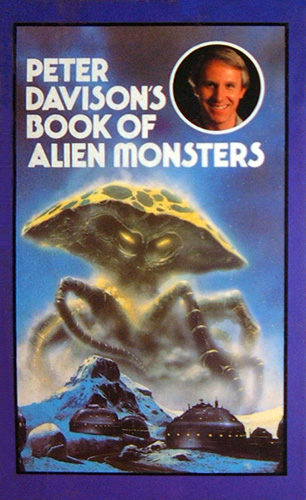
We announced some new products at work today: two new models of the HyperMegaTech! Super Pocket, a low-cost handheld that comes with a bunch of built-in games, plus full compatibility with the Evercade ecosystem, allowing you to expand the device's capabilities with 500+ games across more than 50 cartridges. And yes, that is the official PR line! I should state up front, though, that this is my personal blog, and thus nothing I say here should be considered official Blaze shenanigans; I just wanted to enthuse about this stuff.
One of the two new Super Pockets joining the existing Taito and Capcom devices is focused around Technos Japan, which is a brand for whom the license expired for their Evercade cartridge, meaning second-hand copies of it now go for absurd prices. The Technos Super Pocket brings most of those games (and a couple of newcomers) back at an affordable price point, which is nice.
The one I'm really excited about, though, is the Atari model, which comes with a whopping 50 games. And we worked with Atari to deliberately select a lineup of games that isn't the same as those seen on other Atari-branded devices. Sure, we've got some familiar favourites in there from the 2600 and arcade back catalogues, but we're backing those up with plenty of 5200, 7800 and Lynx titles, including a blend of both games that were on the existing Evercade Atari cartridges, and some brand new ones.
Perhaps best of all, we're doing a limited edition (2600 units, natch) which is designed in classic '70s-style woodgrain. You can preorder that one right now from Funstock; the standard non-limited versions of both Atari and Technos will be up for preorder at the end of the month for an October release.
With Atari having been such an important and defining part of my life growing up, I'm naturally delighted to play a part in bringing a bunch of these games back. So I thought I'd pick out some of my personal favourites, because why not.
Solaris
This is a great game for the Atari 2600. Despite not being called Star Raiders, it is an official sequel to the original Star Raiders (and different to the game actually called Star Raiders II on Atari 8-bit). It's made by the same programmer (Doug Neubauer) and features the same conflict between humanity and the legally distinct Zylon Empire. Like Star Raiders, it features a blend of action and strategy, tipping a little further in the direction of "action", and is probably one of the most technically impressive, ambitious 2600 games to come out of first-party Atari.
In Solaris, you fly a ship around the galaxy in search of the titular planet. You travel long distances on a grid-based sector map, and by warping to occupied sectors you can battle enemy fleets, destroy enemy bases and rescue allied forces from the Zylons. While it might initially seem complex, it's easy to pick up and very compelling, plus relatively short play sessions make it ideal for handheld play. Definitely a highlight if you've never played it, though it is available on the existing Evercade Atari cartridges.
Miner 2049'er/Bounty Bob Strikes Back!
I'm grouping these together because they're both very similar — the latter is the sequel to the former. They're single-screen platform games in which you control Bounty Bob, a Canadian mountie, who is chasing down a dastardly trapper named Yukon Yohan. Yohan has, it seems, taken up residence in an abandoned radioactive mine filled with mutant nasties, so it's up to Bob to clear the way.
The narrative setup doesn't matter at all; this is a game from the early '80s. What does matter is the gameplay. Your main task in each stage of both Miner 2049'er and Bounty Bob Strikes Back! is to walk across every bit of platform in the level. This starts out simple (in Miner 2049'er, anyway; Bounty Bob Strikes Back! is much tougher, working on the assumption you're already familiar with the prior game) but quickly introduces you to a variety of gimmicks, giving each level a somewhat different feel from the last. Both games demand concentration, dexterity and for you to puzzle out the best route to victory, and their arcade-style structure makes them, again, great handheld titles.
Final Legacy
An all-time favourite of mine, this one. It's best known as an Atari 8-bit game but it was also ported to the 5200, which is near-identical internally.
Final Legacy is an action-strategy game. Some call it "Battlezone with ships" but it's a bit more complex than that. There are four distinct components to the game: a navigation map, in which you move around the game world, pick your targets and attempt (usually unsuccessfully) to avoid detection by enemy ships; a "Sea-to-Land" section where you destroy ground targets with a laser; a "Sea-to-Air" section where you shoot down incoming missiles (inevitably launched while you were pratting about in Sea-to-Land mode); and a Torpedo mode in which you destroy enemy ships.
Final Legacy isn't one of Atari's most well-known games, but as far as I'm concerned it's Star Raiders-tier good. I hope the Atari Super Pocket encourages people to give it a proper go.
Ninja Golf
It's Ninja Golf. The title surely tells you everything you need to know if you weren't already familiar with arguably the Atari 7800's best game.
Turbo Sub
A fantastic Atari Lynx game, Turbo Sub is a real showcase of the platform's spectacular sprite scaling ability. It's a first-person shoot 'em up in which you pilot the titular sub both above and below the waves, blasting enemies to kingdom come and, when beneath the surface, collecting crystals which can be spent to upgrade your weapons for the next stage.
Turbo Sub is pure arcade-style fun. It looks great and it plays super-smoothly. It was one of my favourite Lynx games back when I had one, and having it just ready to go on a pocket-sized device is going to be a delight.
Warbirds
Another great Lynx game, Warbirds is a World War I-themed combat flight sim. While its scenarios are limited to dogfighting against one, two or three other planes, the wealth of difficulty options mean that you can customise the experience a great deal, and it's a lot of fun seeing how many missions in a row you can survive with everything turned up to the hardest level.
Like Turbo Sub, Warbirds is a showcase title for the Lynx's sprite scaling capabilities, with both cloud cover and enemy planes depicted as smoothly animated sprites. These are combined with simple polygonal elements for ground detail — a few hills and the hangar that marks your airstrip. It's relatively simple at its core, but it'll keep you coming back for more.
Berzerk/Frenzy
I'm grouping these two together because, again, the latter is the sequel to the former. These are two early '80s arcade games from Stern, casting you in the role of a little green man (literally) and tasking you with fighting your way through increasingly ferocious waves of killer robots. Take too long clearing a screen and the demonic Evil Otto (the world's most terrifying smiley face) will come after you.
Berzerk is the original game, and became famous for a couple of reasons: firstly, its speech synthesis, which would often yell "QUARTER DETECTED IN POCKET" to unsuspecting passers-by; and secondly, the fact that, according to urban legend, it "killed" two people. (The truth of that one is that two people just happened to suffer a heart attack after playing a game of Berzerk; there's no real evidence that the game itself or the stress of playing it caused the problems, but you know how these things go.)
Frenzy, meanwhile, adds a few elements to Berzerk's basic mechanics such as reflecting shots and destroyable walls. The only home port it got back in the day was to Colecovision, and no-one had a Colecovision (which is a shame, because the Colecovision is very good!) so this Super Pocket release is noteworthy for being one of the few official home releases it has had since its heyday.
—
I think that'll probably do for now. I suspect I'll be spending a lot of time with the Atari Super Pocket when I get one (because of course I'm getting one; I'd be getting one even if I didn't work for Blaze) and I'm super-happy to be involved in making it a thing that exists.
Want to read my thoughts on various video games, visual novels and other popular culture things? Stop by MoeGamer.net, my site for all things fun where I am generally a lot more cheerful. And if you fancy watching some vids on classic games, drop by my YouTube channel.
If you want this nonsense in your inbox every day, please feel free to subscribe via email. Your email address won't be used for anything else.
You know the cliché. Steam sale rolls around, everyone jokes about locking their credit cards up. Except I haven't felt like that about a Steam sale for a very long time. And I think this stems from a broader and well-documented problem that Steam has today: the fact it has too much choice.
Having too much choice is pretty much the very definition of a "first world problem", but at times like this it really does highlight how it's something of an issue. What's doubly sad is that this problem has come about at least partly as a result of attempting to sort out a completely different problem.
Years ago, Steam was still the leading PC digital storefront, but its catalogue was much smaller. This is because it was primarily the domain of big publishers. I don't know the ins and outs of what it took to get a game on Steam back in those days, but I know that it was out of the question for a lot of smaller developers. The few "indie" titles that did make it onto the platform tended to be celebrated, because they were often doing something very different from the highly commercial publishers. It's from those early indie titles that we got the first steps in the direction of the "art game" movement that is thriving today.
The Steam sale during those days was an exciting time, because more often than not it was an opportunity to pick up something you'd been thinking about for a long time at a knock-down price. And because the catalogue was still at a manageable size, it was easy to discover (or rediscover) games that you might want to grab. A simple browse of the homepage would almost always result in you picking up a virtual armful of games, then checking them all out for considerably less than the price of a single undiscounted new release.
Today, though? The front page is full of an overwhelming amount of choice, and clicking through to the various curated sections doesn't help, because those are also full of an overwhelming amount of choice.
This is the result of Steam's increasing permissiveness of small-scale and independent developers. It's theoretically a good thing that now pretty much anyone can get their game on Steam rather than having to sell their work independently — which means getting eyes on their own independent website — but it also means that Steam's catalogue is no longer at a manageable size, and hasn't been for quite some time.
I say "theoretically" a good thing, because the problem with this is self-evident: if you flood the market with that much stuff, it becomes difficult to find anything but the most high-profile titles. And that's got to be almost as bad for indies as not being able to publish on Steam at all.
And, as much as I was in favour of Steam allowing adults-only titles on the platform after many years of rather opaque policies in that regard — policies that developers, publishers and localisers still fall foul of at times, for reasons that often remain unexplained — it's been disappointing to see the absolute torrent of low-effort porn games flooding the market. And with the advent of AI-generated art that will actually draw dicks and fannies, that's only going to get worse.
It's one of those situations where, like the obsession with following the trends I talked about yesterday, it's difficult if not impossible to put the plug back in now the flood has happened. Steam now can't just suddenly turn around and say "actually, we fucked up and inadvertently filled our entire store with garbage, please get out". I mean, they can, but I feel like there would be significant challenges (and likely lawsuits) thrown their way if they were to do so.
This is one of the reasons I spend a lot more time browsing and using GOG.com these days. GOG.com arguably still has a bit of a curation problem, particularly since it stopped being about just "Good Old Games" (which is where it got its name from) but it's nowhere near as bad as Steam is. In a GOG sale, I can usually find a few things that I'm interested in playing without too much difficulty, whereas when a Steam sale rolls around, I tend not to bother even looking unless there's something specific I had in mind.
Just another example of the gradual enshittification of everything, I guess, and a reminder that the human race should probably never, ever have nice things.
Want to read my thoughts on various video games, visual novels and other popular culture things? Stop by MoeGamer.net, my site for all things fun where I am generally a lot more cheerful. And if you fancy watching some vids on classic games, drop by my YouTube channel.
If you want this nonsense in your inbox every day, please feel free to subscribe via email. Your email address won't be used for anything else.
Yes, I missed yesterday. I could have predicted that was going to happen, what with it being a Friday, and with Final Fantasy XIV's new expansion Dawntrail launching into its "early access" period for those who preordered. So I'm catching up now, and another post for "today" later and we'll be all square.
I could just not bother, because no-one but me cares how well I stick to the whole #oneaday thing, but it's the principle of the thing. Last time around when I did this, I handled "missed" days like this and I don't feel like it compromised the integrity of my run of daily blogging, so my own self-imposed rules still stand. So there.
Anyway. Final Fantasy XIV: Dawntrail seems good so far. I haven't gotten into the new storyline as yet, because I thought for a change I'd dive into one of the two new jobs included: Pictomancer. For those unfamiliar with Final Fantasy XIV, new jobs introduced with an expansion tend to start ten levels lower than you need to be to start the new storyline, giving you ten levels to get to know your new job by playing dungeons and boss fights you've (presumably) already done on other jobs.
I'm actually quite grateful for having to go through this bit of levelling, because it gave me the opportunity to catch up on some sidequests I'd somehow missed on my run through Endwalker. I've played all the previous Final Fantasy XIV storylines by thoroughly progressing through all the available sidequests as they came up, but several groups of them apparently unlocked after I'd already passed by their respective areas. I'd held off completing them because it felt wasteful to do them and not get any experience points for them, and none of my other jobs were high enough level to take them on. So they've been used to get Pictomancer up to scratch.
Pictomancer seems like quite an interesting job. It's a ranged magical DPS, which means you stand back from enemies and pelt them with "stuff". The unique selling point of Pictomancer over something like Black Mage is that there are several sets of abilities you can use to pelt enemies with stuff. Firstly, there's a sequence of chromatic/elemental spells that function as basic single-target or area-effect attacks, and these also show off the interface's new ability to automatically switch icons in your hotbar rather than you having to map everything individually.
Secondly, Pictomancer unlocks access to three "Canvases" as it levels. One is for painting creatures, one is for painting weapons and the third is for painting landscapes. "Painting" is a fairly lengthy spell if cast in combat, but it's instant outside of combat, so you can sort of "pre-load" yourself ahead of time if you're thinking ahead.
The creature paintings can be unleashed as attack spells, and also contribute to a larger combined spell which can be cast once you've set off the previous creature paintings. For example, first you'll paint a moogle's pom, then set that off as a spell, then paint a pair of wings, and set that off as a spell. This then allows you to immediately set off a spell in which you fling a completed moogle at your enemies. As Pictomancer levels, it looks as if it gains the ability to paint more different creature parts, which trigger in sequence, so weaving that into your attacks is clearly going to be a key part of its strategy.
The weapon painting, meanwhile, can be set off in combat to trigger a status effect known as "Hammer Time". While under the effect of Hammer Time, you can trigger a three-hit combo using a big hammer. This always hits a critical and direct hit, which means it does significantly more damage than most other abilities; the trade-off is that there's quite a long cooldown before you can use it again, though higher level Pictomancers can store a couple of "charges" before having to wait.
The landscape painting, finally, initially acts as a simple damage buff, but at higher levels also makes an area on the floor which, while you stand in it, causes your spells to cast more quickly. This is very helpful for the chromatic/elemental spells, particularly if you use the Subtractive Palette ability to change them into more powerful but slower versions.
If this all sounds a bit complicated, I thought it would be overwhelming at first, but upon starting the new job you have a nice little instanced mini-quest to get to grips with things, and just experimenting with the job in various dungeons and boss fights means things soon become second nature. I'm sure someone is theorycrafting all the fun out of it as we speak, but for now, I'm enjoying just playing it how it "feels" right.
Right, that's enough for yesterday. Time for dinner. Back later!
Want to read my thoughts on various video games, visual novels and other popular culture things? Stop by MoeGamer.net, my site for all things fun where I am generally a lot more cheerful. And if you fancy watching some vids on classic games, drop by my YouTube channel.
If you want this nonsense in your inbox every day, please feel free to subscribe via email. Your email address won't be used for anything else.