 I mentioned a few days ago that I've been playing Bully again. I have now beaten it again (with 100% completion, more fool me) and have come to the conclusion that the game's primary antagonist, Gary Smith, is one of the finest villains we've seen in gaming.
(Bully spoilarz ahead.)
Gary is every teacher's worst nightmare. He's brash, outspoken, manipulative and has ADD. At the outset of the game, it's clear that he's a bully, judging by the way he treats Pete Kowalski. Pete doesn't stand up to Gary, though, as it's clear that he's afraid of him and, judging by his behaviour towards Jimmy later in the game, prefers to live for the approval of others.
Algie, one of the Nerds clique, refers to Gary as a "sociopath". This is probably an accurate description — as time goes on and Gary becomes increasingly paranoid, thanks in part to him ceasing to take his ADD meds, he manipulates the schoolkids to his own ends without a hint of remorse. He lies and cheats and takes every chance he can get to get one up on Jimmy. Jimmy, being a pretty tough "water off a duck's back" sort of kid, takes all this in his stride and eventually manages to convince the cliques of the school that Gary is, in fact, a douchebag and that Jimmy did not, in fact, do or say any of the things that Gary led them to believe. The early part of the game largely consists of dealing with the aftermath of the various messes Gary creates — messes which we never see him create, but certainly see the consequences of.
All goes well until Jimmy gets overconfident with his new-found fame and power and half-successfully pulls off his biggest prank yet: to tag Bullworth City Hall with the slogan "Bullworthless". He has an audience while he does so, but it looks like he's gotten away with it, until he gets back to school. Gary has informed the Principal of Jimmy's misdemeanour, Jimmy gets expelled and Gary becomes Head Boy of the school — a position he had coveted since well before Jimmy ever arrived.
With his new power, Gary turns all the cliques against each other — and Jimmy — with the help of the Townie school dropouts, and he sparks off a full-scale riot in the school. The teachers are powerless to do anything about this, with most of them being too embroiled in their own matters anyway — particularly Ms. Phillips and Mr. Galloway's attempts to throw off Mr. Hattrick and his crusade against Galloway's alcoholism. Taking advantage of the chaos, Gary takes Principal Crabblesnitch hostage and lures Jimmy to the roof of the school for a final showdown.
Jimmy, being Jimmy, takes down Gary, the pair of them crashing through the roof of Crabblesnitch's office just as Gary proudly proclaims that his masterplan has come to fruition. Crabblesnitch hears this — despite having been tied up by Gary, he's too under his spell to believe him capable of any wrongdoing until he hears Gary confess to his crimes. Gary ends up expelled and we never hear of him again, save for a few rumours that he's living in the school belltower, and others that he's living with the Townies.
The best thing about Gary as a villain is not his manipulative nature — though the constant frustration that Jimmy feels as clique after clique turns against him time and time again is enough to make you hate the little bastard. No; the very best thing about Gary as a villain is that he's just not there. Gary is off-screen for a good 90% of the game and all you, as Jimmy, have to go on is second-hand accounts and "he said, she said" rumours — just like real high school. Because if there's one thing a thousand crap teen coming of age movies have showed us: there's nothing worse than being misrepresented to the whole school.
It's Gary's long absence that makes kicking the snot out of the little git at the end of the game all the more satisfying. While the whole thing is perhaps a little silly, and Gary's motivations are never quite clear, it's immensely pleasing to finally get one up on him.
Perhaps the fact that Gary's motivations for "wanting to take over the school" are somewhat obscured is deliberate, though; we see frequent evidence throughout the game that Gary is at the very least a sociopath and at worst a dangerous psychopath. He's a narcissist and a megalomaniac, and he doesn't care about anyone but himself — he wants to make his way to the top by fair means or foul, and doesn't care how many toes, testicles and faces he treads on to get there. Jimmy finds himself in danger of becoming Gary when he initially manages to get all the cliques to respect him and each other and becomes overconfident and cocksure as a result — but discovers when Gary turns them all against him and each other that he's got too much respect for other people and the community, however dysfunctional, of Bullworth Academy, to continue treating people as his puppets, his playthings. It's for this reason that Jimmy eventually prevails and takes his rightful position as head of the school — this time, without becoming a dick about it, despite his propensity to solve problems through punching them in the face.
So, then, Gary Smith: I salute you. You were a worthy adversary and deserve to take your place alongside the great gaming villains of our time.
 After posting a lengthy comment on yesterday's post, I figured that I'd share what I've discovered about playing Kairosoft's Pocket Academy with a view to potentially making the start of the game a little easier for those of you who haven't tried it yet. So here we go.
 I've been playing a couple of Kairosoft games on iPhone recently — specifically, Game Dev Story, which most gamers with an iPhone have probably heard of, and Pocket Academy which, as a recent release, may be a little more obscure.
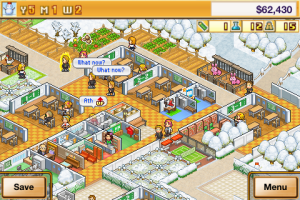 Now we come to Kairosoft's titles. While they don't quite give you the completely empty canvas to start with, the tutorial is rudimentary at best and barely explains the basics of gameplay — the rest of it is up to you to discover. Why should you level up your staff? Why should you pump money into advertising? What effect does having couples in your school have? Why does a combination of a tennis court, a tree and a library make my students happier?
 I'm a bit surprised by the way Capcom have been acting recently. I always used to figure them for a company that had their collective heads screwed on pretty well, and with their Capcom Unity (geddit?) site showing a much greater effort than many publishers to engage with fans, it looked like they were getting 21st century marketing right.
 After the recent Steam sale, I've started playing Bully again. Or specifically, I'm playing the PC version of the Scholarship Edition for the first time — I originally played the game on PS2.
 It's a sad day today as I hear from my good buddy
  I mentioned a few days ago that I'd started playing Alpha Protocol, one of a number of low-cost acquisitions from the recent Steam Sale, now sadly (or perhaps not so sadly — everyone's credit cards likely want a bit of a rest) over. I've spent a bit more time with it now, so I'd like to share some further thoughts on it.
 I'm pretty sure I already knew this some time ago, but I've come to the not-so-startling conclusion recently that I'm the one buying the crap games and listening to terrible music and enjoying awful films. It's not a conscious decision to be contrary, but I do find myself more willing than some to give creative works that have been somewhat maligned the benefit of the doubt — and more often than not actually end up enjoying them.
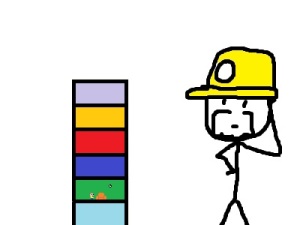 Have you played Tiny Tower on iOS? This is one of those games that should be complete shite but actually ends up being strangely compelling.