I really like board games, as those of you who have been reading for a while will know. While I'm perhaps not quite as "hardcore" into the hobby as some on the Internet — largely due to not getting to play quite as often as I'd like — I do firmly count myself in that contingent of geeks who enjoy shuffling cards, fiddling with cardboard chits and moving wooden and/or plastic pieces around on a table. There's something inherently fun about it as a physical activity, and the social side of things shouldn't be understated, either — it's a great thing to do with friends if you don't feel like going out, and is an activity that can easily be "scaled" according to how many people you have and how much time you have available.
Next weekend, I'm taking a short trip away with some friends of mine to make merry and play a ton of board and card games. I'm really looking forward to it, since it will be some uninterrupted time to enjoy ourselves without having to worry about being home on time or anything like that. (I will add at this juncture that Andie is enormously understanding and patient regarding my geeky hobbies, and that I appreciate it enormously — especially when she joins in!)
Anyway, in preparation for said weekend, I catalogued the games I have available, and it seems I have amassed quite a sizeable collection over the last few years. I am happy about this, and I like displaying them as a talking point. (If you come over to our place and you see anything exciting-looking that you'd like to play on my shelf, just say the word and I'll be more than happy to bust it out.)
For those less familiar with the hobby, it's difficult to know where to start. So I thought today I'd spend a moment going over some of my favourites from "The Davison Collection" and why they're worth a look. Not all of these games hit the table regularly in our gaming group due to our varying tastes, but I enjoy all of them for various reasons.
 Ticket to Ride
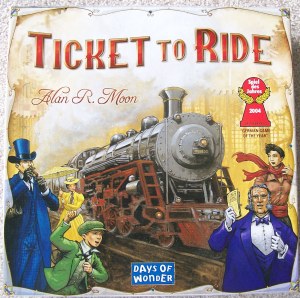
If you're just getting into board gaming — and by that I mean "ready to step beyond Monopoly and Scrabble" — there are few games I can recommend more than Alan R. Moon's classic Ticket to Ride. It's as simple as that.
Ticket to Ride's theme is that you are claiming train routes across North America, circa 1920. (Alternatively, in one of the many other versions of the game, you might be traversing Europe, Scandinavia or all manner of other places — each alternative version also features slightly-modified rules for variety.)
This isn't a dry, complicated business simulation, though; quite the opposite. Ticket to Ride is actually a relatively simple game of set collection. You're dealt a hand of coloured cards at the outset of the game, and on each of your turns you can do one of three things: draw two more cards, either from the selection of five face-up cards on the table, or from the face-down draw pile; claim a route by playing the corresponding number of like-coloured cards to the discard pile and scoring points for it; or drawing new "route tickets" that provide long-term challenges to be scored at the end of the game. That's essentially everything you need to know to get started — there are a couple of extra rules involving when you can and can't draw rainbow-coloured "locomotive" wild cards, but essentially those three actions are all you need to know to start playing Ticket to Ride.
Once you've got the rules down, a game of Ticket to Ride is done and dusted in maybe 30-45 minutes, depending on how many players you've got. It's a great game to introduce "non-gamers" to the hobby, and a good "start of evening" game to get everybody warmed up.
 Carcassonne
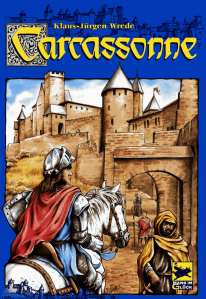
Staying with the theme of "easy to understand, hard to master" games, we have Klaus-Jürgen Wrede's Carcassonne, a deceptively simple yet enormously competitive game that is as fun with two players as it is with five.
There are very few rules to learn in Carcassonne. On your turn, you draw a square tile from a face-down stack, then place it somewhere on the table in such a manner that it connects to something else. Pretty much every tile connects to something, so I believe it's impossible to get into a situation where you can't play anything at all — though clever play by your opponents may mean that you might not be able to play exactly where you want to.
Points are scored in Carcassonne by completing "features" on the map. These include cities, roads and cloisters. Each of these is claimed by placing one of your little wooden "meeples" on the tile you just placed to mark your ownership of the feature, then completing it. Cities must have a complete wall; roads must terminate at junctions, cities or cloisters; cloisters must have the eight tiles surrounding them filled. You don't get your meeple back until you complete the feature, so one strategy is to make it as hard as possible for your opponents to finish their features, thereby depriving them of further point-scoring opportunities in the later game. You also can't "share" a feature with another player unless you claim an unconnected part of it and later join it up. You can add more than one meeple to a feature to defend it more strongly in the same way — you can't, however, simply add multiple meeples to connected tiles of the same feature.
Carcassonne's "long game" comes in its "farming" mechanic, the exact implementation of which depends on how old the edition you're playing is. In most current editions of the game, farms are claimed by lying a meeple down on its side in the grasslands between roads and cities. This meeple can never be reclaimed, and scores no points at the end of the game. When the game ends, each field enclosed by cities and/or roads is calculated separately — the player with the most meeples in that field scores three points per city. Again, you can't add meeples to a farm that has already been claimed except by claiming an unconnected area and later joining it up — a process which can often be quite tricky to complete.
Carcassonne has extremely simple mechanics that belie a huge amount of tactical depth. It's quick and easy to play, yet has the potential to get enormously competitive — in other words, it's a great game for board game newbies to cut their teeth on, and one that remains relevant even as you get deeper into the hobby.
 Pandemic
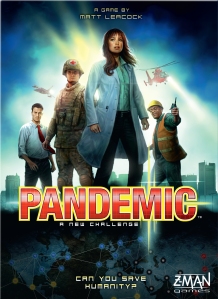
Pandemic is a cooperative board game in which players take on the role of disease control specialists attempting to cure four viruses that are spreading across the world. Each player has unique special abilities, and a significant amount of collaboration is required to beat the challenges the game provides.
Like the other games on this list, Pandemic's mechanics are fairly simple. To cure a disease, all you have to do is collect a set of like-coloured cards, then ensure you're in a research station to discard the cards and discover a cure. The twist is that it's a bit fiddly to trade these cards between hands, and all the while you're faffing around collecting cards, the disease is continuing to spread across the world, meaning you occasionally have to prioritise charging off on an aid mission to stop the viruses spreading unchecked.
Pandemic is a challenging game. There are several ways to lose: running out of cards to draw; running out of coloured cubes to represent a disease; or allowing the number of "outbreaks" — occasions where an already heavily-infected city causes nearby cities to be struck down also — to reach its maximum. It is fairly likely that the players will lose the game, particularly when playing on the harder difficulty levels — but it is still fun despite its challenge factor.
Pandemic is a good game to encourage cooperation, communication and collaboration, and it's great for those who aren't good with super-competitive games or direct conflict. It's strictly the players against the game — unless you're playing the "bio-terrorist" mode that comes with the "On the Brink" expansion set — and thus either everyone wins together… or more likely, everyone loses together.
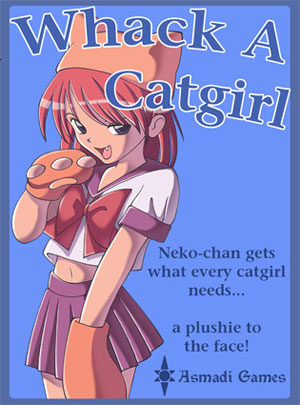 Whack a Catgirl
I'm not going to pretend this is the best game in the world, but it is silly and enjoyable — and not only that, it plays super-quickly, too.
In Whack a Catgirl, you are attempting to pelt an irritatingly cute anime-style catgirl with a variety of amusing objects. The basic mechanics of the game consist of drawing cards from a central face-up pool and either playing them immediately if they are an action card, or putting them in your "arsenal" in front of you if they are item cards. Once you have at least two "hearts" worth of items in front of you, you can lure Neko-chan the catgirl over to you with them — discarding them in the process — and then batter her over the head with another one or two of your items, depending on how many "hearts" you expended to lure her. Flinging items at Neko-chan allows you to discard them into your face-down score pile, which is totted up at the end of the game.
That's basically it. The game mechanics are super-simple, but the fun in Whack a Catgirl comes from the silly cards and the theme. It's fair to say that the humour and references on the cards are probably best suited to anime fans or at least those familiar with Japanese popular entertainment, but anyone can get a kick out of the amusing artwork and inherent ridiculousness of the theme.
Fun fact: this was one of the first games from Asmadi Games, who have come to somewhat greater prominence recently through their chaotic card game We Didn't Playtest This At All.
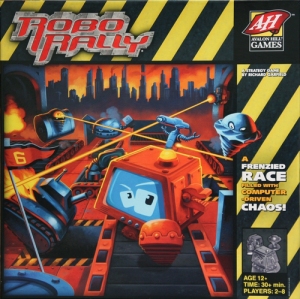 Robo Rally
This is basically Logo: The Game, a reference which was totally lost on everyone I last mentioned it to. Come on! PEN DOWN, FORWARD 100, RIGHT 90? No? I'll be over here, being an old fart.
In Robo Rally, you take on the role of one of several amusingly-named robots and must proceed through a series of checkpoints before the other robots do. Simple as that. Except it's not quite that simple — the courses are extremely hazardous, the other robots have a habit of shooting at you if you're in their firing line, and the amount of control you have over your robot can occasionally be inconveniently unpredictable.
A single turn in Robo Rally consists of drawing cards, then using them to "program" your robot's actions for the turn. Cards allow robots to move forward and backwards and turn left and right. Once everyone has programmed their robots, everyone resolves their moves one step at a time. If a robot ends a move facing another robot, it fires at it and causes damage. If a robot moves into another robot, it pushes it along — something which can seriously fuck up a carefully-laid plan.
As a robot gets more damaged, more of its cards become "locked", which means that the robot must perform that same fixed action on its turn. As you can probably imagine, this can be enormously inconvenient, particularly if it's a "move forward" card that carries a significant risk of throwing you down a pit. Further complications are added by environmental hazards such as conveyor belts, lasers, walls and all manner of other problems. What initially appears to be a simple task quickly becomes very challenging — particularly with the chaos of the other players thrown into the mix.
Robo Rally is simple to pick up but hard to master. It's a lot of fun, particularly for those who enjoy thinking about things logically, but be warned, it's pretty rare you'll be able to pull off the "perfect" plan every time!
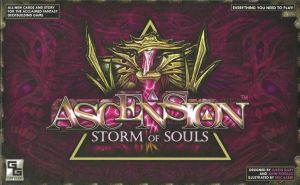 Ascension
This is a "deckbuilding" game — a game where you start with a fixed deck of cards, shuffled randomly, and then gradually acquire more and more cards as the game progresses. These cards fall into two main categories — cards which help you buy things, and cards which help you fight things. Your points largely come around from fighting things by playing a high enough value of "fight" cards on the table — but in order to acquire said fight cards you will, of course, have to spend some time acquiring some cards that help you buy things.
Ascension's mechanics are easy to pick up and games flow quite quickly, even with four players. The deckbuilding mechanic is a lot of fun and helps ensure that games are never quite the same, and it's just thematic enough to keep fans of fighting fantasy monsters happy, while providing enough strategy for beard-scratching tactical fans to have things to think about.
Talking of deckbuilding…
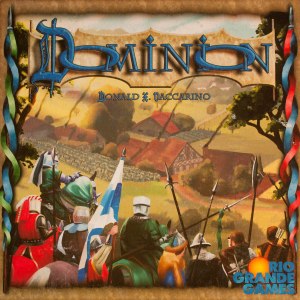 Dominion
Dominion is an interesting game that has a lot of potential variations. Each time you play, you pick a random selection of card decks to use, meaning that each game has a different combination of special abilities available to you. Thematically, you're building a kingdom by purchasing territory and constructing facilities, but in practice you're collecting cards that work well together and allow you to do more with your turn than you can at the outset of the game. The basic mechanics are relatively simple, but the tactical possibilities provided by the cards mean that the game grows gradually in complexity as you collect more cards for your deck.
Dominion perhaps isn't quite as accessible as Ascension is, but it's probably the deeper game. Once you get your head around the rules and become familiar with the cards, games can flow pretty quickly — until then, however, be prepared to spend a bit of "thinking time" determining how the various cards can benefit you.
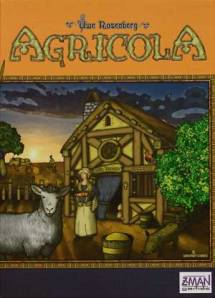 Honourable Mention: Agricola
I feel honour-bound to mention Agricola because my gaming group is such a big fan of it, but I honestly don't enjoy it all that much when it does come out. This is largely due to the fact that I'm not very good at it, which I appreciate is a somewhat shallow reason to dislike it, but there you are.
Actually, the thing I dislike more than anything about Agricola is not that I always lose at it, but it's that I don't really understand why I lose, or how I can do any better. And looking up potential strategies online doesn't really seem to help either. It's just something I need to become more familiar with, I guess. I can certainly appreciate the interesting, complex but accessible mechanics at work in the game — I just have no idea how to do any better than I already do.
Time to practice, I guess.
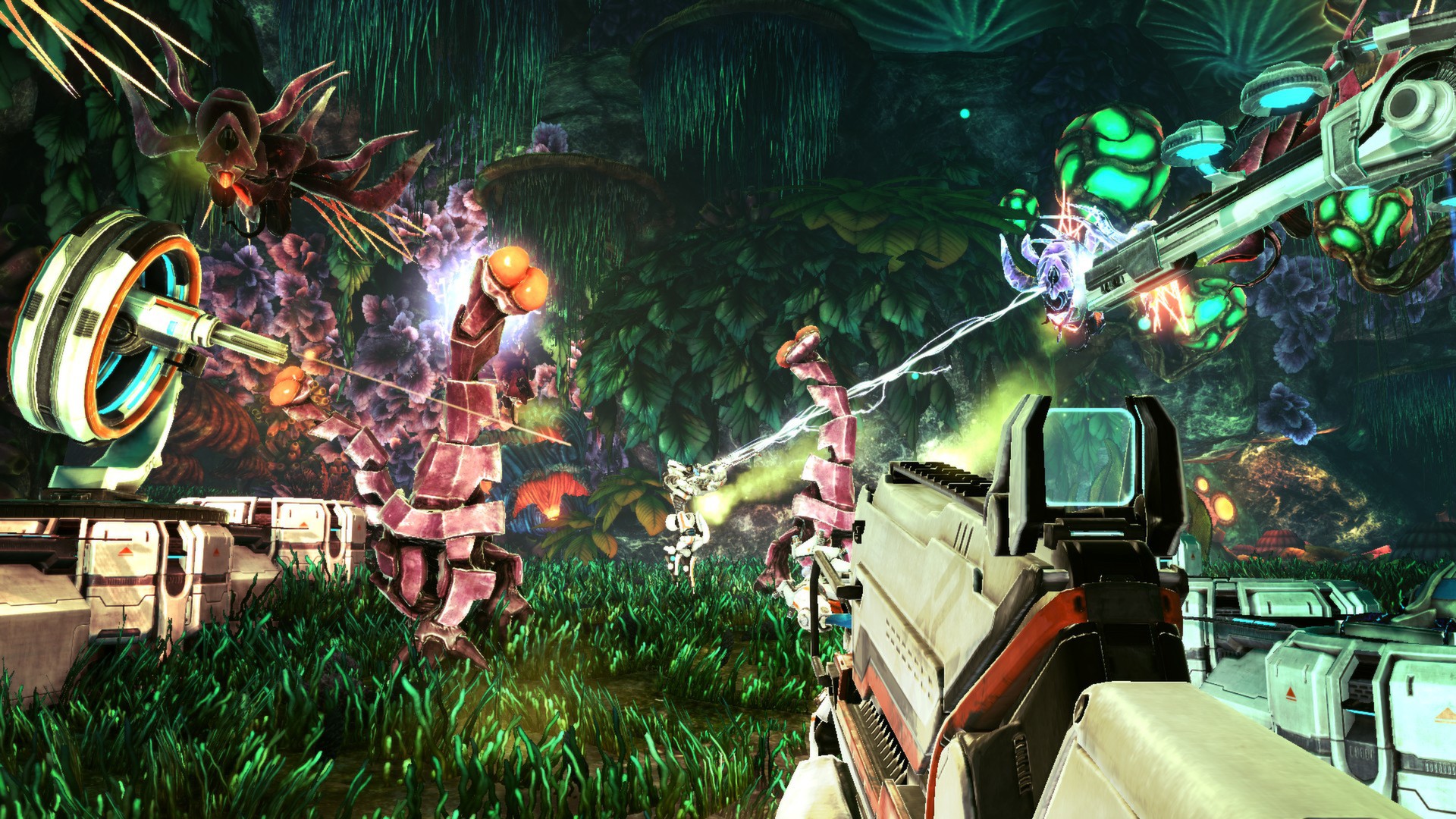 Mark and I played a bunch of a recently-released indie game today. That game is Coffee Stain Studios'
 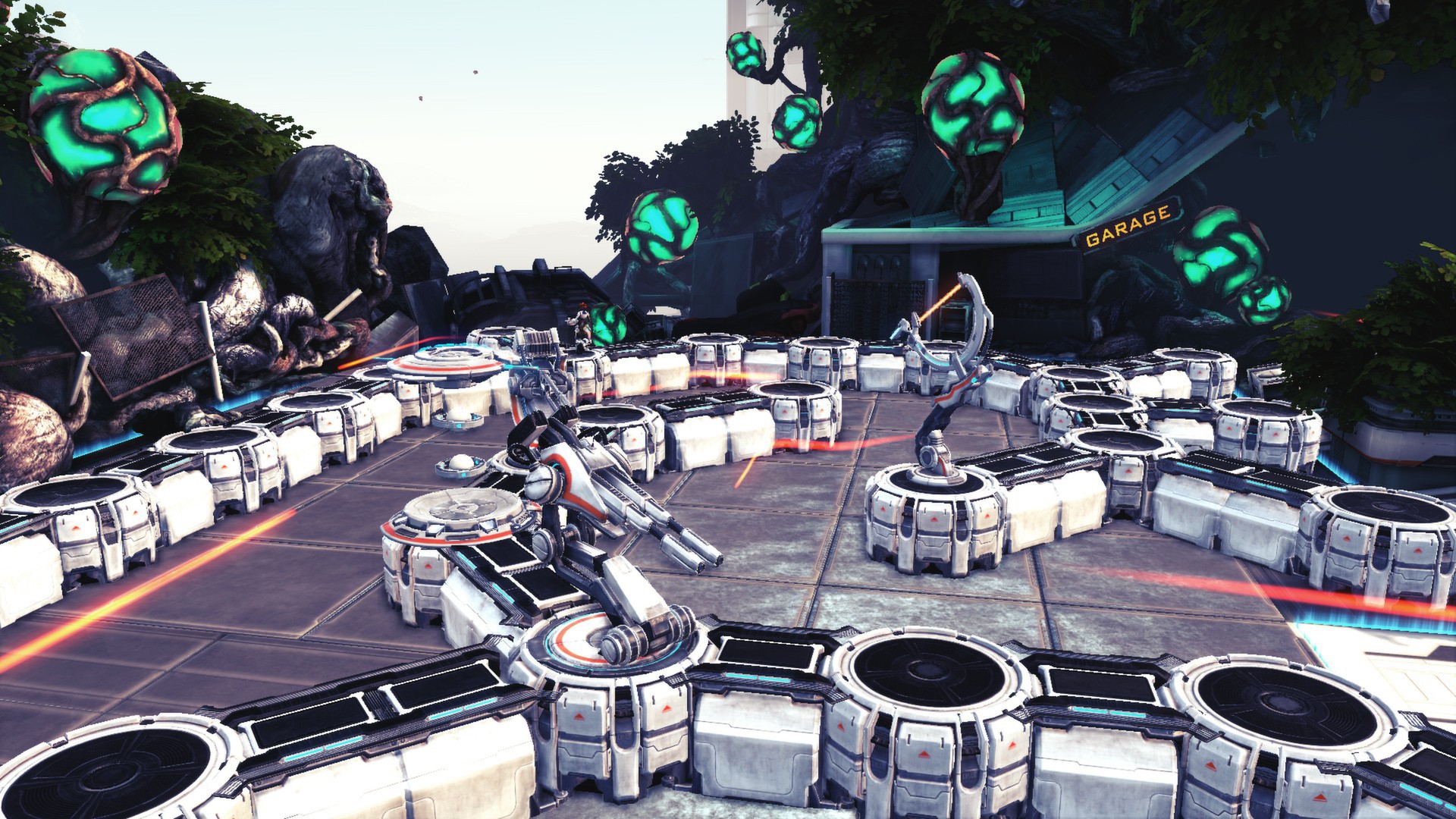 You know what, though? I've played a good 4 or 5 hours of Sanctum 2 today in total, and it's great. It isn't the original game, no, but why would you want it to be? Sanctum is still available for download, so if you like that, go play that. Sanctum 2 is a distinctive experience that, while in possession of a couple of strange design decisions, is a lot of fun to play both solo and cooperatively with other people. It is both strategic and action-packed; challenging and fun; and it offers a significantly greater amount of content and depth than the original game did when it came out of the gates.
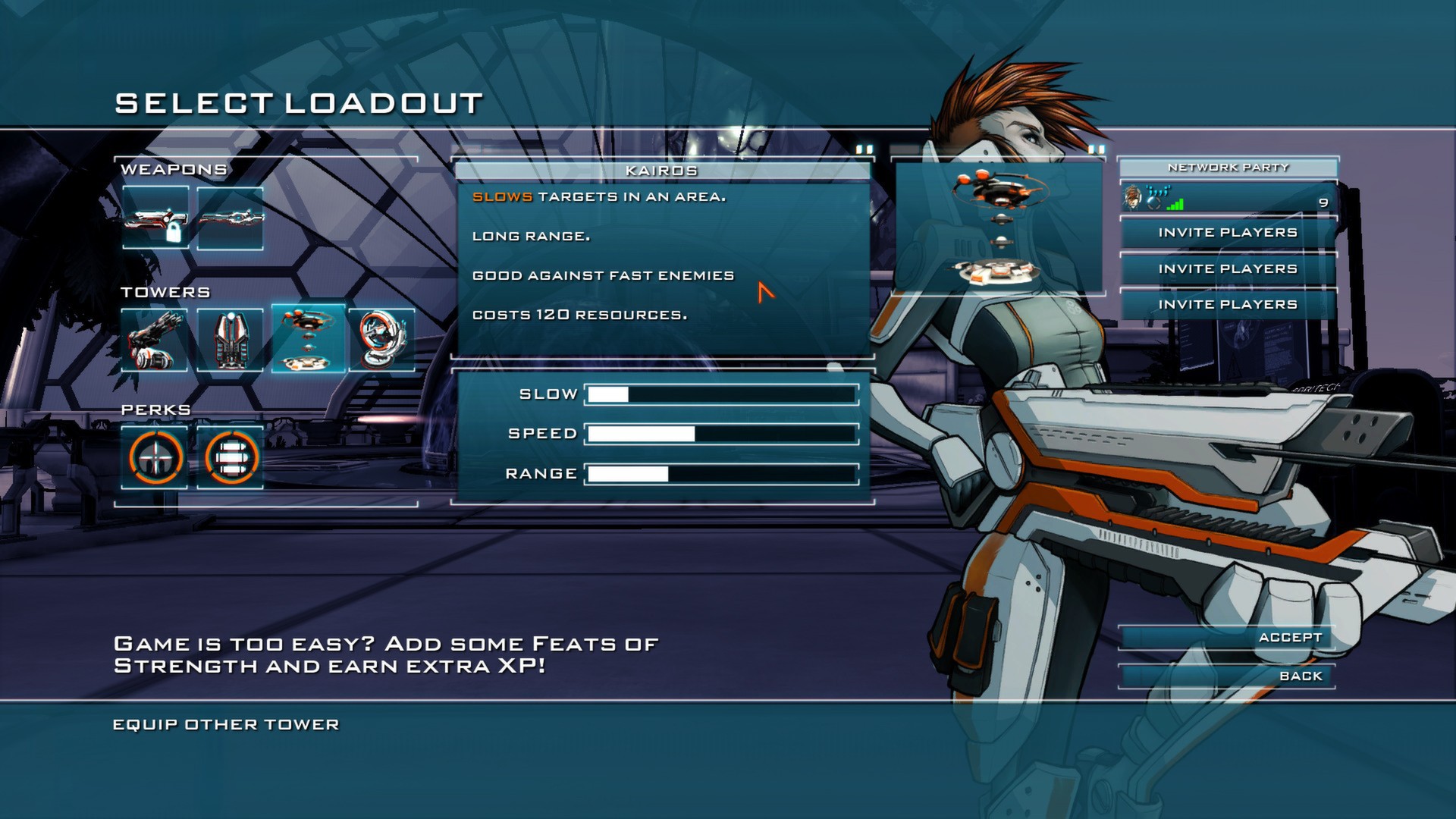 In short, Sanctum 2 is a very good game if you enjoy both first-person shooters and tower defense games that demand a slightly heavier degree of thought and strategy than normal. It's an excellent fusion of two fairly disparate game genres, and while there are a few things that could be tweaked here and there, it's perfectly enjoyable as it is. Not only that, Coffee Stain Studios have demonstrated that they are open to constructive feedback, too, and will likely continue to improve the game after its release. Given the abuse and vitriol that has been hurled their way today, they would be perfectly within their rights to just say "fuck you" to all the ungrateful gamers who are bitching about their new release, to be honest, so I have to admire them for their self-restraint in dealing with these people.
 I've already talked about both
 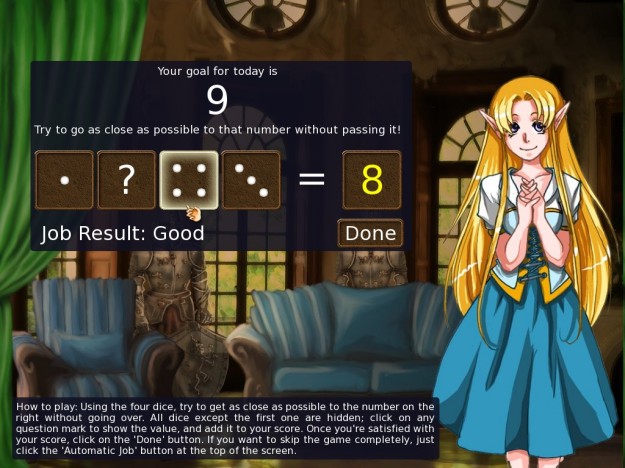 Both Long Live the Queen and Spirited Heart differ considerably, however, despite having fundamentally similar mechanics. Long Live the Queen sees you playing a predefined character — the titular Queen — and then sending her down the path of your choice, while Spirited Heart allows you a lot more freedom to design your own character and choose what your goals are, be they romancing a specific character or attempting to accomplish a mission set for you by your race's goddess. While neither of these games are particularly shiny or exciting to look at, I've found them surprisingly compelling, and they make me want to check out more games of a similar ilk.
 One reason I've been enjoying them a lot is due to their similarity to an old favourite visual novel/dating sim known as True Love (above). I first played this back in probably 1999-2000 and still think of it very fondly today, despite the fact it is an absolute bugger to get running on modern machines. Like the life sims I've been playing recently, True Love saw you managing your time carefully in an attempt to build up your stats enough to attract one or more of the game's heroines and make her your "true love". I attribute my present-day love of games like the Persona series to my earlier experiences with True Love, and I'm getting a lot of the same feelings from titles like Long Live the Queen and Spirited Heart, too, which is nice.
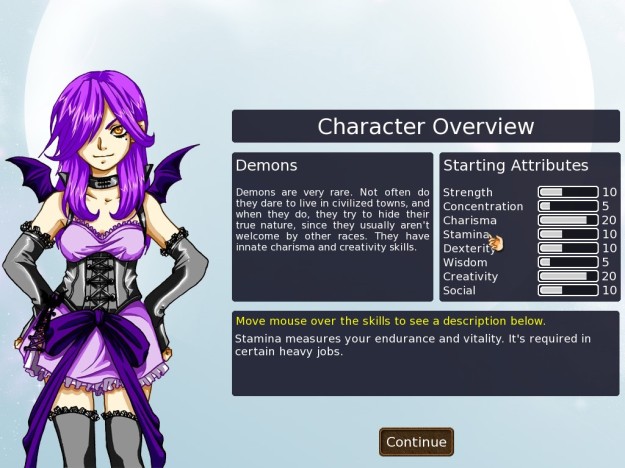 Spirited Heart does a number of interesting things that distinguishes it from Long Live The Queen. Chief among these is the fact that you're not playing a fixed character — you're playing one of your own design, to a certain extent anyway. There isn't any option to customise your character's appearance, for example, but the way you play does determine what sort of person your character ends up as.
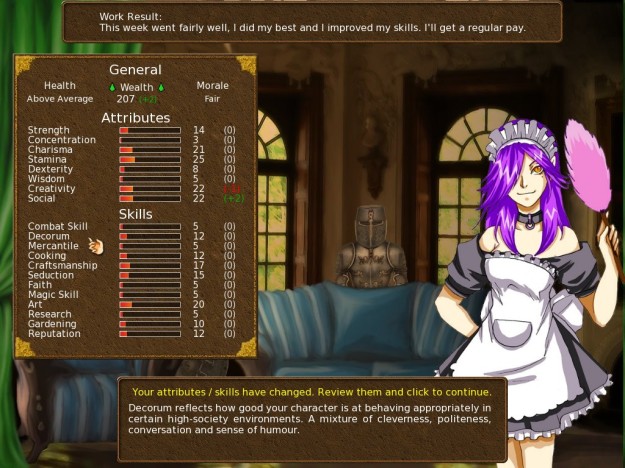 The way the game works is that each week, you choose whether your character goes to work or takes a week off. Going to work allows you to choose any occupations you meet the prerequisite stat requirements for, while resting allows you to restore your health and morale, which can often be negatively impacted both by going to work and through random events that occur. You can't go to work if you're too unhealthy or if your morale is too low, so sometimes you need to take a week off in order to progress. Working, meanwhile, often improves your stats and allows you to earn money, which can be used on more effective vacations when required.
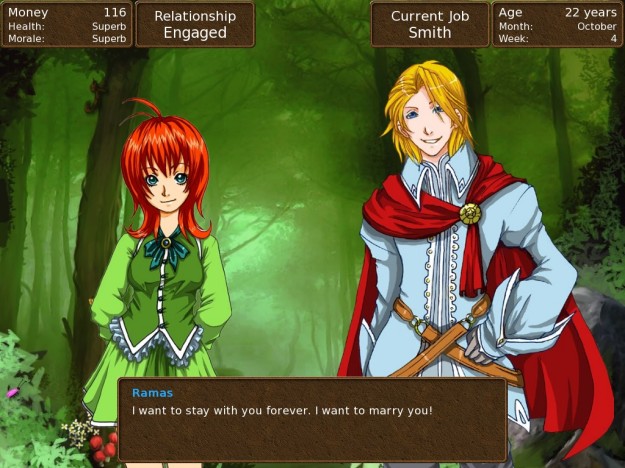 Just to confuse matters, partway through the game, my character was visited by her Goddess and tasked with attaining a particular "title" by the time she reaches the age of 30. Unfortunately, pursuing the elf of her dreams and following the Goddess' quest are not really compatible, since the Goddess' quest requires me to become an Artist, while pursuing the elf requires me to continue working as her maid. CHOICES. DECISIONS. CONSEQUENCES.
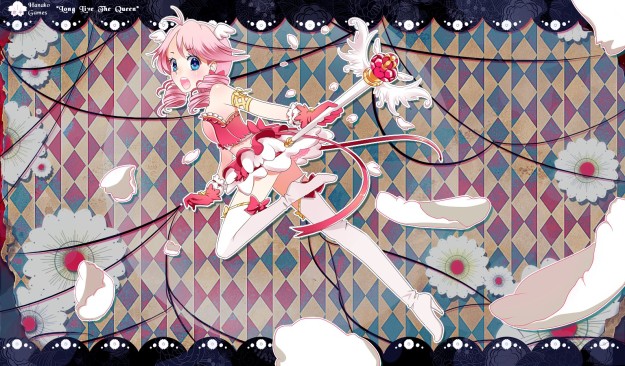 A short while back, a few indie developers that I enjoy the work of very much released a bundle of games that looked interesting. Among this selection of games was a title known as Long Live the Queen by Hanako Games, developer of Magical Diary, a game which I enjoyed very much. I picked up the bundle and, as tends to happen frequently with this sort of thing, forgot all about it completely until recently.
 Essentially, Long Live the Queen is a game somewhat akin to old Japanese games like Princess Maker, in that you have a young anime girl to take care of and must train her up to deal with various situations appropriately. The course which the game's plot takes depends on the skills which you choose to train up, and the skills which you can train most effectively are determined by Our Heroine's current mood — for example, if she's depressed, she's particularly wont to express herself through things like music and singing, whereas if she's angry, she can channel her aggression into training in things like military strategy and proper use of weapons. Training to particular levels in things unlocks various costumes appropriate to the skills she's learning — for example, learning a lot of spiritual skills unlocks a priestess outfit, while becoming a "Lumen" and awakening to her family's magical heritage unlocks a particularly awesome "magical girl" outfit.
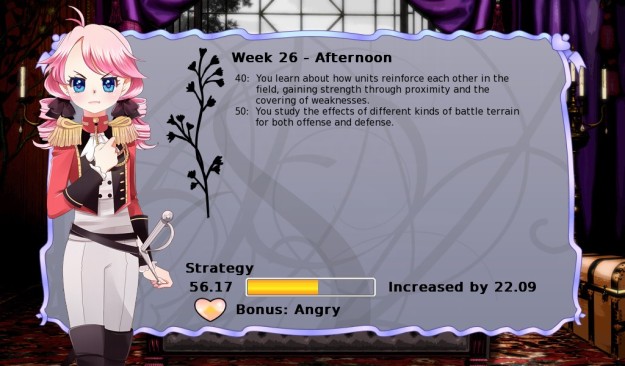 Making it through the game without dying horribly is a case of carefully making decisions and levelling up skills appropriately, and it's not at all uncommon for Our Heroine to meet a sticky end — in fact, it's positively encouraged via the "collect them all!" death checklist in the game's main menu. It's almost preferable to play the game like a roguelike — starting from the beginning, only saving when you're stopping playing rather than before you make a critical decision, and dealing with the consequences of your actions. In a nice touch, reaching the end of a game — whether with Our Heroine's coronation as Queen or with her death — allows you to export a complete log file of everything that happened so you can perhaps figure out what on Earth went wrong.