#oneaday Day 518: '80s Activision had the juice

I frigging love '80s Activision games, particularly on the Atari 2600 and Atari 8-bit. I grew up with the ones on Atari 8-bit, of course, and since I never had a 2600 back in the day, those are a (relatively) more recent discovery. But I adore every one of them, and I'm beyond thrilled that I've been part of bringing them back to a new audience on Evercade.

The first of our Activision cartridges isn't out yet, but I, of course, have a copy. Perks of the job and all that. It's already becoming one of my most-played Evercade cartridges, and I don't see that changing any time soon.

We're actually doing three collections in total (this isn't Super Secret information, it was in our press release) and I've been largely responsible for the curation of said collections. All three of them are very strong indeed (you'll have to wait and see the lineup for the others, which are coming next year!) but this first collection comes out of the gate swinging with some of my absolute favourites.

My personal highlights are MegaMania, Enduro, Crackpots and River Raid, with honourable mentions to Beamrider and Demon Attack, games I've gotten to know a bit more recently.

MegaMania is one of the absolute best fixed shooters of the early '80s. Pitting you against waves of strange household objects, this "space nightmare" keeps things constantly interesting, as each wave has its own distinctive movement pattern — and then once you've cleared a complete loop of all of them, they go and change up their patterns a bit, just to keep you on your toes. It's a beautiful example of how utterly elegant some early games can be: it's simple to understand, has a brilliantly paced difficulty curve, a well-crafted scoring system and is endlessly replayable.

River Raid is, of course, a pioneering vertically scrolling shoot 'em up, whose noteworthy features include the ability to adjust your speed as you fly and the necessity to refuel your aircraft while negotiating obstacles and blasting enemies. The fact that this game was crammed into 4 kilobytes of ROM will never not be amazing to me. Carol Shaw was an actual wizard — not just for the game's technical accomplishments, but for the fact that, like MegaMania, it's an incredibly well-paced, considerately designed game that is likewise replayable until the end of time.

Enduro is the spiritual precursor to the home computer game The Great American Cross-Country Road Race, a game which I played as a child many years before I ever encountered Enduro for the first time. Enduro is, partly by necessity of the more primitive hardware it's running on, a simpler game, but I think its simplicity is also a core part of its appeal. All you have to do is overtake a set number of cars as a full day-night-and-weather cycle of a set duration proceeds: overtake 200 cars on the first day, then 300 each day thereafter. Your final score is how many "miles" you successfully drove before failing to qualify for the next day, and the score is presented using a lovely rolling analogue counter effect. I would have loved that as a kid — hell, I love it now.

Crackpots is a relatively recent discovery, and a game I feel I would have probably been terrified of as a kid. Again, the concept is simple: bugs are climbing your building, and you must drop flower pots on them. With each wave of bugs cleared, a new colour appears, and each colour of bug has a distinctive movement pattern. When you've cleared one loop of all the bug types (black, blue, red, green) the cycle repeats, but faster. The bugs chew through a layer of your building every time you let too many past you, and this affects the pace of the game from thereon. After too many layers of your building have been eaten, the game is over. It's pure high score fodder, and once again, beautifully paced and designed, with a dynamic difficulty level that raises and lowers according to how well you're doing.

Beamrider is, in essence, another fixed shoot 'em up, but it probably has more in common with Atari's Tempest than anything else, in that rather than moving freely, you switch between distinct "lanes" that the enemies proceed down. Thus there's a much stronger element of precision and even strategy to Beamrider than some other games, and the presentation, considering the host platform, is very good indeed. It's another game I got to know quite recently — there is an Atari 8-bit version, I believe, but I never encountered it back in the day.

Demon Attack is a game that I became familiar with after watching Classic Game Room's Atari 2600 reviews many, many times. It's a very simple fixed shooter, in which all you have to do is blast demons in the sky above you. Only three demons appear at once, and only one of them fires at you. It should be primitive and stupid and dumb, but it's incredibly compelling, particularly once the pace of the game increases and the demons start splitting into smaller bits. This one actually wasn't an Activision game back in the day; it was by Imagic, but Activision got the rights to all the Imagic stuff at some indeterminate point in the past. So yes, the Evercade Activision cartridges will have some of the Imagic stuff, too.

I'm quite fond of Activision Anthology on the PlayStation 2, but the last time I played it, I spotted quite how poor the emulation is in that version. It's not altogether surprising — there have been 23 years of advancements in emulation since — but, given how accessible good quality emulation of these games is about to become with the Evercade cartridges (and, hell, how easy it is to get 2600 up and running on systems like MiSTer and cheapo Chinese handhelds) it's a little hard to go back to. The built-in "badge" challenges, weirdo visual effects and '80s soundtrack are fun, though. I feel like we'll never see a compilation quite like that ever again.

But anyway. I am banging on about this because I spent today making a video about the upcoming cartridge. Watch out for it on the Evercade YouTube channel soon!


Want to read my thoughts on various video games, visual novels and other popular culture things? Stop by MoeGamer.net, my site for all things fun where I am generally a lot more cheerful. And if you fancy watching some vids on classic games, drop by my YouTube channel.

If you want this nonsense in your inbox every day, please feel free to subscribe via email. Your email address won't be used for anything else.

#oneaday Day 517: First impressions from Hyrule Warriors: Age of Imprisonment

Hyrule Warriors: Age of Imprisonment arrived today and, keen to see quite how wrong that awful review from the other day was, I booted it up right after work and have been enjoying it since. I'm not very far in yet, and there seem to be a lot of mechanics and structural elements that are still locked, but I like what I see so far.

It's going to be interesting playing this alongside Tears of the Kingdom because, as anyone who has played the latter will know, a plot point in that is Zelda being sent back in time to the founding of Hyrule, and through a sidequest, Link can get occasional visions of key events during her time in the past. What Age of Imprisonment provides is a complete story from Zelda's perspective, from the moment she arrived in the past and was discovered by King Rauru and Queen Sophia, up until… well, I don't know, yet, but I assume some form of "imprisonment" will be involved, likely with Ganon(dorf) at the middle of it.

Thus far the game feels like it's taking some elements from previous Hyrule Warriors games (I say this with the caveat that I've not actually played Age of Calamity as yet) and combining them with some fun new(?) elements. Of particular note is a counterattack system, where major enemies do heavily telegraphed attacks, and you can use your characters' cooldown-based special abilities to interrupt them. This is never not satisfying, particularly when combined with the "weak point" mechanic introduced in the first Hyrule Warriors, where after certain attacks, some enemies reveal a weak spot and, if you batter this down enough, you get to perform a fancy cinematic attack on them.

There are also giant enemies, much like in the original Hyrule Warriors, and these have their own ways of being dealt with. They're not quite so rigid in their "solutions" as the original Hyrule Warriors, though, which is nice. You can, in many cases, jump on them and wail on their weak points while standing on top of them, though, which is always a delight to do in any game that allows you to do so.

The characters seem like fun, too. Particular highlight so far has been Mineru, sister of King Rauru, who is a Zonai scientist lady who commands constructs to do her bidding. Her "run" animation is her riding a motorised unicycle type thing, and most of her attacks involve summoning giant mechanical things, cannons and all manner of other fun stuff to cause chaos over a wide area. I think she's going to be enjoyable to play with, though I'm also intrigued to see what other characters are on offer and how the game incentivises you to play as them.

Mecha-Link has made an appearance, too, and he's predictably fun to play as, handling much as he did in the older Hyrule Warriors. He did conclude his first appearance by literally turning into a spaceship and flying off into the sunset, though, so I am looking forward to the first of his apparent Star Fox-esque sequences, whenever that might arise.

My concern with Age of Imprisonment (and indeed Age of Calamity, when I eventually get around to it) is that neither of them will live up to the original Hyrule Warriors in terms of Stuff To Do. For the unfamiliar, the original Hyrule Warriors, particularly in its Definitive Edition incarnation on Switch, not only had a lengthy story mode to play through (multiple times if you want to get all the rewards), but also had a brilliant mode called Adventure in which you gradually unlocked cells on pixel-art recreations of classic Zelda maps and took part in various battles in each space. Some of these were full-scale battles similar to what you do in the story mode, while others were battles that had some sort of special conditions or rules in place. The sheer amount of stuff to do in the Adventure mode, across a variety of different maps, meant that the original Hyrule Warriors had near-infinite replayability, and with the way Age of Imprisonment seems to be structured, I suspect it doesn't have anything like that.

That's not necessarily a bad thing, though. It means that Age of Imprisonment might actually be completable. And if and when I'm done with it, I can always return to the original for more of that sweet Adventure mode action.

In the meantime, I'm having a lot of fun with it, and learning today that its soundtrack is by MONACA, best known for their work on the Nier series, has made this game all the more interesting to me. And so I'm off for another battle or two before bed, I think…


Want to read my thoughts on various video games, visual novels and other popular culture things? Stop by MoeGamer.net, my site for all things fun where I am generally a lot more cheerful. And if you fancy watching some vids on classic games, drop by my YouTube channel.

If you want this nonsense in your inbox every day, please feel free to subscribe via email. Your email address won't be used for anything else.

#oneaday Day 516: Longform playthroughs

I originally stopped doing longform playthroughs on my channel because it was taking forever to get through a single game (and I was getting bored with Final Fantasy III, probably my least favourite Final Fantasy — yes, I'm a sicko who likes Final Fantasy II), but with my recent playthrough of The Granstream Saga on PS1 proving to be quite enjoyable (if not exactly a viewer magnet, but I don't care about that) I think I'm going to do some more of these.

I've been hesitant to do so for the aforementioned reason, but at the same time I've also wanted to do some more, because I feel like that does better justice to longer games that perhaps can't be finished in a single sitting. And, given that it's easy for me to set aside some "retro time" to record this stuff of a weekend, particularly now I have the MiSTer Multisystem set up, I feel I can probably devote some proper time to a number of games I've been meaning to explore properly for ages.

I think the first one I'm going to do, and I'm going to kick this off alongside the ongoing The Granstream Saga playthrough, is Origin's Space Rogue. This is a game I have adored ever since I first played it on Atari ST back in the day, but I've never beaten it, at least partly because, as a kid, I always assumed it was so dauntingly massive it was impossible to ever beat. However, looking back at it as an adult, it definitely looks like it will be a manageable size, and with my big brave adult brain, I can probably "solve" anything it wants to throw my way. And if not, it'll be a fun experiment anyway.

The other reason I want to do this is because I'm conscious I've done a lot of "later retro" stuff recently with the PlayStation games, and I have no intention of stopping that, but I've been struggling to think of a way to kind of refresh my enthusiasm for older home computer (particularly Atari) stuff. And I think this might be a good means of doing that.

With two longform series on the go, I'm not intending on leaving the single-episode formats behind. There are some games where you only really need a single episode to see what makes a game tick, and from there you can decide whether or not you want to spend any more time with it. There are many arcade-style games that I've played for half an hour on a video as my first encounter with them, and now go back to frequently because I enjoyed that initial session so much.

There's no need to make additional videos on those games, though, because in most of those cases, the game is sort of "the same" each time — it's just my skill and knowledge of it developing over time. And while I don't doubt there's at least some value in demonstrating my own improvement in a series of videos, I feel if I'm going to spend multiple videos on one thing, it's more interesting to tackle a longer game that evolves over time with a narrative, character progression or simply a long overall playtime.

Stuff that I've casually earmarked to look at in this regard At Some Point™ include the aforementioned Space Rogue, Times of Lore, the Ultima games, Dungeon Master, the Eye of the Beholder series, the Gold Box Dungeons & Dragons games and Starflight. Some of these games I've covered before in a one-off format, and always felt like I probably should go back to them at some point.

So I'm going to, starting this weekend!


Want to read my thoughts on various video games, visual novels and other popular culture things? Stop by MoeGamer.net, my site for all things fun where I am generally a lot more cheerful. And if you fancy watching some vids on classic games, drop by my YouTube channel.

If you want this nonsense in your inbox every day, please feel free to subscribe via email. Your email address won't be used for anything else.

#oneaday Day 514: Up to the Atic

For the last few days, I have not been playing any of the new games I have. I have, instead, been mildly hyperfixating on Atic Atac for Spectrum, which is part of the upcoming Rare Collection 1 cartridge that we're releasing for Evercade. I have ostensibly been doing this so I can better inform the Evercade community about how to get the best out of this game, but honestly I've just been having a lovely time, too.

Atic Atac is a game I have fond memories of, though not because I had it as a child — none of Rare predecessor Ultimate Play the Game's titles were on Atari computers. I don't actually remember where I played it for the first time, and it was only once I ever played it. I believe it was the BBC Micro version I played rather than the Spectrum version, which means I probably played it at my friend Matthew's house, but the details are hazy and unimportant.

What I do remember about Atic Atac is that I thought it was a really cool game for a few reasons: firstly, its top-down perspective, presented with bold, colourful, almost vector-esque lines; and secondly, its unusual health display, which was presented as a roast chicken gradually being stripped down to the bone. When all the "meat" was gone, you lost a life.

For years, I never actually knew what the point of Atic Atac was, though. When I played it as a child, neither I nor whoever it was who was proudly showing it off to me knew what you were supposed to do, so we just had a lovely time wandering back and forth through rooms, throwing axes at monsters. And, indeed, it is possible to enjoy Atic Atac like that if you so desire; there's even a score function based entirely on the enemies you defeat, so you can challenge yourself to get as high a score as possible before succumbing to inevitable death.

Spending some proper, protracted time with it now, though, I'm finding it very much my sort of game, in that it's something of a blend between the Atari 2600 classics Haunted House and Adventure, with a dash of early-format text adventures in there. Not in terms of how you interact with it — Atic Atac is out-and-out an action game — but rather in terms of its core structure of wandering a map, searching for specific "treasures" and your end goal being to return all of said treasures (three pieces of a key, in this case) to a specific location: the starting room.

What I often find with home computer games from this period — particularly those that originated on the Spectrum, for some reason — is that it's easy to assume they're a lot more complicated and confusing than they actually are. And such was the case with Atic Atac; at its core, it's a game about getting to know a map, unlocking doors and hunting for treasure, nothing more. Sure, there's a couple of additional wrinkles — most notably, a few special items counteracting a few "special" monsters that appear at various points — but the basics are simply explore maze, unlock doors, get treasure, escape.

One thing I have really enjoyed doing with Atic Atac is manually making a map, adventure game style. This is mostly fairly straightforward to do, though there are a couple of instances in the game where it defies its own laws of physics to squeeze rooms in where there "shouldn't" be any, which makes mapping those particular portions a little challenging, but for the most part it's easy enough to map. The tricky thing, then, is systematically searching all those rooms to find the keys and treasures that you need!

I haven't quite managed to beat the game just yet, but I've been really enjoying the attempts. And I think I know it well enough to be able to offer some solid advice to newcomers now, too — so watch out for that around the time of Rare Collection 1's release!


Want to read my thoughts on various video games, visual novels and other popular culture things? Stop by MoeGamer.net, my site for all things fun where I am generally a lot more cheerful. And if you fancy watching some vids on classic games, drop by my YouTube channel.

If you want this nonsense in your inbox every day, please feel free to subscribe via email. Your email address won't be used for anything else.

#oneaday Day 512: Can't stop grinding

I have a problem, and its name is Final Fantasy Tactics. Specifically, it is Final Fantasy Tactics' progression system. It's not that it's bad. Oh, no. Not at all. Quite the opposite, in fact.

My problem is that I'm having too damn much fun beefing up my little guys. I have spent several entire play sessions doing nothing but fighting random battles and levelling up my guys, because the next thing that I think it would be cool to unlock is always just over the horizon, yet within reach. And so I keep going, and going, and going… and now my main team is pushing level 40 and is about 75% of the way through Chapter 3.

Part of the reason this has happened is due to the situation I described the other day, where the Golgollada Gallows fight proved to be something of a roadblock until I spent a bit of time grinding my way to be able to survive it convincingly. While I was engaging in that process, I found myself thinking "hey, this is actually kind of fun in and of itself", and so I have found myself drifting back towards just playing for level and job progression rather than advancing the story.

Oh, I'm not going so far as some particularly extreme examples of the genre, such as in Chris Person's excellent piece on Aftermath describing how he spends five hours at the start of every Final Fantasy Tactics playthrough absolutely breaking the game's progression system on the very first map, before the story even gets underway properly. No. That does sound like it might be fun to try sometime, but I'm not going that far for only my second full playthrough of this game in my life.

I'm just levelling everyone probably 10 levels higher than they need to be for the point in the story I'm at, and unlocking some of the seriously powerful jobs. Dragoon's fully upgraded Jump ability being able to hit almost any square on the map from any other point, after a small delay? Working on it. Ninja's frankly obscenely overpowered Dual Wield ability? Got it. Arithmetician's ability to nuke the entire map instantly and without using magic points? Definitely working on it.

As Chris says in his Aftermath piece, doing this is "funny and the game doesn't stop you". Nope; because the random encounters scale to your characters' levels, you'll always be presented with appropriately levelled opponents and be able to score some decent experience from them. As such, you can quite feasibly level all the way to 99 if you feel that way inclined — and in doing so, you'd likely unlock most, if not all, of the available jobs with some canny switching at appropriate moments.

I have set myself a milestone, though. When my "main five" hit level 40, I'm going to move on with the story.

Probably.

I mean, I want to make sure I can handle that Wiegraf fight, right? Maybe just a few more levels…


Want to read my thoughts on various video games, visual novels and other popular culture things? Stop by MoeGamer.net, my site for all things fun where I am generally a lot more cheerful. And if you fancy watching some vids on classic games, drop by my YouTube channel.

If you want this nonsense in your inbox every day, please feel free to subscribe via email. Your email address won't be used for anything else.

#oneaday Day 511: Stop hitting me so hard

One of my biggest annoyances with a lot of modern games is enemies that hit like absolute dump trucks from the start of the game. Of recent games that I've played (and liked), Clair Obscur: Expedition 33 did this, Silent Hill f did this, and I've just started playing The Legend of Zelda: Tears of the Kingdom, and that does it too. It's especially annoying in that, because you start with so little health, and having literally 95% of it gone if you get hit once in an early fight is very frustrating.

I'm pretty convinced that this aspect of game design is a side-effect of the popularity of FromSoftware's work, because in a Souls game, you expect all enemies to hit like dump trucks, even if they're absolute trash fodder, and the game is designed and built around that. To put it another way, Souls games are, in some respects, survival horror games, in which you play a vulnerable protagonist with limited resources facing overwhelming odds and unimaginable, often unexpected horrors.

I'm sure anyone who played Dungeons & Dragons games that started you off at level 1 are laughing at me right now, too. Believe me, I know all about old D&D.

Zelda, though? I don't want the game to patronise me or anything, but it would be nice if it took things a bit easier on you from the beginning. This is the exact same bugbear I had with Breath of the Wild, and it's probably a major contributing factor to how long it took me to actually beat that game.

See, I do like Breath of the Wild, and I like what I've played of Tears of the Kingdom so far. But when every single combat feels like you're a razor's edge away from frustrating death, it's kind of exhausting. Not only that, it's different to how past Zelda games did it, too. Earlier Zelda games still started you off with a pitiful amount of health, but to compensate for that somewhat, enemies you meet in the early hours do very little damage. And that works! Ease the player in gradually without smacking them in the face for making the slightest mistake, then as the game continues, escalate things gradually by increasing the power of the enemies at a roughly similar rate to the player gaining in power.

It's a very different sort of game, but this is something that Final Fantasy Tactics sort of nails. I say "sort of" because the game's story battles are pretty much at fixed levels, while the random encounters — which will likely form the majority of what you will be using to level up your characters most effectively — scale to your level. This means that you're always presented with a decent challenge when facing a random encounter; the flip side of that is that it's possible to charge into a story encounter either woefully underprepared and get your head shoved firmly up your anus, or extremely overprepared to such a degree that you trivialise supposedly dramatic encounters. Such has always been the way with role-playing games, of course, and there's a convincing argument to be made that part of the joy of Final Fantasy Tactics is seeing absolutely how much you can break it.

You can't do that with Breath of the Wild or Tears of the Kingdom, though. You have to do the game's opening quests with the vitality of a wet paper bag, the lung capacity of a chaffinch and equipment so flimsy Chinese Amazon sellers would be embarrassed to put their nonsensical names on.

In some respects, you can look on this as the game saying "hey, you don't have to fight literally everything, and in fact it might be in your interests not to". But when you have situations like one I encountered this evening, where two particularly frustrating enemies were guarding a chest that wouldn't open until I beat them, you kind of feel like you do have to beat them. (Except the chest had nothing in it but a shiny rock. I was annoyed.)

I don't want to be too tough on Breath of the Wild and Tears of the Kingdom, though, because I did ultimately very much enjoy the former and, outside of the above-mentioned encounter, I've had a lovely time with the latter this evening. I just think it would be nice if we had a few modern games where taking a single glancing blow from an enemy didn't feel like someone had just dropped a piano on your head.


Want to read my thoughts on various video games, visual novels and other popular culture things? Stop by MoeGamer.net, my site for all things fun where I am generally a lot more cheerful. And if you fancy watching some vids on classic games, drop by my YouTube channel.

If you want this nonsense in your inbox every day, please feel free to subscribe via email. Your email address won't be used for anything else.

#oneaday Day 509: A new age of "talkies"

Back when the CD-ROM era first started, and game developers suddenly had a lot more storage capacity to play with, a revolution unfolded. Games became "talkie", with formerly text-based dialogue now being supported (or sometimes, in those less enlightened times, replaced) with voice acting of variable quality. This was, for the most part, seen as a significant step forwards in terms of games being able to tell interesting and convincing stories, though some genres benefited from it more than others, with probably the biggest beneficiary being point-and-click adventures.

These games already had pretensions of movie-style storytelling. Indeed, back when Ron Gilbert of LucasArts coined the term "cutscene" with Maniac Mansion, he defined them as "short, animated sequences — like scenes from a movie — which can provide clues and information about the characters" (emphasis mine). As such, it was only natural that as interactive entertainment and movies moved ever-closer together, we would start to hear game dialogue as much as read it.

That wasn't universally the case, mind; not every game that featured dialogue was fully voiced. In many cases this was because the storage capacity of a CD wouldn't have been sufficient to include the entire script for longer games such as RPGs, particularly on console, where they had been becoming more and more dialogue-heavy. In those cases, the extra storage space instead went to other purposes such as pre-rendered video sequences or even live action video.

The advent of DVD didn't lead to longer games suddenly becoming "talkie", either; while there was often a lot more speech in these games, they still often weren't fully voiced. Final Fantasy X is a good example — major story scenes in that game are fully voiced, but incidental interactions and random NPC conversations remain text-based. And this situation has continued right up until this day — even with the huge storage capacity of modern flash memory-based cartridges and Blu-Ray discs, there are still a fair number of RPGs that have unvoiced dialogue — although that number is dwindling a bit. Many Japanese games, even from relatively low-budget studios like Compile Heart, even have dual audio today.

We're in a position now where it's possible for another minor revolution in "talkie" terms, and one of the best examples I've seen is the recent Final Fantasy Tactics remake. This is one of those games where, as outlined above, there was far too much in the way of script for them ever to be able to make it fully voiced back in the PlayStation days. Not only that, but video game voice acting in the late '90s was generally… Not Good. There was the odd exception, yes, but going back and listening to some of those early "talkie" games sometimes makes you just want to turn the speech off and go back to fully text-based dialogue. King's Quest V says hello. (King's Quest VI, meanwhile, is excellent.)

Today, though, we have a wide and diverse variety of voice actors with plenty of video game experience, and pretty much all of them can be heard in Final Fantasy Tactics. And the result is simply smashing. By combining the revised (and considerably better) retranslation for the PlayStation Portable "War of the Lions" version of Final Fantasy Tactics with a cast of voice actors who can actually act, we have one of the most gloriously theatrical games I think I've ever played. It really is a thing of wonder, and it adds so much to the game.

It makes me want to see more games from the PS1 era tackled like this. I would love to see some remasters of games from that period where the basic gameplay isn't touched all that much aside from a few interface and balance tweaks, but a fully voiced script delivered by people who know what they're doing is added. There's a bunch of games that would really benefit from this treatment — though it remains to be seen if companies like Square Enix will feel inclined to do this any more.

By all accounts, Final Fantasy Tactics: The Ivalice Chronicles appears to have been doing well both critically and commercially, though, so hopefully this is taken as a sign of something people would like to see (and hear) more often.

In the meantime, I'm off to go enjoy it a bit more.


Want to read my thoughts on various video games, visual novels and other popular culture things? Stop by MoeGamer.net, my site for all things fun where I am generally a lot more cheerful. And if you fancy watching some vids on classic games, drop by my YouTube channel.

If you want this nonsense in your inbox every day, please feel free to subscribe via email. Your email address won't be used for anything else.

#oneaday Day 506: Tactical Sunday

Final Fantasy Tactics is a game I absolutely love and respect greatly, but I have to be in the right mood to play it. Today I was very much in the mood to play it, so play it I did. I got to a point that proved to be a sticking point for me when I first played it on PlayStation — Golgollada Gallows, also known as Golgorand Execution Site in the original — and, indeed, it proved to be a bit of a sticking point for me this time around, also.

However! This time around, I was armed with the knowledge of how I beat it last time around, which was to spend several hours doing random battles to level up my core units to such a point that they could survive the challenge of Golgollada Gallows — notorious as one of the toughest fights in the relatively early game — and progress without too much trouble.

Y'see, the difficulty I had with this first time around is that Final Fantasy Tactics sort of positions itself as a game where you move from story beat to story beat without any interruptions. Because it's not a conventional RPG in which you directly control the protagonist as he wanders around towns and dungeons, it's easy to see the random engagements you can run into on the node-based world map as annoying inconveniences preventing you from seeing the next bit of story.

But they are there for a reason — and, indeed, The Ivalice Chronicles version of the game makes it even easier for you to take advantage of them by making them not random at all. Sure, sometimes as you move from node to node you'll get the distinctive "swoosh" that indicates a battle is incoming, but unlike the PlayStation original, you can choose not to engage if you don't want to. This prevents you from encountering a minor softlock if, for example, you're trying to get to a town to stock up on healing items or refresh your units' equipment.

However, it also goes the other way. If you pass through a non-story node and you don't have an encounter there, you can choose to "search for enemies" and manually trigger a battle. This means if you actually want to spend some time levelling your units or earning them some new abilities — which the game doesn't tell you to do, but which is very much a good idea — you can do that much more easily than in the PlayStation version. If you want to, you can just stand on one battlefield, do a fight, then immediately trigger another one — no running back and forth between nodes in the hope of getting the "swoosh", because you can trigger it at will, and you can ignore it if it's inconvenient.

While I'm not normally a fan of being able to turn off encounters in a regular RPG — it feels very much like cheating, plus it does you out of some progression that you probably need — in a game like Final Fantasy Tactics, where battles take 5-10 minutes or more rather than a few seconds, this was an important and very welcome tweak to the formula.

Anyway, upshot of all this is that I beat Golgollada Gallows on my second attempt rather than taking the many, many, many attempts I did back in the day. I was still relatively new to console RPGs when I first picked up Final Fantasy Tactics, after all, and it hadn't occurred to me to grind because I wasn't super-familiar with the concept. Once I spent that time levelling my units properly, though, everything fell into place, and the rest of the game was much more straightforward. As, indeed, I suspect it will be this time around, too.

Final Fantasy Tactics: The Ivalice Chronicles is a wonderful remake of an already wonderful game. I have greatly enjoyed my time playing today, and, having got over that notorious difficulty spike, I suspect the remainder of the game (except maybe "that" Wiegraf fight) will be even more enjoyable.

So your lesson for the day, then, if you're new to Final Fantasy Tactics, is don't be afraid to grind. Embrace it. Love it. You will come to appreciate it when all your units are suddenly orders of magnitude more effective with just four or five additional levels under their belts!


Want to read my thoughts on various video games, visual novels and other popular culture things? Stop by MoeGamer.net, my site for all things fun where I am generally a lot more cheerful. And if you fancy watching some vids on classic games, drop by my YouTube channel.

If you want this nonsense in your inbox every day, please feel free to subscribe via email. Your email address won't be used for anything else.

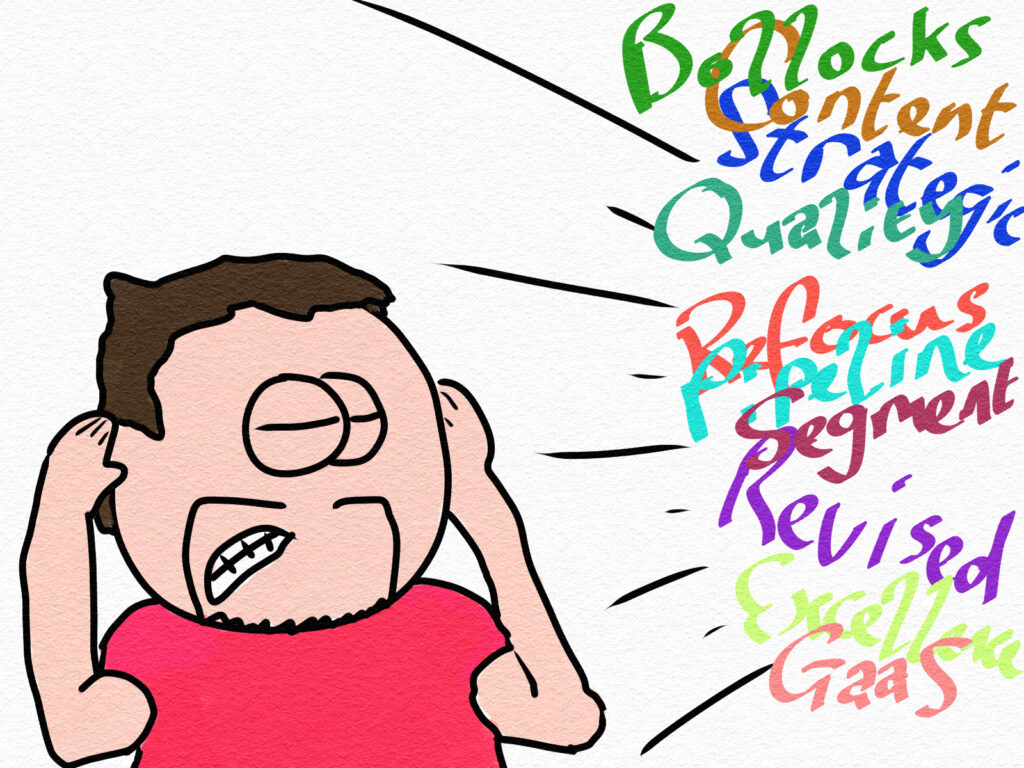
#oneaday Day 502: Another reminder that traditional games journalism is all but dead

It emerged today that the entire Features team of the gaming website TheGamer has been laid off, after owner Valnet decided that it likes money more than having actual employees who are capable of writing.

I'll admit that I was never a particular fan of TheGamer for a variety of reasons, but regardless of my own personal feelings about the site, this sucks. It's the latest instance of something that has continued to suck for a while now, with even big names of the games journalism industry — if such a thing even exists any more — suffering widespread layoffs, cutbacks and significant worsening of what they offer for their audiences. Enshittification, if you will. And yes, even longstanding behemoths like IGN and Eurogamer have been subject to this. According to VideoGamesChronicle and PressEngine, more than 1,200 journalists have left the business entirely in just the last two years — and that's not taking freelancers into account. (That puts the figure nearer 4,000.)

Honestly, seeing this happen to TheGamer isn't a surprise, though. This is just what the site's owner, Valnet, does. They buy up sites that were once successful, rip out everything that made them distinctive and unique — i.e. the people who worked hard on establishing the site's identity — then proceed to replace everything with slop. I would not be surprised at all if in short order we start seeing casino advertorials and AI-generated garbage on what remains of TheGamer.

Valnet and their big rival, Gamurs, are a scourge on what was once a thriving sector. They both take this model: they buy "verticals" (ugh) that they want to add to their portfolio, and then think that just because they now own, say, Polygon, that they have unlocked an infinite money glitch. But they have not — for a variety of reasons, not which is the model on which ad-supported commercial games journalism has been forced to operate for years now.

This article by Luke Plunkett of Aftermath sums it up nicely: these sites had been stuck in operating in the same way as 2000s-era Kotaku, which is to post as much as possible, as often as possible, and it didn't matter too much if nothing of any real substance was being said. It was all about the content.

I've been through this, too. During my time on both GamePro and USgamer, I was specifically hired to be someone who operated on a different time zone to the rest of the staff, with my responsibility being to ensure that there were things ready to read on the site by the time North America woke up. These typically end up being "news" posts, which, in the churn of having to produce so much content every day, often end up being little more than you could learn from just following a company's social media account or signing up to their mailing list.

"Guide content", that odious practice where every single site has to have 5,000 articles explaining every minutiae of every hot new game (and often badly, to boot), is also at play here, with the entire Internet gradually being flooded by "what is today's Wordle solution?" posts, individual articles explaining each and every shrine in The Legend of Zelda (often badly) and inconclusive, vapid answers to questions no-one was really asking with any great seriousness. It's all about the pursuit of endless, relentless content, and it doesn't matter if it's any good or not, it just has to be fresh, constantly updated and now.

And it sucks! It's not doing anyone any good! It's not making the writers on these sites look good, it doesn't make the games they're covering look good, it doesn't make the site look good, and it doesn't inform the readership of anything worthwhile. It just means those readers have something new to scroll through every time they refresh the page while they're staring, glassy-eyed, at their phone for the 14th consecutive hour that day.

It sucks that it has to be this way, too, because the presence of a specialist press is important. The idea that we might, one day, be completely without a games press altogether is absolutely baffling, but with every round of layoffs like the one we've seen today, we get closer to that dystopia.

Reader-supported sites such as Aftermath, 404 Media (not games, but relevant) and Giant Bomb are doing great work, but it remains to be seen how sustainable that model is — particularly as so many of the bloody things are starting to pop up that it is no longer possible or affordable for anyone to be "widely read" when it comes to good-quality games coverage. That's not necessarily a bad thing, given that back in the '80s and '90s we tended to be loyal to individual magazines rather than reading all of them, but it's a big shift in how the Internet has traditionally worked.

I don't even know what to think any more. It's bleak out there. And I wonder if it's ever going to get better again. I just want to have some fun websites to read again, by people who know their craft and are passionate about it. We used to have that — why can't we have that again? Why can't we have 1up.com again?

Those are rhetorical questions.


Want to read my thoughts on various video games, visual novels and other popular culture things? Stop by MoeGamer.net, my site for all things fun where I am generally a lot more cheerful. And if you fancy watching some vids on classic games, drop by my YouTube channel.

If you want this nonsense in your inbox every day, please feel free to subscribe via email. Your email address won't be used for anything else.

#oneaday Day 499: A productive day of video-making

The MiSTer Multisystem 2 has been everything I hoped it would be: an all-in-one retro gaming device that I can very easily use to both enjoy classic games on a CRT television, with all the benefits that offers, and be able to capture footage from said games to make videos about them. The dual outputs on the Analogue model of the Multisystem 2 means I can do both at the same time, and it's a real delight. So I made a grand total of five (count 'em!) videos today, and I feel like this is going to help me broaden my whole remit on my YouTube channel considerably.

I've built a small following with Atari-focused stuff, and I by no means intend to leave that behind completely. But there's so much fascinating retro stuff out there that I'd love to explore on video that it just seems daft not to… do that.

My aim for the channel has always been simply, to quote my own description, "make you feel like you're sitting down with an old friend to enjoy some great (and occasionally not-so-great!) games." The Atari focus just sort of happened with my own personal interest in the platforms, but it was never intended to be an Atari-exclusive thing, otherwise I would have branded the whole channel that way. Indeed, I'm having a lot of fun exploring weird and wonderful console titles right now — and some of my most successful, popular videos have been in that area.

I think the easiest way to put it is that my YouTube channel reflects how I like to enjoy games when I'm not on camera — I'm fascinated to explore the overlooked and underappreciated titles from both today and yesterday, and there's nothing I like more than being able to share my experiences with people, and those people find a new favourite as a result. As such, with a few exceptions — I'm almost certainly going to do some Ridge Racer at some point — you probably won't see "big name" or "triple-A" stuff on my channel, but you will see some lesser-known stuff that I either enjoyed a lot back in the day and think not enough people know about, or things that I've discovered more recently.

They draw minimal numbers, but I'm also pleased to be back into doing some long, episodic playthroughs. I'm really enjoying revisiting The Granstream Saga right now, and doing video series like this is a good reason to finally settle down and play some older RPGs that, for one reason or another, I have never gotten around to. I have a very long list of stuff that I'd like to play, and ideally I'd love to play them on the channel!

One thing at a time, though. The Granstream Saga is ongoing, but if I remember rightly that isn't super long overall. And then I guess I will have to spin a wheel or something to pick what comes next!

Anyway, if you're not subscribed and want to join me exploring some fun games, head on over to the channel and hit the subscribe button, maybe check out a few videos. It'll be like the good old days when we went over to each other's houses to play games together. Remember that? It's feeling like an increasingly dim and distant memory, but gosh, I miss it. That channel is the nearest thing I've got right now, so I hope at least a few of you derive the same value from it that I do.


Want to read my thoughts on various video games, visual novels and other popular culture things? Stop by MoeGamer.net, my site for all things fun where I am generally a lot more cheerful. And if you fancy watching some vids on classic games, drop by my YouTube channel.

If you want this nonsense in your inbox every day, please feel free to subscribe via email. Your email address won't be used for anything else.