1496: Triple-Gritty

I've been playing an upcoming triple-A release today (it's still under embargo, I think, so I probably shouldn't name it directly) and although I've been enjoying it enough to play it for most of the day, it's caused me to finally pin down the reason why I'm less and less interested in triple-A games in my own free time — i.e. when I don't have to play them for a review or feature or whatever.

It's the aesthetic and mood. They're all going for the same thing — that gritty, moody, self-consciously "mature" vibe that, if not handled correctly, can come off feeling a little adolescent. There are numerous tell-tale signs:

  • Someone says "fuck" quite early in the game, then people won't stop saying it. Even in situations where saying "fuck" quite so liberally would (arguably) be something of an anachronism, once a game opens the fuckgates, there's no stopping the stream of profanities belching forth from its characters lips like a never-ending tide of effluvium. Don't get me wrong, I have no issue with swearing, but swearing for swearing's sake — especially in a setting it doesn't quite feel "right" with — isn't the shortcut to "maturity" that some writers think it is.
  • There's at least one gratuitous sex scene, optionally during a mission that takes place in a brothel or similar house of ill repute. Look! Our game has tits in it! Incidental characters are fucking! Please like me!
  • The main character has a gravelly voice and an optional habit of describing things using tortured metaphors. And people complain about JRPG heroes being angsty. Seriously.
  • The main character will occasionally spout one-liners that Arnie would be embarrassed to say. These will often come up in situations where laughing just doesn't quite feel appropriate. And we all know the secret of comedy is ti—
  • It's never fantasy, always "dark fantasy". I blame Dragon Age and The Witcher for this. Both great games, but they started the whole "dark fantasy" thing rolling in earnest and now it won't stop.
  • You'll spend at least half an hour not knowing who anyone's name is. The intro sequence of the game I was playing today suggests the protagonist is supposed to know who his companion is, but I had no idea what her name was until after… events unfolded. I don't necessarily need Yakuza-style captions introducing every character's first appearance, but just a simple piece of dialogue where the characters call each other by name will do.
  • You'll realise halfway through an awesome setpiece that you have no idea how you got there. This may be a personal thing, but in dark, gritty triple-A stories I tend to have a much harder time following the story and remembering what was going on. By the time I got into the second main mission of the game I was playing today, I'd forgotten why I was there and how it tied in with the previous mission.

There are probably more, but I'll leave that there for now. I realise similar accusations can probably be levelled at the types of games I like, but I'd actually argue there's more diversity in anime-style RPGs than there is in the self-consciously mature triple-A space. Compare something like Atelier Rorona (hand-drawn look; low-key, slice-of-life mood; strong emphasis on moe) to even its stablemate Ar Tonelico (more traditional anime-style look; more epic storyline; humour interspersed with in-depth explorations of real issues) or something like Final Fantasy XIII (CG look rather than anime; angsty characters; ridiculously over-the-top story and effects) — all very different subsets of the same basic thing, while Western triple-A tends to go for the "realistic or bust" approach for the most part.

Note I'm not saying this is inherently bad; just that I find it a bit tiresome after a while. And playing [REDACTED] today has kind of driven that home a bit. I think I need to spend some time with Atelier Rorona to wash all the grit off tomorrow.
1495: Epidemic!

I really enjoy the board game Pandemic, as has been fairly well established on these very pages, but I was a little skeptical about trying the iOS version. After all, I have a perfectly good copy of the board game on my shelf — plus its expansions — so what use is a digital version?

Well, it's easier to simply start playing, for one thing; for another, it has a somewhat different "feel" to it than gathering around a board with friends to play. The board game can be played solo too, of course — particularly with the solo rules introduced in the In the Lab expansion — but the iOS version is particularly friendly to either solo or pass-and-play formats. I'd argue that it feels more "right" to play it as a single-player, multi-character strategy game on the iPad, actually; it's much easier to collaborate on cooperative multiplayer moves when the board is right there in front of you, whereas passing an iPad around isn't nearly so practical from that perspective.

I think the thing I like the most about the iOS version, though, is the presentation. Drawing most of its futuristic aesthetic from the newer edition of the board game that came out recently, its visual style is simple but effective, and the background music is excellent. Building in intensity as the Infection Rate increases over the course of a game, it keeps things feeling exciting and dramatic — and the special, super-intense music that plays when an Epidemic card is drawn really drives home the whole "Uh-oh, we might be fucked now" nature of the experience.

The other thing worth considering about the iOS version is that it's a good way for people to try the game out without having to invest in the considerably more expensive board game version. It has a good interactive tutorial that explains the rules to you as you play, and a comprehensive in-game reference manual that goes into full detail about the game rules and all the available cards for special events, player roles and the like. It is, in short, like many iOS adaptations of board games, an excellent way of learning the game before jumping into a session with live tabletop players, or to refresh your memory on how it all works before teaching it to a group of newcomers.

Plus, you know, Pandemic is just a great game, too. It is, for many people, their introduction to truly cooperative gaming — a team of players against the board — and at less than an hour for a game to unfold (considerably less for the digital adaptation) it's friendly to groups who tend to play on "school nights", too.

Give it a shot. And don't worry if you doom the world to oblivion at the hands of Radical-6 (or whatever you call the Blue disease this time around) — it happens to the best of us.

1494: Another Pledge for Positivity

Earlier today, my friend (and former copy editor) Keri posted this Pledge for Positivity. And it's something I applaud; there is too much negativity around right now, for a variety of reasons. Things being taken out of context and branded as offensive; groups of fans berating each other for the most ridiculous of reasons; those who enjoy niche interest entertainment branded with less than complimentary names; those who enjoy mainstream entertainment branded with less than complimentary names.

I'm not going to say "this has to stop" because that causes people with a stick up their arse to start bleating about "tone policing". Instead, I'm going to try and follow Keri's example and remain focused on the positive things in life: the things I enjoy, the things I feel passionately about, the things I want to share with people. Things I don't like? Fuck 'em; I've got better things to do with my time than waste on discussing things I have no interest in or attempting to have rational debates with people who have no interest whatsoever in being rational. Such is the way of the Internet.

As it happens, making such a pledge for positivity isn't all that far removed from what I generally try and do day in, day out on the Internet anyway. I steer well clear of whatever issue-du-jour people are angry about on Twitter today, and instead focus on talking with the people who share similar interests, but not necessarily identical tastes. Enjoyable discussions inevitably result; just the other day I had a lengthy discussion with someone who didn't like Final Fantasy XIII as much as I did, in which we remained rational, civil and articulate throughout. Neither of us changed the other's mind, but that's not what it was about — we both came away from the interaction feeling like we'd learned a little about the other's position. And that is a far more valuable result of communication than coming away understanding that, say, someone is angry but not really knowing what they want you to do about it.

As such, you can expect the things I talk about to continue much in the same mould as they have been previously — positively. On here, I'll continue to talk about things I am enjoying and having fun with, or things that I am excited about. In my professional capacity, I tend to concentrate on things that are interesting or noteworthy rather than deliberately controversial — the most controversial thing I wrote recently was a positive piece noting that Final Fantasy XIII perhaps wasn't all that bad and people should maybe give it another chance (note: NOT "anyone who doesn't like Final Fantasy XIII is a douchebag who should probably be killed" or something similar) — and I'd much rather write something praising the interesting things that have been done well than tearing something a new arsehole for one reason or another.

Of course, the latter part sometimes comes with the territory — some stuff is genuinely simply unmitigated crap, though it's significantly less likely to come across something with absolutely no redeeming features whatsoever today than it once way — but even then I tend to try and look for the positive where I can. Take my review of Time and Eternity, a game that was reviled by most of the games press, but which I had a good time with despite its flaws. Rather than focusing on its flawed aspects, I chose instead to concentrate on what I did like about it, and as a result produced a review that I'm still pretty pleased with today.

Why am I talking about this? Well, aside from Keri's post, I was also pointed in the direction of this excellent article about the upcoming Senran Kagura Burst for 3DS — a game branded "damaging to the industry" by people who haven't played it. The Tiny Cartridge post was something I found particularly admirable and all too rare in the modern business — it was someone returning to an issue and proving willing to educate themselves, and being pleasantly surprised in the process. In this case, it was taking another look at Senran Kagura Burst and discovering that no, it's not just about boobs and fanservice; it's actually about some well-defined characters with realistic, human flaws — something which I've argued in the past in relation to similarly misunderstood games, too — titles such as Ar Tonelico that people are all too willing to dismiss for nothing more than their art style.

Looking for the positive is a much more pleasant way to approach life. I can't imagine how utterly miserable the lives of these people who seem to spend all their time being angry must be. In some cases, they may well have valid reasons for their ire, and that's fine; others are angry for the sake of bandwagon-jumping. Both groups would benefit from a step back and some time alone with the things or people they genuinely do love. Works for me. Chill the fuck out and enjoy yourself for a change.

1492: The Alchemist of Arland, Reprise

I've been enjoying Atelier Rorona for the past few days, so I thought I'd talk a little about what I like about it. I know that Atelier Rorona isn't the best of the three …of Arland games on PS3, but my completionist nature (from a narrative perspective, anyway) insists that I play it thoroughly first before moving on to the supposedly superior Atelier Totori and Atelier Meruru. And while I was originally intending to wait for the revamped version of Atelier Rorona before I played it, there's still no confirmation one way or the other of whether it's coming to the West. I'll be surprised if it doesn't, but either way, I decided I couldn't wait any longer. I started playing it a while back — June of last year, in fact — but only got about ten hours in due to a combination of Hyperdimension Neptunia Victory, Time and Eternity and Tales of Xillia. Now, no more interruptions!

So what the hell is Atelier Rorona and why should you care? Well, it's… I guess it's an RPG? It certainly has all the trappings of a typical RPG — hit points, experience points, levels, skills — but it's not at all your usual "band of plucky heroes saves the world" affair. No, instead it's a rather smaller-scale affair in which you play a young girl called Rorona who is tasked with saving the alchemy workshop in which she works by fulfilling a series of increasingly unreasonable requests. These all come from Meredith Alcock, the head of the Ministry of Arland, who is keen to stamp out alchemy in favour of industrialisation for his own, presumably greedy reasons. Failure to meet the requirements of the assignments brings your game to a premature end; successfully completing them means you're immediately presented with another one until you reach the conclusion of the game.

Amid all these assignments are numerous visual novel-style narrative paths that are woven throughout the course of the game, and which you can advance by improving your relationships with various characters by performing additional tasks for them. There are numerous endings to the game, and it's designed to be replayed several times. I haven't yet decided if I'm going to attempt to play as much of Rorona as possible before moving on to Totori, or if I'm going to cycle around Rorona, Totori and Meruru several times in sequence. Either way, I'm presently enjoying the experience enough to want to try and see as many of the endings as possible.

It's not necessarily the narrative that is the biggest draw in Atelier Rorona though. No, this being a Gust game, the emphasis is very much on an in-depth crafting system, which is excellent yet enjoyably distinct from that seen in Atelier's stablemate Ar Tonelico. In Ar Tonelico, crafting was a means of seeing various interactions between the characters and getting to know them a little better — plus getting some great items out of the experience in the process. In Atelier, meanwhile, the crafting system is the core of the game: it's the way you complete most of the assignments in the game, and the solution to most of the quests you're presented with to earn money or improve your relationship with other characters.

The reason it's so interesting is because it's a lot deeper than simpler systems seen in other games that require you to do nothing more than combine specific items to get a brand new item. In Atelier Rorona, you have to take the quality of your ingredients into account — and things like organic ingredients spoil over time — as well as the various "traits" they have attached to them. In many cases, these are nothing more than flavour — if you make a metal ingot that is "stinky" it doesn't affect the stats of any items you subsequently create using it, for example — but in others you can do things like boost the base effect of a healing or attack item, improve the stats on equipment and improve its quality beyond that which its component items would normally provide.

There's a lot of number-crunching involved to optimise your alchemy, and you can't always count on having perfect ingredients available, so sometimes you'll have to improvise somewhat. The ability to do this is reflected by some ingredient items for recipes being a generic category rather than a specific item. For example, when making a "Spring Cup" item that contains liquid, the exact liquid you put in there is up to you — it could be water, it could be tree sap, or something altogether more unpleasant. The items you choose to put in there will affect the final quality of the item, and experimentation is often very rewarding.

Key to doing well in Atelier Rorona is managing your time effectively, because everything you do causes the in-game clock to tick away, counting down towards each new deadline. Whether you're crafting something or going out into the field to gather ingredients and fight monsters, everything takes time, so if you want to optimise how you're playing the game — which is presumably important when going for some of the endings — you'll need to plan your time well. Probably better than I'm doing right now, but I'm fine with just seeing which ending I get first time, then specifically attempting to pursue one or more of the others on a subsequent playthrough.

If the other two …of Arland games are as enjoyable as Atelier Rorona I can see myself spending a hefty amount of time on this series. It helps that Rorona has an amazing soundtrack — I shouldn't expect anything less from Gust after Ar Tonelico's magnificence in that regard — but the gameplay is rock-solid too. I'm looking forward to crafting a whole bunch more pies, bombs and mysterious liquids over the next few weeks, and I don't doubt I'll report further on my progress as I continue.

1491: The Wiz

There's a board game group here in Southampton that meets regularly — most weeks, from the sound of things. I've never quite mustered the courage to go along, what with the whole social anxiety thing, but tonight Andie thought it might be a good idea for us to go together. I agreed, on the condition that she was the one who said hello and introduced us to begin with — that's always the hardest part of meeting new people, after all.

And, against all the irrational scary thoughts my mind throws at me when confronted with a social situation like this, we both had a good time. We didn't even "need" to stick together; Andie went and played some interesting looking card games, while I joined in on a five-player bout of a game I'd heard of but never played: Wiz-War.

Wiz-War, in case you've never come across it, is a relatively simple idea, executed beautifully well. You play a wizard, and your goal is to attain a target number of victory points (two in our first game; three in our second, for we played twice) by either pinching one of the other players' treasure chests and returning it to your own starting location, or by killing your rival wizards.

The mechanics are simple and elegant. You can move three spaces per turn, and you can perform one "attack" per turn, which may either be a simple melee attack (or slap in the face, as it came to be referred to) or an offensive spell. Aside from that, you're free to cast spells from the cards in your hand at any point in your turn, and this is where things get interesting. The spells are far more than simple attacks, in many cases. Some allow you to set traps; others allow you to temporarily control the minds of other player characters; others still allow you to impact the board in various ways such as rotating its various sections or applying environmental effects. Taken as standalone events, most of these spells can have an amusing impact on another player, but when you find a great combination of things — or when something backfires spectacularly — that's when this game gets really amusing.

It's a brilliant game for griefing one another, with tons of the spells seemingly built for the express purpose of being a bastard. One great example in our game involved one of the players backing himself into a corner, casting a "Prismatic Mist" spell, which enveloped two spaces in a magical effect that had random, mostly unpleasant effects when stepped into, then casting a "Swap Places" spell on me, causing me to be the one stuck behind the Prismatic Mist. (Fortunately, I had a Dispel spell in my hand, so it caused me few difficulties, but the setup was most entertaining at least.)

I'd be interested to play it again; I feel it's something that my more regular gaming group would probably respond well to, particularly as it's a purely competitive game. It's dripping with theme but also has a decent amount of strategy to it, so it's something I may well look into trying again — or nabbing my own copy — in the future.

1490: Bros Before Titans

As I mentioned yesterday, I've been playing a bunch of Atelier Rorona this weekend, but tonight I decided to play through something a few people have been bugging me to try: Brothers: A Tale of Two Sons. And it proved to be the perfect antidote to the endless Titanfall chatter there's been on social media all weekend.

For those unfamiliar, Brothers, as I shall refer to it hereafter, is a game about the titular brothers going on a quest to find the cure for their sick father. It sells itself as a "single-player cooperative game" and that's not actually a bad description in mechanical terms — using both thumbsticks on a controller, you control both brothers, and use the triggers to make each of them interact with things. Big Brother is stronger, taller and older; Little Brother is more agile, smaller and more childish. Most of the game's puzzles revolve around working out which brother is the most appropriate one to use in a situation, and whether or not they need to work together, which they usually do.

But mechanics are probably the least interesting thing about Brothers. Where the game really shines is in telling a compact, emotional story whose characters are introduced, undergo some serious, well-paced growth and bring the story to a fitting conclusion… all without saying a word. Or not a word in English, anyway; I'm not entirely sure if the language the characters speak in the game is real or just a Simlish-style made up language, but it doesn't matter — the meaning is got across through a combination of context, body language, facial expressions plus other presentational elements such as music. The game packs a seriously powerful emotional punch by slowly building up these characters and giving you a chance to get to know them before throwing them into harrowing situations that will tax the emotional constitution of even the most hard-hearted soul.

I cried three times over the course of the game, but as we've probably established in a number of posts over the last 1,490 days, I am somewhat susceptible to this sort of thing, not to mention a lot more willing to allow my emotions to leak out through my eyes if something affects me strongly. I'm not actually sure if game makers have genuinely got better at emotional storytelling over the past years, whether I've become more susceptible to emotional manipulation, or something in between. It doesn't really matter too much, I suppose; the fact that a game like Brothers can have a legitimately emotional impact is something that's worth celebrating and praising in itself — it doesn't necessarily need to be compared to anything else.

I'm being deliberately vague about details of the plot here because I believe that if you're reading this and have access to some sort of gaming device on which you can play Brothers, you should definitely give it a go. It's a short game — it took me just under 3 hours to get all the way through — and not a particularly challenging one either, but it's not about challenging the player (in mechanical terms, anyway — it's definitely emotionally challenging). Rather, it's about telling an interesting, compelling story in a somewhat unconventional and interactive way. It's the kind of story that might work as an animated movie, but which has a whole lot more power added to it by virtue of the fact that you're the one in control.

Grab a copy for PC here. And if you're planning on playing it, I recommend not reading up on it at all beforehand. It's an experience best had with beginner's mind, and one best had in a single sitting. So set aside a few hours, grab a controller, turn out the lights and enjoy a fantastic story.

1489: Championing the Underdogs

If you've ever wondered why I talk so much about lesser-known games and visual novels I come across that I end up loving, Twitter today is the reason why. Specifically, this is the reason why.

For those unfamiliar with the way Twitter works, that's a search page giving a snapshot of the number of people using the words "Titanfall beta" at any given moment — at the time of writing, there are approximately 30 tweets every minute on the subject.

Titanfall, the new game from Respawn Entertainment, the studio set up by the guys who created the astronomically popular Call of Duty series, one of the biggest names in gaming for the past few years, is going to be a big hit, it seems. And this is lucky not only for Respawn, but also for Microsoft, who are counting on Titanfall being a system-seller for its so far disappointing Xbox One console. We'll have to wait and see whether Titanfall shifts Xbox One systems, but if interest in the beta is any indication, chances are good.

But I don't want to talk about Titanfall. I haven't played it and thus can't comment on it in any great detail. I have registered for a beta key because I'm interested to see if it can change the mind of someone who finds Call of Duty utterly mind-numbing, but I'm not going out of my way to get one, and frankly I'm sick of hearing about it.

It's this latter point that ties in with what I said in the first paragraph. Any time something "big" like Titanfall comes along, any smaller developers attempting to promote their work may as well just pack up and go home, because the big game is all anyone's talking about. This is how marketing works, of course; EA and Respawn want Titanfall to be as big a seller as possible, so it's in their interests to ensure as many people are talking about it as possible, and what better way to stir the pot than a steady flow of beta keys being released into the wild?

But what of the poor souls who, like me, have pretty much zero interest in Titanfall? There's nothing stopping us continuing to go about our gaming business, of course, but it's frustrating if it just happens to be this week that we find something really cool that we want to share with people. It's also frustrating if otherwise great games come out, but news of them actually being great is drowned out by everyone stampeding to play the beta for the latest manshoot. I fear for Bravely Default and Danganronpa, both of which are fantastic games that deserve a far greater audience than they will almost certainly get — Michael Pachter would probably brand them "failures" if he had any idea either of them existed — and titles that are competing against Titanfall's beta test for the attention of gamers worldwide.

I certainly don't begrudge anyone who's enjoying the experience of the Titanfall beta; by all accounts, it sounds like something that someone who enjoys competitive team-based multiplayer shooters will have a lot of fun with, and that's great. But at times like this, it's easy to feel a little cynical about the games biz's apparent inability to acknowledge the existence of more than one Good Thing at a time. As ever, the game that's likely to make the most money gets the majority of the spotlight attention, leading to swathes of articles from diverse sites all writing very similar things to one another, providing validation to those who were probably going to buy the game anyway and continuing to alienate those who are more interested in more niche, specialised titles.

At times like this — and I've said this before — I feel as if the games press needs more specialised publications. We're starting to get this to a certain extent with indie-focused websites, but we need to go further. There needs to be an acknowledgement — or more of an acknowledgement, at least — that gaming isn't just about the latest, biggest-budget game out there, and that games don't cease to be relevant after their "opening week". The latter point in particular is something that infuriates me no end; if a game doesn't sell a zillion copies in its first week, it's instantly branded a failure by analysts and press alike — meanwhile, it's extremely rare that people like, say, me buy something the moment it's released.

What have I been playing today, for example? Atelier Rorona, a PlayStation 3 game that came out in 2010. Are the experiences I've had with that game today irrelevant due to the fact it came out four years ago? No, of course not, but you might be forgiven for thinking that if you took a look at Twitter today.

Sigh. I'm pissing in the wind with this, of course, and it's far easier to just get on with what I'm doing, talk about the things I'm enjoying and hope people who feel the same way might gather together with me. I just felt the need to express some frustration, and I'll start taking my own advice tomorrow, I think.

1487: Uchikoshi's Last Reward

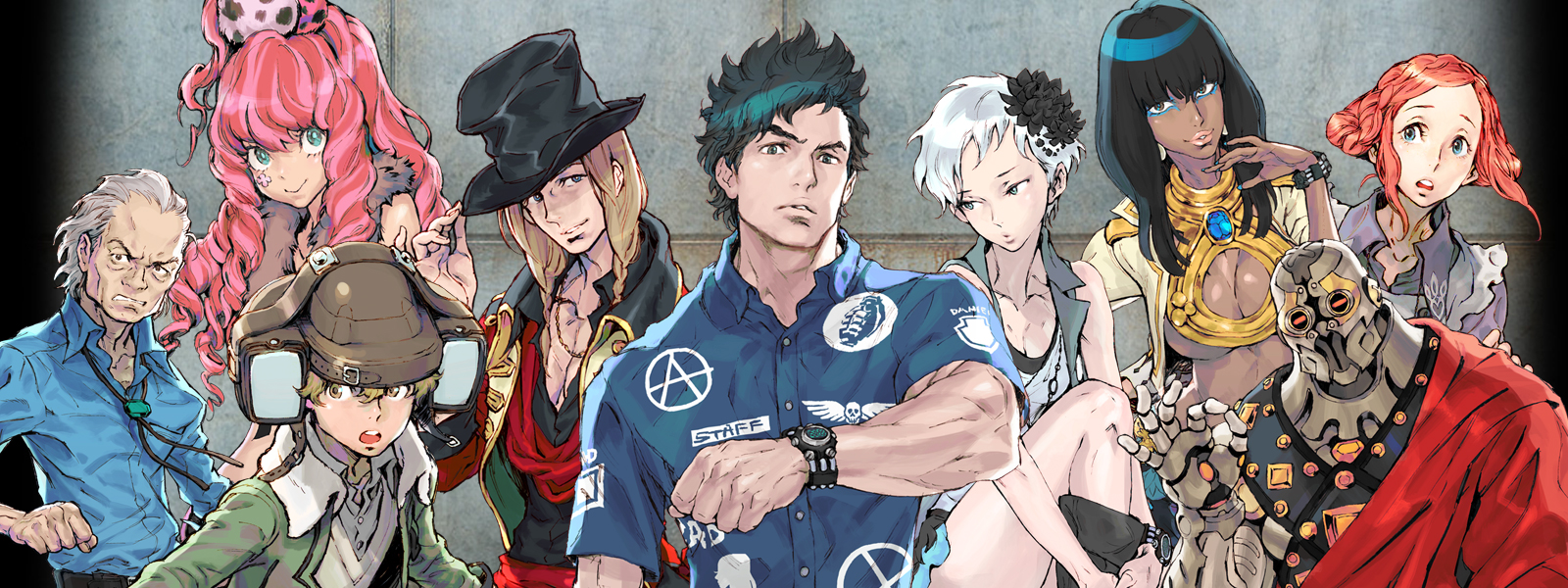
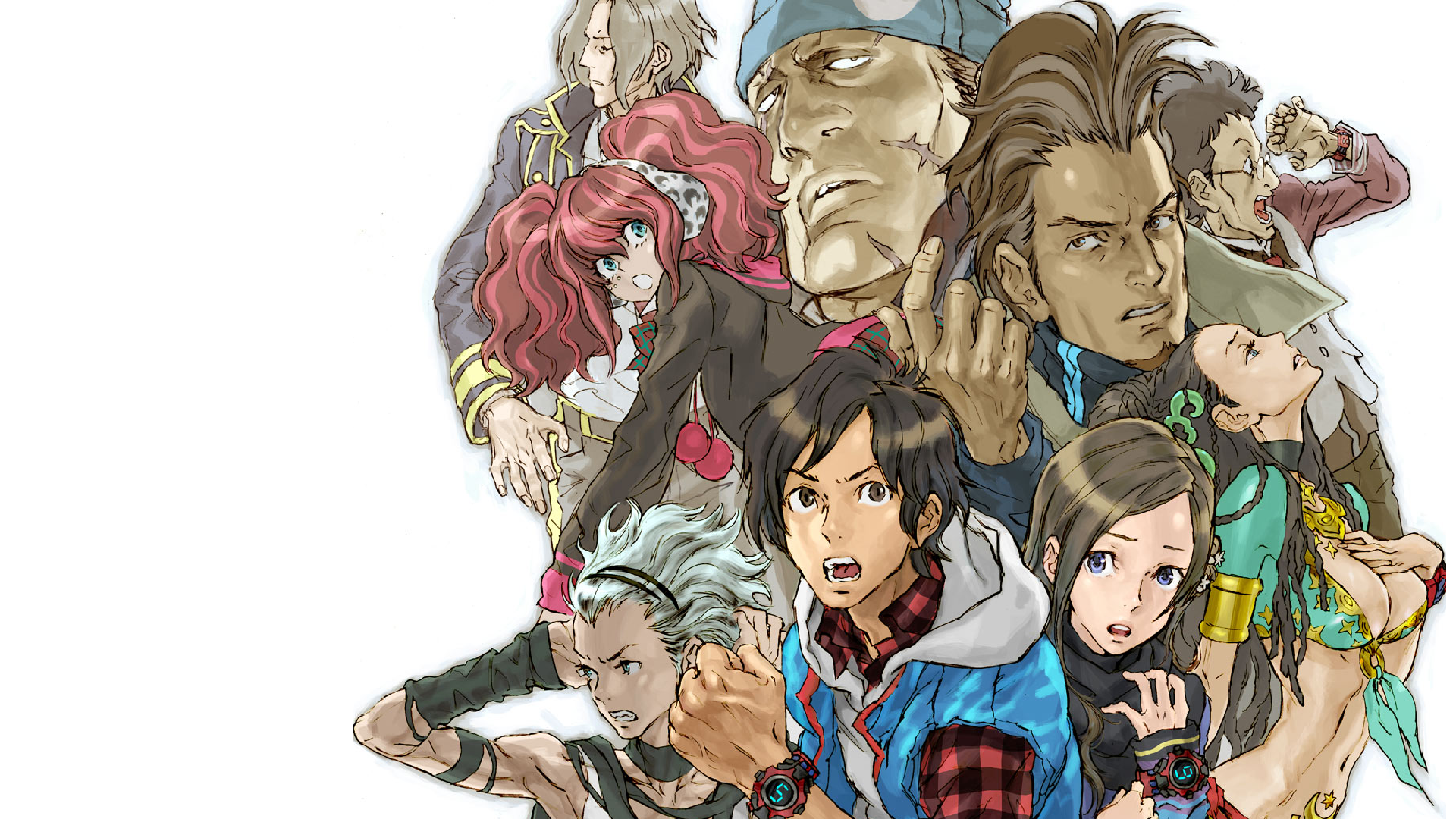
Kotaro Uchikoshi, the creator of the two Zero Escape games 999 and Virtue's Last Reward, opened an English language Twitter account today, even despite his own admission that his English is not all that great. Still, he felt compelled to communicate directly with his fans since, surprisingly, it seems the majority of the Zero Escape fanbase is actually in English-speaking territories — and that neither 999 or Virtue's Last Reward sold well enough in Japan to make a third and final installment in the series possible in the immediate future.

This is… distressing to see, frankly. Uchikoshi's Twitter feed is heartbreaking to read. Even through the occasionally slightly broken English — his English is certainly better than my Japanese, mind — it's clear that there stands a passionate man who would like nothing better than to realise his grand vision for his magnum opus, a man constantly frustrated by the realities of the modern games biz — key word "biz" — and a man who genuinely feels bad that he's letting his fans down. I find it incredibly sad that someone doing such wonderfully distinctive things with interactive storytelling has been put in such a position in this, an age where story-centric games such as Gone Home, The Stanley Parable and numerous others can be held up and celebrated — even declared "Game of the Year" in some quarters of the Internet. Surely the modern industry is diverse enough to support both the Titanfalls of the world and a third installment in the Zero Escape series?

999-pic

Perhaps it is — in fact, given the outpouring of support I've seen for it today, I know it is — and Uchikoshi simply hasn't yet found the right route to market. Despite the bleak, apologetic nature of his tweets, it's clear that he hasn't given up hope as yet. Following a heartfelt plea for any prospective investors to contact him directly via Facebook (I'm providing the link there on the off-chance that anyone rich is reading and feels like funding Zero Escape 3) he attempted to reassure fans that Zero Escape 3 "will definitely be released somehow, someday!" And I'd like to believe that he's right.

The question is "how?" Uchikoshi claims that he's considered crowdfunding but was concerned that it wouldn't be "persuasive" enough, but this may partly be due to the fact that crowdfunding is still yet to make a huge impact in Japan; it's still primarily a Western thing, with the exception of a few Japanese developers like Nigoro (though still in collaboration with Western publisher Playism, I might add) turning to the platform to fund projects such as La-Mulana 2. I would have thought that Kickstarter would be an ideal solution for Uchikoshi to clearly solicit and demonstrate fans' support for the Zero Escape series, but this may not help the situation in his native Japan, which is where the problems really are. I'm assuming there are some sort of rights issues involved with developer Spike Chunsoft that prevent him from striking out on his own and making Zero Escape 3 as an independent developer, or releasing 999 and Virtue's Last Reward (and Zero Escape 3) on PC, or…

Well, anyway. Sadly, I don't have the power to do anything about the situation. But it will be absolutely criminal if someone with as clear an artistic vision as Uchikoshi isn't able to realise his creative visions due to matters of "business". This is something I hope that the industry as a whole can solve together; regardless of whether or not you liked 999 and Virtue's Last Rewardyou can hopefully agree that the gaming landscape is a richer place with titles like them in it. Creative, interesting games should be encouraged and rewarded; instead, if we're not careful, we'll drive people like Uchikoshi away forever and be stuck with an vicious cycle; an endless of soulless but profitable games, and no-one wanting to rock the boat by doing something a bit different.

Zero-Escape-Virtues-Last-Reward-Review-Topper

That's a Doomsday scenario, obviously, and unlikely to happen, particularly while the Western indie space is flourishing to such a degree. Now we just need the East to follow suit.

I wish Uchikoshi the best of luck in his endeavours to get Zero Escape 3 into the hands of those of us who really, really want to see it, and would urge you to support him in any way you can if you believe in interesting, distinctive games that do some truly creative things with the medium as a means of interactive storytelling.

1485: Trigger Happy Havoc

I've been refraining from talking about it until I put my review up, but now that's safely filed, I feel I should enthuse somewhat about Danganronpa: Trigger Happy Havoc.

For the uninitiated — and all the people who constantly claim they have no idea what Danganronpa is — allow me to explain.

ADOOOOORABLE.
ADOOOOORABLE.

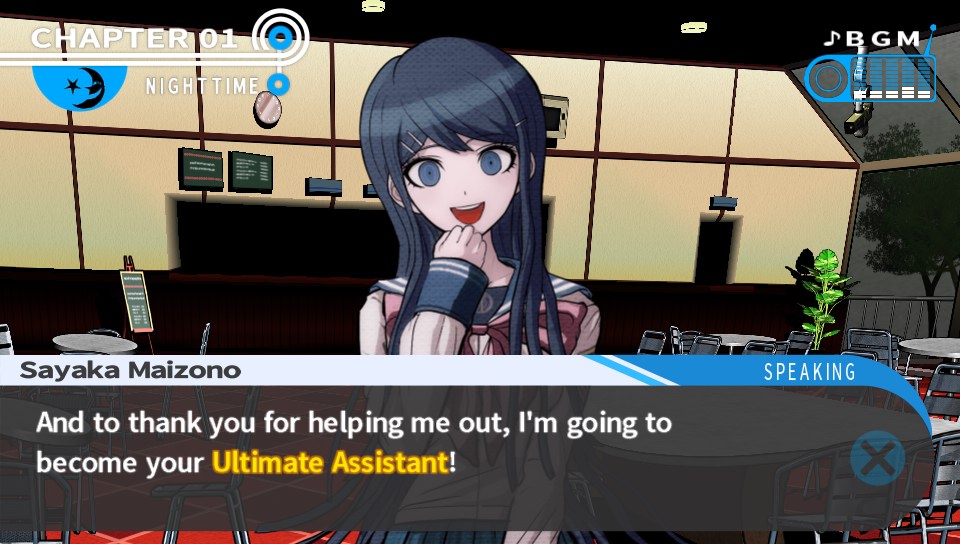
It's a visual novel-cum-adventure game from Spike Chunsoft, the developers who brought us the Zero Escape series that consists of 999 and Virtue's Last Reward. Its concept is something of a cross between Corpse Party and Zero Escape: a disparate group of individuals are kidnapped, trapped in an enclosed environment (in this case, a twisted, not-quite-right version of a school, hence the Corpse Party comparisons) against their will, and then presented with a series of challenges between them and their final escape. In Zero Escape's case, this was a matter of solving puzzles and choosing the correct path to the end; in Danganronpa's case, meanwhile, it's a little more complex.

The game's Zero-equivalent Monokuma — a far more in-your-face and sinister antagonist than the largely hands-off Zeroes — challenges the game's cast to a "killing game" in which anyone who successfully gets away with murder graduates from the twisted school and gets to escape; meanwhile, everyone else gets "punished" by, well, being killed. Conversely, should the "Blackened" murderer be found out, they get punished, but the remaining students don't get to escape — they just have to continue their school life.

The game unfolds over a series of chapters, each of which involves the surviving members of the cast investigating the mysterious school, trying to get to the bottom of what is going on and then, subsequently, investigating a murder that happens. This is then followed by a "class trial" in which everyone argues and yells at each other and, if you've done your job correctly, the culprit is identified and punished. In between these phases, you get short periods of "Free Time" in which you can hang out with the remaining characters to build up your relationships, which subsequently unlocks "skills" for use in the trial segments.

Ooh, I know, I know. It's... [SPOILERS]
Ooh, I know, I know. It's… [SPOILERS]
The trials themselves are a far cry from Ace Attorney territory. The majority of them revolve around a mechanic called "Non-Stop Debate" in which the characters continue speaking their lines whether or not you're ready to continue, and you have to shoot down "weak points" in their arguments with the "truth bullets" you gathered over the course of your investigation. On the default difficulty, for the majority of the game you'll only have to identify which statement to shoot down with a single truth bullet; on harder difficulty levels (and at certain, critical moments on normal difficulty) you'll also have to choose the correct truth bullets to refute the statements you think are false. This then gets even more complicated as the game progresses as people start shouting over the top of each other, represented by irrelevant "noise" statements floating across the screen and getting in the way of the things you actually want to shoot down.

This Hangman game has a lot more at stake than a stickman's life.

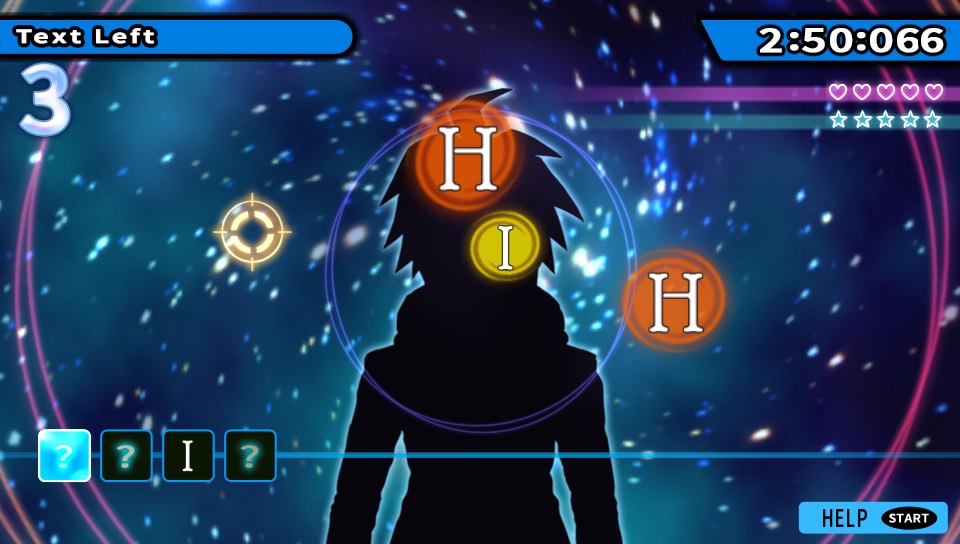
These arguments are supplemented by Hangman-like sequences in which you have to recall specific pieces of information by spelling them out, rhythm action sequences in which you struggle to make yourself heard over someone's constant objections and, at the end of each "case," a Trauma Team-style summing up of exactly what happened by assembling a comic strip depicting the events leading up to the murder, and what happened after that.

It's a fascinating game; perhaps not as "clever" as 999 and Virtue's Last Reward, but that's no bad thing — while 999 and Virtue's Last Reward specialise in bending your brain around complicated narratives with peculiar structures, Danganronpa's relatively straight line to the finish still manages to have plenty of surprises, twists and turns along the way, and has no qualms whatsoever about killing off its main cast with alarming rapidity.

In short, my review has hopefully already made this abundantly clear, but if you have a PlayStation Vita and the slightest interest in intriguing, compelling murder mysteries, you should abso-posilutely pick up a copy of Danganronpa this week. No, I don't care if you're already playing Bravely Default. No, I don't care if you're getting stuck into Lightning Returns. Danganronpa is fantastic, and I don't mind admitting that I want as many people as possible to play it so we continue to see more and more games like this in the West.