2096: Sod Off, McIntosh

0096_001

I have, to date, resisted taking the bait of the one and only Jonathan McIntosh, the complete tool who is responsible for the majority of the garbage that Anita Sarkeesian spouts on a regular basis, but witnessing his whining today that tabletop gaming is heavily steeped in colonial themes and mechanics, and that this leads to it being an overwhelmingly white hobby — this somehow being a bad thing, even if it were true (which I somehow doubt, since he failed to show any actual data to back up his assertion) — just proved to be a little too much for me. First he attacks video games; now, it seems, he's starting on other forms of entertainment, too.

I honestly pity him a little bit. I don't really understand what could have possibly happened in his life to make him such a malodorous thundercunt, but it can't be a particularly pleasant life looking at the world through such an utterly joyless lens. Video games and tabletop games — not to mention all the other forms of entertainment media he's doubtless had a pop at — are designed to bring joy to people, and in the latter case in particular, they're designed to bring people closer together to share an experience in a face-to-face, social environment.

I'm not denying that there are plenty of games — particularly of European origin — that have colonial themes. But the reason for this is not anything to do with living out white supremacy fantasies or anything like that; it just so happens that the very concept of building up a civilisation or colonising an unexplored land makes for compelling, competitive gameplay.

And McIntosh's assertion that the heavy use of colonial themes leads to it being a white hobby is absurd, anyhow; tabletop gaming is one of the most inclusive hobbies in the world. Thanks to its heavy reliance on abstract rather than literal representations, you can imagine whatever you like unfolding on the board in front of you. Who's to say that the colonists in The Settlers of Catan are white, since you never see them? The meeples of Carcassonne have neither gender nor race. Agricola features a completely egalitarian society where both men and women do their part for the greater good as much as each other. Terra Mystica's "human" characters are of a variety of ethnic origins. (Sorry, they're "People of Colour"; God, I fucking hate that obnoxious phrase.)

Not only that, but his assertion that there are a "staggering number" of board games that focus on colonialism is likewise absurd. Looking over at my game shelf, it's clear that this is just plain bollocks. Just on the top part of my shelf, I have a game based around King Arthur and the Knights of the Round Table; one about medieval monks solving a murder; another about 1920s high society solving a murder on a train; another about Egyptians building a palace for Cleopatra; another about Middle Eastern-inspired nomads attempting to take control of a desert region and the genies that live there; one about driving cars very fast; one about the whole world coming together to fend off an alien invasion; and a dungeon crawler whose main character is a dark-skinned elf.

So fuck the fuck off, Jonathan McIntosh. Your views are utterly poisonous to the sanity of people who just want to enjoy their hobbies. If these things bother you so much, then perhaps you should find something more enjoyable to do with your time. Go and help starving children in Africa or something if you really want to make the world a better place. But no; that would involve getting off your pasty white arse and actually doing something rather than indulging in constant armchair slacktivism on the Internet, wouldn't it? And we couldn't possibly have that; far better to keep scripting nonsense for that pet hoop-eared cretin of yours to keep regurgitating just as everyone is starting to forget about you and enjoy the things they love again.

Get some joy in your life. And allow those of us who already have some joy in our life to enjoy it in peace, you absolute bellend.

I thank you.
2074: Karate Fight

0074_001

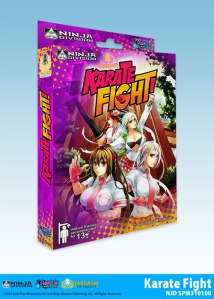
A little while ago, I wrote about my experiences with the fun, silly and provocative card game Tentacle Bento, which I picked up a copy of at PAX a while back. It occurs to me that I've also played its companion game Karate Fight, but haven't written about that at all, so that's what I'll discuss today.

Tentacle Bento is a reasonably sedate game with a strong degree of randomness to it, but it's fun for the silly situations it creates. It's somewhat akin to Rummy in that it involves collecting various combinations of cards in order to score, though the special events and characters add some chaos to the mix that can flip the outcome on its head if you're not prepared. Karate Fight, meanwhile, is a game determined almost entirely by randomness; there's no real strategy involved, and instead, appropriately enough for the theme, it's a game of fast reactions, observation and responding to situations.

NDJSPM310100-KarateFightIn Karate Fight, the entire deck is dealt out to all the players, who hold it in their hand face down. One at a time, they lay down and flip the top card from their deck in the middle of the table, and a number of rules then come into play.
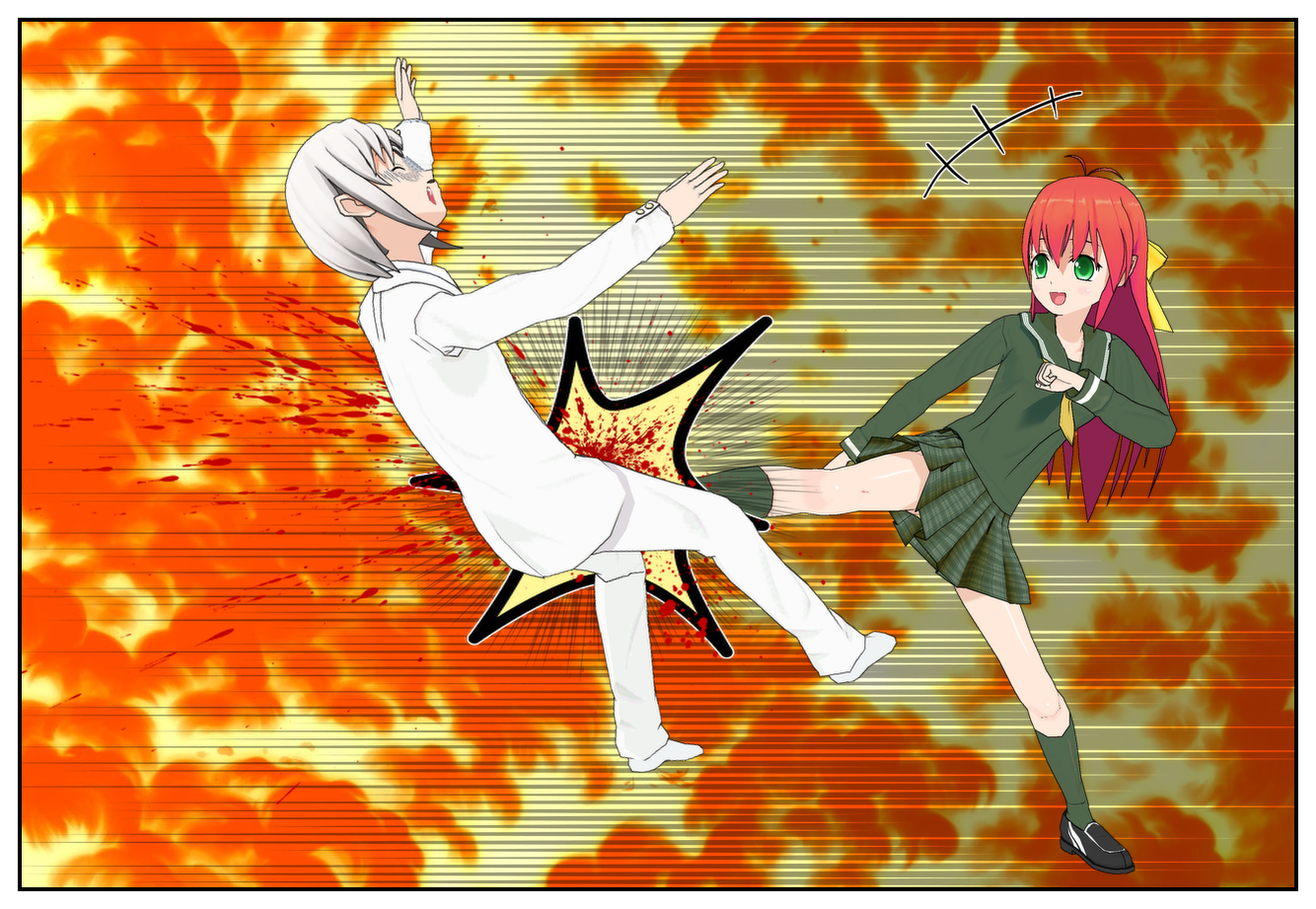
If the card laid was an "attack" card, the next player has a number of draws indicated on the attack card to draw another attack or counter card, otherwise the attacker wins that hand and collects all the cards laid in the middle.

If a "Strike" card is laid, that triggers a "Hit" and everyone around the table has to slam their hand onto the pile in the middle, with whoever was first (i.e. on the bottom of the inevitable pile-up) taking the entire pile. A "Hit" is also caused by certain combinations of cards being laid down — all the attack cards being used in this particular hand, for example, regardless of other cards that have come in between, or the same defense card being used several times in a row.

A "Counter" card counts as an attack card and also reverses the direction of play. And a "Janken" card requires everyone to play rock-paper-scissors (in Japanese, naturally), with the winner taking the pile in the middle. Once someone gets all the cards, they win. The whole thing lasts about 15-20 minutes or so, even with stubborn players who seem to be doing nothing but passing cards back and forth between themselves.

Our game group is used to more sedate games in which you can take your time over your moves, but this seemed to go down pretty well when we tried it — perhaps because it was a break from the norm, and perhaps because its highly energetic, somewhat physical nature is inherently amusing. From my perspective, I certainly enjoyed its paciness — "thinky" games are somewhat prone to analysis paralysis, particularly with our group, and so this was an enjoyable change from what we usually play. It's not something I'd consider bringing out as the "main game" for a session by any means — there's a lot of luck and randomness involved, though it will ultimately come down to who has the best reactions, memory and observational skills — but it's a fun warm-up, quick to play and a good means of getting people alert and aware. I also imagine it would be quite fun after a drink or two.

Also its boobylicious, panty-flashing artwork is clearly channelling Senran Kagura something rotten, which is no bad thing, unless you write for Vice.

2012: Tentacle Bento

0013_001It occurs to me that I haven't yet written about Tentacle Bento, a card game I picked up at PAX but have only recently had the opportunity to try for the first time.


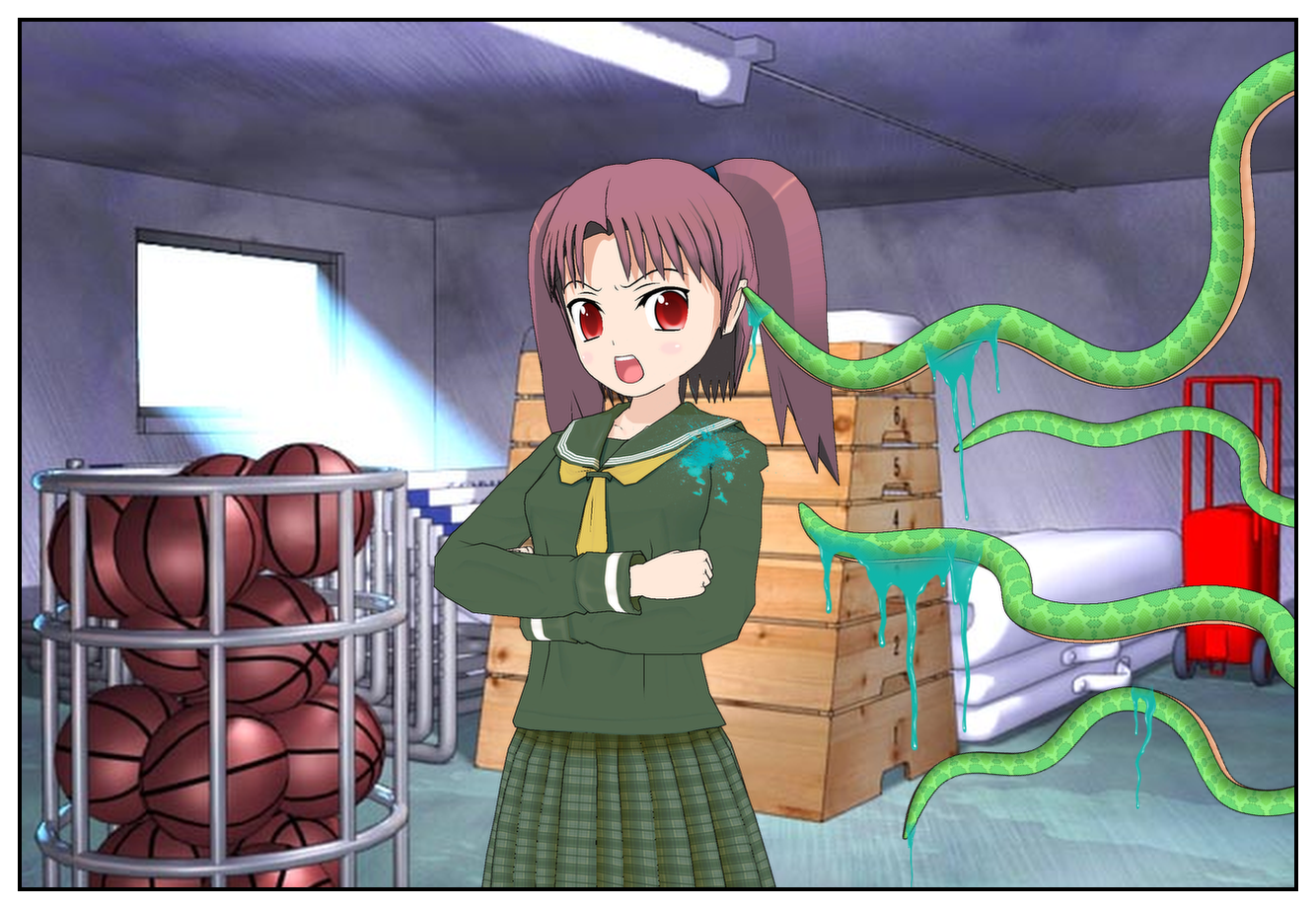
Tentacle Bento is a fairly simple game whose concept made the Outrage Brigade piss their collective pants a while back, which these days, to be honest, is enough to make me want to check anything out. Essentially, it's an anime-inspired (all right, hentai-inspired) game in which you and your friends take on the role of ill-defined tentacle monsters of some description, and your task is to sneak into the all-girls' school Takoashi University and "capture" as many nubile young ladies as you possibly can before the end of term.

pic1322392

Lewd premise aside, Tentacle Bento is actually a pretty fun game. It's largely based around playing sets of cards — known as "captures" in the game — in order to score points at the end. In order to play a capture, you have to play a location, a capture event and a character at the same time. Playing a location, capture event and character of two or more different suits is a "sloppy capture" and allows you to get something on the table, but only lets you capture one girl at a time. Playing a complete capture of the same suit, however, is a "noble capture" and allows you to capture up to three girls at the same time. It also allows you to add extra girls of the same suit to a capture from your hand once you've put it on the table, up to a maximum of three girls per capture.

Alongside the basic location, capture event and character cards are a few special types of cards. All-Star cards can only be captured through a noble capture — and, moreover, can be the only girl in that capture. They have specific special effects once they're played; normally a noble capture has a special "mayhem" effect (ranging from changing the direction of play to passing cards around the table) according to the suit it was, but All-Stars override and replace this effect.

Special character cards, meanwhile, have (usually negative) effects to play on other players. Some prevent players from playing certain types of captures, others need to be dismissed via meeting a particular condition, and some can be passed around. Several of them complement and interact with one another nicely, making for some enjoyable moment-to-moment strategy.

Finally, Event cards occur immediately when someone draws them on their turn. These have immediate — and often game-changing — effects. They also act as the game's timer — once the fourth Event card comes up, the game is over, and players score points according to the captures they have on the table, and lose points for the girls and All-Stars they still have in their hand.

pic1322391

It's a pretty simple game to get to grips with, and there's a fair amount of randomness involved — particularly with the events — so it's not especially deep, all told, but it is a whole lot of fun, primarily for the impromptu mini-narratives that the capture combinations inspire. Once capture might see three girls having a wardrobe malfunction in the headmaster's office; another might see a lone girl attempting to have a cuddle party by herself on the school racetrack; another still might see two girls having a pillow fight in the nurse's office.

Despite the morally questionable premise — if you know what tentacle monsters typically get up to, you know what I mean — the game is designed with good humour and wit. The cards all incorporate entertaining little snippets of flavour text, many of which are genuinely amusing both to people who recognise anime tropes and normies alike.

All in all, it's very much a filler game rather than something you'd take particularly seriously, but I like it a whole lot and am looking forward to giving it another shot at some point in the near future. I was surprised how much my regular gaming group — most of whom aren't particularly involved in anime culture — took to the game, so hopefully it will hit the table again soon.

1951: Terra Mystica

We gave another new board game a go today — Terra Mystica. This was a game I had heard of but didn't know much about, so I was interested to try it, particularly as I understood it to be a fairly well-regarded game.

First impressions were daunting. It comes with an absolute ton of very nice quality wooden components, stuff to punch out and a rulebook that makes the game look a lot more complicated than it actually is. Once we were underway, though, all became fairly clear, and the game started to take shape. By the end of our "practice" game, we were all agreed that it seemed to be a very good game indeed, and we liked it enough to play it for a second time this evening — a rare occurrence for us, since we usually hop from game to game for a bit of variety.

Terra Mystica is a strategy game focused on empire-building, with pretty much nothing in the way of luck and only a slight degree of randomness in the initial setup. Taking on the role of one of a number of different factions, it's your job to lead them to victory by amassing the greatest number of victory points by the end of six rounds of play, each of which allows all players to keep taking turns in sequence until no-one has anything left to do (or everyone has chosen to end their input this round, at least). Interestingly, and unlike a number of other vaguely similar games, victory points are not necessarily attained for everything you do throughout the game; each round has a specific bonus condition that allows you to earn points for building specific things, and there are a number of randomly selected "bonus cards" that are in play throughout, with one player taking a different one each round.

Instead, the main bulk of your points comes from two sources at the end of the game: the area your empire covers in geographical terms, and your influence with the four main religions of the game world. In both cases, there's a hierarchical scoring system: first place gets a ton of points, second place gets a few less, third place gets a few less still, while anything below that gets nothing. Ties aren't broken; instead, two or more "tiers" of points (according to how many players are tied) are added together then the resulting total divided between those people who are tied; this generally means that everyone involved still gets a reasonably significant amount of points, but it works out slightly less than what they would have had in the case of an uncontested victory. It's an interesting system.

What's interesting about the scoring is that it forces you to prioritise on every turn. Although the first-place bonuses are significant and will probably make the difference between winning and losing, a couple of playthroughs makes it clear that taking aim for the bonus points available on at least some of the rounds is very important to get ahead, too. And it's here where you need to start building your more advanced structures and setting up various "engines" to produce the various resources you need to continue progressing.

Pleasingly, the game isn't overly complicated, though; there's a sort of "tech tree" of buildings that denote the order you're allowed to build and subsequently upgrade them, and a system for "terraforming" the world into your faction's "home" terrain type, but aside from that it's mostly about wisely picking the areas you control and choosing the right buildings to ensure you're generating the resources you'll need each turn. Mechanically, it's quite simple; the challenge factor, however, comes from the application of these mechanics to come out ahead while simultaneously making life a little difficult for your opponents.

There's not much in the way of direct conflict — you can't attack each other, for example — but as with any sort of area-control game, there's an element of getting in one another's way. Interestingly, though, there's an incentive to build close to one another, since someone building or upgrading adjacent to your structures allows you to take one of the resources you need in exchange for victory points. As the game progresses, the map gradually starts to take shape in very interesting ways, with factions carefully building around one another, attempting to put themselves in an advantageous position while trying to limit their opponents' room to manoeuvre.

It's a good game, and because it's mechanically fairly simple I find it somewhat less daunting than something like Agricola and, consequently, feel like with a few more attempts I might even be able to win it, maybe, possibly. (I didn't win it this time around, but I didn't come last in our last game, either.) I'm actually quite looking forward to trying it again; it seems like a good time, and likely one that will hit our table fairly regularly.

1950: Away Again

I'm away for the weekend again, this time a little further afield, but the purpose of the weekend — eating, drinking, and playing board games (thank you, Oxford comma, for preventing unfortunate misunderstandings as to what I was doing with board games) — is the same as the last.

Today we played a couple of different games, including Small World — an entertainingly lightweight but fun empire-building game that is considerably easier to understand than many others of its ilk — and, once again, Betrayal at House on the Hill. The latter is always particularly interesting to play because it's so different each time; the scenario we played this time around had no extra "monsters" running around the house, for example, and instead consisted of a traitor player (this time it was me) running around with considerably increased powers from their original human self and trying to kill the "hero" characters while trying not to be caught in a fire that started in the basement.

Tomorrow we're going to be giving XCOM: The Board Game another shot, as one of our number is yet to play it. It should be an enjoyable time; XCOM is a great game, though I'm skeptical as to our chances of victory, since it's pretty tough even by the usual co-op games standards, and even more so when there's a newcomer in the mix. Still, it should be enjoyable regardless; part of the fun of games that have a "real-time" element — other examples include Escape: Curse of the Temple and Space Alert — is watching everything go disastrously, horribly wrong in the usual, somewhat more sedate "resolution" phase.

Anyway. I'm pretty tired right now so I will be leaving that there. Probably time for a touch of Love Live! School Idol Festival before sleep, and then there's plenty of games to be played tomorrow — including the somewhat daunting-looking (but apparently very good) Terra Mystica. Looking forward to it — it's been a busy week for once, so it's nice to have some time to just enjoy things.

1944: Betrayal at House on the Hill

Today's pre-lunch game was Betrayal at House on the Hill, a game that I got a while back and have only managed to get to the table once so far. I was excited to try it again, as I really enjoyed our first shot at it, and was also interested to see quite how differently the 50 different potential scenarios would make it on a subsequent playthrough.

For the unfamiliar, Betrayal at House on the Hill is an interesting board game that starts as cooperative and later becomes asymmetric competitive. In the first part of the game, all the players take on the role of explorers looking around a creepy old horror-movie house, finding items, experiencing strange events and encountering "Omens". The more Omens that are found, the more likely it is that "The Haunt" begins, and the combination of the Omen found and the place where it was picked up when The Haunt is triggered determines which one of the 50 scenarios you then move on to for the second part.

In the second part, things vary considerably between scenarios. Sometimes the player that becomes the traitor — who isn't always the person who revealed the last omen, and isn't always known to the table right away — remains on the board attempting to directly interfere with the efforts of the other players. Sometimes they're removed from the board and take on more of a "dungeon master" role, controlling hordes of monsters. Sometimes there are a variety of special mechanics to the various rooms in the house. And sometimes it's a fairly straightforward hack-and-slash sort of affair.

The scenario we played involved the one who found the last omen being caught under the spell of a rat god. His job was to make it to the "Pentagram Room" in the basement, then complete a ritual. Meanwhile, the other players' job was to stop him, either by killing all his rat minions that spawned around the house, or by killing him outright — though once he got into the Pentagram Room and started performing the ritual, he could no longer be attacked.

The interesting thing about the way Betrayal at House on the Hill handles this asymmetry is that it keeps certain pieces of information secret from each side. There are two separate books, in which the two "sides" find out what their objective is, but not usually what their opponent is trying to do. There might be some hints or special rules that provide a clue, but it's usually not spelled out explicitly. In this way, part of the challenge of the second half of the game is determining exactly what your opponent is trying to do, and how best to stop it while completing your own objectives as efficiently as possible.

It's a really cool game with a lot of atmosphere and a great sense of unfolding narrative as the house gradually reveals itself and strange things happen to all the players. And it's ridiculously replayable, too; even if you play the same scenario twice, the randomly generated nature of the game map and the items and events you'll stumble across in the process means that it will be a different experience every time.

Plus it plays relatively quickly, which is a blessing for groups like ours that tend to meet on a weeknight when we're not devoting entire weekends to gaming. In contrast to titles like Arkham Horror, which are magnificently atmospheric and a lot of fun to play but take three or more hours to plough through, Betrayal at House on the Hill plays comfortably in 90-120 minutes, depending on the scenario, making it a good game for those looking for a fun horror fix without having to, say, sit in their friend's "sweaty balls chairs" for hours at a time.

I had a great time this weekend; hearty thanks to Sam, Tim and Tom for making my "birthstag" celebrations memorable and enjoyable.

1942: Thoughts on XCOM After a Four-Player (Tutorial) Game

It's my combined birthday/stag weekend this, uh, weekend, and so we kicked off the celebrations with a shot at XCOM: The Board Game. Since my three companions for the weekend have not played the game before, we had a go at the tutorial scenario, which I had already familiarised myself with beforehand. The tutorial essentially gives you a predictable setup, then walks you through two complete "rounds" of the game before continuing as the "Easy" difficulty until it concludes either with your victory or crushing defeat at the hands of the aliens.

My immediate reaction to the game after having tried it with a full complement of four people is that this is clearly how the game is intended to play. I enjoyed the couple of solo attempts I had, but it is a lot of things to keep track of at any one time, since you're effectively doing the work of four people. When you're against the clock, as you are in each round's timed phase, this is very difficult to do effectively — though not, I might add, completely impossible.

With four people, meanwhile, everyone can specialise and concentrate on their own area, hopefully contributing to the overall war effort against the invading aliens. The Central Officer can concentrate on reading the game app and distributing information as well as allocating his "satellite" resources either to orbital defense against UFOs or special abilities and technologies. The Commander has overall control of the budget, and if there is a dedicated person controlling nothing but that role, it's a lot easier to keep track of how much you're spending during a turn, which is important because overspending carries some pretty harsh penalties!

The Chief Scientist, meanwhile, has overall control over technology research. Up to three technologies can be put into the research queue each turn, and technologies, once completed, effectively become extra special actions for one of the four players. Many of them have some sort of "automatic success" ability, allowing you to make combat or completing mission tasks easier or more resource-efficient, while others have other special effects that manipulate the game flow in some way, perhaps allowing you to "rescue" units that would otherwise be destroyed or gain resources that you wouldn't be able to collect normally.

Finally, the Squad Leader takes control of the ground forces, and is responsible for completing missions — which bring the team closer to unlocking the final mission and, consequently, the victory condition for the game — and defending the XCOM base, which is one of the two main means through which you can lose the game. (You lose either if your base is destroyed, or two regions on the board reach the "danger zone" on the panic tracker.)

Once everyone had the rules sorted — and, unlike many Fantasy Flight games, they are pretty simple, elegant and easy to learn quickly — the game flowed nicely, and managed to become extremely exciting and tense. One of our number commented that he doesn't usually find dice-centric games particularly exciting as they're rather chance-based and it's difficult to become invested in something you don't have complete control over, but the overall setup of XCOM means that it develops a very clear sense of "narrative" as you progress through the game, and consequently those dice rolls become much more meaningful. By the end of the game, we were making up names for our Interceptor pilots; praising "Simon's" brilliant defense of Europe and chastising "Pancho Gonzalez" for failing to defend South America adequately and ultimately costing us the game just before we could complete the final mission objective.

It's a great game. I'm looking forward to trying it without the training wheels tomorrow, and probably failing to repel the alien invasion in spectacular manner. Unlike many co-op games, it all but eliminates the "alpha player" problem, where one player dominates the table talk and effectively runs the game by themselves by telling everyone else what to do. Because of the "timed phase" mechanic, there simply isn't time for any one person to dominate the discussion; everyone has to take responsibility for their own area's actions, and everyone else has to trust them to make the right calls. It's a really interesting means of handling co-op, and it works really, really well.

Bed now, though. It is late.

1938: XCOM: The Board Game: Some First Impressions

My brother bought me a copy of XCOM: The Board Game for my birthday, so I spent a bit of time learning it today since you can play it solo, and I'm planning on playing it with some friends this weekend.

I must confess that I'm not actually massively familiar with XCOM as a whole, though I did play UFO: Enemy Unknown back when it first came out, and I do at least own a copy of the more recent reboot, even if I have never actually booted it up as yet. I know the principle, though, and I also know that knowledge of the video game series isn't particularly important for enjoying the board game, as the board game has a somewhat different focus than the video game.

Basically, aliens are invading and everyone is fucked unless you save them. You do this by responding to UFO sightings around the world, completing missions, researching technology and, hopefully, eventually thwarting the alien menace. While you're doing this, the various regions of the world are gradually getting more and more panicked by the Bad Things that are happening everywhere, so you need to try and take care of them as much as you can lest your funding gets pulled from that region.

XCOM: The Board Game is a cooperative affair for one to four players. However many players are playing, four "roles" are used, with multiple players taking on more than one role if you're playing with less than a full complement. The Commander is in charge of the overall budget. The Science Officer is in charge of research. The Squad Leader is in charge of leading the troops on the ground. And the one I've forgotten the name of is in charge of other important stuff like communications and whatnot.

Yes, communications; XCOM: The Board Game has an interesting twist on the usual "players against the game" formula of cooperative tabletop games: there's a companion app for smartphones/tablets, and it is required to play, not optional. The reason for this is the "real-time" phase of each round, which requires someone to be in charge of the app and bark out orders to the other players as the app issues them; the players, in turn, then have strict time limits in which to complete their actions, and the exact "phases" through which a turn proceeds are part randomly generated, part determined by the information you pass the app about the current situation of the game.

It's an elegant solution to the sometimes clunky nature of cooperative games that rely on "event cards" or equivalent to help build the narrative of a play session. Those who like to know all the possible things that might happen in a turn may balk at the idea of not having a deck of cards to flick through before or after the game, but the element of mystery is very much a part of the XCOM experience, as is responding to unexpected threats at a moment's notice.

The real-time phase is pretty hectic — and, I can imagine, prone to some horrible disasters. It's followed by a resolution phase in which the app walks you through each step in turn and tells you how to resolve each action. Unlike the real-time phase, the order of actions in which is part-randomised (though you always get new technologies and budget first in a turn), the resolution phase follows a fixed order, so learning this will allow you to formulate effective strategies.

The basic mechanic of the resolution phase is press-your-luck dice rolls. Generally speaking, for every (insert appropriate unit here) you have on a particular task, you get a blue die, which is marked with some blank sides and some "success" sides. Each task requires at least one success to complete; enemies generally require multiple successes to defeat. If you fail to get the successes you need on one roll, you can press your luck and try again — the risk factor comes in the fact that the "threat level" increases for this task each time you do it, making it more likely that you'll take losses even if you're ultimately successful in completing the task. Losses are determined by a special red eight-sided die; this is marked with numbers, and rolling equal to or under the current threat level (it begins at 1 and goes up to 5, so there'll never be a guaranteed loss) counts as a loss, which usually means military units are killed and "reusable" units such as scientists and satellites are exhausted, meaning they'll be out of action for a whole round.

The mechanics are simple to understand and seem to combine a good amount of luck and strategy. You can, of course, manipulate the amount of "luck" you'll be relying on by assigning more units to a particular task, but there are limits in place — not to mention something of a shortage of units to scatter around the world!

I lost both the solo games I tried earlier; once from two continents falling into full-on panic (which results in an immediate loss) and once from my base being destroyed by alien intruders. I had a great time, though, and I'm very interested to see how the play dynamic changes with multiple people around the table; it's rather overwhelming to take responsibility for everything!

1878: Would You Like Dinner, A Bath or Me?

Spent a bit of time reading through the rulebook for Maid: The Role-Playing Game today. It's an interesting one in that the actual core rules for the game only take up about 20 or so pages of a 200+ page book, so it's pretty straightforward to play; the remainder of the rulebook consists of "replays" (apparently a common inclusion in Japanese role-playing game books, essentially taking the form of a transcribed game session — a good means of getting a feel for how everything works) along with scenarios and optional rules to make the game more interesting than it already is… which is very interesting indeed.

What's most intriguing about Maid is that it offers the potential for a wide variety of experiences. Most role-playing games can boast this owing to the fact that they're essentially improvisatory theatre with a bit of dice-rolling involved, but in many cases they're tied to a specific style of play. Dungeons and Dragons, for example, is geared very much towards Western-style fantasy (and, in the case of 4th Edition in particular, a very combat-heavy experience), while Vampire: The Masquerade is designed for modern-day intrigue and role-playing, with combat being somewhat more incidental. Maid, meanwhile, is flexible enough to cater to pretty much any setting you can think of, and to involve scenarios that range from the mundane to the ridiculous. It is indeed possible to play Maid as a straight-up simulation of being a maid for the master of a household, but I get the impression it's a lot more fun when you start throwing in some of the more ridiculous elements.

Even this is flexible, though; you can put in some lightweight nonsense purely through the character creation process, which provides the opportunity to create everything from demure gothic Lolitas to hammer-wielding robot women with sexual perversions that would make the Internet blush. You can jack up the ridiculousness by including some of the optional rules — such as the "Seduction" rules, which allow maids to gain "Favour" points from sources other than the master of the house through… umm… various means — and truly take things to the max by including the rules for random events. The game explicitly warns you that using random events is very likely to throw anything vaguely pre-scripted completely off the rails, and indeed it's even possible to run a complete game purely through random events if you see fit.

Chaos appears to be a central part of Maid, and it's often player-led. The aforementioned random events can be triggered by players when they spend the "Favour" points they've earned throughout the course of the game, meaning that the players can wilfully cause chaos for the poor GM almost at will. It's part of the character and theme of the game — it's supposed to be inspired by wacky, slapstick anime comedy, and indeed maid-type characters in this sort of show are often somewhat chaotic in nature, with strange things happening around them. (In the optional rules, the chaos of the maids is sharply contrasted with the orderly nature of the Butler character, who isn't allowed to trigger random events and is often penalised for certain things that maids might be rewarded for — like taking advantage of the Seduction rules.)

I'm really interested to give it a go at some point. Question is, will I be able to find players open-minded enough to explore it with me, or will it be a case of some Skype-based sessions with my Final Fantasy XIV/PAX friends, whom I know all appreciate it for what it is…?

1875: Ohayou, Goshujin-Sama

Third day of PAX East today, but the main thing I want to talk about tonight is what we've been collectively doing for the past couple of hours: creating characters in Maid: The Role-Playing Game, an anime-inspired tabletop roleplaying game that I hadn't even heard of this weekend.

Maid is a peculiar and hilarious game, heavily based on random generation. Of course, you can pick and choose the characteristics you want to customise things a bit more, but the true joy of character creation in Maid comes from rolling dice and seeing what on Earth happens.

For example, the character I rolled was a boyish lolita (who actually is a guy) with an overactive imagination who was born into a hereditary line of maids and who binge eats when she has a "stress explosion". Another character rolled by one of our number was a super-cool blind ninja maid who wields a raygun (called Ray Charles… work it out) and who is actually a traitorous infiltrator of the master's household. There's a huge combination of characteristics, which make for some hilariously complex and deeply flawed characters.

We've spent about two hours creating characters and haven't actually tried playing the game at all yet, but it's been an absolute blast. From what I understand, it can be played in three different ways: purely based on randomly generated events, as a more structured "adventure" or in a competitive manner where all the maid players are attempting to win as much "favour" from the master as possible.

I've ordered my own copy of the game, since when I went to try and pick it up today at PAX it had sold out — apparently it's been a popular product for the past few years ever since it first came to light. Fortunately, I found that Amazon had a copy for a pretty cheap price, so I'm looking forward to perusing it at my leisure when I get home. And perhaps — hopefully — convincing some of my more open-minded friends to give it a try at some point!

It's a fine example of the creativity that you'll come across if you head a little bit off the beaten track — not just in video games, but also in tabletop games and other media, too. It's a gloriously chaotic game that doesn't take itself anywhere near as seriously as some of the more established tabletop role-playing games — not that that's anything negative in itself, but sometimes you don't want the hardcore "weight" of a Dungeons and Dragons and just want to play something a little… ridiculous. And Maid certainly appears to cater to that.

Can't wait to give it a proper try.