#oneaday Day 805: Geek and Sundry

20120403-022323.jpg

I'm a big fan of both Wil Wheaton and Felicia Day. The pair of them, along with people like Jonathan Coulton, Paul & Storm, Gabe and Tycho and numerous others, have done a great deal to make being a geek "cool". And not in a particularly obvious "hey, we're going to make geekdom cool!" way — simply by being themselves and exhibiting an admirable amount of passion in their interests, they've brought numerous geeky pursuits to the attention of a wide variety of people who may not have investigated things like board games, web shows and other eccentricities before.

Today, Wheaton, Day and several others took a big new step in their campaign to provide bored geeks with ways to waste their time. The launch of Geek and Sundry had been teased — particularly by Day — for some time, and Sunday saw a 12-hour Google+ hangout "subscription drive" show to promote the new site, featuring a variety of events and very cool-sounding interviews. As I live in the silly UK time zone, I was fast asleep for most of these, but the good bits are likely on YouTube somewhere.

Anyway, what is Geek and Sundry? It's a YouTube channel. Nothing overly fancy there, but unlike a lot of YouTube channels, Wheaton, Day and their team have made a big effort to organise their work and provide regular programming. And between them, there's a wide variety of different shows that will cater to most (geeky) tastes. I spent a bit of time checking out a couple of the shows today, and I can see myself regularly checking in on them. They're good quality, interesting and presented by charismatic, likeable people. Doubtless not everything will be to everyone's taste — I know for a fact I have a number of friends who find Day's ditzy "Elliot Reed"-style personality quite irritating, for example, so they may wish to avoid her content — but there's a broad mix of things that should, between them, appeal to most people.

So what's on offer? Well, I could spend some time describing each show in detail but they've been good enough to provide trailers for each bit, so let's just explore those, shall we?

The Guild

Many of you will be familiar with The Guild by now, as it's been running since 2007 and has appeared on YouTube, the Xbox Live Marketplace, Zune Marketplace, MSN Video, iTunes, Netflix, Hulu and DVD. For those of you who aren't, it's a comedy series about the lives of a group of online gamers who all play a massively-multiplayer online RPG together. Exactly what game they play is never revealed, with them referring to it only as "The Game", but the focus is more on the quirky "real people" who make up the titular Guild rather than their online personae.

Day stars as Cyd "Codex" Sherman, who has to attempt to do her best when a guildmate — previously only known online — shows up on her doorstep. Hilarity, as you may expect, ensues.

Geek and Sundry will be showing the fifth season of the successful show.

The Flog

Fans of Felicia Day, this is where to go. The Flog is a weekly "vlog" show in which Felicia Day babbles nonsense for a few minutes and then goes off to do something interesting. The first episode sees her going to visit a blacksmith so she can better appreciate her Skyrim character's level 100 blacksmithing skill. She gets very excited about hammers, which is kind of adorable.

Tabletop

This has been the highlight of what I've watched so far. Wil Wheaton hosts a half-hour show devoted to a specific tabletop game. Throughout the course of each episode, he and his companions explain the rules of the game under scrutiny and play through it. (You don't see the whole game — just "edited highlights". Probably for the best, given the lengthy playtime of many board games.)

The format looks to be a great way to find out more about various tabletop games, and the banter between Wheaton and his guests is entertaining. The first episode demonstrates Small World, which is a game I've been interested in for a while.

Sword and Laser

Those who enjoy those strange tablet devices with paper pages will want to check out Veronica Belmont and Tom Merritt's show Sword and Laser. Based on the duo's podcast, the show focuses on sci-fi and fantasy and features interviews with authors, reviews of new releases and discussion of recent news in these genres.

Written By a Kid

This has the potential to be a lot of fun: original sci-fi, fantasy and horror stories by kids aged between 4 and 9 are turned into live-action and animated shorts by a variety of directors including Dane Boedigheimer (Annoying Orange), Rhett & Link (IFC's Commercial Kings) and Daniel Strange (Between Two Ferns with Zach Galfianakis).

LearningTown

Fans of "nerdcore" music will be right at home with this one, as dynamic musical duo Paul & Storm "blend vocal harmonies with comedic scenarios as they are tasked with reviving the flagging educational show of their childhoods".

If you've ever witnessed the majesty of Paul & Storm performing "Frogger: The Musical", then you'll likely know what to expect from this one.

Dark Horse Motion Comics

Finally, comic book fans will want to check in on the Dark Horse Motion Comics show, where a number of Dark Horse Comics properties including Hellboy, The Goon, The Umbrella Academy and others will be brought to live with motion graphics. The first episode is already up, based on "The Secret" by Mike Richardson, with art by Jason Shawn Alexander. (I know nothing about comics. I include these names for the benefit of people who do!)

—

I've subscribed already, as several of these shows sound like they're going to be great. The first episodes of some are now available, with others to follow in the next couple of weeks.

To find out more, check out the official website or subscribe on YouTube.

#oneaday Day 804: Watch Your Mouth... Uh... Fingers

20120401-234421.jpg

Today saw another shitstorm online. There seem to have been rather a lot of them recently, and this one wasn't helped by all the people feeling crabby about the inevitable fake news stories that April Fools' Day normally generates.

In this case, it was the turn of Draw Something creator OMGPOP to be in the spotlight, and not, for once, in a positive way. The phenomenally popular app is the new hotness in asynchronous gameplay, and it seemed like everyone and their dog was playing it.

Then Zynga bought OMGPOP for a frankly astonishing $180 million. Warning bells sounded for a lot of people as they became concerned that Zynga's corporate culture would come to the fore. The publisher is known for forsaking innovation — and sometimes outright stealing ideas — in favour of turning a quick profit. And to be fair, they're good at what they do. It's not as if OMGPOP was the innocent little virginal maiden about to be deflowered by the multi-phallused tentacle monster that was Zynga, either — Draw Something is monetised out of the ass, with even primary colours being unavailable to players unless they either play a whole lot of matches, fork over some money for an in-app purchase or buy the paid version of the game.

Even so, there was concern that the things that made OMGPOP an overnight sensation with Draw Something would be quickly lost as Zynga started to assert its influence. One employee known as Shay Pierce — who did not work on Draw Something — wrote a guest editorial for Gamasutra explaining exactly why he was going to be the only one not coming along for the ride on the Zynga train. The crux of his decision was to do with an iOS game called Connectrode which he had created. Signing up with Zynga may have meant signing away the rights to his creation, and he didn't want to do that. He was not directly asked to give up control over his game, but when he worked with an attorney to draft an addendum to his proposed job contract with Zynga, it was rejected outright.

Alongside this, Pierce also felt that his values conflicted strongly with those of Zynga.

"I believe that developers are at the front lines of game development and deserve to be treated well," he wrote. "I didn't trust Zynga to do so. It's not easy to pass up a lucrative salary and solid benefits, of course. But I realized that ultimately I was letting myself be guided by simple inertia. I was part of a herd, and that herd was all going in one direction (and doing so with great urgency). I would really only be doing it for the sake of going with the flow, and responding to pressure to either conform to corporate expectations, or be left behind. These are not good reasons to join a company whose values are the opposite of your own, or to compromise your ideals, or to give up control of something you rightfully own."

Pierce also noted that the word "evil" had been bandied about by industry pundits and former employees when discussing Zynga — a claim which he believed to be accurate.

"An evil company is trying to get rich quick," he wrote. "It's not making things of value, it's chasing a gold rush. An evil game company isn't really interested in making games, it's too busy playing a game — a game with the stock market, usually. It views players as weak-minded cash cows; and it views its developers as expendable, replaceable tools to create the machines that milk those cows. Zynga is not the only one of these, but yes, they fit my definition."

In short, his reasons for joining Zynga were genuine, heartfelt and well justified. He noted that he harboured no resentment towards his former colleagues and accepted that not everyone was in a position to be able to pick and choose the job offers they took. It simply wasn't for him, however, and since he was in a position to be able to choose supporting his ideals over a stable salary and benefit package, he did so.

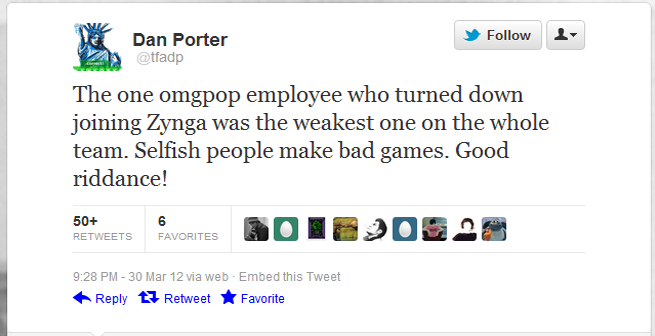
That looked to be the end of the story, until a couple of days ago when OMGPOP CEO Dan Porter decided to shoot his mouth off on Twitter:

This followed another piece on Business Insider where an anonymous OMGPOP source claimed that Pierce was about to fired at the time Zynga took over. Pierce claimed that an offer of employment was extended to him, however, and his discussion of contract negotiations certainly make it seem as though the anonymous source's claims were somewhat spurious.

Predictably, Twitter blew up with this news — and with good reason. Public behaviour of the sort displayed by Dan Porter is simply unacceptable and bad form. Pierce's piece on Gamasutra was both passionate and respectful and he made it abundantly clear that he did not think any less of his former colleagues who chose to go with Zynga. While referring to Zynga as "evil" is arguably a little strong, Pierce did at least go to the trouble of defining what the term "evil" meant to him — by his definition, it's certainly hard to argue with his view on the social gaming giant.

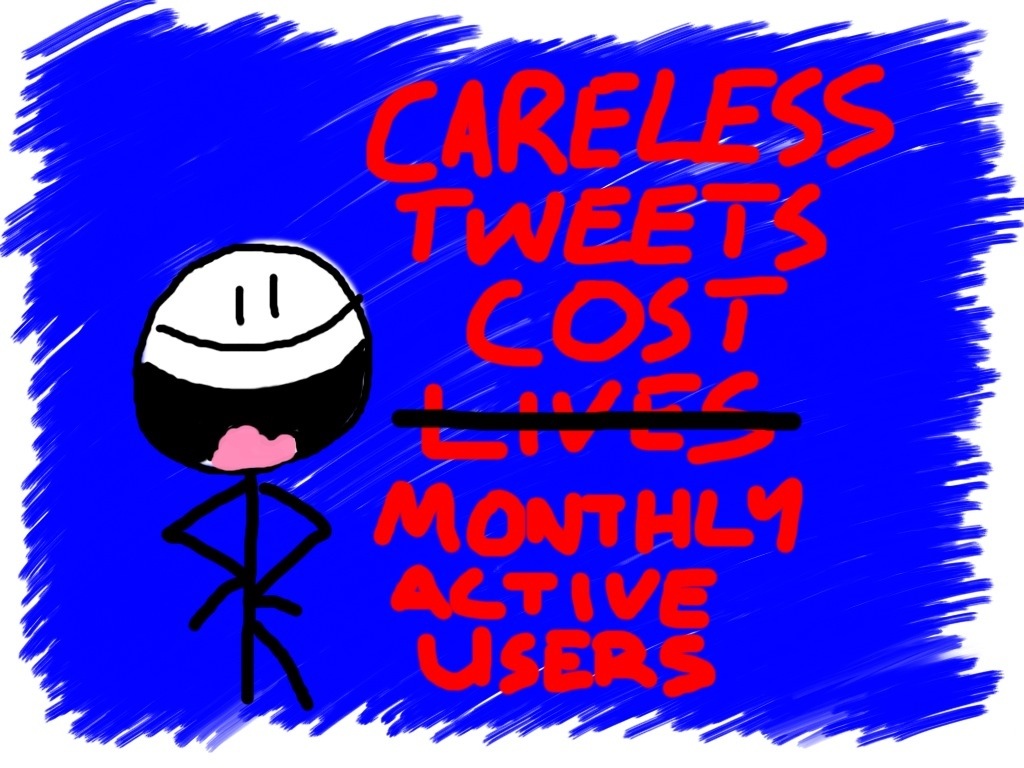
Two things happened as a result of this spat: a lot of people stopped playing Draw Something, and a lot of people downloaded Pierce's game Connectrode. It was a potent example of the power of social media to affect one's reputation. One careless tweet can have far-reaching repercussions — and deleting it won't help, since someone somewhere will have screen-captured it.

Porter has since apologised for his harsh words, noting that "the struggle to build and support Draw Something has been an emotionally draining and hard one" and that both he and the OMGPOP team found Pierce's comments hurtful. He attempted to justify his words by noting that "the 41 other people who made [Draw Something] happen… are the people I would throw myself in front of the train for and those are the people I want to celebrate."

The thing is, though, there's a marked difference between the things Porter said and the things Pierce said. Pierce was speaking his mind and standing up for his principles in a world increasingly dominated by big business. He didn't stoop to personal insults and he remained respectful throughout. Porter, meanwhile, spoke without thinking, quickly descending into personalised attacks without even stopping off for a bit of passive-aggressiveness on the way. No amount of backpedalling, apologising or making it sound as if he was actually doing it for his employees can change the fact he acted unprofessionally and inappropriately towards a former employee. Speaking to VentureBeat, he claimed that he felt Pierce's moment in the spotlight on Gamasutra was unfair, while the Draw Something team toiled in what he seemed to think was relative obscurity.

The thing is, Draw Something is hardly an unknown niche title. According to AppData, 31 million people have signed up for the game using their Facebook accounts, and there are doubtless many more who are playing using an email-only account. People already know about Draw Something, they already know about the outrageous amount of money Zynga paid for OMGPOP and are starting to get to the stage now where they're a bit sick of the whole thing. Pierce's piece, conversely, provided an interesting insight into the mind of a developer having to make a tough decision about his future career path. Given a choice between that and "Draw Something Continues to Sell Millions of Copies", I know what I'd rather read — in these business-dominated days when carefully-orchestrated PR plans regularly gag developers from speaking their minds and being honest with the press and public, I'd much rather take a rare opportunity to hear the truth straight from the horse's mouth.

Draw Something and OMGPOP generally will not be getting any further support from me. The industry can do without toxic attitudes like those displayed by Porter, and as far as I'm concerned, an apology doesn't make up for the regrettable fact that this whole situation arose in the first place.

You should, however, download Connectrode, because it's a rather nifty, original little puzzle game.

#oneaday Day 803: Why Teaching Sucks Redux

20120331-233543.jpg

I've been trawling through my blog's top search terms recently and besides this post, which has been a permanent fixture on that list for somewhere around two years now, one of the most consistent things that people find me through is the simple, clear phrase "teaching sucks".

I have touched on this subject before — hence the presence of the search term — but perhaps haven't described the extent to which I suffered in particularly great detail. This was for several reasons, chief among which was the fact that I wasn't sure if I ever wanted to go back into that particular career path. I spent a year of my life earning a professional qualification to prove that I'm allowed to stand up in front of children and tell them things, after all, so I didn't want to rule it out entirely.

Having found myself doing things that I actually enjoy now, however, I'm pretty certain that I won't ever be jumping back on that train. So here, then, are just some of the many reasons Why Teaching Sucks.

My first teaching position was at a comprehensive secondary school somewhere near the Surrey/Hampshire border. I was hired as a music teacher, though had also agreed to take on some additional responsibilities because I'd been advised that making yourself out to be somewhat flexible was The Thing to Do. Specifically, I'd said that I'd also be happy to take on some English and ICT teaching as appropriate, though with the proviso that I'd not been specifically trained in those subject areas.

I was offered the job, and it was something of a relief as it was getting rather late to be applying for positions. I had been feeling a growing sense of unease — was I doing something terribly wrong at interview? Was I not cut out for this career? Was I a bad person? Some of these thoughts were unreasonable and irrational, of course, but it's the way my brain works. So when the headteacher offered me the position, his only criticism of my interview and observed lesson being the fact that my tie was a little bit creased, I accepted with haste. (As a matter of fact, in most cases you don't have any option but to accept with haste when being interviewed for a position at a school — most seem to expect you to give an answer there and then.)

The time came to start. My heart was in my mouth as the fateful day in September approached, though I was pleased there were a few days to plan and prepare before the kids actually showed up. I took the time to get to know my colleague in the Music department, and also discovered that I'd been signed up to teach "Key Skills" lessons. The exact nature of these lessons wasn't entirely clear, but I was promised that all lesson plans and relevant material would be prepared for me.

By the time the kids arrived, I was starting to feel reasonably positive. I could do this. I was trying desperately to ignore the things some of my new colleagues had said about the local squaddies' families having semi-regular violent altercations with local traveller families, and felt pretty much prepared for what faced me.

Things got underway, and to cut a long story short, it wasn't exactly plain sailing. Year 7 classes were mostly manageable, as the kids were generally fairly bright-eyed and fresh from primary school. Above that, though, and things got difficult. There was the kid whose mum said he didn't have to attend detentions, making all punishments effectively worthless. There was the kid who liked to climb bookshelves. There was the kid who threatened to knife me when I politely asked him to be quiet.

It wasn't all bad times, of course. My GCSE Music class were a joy to spend time with, and while some of them weren't the most gifted musicians in the world, they were fun to hang out with and always tried their best because they liked what they were doing, and they liked me. There were other students who brought a bit of light into the darkness, too, some of whom I've discussed on this very blog. And the school production of Seven Brides for Seven Brothers is a particular highlight that I doubt I'll ever forget — even if it meant me staying up until 3 in the morning arranging music on several occasions. And my colleagues were consistently super-awesome — what I discovered in that school was that people tend to stick together in adversity to support and help each other. I made some good friends, and without them I probably wouldn't have made it as far as I did.

It wasn't to last. The previous headteacher retired and a new head came in — oddly enough, he was an ex-teacher of my housemate at the time, though that's somewhat beside the point. The new head had been brought in to "fix" things — the school was about half a million in the red, behaviour was awful and clearly Things Needed To Be Done. So he did — he immediately expelled a selection of the worst kids in the school (and expelling kids is not an easy process these days), which made him look like he meant business. And he then set about tackling the budgetary problems.

Unfortunately, this meant redundancies. And it became abundantly apparent that the Music department was going to be on the chopping block. As I was the last in, I was also highly likely to be the first out, and sure enough, I was informed that my job would likely no longer be there after the end of the year.

Although I regularly went home cursing the names of the students I taught for the stress they caused me, I sort of enjoyed the job, and very much enjoyed the financial security of having regular income. I didn't want that to go away, and broke down in tears in the Music department staffroom one lunchtime. It was not a pleasant feeling, though it was somewhat cathartic to let out the pent-up emotions while surrounded by sympathetic ears. It didn't help that I was then invited to effectively go and plead for my job to the board of governors, a soul-destroyingly humiliating experience which I hope I never have to go through again.

By the time the end of term came, however, I'd secured a new position at a nearby school and was feeling a little more positive about things. My first impression of the new school had been a positive one, and I felt better about the whole "security" thing. I even managed to give a memorable leaving speech, during which I was able to slip in a saucy joke at the deputy headmistress' expense, offer some earnest thanks to the colleagues who had made my time at that school bearable, and wish them luck for the undoubtedly tough times ahead.

The summer holidays came and went, and I found myself at the new school. This was in a more affluent area, but it was still "the shit school" in the town in question. Once again I went in, got to know my colleagues and prepared for the coming storm.

And once again, all was well to begin with. In most schools, new teachers can enjoy a few weeks of relative calm as the students acclimatise to the new regime, occasionally push the boundaries but mostly seem to want to get on with things. As time passed, however, things declined somewhat. It became more and more difficult to control the classes as the children became more and more confident — overconfident, some might say. I had several pieces of expensive equipment stolen from my (locked) classroom, I was verbally abused on a regular basis, the equipment in the department hadn't been refreshed for a good ten years and there was no money to buy any more, and I was starting to feel the "cracks" from stress.

In the case of this school, there was no sense of camaraderie — at least, I didn't encounter any. No-one talked to me in the staffroom. Even my own departmental colleague preferred to hang out with her friend from Maths than talk to me. I found myself feeling unsupported, unliked and unappreciated. When things went well, I felt like I didn't receive recognition for them. And when things went badly, I felt like I didn't get the help I so desperately needed. I ended up taking quite a few days off sick when I felt I couldn't cope or face the day ahead — and still had to send in work for my classes to complete when that happened.

One particular day I was teaching a class, and had just set them off on an activity to compose some music. I had divided them into groups, I had set clear expectations as to what I wanted them to do and when I expected it to be done by, and I had the equipment set up ready to record their work at the end of the session. In short, there wasn't much else I could have done in order to make that lesson run any smoother.

Unfortunately, it was that day that several groups of students decided to kick off. No-one was concentrating on the task, despite my going around and helping them. Group members were arguing, disagreeing and in some cases threatening to get violent with one another. And they would not respond to me at all.

I could feel the pressure building in my brain like a pot slowly coming to the boil. I knew that something was going to give. I felt it happen as I was standing out in the main hall trying to convince the children who were using the piano to get on with their work rather than thump each other with percussion instruments. Nothing was happening. Nothing was working. I couldn't cope. I wanted out. I couldn't escape, and right at that point, there was nothing I wanted more than to be somewhere else.

I ran off and broke down in tears, thankfully out of sight of the students. It's a blur as to what exactly happened — I think I hid in the equipment cupboard. Somehow someone found me — either my departmental colleague or the Drama teacher — and gently escorted me into our office, away from prying eyes.

I was sobbing uncontrollably by this point. "I can't do this," I remember saying. "This isn't me. This isn't me." Over and over. At the back of my mind the mostly-dominated rational part of my brain was thinking "so this is what a nervous breakdown feels like", and my body was certainly providing an apt demonstration. It took a long time for me to calm down, by which time someone had gone and placated my class, or removed them to somewhere else — I didn't know. I didn't care by this point, either.

I escaped the premises as soon as I could, went home and cried again. I had got myself into this situation, and I didn't know how to get out. I was scared. I was sad. I was angry. I didn't know what to do — but I knew what I didn't want to do.

I made an appointment with my doctor. The time came to see her and, voice shaking, I explained how terrible I was feeling and how I had suffered my embarrassing emotional breakdown. I was terrified that the doctor would judge me, tell me I was being stupid, refuse to do anything and force me back into that hell. But she didn't. She gave me a sympathetic look and asked me what I wanted her to do for me.

"I can't go back there," I said. "I just can't."

She nodded, clearly understanding, and wrote me a sick note signing me off for "work-related stress". I couldn't face handing it to someone in person, so the next day, I wrote a brief letter to the headteacher apologising for my absence, attached the sick note and took it into the school one afternoon when I knew all the staff would be in a meeting. I left it there, swearing I would never set foot in that place again.

The next day, the headteacher's personal assistant phoned me, saying that the head was concerned about me and wanted to come over to my house and talk later that week. Panicking and not knowing what to do, I said that would be all right and immediately regretted it the moment after I put the phone down. I took to a teachers' forum I frequented and picked the brains of the community — was this normal, I wanted to know? Was it something I should be allowing?

It was recommended that I contact my union representative, and I did so. They told me that it would probably be a bad idea to have that meeting, so, not being able to face any more phone calls — telephobia, remember — I sent an email to the head's assistant saying that I was sorry, but I didn't think the meeting would be a good idea. I then closed my email program and promptly became terrified and paranoid about what the response would be. I was too afraid to look at it for most of the rest of the day, but when I did, I found that I had actually received a rather understanding response. I realised that in my mind, I was building up a feeling that everyone was out to get me, that I wasn't safe, that I couldn't escape. But it transpired that people were just worried about me.

This story has already gone on a long time — longer than I perhaps intended — so I'll just say at this point that I, unsurprisingly, resigned from my post while I was signed off sick. I sent a lengthy letter explaining exactly why I was resigning, taking the opportunity to share a number of concerns that both my colleagues and I had. I received a response from the head thanking me for the time I had served at the school, and noting that my concerns were valid, warranted and shared by many other members of staff, including him. That made me feel a bit better.

Since that time, I haven't really looked back. I spent a short time working in a primary school as an experiment to see if working with younger kids was any easier, but no — all the same stressors were still there. Behaviour, threats of violence, government interference, endless bureaucracy and the constant feeling that you're doing a Bad Job even when you're not. It didn't help, of course, that I was working at a school that was failing so hard it was in "Special Measures", meaning that government interference was even higher than it usually was. But that's a story for another time — in fact, the way that particular sorry episode made me feel is chronicled extensively at the start of my "oneaday" entries.

Fortunately, in that case, I was on a temporary contract rather than a full-time permanent position. As such, I was free to walk away — even though at the time I didn't have anything to go to. To date, I sometimes wonder if I made the right decision, as it proved to be the catalyst for a fairly cataclysmic Heroic BSOD in my own personal story.

But looking at where I am now… I'm in a better place. (No, not dead. Though it's not an exaggeration to say that was, at a number of points during the story above, a very real concern.) I'm doing a job I enjoy, living with a person I love and leading a life which may not be perfect, but it's certainly pretty good. Had I stayed in teaching, I'm not sure I'd be able to say the same thing.

If you read all that, thanks for listening.

TL;DR: Don't go into teaching. It'll fry your brain.

#oneaday Day 802: On 'Entitlement', and How the Games Industry May Have Brought This on Themselves

20120331-013201.jpg

Yet another op-ed discussing the controversy of Mass Effect 3's ending dropped today, this time from Gamesindustry.biz. In it, author Rob Fahey notes that "the advent of the Internet generation has done something deeply unpleasant and disturbing to the word 'fan'", going on to describe how the word has gone from meaning "I like this, it speaks to me on some level, I enjoy it, and I'm willing to spend money on it and advocate it" to "I like this, and thus it belongs to me, I own it, and I deserve a say in its future and its direction."

I don't argue with Fahey's key point here — that there are people out there who believe that they should have a say in the way their favourite franchises are run — but I do object to several things about this article. My main point of contention is that the tone of the piece is yet another example of the games press being unnecessarily confrontational towards members of the public, lumping everyone who disliked Mass Effect 3's ending together into one homogenous group. In reality, it's rather different — while it's true that there are people who have gone to the extremes of setting up petitions and complaining to official bodies over the ending, there are also people out there who dislike the ending because it's badly written, because it feels half-finished, because it feels like an excuse to tack on the obnoxious "Hey! Buy DLC!" dialog box after the ending, and many other valid reasons to say it is a bit poo. (I'm paraphrasing from discussions with several friends and podcasts I've listened to here, as I have not played the game and, as you likely know very well by now, will not be doing so.)

Fahey does, however, then touch on an important subject which I believe is what has led us to this whole mess in the first place over the course of the last few years.

"Game companies are excited, delighted, by the idea of having loyal fans," he writes. "Game companies have engaged with their fans, closely and directly. They nurture their communities. In BioWare's case, and God knows they're probably regretting this now, they openly talked about how important fan feedback is to them, about how Mass Effect was a series driven by its fans. It's become a creed, a mantra. The fans are important. We love our fans. We listen to our fans. Tell people that often enough and they start to believe you — and on the Internet, there are a whole lot of people who don't need much of a push to believe that they're important and must be listened to."

This is correct, but it is not the fault of the fans themselves. Rather, this situation has been exacerbated by the direct engagement with the audience that Fahey notes above. Fahey does concede that the industry has "forgotten that creativity isn't about the audience, first and foremost, it's about the creator" but seemingly shies away from what has actually caused this problem.

Two words: social media.

In BioWare's case, their seemingly exemplary social media strategy of direct, personal engagement with fans has actually turned out to be their downfall. Let's take a look at a bit of background to this.

For starters, a while back the company's own social media coordinator Erika Kristine took the bold step of providing an open link to her own personal Facebook profile. Fans were able to befriend her and talk to her directly — though, disappointingly, as an attractive female, many of the comments she ended up getting on her page and photos tended to be of the "ur so beautiful" creepy variety rather than people wanting to engage with her. Perhaps unsurprisingly, her personal Facebook presence appears to have vanished, to be replaced by a "fan page" which hasn't been updated since November of 2011. The damage was done, though — longtime fans knew that Erika, a human being, was in charge of BioWare's social media, and thus opened the gates for "negotiation".

Then there was the FemShep incident. What was previously a quirky subculture of the Mass Effect community — the cultish love for the female incarnation of Commander Shepard, voiced by Jennifer Hale — was adopted as a marketing tool by EA and BioWare. We started to get promises of FemShep trailers, FemShep art on the box, FemShep this, FemShep that. The whole thing came to a head with the odious "beauty pageant" public vote where subscribers to BioWare's Mass Effect page on Facebook were able to vote on which of a variety of computer-generated hotties — very few of which are actually possible to create using the in-game character creation tools — would become the "official face of FemShep". When the community objected to the fact that a "predictable" blonde, blue-eyed FemShep was winning the competition, the company opened another round of voting, this time providing a choice of hair colours for the same model FemShep. (We ended up with a redhead — a decision I applaud, but that's beside the point.)

These aren't isolated incidents, and they're not limited only to BioWare and EA. Most major game publishers these days have hopped on the social media audience engagement bandwagon and regularly post questions, invite feedback and hold votes for everything from which athlete should be on the front cover of this year's Madden game to what colour Serah's panties should be in the inevitable upskirt scene in Final Fantasy XIII-2. All right, I made that last one up, but given that Konami promoted NeverDead with an interactive picture where the game's heroine Arcadia stripped off more and more clothing as more people Liked the page, it's not beyond the realm of possibility. This revolting marketing ploy has thankfully disappeared now the game's page has moved to Timeline view.

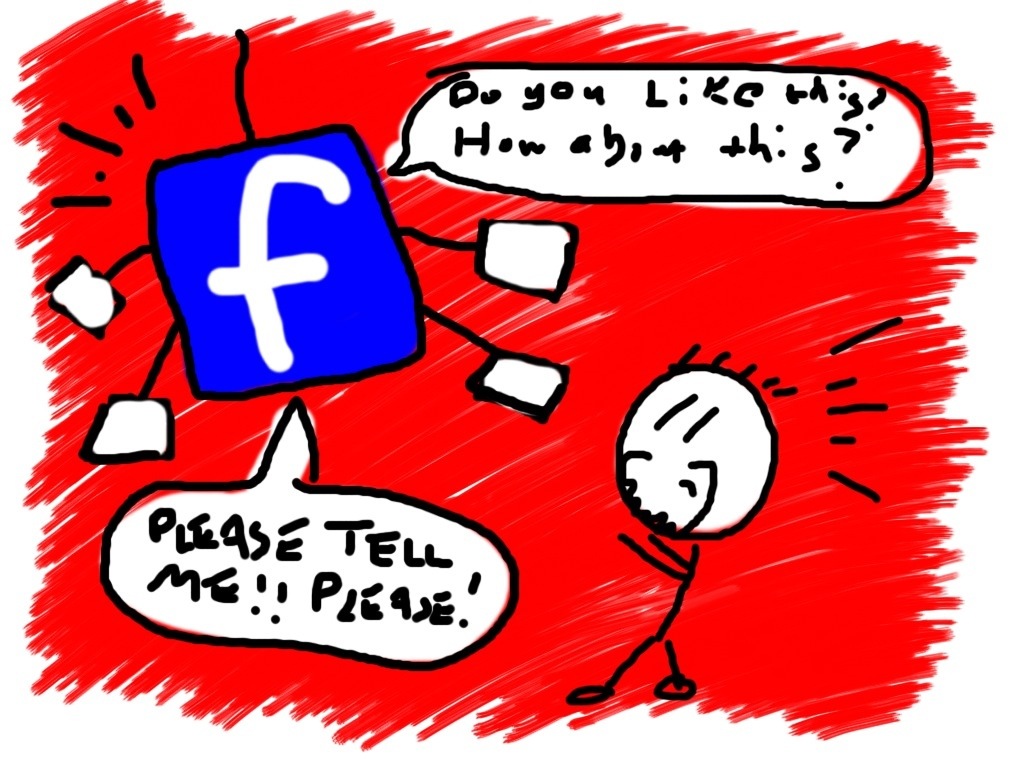
Given the way developers and publishers interact with their fans, though, is it any wonder that some have started to feel like they have the right to exert some degree of "crowdsourced control" over their favourite franchises? If they can influence what FemShep looks like, why can't they influence the ending of Mass Effect 3?

In short, the industry has backed itself into this corner and no amount of complaining about how "entitled" the more vocal fans are is going to change that. These fans may well have a sense of entitlement, but that has come from somewhere — it hasn't just appeared from thin air. And no-one seems willing to acknowledge this fact, perhaps largely because it's much too late to do anything about now. Pandora's Box has been opened, Liked and Shared with eleventy bajillion people around the world, and it's going to be very difficult to close it again.

In order to fix this, developers and publishers need to take a step back from their audience, to stop engaging with them quite so directly and to stop soliciting feedback on every little irrelevant detail of, say, how many tassels there should be on the new Assassin's Creed dude's hoodie. If developers don't want a repeat of this whole Mass Effect 3 fiasco, then they need to stand back behind a barrier that carries a big sign reading "Look, chumps, we made this, and we hope you enjoy it. You're free to not enjoy it if you so please, but it is what it is — finished, complete, tied up with a pretty pink bow. If you enjoy it? Great. We'll keep making more if you keep buying them. If you don't like it? Don't buy it, then we'll know we need to do something else."

"This isn't a situation that'll change overnight," concludes Fahey's piece, "not least because immense inertia defines the role of 'fans' in our industry — but it's important for game creators to realise that things don't have to be this way. Engagement with fans doesn't have to mean letting the lunatics run the asylum, or even giving them the impression that they've been given the keys to the office."

His conclusion here is valid — this is exactly what game creators need to do. You can't crowdsource a big-budget game and expect it to come out coherently, so don't encourage people to think that's an option. However, the fact that some people have already come to that conclusion thanks to social media oversaturation doesn't make them "sociopaths", as Fahey calls them — it means that they have been brought to that conclusion via precedents set by the people they are complaining to. Similarly, those who simply dislike the ending on the grounds that it's just not very good — particularly when the rest of the series is used as a yardstick to measure it against — aren't being "entitled" or "sociopathic", they're just rather unfortunately finding their opinions lumped in with those who are taking more extreme arguments.

I hope the industry learns from this experience, but I have a suspicion it won't.

#oneaday Day 801: Long-Term Memory

20120330-021056.jpg

It's funny what sticks in your mind and what you subconsciously decide to purge on the grounds that it's completely unimportant. It's not always a case of big life events staying in your mind and the day-to-day stuff disappearing, either — often the strongest memories are those from seemingly irrelevant happenings.

For example, I can think back to my own primary school days and have vivid memories of doing shoulderstands on the field with my then-best friend because we thought it would allow us to make ourselves fart. (It didn't. And to this day I'm too scared to try and make myself fart on the grounds I might shit myself instead.)

I also remember the fact I used to get very angry with one of the dinnerladies and regularly kicked the bin that stood in the corner of the playground. I do not, however, remember the reason I got so angry with her — though it was probably an attempt to exorcise the pent-up frustration I felt from being pretty ruthlessly bullied throughout most of primary school.

Or how about the time I discovered the word "shit" was a swear? I must have been about six or seven at the time (I was in "Class 2", anyway) and I was sitting on the "Blue" table with the other clever people, most of whom were rather fickle about who they were friends with — some days they'd accept me, others they'd specifically exclude me. We were doing some sort of spelling exercise, and Natalya Forrester (all names in this post have been changed to protect the not-so-innocent) was spelling out the words out loud as she wrote them down. "Ship… S-H-I-T…" she said. "Shit?" I responded. "UMMMMMM." replied my compatriots, who promptly reported me to the supply teacher covering the class, who in turn threatened to wash out my mouth with soap and water.

Once we'd left primary school and were going to our secondary school, which was seven miles away, we had to wait for the bus outside our old stomping grounds, which suddenly looked very small. Oddly enough these occasions of waiting for the bus provide some of my most vivid memories from the time. It was during these periods that I learned how to make myself burp under the expert tutelage of Dave Oyster, who could sustain an ejaculation of oral flatulence for an impressive ten seconds or more at a time — loud, too.

Other secondary school memories include sitting in our tutor room and my then-best friend (the same one I'd been attempting to fart with some years previously) sneezing all over his hand and spraying stringy snot all over himself — and then eating it. Urgh. It was also at this point that I decided that my then-best friend might not be best friend material any more. The final breaking point was when he inexplicably sat in his seat miming masturbation and muttering "I'm a wanker! I'm a wanker!" at me, presumably hoping I'd find it funny. I didn't. Next registration, I went and sat next to my new friend Ed and never looked back. The thunderous look I got from my former best friend burned like fire, but then I remembered that he thought he was a wanker, so I silently agreed with him and moved on with my life.

I don't remember a great deal about specific lessons at secondary school, though I do have oddly fond memories of GCSE Maths class — not because I liked the subject (I fucking hated it) but because of the various ways we used to mock our possibly-an-alcoholic teacher. His first initial was A — to this date, I don't know what that stood for — and we decided that this must stand for "Abraham" because that would be funny. There was also a group of three girls whom he often called on to answer questions (also I fancied two of them) who became known as "Abe's Babes". Also he liked to add context to the mathematical problems we were working out, so often referred to himself doing unimaginable things for his age and demeanour, such as windsurfing and hang-gliding.

There are plenty more memories lurking in there, too — both good and bad. And I have no doubt that these bizarre, seemingly irrelevant mental snapshots will continue to stay with me for a long time to come. I can't help feeling that maintaining these memories in my mind is what helps me call upon "childishness" or "immaturity" (for want of a better word) if the occasion demands it — for contrary to the way the world works these days, seemingly requiring kids to "grow up" at younger and younger ages, being able to draw on your "childish" side lets you enjoy life in a way that stuffy old adults can't. In my case, it's the side of me that lets me enjoy My Little Pony and colourful Japanese role-playing games; the side that lets me fantasise and come up with amazing stories that I rarely finish (or, in some cases, start); the side of me that lets me sit around with friends and casually insult them for a whole evening without anyone getting upset.

Of course, it's also the side of me that doesn't really understand what insurance is, how economics work and what the fuck the stock exchange is for, and the side of me that always forgets whether cream-coloured clothes with small bits of colour on them go in the "white" or "coloured" laundry load. But I think I can live with that.

#oneaday Day 800: 800 Days of Nonsense

20120329-015308.jpg

So, 800 days of daily blogging it is. I feel like I should have some sort of celebration or something, but since it's 1:15 in the morning and I'm rather tired and achey after a gym session earlier, it can probably wait.

At this juncture, I feel it would be nice to just say a big "thank you" to those of you who have been reading my regular gibberish, and an especially big "thank you" to those of you who contribute comments and engage in discussions. The last couple of months in particular seem to have seen a few new people coming my way, so welcome to those of you who are newcomers.

I may regularly protest that I'm not writing this blog "for" anyone and I actually stand by that — I write these posts each day as an outlet, a form of escapism or, at times, catharsis. They have proven very effective on that front over the last couple of years. I'd go so far as to say that surviving some of the trials and tribulations my life has thrown my way would have been considerably more difficult — possibly insurmountable, though we'll never know (unless dimension-jumping technology gets invented) — without this faithful old WordPress page to empty my brain onto.

That said, it's fun and — I won't lie — a little bit exciting when people leave a comment and start a discussion. I believe most bloggers feel that way. Getting comments is a sign of "approval" — not necessarily of your opinions, but of the means through which you've argued them. Inspiring a comment, be it an "agree" or a "disagree", means that you've moved someone to actually say something rather than just click the Like button. (There's nothing wrong with that, incidentally — if you just enjoyed/appreciated a post but have nothing further to add, a Like is always gratefully received.) And so far as I can remember, most (if not all) comments on this here site have been respectful, interesting and showing willingness to engage in conversation. Also people who read this seem to be able to spell and punctuate correctly, which is always a massive bonus in this Facebook-dominated world where everyone seems to think that capital letters are just an inconvenience.

So after 800 daily posts, what now? 800 more, of course! Though I must confess in recent months it's been becoming harder and harder to think of things to write about. Oddly enough I feel that some of my most creative work on this blog was done during possibly the worst period of my life, perhaps as a means of escaping the crushing depression of what was going on in "reality" at the time. They say that artists produce their best work when tortured, and while I certainly wouldn't refer to this site and these 800+ posts as "art", it's clear that whatever Shit I've Had Going Down at various points over the last 800 days has affected the things I write about — whether consciously or subconsciously. In that sense, I often find it interesting to skip back to a random post and not only read it but also picture the context of what was going on in my life at that time. It's an interesting — if sometimes painful — journey that I've taken, and to have chronicled it quite so exhaustively (if not always explicitly describing exactly what happened each day) is something I can look back on with a degree of pride and satisfaction.

As I approach my 31st birthday (April 29th, please send money or gifts to the usual address) I don't know what the future holds for me — personally, professionally, physically, mentally. But so long as I've got this text editor window and a "Publish" button I'm confident I can deal with whatever comes this way.

#oneaday Day 799: Um, Fluttershy

20120328-011325.jpg

A discussion with my friend Lynette earlier today (who, it has to be said, squeed rather enthusiastically at the news that I have been watching My Little Pony) saw us pondering, as so often happens with strong, character-led pieces of work, which My Little Pony was the most "us" — or at least the one we felt most able to relate to.

My answer — Fluttershy — is apparently one of the more popular ones, for a variety of reasons that I haven't explored as yet and am mildly terrified to, given the deep, deep rabbithole that sites such as knowyourmeme and TVTropes can be.

I imagine, given her timid nature, that there's at least an element of crossover between Fluttershy fans and Hanako fans — a category which, if you recall, I count myself firmly in. Her endearing meekness, anxiety and loyalty are character traits I can well and truly understand, and I know I have more than a few similar traits myself.

Take the fact that she has a clear case of social anxiety, and is nervous about showing off her talents except when absolutely necessary or in a situation where no-one can judge her. When taken along on a perilous journey to use her talent for "parenting" (for want of a better word) to convince an unruly, belligerent dragon to go and sleep somewhere else, she's (understandably, I feel) too scared to go in there and do her thing, even in front of her friends. And only partly because she's dealing with a fucking dragon.

I know too well how all that feels — of the difficulty and anxiety which surrounds using your talents and abilities in "public", even in front of people you love and trust. (Not the "dragon" bit.) I know, for example, that I'm a decent writer and that people enjoy reading my stuff, but I hate hate hate anyone watching me write. I have absolutely no idea whatsoever why this is — whether it's anxiety over people "backseat editing" or judging the things I've written before I've finished is anyone's guess. I just know that I hate it — but I like showing it off when it's finished, namely when I can hit "publish", light the blue touch paper and just walk away. (At this point, my fear of negative, destructive feedback comes into play, but that's a whole other matter.)

Same thing with music, really. Practicing is a necessary part of being able to play complex pieces of music, but I hate people listening to me practice. Performing? Fine. Playing the same bit over and over and over again until I get it right? Well, that's something to do with headphones or when no-one's in the house. Something of a combination of perfectionism ("if anyone's going to hear this, I want it to be right") and worrying about the judgement of others ("they won't want to hear those three bars repeated over and over and over! They'll tell me to shut up, or hurry up and get it right or something"), perhaps? I don't know.

Same with doing anything vaguely creative, in fact. I hate being watched doing something like that. Perhaps it's because doing something creative puts you in a vulnerable position where your "soul" (or whatever) is on display, and anyone could quite easily strike it for massive damage with an unkind word or an ill-timed snigger. It's something I could really do with Getting The Hell Over, but it's also one of those things that has indelibly stamped itself onto my personality over the years.

Whatever the reasons for it all… Um, Fluttershy? I feel your pain, girl.

#oneaday Day 798: My Little Pony, Skinny and Bony, Made out of Plastic, Looks Like a Sp--

20120327-015810.jpg

I'm just going to confess this up-front right now as I'm not really ashamed of it, but I can see how some people might be embarrassed to admit such a thing in a forum as public as their personal blog viewed by literally tens of people. Not me, though. I am unashamed, as you can clearly see from the amount of filler in this first paragraph, coupled with the fact that I have not yet introduced the topic of this entry, which is obviously visible in the post title.

All right. No more inane babbling. (Hah.) One… Two…

IwatchedthreeepisodesofMyLittlePonyearlierandenjoyedthem.

Whew. That sure feels good to get off my chest. See you tomorrow.

Wait, you want a little explanation? Well, all right. I guess you can't just drop a bomb like "I Watched My Little Pony Today" (hey, it does get easier once you've said it once) and just walk away. You probably want to know if I'm feeling all right, whether there's anything you can do to help me and if the authorities should be notified.

There is nothing to be concerned about. My interest in the new My Little Pony series (My Little Pony: Friendship is Magic, to give it its full title) was initially sparked by online discussion and the phenomenon of "bronies" — male fans of the show aged between 14 and 35-ish. The rise of the curious and unexpected fanbase for the show is, according to Wikipedia, originally attributed to discussion on renowned Internet dark corner 4chan. The memes which came from the Friendship is Magic show spread outwards from 4chan, as memes are wont to do, and the "brony" was born.

This sort of situation was unthinkable back when I was a kid, which is incidentally the last time I was even the slightest bit aware of the existence of My Little Pony. As a boy at primary school, the absolute worst possible insult that could be hurled at you (not counting "your mum" jokes, since those technically aren't insulting you) was to be accused of liking girly things. My Little Pony was, at the time, the very pinnacle of girliness, and to be branded as a boy who liked the sparkly equines? Well, that would be the end of your social life, since, as we know, kids can be bigoted little shits at times. (Unless you were friends with girls. But what self-respecting primary school kid in the 1980s was friends with icky girls? Bleeeeurgh.) (Full disclosure: despite being bullied as a kid, I fortunately, to the best of my recollection, escaped the dreadful fate of being branded a girlyboy. Further disclosure: I always thought the Ponies' hair looked nice. Additional notes: GIRLS.)

Anyway, back to the present, and Friendship is Magic. I watched the initial self-titled two-part episode with some curiosity, having no idea what to expect save for the art style that I had seen scattered around a few Twitter avatars in recent weeks. The distinctive, big-eyed aesthetic for the Ponies was one that appealed to me, so I knew that I was at least going to like the look of the show — it was the content that I knew next to nothing about.

What I found was actually rather entertaining. While the show is obviously somewhat "girly" in many of its themes and characters (you can count the number of speaking male characters on the fingers of two fingers in the three episodes I've watched so far, and one of them is voiced by a woman) it features that kind of multi-layered humour that sets truly great kids' TV shows apart from the disposable fluff. While on the surface the episodes each contain a commendable message about friendship, trust and cooperation, there are several other layers on which the show can be appreciated.

Firstly, there's the characters, who are all well-defined but nuanced, and many of whom contribute to the show's often exhausting, manic pace — it reminds me of shows like Powerpuff Girls at times, at least partly due to prolific voice actress Tara Strong's involvement. Secondly, there's the wide variety of humour types which are presented — everything from slapstick to surrealism, with some musical comedy usually thrown in for good measure whenever Pinkie Pie is around. Thirdly, there's a ton of cultural references tossed in there — in just the three episodes I've watched to date, the show has referenced The Brady Bunch, The Benny Hill Show, The Wizard of Oz and doubtless a bunch of other things that I've missed.

Perhaps the most striking thing that I like about it, though, is its almost unrelenting cheerfulness and positivity. In fact — and this will sound like a strange comparison, but bear with me — it reminds me of the reason that I enjoy Japanese role-playing games. The colour. The strong, exaggerated characters. The way in which said characters tackle their "issues". Hell, the first two episodes even culminate in a very JRPG-style "boss fight" featuring the Ponies unleashing the power of the six Elements of Harmony in order to teach temporary antagonist Nightmare Moon a lesson she won't forget in a hurry.

It's silly, enjoyable nonsense, in other words, though with a commendable underlying message. It's fun, undemanding but rewarding, and just the thing with which to unwind if you can't deal with too much angst, tension or people trying to be too clever. In short, it is what it is, and you should feel absolutely no shame whatsoever in enjoying it if you find it happens to tickle you in your happy places.

I guess all of the above makes me a Brony by default, then. You know what? I'm cool with that.

#oneaday Day 797: Enthusing Regarding Shadow Hearts: Covenant

20120326-020545.jpg

Haven't written about what I've been playing for a little while, so here's an update.

I'm currently playing Shadow Hearts: Covenant, aka Shadow Hearts II. If you've been reading my previous entries, you'll know that this is the second entry in a PS2-based RPG series published by Midway (in Europe, anyway) and developed by Nautilus (nee Sacnoth). If you haven't been reading my previous entries… uhh… Shadow Hearts II is the second entry in a PS2-based RPG series published byMidway (in Europe, anyway) and developed by Nautilus (nee Sacnoth).

Jesting aside, Shadow Hearts II is a significant upgrade over its predecessor. Where the original Shadow Hearts could have easily been a PS1 game, with its prerendered backgrounds, polygonal characters and turn-based combat, Shadow Hearts II is not only a fine example of a PS2 game, but a game which still stands up remarkably well today regardless of platform. Replacing the original game's prerendered vistas with a 3D world full of dynamic (but still game- rather than player-controlled) camera angles is the most obvious difference, and it's striking what a change it provides. Shadow Hearts didn't look bad but it did suffer a little from characters standing around somewhat woodenly when having conversations. Shadow Hearts II, by comparison, takes a much more cinematic approach to its presentation and looks great as a result. It helps that the character models are fantastic and well-animated, too — this really is a great-looking PS2 title.

Going hand-in-hand with the cinematic presentation of the visuals is the move to the game being mostly voiced rather than almost entirely text-based. This has the sad side-effect of meaning it's no longer possible to rename your characters, but since the original Shadow Hearts featured a voiced ending sequence in which the default names of the characters were used even if you'd played for over 30 hours with a party sporting a completely different nomenclature… well, I can deal with that. The voice acting is mostly decent, but pays absolutely no attention whatsoever to the countries that the cast members are supposed to be from. Leading lady Karin, for example, is supposed to be German, but she sure doesn't sound it. It doesn't take long for the suspension of disbelief to kick in, however, as you immerse yourself in Shadow Hearts' surreal parallel reality in which World War I is happening at the same time as Bad Shit is going down with demons and monsters. Eventually the fact that everyone from a wide range of different nations all sounds American ceases to matter, and the fact it's set in the real world alongside real-life historical events and figures becomes almost incidental. It just becomes a cool JRPG story in which the place names sound very familiar.

I'm not going to talk too much about plot here as I'll save that for a post once I've finished the game, so instead I'll now dwell a little on some mechanical highlights from the game — specifically, the combat system.

Shadow Hearts featured a functional, fun combat system that didn't deviate hugely from the traditional turn-based "heroes line up one side, enemies line up the other, polite violence ensues" system used by many RPGs over the years. The main twist on the formula was the use of the Judgement Ring, which required carefully-timed button presses to ensure the success of actions. More powerful, complex moves required more button presses, while the use of the Ring also allowed the designers free reign to throw in a variety of unconventional status effects besides the usual Poison, Paralyse and the like. Some enemies might make your Ring very small, for example (stop sniggering at the back) while others might make it spin very fast. It was a pleasing extra layer of interactivity atop an otherwise fairly conventional battle system.

Shadow Hearts II keeps the good bits of the original — the Judgement Ring and the need to keep an eye on your party's emotional as well as physical state during combat — while completely shaking up the core battle mechanics. No longer do both sides stand still waiting to be smacked across the face. Instead, characters move around the battlefield to make use of their abilities, and various different types of attack allow the player a degree of control over the battlefield. If you see a bunch of enemies lining up for a concerted attack, for example, then you can perform some sort of explosive move that scatters them and prevents them from unleashing said attack.

This system is given a whole new layer of depth by the Combo mechanic. Characters (player or enemy) who are standing directly adjacent to one another are eligible to participate in a "Combo" attack. This still takes place in a turn-based manner, but allows characters to take their turns outside of the usual order determined by their agility statistic. Repeatedly wailing on a single enemy with several characters also gradually increases the damage inflicted, with more and more total hits contributing to a bigger and bigger damage bonus, particularly if you combine this with knocking the enemy up against a wall. It's immensely satisfying to pull off successfully, and adds a much greater degree of strategy to battles. Do you risk characters being knocked out in favour of unleashing a four-man combo? Or do you keep someone held back on healing duty while the others batter the enemies with magic and a giant frozen tuna? Karin's sanity is a bit low — can you risk her going Berserk after she's done her job in the combo?

Alongside the excellent combat comes a fine system of character development. Player characters may equip "Crests", which allow them to cast spells. Almost any character may equip any combination of Crests, so long as their total level doesn't exceed their "capacity" statistic. This allows you to set up characters as healers, buffers, offensive mages or any mix you please.

This doesn't make characters interchangeable, however — far from it. Alongside the Crest Magic system is the Personal system, which features a unique mechanic for every character. Karin must collect Wagner scores to inexplicably teach her new swordplay moves. Friendly wolf Blanca (incidentally, one of the most subtly hilarious characters of any game I've ever played) powers up his special moves through defeating rival wolves from around the world in one-on-one combat. Vampiric wrestler Joachim learns new moves from his "Teacher", real-life wrestler The Great Gama. Not only that, though, but he occasionally suffers uncontrollable transformations into a golden bat, an invisible form or a superhero alter-ego according to his biorhythms. Highlight of this "Personal" system, however, though, has to be Gepetto the puppeteer, who fights using his slightly creepy kid-like doll Cornelia, who gets new dresses infused with new magical capabilities by taking cards with naked, muscle-bound male pinups on them to a rather effeminate French tailor who persistently follows the party around from location to location. No, I'm not making any of this up.

Herein lies the genius of Shadow Hearts II. It is filled with inspired lunacy, and every time you think you've got the hang of its peculiar mindset, it throws something newly bizarre into the mix. And the best thing about it is that it plays it all so straight, so deadpan. These strange systems are just how things work — no explanation required. In the case of Joachim's transformations, for example, the game doesn't even bother to mention that this might happen at some point, or even explain it when it does happen for the first time. Instead you're left gazing at your battle screen, bewildered as to why a party member has inexplicably turned into a bat without warning. Fortunately, there's an in-game help facility which does explain these quirky little features, but in a way it's more fun to discover things for yourself and only resort to the help if you find yourself really confused.

It's proving to be an utterly brilliant game so far, then. I've no idea how far I am off finishing it — I'm about 40 hours in and have been on the second disc of two for a little while, so I'm guessing there's not that much left — but I'm certainly going to continue to enjoy the ride while I can. And if you get the chance to, you absolutely should play this and its predecessor, too.

#oneaday Day 796: Social Unplugged

20120325-024732.jpg

I unplugged myself from a bunch of social networks yesterday. I haven't deleted my accounts as yet and probably won't do so unless said sites start spamming me excessively, but I have stopped using a number of services which were proving to be fairly unnecessary in my day to day life. All told, I said goodbye to Foursquare, Gowalla, Path, Quora, GetGlue and possibly some others that have slipped my mind. Cold turkey, too — I simply deleted the apps from my phone and didn't tend to use their websites anyway. It was a pleasingly liberating feeling to have released myself from some of these self-imposed shackles.

So what have I chosen to keep around? Facebook and Twitter, for starters, since those are the nearest we have to "industry standard" social networking tools. Twitter's integration into iOS 5, for example, proves that Apple is certainly willing to show its support for the microblogging site, and it's rare these days to see a TV show that doesn't prominently display an "official" hashtag for online discussion alongside the broadcast. Facebook, meanwhile, I largely keep around for two reasons: firstly, my job, which involves playing a large number of Facebook games; and secondly, I have a number of friends and family who don't really "get" Twitter (or have no real desire to do so) and thus Facebook is a reliable means of communication with them.

Alongside this I have a Google+ account and am still a fan of Google's clean, clear service. Despite superficial similarities to Facebook, it actually provides a rather distinct user experience, combining the ease of discovering new people of Twitter with the possibility for conversations of more than 140 characters at once of Facebook. A lot of people feel they don't "need" it and indeed many of my friends who also use Twitter and Facebook have kind of relaxed their use of the service somewhat, but this has left me with a variety of unique and fascinating people with whom to engage with. Despite the hoohah over Google's changed privacy policy a few weeks back, the Google+ integration across the Web (particularly noticeable on YouTube) is a great example of how to do the "sharing" thing right.

I also still have the Formspring app on my phone. I haven't used it for a while, but occasionally it's a lot of fun to ask for some bizarre questions, see what nonsensical queries people can come out with and then attempt to retort with some appropriately witty (or brutally honest) responses. It's utterly pointless for the most part, but it's actually a good means for flexing the writing muscles in a slightly different way to what this blog offers — rather than having to come up with a topic myself, a Formspring answer is a short piece of writing based on a stimulus provided by someone else. I enjoy doing this.

Besides those (and the WordPress app, of course, for maintaining this 'ere site), though, I've come to the conclusion I have no need for anything else. I have no real need to "check in" to places I'm at, things I'm watching or books I'm reading, because it's just as straightforward to just post on Facebook, Twitter or G+ that I'm doing those things. They were fun for a while (and GetGlue sends you actual real physical stickers if you earn enough badges on the site!) but ultimately they're meaningless noise in an already chaotic world. So away they go. And thus my life becomes approximately 27% more peaceful.

If you'd like to follow me on Twitter, you can do so here. If you'd like to circle me on G+, you can do so here. And if you'd like to ask me silly questions on Formspring, you can do so here. That's your lot!