2136: Dark World

0136_001

I am having a rough time, I don't mind admitting. I was pretty open and honest about one of the things that was bothering me a few days ago, but it's just one of several things that have been mounting up and causing me a not-inconsiderable degree of grief and stress just recently.

I would like it all to stop, please.

The person I care most about in the world is suffering with pain that won't go away and that no-one seems to know how to fix. It's at a point where it's impacting both of our lives fairly significantly, but I don't know what to do about it. Well, I sort of do: there isn't really anything I can do about it myself, save for hanging in there and offering support when and how I can. I don't resent having to do that, of course, but it is exhausting.

Alongside that, I find myself worrying about doing the right thing with regard to working. I'm enjoying my current seasonal temp position in retail, but at the back of my mind is always the knowledge that I'm underpaid, overworked and overqualified; a little voice in the back of my mind reminding me that I am 34 years old and should probably have done something a little more with my life by now.

The thing is, I've tried doing more with my life. I've tried being a teacher, and failed. I've tried having a "normal" office job, and failed. I've tried being a games journalist, and failed. In each and every instance, I've been pushed out by some combination of me being unable to stand up to people being assholes, my own declining mental health, my own lack of self-confidence and, on several occasions, events that were completely beyond my control.

It really, really blows to feel like you've wasted so many years of your life, and that you're stuck on the "bottom rung" of the career ladder. It makes me feel guilty for enjoying the work I'm doing, because I "should" be doing more. But the thing is, I don't really feel like I want to be doing more, nor do I feel like I'm entirely capable of doing more. My experiences since leaving university have proven to be such repeated and violent blows to my own sense of belief in my own abilities that I just want to be able to get on with things and let progress happen naturally if it's warranted.

I really don't know what to do any more. I guess I just have to ride this particular mental storm out, just as I've ridden out all the previous ones I've suffered over the years. This one feels like quite a bad one, but I can't give up; I mustn't give up. Giving up will simply make everything worse.

Forgive the self-pity, but as you can probably tell, I'm not in a great place right now. You will, dear reader, hopefully understand if I am somewhat out of sorts and in need of venting a bit of steam over the next few days, weeks, months…
2135: Zelda 3: Still Great

0135_001

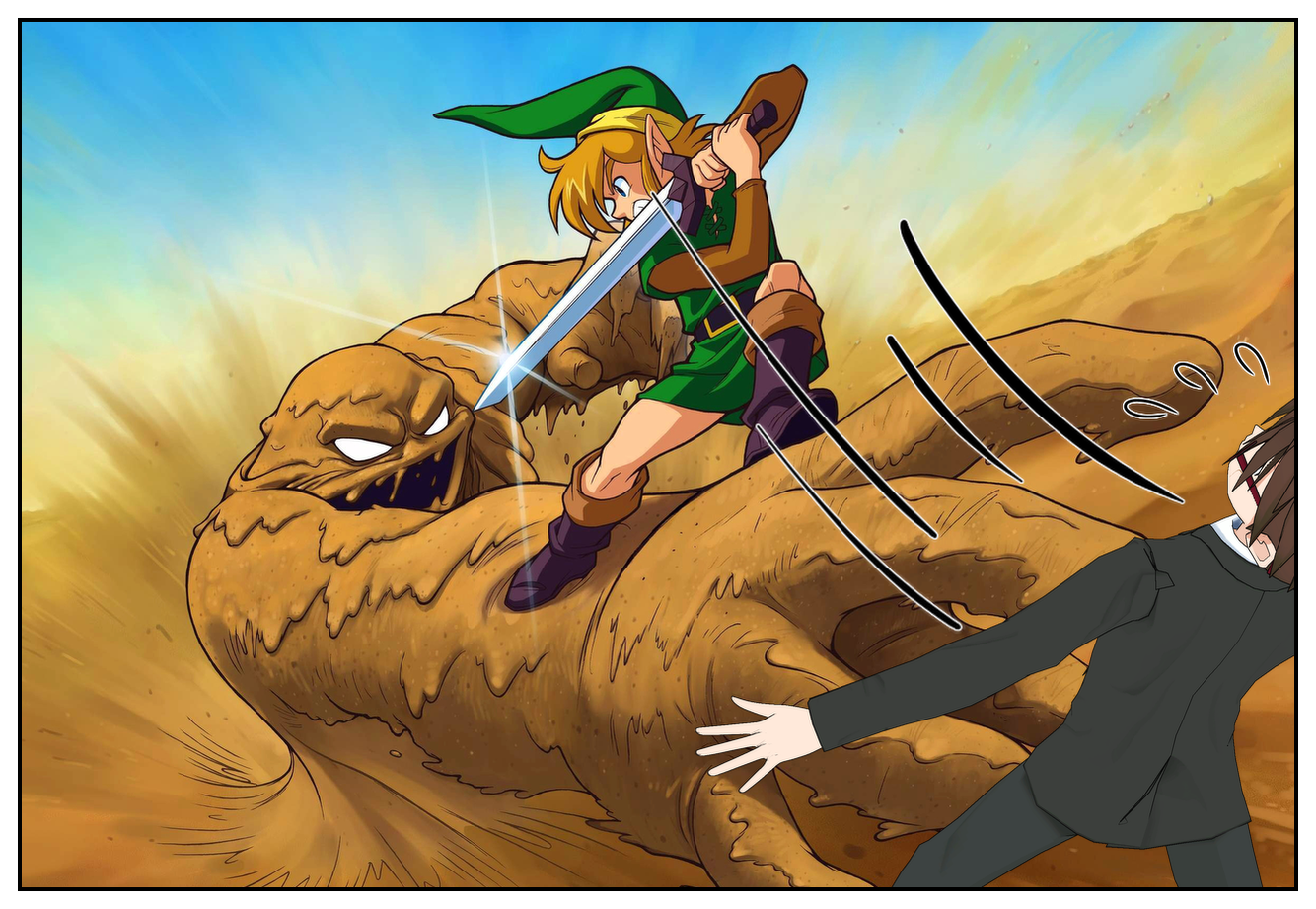
I remember playing Zelda 3, or The Legend of Zelda: A Link to the Past, to give it its full title, for the first time. It was an eye-opening experience; prior to this, most of the games I'd played on computer and console had been fairly straightforward arcade-style affairs — you put them in, you hit Start, you start playing from the beginning, you get as far as you can get before hitting a Game Over screen, you try again.

A Link to the Past was different, though. Having never owned my own NES, the series was new to me, and so I didn't know that it had been providing this sort of ongoing, lengthy grand adventure for quite some time prior to its Super NES incarnation. But I was immediately enraptured with it; here was a game that provided me with a convincing open world to explore, some challenging dungeons to defeat, a convincing sense of getting stronger and more powerful as the game progressed, and an enjoyable, if somewhat simple, story to follow.

I played A Link to the Past through numerous times, so much did I enjoy it. It got to the stage where I could run through the game pretty much on autopilot, though I must confess I never quite reached total completionist status with it; I enjoyed the experience of progressing through the game and beating it rather than doing things like hunting down the myriad Pieces of Heart scattered around the game's two worlds.

My love for Zelda waned a little over the years. I recall being a little underwhelmed with Ocarina of Time when I first played it, though I can partly attribute this to the fact that I had been playing Final Fantasy VII around a similar time and, to my inexperienced, rather shallow eyes, they simply didn't compare to one another. I enjoyed Ocarina of Time enough to finish it, mind, but I didn't love it in quite the same way I loved A Link to the Past. I did, however, love Majora's Mask in the same way I loved A Link to the Past, but that's probably a story for another day.

Anyway, to the point: after finally finishing (the first quest of) the original Legend of Zelda the other day, I felt like continuing my journeys through Hyrule, so I skipped Zelda II, not quite feeling up to its punishing ways at present, and went straight to A Link to the Past. (For the Zelda-illiterate: most of the Zelda games tell their own, self-contained stories that feature characters with the same names and same appearances as those in other games, but who are actually different people from different times. This means that skipping a game in the series doesn't mean you'll skip important plot, though if you care to research it there is a complicated, convoluted chronology of how it all fits together.)

I was immediately reminded how much I love this game, even so many years after I last played it. It has an extremely strong opening — one of the reasons it made me sit up and take notice the first time I played it — and some highly memorable music. It's also a massive, massive improvement mechanically on the original Legend of Zelda, which it most closely resembles; Zelda II went off and did a bunch of weird things with RPG mechanics and platforming, but A Link to the Past was a return to the original formula, but better.

And everything really is better. Instead of having to wander around aimlessly, hoping you'll find the right order to challenge the dungeons, you'll be nudged in the right direction by the game, though you'll never be completely railroaded, and you are free to go off and explore any time you want. There's also a much stronger sense of the overall map being a coherent world; Hyrule may be relatively small, apparently consisting of only a single village and a castle that is bigger than the whole village, but there are plenty of interesting things going on and memorable characters to stumble across.

And, somewhat surprisingly for a Nintendo game if you're used to Mario and its ilk, A Link to the Past is pretty dark and bleak in places. The strong opening I mentioned before sees Link acquiring his first sword and shield by stumbling across his dying uncle, who had left the house in Link's stead earlier in the night in an attempt to save him from the trouble that becoming the Hero of Hyrule would be. Later, there are other equally subtle, sad scenes, such as the spirit of the young flute-playing boy in a clearing, whom you later discover close to death in the Dark World, a realm that deforms body and spirit, so you grant his dying wish before he gives up on life entirely and turns into a tree.

In many ways, it's kind of stunning to think that the same creative mind behind Super Mario Bros. also came out with Zelda, something that, while still ultimately pretty family-friendly, is a quantum shift away from Nintendo's mascot in terms of tone. I've spent a good few years feeling like I wasn't a particular fan of Zelda, since I felt as if none of them quite captured my attention in the same way as more conventional role-playing games, which had, of course, subsequently turned out to be a favourite genre. After enjoying the first and third Zelda games so much so far, though — not to mention Hyrule Warriors — I feel like it's probably time to educate myself on the series as a whole, so I'm going to try and work my way through them one by one. Who knows — I may even make it through Zelda II one of these days, though not today…

2134: Hyrule Warriors is My New Favourite Musou

0134_001

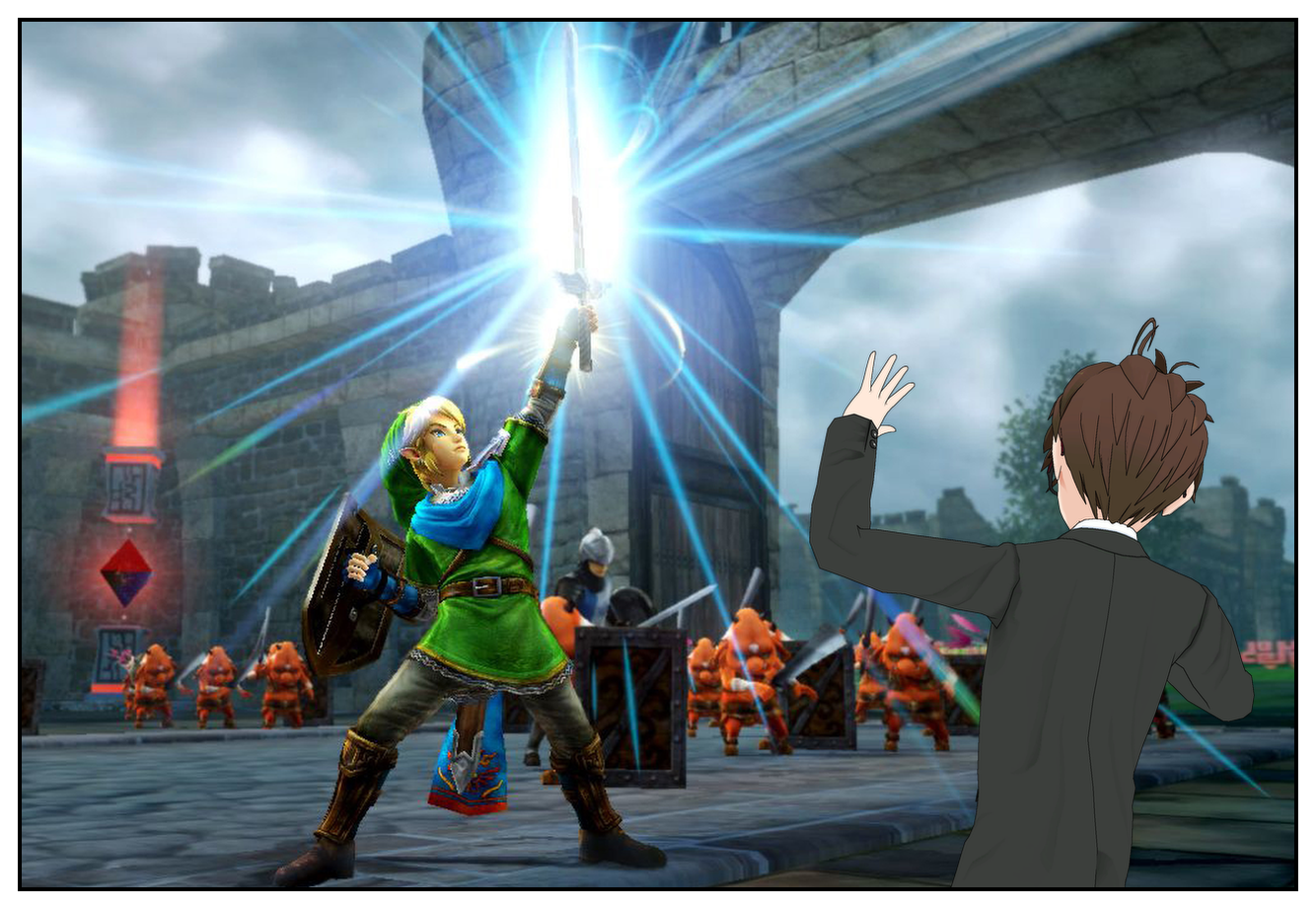
I'd been meaning to check out Wii U title Hyrule Warriors for some time, and my recent Zelda bingeing seemed to be an ideal time to do it. I primarily picked the game up as something to play as a co-op game with a local friend, but I've found myself playing through a number of missions this evening and having a great deal of fun.

I've always enjoyed the Musou games since Dynasty Warriors 2 on PlayStation 2. Their hack-and-slash nature appeals to the brawler fan in me, but they've always had a surprising amount of depth to them — not necessarily in the combat itself, but in choosing the right characters for the job, keeping an eye on the overall battle situation, and responding appropriately to what is happening.

For the unfamiliar, the Musou series covers the various Warriors games, including the Dynasty Warriors, Samurai Warriors and Warriors Orochi series. Hyrule Warriors was an interesting break from the norm for developers Omega Force in that rather than being loosely (very loosely, in some cases) based on established historical fiction such as Romance of the Three Kingdoms, it's based on an established other property — in this case, the Legend of Zelda series.

It isn't the first time Omega Force has tackled a licensed Musou game; there are Warriors games based on the popular anime and manga One Piece, Fist of the North Star and Gundam, among others. But Hyrule Warriors is arguably one of the more "accessible" properties that the team has chosen to adapt into the Musou style, since Zelda is one of Nintendo's properties with near-universal appeal, and much more ripe for adaptation than, say, Mario.

Hyrule Warriors, like its stablemates, casts you in the role of one of several different playable characters and tasks you with turning the tide of a large-scale battle on a sprawling map. Your character is just one part of your "side's" overall efforts, but you're considerably more powerful than the rather dim footsoldiers that litter the battlefield, usually standing around looking perplexed. You're not alone, though; in two-player mode, a second player takes on the role of one of the other present allied generals to support you, and even in single-player you'll find yourself fighting alongside other characters: they'll come to your aid, but you'll be expected to do the same in return.

In what I've played of Hyrule Warriors so far, there seems to be quite a bit more variety than, say, the Dynasty Warriors series, thanks in part to the setting being considerably more fantastic than ancient China. But it's not just about the monstrous enemies and magic flying around — it's also about varied objective during battle. It's pretty rare, even in the early stages of the game, to be confronted with a battle that simply involves cutting a path to the enemy boss; instead, you'll find yourself supporting your troops in various areas, capturing strongholds to gain a foothold and advance into enemy territory, dealing with counterattacks from enemies and, in true Zelda style, occasionally accidentally clipping a chicken one too many times with your sword and inviting the wrath of its myriad friends, who will come and peck you to death in pretty short order.

The game also makes use of its Zelda roots well by adding a number of mechanics based on the iconic Zelda inventory items. As you progress through the game's "Legend" mode, you'll acquire various items that can be used in battle, ranging from bombs (blow stuff up, reveal secrets) to a bow and arrow (shoot things) and a boomerang (cut down things that a sword just won't chop). Fulfilling various secret requirements in battle will also reward you with heart containers and pieces of heart to extend your characters' life bars, and Ocarina of Time's Gold Skulltulas make an appearance, too, spawning on the battlefield when you fulfil a specific condition and then requiring you to track them down by searching a marked area of the map and listening carefully for their telltale scraping sounds.

I feel like I've barely scratched the surface of the game so far; I've only played Legend Mode as of now, but there are a variety of other ways to play, with one of the most interesting sounding being Adventure Mode, which tasks you with exploring a grid-based map based on the original NES Legend of Zelda game and fighting various battles in order to take control of it piece by piece. I don't yet know how well this is executed, but I'm looking forward to trying it out. Even if it turns out to be bobbins, though, just the battles in Legend Mode have proven to be more than worthwhile and enjoyable so far — and it looks very much as if the game has continued to develop and expand long after launch, if the multiple pages of patch notes that appeared the first time I booted the game up are anything to go by!

I'm looking forward to trying it out co-op later this week, all being well, but in the meantime I can already confidently say that it's one of the best Musou games I've played to date, and anyone who enjoys a good bit of hack and slash should most definitely check it out, Zelda fan or no.

2133: Fashionista

0133_001

I remember a while back hearing a lot of people being surprisingly enthusiastic about a Nintendo-published handheld game called Style Savvy, but I never really got around to looking into it. Recently, however, I downloaded the demo of the somewhat cumbersomely named Nintendo Presents New Style Boutique 2: Fashion Forward — the European name of the third Style Savvy (or, in Japanese, Girls Mode) game — and have found myself surprisingly involved with it.

For the unfamiliar, New Style Boutique 2 (as I shall refer to it hereafter) is a game in which you play a young woman on holiday in a hip, fashion-conscious town. Through a series of somewhat improbable circumstances that only happen in slice-of-life video games, you find yourself assisting a local clothes shop, hairdresser and beautician with the requests of the town's apparently exclusively female population. In doing so, you earn money for the shop and yourself, and can subsequently afford to do yourself up better as well as your customers.

This is as far as the demo goes, but the full game has a story to follow as well as a number of different "professions" to explore, including modelling, fashion design and even interior design. Just the demo is an enjoyable enough experience, though, since it's essentially a game in which the whole point is to piss around with the character creator in order to create various different looks, and subsequently be rewarded for it.

The exact way in which you go about creating these looks differs slightly depending on which aspect of the character's appearance you are working on at the time. If you're putting together an outfit, they'll give you some vague guidelines — "I want a girly outfit, and I have about £700 to spend" — and you can put together an outfit according to those specifications, either through browsing manually or making use of the helpful search function. If you're designing a hairstyle, meanwhile, you're given the opportunity to ask the customer a variety of questions before beginning the styling process, which will give you a checklist of things to include in their haircut. Finally, designing makeup requires you to look at a photograph and attempt to recreate it as closely as possible, perhaps with the assistance of a memo scrawled on the back of the photograph giving you some suggestions of which colours to use in which areas.

What's nice about the game is that unlike many "business" simulations that attempt to capture the feeling of, say, running a shop or office, New Style Boutique 2 has plenty of personality. Its characters all have names and profiles, and they all display their personalities through dialogue — though there is a bit of stock dialogue for things like them accepting outfits and suchlike. They also have distinctive, unique appearances, and it's undeniably satisfying to see a character wandering around wearing an outfit you put together for them.

I don't know how much the other elements of the full game add to the experience as a whole, but based on the demo, I'm actually surprisingly interested in playing it, and I understand now why so many people have had positive things to say about the Style Savvy series as a whole since it first appeared.

2132: Calling

0132_001

How do you find your "calling"? In other words, how do you figure out what it is you're "supposed" to be doing; the thing you're good at?

I'm still not convinced I've figured it out myself, but I've been pondering it somewhat recently.

At one point, I thought teaching might be my calling, but the reality of the situation set in quite soon after I started my training; in retrospect, I'm pleased with myself that I managed to survive as long as I did, but annoyed that I wasted several years of my life and possibly left myself with some irreparable mental scars in the process.

At another point, I thought games journalism might be my calling, but going by the state of the modern games press and its contemptuous attitude towards both its audience and the things it covers, it's pretty apparent that I'm not particularly welcome in that field, despite it being one of my biggest ambitions when I was a bit younger.

Most recently, I've been working retail for the second time in my life, and I've been surprised how much I've been enjoying it. This week we've been setting up a brand new store, and I'm absolutely exhausted as a result of the long hours everyone on the team has been working, but it's extremely satisfying. And when I was in the existing store serving customers, it's been extremely satisfying to help people out, advise them or simply hand them a hotly anticipated product ready for them to go home and enjoy.

I shouldn't be that surprised, of course; the last time I worked retail, I enjoyed it a lot, too, though I attributed this to the corporate culture of the company I was working for at the time. My positive feelings towards said company — or, rather, the management team of the store I worked at — dissipated after both a colleague and I were treated rather badly, but I still look back on the majority of my time at that store with fondness.

The fact that I'm enjoying it just as much in a company with a somewhat more laid-back attitude — for the most part, anyway — suggests that it might be the work itself that I'm finding fulfilling. And indeed there are plenty of individual elements that I find oddly satisfying: things as simple as sorting out shelves and alphabetising discs, or as complex as talking an inexperienced customer through the various product lines available. It all adds up to something that I rather enjoy on the whole, with the only really sucky part of the whole thing being that retail, on average, wherever you go, tends to pay pretty poorly, creating a business sector where many employees are overworked, underpaid and underappreciated.

Still, at this stage, having suffered through a number of jobs that clearly weren't right for me, I'm more than willing to suck up a considerable cut in my overall pay in exchange for something that I seem to enjoy and be reasonably good at. Long may these feelings continue.

2131: It Builds Character

0131_001

[For some reason this failed to publish when I wrote it yesterday. Apologies.]

"Tell us about a favorite character from film, theater, or literature, with whom you’d like to have a heart-to-heart. What would you talk about?"

From the Daily Post writing prompt, It Builds Character.

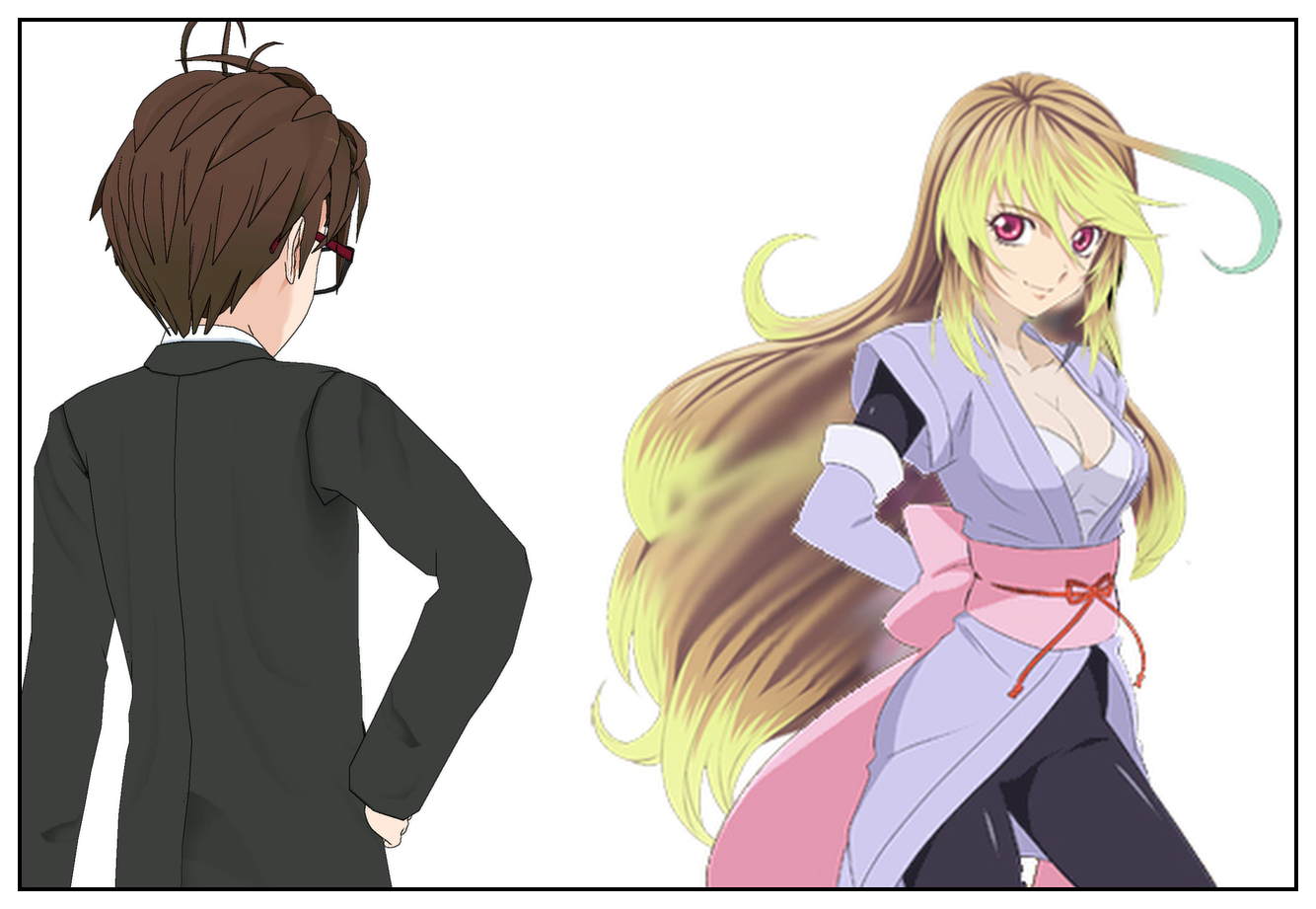
There are any number of interesting characters from a variety of media I'd like to do this with, so in order to prevent analysis paralysis I'll simply go with the character that popped into my head immediately when I saw this prompt: Milla Maxwell from Tales of Xillia.

Milla was a big part of why I enjoyed Tales of Xillia and its sequel so much. She was a well-defined, very distinctive character, both visually and in terms of her personality — and even so far as her slightly lisping English voice acting went — who has stuck with me long after I was done with those games.

Milla, for those unfamiliar with Xillia is… well, to be honest, it's a long and complicated tale that is explained over the course of two games, but suffice it to say that she's not quite "normal" in that she's lived in isolation from human society for a very long time and has mysterious, quasi-magical powers thanks to her ability to commune with the Great Spirits.

All this stuff isn't why I'd want to hang out with Milla, though. I'd want to hang out with her simply because she's cool, and smart, and funny — but endearingly naive about lots of things. Her isolation from human society leads her to ask interesting but not always entirely socially acceptable questions, and her curiosity about the world is infectious. She knows how to get things done when the occasion demands it, but she also knows that it is important to enjoy yourself and indulge your body and mind's demands when you're aware of them.

Mostly, she just seems like a nice person, and someone I'd enjoy spending time with. There's not a single point in either of the Xillia games where Milla has a mean word to say about anyone — the cast as a whole is pretty closely-knit and pleasant, but Milla stands out even among them — and even when confronting her enemies, she's keen to understand them and why they are the way they are.

What would we talk about, though? Well, Milla's naivete means that we'd almost certainly have a lot to talk about, particularly if I were to introduce her to things with which she wasn't overly familiar. Perhaps I'd play some music for her, and attempt to explain the emotional power that sound has over us. Perhaps I'd show her some video games — I could show her her own game, that'd raise an interesting conversation, I'm sure — or sit her down and attempt to engage her interest with a board game. All of these activities would doubtless prompt the question "why?", and one of the nice things about Milla is that when she asks this, she's not being facetious, sullen or passive-aggressive about not wanting to do something; she genuinely wants to know and understand why people choose to partake in particular activities. And I think helping her with those big questions would make for some absolutely fascinating conversations.

So, Milla Maxwell, if you ever feel like stopping by, well, I'm pretty sure I can keep you occupied, entertained and intrigued for quite some time, and that's not something I can say with confidence to many people!

2130: Scrub Up

0130_001

I've been watching Scrubs on Netflix recently, because somehow, despite E4 showing it nearly every minute of every day for several years (the other minutes being taken up by Friends) I've never actually seen the whole thing all the way through. I've seen most of it, but I've not seen the later seasons in particular.

Scrubs is an interesting show in that it strikes a good balance between comedy and drama. It's not a show that you can particularly pigeonhole easily, because it's experimental and strange and isn't afraid to have one-off episodes exploring interesting, weird concepts. In many ways, it's a bit like earlier shows that took a similarly experimental approach in a fairly mundane setting — I'm thinking stuff like Ally McBeal here — but it very much has a feel that is all its own.

One of the reasons I've been enjoying it so much recently is because I'm finding protagonist JD to be quite relatable, in a number of different ways. In particular, his naiveté and hesitance to truly join the "adult" world — even when confronted with challenging situations, such as those that he faces in his job as a doctor every day — are very familiar feelings to me, and as JD gets older over the course of the show's complete run, it's almost comforting to see that he doesn't really get any more comfortable with being a "grown-up"; although he's only a fictional character, it's nice to know that the way I feel sometimes isn't entirely unfamiliar to others!

Scrubs is also fun for the fact that it captures the atmosphere of working in a stressful environment rather well. There are people who handle stress with aggression and impatience — particularly if, like in Dr. Cox's case, they're dealing with other issues alongside anything that crops up at work — and there are people who deal with it using humour. There are some who take the humour further and confront difficult concepts by making use of black humour, and there are others who, at times, allow emotions to get the best of them. And then there are those who are able to leave all the troubles and difficulties of the working day behind them the second they walk out of the door; while this is arguably the best approach for one's mental health, is this really the best thing for those you are taking care of?

To cut a long story short, then, watching Scrubs on Netflix has given me an appreciation of why this show has remained so consistently popular since it first appeared in 2001. I haven't yet seen the notoriously different final season, though I'm curious to, even if it's as much of a shift from the original format as it apparently seems to be. Even if it's rubbish, though, there's plenty of good stuff in the preceding seasons, and it remains timeless television that I can see remaining relevant to many people for many years to come yet.

2129: Devil Drink: A Call for Help

0129_001

Real Talk today. Serious business. And I'm probably going to regret writing this and making it so public, but I'm at my absolute wits' end, don't know what to do and could do with some support, be it from friends or strangers.

No names or anything will be given in this post, but some of you may be able to work certain things out from it. If you do, please do me a favour and don't point anything like that out in the comments or say things to the people involved, because that's just not going to help anything at all.

Anyway.

I don't drink any more. I used to drink quite a lot when I was at university and the few years afterwards; I was somewhat legendary among a number of my friends for spectacular drunk text messages, with the mangled garbage that T9 predictive text would come out with being far more entertaining than the stuff AutoCorrect spews out from the iPhones and Androids of today. It was fun, though I never enjoyed the hangover the next day.

I stopped drinking for two real reasons: firstly, I'd got to the stage where I simply wasn't enjoying it any more — alcohol tended to give me heartburn, and I came to the conclusion that being a bit wobbly and lary wasn't enjoyable enough to justify feeling a bit sick after just a sip or two — and secondly, more importantly, it became apparent that someone in my life had a capital-P Problem with drink.

This wasn't the first time I'd encountered someone with such an issue; a friend of mine at university suffered a similar affliction to quite a serious degree, though at the time, young and stupid as we were, it felt like something that should be laughed at rather than something that was a serious problem. More than ten years after that, though, I understand what a horrible, devastating thing alcoholism is, and how horrible it is to be in a position where you're absolutely helpless to give any sort of aid to the person who is suffering so much they feel the need to take the pain away with excess amounts of drink.

The person in question had a problem for quite some time before seemingly resolving it. I tried several ways of dealing with it — with humour, with sadness, with anger, with disappointment, with honesty, with support, with attempts to engage and understand — but nothing seemed to be particularly effective. What actually happened is that over time, the person in question simply seemingly got over it, stopped drinking altogether and we said nothing more about it, though I always took care to steer clear of conversations that involved alcohol or being drunk or anything like that.

Recently, though, this person has suffered a bit of a relapse. It's not to the same degree as it was before by any degree of magnitude, but it is happening again. And, once again, I feel completely helpless to do anything about it — perhaps because, if my past experience is anything to go by, there really isn't anything I can do about it, and the person simply has to resolve it themselves.

This is upsetting and deeply, deeply distressing, though. It may sound selfish to make this about me, but I feel it's important to note the impact of alcoholism on the people around the afflicted person as well as the afflicted person themselves. Because that impact can be devastating. It can have a huge impact on their mental wellbeing, and on the way they see the afflicted person. It can have a huge impact on the way they interact with the afflicted person, and the things they feel comfortable doing and talking about with the afflicted person. And it can impact on their life at large, preventing them from doing some things and forcing them to do others.

Ultimately it can build a great deal of resentment, frustration, anger and sadness — some of which is perhaps justified, but the rest of which is simply an impotent expression of fury at a sensation of powerlessness. I recognise this, and I would like to clarify that I certainly don't hate the person involved for this by any means, particularly as I'm familiar with the extenuating circumstances that have brought this relapse on. Rather, I just want to feel like I can support them and help them through it once again, but I don't know if I have the strength to handle it for a second time.

So that's pretty much where I am right now. I don't know what to do. I need help. Although I don't know how anyone might be able to help, and I feel guilty writing this, given that I predict a significant proportion of you reading this will put two and two together quite quickly. As I say, though, if you do, please, just, shush. That part isn't important.

Right now,  I am sad, upset and angry, and I need help. Please help.

2128: Point to Point

0128_001

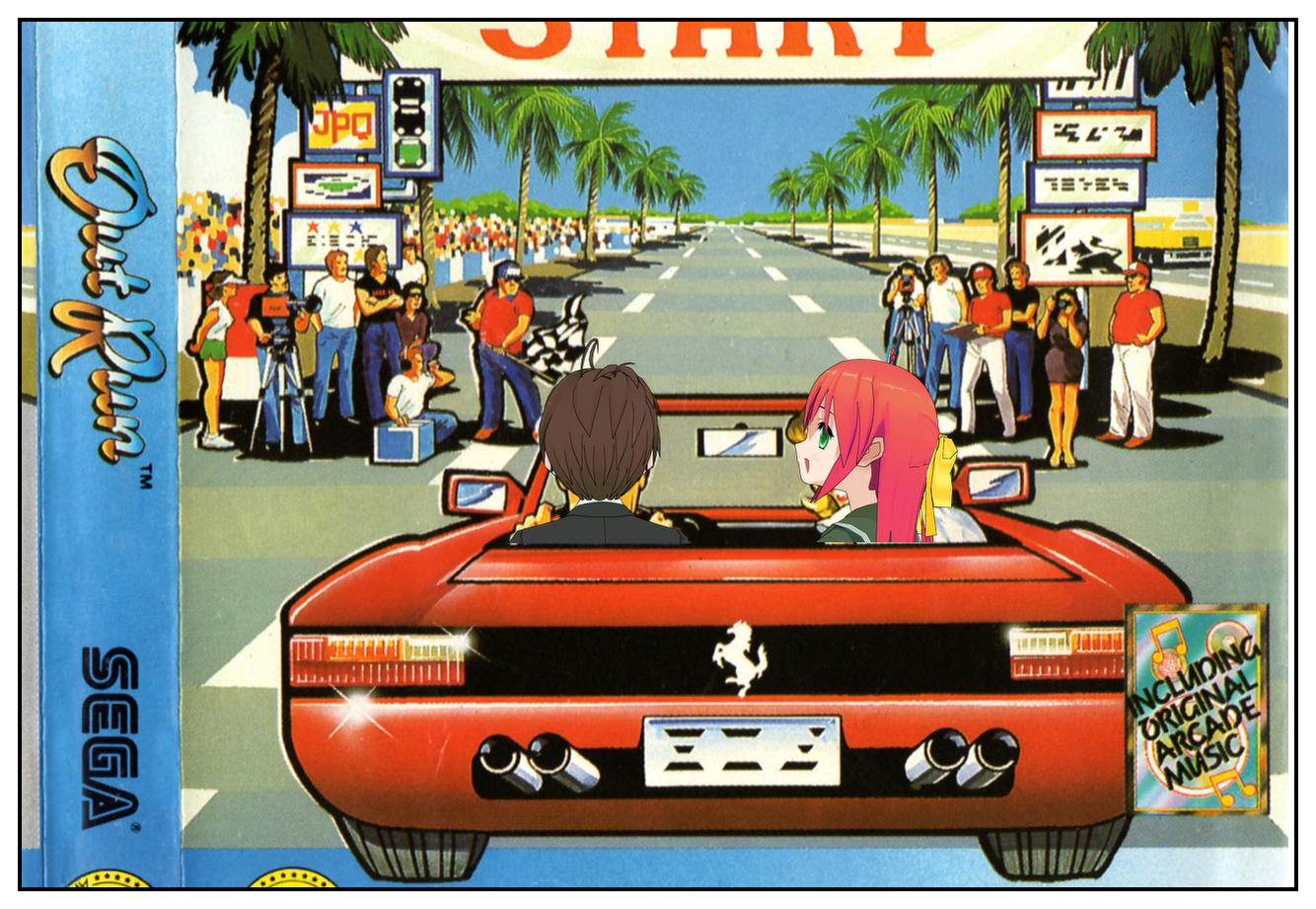
I'm apparently on a minor retro kick at the moment, what with playing The Legend of Zelda and, also, downloading the "3D Classics" version of OutRun on my 3DS.

I love OutRun. It's one of those games that I used to see in the arcade but, for whatever reason, didn't play very often. (I feel it was probably something to do with my Dad baulking at the idea of paying 50p for one credit, but I usually managed to convince him that it was worth paying this much to play G-LOC, which at least had aeroplanes in it.) We also had the dreadful Atari ST port of Turbo OutRun, which I actually rather enjoyed despite its atrocious framerate, appalling load times (in the middle of a race!) and loss of various animations and game features if you had less than 1MB of RAM in your computer.

Despite all these setbacks, OutRun has always remained a racing game that I've been very fond of, and when the Shenmue series hit Dreamcast with a variety of playable Sega games right there within the game itself, I spent a great deal of time recapturing past glories (or, more commonly, indignities) on OutRun and Super Hang-On. When the PlayStation 2/Xbox era rolled around, I spent a lot of time playing the wonderful OutRun 2, which brought the basic gameplay of the original up to date with fresh graphics, but otherwise played just like an old arcade game. And when the Xbox 360 got a tweaked port of OutRun 2 on its downloadable Xbox Live Arcade service, well, of course I was going to play it again.

3D Classics OutRun is arguably a step back technology-wise from OutRun 2 and its spinoffs; it's based on the original 16-bit sprite-based graphics rather than being rendered in full polygonal glory. This is true to the original game, however, and there are a few little tweaks here and there to bring it a bit more up to date. It runs at 60 frames per second, for one thing, making it look smoother than the arcade version ever did, and makes excellent use of the 3DS' glasses-free stereoscopic 3D for some impressive visual effects. Possibly my favourite "pointless but cool" feature in it, however, is the simulation of the arcade cabinets' movement that you can turn on; OutRun was one of the many arcade games in the period that had "Deluxe" cabinets featuring hydraulics that would cause your seat to move around as you played. Your field of vision on the tiny screen of the 3DS isn't quite the same as literally feeling your car being slammed around corners, but it's a decent enough approximation, and a fun (and optional) effect to play with.

But enough about the technical side of things; every time I play some variation on OutRun I find myself pining for this lost age of racing games. Not necessarily because of the graphics or the style of play or anything — playing racing games with strict countdown time limits can be a bit of a culture shock these days! — but because they feature a subtle difference from most modern racing games in that they are point-to-point racers rather than lap-based.

I like point-to-point races, and we don't see nearly enough of them in modern racing games. There are exceptions, mind you: Burnout 2 had a nice little feature where once you completed the various events in one area, you then had a point-to-point race to get to the next one; Burnout Paradise was almost entirely point-to-point races; the Midnight Club series took an enjoyably chaotic approach to point-to-point racing by allowing you to choose your own route through an open-world city, so long as you hit the checkpoints along the way. But despite these examples, many of the racers we have today are lap-based.

Why is this something I care about? Well, lap-based racers are fun, of course, and allow you to learn the course, even within a single race. Point-to-point racers, meanwhile, have a wonderful sense of going on a journey, and in the case of games like OutRun, it's immensely satisfying to successfully reach the next stage of said journey and see what new scenery there is to admire a little further down the road. OutRun even takes this one step further, by providing a fork in the road at the end of each stage, allowing you to continue in one of two different directions to create your own custom route through the game.

3D Classics OutRun isn't a deep game in the slightest, especially when held up against more modern examples. But there's a purity to the experience that you just don't get in more realistic fare; it's a game that revels in the enjoyment of taking a fast car on a rollercoaster ride and seeing how far you can get this time. I love it, and I'm happy it's still a relevant game in 2015!

2127: Hero of Hyrule

0127_001

All the pointless bickering over the distinctly stupidly named "Linkle" the other day got me thinking about The Legend of Zelda. "Linkle", if you somehow missed this, is effectively a genderbent version of Zelda protagonist Link who is set to appear in the upcoming 3DS version of Hyrule Warriors Legends; rather than a simple reskin, however, she appears to be her own unique character. Which is cool, especially as she's kinda cute!

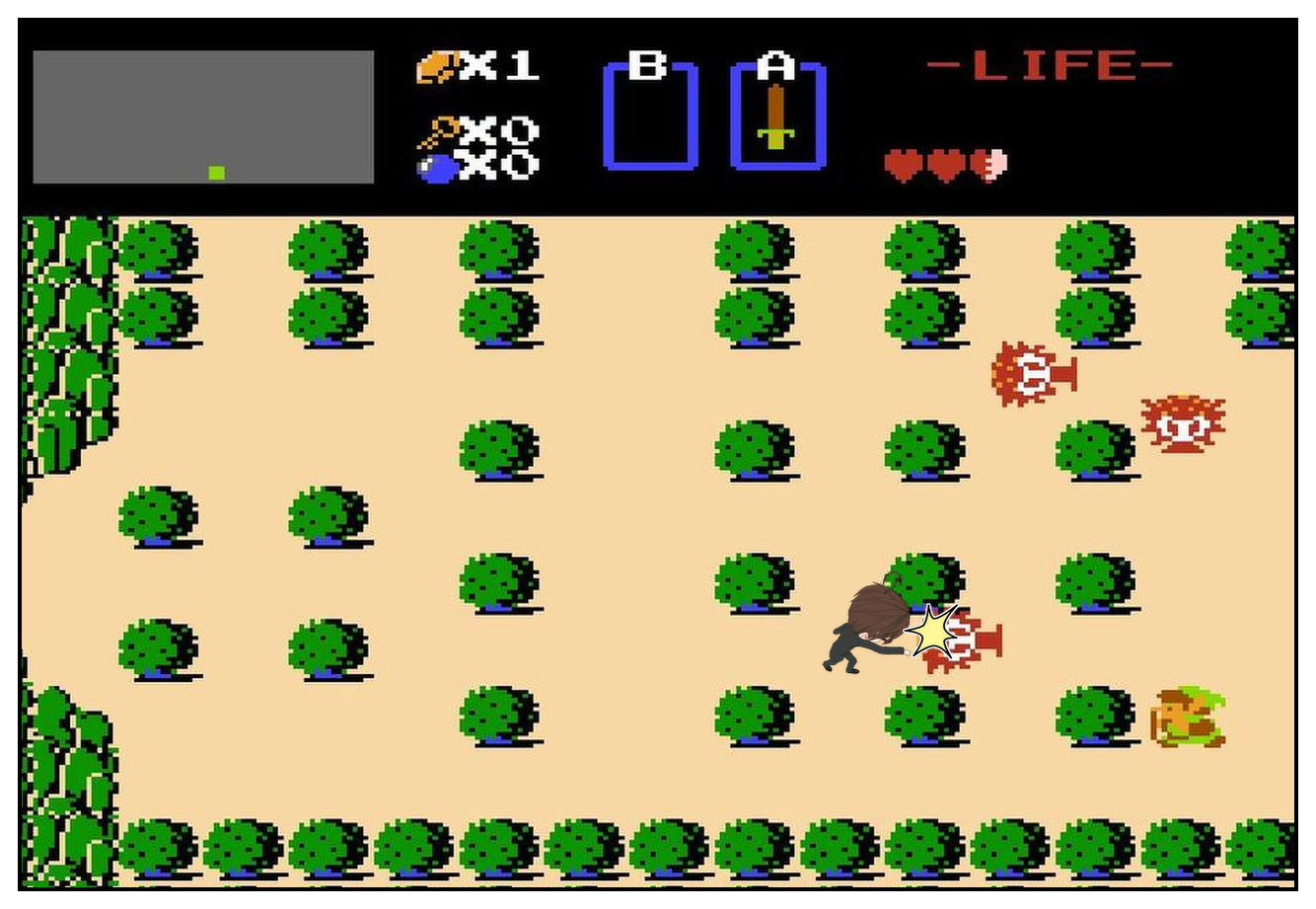
But anyway. As I was saying, I got thinking about The Legend of Zelda and how it's a series that has, for one reason or another, kind of passed me by a bit over the years. There was a period when I was very much into it — I've beaten A Link to the Past numerous times on the SNES, and absolutely adore Majora's Mask — but for some reason, the other games haven't stuck with me. I didn't make it through Twilight Princess or Wind Waker, and I didn't even play Skyward Sword, let alone the numerous handheld incarnations that have appeared over the years.

I thought, out of idle curiosity, that I'd casually start way back at the beginning with the original NES version of The Legend of Zelda and see how far I get before I don't feel like playing any more. I was also curious to see how the series had developed over the years, because for sure it's come a very long way since the original game.

The original game, however, is still surprisingly solid, if rather challenging, to say the least. One thing that stands out immediately is how little handholding it offers; it presents the player with a sprawling open world which they're expected to navigate themselves around without the aid of objective markers, and several dungeons which can theoretically be completed in any order. Compared to later Zelda games, these dungeons are relatively simple and don't have a great deal in the way of puzzles, though there are a couple that are effectively "gated" by requiring items found in other dungeons to access.

I won't lie and pretend that I'm going through The Legend of Zelda completely blind; it is, after all, 2015, and the Internet exists, so there's little reason to play the game without the benefit of, say, a map. I'm not using a walkthrough, mind you, just a map to show where all the areas are and how they connect to one another, since this is the sort of thing that tended to be included in the physical manuals of games way back in the day.

I'm actually rather enjoying the sense of exploration and discovery that the lack of tutorial messages and, indeed, developing plot provides: it makes The Legend of Zelda feel like a very "pure" gaming experience that is satisfying — and, at times, frustrating — to work through. Plus if nothing else it's something to do while waiting for dungeon queues in Final Fantasy XIV…