2146: More Xenoblade

0146_001

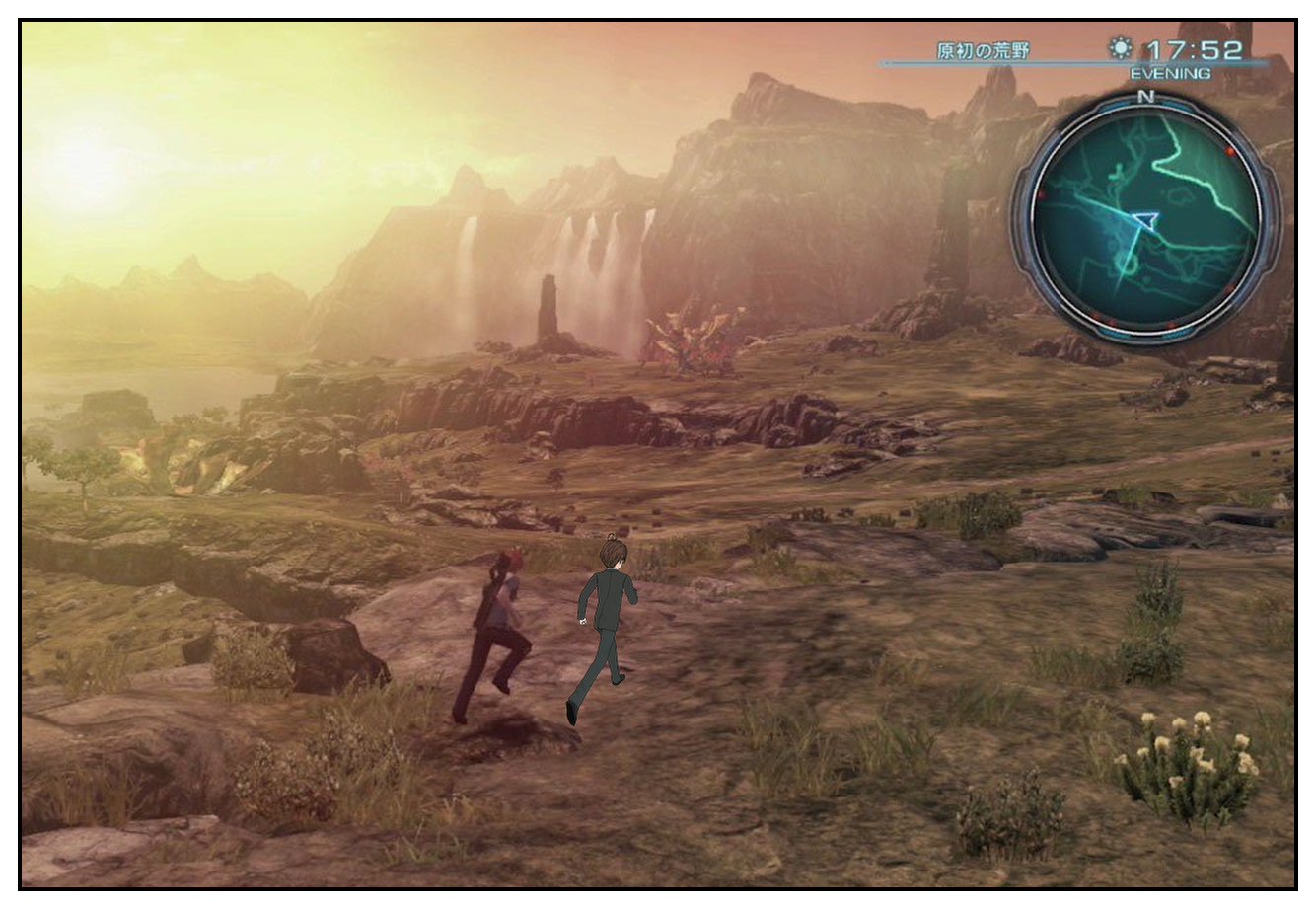
Pretty much all I've done today is finish off a bit of work I had to do and play Xenoblade Chronicles X, so I'm going to talk a bit more about my experiences with the latter.

If yesterday's entry didn't already make it clear, I love it. It's actually not the kind of RPG I traditionally used to love, so this surprises me; it's open world, it's non-linear, it's nowhere near as story-centric as many other RPGs out there… but it's compelling, addictive and beautiful.

I think one of the things I like most about it is that it feels something like the realisation of a longstanding fantasy. Let me explain.

Way back in secondary school, I was renowned among the teaching staff as someone who put way too much effort into creative writing assignments, usually delivering pages and pages of epic prose where my classmates would put in maybe one or two at most. I can still remember most of these stories I wrote, from early example Timeslip (a riff on Back to the Future, which my friend Daniel was obsessed with, that featured a time-travelling lorry rather than a DeLorean, and what was essentially Rainbow Road from Super Mario Kart to represent the pathways between times) to later pieces such as my A-Level English Language assignment, where I delivered a surprisingly confident but harrowing first-person stream-of-consciousness narrative from the perspective of a girl who was raped.

Anyway. One of the stories I wrote — I forget exactly when, but I do remember writing it — was called Colony. Having somewhat grand plans for what I had written, I had tagged it Chronicles of the Scorpio, Book 1, despite having not even finished the entire story of Colony. That is beside the point; what is important is what Colony was about.

Colony was loosely inspired by a PC CD-ROM game I'd been playing called Alien Legacy. This concerned an interstellar colonisation ship waking up its crew a long way from where they were supposed to be, and the crew and colonists having to make the best of the situation in which they found themselves. Colony featured a similar kind of situation, with the UNS Scorpio finding itself pulled through a wormhole into (if I remember correctly) the Beta Caeli star system, which conveniently had an M-class planet for humanity to plant itself on. The remainder of the story — which I finished — described the colonists' struggle for survival as they discovered they were not entirely alone on this planet, and so on and so on.

To the point, then: the thing I like about Xenoblade Chronicles X is that it feels like I'm exploring that story: one that's been stuck in my head since I was a teenager. I don't think I've ever played a game with such a brilliant sense of exploration, discovery and having to fend for yourself on a very alien world, and Xenoblade Chronicles X's handcrafted setting puts the randomly-generated locales of Minecraft and its ilk to shame by being absolutely fascinating to explore. The experience of surveying planet Mira is exactly how I pictured the characters in Colony spreading out from their initial base camp to discover exactly where they had landed.

There's so much to do, with an excellent sense of constant progression. You can follow the story missions — something that I haven't done much yet so far — or you can make an effort to survey as much of the planet as possible. It's extremely satisfying to take a look at the Segment Map on the GamePad screen and see a number of little checkmarks indicating that you've completed that particular area… but it's also somewhat daunting to see how many other areas don't have little checkmarks in them and realise quite how much there is left to do.

I am fine with this, though. The sheer amount of stuff to do in Xenoblade Chronicles X distinguishes it significantly from MMORPGs, which is what it's getting most frequently compared to: rather than grinding out the same content over and over again in an effort to get an incrementally small reward and creep up in power week by week, you can pretty much always be doing something different and be making progress somehow: you can be levelling up your character, or increasing the rank of your current class, or increasing your rank in the BLADE organisation, or earning money, or gathering resources, or researching weapons for the arms manufacturers, or… you get the idea.

The online seems like fun, too, though I've only dipped my toes into it so far. Taking the form of short, instanced missions for up to four players at once, the Squad Missions feature allows you to play with others and cooperate to take down some tough challenges together. The game is set up in such a way that direct communication isn't necessary, with characters instead using the "Soul Voice" system to automatically shout out things to each other and boosts to your abilities being appropriately applied if you respond correctly to these shouts. It's also possible to communicate through emotes and, if you so desire, the slightly clunky "Free Report" system, which is not quite real-time text chat, but it's testament to the game's solid systems that four strangers can come together and take on some significant challenges without any need for voice or text chat to coordinate things. I wonder if this will still be the case at higher levels? We shall see, but being only level 15 so far, I have a way to go yet!

Anyway. If you've been dithering over whether or not Xenoblade Chronicles X is worth a purchase, stop; it absolutely is. (And, to answer a question from the comments yesterday, no you don't need to play Xenoblade Chronicles first, because they're two completely independent games.) It's one of the most ambitious, impressive RPGs — no, games, full stop — that I've ever played, and it deserves a big, appreciative audience. I'm telling you now, games industry; if this game gets passed over in Game of the Year talk, we are going to have some serious words…

2145: Xenoblade Chronicles X First Impressions

0145_001

So, Xenoblade Chronicles X came out today, and I picked up a copy.

Is it any good? Well, after eight hours of play in one day, I think it's fairly safe to say that yes… yes it is.

38 words is not quite enough to articulate why this game is worth your time and attention, however; so I shall attempt to elaborate somewhat. I wrote a little the other day about how much I enjoyed the previous Xenoblade Chronicles game on the Wii, and much of that still applies, though as I suspected from what I'd heard prior to release, Xenoblade Chronicles X is a bit of a different beast to its predecessor.

Let's start from the beginning, then. Xenoblade Chronicles X casts you in the role of a survivor of a spaceship crash on the planet Mira. The game begins with you being rescued from your stasis escape pod and emerging into this strange new world with no recollection of who you are/were. You're surprised to discover that the remnants of humanity have been somewhat busy in the intervening two months between the ship crashing and your rescue, but you quickly adjust to life in New Los Angeles, a city constructed from the wreckage of your former ship's habitation module.

In those two months, it seems said remnants of humanity have organised themselves in what appears to be a fairly efficient manner. Of chief importance to the building of humanity's new life on Mira is the organisation known as BLADE, which stands for Building a Legacy After the Destruction of Earth, but which everyone just calls Blade, because that's cooler.

BLADE is responsible for most of the day-to-day running of life on Mira for humanity. Its employees go out and explore the world, gather materials, keep the more feisty members of the local fauna in check, deploy probes and set up resource infrastructures. It doesn't take long for you to be inducted into the ranks of this group, and before long you're swearing allegiance to one of the "Divisions", which determines the most efficient means you have of ranking up within the BLADE organisation, though regardless of your allegiance you're free to pursue any activities you see fit.

Once you step outside New LA onto Mira proper, there's plenty to do. Like the previous Xenoblade game, the world is strewn with collectables that can be put into the Collectapedia; there are plenty of enemies to fight of all shapes and sizes — with the biggest being some of the biggest… things I've seen in any video game ever, including Shadow of the Colossus — and there's a ton of exploration to be done. By wandering around, you'll discover landmarks, sightseeing spots, unexplored areas such as caves and ruins, places to install mining equipment and all manner of other things.

When you get into combat, you're presented with a system somewhat like the previous game's, but with a number of refinements. Of chief importance is the "Soul Voice" system, whereby party members can chain attacks together by shouting things out during battle based on various trigger conditions. By using the appropriate Arts when your companions yell out the relevant things (which are colour-coded to make things easier for you) you can achieve various helpful bonuses and special effects. Likewise, when you perform a particular ability and then hit the B button at just the right time, you can encourage your allies to trigger a Soul Voice in the same way. Combat feels fluid and interesting, and the fact you can switch between ranged and melee weapons at will means you can tweak your playstyle how you see fit — a fact that is further compounded by the array of different character classes on offer, which you're free to switch between whenever you like.

There's also some online functionality that is pretty interesting. After clearing the third chapter of the main story, you sign up for a "Squad", which is an online group of up to 32 players. Once you're in a Squad, you receive notifications about their achievements and gain the ability to make "reports" about things that go on around the world, things you've done or simply to chat. You can trade things with other players, too, and there are communal Squad objectives to complete collectively as a group.

For those who want to take things a step further, there's a full multiplayer mode where you can take on Squad Missions together in parties of up to four people. These tend to be short, timed missions where you have to achieve specific objectives such as defeating enemies, but playing alongside other people and chaining your Soul Voice effects into each other has a markedly different feel from playing with the AI characters. It's also a good opportunity to admire other players' custom avatars, since the game features a vanity system whereby you can wear one set of gear for its stats, then apply the appearance of a different set for your own custom outfit.

Xenoblade Chronicles X is a game that appears to be incredibly daunting in its scope, with numerous intertwining game systems that, after the initial few story chapters, it leaves for you to explore for yourself rather than guiding you through by the hand. The electronic manual is essential reading, since not everything in the game is explained in tutorials, and there are a few bits and pieces that will doubtless prove bewildering without explanation.

So far I've had an absolute blast, though. The environments are spectacular, the creatures are weird, wonderful and gigantic, the combat is fun, the story is enjoyable, the characters are pleasant to hang around with, and the setting is well-crafted with a pleasing sense of coherence to the whole thing.

In short, it's pretty gobsmacking, not only as a game in its own right, but in how much of an improvement over its predecessor it is, too. And it's doubly impressive for being quite this spectacular on the Wii U, by far the least powerful of the current generation of consoles. Frankly, if this game doesn't shift a few Wii U systems, nothing will, because I find it hard to believe anything more impressive will be squeezed out of Nintendo's hardware.

2144: Link's Awakening

0144_001

Closing in on the end of The Legend of Zelda: Link's Awakening, and I've really enjoyed it — quite possibly more than A Link to the Past, which was previously one of my favourite Zelda games alongside Majora's Mask.

I haven't quite finished it yet so I'm not sure of the complete "truth" behind everything, but I'll comment on what I have seen so far, which is up to about halfway through the eighth dungeon, Turtle Rock.

One of the things I like a lot about Link's Awakening is its strange blend of melancholy and silly humour. This is something that Nintendo has been quite good at with the Zelda series in particular, but it's particularly pronounced in Link's Awakening. The frequent suggestion that everything that is going on is a dream of the "Wind Fish" — and whether or not this is the case is yet to be revealed to me, so no spoilers, please! — allows the game to throw in peculiar and unconventional things along the way, as well as cameos from numerous other Nintendo characters.

Pleasingly, these cameos don't feel overly forced and, in most cases, aren't shoehorned in — they're just there. For example, there are characters who look like Mario and Luigi, but they're never referred to as such. There's a Yoshi doll in one of the shops that kicks off one of the major sidequests in the game. Mr Write from the SNES version of SimCity is there, indulging in a romantic, long-distance letter-writing relationship with a young goat-woman, who is misrepresenting herself using a photograph of Princess Peach. Goombas show up in several dungeons as enemies, as does a monsters that looks and acts remarkably like Kirby. The list goes on.

Another thing I like is how the game blends elements of the original Legend of Zelda and A Link to the Past. There's the stronger sense of narrative from the latter coupled with the challenging but satisfying exploration of the former. Dungeons incorporate the side-view "cellars" from the original Legend of Zelda, but in a more fleshed-out manner — rather than simply being somewhere that you either get an item or find a route to another part of the dungeon, these cellars are often mini platforming challenges in their own right that make use of the "Roc Feather" item that allows Link to jump manually for, so far as I can remember, the only time in the series.

The dungeons are beautifully designed, too. While their layout is simpler than their counterparts in A Link to the Past, being single-screen rooms rather than larger, scrolling rooms, navigating them is a pleasure, and very often the game rewards experimentation with its mechanics, and even demands it in places. This is not a game that holds your hand in the slightest, which I appreciate, but I also very much appreciate that the game does have the facility for you to get a hint or two to nudge you in the right direction if you're really struggling.

For me, the only slightly underwhelming part has been the bosses, which, although decent enough, don't seem to be quite as interesting and challenging as those seen in some other Zelda games, and several of them are reused once or twice in later dungeons. At least they're better than the ones from the original Legend of Zelda, mind, and there are a few interesting mechanics to play with on some of them. I also like the use of "mid-bosses" in dungeons as well as the big bosses at the end; I'm a fan of boss fights in general, so getting more than one per dungeon is something I enjoy.

Anyway. I'm hoping I finally beat the game this evening, because when I get home from holiday, it's going to be Xenoblade Chronicles X time for the foreseeable future, and I'd just feel bad if I got this far in Link's Awakening and didn't see it all through until the end!

2143: Anticipating Xenoblade

0143_001

I'm picking up a brand new game release on Friday. It's not often I buy a new game the moment it's released, but in the case of Xenoblade Chronicles X, I feel almost obliged to, given that it's not only a game that's been a long time coming, but also a game that's likely to be one of the most impressive titles for Nintendo's underappreciated Wii U console — much like its predecessor was for the original Wii.

I don't know a lot about Xenoblade Chronicles X as yet save for the fact it's a bit of a departure from the style of the previous game; I've been deliberately avoiding too much coverage of it because it's one of those titles for which I'm keen to go in almost completely blind, much as I did with Xenoblade Chronicles. I can, however, talk a little bit about my memories of Xenoblade Chronicles, and why they lead me to anticipate Xenoblade Chronicles X quite so much.

I'm not massively familiar with the overall Xeno metaseries. I played Xenogears back when it was originally released on PS1 and enjoyed it a lot, despite its rushed second disc. To date, I know nothing at all about the Xenosaga series, and my next contact with the overall Xeno quasi-franchise was Xenoblade Chronicles on Wii. Again, I came to this knowing almost nothing about it save for the fact it was one of three games for the Wii that a pressure group known as "Operation Rainfall" had been encouraging Nintendo to bring to the West, the others being The Last Story from original Final Fantasy creator Hironobu Sakaguchi, and the unconventional, wonderful Pandora's Tower from Ganbarion.

In other words, I picked up Xenoblade Chronicles based entirely on hearsay — people whose opinion I respected said that it was an important release, and that as someone who enjoyed JRPGs, I would do well to check it out. It was also noteworthy in that it actually made it to Europe before North America, which is not something that tends to happen all that often with localisations, and its dub featured English, rather than American, voiceovers — a fact which gave it a considerable degree of charm as well as inadvertently creating a number of memes that persist to this day, including "I'm Really Feeling It" and "Now it's Reyn Time", the former of which was helped enormously by protagonist Shulk's inclusion in the Wii U version of Super Smash Bros.

Anyway. Booting up Xenoblade Chronicles for the first time, I was confronted by a JRPG experience quite unlike any other JRPG I'd played to date. Well, that's not quite true; it was a bit like Final Fantasy XII in many ways, but it definitely had its own unique identity that combined influences from traditional, story-heavy Japanese role-playing games; open-world, mechanics-centric Western role-playing games; and the sheer, daunting amount of content found in your typical massively multiplayer online RPG.

Of particular note was its combat system, which is the main aspect that Xenoblade Chronicles X carries across from its predecessor. Allowing you to take direct control of any of your current three party members, gameplay changed significantly according to how you chose to play each character. Each party member had a fairly obvious "role" in the party that they were supposed to play, but there was a decent amount of customisation between learning new Arts and Skills for them, as well as the limited number of Arts the characters could have equipped (and, thus, usable) at any given moment.

Combat was much more than simple hack-and-slash; in fact, simply running up to an enemy and hoping to whittle down its health was an invitation to disaster, even early in the game. Instead, you needed to know your characters' abilities, including positional bonuses, and make appropriate use of them at the right times. This is where MMO influences showed themselves once again; since you were only controlling a single character, you had to trust that your AI-controlled companions were up to the task of doing their job — which, to their credit, they usually were — while you concentrated on doing yours.

I typically played as Shulk for most of the game; Shulk, in party-based MMO terms, would have been a melee DPS class somewhat akin to a rogue, dragoon or monk in Final Fantasy XIV. In other words, his abilities were largely focused on both dealing damage and inflicting debuffs on enemies, and many of them were conditional on him being in a particular position in relation to the enemy. One of his Arts required him to hit an enemy from behind, for example, while another had bonus effects when used from the side. Mechanics such as this kept combat dynamic and interesting rather than simply having two groups hacking away at each other until one or the other's HP ran out.

Then there was the world. Oh, goodness, the world. Xenoblade Chronicles was running on one of the weakest consoles of that particular generation, but it managed to be one of the most impressive games there was in terms of scope and visual design. Unfolding on the overgrown, long-dormant bodies of two mysterious giant mech-type things known as the Bionis and the Mechonis, Xenoblade Chronicles' world combined the realistically natural with the fantastic to create an absolutely beautiful, memorable world with some genuine landmarks that were worth seeking out just to admire the visual majesty of. I still remember vividly the first time I came across Makna Falls and had to stop and just admire this beautifully crafted environment for a few moments; it was somewhere I'd want to actually go in reality, such was its beauty.

To reiterate an earlier point, I know very little about Xenoblade Chronicles X, and that includes details about its world. If it's half as interesting and thrilling to explore as its predecessor, though, I'm excited to jump in and start running around… and later, to start stomping around it in the big mech-like Skells.

Xenoblade Chronicles X is out on Friday. There are online and multiplayer features in the game, so if you're planning on playing it and would like to do stuff with me, let me know and we can exchange Wii U friend details.

2142: R&R

0142_001

Andie and I are away at the moment. We're at Center Parcs in Longleat Forest again — we came here last year and enjoyed it so much that we thought we'd do the same thing again this year. It also doubles as a sort of unofficial and belated honeymoon, since we didn't have one after we got married earlier in the year.

This break has come at exactly the right time for the pair of us. We've both had a somewhat difficult few… weeks, months, I've kind of lost track along the way somewhere. It's been shitty for both of us, though I'm both glad and happy to say that we are both still standing, and supporting each other through this difficult period.

Anyway. However long it's been that we've been dealing with crap, we were both in urgent need of some heavy-duty rest and relaxation, so that's what it's been all about so far; we didn't do a whole lot yesterday, and all we've done today really is go for a swim and a little wander. We're doing activities tomorrow and Thursday, though; archery tomorrow and seeing some owls on Thursday. These are the exact same activities we did on our visit last year, but we enjoyed them both, so figured hey, why not do them again?

We're also both taking a full day off from Slimming World tomorrow, because it's a holiday, and we're both fully prepared for the fact that may mean gaining some weight if we want to truly enjoy ourselves. We're not planning on going completely crazy, though, and on the other days we're being sensible, if not overly strict with ourselves. That seems to be a good way to handle the holiday situation; it would be all too easy to feel obliged to restrict ourselves and not feel like we were having the opportunity to properly enjoy ourselves.

You don't need to indulge yourself to enjoy yourself, of course, whether said indulgence comes in the form of drinking alcohol (which I think we've established isn't something I do any more) or eating delicious food. Indulgence to the point of satisfaction (i.e. not overindulgence to the point of making yourself ill) is worthwhile, though; it can feel like a "reward" for a job well done, or simply a break from the norm.

It's the latter aspect that I think will be the most helpful for both of us; our bleak feelings have been somewhat exacerbated by the never-changing nature of day-to-day life, so breaking from that usual routine is a good thing. It will suck to go back to that routine, of course, but having had a bit of time off for it will doubtless prove to be enormously refreshing.

Everyone needs to take time to recharge their batteries now and then; we should both probably have done this a bit sooner.

2141: #NotAllZeldas

0141_001

I've been continuing my leisurely jaunt through Nintendo's The Legend of Zelda series for the last few days, and have finished A Link to the Past and started on Link's Awakening. The degree to which I'm enjoying these games suggests to me that this is something I should have probably done quite some time ago, but no matter; the nice thing about the Zelda games, I'm discovering, is that despite their technical limitations in their older incarnations, they are mostly pretty timeless experiences that stand up very well today.

The other thing I've discovered is that the oft-mentioned criticism that "every Zelda game is the same", at least with regards to plot — a criticism that I have myself leveled at the series in the past — is actually complete bollocks. Don't believe me? Let's take stock.

The Legend of Zelda: Ganon kidnaps Zelda. Link has to save her and defeat Ganon. This is the wafer-thin plot that everyone assumes is the same in every subsequent Zelda.

The Adventure of Link: The Link from the first game seeks to awaken a Zelda who is not the Zelda from the first game by taking magic crystals to palaces. Meanwhile, Ganon's followers seek to resurrect their pig-faced twat of a master by sprinkling Link's blood on Ganon's ashes.

A Link to the Past: A Link from several eras prior to the first two Zelda games follows his uncle into battle having received a telepathic message from yet another Zelda, who is a descendant of seven wise men who sealed away the Demon King Ganon. Ganon is trapped in the Dark World, which was once the Golden Land, where the Triforce lay. Link takes up the Master Sword to strike down Ganon and return the Dark World to its former status as the Golden Land, and to undo the damage Ganon's machinations have done to the Light World.

Link's Awakening: The Link from A Link to the Past washes up on a mysterious island and is not immediately beset by requests for help from anyone called Zelda, instead finding himself meeting a cast of weird and wonderful characters and given the inevitable quest to clear out a bunch of dungeons, this time to "wake the Wind Fish" and escape the island.

Ocarina of Time: A Link from several eras before A Link to the Past and even more eras prior to The Legend of Zelda becomes aware that there is something special about him after a somewhat humble beginning in his forest village. He witnesses how Ganondorf, leader of thieves, becomes Ganon the Demon King, and through somewhat convoluted means involving time-travel, gives Ganon a right good kicking. Possibly. If he doesn't, A Link to the Past happens. If he does, Majora's Mask might happen, or Wind Waker might happen. It all gets a bit complicated here.

Majora's Mask: The young Link from Ocarina of Time finds himself drawn into a strange other land called Termina, which is set to be destroyed in a horrible cataclysm in three days' time thanks to the machinations of the peculiar Skull Kid, who has decided it would be a really good idea to call the moon down from the sky to blow everything up. Link, being a pro at this time-travel thing by now, repeatedly cheats death for everyone in Termina by rewinding time to the beginning of this three-day period until he can finally prevent the disaster from occurring. (It's a tad more complicated than this.)

I could go on, since there are a lot more Zelda games than these six, but I won't for now. Suffice to say, the assumption that "all Zelda games are about rescuing Zelda and killing Ganon" is completely mistaken, with the series actually having a rather complex and fascinating timeline if you care to explore it in detail. The nice thing about it, though, is that if you don't care to explore it in detail, each game stands perfectly well by itself without requiring any prior knowledge of its prequels, sequels or parallel timeline tales that the series has exploded into over the years.

Whether this complexity was entirely intentional or more of an "oh shit!" response to the folks at Nintendo realising they'd fucked up their own canon repeatedly isn't entirely clear. But it works for me, and the more I explore the Zelda series this time around, the more I'm glad I'm coming to it when its hype is at a somewhat more temperate level. It means I can explore — or revisit, in some cases — these games with relative "beginner's mind", and make up my own mind up about what I'm playing.

So far, I'm enjoying the experience a lot. Whether I'll make it through all of the Zelda games released to date — all of the good ones, anyway; I doubt I'll touch those CD-i monstrosities — remains to be seen, but I'm hopeful about my progress so far.

Now, back to Link's Awakening…

2140: Rate Me!

0140_001

I've been thinking about user reviews. It's a long-standing joke that user reviews aren't always entirely useful, particularly when it comes to people who think they're more hilarious than they actually are, but on balance, I think they're a pretty good thing. Or, rather, I do actually look at them when considering whether or not to purchase something or make use of a service.

The reason I got thinking about this is because I tend not to leave reviews myself very often. I am, for the most part, one of those people who tends only to leave bad reviews when I hate something, and just let good work go silently appreciated.

This is no help to anyone, of course, because recommendations are just as important — if not more so — than advice to Steer Well Clear. And, given I'm a reasonably intelligent sort of chap and I make use of user reviews to inform my purchasing decisions, I should probably make more of an effort to be helpful to other prospective purchasers.

From hereon, then, I'm going to try and review more things in the hope that the things I have to say are helpful to someone. I've already done a fair few Steam reviews over the years, and I always make a point of trying to be informative when I write them. But I'm also going to try and review more of the apps I use on my phone, and software I download on my other devices such as my 3DS, Vita and PlayStation.

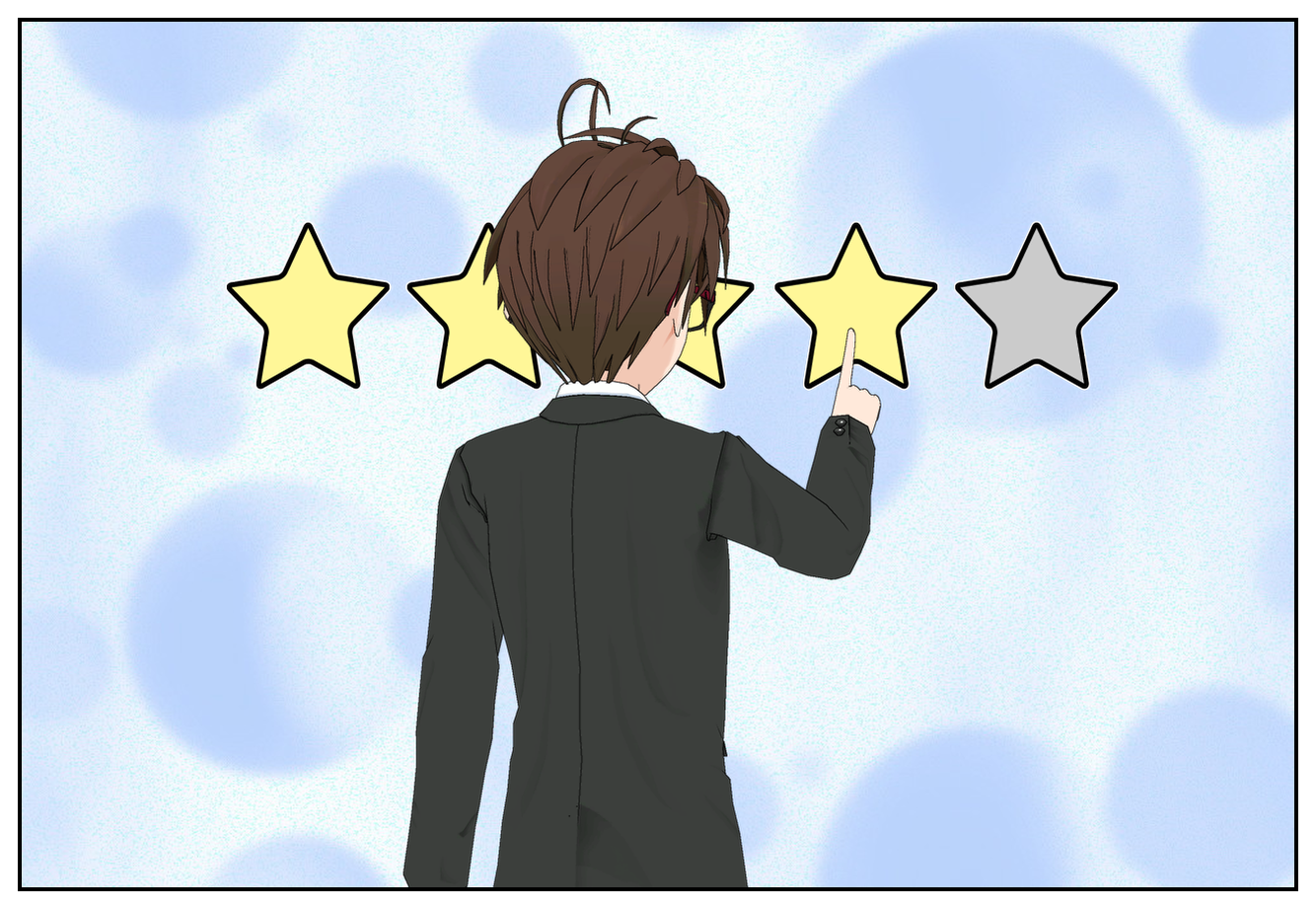
I'm actually quite taken with Nintendo's approach to reviews on the Wii U and 3DS; rather than allowing people free reign with their comments, it simply asks a number of simple questions that, in their own right, are quite informative and helpful. Firstly, there's the question of whether you think the game would appeal more to men or women. Then it asks you how old the person who enjoyed the game the most was. Then it asks you to give it a star rating between one and five, and finally asks you whether you think it's more suitable for "Everyone" or "Gamers", and whether it's more suited to "Casual" or "Intense" play sessions.

Five questions that give you a reasonably good idea of what the game experience is all about, and it takes a matter of seconds to fill them out. I am all for that.

In that spirit, then, I present to you a series of five-word reviews of things I've played recently.

Nintendo presents New Style Boutique 2: Fashion Forward – More fun than you'd think.

The Legend of Zelda: A Link to the Past – Still relevant now, in 2015.

The Legend of Zelda – The Dark Souls of Zelda.

DiRT Showdown – Lots of fun in cars.

Sonic and Sega All-Stars Racing Transformed – Mario Kart meets Blur. Yes!

Mini Metro – Minimalist puzzler with lovely sound.

Hyrule Warriors – Impa is the most badassest.

OutRun 3D – Arcade classic still plays well.

Streets of Rage 3D – Mega Drive brawler still fun.

2139: Black Friday

0139_001

I'm exhausted, both physically and emotionally, so I hope you weren't expecting anything too coherent or lengthy this evening. I'm still here, though, so let's get this over and done with.

Worked the Black Friday weekend at work (yesterday and today) and was pleasantly surprised that it wasn't as much of a clusterfuck as I was expecting. It was fairly busy, but not to an excessive degree; we didn't have hordes of customers trampling each other or anything, so that was something of a relief.

I feel I've settled into things quite nicely with this job. I've established some decent "work friendships" with the people I work alongside — having been burned a bit before by getting too close to certain people I worked with, I have been deliberately distancing myself a bit without seeming too impersonal — and I feel like I know what I'm doing a bit better than I did when I started. I evidently exude something of an aura of confidence in what I do, because a number of the other seasonal temps who started after me keep mistaking me for a full-time, permanent member of staff. This, in turn, gives me a bit of a confidence boost, which I've been sorely in need of.

As part of my recent work, we've been opening up a new store. This has been really nice, as rather than trying to fit in to an established environment, I've been able to take a certain degree of "ownership" over the new place right from the outset. I know where things are, I know how the place works, I know its little quirks and idiosyncrasies. Being much more spacious and better laid out than our previous premises, it's also much more pleasant to work in generally.

So work's been going well. It's just a shame a lot of other things have been so shitty recently, because it's really getting me down; had a bit of an emotional breakdown this evening when I reached my absolute limit of endurance, and while I think that "release" helped a bit, I still feel a bit crappy.

Still, holiday coming up next week, so I shall do my best to relax and enjoy it, and hope things improve from there onwards. I can but hope.

2138: How to Be a Fashion Goddess

0138_001

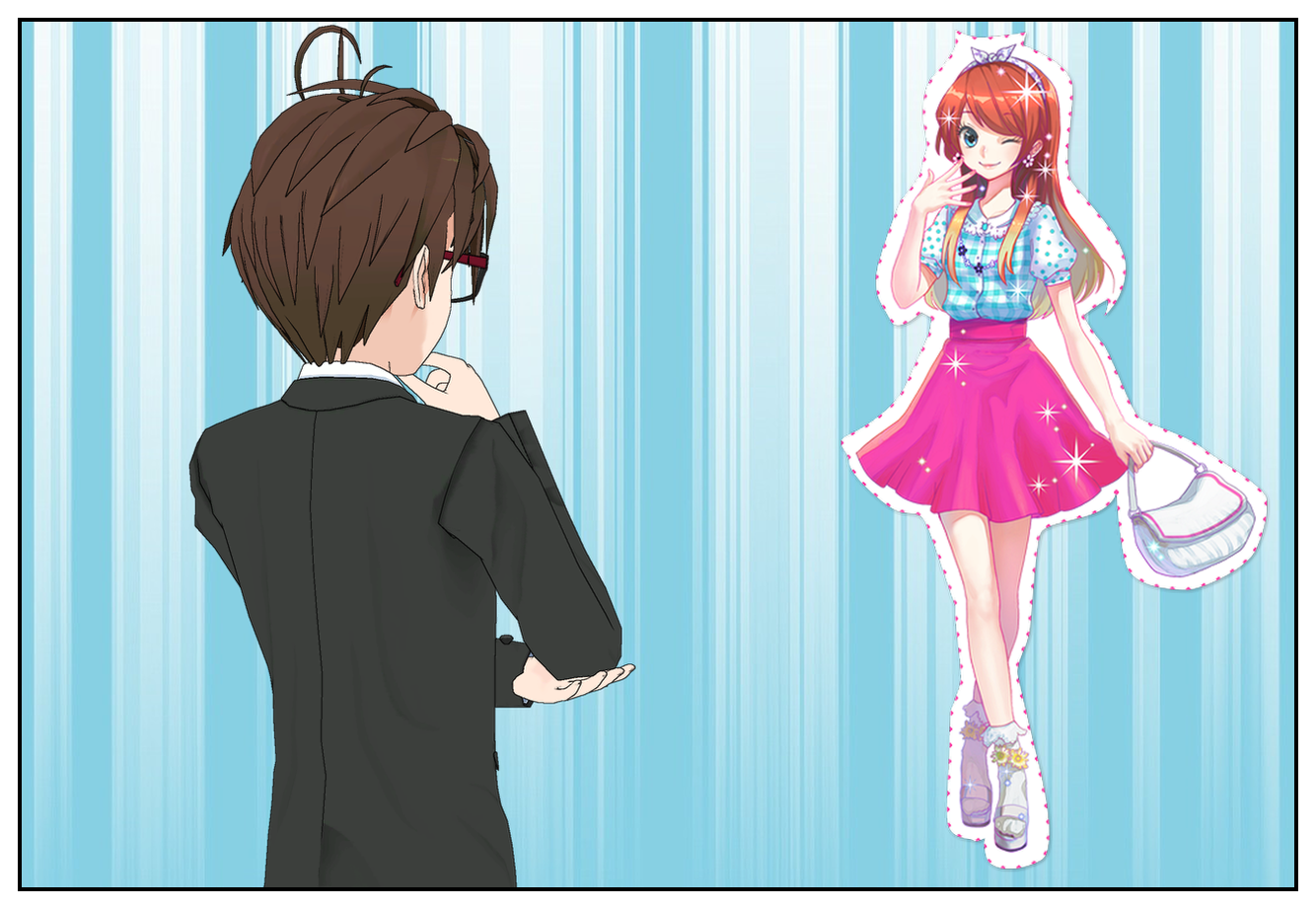
Been playing a bunch of Nintendo Presents New Style Boutique 2: Fashion Forward (aka Style Savvy 3) during downtime lately, and been enjoying it without any shame whatsoever. It's a decent game, reminding me somewhat of Animal Crossing but with "real" people and a bit more of a sense of direction and progression as you play through it.

I thought I'd assemble a few tips based on what I've encountered in the game so far, so without further ado:

Running the Boutique

This is your bread and butter, since you have a decent amount of control over how much money you make with each transaction. The basic strategy is to listen to what your customer wants, then put together an outfit using items you have in stock that add up to a total value as near as possible to their approximate budget. You can exceed their budget by a small amount, but try not to go too far over the top.

The Search function — the magnifying glass icon — is your best friend here, since until you have an idea of which items of clothing have which traits, it's the easiest way to track down things that meet the customer's requirements.

Early in the game, customers will make pretty simple requests of you, such as "I want a [trait] [item]". Fulfilling this request is a simple matter of using the search function to search by Image and Type to narrow down your stock items to what they're after. From there, pick the thing you think looks best — or, if you're feeling mercenary, the thing that costs the most but is still within their budget — and offer it to them. To begin with, you can prompt them to "Take a look!" at the clothes, which will give you a couple of chances to correct any mistakes you might have made, but after you've made a bit more progress in the game, you have the option to confidently tell them to "Try it on!" if you're absolutely sure you've found the perfect thing for them. If you make a mistake here, the customer will leave without buying anything, so use this with care!

After a while, you'll have to start putting together complete outfits. This is the same process, only you'll need to make sure you cover all the basics. At the very least you need one top (inner, shirt/blouse, outer), one bottom (trousers/shorts or skirt) and a pair of shoes or a dress to cover both. To squeeze a bit more cash out of your customer, try and adorn the outfit with some extras such as socks, gloves, earrings, bags and hats. Remember to stay close to their estimated budget, though.

Even later in the game, you'll start running into characters in the street whom you served earlier. They'll mention that they want to come and visit you later to find something to match the item you previously sold them. When they do show up, they won't give you any reminders as to what the item's traits were, so use a certain amount of judgement based on how they look now to recommend something appropriate — and use "Take a look!" if you're unsure.

Stocking up

For the most part, customers will order things that you have in stock, thankfully, though you can influence what is fashionable to a certain degree using your shop window mannequin and your store's decor. Certain items have multiple traits, though there is one "iconic brand" for each particular trait, so you can't go too far wrong with sticking with what you know.

When paying the Exhibition Hall a visit to stock up, try and get a decent selection of items covering a range of budgets and at least all the essential areas — top, bottom, shoes. Remember that when you buy stock for your store, you get a free unit of the item for your own wardrobe, too. And the first time you visit a particular brand, you'll get a complete outfit for free!

When you obtain the ability to design your own outfits, note that any commissioned items you successfully design will reward you with not only your payment for the job, but also ten units of the item you designed, which you are then free to sell. Taking on a bunch of design jobs can be an easy, cheap means of stocking up.

Hairdressing

When you get the opportunity to help out Noor in the hair salon, the mechanics are a little different. Rather than just listening to the customer's requirements, you have the opportunity to ask them a few questions. You only have a few chances to figure out what they want, however, so rather than making idle chitchat be sure to choose the options that relate to what they want done with their hair, and where there is more than one option relating to their hair, pick the more specific-sounding question.

Picking sensible questions will make notes on your memo pad about the customer's requirements. After three or four questions, they'll prompt you to begin, so with any luck you'll have assembled enough hints to put something suitable together. Try and remember any terminology that they use, because other customers might ask for something similar later, and won't necessarily explain it. Brush up on terminology using the glossary app in your phone if you're not sure.

So long as you stay within the customer's requirements, you can freestyle a bit with the hair with regard to things like colour and suchlike. Doing so can reward you with extra cash if the customer likes it, though if they don't you will have a chance to correct the issue.

The more haircuts you perform, the more styles you will acquire, and completed hairstyles will be recorded in your "Wig Box" for later recall if you so desire.

Make-up

This is a different process again. Here, customers will show up with a photograph of another character and ask you to do their make-up like them. By pressing the memo button at the bottom of the touchscreen you can flip the photo over to see the colour notes they made on the back; these are the important bits to follow, so take care of these first, then apply some finishing touches such as the correct amount of mascara based on the photograph.

Again, you can freestyle a bit with anything the customer doesn't specifically state, but be sure to fulfil all their requirements first.

Fashion Show

Once you reach a particular level of fame, Ricky, Sophie and Callie will assist you in putting on a fashion show. Each of these will have a particular theme, and you'll be required to dress your models in an appropriate outfit. Take note that following the fashion show, you'll likely experience an upsurge in demand for items of a similar type, so be sure to stock up on items with the same traits ready to sell.

After the initial show, every few customers you serve will reward you with a ticket for your next show. When you sell enough tickets, you can put on another show.

The chalet

You'll be rewarded with miniatures for various activities in the game, or just for chatting with people in the streets. You can also buy them from Kirsty in the shop next door to your boutique. It's in your interest to make some nice rooms for a number of reasons: firstly, characters will sometimes come to you and express an interest in renting them, and this can be quite profitable. Secondly, if you connect with another player via local wireless, you can invite them to your chalet and they can purchase items from your rooms. You're free to set the prices for these items to whatever you like, so if you have a rich friend, feel free to fleece them as much as possible.

As you progress through the game, you'll get the opportunity to expand the chalet with additional rooms. Take this chance and fill the empty rooms whenever you can; the more available rooms means the more potential rent you can be raking in. Remember to go and collect the rent every so often, though, because your tenants certainly won't come to you!

Collecting colours

To expand your colour palette, which is used in everything from clothing design to hairdressing and make-up, you need to collect additional colours. In order to do this, you need to chat with Rainbow, who is perpetually hanging out in the park, and show her a photograph with a colour she's never seen before.

You can look at your colour palette at any time using the app on your phone, and the names of the undiscovered colours generally give a bit of a hint as to where you might be able to find them. Pay the appropriate area a visit (perhaps at the appropriate time of day) and take a photograph with the Y button, then show Rainbow the photograph to receive her assessment and the new colour if you were successful. Generally speaking, the first time you visit a new area you'll be accompanied with another character, and you'll have the opportunity to take a photo with them when you arrive. Take them up on this offer by tapping the Y button while your characters strike their poses, since this is usually a good shot to acquire some new colours.

Streetpass

Streetpassing other players has a few benefits. Firstly, you'll receive their showcase chalet room, which you can drop into your own chalet. Secondly, their player character will come and hang out in your town for a bit, and while they're there, you'll have the chance to give them a complete makeover — clothes, hair and makeup. Streetpass customers, who appear as green on the map, aren't terribly fussy, so you can use them as a creative outlet as you see fit. Then take their money.

Remember to set up your profile and showcase rooms in your chalet!

Building relationships

Chatting to characters on the map is mostly for flavour, though chatting to the more major characters can reveal some background information about your grandmother, the boutique and the town, so be sure to say hello if you see people like Sophie, Callie, Ricky and Evie hanging around. Elsewhere, characters marked with special icons have various uses.

The yellow asterisked characters are characters who have visited your boutique before; talking to them may prompt them to come and visit you again, perhaps to complete an outfit you sold them an item for earlier.

Characters with a pink musical note trigger a sub-event that sometimes unlocks something — a new location, a new game system or perhaps some new styles. It's generally a good idea to trigger these when you see them, just in case the character wanders off and doesn't come back for a while.

Characters with a patchwork exclamation mark will give you a hint where to find a new colour. Note that sometimes they will refer to locations you can't visit yet, so pay attention to anything they say about unfamiliar locales ready for when you are able to visit.

Characters with a house icon want to rent a room in your chalet. You have the option to refuse their request, but there's generally no real reason to unless you really just don't like them for whatever reason. Rent is a nice little moneymaker on the side, so take the opportunity when it comes up.

A character with a crystal ball icon occasionally shows up in The Meadows. Speak to her and she'll give you a fortune reading; answer her questions honestly, and she'll give you an assessment of your personality.

Finally, characters with a yellow sparkle advance the storyline and often unlock important game elements. These characters will generally hang around until you pay attention to them, so feel free to leave them hanging until you're done with your current affairs.

Progressing

If your progress seems to have stalled a bit, head back to your boutique and make some sales; it usually won't be long before the next event shows up. If this doesn't work, keep selling, designing, cutting and… make-upping until you sell enough tickets for your next fashion show, then take it from there.

If you're still not sure what to do, be sure to check your messages and schedule in your phone, since the latter in particular usually gives you some idea of what you "should" be doing to continue progressing in the game — though, like Animal Crossing and its ilk, you are, of course, free to ignore this altogether and play however you see fit.

Hope all that helps! Have fun, fashion sistas!
2137: Nintendoes

0137_001

I've been playing almost exclusively Nintendo games for the past week or two. This wasn't entirely deliberate, but it's just sort of happened. And it's allowing me to rediscover my appreciation of what Nintendo does well.

Nintendo, more than pretty much any other company out there, puts out games that feel satisfyingly complete. They don't come out of the door half-baked, lacking in content or riddled with bugs; they're ready to play, bursting with things to do and full of enjoyment waiting to be discovered. And this is how they've always been, even since the days of the NES.

The other thing I rather like about Nintendo is that their work has a very distinctive "voice". This is partly the job of the localisation teams who work on the various properties, but the overall "tone" of most Nintendo works is so very consistent — and has been for many years — that I find it difficult to believe that this is purely a regional thing. Rather, I feel that Nintendo almost certainly makes very careful decisions about how it's going to localise things and make them accessible and tonally appropriate in territories around the world. This even goes as far as making the British/European English and American English versions of games different to quite a considerable degree in some cases, which always feels like a pleasantly "personal" touch.

Now, Nintendo have attracted the ire of a number of people over the last few years thanks to what these folks see as unnecessarily "butchered" translations of games such as Fire Emblem Awakening and Xenoblade Chronicles X. And, for sure, some notable changes have been made from the original scripts — and, in a number of cases, content has been edited or even cut to be in keeping with the perceived values of a particular territory. Memorable examples in recent memory include the shot of Tharja's panties-clad bum in Fire Emblem Awakening (which featured a curtain being pulled across it in the English version, inadvertently making it look more lewd by hiding her panties altogether) and the inexplicable removal of the breast size slider from Xenoblade Chronicles X's character creation tool.

These sorts of edits are nothing new, however. The Legend of Zelda series, for example, has a somewhat different tone in Japan to in the West, particularly in installments such as A Link to the Past on Super NES. In the Japanese original A Link to the Past, for example, the story touched on religious themes, with one of the main villains being a priest. In the English versions, however, religious references were removed, and the "priest" became a "wizard".

Why does Nintendo do this? For an attempt at inclusivity, I guess; the company has a carefully curated "family-friendly" image to uphold, after all, and "family-friendly" means different things in different territories. From its localisation decisions, we can interpret that Nintendo believes here in the West that "family-friendly" means something that the whole family can sit down and enjoy together without any material provoking arguments or awkwardness between one another. We've seen on all too many occasions that discussions and material relating to both religion and sexuality are very much capable of inducing arguments and awkwardness, so out the window they go. It's kind of a shame for those who prefer their translations to be more literal and true to the original Japanese texts, but it is, after all, what Nintendo has always done — and, I have to admit, that warm, friendly tone most of their localisations tend to have is rather comforting, and quite unlike anything from other localised Japanese works.

This is even apparent in games such as New Style Boutique 2 and Animal Crossing, where there was unlikely to be any real "offensive" content in the first place; both have been localised in such a way as to be as inclusive and welcoming as possible to a broad audience; they're games that invite you in to enjoy the experience rather than insist you must be this skilled to ride, or whatever. And that's rather nice, really. Not something that every game needs, of course — some games are all the better for their laser-sharp focus on a very specific, niche-interest audience — but, to be honest, I find it hard to get too riled up about censorship talk when it comes to Nintendo games, simply because I've grown up with that warm, friendly, familiar tone of their localisations, and it would feel kind of strange for that to change now.

Anyway. I'm enjoying my Nintendo period right now: currently playing Zelda 3, Hyrule Warriors and New Style Boutique 2. All are very different games from one another. All are simply marvellous. All are proof that Nintendo doesn't give a shit what its competitors are doing, because they're quite happy doing their own thing, even if it ends up causing their sales figures to look dismal in comparison to those of Sony and Microsoft.

I hope this Nintendo never goes away. They're an important part of gaming, and it would be sad to see them go the way of Sega, becoming just another third-party publisher.