2148: Xenoblade X Tips and Tricks

0148_001

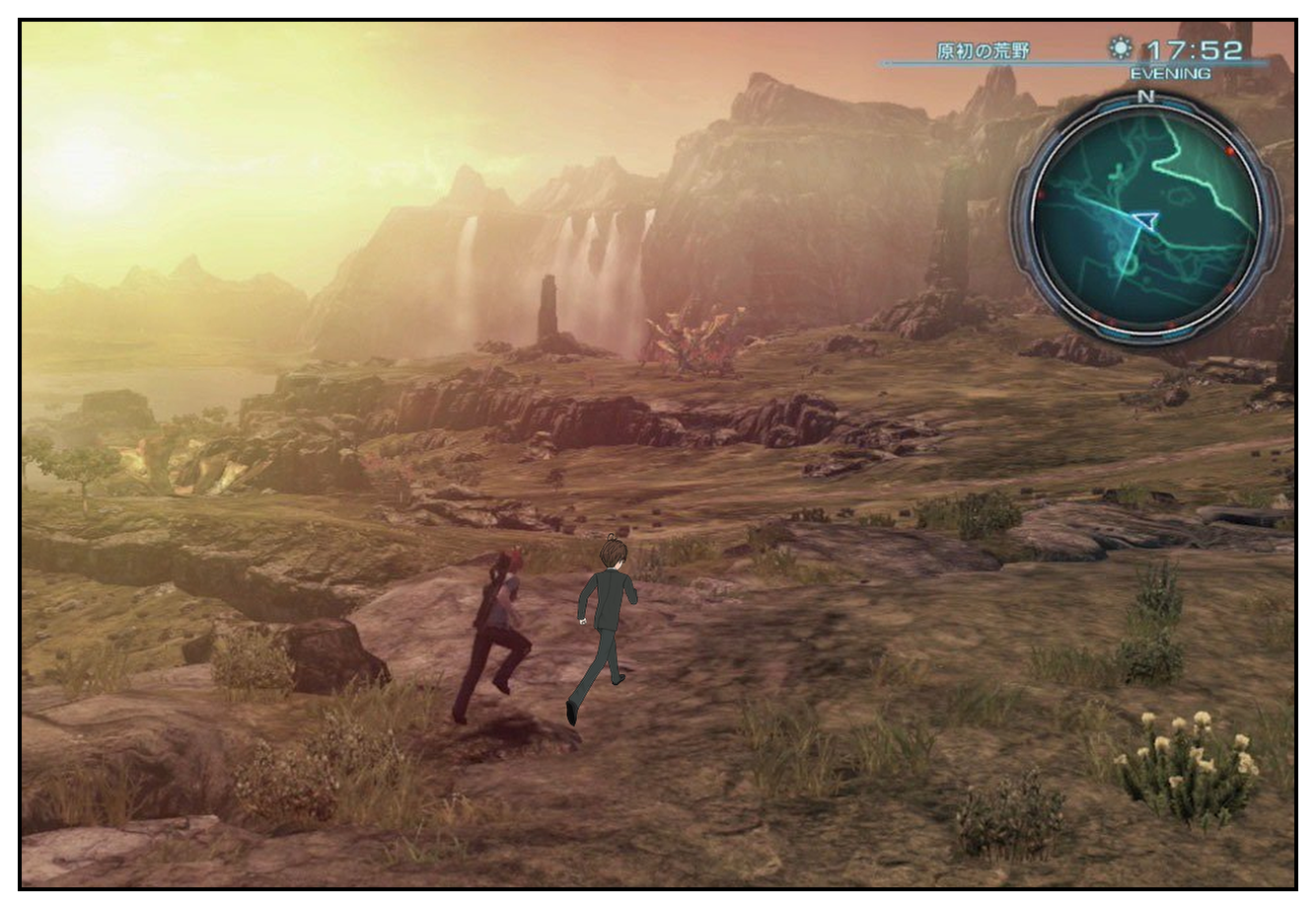
I've been playing Xenoblade Chronicles X for about 25 hours so far, and I've picked up a few tips and tricks along the way. I will now share them with you, in case you're a newcomer to the game somewhat daunted by the sheer scope of what's on offer.

Your character

  • Don't sweat early decisions like which Division to join too much; you can change most things later. About the only thing you can't change is your character's basic appearance.
  • Progression is measured in three main ways:
    • Your character level (sometimes referred to as your "inner level") which increases with experience points gained, and affects your base capabilities.
    • Your class rank, which increases with class experience, and which unlocks new Arts and Skills as you rank up. When you reach rank 10, you unlock one or more new classes in that particular tree.
    • Your BLADE level, which increases with BLADE points, acquired through pretty much everything you do in the game, and which unlocks new facilities in the Barracks as well as allowing you to level up your Field Skills. The rate at which you acquire BLADE points for various activities is determined by your Division, so pick a Division that encourages you to do the things you enjoy the most for fastest progress.
  • Speaking of Field Skills, level up Mechanical first, since you'll always need this to install probes.
  • You can change class at any time. Note that each class has its own signature pair of weapons, so ensure you have appropriate gear before changing.

Equipment

  • Determine whether your class's strengths are in ranged or melee combat — this is partly determined by the weapons you use, and partly by the Arts you have equipped. Focus on acquiring equipment that plays to your strengths; for example, the Enforcer class tree particularly specialises in ranged combat, so pick equipment that emphasises your Ranged Attack and Ranged Accuracy stats.
  • A higher Attack value on a weapon isn't necessarily better; check the attribute of the weapon, too. Sometimes a weapon with a non-physical attribute and a lower Attack score can be more effective than a physical weapon with a higher Attack attribute; insectoid enemies, for example, are weak against Thermal damage and strong against standard physical damage.
  • The colour of a piece of equipment indicates its rarity and quality. White equipment is basic, green is Unique, blue is Rare, yellow is rarer (I've forgotten the official term offhand) and orange is Intergalactic.
  • Augments are important. Two weapons that look the same but have different augments can have a very different impact on your character. Using the ranged Enforcer class as an example again, there's not a huge amount of point equipping a gun that boosts your Melee Attack stats; better to play to the class's strengths and try to boost range.
  • Don't forget Augments can be upgraded at the AM console in NLA. You'll need Miranium and crafting materials to do this. By upgrading Augments, you can make a piece of equipment several orders of magnitude better than it was when you first acquired it, but note that there's a maximum total number of times each weapon can be upgraded.
  • New equipment will become usable every 5-10 levels or so, but you should also make sure you level up the AMs by using their equipment and donating Miranium to unlock additional options within each "tier" of equipment.

Combat

  • The most important thing in combat is positioning. Try and put yourself to the side or rear of the enemy whenever possible, as this boosts accuracy and damage. Use the Sprint function liberally in battle to change position quickly, and take note of the position indicator at the bottom right (the thing that says something like "FRONT / MIDDLE") — this indicates your relative horizontal and vertical positions to the enemy. Ideally, you want to be at "BACK / ABOVE" and least ideal would be "FRONT / BELOW".
  • When using Arts, there's really no reason not to go for positional bonuses when available. Familiarise yourself with your equipped Arts outside of battle and be prepared to shift your position to unleash them from the appropriate location.
  • For Arts that offer bonuses for things like Aura use, keep an eye on your TP meter, because you may need that TP for something other than an Aura at some point.
  • Pay attention to Soul Voice; it's the main way of keeping your party standing. When a character calls out to you, match the colour of their speech bubble to the colour of an Art for a bonus effect and a small heal to both you and the person calling out. (Appropriate arts will also pulse on your action palette to allow you to pick a suitable one to use.)
  • Set up your own character's Soul Voice to play to your party's strengths. If you're rolling with a group of melee specialists, you're not going to be much help yelling for them to use ranged Arts. Also take the time to customise the four Custom Voice options to suit your play style; there's some really nice effects in there, such as temporarily invincibility if you Sprint for three seconds.
  • Hit every Soul Challenge you can. Not only does this trigger a Soul Voice from your character, it also does a significant heal on the whole party. In longer fights against tougher foes, it is essential you hit these, so practice that timing!
  • Watch your enemies closely. There are no telegraph markers for most attacks, so you'll need to learn the visual cues to avoid taking too much damage. A helpful indicator is whether the position indicator is flashing red or not; if it is, you're in melee range, and will be hit by melee Arts. You'll hear a buzzer sound when you enter melee range, too, so take a step or two back if you're wielding your ranged weapon at the time.
  • Breaking enemy appendages is useful for several reasons. Firstly, the more appendages you break, the more damage the enemy takes. Secondly, certain special attacks are tied to particular appendages. Thirdly, breaking an appendage usually triggers a Soul Voice. Fourthly, breaking specific appendages allows you to acquire specific drops from the enemy related to that appendage.

Exploration

  • You're actually fairly mobile even on foot. Sprint when you can, because not only do you move faster, but you also jump significantly higher. This is useful for hopping over obstacles or "mountain goating" up cliff faces.
  • Install every probe you can. Every successfully installed probe nets you Miranium and credits income, but also acts as a fast travel location.
  • Probe sites shoot a beam of light into the sky to help you find them. If you know you're in the right hex but can't see the beam of light, look up to see if it's on top of a mountain or cliff, and if you still can't see it, it's probably underground in a cave somewhere.nearby.
  • When you install a probe, the hexes around it on the Segment View map reveal their main feature. To complete a hex's Sector Recon, you need to complete the objective indicated by the icon. A page icon indicates a mission takes place there (but doesn't necessarily start there); a sparkle icon indicates a specific treasure to be found; a monster icon indicates the Tyrant in that hex must be defeated.
  • NPCs with recon info will have a gold smiley face speech bubble icon over their heads. Walk near them to eavesdrop on their conversation and automatically update your map. The hex they referred to will be marked with "New" on the GamePad; tap it once to reveal the details, and it will be marked with a checkmark to show you've read the information but not yet acted on it.
  • The world layout isn't like an MMO, with "levelled" zones; instead, each hex on the map has an overall danger level in relation to your character's inner level. Don't be afraid to go into areas with higher level enemies, because sometimes you need to pass through these to get to where you're going. Do take care around enemies with red eye or lightning bolt icons, however; steer clear of them to avoid detection.
  • If you see something that looks interesting, go and check it out. It might be a landmark, scenic viewpoint or unexplored area, and these are all worth experience.
  • Grab every Collectible you see lying around on your way to a destination. Some are used as quest items; some are crafting materials; some are simply things to put into your Collectopedia. Curators in particular also gain a decent amount of BLADE points per Collectible acquired.

Online

  • It's worth playing online if you can, since there are helpful rewards available, including:
    • Division Spoils, which unlock at midnight each day according to the total number of BLADE points each division acquired
    • Squad Tasks, which are shared objectives (usually killing specific enemies or types of enemy) that reward everyone in a Squad with Reward Tickets for completing them
  • Reward Tickets can be traded in for a huge variety of material items. If a quest or upgrade is calling for a specific item and you don't feel like killing hundreds of enemies in the hope of a rare drop, see if you can afford it with your Reward Tickets; just use the terminal in the BLADE Barracks to check.
  • If you're stuck on something, try sending a Free Report asking for help; someone might have an idea. Free Reports have a very tight character limit, but be as specific as you can, since it may not be obvious where you are or what you're talking about.
  • Don't forget to register your character as scoutable at the console in the Administration District. You can also hire other players' characters here, and you can also team up with other players' characters if you come across them in the field. Note that they'll only stick with you for half an hour if you do this, whereas hiring them from the console will keep them with you for 2-4 hours depending on their Scout Level. The former is free, however; the latter can get expensive!
  • To encourage other players to scout your character, be sure to customise your Public and Personal greetings as well as your Fashion Gear. Having a distinctive character means people are more likely to pay attention and hopefully hire you.

Think that'll do for now. More tips once I get a bit further and unlock Skells!
2146: More Xenoblade

0146_001

Pretty much all I've done today is finish off a bit of work I had to do and play Xenoblade Chronicles X, so I'm going to talk a bit more about my experiences with the latter.

If yesterday's entry didn't already make it clear, I love it. It's actually not the kind of RPG I traditionally used to love, so this surprises me; it's open world, it's non-linear, it's nowhere near as story-centric as many other RPGs out there… but it's compelling, addictive and beautiful.

I think one of the things I like most about it is that it feels something like the realisation of a longstanding fantasy. Let me explain.

Way back in secondary school, I was renowned among the teaching staff as someone who put way too much effort into creative writing assignments, usually delivering pages and pages of epic prose where my classmates would put in maybe one or two at most. I can still remember most of these stories I wrote, from early example Timeslip (a riff on Back to the Future, which my friend Daniel was obsessed with, that featured a time-travelling lorry rather than a DeLorean, and what was essentially Rainbow Road from Super Mario Kart to represent the pathways between times) to later pieces such as my A-Level English Language assignment, where I delivered a surprisingly confident but harrowing first-person stream-of-consciousness narrative from the perspective of a girl who was raped.

Anyway. One of the stories I wrote — I forget exactly when, but I do remember writing it — was called Colony. Having somewhat grand plans for what I had written, I had tagged it Chronicles of the Scorpio, Book 1, despite having not even finished the entire story of Colony. That is beside the point; what is important is what Colony was about.

Colony was loosely inspired by a PC CD-ROM game I'd been playing called Alien Legacy. This concerned an interstellar colonisation ship waking up its crew a long way from where they were supposed to be, and the crew and colonists having to make the best of the situation in which they found themselves. Colony featured a similar kind of situation, with the UNS Scorpio finding itself pulled through a wormhole into (if I remember correctly) the Beta Caeli star system, which conveniently had an M-class planet for humanity to plant itself on. The remainder of the story — which I finished — described the colonists' struggle for survival as they discovered they were not entirely alone on this planet, and so on and so on.

To the point, then: the thing I like about Xenoblade Chronicles X is that it feels like I'm exploring that story: one that's been stuck in my head since I was a teenager. I don't think I've ever played a game with such a brilliant sense of exploration, discovery and having to fend for yourself on a very alien world, and Xenoblade Chronicles X's handcrafted setting puts the randomly-generated locales of Minecraft and its ilk to shame by being absolutely fascinating to explore. The experience of surveying planet Mira is exactly how I pictured the characters in Colony spreading out from their initial base camp to discover exactly where they had landed.

There's so much to do, with an excellent sense of constant progression. You can follow the story missions — something that I haven't done much yet so far — or you can make an effort to survey as much of the planet as possible. It's extremely satisfying to take a look at the Segment Map on the GamePad screen and see a number of little checkmarks indicating that you've completed that particular area… but it's also somewhat daunting to see how many other areas don't have little checkmarks in them and realise quite how much there is left to do.

I am fine with this, though. The sheer amount of stuff to do in Xenoblade Chronicles X distinguishes it significantly from MMORPGs, which is what it's getting most frequently compared to: rather than grinding out the same content over and over again in an effort to get an incrementally small reward and creep up in power week by week, you can pretty much always be doing something different and be making progress somehow: you can be levelling up your character, or increasing the rank of your current class, or increasing your rank in the BLADE organisation, or earning money, or gathering resources, or researching weapons for the arms manufacturers, or… you get the idea.

The online seems like fun, too, though I've only dipped my toes into it so far. Taking the form of short, instanced missions for up to four players at once, the Squad Missions feature allows you to play with others and cooperate to take down some tough challenges together. The game is set up in such a way that direct communication isn't necessary, with characters instead using the "Soul Voice" system to automatically shout out things to each other and boosts to your abilities being appropriately applied if you respond correctly to these shouts. It's also possible to communicate through emotes and, if you so desire, the slightly clunky "Free Report" system, which is not quite real-time text chat, but it's testament to the game's solid systems that four strangers can come together and take on some significant challenges without any need for voice or text chat to coordinate things. I wonder if this will still be the case at higher levels? We shall see, but being only level 15 so far, I have a way to go yet!

Anyway. If you've been dithering over whether or not Xenoblade Chronicles X is worth a purchase, stop; it absolutely is. (And, to answer a question from the comments yesterday, no you don't need to play Xenoblade Chronicles first, because they're two completely independent games.) It's one of the most ambitious, impressive RPGs — no, games, full stop — that I've ever played, and it deserves a big, appreciative audience. I'm telling you now, games industry; if this game gets passed over in Game of the Year talk, we are going to have some serious words…

2145: Xenoblade Chronicles X First Impressions

0145_001

So, Xenoblade Chronicles X came out today, and I picked up a copy.

Is it any good? Well, after eight hours of play in one day, I think it's fairly safe to say that yes… yes it is.

38 words is not quite enough to articulate why this game is worth your time and attention, however; so I shall attempt to elaborate somewhat. I wrote a little the other day about how much I enjoyed the previous Xenoblade Chronicles game on the Wii, and much of that still applies, though as I suspected from what I'd heard prior to release, Xenoblade Chronicles X is a bit of a different beast to its predecessor.

Let's start from the beginning, then. Xenoblade Chronicles X casts you in the role of a survivor of a spaceship crash on the planet Mira. The game begins with you being rescued from your stasis escape pod and emerging into this strange new world with no recollection of who you are/were. You're surprised to discover that the remnants of humanity have been somewhat busy in the intervening two months between the ship crashing and your rescue, but you quickly adjust to life in New Los Angeles, a city constructed from the wreckage of your former ship's habitation module.

In those two months, it seems said remnants of humanity have organised themselves in what appears to be a fairly efficient manner. Of chief importance to the building of humanity's new life on Mira is the organisation known as BLADE, which stands for Building a Legacy After the Destruction of Earth, but which everyone just calls Blade, because that's cooler.

BLADE is responsible for most of the day-to-day running of life on Mira for humanity. Its employees go out and explore the world, gather materials, keep the more feisty members of the local fauna in check, deploy probes and set up resource infrastructures. It doesn't take long for you to be inducted into the ranks of this group, and before long you're swearing allegiance to one of the "Divisions", which determines the most efficient means you have of ranking up within the BLADE organisation, though regardless of your allegiance you're free to pursue any activities you see fit.

Once you step outside New LA onto Mira proper, there's plenty to do. Like the previous Xenoblade game, the world is strewn with collectables that can be put into the Collectapedia; there are plenty of enemies to fight of all shapes and sizes — with the biggest being some of the biggest… things I've seen in any video game ever, including Shadow of the Colossus — and there's a ton of exploration to be done. By wandering around, you'll discover landmarks, sightseeing spots, unexplored areas such as caves and ruins, places to install mining equipment and all manner of other things.

When you get into combat, you're presented with a system somewhat like the previous game's, but with a number of refinements. Of chief importance is the "Soul Voice" system, whereby party members can chain attacks together by shouting things out during battle based on various trigger conditions. By using the appropriate Arts when your companions yell out the relevant things (which are colour-coded to make things easier for you) you can achieve various helpful bonuses and special effects. Likewise, when you perform a particular ability and then hit the B button at just the right time, you can encourage your allies to trigger a Soul Voice in the same way. Combat feels fluid and interesting, and the fact you can switch between ranged and melee weapons at will means you can tweak your playstyle how you see fit — a fact that is further compounded by the array of different character classes on offer, which you're free to switch between whenever you like.

There's also some online functionality that is pretty interesting. After clearing the third chapter of the main story, you sign up for a "Squad", which is an online group of up to 32 players. Once you're in a Squad, you receive notifications about their achievements and gain the ability to make "reports" about things that go on around the world, things you've done or simply to chat. You can trade things with other players, too, and there are communal Squad objectives to complete collectively as a group.

For those who want to take things a step further, there's a full multiplayer mode where you can take on Squad Missions together in parties of up to four people. These tend to be short, timed missions where you have to achieve specific objectives such as defeating enemies, but playing alongside other people and chaining your Soul Voice effects into each other has a markedly different feel from playing with the AI characters. It's also a good opportunity to admire other players' custom avatars, since the game features a vanity system whereby you can wear one set of gear for its stats, then apply the appearance of a different set for your own custom outfit.

Xenoblade Chronicles X is a game that appears to be incredibly daunting in its scope, with numerous intertwining game systems that, after the initial few story chapters, it leaves for you to explore for yourself rather than guiding you through by the hand. The electronic manual is essential reading, since not everything in the game is explained in tutorials, and there are a few bits and pieces that will doubtless prove bewildering without explanation.

So far I've had an absolute blast, though. The environments are spectacular, the creatures are weird, wonderful and gigantic, the combat is fun, the story is enjoyable, the characters are pleasant to hang around with, and the setting is well-crafted with a pleasing sense of coherence to the whole thing.

In short, it's pretty gobsmacking, not only as a game in its own right, but in how much of an improvement over its predecessor it is, too. And it's doubly impressive for being quite this spectacular on the Wii U, by far the least powerful of the current generation of consoles. Frankly, if this game doesn't shift a few Wii U systems, nothing will, because I find it hard to believe anything more impressive will be squeezed out of Nintendo's hardware.

2143: Anticipating Xenoblade

0143_001

I'm picking up a brand new game release on Friday. It's not often I buy a new game the moment it's released, but in the case of Xenoblade Chronicles X, I feel almost obliged to, given that it's not only a game that's been a long time coming, but also a game that's likely to be one of the most impressive titles for Nintendo's underappreciated Wii U console — much like its predecessor was for the original Wii.

I don't know a lot about Xenoblade Chronicles X as yet save for the fact it's a bit of a departure from the style of the previous game; I've been deliberately avoiding too much coverage of it because it's one of those titles for which I'm keen to go in almost completely blind, much as I did with Xenoblade Chronicles. I can, however, talk a little bit about my memories of Xenoblade Chronicles, and why they lead me to anticipate Xenoblade Chronicles X quite so much.

I'm not massively familiar with the overall Xeno metaseries. I played Xenogears back when it was originally released on PS1 and enjoyed it a lot, despite its rushed second disc. To date, I know nothing at all about the Xenosaga series, and my next contact with the overall Xeno quasi-franchise was Xenoblade Chronicles on Wii. Again, I came to this knowing almost nothing about it save for the fact it was one of three games for the Wii that a pressure group known as "Operation Rainfall" had been encouraging Nintendo to bring to the West, the others being The Last Story from original Final Fantasy creator Hironobu Sakaguchi, and the unconventional, wonderful Pandora's Tower from Ganbarion.

In other words, I picked up Xenoblade Chronicles based entirely on hearsay — people whose opinion I respected said that it was an important release, and that as someone who enjoyed JRPGs, I would do well to check it out. It was also noteworthy in that it actually made it to Europe before North America, which is not something that tends to happen all that often with localisations, and its dub featured English, rather than American, voiceovers — a fact which gave it a considerable degree of charm as well as inadvertently creating a number of memes that persist to this day, including "I'm Really Feeling It" and "Now it's Reyn Time", the former of which was helped enormously by protagonist Shulk's inclusion in the Wii U version of Super Smash Bros.

Anyway. Booting up Xenoblade Chronicles for the first time, I was confronted by a JRPG experience quite unlike any other JRPG I'd played to date. Well, that's not quite true; it was a bit like Final Fantasy XII in many ways, but it definitely had its own unique identity that combined influences from traditional, story-heavy Japanese role-playing games; open-world, mechanics-centric Western role-playing games; and the sheer, daunting amount of content found in your typical massively multiplayer online RPG.

Of particular note was its combat system, which is the main aspect that Xenoblade Chronicles X carries across from its predecessor. Allowing you to take direct control of any of your current three party members, gameplay changed significantly according to how you chose to play each character. Each party member had a fairly obvious "role" in the party that they were supposed to play, but there was a decent amount of customisation between learning new Arts and Skills for them, as well as the limited number of Arts the characters could have equipped (and, thus, usable) at any given moment.

Combat was much more than simple hack-and-slash; in fact, simply running up to an enemy and hoping to whittle down its health was an invitation to disaster, even early in the game. Instead, you needed to know your characters' abilities, including positional bonuses, and make appropriate use of them at the right times. This is where MMO influences showed themselves once again; since you were only controlling a single character, you had to trust that your AI-controlled companions were up to the task of doing their job — which, to their credit, they usually were — while you concentrated on doing yours.

I typically played as Shulk for most of the game; Shulk, in party-based MMO terms, would have been a melee DPS class somewhat akin to a rogue, dragoon or monk in Final Fantasy XIV. In other words, his abilities were largely focused on both dealing damage and inflicting debuffs on enemies, and many of them were conditional on him being in a particular position in relation to the enemy. One of his Arts required him to hit an enemy from behind, for example, while another had bonus effects when used from the side. Mechanics such as this kept combat dynamic and interesting rather than simply having two groups hacking away at each other until one or the other's HP ran out.

Then there was the world. Oh, goodness, the worldXenoblade Chronicles was running on one of the weakest consoles of that particular generation, but it managed to be one of the most impressive games there was in terms of scope and visual design. Unfolding on the overgrown, long-dormant bodies of two mysterious giant mech-type things known as the Bionis and the Mechonis, Xenoblade Chronicles' world combined the realistically natural with the fantastic to create an absolutely beautiful, memorable world with some genuine landmarks that were worth seeking out just to admire the visual majesty of. I still remember vividly the first time I came across Makna Falls and had to stop and just admire this beautifully crafted environment for a few moments; it was somewhere I'd want to actually go in reality, such was its beauty.

To reiterate an earlier point, I know very little about Xenoblade Chronicles X, and that includes details about its world. If it's half as interesting and thrilling to explore as its predecessor, though, I'm excited to jump in and start running around… and later, to start stomping around it in the big mech-like Skells.

Xenoblade Chronicles X is out on Friday. There are online and multiplayer features in the game, so if you're planning on playing it and would like to do stuff with me, let me know and we can exchange Wii U friend details.

2137: Nintendoes

0137_001

I've been playing almost exclusively Nintendo games for the past week or two. This wasn't entirely deliberate, but it's just sort of happened. And it's allowing me to rediscover my appreciation of what Nintendo does well.

Nintendo, more than pretty much any other company out there, puts out games that feel satisfyingly complete. They don't come out of the door half-baked, lacking in content or riddled with bugs; they're ready to play, bursting with things to do and full of enjoyment waiting to be discovered. And this is how they've always been, even since the days of the NES.

The other thing I rather like about Nintendo is that their work has a very distinctive "voice". This is partly the job of the localisation teams who work on the various properties, but the overall "tone" of most Nintendo works is so very consistent — and has been for many years — that I find it difficult to believe that this is purely a regional thing. Rather, I feel that Nintendo almost certainly makes very careful decisions about how it's going to localise things and make them accessible and tonally appropriate in territories around the world. This even goes as far as making the British/European English and American English versions of games different to quite a considerable degree in some cases, which always feels like a pleasantly "personal" touch.

Now, Nintendo have attracted the ire of a number of people over the last few years thanks to what these folks see as unnecessarily "butchered" translations of games such as Fire Emblem Awakening and Xenoblade Chronicles X. And, for sure, some notable changes have been made from the original scripts — and, in a number of cases, content has been edited or even cut to be in keeping with the perceived values of a particular territory. Memorable examples in recent memory include the shot of Tharja's panties-clad bum in Fire Emblem Awakening (which featured a curtain being pulled across it in the English version, inadvertently making it look more lewd by hiding her panties altogether) and the inexplicable removal of the breast size slider from Xenoblade Chronicles X's character creation tool.

These sorts of edits are nothing new, however. The Legend of Zelda series, for example, has a somewhat different tone in Japan to in the West, particularly in installments such as A Link to the Past on Super NES. In the Japanese original A Link to the Past, for example, the story touched on religious themes, with one of the main villains being a priest. In the English versions, however, religious references were removed, and the "priest" became a "wizard".

Why does Nintendo do this? For an attempt at inclusivity, I guess; the company has a carefully curated "family-friendly" image to uphold, after all, and "family-friendly" means different things in different territories. From its localisation decisions, we can interpret that Nintendo believes here in the West that "family-friendly" means something that the whole family can sit down and enjoy together without any material provoking arguments or awkwardness between one another. We've seen on all too many occasions that discussions and material relating to both religion and sexuality are very much capable of inducing arguments and awkwardness, so out the window they go. It's kind of a shame for those who prefer their translations to be more literal and true to the original Japanese texts, but it is, after all, what Nintendo has always done — and, I have to admit, that warm, friendly tone most of their localisations tend to have is rather comforting, and quite unlike anything from other localised Japanese works.

This is even apparent in games such as New Style Boutique 2 and Animal Crossing, where there was unlikely to be any real "offensive" content in the first place; both have been localised in such a way as to be as inclusive and welcoming as possible to a broad audience; they're games that invite you in to enjoy the experience rather than insist you must be this skilled to ride, or whatever. And that's rather nice, really. Not something that every game needs, of course — some games are all the better for their laser-sharp focus on a very specific, niche-interest audience — but, to be honest, I find it hard to get too riled up about censorship talk when it comes to Nintendo games, simply because I've grown up with that warm, friendly, familiar tone of their localisations, and it would feel kind of strange for that to change now.

Anyway. I'm enjoying my Nintendo period right now: currently playing Zelda 3, Hyrule Warriors and New Style Boutique 2. All are very different games from one another. All are simply marvellous. All are proof that Nintendo doesn't give a shit what its competitors are doing, because they're quite happy doing their own thing, even if it ends up causing their sales figures to look dismal in comparison to those of Sony and Microsoft.

I hope this Nintendo never goes away. They're an important part of gaming, and it would be sad to see them go the way of Sega, becoming just another third-party publisher.

2111: On Censorship, Bikinis and The Cheapening of Real Issues Through Stupid Arguments

0111_001

Controversy erupted once again recently in the gaming sphere when it seemingly became apparent that, despite saying they wouldn't, Nintendo of America had made edits to one of the characters' costumes in the upcoming RPG Xenoblade Chronicles X. (I'm still a little skeptical this has actually happened, but I'm going to work on the assumption that it has for now, since Nintendo has indeed done this before with games like Fire Emblem Awakening.)

The character in question is canonically "underage" (though remember that the age of consent in Japan is different to that in other parts of the world — legally, it's 13, though in certain areas of the country a higher age is enforced at the discretion of the local government) and one of her outfits was a set of bikini-like armour. Impractical, but not particularly offensive, and indeed nothing unusual for a Japanese role-playing game, which often have swimsuit costumes available either as downloadable content or unlockable extras.

As those of you who follow this particular part of the gaming sector can probably surmise, this quickly escalated into the inevitable clashing between those who are against censorship in any form, preferring an authentic experience true to the creators' original intentions, and those who believe that Japanese games are inherently "creepy", whom we've had words about before.

The usual argument against vaguely (or indeed explicitly) sexualised outfits in video games is that it is, yes, "creepy" with a garnish of paedophilia. This is a natural escalation of the current trend for feminist "criticism" (and I use that term loosely) of video games and popular media by people like Anita Sarkeesian and her ilk. Said "criticism" already fails to take into account the fact that sex and art have been inextricably intertwined for many hundreds — probably even thousands — of years, but criticism such as that we've seen of, in this case, Xenoblade Chronicles X and, at other times, games like Criminal GirlsOmega Labyrinth, Dungeon Travelers 2, Hyperdimension Neptunia and any number of other Japanese-developed games you might care to mention, takes this to a whole new level by cheapening the unfortunately very real, horrendous issue of child abuse.

I am no expert on child abuse, though remember I did once work as a teacher and consequently had the "telltale signs" of abuse drummed into me; I also came into contact with a number of children who had had somewhat difficult home lives, to say the least. Thankfully, I don't think I ever dealt with anyone who had been outright sexually abused, though there were certainly a few who had "seen some shit", as it were. This was often reflected in their behaviour in the classroom which, unfortunately, made them somewhat difficult to deal with, and difficult children were, frankly, one of the main reasons I decided not to continue pursuing teaching as a career. I just wasn't built to stand up to them, particularly when I knew — or at least had an idea — where their anger was coming from.

One thing I do know about child abuse and paedophilia, though, is that it is absolutely abhorrent. The very thought of a child suffering in such a way makes me feel sick to my stomach. And I know that most rational people that I count among my circles of acquaintances and friends would feel the same way too. Which is why it makes us so utterly livid that something as inherently harmless and stupid in the grand scheme of things as liking drawings or polygonal models of titties is equated with such a horrible, disgusting crime.

To put it another way: those who criticise anime-style art, Japanese video games such as Xenoblade Chronicles X — or indeed any form of fictional media that takes a non-literal approach to the representation of characters — are cheapening and devaluing the very real issue of paedophilia in modern society by applying that label to something that is, let's be clear here, absolutely completely and utterly legal, not to mention completely and utterly harmless, given that there are no "real people" involved at all. Child abuse destroys lives, and often leaves both physical and mental scars that never heal. Dungeon Travelers 2 features bosses who occasionally show you their bum when you beat them. Xenoblade Chronicles X has a character who wears a bikini. That's it. She's not even doing anything sexual in it, she's just wearing it. And yet that, it seems, is enough to bring out the editing scissors in the name of "catering to an audience".

Guess what, though: the "audience" you should be catering to is the audience that wants to see the work in its original form. That audience are passionate and enthusiastic about being able to enjoy work from another culture in their own native language. That audience wants to feel like they are having the same experience as their Japanese cousins, not being "protected" against things that they don't feel they need to be protected against. That audience will pay through the nose for the privilege of enjoying these delightful, surprising, wonderful games that, thanks to their laser-sharp focus on a very specific niche audience, feel like they're tailor-made for each and every individual consumer.

The audience that you are catering to by hacking away at content, though, probably weren't interested in these games in the first place. Do you really see Her Most Holy Ladyship Twatface Sarkeesian slogging through 100+ hours of Xenoblade Chronicles X? Do you see Jonathan Cuntrag McIntosh slapping down the readies for a copy of Fatal Frame? I certainly don't, and so no consideration should be given to their opinion whatsoever, and no consideration whatsoever should be given to people who believe that drawings are equatable to fucking child abuse, either.

Don't get me wrong, if the only choice I have to play and enjoy a game in a way that I understand is to purchase an edited version, I'll do it, because I believe showing companies that there are people out there hungry for the localisation of these games is more important than anything a "boycott" might imply — if anything, a boycott is more likely to send the mistaken message that there aren't people who want to buy these games. I'd import if my Japanese was good enough for me to have an enjoyable experience in the original language version, but it isn't, so that's not an option for me right now for anything other than games in which spoken or written text isn't a major part of the experience. (Shoot 'em ups, in other words.) This doesn't mean that I'm particularly happy with games having the editor's scissors taken to them in the name of "cultural differences", though; games are, like it or not, works of art, and to have to deal with an inferior version in my native language because someone, somewhere went "heavens to Betsy, think of the children!" isn't really acceptable.

Grow up. Deal with the fact not everyone likes everything. And if a polygonal character in a bikini offends your sensibilities or makes you think of child abuse, perhaps you're the one with the issues here.