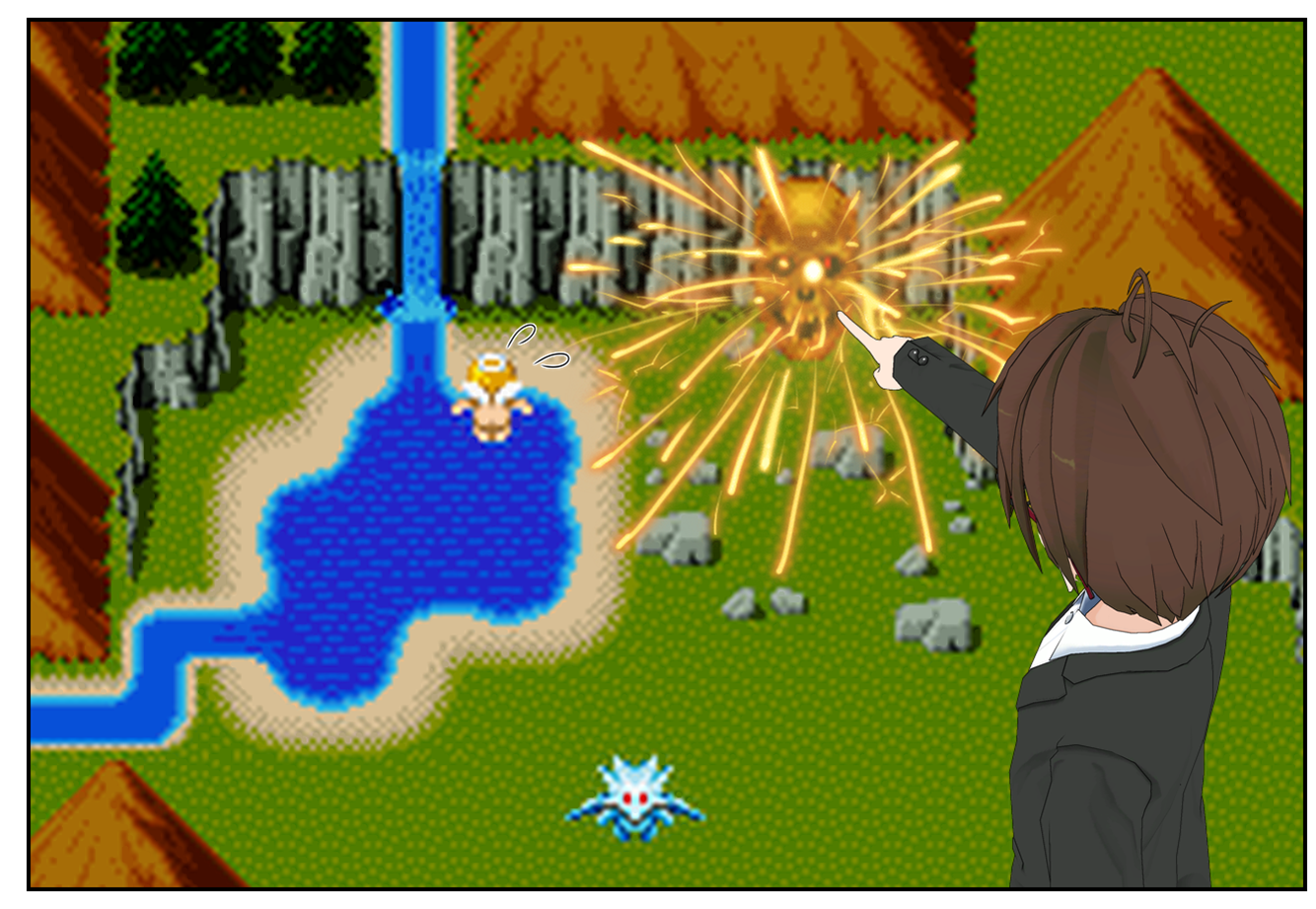
#oneaday Day 493: The breakneck pace of Final Fantasy IV

As one of several games I have on the go right now — for a bit of variety, like — I decided to start up Final Fantasy IV Pixel Remaster. I've played Final Fantasy IV I think twice before — and one of those was on PlayStation, so your sympathies are gratefully received, though that version at least isn't quite as bad as PS1 Final Fantasy VI — and remembered it being quite short, though I had forgotten quite how fast it moves.

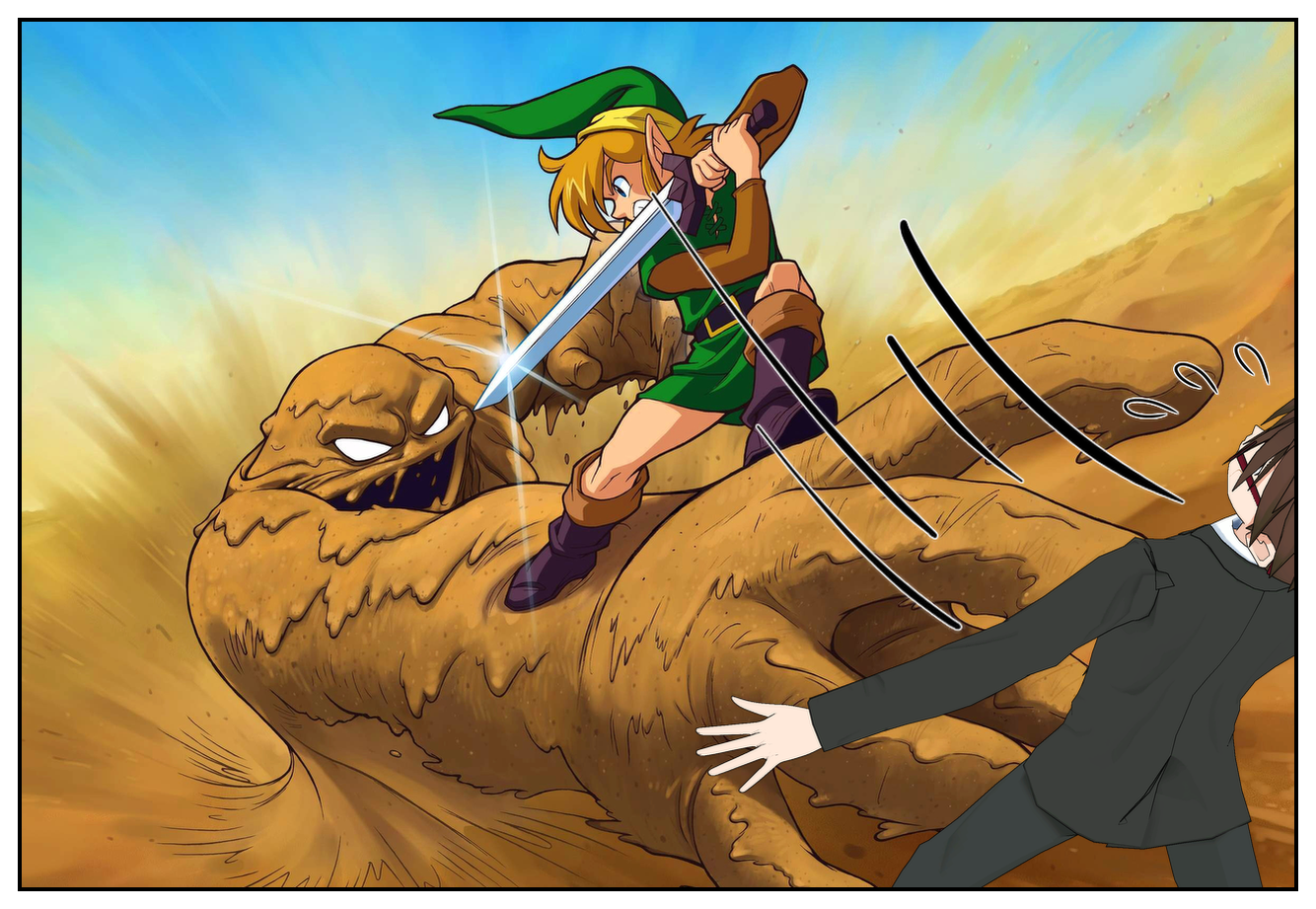
I'm two hours in and already — apologies in advance if any of this is a spoiler, but the game came out in 1991 — the main character has committed a war crime, adopted an orphan child that he was directly responsible for orphaning, become separated from his best friend (who inevitably turns traitor), rescued his loved one from a deadly bout of Desert Fever by retrieving a valuable gem from a slobbering Antlion, rescued a prince from the ruins of his devastated castle and his broken heart, and attempted (mostly unsuccessfully) to fend off an assault on another kingdom.

It moves so fast. I had forgotten how fast. I have played so many modern (relatively speaking) games that feature epic-length story sequences between the core "gameplay" sections that it almost feels rushed. I mean, hell, after two hours in a Persona game from 3 onwards, you're barely through the initial character introductions and you almost certainly haven't set foot in a dungeon yet.

This is both a strength and a weakness of Final Fantasy IV, looking at it with a 2025 pair of eyes. It's a strength because it means that there's never particularly long to wait before you're doing stuff again — exploring the world, clearing dungeons, fighting monsters, levelling up, buying new equipment — and that is quite a refreshing change from today's narrative-centric games that, while undoubtedly considerably more ambitious in their storytelling, sometimes do feel like they're getting a little bogged down. Not only that, but Final Fantasy IV is done and dusted in less than 20 hours, which makes it a veritable light novel by RPG standards.

However, it's also a weakness, because there are some sequences that were clearly intended to be quite significant narrative moments, but the way the game just whizzes through them makes them feel almost laughable.

I'll give you an example. Rydia, the girl that the protagonist, Cecil, rescues from a war crime he inadvertently committed at the behest of his king, is a Summoner in Final Fantasy Job terms. This means that not only can she summon big things to deal heavy damage, but she can also cast both white and black magic spells. When you first get her, she's an inexperienced kid at level 1, so she barely knows any spells, but a bit of levelling in the field will net her a few initial, useful spells. Except you'll notice one black magic spell is prominently missing: Fire.

Think about it for a moment and it's obvious why: because she lost her entire village, including her mother, in a fiery explosion, she is, of course, going to be hesitant to call upon the power of fire. This little bit of characterisation is initially delivered without the game drawing any attention to it whatsoever, but you can notice it early from a simple browse of the menu. Very cool. Ambitious for the time, even!

What is less cool is when the party finds their path up a mountain blocked by a big chunk of ice, and the other members, eventually getting Rydia to admit that she "hates fire", pretty much tell her to stop snivelling and get over it because they jolly well have a quest to accomplish. It's almost certainly not intended to come across that way — the other members are all "yay, you did it, I always believed in you" after she does successfully cast her first Fire spell, presumably with tears streaming down her face and the knowledge that this is probably going to need years of therapy to truly deal with — but with at least a couple of decades' worth of games that handle sensitive topics rather more delicately behind us, it does feel rather… blunt.

But, again, you have to remember that this was 1991, just a year after the SNES had come on the market, and Final Fantasy IV was on a cartridge that contained less than a megabyte of data in total. In fact, during development, the script had to be cut considerably to fit on its cartridge; lengthy exposition was something that developers simply couldn't afford to do back in these days, because every byte mattered, and text can potentially take up a lot of space if there's enough of it. As such, it's not altogether surprising that some sequences feel like they move a tad fast by modern standards — short of shipping on a larger capacity cartridge, which was presumably a decision that needed to be made relatively early in development, there were very real constraints on what Final Fantasy IV would be able to do.

Of course, Final Fantasy IV has been expanded on quite a bit in later remakes such as the polygonal 3DS version, the Game Boy Advance version and the PSP version; each of these had their own additions to the basic Final Fantasy IV formula.

But the Pixel Remaster; that's based on Final Fantasy IV as it originally existed, graphics and music aside, and thus you have the plot that speeds off over the horizon as you just think you're getting caught up on proceedings.

All this is no shade on Final Fantasy IV, of course; it's a game I like very much (though it's far from my favourite Final Fantasy) — I just found it interesting to revisit this after so many years and be reminded that at one time, RPGs moved a lot more quickly than they do now!


Want to read my thoughts on various video games, visual novels and other popular culture things? Stop by MoeGamer.net, my site for all things fun where I am generally a lot more cheerful. And if you fancy watching some vids on classic games, drop by my YouTube channel.

If you want this nonsense in your inbox every day, please feel free to subscribe via email. Your email address won't be used for anything else.

#oneaday Day 452: Creepy, kooky, mysterious and spooky

Now I've got the MiSTer Multisystem 2 up and running to my satisfaction (not helped by some sort of accident corrupting the entire SD card's filesystem, necessitating a complete reinstall of everything — I'm running games from an external hard drive now, and have taken a complete backup of the system software!) I have been enjoying the pleasurable experience of being able to sit down in front of my old faithful Sony Trinitron CRT and play… pretty much anything I want up to the Saturn, PS1 and N64 era.

As you will doubtless know if you've been following me for any length of time, I am a passionate advocate for physical releases of video games. My living room is effectively a games library, and I wouldn't have it any other way.

But I must say, there is an absolute, definite appeal to having a dedicated box that I can boot up, say "I feel like playing [insert game name here]" and be doing so within a matter of seconds. No fiddling around with SCART cables needed. No digging out the correct power adapter required. No blowing on cartridge pins or isopropyl alcohol on cotton buds required.

Not only that, but a significant portion of software that one can play on the MiSTer has been creeping into "unattainably expensive and/or hard-to-find" territory over the course of the last few years — particularly anything from the 16-bit or 32-bit platforms, and especially role-playing games. I could drop several hundred quid on a copy of Panzer Dragoon Saga, or I could just play it on MiSTer. The choice is pretty clear.

"Now hold on a minute, good sir," I hear you say. "Don't you work in official retro gaming rereleases?" And to that I say, yes, absolutely, I most certainly do. But unfortunately, however much many of us might want them, there are some games that are never, ever, ever going to get an official rerelease for all manner of different reasons. And in those cases in particular, there is zero shame to be felt in experiencing them via… let's just call them "unofficial" preservation methods.

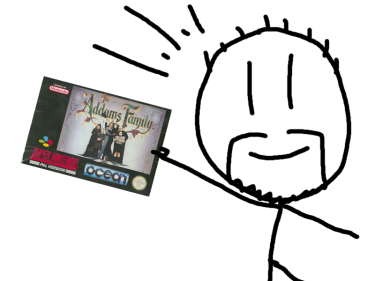
But anyway. I want to talk a bit more specifically about one of those unofficially preserved games I have been playing and enjoying for the past few evenings. It's not a particularly rare or hard-to-find game to my knowledge (checks CEX — £12 loose, £38 complete in box at the time of writing) but it is one I have some fond memories of, and one that I doubt will ever get an official rerelease. It's Ocean's The Addams Family, a platformer based loosely (very loosely) on the 1991 movie, and which was available on numerous different platforms; I've been playing the SNES version.

I'm actually not entirely sure how I attained those memories, mind, because I never owned a copy of The Addams Family on any platform back in the day. I might have had a demo of the ST version (which is surprisingly competent) but I certainly never had the full game on anything. But I definitely played it.

What I suspect happened is that on one of my brother's trips home to visit us — by this point he had left home to go and work on Games-X magazine at Europress up in Macclesfield — he had brought a SNES with him, and one of the cartridges he had also brought along was The Addams Family. The only other possible alternative is that one of my friends from school had it — and I don't think they did. My main SNES-owning buddy at school played various versions of Street Fighter II almost to the exclusion of everything else (although I did borrow Super Star Wars multiple times from him), and my other main console-playing friend was a Mega Drive man.

Anyway, I guess that isn't really important. What is important is that The Addams Family for SNES left a solid impression on me, with probably the most potent part of that memory being the amusing farty noises that play whenever Gomez jumps on an enemy (fart-POP!) or if he takes damage (breathless clown car-horn HONK). Aside from those excellent sound effects (and they are excellent; it's been a delight to hear them again), I remember simply enjoying the game a great deal, too, and I'm pleased to report that It Holds Up.

Lest you've never played The Addams Family on SNES (or any of the other platforms it appeared on), you take on the role of Gomez, who is attempting to rescue the various members of his family from… some sort of unfortunate circumstance that was probably a flimsy reference to the movie's plot. I forget. It doesn't matter. What does matter is that your quest unfolds as an open-structure 2D platformer that eschews a linear level-based structure in favour of giving you a big, open map, the vast majority of which is open to you from the outset, and then inviting you to just get on with it.

I'm not sure I'd call The Addams Family a "Metroidvania", largely because that term can get in the bin, but also because I'm not sure its commonly agreed definition applies here. Sure, you have a big open map to explore, but areas are not gated by abilities that you gradually acquire as you progress. Instead, only the finale sequence is gated by you having completed the rest of the game, and you are otherwise left to tackle the game's various challenges in whatever order you see fit.

These challenges are upgrading your health bar three times, then finding Wednesday, Pugsley, Granny and Fester Addams in whatever order you please. (You can even find them before the health upgrades if you want to, but the extra hearts make it much easier.) After that, the door to the final challenge, where you can rescue Morticia and take on the game's final boss, opens up and you're on the way to beating the game.

Being developed by Ocean, one would expect The Addams Family to have a certain "Euro" feel to it, and this comes across in its structure, with each of the game's main areas being split into named rooms that give a hint as to what hazards the player can expect in there; there's definite shades of classic home computer games like the Dizzy series and Spellbound from the Magic Knight series here, but rather than being single screens, each room in The Addams Family is a scrolling mini-level in its own right.

Thankfully, the game resists the temptation to get a bit too Euro in its structure, as while it is non-linear and often presents the player with multiple possible routes, it's not really possible to get "lost", and any necessary backtracking is generally assisted by helpful shortcuts. There's no map to refer to, either; while it might have been helpful to have one, after spending a bit of time with the game you'll find it pretty intuitive to navigate. The real joy is in discovering the game's many, many, many secret areas.

The Addams Family drew some criticism on its original release for being "derivative" — and by that most reviewers meant that because you jump on enemies' heads, it's a Super Mario clone. And, to be sure, there were a lot of 16-bit platformers around at the time, many of which were based on popular movies.

But for me, something always stood out about The Addams Family, even with its many peers in the genre. It was slick, well-designed and enjoyable to play — and I'm pleased to report that it is still all of those things. It's been a genuine pleasure revisiting it over the course of the past few evenings, and I'm looking forward to creeping my way gradually towards beating it. I've already got all the heart upgrades and rescued Wednesday; next up is Granny, Pugsley or Uncle Fester. It'll be great to finally tick this off my list — and I suspect it won't be the last time I play it through once I've beaten it, either.


Want to read my thoughts on various video games, visual novels and other popular culture things? Stop by MoeGamer.net, my site for all things fun where I am generally a lot more cheerful. And if you fancy watching some vids on classic games, drop by my YouTube channel.

If you want this nonsense in your inbox every day, please feel free to subscribe via email. Your email address won't be used for anything else.
#oneaday Day 269: It was my bloody SNES

In retrospect, when I had two game cartridges fail in the exact same way as one another, I should have probably considered the possibility that it was, in fact, the game console itself that was at fault rather than the cartridges. But, well, I was going to get an FX Pak Pro anyway, so all that's really happened is I spent £40 more than I thought I was going to, traded in the few loose N64 carts I had lying around (and which were now redundant thanks to the Everdrive 64 X7 I have) and now have two SNESes: one with (presumably) a fried chip that means anything involving "Mode 7" scaling and rotation (and adjacent graphical techniques) is borked, and my new acquisition which, so far, appears to work just fine.

I'm a little sad at the apparent death of my old SNES; that thing had followed me since childhood and has always been a treasured part of my collection, even at the times it wasn't getting much use. I suspect it probably is possible to fix somehow, but that would involve getting stuck into some electronics that I'm not confident enough to explore just yet, and my wife Andie, who is quite happy to get the soldering gun out, is in the middle of numerous other projects, so I don't want to bother her.

So anyway. Yes. CEX did not, in fact, sell me two consecutive faulty copies of Desert Strike, it was my bloody SNES after all. At least that's all resolved now, and with the FX Pak Pro safely in place, I can now just enjoy the thing without worrying about dead batteries, corroded connections and all that other good stuff that we never even thought would be a consideration back when these things were new.

I am looking forward to spending some quality time with the SNES library. As I've alluded to a few times in the past, despite owning that SNES since… probably '92 or so? I didn't have all that many games for it. I had Super Mario World, Super Mario Kart, Super Mario All-Stars, Starwing, SimCity and American copies of Street Fighter II and Chuck Rock. Plus two of those converter thingies that allowed you to play games from another region by plugging a "native" game into the back and the game you wanted to play into the top.

I played a few other SNES games through borrowing them from friends. I borrowed Super Star Wars from my friend Andrew on multiple occasions and liked that a lot; these days people seem to remember that as a ludicrously difficult game, but I don't remember it striking me as being unusually hard back in the day. Definitely one to revisit, and I was always curious to try Super Empire Strikes Back and Super Return of the Jedi, because I never even saw those running.

I'm also going to make some time to play through Soul Blazer, Illusion of Time (better known as Illusion of Gaia) and Terranigma, because I like Quintet's work (and their subsequent work as Shade) but have never settled down to spend a good amount of time with any of these games. I've played the start of all of them multiple times and enjoyed what I saw in all instances, but I definitely want to play them properly.

Then there's just the odd stuff. While loading up a flashcart or emulator with a bunch of ROMs is often a ticket to Analysis Paralysisville, one of the things I like about retro gaming is that you can pick something pretty much at random and probably be able to figure things out without too much difficulty. Sometimes when you do this you make wonderful discoveries of things you never would have thought to try otherwise; at others, you realise why these games aren't better known.

Earlier today, I tried the Infogrames Asterix game. I was a big fan of Asterix as a kid and am still rather fond of it; I still have all my old Asterix books, and the Konami arcade game is, I maintain, one of their best belt-scrollers. I was always frustrated that there was no home version of that arcade game, though, and for one reason or another never came into contact with any of the console games. This particular one isn't anything particularly remarkable, but it does have some of the Asterix wit and charm about it, and Roman soldiers go "PAF!" when you punch them, which is nice.

Another nice thing about the FX Pak Pro is that it functions as a Super Game Boy 2, meaning you can load up Game Boy ROMs as well as SNES ROMs. I found a couple of games that don't seem to work with it — The Smurfs, sadly, which is a shame, as the soundtrack for that game is way better than you would think it would be — but Rod Land does, which is all that really matters.

So mixed feelings today, then. Sadness at the apparent death of my childhood SNES, but joy at the world the FX Pak Pro is about to open up to me. And when the Mega Everdrive Pro gets here in a few days… well, I'll be in 16-bit heaven for quite some time, I feel.


Want to read my thoughts on various video games, visual novels and other popular culture things? Stop by MoeGamer.net, my site for all things fun where I am generally a lot more cheerful. And if you fancy watching some vids on classic games, drop by my YouTube channel.

If you want this nonsense in your inbox every day, please feel free to subscribe via email. Your email address won't be used for anything else.
2355: Playing God

0355_001

After reading up on their work a bit over on Hardcore Gaming 101, I've become interested in the Super NES games of a developer called Quintet. Their work consists of several games that I've heard of but never actually played, plus one PS1 game that I did enjoy and feel to this day is rather underappreciated: the unusual and interesting action RPG The Granstream Saga.

Quintet are perhaps best known for early SNES game ActRaiser and their subsequent Heaven and Earth trilogy, consisting of Soul Blazer, Illusion of Gaia and Terranigma. (The Granstream Saga is kinda sorta also part of this series, too, though in an unofficial-ish capacity and on a different platform to its three predecessors.)

I decided to start with ActRaiser, since when exploring a developer's work like this I like to start with their early titles and work my way forward through them to see how they developed over time. ActRaiser has primitive elements, for sure — most notably an almost total lack of narrative development, though there are some interesting events that come and go as you play — but by God it's an interesting game, the likes of which I've only ever seen on one (two?) other occasion(s) in the form of Arcen Games' similarly unusual and fascinating A Valley Without Wind.

ActRaiser casts you in the role of God. (Due to the SNES era being the dawn of Nintendo of America's prudishness that persists to this day, He is known as "The Master" in the localisation.) Your job is to deal with Satan. (Likewise, everyone's favourite Ultimate Evil is known as Tanzra in the English version.)

Satan has been up to no good, you see; taking advantage of God having a much-needed rest after Ultimate Good and Ultimate Evil had their last showdown, Satan decided that he should wipe out all of humanity, taint the land to make it uninhabitable by humans should God decide to try and repopulate the world, and then ensconce some of his most trusted lieutenants to make doubly sure that those pesky white-winged types didn't try and undo all their hard work. God isn't standing for this, of course, and so begins your unusual quest.

ActRaiser is split into two very different sections. When you first arrive in a realm tainted by Satan's machinations, your first order of business is to clear out the monsters roaming freely over the land. You do this by descending to the surface and possessing a conveniently placed warrior statue, which comes to life with God's holy power and proceeds to dish out some righteous justice on anyone who dares come in range of its blade. Fight your way through a distinctly Castlevania-esque level to a boss, kill the boss and you're ready for the next phase.

Once you've cleared out the monsters, God has enough power to create two followers, who immediately start shagging and pumping out new population for you, so long as you tell them to build some nice streets to put their houses on in a completely different mode that is somewhat like SimCity "Lite". The town then proceeds to repeatedly inbreed with each other as you direct their expansion efforts, with your ultimate aim being for them to build over the top of the inconveniently placed monster lairs around the land, each of which spit out annoying creatures that steal your population or set fire to your buildings at inconvenient moments. Once you've successfully redeveloped the monsters' areas of outstanding natural beauty, you then unlock the second action-platforming stage of the region, which is different and harder, with a different boss at the end. Once this boss is defeated, the region is at complete peace and you can then continue developing it or move on to a new region.

While these two elements of the game are obviously very disparate, they do feed into one another. Your performance in the initial action phase, for example, partly determines the maximum possible population the region will be able to sustain when you start developing it — score more points and you'll have a higher (unseen) cap on your population. Conversely, the more your population expands in the building phase, the stronger the warrior statue gets in the action phases and the more "SP" God has to spend on Miracles.

Oh yes, Miracles; these are a rather integral part of the building phase, and obviously the most fun, too. Beginning with a lightning bolt that burns down most things on a single tile (including houses) and working up to an earthquake that knocks down all low-level structures in a region, your Miracles are used to both direct development of the towns and clear obstacles out of the way. You have to force yourself to feel a certain amount of detachment when doing this, since as the tech level of each region increases and it becomes able to support houses that hold more occupants, it becomes necessary to demolish low-tech houses to make way for denser developments. And, being God, you don't use a bulldozer; you use natural disasters, which is far more fun. It's hard not to feel a little pang of guilt when you watch the little counter of "total population" in the upper-right corner of the screen plummet after you unleash an earthquake, though.

ActRaiser is a really interesting game. Both elements are solid, though neither of them are especially complicated. This is probably for the best; it keeps things reasonably accessible for those who tend to gravitate more towards one of the two styles of gameplay than another, though the difficulty of the action phases in particular is a little on the high side if you're not accustomed to how unforgiving old-school games are.

Ultimately it's a satisfying experience to descend to Earth and smite Evil before watching your little minions gradually spread out to cover the entire continent. You really do get the feeling that your people are relying on your divine powers, too; they pray to you every so often and ask you to help make things happen, and they'll reward you with offerings if you fulfil their requests. Many offerings can then be used in other regions to spread various innovations or culture, making the whole world work a bit better; for example, as soon as the second region discovers that wheat is a more productive crop than corn, you can then export wheat from this region to everywhere else so they can all take advantage of this improved efficiency. Likewise, when your followers reach a man lost in the desert a little too late, a distraught artist discovers the secrets of music, which you can then take to another region and use it to lift their spirits after they've been feeling a bit bleak. In this way, the world of ActRaiser feels very much alive, even if you're not dealing directly with named characters or a rigid, ongoing plot.

I like it a lot, in other words, and it makes me excited to check out Quintet's other work. You can count on a full report when I get to them.

2135: Zelda 3: Still Great

0135_001

I remember playing Zelda 3, or The Legend of Zelda: A Link to the Past, to give it its full title, for the first time. It was an eye-opening experience; prior to this, most of the games I'd played on computer and console had been fairly straightforward arcade-style affairs — you put them in, you hit Start, you start playing from the beginning, you get as far as you can get before hitting a Game Over screen, you try again.

A Link to the Past was different, though. Having never owned my own NES, the series was new to me, and so I didn't know that it had been providing this sort of ongoing, lengthy grand adventure for quite some time prior to its Super NES incarnation. But I was immediately enraptured with it; here was a game that provided me with a convincing open world to explore, some challenging dungeons to defeat, a convincing sense of getting stronger and more powerful as the game progressed, and an enjoyable, if somewhat simple, story to follow.

I played A Link to the Past through numerous times, so much did I enjoy it. It got to the stage where I could run through the game pretty much on autopilot, though I must confess I never quite reached total completionist status with it; I enjoyed the experience of progressing through the game and beating it rather than doing things like hunting down the myriad Pieces of Heart scattered around the game's two worlds.

My love for Zelda waned a little over the years. I recall being a little underwhelmed with Ocarina of Time when I first played it, though I can partly attribute this to the fact that I had been playing Final Fantasy VII around a similar time and, to my inexperienced, rather shallow eyes, they simply didn't compare to one another. I enjoyed Ocarina of Time enough to finish it, mind, but I didn't love it in quite the same way I loved A Link to the Past. I did, however, love Majora's Mask in the same way I loved A Link to the Past, but that's probably a story for another day.

Anyway, to the point: after finally finishing (the first quest of) the original Legend of Zelda the other day, I felt like continuing my journeys through Hyrule, so I skipped Zelda II, not quite feeling up to its punishing ways at present, and went straight to A Link to the Past. (For the Zelda-illiterate: most of the Zelda games tell their own, self-contained stories that feature characters with the same names and same appearances as those in other games, but who are actually different people from different times. This means that skipping a game in the series doesn't mean you'll skip important plot, though if you care to research it there is a complicated, convoluted chronology of how it all fits together.)

I was immediately reminded how much I love this game, even so many years after I last played it. It has an extremely strong opening — one of the reasons it made me sit up and take notice the first time I played it — and some highly memorable music. It's also a massive, massive improvement mechanically on the original Legend of Zelda, which it most closely resembles; Zelda II went off and did a bunch of weird things with RPG mechanics and platforming, but A Link to the Past was a return to the original formula, but better.

And everything really is better. Instead of having to wander around aimlessly, hoping you'll find the right order to challenge the dungeons, you'll be nudged in the right direction by the game, though you'll never be completely railroaded, and you are free to go off and explore any time you want. There's also a much stronger sense of the overall map being a coherent world; Hyrule may be relatively small, apparently consisting of only a single village and a castle that is bigger than the whole village, but there are plenty of interesting things going on and memorable characters to stumble across.

And, somewhat surprisingly for a Nintendo game if you're used to Mario and its ilk, A Link to the Past is pretty dark and bleak in places. The strong opening I mentioned before sees Link acquiring his first sword and shield by stumbling across his dying uncle, who had left the house in Link's stead earlier in the night in an attempt to save him from the trouble that becoming the Hero of Hyrule would be. Later, there are other equally subtle, sad scenes, such as the spirit of the young flute-playing boy in a clearing, whom you later discover close to death in the Dark World, a realm that deforms body and spirit, so you grant his dying wish before he gives up on life entirely and turns into a tree.

In many ways, it's kind of stunning to think that the same creative mind behind Super Mario Bros. also came out with Zelda, something that, while still ultimately pretty family-friendly, is a quantum shift away from Nintendo's mascot in terms of tone. I've spent a good few years feeling like I wasn't a particular fan of Zelda, since I felt as if none of them quite captured my attention in the same way as more conventional role-playing games, which had, of course, subsequently turned out to be a favourite genre. After enjoying the first and third Zelda games so much so far, though — not to mention Hyrule Warriors — I feel like it's probably time to educate myself on the series as a whole, so I'm going to try and work my way through them one by one. Who knows — I may even make it through Zelda II one of these days, though not today…

#oneaday, Day 64: Act Your Age, Fanboys

Why does the phenomenon of fanboyism still exist? And more to the point, why does it exist amongst men (and it pretty much is always men) who are old enough to know better?

The simple and easy answer is, of course, that it's always been around. I remember growing up as an Atari-based family and all of the Atari magazines at the time belittling the competition with stupid names like Spectrash (Spectrum) and Crappydore (Commodore 64). Then came the schoolyard arguments – SEGA vs Nintendo. Sonic vs Mario. "We've got Street Fighter II! Hah! …Oh wait, now you have, too." It got pretty silly.

Once the Dreamcast came out, it was hard to justify fanboyism because, certainly once SEGA's wondermachine came out, it was so far ahead of its competition – the 64-bit Nintendo 64 and the 32-bit PlayStation – that half-hearted attempts to call it things like "Dreampants" always came across as more than a little desperate.

Things then kicked off again with Sony vs Microsoft, with Nintendo kind of relegated to "background observer" by this point. The PS2 and the original Xbox both had fiercely loyal supporters when, in fact, you'd have a far better experience if you bought both systems, played the relevant exclusives on their respective platforms and played multiplatform titles on the Xbox. That's what I did, and I never felt the need to slag off any of the systems.

And it still goes on today, despite each of the consoles arguably offering a more distinct and unique experience from each other than ever before. The Xbox 360 offers its legendary ease of online play, the PS3 is home to a variety of unusual and interesting games (like Flower, flOw, Linger in Shadows, the Pixeljunk games) and the Wii is the family-friendly bundle of fun.

Still the hating goes on, though.

But nowhere is it more apparent than in the world of smartphones, particularly between the owners of iPhones, BlackBerries (let's pluralise it properly, please) and Android-based phones. iPhone owners are either Apple fanboys who bang on about how great Apple is all the time or jailbreakers who bang on about which ludicrously-named hack they're installing this week – and, of course, which apps they could get for free rather than paying for them on the App Store. BlackBerry owners seem to be updating their OS every night. And Android owners seem to be particularly sore about the iPhone for some inexplicable reason.

The question is: why? When it came to the early console wars, slagging off the systems your friends had was just schoolyard banter. You didn't really think that the systems were inferior, otherwise you wouldn't have gone around to their houses and played those games with them. The fact that this juvenile banter has grown up with people who have been using gaming and other consumer electronics for years is utterly baffling. Even people who started gaming at the same time as me – or before – are still bitching and moaning about how much better their handset is that [x]'s handset, and blahblahblah open source, blahblahblah build quality, blahblahblah BlackBerry Messenger, blahblahblah… You get the picture.

Am I alone in thinking that all of this stuff, without exception, is seven degrees of awesome and we should appreciate the brilliant things we have? Yes, some of them have more features. Yes, some of them are objectively "better" in terms of capabilities, power and technical specifications. But is that really any reason to act like 5-year olds telling each other that their respective Mums smell of wee?

No, it's not. So why does it still go on?