Around the same time Sony is doing its best to completely murder the traditions and culture surrounding video games, and Xbox continues to implode, Nintendo has gone and put out multiple games that feel… almost out of their own time. And I mean that in a very complimentary way; both Star Fox (released on the 25th of last month) and Rhythm Paradise Groove (released yesterday, also known as Rhythm Heaven Groove if you're American) feel like games from at least two hardware generations ago, and that's absolutely a good thing.
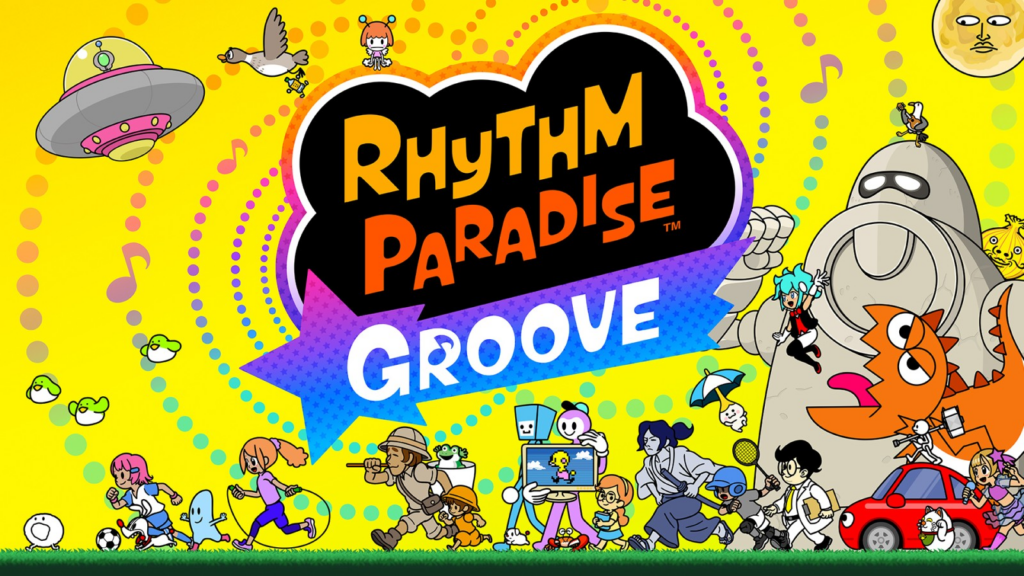
The two games are very different experiences, but the one thing they have in common is that they respect your time in the way that titles from, say, the PlayStation 2 era did. You can do a complete playthrough of Star Fox in under an hour, and Rhythm Paradise Groove consists entirely of self-contained sequences that are no more than two or three minutes, tops. You can blast through all the "content" both games have in a relatively short space of time, but their longevity comes from their replay value: Star Fox for the pursuit of "medals" by attaining specific scores on each level while ensuring all your computer-controlled companions survive, and Rhythm Paradise Groove for attaining "Amazing" and "Perfect" ratings on each stage.
I'm growing increasingly fond of games that aren't a huge commitment to play; games that you can just pick up and enjoy whenever you feel like it, without feeling that strange sense of "guilt" many of us have if we already have a "big game" on the go and start something else that is likely to take more than 40 hours to get through. I'm not just talking about bite-sized arcade-style games, either; the other night I started playing Soul Blazer on Super NES, and I know that's relatively short in the grand scheme of RPGs, so I'm looking forward to finally making my way through the whole thing; something I've been meaning to do for ages.
I like a good long game to get my teeth into now and again, you know that — but I won't lie; there are times when I start something that I think is going to be relatively light and breezy, see it has an endless skill tree and various numbers to grind up very slowly in the name of increasing my poison damage by 0.1%, and just think "oh no, this is going to take ages, isn't it?" There are a significant number of games that have been released over the course of the last 10-15 years or so that would have really benefited from just scaling back, like, a lot, and providing a much more focused experience. They usually don't because they have to justify their massive budgets and thousands of people working on them — plus, unfortunately, there is a subculture among capital-G Gamers™ who complain any time something comes out with what they perceive as "not enough content".
It's unfortunate that so many developers have listened to the people who whine in Steam forums about games being "abandoned" because they haven't had an update in the last three weeks (protip: sometimes those games are finished) or that they need to see a "roadmap" of "new content" coming down the pipeline. I always feel the exact opposite to this; if I see a game that has a lengthy roadmap — particularly if that roadmap involves copious amounts of DLC — I lose a lot of interest in that game. Sometimes I will return to it later to see if there's some sort of "complete" edition available, but most of the time I will just shrug my shoulders and go and play a game that is actually finished instead, rather than spending valuable time playing something that I know is probably going to change and expand in the time it takes me to beat it.
I like both Star Fox and Rhythm Paradise Groove because they are both finished games, and seeing everything they have to offer is within relatively easy reach. Both will require some practice and some actual playing skill to see all that stuff, but neither of them feel like they're going to be commitments with hour counts that number into the three digits just to see the credits roll.
I suspect Star Fox might see some updates to its multiplayer mode if it proves popular, but as a single-player experience, it is completely self-contained and does everything it needs to. Rhythm Paradise Groove I suspect will just stand as it is — it didn't even need an update when I put the cartridge in for the first time earlier, which is always a very welcome sight these days.
I hope we see more games like this. Nintendo seems to be quite keen on them right now, and I'm not complaining when they are as good as Star Fox and Rhythm Paradise Groove are — and speaking of which, I'll have more to say about the latter over on MoeGamer when I've played a bit more of it. For now, I'll just say "cha, cha, cha, bom bom" and leave it at that…
Want to read my thoughts on various video games, visual novels and other popular culture things? Stop by MoeGamer.net, my site for all things fun where I am generally a lot more cheerful. And if you fancy watching some vids on classic games, drop by my YouTube channel.
If you want this nonsense in your inbox every day, please feel free to subscribe via email. Your email address won't be used for anything else.