#oneaday Day 839: So Binary Domain is Kind of Awesome

20120507-015626.jpg

I got a few games for my birthday this year from generous people taking pity on my advancing years. I've waxed lyrical about A Valley Without Wind for quite some time now and I haven't yet got to Legend of Grimrock (oh, but I most certainly will) so that leaves Binary Domain to talk about.

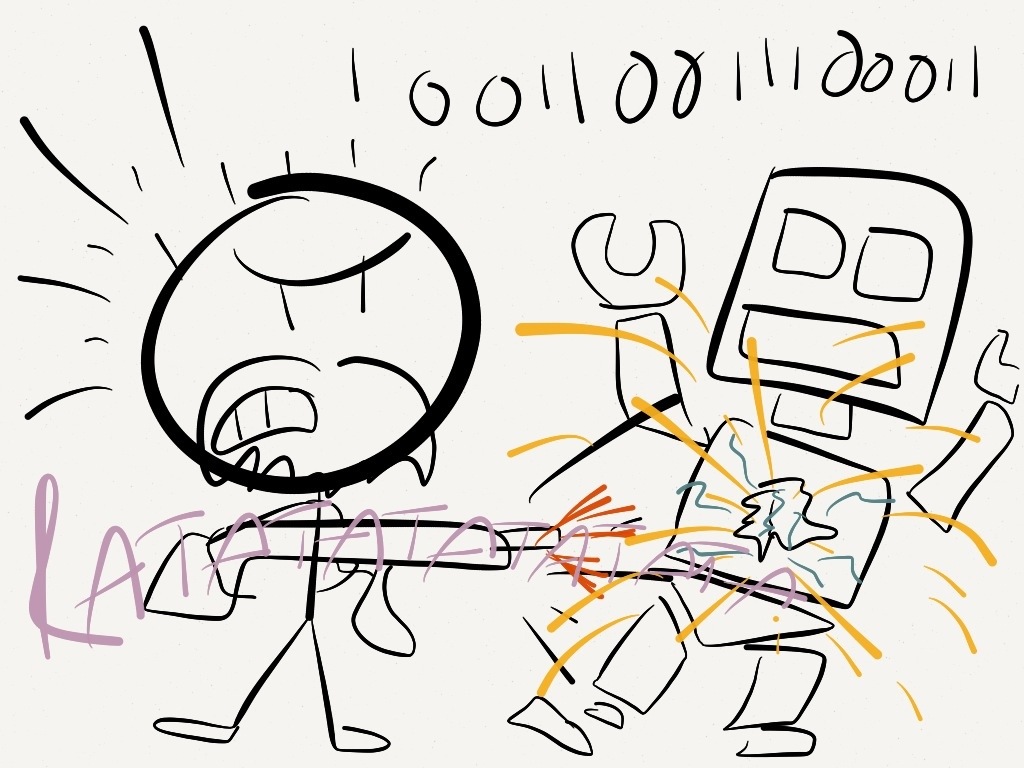
Binary Domain is a third-person shooter from Sega. Created by Toshihiro Nagoshi, the producer of the excellent Yakuza series, it spins an interesting sci-fi tale about "Hollow Children" — robots designed to look like humans and programmed to believe they are human. Taking on the role of one Dan Marshall (not, sadly, the British developer of point-and-click adventure funfests Ben There, Dan That and Time Gentlemen, Please!), it's up to the player to kick lots of robot bottom on the way to tracking down the supposed creator of these illegal, ethically questionable droids.

Binary Domain could so easily have been shit. It's a game about futuristic soldiers shooting robots — you can't get much more cliched than that, after all. And yet it has a huge amount of charm coupled with an addictive quality that keeps you playing just to see what happens next.

Technically speaking, Binary Domain is a squad-and-cover-based third-person shooter, which probably makes it sound very much like Gears of War, a series which I loathe and detest. (Well, to be fair to it, I only loathe and detest the first one, but that put me off ever playing the other two.) But in execution it manages to be so much more than the thick necks and testosterone of Epic's title, and in the process it highlights the differences between Japanese and Western development. It's also helping further cement the feeling I've been having recently that Japanese games are, for the most part at least, preferable to Western — for me, anyway.

But what sets it apart from Marcus Fenix's opus of "eat shit and die"? Quite simply, characterisation. Dan begins the game as a bit of a dick, but in an endearing way rather than as an unlikeable, bland macho asshole. He's accompanied through the introductory mission by "Big Bo", a walking tank of a man who has a bit of an attitude himself. When the two are together, they crack jokes and make irreverent comments just like they're a pair of best friends in a bar together. They have a relationship beyond "Cover me!", in short, and that makes them interesting to hang out with, even if they're both quite sexist, a bit racist and generally loutish in their attitudes.

A short way into the game, Dan and Bo meet up with the rest of their team, which includes the businesslike ex-MI6 dude Charlie (who doesn't know who James Bond is); the strong, silent Brit woman Rachael; and the sexy Chinese girl Faye. These disparate characters' personalities all clash a little with one another, which again makes their interactions extremely entertaining to witness.

"Hmm, she reminds me of someone," says Bo to Dan upon meeting Faye for the first time. "A movie star or something."

"C'mon, Bo, you and I both know the only movies you watch are porn," chuckles Dan, who promptly receives a sharp dig in the ribs from his friend. "Oh… OH. Right."

Once the team is assembled, Dan is regularly invited to take two of them with him, and each have their own unique conversations with each other and our hero. Again, these exchanges are a real highlight of the experience, and show what a massive difference it makes when you bother to spend some time on your characters. If you're going to be battling giant spider robots with people, it's better they be people that you actually like, right?

There's an interesting twist, too — when characters speak, Dan can respond to them either by using a simple multiple-choice system or by actually speaking his response into a gimmicky voice-recognition system which I switched off almost immediately. (When your voice-recognition system picks up gunfire from the game and thinks you're saying the word "fuck", you have a problem, as entertaining as that might sound.) Dan's responses will affect the other characters' "trust level" with him, with them being more likely to successfully follow his orders if they trust him more. I'm guessing there will be some sort of story payoff for high trust levels, too, though I'm not far enough into the game to say with certainty yet.

As the different characters all clash somewhat, though, certain responses might piss one off while pleasing another. Crack a joke with Bo about getting crabs from a hooker and Faye might get sniffy. Tell Charlie to go fuck himself with his overly-serious military-speak and he'll get annoyed, but Bo will laugh. Your performance in combat affects these trust ratings, too — clip your teammate with a bullet and they'll get angry, but save them from certain death or pull off a particularly impressive feat and they'll give you the credit you deserve.

In this sense, Binary Domain sometimes feels like it's a role-playing game very vaguely following the Mass Effect mould. This feeling is further compounded by the ability to equip characters with stat-boosting nanomachines and upgrade weapons as well as the inclusion of "social" areas that are just about walking around talking to people, but when it comes down to it, the game is unashamedly a linear, Japanese, third-person shooter. While not quite as insanely frenetic as Sega's previous shooter title Vanquish, Binary Domain has its fair share of ridiculousness, usually in the form of giant robots which must be defeated by dropping heavy things on them, blowing bits off them, leaping onto their back Shadow of the Colossus-style or all manner of other shenanigans. It's a spectacle, as thrilling to watch as it is to play, and I'm having a blast with it so far.

Binary Domain received middling reviews on its original release, with the PC version (which I'm playing) catching particular flak for including most of the PC-specific visual and control options in a separate program rather than in the game itself. I feel that this has been focused on rather too much, frankly, as it's an issue players will encounter precisely once, before they even start playing. Once the game is set up to your liking, it looks great, sounds great and runs smoothly, which is all I ask for.

These middling reviews, however, are likely to see the game relegated to obscurity before very long. Already people are saying that they'll wait for it to become a "bargain bin title" before picking it up, purely based on reviewers' comments. And herein lies the problem: people criticise the increasing "blockbuster culture" of video games, pointing to titles like Call of Duty and Halo as symptomatic of everything that is wrong with the industry, but as soon as something that provides a different take on an established formula comes along, like Binary Domain does, no-one is willing to buy it new and take a chance on it. Thus these great games get pushed to the back of the community's consciousness, while those with the biggest marketing budgets continue to dominate year after year.

From my couple of hours' experience with it this evening, I can happily say that Binary Domain is well worth picking up now, since it's a fun, entertaining, spectacular and satisfying game that, sadly, looks set to join Vanquish and Alpha Protocol in the box marked "Sega Games That Were Actually Brilliant That No-One Played".

Make a difference. Vote with your wallet. Support awesome new games that aren't "blockbusters". Please?

Sonikku za Hejjihoggu

I know I said I was going to talk about Persona 4 and City of Heroes, but indulge me for a moment if you would. I'm going to talk about Sonic again, since I've been playing the Mega Drive/Genesis Ultimate Collection thing some more. Specifically, I've been playing a lot of Sonic 1.

Replaying Sonic 1 a number of years after I last "seriously" played it (in my case, when it first came out on the Mega Drive) was an eye-opening experience. Firstly, you forget how difficult old platform games are when compared to the hand-holding that modern games offer. Secondly, you forget quite how many swear words are actually in your vocabulary.

Sonic

I have a confession to make here – Sonic used to scare me a bit when I was a kid. Not "jump out of your skin" scared a la Resident Evil, but "edge of the seat, worried, frantic" kind of scared. I could never really pin down why this was when I was a kid – I just knew that, although I enjoyed playing it, it freaked me out a bit too.

Now, I have one word to say why: traps. Or more specifically, spikes. One thing I don't remember having seen in many games I've played recently on next-gen consoles is a good old-fashioned pit of spikes. Or a big heavy thing with spikes on it that drops on your head. Or a wall that suddenly shoots out spikes and impales you on them.

Sonic is full of spikes. And their simple presence makes the whole experience of running, jumping and collecting things that much more tense, because you know that they're one of the things that can lead to premature death, even if you have shields and rings in place. Plus, when you think about it, impaling something on spikes, or dropping spikes on it, is a pretty unpleasant way to die, isn't it?

Thinking about it, an awful lot of these old games featured incredibly unpleasant ways to meet one's demise, usually involving spikes, being crushed, falling down a big pit or, in extreme circumstances, a combination of all of these things. Sonic isn't by any means the only one to feature painful-looking death-makers. Mario also had plenty of spikes and crushy things to contend with, as indeed did pretty much any 2D platform hero of the time. And even though these games aren't gory at all, having a spike penetrating a place that is not supposed to be penetrated by sharp things looks painful!

Enough about my spike phobia (and Jane's, incidentally – she actually can't watch me play Sonic for fear of the spikes) – I had another point. Sonic's design understands player psychology perfectly. Each level is crafted to play with your expectations and make you want to slap yourself in the face when you fuck up the same bit for the fifth time.

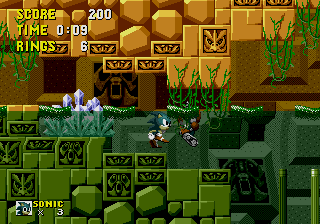
A particular case I have in mind occurs in the Labyrinth Zone, which is full of spikes and long underwater stretches where you can drown, along with swinging ball-and-chain things and bottomless pits. It's one of the least "friendly-looking" zones in Sonic, and (for me at least) one of the more challenging ones. The bit I'm thinking of sees you tempted by an invincibility powerup… only to clonk you on the head with a big spiky ball and chain if you mistime your approach – i.e. if you charge straight in without pausing to see if it's safe! Later in the same level, there's another invincibility powerup closely followed by a nasty bottomless pit. Naturally, when you grab the invincibility powerup, you feel invincible, so you take rather less care than you would normally, leaving you highly likely to go barging straight into the pit. It's frustrating and results in some colourful language but the key thing is, each time you mess up, you know it's your fault for falling into the psychological traps left by the level designers.

Labyrinth ZoneComing at this from a modern, more experienced and world-weary perspective, it's been a real pleasure to re-experience the whole game and understand a little better what they were doing when they put them together. Good level design makes the difference between a game that is "cheap" and a game that is "challenging". When I first started replaying Sonic, I was all for screaming "cheap!" at it – but now, having put a bit of time in, I know what they're doing. I still make mistakes, but I know they're my fault now, not the game's.
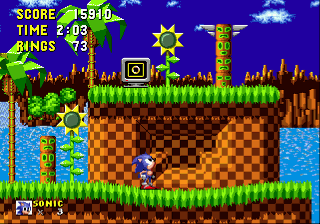
This is in direct contrast to the recent Sonic games, where deaths are just as (if not more) likely to be caused by poor game mechanics than by player error or design psychology. It's been sad to see Sonic lose his way over the years, but it does make me feel a little bit better to go back to the Mega Drive originals and find that they really are timeless.

Old Shit

Hey all! Thanks for stopping by. I realise it's been a while since my last post, but these things happen. Sometimes real life takes over with a veritable shitstorm of stupid things happening, and this was one of those times. This is not the place, nor is it the time to talk about these things, but suffice to say that blogging hasn't been at the forefront of my mind just recently.

Still, I plan to change that now and get back into the habit, and what better way to get back into things than with a good old-fashioned retro games post? You're absolutely right, there is no better way!

Okay. So my old Xbox 360 semi-died on me recently, with the DVD drive pretty much giving up the ghost and on several occasions failing to register that there was even a disc in the drive. This, of course, is a problem for a fundamentally DVD-based system – and also, the Xbox was acting as our primary DVD player in the house, too, thanks to its fancy-pants upscaling shenanigans.

So eventually after a bit of umming and ahhing we (yes, we) decided to purchase a new one. I picked up the new Premium, or Pro, or whatever they're calling it now, with the 60GB hard drive, which will be nice. That 20GB drive on the old one filled up surprisingly quickly. However, I do wish Microsoft had had the decency to include a transfer cable in the box. You can get one for free by sending off a form to them (through the post… no online request option, how quaint… and inconvenient) but mine hasn't arrived yet, so I'm using my new 360 with my old hard drive at present. FAIL.

The point, though.

Game were doing a couple of bundles with the 60GB model. One was with Call of Duty 4, a game which I know is fabulously good and marvellous and the best thing ever but I really have very little interest in whatsoever. What did interest me, however, was the Sega Mega Drive Ultimate Collection (or Sega Genesis Fuckfest as Tolkoto of the Exploding Barrel Podcast memorably dubbed it), which was the other game on offer. The irony of the fact I spent nearly £200 on a console only to get a bunch of Mega Drive games with it was not lost on me. You know what else plays Mega Drive games and costs approximately a tenth of an Xbox 360? A Mega Drive!

That's not entirely fair, of course, because the 360 version of the Mega Drive collection comes with a veritable plethora of 16-bit entertainment including all the expected things (Sonic 1, 2, 3, Sonic and Knuckles followed by various Sonic spinoffs as the blue spiny dude's credibility slowly began to wane, like a slow descent into alcoholism and drug abuse) plus some things that I personally am very glad to see in there but many others likely won't give a damn about (Phantasy Star 1, 2, 3, 4 and Shining Force, Shining Force II and Shining in the Darkness) and some other things besides. Purchasing (let alone locating) all these Mega Drive games would take time and money, whereas there's apparently over 40 titles to play with in this collection. I say "apparently" as they seem remarkably reluctant to list all the titles in too many places. Perhaps this means there's some pleasant surprises tucked away somewhere.

Sonic the Hedgehog
Sonic the Hedgehog

What struck me having played a few of these is that many of these games are still fundamentally excellent games. Sonic in particular still plays very well, although it's easy to forget with the rose-tinted spectacles quite how frustrating it was at times. It's also interesting to play a properly optimised version of these games finally. I've spent my whole life thinking that one of Sonic 2's great new features was the fact it ran at approximately twice the speed of the original Sonic. Not true. The PAL version of Sonic 2 ran at roughly twice the speed of the original PAL version of Sonic. In fact, this collection has taught me that Sonic 1 is actually quite fast and the original PAL port was one of the shoddiest 60-50Hz hack jobs of all time.

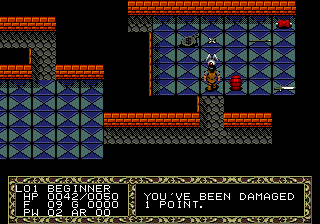
There's also some pleasant curios on the collection, too. I never knew the Mega Drive played host to a Roguelike, for example, but it did, in the form of Fatal Labyrinth (which is one of those examples of Japanese titling where two random, vaguely related words are thrown together) – an absolutely shameless remake of Rogue with 16-bit sprite graphics and smooth scrolling. It doesn't have much in the way of depth (as the original Rogue didn't – it wasn't until later titles like Moria and Angband that they became the behemoths they are today) but it includes a lot of the elements that make Rogue fun – the fact you don't know what anything does until you take a risk and use it being the main one. Chug back a potion and you might suddenly be stronger. Conversely, you might suddenly go blind. It's as brutal as Rogue and, despite its simplicity, it's actually fun and addictive.

Fatal Labyrinth
Fatal Labyrinth

There's a whole batch of unlockable extras too, with the usual video interviews that you get with this kind of package, but also a selection of Master System and arcade titles too. All in all, it's a great package that I will certainly enjoy delving into on a regular basis. Plenty of interesting Achievements to go for too – they're not just of the "Complete Sonic" variety, there's a little bit of creativity there, too. The Achievements are also used to unlock the additional content, too, so that actually gives you some incentive to go for them, too.

Anyway. More soon. I have plenty of things I want to talk about over the next few days, not least of which include Persona 4 along with City of Heroes and its new expansion, the Mission Architect.

See you soon.