A trait I have somehow been able to hold onto over the years — and which I have no intent of letting go of — is the ability to be impressed by things which, today, are not actually "impressive" as such, but which would have been impressive back when they were current. To give just one example, my mind is still blown by the parallax scrolling in the backdrop of Sonic the Hedgehog's Green Hill Zone.
To give another example — and the one that prompted me to write this today — I am currently playing Quintet's Illusion of Time (aka Illusion of Gaia to North Americans) and I have been thoroughly impressed by its visual design overall, but one of my favourite things is the fact that its parallax backdrops, when it uses them (it's a top-down game) accurately reflect the things that you're supposed to be "above". To put it another way, when you're high above something, the things you can see down below are accurate to what you would see if you were actually down there.
Looking back over my Soul Blazer video, I'm pretty sure Soul Blazer did this in a few places as well, but Illusion of Time seems to do it fairly consistently. And I'm impressed! They didn't have to go to that much effort, but they did!
The reason this impresses me is that a lot of games like this would have used a fairly generic parallax backdrop, and no-one would have minded too much. The illusion of depth would be there — which is what parallax is used for — and the fact that it wasn't "accurate" wouldn't have mattered, because it has no real impact on the actual gameplay.
For example, The Legend of Zelda: A Link to the Past uses a very simple tiled parallax backdrop to show that there is something beneath you rather than it being a bottomless pit. You can use this information to recognise which pits it is safe to jump down — to get to otherwise inaccessible areas, for example — and which it is not. While an accurate reflection of the floor beneath's map might be helpful in this situation, Zelda has enough other features to allow you to calculate the place where you will end up without having to be able to see down the hole. And, indeed, with the limited area you can see through Zelda's holes (pardon me), it's probably more practical to just look at the map and recognise "this is a hole I can jump down" rather than try to figure out exactly where you'll land from the tiny bit of parallax background you can see through said hole.
In Illusion of Time, however, these parallax backgrounds are purely there to look cool. In one sequence where you're exploring a mine, for example, you initially see ropeways with hanging platforms "in front of" the screen, suggesting they're above where you currently are. Later in the stage, you get up to the level of the ropeways and ride one across a large gap. Since, so far as the game is concerned, you are in a different "room" while you're doing this, there probably didn't "need" to be a parallax background at all, but not only did Quintet include one, it was a full, accurate map of the floor beneath.
That, to me, is impressive! It is not impressive by today's standards, because today you would just build your entire level in 3D and be able to see through holes and chasms to the floor beneath naturally. I am impressed with this in Illusion of Gaia, however, because I know that it wouldn't have been that simple to do. Well, it might have been relatively simple — all it really needs to be is an image of the floor below's map used as the parallax background — but it's a level of effort I recognise as being outside of the norm for the time, and thus I appreciate it.
This is where having an understanding and an appreciation of a wide range of things within your hobby is helpful. Someone who had only ever played modern games would think nothing of this little feature. But having grown up with all these different "generations" of gaming hardware, developing a vague (if non-technical) understanding of their capabilities (and lack thereof) along the way, I can recognise when something is an impressive achievement for its original time of release.
I hope I never let go of this trait. It adds so much depth of enjoyment to my appreciation of older games — and I encourage you to try and develop it, too.
Want to read my thoughts on various video games, visual novels and other popular culture things? Stop by MoeGamer.net, my site for all things fun where I am generally a lot more cheerful. And if you fancy watching some vids on classic games, drop by my YouTube channel.
If you want this nonsense in your inbox every day, please feel free to subscribe via email. Your email address won't be used for anything else.
There was yet another round of Tedious Discourse™ today over what the word "retro" really means, if anything, when it comes to video games. As always, there were lots of varying definitions, no agreement, and a bunch of people getting in a bit of a flap about it when their definitions of "retro" didn't line up with other people's definition of "retro".
Several people, as part of this process, pointed out that the term "retro" is not really all that helpful any more, and I'm inclined to agree. And yes, I'm aware I say this as part of a company that specifically markets itself as "retro gaming"-focused — and someone who has a "Retro Video Games" category on his blog — but what I'm about to talk about applies to all that, also.
My feelings are pretty simple: drop the "retro". They're just games. Zork? Game. Adventure for 2600? Game. The Last of Us? Game. The Witcher 3? Game. Gone Home? Game. (There, that should have covered everything that might piss at least one person off.)
The reason I say this is that as soon as you introduce the word "retro" into the mix, you also introduce a perceived barrier to entry. "Retro gaming" is perceived as a markedly different hobby to "gaming", whereas this doesn't really happen with any other medium. You might have people who are into different genres of books, movies, music, TV shows and suchlike, but you don't get people going "yeah, I'm a retro reader". Even people who make the majority of their reading time involve pre-20th century literature just "enjoy reading" — because most of them don't confine themselves to that one, single niche all of the time. Why? Because that's daft. Just because you like Jane Eyre doesn't mean you can't enjoy The Da Vinci Code or whatever. And you're not any less of a "reader" if you do.
The net effect of this when it comes to gaming is that you get people who will only ever play the latest and greatest games, and if it came out more than three weeks ago it might as well not exist, and you get people who will happily play a triple-A cinematic blockbuster one evening, an 8-bit home computer game another and a PlayStation RPG the next. You also get people who fall somewhere between those two extremes, which is a perfectly reasonable and healthy way to approach things. No-one is saying you have to enjoy everything from throughout the entirety of gaming history, but to draw a completely imaginary "hard cutoff" line between what is "modern" and what is "retro" based on, let's face it, nothing other than vibes is kind of ridiculous.
Case in point: currently, I am playing through Soul Blazer. This is a game originally released for Super NES in 1992 (1994 if you're PAL like me). There is absolutely nothing about this game that someone who has only ever played games released in the last three weeks would not be able to grasp. There's a common misconception that "retro games are complicated, you need to read the manual", but Soul Blazer is literally "move in four directions, hit things with your sword", and everything else is introduced either organically through gameplay, or explicitly told to you. You could release Soul Blazer today, completely unchanged — gorgeous pixel art has never gone out of fashion, thankfully — and it would be regarded as a good game, because it is a good game. It's not a good retro game, it's just a good game.
I think some of this likely originally stems from the crossover between the Mega Drive and SNES era to the age of PlayStation, Saturn and N64. Rumours abounded at the time that developers were specifically being discouraged from making 2D pixel art games on PlayStation, because polygonal 3D — even the relatively janky polygonal 3D of the PlayStation — was regarded as the One True Future. But I'm not sure quite how true that ever was, because one of the absolute most beloved games of that particular period — Castlevania: Symphony of the Night — was resolutely 2D, with only very occasional polygons used for special effects or parallax backgrounds. And there are countless other beautiful, wonderful and well-loved 2D games from that era — particularly on Saturn. Marginally less so on N64, but that was operating in a bit of a world of its own anyway. (Also, play Mischief Makers.)
That doesn't really explain how this sort of thinking appears to have persisted for this long, though. Yes, over the last 20 years or so there very much has been a rise in the sort of gamer who only ever buys that year's Call of Duty, FIFA/Madden or equivalent and leaves it at that, who doesn't really consider the history of the medium. But there seems to be the perception that there are plenty of people who have been gaming since the '80s — even earlier in some cases — who, for whatever reason, will not play anything released before a certain date — or, at the very least, will corral those experiences into a distinct "retro gaming" category, distinct from the implied "proper" modern gaming sector where they spend the majority of their time. I don't doubt people like that exist, but I wonder how widespread they really are.
Some of this is down to access; we're all familiar with that Video Game History Foundation report, or at least I hope we are at this point. But "not commercially available" is by no means the same as "inaccessible" these days. You don't even need original hardware; emulation of pretty much everything up to the Xbox 360 and PlayStation 3 era is in a good place, and after that (some would argue during that period) the newer games consoles were basically just PCs anyway, so outside of a dwindling number of genuine exclusives, you can play all that stuff pretty easily, too. At this point, everyone, everywhere, so long as you have some combination of an Internet connection, a computer and a monitor or TV, can enjoy pretty much any game released within the last 50 years without very much in the way of effort.
And modern rereleases of stuff that first came out many years ago are happening, too, if you don't want to delve into the proverbial high seas! There's Hamster's Arcade and Console Archives series on the current consoles. There are numerous bespoke releases of classic console, computer and arcade games on various platforms. Evercade, the platform I work on, has a huge number of cartridges at this point, covering more that 700 games between them, all of them officially licensed rereleases!
Any perceived barrier to entry that "retro gaming" might have had in the past — be that the technical knowhow required to get old finicky hardware up and running; the possession of vintage CRT TV hardware; an understanding of what "RGB" is; the ability to recap an Xbox or replace the battery in a Dreamcast — has not been there for a good long while, unless you want to enjoy a specific type of experience. (Snobbery over whether you're "doing retro gaming right" is a whole other discussion, mind, and it's hopefully already clear where my opinions fall on that side of things.)
If you enjoy games, you (hopefully) just enjoy games. There is absolutely no rule written down anywhere that places down a hard boundary of what you are allowed to enjoy, based on whatever combination of "year of release" and "age of player" people are using to calculate their completely arbitrary definition of "retro". Sure, some older stuff might take a little adjusting to if you're unfamiliar with it — much as reading Jane Eyre takes a bit of adjustment after reading The Da Vinci Code — but it's still the same basic form of entertainment at heart: push buttons, fun (or at least interesting) stuff happens.
Go on. Spoil yourself. Play something from a system you've never explored before. Revisit a game you haven't played since childhood. Fire up a copy of that one game you always saw in magazines and lusted over, but which you never got for Christmas or birthdays. And, with an appropriately receptive and open mind, I pretty much guarantee that you'll have an experience just as interesting, compelling and worthwhile as if you played something that released last week.
Want to read my thoughts on various video games, visual novels and other popular culture things? Stop by MoeGamer.net, my site for all things fun where I am generally a lot more cheerful. And if you fancy watching some vids on classic games, drop by my YouTube channel.
If you want this nonsense in your inbox every day, please feel free to subscribe via email. Your email address won't be used for anything else.
I started typing out a post about how shit everything was. I got to about 600 words, and I even found a really good stock image of some horseshit.
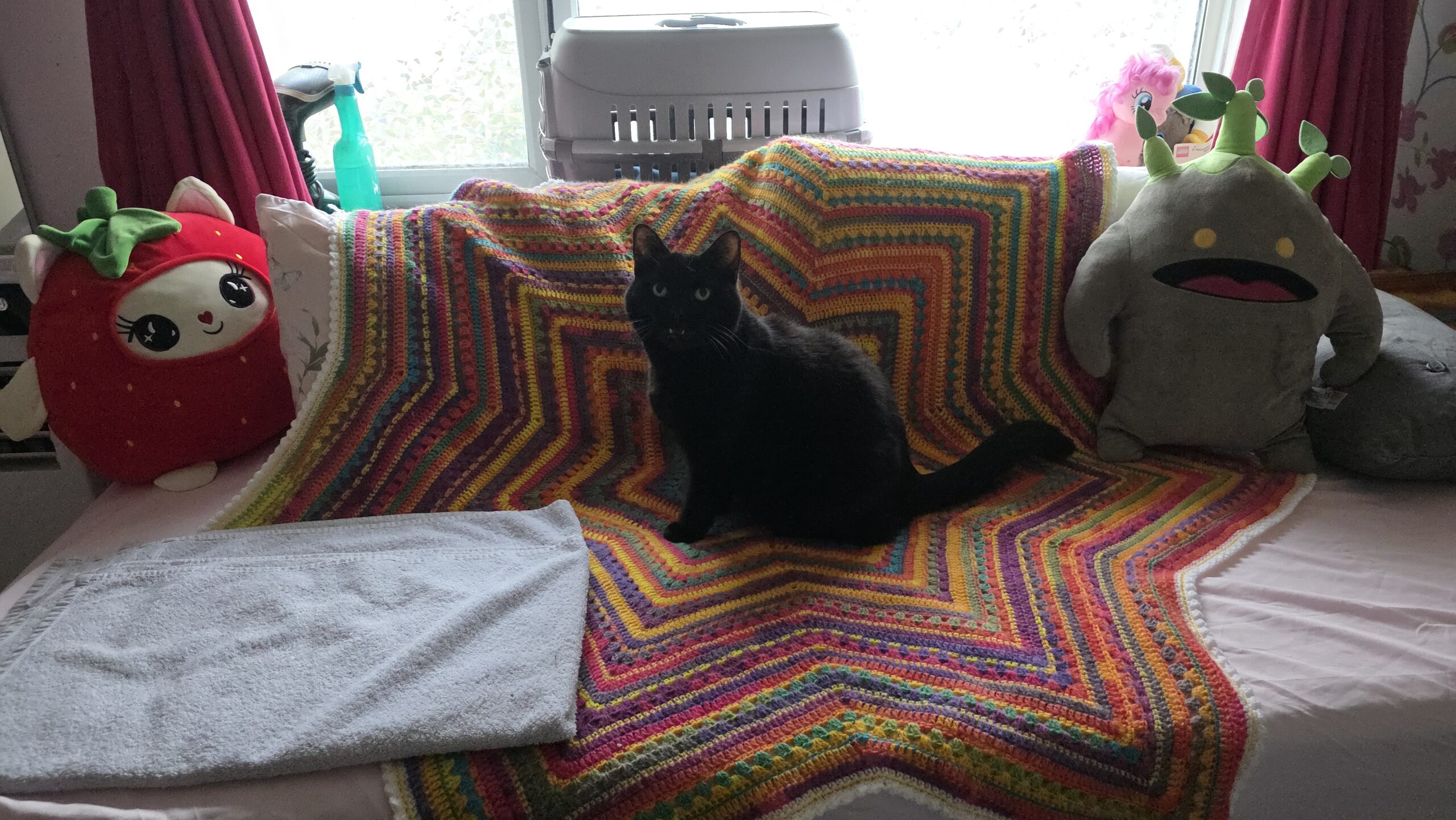
Then I looked at what I had written and thought, "no, I should not give in to despair, even if it does seem like it has been a very long time since anything has happened which I can honestly say is to the betterment of humanity as a whole". So I deleted all of it, replaced the image of horseshit with a picture of Patti (above) and decided that a helpful thought exercise would be to ponder some Nice Things. Doesn't matter what they are, how big they are, how important they are — just that they are Nice Things that I thought were worth celebrating. So let's pick out… ooh, let's say, five, as that's a nice number to work with. And I'm going to focus on gaming because a lot of stuff in gaming sucks right now.
Mike Bithell's new game looks cool
Mike Bithell, of Thomas Was Alone fame, has been teasing his new game for a while, and yesterday he finally revealed it. It's called Vampirium: 1997and is set in an alternate near-history where Dracula is the king of England, and you are one of his retainers, with dark powers all your own.
Bithell describes the game as an "immersive sim", but if you're thinking of a first-person adventure-style affair — which is what the term "immersive sim" usually gets applied to — you might be surprised to discover that this is a rather more abstract affair that, from what we've seen so far, looks to take a lot of cues from tabletop gaming. The "immersive sim" aspect comes from how you have a lot of freedom to tackle situations as you see fit — supposedly you can "click and combine game tiles to access verbs and craft your own diabolical resolutions". Sounds pretty interesting to me!
The game doesn't have a release date as yet, but will be launching into Early Access in the near future, and having a bunch of stuff added to it as the community gets to grips with it. It will then have a "1.0" release when all that is done, and we should have another great vampire game on our hands.
Wadjet Eye Games is 20 years old
If you (yes, you!) have ever uttered the fateful words "adventure games are dead" at any point in recent history, you have not been paying attention, because one of the absolute best developer-publishers to ever Do That Thing turned 20 years old today. Yes! Wadjet Eye Games has been releasing excellent adventure games since 2006, and their work has been going from strength to strength year after year — both in terms of the stuff they've made themselves, and the titles they've published from other developers.
I honestly, genuinely believe that the point-and-click adventure game is in a better place today than it ever was back in the LucasArts and Sierra heyday; don't get me wrong, I adore the "golden age" games and always will, since they were formative experiences for me. But you cannot look at incredible recent(ish) releases like The Excavation of Hob's Barrow(developed by Cloak & Dagger and published by Wadjet Eye) and Old Skies(developed in-house at Wadjet Eye) and think "nah, it was way better back then".
It fills my heart with gladness to know that amid all the chaos in the games industry right now, a company dedicated to releasing games of the kind it believes in — not what shareholders want, not what passing trends say you "should" be making, not what is supposedly the most profitable — is able to not only survive, but thrive. I sincerely hope Wadjet Eye Games continues to stick around for many years to come.
Scott Pilgrim EX is fun
My limited edition copy of Scott Pilgrim EX, which comes in a lovely oversized NeoGeo-esque clamshell case, arrived yesterday, and I spent most of the evening playing it through. It's a lot of fun! It successfully manages to feel true to the prior game — which is an all-time favourite — while shaking things up a bit and keeping things interesting.
I'll have more to say about this over on MoeGamer at some point in the near future, but suffice it to say for now that I had a lot of fun with my first playthrough — and with a full run through the game only being about 2.5 hours in total, I can see plenty more in my future, particularly with the possibility of online multiplayer in the mix.
Soul Blazer is great
I already knew this, but my recent starting-a-new-playthrough-and-I'll-probably-definitely-finish-it-this-time go at Quintet's awesome SNES action RPG Soul Blazer has reminded me how much I like that game. Again, I will write more about this on MoeGamer when I've actually beaten the damn thing — I'm a little shy of halfway through so far, I believe — but I am happy to say, right now, that if you have never played this delightful little game (and it is pretty little — I reckon it'll take less than 10 hours to beat, which begs the question why I've never gotten around to doing so) then you are very much missing out on one of the most charming 16-bit games there ever was.
I have finished "The Best Bit" of Final Fantasy XI
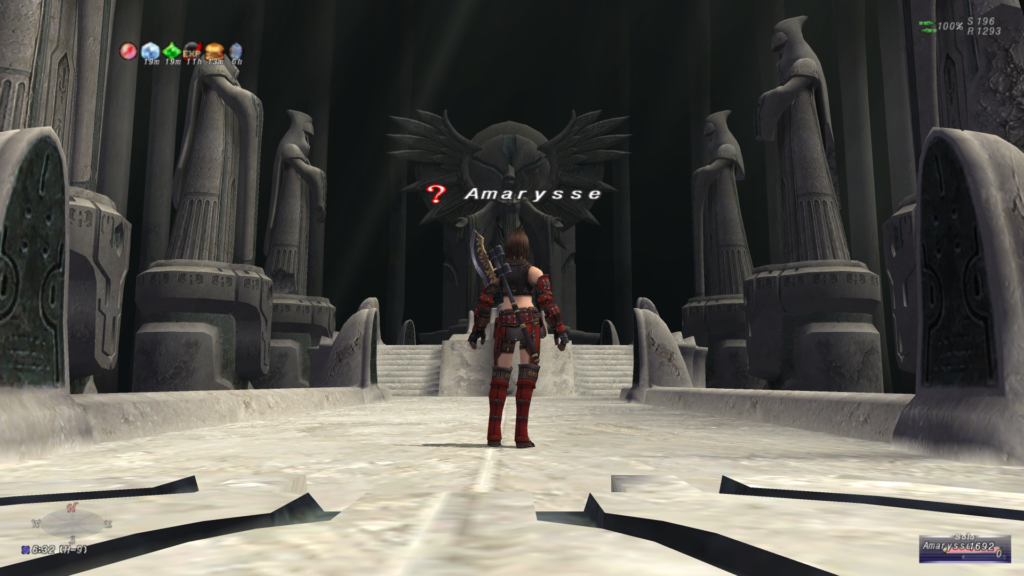
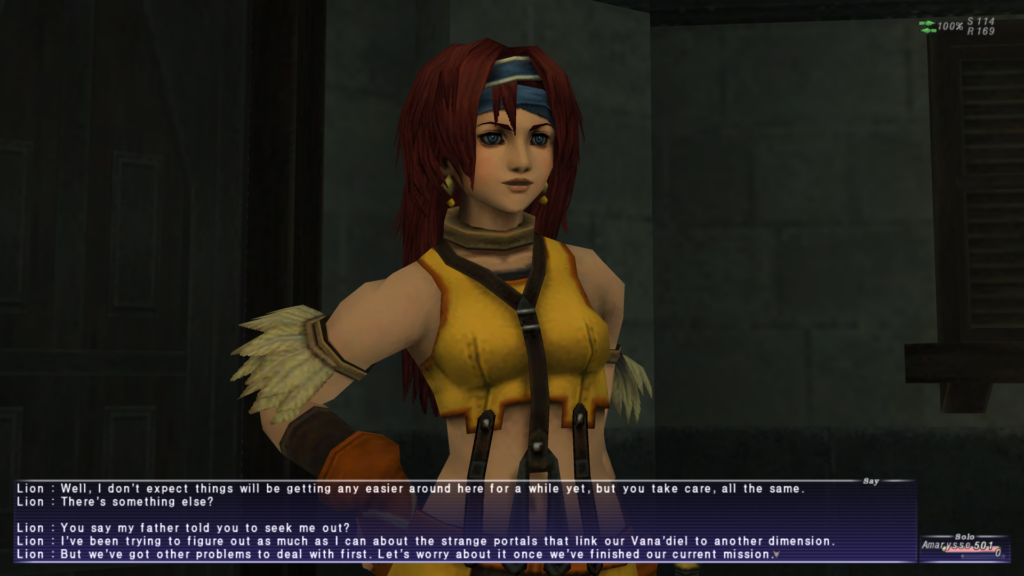
A lot of people seem to agree that Chains of Promathia is the best bit of Final Fantasy XI and now, outside of the epilogue quests and the optional Bahamut fight (which I might wait to do until I'm level 99 for the sake of simplicity) I have finally beaten it! This has been a kind of "gaming ambition" for me pretty much ever since I played Final Fantasy XI for the first time, and I have finally made it a reality.
This is another thing I would like to write about on MoeGamer in the very near future, so I will simply say that I enjoyed myself, and I'm glad I finally took this journey. I think I need at least a short break before heading off to seek the Treasures of Aht Urhgan though…!
Anyway, those are Five Good Things of Varying Relevance in gaming right now. I post these not to diminish the impact or importance of the Bad Stuff happening at the moment, but instead to hopefully provide a little reprieve. I sincerely wish that everyone who is going through tough times right now — and there are a lot of people going through tough times in the industry right now — is able to at least find some joy in the day-to-day, and doesn't give in to despair; I also hope that many of these people will tell their stories, frankly and honestly, because they need to be told. And they need to be told by the people who have been affected, not by some random idiot on the Internet.
One day, I hope these terrible times will be behind us, and we will be able to look back on them and go "fucking hell, never do that again". Until then, take care of yourselves. Don't give up. And play Soul Blazer.
Want to read my thoughts on various video games, visual novels and other popular culture things? Stop by MoeGamer.net, my site for all things fun where I am generally a lot more cheerful. And if you fancy watching some vids on classic games, drop by my YouTube channel.
If you want this nonsense in your inbox every day, please feel free to subscribe via email. Your email address won't be used for anything else.
First up, here's a good piece that I read earlier today, and which my resharing a clip of on Bluesky did Numbers to such a degree that I had to mute the thread. I stand by my comment of "fucking preach" about it, however, particularly the paragraph about today's games having their roots in older titles — and how it pays to not be snobbish about stuff released some time ago.
If you're reading this, you probably don't need me to tell you my feelings about old games, but I'm going to talk about them anyway — if only for the benefit of anyone who might be stumbling across this blog for the first time, or for anyone who, somehow, did not know the following about me.
I love old games! I always have done. For as long as I can remember, I have loved going back to earlier gaming systems and either rediscovering old favourites, or discovering brand new ones. I quite regularly boot up the MiSTer's Atari 8-bit, ST and Amiga cores to play the games of my childhood — and the games that I lusted after in my childhood. I also explore the libraries of consoles that I never had the opportunity to own, or which were prohibitively expensive, or which just passed me by for one reason or another. It's a constant delight, and I think, as the article linked states, it has done me a lot of good, too.
Probably the best thing that Being Into Old Games has taught me is not to give a rat's ass about performance, unless said performance is actively detrimental to the overall experience. I grew up gaming on systems that could barely manage simple flat-shaded 3D polygonal scenes at about 10 frames per second, and had a ton of fun on platforms like the original PlayStation and Nintendo 64, both of which have graphical capabilities it would be very easy to find laughable today if you're a snobbish dickhead.
There really are people out there who will declare games from this era (and earlier) "unplayable" because they run at an inconsistent frame rate, or a low resolution, or have blurry textures, or use a "weird" controller. (Fun fact: the Nintendo 64 controller is absolutely fine when playing games that were designed for it! That said, if you really don't get along with it, I recommend either this for modern USB devices, or this for original hardware.)
There are people out there who completely fail to grasp the absolute phenomenon that was GoldenEye and Perfect Dark split-screen multiplayer. None of us cared that the frame rate was, by today's standards, bobbins! The games were fun! That was literally all that mattered! And you can still live your life that way! I bet if I hooked up a MiSTer with four controllers and ran Perfect Dark on it at a party, people would be fighting over it by the end of the evening. (This makes the mistaken assumption that I would 1) throw a party and 2) have anyone to invite to a party, mind, but I am speaking purely hypothetically here.)
Don't get me wrong, it is undoubtedly nice to play a modern, high-resolution game that runs super smoothly and slickly. Certain genres particularly benefit from absolutely rock-solid performance — but that doesn't magically make games from years gone by that didn't run at a constant 60+ fps suddenly completely unplayable or not worth bothering with. Ridge Racer Type 4, one of the greatest video games ever created, only just about cracks 30 and runs at a resolution of 320×240 pixels (on NTSC displays, anyway) during races! And yet I go back to Ridge Racer Type 4 more than pretty much any other racing game released since then… except maybe the Project Gotham games.
One of the nicest things about older games that I'm coming to appreciate a whole lot more as I get older is that they just respect your time more. Even in RPGs, there's a lot less endless grinding, a lot less "content" designed for "player retention" — and I know some people like them, but the complete absence of Achievements and/or Trophies is absolute bliss, because it means you can play and enjoy each and every game exactly how you want to, without feeling obliged to tick things off a checklist — including boring, tedious things you don't actually want to do — lest you feel you haven't "Platinumed" it properly.
I am a strong, strong advocate for expanding your gaming horizons and exploring the incredibly vast, diverse and vibrant history of the medium. And I mean all of the history! There are Atari 2600 (River Raid! H.E.R.O.! Seaquest! Keystone Kapers!) and Intellivision (Night Stalker! Tower of Doom! Cloudy Mountain!) games that still play great today — and which I, personally, frequently return to, by choice, for a gaming session of an evening. There are myriad Super NES, PlayStation and Saturn RPGs just waiting for me to play them — and I'm looking forward to doing so. And even though I played a lot of N64 back in the day, there's still a lot of games from that relatively slim library that I've never tried — and really want to!
If you're concerned for the future of gaming — and given all the recent happenings, I absolutely do not blame you for that — then don't just give up and assume it's all over. Even if there were to be no more games released ever after tomorrow — and we all know that's not going to happen, regardless of whether or not we're actually in the process of seeing a new Crash happen — there are enough games that have already been released, across all platforms, to keep all of us busy for the rest of our lives.
Something doesn't stop being relevant, worthwhile or interesting because it's 20, 30, 40 years old or more. In many cases, these games are all the more remarkable for remaining relevant, worthwhile and interesting after so long — and it's not just nostalgia. There's something there; something of great value. And I implore you to spend some time exploring it, particularly if you've never done so.
Now I'm off to play Soul Blazer for the rest of the evening.
Want to read my thoughts on various video games, visual novels and other popular culture things? Stop by MoeGamer.net, my site for all things fun where I am generally a lot more cheerful. And if you fancy watching some vids on classic games, drop by my YouTube channel.
If you want this nonsense in your inbox every day, please feel free to subscribe via email. Your email address won't be used for anything else.
Yesterday, I talked generally about the impact PlayStation had on me and my friendship group thanks to stone-cold classics like Ridge Racer, Tekken and Final Fantasy VII. Today I want to talk about another aspect of that time which I have fond memories of — but which hasn't been a thing for some years now, and which will definitely no longer be a thing once Sony finally pulls the plug on production of physical PlayStation discs. (Incidentally, their announcement of this is now, at the time of writing, up to 135 pages of comments, with over 7,000 universally negative responses, and I suspect these numbers will continue to grow for some time as yet.)
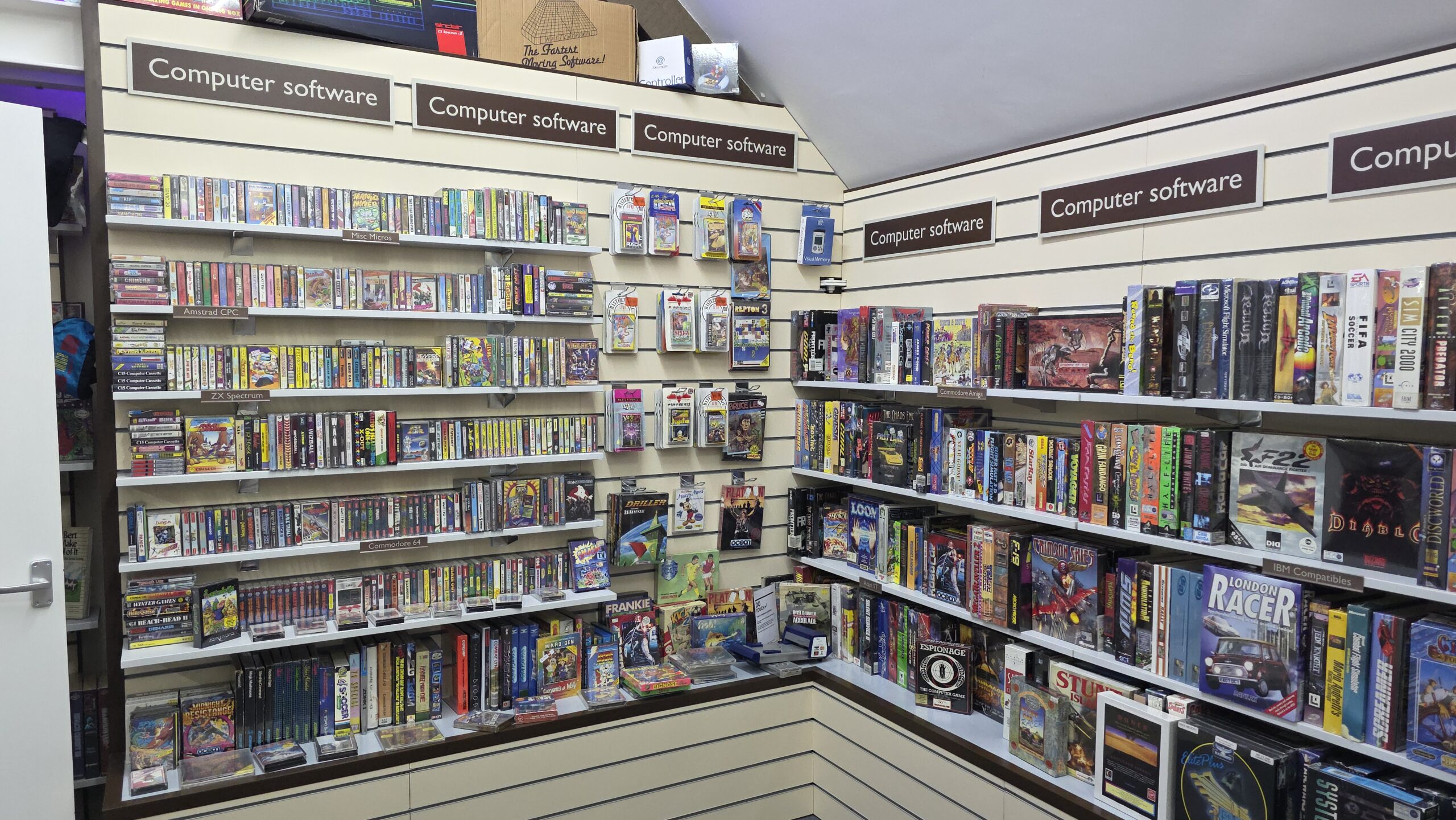
The Cave museum, part of the Retro Collective, has an interactive recreation of what an old software shop would have looked like back in the day.
Anyway. Yes. What I wanted to talk about was the fact that once we got into sixth form, a lot of us started to enjoy our first real tastes of proper independence, despite, in most cases, still living with our parents. Learning to drive allowed us to go places without having to rely on getting our parents to give us a lift — and give them the full details of where we were going. We were trusted to take responsibility for our own education, meaning several of us went to one single General Studies lesson in two years and still managed to ace the exam. Taking part-time jobs of various descriptions allowed us to earn some money, giving us considerably more financial freedom than childish "pocket money" provided. (Although saying that, my grandparents were always very generous in that regard.)
That latter one is an important one, as it coincided with us being able to spend that money on things that we liked. For my friends and I, those things were video games. And it was an enormously exciting time to be interested in video games, with the PlayStation having hit the market a few years earlier, and the Nintendo 64 finally arriving in Europe as we were kicking off our period of post-compulsory education.
I have fond memories of sixth form not just because I enjoyed the academic side of things — that's something I've talked about elsewhere — but also because of what happened between those classes. For my friends and I, we spent the majority of our time hanging out in the Art department of the school rather than the main sixth form common room; the corner of the Art department had essentially been taken over as a semi-private secondary common room that was almost exclusively used by my friends and I. It was a comfortable place to hang out, and we had many pleasant free periods spent there enjoying a bacon and cheese baguette from the recreation centre on the school site, just chatting about all sorts of silly things.
Quite often, if we had several free periods in a row, or free time up to and including lunchtime, we would wander off the school site — as we were allowed to do now, because we were big, brave, responsible 16+ year olds — and walk into the town centre. This was a walk of about a mile in total — my 45 year old bones ache just thinking about that — but we did it on a pretty regular basis. When we got into town, we had a bit of a routine: we'd go to The Baker's Oven for a bacon and cheese puff and a Belgian bun (though not if we had recently consumed one of the aforementioned baguettes), then head to Barneys, the local record shop, and have a little look around. I would always feel mildly uneasy in there because it was still the age where one felt distinctly judged for one's taste in music, but after a while I learned to just own my self-described "eclectic" tastes in music.
Barneys wasn't the main attraction of our trips to town, though. We saved the best for last by heading to First Compute, a pokey little shop in the "Cross Keys" shopping mews that was initially little more than a cupboard with games for pretty much every platform you can think of festooning every wall (and a fair bit of the floor). By the time we were in sixth form, though, the owner, who we only knew as "Richie", had moved venue to a slightly larger establishment, but the distinct feeling that as much stuff as possible was being crammed in remained. There were big box PC games on some shelves on the left, and PlayStation and N64 games on the right.
At the time, I had had the good fortune to score a few freelance writing opportunities for outlets such as PC Zone and the Official Nintendo Magazine. These at least partly came about because I did my Year 10 work experience on PC Zone when my brother was the editor, but my brother's the sort of person who wouldn't have recommended me to his successors if he didn't think I could have done a good job. And I did do a good job — and, more to the point, in those days, you got paid a hell of a lot more for cranking out an article than you do for many of today's websites. We're talking about £300-£500 per piece here.
As you can probably imagine, being in a situation where I had very little in the way of living expenses thanks to still living at home, this cash very quickly burned a sizeable hole in my pocket, and my friends knew this. I would often get a little "gentle encouragement" to pick up a new game for either PlayStation or Nintendo 64, and honestly, as much as peer pressure very much was involved, I didn't need much convincing. I found both systems to be a ton of fun, and I loved being able to share my enjoyment of them with my closest friends.
On the Nintendo 64 front, we quite often picked up games with a multiplayer focus, as we spent a lot of time around one another's houses, crowded around the television enjoying split-screen fun. We even tried some types of game that, in prior years, we would have never considered, like EA's World Cup 98 when the eponymous tournament was on.
On the PlayStation front, my preference was, as you can probably imagine if you know me even a little bit, for role-playing games, and dear Lord do I ever wish I'd held on to the vast majority of those games I bought all those years ago, because little was I to know that role-playing games in particular would become enormously expensive on the second-hand market.
Of all those times I was mildly peer-pressured into buying a new game, I only remember one solitary occasion when I was disappointed and regretful enough in my purchase to actually return the game in question. That game was a title for PlayStation called Blaze & Blade: Eternal Quest, and it was a polygonal action RPG for up to four players. It looked like it might be cool from the box art, and there were some interesting ideas in it, but it was very much not what I was looking for from a game at the time. I'm actually quite curious to revisit this game through older, more mature eyes, as I suspect I may have treated it a bit harshly.
The pattern of go-to-town, buy-a-game continued once I got to university and fell in with friends who also enjoyed gaming. Since I was still getting some cash from freelancing, I still had a bit of disposable income, though living away from home meant I did actually have living expenses now. Still, I managed to pick up a bunch of interesting games, and reading the manuals while on the bus home was always a highlight of these times that I think back on fondly. It's a cliché to talk about reading the manual on the way home, but it really was a thing we did, and it really is something I have exceedingly happy memories of.
New games haven't come with manuals for a long time now, outside of a few special cases in limited-print editions, and situations like Evercade where the whole thing is built on the idea of "how it used to be" — and with the apparently impending death of physical releases, even the experience of going to a game shop, picking up a game and coming home with it will be lost. Of course, many people — including me — tend to order their games online these days anyway, so many of us haven't been doing that anyway — but it's still sad to think that there are generations of video game enthusiasts who will never be able to enjoy things in quite the same way we did around the end of the millennium and the turn of the century.
I'm mad at Sony for actively encouraging the death of that. They are deliberately trying to destroy what was once an important part of the overall culture surrounding video games. I suspect those who have never been deeply into them might not understand why this is a big deal — and I equally suspect the C-suite execs who mandated this are exactly the sort of people who have never actually given a shit about video games as a creative medium or form of expression — but it really was. Sony's announcement left a lot of people feeling like they really had lost something; feeling something akin to grief. It might sound silly to say that about something as simple as going into a shop and buying a box with a bit of plastic inside it, but it really is the case.
I sincerely hope the company does a hasty U-turn on this, but I very much doubt they will. If that's the case, that's the end of me and PlayStation. Once there's no more games to buy and proudly put on my shelf, that's it for me and new games. I've always said this. And in some respects, I don't mind, either — it'll mean I don't have to worry about running out of what little space I have left on my shelves, and that I will be able to focus on diving deep into my collection and discovering all the things I haven't gotten around to yet.
But still. I will be sad to have lived long enough to see a medium and a culture surrounding it grow, thrive and then wither. I am already sad that I have seen that happen, but every new week seems to bring a new horror in that regard.
We will always have the good times, though. That's the one thing they can never revoke the license for.
Want to read my thoughts on various video games, visual novels and other popular culture things? Stop by MoeGamer.net, my site for all things fun where I am generally a lot more cheerful. And if you fancy watching some vids on classic games, drop by my YouTube channel.
If you want this nonsense in your inbox every day, please feel free to subscribe via email. Your email address won't be used for anything else.
As I often do on my regular trips in to the office (when I'm driving, anyway), I listened to a bunch of the Fun Factor podcast over the last couple of days. If you're unfamiliar, this is an excellent show hosted by sports writer Ty Schalter and video game critic Aidan Moher where the pair (and sometimes guests) discuss old video games magazines, the reviews therein, and the games covered.
Here's a stock image that appears to be scientifically designed to upset anyone who knows anything about video games. Photo by Mahmoud Yahyaoui on Pexels.com
I am quite a few episodes behind, but the nice thing about the show is that its very nature means that it is somewhat timeless, and each episode can be enjoyed at any time. Thus, yesterday and today I enjoyed some discussion of Next Generation magazine's "Are You a Hardcore Gamer?" quiz (circa 1998) and the pair's collaboration with Coury and Try from My Life in Gaming to discuss a "draft" of games from the 1995-1997 period covered by Fun Factor's first season.
Obviously I will take this opportunity to recommend you go give Fun Factor a listen (or even better, watch: the podcast's YouTube channel lets you look at the magazines as they're talking about them!) but today's post isn't specifically about the podcast. Rather, it's about how the discussions on the episodes I listened to, particularly the "draft" episode, have inspired me to make some time to play through a bunch of games I keep telling myself I've "always meant to get around to". By this I am primarily referring to retro games, particularly of the RPG variety, of which I have about a bazillion loaded up and ready to go almost immediately thanks to my MiSTer Multisystem 2 setup upstairs. And I can even play them on a CRT!
I hesitate to start new RPGs because I have it in my head that they're all massively long. And to be sure, your average RPG does tend to be on the longer side. But listening to the chaps enthusing about various titles like Chrono Trigger (which, to my shame, I've never finished), Final Fantasy IV (which I have finished and know is pretty short) and various others makes me think… I should just sit down and play some of these things that I've been "always meaning to". Including some that I've started and never got around to finishing, like Soul Blazer.
Soul Blazer is definitely one I want to tick off my list because it is an excellent game, and I've always felt like it wouldn't be quite right to tackle Illusion of Gaia and Terranigma, both of which I want to play, before beating that one. They are considered an extremely loose "trilogy", after all, and I think it would be particularly interesting to play in succession.
Part of me says "no, don't start something new, you have Final Fantasy XI on the go". But Final Fantasy XI is very long indeed, and sometimes you just want a palate cleanser. Sometimes that's something really quick and breezy, like the new Star Fox, while at other times, it's another game with a bit more substance, but which is unlikely to end up with an hour count that is three or more digits in length.
So probably not tonight, because it's getting late and I still have a farty stomach full of regret from the pizza I had last night, but very soon, I'm going to set some time aside to enjoy some retro gaming. I have all the kit — I might as well make good use of it and enjoy myself, non?
Want to read my thoughts on various video games, visual novels and other popular culture things? Stop by MoeGamer.net, my site for all things fun where I am generally a lot more cheerful. And if you fancy watching some vids on classic games, drop by my YouTube channel.
If you want this nonsense in your inbox every day, please feel free to subscribe via email. Your email address won't be used for anything else.
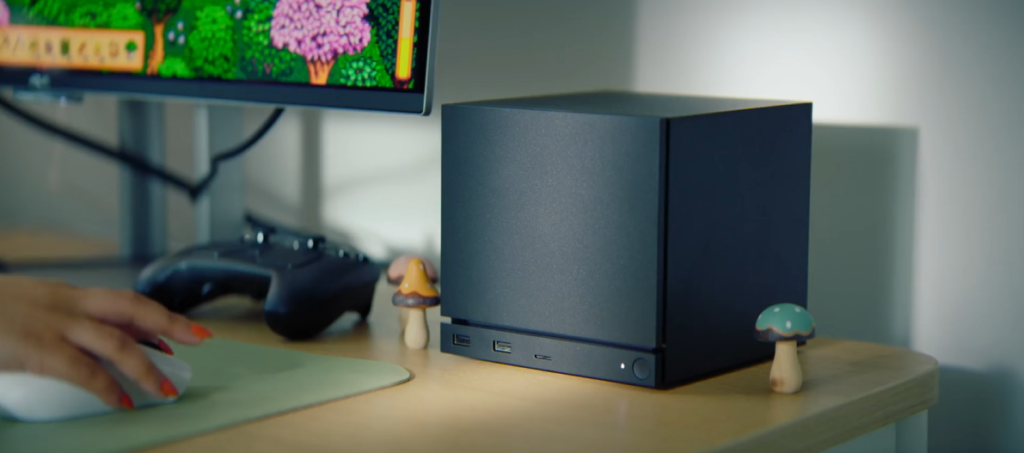
Valve apparently announced the price of their long-awaited Steam Machines today and, unsurprisingly, given the general price of tech right now, they ain't cheap. They're "starting at £879" not cheap, and that only gets you 512GB of storage; they break the £1,000 mark if you want the 2TB model, though both are expandable with microSD cards.
Image: Valve
We have long since reached a point where it is not particularly cost-effective to start taking an interest in modern gaming if you are not already involved in the overall ecosystem and thus resigned to vast swathes of your monthly pay packet disappearing on your chosen hobby. Sure, you can get away with a somewhat lower-end mini PC if all you want to play is relatively small-scale indie games — but even those lower-end mini PCs are going up in price nowadays. Therefore, it is worthwhile looking at more cost-effective options for enjoying video games — even if the video games you will be enjoying are a few years old. Good games are still good years after they're released, you know! So here's my personal recommendations on that front.
Evercade
Of course I'm going to recommend Evercade because I work for them, but the reason I work for them is because I was all-in on the idea of the system from day one. A new, affordable system with a focus on retro gaming that provides officially licensed physical releases of classic games from home consoles, computers and arcade machines? Regardless of if I'd ever managed to secure employment with Blaze, makers of the Evercade, I would have been a "full setter" from day one — indeed, when the original handheld released, I immediately took advantage of the "All-In" bundle to get the first 10 cartridges included with the system.
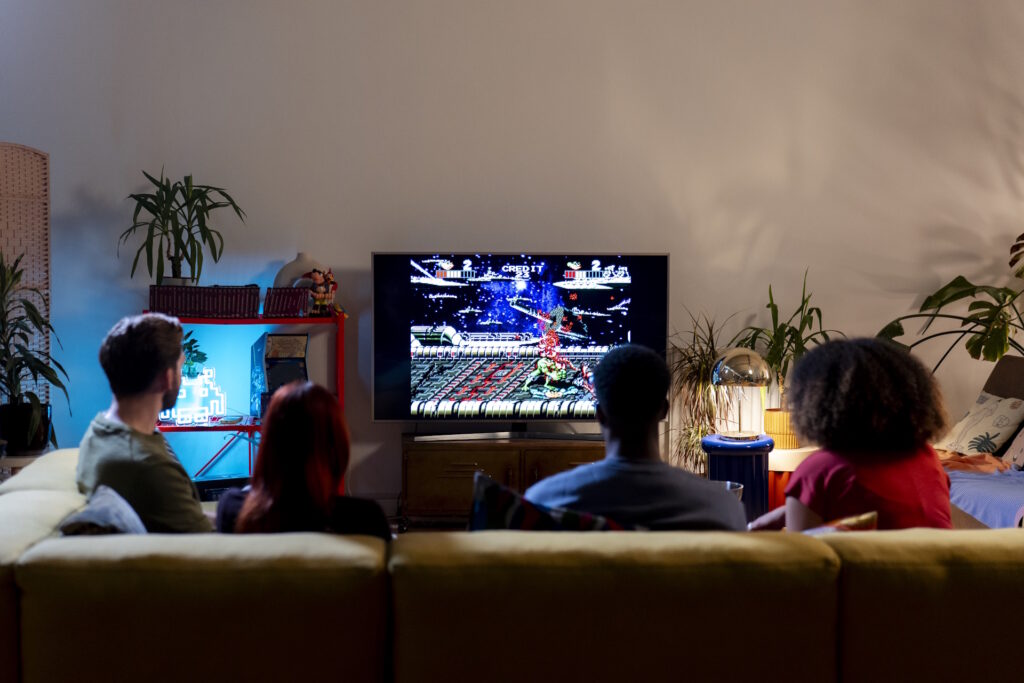
Why recommend something like Evercade when emulation and other options exist — some of which we'll talk about in just a moment? Well, that "officially licensed" part is important. The current state of the games industry may appear to be teetering on the brink of unsustainability, but that doesn't mean people who enjoy video games want the whole thing to collapse. It would be rather nice if we could recover from this situation we're currently experiencing — and one way to help that come about is to support officially licensed rereleases of classic games, updated to play nice with modern audio-visual equipment, particularly televisions. On top of that, Evercade also plays host to physical releases of a lot of "modern retro" titles — games originally designed with vintage hardware in mind, but developed in recent years.
Image: Evercade
Many of the rights holders of these old games are also game companies that exist in the modern sector, and so throwing your support behind retro rereleases that don't require turbo nutter ninja bastard hardware to run is one way of helping ensure we still have a healthy video game economy whenever the AI bubble finally bursts and — hopefully — hardware prices start to settle back to what we have previously thought of as "normal".
Plus the physical nature of Evercade collecting allows you to rediscover the fun of having a shelf full of games to pick from, rather than a boring old list of downloads on your PC, many of which you scroll past without even noticing every single day.
MiSTer
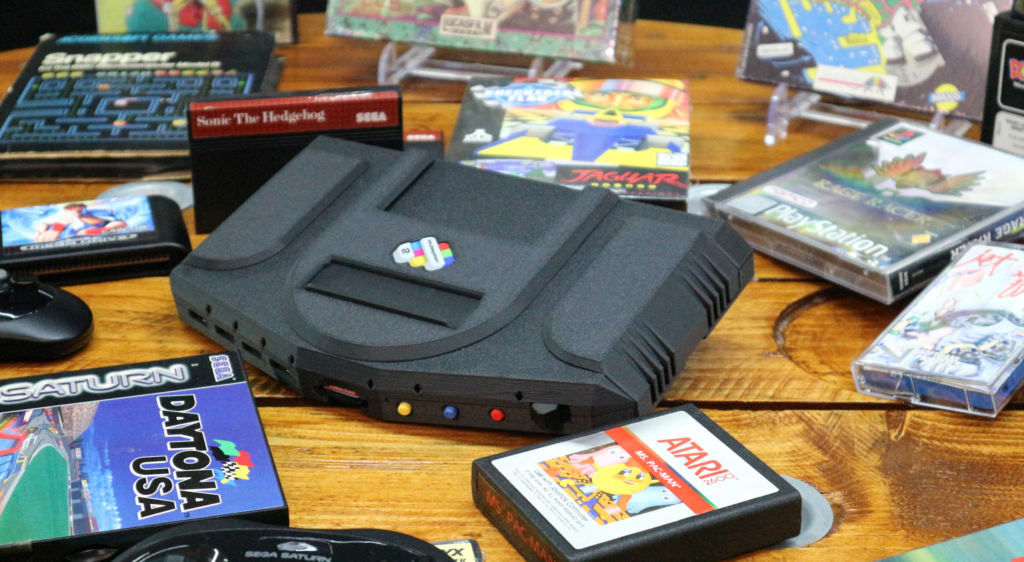
Evercade is great, but there are some classic games that are never, ever going to get a rerelease for one reason or another — be it the rights holders being unwilling to put them out again, more complex licensing situations (such as video games based on movies, or which feature licensed music, vehicles or actors' likenesses) or some other reason entirely. For those situations, that's where what I would describe as more "community-focused" solutions come into play — as a general concept, this covers emulation, but I would specifically call out the MiSTer project as being a particularly worthwhile investment in these peculiar times.
For the unfamiliar, MiSTer is a platform based on "FPGA" (Field Programmable Gate Array), which is a technology I have absolutely no understanding of whatsoever, save for the fact that it effectively allows a device to recreate the way another piece of hardware would have worked in the past, not through simulation in software (which is how emulation works), but through a reconfigurable chip that basically "pretends" to be the old system. Some describe it as "hardware emulation"; all you really need to know is that, under most circumstances, it results in the most authentic recreation of a classic console, home computer or arcade cabinet possible, particularly if you happen to have an old CRT television hanging around that you can hook it up to. (Never fear if you don't, however; one of the core concepts of MiSTer from the outset was to provide a relatively straightforward means of enjoying classic "hardware" on modern displays, and the platform has a variety of built-in and fully customisable visual filters that allow you to recreate the CRT "look" if you so desire.)
Image: Heber Electronics
MiSTer is a project you can build yourself, but it's actually probably more cost-effective these days to go for a pre-built solution such as Heber's Multisystem 2 (pictured above, which I use) and Taki Udon's SuperStation One. You will also need to add some form of storage to whatever setup you go for, which is likely to be the expensive bit these days; however, it's a one-off expense, and you can look at it as a lump sum you are spending on your own entertainment, rather than buying a bunch of individual things piecemeal. Tot up how much you've spent on individual games in the last year or so, and an SSD probably won't seem quite so expensive.
MiSTer requires a bit of setting up, including installing the actual software on the device to make it work, and then loading up your storage medium of choice with games — which, of course, you will have to "procure" yourself. For everything from the earliest games consoles right up to PlayStation, Nintendo 64 and Saturn, however, a MiSTer is all you need for… honestly probably enough games to last you the rest of your life.
Why do I recommend this and not investing in some classic hardware? Several reasons. One, classic hardware is prone to failure. Two, the games for classic hardware are often ludicrously expensive these days thanks to all the arseholes who have bought them as "investments" rather than to enjoy them — and you paying £400 for a copy of Buggy Run on Sega Master System doesn't help anyone other than the person you're foolish enough to hand over those notes to; the original creators certainly don't see a penny of that money! And three, getting classic hardware working on modern displays can be a bit of a pain… or at least demand you invest further expenses in a decent scaler.
Sixth- and seventh-generation consoles
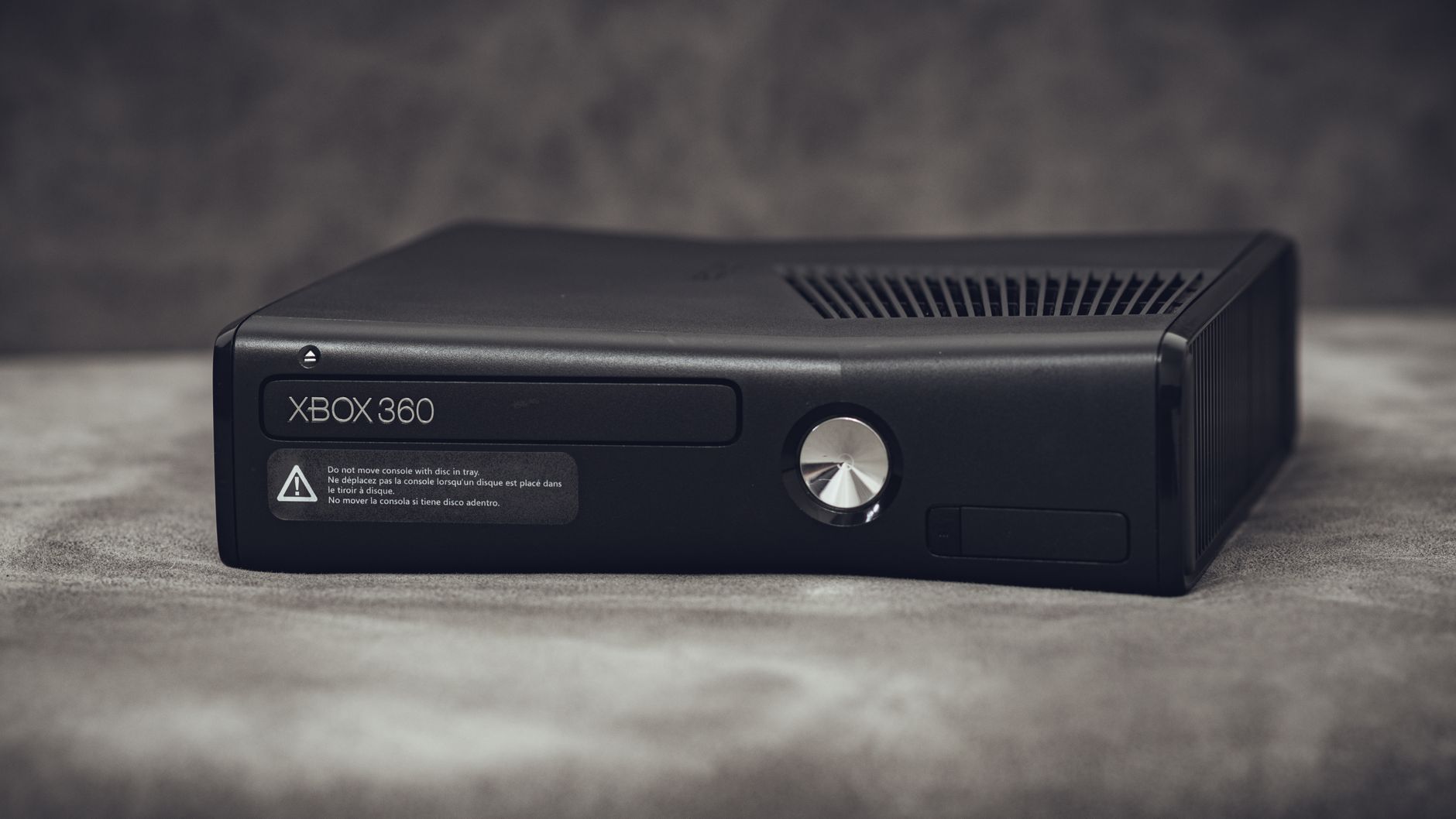
If you have the cash, I would recommend investing in, at the very least, an Xbox 360. This platform has a vast library of excellent games available, many of which can be bought for not very much money at all, and doesn't require any faffing around to get working on a modern TV. You may also wish to consider a PlayStation 3, as there are a number of exclusives on both platforms — plus a few cases where either the 360 or PS3 version is just plain better for one reason or another.
After that, a Nintendo Wii or Wii U is well worth considering. The Wii U, while mocked in its lifetime for its small library of games, has some absolute bangers, plus it is backwards compatible with the Wii, which has a vast library of excellent games, many of which can, again, be picked up for not very much money at all. Wii U is an HD console that can be connected to a modern TV, but the original Wii is a standard-definition console, though it can still be hooked up to a modern TV via component cables for a 480p "Enhanced Definition" picture. If you don't have component inputs on your TV, you will probably want to run an original Wii through a scaler, as composite or SCART inputs on modern HDTVs — if they even have them any more, which I'm sure some models don't — are complete cack.
Speaking of standard definition, this brings us onto the other worthwhile investment: a PlayStation 2. Again, you can actually run one of these through component cables — and even get an actual high-definition signal with a few very specific games — but you will probably want to also grab yourself a scaler if you take your PS2 gaming seriously. And you should take your PS2 gaming seriously, as the system plays host to one of the richest, most diverse libraries of any system ever released, with titles ranging from bargain bin puzzlers to sprawling epic, cinematic affairs — and some of the best RPGs ever created. While the latter can command high prices these days, many PS2 games — and good ones! — can be picked up for not very much money, making it easy to build a library of stuff that will keep you busy for a good long while.
If you're feeling flush, an original Xbox and Nintendo Gamecube are worthwhile investments, as both have some nice exclusives and in the case of multiplatform games, Xbox and/or Gamecube versions are often superior to their PS2 counterparts. Do note, however, that original Xboxes sometimes need a bit of maintenance, and Gamecube games tend to be significantly more expensive than equivalent games on other platforms from the same period. Also be aware that the earlier models of Wii also play Gamecube games, so you may not even need to buy a separate Gamecube if you're lucky enough to track down one of those. (You can tell if you have one of those by if it has a removable panel with Gamecube controller ports underneath.)
Let's price a starter setup as outlined above from a hardware perspective:
£ 89.99 - Evercade VS-R
£264.00 - MiSTer Multisystem 2 (analogue-compatible model)
£ 47.99 - 512GB microSD card (price from Amazon 22/6/2026)
£110.00 - Xbox 360 250GB "E" model (unboxed from CEX 22/6/2026)
£ 65.00 - Nintendo Wii (unboxed from CEX 22/6/2026)
=======
£576.98
About half the price of the top-end Steam Machine, and between that lot, you should have access to more than enough games to keep you busy for a very long time indeed — and no need to spend half your life complaining about derivative triple-A trend-chasing, microtransactions, mandatory 50GB updates, lengthy install processes and shoehorned-in multiplayer modes.
Plus if you have friends over, they'll think your setup is super cool. And if they don't, question whether they really were your friends in the first place.
Want to read my thoughts on various video games, visual novels and other popular culture things? Stop by MoeGamer.net, my site for all things fun where I am generally a lot more cheerful. And if you fancy watching some vids on classic games, drop by my YouTube channel.
If you want this nonsense in your inbox every day, please feel free to subscribe via email. Your email address won't be used for anything else.
I have finally beaten both Final Fantasy XI's base story and its first expansion, Rise of the Zilart, which was released alongside the game when it first came west. This means that I have, at last, beaten the entirety of what most people seem to regard as "the original Final Fantasy XI story", since most folks seem to consider Rise of the Zilart the actual conclusion to the story that begins when you start playing the game.
It's been a lot of fun thus far. I'm about 80 hours deep into the game, and I haven't really felt particularly "roadblocked" at any point. There have been two separate occasions where I have had help from higher-level players — once to open the "Three Mage Gate" I mentioned a few posts back, and once to help me with the fight against Siren as part of the Rhapsodies of Vana'diel series of missions that run parallel to all the main stories — but for the most part, I have successfully beaten and bashed my way through the game as a solo player using the computer-controlled "Trust" party members.
I thought I had reached a roadblock towards the end of the Rise of the Zilart storyline where you are presented with a chain of five difficult boss battles, and I was having real difficulty with a couple of them. As I'm playing a Warrior, I have been working on the assumption that I should be the main "tank", you see, and thus trying my best to ensure all enemies fixate their attention on my while my Trusts repeatedly punch them in the buttocks. This is, after all, the way things are in Final Fantasy XIV, even though mechanically the two games are otherwise quite different.
However, what I discovered in these difficult fights (the "Ark Angels" fights, to any FFXI veterans) is that being the sole human player and the main tank is not always desirable. Y'see, some high-level enemies have the ability to Charm you, and when that happens all your Trusts get unsummoned and the fight effectively resets. It's an instant "kill", in other words, and I really thought this was going to roadblock me.
Then I thought about things a bit, and wondered what might happen if I let one of the Trusts handle the tanking instead. Wouldn't you know it, those fights suddenly went much more smoothly. I could keep dealing damage — which, besides tanking, is the other thing FFXI Warrior is good at — while Trust-y Valaineral the Paladin took the brunt of everything the boss threw at a single target, including that pesky Charm. And, because I also had Kupipi the White Mage and King Of Hearts the Red Mage in my party, they cleansed that status off him pretty quickly. I only really came close to failing in one of the fights, where everyone got Silenced and Valaineral got knocked down because no-one could heal him. Thankfully, this happened late enough in the fight that the remaining party members, including me, were able to finish the job.
By contrast, the actual final boss of Rise of the Zilart was very easy indeed. Granted, I was probably a few levels higher than "intended" for this encounter — Final Fantasy XI isn't particularly rigorous about locking stuff to particular level restrictions, particularly in the main story sequences — but it was still pretty straightforward. Fun, though; it was satisfying to finally bring down a "big bad" who had been taunting me for some time.
Now I'm on to the Chains of Promathia expansion, which a lot of longtime players seem to think is one of the best bits. It makes the curious decision to base the early hours of its story around the level 30 mark, rather than assuming you would be at the level you're probably at around the conclusion of Rise of the Zilart — 75+ — but I assume that things ramp up pretty quickly, as the official "content guide" on the Final Fantasy XI website recommends the expansion as an activity for level 75+ players.
I'm really glad I've done this! I'm going to write a big, detailed article about my experiences over on MoeGamer when I'm finally done with everything I want to do in the game, but for now, my feelings are that, in terms of gameplay, progression and a general sense of adventure, this is actually one of the very best Final Fantasy games. Yes, it is the very epitome of a "guide dang-it" game, in which you will almost certainly not get very far without looking some stuff up, but the moment-to-moment gameplay, the overall sense of progression and the fact that it feels like a Final Fantasy game, arguably a lot more so than XIV, has really left me with a big grin on my face. I'm looking forward to seeing what the rest of the game has to offer.
I have played pretty much all day, though, so I should probably stop for now, though, right? Probably…
Want to read my thoughts on various video games, visual novels and other popular culture things? Stop by MoeGamer.net, my site for all things fun where I am generally a lot more cheerful. And if you fancy watching some vids on classic games, drop by my YouTube channel.
If you want this nonsense in your inbox every day, please feel free to subscribe via email. Your email address won't be used for anything else.
I am pleased to report that I have reached level 50 in Final Fantasy XI. This is not the level cap, but it is a significant milestone, as it was, I believe, the original level cap when the game first released. As time went on and various expansions released, players got the opportunity to increase their personal level cap in increments of 5 levels at a time, though each one of these milestones requires you to complete a tricky and/or time-consuming quest. I'm in the middle of one of those now, which will allow me to level up to 55 when I'm done.
I'm enjoying the game a lot, though my desire to attempt it without a guide was a foolhardy endeavour. Final Fantasy XI was always designed with "community" in mind, and built on the assumption that said community would share information with one another and help each other out, and as such there are a lot of things it just doesn't tell you. It's a lot better in this regard than it used to be, primarily thanks to the "Records of Eminence" feature, which gives you a series of objectives to accomplish that can guide your progression, but you'll still often be given a mission that tells you to go to a particular zone and find something in that zone, with absolutely no indication whatsoever of exactly whereabouts in that zone the thing is to be found. There is no minimap and no quest marker feature in Final Fantasy XI, so you're either off to find a needle in a haystack yourself, or consult the community (which now, of course, also includes comprehensive wikis) and be able to focus your efforts a bit more.
There are still one or two roadblocks that require actual interaction with a human being. One of the missions for Windurst requires that you get through a door called the "Sealed Portal", which is colloquially known by the community as "Three Mage Gate". The reason for this is that the originally intended method of opening this door was to gather a party containing a white mage, a black mage and a red mage and get them to stand on the appropriate marks on the floor, which would open the door. This was subsequently updated to only require someone with the "Portal Charm" key item — which, naturally, you get just after the mission in which you would first need it — to make things marginally easier and less dependent on wrangling an entire group.
These aspects aside, though, the game has been eminently soloable so far, thanks to the Trust system. You're given some decent Trusts right from the get-go, and more are unlockable quite easily. There are some borderline overpowered ones available without too much difficulty, too, but with the number you get to add to your arsenal very quickly, you can pretty much build a party however you like to play, and use the characters you find most appealing. My only slight beef with the system is a narrative one; many of the Trusts you get early on are characters that you probably won't have met yet, and this makes it tricky to feel a sense of attachment to them. Because, in the context of Final Fantasy XI's story, Trust magic is dependent on you having a strong bond with a particular person, this feels a bit dissonant, but you soon learn to deal with it — and after a while, you'll be able to get together a party that feels like it consists entirely of "story" characters anyway.
It's definitely a very different sort of game to Final Fantasy XIV. It's not actually turn-based, but with its pacing it might as well be. It's not a game where you attacking requires you to be constantly pressing buttons to unleash combos, unlike its follow-up; instead, it's more about equipping your character well, ensuring they have good training in the skills they need to succeed at the challenges ahead of them, and approaching combat encounters carefully and thoughtfully. Sure, you "do less" on a moment-to-moment basis, but it's a different kind of satisfying to successfully clearing difficult encounters in Final Fantasy XIV; it's less about skill with the buttons and more about traditional RPG-style number crunching. I'm not saying either way is "better" — both games are very good at what they do — but it is interesting to note quite how different they are from one another now I'm deeper into XI than I've ever been.
My next big milestones for Final Fantasy XI will be breaking a couple of level cap barriers, and then completing the base story from the original game, which culminates in a big fight against the dreaded Shadow Lord. There's still a lot to do after that, though, and most folks seem to agree that things start getting really good story-wise after you've got through the base game's material. I'm looking forward to it — and at the rate I'm going, I should be getting through it at a decent pace, too.
I'm glad I finally decided to do this. Final Fantasy XI has kind of been a "white whale" for me in terms of completion, so I knew I just had to make the time to play it and do it properly. Now that I'm doing that, I'm having a really good time. I doubt I'll get too hardcore into its "endgame" stuff — my main priority is to beat the story, and after that I will probably return to XIV — but there is plenty to do just on the journey from 1 to 99. And that's absolutely fine with me!
Want to read my thoughts on various video games, visual novels and other popular culture things? Stop by MoeGamer.net, my site for all things fun where I am generally a lot more cheerful. And if you fancy watching some vids on classic games, drop by my YouTube channel.
If you want this nonsense in your inbox every day, please feel free to subscribe via email. Your email address won't be used for anything else.
As… promised? threatened? recently, I've started playing Final Fantasy XI again. And I am reminded, once again, for the umpteenth time, that I really like this game, particularly in its current form. I'm sure there are plenty out there who will bemoan how "dumbed down" its 2026 incarnation is compared to what it was like 20 years ago, but man, c'mon. You can play most stuff solo now; some might say that misses the point of an MMO, but there's still a markedly different vibe existing in a world knowing there are other players around. You see other people going about their business; you participate in the economy; you contribute to asynchronous team activities.
I am also reminded that Final Fantasy XI is not a game for everyone. Specifically, it is not a game for the impatient, because there is a lot to do, and it takes quite a long time to do pretty much anything… except level up, now, which goes at a significantly more brisk pace than it did the first time I played it all those years ago.
But we're talking about a game where the ability to run slightly faster than normal is dependent on someone completing a long and difficult quest, it rolling a random chance of the "Swift Shoes" effect coming up, and then you healing to full and having a nice sit down for a couple of minutes to "charge" the slightly-faster-than-normal movement speed — which, of course, immediately fades away the moment you either attack something or get attacked.
We're also talking about a game whose original implementation of "fast travel" required you to fight your way to a huge "crag" two zones away from your starting city and collect a crystal from it, all for the privilege of being able to teleport an inconveniently long distance away from any of the game's towns.
We're talking about a game where, when you want to cross the sea, you have to physically stand and wait for a ship, and when you're on the ship, you have to wait for the voyage to complete. (Sometimes monsters attack. A lot of the time you just have to enjoy the ride.)
If those descriptions make you smile, even a little bit, you are probably someone who will enjoy Final Fantasy XI.
The fact the game demands so much patience makes it feel very rewarding, though. When you achieve something, you feel like you've bloody well earned it. This is not a game where you are a super-special Warrior of Light pretty much from the get-go; this is a game where you are a relatively normal person — albeit one with, arguably, extraordinary combat abilities compared to your "peers" among the NPCs — just trying to make their way in the world. Make a bit of cash, get a bit of training in, visit some new places.
It's this rather open-ended feel that I really like about Final Fantasy XI. In many ways, it feels like a very pure reflection of what I call the old "world RPG" formula exemplified by titles like the early Ultima games. There is a long-term goal to go and complete, but the vast majority of your playtime will be spent doing rather freeform activities to build up your character in a way that you see fit.
Some of the best things that have been added to Final Fantasy XI since its original release are designed to make it more than just grinding monsters for hours at a time. The "Records of Eminence" quests do a great job of giving you things to do and acting as a sort of guide to what it is possible to do in the game, without having to spend half your playtime looking at a wiki. The "Field Guide" and "Grounds Tome" books at the entrances to field and dungeon areas respectively provide you with focused sets of monster targets to down in exchange for generous experience bonuses. And of course there's plenty of quests, the main storyline missions and, once you get later into the game, lots and lots of side activities. I don't yet know how "important" some of these things are — or indeed what 90% of them are at this point — but I'm intrigued to find out.
Thus far I'm up to level 25 on the job I started with — Warrior this time around — and I'm levelling Monk as a subjob for now. I'm on the "rank 2" missions for my home nation, and making good progress. I've also kicked off the Rhapsodies of Vana'diel storyline that was added much later than the other main stories, and acts as another kind of "guide" through what the game offers, with its own narrative to follow — and plenty of extremely helpful benefits as rewards along the way.
I'm enjoying myself a lot. I don't know how long it's going to take me to get through the various storylines, but levelling has been going at a brisk pace, and I'm feeling good about how things are going so far. I'm looking forward to finally doing things like taking down the Shadow Lord, which I've never done before, and particularly getting into the well-regarded Chains of Promathia expansion storyline, which longstanding FFXI players have been banging on about the quality of for years.
So yeah. It's a good time. You just need patience. And if there's one thing I have developed over the years, it is a very strong sense of patience.
Want to read my thoughts on various video games, visual novels and other popular culture things? Stop by MoeGamer.net, my site for all things fun where I am generally a lot more cheerful. And if you fancy watching some vids on classic games, drop by my YouTube channel.
If you want this nonsense in your inbox every day, please feel free to subscribe via email. Your email address won't be used for anything else.