2526: Quiet Weekend

0526_001

I've been working all week, and I now have two full days — a proper weekend — to look forward to. And I am indeed very much looking forward to it.

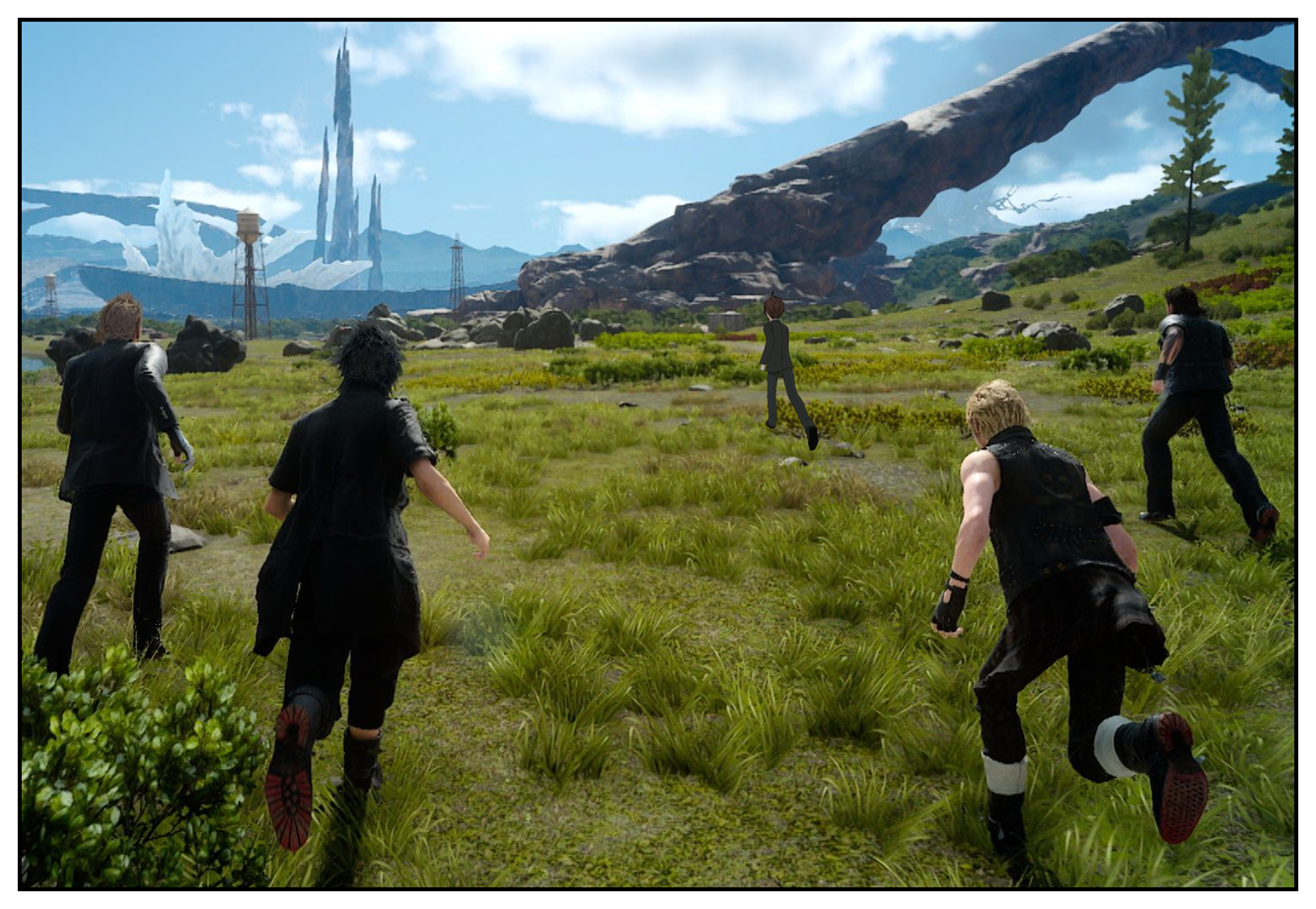
In particular, I'm looking forward to spending some more quality time with Final Fantasy XV and Pokémon Moon, both of which I've had the chance to play sporadically throughout the week, but not for particularly protracted periods of time due to the necessity of getting up the next day in time for work.

I've always appreciated free time with no commitments, but nothing really makes you appreciate it quite like a week of hard work, whatever form that hard work takes — whether it's getting out of the house and doing something in exchange for money, or simply doing something useful at home.

Although the work I'm doing is just temporary — it's the same seasonal position in retail I held last year — I'm enjoying it, and I'm noticing a few positive things about myself in the process. In particular, I'm finding it a lot easier to quite simply talk to people and feel like "part of the group". Whether this is a result of working with the same people I worked with last year and consequently not having to build new relationships from scratch, or if it's something to do with the new medication I started on about a month back, I'm not sure — it's probably a combination of those two things — but I am, on the whole, feeling uncharacteristically satisfied with certain aspects of myself at present.

There are plenty of things I'm unsatisfied with too, of course — most notably having put a bunch of weight back on since losing a bunch with Slimming World last year, though since changing medication I have subsequently discovered part of the blame for that can be laid at the feet of the pills I was on earlier in the year — but for now I'm trying to enjoy life as much as I can. I don't doubt that in January when my temporary position comes to an end that things will get a little difficult and tight once again, but I have a few plans in place for things to do and some potential opportunities to pursue.

It's perhaps a tiny bit early to review the whole year, though most people will probably agree 2016 has largely been a big pile of shit. That said, this last couple of months have proven to be a little better than the rest of the year, at least, so all I can really hope for at the moment is that the worst is over and that this is the start of the long climb back out of the abyss into something resembling a normal, satisfying, happy life.

It remains to be seen what 2017 has to hold, but I'm not worrying about that too much for the moment. Right now, I have a full weekend to look forward to. And I intend to enjoy it as much as possible by doing as little as possible.

2525: The "Politics in Games" Thing

This article appeared on industry-centric gaming publication GI.biz recently, and it's fair to say it's rustled a few jimmies around the Internet.

Not without good reason, it has to be said, because the arguments made therein are, quite frankly, getting into some batshit crazytown conspiracy theory territory — ironically while accusing the gaming community themselves of becoming embroiled in conspiracy theories of their own.

The main thrust of the article — a central, flawed assumption — can be found in the first paragraph. "'Keep Politics Out Of My Games' was a snappy rallying cry," writes author Rob Fahey, "but it was never an option."

Thing is, very few people are arguing to "keep politics out of games" completely. What people do, however, object to is the injection of politics into gaming criticism when it's unwarranted, unnecessary, obtrusive and, frankly, rather predictably dull. Mainstream outlet Polygon is perhaps the most egregious example of this; the site's reviews have become such a joke to many with their over-reliance on so-called "progressive politics" that they're the subject of frequent parody and satire. This, after all, is the site that complained about The Witcher not having enough black people in it, and a site that previewed Rock Band 4 with an article expressing how bored the author was at the PR event, and how he longed to talk to someone about politics in the Phillipines.

Outside of the more ridiculous examples like this, passionate gamers, particularly those into smaller-scale games from Japan, have also lost patience with games being unfairly derided beneath the bulletproof umbrella that is "feminist criticism". Series such as Senran Kagura have frequently been lambasted for supposed sexism when in fact all they are is sexual, and that's not even the main point of their existence. These ill-informed critics that post lengthy screeds deriding the lengths of the characters skirts and the size of their breasts never bother to look any further than the superficial appearance of the game; they never bother to explore the games' treatment of sexuality, or of teenagers going through their own personal journeys of self-discovery, or of the series' intriguing and fascinating exploration of the concepts of "good" and "evil".

The most recent game in the firing line for "feminist" critics is Final Fantasy XV, for two main reasons: firstly, the all-male party of playable characters, and secondly the existence of the character Cindy. The former, these critics argue, are nothing more than a male power fantasy, while the latter, they say, is nothing more than male-gaze sexualisation.

Let's unpack both of these for a moment, if you'll forgive the digression from the original point. The main cast of Final Fantasy XV are themselves a diverse group of individuals despite all being male. Noctis is a young man who is attempting to come to terms with new-found responsibility and terrible loss; Prompto is of a similar age, but filled with youthful exuberance; Ignis is calm, mature and very much the "big brother" of the group; Gladio is the closest we get to a "male power fantasy", though it's abundantly clear he's been designed very much with female players in mind, much like his fellow cast members.

The cast spend a lot of time not doing particularly "manly" things. They're completely incompetent when it comes to maintaining their car, for example — the game's opening sees them having broken down and having no idea what to do about it save for pushing it to the nearest garage — and in the latter hours of the story they spend an awful lot of time crying and saying how much they love each other. Ignis cooks ostentatious feasts. Prompto takes selfies like a teenage girl. And while Gladio remains stoic for a lot of the time, his obsession with Cup Noodles shows that he has a softer side too.

As for Cindy, well. Firstly, her outfit is provocative, yes, but she lives in an area of the map where characters are constantly complaining how hot it is, so it's unsurprising she's chosen to wear something that shows a bit of skin. On top of that, she works in an enclosed space with machinery, which is likely to make things even hotter.

But her outfit isn't even important, and judging her purely based on her appearance — as a number of self-consciously "progressive" critics have done — is quite literal objectification, failing to take into account any of her reasons for doing so and, more importantly, her importance as a character.

Cindy is an important character in the story, and moreover, she's one of the most capable characters in the story. As a woman, she dominates the typically "masculine" world of car maintenance, putting the main cast to shame with her technical knowledge and ability to repair, retune and customise the Regalia to their specifications. Despite Prompto in particular being obsessed with her beauty, all of the guys acknowledge that she is married to her work and consequently none of them are likely to get a look in. Indeed, despite a slightly flirtatious manner at times, Cindy is all business for the most part, while the four boys of the main cast are the ones who are more likely to talk about love and their feelings. Doesn't sound very "male power fantasy" to me.

As I say, I digress, because I don't want this to turn into a Final Fantasy XV article all of a sudden, but what I've just pointed out there hopefully demonstrates the disparity between what the self-described "progressive" types are accusing Final Fantasy XV — and numerous other games like it — of, and what is actually going on.

The clarion call to "get politics out of my games" is not, then, a call to remove progressive themes from games at all. It is, however, a call for virtue-signalling progressive types to actually take a closer look at the media they are attempting to criticise, and acknowledge that more often than not, it's doing things a lot better than they'd care to admit. And you don't need a game to effectively go "LOOK, WE HAVE A BLACK GAY TRANSGENDER PROTAGONIST" to be truly progressive; indeed, the very best form of "diversity" is that which you barely notice until you think analytically about it after the fact.
2521: Super Effective

0521_001

I'm continuing to enjoy Pokémon Moon. I've found myself on more than one occasion being keen to get to the end of my working day and be able to play it some more. I'm getting a feel for the shallow end of the overall metagame — most notably which types of Pokémon and attacks are strong and weak against other types — and I'm also getting curious to see what a Pokémon endgame is like after you've finished the story.

Of course, I'm a long way off the latter aspect in particular so far, since I'm still only on the second island in the game, coming up on that island's second Trial. I am making good progress on the Pokédex, however, being roughly around 30% complete on the first two islands, and I've assembled what feels like a solid team of well-leveled Pokémon that feel like they're pretty good for "general purpose" wandering around.

With the Trials on the second island, types become a lot more important, and the game drops a few hints your way as to which types of Pokémon you might want to make sure you have on hand for the upcoming challenges. The game seems to be well-paced in that the Pokémon you can catch in an area are of a suitable level to be reasonably competitive against both the local wildlife and Trainers, so grinding doesn't seem to be too necessary unless you want to take a Pokémon you caught much earlier into the Trials. Even then, however, just making sure a low-level Pokémon is in your party while your stronger team members deal with the wild Pokémon of the area allows them to get caught up reasonably quickly, at least across the early levels.

One thing that occurs to me — and I thought this with what little I played of and as well — is that Pokémon has quite a bit in common with MMOs these days. You don't play in a persistent shared world with other people, but many aspects of the game are similar, particularly with regard to character customisation and competitive play. Of particular note is the "fashion" feature where you can adjust your avatar's hair, makeup, eye colour and clothing and then share that avatar online through the Festival Plaza system. Your avatar can then be further customised through the text-based words and phrases they say when other players interact with them — asynchronously rather than in real-time, because this is a Nintendo game for kids, after all — and, later, you even get the opportunity to buy clothes that you see other characters wearing.

I haven't tried the online trading and battling systems yet, but I understand they're both fairly active. The trading facility in particular is a godsend when I think back to the early games; possibly one of the things that meant I bounced off Red and Gold back in the Game Boy days was because no-one else I knew was playing any of them, and thus I had no-one to trade or battle with. Nowadays, however, trading and battling is a simple case of visiting Festival Plaza and using the appropriate options — or, for someone in the same room as you, using the excellent Quick Link feature to quickly do something together.

Some 15 hours into the game so far, I remain curious as to whether it will hold my attention into its endgame and beyond, but I'm having a blast so far and anticipate I will continue to do so for quite some time yet.

2520: The Grand Tour

0520_001.png

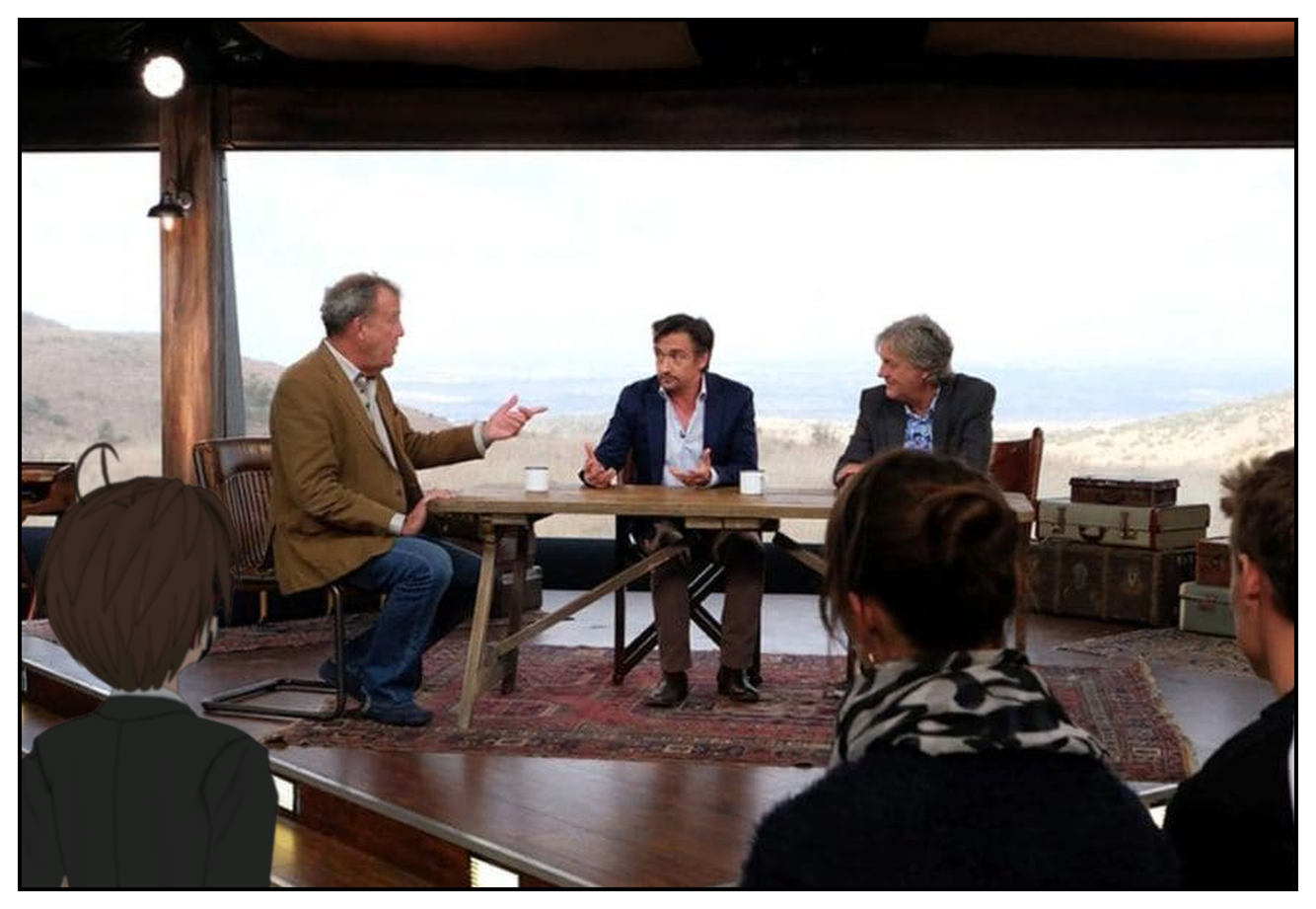
I've been watching Amazon's new "totally not Top Gear, oh wait it is really and we're not even trying to hide it" show The Grand Tour recently. So far I've watched the first three episodes and it's been a lot of fun.

The show follows Top Gear's format pretty closely, usually featuring a single longer film split into two or more chunks over the course of the episode, punctuated by shorter regular features that are usually played more for laughs than anything. The longer film tends to offer a blend between Clarkson, May and Hammond's usual silly activities and some thoughts on their cars of the week, deflecting the common criticisms of Top Gear's latter years in which people accused it of not really being a car show any more.

The longer features have been enjoyably varied so far. One week featured a hilarious sequence of Clarkson, May and Hammond attempting to complete a military exercise — in this case, the "car of the week" was used to assist them in their getaway from an eventually successful rescue mission — while another featured an attempt to recreate the "Grand Tour" of years gone by, whereby wealthy young gentlemen would travel around continental Europe in an attempt to learn more about culture and the arts. (The latter was enjoyably undermined by Hammond turning up in a noisy Dodge and repeatedly doing donuts at every opportunity while Clarkson and May drove an Aston Martin and a Rolls-Royce in an attempt to be more "refined" respectively.)

The shorter features are a little hit and miss. "Conversation Street" — essentially a part of the show where the three talk in a rather unstructured manner similar to the "news" section of Top Gear — tends to work well, as the group has great chemistry as always, and plenty to talk about. "Celebrity Braincrash", meanwhile, ostensibly a segment where they invite a celebrity on to participate in a difficult quiz, but where the celebrities in question inevitably die in some comedically ridiculous manner on their way to the tent that plays host to the show, is a gag that kind of ran its course in the first show and would have probably been better served being replaced by something new in subsequent episodes.

Likewise, the show's replacement for the Top Gear test track is a cool course with some entertaining gimmicks, but "The American", the show's Stig-equivalent, isn't a patch on the understated, mute hilarity of Top Gear's anonymous driver. Like Celebrity Braincrash, "The American" is a bit of a one-note joke, though thankfully in this case not one that is repeated in every episode.

Despite its flaws, however, I've been enjoying The Grand Tour, and it's proven to be an enjoyable successor to Top Gear. I watched a few episodes of the new Top Gear with Chris Evans and Matt LeBlanc and didn't hate it, though it wasn't the same at all; the chemistry and sense of genuine friendship that Clarkson, May and Hammond had built up over the years simply wasn't there with the new cast. Fortunately, with the existence of The Grand Tour, this is no longer an issue, since those who enjoyed Top Gear's old way of doing things can now simply get more of the same.

Some might call that unimaginative. I would call it eminently sensible on Amazon's part, and great for the people who just wanted more of the show they enjoyed without radical changes.

2519: Chicken-chan x Lillie, OTP

One of the things that attracted me to try out the new Pokémon game was the amount of fanart it was generating even before its release. The Internet, it seemed, was particularly enamoured with Lillie, a major character in the story.

This animated GIF was the first time I noticed her:

tumblr_ogslhxbqyf1vhwy42o1_500

Said GIF is from the Pokémon anime rather than the game — and interestingly Lillie looks considerably younger in this than she does in the game and her official artwork, perhaps to ensure she is in keeping with the perpetually young Ash — but I found her immediately striking and endearing with her distinctive outfit, cute haircut and adorable reaction to Tauros. She doesn't react at all like this when the player-protagonist encounters Tauros in the games, suggesting that her anime counterpart may be depicted as a slightly different character.

Anyway, I digress. Lillie caught my attention for some reason, initially with this GIF and subsequently with a considerable amount of fanart that started popping up around social media and suchlike.

lillie_pokemon_pokemon_game_and_pokemon_sm_drawn_by_mei_maysroom__sample-3411f81deea614fcf976aa1afd62e77b
Source

Here Lillie is seen closer to her depiction in the game, including her bag, in which she carries "Nebby", a Cosmog Pokémon that she… "acquired" for reasons that are not yet apparent with my progress in the story. This somewhat pensive pose is also more characteristic of her depiction in the game; she's shown to be a rather sensible girl who cares for Pokémon, but dislikes the world's love of Pokémon battles because the participants often end up hurt. She's constantly down on herself for not being a "proper trainer", and attaches herself to the player-protagonist when the two develop an immediate connection by chance early in the narrative

You can play a male or female protagonist in Pokémon Sun and Moon, but with the Internet being the Internet, the fanbase of video games with Japanese origin loving a bit of yuri and the female protagonist being pretty cute in her own right, much of the fanart depicting Lillie with the game's protagonist has focused on the same-sex pairing to varying degrees.

female_protagonist_and_lillie_pokemon_pokemon_game_and_pokemon_sm_drawn_by_nonobuki__sample-2843bb2fb9457e1531f556890dfff18d
Source

The pairing is immediately appealing because the two characters are strong contrasts with one another. Lillie is blonde, pale and depicted as lacking in self-confidence, while "Chicken-chan" — so dubbed by a few people here and there owing to her silly hat — is dark-haired and shown to be curious, self-assured and more than willing to poke her nose into all manner of things. Even the way Chicken-chan walks in the games presents an air of confidence; she struts with great pride, while Lillie kind of saunters along, often looking like she's hoping no-one will notice her.

female_protagonist_and_lillie_pokemon_pokemon_game_and_pokemon_sm_drawn_by_nicola_pixiv_21072914__sample-f2262b8dc37a5a47c28dec8f1eade25a
Source

Naturally, there's a ton of fanart out there suggesting that Chicken-chan and Lillie are more than just friends, such as this lovely image that looks like it's straight out of a visual novel. And of course, there are plenty of images that take things… um… a little bit further, shall we say, but I'll leave you to investigate Rule 34 for yourself if you dare.

cosmog_female_protagonist_and_lillie_pokemon_pokemon_game_and_pokemon_sm_drawn_by_mimikaki_men_bow__c36d04312329f17442b22da9e6b19688
Source

I really adore seeing the community as a whole get so wrapped up and invested in a fictional (and, one would argue, non-canonical) relationship between two characters in this way. It's touching to see everyone "rooting" for these characters, and for so much of the artwork (explicitly lewd stuff aside, obviously) to just be so good-natured, positive and accepting that you can't help but feel good when you see it.

I mean, obviously a lot of the appeal of the Chicken-chan x Lillie pairing is the simple fact that it's two cute girls being cute together, but in a world where particularly vocal critics are constantly complaining about the "toxic" culture of gaming, the sheer volume of high-quality fanart of this kind — and the keenness with which it's shared — is a reminder to us all that perhaps things aren't quite as bad as the world's perpetual whingers might want us to believe.

2518: The Pitioss Ruins

0518_001

I finished Final Fantasy XV's main story earlier on. It was a spectacular conclusion, but that's not what I want to talk about today. Instead, I want to talk about the game's "secret" dungeon, the Pitioss Ruins.

As you have probably surmised, spoilers are ahead, albeit not story ones, since the Pitioss Ruins is a purely mechanical challenge. I am going to talk about all the different aspects of the dungeon, though, so if you want to encounter it for yourself, look away now.

Continue reading "2518: The Pitioss Ruins"

2517: Learn as You Play

0517_001

One of the most interesting things about the new Pokémon games is, I think, the online "Festival Plaza" component that allows you to indirectly communicate with other players, earn rewards and participate in communal challenges. It's also the main hub from which you can challenge other players to battles, participate in tournaments, trade with friends or random people, list Pokémon for trade or seek out specific Pokémon that you're after and a bunch of other things besides.

In typical Nintendo fashion, all the technical side of connecting to the Internet and communicating with other people is made as painless as possible — so much so that were it not for the lengthy connection process and the message on screen that says when you're connected to the Internet, you'd think you were just playing another part of the main game. But you're not; you're in an area where every character you meet represents someone else who is playing the game somewhere in the world, and the things they say reflect things they have done and choices they have made.

One particularly interesting aspect of the Festival Plaza is the fact that you can host "missions". These are simple minigames that usually involve running around the plaza and either talking to the correct people based on their greetings to you, or answering their questions correctly. The more points you score with correct actions, the more Festival Coins you earn, which can subsequently be used on Festival Plaza's attractions.

What's interesting about these missions is that it's not just you playing them. Host one while you're playing online and you may well notice your "total score" increasing faster than you're contributing to it, and the number of participants rising. This is because when someone hosts a mission, other people connected to Festival Plaza at the same time receive a message and have the option to take part. Everyone who takes part gets rewards, and the higher the overall total score at the end — which can usually be inflated considerably by just a few more participants — the bigger the rewards everyone gets. It offers a nice balance of simple gameplay, light competitiveness — there's a leaderboard at the end of the mission to show who contributed the most points — and jolly cooperation. And with Nintendo's typical lack of direct communication facilities — something which I'm increasingly thankful for with the growing unpleasantness of many online playerbases — the whole thing just feels like a nice bit of fun.

The other interesting thing about these missions is that you can learn something from them. Some of them challenge you to name the correct types of Pokémon that would be strong against another particular type, for example, while some of them challenge you to pick out people who are naming specific types of Pokémon. But these missions aren't all about the game itself; some of them are straight-up educational and seemingly developed in the interests of making people from all over the world feel a bit closer together. Of particular note are the "Language Lesson" missions in which all you have to do is find the people who are saying "hello", "goodbye" or "thank you" in a given language. You're given the set phrases to look out for in the mission information, then after that it's up to you to remember them. By the end of the couple of minutes the mission takes, you'll feel confident at saying those three phrases in another language, which is pretty neat.

Since Pokémon is primarily aimed at kids, despite a considerable adult-age enthusiast community of competitive players, I'm not anticipating any of these missions will get into anything too deep or complicated, but they've been a nice diversion from the main game, they feel in keeping with the overall tone of the whole thing and I've learned a thing or two from them, both about Pokémon in general and a couple of foreign languages to boot.

2516: Alola!

0516_001

When I've not been playing Final Fantasy XV, I've been giving Pokémon Moon a serious shot, as I'm determined to try and understand the obsessive appeal the series has. And I think, finally, I'm starting to "get it".

Part of this is, as I described a few days ago, the fact that Sun and Moon have refined their systems and interfaces to a level where I'm not frustrated by a lack of information any longer, although I do feel there's a certain amount of "assumed knowledge"; an understanding that many of the people who are playing this have previously played at least one Pokémon game to death. This leads to a certain amount of flailing around in the early hours as you try to figure certain things out — though pleasingly, the game does actually take the time to point out what common series abbreviations like "TM" stand for, which is something I don't recall and Y doing.

Pokémon has evolved considerably over time. I played Red and Gold when they first came out on Game Boy, then set the series aside until and which I gave a go for a bit but didn't really feel, although there were certain aspects I did like. Chief among these was the amount of customisation there is in the game, which has really come to the forefront in the 3D installments. I'm a sucker for any game that gives me the opportunity to play a cute girl and dress her up in cute outfits, and Moon certainly hasn't been disappointing in this regard, with plenty of hair and clothing options to choose from. (I actually found myself not wanting to customise and Y's default female character because I liked her standard look so much, though I understand there was a similar situation here.)

Moon's online feature — the Festival Plaza — is a little peculiar in that true Nintendo "no direct online interaction!" way, but it's charming, endearing and friendly in, yes, that true Nintendo way. Not only do you get the opportunity to ogle the wonderful avatar creations of other players — both from your friends list and randomly gathered from online — but you also get to interact with them in various ways. Perhaps the most appealing part of all this is the fact that it's possible to populate your online profile with a questionnaire covering all manner of different topics, and there are a wide variety of different responses you can give to the prompts — some sensible, some nonsensical. This allows players the opportunity to express themselves and their personality without the potential for unpleasantness that unfiltered direct online communication often brings with it.

As for the main game itself, the setup has been enjoyable so far. In typical Pokémon fashion, you set out from your childhood home to have an adventure, largely prompted by the local crazy professor. Along the way you encounter a rival (who is more of a friend in this character than in some previous installments) and a recurring team of villains (who are, as usual, comedically incompetent in this installment, with the main difference being that the general populace of the Alola region knows how comedically incompetent they are rather than living in fear of them) as you seek to prove your might as a Pokémon master.

I like the fact the structure of the game has been shaken up a bit from "get to each town, visit gym, defeat everyone in there" from the previous games. The new "trials" concept covers the same basic ground, but seems to handle things more like a traditional RPG dungeon, with objectives to complete along the way followed by a boss at the end. I'm interested to see how this develops further in the game — I'm still on the first island at present.

I'm not yet quite sure if I'm "doing it right" with regard to my team makeup and levelling strategy, but I'm sure there are no mistakes I might make that can't be corrected with a little grinding or, if the worst comes to the worst, catching a fresh new Pokémon of a particular type. In the meantime, I'm genuinely enjoying Moon, and I'm keen to see how the game develops in its later hours.

2515: Life in Eos

0515_001

Still plugging away at Final Fantasy XV, and still having a lot of fun. I'm now up to Chapter 8, as I eventually ran into a roadblock in Chapter 3 where part of the map where several sidequests concluded was locked off and thus I had to progress further to be able to continue. Along the way I enjoyed some spectacular story sequences, but now I'm back on the sidequest train for the moment.

I've been very much enjoying the whole experience of Final Fantasy XV so far. While the sheer amount of sidequests and other distractions around the game world absolutely kill the pacing of the main story if you don't have the self-discipline to focus on that first and do all the other shit later, all that side content is enjoyable to do. As I noted in my first impressions a few days ago, the whole game feels like an inversion of the usual Final Fantasy formula, in which a wide variety of things are open to you from almost the very outset of the game, and you're simply able to immediately go and do whatever appeals to you the most.

Like Xenoblade Chronicles X, an open-world RPG that had a rather similar structure, I've been enjoying how much all the side content makes the world feel like a fleshed-out, lived-in place. Through numerous sidequests — and the conversations your party members have during these quests — you learn quite a bit about the world that you might not discover if you just focused on the main story. The town of Lestallum, for example, is one with a pretty strong gender divide that has come about naturally over time; the women (who are "built", according to Gladio, who one can infer from his enthusiasm is all about the thicc girls) work the industrial jobs such as maintaining the power plant in the city, while the men run the market stalls, restaurants and shops. You might not notice this immediately if you just pay it the flying visit you do in the main scenario quests, but Holly's series of sidequests explores this side of things a bit further.

I've enjoyed the dungeons, too. I think I've cleared them all now — with the exception of the high-level deeper levels that open up once you've completed the main story — and they've been pleasingly different from one another. Particular highlights included the Crestholme Channels, a labyrinth of sewers beneath the outskirts of the Crown City, and Costlemark Tower, a complex dungeon with a shifting layout that you have to carefully navigate your way through in order to reach the boss at the end.

(As a side note, Costlemark Tower presently has a bug in it where sometimes if you've done things in the "wrong" order, beating the boss will not trigger the final cutscene and award you with the weapon you're supposed to get for clearing the dungeon. If this happens, exit and re-enter the dungeon, work your way back to the boss room and trigger a somewhat glitchy cutscene. You then have to fight the boss again, though the bug means that you can't target it unless you're able to trigger a Summon spell. You can, however, fling magic at it; Blizzard spells are particularly effective, so stock up on those before going in for an easy victory.)

I think I'm just about coming to the limit of sidequests that are left to do before I'll be obliged to continue on with the main story. At about 57 hours deep in the game so far, I've already very much had my money's worth, but I'm keen to see how the story continues and concludes — and also very excited to explore what sounds like a considerable amount of post-game content.

2514: Ghost Train

0514_001

A short while ago, Pac-Man Championship Edition 2 was considerably reduced in price on the PlayStation Store, so I grabbed a copy. I'm a big fan of the previous Pac-Man Championship Edition games — particularly Pac-Man Championship Edition DX, which is one of the finest arcade games ever created — but had heard mixed reviews about Championship Edition 2. Still, I was willing to give it the benefit of the doubt.

The first thing I'll say about Championship Edition 2 is that its big new structural addition — a so-called "adventure mode" — is total garbage. It consists entirely of time attack phases in which you have to eat sufficient dots to make a piece of fruit appear — very rarely is this the entire maze worth of dots — and repeat until you have eaten sufficient fruit to clear the stage. At the end of every block of near-identical levels is a supposed "boss fight" in which you do exactly the same thing, only with a giant ghost bashing into the background every so often.

"Total garbage" may be an exaggeration in retrospect, as these challenges are mildly diverting, but they miss the entire point of Pac-Man Championship Edition, which is to score as many points as possible against a strict time limit.

Fortunately, the Score Attack mode is a lot of fun, and Championship Edition 2 is a different beast from its predecessors in a number of ways.

Firstly and most significantly, bumping into a ghost no longer immediately kills Pac-Man, unlike all the previous incarnations of the game including the previous Championship Edition installments. Instead, Pac-Man bounces off the ghost, though bumping into one several times (or once on Expert mode) causes the ghost to become "angry", which makes it speed up, chase Pac-Man and become fatal to the touch. However, sometimes it is desirable to do this, since making a ghost angry causes it to fly up in the air and out of the way for a couple of seconds, so you can deliberately provoke a ghost in order to clear a path for yourself.

Secondly, the "ghost trains" introduced in Championship Edition DX work a little differently. There are several modes of play — the first has four ghosts wandering around, but only one of them forms a train when Pac-Man passes by a sleeping minion ghost, while the other two form up to four trains in total, one for each ghost. Unlike Championship Edition DX, minion ghosts don't join a train by a ghost passing them; they immediately wake up when Pac-Man passes by them and automatically attach themselves to one of the trains, even if it's nowhere near where the minion was. This allows you to create huge ghost trains by planning your route carefully rather than having to manipulate the ghosts AI.

Eating a power pill works a little differently, too. Power pills only spawn on certain mazes after you've eaten a certain number of dots, and consuming one causes the ghosts and their trains to turn blue in the traditional manner. However, in Championship Edition 2 they move on set routes that are specifically marked on the maze, allowing you to predict where they are likely to go and head them off easily. Said routes tend to branch in several places in the harder mazes, so it's not as easy as it sounds, but by learning the routes and the way the ghost trains attempt to avoid Pac-Man, you can become more and more efficient.

Oh, and ghost trains have to be consumed from their head now rather than from any point. This can be surprisingly challenging, though chomping your way through all four ghost trains in the maze, which causes both the train and Pac-Man to go flying through the air in a ridiculously overblown display of acrobatics, is immensely satisfying.

Bombs work differently, too. Rather than blasting the ghosts up in the air for a moment as in the previous installment, bombs now send Pac-Man back to the starting point of the maze, which can be a quick means of retrieving the fruit if it's spawned and you're a long way from it. However, bombs are worth quite a few points at the end of your allotted time, so it's worth holding on to them as much as possible; more can be acquired by consuming every dot in a maze rather than just the amount required to spawn the fruit needed to progress.

Extra lives also show up at predictable moments — every 1 million points — as collectible items in the maze, and these are worth huge points at the end of a game, so it's in your interest to collect them before progressing to the next maze. They're easily missed, so the mark of a true pro Championship Edition 2 player is going to be planning their scoring effectively so that they hit a multiple of a million points at a suitable moment to grab the extra life without inconveniencing them — and not, say, crossing the million boundary on the changeover between levels, which causes you to miss out on the opportunity to collect the extra life altogether.

There's quite a lot to Championship Edition 2, then. Fundamentally, it's still based around Pac-Man, but it's pleasingly distinct from its predecessors and fun in its own right. It has a couple of irritating factors — most notably a lengthy, non-skippable and rather unnecessary tutorial sequence before you can play Score Attack or Adventure mode, and, of course, Adventure mode itself, which is a waste of time — but on the whole, once you get stuck in to chasing the high scores, it's a lot of fun. And, like its predecessors, it's a game you can easily spend several hours enjoying when you really have more important and interesting things to do with your life.