2336: From the Shores of Felghana

0336_001

I started Ys: The Oath in Felghana today after finishing the main story of Ys Origin. (I do intend to go back and replay Origin on the harder difficulties as well as grind through its extra modes and unlockables, but that will be a gradual process!) So far I've played about two hours or so into the main story, beaten four bosses and yelled more curse words at a game than I can remember doing for a very long time.

Oath in Felghana is hard. Really hard. Like, really really hard. I did not know this going in, so feeling quite confident off the back of clearing Ys Origin (which was challenging, but not mega-hard) I thought I'd start Oath on Hard rather than Normal.

I started to think that I had maybe made the wrong decision when the first boss took me a good ten attempts. When the second one took me probably twenty or thirty tries — including having to stop after a few attempts because I was getting pretty wound up by the whole thing — I seriously considered restarting on Normal or Easy, but my pride prevented me from doing so.

Then I beat that boss, and I remembered what I had discovered during my first runthrough of Ys Origin. Ys games, so far as I can tell, are not games intended to be breezed through without any resistance whatsoever. They're short, yes, but whenever their diminutive length is quoted, it isn't taking into account all the times you'll have to retry the difficult bits. Because you'll have to retry the difficult bits a lot. In other words, Ys Origin and Oath in Felghana may well be "10 hours long", but that figure assumes that you'll beat all the bosses first time and won't make any stupid mistakes while exploring lava-covered ruins. And I can assure you that you won't beat all the bosses first time, and you most certainly will make stupid mistakes while exploring lava-covered ruins.

This difficulty makes it all the more satisfying, though. There's a feeling of genuine "release" when you finally overcome a difficult challenge, and much like Ys Origin, I've found that while the bosses in particular are difficult, you'll almost certainly find yourself getting a little bit further each and every time you try, rather than stagnating with absolutely no idea whatsoever what to do. Oath, like Origin, is so well designed that it manages to "train" you how to beat its bosses without giving you any explicit instructions. The animation and sound cues, the attack patterns, the overall "rhythm" of the encounters — all of them are carefully tuned to make each encounter surprisingly intuitive, and while many of them aren't especially complicated in terms of mechanics, you'll need to practice in order to perform what the game is asking of you flawlessly. And you will need to be as close to flawless as possible, because Oath in particular is very unforgiving.

It's funny. The Souls series kicking my ass and forcing me to learn encounters is one of the things that ended up putting me off it, but I'm really enjoying it in the Ys series. This leads me to believe that it's perhaps not this actual style of game that puts me off, but the aesthetic; Ys is colourful, cheerful and energetic, while Souls is dark, dreary and depressing. While there's a time and place for dark, dreary and depressing, I tend to prefer that sort of thing in my survival horrors and adventure games; when I'm RPGing, I want to be heroic in a colourful fantasy land filled with pretty girls. And Oath in Felghana is certainly delivering on all fronts so far.
2335: Goddesses

0335_001

I finished Ys Origin's true route this evening, and if the first two games hadn't already convinced me this is a series that will stay with me a long time, that ending would have certainly done it. The way it establishes the backstory of things that are just a matter of course in Ys I and II is beautiful, and it brings a whole new layer of meaning to the overarching storyline and mythology of the series. I'm looking forward to seeing how — if? — this mythology fits into the games I'm yet to play.

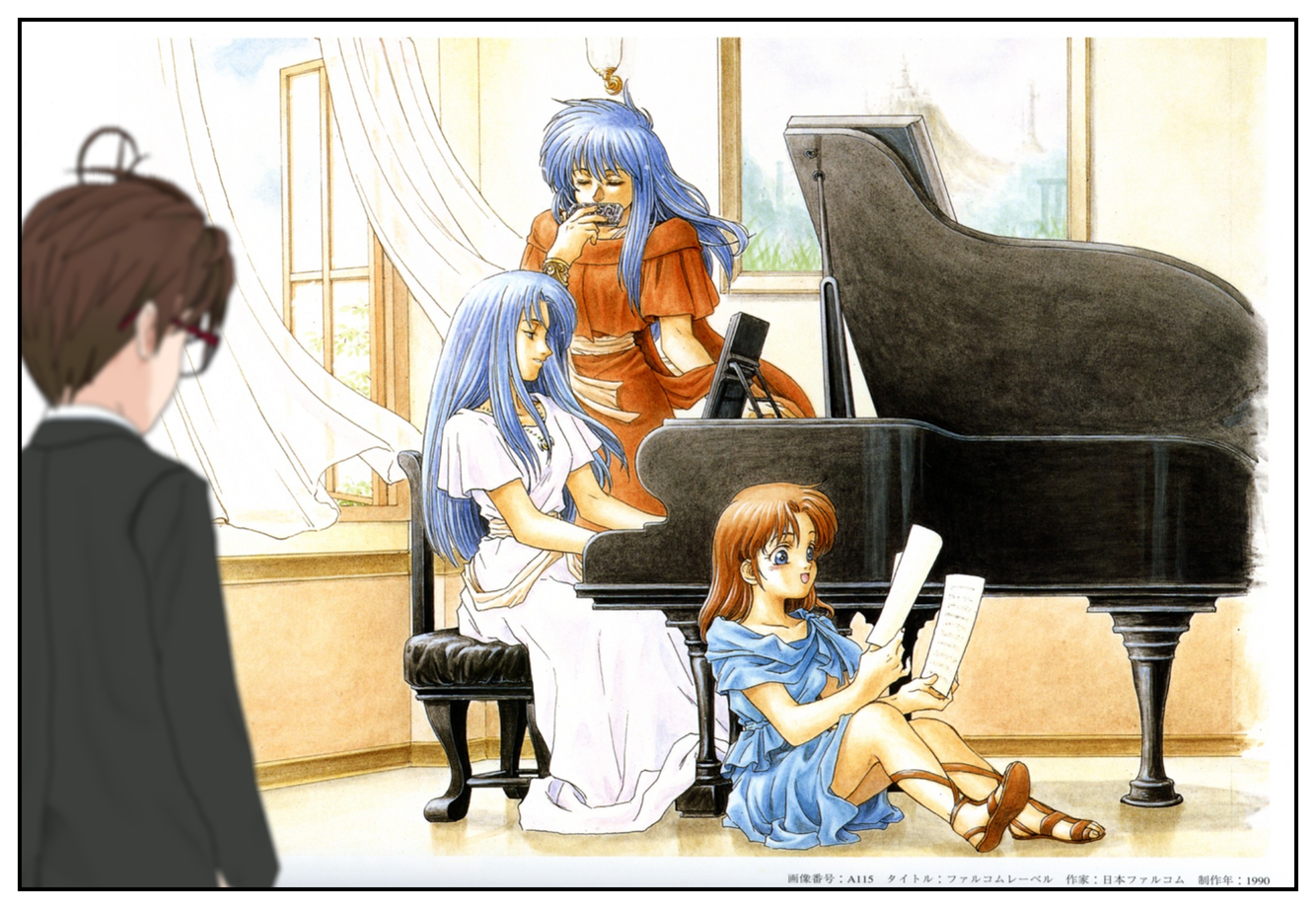
The thing that's struck me most from these three games in the series that I've played so far is how beautifully the goddesses Reah and Feena are handled. It's hard to tell whether this is the work of the original Japanese script or Xseed's excellent localisation, but either way, they're wonderfully depicted characters that act as an important centrepiece to these three episodes of the overall storyline.

The most striking thing about them is how overwhelmingly nice they are. And I don't mean in a bland, uninteresting way; both Reah and Feena are convincingly friendly, approachable characters despite being divine beings, and there's a decent amount of the backstory in Ys Origin in particular that deals with their loneliness and desire to have friends among the humans rather than being revered as the powerful beings they are. Indeed, even in Ys I where series protagonist Adol Christin encounters an apparently amnesiac Feena, she seems keen to cling on to him and develop a close personal relationship.

They're a study in contrasts, too, despite being similar in appearance and bearing. Feena is kind and gentle — the sort of person it would probably be nice to have a hug from. Reah, meanwhile, is more willful and stubborn, but counterbalances this with a similarly graceful demeanour and a desire to always be hospitable to those who have the confidence to approach and address her. They make a good pair, and while we don't see a huge amount of either of them in the first two Ys games, this is more than made up for in Ys Origin, where we get to spend quite a bit of time with both of them.

Perhaps the nicest thing about them is the feeling that the Ysian religion, based on following the teachings of the Six Priests and worshipping Feena and Reah, is both plausible as a belief system and comforting. It's not infallible, by any means, either — indeed, Toal comments to the goddesses in Ys Origin that they are "barely even half perfect", and it's partly everything the goddesses and their helpers put in place that led to the apocalyptic situation that greets you from the outset of Ys Origin — but it's obvious that the goddesses, both as people and as mythological figures, bring great comfort to the populace. In a world where JRPGs in particular often take rather ruthless aim at religion as part of their narratives, highlighting the negative aspects rather than the positives, the Ysian approach to belief systems is almost refreshing.

I think that sums up the tone of the series quite nicely, too. While there's plenty of darkness, evil and unpleasantness going on — arguably more so in Ys Origin than in and II — there's an overall warm feeling to the series that brings to mind comforting childhood stories like fairy tales and fables. I anticipate that this feeling will become stronger as I spend more time with regular series protagonist Adol in the subsequent games, but the three distinct stories in Ys Origin unfolded in a compelling, interesting manner, too; they presented a convincing back story to what unfolds 700 years later in Ys I and II, and I'm left with an almost overwhelming desire to immediately go back and play and II again having seen what Origins' story had to offer.

I'll save that for now, though; I've still got Oath in Felghana, Ys VI, Ys Seven and Memories of Celceta to get through. And I'm looking forward to all of them.

2334: Another Blog on Depression, and How Unemployment Fits In

0334_001

My good friend Dan wrote this excellent post on depression the other day, initially as an email-based TinyLetter, and subsequently as a blog post to be more widely shared.

It struck a chord with me. My experiences over the years haven't been anything near as traumatic as what Dan has dealt with, but a lot of the things he describes in his piece are very familiar indeed.

Here is the major issue with depression… it’s a dirty fucking liar. When I’m laid out on my bed (not in it, that requires movement) the black dog learns to speak. It doesn’t even do so with a pleasant cartoon voice, it’s one laced with bile and venom; a deep booming voice that rattles my core. Living with that constant voice is miserable. The black dog tells me that I’m no good at anything; that I’m a terrible parent; that nobody loves or appreciates me. It’s no use arguing with him at these times because his droning is relentless.

What makes it worse is that in every positive message I see around me, I’m left with a residue of self hatred. A friend of mine lands a great freelance writing position, that’s great… the black dog chews my ankle and says “you could have done that, but you didn’t because you’re useless. To be honest, you probably wouldn’t have even got the chance. Waste of space.”

Hoo, do I ever know this feeling. Part of it is a sense of impostor syndrome: the feeling that you'll never be quite as good at a thing you actually should be quite confident in as other people. The rest of it is simply a crippling sense of self-doubt and a lack of general self-confidence.

Unemployment really doesn't help with this. The worst thing about unemployment isn't the lack of money, though that certainly doesn't help and leads to a lot of worries and stress that can be otherwise avoided. No, the worst thing about unemployment is how it gradually eats away at your confidence, convincing you more and more each day that you're a worthless human being, that no-one will ever want you, that your skills are useless.

This is about where I am at the moment. I've been spamming out job applications for the past week or so, forgoing my usual approach of taking hours over a single application and then getting upset and depressed when it comes back as a rejection. While I know it's pretty much a crapshoot and random chance plays as much of a role as your actual talent for a position, it's still extremely demoralising the longer it goes on for. As I browse through lists of available jobs, I find myself wondering if I'm able to do them, even entry-level menial jobs. Even with jobs I know that I could do, like anything involving IT, I find myself hesitating over them because I don't feel confident that I'd be able to get my skills and enthusiasm across. Not having any particularly relevant qualifications or experience for the fields I'm interested in is a problem, too: my qualifications all relate to teaching, which theoretically could transfer to some sort of training position, but for stuff like IT the only thing I have to offer is my innate knowledge. That knowledge is solid, secure and fairly comprehensive, but not having a piece of paper to prove I have any of that knowledge leads to a constant sense of anxiety and inadequacy.

I hate this feeling. And I know all I have to do is keep plugging away in the hope that something good happens, and I'll almost certainly feel better once I have some regular money rolling in again. In the meantime, though, it's hard not to feel like a worthless, useless waste of space — even though I know that I'm not. That ol' Black Dog just keeps telling me that I am, and every day it gets harder and harder to reject his evaluation.

2333: Human Slaves in an Insect Nation

0333_001

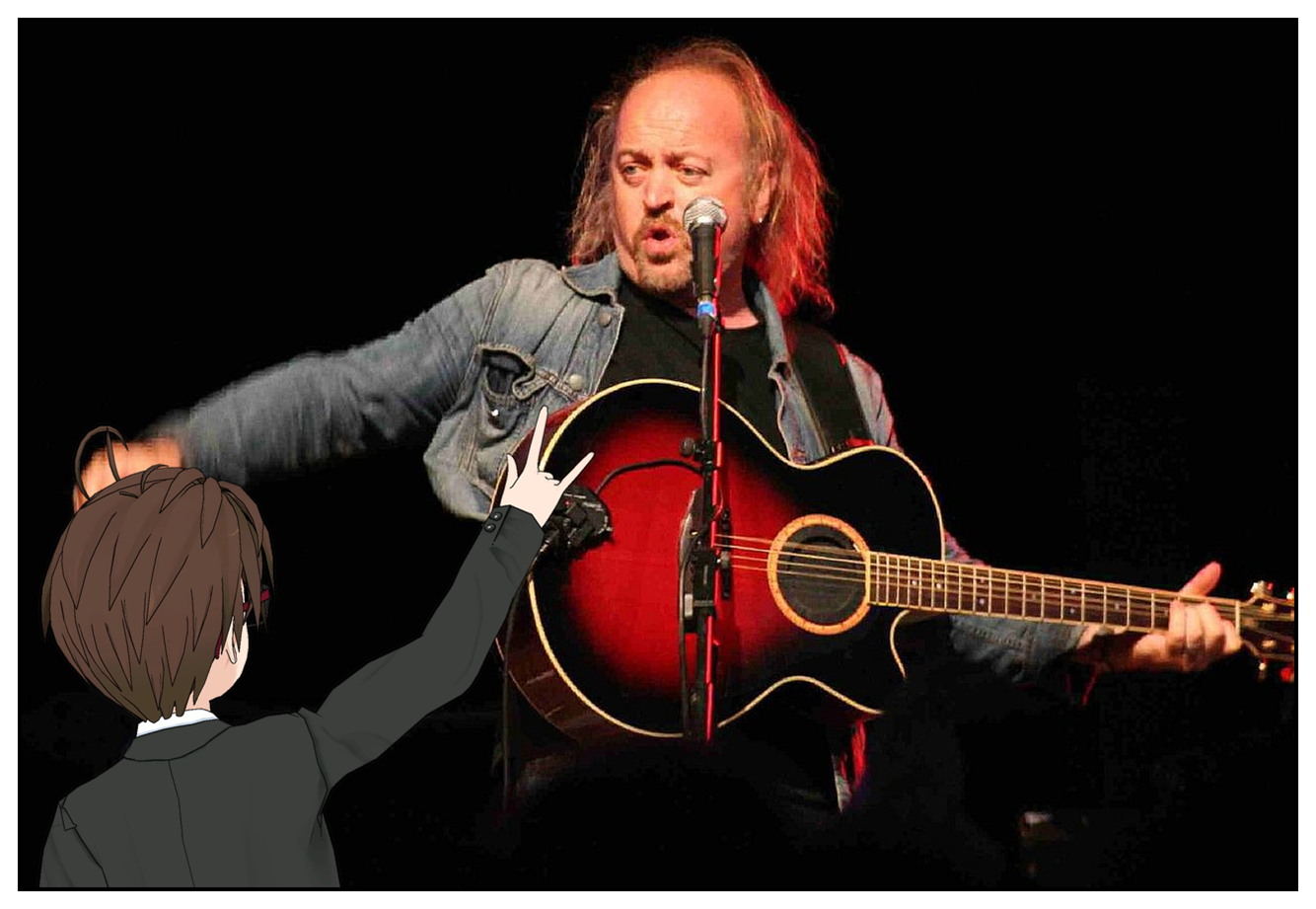
Andie and I went to see Bill Bailey this evening. Bill Bailey is one of my absolute favourite live performers, and I always enjoy seeing his shows. I have, however, watched most of his past content many, many times on DVD and online, so I was more than ready to see some new material.

Fortunately, his new show Limboland proved to be entirely new material, albeit with a few cheeky nods back at his past work for those of us who have been enjoying his blend of music technology wizardry and comedy for years now.

In some senses, it was a little odd to have such an up-to-date Bill Bailey show, because the last time I watched one of his shows, things like social media and YouTube hadn't worked their tendrils into every facet of our existence as they have today, and so it was momentarily jarring to hear Bailey making jokes about YouTube commenters. This feeling soon passed, though, and the content fit very nicely into his set.

As usual, he made impressive use of the music technology he had on stage to provide a true multimedia experience. Of particular note was his iPhone ringtone megamix, where he blended together some of the most commonly heard (and irritating) iPhone ringtones to create a surprisingly solid piece of electronica, and his Ambient Electronica Workshop, in which he created a fake Moby track using samples obtained from audience members. The death metal versions of Lady in Red (which he performed through gritted teeth, having spent a considerable amount of time in his past shows mercilessly mocking Chris de Burgh) and Twinkle Twinkle Little Star were also extremely memorable highlights.

Bailey's humour is chaotic and sort of directionless in a way; he comes on stage and sort of just starts rambling — in one of his past shows he noted that he doesn't really know how to start performances — but his manner of speaking, his friendly manner and the vivid pictures he paints with his words make him a consistent delight to listen to, whether he's talking about the impending EU referendum or going off on some surreal tangent about lizard girlfriends or Lionel Richie thinking that all horses are white.

I think what I particularly like about Bailey is that he's not in any way threatening or scary like some comedians can be. When he interacts with the audience, he mocks them sometimes, but it's always a gentle, friendly mocking rather than outright acidic, spiteful comments. And when he's just delivering his material, it's like listening to an old friend or family member with a particular penchant for delivering anecdotes — perhaps with a few embellishments here and there — talking to you during a quiet evening in your living room as you sip port, or over the dinner table as you await the arrival of the raspberry pavlova to conclude your meal.

I'm sure that were I ever to come face to face with Bailey I would react much like he said he did when he encountered Sir Paul McCartney — that is to say, much like I reacted when I encountered the father of the adventure game, Don Woods, i.e. turning into a dribbling, awkward moron (even more so than usual, I mean) — but since that is probably unlikely to happen I can continue to enjoy the mental image of Bailey as "the friend I never had"; someone I always enjoy spending time with, and even after several years without seeing him, the second he comes back we're right back to the way we've always been together.

In short, Limboland was a wonderful show, and if you have the opportunity to see him live, I highly recommend you take it.

2332: A Musical Journey

0332_001

Let's try a little experiment, shall we? I'm going to start with a YouTube video of a piece of music I really like. Given that I've just come off a session of Ys Origin, let's make it a piece from Ys Origin. After that I'm going to see where the Related Videos take us, and we'll go on a little journey. I'll try and give a bit of useless trivia for each track.

To give things a bit of variety (though I'm not promising quite how much!) I'll pick the first Related video that isn't 1) a Recommendation for me based on past viewing and 2) from the same game, movie, whatever as the previous one.

Ready? Here we go.

This is the theme that plays in the final area of Ys Origin, and I particularly like it because it uses one of my favourite soundtrack techniques: making use of the main theme in a different way to how it sounded originally. When used in a finale sequence, as it is here, it gives the whole thing a nice feeling of "closure" — or at least of approaching the end, anyway.

To put it more simply, effective use of this technique can get you seriously pumped for the final battle. And Ys Origin certainly does it well.

Onward!

I haven't played Ys: The Oath in Felghana yet, but it's probably next up after I finish with Ys Origin. As such, this is the first time I've heard this piece, and I'm pleased to hear that it has Falcom's distinctive prog rock-inspired sound about it. While I don't really know a lot about prog rock itself, I do like the sound of music inspired by it, and it seems there are a number of Japanese groups that do it very well — Falcom's sound team being one. (Nobuo Uematsu's bands The Black Mages and The Earthbound Papas are some others, though they do arrangements of game music rather than directly soundtracking games for the most part.)

Unsurprisingly, YouTube is taking us on a distinctly Ys-ian journey. Again, I haven't played this game, so it's my first time hearing this track, and initial impressions are good. Again, it has the melodic rock sound to it, but it also makes use of some violin melodies, which I often find sound really nice in the context of instruments you might not typically associate violin with. Other examples of this being done well include its combination with electronic instruments in Final Fantasy XIII's main battle theme, and as part of a distinctly modern-sounding pop ensemble in Omega Quintet's two battle themes.

Yet another Ys I'm yet to get to, and I know I have at least a couple of friends who count this soundtrack among their favourites. The timbre of this one's soundtrack is a little "cleaner" and perhaps more artificial-sounding; there's certainly some synthesised brass going on, but the guitars and solo violins sound fairly convincing.

The slightly more artificial sound of the music is presumably down to Ys VI being an earlier release than Oath in Felghana and Origin, and Falcom's sound team still refining and developing their sound with new tech and capabilities.

We've escaped the Ys series! And we find ourselves involved with another Japanese video game company's internal sound team that is world-renowned as being Rather Good. In this case, we're with Gust, developers of the Atelier and Ar Tonelico series, both of which have simply lovely soundtracks.

This particular piece is from one of their slightly lesser known games, Mana Khemia, which is often regarded as part of the Atelier series due to its thematic and mechanical similarities.

And speaking of Atelier, here's a track from one of the more recent ones. It very much sounds like the distinctive sound Gust has put together for the Atelier series over the last few installments, featuring prominent use of traditional "folk-style" instruments such as harmonica and penny whistle.

I'm also a big fan of this track's title.

Staying with Atelier and moving forwards in time, this is from Escha and Logy, a game I don't know a lot about but know is reasonably well regarded in the Atelier canon. There's a pretty cool guitar solo in the middle of this track, too.

And we're up to the most recent Atelier game, Atelier Sophie, and a track with a pretty magnificent rhythm guitar part. There's also a hint of Nights of Azure in there with the prominent use of harpsichord/clavichord. In fact, this whole track wouldn't be out of place in Nights of Azure.

YouTube agrees. Nights of Azure was a really great game that I enjoyed a lot, and a big part of that was due to its wonderful soundtrack, also the product of Gust's sound team, but clearly heavily inspired by Michiru Yamane's work on the older Castlevania games. This sort of Gothic rock is perfectly fitting with the game's fast action and overall tone, and contrasts nicely with the more gentle music used in its story sequences.

Let's do two more, or we'll be here all night. This one's from Megadimension Neptunia V-II, a game which I'm sure you already know I liked a whole lot. This particular track was one of my favourites due to its heavy use of some distinctly retro-sounding synthesisers, which brought to mind a few things: the synthesised music of Sega Mega Drive/Genesis games, and the once-fashionable .MOD format of digital music, which effectively used short, digitised samples as "notes" on a virtual synthesiser-sequencer and allowed those who knew what they were doing to put together multi-track compositions.

Last one!

Eternal Sonata was an extremely peculiar concept for a game in that it's an RPG based around the noted Romantic composer Frederic Chopin. In keeping with that, the soundtrack has a distinctly Romantic feel to it, with authentic orchestral instruments used to give the music a very different feel to more obviously "gamey" pieces. The game also used some of Chopin's work directly in its soundtrack.

2331: Revenge of the Horde

0331_001

Patch day for Final Fantasy XIV today, and it seems like a good one so far. I haven't yet delved into absolutely everything on offer — partly because I went out for the evening — but what I've seen so far is pretty great.

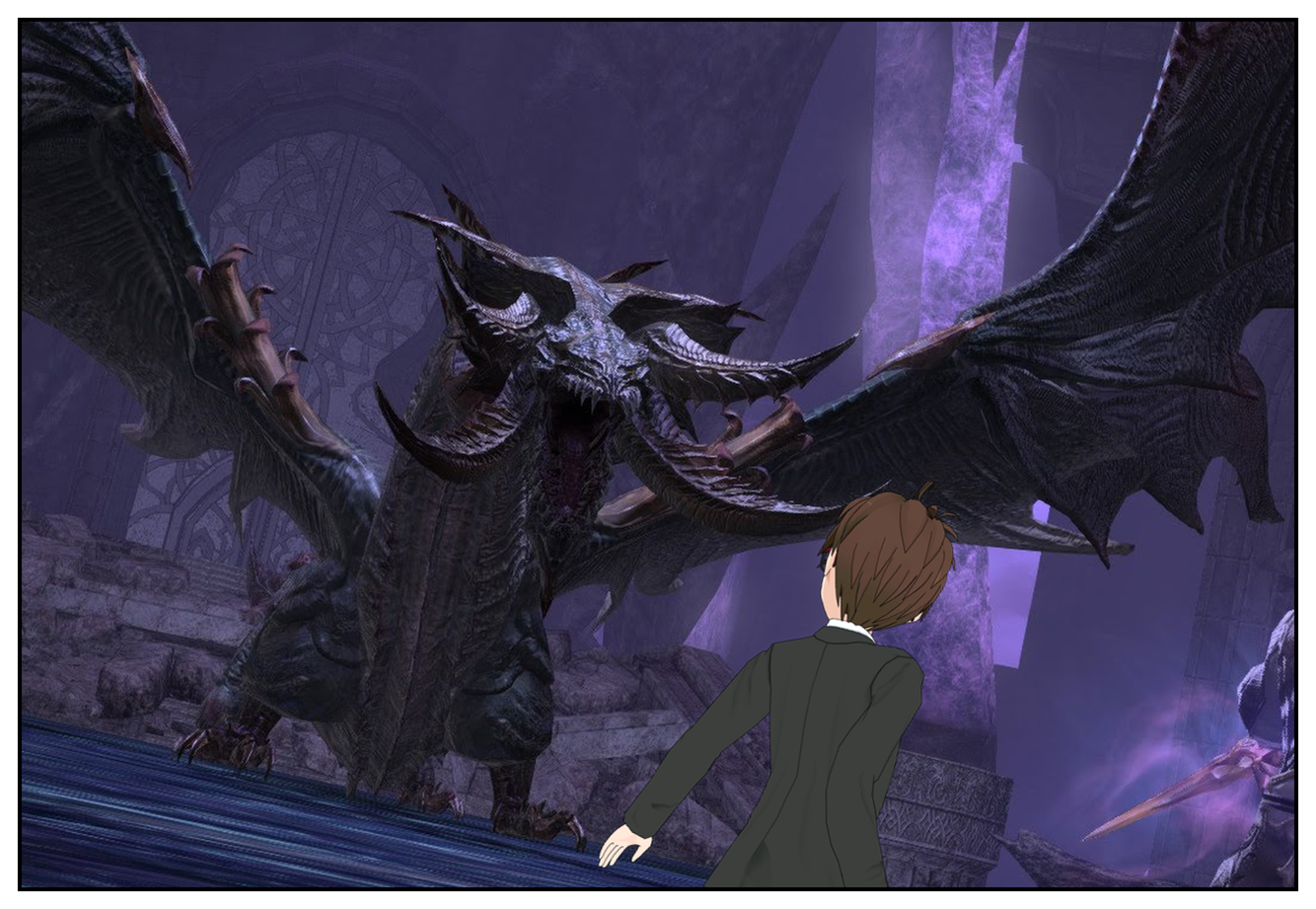
Of particular note is The Final Steps of Faith, the big new Trial for this patch. This sees players taking on the mighty Nidhogg in a battle to the death as he brings the full force of his rage down on Ishgard and those he believes to have betrayed him.

The Final Steps of Faith is a cool fight, because — at the moment, anyway — it's genuinely challenging, even in its story mode incarnation. It's not excessively difficult by any means — the challenge factor comes from the fact that you actually have to pay attention to mechanics and can't just cheese your way through it. I'm all for this; while there's a certain amount of pleasure in being able to overpower old content with top-end gear, it's always a bit of a disappointment when fights that were once challenging, exciting and dramatic become a matter of simply soaking up all the damage being thrown at you and repeatedly smacking the enemy in the teeth.

I'm sure this situation won't last with The Final Steps of Faith, but for now it's nice to have an important storyline fight carry the appropriate amount of drama for the context.

This got me thinking back to the reasonably hefty amount of time I spent playing World of Warcraft, and how that game never quite got me feeling excited about combat. Things got a little better when I went a bit crazy modding the game's UI and added a "Jukebox" mod that allowed you to play music in combat, but it still never felt quite the same as an exciting encounter in a single-player RPG.

Final Fantasy XIV, meanwhile, absolutely nails the drama aspect. While the movement-heavy nature of combat means that it's not able to include the sort of cinematic camera work that people have associated with Final Fantasy since VII hit PS1s all those years ago, the combination of amazing music, gorgeously spectacular visual effects and a genuine feeling that you're struggling against a foe of unimaginable power help make the game's most important fights shine as some of the most memorable things I've ever done in a game — and certainly in an online game.

I've now finished the main story (and the enjoyable, optional "post-story" quest, which had a really heartwarming ending) so I find myself pondering what's next for Heavensward. While this patch brings the Dragonsong War plot arc to a close, there are still some unresolved threads that are clearly going to be tugged at further in the next couple of patches, and I'm very much looking forward to seeing how the stakes will be raised towards some sort of dramatic showdown that will inevitably lead into the next full expansion pack.

And in the meantime, I hear those bloody Moogles need some help with their crafting…

2330: Play It Again

0330_001

So many games these days are designed to be played once and then put aside — or, in some cases, played forever and ever and ever and ever — that it's been quite a refreshing feeling playing through Ys Origin for a second time on a harder difficulty with a different playable character. It's making me quite nostalgic for the PlayStation 1 era in particular, and is reminding me somewhat of one of the earliest games I recall taking this sort of approach: Resident Evil 2.

Resident Evil 2 was actually really neat when it came to its multiple playthroughs. You'd play it once as one of the two lead characters, then play it again as the other lead to see what they were doing while the first lead was doing their thing. Then you'd start a new game as the other lead character, then play it again as the first lead character to see what they were doing while the other lead was doing their thing. Naturally this was a nightmare for continuity and meant that there wasn't really a "definitive" version of the story, but it didn't really matter: it meant you could go through the game four times and have a somewhat (albeit marginally) different experience each time.

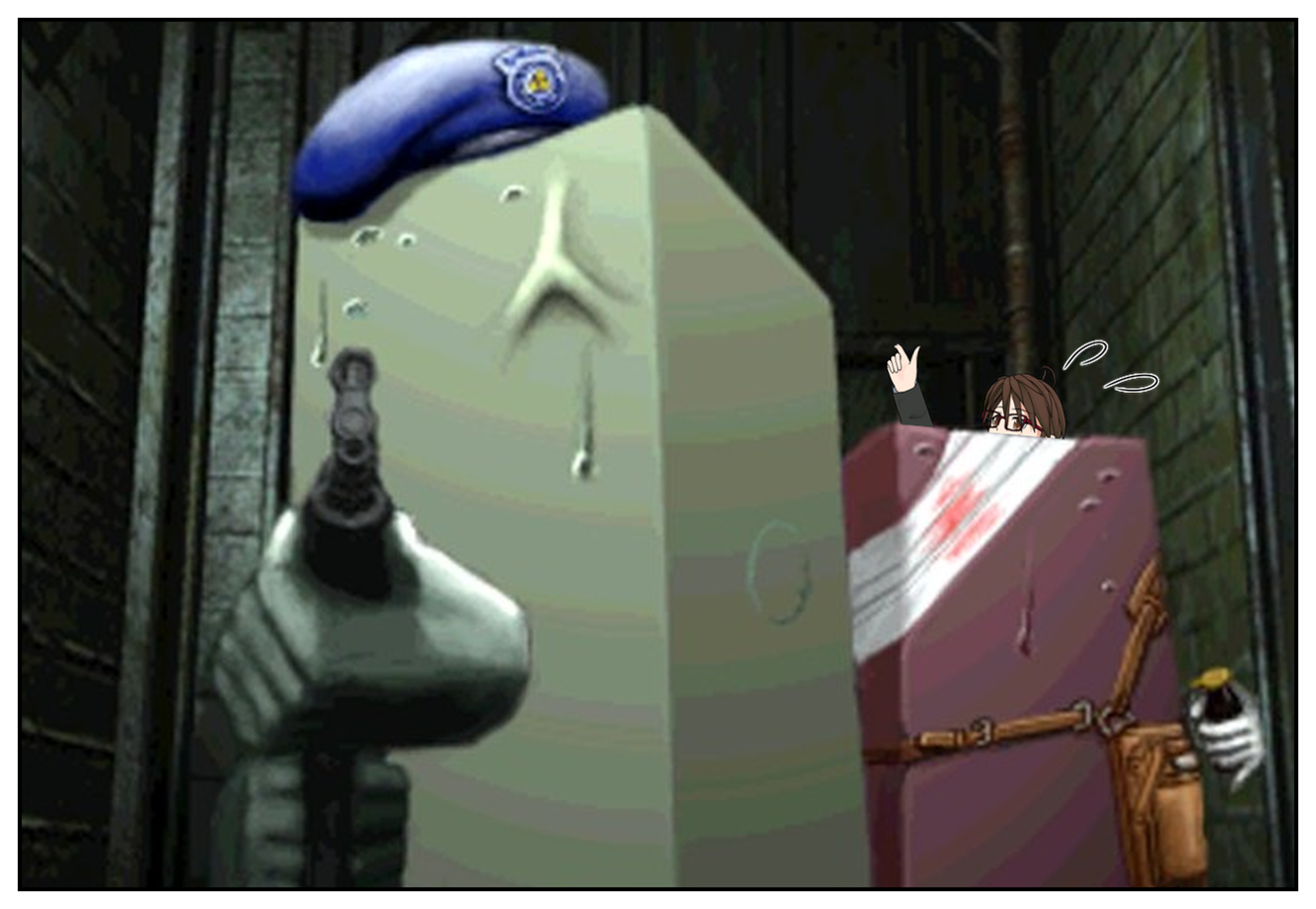
But Resident Evil 2 — and indeed Ys Origin — didn't stop there. No, there were unlockable secrets, once the preserve of the mysterious tips pages in games magazines, but these days discovered by people with a lot of time on their hands in seemingly minutes flat. And they're significant secrets, too: Resident Evil 2 allows you to play an entirely new scenario as a character called Hunk as well as, rather oddly, a large block of tofu, while Ys Origin unlocks a third playable character after your first playthrough, then unlocks Time Attack, Boss Rush and Arena Modes after that, meaning that — assuming you want to carry on — the game is far from over when you've beaten the final boss with all the characters and seen all the story. And then there's the various difficulty modes and achievements to play with, too — it ultimately makes the whole game considerably better value than it might first appear, with its 6-10 hour playtime for a single runthrough.

I kind of miss this approach. There was a feeling of discovery and excitement as you worked to unlock secrets and extras in games, and you felt good when you achieved it, finally, because it was the result of actually achieving something in the game. These days, however, extra modes and stories are all too often the preserve of DLC, which just doesn't have the same magic at all, largely because you have to 1) pay for it and 2) don't have to earn it to unlock it.

I know not everyone likes having to unlock things to be able to enjoy it all, but it's always been something I've liked, and a fundamental part of many gaming experiences. Ys Origin — and, I anticipate, the other Ys games I'm yet to work my way through — is proving to be a pleasantly enjoyable reminder of The Good Old Days in more ways than one, and just another reason I'm becoming increasingly enamoured with both the series and Falcom as a developer.

2329: Another Trip Up Darm Tower

0329_001

I finished my first playthrough of Ys Origin earlier. I chose to play through for the first time with Yunica Tovah, who apparently handles most like Adol in the subsequent 3D Ys games, but now I'm going through it again with Hugo Fact, who plays impressively differently.

One thing that struck me with Ys II in particular, and it appears to be a pattern that continues with Origin and its ilk, is how much shoot 'em up DNA is in this series. Numerous bosses have distinctly "bullet hell"-style attacks requiring intricate dodging and pattern recognition, for example, but this connection is most obvious when playing Origin as Hugo, since even his basic attack involves firing bullets. Hell, he even has two "options" (sorry, "The Eyes of Fact") floating either side of him to fire additional bullets, which double in number when he uses Boost mode.

It's interesting quite how different a feel this contrasting playstyle provides, since you're otherwise going through pretty much the same levels and boss fights as in Yunica's story, albeit with different cutscenes and a few minor changes here and there. Boss fights in particular are a very different affair when playing as Hugo, since rather than it being necessary to get in melee range as with Yunica, as Hugo you have to play a lot more defensively, attacking from range in suitable openings and taking great care to avoid attacks, since Hugo is considerably squishier than Yunica is. Not only that, but Hugo's individual attacks do quite a bit less damage than Yunica's axe and sword swings, though he makes up for this by being able to attack 1) from a distance and 2) much more rapidly than Yunica.

I'm also playing this second runthrough on Hard difficulty; I'm not quite brave enough for the series' signature Nightmare difficulty yet, but I thought I'd step things up for Hugo, since I felt pretty confident with Yunica by the end of my first playthrough. It's noticeably harder, particularly when it comes to boss fights. I'm not entirely sure if this is down to enemies' boosted stats or simply the different way Hugo plays that I haven't quite gotten used to yet, but I'm finding myself having to retry boss fights more times than I did on Normal with Yunica.

One of the things I like about Ys Origin so far is that although the boss fights are very difficult, I don't think there's been a single encounter in the game where I felt like I was beating my head against a wall. In other words, although I might fail a boss fight several times in succession, I'd make noticeable progress each time, chipping away a little further at the enemy life bar each time until I was eventually successful. It's a matter of practice and skill rather than luck; in some ways, it reminds me quite a bit of Final Fantasy XIV raid bosses, where you need to know what's going to happen in the fight before you can even think about being successful; flailing wildly isn't going to work, at all.

Anyway. I'm keen to get through Ys Origin for a second time with Hugo, and then polish it off a third time with the "secret" third character, whose story is quite a bit different from Yunica and Hugo's, from what I understand. By playing all three stories, you get the full narrative; this is an approach that some people find tiresome — particularly if they have to play through the same levels again with a different character, as you do here — but it's something I always enjoy. I really enjoy seeing stories from multiple perspectives, and while Ys is fairly conventional fantasy in many ways, it's well-written, well-localised and features some entertaining, endearing characters, so I'm more than happy to plough through it to see everything it has to offer.

Then after that, there's Time Attack, Boss Rush and Arena Mode, of course, which I'm curious to at least try… so much for being a short game!

2328: Play of the Game

0328_001

I'm really enjoying Overwatch. In fact, I'd go so far as to say I think it's the first competitive multiplayer game that I've actually wanted to "git gud" at enough to be truly competitive in the online sphere. I don't know if I actually have the skills or the talent to be able to do that, of course, but I've been performing reasonably well in the current "Quick Play" mode — effectively a "pre-season" warm-up — and getting a good feel for characters. So much so that when the proper Ranked Play mode makes an appearance in the near future, I feel confident stepping in and attempting to prove my worth.

Overwatch is also helping me to understand the appeal of e-sports. I'm still not entirely sure I would ever want to sit and watch a game of Dota 2 or something (as opposed to actually getting stuck in and playing it) but, playing Overwatch, I certainly feel something while I'm playing. It's particularly thrilling to claw back victory from the very jaws of defeat, and all of Overwatch's various game modes are well constructed to always make this a distinct possibility, meaning it's pretty rare to feel like you're being completely dominated unless your team is particularly incompetent.

It's quite entertaining to see the varying reactions of people you play against. Competitive gaming culture has, for the most part, instilled the impulse to type "gg" (Good Game) after a match has concluded — the online equivalent of a friendly handshake after a sports match — and more often than not you'll see this shorthand pleasantry being exchanged once the victor has been decided. (It's occasionally accompanied by "wp", which means "Well Played").

But there are some people out there who don't like losing. Some people like the guy who responded "no" to my "gg" after one match because he lost, and he didn't like losing. People like the guy who, in all caps, told his entire team to uninstall the game and that they were a "useless fucking team" after losing; he didn't like losing, either. And people like the guy who judged everyone on which character they picked, with sniper Widowmaker obviously being "for noobs".

Then, of course, there was the Chuckle Brothers my friend James and I encountered earlier, who starting sniping at each other in chat during the match and gradually escalated to threats to "wreck" each other. I may have prodded the fire a bit, but it was too hilarious not to troll a little bit; by the end of the match they'd both made themselves look like complete douchebags to the other participants, and one in particular (who was on the opposing team, who lost against me and my comrades) seemed to think that the fact he'd killed my character several times somehow made him superior than me and the rest of my team.

Me, I don't mind if I win or lose, because games of Overwatch are good fun, and the game is balanced well enough that I've only had one or two matches that I felt were completely imbalanced, and that was largely because the opposing side was using unconventional tactics that none of us knew how to counter. (Six Torbjorns is a force to be reckoned with… until you figure out Roadhog and Pharah.) It's a competitive game, after all, so by its very nature there has to be a winner and a loser in each and every match. If you want to win more, you practice and get better, just like anything — just like real sports. There's no sense getting angry and throwing a tantrum over it, because, more likely than not, that's just going to alienate you and make you less likely to be able to put a coherent team together — and coherent teams with good communication will always perform better at this sort of game.

I'm very interested to see how Blizzard plans to implement the ranked system into Overwatch; while I've never played Starcraft 2, I understand its online ranking system is pretty comprehensive and gives you a good idea of where you stand in relation to the rest of the community, so I'm expecting something similar here. I'm also expecting the game to have a good, long lifespan; Blizzard has a good track record of continuing to support its games over time — particularly those with multiplayer components — and with Overwatch proving as popular as it apparently has been so far (the amount of fan art out there already is insane!) I think we'll be seeing Overwatch tournaments and leagues for a good few years yet. And, for the first time, I want to be part of them.

2327: Not the Boss of Me

0327_001

It seems to be a bit of an unfashionable opinion these days, unless you're wanking over Dark Souls, but I really enjoy boss fights in video games. I have done ever since I encountered my first one: a big horrible tentacly thing that shot what looked like sperm at you at the end of the first level of Psyclapse's Menace, a not-terrible horizontally scrolling shoot 'em up on the Atari ST. (Its quasi-sequel Blood Money was better, or at least I thought it was, since I could actually complete a level in it; I never did beat that boss in Menace.)

Specifically, I enjoy boss fights that revolve around learning a boss's attack patterns, how to avoid or counter them and when are the openings you should use to launch your own attack. Conversely I tend to dislike boss fights where you're just up against a bullet-sponge enemy and they're either acting completely randomly or according to more unpredictable AI. I don't want them to act like a human opponent, in other words; if I want to fight something like a human opponent, I can just play a multiplayer game and fight actual human opponents.

Thankfully, it seems a lot of game designers out there feel the same way as I do, or at least enjoy designing encounters of this type. Final Fantasy XIV, for example, is full of bosses where you need to learn the mechanics, where to stand and what to do at all points in the fight, particularly in high-level challenges that require you to be on top of your game. Your average bullet hell shoot 'em up, too, tends to have bosses with predictable patterns that are as much about avoiding veritable hailstorms of bullets as they are about dealing damage to your opponent.

What I'm discovering with my first foray into the Ys series is that Ys has fantastic bosses. I would perhaps exclude Ys I from that description, owing to the fact that its bosses — particularly its final boss — are a bit rubbish, but from Ys II onwards, Ys bosses are exactly the sort of thing I really enjoy.

I'm currently playing through Ys Origin, which seems to be one of the more well-regarded recent installments in the series. Tonight I fought a boss which took a good four or five attempts to master, and I really enjoyed it; I didn't feel frustrated at any point, even when I failed, because I felt like I was learning something with each new attempt rather than just hoping my luck would be a little better.

The boss in question was "The Construct", who is a big giant mechanical beastie that lives in a lava pit. In the first phase of your fight with him, he has a couple of different attacks: pulling back one of his fists to slam it down a moment later on the platform you're standing on (which can be avoided by running away from the fist he pulls back), extending both his arms and spinning around (which can be avoided by a well-timed jump) and summoning a string of lasers from the ceiling (which can be avoided by moving out of the shining circle that appears on the ground a moment before the laser actually fires). The first phase essentially requires you to knock both of his hands off when he slams his fist down on the platform: avoid the slam itself, then dash back in and hit him in the mechanical wrist until his hand falls off.

Once you've done this, he then starts a different attack pattern: alternating between lurching forwards and biting the platform you're on (which knocks you back into the lava if you don't jump out of the way and avoid the shockwave this causes) and vomiting up an annoying little flamey creature which gets in your way and chips away at your health if you don't deal with it quickly. In this phase, you actually get to cause some damage to the boss's life bar by hitting him in the gem on his forehead when he bites the platform.

Following this, the process repeats, but harder; knock his hands off when he slams his fists down again, but this time there are bits of the platform missing you'll have to jump over when avoiding his various attacks. Then smack his forehead around a bit. Then the final phase adds an entertaining attack where he sweeps his hand slowly around the platform, knocking its sections into the lava as he does so, requiring you to run for dear life around the platform until he tires of this particular activity and returns to trying to turn you into a nice pâté.

I enjoyed this boss fight because at no point did I feel like it was patronising me, but at the same time I was able to figure out what I was supposed to do without resorting to guides and walkthroughs. It was an excellent piece of solid, enjoyable game design, and a potent reminder that sometimes the most technologically advanced ways of doing things with artificial intelligence and the like aren't necessarily the best.