#oneaday Day 568: iOS Gaming Not Proper Gaming? To That I Say "Balls!"

There's a degree of at least partly-justifiable snobbery surrounding iOS devices such as the iPhone and iPod touch — an assumption that they're not "proper" game platforms because they don't have the words "Nintendo", "Sony" or "Microsoft" emblazoned anywhere upon them, and that software for them is much cheaper than for aforementioned devices with "Nintendo", "Sony" or "Microsoft" emblazoned upon them.

This is a flawed assumption. However, as I say, it is at least partly understandable given the meteoric popularity of titles such as the ubiquitous Angry Birds and all manner of other casual-friendly games. In many ways, iOS devices are the Wii of the handheld world, featuring a lot of casual games, a lot of shovelware and a surprising number of diamonds in the rough which it's entirely possible that self-professed "hardcore" gamers will gloss over on the grounds that they're "just mobile phone games".

That in itself isn't a negative thing, though; if you're waiting for a bus/train/poo to fall out/tardy date/kettle to boil then these quick-fire, quick-play games are ideal. You can load up Bejeweled Blitz, play a game and post your score to Facebook in the amount of time it takes to make a cup of coffee. You can play a level of Angry Birds in the time it takes your toast to be toasted. If you're as bad at Flight Control as I am you'll have caused a hideous air traffic accident by the time you've finished a poo.

But here's the key thing: iOS gaming isn't just about this kind of game, but that's where the flawed perception of it comes from. Take Square's recently-released Final Fantasy Tactics: The War of the Lions, for example. This has attracted widespread bewilderment and criticism for its "unreasonable" £10.99 price point — but this is a game for which I paid £50 for an import version upon its original release 14 years ago (Christ, that makes me feel old — that game's nearly half as old as I am), and whose PSP version released at £35. Okay, sure, you can grab it for less than a tenner from PSN now, but for a couple of extra quid you can get a version with new touchscreen controls — touchscreen controls that work extremely well with the game, I might add (yes, I caved and bought it — I love me some FFT) along with a ridiculous number of hours of gameplay. Final Fantasy Tactics is not a short game — so consider its £10.99 price point in terms of "price per hour" and you'll find it a bit more reasonable.

At the other end of the pricing spectrum is the excellent (if poorly-translated) Zenonia series of action-JRPGs, the latest entry of which is completely free with a few optional microtransaction items available for those happy to pay some money or watch some ads. Zenonia is an excellent 16-bit style RPG that is simple to play yet deep and very addictive. And again, it's not a small game. The touchscreen controls are a bit fiddly — any game that attempts to incorporate a traditional control scheme usually is — but once you get used to them and customize them to your liking there's a lengthy RPG that will keep you occupied for many commutes there. The kind of lengthy RPG that you'd pay at least £20 for on DS. For free. And despite featuring microtransactions and premium items, the game never hassles you to spend money on it — it's just an option that's there if you want it, but I haven't paid a penny and it still feels like a proper game.

The list goes on: Kairosoft's series of management/sim games have provided a resurgence in popularity of a genre which has laid fairly stagnant for some time. Virtual renditions of well-established boardgames allow multiplayer action at times convenient to both players — even if that's not at the same time. And some of the finest roguelikes in existence (100 Rogues, Sword of Fargoal) are to be found on the platform.

iOS is here to stay as a gaming platform, and the sooner people wake up and stop seeing it as some sort of bastard offspring to the "mainstream" gaming industry, the better. Sure, there's a ton of amateurish shovelware out there — but that doesn't by any means diminish the significance of the some the games which are available for the platform — a platform which is growing more and more likely to give both Nintendo and Sony in particular cause for concern as the months roll by.

#oneaday Day 567: Home Sweet (Hopefully) Home

So Andie and I found a place to live today in what was possibly the most efficient piece of house-hunting I've ever seen. As an added bonus, I was required to do very, very little in order for the entire process to happen, so I was happy. Basically, Andie spotted it, enquired about it, went to see it and accepted it (with my agreement, obviously) all in the space of one day. This is efficiency at work. Given what a hellish experience house-hunting can be, I'm glad this happened very quickly — though of course now begins the frantic form-filling and scrabbling-together of cash for deposits. And also panicking about not having any boxes.
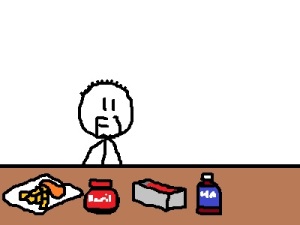
I've lived in a diverse array of places over the years. I shall now be terribly self-indulgent and describe each of them that I can remember, excluding my childhood (and indeed current) home.

My first home after leaving, err, home was my university halls of residence. Flat A33, Hartley Grove Halls, Southampton University. Hartley Grove was a very new block — I think our year were only the second or third (at most) to pass through it. As such, it was all very clean, very clinical and, if we're honest, rather like an old people's home. The rooms were quite nice, though — they were a reasonable size and en-suite, with an enormous kitchen shared between six people. As I was one of the first people in my flat to arrive at university thanks to a pre-term orchestral course, my first meeting with several of my flatmates-to-be was while I was clad in a dressing-gown, cooking bacon. Start as you mean to go on and all that.

Following this, I moved in with the then-girlfriend of my then-best friend from "back home". Not in a dodgy way, I hasten to add — we were good friends and it made sense for us to live together. We got a flat in the middle of Portswood, which is Student Central in Southampton. It was pretty expensive, but it was nice and big. There were two massive bedrooms and a big kitchen/living room with a breakfast bar. It was a decent flat apart from the fact that when we moved in the bath was full of paint, the cooker didn't work, the washing machine didn't work and it was generally a shithole. With a bit of happy teamwork and yelling at the landlord, however, we won over and ended up with a decent flat which was good for entertaining. Despite the fact that the internal walls had something horribly mouldy and black-goopy living in them, as we discovered when we moved out, this was a place in which I have some pretty fond memories.

After this, aforementioned then-girlfriend of then-best friend and I moved into a three bedroom house in the area of Southampton that was regarded as "the dodgy bit". Various urban legends abounded regarding people who had supposedly had bulletholes through their patio doors, but the house was cheap and in good condition. We didn't have any trouble while we were there, though my friend did have all the locks on his car broken which necessitated him having to enter the vehicle through the boot for a considerable period of time. This house was notable for having an invisible housemate, who was happily paying rent for a room that she didn't use once during the entire year we lived there. I wasn't complaining, as it meant our rent was down to approximately £35 per week, which was the cheapest of anything anywhere. Which was, you know, nice.

I spent my fourth year at university in a really nice house that had two toilets. I accidentally moved into the biggest bedroom because I arrived first and I didn't know my friend had already claimed it. Still, she didn't seem to mind too much, and for some inexplicable reason proceeded to replace the floor in her room with hardwood flooring. It looked nice, but I'm not sure she was really supposed to do that. But oh well. It was a nice place, and one of the few I have digital photographic evidence of.

After this, I spent a couple of years in Winchester, beginning with the nicest flat I've ever stayed in. Pretty expensive, sure, but it was fully furnished, had a dishwasher, had the comfiest sofa in the world, and a dressing room off my bedroom. It was awesome, but my housemate and I were unceremoniously turfed out when the landlord decided that she wanted to give the flat to her daughter. Bitch.

We followed up the nicest flat in the world with what would have been a pretty nice riverside cottage in Winchester, were it not for the galloping mould and the living room that smelled of gas. It also had the most unpleasant landlady in the world, whom my housemate successfully legally battled after she tried to withhold our deposit on the grounds we hadn't cleaned the chimney. Well, sure, we hadn't cleaned the chimney. But we also hadn't used the chimney.

After that, I moved to Aldershot to be close to the school I worked at. It was a lovely flat, though the worst shape in the world. The arrangement of the corridors and rooms was such that it would have been completely impossible to get a sofa in without taking out the rear windows. As such, we spent a year with an inflatable sofa, which was actually quite fun. Aldershot is shit, but this flat was close enough to Farnham to be on the "nice" part of town, and the fact it had "Aldershot" in its address meant it was pretty cheap, too.

Following this, it was back to Southampton into a small flat with a massive sofa in the living room. It also had a tumble drier which was, frustratingly, in the "office" room. This meant that said office room often got rather hot and steamy, and not in a good way. Disappointingly, the previous tenant had a cat and we discovered after moving out that we could have kept said cat. Frustrating, but never mind.

Finally, before moving back home last September, I had a pretty nice flat in the middle of Southampton. It was a nice place run by a bunch of complete fuckwits, as has been documented elsewhere on this blog. It also had a bunch of chavs who liked to hang out in the car park beneath the building, but the building itself was very nice indeed. Unfortunately my memories of that place are somewhat tainted by the way last year proceeded for me, but that doesn't stop it being a nice place.

So now I have something to look forward to. We've reserved the place and now have to scrabble together the cash for a deposit, which shouldn't be a problem. Then it's onwards and upwards. A year after "admitting defeat", as it were, life will be back on the way to awesomeness again.

About feckin' time.

#oneaday Day 566: The Top Arbitrary Number of Quintessentially British Foods

This post is largely aimed at my American readers out there — you know who you are. (Largely because you live in America.) I thought you might be interested to know an arbitrary number of the things that we have over here in Britainland that are considered edible. Some of them you may have come across before, some of them you may not. So without further ado, let us jump into the list.
Bovril

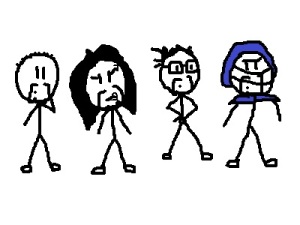
You've probably heard of Marmite, the thick, brown, goopy substance that supposedly you either love or hate. Well, its bastard sibling is Bovril, which rather than being made from "yeast extract", whatever that is, is apparently made from beef. What you end up with is a thick black tar that supposedly tastes of beef but more accurately tastes "of black" and has a propensity to burn the roof of your mouth off if you have too much at once. It's good on toast. It's especially good on toast when dipped into Heinz tomato soup. You can also make it into a drink, which is inadvisable unless you like a mug full of black, salty, slightly beefy water.

Biscuits

What you know as "cookies". You may have the awesomeness that are Chips Ahoy! but we have a wide selection of biscuits that are firmly ingrained into our culture. We have the bourbon cream, for example, which is two chocolatey biscuits with a layer of chocolatey creamy stuff in between and no actual Bourbon involved. We have the custard cream, which is like a bourbon only more square and vanilla-y. We have the jammie dodger, which is another two-layer biscuit with jam in the middle. And we have Rich Teas, which are rubbish until you dunk them into a hot beverage or squish melted marshmallows between them.

Fish and Chips

Plenty of places in the States sell fish and chips, but you haven't had it the truly British way unless you follow several steps in the process. Firstly, get a portion of chips that is enough for at least three people and put it in some paper. Then smother it in enough salt to give a midget an immediate heart attack. Then drown it in vinegar. Then slap a large, greasy, wet battered fish on top of it. Then wrap it up into a neat little parcel and admire as the grease seeps through the paper. The key element of British fish and chips is the size of the portion. If you can finish a portion, the portion wasn't big enough. There is also generally an inversely-proportional relationship between the price of a portion of chips and the amount they will give you. The cheaper the chips are at the chip shop, the bigger the portions will be.

Curry Sauce

Companion to the above, the slightly-lumpy brown-green-yellow curry sauce that is on offer in most chippies is the perfect companion to your carb overload. It may look like someone has just blown chunks over your bag of chips, but it's a one-way ticket to spicy heaven.

Indian Takeaway

British takeaways are something else. You may have had a curry from your local Indian, but you haven't had it properly until you've had it from a dodgy British takeaway — the kind of place that sells dishes like the entertainingly non-specific "meat curry". Also, when a dish says it's "hot", it means it. A vindaloo will probably blow your head off. And having a drink won't help.

Proper Chocolate

You have chocolate, sure. But you don't have our chocolate, which is just better. From the immensely calorific Yorkie bars (which still somehow manage to get away with marketing themselves as "not for girls") to the legendary Cadbury's chocolate, we sure know how to do it properly.

HP Sauce

HP Sauce is the perfect condiment that goes with pretty much anything and even makes a good sandwich by itself. (On bread, obviously.) It has a taste that is impossible to describe except through the word "brown". It tastes like brown sauce. Because it is brown sauce. Try it on bacon or sausage sandwiches for the perfect breakfast, or dribbled over baked beans to give them a pleasingly spicy kick.

I hope that's educated you on British cuisine. Next time you pay us a visit, remember to give them a try.

#oneaday Day 565: Board Stupid

Board game enthusiasts often get a bit snobby about the more "mainstream" games out there. Sometimes this is with good reason — Monopoly is pretty tedious, after all, and is inclined to go on for hours and hours and hours because no-one really knows the rules properly. But there's a few amongst the pile that are actually worth playing.

Scrabble, first and foremost, is still a great game, as anyone who's played Words with Friends or the numerous Facebook ripoffs will be able to attest. Simple, effective, clear rules, well balanced play and a nice sense of competition — plus the requirement to actually use your brain rather than play based entirely on luck.

Lexicon is an interesting card game based around building and modifying words. It's very quick to play but it's pretty fun, plus random enough to provide a different play experience each time.

Rummikub is an odd game that makes your brain hurt after a while. Ostensibly very simple, the mechanics of the game actually require that you remain very observant throughout and plan ahead.

Yahtzee is a decent game, though mostly luck-based. It has a nice element of poker-like gambling to it though ultimately there's not a huge amount of depth. Word Yahtzee, on the other hand, is a much better — if less well-known — game. Requiring you to build words according to specific criteria (such as "two letters", "three words" and the like) the game requires much more in the way of brainpower than regular Yahtzee but as a result is significantly more difficult.

I remember board games being a staple gift at Christmas and birthdays when I was young. Theme-heavy games such as The Gunge Game and The Bigfoot Game were often filled with exciting plastic bits and pieces but tended to be largely based on luck. Titles such as Scrabble, Yahtzee, Rummikub and the like were often set aside due to their focus on mechanics and strategy rather than theme. But it's those games that stand the test of time a whole lot better — I have no desire to ever play The Gunge Game again, for example, despite its awesome little rubber snot-monsters. I played Lexicon, Yahtzee and Rummikub tonight, however, and I expect I will do so again.

Interestingly, a lot of these classic games have now spawned a bunch of more quick-playing spinoffs. Monopoly, for example, now has a card-based variant named Monopoly Deal. Monopoly Deal is, ironically, significantly better than Monopoly, largely because a game takes about twenty minutes (if that) rather than three bajillion hours. Scrabble also has a couple of variants, such as the fast-playing, hectic Scrabble Dash card game which is a lot of fun but probably better with more people. And there's variants on Cluedo and Boggle out there, too.

So while some classics may not, in fact, be the best games in the world — some of them genuinely are, and in some cases they've spawned spinoffs that are decent things to play in their own right. So while I'm not saying you should cast aside your copies of Catan and Power Grid just yet, dust off that Scrabble box once in a while and give it a chance. You might be surprised.

#oneaday Day 564: Cliquety Clique

Watch any kind of American teen "coming of age" movie (or indeed play Bully) and you'll come across some combination of the same old cliques. The jocks, the nerds, the preppies, the plastics, the goths and the "normal" people.

There are many, many subcultures out there, particularly among the more youthful members of society. But I don't remember there being cliques that were quite so clearly defined back when I was at school — and yet when I talk to other people, it often becomes clear that they did exist.

I'm not sure if this is because I went to school in a relatively out-of-the-way place where, if we were playing Civ, there would not be a particularly high flow of Culture points. But the fact remains that so far as cliques went, there wasn't anything anywhere near as obvious as the typical subdivisions we're conditioned to "expect" from the media nowadays.

There were a few cliques, sure, but these were mostly friendship groups. There were the guys who were into football, the people who were into music, the people who did stuff in the school plays, the people who always went on trips. But no-one tended to let their clique define who they were — and in fact, given the amount of bleed-through between the different groups, it's questionable whether they really were "cliques" after all.

The closest I came to any kind of clique membership back at school was my involvement in music groups. That meant I often tended to hang out with the same people when doing school activities — but outside of that I had other friends, too. Those other friends didn't particularly belong to any subculture — they were just "friends". Or at least that's the way I saw them — I never looked at person X and thought "well, he's clearly a [whatever]". The only exception to this was one guy in sixth form who was very much into paganism, tarot card reading and all manner of other things and he was branded, in that inimitable high school way, as "the weird one". And, of course, the kids from the local special school who joined us in sixth form and formed their own little clique — which, being politically incorrect highschoolers, most of us were quite happy to let them do.

Technically speaking, if I was a member of a high school clique these days I'd probably be a nerd. I like Dungeons and Dragons, I like video games and I know how to use big words. Oddly enough, though, these days nerds wear their nerdiness as a badge of pride. After all, the nerds are the ones who are making all the money by building the websites that everyone takes for granted these days. So perhaps it's not such a bad clique to be a part of.

In some ways, I feel like I missed out a bit by going to a school that didn't have such clearly-defined subcultures. But then I wonder how accurate the movies really have it, anyway — is it really so obvious from looking at people and observing their attitudes what subculture they belong to?

#oneaday Day 563: A55 H013

I drive relatively normally. That is, I'm inclined to go a bit faster than you're supposed to on motorways, but I generally keep to the speed limit in built up areas. My pulse quickens when I see a policeman, and I get out of the way when there's any kind of blue flashing lights nearby. I don't drive like an old man who consistently drives 8mph below the national speed limit, but neither do I drive like a boy racer (largely due to the fact the car I drive is incapable of acting like a boy racer's car).

Tonight on a long journey, I encountered possibly the biggest asshole I've ever had the misfortune to share a piece of road with. I was driving along a stretch of dual carriageway and was in the right hand lane as I'd just overtaken a truck that was going about 40mph.

Screaming up behind me came some git with his headlamps on full beam going at least 90, probably more. He obviously wasn't going to stop so I had to get out of his way quickly. I flashed my lights at him in disapproval as he passed, which prompted him to pull over into the lane in front of me and start driving at the speed limit. I didn't have a problem with this and didn't see any need to overtake him again, as he was obviously driving like a bell-end.

He obviously wanted me to try and overtake him again, though, as he pulled out into the right-hand lane and slowed down to let me pass on the "wrong" side. I did so as I saw no sense in playing his stupid games. He promptly pulled in behind me and put his headlamps on full again. After a few minutes, he gave up and just settled in behind me.

I'm not entirely sure what he was trying to prove or achieve, but whatever it was he didn't succeed in anything other than making himself look like a complete cunt. Perhaps he thought that driving in such a "daredevil" manner made his penis sprout an extra few inches. Perhaps he had someone in the car with him that he was trying to impress. Perhaps he really thought he had more of a right to be on the road than me.

Either way, he was a complete and utter cheesy knob-end and I hope he skids off the road into a ditch somewhere. Not so he dies, but so that his precious car is wrecked and he is uninjured, so that he has to pay a ridiculous amount of money and have to deal with The Lords of All Cuntishness, insurance brokers.

Yes. That would be nice. Sadly, he probably won't end up in a ditch and right now he's probably harassing some other poor motorist having to drive out late for whatever reason.

But he's still a festering bellend.

#oneaday Day 562: If We Haven't Announced It, It Doesn't Exist

I don't agree with everything Ars Technica's Ben Kuchera writes, but he was right on the money with this piece right here. Marketing plans are starting to rule the world, and not just in the games industry — though given my intimate familiarity with it, that's what I'll be particularly focusing on here.

I remember the early days of gaming. There were no carefully-orchestrated reveals, no countdown websites (largely because there were no websites) and no pre-order incentives. And it was good. Sometimes you'd hear through a magazine that developer X had just had a great idea for a new game, and it sounded interesting, but they didn't have anything to show yet because it was just an idea. That was cool — it gave you an insight into the creative process and didn't always come to anything. That was cool, too — cancelled games passed into the stuff of legend and became myths.

I've been trying to pin down exactly what it is that bugs me about all this, and I think it's the whole element of "you can't talk about this until we say so". Embargoes are the bane of the games journalist, particularly when, as in some cases, you find yourself seeing a game literally months before you're allowed to publish anything about it. There is absolutely no reason for this to happen in an online world of immediate information — particularly with the growing number of leaks that spring from developers presumably frustrated with the shackles that PR firms place around their necks.

The problem with the whole thing is perhaps best summed up by Gearbox's Randy Pitchford stating "if we haven't announced it, it doesn't exist." Why on Earth should that be the case? What a way to disrespect your development team, who are probably quite proud of what they're working on. What a way to insult the intelligence of the public. And what a pointless exercise — in this case it was less than a day between Eurogamer breaking the story that Borderlands 2 was "probably" on the way and Take-Two announcing that Borderlands 2 was on the way. Pitchford called this "shoddy journalism" when in fact it was the exact opposite — reporters should go off-piste from time to time, as they're not PR mouthpieces — PR mouthpieces are!

As one who reports on the news in the industry, I come face to face with this sort of thing every day. Don't get me wrong — I very much enjoy reporting on new announcements and helping drum up excitement for new products. There is always something going on in the industry, whether it's a small developer putting out an interesting-looking iPhone game or a massive publisher announcing a new means through which they're attempting to bum-burgle used game customers.

I know why it happens of course — it's so competitors don't get to find out their awesome new features and then put out a better version. But in all seriousness, there's a whole load of generic military shooters out there already — keeping the fact that New York gets attacked in one/both/all of them isn't going to change that fact. Ironically, the most original titles are often the ones who are most open and humble about their innovations.

As a consumer, the constant parade of cock-teasers is inordinately frustrating and is causing me to shy further and further away from mainstream entertainment in my own free time. In recent years, the titles I've got most excited about are the ones that weren't embargoed, the ones where developers were open about what they were up to and the ones where I could find out things about the game at my own pace by doing some research and trawling through developer websites — not by following some schedule that the marketing department had dreamed up. Recettear, Chantelise, Groove Coaster, Pocket Academy, Breath of Death VII, Cthulhu Saves the World, Dungeons of Dredmor, Minecraft — these are the games I'm excited about and it's perhaps no coincidence that most of them are independently developed and published titles. All of them either suddenly appeared out of nowhere without months of cock-teasing, or were extensively documented by their creators during development. I can only imagine how satisfying it will be for Notch and his team when Minecraft is finally released to the public and they have a complete and public record of the entire development process which they can look back on and think "Yes. We did that."

The only exception to this rule in my case is Catherine, which Atlus carefully drip-fed information out to the public about, but, notably, didn't stop people talking about the Japanese version which had come out some months earlier — including a playable demo. By the time the reviews for the game came out, I'd already made up my mind — I wanted to play that game, and a review wasn't going to change my mind. I'd played the Japanese demo and was intrigued by it. I was interested in seeing what the Persona team made of adult relationships, and I liked the idea of the story being married to something other than a typical JRPG. I felt like I was making an informed choice, not the choice that PR wanted me to make. Even then, as a European I still have to wait until Deep Silver bring the game over — by which time most of my American buddies will have played and beaten the game and will have already discussed it.

It's difficult to say whether this situation will continue — it seems that most weeks I see journalist friends suffering some sort of embargo frustration, or gamer friends fed up with the constant prick-teasing of countdown sites and "exclusive reveals" during sports events they weren't going to watch anyway. But it must at least be having an effect because it seems to be the model to follow these days.

I miss the days of bedroom programmers selling cassette tapes at car boot sales and type-in listings from magazines. Can we have those days back, please?

#oneaday, Day 561: Rusty Water

I've been playing the stupidly-named Rusty Hearts since the closed beta started at the end of last month. The game caught my eye during E3, when publisher Perfect World announced that they would be taking the free to play genre up a notch with three titles that featured the level of polish one would typically expect from a commercial title.

I was skeptical, of course — everyone was. "Free to play" does, after all, to many people, mean "not as good as a 'real' game". But still Rusty Hearts held some sort of fascination for me. I can't quite pin down what it was — perhaps it was the cel-shaded art style, perhaps it was the fact it didn't sound like another WoW clone, or perhaps I was simply just curious. Whatever it was, it meant that as soon as the opportunity to sign up for the closed beta came around, I was straight in there and sent a code almost immediately.

Now the closed beta is here and I've been playing a while, my fascination was, I believe, warranted. Because it's a good game. Not "good for a free to play game", not "good, but I'd rather play something I paid for". No; it's simply a good game that I would like to play more of — and will.

Why is it good? Well, there's a variety of factors in play. The aforementioned cel-shaded art style is one of them. It looks good, particularly the characters. The backgrounds aren't the best in the world but they're in keeping with the stylised aesthetic. Animations are decent and done with a large amount of Japanese-style visual flair to make things look more exciting. Sword impacts are accompanied by huge flashy "swoosh" effects, every scene transition is done with an effect that looks like claws ripping across the screen and the whole thing is pleasingly "arcadey" in its presentation.

Which brings us nicely onto the way it plays. World of Warcraft it ain't, unlike several of Perfect World's other titles. Sure, you have a hotbar at the bottom of the screen and health bars at the top left. But that's where the similarity ends — this is a full-on Streets of Rage/Golden Axe-style brawler given a next-gen coat of paint and put online. Couple this with a Devil May Cry-esque "style points" system, end-level rankings and skill-based techniques with the word "Just" in them and you've got a very endearingly console-style game with the depth of a PC title. This is very much a Good Thing.

Konami must be kicking themselves about now, though, because the game is essentially Castlevania Online, right down to the awesome techno-rock soundtrack. Here's the plot: there's a big castle, and somewhere within it is a Bad Dude called Vlad. He has a servant called Death. It's up to a plucky band of supernaturally-inclined heroes, some of whom may or may not be witches and vampires, to save the day by beating seven shades of shit out of everything stupid enough to cross their path. Sound familiar? It should; Rusty Hearts is pretty shameless in its inspiration. That's no bad thing, though — the game works well and if Konami aren't going to make a game like this then someone else might as well.

I haven't got that far yet — my character is just level 9, but I'm into the castle proper now after what appears to have been a series of lengthy training quests. The difficulty has ramped up noticeably and, unlike the early levels, it may become necessary to team up with other players to take on some of the subsequent challenges. I'm looking forward to trying out cooperative play — so far solo play has been satisfying and fun, but I can imagine fighting alongside teammates will be fun in a different way. It remains to be seen what the community is like.

Rusty Hearts' closed beta is active right now — I'm not sure when it finishes, but characters and progress will be wiped at that point. Any cash items players might have purchased when that happens will be refunded to their account, so players won't lose any money that they've invested into the game. If anyone's curious to try it out for themselves, somewhere in my inbox I have two spare beta codes going — not sure if you can still use them now the beta's started, but if you're interested in giving it a shot, just let me know and I'll send one over for you. First come, first served.

#oneaday, Day 560: Enchanté, Elise

I very much enjoyed EasyGameStation's Recettear: An Item Shop's Tale, mostly due to the wonderful localization job done by Carpe Fulgur. I booted it up for the first time half expecting to be done with it within less than an hour — most games involving supposed "shop management" and the like these days are in fact social games and therefore pretty much devoid of any meaningful thought whatsoever. Recettear, though, was different — by blending the loot-whoring dungeon crawler with a simple business sim and some lovable characters, EasyGameStation and Carpe Fulgur managed to create easily one of the most memorable games of last year for me.

So it was with some anticipation that I heard the team was hard at work on localizing another EasyGameStation title — Chantelise: A Tale of Two Sisters. From what I'd heard of it, it sounded like a more conventional action RPG than Recettear, but I was confident that Carpe Fulgur's translation would prove super-effective once more.

The game came out the other day so I grabbed a copy — it was cheap, and I'm happy to take a risk on something from a developer I trust, particularly for a low price. I've been playing it for a few hours now, and while it's quite a different experience from Recettear, the similarities are pleasing — you can still heal yourself by eating egg on toast, for example, and a lot of the "miscellaneous treasure" items are the same. The monsters are almost identical, too, and protagonist Elise looks somewhat like what Recette would probably look like if she were a little older. And there's a fairy involved again, too.

What's been a pleasant surprise about Chantelise, though, is how unconventional it is. Despite looking to all intents and purposes like a fairly generic action JRPG, there's some inventive ideas in there.

For starters, there's no grinding for experience points, levelling up and that sort of thing. Powering up Elise is done entirely through purchasing items and/or completing parts of the story. This negates the need for tedious grinding, as money seems reasonably easy to come by.

Then there's the magic system. Rather than simply learning an arsenal of spells and then using magic points to cast them, Elise's sister Chante (who has been turned into a fairy) handles magic. If Elise collects magic gems dropped by monsters, Chante can then use these to cast spells — each colour causes a different effect. Multiple gems can be used at once, too, with different combinations yielding different effects. The twist is that Chante will only cast a spell using the last gem you picked up, meaning that there's an element of almost puzzle game-like strategy to picking up loot from the floor as you need to ensure you have a helpful arsenal of spells on hand to use.

The game structure is peculiar but effective, too. Split into various areas which are then subdivided into stages, Chante and Elise must batter their way through all the monsters in a stage to unlock the path to the next. The final stage in an area features a boss fight. Getting KOed along the way sends the heroic duo back to town, and re-entering the area requires them to start again — only this time they can charge straight through stages that have already been completed to quickly get back to where they were. This makes getting KOed mildly inconvenient, but not inordinately frustrating.

Alongside the basic game structure, every stage also has a secret treasure chest to find, too. Requirements for revealing this range from killing special enemies to destroying parts of the scenery, and the game keeps track of which areas you've found the secrets in and which you haven't. Interestingly, you don't have to run the whole gauntlet of stages if you're just going for a treasure chest — you can play individual stages in a time attack mode if you're just treasure hunting, but you have to follow the linear "story mode" path if you want to progress through the, well, story. Obviously.

In practice, the game is more of an action game with an upgradeable character than an RPG. The first few stages are deceptively easy but by the time you're into the second dungeon you'll find yourself having to thoroughly understand what Chante and Elise are capable of if you hope to succeed. Hordes of enemies — some of whom can only be defeated in a specific manner — attack the pair and it becomes rather more important to think tactically rather than charge in mashing the Attack button.

Chantelise likely isn't going to appeal to everyone. Its animé visuals look like pretty much every budget JRPG ever. There's a lot of repetition involved, particularly if you keep dying. The tutorial is rudimentary at best, leaving you to discover the vast majority of how the game works for yourself. The music's a bit annoying. And the Zelda-style BLING! BLING! BLING! BLING! noise when you're low on health will drive you nuts (pro-tip: don't get low health). But I happen to love all these things (even the annoying music and BLING! BLING! BLING!) so I'm looking forward to what promises to be a reasonably lengthy adventure with plenty of hack and slash action and the same wonderful localization that set Recettear apart as one of my favourite games of last year.

Carpe Fulgur have great things ahead of them — they're already working on two new titles, one of which is secret. Discovery of games like Recettear and now Chantelise — both blissfully Achievement, Online Pass and DLC-free — is why I'm very glad I'm now doing most of my gaming on PC.

#oneaday Day 559: You Can't Go Back

What's done is done. However much you might want to turn back time and do things again, the oft-requested Quicksave feature for Life has never made an appearance in several million years of patches, so I'm pretty much sure that we're stuck with our broken save system with permadeath.

In seriousness, though, a bit of nostalgia-tripping through some old podcasts that some friends and I used to make (long before the Squadron of Shame got all podcasty) reminds me that time has indeed passed — and quite a bit of it. Certain people are no longer in my life. Certain people have shifted to the peripheries of my life. Many of the things I used to do are distant memories. And, of course, I'm no longer 26 years old, as my girlfriend Andie is so keen to point out. (She's going to be on the receiving end of plenty of revenge when she turns 30. Oh yes indeed.)

This sense of change is made all the more prominent in the digital age, given that it's entirely possible to leave a trail of digital detritus across the entire Internet. Some of it gets lost, but some of it remains here and there as evidence of things that are constant and things that aren't.

The aforementioned Gaming with Pedwood podcast MySpace page, for example, is still there, as is, for that matter, my page. (Buggered if I can remember the login details for either of them, though.)

A short-lived attempt at blogging the life of a teacher is also still present and correct, a follow-up to a series of emails I sent during my PGCE. I thought I wrote more than that, but as you can see, it tails off pretty quickly as I discovered that the life of a teacher, particularly in a dodgy chav-infested rathole that was £500k in the red was, in fact, rather stressful, and I thought it would be perhaps unwise to chronicle all that in a totally honest manner at the time.

And my 1up.com page is still up and running, featuring possibly some of my earliest attempts at games-related blogging.

Sadly, a couple of sites are nowhere to be seen. You can get at the Angry Jedi site as far back as 2003 via the Wayback Machine but sadly some of the links and pictures are broken, meaning that some of the MP3 files we created are gone forever. The site I put together for the University of Southampton Theatre Group can also be found via the Wayback Machine — including the very early example of blogging that I did using a Palm Tungsten, a 32MB SD card, a card reader and an Internet café. High tech!

The site that I'm pretty sure I had at petedavison.com — my first experience with WordPress, no less — is nowhere to be seen, unfortunately. And the site I constructed at university, known as Studio A33 (after my first year flat) which distributed the various dodgy Klik and Play games my friends and I created, is also conspicuously absent. This is a great shame, as I had a tremendous urge to play Hobbit Blasters recently. I'm sure it's lurking on a CD somewhere in the garage.

Life moves on at a rate far too rapid for our liking sometimes. It's pleasing to come across such fragments of our digital lives from time to time, as it reminds us of where we've come from, both good and bad places. But we can't go back — however hard you might want to try and recapture the feelings you describe in these digital fragments, you need to accept that it ain't ever going to happen.