1164: Urgh

I'm exhausted. Mentally and physically. It's one of those times of year where everything seems to be dull, grey and miserable, both literally and metaphorically. It's cold outside, it's often raining or snowing, everyone is getting pissy with everyone else and I'd just quite like Existence to be a bit nicer, please.

The thing I think I'm finding most tiresome and exhausting at the moment is how short everyone's fuse on the Internet seems to be at the moment. I'm not even on Twitter any more and I'm still seeing stupid, ill-informed, pointless arguments erupting all the time. I'm deliberately avoiding all of them because I know from past experience attempting to provide some sort of rational viewpoint on any even vaguely "hot-button" issue will just get everyone yelling at you for no apparent reason. If they want to yell at each other, fine; it's just frustrating to see it happening, and Facebook's refusal to allow users to take control of their experience so they can insert advertising into mental orifices you didn't know you had means that it's all but unavoidable.

The current thing that seems to be getting everyone riled up is the current gay marriage Supreme Court thing that's going on in the States. Not being American, I don't know all the details of what's happening but I know my feelings on gay marriage, which are as follows: if you love each other and would both like to get married, you should be able to get married, whoever you are. Simple as that.

But this isn't about my views on gay marriage or indeed anyone else's views on gay marriage; rather, it's about one of those "Internet solidarity" things where everyone changes their avatar to the same thing to show support for a cause, "get people talking" and "raise awareness". I personally think that this is an idea that never works properly (I wrote about it when it happened for a different issue here) and sparks more arguments than it raises awareness — particularly when people don't explain what their sudden change to an abstract avatar is all about — but ultimately it's something that people are going to do if they think it helps, and I've learned it's really not worth arguing over.

Why? Because no-one on the Internet actually listens to anyone else. (That's a generalisation. There are exceptions. But check out any comments thread on a hot-button issue like this and you'll see.) People stick staunchly to their viewpoint and refuse to entertain the possibility of acknowledging (let alone embracing) an alternative outlook. And because people on both sides are so resolute that Their Way is the Right Way, tempers inevitably flare, people start calling each other hypocrites and trawling back over old social media posts to find that one post they know where their opponent did something that doesn't match up with the viewpoint they're advocating now.

I'm tired of it. Really tired. And I feel selfish saying that, but I'm saying it anyway. I'm tired of feeling like the exhausted teacher sitting at the front of the room powerless to do anything while a classroom full of children fight over silly "he said, she said" quarrels that aren't really addressing anything at all. (I speak from experience.)

I remember in the early days of the Internet, when communication with like-minded strangers was exciting. I remember spending hours on CompuServe's "CB Simulator" chat room talking to people — I even made some actual friends through it. I remember being polite and treating strangers with respect, and I remember them doing likewise. I remember being excited about this awesome-seeming future whereby anyone in the world could communicate with anyone else at the touch of a button.

Fast forward fifteen years or so and everyone is using this frankly amazing technology to call each other wankers. Good job, world.

1163: The Engine

[Sorry I've been lax with the cartoons recently — been blogging late and when I'm tired so haven't felt inclined to do many. They'll be back soon.]

As I've noted a couple of times recently, I've been beavering away at the game I'm making with RPG Maker VX Ace and trying to do a little bit each day. It's slow progress at the rate I'm going, but it is satisfying to see things coming together piece by piece.

One thing that always impresses me with toolsets like RPG Maker is how active the community is, and how willing they are to help each other out. There's relatively little in the way of insular thinking, with people wanting to keep all their trade secrets to themselves — quite the opposite, in fact. No, the RPG Maker community is filled with people who create graphical, musical, audible and script…able resources for public consumption and are more than happy to share them with other aspiring developers out there in exchange for nothing more than a wee credit in the finished game.

It's a marked contrast to the ridiculous secrecy in other parts of the games industry, which is infested with embargoes and other bullshit to control the flow of information. I think that's quite interesting. While I get why it happens, I think it's starting to lose its impact. I've mentioned before on a number of occasions how all the reviews for a particular game hitting simultaneously makes me not want to read any of them (and, more often than not, not want to play the actual game ever) but this also goes for carefully-timed announcements and the like. The trouble is that a lot of these announcements are for things that people are expecting. A new Assassin's Creed — surprise! A new Call of Duty — HOLY SHIT. A new Grand Theft Auto screenshot — STOP THE PRESSES.

Even the mobile sector has ridiculous embargoes in place. This always strikes me as weird given the sheer volume of mobile apps and games that are released every day. Companies are lucky to get their product covered at all in most cases, and enforcing arbitrary restrictions on said coverage can only be counter-productive, surely.

But I don't want to get on an embargo rant. I just thought the openness of the amateur development community was an interesting contrast to the OMG TOP SEKRIT nature of mainstream game development.

I guess it's largely to do with the fact that the majority of people tinkering around with stuff like RPG Maker and its ilk are amateur/bedroom developers putting stuff together in their own time rather than as their job. There are exceptions, of course, but the fact that RPG Maker is so easy to get up and running encourages people to give it a shot a lot more than the rather daunting task of learning a programming language and/or how to use an engine like Unreal Engine 3. The fact that there's a sense of joyous discovery and entering a strange new world of wondrous creativity helps encourage a pleasing sense of camaraderie — plus the people who develop the more well-known scripts and resource banks become mini-celebrities in their own right, which must be nice for them. It's also something they can potentially put on their CVs, I guess — saying that you're the person behind one of the most widely-used battle system Ruby scripts for RPG Maker VX Ace may not have quite the same clout as saying you designed Unreal Engine 3, but it must count for something.

I can't say I've gotten overly involved with the RPG Maker community as a whole yet since keeping up with forums always seems like a whole lot of hassle, but I'm certainly very grateful for the hard work of artists like "Archeia" and "Scinaya" and scripters like "Yanfly", who are helping my game come together one piece at a time. If and when it ever gets finished, they'll certainly be getting some love from me.

1162: Launch Lineup

I have a curious habit that I tend to fall into pretty much any time I purchase a new games system. Thinking about my recent purchasing habits and my ongoing desire to forgo the "triple-A" experience in favour of more interesting, distinctive titles from further down the "food chain" it's actually entirely understandable in retrospect, but I always used to wonder why I did it.

It's this: whenever I purchase a new games system, I will typically not buy the "system-seller" games, and instead buy something that looks interesting and quirky. I've been doing it for quite some time, as it happens, if my memory is to be believed, anyway.

When I bought a PS2, I picked up Shadow of Memories (aka Shadow of Destiny) instead of, uh, whatever was exciting in the PS2's early days. When I bought an Xbox, one of the first titles I grabbed was Sudeki. When I bought a Gamecube… actually, I can't remember what I bought with my Gamecube. Possibly that Sega volleyball game Beach Spikers. Anyway, you get the general idea.

When it came to the Nintendo DS, I forget exactly what the first games I bought were, but it was one or all of Phoenix Wright Ace Attorney, Trauma Center: Under the Knife and/or 42 All-Time Classics (aka Clubhouse Games in the States). All of them are still favourite games.

42 All-Time Classics is a particularly interesting one to me. I'm not entirely sure what inspired me to pick it up in the first place, as on paper it sounds like shovelware of the worst kind — 42 simple board, card and touchscreen games that you can play either against the computer, against other players in the same room with other DSes or via the Internet. It's the sort of thing that these days you'd download for free on your mobile phone and then be expected to shell out in-app purchases for "energy" or extra games or game-breaking powerups or something.

But no. 42 All-Time Classics was a full-price game for the DS (and was subsequently split into a number of smaller individually-downloadable chunks on DSiWare) that offered everything you need for a virtual "game night", so long as you had a few DSes to hand around. You only needed one copy of the game, though; thanks to DS Download Play, you could transmit a copy of the game you wanted to play with other people over Wi-Fi and play with a single cartridge. This is still one of my favourite things about the DS system.

42 All-Time Classics is such a great DS game because it doesn't do things half-heartedly. There's a hefty single-player mode that will keep you busy for a long time completing specific missions and unlocking new content through "stamp" mode. The multiplayer mode allows childish chatting through PictoChat during play, which is somewhat pointless when you're in the same room as your fellow players, but I must applaud any game that practically encourages you to draw knobs at your friends while you're playing multiplayer with them.

The presentation is pretty good, too. While there's only so much you can do to visually represent various classic board and card games, 42 All-Time Classics supports its relatively simple visual aesthetic with pleasant little animations, catchy music and distinctly "gamey" sound effects. It doesn't overdo any of these things, but they round the whole experience off nicely — and cute little touches like the music getting more "dramatic" when someone's about to win a game add a bit of drama to the experience.

42 All-Time Classics is a great little diversion and pretty much the perfect handheld game. While a lot of people prefer playing this sort of thing on their phone these days, the simple knowledge that I can just open up 42 All-Time Classics on my DS and play without having to connect to the Internet, share to Facebook, make in-app purchases or wait for energy to restore makes it worth the price of admission all by itself. So if you own a DS… well, I strongly recommend grabbing a copy.

1161: Hospital Affairs

Continuing my trend of "playing games that reviews didn't like much and ending up liking them a lot," I picked up a copy of the Nintendo DS game Lifesigns: Hospital Affairs (also known as Lifesigns: Surgical Unit in the States) recently. And I've been loving it.

Lifesigns, or Resident Doctor Tendo 2: The Scales of Life as it was known in Japan, is actually a contemporary of the original Trauma Center: Under the Knife in Japan, but it didn't come out until two years later in the West — nearly three years later for Europe. The reason I mention this is that the game suffered somewhat from comparisons to Trauma Center in reviews, when in fact this is a completely unfair comparison that has diverted attention away from what is actually a very interesting game.

Don't get me wrong. I love Trauma Center. It does its own crazytown sci-fi medical horror thing and it's fantastic for it. It remains, to date, one of the most genuinely nerve-wracking series of games I've ever had the pleasure of playing, and it always manages to spin an interesting story to couple with its action-packed gameplay. The latest installment Trauma Team, which you'll recall I was babbling on about recently, refined that formula brilliantly by toning down somewhat on the sci-fi aspects and jacking up the feeling of "this is a team of doctors working together in the same place". Ultimately, though, as good as the story was, Trauma Team was still just as much about performing the various operations as it was about the unfolding story.
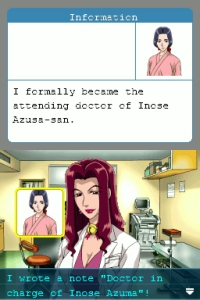
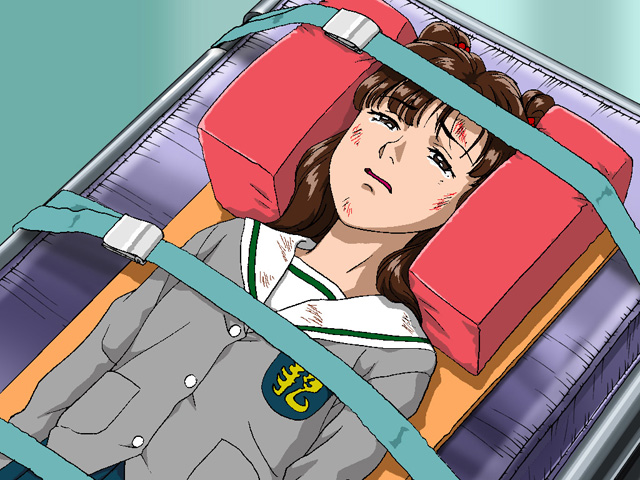
image0036Lifesigns, meanwhile, is actually a completely different beast. Sure, it's set in a hospital and features a number of surgery sequences, but it is not Trauma Center. Instead, I was delighted to discover, it is rather more akin to the Ace Attorney games — longstanding favourites of mine — than anything else, placing a much stronger focus on well-written character development and unfolding narrative than on the "action" sequences. It's for this reason that comparing it to Trauma Center and complaining about there being "too much talking" — a criticism also levelled at the Ace Attorney series by some — is utter nonsense. Without the talking… well, there would barely be anything left. The talking is sort of the point. Whether or not you like that is a matter of taste, of course, but given the continued existence of visual novels as a storytelling medium you better believe that there are plenty of people out there who are more than happy to play games that are about nothing more than people talking to each other.

As the Japanese title suggests, Lifesigns is actually the second game in the Resident Doctor Tendo series, though the first never made it to the West for reasons unknown. Ultimately this doesn't matter too much, as like the Ace Attorney games, the overarching plotlines are completely self-contained and only occasionally make reference to the events and characters of the previous game. When they do, they take their time to explain who these random characters that the protagonist knows (and the player doesn't) actually are, too, so it hasn't been an issue.

Lifesigns casts the player in the role of the eponymous Dr Dokuta (yes, really) Tendo, a second-year intern at the fictional Seimei Medical University Hospital. We learn quickly that he had quite an eventful first year, with one of the major events seemingly being a misdiagnosis that nearly ruined his career. We also learn that he was partially inspired to get into medicine after his mother died of cancer, and partially by the fact that his father is a heroic firefighter. We also learn that the resident evil-looking dude Dr Sawai is Tendo's biological father and that there's some bad blood (no pun intended) there.

The game's first episode introduces the major characters around the hospital — Tendo's mentor Suzu-sensei, an attractive older woman whose trademark appears to be a large cat bell around her neck; head nurse Florence, who has an alarming talent for gossip; adorable nurse Hoshi, who is clearly carrying a rather large torch for Tendo; and Aoshima, the new first-year intern whom Suzu assigns Tendo to keep an eye on. There are also a selection of other incidental characters who put in occasional appearances such as the frankly terrifying surgical assistant nurse Kurai, the deadpan anaesthetist Masui and Tendo's relatively normal-seeming friend in paediatrics Dr Ueto. All of them are fun, distinctive and, like the characters in Ace Attorney, just the right blend of believable and caricature to make them all memorable.

The majority of gameplay in Lifesigns requires the player to move from location to location in the hospital to advance the story. The location map shows which characters are hanging out where at any given moment, though there's no indication given as to whether the conversation you'll have in that location is an important one or not. (Important conversations advance the plot and tend to change around the arrangement of which other characters are hanging around where; non-important ones tend not to impart useful information for the most part but are usually entertaining or give a little further insight into the characters.)

When you reach a location, important conversations tend to unfold automatically and occasionally require some input from the player. This is accomplished in a similar manner to in Ace Attorney, whereby you open up your Court… sorry, Medical Record and present various objects, concepts and characters to the other person. Yes, much like in Ace Attorney, your inventory is not necessarily restricted to holding physical items; instead, as the plot unfolds, Tendo will take various notes, which he can then discuss with people. Usually if you're stuck at some point, you simply have to present something to someone else to advance the plot along. Occasionally, there are sequences where you have to convince another character to do something — these unfold in much the same way, albeit with more dramatic music and visual effects and an on-screen meter depicting how close you are to successfully convincing them. Presenting the wrong piece of information in these scenarios can lead to a bad ending, so you have to be careful — though bad endings don't necessarily mean the end of the game.
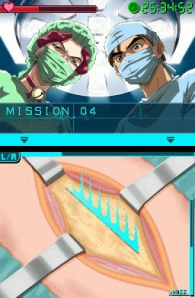
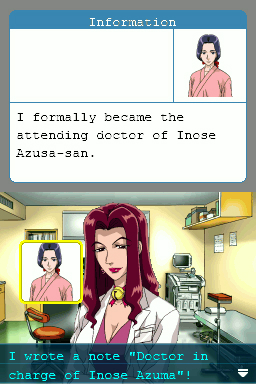
image0050What with Tendo being a doctor, you'll be unsurprised to note that you do actually get to do a bit of doctoring around the place, too — life in a hospital isn't just flirting with the nurses and hanging out with the pervy old cancer patient who can't resist pinching female doctors' bottoms. No, at least once in each of the game's five episodes, you'll find yourself having to deal with realistic medical cases, beginning with an examination in which you must successfully diagnose their symptoms, and usually concluding with a surgery sequence in which you must treat their ailment accordingly.

The diagnosis sequences are like a simplified version of Dr Cunningham's episodes in Trauma Team (or it's perhaps more accurate to say that Dr Cunningham's episodes are like expanded versions of Lifesigns' diagnostic sequences) — after having an initial discussion with the patient, you're presented with a view of them that you can look up and down and then interact with in several ways — inspecting areas visually, using a stethoscope to listen to the body's sounds and palpating areas by rubbing the touchscreen. The patient will generally give you a few clues here and there ("ooh, it hurts more on the other side…") but for the most part you're expected to perform a thorough examination to find all the symptoms. Unlike in Trauma Team, there's no chance of missing anything as you can't proceed until you've made a successful diagnosis; and also unlike Trauma Team you don't have to worry about eliminating possible candidates by matching symptoms to your database. Tendo knows his stuff — though often the visual examination is followed up by one or more "spot the difference" ultrasound/X-ray/CT/MRI scans in which you have to circle the abnormal areas on the touchscreen and pin down a final diagnosis.

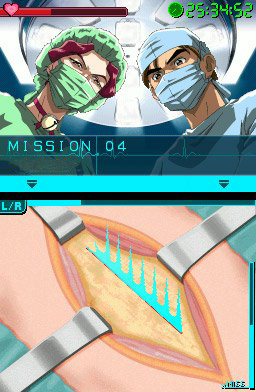
The surgery sequences, meanwhile, are not very much like Trauma Center at all… aside from the fact that they're incredibly tense and quite challenging. Rather than tending to follow the same format, requiring the player to remember the appropriate means to deal with "common" ailments such as lacerations, tumours and inflamed areas, each surgery sequence in Lifesigns is a unique procedure that doesn't necessarily involve opening up the patient. For example, in the first episode, you'll find yourself performing an appendectomy as your first operation, then later you'll be navigating a catheter through someone's blood vessels in an attempt to stop some internal bleeding.

The diversity of tasks in the operations means that rather than trusting the player to switch between tools as they need to, each surgery is split into a number of smaller objectives which must be achieved in linear sequence to progress. Making mistakes injures the patient and causes damage to their vitals bar, and there's no convenient "cure all" stabiliser to inject here — though performing a task quickly and accurately has a chance of restoring the vital signs somewhat. There's also a "concentrate" button that displays the areas on which you're supposed to perform the current action along with the movements required, but all the time you're holding down this button the operation's time limit is zipping by five times faster than usual. Experienced surgeons will, of course, be able to complete the operations without having to rely on this at all, and in at least one situation the ending of an episode is determined by how quickly you complete an operation. (You can save beforehand… but as noted before, the "bad endings" to each episode aren't game-ending, so it's often worth continuing and perhaps replaying the game later to see the different possible conclusions.)
133I'm only partway into the second episode so far so I'll refrain from speaking further on the plot and whatnot, but so far it's been pretty great. It successfully combines the character- and dialogue-driven narrative of the Ace Attorney series with the tension of Trauma Center and comes out feeling like its own distinctive experience. While, yes, there is a lot of talking, as I said earlier that's sort of the whole damn point. This isn't a kinetic novel with arcade sequences like Trauma Center was (that's not a criticism, incidentally) — it's a visual novel/adventure game in which performing surgery plays an occasional role, but in which the relationships between the hospital staff, the patients and the other people in their respective lives is brought to the forefront. It's a really interesting game, and I strongly suggest you check it out if you're a fan of games that are a little bit off the beaten track.
1160: Spoilers Ahead

After writing yesterday's post and doing a little more work on it today, I've decided that I would actually quite like to talk about my RPG Maker project a little more rather than being unnecessarily vague and obtuse about it. Those of you reading who like the concept might be able to give me some motivation to continue with it in the long-term, then, which is probably going to be a valuable thing if (when, more likely) this initial burst of enthusiasm runs out.

However, I am also conscious that discussing some things about this project may constitute spoilers of various descriptions, so I am going to add a "read more" tag to this post so those who would like the finished product to remain a complete surprise can avoid it if they desire.

So, without further ado, click the link to continue reading if you want to… otherwise, I'll see you tomorrow!

Continue reading "1160: Spoilers Ahead"

1159: WAY More Than Seven Days

Back on Day 793, you may recall that I mentioned I was working on a game and that I was quite enthusiastic about it. Well, it stalled somewhat for various reasons — work, general lethargy, moving house, jury service, many other reasons that aren't really excuses — but this week I've started working on it again, and it's a good feeling.

To be honest, doing what I'm doing was partly spurred on by this painfully accurate article from The Onion. I figured that I'm in a relatively good position right now — financially secure, working in a job which is reasonably challenging at times but which leaves me with plenty of free time — so instead of sleeping until 10-11am (usually unintentionally) I should make use of some of that extra time. As such, I've been getting up a bit earlier and, well, making use of some of that extra time.

In the previous post I linked to, I talked about how much I enjoy the world-building aspect of creating a game. Today, I've been rediscovering the joy of populating those locales that I've created with people. Specifically, the stuff I've been working on over the last couple of days has been the first appearance of the story's main characters, so it's been an absolute pleasure to see these characters I've had in my head (and a Google document) finally appear on screen and act the way I've told them to.

I'm going to do that annoying developer thing and not talk in specifics about the project because I'd like some aspects of it to remain a surprise, but I will say a few things about what I've achieved so far.

Thus far I've got a controllable protagonist and an interactive introduction sequence that introduces her, the setting and the context of the story. I've got some sequences where the player is able to make choices and subtly change some of the things that occur next. I've laid a few "hooks" for future interactions between the protagonist and other characters, and I've put together the story up until the point where the protagonist meets up with the other main characters. And, as I type this, I've composed the initial conversations between the protagonist and the other characters — including, again, a few events that change a little bit according to choices that have been made.

I'm deliberately keeping things relatively unambitious with this project, as I would very much like to actually finish it at some point. It's a concept that I really like and would very much like to carry through to completion, so I'm keen to try and devote some time to it. One thing that was stopping me was a lack of certain art assets that I needed to progress, but now I've found those (or at least got some solid placeholders put in) I have, as far as I can make out, everything I need to pick up this project and run with it, motivation and free time permitting. Aside from the art assets I was lacking, most of the other stuff I'm using is either RPG Maker's built-in content or publicly-available/royalty-free stuff. The somewhat "generic" nature of using built-in and publicly-available assets is entirely deliberate — if and when it's finished you'll hopefully see why I chose to go that route. It wasn't just laziness and/or a desire to get up and running without having to worry about creating custom content — though being able to work with pre-made character sprites and the like certainly makes working on this a bit easier.

I'll leave it at that for now, and if I make any significant progress that I'm happy to share in the near future, I may drop in a few screenshots here and there. Suffice to say that for the moment, I'm happy with the way things are going and hopefully I'll have something more to share soon.

1158: Forking One's Dongle

Page_1Some of you may have been following this recent unfolding story via the social Web and other avenues, but I thought I'd mention it here for those who haven't seen it. I am talking about the recent incident at PyCon, a conference for Python developers all over the world.

There's a comprehensive rundown of what happened over at VentureBeat (and follow-up here), but in case you can't be bothered to read all those difficult words, here are the pertinent points:

  • "Evangelist" is an actual job title these days outside of the religious community. Sweet Jesus. No pun intended.
  • Adria Richards, a "developer evangelist" for a company called SendGrid that has something to do with email (I don't really understand it, to be perfectly honest, but that's not massively important) "called out" two male developers during a keynote session at PyCon for making allegedly "sexual" jokes about "forking repos" and "big dongles". She did this by taking a photograph of them and then posting it to Twitter.
  • "Forking a repo" apparently refers to taking a piece of source code and developing it into a new piece of software not, you know, fucking it, despite the fact "I'd like to fork that" is a somewhat innuendo-laden phrase, particularly if you say it like a Cockney while rubbing your thighs, which reports don't suggest these two gentlemen did.
  • "Dongle", a piece of hardware that allows a particular function to happen, is an indisputably funny word because it has the word "Dong" in it. "Dongle" is also ripe for innuendo because it has the word "Dong" in it.
  • The inevitable Twitter shitstorm kicked off as a result of Richards' tweet.
  • Richards started receiving rape and death threats but continued to feed the trolls.
  • One of the developers in the photograph was fired after the incident.
  • One of the developers (I'm not sure if it's the same one who was fired offhand) apologised to Richards.
  • SendGrid suffered a DDOS attack following the incident.
  • SendGrid fired Richards today, explaining that the company supported her right to speak out against content she found objectionable, but not in the very public, provocative manner in which she did so.
  • ???
  • Profi– wait, no, that's something else.

Now, I've said a number of times on here that I recognise and accept that women in the tech industry generally — not just the video games sector — are in a difficult position, having to compete against something of a "boys' club" mentality. And these women should speak out when something inappropriate is said or done to them.

This incident, though? I could tell yesterday when it all kicked off that it was going to be a real mess. The big issue we have here is that the things the male developers said weren't really sexist comments. They weren't directed at a woman, they clearly weren't maliciously intended and for all we know, they really were talking about literally wanting to fork the repo under discussion rather than making the rather childish joke it seems they were making. (And come on. When your profession requires you to talk about "dongles" with a straight face, even the most sour-faced git has to crack a smile every so often.)

There's also the issue of Richards and whether or not she invaded their privacy. The comments were made between the two men as a "private" joke — or as private as a joke can be in a crowded conference hall, anyway. Richards, the argument goes, eavesdropped on their conversation then shared details of it to the social Web when what she should have actually done was spoken to the two men herself, told them that the things they were saying made her uncomfortable, given them the opportunity to apologise if they wanted to, and that should have been that.

The flip side to the issue, of course, is that by making innuendo-laden jokes at a tech conference like this, these gents could be seen to be perpetuating the "boys' club" mentality — even if the comments weren't directly addressed to a woman. But in response to that I would again point out that at worst they were indulging in a childish, harmless pun that even a primary school kid would shake their head at, and at best they were simply using programmer slang with absolutely no intended sexual connotations whatsoever. Besides, I know plenty of women who are a dab hand at the old innuendo game themselves. And even Richards herself was caught making jokes about stuffing socks down someone's pants for when the TSA felt them up at the airport.

In short, the whole thing ended up being rather surreal, and no-one really came out of it a winner. Richards came out of it looking like one of the stereotypical feminists that those ridiculous "men's rights" groups get up in arms about, getting offended at something that really wasn't worth getting offended over. The developers who made the comments have had their names and faces dragged through the mud. And in the meantime, two people have lost their jobs and at least one of them is suffering a considerable amount of bullying and abuse as a result of this whole situation.

Ultimately, Richards' "speaking out" against the two developers' behaviour has probably done more harm than good, not least because the manner in which she did it cost her her own job and attracted the wrath of the very worst the Internet has to offer. I sympathise with her from that perspective, having suffered cyberbullying on a far smaller scale than this incident — but I also think she was a complete pillock for inciting this whole shitstorm in the first place. To reiterate: that doesn't justify the atrocious behaviour and abuse that has been directed her way, but at the same time, she's not at all blameless in this matter.

The social Web is a powerful tool and can be a force for good. But it can also destroy lives. Think about that before you do or say anything stupid.

1157: The 'Fandisc' Experience

So having finally completed Kira Kira (which is excellent, by the way — one of the best visual novels I've had the pleasure of playing to date) I decided to make a start on its semi-sequel Kira Kira Curtain Call, which is considerably shorter and more of a spin-off than a full sequel. Technically, it's a "fandisc", which is a concept I hadn't come across prior to getting into the visual novel medium.

I'm assuming this probably means that you aren't familiar with it either, in that case, what with VNs being rather niche and all. Basically it's exactly what it sounds like: it's a disc (or download) of extra content that continues where the main game left off. Sometimes it involves the same characters, sometimes it has side stories. It's usually considerably shorter than the original game, too, but it's a standalone game in its own right rather than an addon. I guess the closest equivalent in Western gaming would be a standalone expansion pack or piece of DLC.

Not many of these fandiscs make it over to the West, for some reason, though there are a few that have. Persona 3 FES could be considered a fandisc, for example, due to its 20-hour extra campaign that ties up the loose ends left by Persona 3's main campaign. Corpse Party: Book of Shadows could be considered a fandisc for the original Corpse Party, too, since it fleshes out (no pun intended) a number of the incidental characters from the original before continuing the plot in preparation for a true sequel. And Kira Kira's English-language publisher Mangagamer have taken to translating and releasing some of these fandiscs for the more popular visual novels out there — Kira Kira is one of them.

Kira Kira Curtain Call is a two-part follow-up to the events of Kira Kira, and stars a mostly new cast of characters. Unfolding several years after Kira Kira's conclusion (and assuming that the "True End" was, well, true), the game initially begins with the player in the role of Souta Honda, a passionate, fiery-haired young man who is angry and frustrated at the world, and wants nothing more to express himself through the medium of rock music. At the same time, though, he doesn't want the trappings of fame that being a famous musician begins — indeed, shortly after the game begins, we see him thrown into a sexual situation with two groupies and an old senpai who is now a member of a successful band, and he refuses to take part.

Souta, you see, is desperately in love with a girl named Yui, and herein lies one of the reasons why Curtain Call is such an interesting and distinct experience from the original game. Rather than the first part of the game allowing the player to get to know the characters and then, through their choices, progressing down one of their "routes" to their eventual conclusion, in Curtain Call we begin with a protagonist who is already obsessed with the object of his affections. In what I've played so far, Yui's feelings towards Souta are somewhat ambiguous, but it's clear that there's some affection there despite Souta's previous advances leaving her with mild androphobia.

Souta is a marked contrast to the original game's protagonist Shikanosuke. Initially, Shika was a guy very much caught up in a tidal wave of events that you always felt were slightly beyond his control — though it was abundantly clear by the end of the story that he was genuinely enjoying himself despite spending a good half of the game in drag — but he grew and changed in various ways according to which of the three heroines' paths he proceeded down. Each of the paths had something in common, though: the fact that the main cast's band left an indelible mark on their high school of Oubi Academy, and you get a real sense of this fact in Curtain Call. In a nice touch, Shikanosuke's sister Yuko, who was often heard but never seen in the original Kira Kira, is one of the main supporting characters in Curtain Call and has even been very obviously designed to resemble Shikanosuke in drag to an almost uncomfortable degree.

Other characters put in an appearance, too: the second half of the game (which I haven't reached yet) focuses on one of Kira Kira's supporting characters and his attempts to make his own band. In one of the routes through the original game, Shikanosuke becomes part of this group as he attempts to [SPOILER REDACTED] but in the "True End", we simply hear that this band exists.

All in all, I really like the idea of a "fandisc". It provides the potential for a story to continue and for the game's world to be considerably more fleshed out even after the main game has concluded. Of course, you have to be careful not to outstay your welcome — Persona 3 FES ran into this issue with its immensely frustrating, cheap boss fights — but if you handle it well, it gives the player the opportunity to spend just a little more very welcome time in a game world with some characters and settings that they have become very fond of. While I was completely satisfied with the way Kira Kira concluded in all its various routes, I'm happy to have the chance to see "what happened next" and take part in the extension of that story.

1156: Dream a Little Dream

Sometimes I like my subconscious. Sometimes it comes up with creative, awesome ideas or simply entertains me with peculiar, fascinating and sometimes grotesquely compelling images that then provide suitable fodder from which to compose a blog post later in the day. I know I have at least one friend for whom the experience he dubbed "the poo dream" is a source of considerable amusement.

Sometimes, though, I don't like my subconscious. Today is one of those days.

I don't tend to suffer from nightmares a lot. I don't have many memories of being woken up suddenly by something unpleasant happening to me in my dreams, and I've certainly never done the Hollywoodesque thing of suddenly sitting bolt upright, wide awake and covered in sweat. This morning, though, my brain decided to show me some messed-up crap.

And yes, I said morning. As those of you who remember my previous posts on vivid dreams will remember, I tend to experience my most vivid flashes of weirdness from the subconscious after I've sort of kind of woken up once and drifted off back to sleep. In this case, it was shortly after Andie had gone out to work at half-past some ungodly hour in the morning, and I was far too tired to get out of bed at that point. So, without much encouragement required, I fell asleep again, and the peculiar images began.

This time around, I was back at my old secondary school. Specifically, I was in the music department's main room. This was quite a big room with a stage at one end, though it was relatively rarely used for concerts when I was there — school concerts tended to take place in the large (and extremely reverberant) sports hall. Regardless of that, though, there was a concert going on this time around. I was set to perform. Specifically, I was set to perform Carnival of the Animals on the piano, which the astute and/or classically-trained among you will know is a piece of music that normally requires at least two people and two pianos and possibly some additional instruments too. However, for reasons that were at best unclear over the course of this dream, I was set to perform it solo, and I was extremely nervous about it.

I don't remember anything else that was going on in the concert, but I remember the audience feeling somewhat rowdy. In fact, it felt more like a performance in front of a class of schoolkids than an actual concert — as I looked around, I remember noticing that the desks were laid out just as they always were — three rows, with another at 90 degrees to the rest of them down the side.

My time came to perform and I psyched myself up. I was going to give a small speech prior to starting my performance to explain why I was going to be performing Carnival of the Animals as a soloist, but as I stepped on stage the noise level from the audience (who, it was clearly evident by now, just were schoolkids) increased and increased and increased. I stood there mutely waiting for them to calm down so I could give my speech, but the hubbub didn't dissipate. Eventually I gave up, laid my music down on the piano that was on stage and prepared to take a seat.

Suddenly, from out of the audience, out burst a kid who was a fairly notorious bully when I was back at school. His appearance in my dream was just as when I last saw him at the age of about 15. While I was at school, I didn't have a lot of problems with this particular individual personally, but he was someone that I was wary of and tended to avoid whenever possible — not only because I was afraid of him, but also because I thought he was a bit of a tosser. Anyway, that aside, he leapt at me, and it wasn't until it was too late that I saw he was wielding a knife. He slashed across me as he leapt at me. I didn't feel anything, so I figured he missed.

Then I looked down and saw he hadn't missed. The front of my clothing was stained crimson with blood, and the pain suddenly kicked in.

Then I woke up. That was not a pleasant way to wake up, I can tell you, and it's not an exaggeration to say that it pretty much put a downer on most of the rest of my day. I've been feeling low and depressed all day and while I'm sure not all of it can be attributed to the activities of my subconscious, starting the day in that manner probably didn't help.

But what does it mean? Well, aside from the apparent long-term damage to my sanity that classroom teaching did… who knows? And I'm not sure I want to know!

1155: The Tablet Revolution

Page_1I've come to the conclusion that I'm a dusty old bastard who is set in his ways like an old man. That or everyone else is just plain wrong. Or perhaps a combination of the two.

I'm specifically referring to the "tablet revolution" — that futuristic gubbins that supposes everyone is going to replace their computer/console/handheld/everything with a tablet such as an iPad or whateverthefuck the bajillion Android tablets are called these days. I even read an article earlier where someone from Zynga said that tablets are "becoming the ultimate game platform".

I must respectfully disagree — at least for my needs and wants, anyway.

Our house has three tablets — an iPad 2, a Motorola Xoom and a Nexus 7. The Nexus 7 is currently in for repair, but got a fair amount of use by Andie, largely for free-to-play mobile games and Kairosoft titles. The iPad 2 also gets a fair amount of use by Andie for the same reasons. My Xoom gets barely any use, though the fact I have SNES, Mega Drive and various other emulators on there ready to go at a moment's notice is pretty cool.

But yeah. The fact stands: I hardly use these devices at all. Why? Because for my purposes, they don't offer a superior experience to other bits of kit. For gaming, I have consoles, dedicated handhelds, a laptop PC and a desktop PC. For work, I have my Mac, the aforementioned laptop PC and the desktop PC at a pinch. For browsing the Internet, I have… you know how this goes by now. For me, all of these devices offer a considerably superior experience to all of the tablets we have in this house.

Oh, sure, tablets can ably perform several of these functions, but they don't do any of them as well as the pre-existing devices. About all they do offer, really, is the fact that they're incredibly quick to turn on (assuming they have some charge left in them, which my Xoom in particular rarely does) and are a lot more portable and lightweight than many other devices.

But personally speaking, the fact that, say, the iPad is thin and lightweight isn't enough to make up for the fact that it's a lot more difficult to type on than an actual physical keyboard. And yes, I know, you can pay through the nose and get an iPad-compatible wireless keyboard (or a generic one for Android) but not only does that remove one of the main benefits of a tablet — its all-in-one portability — there's other issues too: the pain in the arse it is to access the file system (on iOS, anyway; this is one area where Android is marginally better), the fact that proprietary iOS and Android apps rarely play nicely with established formats (just try getting a Microsoft Word file with any formatting or layout whatsoever to look even a little bit right in Pages for iOS), the fact that some of the work I do requires the precision of a mouse rather than the cack-handedness of a touchscreen, the fact that some websites I want to use are designed for use on a computer with a keyboard and mouse rather than a touchscreen and a virtual keyboard.

And don't get me started on the games. "The ultimate gaming platform"? Don't make me laugh, Zynga. While mobile and tablet games have been enormously successful in getting more and more new people into video games, and that's a good thing for the industry as a whole, there is no way you can say with any good conscience that tablets are an adequate replacement for more established systems — and better-designed control schemes in particular. Have you ever tried to play a first-person shooter on a touchscreen tablet with no buttons? It is one of the most bewildering experiences you'll ever encounter: why would anyone want to put themselves through that? There are certain genres that work well, of course: strategy games, board game adaptations, word games and adventure games are all good uses of a touchscreen interface… as are the never-ending throng of isometric-perspective building/farming/dragon-raising games that are little more than vehicles for monetisation. There are very few tablet-based games that hold my attention for more than a couple of minutes, in short — the last was Ghost Trick, which doesn't really count as it was a conversion of a Nintendo DS game.

I guess that's sort of the point, though. The main benefit of tablet devices (and smartphones, for that matter) is their immediacy — you turn them on, you tap a button and you're (almost) straight into a game, and you can be out of it again within a matter of minutes if you just needed to fill an awkward silence or wait for someone to come back from the toilet. And that's good, in a way; it just doesn't really fit with how play games. As I noted in a reply to Anne on yesterday's post, I play games as my main form of entertainment. I don't watch much TV, I don't watch movies, listening to music is something I tend to do while engaged in some other activity, and so games are my main "relaxing time" activity. I want to sit and play something for an hour or two (or more) at a time, and between freemium energy please-insert-credit-card-to-continue bullshit and the "bite-size", disposable, forgettable nature of most mobile/tablet games, I just don't get a satisfying experience from them.

Meanwhile, the laptop I bought a short while back is easily my favourite piece of kit in this house. It's powerful enough to play pretty-looking games like TrackMania, yet portable enough to carry around in a bag. Its battery life is decent (though not a patch on a tablet) and it has a nice screen. It's a good means of playing visual novels without having to tie up the TV, and it copes well with anything I might want to throw at it while working on the go. In short, it's an all-in-one device that does absolutely everything I want it to without making any compromises or dumbing the experience down at all. Sure, it takes a bit longer to turn on than the iPad, but it's also infinitely more useful and fun to me.

Fuck the tablet revolution, basically. Long live the laptop. And the games console. And the desktop PC. And the dedicated handheld. And, you know, sometimes, just a piece of paper.