A recent article on Gamesindustry.biz drew attention to a LinkedIn (ugh) post from one Christian Lövstedt, CEO of a company called Midjiwan AB, who is complaining that people don't take mobile gaming seriously.
Midjiwan AB, if you were curious, apparently make a mobile game called The Battle of Polytopia, which I've never heard of, which I suspect is at least partly what this is all about. In fairness to all the following, The Battle of Polytopia does not look all that bad… but I'd still rather play a game like that anywhere other than my phone. But I digress before we've even begun, so let's get back on track.
"Mobile gaming is one of the most played and most profitable platforms in gaming," Lövstedt says, "currently representing 55% of the global gaming market, but is often ignored and looked down on [because] it is perceived by too many as a world of predatory monetisation and low quality."
Okay. Let's start with this. People love to trot out that "over 55% of the market" figure (with variations on the exact figure quoted) but let's be real about this: the reason why mobile accounts for so much revenue in the global games market is precisely because it is a world of predatory monetisation and low quality.
Consider some of the most popular mobile games out there. Candy Crush Saga, which charges up to £34.99 for cheats that allow you to bypass levels — coupled with design that makes it near-impossible to win without buying these cheats. Gacha games such as Azur Lane, Granblue Fantasy and Fate/Grand Order, which exploit horny young people (particularly, though not exclusively, men) with attractive JPGs of hot anime characters, necessitating that you pay at least £20 at a time to be in with a reasonable chance of actually getting the character you want. And I'm pretty sure there are still plenty of "tap and wait" games out there that ask you to pay up to make things go faster or be able to simply play the game more.
When you consider that the term "whale" was coined to describe those who spend excessive amounts of money on free-to-play games, particularly in the social and mobile spaces — and that pursuing these whales to exploit them (at the expense of providing a good experience to free players) is a primary goal of the developers of these popular games — you will perhaps start to see exactly why mobile accounts for so much of the "market". It's because one user playing one heavily monetised mobile game will account for considerably more revenue than one user playing one pay-once-play-forever premium game on PC or console.
Games like this, you see, don't just ask you to buy them and are then happy with that. No; the most "successful" mobile games — measured by most folks who complain about mobile not getting its dues as the ones that generate the most revenue — are the ones that provide the opportunity for perpetual monetisation: the ones that entrap players into dark patterns that make them feel like they have to continually pay money into the game, month after month, in order to remain "relevant" and "current".
When you start from there, it's understandable why people see mobile gaming as rife with predatory monetisation and low-quality games. But let's look at the rest of this open letter.
"While some amazing mobile-first titles, like Monument Valley, manage to get the industry's attention," Lövstedt continues, "many other extremely popular and successful titles do not."
Monument Valley came out in 2014. That's over ten years ago! If you can't think of a more recent example than that of Doing It Right, I think we may have found the problem!
But he continues:
"Mobile games like Clash of Clans, Temple Run, Crossy Road and Candy Crush Saga are critically and commercially successful, yet are never or rarely acknowledged at game awards."
Perhaps that's because Clash of Clans, Temple Run and Candy Crush Saga are all prime examples of games with predatory monetisation and low quality? I actually don't know about Crossy Road, so I am willing to take a moment to actually research it before I brand it with the same scarlet letter. Give me a moment.
Tangent: Pete tries Crossy Road
"Contains ads. Contains in-app purchases". We're not off to a good start already. But let's download this and see.
After an initial tutorial, during which the simple tap-and-swipe, Frogger-inspired gameplay is introduced, I am given a "free gift" of in-game currency and then immediately invited to "win a prize". It costs the 100G of in-game currency I was just "gifted" to draw from a virtual gacha machine, which awards me with a mallard duck avatar to play in the game instead of the default chicken.
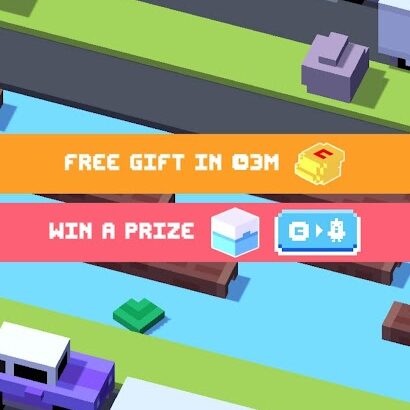
I am then taken to a main menu screen where I get an immediate popup about a new time-limited game mode and "sweet sales in the store". I'm then taken into that mode without having asked to play it. After playing it briefly, I am shown my top score with two non-descript icons, the purposes of which are not made entirely clear. It seems the one that the eye is most immediately drawn to — i.e. the one where you'd expect an "OK" button to be in typical UI design — is a "share" function for you to send a screenshot of your concluded run to any of your phone's connected social services or contacts.
After that, I am given a timer countdown to my next "free gift" and informed how many "G" of in-game currency there is "to go" until my next blind box of whatever the fuck you unlock in this game.
To Crossy Road's credit, it has no play-throttling energy system, no paying to bypass timers and it does have a one-off payment of £7.99 to remove all ads (if you're not already blocking them), but it also sells extra game modes, has "limited time sales" on special characters and sells a power-up to double your in-game currency income. And you can bet that it gets regular "content updates" to ensure there are always new things for people to pay for.
But it's just not very fun, the countdown timers and grind for currency make it feel more like work than play, and the "business" part of it being so front and centre is exactly why people don't take it as seriously as premium, pay-once games for PC and consoles.
So in conclusion to that little bit, while Crossy Road isn't as egregious as the other examples cited, it's still not… great. And certainly not the sort of thing that is in any way deserving of an award.
"Just because [low-quality] games [with predatory monetisation] like that do exist in the mobile market, it should not diminish the achievements of the market's best games," Lövstedt continues. "It perhaps makes them more impressive. And if we're honest with ourselves, there are AAA industry darlings crammed with the same monetisation mechanics."
Two things to pick out here: firstly, outside of the aforementioned Monument Valley (which, again, is eleven years old at this point), he cites no specific examples. And yes! Yes, triple-A does pull all this shit, too! And you know what? People hate it there, too!
"D.I.C.E., one of the better award bodies for acknowledging mobile gaming, has only ever nominated a mobile game for Game of the Year twice," he continues. "Angry Birds HD and Pokémon Go. And they were the only dedicated game awards body to nominate them, despite how commercially and culturally impactful both games are."
Okay. I have to look into this. Bear with me.
Tangent: Pete looks into the D.I.C.E. Awards
Angry Birds HD was nominated for Game of the Year in 2011 alongside Mass Effect 2 (which won), Call of Duty: Black Ops, God of War III and Red Dead Redemption. Honestly, the fact that it was even nominated is borderline laughable, because Angry Birds is not a particularly amazing video game. It's fine for what it is, but in 2011 people were still feeling the novelty of playing games on a tablet — the iPad first launched in 2010 — and the calibre of the other games that were nominated is just in a completely different league. What Lövstedt doesn't mention is that Angry Birds HD did win a D.I.C.E. Award that year — for Casual Game of the Year. Which is absolutely fair, although given it was up against Pac-Man Championship Edition DX, Plants vs. Zombies and Bejeweled 3, it wouldn't be my vote. (And I don't even like Plants vs. Zombies.)
Pokémon Go, meanwhile, was up for the 2017 Game of the Year award, where it was up against Overwatch (which won), Battlefield 1, INSIDE and Uncharted 4. My personal tastes put that as a much weaker overall lineup than that of 2011, but there's still a world of difference between gamifying Google Maps and the cultural phenomenon that was Overwatch in its first year. And, again, Pokémon Go won a perfectly acceptable award for what it is: Mobile Game of the Year.
Lövstedt is right; Pokémon Go in particular did have a certain amount of cultural impact, particularly as we moved into the pandemic years. But, again, it's just not a very good video game, which is why it lost out on the overall Game of the Year award. "A lot of people played this because they were bored" is not the same as "this is an incredible video game that should be celebrated as the pinnacle of its medium".
In conclusion, then, I have to reiterate that mobile gaming's reputation as being filled with low-quality games with predatory monetisation is well-earned. This isn't to deny that there are developers apparently doing interesting things on mobile — Lövstedt's own The Battle of Polytopia looks quite worthwhile, so I might have to actually give it a go — but at this point, the damage done by Apple introducing in-app purchases (and Google following suit) has already been done. There's no easy way to turn that back; no easy way to reclaim mobile gaming's reputation from those who, thanks to their greed, generate enough income to account for a supposed 55% of the global games industry's revenue.
Because what are Apple, Google and the other app store platform holders going to do? Just suddenly give up such a profitable revenue stream? Because let's not forget they get a cut of every purchase, so it is absolutely not in their interests to try and fix this.
Also, playing games on a touchscreen — particularly on small ones like those found on phones — sucks ass. This, honestly, is one of the biggest reasons I have zero desire to play any games on my phone today — even if they weren't low-quality games with predatory monetisation. Which a significant portion of them are, so I have precisely zero incentive to look any deeper — particularly because the vast majority of those which are cited as "good examples" (including the aforementioned Monument Valley, plus titles like Stardew Valley and Vampire Survivors) are available on platforms with control schemes that don't suck!
So in summary: if you want to be taken seriously, release your game on a platform that people will take seriously. Have you seen the shit they let onto Steam these days, recent examples notwithstanding…?
Want to read my thoughts on various video games, visual novels and other popular culture things? Stop by MoeGamer.net, my site for all things fun where I am generally a lot more cheerful. And if you fancy watching some vids on classic games, drop by my YouTube channel.
If you want this nonsense in your inbox every day, please feel free to subscribe via email. Your email address won't be used for anything else.