I'm alone in the house right now (apart from the cats), as Andie is away looking after her mother, who has just been in hospital. Nothing to worry about or anything, but she needs looking after for a few days, so I am holding the fort back home while she does that.
I tend to find when I'm alone in the house I want to behave… unusually. Last night I slept on the sofa for half of the night because I felt like it (and our sofa is quite comfy). I talk to myself. I tend to find that it's harder to break out of indecisive autistic funks. But I survive; I hang in there. I've done it before, I'll do it again, and I know it's not forever.
A lot of us probably don't think about loneliness as a serious consideration when we're younger. Indeed, when I was a teen, I remember people who were by themselves — voluntarily or otherwise — were routinely mocked as a "Larry" (as in "Larry Loner") because the norm was to have friends, and to be pretty much constantly surrounded by them.
Of course, that didn't stop some of us from feeling lonely in private, even when we did have friends. I often felt quite lonely and isolated due to the fact that I lived in a village that was seven miles away from where my school and friends were. When I was old enough to get the independence afforded by being able to cycle and, later, drive places by myself, it was a godsend; some of my fondest memories of my youth correspond with enjoying this freedom alongside others.
In fact, some of my absolute fondest memories of this time are also some of the least remarkable things that occurred, such as the one evening several friends and I drove to a pub in the middle of nowhere while listening to the cassette copy of my Essential Acid Jazz CD I'd prepared precisely for occasions like this, had a few drinks, stopped at the 24-hour Tesco petrol station for late-night sandwiches, and then went on our merry ways. It was a completely unremarkable evening, but it represented everything good about that time in our lives: the ability to be carefree; the ease with which you could surround yourself with people that cared about you; the freedom to do pretty much whatever you wanted, within reason. "Do what you want" doesn't have to be anything dramatic or fancy; sometimes, all you really want is to pass the time in good company.
I miss that. I really miss that. I am grateful and thankful to have the company of Andie most of the time, but when I'm on my own for a long period like this, I cannot help but wish for times past: times when people had time for one another, and when you could do things, with other people, on a whim without 1) having to prepare several months in advance, 2) without people being likely to drop out of proceedings at the last minute and 3) without people suddenly informing you that something you had been enjoying together for many years was actually not, in fact, to their taste, and that they didn't care it was important to you in particular.
We've gone terribly, horribly wrong somewhere. Human beings weren't made to be alone. And yet even with the myriad ways with which we can supposedly "connect" with one another today, it's hard not to feel exceedingly, excruciatingly lonely. Particularly when you really are, as I am right now, on your own.
Oh well. Nothing that can be done, really. Time to just make the best of thing and enjoy my last couple of days off before getting back to work on Monday.
Want to read my thoughts on various video games, visual novels and other popular culture things? Stop by MoeGamer.net, my site for all things fun where I am generally a lot more cheerful. And if you fancy watching some vids on classic games, drop by my YouTube channel.
If you want this nonsense in your inbox every day, please feel free to subscribe via email. Your email address won't be used for anything else.
One of the most complex parts of human interactions that we all have to independently learn to navigate is the politics and etiquette of farting. We all do it — yes, even you — but everyone, eventually, comes to their own conclusions as to how, when and why they let the bum gas fly.
I grew up in a household where farting was considered very amusing. Both my Dad and my Mum could let out an absolute ripper of a trump in their prime, and the culture of our family was that you did it without shame. The implication was that you were in a safe place and could be yourself, as disgusting as you wanted, and you would be accepted for it.
Curiously, though, I was not allowed to say the word "fart" as a child. It was considered a swear word. To this day, I'm not entirely sure why, though I guess it occupies the same tier as "crap" where, in the appropriate circumstances, you can probably consider it a mild profanity. Instead, we would typically just use the word "flatulence", which, despite being the scientific, medical term for it, is a very funny word indeed. Occasionally, if we came across a particularly amusing euphemism for it either on television or in other media (such as in The Beano, which I read habitually as a child) and would make use of that, but "flatulence" is the one that stuck, and "fart" was verboten. (I am allowed to say "fart" these days, though I'm pretty sure my parents still don't use it much.)
School is a complicated time to determine your outlook on farting, because you are faced with a variety of mixed messages. Were you to let out a honking grunt in the middle of a quiet lesson, would everyone laugh, or would everyone consider it disgusting and shameworthy? At least part of it is down to the overall way that you are seen generally; if you're one of the cool kids, farting is hilarious, while if you're an unpopular person for one reason or another, farting is the height of shame — so much so that even the accusation of having farted, even if you hadn't done so, could earn you the ridicule and censure of your peers.
Such was the case within lessons, of course. At break and lunchtime, that was a different matter. I have strangely vivid memories of an occasion during my time at primary school where my best friend Matthew and I were trying out shoulderstands (which we'd recently learned for the first time in PE) and discovered that the contortions involved in performing a shoulderstand not only churn up your guts a bit, they also slacken your ringpiece in a way that is eminently suitable for ripping a chuffnut. Thus we spent quite some time attempting to discover the optimal position in which to achieve salty guffs almost on demand.
I'm primarily talking about farting here, but burps bear mentioning, too. Burps, to my recollection, never carried the same possibility of shame as farting, and instead they had a variety of social functions. Those who learned how to burp on command became comedy gods, and those who could summon up a thunderous belch from the very depths of Hell itself could make use of them in a strangely aggressive, dominant manner. Again, I think back to my schooldays, and a particularly vivid memory is standing waiting for the bus with the other people from my village, and my sometimes-friend Dale repeatedly letting out some of the most earth-shaking burps the world has ever heard, on at least one occasion causing the headmaster of our old primary school (who lived near where we waited for the bus) to come outside and ask him to please stop doing that.
Farts are a sign of acceptance in a friendship group, though. People you can fart in front of without shame are people you can call true friends. And, unsurprisingly, I have a lot of weirdly "special" memories of times spent farting with people who are important to me. Some of the most vivid involve my friend Woody, who I would often end up sharing a room with if we were sleeping over at our mutual friend Edd's house, since we both lived a fair distance away.
On various occasions, Woody summoned up "canned veg farts" (absolutely rancid-smelling guffs that were akin to opening a bin that hadn't been emptied for a month in terms of the poisonous atmosphere they created), "water farts" (repeated, loud parps that he swore could be attributed to the amount of water he had drunk that evening) and "Emperor farts" (honking trumps that were preceded by a quote from The Emperor in one of the original three Star Wars movies). There was also the evening of "Did You Hear What I Just Felt", where a particularly vigorous anal fanfare was followed up by the briefest, quietest sound, a little like what raw chicken sounds like if you pick it up. He had to go and check himself after that one.
In somewhat later years, one of my most memorable days working at the Apple Store was the day we had a detailed discussion in Back of House about what the absolute optimal conditions for farting were, and we collectively determined that it was sitting on a hard, wooden dining chair while naked and slightly damp. If you have never farted on a non-padded dining chair, I highly encourage you to try it. You might be surprised.
Of course, it's also an important moment in a relationship when one or the other of you decides that now is the time to start farting in front of each other. It goes back to family; being able to rip out a salty grunt in front of someone without embarrassment, shame or fear is a sign of trust. And the expression of this trust is often unspoken; you never, ever have a discussion about "well, I guess it's time we started guffing around each other". It just sort of happens. And that's lovely.
Want to read my thoughts on various video games, visual novels and other popular culture things? Stop by MoeGamer.net, my site for all things fun where I am generally a lot more cheerful. And if you fancy watching some vids on classic games, drop by my YouTube channel.
If you want this nonsense in your inbox every day, please feel free to subscribe via email. Your email address won't be used for anything else.
It is, I suspect, a natural part of growing older that you start to miss things that are no longer a regular part of your life. So I thought I might reflect on that a bit today. In what turned out to be rough chronological order:
I miss my school days. While there are aspects of those days I'd rather not repeat, there were, on the whole, far more fond memories than sad or otherwise upsetting ones. I enjoyed having a sense of structure to my day; I enjoyed learning new things; I enjoyed having a group of friends around me.
I miss being part of musical groups. I miss the satisfaction of being part of something bigger than myself. I miss the inimitable atmosphere and sense of romance that formal performances brought. I miss surprising people with my capabilities, and earning the respect of people who might never have known who I was otherwise.
I miss my sixth form days. They were like school days, but better. I'd just learn the things I was truly interested in, and the rest of the time, I felt like I was spending good times in good company.
I miss sleepovers at friends' houses, keeping one another awake with relentless farting and impressions of The Emperor from Star Wars. I miss parties where the host thought making a Devil's Food Cake would be a good idea with a house full of drunken teenagers.
I miss that one endless-feeling summer when my parents went away and I had the house to myself. I miss having friends over every day to drink heavily and play Final Fantasy VII on the living room TV. I miss arguing with my friend Woody over whether or not my Japanese PlayStation fucked up the timing on Bust-a-Move (turns out it did, sorry Woody). I miss leaving a metronome outside my friend Edd's door because he'd flaked out early and gone to bed while we were playing Frogger on MAME until 3am.
I miss that first year of university, where it felt like there were endless possibilities ahead of us. I miss being part of a group of people who had been thrown together by chance, but who became fast friends. I miss showing up to morning lectures and only once having to leave because I needed to be sick after a heavy night. I miss having things to learn and do, but the freedom to approach them how I saw fit.
I miss the subsequent years of university, which was the first taste most of us had of living somewhere that was imperfect but charming in its own way. I miss piling around a friend's house to play Mario Kart and Perfect Dark multiplayer on his N64. I miss couch-surfing on a nightly basis.
I miss the university Theatre Group, where I initially felt out of place, but after inadvertently displaying my vulnerability one night in Edinburgh, feeling embraced and comforted by people who did, in fact, like and respect me. I miss growing to feel like I was an important part of that group as a whole. I miss exploring a fascinating form of self-expression. I miss truly finding my voice and my sense of humour. I miss learning to be assertive and confident.
I miss the early days of the Internet, which felt like a brave new frontier and an opportunity to connect with like-minded individuals in a way I had never really experienced. I miss those first real attempts to express myself freely, and learning to understand how to express why the things that were important to me resonated so deeply. I miss an age when going online was a time when you could truly be yourself, and didn't have to have your guard up at all times.
I miss playing board games with friends, on evenings where none of us had any real commitments save those we had made to our collective friendship. I miss communal takeaways. I miss that one drunk guy outside the Indian restaurant that one time who warned us that we'd "get our legs lifted" if we went in there. Still no idea what that means.
I miss having friends, whether we were going out and having a raucous, drunken night out or a quiet night in with board or video games. I miss the feeling of sharing my life with others, like we mattered to one another.
I miss a time where not feeling lonely was a normal state of being.
I miss lots of things. But I think I miss that last one the most.
Want to read my thoughts on various video games, visual novels and other popular culture things? Stop by MoeGamer.net, my site for all things fun where I am generally a lot more cheerful. And if you fancy watching some vids on classic games, drop by my YouTube channel.
If you want this nonsense in your inbox every day, please feel free to subscribe via email. Your email address won't be used for anything else.
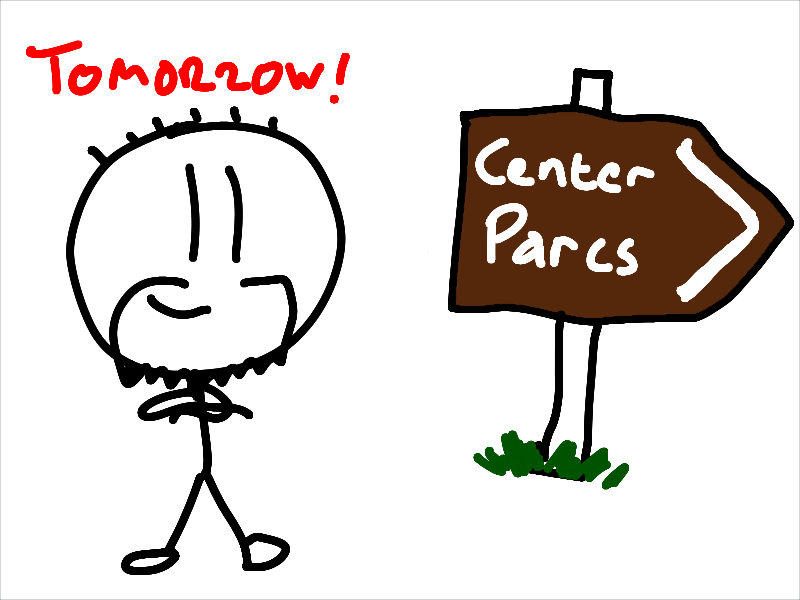
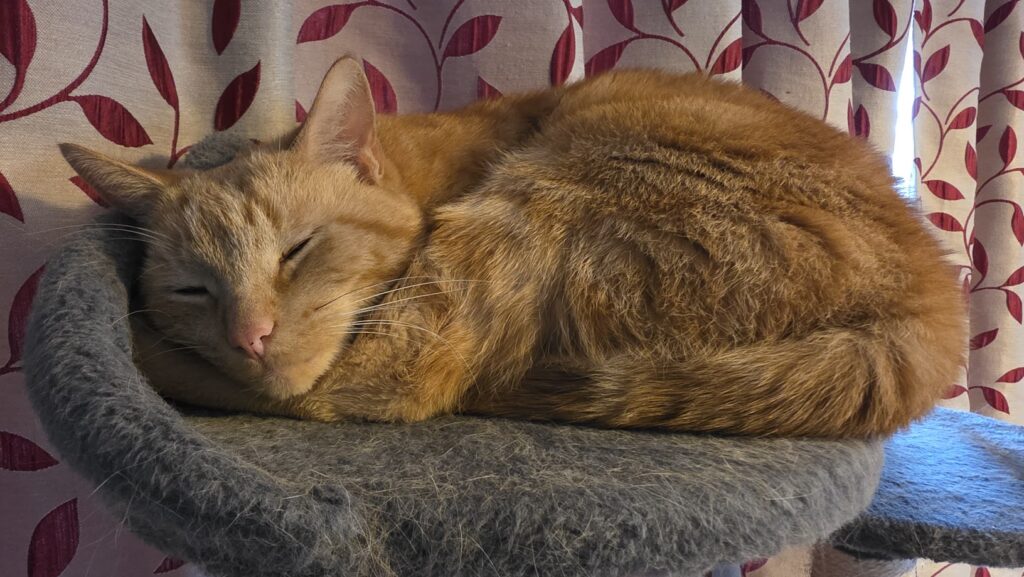
We're off on holiday tomorrow! It may seem extravagant to have two going-away holidays in the same year (to the exact same place, no less), but as I've mentioned previously, our prior attempt earlier in the year was spoiled somewhat by worrying over a certain idiotic orange cat who had decided to explore the Great Outdoors the week before we went away.
I am pleased to report that Oliver is, as I type this, safely inside our house, and has given no indication he is going to escape. (I know, I know, he gave no indication that he was going to escape last time, but he doesn't even seem interested in sneaking out of the front door when we put the bins out any more, even.) This means that, barring any sort of major disaster which occurs over the course of the next 24 hours, we will be able to go away on holiday without any sort of guilt or unease, and just enjoy ourselves. (Hopefully no major disasters will happen between tomorrow and the 14th of September, either.)
I'm really looking forward to some time away. I'm looking forward to spending some time in the pool, for a combination of just relaxing in the water and actually getting a bit of exercise by, y'know, swimming. I'm looking forward to our spa day. I'm looking forward to our inevitable trip to The Pancake House, and buying at least one Massive Cake from the ParcMarket.
Center Parcs, in its various forms, has become rather special to me over the years, even though I know there are almost certainly plenty of reasons one could criticise it. And it all, as with so many other things in my life, extends back to my childhood and adolescence.
I forget exactly what year we first went to Center Parcs, but I do remember the trip itself. My brother was still living at home, and he brought his friend Alex with him. One of the most enduring memories of the trip was Alex, who fancied himself a bit of a womaniser, causing two girls to fall off their bikes by delivering a thoroughly Leslie Phillips-style "Hell-O!" at them as they rode past. My other enduring memory of the trip is the fact that, at the time, Center Parcs used those weird Dutch toilets where you poo on a little platform rather than into a bowl of water. Most disconcerting.
On that first trip, I was still pretty young, as I can determine from my brother still living at home with us, and thus I was still pretty nervous about things like water slides. I do remember going on "the slow slide" at the pool, which is the longer of the two, and enjoying it, but also being too scared to go on either "the fast slide" or "the big white slide", the latter of which is just a big wet slope made out of the slipperiest material known to man. These slides are all still present at the Center Parcs pool complex to this day, along with the Wild Water Rapids, which I did not go on on this first trip.
Some years later, we went on another trip to Center Parcs, and I took my friend Edd with me. This was partly as payback (positive) for his family graciously taking me along with them on a trip to Gran Canaria, and we had a good time. My enduring memories that time around are of being old enough to enjoy the slides a bit more, and having a great time on the Wild Water Rapids. A particularly vivid memory is of getting halfway down the Rapids, only for Edd to pop up from under the water going "Hoo-haa-haa!" (which is what we thought the blue SS guards in Wolfenstein 3-D said, rather than "Schutzstaffel", which you probably shouldn't shout in public) and pretend to machine-gun me. Good times.
I also remember an awkward conversation over breakfast in which Edd attempted to convince my Dad that bloody violence in video games was fine because "you just stop noticing it after a while". That, it turns out, was not the most convincing argument, but did not result in me being disallowed from playing games like the aforementioned Wolfenstein 3-D and Doom, even though I had historically not been allowed to watch 15- or 18-rated movies.
There was another trip to Center Parcs at some point where I went with my friend Craig, and my one enduring memory of that particular trip was seeing Savage Garden and Ray of Light-era Madonna on the television, and us both realising that we actually quite liked both of them despite historically having been "indie rock" boys.
Andie and I have now been to Center Parcs ourselves a number of times, and it still feels like a proper example of "being a grown-up" to go on a holiday like this by ourselves. I mean, I know we technically are both "grown-ups", but as I was talking about with my therapist recently, I still find it immensely difficult to think of myself as such. This is not an altogether unusual position to hold, it seems; no-one in this world really knows what they are doing, it's just some people are better at hiding that fact than others.
Anyway, tomorrow we are off for yet another excursion into the forest. I will continue to blog while I am there, as usual, but I may be quiet on the socials while I am away. It is nice to have a bit of peace and quiet — and this time around, it will be nice for said peace and quiet to not be interrupted by intrusive thoughts worrying about whether or not we are ever going to see our beloved pet again.
Want to read my thoughts on various video games, visual novels and other popular culture things? Stop by MoeGamer.net, my site for all things fun where I am generally a lot more cheerful. And if you fancy watching some vids on classic games, drop by my YouTube channel.
If you want this nonsense in your inbox every day, please feel free to subscribe via email. Your email address won't be used for anything else.
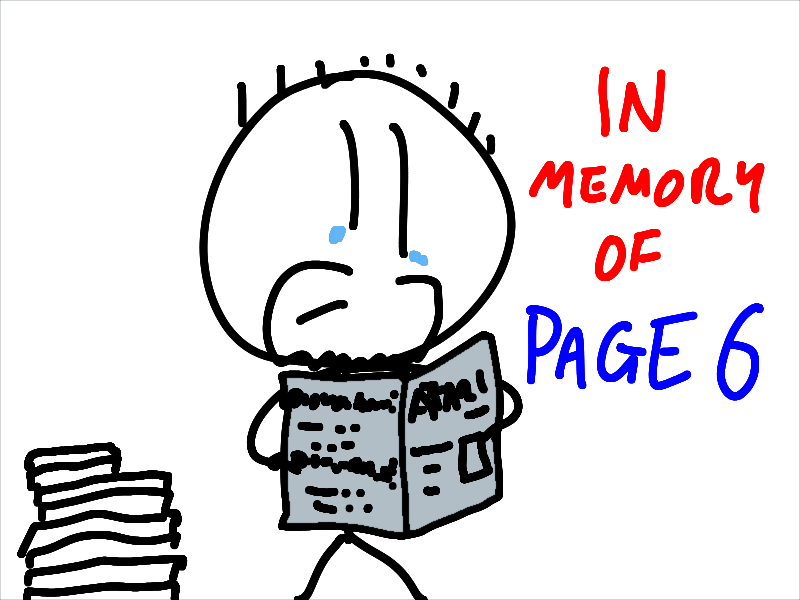
I've finally finished my efforts to catalogue all the games-related articles (including roundups, re-reviews, type-in listings and issue disk bonuses) from Page 6/New Atari User. My data sheet has over 2,000 rows in it, though some of those are repeats. Even so, that's a lot of material to work with.
As I found myself reviewing the latter-day issues in the magazine's run, though, I found myself feeling an intense sense of melancholy and almost mourning, I guess. Over the course of the publication'scomplete run, you can see at a glance when it was doing the best (full-colour covers with specially commissioned artwork or photography to appear prominently and attractively on newsstands) and when things started to go downhill (single-colour covers, the return to a subscription-only model) and when things were nearing the end (a switch to an A5 format, with less and less in the way of commercial releases covered each issue).
Here's a shot from Atarimania, which hosts a full archive of Page 6/New Atari User issues, that shows three stages of this evolution:
I found myself feeling sad all over again while working my way through these issues — because I remember this happening first time around. I remember getting Page 6/New Atari User every month, and in those latter years, feeling like something which had been a fixture in my life for as long as I could remember was ailing and would eventually die. Page 6 started before I was old enough to know what a computer or a magazine was, so it was always present throughout my childhood and adolescence.
Its final issue — in which the editor, Les Ellingham, made an unfortunately unkept promise to readers that there would be six more issues of the magazine before it finally closed for good — is a sad read. Even my Dad, who had been a contributor from midway through the magazine's run up until its very last issue, had given up writing about specifically Atari-related stuff, and was instead posting a regular column about the wonders of the then-nascent (at least in consumer-accessible form) Internet and World Wide Web. My article spreadsheet has just a single game-related entry for that final issue: a public domain version of Tetris for Atari 8-bit.
One of the most remarkable things about Page 6/New Atari User is that it wasn't the Atari ST coverage which lasted until the b(l)itter end. No; the last few issues contained pretty much nothing but Atari 8-bit coverage, which provided the first hints of the fact that the "Atari Classic" scene, as the magazine referred to it at the time, would continue to thrive in the years to come, even in the absence of a major specialist publication.
The ST scene is still alive too, but I can't help but feel like there's a lot more Atari 8-bit enthusiasts out there than Atari ST people. After all, the ST marked the beginning of the shift towards all home computing being PC-based; the ST certainly had its own distinctive, unique features, but it also marked a point where the distinction between purportedly different platforms was less pronounced in various ways. Thus, I suspect what happened, is people who were once ST enthusiasts just sort of… "upgraded" to MS-DOS and then Windows-based PCs and then never looked back. That's certainly what my family did — although I certainly never quite left the Atari machines behind, as they had been so important to me growing up, and continue to be important to me to this day.
Anyway, the thing I think I find most sad about the slow death of Page 6/New Atari User is that it was clearly taking a mental toll on Les. In some of the last few issues, he described how the editor of an American Atari newsletter had found himself succumbing to ill health, at least partly due to the stress of working on his publication, and he indicated that he had no desire to do himself a mischief in the same way — particularly because, in these latter years, he was also trying to support himself with handmade crafts. In one of the last issues, he mentions that he thinks he might have to get a part-time job to continue supporting himself, because between the magazine and his crafts, there was no longer enough money coming in to completely make ends meet.
But all good things have to eventually come to an end, and in the tech space in particular, the rate at which things progress can be absolutely mind-boggling at times. I don't think there's any shame in Page 6/New Atari User's eventual bowing out, even with the regrettably unkept promise from Les' final editorial. To consider that this was a publication which continuously supported both the Atari 8-bit and, once it hit the market, the ST, from 1983 up until 1998 is absolutely mindblowing. Les' refusal to let go until it was absolutely, definitely no longer viable to continue in any way whatsoever is incredibly admirable — as is the commitment of the freelance contributors who kept sending in articles issue after issue, without fail, like my Dad.
So yeah. While reliving the end of something that brought me so much joy as a child has made me a little bit maudlin, I also continue to celebrate everything this publication achieved — and continue to derive joy from it as I grow older, since I am now in possession of the complete run of issues that I grew up with.
It saddens me a bit that when something similar happens these days, in the form of a website going down and no longer being accessible, that there is often no easy way to simply look back fondly over past "issues" in the same way as you can with a magazine. There are many, many online publications that are just gone these days, and while The Internet Archive has done an incredible job of preserving some of them, there are others that we'll just never see again in any form. I know — I've worked on a bunch of them, and now most of my articles are now buried, nigh-unsearchable, in the archives of other sites that ingested the data of the closing publications, often introducing a bunch of errors in the process.
Page 6/New Atari User, though, that will always exist in the form that I knew and loved it. So although I'm sad all over again at the end of such an important publication, I know that I will continue to derive joy — and attain knowledge — from browsing that archive of issues over and over again. One day I might even get around to learning how to program the Atari 8-bits properly beyond simple BASIC. You never know.
Want to read my thoughts on various video games, visual novels and other popular culture things? Stop by MoeGamer.net, my site for all things fun where I am generally a lot more cheerful. And if you fancy watching some vids on classic games, drop by my YouTube channel.
If you want this nonsense in your inbox every day, please feel free to subscribe via email. Your email address won't be used for anything else.
Yesterday, I left off with a lovely flat my then-wife and I lived in in a fairly shitty area; a place which I nonetheless have mixed feelings about due to how it was where I was living when I suffered a nervous breakdown and left teaching as a career behind as a result. Today, we continue.
At some point, my then-wife and I made the decision to move back to Southampton. I forget exactly what the reasons for us doing this was — it may have been the fact that I had got a job at the then-new Apple Store in the WestQuay shopping centre, or it may have been some other reason — but regardless, we found ourselves coming back to Southampton, initially in a ground-floor flat in an area on what I will always think of as "the far side" of Southampton, known as Sholing.
My enduring memory of living in this place will always be, on our day moving in, walking in to the Indian takeaway that was next door to the block we lived in — as everyone knows, British moving days are fuelled by takeaway curry — and the proprietor of said establishment bellowing "WELCOME TO THE SHOLING!" as we walked in. It was a great little takeaway, that place, and I was always grateful for the warm welcome the owner provided.
We rented that flat off a woman who had a cat. We kind of wanted a cat, but we had lived in so many rented places that didn't allow pets that we didn't think to ask if we could have a cat. When we moved out, the landlady said that not only would she have been more than happy for us to have a cat in that flat, we could have had her cat. I'm still not entirely sure how to feel about that.
Anyway, it was a nice flat with some big rooms and a lovely oversized comfy sofa in the living room. My "study" of sorts, where the computer lived, was also a utility room, so I had to share space with the tumble dryer. My Sony Vaio desktop PC, which had been a loyal companion for a number of years, died in that flat, which I was annoyed about, because it was a great system. But one day it just started inexplicably screeching at me, and that was that. I eventually ended up replacing it with an iMac, which I got for a generous discount thanks to working at the Apple store.
At some point, we moved out of that flat. Again, I don't entirely remember why, but we ended up moving into the town centre of Southampton, into what appeared to be quite a new block of apartments. It was a really nice flat with a huge living room, a massive kitchen and a generously sized bedroom. It was a very comfortable place to live, with the only real hiccup being that one day I came home to the sound of rushing water downstairs in the block. It turned out the basement was flooding from somewhere, which ultimately knocked out the power in the whole building and meant I had to spend several days staying on a friend's sofa.
However, this is also the flat where my first wife and I parted ways, so as nice as it was, it will always be the most bittersweet of past places I lived, and the subject of a number of posts from around that time.
Due to a perfect storm of unfortunate circumstances, including not only the end of my marriage but also being bullied out of a job that I once loved, I ended up unable to stay in that lovely flat by myself, and having to temporarily move back in with my parents. At the time, I was mortified at the prospect of having to do this; today, I am eternally grateful for the fact they supported me while I picked myself up after such a massive setback.
While living back in my childhood home — which was still familiar despite having changed a bit — I eventually ended up meeting Andie, my now-wife. Both of us had experienced a somewhat challenging period in our respective lives, and ended up finding one another at what appeared to be a good time. I was also in the process of building a new career at that time, and I was gradually getting to a point where I felt I would be able to support myself again. So Andie and I eventually agreed to move in together.
We ended up moving to Chippenham in Wiltshire, which was near to where Andie was working at the time, and since I was working from home, I could do that from anywhere with an Internet connection. We had a nice house there, and were greeted almost immediately by the two cats who lived next door, Artie and Chester. Chester was a black cat who liked sitting on suitcases, and Artie was a long-haired tabby who liked shouting at towels. The pair of them were absolutely lovely cats who paid us a visit on many occasions, and we always welcomed them in.
During our time at Chippenham, we also decided that, in the absence of being able to have our own cats, we would try keeping rats, and we discovered the joy of these little creatures — as well as their sadly short lifespans. Also the smell, which you soon get used to. During our time at Chippenham, we had a wonderful time with Willow (who sadly did not live very long as she was quite poorly), Lara and Lucy.
Our house in Chippenham is another place I have somewhat mixed feelings about, as both Andie and I were facing numerous challenges in our own lives at that point in time — among other things, I lost my job at GamePro when we all logged in one morning to find out the parent company had unceremoniously laid us all off — and also there was apparently a murder in the Sainsbury's car park that was, like, two minutes away from our house.
Our next move was, once again for me, a return to Southampton. We found ourselves a lovely flat whose only mild inconvenience was the fact it was on the third floor, which made moving everything in a bit of a pain. We ended up having to buy a whole new sofa because the one we had bought while we were at Chippenham simply wouldn't go up the staircase; it lived in the garage for a whole year, and thankfully survived, though we ended up replacing it some time later.
This flat, I have fond memories of. Both Andie and I had overcome some significant troubles in our own lives, and things started to seem like they were getting back on track. I still wasn't in what I would call a position of stable employment, but I was getting by, initially by writing about odious mobile and social games, and subsequently being a founder staff member of the now-defunct USgamer.
We also still kept rats in this flat — Lucy, Clover and Socks — though after the last survivor of the various pairs we had cared for, our dear Clover, hung in there for a lot longer than we expected she would, we decided that we should maybe take a little break from keeping pets. It was sad to eventually say goodbye to Clover, but we feel like she stuck around for us even as she got old and life clearly became a bit harder for her.
Eventually circumstances dictated that Andie and I would be in a position to actually buy a house instead of renting, and that's how we ended up where we are now — and have been here for over ten years at this point. This is officially the longest I have lived in one place for, except for my childhood home. As I said yesterday, we're not ruling out moving someplace a bit bigger some time — just not yet — and we've done a lot to make this place into our home — not least of which is having cats. The dearly departed Ruby and Meg will always be in our hearts, and Patti and Oliver bring us so much joy in the here and now I cannot imagine ever being without such wonderful companions again.
I've lived in many places over the years. All of them hold their own memories, both good and bad. All of them have helped make me into the person I am today, for better or worse, and I'm sure I will always remember them all.
Want to read my thoughts on various video games, visual novels and other popular culture things? Stop by MoeGamer.net, my site for all things fun where I am generally a lot more cheerful. And if you fancy watching some vids on classic games, drop by my YouTube channel.
If you want this nonsense in your inbox every day, please feel free to subscribe via email. Your email address won't be used for anything else.
I have, over the years, lived in a number of different places. This is, I'm sure, true for quite a few people — though there does come a point where you seemingly pick somewhere and just settle down. Our current place definitely falls into that category — though neither of us have completely ruled out moving somewhere a little bit bigger at some point in the future. Not any time soon, though.
Every so often, I like to think back over the various places I've lived, because they all have different memories attached to them. Some memories are good; some are bad. Most are good. In fact, I'd go so far as to say that I do have good memories at every place I've lived; it's just that some happen to have more bad memories to go along with them than others.
My first house that I lived in is the only one I don't remember at all, because we moved away when I was just one year old or so. We kept a vague attachment to the area in which it was, though, because some friends of my parents still lived in that area, and one of them was also our family dentist. When we'd go to visit these friends, my parents would often point out the house in which we used to live, but while it was interesting to know, I felt no real attachment to it. I felt more attachment to the homes of these friends, as we visited them quite a few times in my youth.
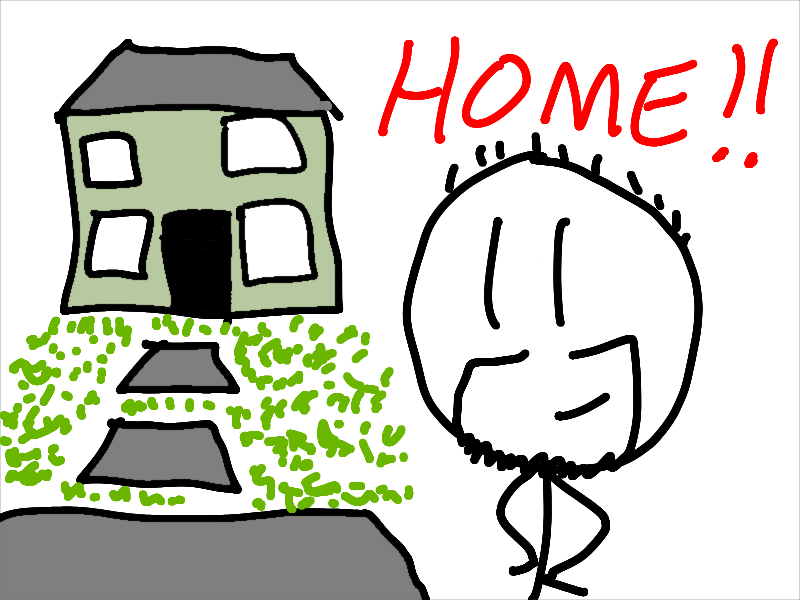
The next place I lived is the house my parents still live in to this day. That house will always be "home" more than anywhere else, I think. It's a nice house with an unusual split-level design, with the living room on a "middle" floor between the ground floor and the floor with all the bedrooms on it, and a garage that is below the ground floor, but still above ground, if that makes sense. (To put it another way, you go up some steps to get to the front door, and the garage is on the level where those steps start.)
My parents have made a few changes to that house over the years, but it's mostly still the house I grew up in. A bit older, a bit dustier, but most of the things I will always remember about it are still in the same place they always have been, and looking the same as they always have done. The cupboard where the biscuits are still squeaks incredibly loudly — we used to joke it was an "alarm" for someone "biccy-nicking" — and the upstairs toilet flush mechanism still doesn't quite work properly.
The first place I moved to after leaving home for university was a halls of residence. Well, technically I spent a week staying in another halls of residence for a pre-term music course, but I consider that more of a "trip" than actually "moving in" there. The place I spent a week was a bit of a shithole, being an old tower block that has, at some point in the intervening years, been demolished. The place where I spent my first year of university, however, was really nice.
It was a brand new complex when we moved in, meaning that everything was clean and in good condition. Remarkably, it was still clean and in good condition when we moved out, as the occupants of our flat were all pretty considerate about such things. Okay, most of us occasionally let the washing up pile up a bit, but we eventually all settled into a routine of keeping things neat and tidy in the communal kitchen, then if we wanted our rooms to be a pigsty we could. But since they were pretty nice rooms, none of us did.
I have fond memories of living in that flat, even if it's unthinkable now that I once lived out of a single en-suite room that was my own, along with a communal kitchen. It was good times with good people, and I was enjoying being at university. I have a few memories from there that make me wince slightly out of embarrassment, but on the whole I have no real bad memories there whatsoever.
In my second year, we all moved out into houses and flats around the city. I had agreed to move in with a friend's girlfriend (who was also my friend; the boyfriend in question was going to university in another city) and we had a fair amount of trouble finding a decent place for an affordable amount of rent; I forget exactly why, but I do remember it being a stressful time finding it.
Eventually we found a flat that looked pretty nice, but was in fairly shabby, dirty condition when we viewed it. The landlord promised that it would be cleaned up in time for us to move in. It very much was not, which meant that our moving in day was mostly spent cleaning. We eventually got it looking presentable, though, and once we were settled, it was a nice flat with absolutely enormous rooms. There was a huge living room at one end, then down a corridor there were the two bedrooms: my friend's first, then mine at the far end.
Oddly, my most vivid memories of living in this flat are of the fact that I lived two minutes' walk away from a Blockbuster Video, and quite often went in there to buy games and DVDs. I remember plucking up the courage to buy an erotic Kathy Lloyd Playboy DVD on one occasion, but I also remember buying Baldur's Gate II and Diablo II there.
This flat was a fair distance away from both the university and the rest of my friends, so I quite often spent time "couch-surfing", staying over at various people's houses so I didn't have to walk all the way home. My flatmate was quite often away to visit her boyfriend, so during those times, rather than sit all on my own, I would tend to spend my time with friends.
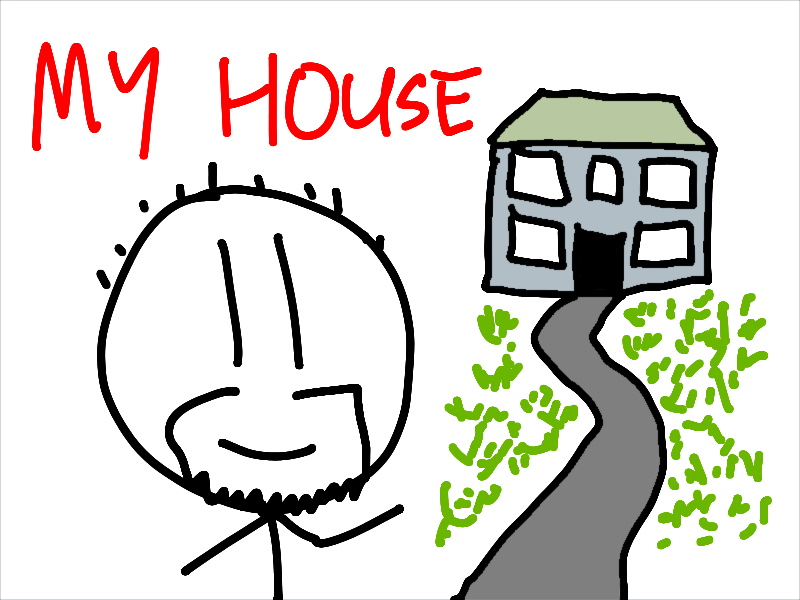
In my third year of university, we again found ourselves having trouble finding a place — but this time we lucked out by finding an absolutely lovely house that was incredibly cheap rent-wise. Sure, it was in a notoriously fairly shitty area, but the house was in excellent condition, and the landlords didn't seem to be scam artists. It was also, to date, the only house I have lived in that literally looked like the drawing of a house you draw if you can't draw a house. (See illustration.) That year, I was supposed to have a second housemate along with my friend's girlfriend, but despite always paying her rent and bills on time, she never even moved in. I don't know what happened there — and I was mildly gutted, as I quite fancied her — but still, she helped keep that house nice and affordable for the two of us, so we were grateful!
Again, I have fond memories of this house. There was a nice TV cabinet in the living room, where I put my enormous CRT TV that I bought from a second-hand shop in Portswood. It was surrounded by shelves, where I put my new PS2, and I vividly remember a friend of mine, upon visiting, telling me how much he loved the blue LED on the eject button. It is pretty nice, to be fair.
We didn't mow the lawn once during our time at that house. Well, not until it was approaching time to leave, at which point we discovered why you should mow your lawn more than once a year.
My most enduring memory of that particular house is probably my friends coming down and bringing a copy of the newly released Silent Hill 2 with them. I was given the task of playing it while the others watched, but the pair of them both fell asleep after a hearty curry and some relatively heavy drinking, and only woke up as I was rolling credits on the "In Water" ending.
We also had NTL cable in that house. I remember signing up for one night of the Adult Channel and setting the VCR to record it all. I also remember being mildly disappointed in the overall quality of the smut on the resulting tape, but it served its purpose.
In my fourth year of university, my friend had moved on, so I was moving in with a new friend I'd made through the university Theatre Group, along with some other people she knew but I didn't. We found a really lovely house that, again, was very affordable. It had a weirdly narrow kitchen, though, and a strange arrangement at the back where there was a standalone toilet, then a bathroom next to it. These were both on the ground floor, behind the kitchen. It was a very odd arrangement, but we learned to live with it.
One unfortunate memory I have of that place is, being the first one there, thinking I had pick of the rooms and thus picking the big one at the front. I subsequently found out that my friend had bagsied that room first, but I had already moved all my stuff in by then. She didn't seem to mind getting the room next door. She laid down laminate flooring as the first thing she did when she arrived. She was… like that.
I have good memories of that house, despite the fact that I didn't really interact with any of the other residents. My friend was absolutely never there, and I didn't really know the other two guys at all. I was intimidated by the one who was growing weed in his wardrobe, and the other one just gave no indication whatsoever that he really wanted to get to know me at all. They all seemed to appreciate my big TV and surround sound system in the living room, though.
I spent a lot of time drinking wine and… enjoying the company of someone who was quite special to me at that house. We'd drink until we were giggly, watch Spaced and Black Books on repeat, and… well, other stuff, too. It was nice, though I ended up wanting more from the arrangement than she did. Still, I have no regrets.
After finally finishing university, I moved to Winchester with someone I knew from my music course, who was training to be a midwife. We were extremely fortunate in this case to find a gorgeous flat almost in the dead centre of Winchester. It was fully furnished — and well furnished — and just a beautiful, beautiful place. We absolutely loved living there, but we could only enjoy it for a year, because after that the landlord decided that they wanted it back so their kid could live in it, which I suppose is all right.
I fitted an extension phone socket in that flat, without any consideration of the fact that I probably wasn't allowed to hammer that many pins into the walls of a flat I didn't own. Still, I wouldn't have been able to access the Internet if I didn't do that, and given that I was having my first contact with Final Fantasy XI around that time, I needed that Internet connection.
Probably my fondest memory of that particular flat is one I've shared numerous times before: the time I had several friends over to play LAN party Halo, and we all got drunk and took our shirts off. My housemate came home in the middle of all this, took one look at the living room full of half-naked, drunk men and declared the game "Gaylo" which, you know, fair.
It was in this flat I was first starting to have doubts about teaching — the career I had, at that time, chosen. While I never developed a problem as such, there were numerous evenings when I would seek, shall we say, chemical comfort after a particularly hard and trying day. Mostly gin and tonic, though a friend did once leave me an "emergency joint" that I made use of on one particular evening that felt like an emergency, only to discover it was so strong that after finishing it, I immediately threw up (in the toilet) and then passed out on the couch. To be fair, after that I wasn't thinking about the day I'd just had at the chalkface.
After being turfed out of that flat, we moved into a strange little cottage that backed onto a little river, quite close to the previous flat, so we didn't have to move far. It was in a bit of an awkward location on the Winchester ring road, though, and it subsequently transpired that the place was full of damp and mould that the landlady tried to blame on us when we eventually moved out. My housemate, who doesn't take shit from anyone, took her to court and… resolved the situation. I don't know exactly what went down, but I know we did eventually get our deposits back.
It was while I was living in that house that I met my first wife online, and after she moved back to the UK after spending some time abroad, she would often come down to visit and stay. As a result, I have some bittersweet memories of that time; I think enough time has passed now that they err mostly on the side of "sweet", to be honest, but I do know that my housemate did not like my wife-to-be very much. Still, it never came to a confrontation or anything, so that's all right, I guess.
After that, my wife-to-be and I moved away from Southampton so we could both be close to the schools in which we were working, which were in Surrey. Our new flat was technically in a shitty area, but it was actually a really lovely place; some sort of huge converted single-floor house with enormously high ceilings and massive rooms.
It was while we were living at this house that I had a nervous breakdown and finally determined once and for all that teaching was not, in fact, my chosen career. (That didn't stop me trying again once more later, but I recognised the signs and escaped from that before anything bad happened.) It's a shame, because my memories of this place are otherwise nice; it was a lovely place to live, and I was sorry to have to leave it.
You know what? That's two and a half thousand words, so I think I'm going to call time there and ponder the rest tomorrow. This has been a fun exercise, though, so join me tomorrow as I remember other places I have lived! Gosh, I bet you can't wait.
Want to read my thoughts on various video games, visual novels and other popular culture things? Stop by MoeGamer.net, my site for all things fun where I am generally a lot more cheerful. And if you fancy watching some vids on classic games, drop by my YouTube channel.
If you want this nonsense in your inbox every day, please feel free to subscribe via email. Your email address won't be used for anything else.
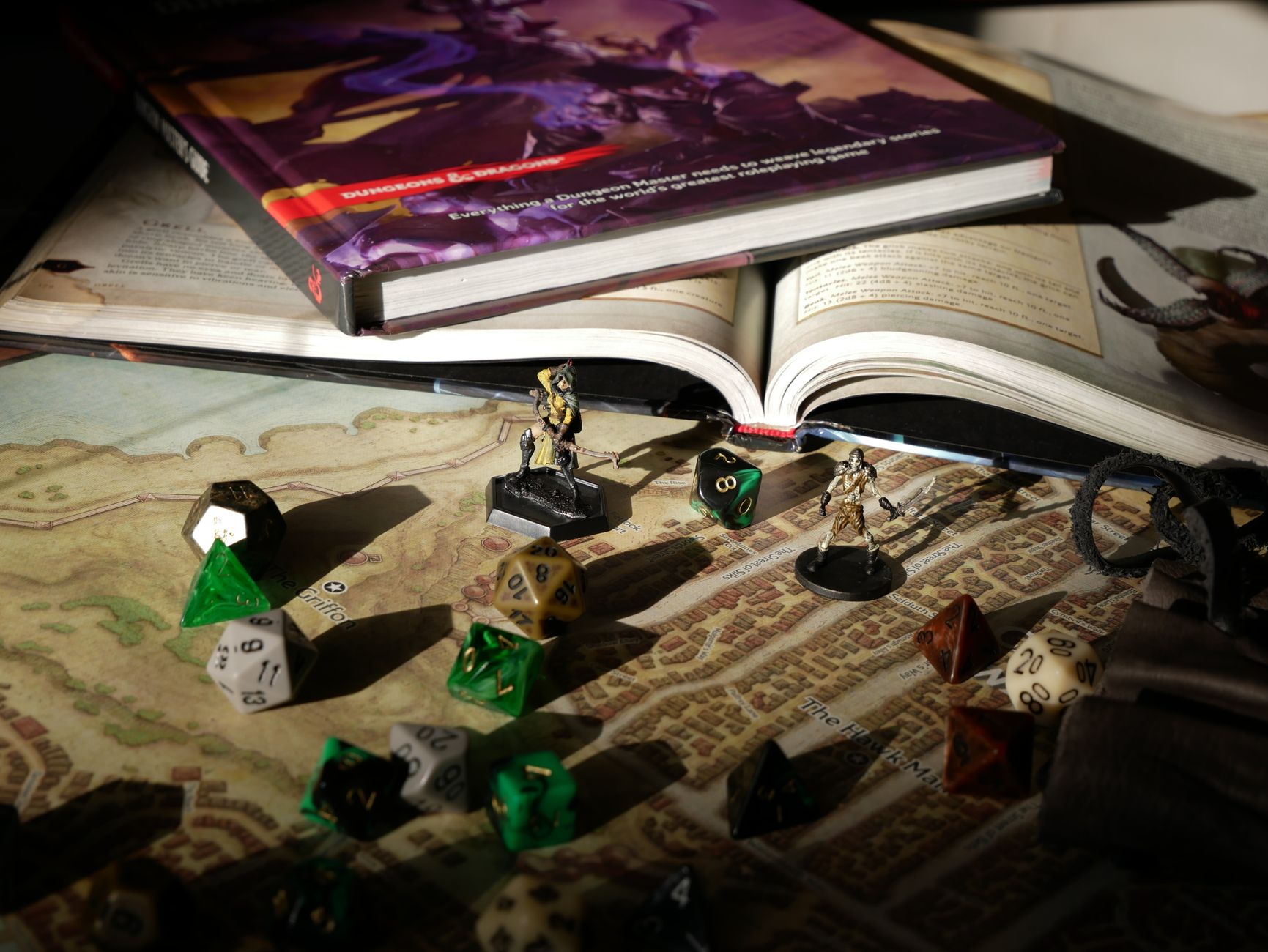
One thing I regret not really getting into when I was younger is role-playing games — of the tabletop variety. Actually, saying I didn't "get into" role-playing games isn't accurate at all; I've bought a whole bunch of sourcebooks over the years (I had a great collection of Vampire: The Masquerade books while at university!) but just, for one reason or another, never really had the chance to play them all that much.
I have two particularly fond memories of times when I have been able to indulge in some role-playing, and interestingly enough, neither of them involve a well-established, rules-heavy system. In both cases, they were simple acts of collective creativity — and they were vast amounts of fun as a result.
The first time wasn't really an organised session as such. I was in my second year at university, living in a grotty old flat that had very large rooms. Some of my friends from my school days had come down to visit, and they were sleeping in the living room; rather than retiring to my own bedroom down the hall, I decided to sleep in the living room with them. And before long, rather than falling asleep, one of our number kicked off a completely improvised role-playing session where our probably drunk, definitely tired and increasingly delirious selves got our characters into increasingly ridiculous situations — inevitably with the worst possible outcomes constantly happening to one of our number, because that was the funniest way things could go.
I forget the details of the "adventure", such as it was, but I do recall that my friend Edd found himself under attack by a giant penis monster at one point. So, naturally, he decided to cast the spell he'd made up called "REMOVE COCK", and you can imagine what the actual result of that was. It was an utterly ridiculous evening that I will always remember immensely fondly — and not a single die rolled along the way.
The other occasion was when I was around at a friend's house, and one of said friend's friends with whom I had previously become casually acquainted said he was going to run a role-playing game session for us, using what he described as a "freeform system" that he'd devised himself. Said system had just three statistics: Attack, Defence and Power, and all three of those statistics fluctuated according to the things we were doing; you'd "spend" points from each on various actions, and could regain them in various ways, usually by making progress through the adventure.
Because the system was so freeform, we were invited to come up with any kind of character we wanted. Being big into Japanese role-playing games at the time — not like now, obviously — my character was somewhere between a vaguely imagined half-elf character I'd mentally doodled at various points over the prior months, and basically Dante from Devil May Cry. Lots of flashy moves, big sword, pyrotechnics, all that sort of thing. His name was Rush Hurin.
Alongside Rush we had The Luggage from Discworld, a sentient suit of armour named Arryth, a cloud of amorphous pink gas and the archangel Tyrael from Diablo. It was a motley crew to be sure, but we had some grand adventures — and the skill of our dungeon master was such that he was able to devise dungeons and scenarios on the fly that meant we all had an opportunity to shine along the way.
Okay, yes, he pulled puzzles from a straight-up Big Book of Puzzles that he brought along with him — and on more than one occasion we entered a room in a dungeon with an elaborate-looking mechanism that had a big sign on it saying "COME BACK LATER" — but even using that "source material" and occasional little "cheats" to keep things flowing along, we ended up with an enormously entertaining adventure that culminated, as I recall, with us fighting a skyscraper-sized flaming demon, each using our own unique abilities to bring it down in various ways — culminating with The Luggage swallowing it and sending it to an unknown other dimension, as most of our other encounters concluded.
Both of these were great fun, yes, but I also just kind of… hunger for an opportunity to play something as basic bitch as Dungeons & Dragons, even though I know that's not fashionable any more. I always thought Vampire: The Masquerade would be fascinating to play, too — hence why I had a bunch of sourcebooks for it back in my early 20s — but that, more than almost anything else, strikes me as something you very much Need The Right Group For.
Why am I talking about all this? Well, I watched an episode of Mythical Kitchen this evening where they had the cast of Critical Role on there, and it reminded me that I've never… watched, listened to, whatever you do with Critical Role, and I was thinking I should probably correct that at some point. Sure, it's not quite the same as being part of my own campaign, but I think I might enjoy it… maybe it's time to add it to the "bedtime listening" rotation.
Want to read my thoughts on various video games, visual novels and other popular culture things? Stop by MoeGamer.net, my site for all things fun where I am generally a lot more cheerful. And if you fancy watching some vids on classic games, drop by my YouTube channel.
If you want this nonsense in your inbox every day, please feel free to subscribe via email. Your email address won't be used for anything else.
As I absorb the news that Sony is giving up on physical releases of games — something I have had a good rant about at much more length over on MoeGamer, so please go read that — I can't help but think back to the time PlayStation hit the scene, and the incredible amount of promise that video games showed back then. This coincides with a period of time I often describe as the happiest of my life, and the video games were a big part of that, for a variety of reasons.
I remember my first encounter with PlayStation vividly. My brother had come home to visit, and, as he often did, he had brought some gaming hardware with him. On previous visits — and prior to me getting my own SNES — he had brought both a Super Famicom and Mega Drive back with him on various occasions, but this new PlayStation thing was one of the most exciting things I had ever seen.
We loaded up Ridge Racer and you could play Galaxian while it was loading. Supposedly you could unlock some stuff if you could win the Galaxian game before the game finished loading, but I didn't manage that right away. (I mastered it some time later.) Then, once Ridge Racer was loaded, it was another example of something we'd previously described the SNES as being: "like having an arcade machine hooked up to your TV".
This feeling didn't go away with Tekken, which my brother had a prerelease copy of. He also had Raiden Project, which, while less obviously "impressive" than both Ridge Racer and Tekken, I found myself enjoying a lot, and still consider one of my favourite PlayStation titles to this day.
Eventually, my brother left behind this Japanese-model PlayStation at my parents' house for me to have — he had got his own British model. I was thrilled, particularly once I learned the "pen-lid trick" — a means of circumventing the console's region and copy protection by propping the disc tray open and carefully timing the swapping of discs. It was a good way to wear out your laser before long, but until I got my own UK PlayStation, it was my main means of experiencing PAL releases.
My friends got PlayStations around a similar time, and we all really enjoyed them, each cultivating our own little collection of games.
Then came Final Fantasy VII. I first heard about this from my brother, and one thing made me want to pick it up immediately: he told me that it was the first game that had made him and various other people he knew cry. This might seem like a strange reason to be excited for a game, but having been enjoying point-and-click adventures on PC for a few years at this point, I was immensely excited by the possibilities that interactive storytelling offered, and I was curious exactly what this game actually was.
I started to play it and was initially confused. Why did the screen go all swirly and then I couldn't move, but I had to select things from a menu instead? Why did the characters look different when they were walking around to when they were in battle? Why were numbers popping out of things?
I'd encountered the RPG genre in a very early form back on the Atari 8-bit, but had always found those games to be difficult to understand as a child. Some years later, I got into HeroQuest and Advanced Heroquest, and started to understand how numbers and turn-based combat worked together. And with Final Fantasy VII, I quickly learned how the computerised take on an RPG worked — and that I liked it a lot.
My friends loved it, too. We all swapped stories of our custom-named parties at school, arguing over who had given their characters the "best" names and who had recoloured the text window the most attractively garish combination of shades. We all agreed it was an incredible experience, and played it multiple times in succession — often in immediate succession. I estimate over the course of one particular summer, each of us must have played through the entirety of that game somewhere between six and ten times.
My parents went away for a few weeks and left me in charge of the house. I hosted an ill-advised party that I got into a lot of trouble for — I have to laugh in retrospect — but the best thing about that summer was having my friends over pretty much every day, and we would just play Final Fantasy VII together while eating Pot Noodles and getting steadily quite drunk. On one particularly memorable occasion, we challenged one another to play from the beginning and stay up as long as possible; we played through the night and into the next morning, hitting each other with sofa cushions to wake each other up if we looked like we were nodding off. It was a truly wonderful experience, and absolutely a treasured memory.
It all feels so far away now. I would love to have a summer like that which I just described again, but it feels like a far-off dream at this point.
Still, I mean I am still in touch with some of those friends, so perhaps, just perhaps, we could make something like that happen once again sometime. Maybe.
Want to read my thoughts on various video games, visual novels and other popular culture things? Stop by MoeGamer.net, my site for all things fun where I am generally a lot more cheerful. And if you fancy watching some vids on classic games, drop by my YouTube channel.
If you want this nonsense in your inbox every day, please feel free to subscribe via email. Your email address won't be used for anything else.
At therapy today, we got talking about how I think back extremely fondly on my time at sixth form — to such a degree that I would brand that period of time as probably the happiest of my life — and how I feel a curious… "closeness" to that time period, despite it being, at this point, quite a long time ago. It still feels weirdly recent to me!
Photo by Pew Nguyen on Pexels.com. Not my photos, obviously.
Over the course of our discussion, I described a curious phenomenon that I've been sort of passively aware of for a while, and that is the fact that I don't really remember living through my thirties. Specifically, the period between about 2009 and (I estimate) about 2016, 2017 or so is a length of time that I feel just sort of… disappeared. And the disappearance of that period — and possibly a bit more either side of it — is what leads me to feel like things which were actually Quite A Long Time Ago are still relatively "recent" or at least fresh in my memory.
I hadn't really contemplated why this had happened, but it didn't take long to figure out: I had a rough time in that period. Let's ponder, shall we?
In 2009, when I was 28, I lost a job that I had previously thought would have me set for life; it was a job that I loved, that I was good at and which even paid reasonably well for the time. Unfortunately, it was snatched away from me by some true shithead managers who were on a real power trip at the time, and that kicked off a very long period of exceedingly uncertain employment.
In 2010, my first marriage fell apart for reasons that, in retrospect, I understand, but which, at the time, had me feeling the lowest I have ever felt. Having lost my job and, now, my partner, I was left alone in a flat I couldn't afford to keep living in, with no job, facing down the prospect of having to move back home with my parents. At the time, this felt mortifying; now, of course, I am exceedingly grateful to my parents for having supported me while I was at my lowest until I was able to pick myself back up and effectively start over.
In the following years, I will keep the details vague out of respect for the individual in question's privacy, but I found myself supporting someone with an addiction problem. I had no idea how to do this, and there is not really a "how-to" guide on doing this effectively. The person in question conquered their issues pretty much by themselves (and by that I mean "without professional psychiatric or medical assistance"), and I will be eternally impressed by and proud of them for this, but the experience of acting in a supporting role at the time left me with… some emotional scars, shall we say. I am not entirely sure I have fully processed everything that happened at this time, though I should also add that I lay no blame or ill-will at the feet of the affected person, and that's all I will say on the subject.
During these years, I was working regular freelance for various websites. I had a good gig working for GamePro, but we all got given the boot just before Christmas one year. Some time later, I worked for USgamer, but got laid off from that particular gig on my birthday. These were the most "regular" jobs I'd had since 2009, and it had not gotten any easier over the years to know what I was "supposed" to be doing. Every time I felt like I was getting somewhere, it felt like the rug would get pulled out from under me.
I took a job in a completely unrelated field — updating website content at energy company SSE — but found myself fundamentally incompatible with the incredibly patronising way that company does business, and got unfairly dismissed at the end of my probationary period. Some time later, I found myself doing a similar, equally tedious but mostly inoffensive job at sports tech maker Garmin, which was stable but absolutely mind-numbingly boring. I left that one voluntarily (and on good terms, which was a nice change) to take up what would eventually become the position I hold to this day.
All along the way, I was feeling a sense of near-constant instability, like I could never settle; like I had never reached an unknown destination I felt like I was constantly on the way towards. I faced setback after setback, challenge after challenge. At times it felt like I wanted to give up. But I eventually made it to where I am today, with a stable home life, a stable working life and stable financial security. It was realising that I had those three things that made me feel like I had, at last, been able to properly "start over", and that my life was no longer a thing of shame; a string of endless difficulties and non-achievements that just didn't appear to be going anywhere.
So in retrospect, I'm not really surprised that I don't really remember my thirties all that well, because a lot of things happened, and a significant, statistically significant proportion of them were Bad Things that I'd really rather not dwell on. I know those years happened — and there are probably blog posts covering a lot of them right here on this site — but, even knowing that they probably helped shape the person I am today and helped strengthen my own resolve as a "survivor", it's hard not to feel like it would be nice to have them all back.
Still, that's not a thing you can do, unfortunately, so here I am, at 2am in the morning, aged 45, pondering a lost decade of my life. Do I have a point to all this? You'd think I would, wouldn't you. But you know what? I don't think I do. And that's probably all right.
Want to read my thoughts on various video games, visual novels and other popular culture things? Stop by MoeGamer.net, my site for all things fun where I am generally a lot more cheerful. And if you fancy watching some vids on classic games, drop by my YouTube channel.
If you want this nonsense in your inbox every day, please feel free to subscribe via email. Your email address won't be used for anything else.