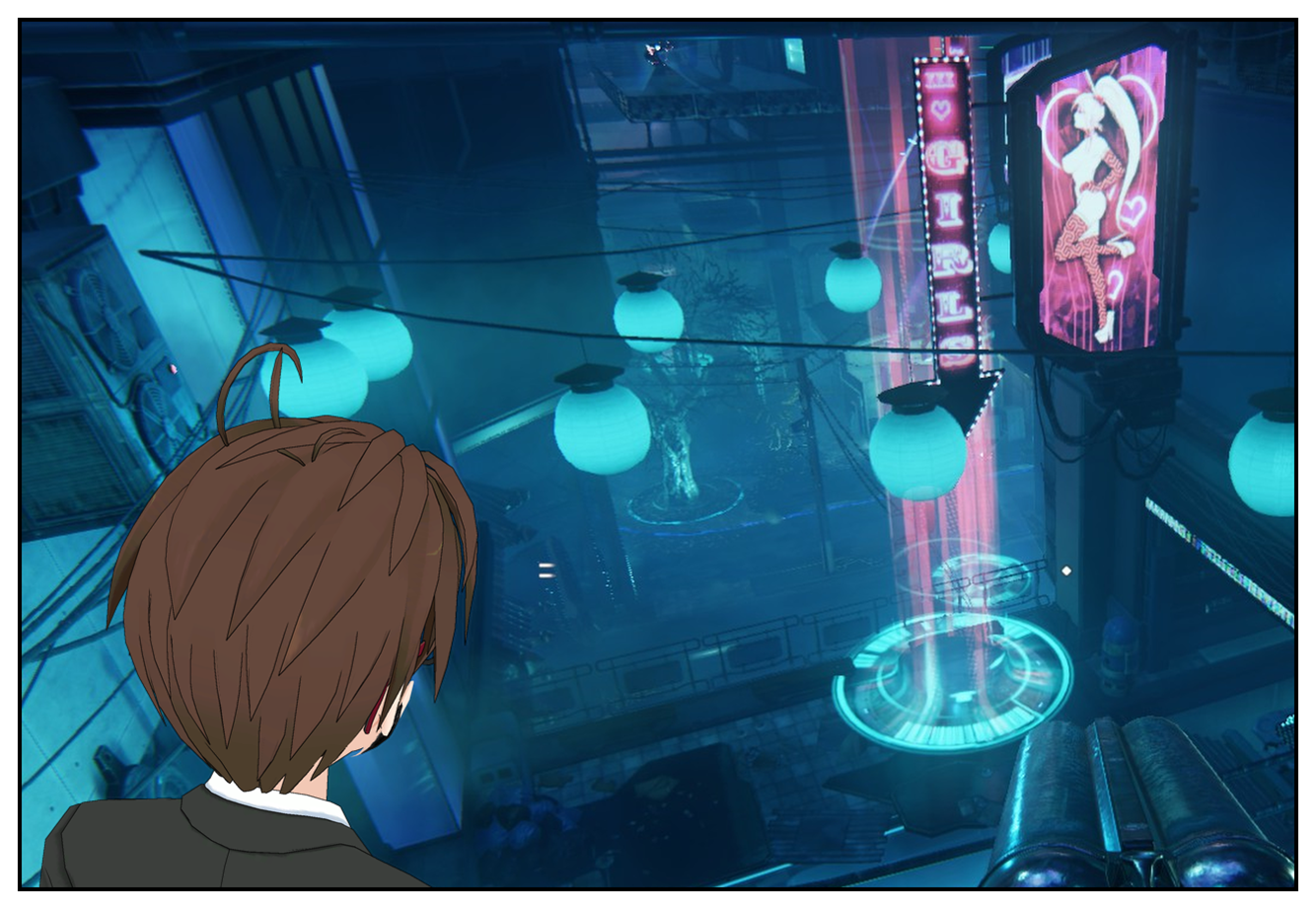
Having finished Shadow Warrior yesterday, I was considering picking up its sequel, which released today. Then someone said some magic words that stopped all consideration and caused me to hit the "buy" button immediately.
But let's rewind a moment to yesterday evening, while I was playing through the rest of the first game.
Shadow Warrior has a skill system whereby double-tapping a direction and using either the left or right mouse button will perform different special moves. There's a powerful thrust attack, a "sword beam" type affair, a spin attack, a crowd-controlling stun, a healing spell and a protection spell. Because they're mapped to controls you're already using for movement and attacking, weaving them in while you're avoiding and attacking enemies is pretty straightforward.
Hmm, I thought to myself while I was playing, contemplating the fact that Shadow Warrior had a rudimentary levelling system in place, whereby you could upgrade passive and active skills as well as your weapons by expending various currencies that you acquire through play. I wonder if a first-person Diablo would work?
Some of you may, at this point, wish to raise Borderlands as evidence that yes, a first-person Diablo would indeed work, but I was thinking more focused on the melee angle, since that was a key part of Shadow Warrior's appeal.
Oh well, I thought. I doubt it'll ever happen, even if it would probably be really good.
This morning, I Googled Shadow Warrior 2 to see what press and public alike thought of it. One of the first things I saw was "Shadow Warrior 2 is first-person Diablo."
Magic words. Bought. (And with a nice discount for owning some of developer Flying Wild Hog's other work!)
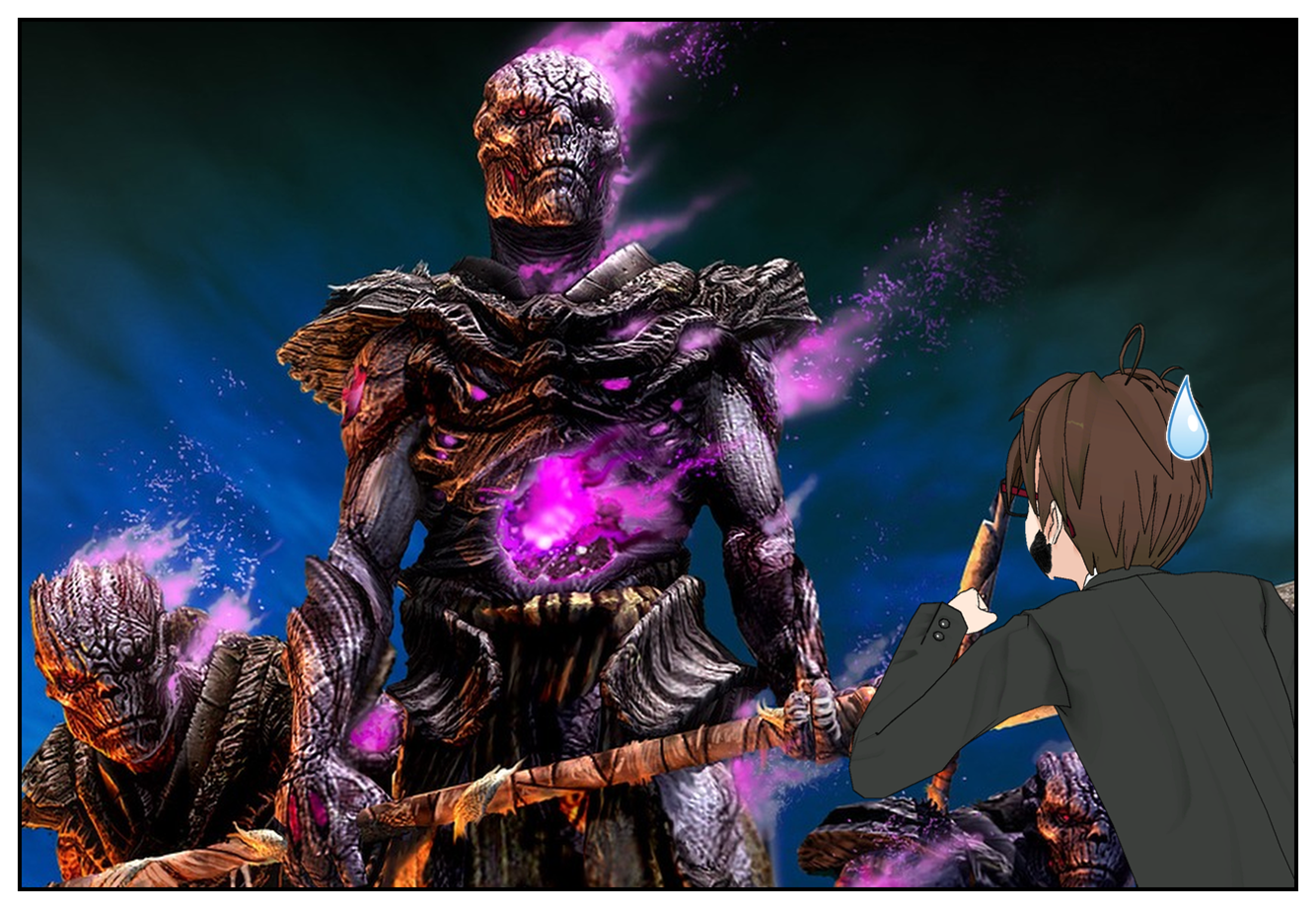
It's not an exaggeration to call Shadow Warrior 2 first-person Diablo, either. It has loot, colour-coded by rarity. It has a variety of different weapons. It has clear ways to "build" your character. It has skill trees that you can beef up as you gain levels. It has quests. It has four-player co-op. It even has a small amount of procedural generation, but it wisely limits this to just parts of levels, so there's still very much a hand-crafted feel to the whole experience.
So far, I actually think I like it better than Borderlands, for one very simple reason: all your level does is provide you with skill points that you can pump into your various active and passive skills. Enemies don't level up, and your stats don't scale with your level, either. This helps prevent the ridiculous situation you sometimes find yourself in in Borderlands where you fire a rocket into someone's face and it does a miniscule amount of damage. It also prevents "overlevelling", where you find yourself in a situation where enemies are providing you with so little XP that it's barely worth killing them.
I'm undecided as to whether I like it more than the first new Shadow Warrior as yet. I'm pretty sure I do. I certainly like it very much indeed — to the degree that if I don't see it on some Game of the Year lists at year's end I'll be very disappointed — but it has quite a different structure that takes a little adjusting to coming from the previous game's tightly designed "explore, monster arena, repeat" loop, and I can see this being a bit jarring to staunch fans of the original. The levels are sprawling, open affairs more akin to something like a Deus Ex zone, with plenty to explore — and plenty of incentive to wander around even once you've completed your mission objective. This means that the pacing is a bit more variable and less controlled by design than in the previous game, though with all that said, there's still a feeling that you're moving from encounter to encounter with pressure-free time to explore in between, so that's good.
There's also a new hub area with a couple of shops and some questgivers around, giving you a feeling of "coming home" back to base after a successful mission. There are also plenty of sidequests as well as the main story missions, so I get the impression there's a whole lot to do here.
The game promises 70 weapons, which is more than enough, but each can be further customised by inserting up to three upgrades into them. These have many and varied effects ranging from simply increasing damage to providing elemental affinities to your shots. This is fortunate, as in true Diablo tradition, you'll often come across Superior and Elite versions of enemies throughout the levels, many of whom have specific strengths and weaknesses with regard to elemental affinities. You can equip up to eight weapons at a time, and there's nothing stopping you having eight different swords for different purposes if you want to play that way.
Besides the weapons, you can "build" your character through attaching upgrades to your armour and powers, too. These might provide specific buffs to particular types of damage, or increased effectiveness of skills. Pleasingly for the co-op enthusiasts, there's even a multiplayer-specific equipment slot whose occupants generally buff you and your teammates with an "aura" emanating from your position. These auras can be damage increases, healing over time or defensive in nature, meaning if you really want to get into it, you can build yourself a well-balanced team that minimises its weaknesses — or simply pump as much damage as possible into each other to obliterate enemies in a matter of seconds.
Like the first game, the weapons are solid and satisfying to use, and most of them can be used in dual-wield "akimbo" fashion with the use of an upgrade. They make good noises and they rip through enemies in satisfying fashion; of particular note here are the chainsaws and chainswords, clearly inspired by Warhammer 40,000 — they cut into enemies with such precision it feels like you could carve your name into their guts.
Lo Wang's wit is present and correct, too, and in the same way as the previous game his jokes occasionally fall flat, and the character he has "riding along with him", much like in the first game, has some good chemistry with him, making for some amusing bickering. Plus all the usual "wang" jokes are present and correct.
Shadow Warrior 2 is very good indeed. If you've been considering picking it up, stop. Buy it. Play it. Love it. Who wanta some Wang?
 The
The 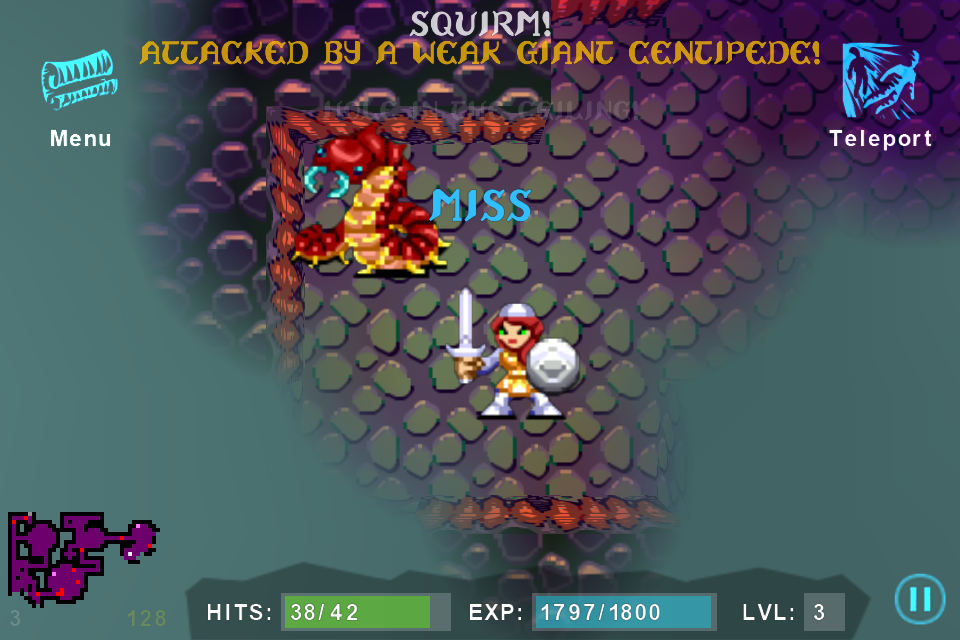 Sword of Fargoal is actually a remake of an old Commodore 64-era title which didn't look like the picture above. No, it looked like this:
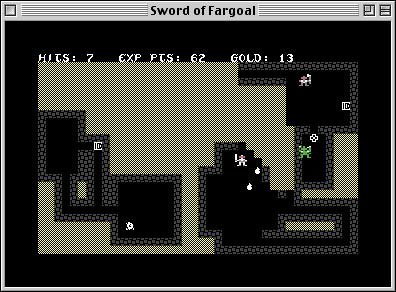 The best thing about Sword of Fargoal is its simplicity coupled with a surprising amount of hidden depth. While Angband is rather intimidating to get started with, with pretty much every key on the keyboard (shifted and non-shifted) mapped to something, Fargoal simply requires that you get to grips with moving and using a context-sensitive button in the top-right corner. And keeping an eye on the text display at the top of the screen for hints and cues, too. Combat is a case of running into an enemy—the player and monster will then take turns bashing each other until one or the other falls over or one runs away. Gold is collected to sacrifice at altars throughout the dungeon for experience point bonuses. And the rest is left to the player to discover. The more you play, the more you start to notice little graphical details and cues tipping you off to the location of traps or treasure.
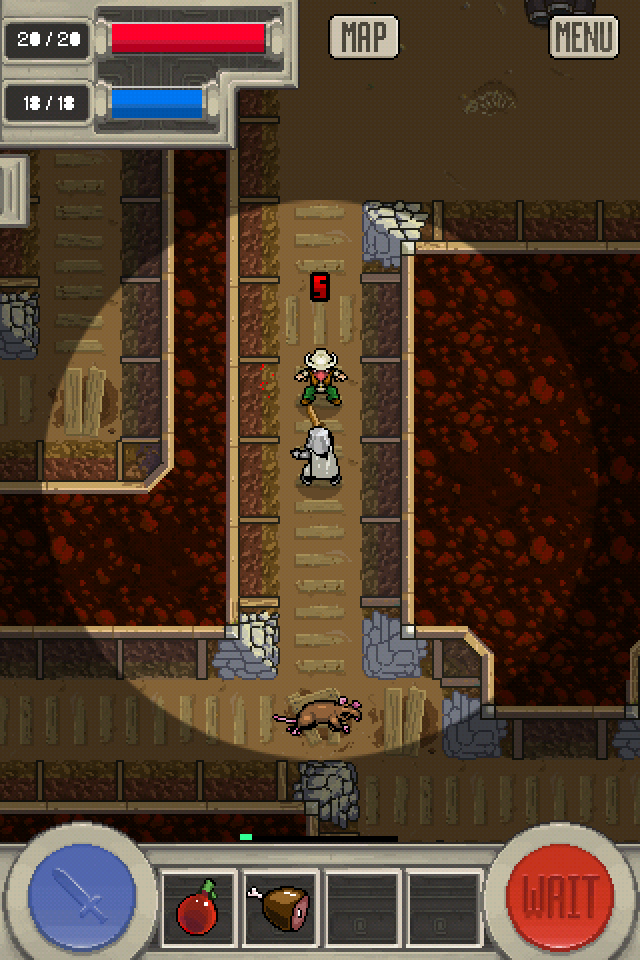 Then we have 100 Rogues, which takes a slightly different approach to that of Sword of Fargoal. While Fargoal's quest is lengthy, 100 Rogues can potentially be beaten in one sitting. Key word here being "potentially". 100 Rogues is particularly brutal, fond of surrounding the player and battering them to a pulp. Fortunately, the player also has a Diablo-style skill tree at their disposal, including a number of attacks that can beat back several enemies at the same time.
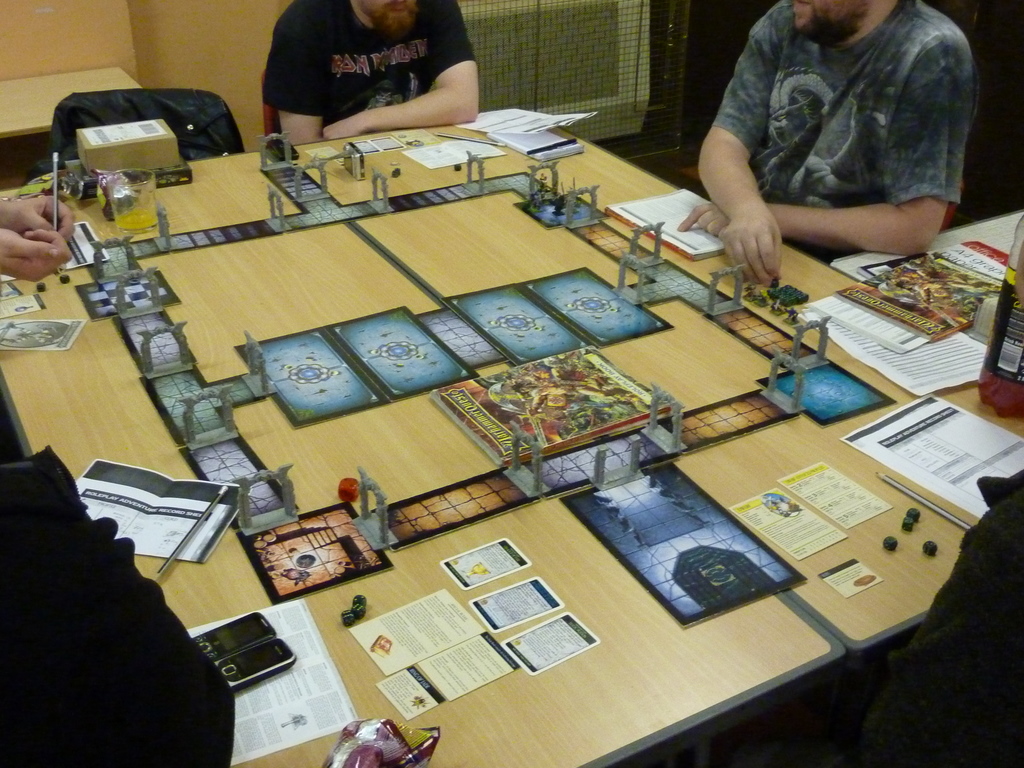 Finally, one of my favourite roguelikes of all time is Warhammer Quest, a game that involves you having people you actually don't mind being in the same room with. Featuring all the genre staples—a randomly generated dungeon, permadeath, brutal difficulty, vast amounts of phat lewt—it's very much the board game equivalent of Rogue et al. Even better, everyone gets to join in on the fun—there's no need for a Game Master player (unless you really want to use one) as the rules cater fully for monster "behaviour".