#oneaday Day 523: A deluge

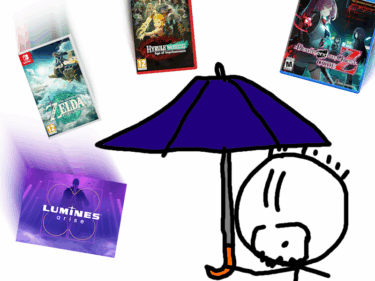
There is a veritable deluge of good games that have come out recently, and this statement applies pretty much regardless of the specific types of game you are into. From my own personal perspective, I've been having a great time with Hyrule Warriors: Age of Imprisonment, Absolum, Final Fantasy Tactics: The Ivalice Chronicles and Lumines Arise from recent releases, and a copy of Full Metal Schoolgirl arrived today, begging me to "just give it a quick try" this evening. Then alongside that, from varying degrees of "the past", I have Death end re;Quest: Code Z and The Legend of Zelda: Tears of the Kingdom on the go. And I'm playing Space Rogue and The Granstream Saga for video series.

Honestly, it's easy to get overwhelmed at times like this and get struck down with the dreaded analysis paralysis. But I've been trying hard to fight through that any time I feel it of late — and that, in part, is how I've ended up with quite this many games "on the go" at the same time.

You see, the way I figure it is that if you have just one "big game" on the go at a time, sometimes you're just not in the mood to play that one game, and thus it pays to have other things you can turn to. It's easy to start feeling "worried" that you won't get around to finishing any of the things you've started, though, but realistically, with the way today's games are designed, you can devote an evening to one thing, play something else another evening, play something else another evening, and so on.

It doesn't matter how long it takes you to get through something — and to some people, whether or not you get through it at all, though I don't fall into that category, as I do like to finish what I start. The important thing is just that you feel like you're spending your time in a way that is enjoyable and beneficial to you. So if you're in the mood to fest on a single game for multiple days straight, do that. If you're not in the mood for that one "big game" one evening, don't spend hours agonising over whether or not you're "allowed" to play something else — just go play something else. And, heaven forbid, if you're not in the mood to play anything at all of an evening? Stick the telly on and watch a few episodes of a favourite show. Yes, it can even be something you've watched myriad times previously if you really want.

Part of the "I must stick to one thing" mentality that I have been doing my best to shake off is down to my time working in the games press, when it was important to get reviews done in time for embargoes so you could have competitive coverage. And I even self-inflicted this somewhat with MoeGamer, too, in the name of being able to give single games or series more in-depth coverage. But none of that needs to happen. It's nice to be able to write stuff for MoeGamer or script videos, but it's not an absolute requirement of everything I play.

Honestly, I think part of the reason I worry over such things is because I want to feel like I have made a contribution to the world of video games through writing about stuff — particularly stuff that doesn't get a lot of love or attention from mainstream outlets. And I do still feel like I want to do that — but also I have to remember that I am also making a contribution to this world through my day job, and my work in that regard is probably getting seen by a lot more people than articles on my own personal websites. Probably, anyway.

All this is a long way to say that I think I'm going to play Full Metal Schoolgirl this evening, and I'm not going to feel the slightest bit bad about it.


Want to read my thoughts on various video games, visual novels and other popular culture things? Stop by MoeGamer.net, my site for all things fun where I am generally a lot more cheerful. And if you fancy watching some vids on classic games, drop by my YouTube channel.

If you want this nonsense in your inbox every day, please feel free to subscribe via email. Your email address won't be used for anything else.
#oneaday Day 519: Hero of Hyrule

In my head, I've had a bit of a weird relationship with the Legend of Zelda series over the years. There have been large tracts of time when I haven't played any games in the series, and there are still a number of entries (primarily handheld) that I haven't tried at all. I've known Zelda obsessives over the years, and I've never counted myself among them; likewise, I don't think I've ever bought a Zelda game on launch… with the exception of the new Hyrule Warriors: Age of Imprisonment, which I'm sure someone will argue isn't a Zelda game, but it actually is — just a different kind of Zelda game.

Anyway, I think I've come to the conclusion, many years too late, that yes, I, in fact, do like the Legend of Zelda series, and I always have done.

I think I know where my hesitancy over this came from, and it dates back to the late 1990s. I had just discovered console-style RPGs with Final Fantasy VII, and then Ocarina of Time came out, offering a very different sort of game to Final Fantasy VII, and… I felt like I didn't like it as much. At least, not in terms of story. Final Fantasy VII's narrative was unlike anything I'd ever experienced in gaming at that point, while Ocarina of Time was basically reading from the same script as A Link to the Past, which I had played (and enjoyed a lot) several years earlier.

Link didn't speak, either, which made the narrative immediately less interesting to me.

Of course, I know this is a silly comparison now, because Final Fantasy VII and Ocarina of Time are so different from one another as to basically be completely different genres — and that's not getting into the interminably tedious arguments over whether Zelda is "an RPG" or not.

No; I can see very clearly now that the intent behind the two series, and those entries in them in particular, is very different. Final Fantasy VII was all about delivering a spectacular, emotionally engaging narrative; Ocarina of Time was about being a well-designed video game. And, although Zelda plots have become more and more elaborate over the years — not to mention the series' timeline becoming ever more convoluted — this distinction has, for the most part, remained.

This isn't to say that Final Fantasy has bad gameplay or that Zelda has a poor story, mind. It's simply that their focal points are different, and, as with anything, if you go in with the wrong things in mind, you're almost certainly not going to resonate with it as much as you would if you had more realistic expectations.

Anyway, I think back over the years and the many Zelda games I have played, and I don't think I've ever had a bad time with a Zelda game.

My first ever encounter with the series was with Zelda II: The Adventure of Link on a family friend's NES. When I first played this, I didn't understand it at all, as I was very young and had never really encountered a game like it before. With how different Zelda II was from the rest of the series, I at least know I wasn't alone in feeling like that — although today I respect Zelda II immensely for having the balls to do something so drastically different from its predecessor.

I have a few oddly vivid memories of that first time I played Zelda II. The towns of Ruto and Rauru, both of which would lend their names to characters in the series many years later. The slightly wobbly melodic line on the music. The distinctive overworld map theme — which starts very similarly to the well-known Zelda theme before branching off in its own direction. The caves that are too dark to see until you get a candle. Link making a noise that sounds like he's going "whoops" every time he takes damage — a sound effect shared with Simon Belmont from Castlevania. The BLBLBLBLBLBLBLBLBLBL noise and strobes when you lose a life. And the fact I always thought Link looks like a chef when he's doing his "damage" pose. I saw it once, I can't unsee it now.

A few years later, I got a Super NES, and one of the games I asked for one Christmas or birthday was A Link to the Past. I knew absolutely nothing about this game, save for the fact that magazines talked about it in tones of reverence, and I remembered quite liking my time with Zelda II.

I got it. And I was absolutely blown away by it — particularly the music. To this day, I'm still impressed that the game has full-on orchestral cymbal clashes in its music. Absolutely one of the best uses of the SNES' sound chip there ever was.

Anyway, I dutifully bought Ocarina of Time like every self-respecting N64 owner was supposed to back in the day, and I quite enjoyed it, with the caveats mentioned above. What I liked a whole lot more, though, was Majora's Mask, the direct sequel, which never seemed to resonate with the public in quite the same way despite getting good reviews — but which gets its dues much more frequently these days.

Majora's Mask basically corrected what I felt was lacking a bit from Ocarina of Time: the emotional engagement angle. Because it offered a story that wasn't just a retelling of the usual Link vs Ganon legend, it was immediately much more interesting — and its time-based mechanic allowed the narrative to go to some seriously interesting places. To this day, I'm yet to see anything quite like the conclusion of the "Anju and Kafei" questline, which resolves with literally seconds before the world ending.

I didn't get along with The Wind Waker when I first played it on Gamecube, but when I played the rebalanced Wii U version some time later, I enjoyed it a lot more. Likewise, I skipped Twilight Princess on its original release and played the Wii U version, enjoying it greatly.

I was late to the party with Breath of the Wild and it took me a long time between starting it and actually finishing it, but when I had done so, I was very glad I had taken that journey. I am having a similar experience with Tears of the Kingdom in that I have come to it very late, but playing it alongside the new Hyrule Warriors, which acts as a prequel and/or parallel storyline, is going to be very interesting indeed, I think.

I know some folks don't love the direction the series has taken with Breath of the Wild and Tears of the Kingdom and to an extent I get that — but then there has also been the excellent Link's Awakening remake and the equally good Echoes of Wisdom for those hungry for a more "traditional" Zelda experience.

All in all, it's a thoroughly interesting series, and one that very much deserves its long and proud history. And, at this point, I may as well admit that I think I'm a Zelda fan. Particularly as I've played 15 hours of Hyrule Warriors: Age of Imprisonment since yesterday evening.

Now time for a bit of Tears of the Kingdom, I think…


Want to read my thoughts on various video games, visual novels and other popular culture things? Stop by MoeGamer.net, my site for all things fun where I am generally a lot more cheerful. And if you fancy watching some vids on classic games, drop by my YouTube channel.

If you want this nonsense in your inbox every day, please feel free to subscribe via email. Your email address won't be used for anything else.

#oneaday Day 517: First impressions from Hyrule Warriors: Age of Imprisonment

Hyrule Warriors: Age of Imprisonment arrived today and, keen to see quite how wrong that awful review from the other day was, I booted it up right after work and have been enjoying it since. I'm not very far in yet, and there seem to be a lot of mechanics and structural elements that are still locked, but I like what I see so far.

It's going to be interesting playing this alongside Tears of the Kingdom because, as anyone who has played the latter will know, a plot point in that is Zelda being sent back in time to the founding of Hyrule, and through a sidequest, Link can get occasional visions of key events during her time in the past. What Age of Imprisonment provides is a complete story from Zelda's perspective, from the moment she arrived in the past and was discovered by King Rauru and Queen Sophia, up until… well, I don't know, yet, but I assume some form of "imprisonment" will be involved, likely with Ganon(dorf) at the middle of it.

Thus far the game feels like it's taking some elements from previous Hyrule Warriors games (I say this with the caveat that I've not actually played Age of Calamity as yet) and combining them with some fun new(?) elements. Of particular note is a counterattack system, where major enemies do heavily telegraphed attacks, and you can use your characters' cooldown-based special abilities to interrupt them. This is never not satisfying, particularly when combined with the "weak point" mechanic introduced in the first Hyrule Warriors, where after certain attacks, some enemies reveal a weak spot and, if you batter this down enough, you get to perform a fancy cinematic attack on them.

There are also giant enemies, much like in the original Hyrule Warriors, and these have their own ways of being dealt with. They're not quite so rigid in their "solutions" as the original Hyrule Warriors, though, which is nice. You can, in many cases, jump on them and wail on their weak points while standing on top of them, though, which is always a delight to do in any game that allows you to do so.

The characters seem like fun, too. Particular highlight so far has been Mineru, sister of King Rauru, who is a Zonai scientist lady who commands constructs to do her bidding. Her "run" animation is her riding a motorised unicycle type thing, and most of her attacks involve summoning giant mechanical things, cannons and all manner of other fun stuff to cause chaos over a wide area. I think she's going to be enjoyable to play with, though I'm also intrigued to see what other characters are on offer and how the game incentivises you to play as them.

Mecha-Link has made an appearance, too, and he's predictably fun to play as, handling much as he did in the older Hyrule Warriors. He did conclude his first appearance by literally turning into a spaceship and flying off into the sunset, though, so I am looking forward to the first of his apparent Star Fox-esque sequences, whenever that might arise.

My concern with Age of Imprisonment (and indeed Age of Calamity, when I eventually get around to it) is that neither of them will live up to the original Hyrule Warriors in terms of Stuff To Do. For the unfamiliar, the original Hyrule Warriors, particularly in its Definitive Edition incarnation on Switch, not only had a lengthy story mode to play through (multiple times if you want to get all the rewards), but also had a brilliant mode called Adventure in which you gradually unlocked cells on pixel-art recreations of classic Zelda maps and took part in various battles in each space. Some of these were full-scale battles similar to what you do in the story mode, while others were battles that had some sort of special conditions or rules in place. The sheer amount of stuff to do in the Adventure mode, across a variety of different maps, meant that the original Hyrule Warriors had near-infinite replayability, and with the way Age of Imprisonment seems to be structured, I suspect it doesn't have anything like that.

That's not necessarily a bad thing, though. It means that Age of Imprisonment might actually be completable. And if and when I'm done with it, I can always return to the original for more of that sweet Adventure mode action.

In the meantime, I'm having a lot of fun with it, and learning today that its soundtrack is by MONACA, best known for their work on the Nier series, has made this game all the more interesting to me. And so I'm off for another battle or two before bed, I think…


Want to read my thoughts on various video games, visual novels and other popular culture things? Stop by MoeGamer.net, my site for all things fun where I am generally a lot more cheerful. And if you fancy watching some vids on classic games, drop by my YouTube channel.

If you want this nonsense in your inbox every day, please feel free to subscribe via email. Your email address won't be used for anything else.
2137: Nintendoes

0137_001

I've been playing almost exclusively Nintendo games for the past week or two. This wasn't entirely deliberate, but it's just sort of happened. And it's allowing me to rediscover my appreciation of what Nintendo does well.

Nintendo, more than pretty much any other company out there, puts out games that feel satisfyingly complete. They don't come out of the door half-baked, lacking in content or riddled with bugs; they're ready to play, bursting with things to do and full of enjoyment waiting to be discovered. And this is how they've always been, even since the days of the NES.

The other thing I rather like about Nintendo is that their work has a very distinctive "voice". This is partly the job of the localisation teams who work on the various properties, but the overall "tone" of most Nintendo works is so very consistent — and has been for many years — that I find it difficult to believe that this is purely a regional thing. Rather, I feel that Nintendo almost certainly makes very careful decisions about how it's going to localise things and make them accessible and tonally appropriate in territories around the world. This even goes as far as making the British/European English and American English versions of games different to quite a considerable degree in some cases, which always feels like a pleasantly "personal" touch.

Now, Nintendo have attracted the ire of a number of people over the last few years thanks to what these folks see as unnecessarily "butchered" translations of games such as Fire Emblem Awakening and Xenoblade Chronicles X. And, for sure, some notable changes have been made from the original scripts — and, in a number of cases, content has been edited or even cut to be in keeping with the perceived values of a particular territory. Memorable examples in recent memory include the shot of Tharja's panties-clad bum in Fire Emblem Awakening (which featured a curtain being pulled across it in the English version, inadvertently making it look more lewd by hiding her panties altogether) and the inexplicable removal of the breast size slider from Xenoblade Chronicles X's character creation tool.

These sorts of edits are nothing new, however. The Legend of Zelda series, for example, has a somewhat different tone in Japan to in the West, particularly in installments such as A Link to the Past on Super NES. In the Japanese original A Link to the Past, for example, the story touched on religious themes, with one of the main villains being a priest. In the English versions, however, religious references were removed, and the "priest" became a "wizard".

Why does Nintendo do this? For an attempt at inclusivity, I guess; the company has a carefully curated "family-friendly" image to uphold, after all, and "family-friendly" means different things in different territories. From its localisation decisions, we can interpret that Nintendo believes here in the West that "family-friendly" means something that the whole family can sit down and enjoy together without any material provoking arguments or awkwardness between one another. We've seen on all too many occasions that discussions and material relating to both religion and sexuality are very much capable of inducing arguments and awkwardness, so out the window they go. It's kind of a shame for those who prefer their translations to be more literal and true to the original Japanese texts, but it is, after all, what Nintendo has always done — and, I have to admit, that warm, friendly tone most of their localisations tend to have is rather comforting, and quite unlike anything from other localised Japanese works.

This is even apparent in games such as New Style Boutique 2 and Animal Crossing, where there was unlikely to be any real "offensive" content in the first place; both have been localised in such a way as to be as inclusive and welcoming as possible to a broad audience; they're games that invite you in to enjoy the experience rather than insist you must be this skilled to ride, or whatever. And that's rather nice, really. Not something that every game needs, of course — some games are all the better for their laser-sharp focus on a very specific, niche-interest audience — but, to be honest, I find it hard to get too riled up about censorship talk when it comes to Nintendo games, simply because I've grown up with that warm, friendly, familiar tone of their localisations, and it would feel kind of strange for that to change now.

Anyway. I'm enjoying my Nintendo period right now: currently playing Zelda 3, Hyrule Warriors and New Style Boutique 2. All are very different games from one another. All are simply marvellous. All are proof that Nintendo doesn't give a shit what its competitors are doing, because they're quite happy doing their own thing, even if it ends up causing their sales figures to look dismal in comparison to those of Sony and Microsoft.

I hope this Nintendo never goes away. They're an important part of gaming, and it would be sad to see them go the way of Sega, becoming just another third-party publisher.

2134: Hyrule Warriors is My New Favourite Musou

0134_001

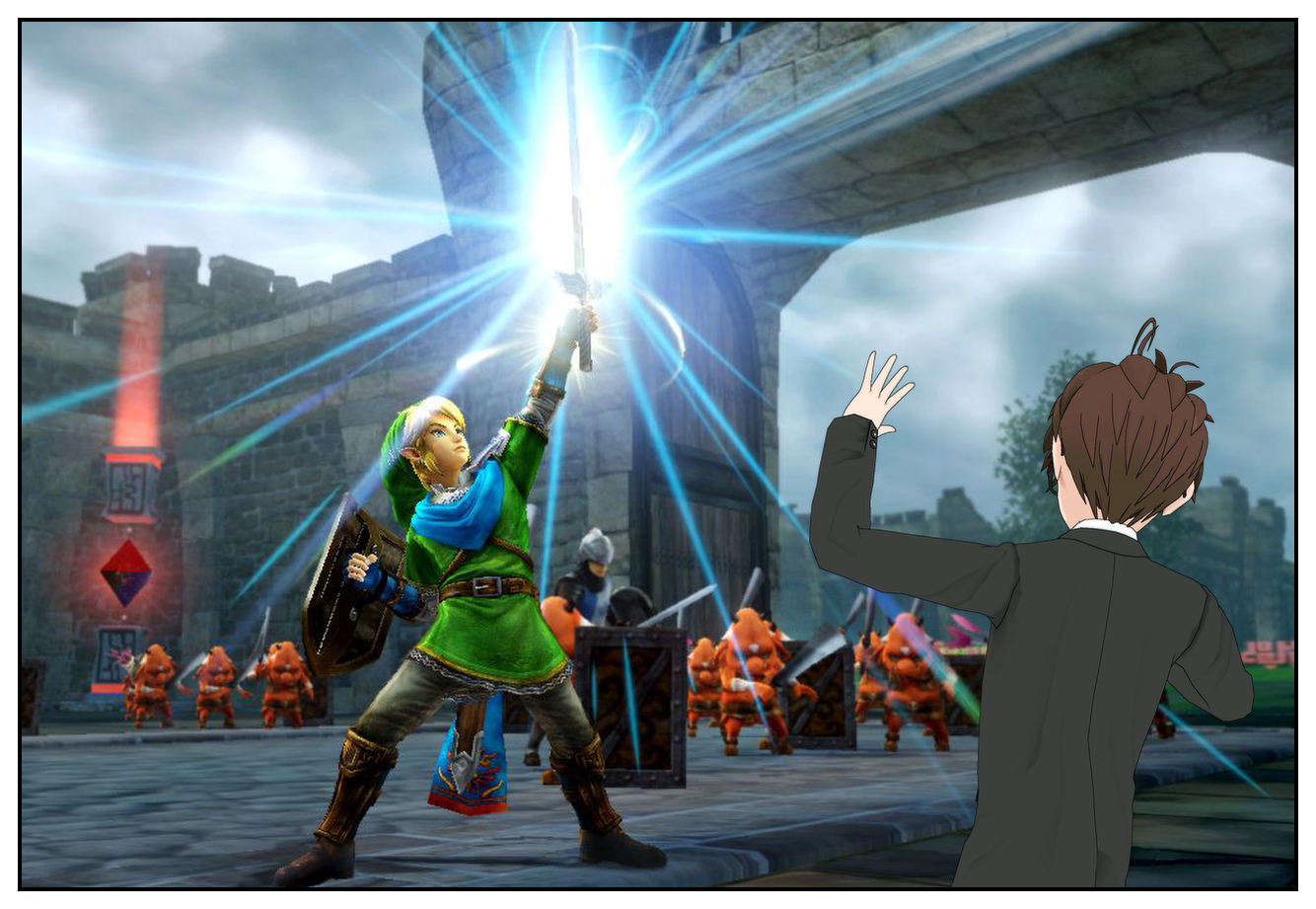
I'd been meaning to check out Wii U title Hyrule Warriors for some time, and my recent Zelda bingeing seemed to be an ideal time to do it. I primarily picked the game up as something to play as a co-op game with a local friend, but I've found myself playing through a number of missions this evening and having a great deal of fun.

I've always enjoyed the Musou games since Dynasty Warriors 2 on PlayStation 2. Their hack-and-slash nature appeals to the brawler fan in me, but they've always had a surprising amount of depth to them — not necessarily in the combat itself, but in choosing the right characters for the job, keeping an eye on the overall battle situation, and responding appropriately to what is happening.

For the unfamiliar, the Musou series covers the various Warriors games, including the Dynasty Warriors, Samurai Warriors and Warriors Orochi series. Hyrule Warriors was an interesting break from the norm for developers Omega Force in that rather than being loosely (very loosely, in some cases) based on established historical fiction such as Romance of the Three Kingdoms, it's based on an established other property — in this case, the Legend of Zelda series.

It isn't the first time Omega Force has tackled a licensed Musou game; there are Warriors games based on the popular anime and manga One Piece, Fist of the North Star and Gundam, among others. But Hyrule Warriors is arguably one of the more "accessible" properties that the team has chosen to adapt into the Musou style, since Zelda is one of Nintendo's properties with near-universal appeal, and much more ripe for adaptation than, say, Mario.

Hyrule Warriors, like its stablemates, casts you in the role of one of several different playable characters and tasks you with turning the tide of a large-scale battle on a sprawling map. Your character is just one part of your "side's" overall efforts, but you're considerably more powerful than the rather dim footsoldiers that litter the battlefield, usually standing around looking perplexed. You're not alone, though; in two-player mode, a second player takes on the role of one of the other present allied generals to support you, and even in single-player you'll find yourself fighting alongside other characters: they'll come to your aid, but you'll be expected to do the same in return.

In what I've played of Hyrule Warriors so far, there seems to be quite a bit more variety than, say, the Dynasty Warriors series, thanks in part to the setting being considerably more fantastic than ancient China. But it's not just about the monstrous enemies and magic flying around — it's also about varied objective during battle. It's pretty rare, even in the early stages of the game, to be confronted with a battle that simply involves cutting a path to the enemy boss; instead, you'll find yourself supporting your troops in various areas, capturing strongholds to gain a foothold and advance into enemy territory, dealing with counterattacks from enemies and, in true Zelda style, occasionally accidentally clipping a chicken one too many times with your sword and inviting the wrath of its myriad friends, who will come and peck you to death in pretty short order.

The game also makes use of its Zelda roots well by adding a number of mechanics based on the iconic Zelda inventory items. As you progress through the game's "Legend" mode, you'll acquire various items that can be used in battle, ranging from bombs (blow stuff up, reveal secrets) to a bow and arrow (shoot things) and a boomerang (cut down things that a sword just won't chop). Fulfilling various secret requirements in battle will also reward you with heart containers and pieces of heart to extend your characters' life bars, and Ocarina of Time's Gold Skulltulas make an appearance, too, spawning on the battlefield when you fulfil a specific condition and then requiring you to track them down by searching a marked area of the map and listening carefully for their telltale scraping sounds.

I feel like I've barely scratched the surface of the game so far; I've only played Legend Mode as of now, but there are a variety of other ways to play, with one of the most interesting sounding being Adventure Mode, which tasks you with exploring a grid-based map based on the original NES Legend of Zelda game and fighting various battles in order to take control of it piece by piece. I don't yet know how well this is executed, but I'm looking forward to trying it out. Even if it turns out to be bobbins, though, just the battles in Legend Mode have proven to be more than worthwhile and enjoyable so far — and it looks very much as if the game has continued to develop and expand long after launch, if the multiple pages of patch notes that appeared the first time I booted the game up are anything to go by!

I'm looking forward to trying it out co-op later this week, all being well, but in the meantime I can already confidently say that it's one of the best Musou games I've played to date, and anyone who enjoys a good bit of hack and slash should most definitely check it out, Zelda fan or no.