2194: Second Re;Birth

0194_001

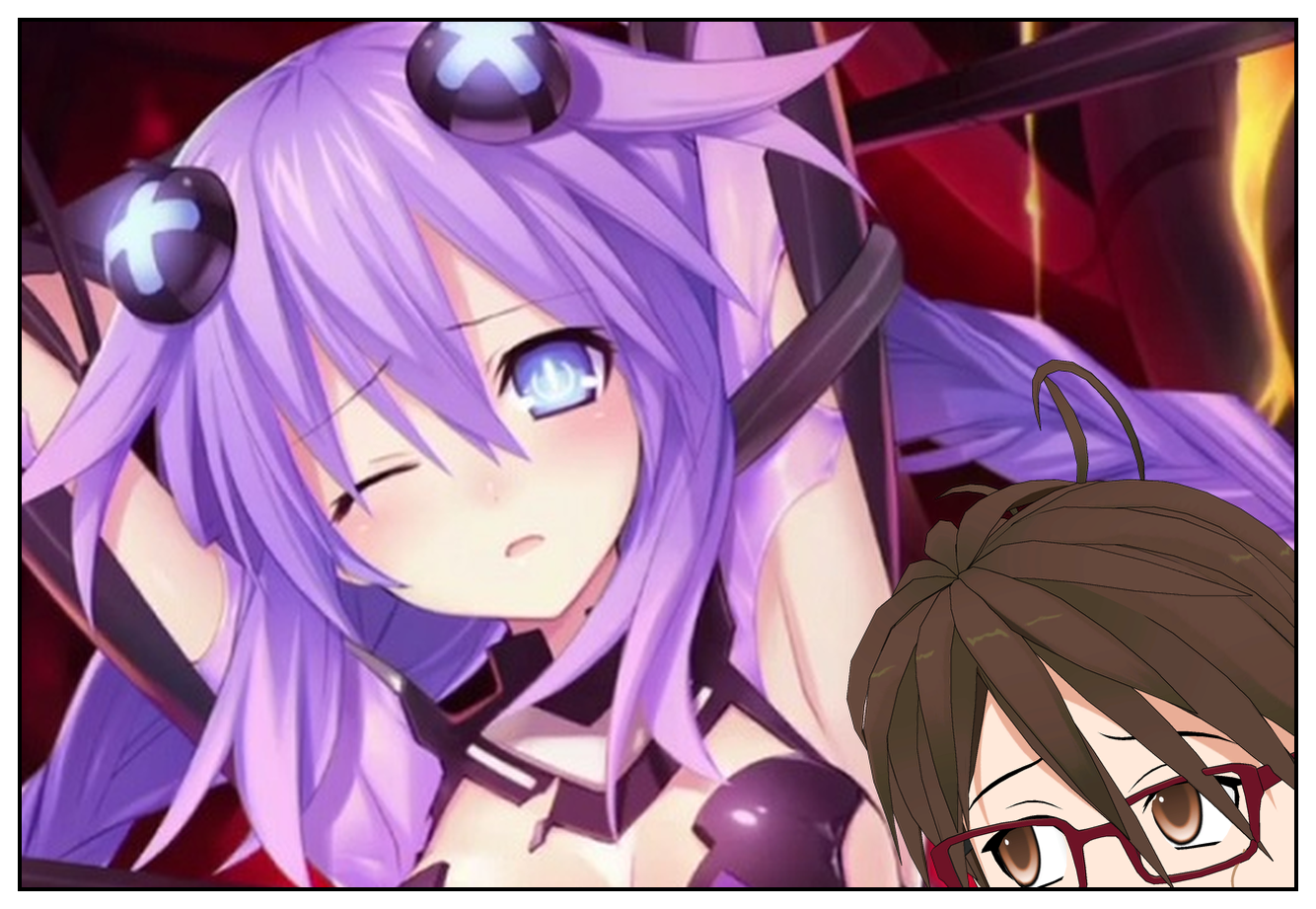
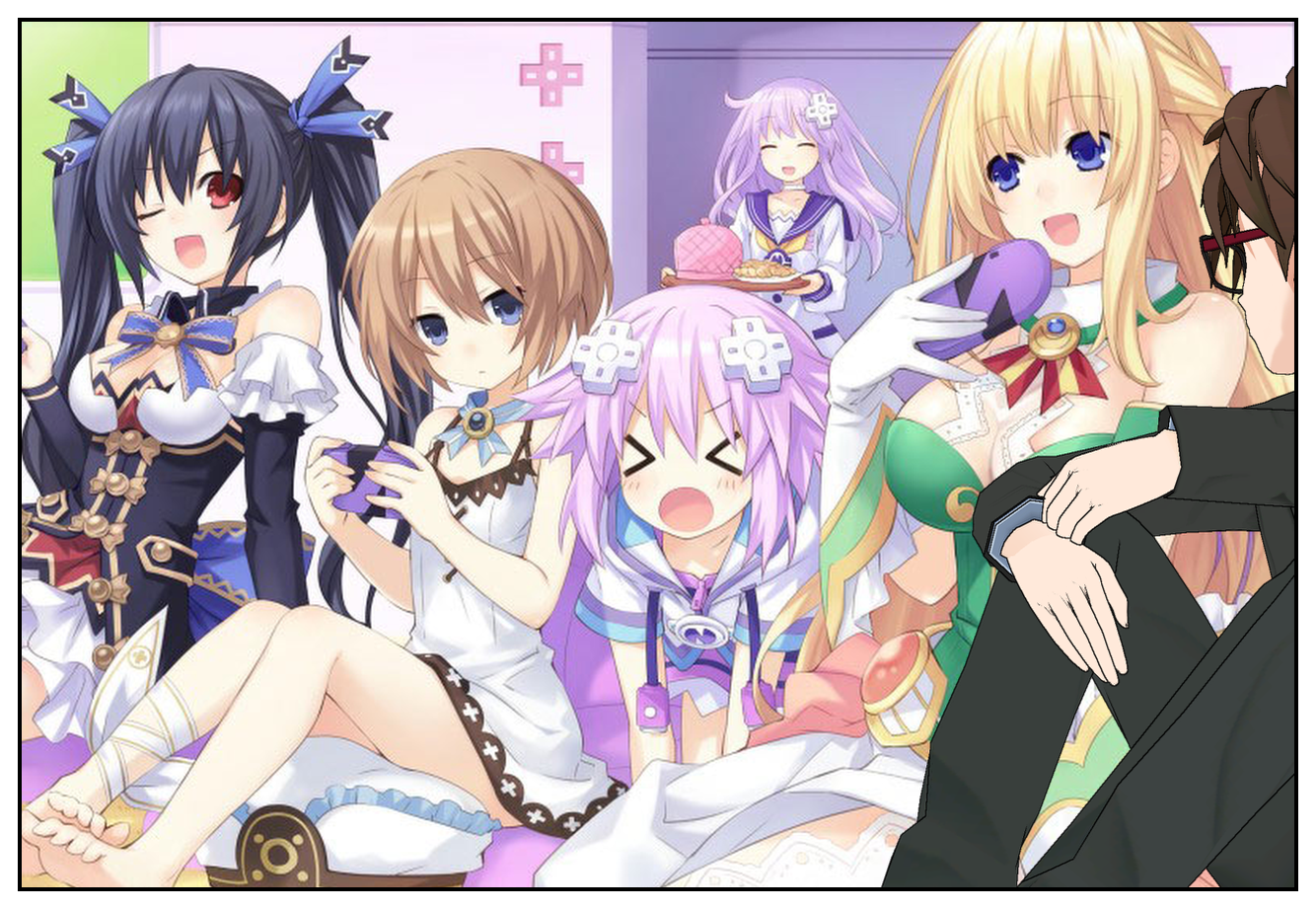
Having beaten Hyperdimension Neptunia U Action Unleashed to my satisfaction by successfully attaining the Platinum trophy, I immediately started on Hyperdimension Neptunia Re;Birth2, the Vita-based remake of Hyperdimension Neptunia mk2, previously my favourite game in the series, if not mechanically then certainly in terms of story and characters.

Re;Birth2 is less of a drastic difference from its predecessor because mk2 was already using the initial, slightly unrefined version of the systems seen in Hyperdimension Neptunia Victory and beyond. Re;Birth2 is still worth playing if you're already familiar with the original, however — not only has the battle system been updated to be in line with the solid, enjoyable mechanics of the later installments of the series, the game has also been updated with new scenes and new characters, including the welcome reappearance of RED, one of the best characters from the very first Hyperdimension Neptunia game, and one who was sadly absent from Re;Birth1. Not only that, but the presentation has been brought in line with the rest of the series, too — rather than mk2's somewhat muddy character models used in dialogue sequences, Re;Birth2 makes use of the beautiful Live2D incarnations of Tsunako's art like the other games.

Also added to the base game is the Remake system previously seen in Re;Birth1. This is essentially a crafting component, but as well as crafting items — which you do to make them available in shops rather than adding them to your inventory — you can also craft new game mechanics and visual options. Re;Birth1 had a few interesting options in this regard, but Re;Birth2 takes the idea and really runs with it, going so far as to add everything from a whole real-time passive minigame called Stella's Dungeon that you set running in the background while you play the rest of the game to the ability to make the girls' eyebrows stand out more on their 3D models so they look more like the 2D artwork.

As is tradition for most of the Neptunia series, Re;Birth2 is a gradual evolution rather than a dramatic reinvention, but some of the new additions and changes are very welcome. One of the craftable Plans in the Remake system, for example, allows you to obtain items and experience points from enemies you "symbol attack" on the field screen. In the original mk2, if you attacked an enemy that was significantly lower level than you on the map, they'd simply die and you wouldn't get anything. It was for clearing your way through a dungeon rather than grinding, but it actually wasn't all that useful, since you often wanted to fight enemies in order to collect their drops for various purposes. Re;Birth1 added the option to turn this off via its Remake system, which was a start, but the ability to get rewards from this is new for Re;Birth2, and extremely welcome in the late game, where you're likely to completely destroy most enemies as you grind out Lily Ranks and rare drops.

Coming to this game straight off the extremely light-hearted and silly Hyperdimension Neptunia U Action Unleashed was quite surprising: the overall tone of the whole experience is very different. It's significantly darker, particularly in the opening sequence, and it features some of the best villains the series has seen, each of whom are complex and interesting characters. The use of the extremely girly Nepgear as protagonist was inspired in this instance, since the juxtaposition of her innate sweetness and naive nature with some of the nasty shit that goes on — particularly in the Conquest ending path — is very effective indeed.

I'm only in Chapter 2 of Re;Birth2 so far, but I'm already having a blast with it and reminding myself how and why I love this series — particularly its mainline games. It's going to be a Nep-Nep-filled few months, I'm afraid, since there's Hyperdimension Neptunia Re;Birth3 to go after this, by which point a lovely shiny copy of the actually-brand-new-and-not-a-remake Megadimension Neptunia V-II for PlayStation 4 will finally be in my grasp. Can't wait.

2182: The Comforting Familiarity of Nep-Nep

0182_001

There's a reason I frequently quote the Hyperdimension Neptunia series as my favourite game series of all time. And it's not because any of the games are particularly outstanding — though, it must be said, each and every one is far better than most reviews give them credit for — or because they're particularly impressive. In fact, technically speaking, outside of some excellent character models and animation, the Neptunia series as a whole is fairly flawed, though since making the jump to Vita, PC and PS4 rather than PS3, its average framerate has gone through the roof.

No, the reason I love Neptunia so is its comforting familiarity. Firing up one of these games is like meeting up with the sort of friends you always have a good time with. The kind of friends you might not see for months or years at a time on some occasions, but the kind of friends who allow you to pick right up where you left off when you do meet up again.

There are a number of ways the series achieves this. The first and most obvious is through its main cast: the combination of Tsunako's gorgeous character and costume designs, the excellent voice acting (in Japanese, anyway; I haven't spent long with the English dub) and a sharp, witty script really brings these characters to life and, over the course of all the games they've starred in to date, they've developed and become distinct. The Neptunia writers and localisers aren't under any misconceptions that these characters are particularly deep, flawed or, for want of a better word, "literary", but this adds to the series' charm; it's infused with a gentle sense of good-natured humour and an aesthetic that combines the bright, primary colours of a children's TV show with a strong sense of self-awareness and recognition that yes, grown-ups play this and appreciate a few dirty jokes here and there. It's unpretentious and casual; you never feel like you have to make an effort to enjoy spending time with the Neptunia characters, and, perhaps paradoxically, this makes you want to spend more time with them, to find out more about them.

The second way Neptunia brings a sense of warm familiarity to me is through its aesthetic. Developer Compile Heart frequently gets lambasted in reviews for recycling graphical, sound and music assets wholesale from game to game, but somehow this has never mattered to me; I like the fact that you know what a Neptunia game is going to look and sound like before you boot it up. I like the fact that the series has developed its own kind of non-verbal language using its soundtrack to denote what is happening on. And the fact that the same dungeon maps are used from game to game — or even, in some cases, recycled within the same game — has never mattered to me; on the contrary, these places are now familiar and comfortable to me, even if the occupants may differ from visit to visit and occasionally incorporate superbosses that splatter me up the nearest wall.

The third reason Neptunia makes me happy is because the whole thing is clearly infused with such joy and love for these characters and the setting in which they live that it's hard not to smile all the time you're playing. While it's questionable as to whether or not Compile Heart knew precisely how popular the series would become when the original Hyperdimension Neptunia was released in 2010, it's clear to see today, six years later, that the creators still adore their creations as much as the audience do. And, more to the point, the various spinoffs in the series allow fans to celebrate their favourite characters in a variety of different ways, be it through the clothes-ripping hack-and-slash action of Hyperdimension Neptunia U, the strategic battling of Hyperdevotion Noire or the purely "social" gameplay of Hyperdimension Neptunia Producing Perfection. We've seen these girls at work, rest and play over the course of these games, and it doesn't take long to fall in love with them.

Me, I'm at a stage where I honestly think I might be quite happy playing nothing but Neptunia games until the end of time, assuming that Compile Heart continued to explore collaborations with other developers such as Sting (Hyperdevotion Noire) and Tamsoft (Hyperdimension Neptunia U) as well as producing strong mainline installments in the series. Of course, this is an exaggeration, but one thing is true: I never have a bad time playing a Neptunia game, and I never feel sad while I'm playing a Neptunia game; I hope we continue to see them for many years to come.

2138: How to Be a Fashion Goddess

0138_001

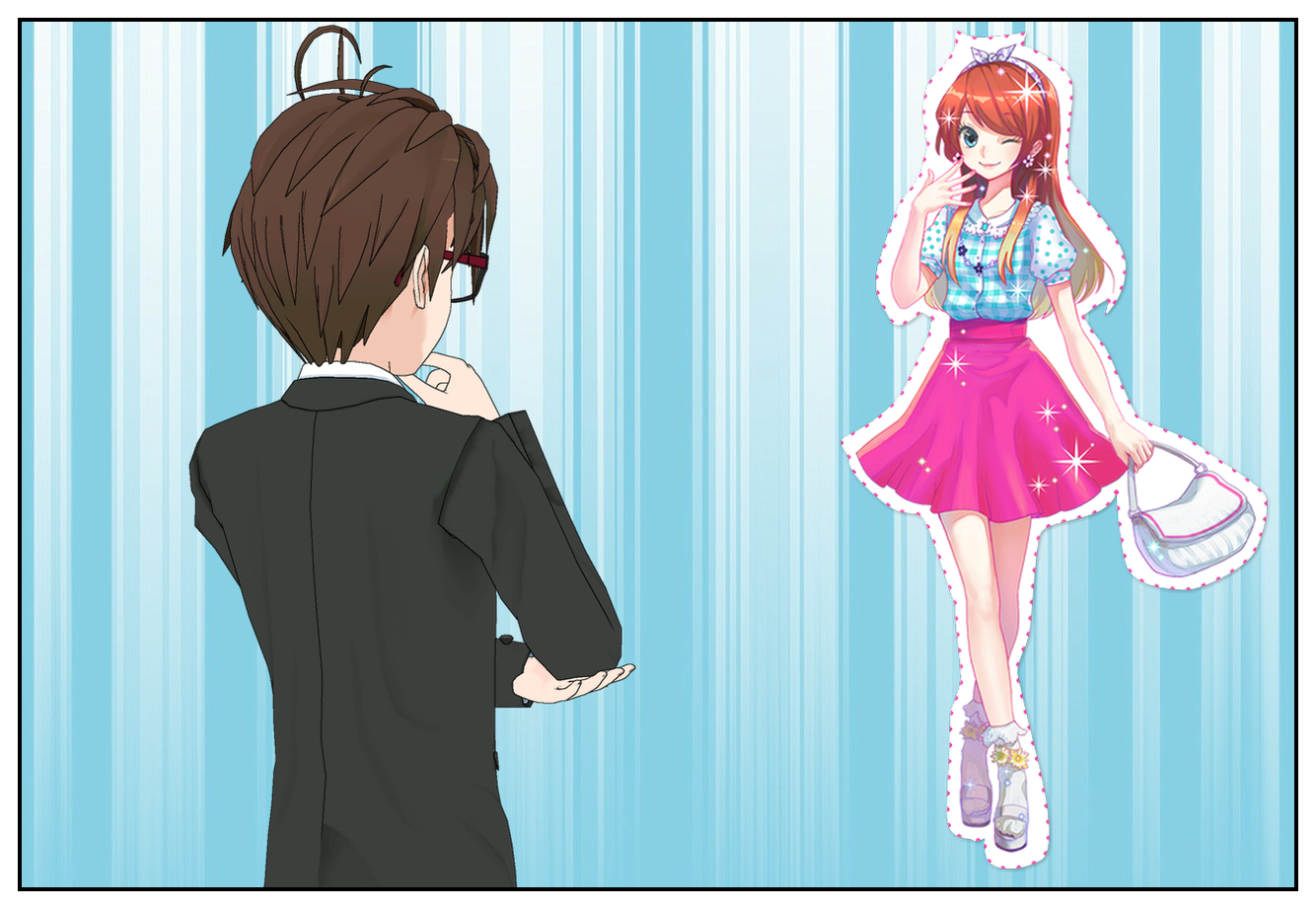
Been playing a bunch of Nintendo Presents New Style Boutique 2: Fashion Forward (aka Style Savvy 3) during downtime lately, and been enjoying it without any shame whatsoever. It's a decent game, reminding me somewhat of Animal Crossing but with "real" people and a bit more of a sense of direction and progression as you play through it.

I thought I'd assemble a few tips based on what I've encountered in the game so far, so without further ado:

Running the Boutique

This is your bread and butter, since you have a decent amount of control over how much money you make with each transaction. The basic strategy is to listen to what your customer wants, then put together an outfit using items you have in stock that add up to a total value as near as possible to their approximate budget. You can exceed their budget by a small amount, but try not to go too far over the top.

The Search function — the magnifying glass icon — is your best friend here, since until you have an idea of which items of clothing have which traits, it's the easiest way to track down things that meet the customer's requirements.

Early in the game, customers will make pretty simple requests of you, such as "I want a [trait] [item]". Fulfilling this request is a simple matter of using the search function to search by Image and Type to narrow down your stock items to what they're after. From there, pick the thing you think looks best — or, if you're feeling mercenary, the thing that costs the most but is still within their budget — and offer it to them. To begin with, you can prompt them to "Take a look!" at the clothes, which will give you a couple of chances to correct any mistakes you might have made, but after you've made a bit more progress in the game, you have the option to confidently tell them to "Try it on!" if you're absolutely sure you've found the perfect thing for them. If you make a mistake here, the customer will leave without buying anything, so use this with care!

After a while, you'll have to start putting together complete outfits. This is the same process, only you'll need to make sure you cover all the basics. At the very least you need one top (inner, shirt/blouse, outer), one bottom (trousers/shorts or skirt) and a pair of shoes or a dress to cover both. To squeeze a bit more cash out of your customer, try and adorn the outfit with some extras such as socks, gloves, earrings, bags and hats. Remember to stay close to their estimated budget, though.

Even later in the game, you'll start running into characters in the street whom you served earlier. They'll mention that they want to come and visit you later to find something to match the item you previously sold them. When they do show up, they won't give you any reminders as to what the item's traits were, so use a certain amount of judgement based on how they look now to recommend something appropriate — and use "Take a look!" if you're unsure.

Stocking up

For the most part, customers will order things that you have in stock, thankfully, though you can influence what is fashionable to a certain degree using your shop window mannequin and your store's decor. Certain items have multiple traits, though there is one "iconic brand" for each particular trait, so you can't go too far wrong with sticking with what you know.

When paying the Exhibition Hall a visit to stock up, try and get a decent selection of items covering a range of budgets and at least all the essential areas — top, bottom, shoes. Remember that when you buy stock for your store, you get a free unit of the item for your own wardrobe, too. And the first time you visit a particular brand, you'll get a complete outfit for free!

When you obtain the ability to design your own outfits, note that any commissioned items you successfully design will reward you with not only your payment for the job, but also ten units of the item you designed, which you are then free to sell. Taking on a bunch of design jobs can be an easy, cheap means of stocking up.

Hairdressing

When you get the opportunity to help out Noor in the hair salon, the mechanics are a little different. Rather than just listening to the customer's requirements, you have the opportunity to ask them a few questions. You only have a few chances to figure out what they want, however, so rather than making idle chitchat be sure to choose the options that relate to what they want done with their hair, and where there is more than one option relating to their hair, pick the more specific-sounding question.

Picking sensible questions will make notes on your memo pad about the customer's requirements. After three or four questions, they'll prompt you to begin, so with any luck you'll have assembled enough hints to put something suitable together. Try and remember any terminology that they use, because other customers might ask for something similar later, and won't necessarily explain it. Brush up on terminology using the glossary app in your phone if you're not sure.

So long as you stay within the customer's requirements, you can freestyle a bit with the hair with regard to things like colour and suchlike. Doing so can reward you with extra cash if the customer likes it, though if they don't you will have a chance to correct the issue.

The more haircuts you perform, the more styles you will acquire, and completed hairstyles will be recorded in your "Wig Box" for later recall if you so desire.

Make-up

This is a different process again. Here, customers will show up with a photograph of another character and ask you to do their make-up like them. By pressing the memo button at the bottom of the touchscreen you can flip the photo over to see the colour notes they made on the back; these are the important bits to follow, so take care of these first, then apply some finishing touches such as the correct amount of mascara based on the photograph.

Again, you can freestyle a bit with anything the customer doesn't specifically state, but be sure to fulfil all their requirements first.

Fashion Show

Once you reach a particular level of fame, Ricky, Sophie and Callie will assist you in putting on a fashion show. Each of these will have a particular theme, and you'll be required to dress your models in an appropriate outfit. Take note that following the fashion show, you'll likely experience an upsurge in demand for items of a similar type, so be sure to stock up on items with the same traits ready to sell.

After the initial show, every few customers you serve will reward you with a ticket for your next show. When you sell enough tickets, you can put on another show.

The chalet

You'll be rewarded with miniatures for various activities in the game, or just for chatting with people in the streets. You can also buy them from Kirsty in the shop next door to your boutique. It's in your interest to make some nice rooms for a number of reasons: firstly, characters will sometimes come to you and express an interest in renting them, and this can be quite profitable. Secondly, if you connect with another player via local wireless, you can invite them to your chalet and they can purchase items from your rooms. You're free to set the prices for these items to whatever you like, so if you have a rich friend, feel free to fleece them as much as possible.

As you progress through the game, you'll get the opportunity to expand the chalet with additional rooms. Take this chance and fill the empty rooms whenever you can; the more available rooms means the more potential rent you can be raking in. Remember to go and collect the rent every so often, though, because your tenants certainly won't come to you!

Collecting colours

To expand your colour palette, which is used in everything from clothing design to hairdressing and make-up, you need to collect additional colours. In order to do this, you need to chat with Rainbow, who is perpetually hanging out in the park, and show her a photograph with a colour she's never seen before.

You can look at your colour palette at any time using the app on your phone, and the names of the undiscovered colours generally give a bit of a hint as to where you might be able to find them. Pay the appropriate area a visit (perhaps at the appropriate time of day) and take a photograph with the Y button, then show Rainbow the photograph to receive her assessment and the new colour if you were successful. Generally speaking, the first time you visit a new area you'll be accompanied with another character, and you'll have the opportunity to take a photo with them when you arrive. Take them up on this offer by tapping the Y button while your characters strike their poses, since this is usually a good shot to acquire some new colours.

Streetpass

Streetpassing other players has a few benefits. Firstly, you'll receive their showcase chalet room, which you can drop into your own chalet. Secondly, their player character will come and hang out in your town for a bit, and while they're there, you'll have the chance to give them a complete makeover — clothes, hair and makeup. Streetpass customers, who appear as green on the map, aren't terribly fussy, so you can use them as a creative outlet as you see fit. Then take their money.

Remember to set up your profile and showcase rooms in your chalet!

Building relationships

Chatting to characters on the map is mostly for flavour, though chatting to the more major characters can reveal some background information about your grandmother, the boutique and the town, so be sure to say hello if you see people like Sophie, Callie, Ricky and Evie hanging around. Elsewhere, characters marked with special icons have various uses.

The yellow asterisked characters are characters who have visited your boutique before; talking to them may prompt them to come and visit you again, perhaps to complete an outfit you sold them an item for earlier.

Characters with a pink musical note trigger a sub-event that sometimes unlocks something — a new location, a new game system or perhaps some new styles. It's generally a good idea to trigger these when you see them, just in case the character wanders off and doesn't come back for a while.

Characters with a patchwork exclamation mark will give you a hint where to find a new colour. Note that sometimes they will refer to locations you can't visit yet, so pay attention to anything they say about unfamiliar locales ready for when you are able to visit.

Characters with a house icon want to rent a room in your chalet. You have the option to refuse their request, but there's generally no real reason to unless you really just don't like them for whatever reason. Rent is a nice little moneymaker on the side, so take the opportunity when it comes up.

A character with a crystal ball icon occasionally shows up in The Meadows. Speak to her and she'll give you a fortune reading; answer her questions honestly, and she'll give you an assessment of your personality.

Finally, characters with a yellow sparkle advance the storyline and often unlock important game elements. These characters will generally hang around until you pay attention to them, so feel free to leave them hanging until you're done with your current affairs.

Progressing

If your progress seems to have stalled a bit, head back to your boutique and make some sales; it usually won't be long before the next event shows up. If this doesn't work, keep selling, designing, cutting and… make-upping until you sell enough tickets for your next fashion show, then take it from there.

If you're still not sure what to do, be sure to check your messages and schedule in your phone, since the latter in particular usually gives you some idea of what you "should" be doing to continue progressing in the game — though, like Animal Crossing and its ilk, you are, of course, free to ignore this altogether and play however you see fit.

Hope all that helps! Have fun, fashion sistas!
1335: Perrrrssssppp

Hello! We fixed our Internet, no thanks to BT; Andie called 'em up earlier and they wanted to spend several days "testing our line" before calling us back on Tuesday, presumably with an engineer visit to follow after that if necessary — which it probably would be, since it appeared to be our fibre modem that was borked. Thankfully, a past example of BT's incompetence meant that we did, in fact, actually have two fibre modems, so we tried the old one and it turns out it still works. Win.

Anyway, enough of that. What I want to talk about today is the PSP.

The PSP came out in 2005, some five years after the launch of the PS2 and a year before the PS3. It failed to make a significant impact in the West upon its original launch and has sometimes been considered one of the problem children of Sony's lineup. There's a degree of justification for that — its reliance on a proprietary physical media format (UMDs); a laudable but ultimately doomed attempt to jump into the "all-digital" future well before the world was ready for it (PSP Go); a distinct lack of prominent marketing — but in the intervening years since its original launch, the PSP has actually become one of my favourite systems.

Perhaps the most impressive thing about it is the fact that after eight years, it's still relevant and doesn't show any sign of going away any time soon — and it has the Vita to thank for that. Vita is the best way to play PSP games due to its lovely OLED screen and its second thumbstick — which, when playing PSP games, can be assigned to emulate buttons, allowing for a fairly convincing fudging of dual-stick control for games that previously only supported a single stick — and as such has, in many cases, given the surprisingly vast PSP library of games a whole new lease of life.

This isn't a case of "it's backward compatible so you can still play old games" either — people are legitimately still making brand new games for the PSP. Just recently we've had Sweet Fuse, for example, and JRPG fans were all aflutter recently when it was announced that Xseed and Carpe Fulgur would be bringing the second part of the magnificent Trails in the Sky to English speakers in the near future.

Access to the entire PSP digital library is, for me, a convincing enough reason in itself to own a Vita — as I noted above, PSP games look and play great on Vita, with the only slight issue being that you can't play physical versions of games due to Vita's lack of a UMD drive. It's also something you can point to any time people complain that Vita has no games — a complaint which is getting more and more inaccurate by the day, incidentally.

So although the PSP is very much one of Sony's more troublesome children, I have to give the company a huge amount of credit for creating a platform that has endured as long as it has. The PSP has some fantastic games, if you've never explored them for yourself, and you might just find yourself discovering some new favourites. And with the impending release of Vita TV — which I'll be very surprised if we don't see in the West — all those of you who don't like playing on handhelds for whatever reason will be able to play these great games on your TV, too. Which sounds pretty great to me.

Now I'm going to go sit in bed and play Sweet Fuse. 

1162: Launch Lineup

I have a curious habit that I tend to fall into pretty much any time I purchase a new games system. Thinking about my recent purchasing habits and my ongoing desire to forgo the "triple-A" experience in favour of more interesting, distinctive titles from further down the "food chain" it's actually entirely understandable in retrospect, but I always used to wonder why I did it.

It's this: whenever I purchase a new games system, I will typically not buy the "system-seller" games, and instead buy something that looks interesting and quirky. I've been doing it for quite some time, as it happens, if my memory is to be believed, anyway.

When I bought a PS2, I picked up Shadow of Memories (aka Shadow of Destiny) instead of, uh, whatever was exciting in the PS2's early days. When I bought an Xbox, one of the first titles I grabbed was Sudeki. When I bought a Gamecube… actually, I can't remember what I bought with my Gamecube. Possibly that Sega volleyball game Beach Spikers. Anyway, you get the general idea.

When it came to the Nintendo DS, I forget exactly what the first games I bought were, but it was one or all of Phoenix Wright Ace Attorney, Trauma Center: Under the Knife and/or 42 All-Time Classics (aka Clubhouse Games in the States). All of them are still favourite games.

42 All-Time Classics is a particularly interesting one to me. I'm not entirely sure what inspired me to pick it up in the first place, as on paper it sounds like shovelware of the worst kind — 42 simple board, card and touchscreen games that you can play either against the computer, against other players in the same room with other DSes or via the Internet. It's the sort of thing that these days you'd download for free on your mobile phone and then be expected to shell out in-app purchases for "energy" or extra games or game-breaking powerups or something.

But no. 42 All-Time Classics was a full-price game for the DS (and was subsequently split into a number of smaller individually-downloadable chunks on DSiWare) that offered everything you need for a virtual "game night", so long as you had a few DSes to hand around. You only needed one copy of the game, though; thanks to DS Download Play, you could transmit a copy of the game you wanted to play with other people over Wi-Fi and play with a single cartridge. This is still one of my favourite things about the DS system.

42 All-Time Classics is such a great DS game because it doesn't do things half-heartedly. There's a hefty single-player mode that will keep you busy for a long time completing specific missions and unlocking new content through "stamp" mode. The multiplayer mode allows childish chatting through PictoChat during play, which is somewhat pointless when you're in the same room as your fellow players, but I must applaud any game that practically encourages you to draw knobs at your friends while you're playing multiplayer with them.

The presentation is pretty good, too. While there's only so much you can do to visually represent various classic board and card games, 42 All-Time Classics supports its relatively simple visual aesthetic with pleasant little animations, catchy music and distinctly "gamey" sound effects. It doesn't overdo any of these things, but they round the whole experience off nicely — and cute little touches like the music getting more "dramatic" when someone's about to win a game add a bit of drama to the experience.

42 All-Time Classics is a great little diversion and pretty much the perfect handheld game. While a lot of people prefer playing this sort of thing on their phone these days, the simple knowledge that I can just open up 42 All-Time Classics on my DS and play without having to connect to the Internet, share to Facebook, make in-app purchases or wait for energy to restore makes it worth the price of admission all by itself. So if you own a DS… well, I strongly recommend grabbing a copy.

1161: Hospital Affairs

Continuing my trend of "playing games that reviews didn't like much and ending up liking them a lot," I picked up a copy of the Nintendo DS game Lifesigns: Hospital Affairs (also known as Lifesigns: Surgical Unit in the States) recently. And I've been loving it.

Lifesigns, or Resident Doctor Tendo 2: The Scales of Life as it was known in Japan, is actually a contemporary of the original Trauma Center: Under the Knife in Japan, but it didn't come out until two years later in the West — nearly three years later for Europe. The reason I mention this is that the game suffered somewhat from comparisons to Trauma Center in reviews, when in fact this is a completely unfair comparison that has diverted attention away from what is actually a very interesting game.

Don't get me wrong. I love Trauma Center. It does its own crazytown sci-fi medical horror thing and it's fantastic for it. It remains, to date, one of the most genuinely nerve-wracking series of games I've ever had the pleasure of playing, and it always manages to spin an interesting story to couple with its action-packed gameplay. The latest installment Trauma Team, which you'll recall I was babbling on about recently, refined that formula brilliantly by toning down somewhat on the sci-fi aspects and jacking up the feeling of "this is a team of doctors working together in the same place". Ultimately, though, as good as the story was, Trauma Team was still just as much about performing the various operations as it was about the unfolding story.

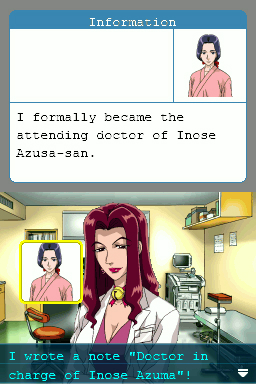
image0036Lifesigns, meanwhile, is actually a completely different beast. Sure, it's set in a hospital and features a number of surgery sequences, but it is not Trauma Center. Instead, I was delighted to discover, it is rather more akin to the Ace Attorney games — longstanding favourites of mine — than anything else, placing a much stronger focus on well-written character development and unfolding narrative than on the "action" sequences. It's for this reason that comparing it to Trauma Center and complaining about there being "too much talking" — a criticism also levelled at the Ace Attorney series by some — is utter nonsense. Without the talking… well, there would barely be anything left. The talking is sort of the point. Whether or not you like that is a matter of taste, of course, but given the continued existence of visual novels as a storytelling medium you better believe that there are plenty of people out there who are more than happy to play games that are about nothing more than people talking to each other.

As the Japanese title suggests, Lifesigns is actually the second game in the Resident Doctor Tendo series, though the first never made it to the West for reasons unknown. Ultimately this doesn't matter too much, as like the Ace Attorney games, the overarching plotlines are completely self-contained and only occasionally make reference to the events and characters of the previous game. When they do, they take their time to explain who these random characters that the protagonist knows (and the player doesn't) actually are, too, so it hasn't been an issue.

Lifesigns casts the player in the role of the eponymous Dr Dokuta (yes, really) Tendo, a second-year intern at the fictional Seimei Medical University Hospital. We learn quickly that he had quite an eventful first year, with one of the major events seemingly being a misdiagnosis that nearly ruined his career. We also learn that he was partially inspired to get into medicine after his mother died of cancer, and partially by the fact that his father is a heroic firefighter. We also learn that the resident evil-looking dude Dr Sawai is Tendo's biological father and that there's some bad blood (no pun intended) there.

The game's first episode introduces the major characters around the hospital — Tendo's mentor Suzu-sensei, an attractive older woman whose trademark appears to be a large cat bell around her neck; head nurse Florence, who has an alarming talent for gossip; adorable nurse Hoshi, who is clearly carrying a rather large torch for Tendo; and Aoshima, the new first-year intern whom Suzu assigns Tendo to keep an eye on. There are also a selection of other incidental characters who put in occasional appearances such as the frankly terrifying surgical assistant nurse Kurai, the deadpan anaesthetist Masui and Tendo's relatively normal-seeming friend in paediatrics Dr Ueto. All of them are fun, distinctive and, like the characters in Ace Attorney, just the right blend of believable and caricature to make them all memorable.

The majority of gameplay in Lifesigns requires the player to move from location to location in the hospital to advance the story. The location map shows which characters are hanging out where at any given moment, though there's no indication given as to whether the conversation you'll have in that location is an important one or not. (Important conversations advance the plot and tend to change around the arrangement of which other characters are hanging around where; non-important ones tend not to impart useful information for the most part but are usually entertaining or give a little further insight into the characters.)

When you reach a location, important conversations tend to unfold automatically and occasionally require some input from the player. This is accomplished in a similar manner to in Ace Attorney, whereby you open up your Court… sorry, Medical Record and present various objects, concepts and characters to the other person. Yes, much like in Ace Attorney, your inventory is not necessarily restricted to holding physical items; instead, as the plot unfolds, Tendo will take various notes, which he can then discuss with people. Usually if you're stuck at some point, you simply have to present something to someone else to advance the plot along. Occasionally, there are sequences where you have to convince another character to do something — these unfold in much the same way, albeit with more dramatic music and visual effects and an on-screen meter depicting how close you are to successfully convincing them. Presenting the wrong piece of information in these scenarios can lead to a bad ending, so you have to be careful — though bad endings don't necessarily mean the end of the game.

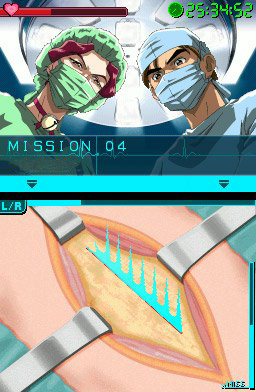
image0050What with Tendo being a doctor, you'll be unsurprised to note that you do actually get to do a bit of doctoring around the place, too — life in a hospital isn't just flirting with the nurses and hanging out with the pervy old cancer patient who can't resist pinching female doctors' bottoms. No, at least once in each of the game's five episodes, you'll find yourself having to deal with realistic medical cases, beginning with an examination in which you must successfully diagnose their symptoms, and usually concluding with a surgery sequence in which you must treat their ailment accordingly.

The diagnosis sequences are like a simplified version of Dr Cunningham's episodes in Trauma Team (or it's perhaps more accurate to say that Dr Cunningham's episodes are like expanded versions of Lifesigns' diagnostic sequences) — after having an initial discussion with the patient, you're presented with a view of them that you can look up and down and then interact with in several ways — inspecting areas visually, using a stethoscope to listen to the body's sounds and palpating areas by rubbing the touchscreen. The patient will generally give you a few clues here and there ("ooh, it hurts more on the other side…") but for the most part you're expected to perform a thorough examination to find all the symptoms. Unlike in Trauma Team, there's no chance of missing anything as you can't proceed until you've made a successful diagnosis; and also unlike Trauma Team you don't have to worry about eliminating possible candidates by matching symptoms to your database. Tendo knows his stuff — though often the visual examination is followed up by one or more "spot the difference" ultrasound/X-ray/CT/MRI scans in which you have to circle the abnormal areas on the touchscreen and pin down a final diagnosis.

The surgery sequences, meanwhile, are not very much like Trauma Center at all… aside from the fact that they're incredibly tense and quite challenging. Rather than tending to follow the same format, requiring the player to remember the appropriate means to deal with "common" ailments such as lacerations, tumours and inflamed areas, each surgery sequence in Lifesigns is a unique procedure that doesn't necessarily involve opening up the patient. For example, in the first episode, you'll find yourself performing an appendectomy as your first operation, then later you'll be navigating a catheter through someone's blood vessels in an attempt to stop some internal bleeding.

The diversity of tasks in the operations means that rather than trusting the player to switch between tools as they need to, each surgery is split into a number of smaller objectives which must be achieved in linear sequence to progress. Making mistakes injures the patient and causes damage to their vitals bar, and there's no convenient "cure all" stabiliser to inject here — though performing a task quickly and accurately has a chance of restoring the vital signs somewhat. There's also a "concentrate" button that displays the areas on which you're supposed to perform the current action along with the movements required, but all the time you're holding down this button the operation's time limit is zipping by five times faster than usual. Experienced surgeons will, of course, be able to complete the operations without having to rely on this at all, and in at least one situation the ending of an episode is determined by how quickly you complete an operation. (You can save beforehand… but as noted before, the "bad endings" to each episode aren't game-ending, so it's often worth continuing and perhaps replaying the game later to see the different possible conclusions.)

133I'm only partway into the second episode so far so I'll refrain from speaking further on the plot and whatnot, but so far it's been pretty great. It successfully combines the character- and dialogue-driven narrative of the Ace Attorney series with the tension of Trauma Center and comes out feeling like its own distinctive experience. While, yes, there is a lot of talking, as I said earlier that's sort of the whole damn point. This isn't a kinetic novel with arcade sequences like Trauma Center was (that's not a criticism, incidentally) — it's a visual novel/adventure game in which performing surgery plays an occasional role, but in which the relationships between the hospital staff, the patients and the other people in their respective lives is brought to the forefront. It's a really interesting game, and I strongly suggest you check it out if you're a fan of games that are a little bit off the beaten track.

#oneaday Day 568: iOS Gaming Not Proper Gaming? To That I Say "Balls!"

There's a degree of at least partly-justifiable snobbery surrounding iOS devices such as the iPhone and iPod touch — an assumption that they're not "proper" game platforms because they don't have the words "Nintendo", "Sony" or "Microsoft" emblazoned anywhere upon them, and that software for them is much cheaper than for aforementioned devices with "Nintendo", "Sony" or "Microsoft" emblazoned upon them.

This is a flawed assumption. However, as I say, it is at least partly understandable given the meteoric popularity of titles such as the ubiquitous Angry Birds and all manner of other casual-friendly games. In many ways, iOS devices are the Wii of the handheld world, featuring a lot of casual games, a lot of shovelware and a surprising number of diamonds in the rough which it's entirely possible that self-professed "hardcore" gamers will gloss over on the grounds that they're "just mobile phone games".

That in itself isn't a negative thing, though; if you're waiting for a bus/train/poo to fall out/tardy date/kettle to boil then these quick-fire, quick-play games are ideal. You can load up Bejeweled Blitz, play a game and post your score to Facebook in the amount of time it takes to make a cup of coffee. You can play a level of Angry Birds in the time it takes your toast to be toasted. If you're as bad at Flight Control as I am you'll have caused a hideous air traffic accident by the time you've finished a poo.

But here's the key thing: iOS gaming isn't just about this kind of game, but that's where the flawed perception of it comes from. Take Square's recently-released Final Fantasy Tactics: The War of the Lions, for example. This has attracted widespread bewilderment and criticism for its "unreasonable" £10.99 price point — but this is a game for which I paid £50 for an import version upon its original release 14 years ago (Christ, that makes me feel old — that game's nearly half as old as I am), and whose PSP version released at £35. Okay, sure, you can grab it for less than a tenner from PSN now, but for a couple of extra quid you can get a version with new touchscreen controls — touchscreen controls that work extremely well with the game, I might add (yes, I caved and bought it — I love me some FFT) along with a ridiculous number of hours of gameplay. Final Fantasy Tactics is not a short game — so consider its £10.99 price point in terms of "price per hour" and you'll find it a bit more reasonable.

At the other end of the pricing spectrum is the excellent (if poorly-translated) Zenonia series of action-JRPGs, the latest entry of which is completely free with a few optional microtransaction items available for those happy to pay some money or watch some ads. Zenonia is an excellent 16-bit style RPG that is simple to play yet deep and very addictive. And again, it's not a small game. The touchscreen controls are a bit fiddly — any game that attempts to incorporate a traditional control scheme usually is — but once you get used to them and customize them to your liking there's a lengthy RPG that will keep you occupied for many commutes there. The kind of lengthy RPG that you'd pay at least £20 for on DS. For free. And despite featuring microtransactions and premium items, the game never hassles you to spend money on it — it's just an option that's there if you want it, but I haven't paid a penny and it still feels like a proper game.

The list goes on: Kairosoft's series of management/sim games have provided a resurgence in popularity of a genre which has laid fairly stagnant for some time. Virtual renditions of well-established boardgames allow multiplayer action at times convenient to both players — even if that's not at the same time. And some of the finest roguelikes in existence (100 Rogues, Sword of Fargoal) are to be found on the platform.

iOS is here to stay as a gaming platform, and the sooner people wake up and stop seeing it as some sort of bastard offspring to the "mainstream" gaming industry, the better. Sure, there's a ton of amateurish shovelware out there — but that doesn't by any means diminish the significance of the some the games which are available for the platform — a platform which is growing more and more likely to give both Nintendo and Sony in particular cause for concern as the months roll by.