#oneaday Day 627: Finding your niche

I was a bit of a latecomer to YouTube. I remember a friend of mine trying to encourage me to follow some of the YouTubers she liked, and feeling curiously resistant to it all. In some respects, I am still quite resistant to certain quarters of YouTube — I have no intention of ever watching a Mr. Beast video, for example — but it's fair to say at this point that YouTube, as a general cultural entity, is an important part of my daily life for various reasons.

One of the things that I've particularly enjoyed about more actively engaging with YouTube over the last decade or so is coming across channels that have very much found their niche, and stick to it. Sometimes this is as simple as "gaming", but oftentimes I find that the most interesting and enjoyable channels are those that get a little more granular: those that choose to focus on a specific aspect of something that they enjoy and dive deep into that.

This can take many forms, so I want to share a few favourite channels in this regard today. Not all of them are gaming related, but all of them are run by people who have found something they enjoy doing and continue to do just that, often regardless of what "the algorithm" supposedly wants or viewing figures. I respect this because it's what I aspire to do with my channel; while my YouTube channel is broadly a "variety gaming" channel with a focus on retro, my preference is to explore overlooked and underappreciated games and platforms from over the years — and sometimes to give games that had a less than stellar reception on their original release another chance.

But I digress. This is not about me. This is about some channels I enjoy, so let's go on a little wander around YouTube, shall we?

Yesterzine

As you probably know if you've been reading this for any length of time, I enjoy old video game magazines, and as such I'm gratified to see how many people out there enjoy making videos and writing about them. One of my favourites is Yesterzine, a channel that describes itself as "The Literal Magazine Show", because it takes a "magazine show" format and is also about magazines, you see?

Presenter Dudley (who, full disclosure, I Actually Know) has a characteristically deadpan style that works well with the show's humour. He strikes a good balance between acknowledging and celebrating the original cultural context of these publications and providing appropriate modern commentary and criticism of aspects that, in retrospect, have not aged well for one reason or another.

Yesterzine videos are worth sitting down and paying attention to rather than putting on in the background, and with such a rich vein of classic magazines to draw on for future episodes, it's a show that will continue for as long as Dudley can be bothered, and he's showing no signs of slowing down just yet.

Zilog and Moto

I've always enjoyed Sega games, particularly from the 8-bit and 16-bit eras. In fact, if you follow my YouTube channel, you'll notice I'm going through a bit of a Master System phase right now.

Zilog and Moto is a channel with a bold aim: to collect all the English language releases for Master System, Mega Drive/Genesis, Mega CD and 32X, then play and review all of them. Presenter Dave is making good progress in both regards so far. His videos are simply presented but effective in what they do, consisting of a short introduction to camera, a look at the game's physical component and then some commentary on how it actually plays.

Dave clearly spends time with each and every game and gives it a proper chance — even in the case of notoriously bad titles. Sometimes this leads to pleasant surprises… and, of course, sometimes those poor receptions are well-deserved. Either way, an episode of Zilog and Moto is always a worthwhile watch if you're an old-school Sega fan.

League of Extraordinary Board Games

This channel, a collaborative affair between well-known tat acquirer Stuart Ashen, CheapShow's Paul Gannon and movie enthusiast Oliver Harper, has a simple premise: dig out an old, obscure board game of the ilk you would have once got at a jumble sale, then give it an honest shot to see if it's any good.

The trio doesn't always get through a full game of something — particularly if it looks like running particularly long, or if it is clear that the game itself is not actually very fun — but they always give it a chance.

It's especially interesting to see the variety of licensed board games based on TV shows — I have fond memories of these from back in the day and wish I'd held on to more of the ones that I used to have copies of. As it stands, all I still have is a copy of MB Games' adaptation of Williams' arcade game Defender.

Anyway, this has a similar feel to Gannon's CheapShow: the sense that you're being let in on a group of friends just having fun together. A good show for when you're feeling a bit lonely.

Lord Heath

I won't lie: I found Lord Heath's channel because of his frankly astonishing fart videos, one of which can optionally be enjoyed above. But I've been enjoying his other… err… output too, the majority of which are the rather more socially acceptable and/or safe for work reviews of drinks.

These are short, simple, self-explanatory videos: he tries a drink, he gives his thoughts on it. Most of them are under three minutes long, but they're all rather entertaining; Lord Heath himself is a joyfully exuberant character who is not afraid to make a twat of himself in public, and he always makes a point of shooting his videos in some pleasantly picturesque locations.

In many respects, this is perhaps the purest example of what I'm talking about today: he's clearly got a vision in his head for what his YouTube channel should be, farts and all, and he's stuck with it. He's not trying to be Internet famous; he's not trying to clickbait; he's just a cheeky chappy who likes burping, farting and trying an increasingly esoteric selection of beverages. Eternal respect to him.


Want to read my thoughts on various video games, visual novels and other popular culture things? Stop by MoeGamer.net, my site for all things fun where I am generally a lot more cheerful. And if you fancy watching some vids on classic games, drop by my YouTube channel.

If you want this nonsense in your inbox every day, please feel free to subscribe via email. Your email address won't be used for anything else.

#oneaday Day 289: Some games magazines I used to like

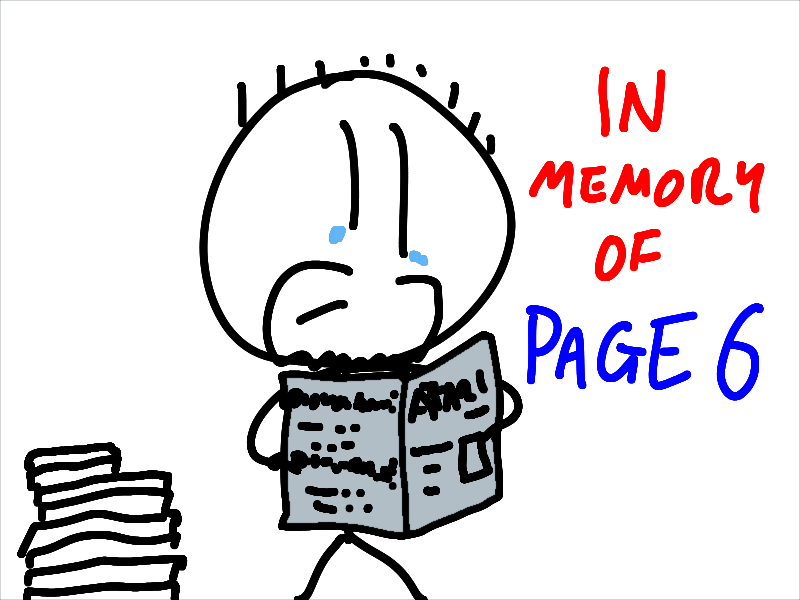
I love old games magazines, and will frequently re-read them years after they were relevant. In fact, I'm currently in the process of assembling a collection to bung on an SD card and pop in my otherwise unused Kindle Fire 7 to use as a portable retro magazine library. I've also got a vague plan to make some more videos on classic magazines, as I really enjoyed making the first two on Page 6 magazine — you can watch those here (issue 1) and here (issue 2).

In the absence of anything else to write about — I've been playing Xenoblade Chronicles X for most of the weekend, and I already wrote about that earlier — I thought I'd give a rundown of some magazines I used to like, and which I may well take some time to cover on YouTube at some point.

Note: I say "magazines I used to like"; most of them are magazines I knew someone who worked on, usually my brother. I make no apologies for this.

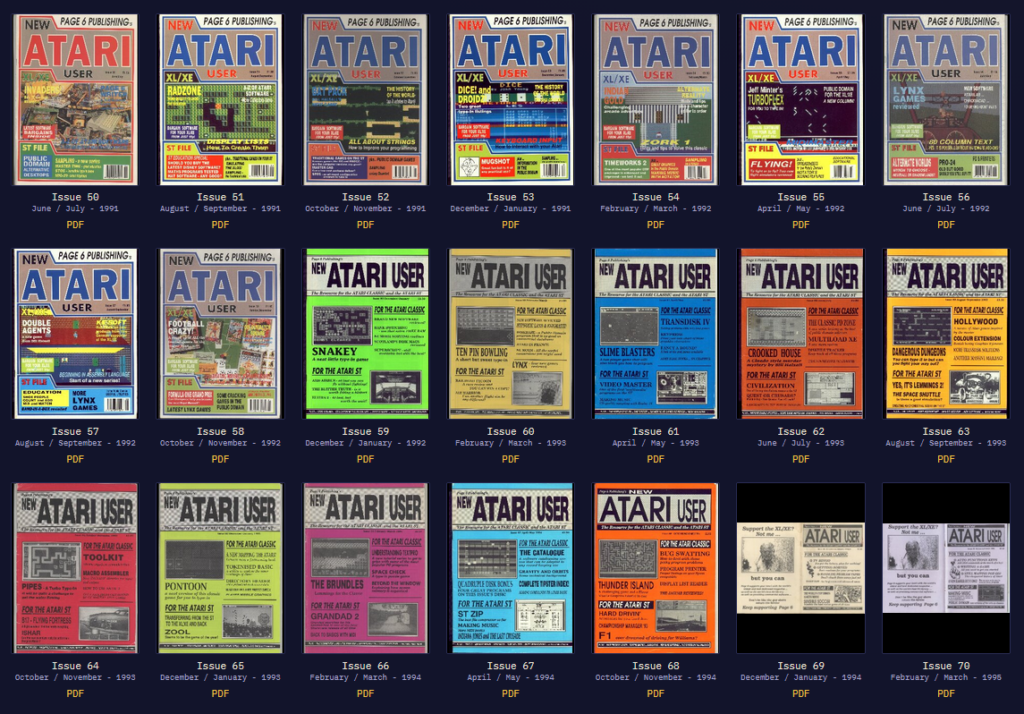
Page 6/New Atari User

This is the one I bring up most commonly on my channel, and for good reason: three members of my family (my Dad, my brother and me) were involved in it at various points, and it's the magazine that launched the career of my brother — a career that, with him being a big bossman at IGN now, he's still in.

Page 6, as it was initially known, started life as a user group newsletter. Within one issue, the editor Les Ellingham had decided that he wanted to fulfil a grander ambition: to publish the UK's first Atari-specific magazine. And he only went and did it. For an astronomical amount of time, considering the subject matter, too; Page 6 ran in one form or another from December of 1982 until the autumn of 1998, and it was still covering the Atari 8-bit in its very last issue.

Page 6 was an enthusiasts' magazine. It wasn't a games magazine; Les in particular was keen to stress from the outset that while computers were excellent games machines, there was also a ton more you could do with them. And part of the point of the magazine was to educate people on the possibilities their computers offered. It achieved that through articles about software releases (including both games and "serious" software), interviews, tutorials, type-in listings and plenty more.

It was always a pleasure to read. One gets the impression that it was a real labour of love for Les in particular, and there are plenty of occasions where his editorial page came across as very frustrated that other people didn't seem to care quite as much as he did — but I cared. I still do care. Page 6 was a formative part of my youth, and revisiting old issues today, I still feel a lot of the same magic I felt in the early days of computing.

Read them all at Atarimania.

Atari User

Showing up a little later, Atari User from Database Publications (later Europress) launched in 1985 and ran until November 1988, at which point Page 6 acquired the rights to the Atari User name and rebranded as New Atari User. Page 6 was still on the newsstands at that point, and it was thought that the Atari User name would attract more casual interest, since "Page 6" is a nerdy reference to an area of the Atari 8-bit's memory that only people already well-versed in the system's "culture" would understand.

At heart, Atari User was a similar sort of magazine to Page 6, covering both games and "serious" applications, perhaps with a slightly greater focus on things that, if not games, were at least entertainment of a sort. Like Page 6, there were a variety of features each issue, including type-in listings, and often some interesting-looking "Gadgets" sections for electronics projects you could do with your Atari. I never tried any of them — I was a bit young — but they always looked interesting.

I enjoyed reading both Page 6 and New Atari User because they each had a very different style to them. Page 6 always felt like it took itself very seriously, with a fairly no-nonsense, stern, professional-looking layout in each issue — not to say that individual articles lacked personality and humour, mind; I'm talking purely aesthetically — while Atari User made use of the bigger budget it had thanks to being part of a larger corporation by producing colourful issues with large, attractive pieces of artwork and photography throughout. I was sad when Atari User went under, as it was one of those magazines that it was just fun to look at thanks to its colourful cover art.

Read them all at Atarimania.

Antic and ANALOG

Antic, subtitled The Atari Resource, was one of two Atari-specific magazines from the States, with ANALOG (short for Atari Newsletter And Lots of Games) being the other. You could get them both relatively easily in this country via specialist importers. Antic and ANALOG were both, like Page 6 and Atari User, magazines that revelled in the joy of home computer ownership. Part of that was gaming, yes, but it was also about programming, productivity and creativity.

I actually haven't revisited Antic and ANALOG for many years and I think I'm long overdue to, as I remember enjoying them both. I do remember Antic having noticeably thicker issues, while ANALOG became renowned for its excellent machine language type-in listings. So they're both going on my portable magazine library, assuming it works as I hope it does.

Read Antic and ANALOG at Atarimania.

Games-X

Page 6 was where my brother got started writing about games, but it was Games-X that truly launched his career properly; he left home to work on it, and it ended up being the beginning of a whole life in the games press.

Games-X was unusual: it was a weekly games magazine (a decision which founder Hugh Gollner later described as "a big mistake" financially), and most other magazines at the time were monthly. Page 6 was bi-monthly (as in, every two months, not twice a month). This naturally allowed it to be a lot more "up to date" with gaming news than many other magazines, but it was also fun to be able to buy a new games magazine every week, initially for just 60p an issue.

Games-X covered that strange period late in the ST and Amiga's lifespan when consoles were just starting to really get a foothold in the UK. The majority of the focus in each issue was on home computer games, but there was a dedicated console section — and the next magazine my brother worked on after Games-X was Mega Drive Advanced Gaming.

Games-X had a fun, irreverent attitude to it and, in many ways, was very "'90s", with everything that entails. I still really like it, though, and think it stands out as a magazine that deserves to be remembered a bit more than it is.

Read them all at RetroCDN.

Advanced Computer Entertainment (ACE)

I don't think I actually had many issues of this, but I enjoyed every one of them a great deal. Advanced Computer Entertainment, or more commonly just ACE, was a multi-format magazine that one gets the impression liked to think it was a cut above the other games magazines around at the time. It was still about video games, sure, but it lacked some of the '90s abrasiveness of other publications, and took things a bit more "seriously", for want of a better word. One might call it the Edge of its day, only marginally less pretentious. (And yes, I checked; Edge launched in 1993, while ACE folded in 1992.)

That is, after they got over an initial rocky patch where there were more errors in the early issues of ACE than I think I've ever seen in any other magazine. Typos, mistakes, outright blank sections of pages — they had it all. But once it settled down, it was a very high quality magazine that I always enjoyed. The magazine was noteworthy for its "Pink Pages" section in the rear, a no-nonsense "reference" guide to new releases, charts and review summaries, plus a bizarre "Stock Market" section that never really made much sense, but I believe it was an early attempt to try and aggregate review scores for various developers and publishers, if I remember rightly.

I rather liked that ACE took things seriously. The silly humour of other magazines could be entertaining, to be sure, but it was nice to be able to read a magazine about games that was just… about games, rather than about its writers trying to launch a comedy career. As with Page 6, that's not to say that individual articles and writers lacked personality or a sense of humour; it's just that humour wasn't the main point, whereas with some other magazines around at the time, particularly once we moved into the 1990s, it felt like they were trying to be a funny magazine first, about video games second.

Read them all at Atarimania.

PC Zone

Now, this may make me sound a bit like a hypocrite after what I literally just said, but I always enjoyed PC Zone, even before my brother's time there as editor and publisher. PC Zone in its prime always felt like it struck a good balance between humour and information, and I loved it for that. It acknowledged that games were fun, silly and often stupid, but also recognised that people were passionate about them — sometimes to a fault.

PC Zone is also noteworthy in retrospect for being an early outlet for Charlie Brooker, and his articles were always a highlight, as were his eminently silly The Cybertwats cartoon strips, which got the magazine a bunch of complaints on multiple occasions, particularly after he depicted Lara Croft machine-gunning someone's cat to a particularly violent and bloody demise.

When people talk about old magazines being fun, I think of PC Zone. While in retrospect some of it may have been a bit "lads mag"-ish (see: front cover depicted above), it never really felt particularly exclusionary. Plus I spent two weeks doing work experience in their offices and, although I didn't really do much other than make a lot of cups of coffee and tea (and write a review of Virtua Fighter PC) that fortnight remains one of the happiest of my life.

Read them all at Pix's Origin Adventures.


And there's more I could be going on with, but I think that's probably plenty for now. If you're a retro computer and gaming enthusiast, you could do far worse than familiarise yourself with the above publications. And the links I've provided will let you do just that.

Note: I will not be held responsible for anyone complaining at you suddenly taking a lot longer in the toilet.


Want to read my thoughts on various video games, visual novels and other popular culture things? Stop by MoeGamer.net, my site for all things fun where I am generally a lot more cheerful. And if you fancy watching some vids on classic games, drop by my YouTube channel.

If you want this nonsense in your inbox every day, please feel free to subscribe via email. Your email address won't be used for anything else.

2008: The Wheels Are in Motion

0009_001

Had some exciting conversations today, and I think it's probably all right if I tease a few details of what I've been up to… and what I'm going to be up to.

After my post the other day regarding game criticism, the modern games press and ways that we might all do things a bit better, I got to talking with a few people, one of whom was Mr Matt Sainsbury over at Digitally Downloaded. Matt and I have been trying to find an opportunity to work together for quite some time, but the whole thing of there really not being much money in the enthusiast press scene made me hesitant. I didn't want to get myself into a situation where I was working my ass off and creating work I was really pleased with and not being able to be appropriately compensated for it, in other words. (This isn't anything against Matt or Digitally Downloaded, I might add; rare indeed is the enthusiast gaming site that actually pulls in enough money to pay its staff, which is one of the big problems with the ad-based revenue model I talked about.)

Anyway, long story short: our conversations about magazines attracted a decent amount of interest, and so we decided to discuss things further. And then we decided to act on these discussions by attempting to put together an honest-to-goodness magazine about games, providing the sort of coverage that we want to read, and covering the sorts of games that could really do with a bit more love from the press in general.

Our approach is going to be to take a different "topic" or "genre" (the latter inspired by literary criticism rather than game mechanics) for each issue, and then focus the whole issue around it. We're nailing down the specifics of the complete format, but this will allow us the flexibility to write some long-form essays about topics that interest us, as well as shorter reviews for games that fit in with the topic. Crucially, going with a topic-based approach rather than keeping things tied to whatever has come out recently means that each issue can effectively be "timeless" and collectible, remaining constantly relevant rather than only being relevant for the month of release. The traditional periodical model of games magazines is of no use whatsoever in the age of instant information on the Internet, so it's much better to use the print medium for things it's particularly suited for — in this case, long-form writing presented in a visually attractive manner. (Hopefully, anyway; it'll be my first time flexing my DTP muscles for quite some time!)

Here's a couple of cover mockups I and another Digitally Downloaded staffer put together earlier; that should give you a nice little teaser!

Issue 1 draft cover

draft_2

If you think all this sounds quite similar to what we were doing with the Squadron of Shame SquadCast during the period where we experimented with topic-based shows, you'd be absolutely right — though the nature of print means that the approach is somewhat different. Regrettably, we've really struggled to get people together and/or fired up for recording further podcasts, so that's been on the back-burner for a while. In the meantime, then, there is this project, and I'm really excited about it.

I've written a lot of things over the past few years — not just on this blog, but professionally, and in other personal places, too — but there's something that will always be magical and wonderful about print media to me. The prospect of being involved in print media always makes me far more excited than the possibility of getting my words on a website — and always has done. I think it's to do with the potential for having a tangible, physical object in your hands at the end of it all as the fruits of your labours rather than "just" words on a website. I mean, in both cases the important thing is still the words that you've written, but there's something I just love about being able to hold something I've written, pick it up, show it to people, read it on the toilet and whatever.

So yes. That's what I'm going to be up to alongside the other work I'm doing at the moment. We're aiming for our first issue to release around the end of next month (probably just digitally initially, we'll look at genuine physical print options later), so please watch out for it and consider grabbing a copy! Also, if you're interested in participating and contributing, let me know, privately if need be!

1941: What Happened to the Games Press?

I find myself thinking this a lot recently, particularly as sites like Polygon do increasingly stupid things on a seemingly daily basis (just recently, they managed to piss off the entire community of people who enjoy modern niche Japanese RPGs with a spectacularly ill-informed piece that I posted a lengthy rebuttal to over on MoeGamer, and subsequently baffled everyone by complaining that The Witcher 3 didn't appear to have any black people in it, and that in a setting where, canonically, women are treated like shit, the women were treated like shit) and I find myself increasingly turning to smaller sites on the few occasions I do actually want to read someone else's thoughts about games — and to Twitter on the more frequent occasions when I want to talk about games with people who share my interests.

The games press used to be the very definition of "enthusiast", in that it was, well, enthusiastic. Upcoming new games were anticipated with excitement, unexpectedly brilliant games were celebrated, legendarily awful games became famous in their own right. In most cases, coverage was handled in a light-hearted, humorous and often irreverent manner, not afraid to crack politically incorrect jokes and generally seem like the people responsible for it were actually having a good time.

These days, I go to a site like Polygon and often come away feeling like its writers actively hate the medium they claim to specialise in. It seems like every other week there's a new big controversy of some description, and these sites seem to take it upon themselves to take a Firm Moral Standpoint on such issues, usually with the strong implications that If You Don't Agree With This, You Are An Awful Shit and Should Probably Be Killed.

Sometimes these controversies become justifiably big deals — although, to be honest, it's getting harder and harder to think of genuine examples, simply because of the amount of noise spouted on a daily basis. It's the "Boy Who Cried Wolf" syndrome; the more you shout and scream and rave about How Awful Everything Is, Oh My! *faints* the less likely people are to take you seriously. Particularly when it's just so incongruous; I can't quite work out if the abrupt gear-change into "by the way, this is misogynist and probably racist too" in Polygon's otherwise very positive review of The Witcher 3 is hilarious or tragic, but either way, I can't take it seriously any more, because it's just parroting the same points I've seen over and over again, without any real consideration of context.

I think back to the days when I used to read games magazines before the Internet came along and ruined that industry. I think back with fond memories on the specific magazines I used to read — mostly the ones my brother worked on, for obvious reasons — and can actually remember a lot about them: the articles therein, the games covered, the reasons I liked taking them into the toilet to read while I was having a shit even if I'd already read them from cover to cover multiple times. Advanced Computer Entertainment (aka ACE); ZeroMega Drive Advanced GamingControl (later Super Control); ST ActionAtari UserPage 6The Official Nintendo MagazineN64 MagazinePSMGamesTMPC Player; PC Zone; EGM; OPM; and doubtless some others I've forgotten — I don't remember any of these magazines ever taking a Firm Moral Standpoint on controversial issues, and I certainly don't ever remember them directly attacking either portions of or their whole audience. (Well, except for Charlie Brooker's "Sick Notes" section in latter-day PC Zone, in which people wrote in to him specifically to get insulted.)

Meanwhile, today, we have a far more fast-moving games press in which articles are generally disposable, forgettable, designed to get quick, immediate clicks right now and, for the most part, not remain "evergreen" and stand the test of time. That means a rise in tabloid-style controversy and moral panics, and a decline in writers having the opportunity to express their own specific, creative voices or specialisms. And that's really sad.

One positive thing that is coming of the growing sense of dissatisfaction a lot of people like myself feel with the big gaming sites is the fact that smaller sites are on the rise, and doing a good job from a content perspective of catering to niches that are typically underserved by the mainstream publications. The situation isn't ideal as yet — most of these outlets aren't able to pay their staff, since making money from writing words on the Internet is harder than it's ever been, given people's reluctance to pay for things online, and even greater reluctance to allow themselves to be advertised at — but it is undergoing a change.

I'm glad to see that, in some respects, but sad in others; as time goes on, we move further and further away from what I now recognise, with the rose-tinted spectacles of +1 nostalgia, as the Golden Age of Games Magazines. Fashions come and go, of course, but with the way the media has been advancing over the course of the last ten or twenty years, I don't see us returning to anything like it any time soon.