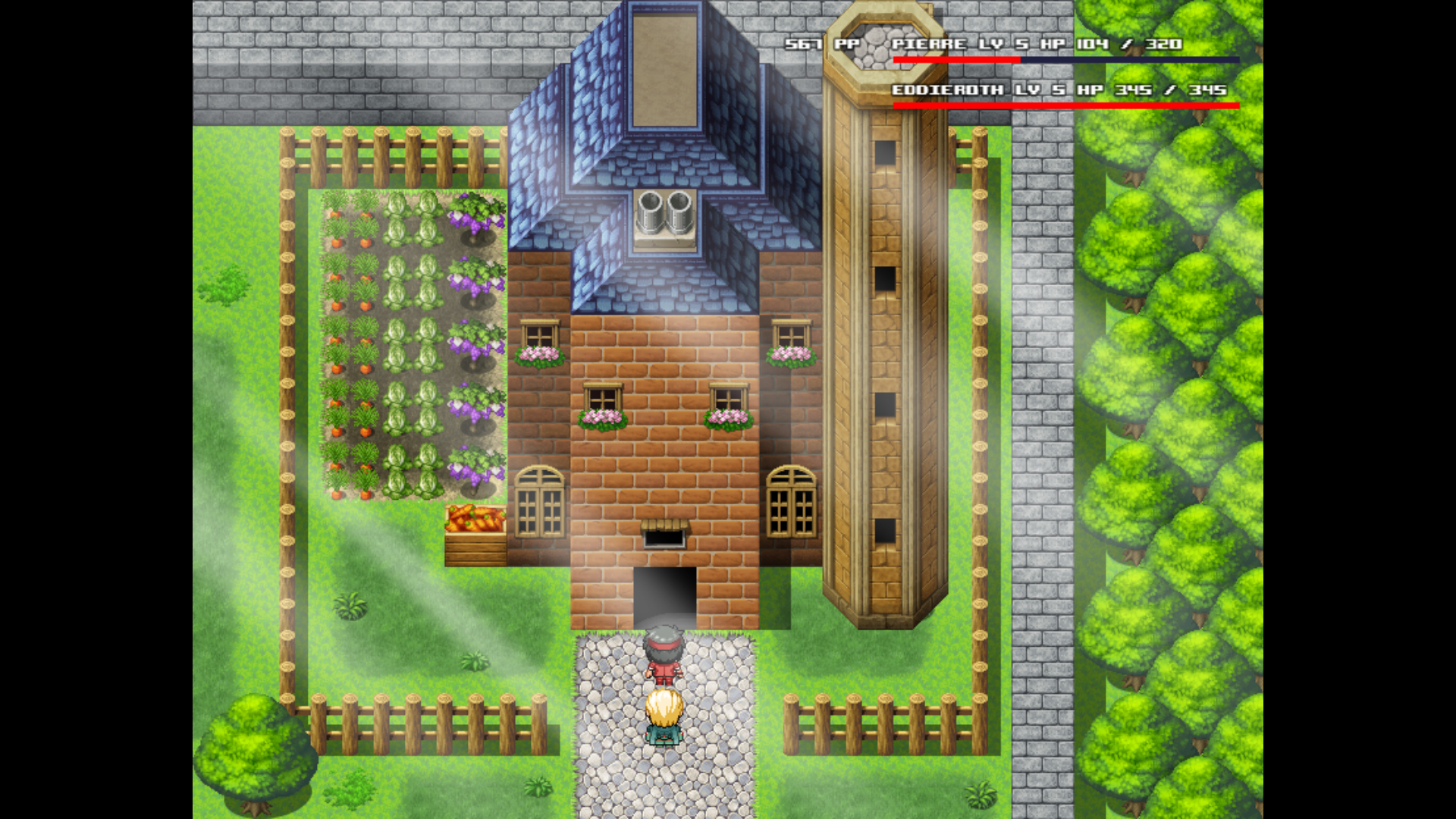
#oneaday Day 557: How to torch universal goodwill with one simple interview

Today, Larian Studios, makers of the Divinity series and the universally acclaimed Baldur's Gate 3, found itself in the crosshairs of the Internet's ire due to comments made by its CEO, Swen Vincke during an interview with Bloomberg.

According to Vincke, Larian has been using generative AI behind the scenes to, in his words, "explore ideas, flesh out PowerPoint presentations, develop concept art and write placeholder text". None of which are things you need generative AI for, and all of which are things that people have been perfectly capable of doing with their own human brains for decades. In fact, there are people who specialise in elements of what he described — most notably concept art, which is the area a lot of critics have been focusing on.

Vincke's comments are remarkably ill-considered given the number of times that generative AI use in video games has been subject to backlash from the general public and journalists alike over the course of just the last year — and for many of the same reasons that Vincke is arguing in favour of.

The otherwise well-regarded sci-fi game The Alters was irreversibly poisoned for a lot of people earlier this year when it became apparent that they had used ChatGPT to generate placeholder text for background textures and localised strings for non-English languages.

The umpteenth reboot of Everybody's Golf came under fire for non-specific use of generative AI that I'm not sure anyone ever quite got to the bottom of.

The new Let It Die game, which has no involvement from the previous game's original developers Suda51 or Grasshopper Manufacture, has been lambasted for extensive use of AI-generated material.

The promising "people sim that isn't called The Sims" inZOI turned huge swathes of prospective players away by its game's heavy reliance on generative AI, as well as its publisher Krafton's insistence that they are pivoting to becoming an "AI-first" company.

The latest hot "extraction shooter" (I still don't really know what that is, and no, I don't really care) ARC Raiders got dinged with a 2/5 review score for its use of AI-generated voices — not just because they were AI, but because using AI-generated voices is at artistic odds with the story the game is trying to tell.

Even the once-beloved Oliver Twins, former stars of the UK "bedroom programming" scene in the '80s, got a kicking from press and public alike for their absolutely terrible AI-generated "follow-up" (and I use the term loosely) to their old Spectrum game, Ghost Hunters.

People hate this shit — and with good reason. Generative AI is a lazy, soulless solution for feckless CEOs to foist on their creative teams because they think it will "add value" for shareholders, when in fact there is growing evidence by the day that the entire generative AI scene is financially, environmentally and societally ruinous.

On top of all that, it doesn't work well enough to be worth using! Every single AI "tool" currently available carries a prominent disclaimer that it "might" (read: "will") get things wrong from time to time, making them fundamentally useless for doing anything useful with — and their "fun" uses are causing the Internet to become overrun with even more meaningless, pointless slop than was already splattered everywhere in the first place, on top of boiling all our lakes. At least stupid things from a bygone age like Badger Badger Badger and Seepage (to name just two examples from what I believe to be the golden age of Internet nonsense) are the result of both genuine human creativity and skilful use of creative tools that don't involve typing "make me funny video garfield giant boobs mechahitler piss filter" into a chatbot.

Vincke's point was not that the new Divinity game will be riddled with AI-generated voice lines or visuals. In fact, he claims that the studio is "neither releasing a game with any AI components, nor are [they] looking at trimming down teams to replace them with AI", but that AI is "a toolset for creatives to use and see how it can make their day-to-day lives easier, which will let us make better games".

Vincke has, apparently, been receiving some pushback from within Larian about this — and he's certainly been getting some choice words from former employees today, too. The situation escalated to such a degree that he issued a statement in response to IGN earlier today. Unfortunately, said statement doesn't really say anything — and, worse, attempts to obfuscate his earlier statements by pointedly using the term "ML" (for "Machine Learning") rather than his earlier use of "AI" — today typically interpreted to mean "generative AI" when used in contexts such as this.

For me, the worst thing was his final paragraph:

While I understand [generative AI] is a subject that invokes a lot of emotion, it's something we are constantly discussing internally through the lens of making everyone's working day better, not worse.

Here's the thing. You see that people are getting sniffy about generative AI, something which is well-established by this point to be A Thing The Public Fucking Hates. The sensible thing to do from a public relations perspective at this point, regardless of what you actually think, is to go "okay, you know what, we hear you, this sucks" or something along those lines, and then promise to "do better" or the like. A bunch of people won't believe you, of course, but this is better than going "no, well, I actually do think everyone at Larian should use this, and by 'discussing internally' I probably actually mean mandating that all employees have to use it at least a certain amount", which is how this is all coming across right now.

The particularly dumbass thing about this episode is, as I said above, none of the examples he gave are situations that need generative AI — or even where it is particularly beneficial. In fact, several creative types have commented today on how using "good enough", plausible-looking placeholders is actually detrimental to the entire creative process. Former Rocksteady employee Amy-Leigh Shaw commented thus on Bluesky earlier:

Placeholder text isn't supposed to be unique per line. It is supposed to be an instruction to the writer with a great big warning sign slapped on the top, so that it doesn't slip into the finished game. Unique sentences of bland writing are the least helpful thing to use for that purpose!

I also find that one of the more frustrating blockers to writing is when there's already a (bad) suggestion of what you should say. You are no longer able to organically find the idea because the suggestion in front of you knocks you off the track of your natural thought process.

Shaw is talking specifically about writing here, but several artists agreed that this is the case when dealing with concept art, too. The difference between a hastily scrawled Microsoft Paint doodle and the "this sort of looks right" thing that generative AI spits out is enormous — and in the latter case, it will absolutely colour an artist's interpretation of a scene or character, often unconsciously.

In other words, there's no defence of using generative AI as "placeholders" for text, concept art, voice acting, music — anything that a creative person is actually going to get involved with. The entire point of a placeholder is that it's something obviously shit and out of place so it can be easily spotted and subsequently replaced by a specialist at some point in the development process. Because generative AI produces something that is often "good enough" to the untrained eye or someone not looking closely, it's easy for it to get missed — as happened with The Alters earlier in the year.

Vincke's comments — and his subsequent follow-up statement — have torched a significant amount of goodwill that people had for Larian Studios in the space of just a single day. People fucking loved Baldur's Gate 3 and the previous Divinity: Original Sin games! It feels like it shouldn't have been a difficult job to maintain that goodwill while hyping up your new game — even if some found themselves a tad squicked out by a rather grim trailer at The Game Awards. But no. C-suite gonna C-suite, I guess — and it appears that this is true for companies people had, up until now, actually liked, as much as it is for companies people love to hate. And the net result of this for Larian is that people who were previously excited about a new Divinity game are now not going to touch it.

I know this has certainly given me a great degree of pause on wanting to check out any of Larian's work. I've been meaning to look at the Divinity: Original Sin games and Baldur's Gate 3 for a while — but now I'm in even less of a hurry to do so than I was already.

I'm so very tired of this. I, like many others, cannot wait for this fucking bubble to pop so we can get back to something approaching "normality", whatever that even means any more.


Want to read my thoughts on various video games, visual novels and other popular culture things? Stop by MoeGamer.net, my site for all things fun where I am generally a lot more cheerful. And if you fancy watching some vids on classic games, drop by my YouTube channel.

If you want this nonsense in your inbox every day, please feel free to subscribe via email. Your email address won't be used for anything else.

#oneaday Day 249: The Hankering

I'm getting a hankering to make a game again. I say "again", having only ever finished one game-making project (technically two, though one was a remake of the first). I'm not sure what triggered this — perhaps a recent post on Bluesky that I found quite striking:

Just make insanely self-indulgent shit. Quality does not matter. Quantity does not matter. "It's just [thing] yet again 🙄" does not matter. Whether or not you ever show it to anyone does not matter. Make self-indulgent shit because it's the only way to live and be happy.

Lee 🌿 (@desertghosts.bsky.social) 2025-02-03T23:41:57.952Z

And… this is good advice. Being creative is fun, and the biggest mistake a lot of people make when pondering whether or not to be creative is "can I monetise this?" The modern Internet has made us all believe that everything we do should be to the end of making money from it, but it really doesn't work that way. Some of the most rewarding creative work I've ever done came about because I just… wanted to create it. (Frustratingly, one of my all-time favourite works in this regard, my epic, albeit unfinished, RPG Maker 2000 project The Adventures of Dave Thunder, has long been lost to the ghosts of PCs past.)

And so I've been pondering booting up one of the many different versions of RPG Maker I've acquired over the years. My specific thinking this time around is not to do what I always do — which is to get overly, stupidly ambitious, spend six months gathering plugins and reading half-finished, unresolved Reddit threads about how to do stuff, then never actually make a finished game — and instead to just do something simple, unassuming and straightforward. To that end, I have my eye on a couple of asset packs for RPG Maker MV that include Famicom-inspired graphics and music, and I kind of want to see if I can make an enjoyable game using just that and the stock RPG Maker MV mechanics.

I've been hovering over the "Buy" button for those asset packs all day. They're £50 in total, which is quite a lot to spend on what will almost certainly be little more than a vanity project, but I also feel like I'll probably get £50 worth of fun out of making something, even if the only person who ever plays it is me.

The other thing stopping me is pondering what sort of concept I should use. In past RPG Maker projects I've always had grand ambitions to do something unusual and expectation-subverting — but subverting players' expectations is almost a cliché in its own right these days, so just making a straightforward Famicom-style RPG feels like it would be more fun at this point. And, thinking back on my beloved The Adventures of Dave Thunder project, I had the most fun by just making the damn thing up as I went along, balls to any sort of coherence. Self-indulgence was the name of the game there, and I loved it.

So I think that might be the play. Just download those assets (perhaps waiting an hour to see if they go on sale in the RPG Maker event that's supposed to be starting today) and just make, and see where things end up. Who knows? I might even end up making something actually good. Or, indeed, finish something. But we'll see.


Want to read my thoughts on various video games, visual novels and other popular culture things? Stop by MoeGamer.net, my site for all things fun where I am generally a lot more cheerful. And if you fancy watching some vids on classic games, drop by my YouTube channel.

If you want this nonsense in your inbox every day, please feel free to subscribe via email. Your email address won't be used for anything else.

2385: What a Difference a Light Makes

0385_001

A fairly quick one tonight as I'm suddenly very tired, but I'll make it a "Pete's RPG Maker Game Teaser" post just to make up for it, or something.

I thought I'd talk a little about lighting effects, because they make a huge difference to the overall look and feel of a game (or part of a game's setting) and can add a lot to the overall personality of something you're making.

More than anything, lighting effects can be a huge contributing factor in ensuring your game doesn't look like "just another RPG Maker game", which is by far the most common criticism of games made with RPG Maker. Hey, you provide people with tools, they're gonna use them, sometimes lazily.

Anyway. Yes. So far as I'm concerned, the best ways to make your game not look like "just another RPG Maker game" without actually replacing the built-in graphics is a combination of fiddling with lighting effects (and screen tints to go with them) and tweaking the user interface so it's no longer recognisable as the default RPG Maker battle system. (Of course, there's nothing wrong with just using the default bits and bobs while you're learning, but once you start feeling ambitious, it's a good idea to try and put your own personal stamp on the project, and the easiest way to do that is through careful selection of audio-visual assets.)

So here are a few comparison screenshots of a map in the RPG Maker editor, which doesn't show lighting, and in the game itself (which also features elements of the UI).

Here's how a security computer room looks in the editor. (The checkerboard background means there's nothing there. If you set up a parallax background, it will appear where the checkerboard is; otherwise if will simply render as black in the game.)

Screenshot 2016-08-01 02.25.08

And here it is in game, using a lighting plugin for adjustable, colour-able light radiuses wherever you like on your maps. Makes some really nice atmospheric effects.

Screenshot 2016-08-01 02.26.40

Here's a house (currently with no door, because I haven't made the inside yet) in the editor:

Screenshot 2016-08-01 02.28.14

And here it is in game, the simple addition of a transparent "sunbeams" overlay image giving it a bit more life:

Screenshot 2016-08-01 02.29.04

Here's the edge of a swamp in the editor:

Screenshot 2016-08-01 02.27.45

And here it is in game, featuring a moving "mist" overlay image, plus a change to the screen tint that gives it a slight purple hue as well as desaturating the colours a bit:

Screenshot 2016-08-01 02.29.37

Finally, here's part of a forest labyrinth in the editor:

Screenshot 2016-08-01 02.28.27

And here's the dramatically different presentation in game, featuring an adjusted screen tint and a tiled overlay to simulate the leaf canopy blocking out sunlight:

Screenshot 2016-08-01 02.30.26

I know to all the jaded pros out there it probably still looks like "just another RPG Maker game", but given that I'm mainly using this project to experiment with the software and see how easy it is to put a complete experience together, I'm happy with the twists on the standard look and feel I've got going on so far.

More teasers in the coming weeks.

2382: A Tease

0382_001

Since I've just spent a bit of time painstakingly stitching together the various screens that make up the maps for one of my as-yet unrevealed game's "worlds", I thought I'd take the opportunity to tease said game a little by sharing said stitch.

Here we go, then:

mapstitch.png

This isn't the complete map as yet, though most of the south to southeasterly portions are now done. There's a fair bit to do in the north and the west of the map, and then I can finally start making some events to go on it. And building dungeons! Fun times ahead.

I decided early on to make the game non-scrolling and instead move screen to screen in a somewhat old-school fashion. This has proven to mostly be beneficial to my overall efforts of putting things together, because it means I can tackle it in small chunks rather than being overwhelmed by the prospect of creating an interesting scrolling map. It's also been a challenge, however, to ensure that the player can't wander off the side of one screen and find themselves on the next embedded in a wall. Fortunately, the very act of stitching the map above together has helped me to spot any such glaring errors and fix them easily.

To design this map, I did a simple old-school adventure game-style map on paper first, using a square for each screen or "room" and lines to indicate connections between rooms. Then I numbered each of the boxes, since RPG Maker numbers the maps you create, and the plugin I'm using for automatic transitions when you walk off the side of a screen is dependent on these numbers, before finally tackling it a bit at a time. In order to finish this "world" I'll need to get up to map number 125; as of the stitch above, I've reached 84, so things are flowing along quite nicely so far.

I had a rough concept in mind for the overall map when I started, though it's evolved a bit as I've been putting it together. I'm trying to give things a vaguely realistic scale rather than the skewed, exaggerated scale seen in RPGs with a "world map" screen; to put it another way, it's more a Zelda approach to an overworld than a Final Fantasy, though the gameplay uses a separate turn-based battle screen rather than Zelda's action RPG-esque combat.

As I've mentioned a couple of times, this is just one of several worlds players will visit in the game. Each world is going to have a slightly different style of play about it: this one has the aforementioned Zelda-style overworld with discrete dungeons to complete; another is going to be a Resident Evil-inspired haunted mansion kind of affair with plenty of puzzles; a third will be a more linear sci-fi world; a fourth will place emphasis on character interactions and narrative rather than combat; and the final world, which you'll only be able to enter once the previous four have been completed… well, that's a secret!

As a great man once said, please look forward to it.

2368: Building a World... Again

0368_001

Playing with RPG Maker MV as I am at the moment, I'm reminded of quite how much I enjoy building worlds. I don't have the skill or technical knowledge to be able to do so using 3D modelling tools (or even level editors for 3D games) but I've always felt I can put together some interesting 2D maps for RPGs.

There are two main approaches you can take when building a world for a game. You can take the "realistic" approach and attempt to build it to something approaching a believable scale, or you can take the "gamey" approach and try to build something that works well in the context of a game.

In actual fact, I tend to find that the best approach is somewhere between the two. A certain degree of game design is necessary when building a world in order to prevent it feeling like an unfocused mess — many modern open-world games fail miserably at this — while at the same time if your world design is completely divorced from reality your players will constantly be aware that they are playing a game rather than immersing themselves in your fictional world.

This isn't always a bad thing, of course. Some people very much prefer exploring something that has been crafted to be fun, interesting to explore and well-paced. Others, meanwhile, like to wander off the path at every opportunity and see what's in that cave, over that hill, behind that locked door. And some of the most satisfying gaming experiences I've had have come in environments very obviously designed to defy all real-world logic (not to mention architectural principles and, well, physics) — Metroidvania-style titles particularly spring to mind in this regard.

Since the game I'm playing around with at the moment is a kind of grand experiment of sorts, I'm going to play around with a variety of different approaches. The concept of the game sees the party travelling to several different "worlds", so each of them are going to be structured differently. One of them will be a condensed fantasy RPG-style world, with the distinction between "overworld" and "dungeons". Another will be one big dungeon — probably a haunted mansion or something along those lines. Besides those, I'd like to do something interesting with a sci-fi/cyberpunk feel, and either something completely abstract or very much grounded in reality. Or perhaps both.

Unlike past projects, where I've sort of "winged it" as I've gone along, this time around I'm actually taking a bit of time to plan things out to a certain degree. I imagine there will still be an element of winging it as I play around and think of new things I'd like to do, but at the very least I intend to plan out the basic structure and/or map of each of these "worlds" and how the player will interact with them. Then it will be interesting to see how much of a challenge it is to implement each of them using the RPG Maker MV toolset.

So far, the game's introduction has a single, linear "dungeon" to introduce the player to the basic concepts. After that, I intend to allow them to choose how they progress through the initial phases of the game — though I also intend to put in some systems to ensure some jumping back and forth between the different worlds and their corresponding styles is in order. Should keep things interesting. We'll see, I guess.

2364: More MV

0364_001

I've been playing some more with RPG Maker MV today. Despite telling myself before I started fiddling around that I wasn't going to be too ambitious, my project's plugins folder is now full to bursting with all manner of goodies to extend the functionality of the basic engine and basically make it almost unrecognisable from its vanilla form. (This is good, because "it looks like an RPG Maker game" is considered a grave insult by some people on the Internet.)

I'm not going to share any specific details about the game I'm putting together to learn the program as, if it ever gets finished, I want it to be a nice surprise for my friends to enjoy (but hopefully a certain amount of appeal to those of you who don't know me quite so well, also). However, I can talk a bit about some of the plugins and goodies I've been making use of.

An absolutely essential site for those wanting to go beyond the basic functionality of the RPG Maker MV engine is the MV Plugins Master List. It is, in theory, a central repository of links to the most popular RPG Maker MV plugins, along with snippets of information about them. This was my starting point for exploring the world of plugins.

RPG Maker veterans will be familiar with the name Yanfly, no doubt, as he's one of the most active users of the program's various incarnations, and has long been producing some of the most well-regarded plugins and scripts out there. His new site is absolutely rammed with fantastic plugins, all of which are well documented and easy to use. Of particular interest to many people will be his implementations of the popular ATB and CTB battle systems from the Final Fantasy series; when used in conjunction with other plugins to alter how the battle screen looks and works, it's easier than ever to put together a really distinctive looking game with easily understandable mechanics.

Himeworks is another great resource for plugins. Not only does Tsukihime produce some excellent, again well-documented plugins, she (I think?) is also an active member of both the RPG Maker community in general and the community on her own site, offering helpful advice and accepting feedback for her plugins through the comment sections.

Aekashics has some great resources, this time mostly visual ones for use in battle or as appropriate throughout your project. Aekashics has a very distinctive style that is nice and consistent between all the different resources available, and they're all very high quality. If you don't want to use the default RPG Maker monsters but are as cack-handed as me when it comes to producing artwork, Aekashics' site should be your first stop.

Here are a few other cool plugins I've been using:

  • PrettyGauges – a delightfully simple plugin that allows you to easily customise the rather amateurish-looking default HP, MP and suchlike gauges in RPG Maker MV.
  • TerraxLighting – a super-cool lighting system that allows you to use events as light sources on your maps. The radius and colour of the light sources can be adjusted, and they can even be made to "flicker" slightly to simulate fire or electronic screens. Using lighting makes a huge difference to how RPG Maker MV's default visuals look.
  • VictorEngine – a series of useful plugins that run a similar gamut to Yanfly's collection. Where VE wins out over Yanfly is in things like the customisation of visual elements like the battle screen status window and suchlike, whereas many of Yanfly's plugins are more focused on new or optimised functionality.

I'm having a lot of fun so far. Whatever you might think of RPG Maker-produced games, there's no denying that the software itself is an extremely fun, creative tool that allows anyone to put together something that will make them happy. It can also be a great jumping-on point to learn coding principles, even if you're not writing your own JavaScript plugins yourself — the Event system's pseudo-code is a good way of thinking about how things work and how you tell a computer to do things, but is simple and straightforward enough I bet even my friend James (who, when it comes to technology, is borderline retarded, which is strange because he's otherwise a very clever chap) could make an NPC walk around and call the player a bellend.

2363: EmVee

0363_001

I love RPG Maker. I've loved it long before I first used it and was extremely jealous of the American PS1 owners who got to use it on console, and I was thrilled when I first discovered the legendary unofficial localisation of RPG Maker 2000 by Don Miguel. The game I made with moral support from my friends at university, The Adventures of Dave Thunder, was shaping up to be a lot of silly fun — albeit probably far too full of in-jokes to be appreciated by anyone outside my circle of friends — but it was unfortunately lost when my computer at the time suffered a catastrophic system failure. I've never quite forgiven myself for not backing it up.

But I've maintained an interest in RPG Maker ever since, and have fiddled around with numerous incarnations over the years. Most recently, I snagged a copy of RPG Maker MV, the latest version, in the recent Steam sale, and I've been having a play with it. It seems like a lot of fun so far, and a good evolution even from VX Ace, the previous edition.

The basic toolset is almost identical. There's a simple tile-based map editor for you to draw your various locations using tilesets — either those included or those you create yourself in an external art program. On top of that is the Event system, which allows you to place objects and triggers on your map and, constructing pseudo-code through a menu-driven interface, make them do all manner of different things, ranging from being a random NPC wandering around spouting bollocks to a lengthy cutscene event that changes depending on your previous actions in the game.

The basic Event system is very powerful and flexible, but for the last few versions of RPG Maker it's also been supported by the ability to use scripting — actual coding — alongside the pseudo-code created in the Event editor. Previously, RPG Maker used a variation on Ruby for its scripting language; in MV, it's made the change to straight JavaScript, arguably a much more widespread (and easier to learn?) language.

What's particularly nice about MV's scripting support is that it's organised in a completely different way to previous incarnations. Instead of having a huge, daunting Script Editor window where it's possible to completely break your whole game with just one little typo, RPG Maker MV works by using JavaScript plugins. Drop these in the appropriate subfolder of your project, activate them within RPG Maker, configure them as appropriate, then off you go.

It's a simple change, but a very effective one. The fact that each plugin is treated as its own module with its own settings means that plugin creators can create a simple list of parameters that less code-savvy RPG makers can tweak and change without having to even look at any JavaScript whatsoever. Many plugins also have "friendly", easily readable Plugin Commands to trigger various functionality, too — no more "this.enemyType(math.random(floor.bollocks));" or whatever, although you still can perform direct script calls if you so desire.

Best of all, the localisers Degica have embraced the most active members of the RPG Maker community over the years and brought them on board to help out with making RPG Maker MV an excellent package. Legendary RPG Maker scripter Yanfly, for example, has produced a huge number of plugins for MV already, and other well-known contributors to the community such as Archeia have played an important and active role in making RPG Maker MV what looks like the definitive version of RPG Maker… until the next one comes out, of course.

I'm just farting around with it at the moment with no real grand plan in mind; I'm putting together a relatively straightforward game using mostly standard assets as a means of getting my "eye" back in as well as learning MV's new features. It's not going to be anything amazing or revolutionary — going by previous experience, it probably won't be finished, either — but it's providing something fun to do when I want to keep my mind occupied.

1177: Dev Diary 2

Progress has been continuing on the RPG Maker game I'm working on (which is called One Year Later if you missed the slightly spoilerish post a while back). I'm very pleased with how things are going, because I've pretty much figured out How It All Works and am picking up speed with actually making things happen.

Here's the gist of things. All of this will be common knowledge to the player before they start playing if they read the accompanying "manual" or help file or website or whatever I put out alongside it, so these aren't really spoilers. I will keep specific plot details that aren't immediately apparent under wraps for now, however — I'd like people to explore this game's story with "beginner's mind", after all!

The game is set one year after the conclusion of a typical JRPG, when our plucky band of heroes drawn together by fate successfully defeated the demonic overlord T'Bon and restored peace to the land. At the end of their adventure, they had one last meal together in a pub they'd grown fond of, and agreed to meet back up again exactly one year later. The game begins on that day.

There are six main characters in the story.

Amarysse "Ami" Jerhynsson is the game's main character. She's a 30-year old woman from the farming village of Wishford, the destruction of which set her on her path to adventure when she was rescued from the wreckage by a wandering mercenary. She became the de facto leader of the group thanks to her level-headedness and rationality, despite the fact she never saw herself as particularly remarkable. Since her adventure, she's spent the last year helping the citizens of Wishford rebuild their town, and has been taking after her parents by tending the farm beside her house, much to the pleasure of Wishford's citizens.

Daren "Dax" Zael is the mercenary who rescued Ami from the wreckage of Wishford. No-one knows exactly how old he is, but he appears to be of a similar age or slightly older than Ami in appearance. As soon as he opens his mouth, however, his immature sense of humour and crudeness generally makes people think a little differently about his otherwise seemingly noble bearing. He was a strong fighter and was always the first into battle to protect his friends from harm.

Feena Denimore is a priestess of the Order, the organised religion that worships the divine entity known only as "The Goddess". She is skilled in divine magic and is a beloved priestess, but when she lets her hair down outside of her holy duties, she's cheeky, spunky and flirtatious, and more than capable of drinking someone like Dax under the table.

Hiro Nagase is a teenage boy who spent his formative years learning to fight with a sword under the tutelage of his father. These skills were put to the test shortly after the party came across him in his seemingly-abandoned family home — his parents had been killed by T'Bon's forces, and Hiro decided to tag along with the party in an attempt to get revenge. He likes to make out he is braver than he is, gets easily embarrassed and frequently says stupid things without thinking them through first.

Lily Cole is a teenage girl who came from the small fishing village of Bannford. She once had the strange ability to summon "Guardians" — supernatural creatures thought to be nothing but a myth — and eventually used this skill to seal away T'Bon once and for all. Since the final battle, she lost her powers and is now nothing but a normal, rather cheerful and optimistic teenage girl — traits she somehow managed to retain even in the party's darkest hours.

Zero is a powerful, knowledgeable mage whose real name is unknown. The party rescued him from torture at the hand of one of T'Bon's lieutenants, and he adopted the name "Zero" as a mark of spite against those who had abused him — an attempt to reclaim the word and give it positive connotations. Zero is typically stony-faced, contemplative and quiet, but occasionally displays a dry, dark sense of humour.

The game begins with Amarysse leaving home and heading for the capital, then meeting up with her former comrades-in-arms. Exactly where the story goes from there depends on the choices the player makes as Amarysse — which aren't always explicit choices from a menu. Sometimes taking a particular action (or choosing not to act) has an effect on the unfolding story and its eventual conclusion. There will be multiple endings as well as a "true ending" that is only accessible once certain conditions have been met. Discovering the "true ending" will require that the player make use of the New Game+ feature to carry over certain data from one playthrough to the next when they see one of the conclusions.

Interacting with the game will largely be like a regular top-down sprite-based JRPG. Players will control Amarysse and any party members tagging along with her as they visit various locations. The emphasis is very much on the story, so what needs to be done next in order to advance the plot will always be very obvious, though charging straight for the next story trigger without completing certain side objectives may mean you miss out on certain events — or perhaps trigger new ones later. Through the New Game+ system, the game will reward the player for experimenting and trying all the possibilities in various playthroughs.

Amarysse collects "topics" as discussions unfold between her, the party members and other incidental characters. Topics have three levels — at "bronze" level, they're something Amarysse is curious about; at "silver" level, they're something she's found something out about and wants to know more; at "gold" level, they're a truth she's discovered beyond any doubt. Advancing the plot will sometimes require Amarysse to use the topics she has collected to trigger various events or discussions between characters. At other times, she will have the opportunity to relax a little by herself and contemplate some of the things that are weighing on her mind. Sometimes, whether or not Amarysse has knowledge of a particular topic will have a significant impact on whether or not she can resolve a critical situation.

Currently, I have a plot outline in my mind. I know how the whole thing is going to end, and I know a few snippets of things that are going to happen along the way. I just have to work out the specifics, which I've found tend to flow quite naturally once I start actually composing scenes. I'm very much looking forward to exploring these characters through writing, and I hope some of you will take the opportunity to explore them through playing the game when it's finished. At present, I have no idea when that will be, but I will, of course, keep you posted!

1168: Dev Diary

I've been working a bit on my game over the weekend. And just to prove I'm not just all talk, I present to you two world exclusive screenshots.

oneyearlater
"The Strip", the main shopping street in the capital city of Acathlata. That's the department store Don Lewis on the left, and on the right is the Green Boar Inn. Further to the right out of shot are the Fighters' and Mages' Guilds and the pub The Tail of the Dog.


oneyearlater2
Protagonist Amarysse (left) and her erstwhile companion Feena (right) shoot the breeze in The Tail of the Dog.

"Boy," you're probably thinking. "That sure looks like an RPG Maker game." And, of course, you'd be absolutely right. The relatively generic appearance and use of stock assets is deliberate for several reasons, though: firstly, it allows me to concentrate on what I feel is the important part of the game, which is the writing and overall structure, and secondly, if you read my vaguely spoilerish post from a few days ago you'll doubtless be familiar with why I've chosen to stick with the "default" aesthetic for the moment.

What these screenshots perhaps don't clearly show is that I've built a little on the stock assets with some additional material from the RPG Maker community and beyond. The portraits you see in the second image, for example, were created by RPG Maker community members Archeia and Scinaya, who took the time to make some "emote" variations on the stock characters' portraits. This means that I no longer have to have characters smiling even while they were being angry or upset, which was a little disconcerting.

What you really can't tell from the screenshots is the fact that I've found some great royalty-free music to use for the game's soundtrack. While I would absolutely love to compose the entire score to the whole game, again that's something that would distract from the important part of things, which is actually writing and implementing the game's story and structure. I'm not ruling out the possibility of composing a custom soundtrack in the near future, but for now I'm very happy with the high-quality stuff I'm presently using, as it suits the atmosphere I'm going for quite nicely.

Insofar as the story and scripting is going, it's going slowly but well. I'm almost finished with the interactive introductory sequence, which is probably one of the more complicated parts of the game, as it will branch off into more linear "paths" shortly after all that concludes. I've been taking care to incorporate hooks for my intended game structure, which will help encourage people to replay with variations on scenes and alternative ways for events to unfold according to the player's past actions and decisions. I've implemented these in such a way as to make them hopefully seem pretty "seamless" when playing the game for the first time, but those with a keen eye playing through again will notice the places where it diverges slightly. I believe doing this sort of thing is quite important, as no-one really wants to read through the exact same material several times just to see the whole game. Plus there are other rewards and incentives in place to explore all your available options, too, but I'll refrain from discussing that side of things too much for now.

Perhaps most importantly, I've figured out my ending, or more accurately, my "true ending". Again, no spoilers for now, but the structure of the game will be such that you'll need to play through all the "normal" paths and meet a couple of other conditions (which I'm debating whether or not I should make explicit) in order to see the definitive conclusion to the game's narrative. I can see how the ending will unfold in my mind's eye, and it's a good 'un — in my humble opinion, anyway. I actively want to get the story to that point, to bring the characters to that finale. I'm half-tempted to make the finale events now while they're fresh in my mind then go back and fill in the middle part of the game, in fact. But we'll see.

So far as writing the rest of it goes, I have a vague idea of how each path is going to go, but not the specifics as yet. I have a firm idea of who all these characters "are" in my mind, though, which will make it easier to write scenes with them as I progress onwards. I like the characters, too, which is important, and the introductory scenes I've created so far hopefully help to establish their personalities and other character traits. The challenge from here is, of course, ensuring they remain believable and consistent as the rest of the story progresses, but we'll cross that bridge when we get to it.

Anyway. In summary, things are going slowly but well. I'm enjoying myself. And hopefully at some point in the next fifteen years I'll have something more to show those of you who are interested.

1163: The Engine

[Sorry I've been lax with the cartoons recently — been blogging late and when I'm tired so haven't felt inclined to do many. They'll be back soon.]

As I've noted a couple of times recently, I've been beavering away at the game I'm making with RPG Maker VX Ace and trying to do a little bit each day. It's slow progress at the rate I'm going, but it is satisfying to see things coming together piece by piece.

One thing that always impresses me with toolsets like RPG Maker is how active the community is, and how willing they are to help each other out. There's relatively little in the way of insular thinking, with people wanting to keep all their trade secrets to themselves — quite the opposite, in fact. No, the RPG Maker community is filled with people who create graphical, musical, audible and script…able resources for public consumption and are more than happy to share them with other aspiring developers out there in exchange for nothing more than a wee credit in the finished game.

It's a marked contrast to the ridiculous secrecy in other parts of the games industry, which is infested with embargoes and other bullshit to control the flow of information. I think that's quite interesting. While I get why it happens, I think it's starting to lose its impact. I've mentioned before on a number of occasions how all the reviews for a particular game hitting simultaneously makes me not want to read any of them (and, more often than not, not want to play the actual game ever) but this also goes for carefully-timed announcements and the like. The trouble is that a lot of these announcements are for things that people are expecting. A new Assassin's Creed — surprise! A new Call of Duty — HOLY SHIT. A new Grand Theft Auto screenshot — STOP THE PRESSES.

Even the mobile sector has ridiculous embargoes in place. This always strikes me as weird given the sheer volume of mobile apps and games that are released every day. Companies are lucky to get their product covered at all in most cases, and enforcing arbitrary restrictions on said coverage can only be counter-productive, surely.

But I don't want to get on an embargo rant. I just thought the openness of the amateur development community was an interesting contrast to the OMG TOP SEKRIT nature of mainstream game development.

I guess it's largely to do with the fact that the majority of people tinkering around with stuff like RPG Maker and its ilk are amateur/bedroom developers putting stuff together in their own time rather than as their job. There are exceptions, of course, but the fact that RPG Maker is so easy to get up and running encourages people to give it a shot a lot more than the rather daunting task of learning a programming language and/or how to use an engine like Unreal Engine 3. The fact that there's a sense of joyous discovery and entering a strange new world of wondrous creativity helps encourage a pleasing sense of camaraderie — plus the people who develop the more well-known scripts and resource banks become mini-celebrities in their own right, which must be nice for them. It's also something they can potentially put on their CVs, I guess — saying that you're the person behind one of the most widely-used battle system Ruby scripts for RPG Maker VX Ace may not have quite the same clout as saying you designed Unreal Engine 3, but it must count for something.

I can't say I've gotten overly involved with the RPG Maker community as a whole yet since keeping up with forums always seems like a whole lot of hassle, but I'm certainly very grateful for the hard work of artists like "Archeia" and "Scinaya" and scripters like "Yanfly", who are helping my game come together one piece at a time. If and when it ever gets finished, they'll certainly be getting some love from me.