#oneaday Day 624: Revisionist gaming history

A few weeks back, someone started an argument with me about Final Fantasy VIII. They asserted that everyone had always hated Final Fantasy VIII, and that I was somehow wrong for remembering that my friends and I were super-hyped for it, enjoyed it immensely when it came out, and that reviews of the time were also very kind to it. Review scores aren't the be-all and end-all, of course, but they do act as a pretty good barometer of roughly how positive the critical reception for a given title was.

I bowed out of the conversation early on because it was pretty clear from the outset that the person attempting to start this argument was not going to listen to any viewpoint other than their own, even when it was coming from someone who lived through the experience of that game coming out, and they just wanted to hate on something that had, in recent years, become fashionable to bash.

Now, I'm not going to attempt to convince you one way or the other about Final Fantasy VIII at this point. It's one of those games that you either "get" or you don't, and I don't blame anyone who doesn't "get" it. But to extend "I don't get this" out to "everyone everywhere always hated this" is ridiculous. It's absolute revisionist history, and it's something that drives me absolutely bonkers about online discourse over video games these days.

It happens with more recent games, too. Take Mario Kart World, a game which does some really interesting things with the Mario Kart formula, and one which is designed with so much polish that I really can't take anyone who says it is a "bad" game seriously. And yet to some folks it is "the worst Mario Kart there has ever been" and, again, "everyone hated it". No, no they did not.

Or another example: I saw a post just this evening that implied that The Legend of Zelda: Echoes of Wisdom was a bad game, primarily due to the fact that none of the original team who worked on the first ever The Legend of Zelda game (which is celebrating an anniversary milestone right now) worked on it. I take two issues with this: one, that everyone who worked on the original The Legend of Zelda is probably either an old man or dead at this point, and thus should be left to get on with their life in peace, and two, Echoes of Wisdom wasn't a bad game! Not even a little bit!


EDIT: The account in question has since clarified that they meant it was "sad" that Echoes of Wisdom was the first game without any of the original team that was involved, not that they thought it was a "sad" game due to it not being any good. I have left the preceding paragraph as-is to take ownership of my own misunderstanding — and to acknowledge that I wasn't alone in it, hence the account's clarification of what they said.


And don't even get me started on Final Fantasy XIII.

There is one thing that all these examples have in common, though, and that is the fact that all of them do something different to what is expected as "the norm" in their respective series. For Final Fantasy VIII and XIII, this should be no surprise to anyone who has ever paid attention to the series and its core philosophy of "if it's not new, it's not Final Fantasy" (as I wrote about nearly ten years ago right here), but, to this day, people are confused by the fact that Final Fantasy VIII and XIII are very unconventional in a lot of ways. (Interestingly, very few people seem to have a problem with Final Fantasy XII these days, despite, in many ways, it being a way more significant disruption from the series "usual format" than many other entries.)

For Mario Kart World and Echoes of Wisdom, those two games were always in a bit of a no-win situation. Do something the same as previous games and they would be regarded as pointless and unambitious. Do something a bit different, as they both did, and people complain that they're not like all the other games in the series! Seriously daft.

The most annoying thing about this constant revisionist history is that it makes it impossible to have sensible discussions about these games. Pretty much as soon as it became clear someone was spoiling for a fight over having the "correct" opinion about Final Fantasy VIII (and what "everybody" thought of it, apparently), the entire thread derailed and became impossible to have a reasonable discussion in. Anyone who attempted to highlight the things that they, in fact, liked about it was shouted down, and it just became pointless to even try. I've seen enough threads like that in my time to know that it really wasn't worth trying in the first place, which is why I bowed out of it early.

When it comes to Final Fantasy VIII, I'll just leave you with one little story from my past. In the period between Final Fantasy VII and Final Fantasy VIII coming out, our friendship group had a perpetually running joke with the local computer shop owner, in which literally every time we went in there (and we went in there a lot), we would ask him if he knew when Final Fantasy VIII was coming out, to which he would reply by mumbling something mostly incoherent about "stocks". This became such a notorious exchange among our friendship group that during our obsession with the Klik and Play games-making software, one of our number immortalised the discussion in his project Resident Evil EX, by incorporating a fully-voiced scene in which the protagonist, Agent Wesley Wilson, would walk into a computer store in the in-game mall, ask if the shopkeeper knew when Final Fantasy VIII was coming out, to which he would reply "asfhgblaskbkljblkl stocks".

That's how excited we were for Final Fantasy VIII to come out. And when it eventually did come out, I had people in my university room almost every night to come watch and see what would happen next.

So don't fuckin' tell me that "everyone always hated" something. Because, inevitably, it isn't true. In pretty much every instance like this, what the person saying that "everyone always hated" something means is "I didn't really like this" and "I'm unwilling to entertain the possibility that anyone else did".


Want to read my thoughts on various video games, visual novels and other popular culture things? Stop by MoeGamer.net, my site for all things fun where I am generally a lot more cheerful. And if you fancy watching some vids on classic games, drop by my YouTube channel.

If you want this nonsense in your inbox every day, please feel free to subscribe via email. Your email address won't be used for anything else.

2191: On the Objectification of Waifus, and Why Anita Sarkeesian is Wrong (Again)

0191_001

The yawning portal of despair that is Anita Sarkeesian's mouth once again creaked open earlier today, and as usual a stream of ill-informed rhetoric belched forth, bringing pain and misery to all within earshot. This time around she was mad about arses. She was mad that female characters had nice arses that game developers liked to show off, but she was also mad that male characters had their arses hidden by cloaks if they are Batman.

The above is, of course, a rather sweeping simplification of what she was arguing, but I don't want to provide an in-depth critique of her latest video, largely because I can't stomach watching her smug face whining any more. Instead, I want to refute one of the core aspects of her overall argument: the fact that women are objectified in games, and that this is bad.

Actually, no; I'm not going to refute the fact that women are objectified, because they are. And so are men, but I'm not going to focus on that aspect, either; let's stick to the women. So to speak.

The key point that Sarkeesian perpetually misses when talking about the depiction of women in video games is that the most popular characters — male or female — are pretty much always popular for reasons other than their appearance. We'll go into some specific examples in a moment, but it's also important to acknowledge that appearance is important, and that objectification does occur — it's just not the sole, driving force that Sarkeesian seems to think it is, and it's frankly rather insulting to everyone for her to suggest that men are only interested in looking at nice arses and nothing else.

Men are, of course, interested in looking at nice arses, and here's a key point. Objectification and judging by appearance occurs immediately the moment a player is first confronted with a new character — and particularly when the player is offered a selection of characters to choose from. At this point, the character becomes the "face" of the product that is the game, and it's perfectly natural for someone to gravitate immediately towards someone they like the look of for whatever reason. Depending on the person, this reason may well be that they find the character physically attractive — but it can also be that they find them amusing or relatable, like the way they're dressed, remind them of someone else, remind them of themselves or any number of reasons.

Importantly, though, whether the player is inclined to stick with that character in the long term is not determined by objectification and their appearance. It's all to do with personality, character and capability. A character can be the most gorgeous, hottest piece of ass you've ever seen, but if they're boring, they're not going to hold a player's interest.

Let's consider a few examples. These are based on my personal experiences with these characters, and anecdotal evidence of what I have seen others saying about them.

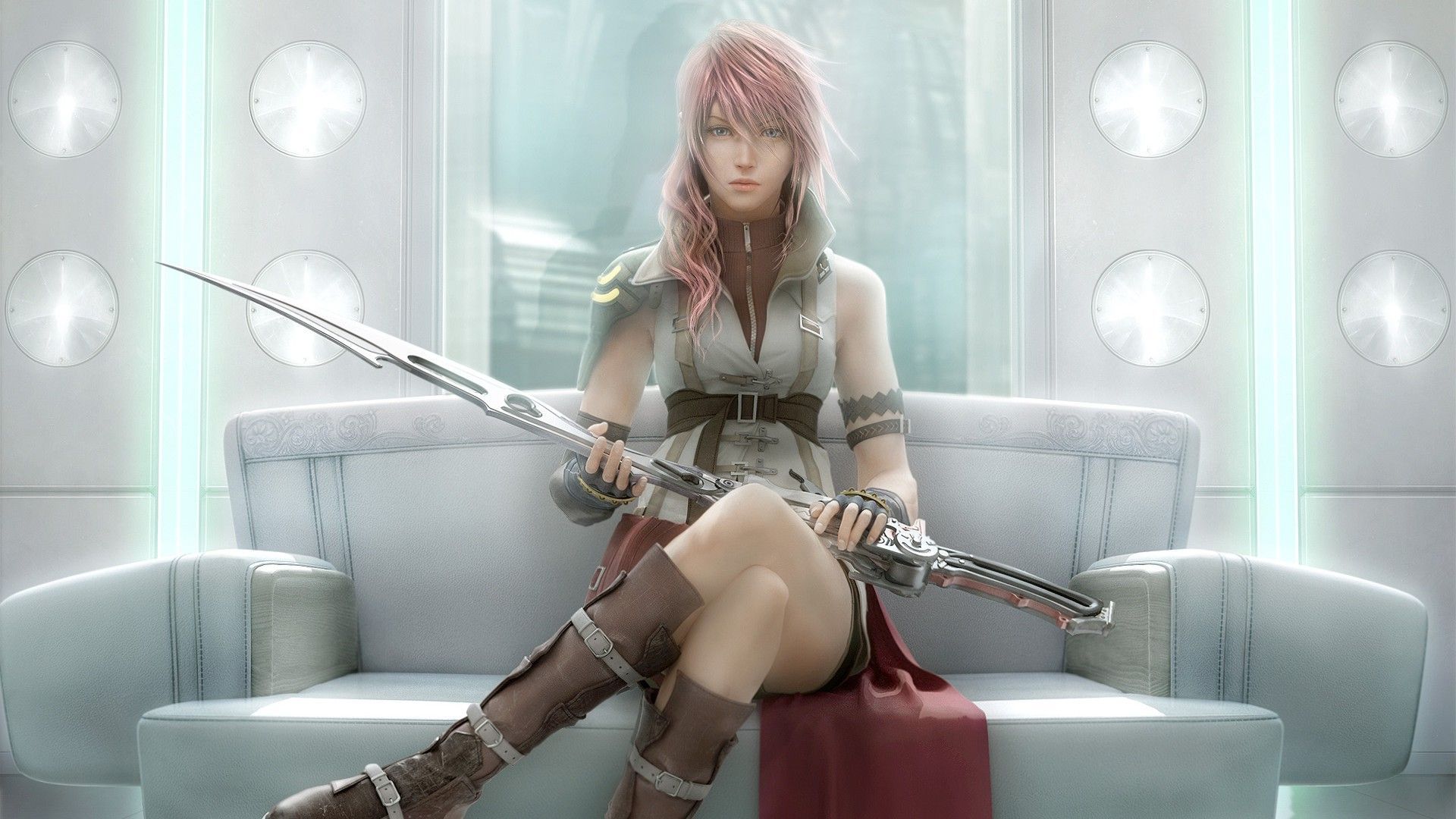
lightning-final-fantasy-xiii-game-hd-wallpaper-1920x1080-2941

This is Lightning from Final Fantasy XIII. She's an extremely attractive, striking character, but in an understated rather than self-consciously sexy way. She's slim but toned, wears a short skirt, has pleasingly tousled hair, has perpetually pouted, parted and moist lips, and wears sexy boots.

She's also one of the most widely disliked characters in the entire Final Fantasy series thanks to being seen as "boring". This is partly due to her single-minded nature, partly due to the rather monotone delivery by voice actor Ali Hillis and partly due to the fact that, as the main player-protagonist character in the game, she was pretty obviously kept as a bit of a "blank slate" for the player to interpret and identify with as they saw fit.

I personally don't think she's all that bad, but there are far more interesting characters in Final Fantasy XIII. Lightning does, however, act as a suitable proxy for the player to interact with the world and its inhabitants, and in that respect she's a successful game protagonist. I just don't see many people declaring her as a "waifu".

Hyperdimension_neptunia_wallpaper_by_missy28352-d643m0u

This is Neptune and Nepgear from the Neptunia series. They are very popular "waifu" choices, but you'll note that they both err rather on the side of "cute" rather than "sexy", leaving aside their plugsuit-style HDD/goddess forms seen in the background of the image above. Actually, that raises an interesting point: those who proudly declare Neptune or Nepgear as a favourite character or "waifu" tend to do so with their human incarnations in mind, not the sexed-up HDD versions.

Why are Neptune and Nepgear popular then? Because they have strong personalities, and are interesting characters. Neptune is one of the most incompetent RPG protagonists the genre has ever seen, although her scatterbrained nature acts as an eminently suitable metaphor for the chaotic way most people play RPGs — putting the world on hold to go and grind out some sidequests — while Nepgear is the perfect foil to her sister, being nice, polite, quiet, intelligent and, frankly, a bit of a doormat to everyone around her.

While I won't deny that there are people out there who want to sexualise these two (there's plenty of Rule 34 artwork out there to confirm that) it's also true that the vast majority of Neptunia fans who pick a favourite — whether it's Neptune, Nepgear or any of the other main cast members — are doing so not on the basis of which one they want to fuck the most, as Sarkeesian suggests, but rather the one that they simply enjoy spending time with the most.

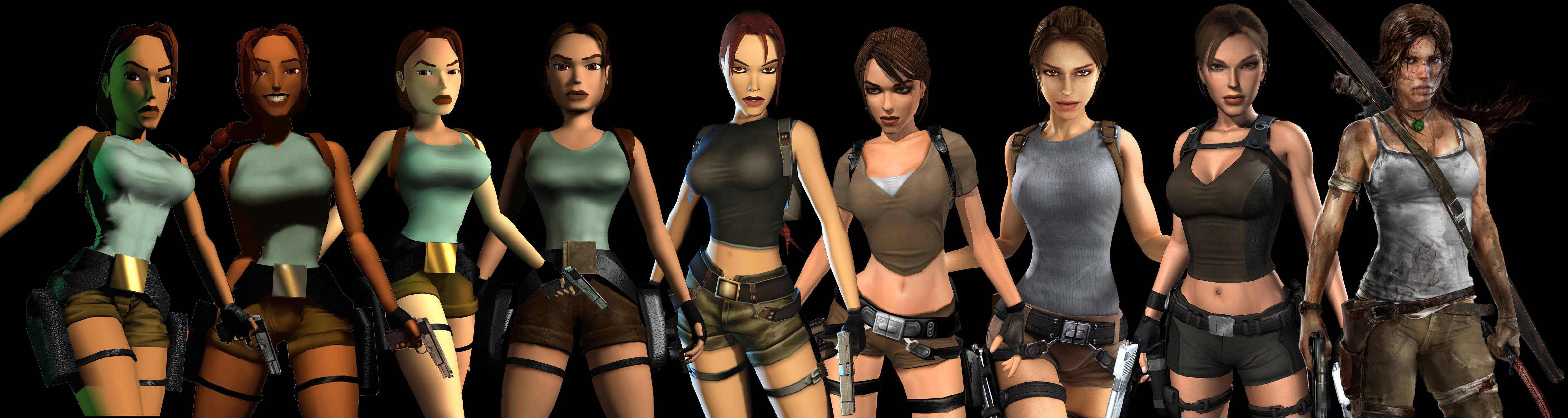
lara_croft_evolution_new

Here are the various incarnations of Lara Croft from the Tomb Raider series over the years. While Lara tends not to inspire the same sort of fanatical "my waifu!" declarations that female protagonists of Japanese games — and the reasons for that are a whole other matter worth discussing another time — she's still a popular character, and not because she's sexy.

Oh, sure, her tiny shorts and enormous rack made for some striking box art back when the original Tomb Raider came out, but if there was no substance to her, she wouldn't have been able to hold down a series for so long. A series that has been "rebooted" twice, yes, but a series in which she has remained a fairly consistent character, all told: a strong, confident, somewhat posh British woman with a plummy accent, a penchant for gunplay and acrobatics, and a desire to constantly challenge herself.

Moreover, she manages to be a female character that doesn't alienate anyone: she's not "girly" in an exaggerated manner, but nor is she overly masculine or aggressive. She manages to occupy a somewhat understated middle ground similar to what Lightning's creator Toriyama was presumably going for, only with arguably slightly better results. In other words, she has appeal elements designed for lots of different people and, despite her "sexiness quotient" being toned down a bit over the years, particularly in the most recent games, she's still a good-looking lady. But, importantly, that's not why people like her.

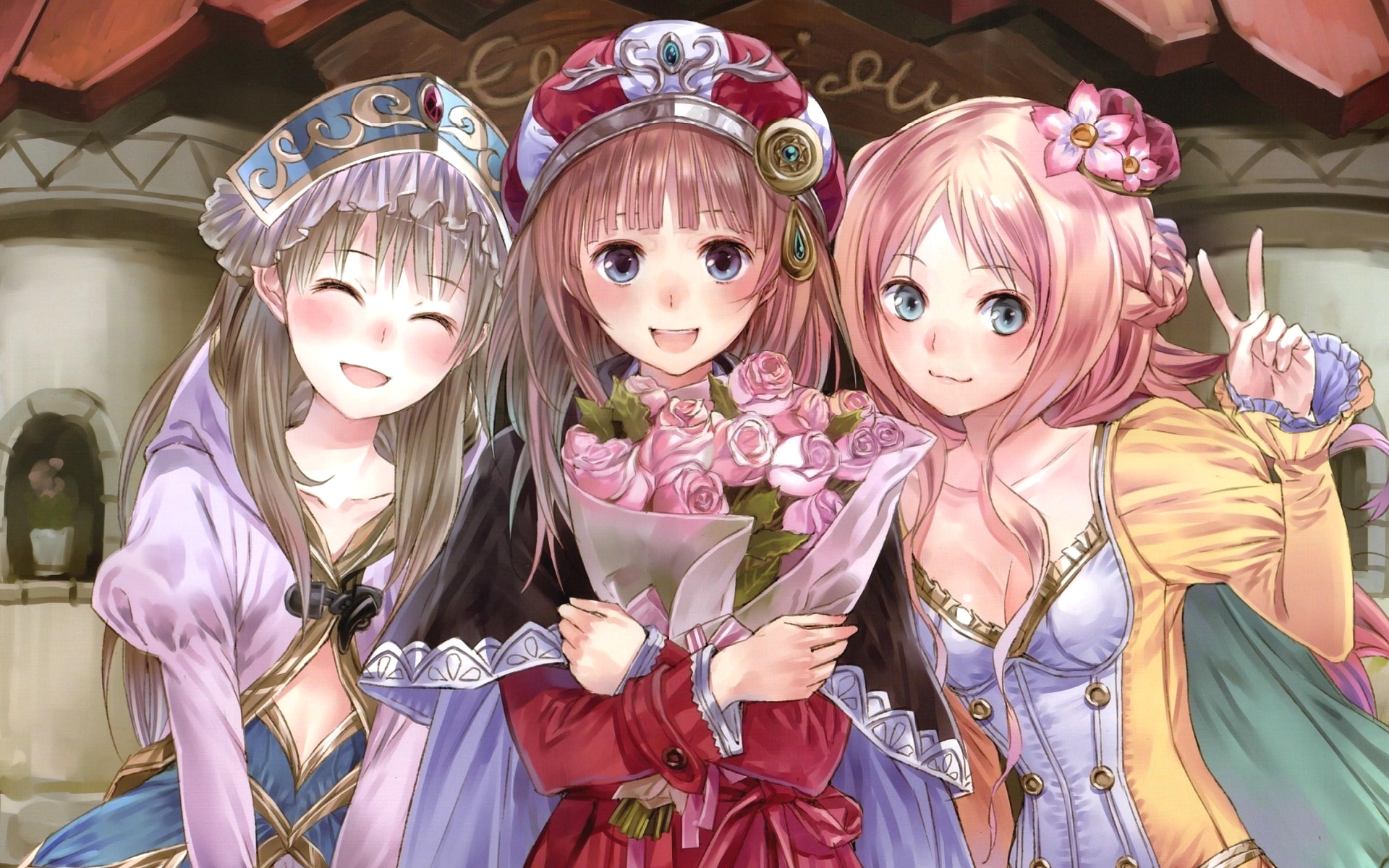
atelier meruru, atelier rorona, atelier totori, kishida mel, merurulince rede arls, rororina fryxell, totoori

Finally for now — I could happily go on with this all day — here is Totori, Rorona and Meruru from the Atelier Arland series. All pretty young things, I'm sure you'll agree, and all clearly designed to initially draw the player in with their attractiveness — or, perhaps more accurately, cuteness, much like Neptune and Nepgear.

But, again, anyone who proudly declares any one of these girls as their "waifu", or just as a favourite character, is not doing so because they want to fuck them. No; they're doing so because they like Rorona's optimistic but clumsy nature; Totori's inherent sweetness; Meruru's lively, bubbly personality. Again, it's a case of wanting a "relationship" of sorts with these characters — of wanting to hang out with them as people, rather than objectifying them as something to jack off to.


Objectification and aesthetics play an important role in determining our initial attraction to something. But a relationship built purely on physical attraction and nothing deeper is a relationship that will not last long — and a relationship that will be forgotten shortly after it has ended. This is not what modern gamers are looking for — and it is not what the vast majority of modern games are providing.

Men are complicated creatures. No, people are complicated creatures. To boil down everyone's thinking to "everyone judges everything by appearance" is both reductive and unhelpful. And yet this is exactly what Sarkeesian is doing — just another reason she continues to lose credibility with pretty much everything she says.

1418: Eight and Thirteen

Final Fantasy, once one of the biggest names in gaming, is now something of a laughingstock to many people.

To a lot of these detractors, it was the Final Fantasy XIII sub-series that triggered this feeling. (Many of said detractors have not played Final Fantasy XIV, incidentally, refusing to even try it because it's an MMO. Fair enough, but it's also the best Final Fantasy in years.)

To others, though, Final Fantasy VIII is an object of ridicule — and the recent rerelease of the game on Steam has caused all these people to come out of the woodwork once again.

It will undoubtedly prove somewhat unsurprising to you to hear that I played and enjoyed both, and feel that they both get an undeservedly bad rap.

Let's start with Final Fantasy VIII. After my friends and I discovered JRPGs with Final Fantasy VII and promptly played it through a good seven or eight times, Final Fantasy VIII shot straight to the top of our most-anticipated lists. And it looked amazing; gone were Final Fantasy VII's weird super-deformed polygonal models, to be replaced with much more realistically-proportioned character models along the lines of what we now recognise as the "Final Fantasy look" today. Gone was the "magical disaster threatening to destroy the planet" plotline, to be replaced with something that was, above all else, a love story.

Final Fantasy VIII did a bunch of weird, unconventional things, and I loved it for it. Its character-driven story was much more intimate and personal than my limited experience with the genre at the time — hell, it was much more intimate and personal than a lot of games I'd played up until that point, period. It was one of the few times I'd encountered a convincing love story in the context of a video game; Squall and Rinoa were both interesting, flawed characters and I felt myself rooting for them throughout the game.

The battle system was enjoyable, too. The Junction system was really, really odd, but made sense once you got your head around its extremely abstract nature. The reflex-based actions, where you had to pull the trigger on Squall's gunblade for additional damage, or hammer in button combinations while performing Limit Breaks, or repeatedly bash the Square button while summoning a "Guardian Force", gave the battles a feeling of "action game" intensity when they were essentially still sort-of turn-based.

And the final boss? Easily one of the most spectacular final confrontations of the PS1 era, even if the plot in the immediate run-up to it started veering into seriously odd plot-related territory. "Time kompression" was a bit weird, yeah, but it certainly didn't undo all the good work for the many hours beforehand, and damn, those last battles were genuinely exciting.

Fast forward a whole bunch of years (I'd work it out, but I can't be arsed right now) and we have Final Fantasy XIII. Again — I've covered this before — this did things markedly differently to past Final Fantasies, replacing the open-world MMO-style gameplay of Final Fantasy XII with more linear progression that opened up into an interesting, enjoyable open world towards the end.

People hated Final Fantasy XIII for its linearity, but in practice it really wasn't all that much more linear than previous Final Fantasies — it was just more obvious about it. Previous Final Fantasies had provided the illusion of freedom through their world maps, you see, but your progression was still railroaded by being unable to cross certain types of terrain until the story dictated that you got your hands on a particular vehicle. And, like Final Fantasy XIII, these games would tend to open up towards the end, giving you freedom to explore.

There's always been a reason for that linearity in Final Fantasy games, however, and that's to push the story along. Because you didn't get a lot of opportunity to stray from the path set out in front of you, the story was kept pacy and snappy, and maintained its momentum — something which many more open RPGs, and not just those of the J-variety, really struggle with. By the time you reached the more open part, you had an extremely firm grounding in the game's mechanics — more than enough to take on some of the extremely tough challenges that said open world presented you with.

As for the characters? I liked them a lot. Sazh was an interesting character in that he was an older, black character who didn't resort to Mr. T stereotypes like Barret in FFVII. Vanille was cute and adorable. Fang was badass. Lightning was enigmatic, intriguing and all-business; Snow was her perfect foil with his laid-back attitude. And Hope, whom many people accuse of being "whiny", watched his parents die towards the beginning of the game. I think being a little emotional is perhaps understandable in this instance, no?

Ultimately I know that if you've made up your mind about Final Fantasy VIII and XIII I'm probably not going to change your mind, and that's fine; this post simply outlines what I feel about these much-maligned installments in the long-running series. The thing that annoys me, I think, is how people feel the need to declare them unequivocally "crap" when what they really mean is that they didn't personally like them.

But then this is nothing new to the games biz, and I've spent the best part of the last couple of years playing and adoring games that many people think are "crap" if you believe Metacritic scores and the like. Each to their own, I say, and if you can eke out enjoyment from something that isn't popular, I say good on you. And if you can't, maybe try not to make other people feel bad about liking it?

#oneaday Day 87: Don't Worry

Some people are perpetual worriers, concerned about every last detail of every little thing they (and others) do, utterly convinced that if appropriate preparation for every single possible disaster isn't adhered to then something awful will absolutely, certainly and totally happen.
I'm not one of those people. But then neither am I their antithesis, the laid-back, breezy type who lets crisis after crisis wash over them in a totally infuriating manner, managing to stay calm amidst people's heads exploding, zombies bursting through the windows and/or their dwindling finances. (Specific crises depend on the person, obviously.)

I'm somewhere in between. There are times when I panic about things. Like proper full-on panic attacks. (They're not pleasant, if you've ever had one.) I haven't had one for a while, but in the past, they've been caused by two things—working in education and money. I have dealt with one of those two issues by kicking it in the balls and telling it never to come back into my life ever again, at least until I get totally desperate, which hopefully I won't have to. I'm working on the other one.

But then other times I find myself unconcerned with things, thinking them more trivial than they perhaps actually are. This is good for short-term mental well-being, but not great when you put things off until it's too late and then they end up causing panic. Actually, saying "unconcerned" is perhaps misleading; it's not that I don't care. At times, though, things are difficult to contemplate and even harder to talk about, even amongst the people you trust the most. Some things are scary, and so putting them to one side is a way of facing them later, an attitude advocated by Final Fantasy XIII, of all things. It's a good feeling when you get up the confidence to say something that's been bothering you for ages and you feel like you can get the help or the support you need—but at the same time, you don't always have people there to help you or just to listen, so those are the times when being able to compartmentalise your thoughts and set them aside for a little while becomes useful.

It is one of those things, I suspect, that there isn't an easy answer to. The way I am may sound like something of a "happy medium" but in practice it's not; it's the two extremes and nothing in between. Everything negative is either a total disaster that keeps me lying awake at night, or unimportant bollocks that I don't need to think about right now. If only there was a way of compressing everything in just a little bit so that the disastrous things became simple irritants that I actually felt motivated to deal with and the unimportant bollocks also became mild irritants that, while not exactly pressing, were just niggling enough to make me want to swat them away like flies.

Perhaps this is one of the things people deal with in therapeutic sessions.

#oneaday Day 73: The Late Review - Final Fantasy XIII

[This post contains spoilers.]

Final Fantasy XIII is a game about control in its many forms. What happens if the State or Church has complete control over the populace? What happens if beings beyond our understanding control the resources that determine humanity's survival? How do you challenge a fate which seems to be set in stone?

This theme permeates the entire game, from its visual design through its progression structure to the oft-criticised linearity. The game starts with the Sanctum-endorsed "Purge" sending hundreds of citizens to their death. Lightning and her soon-to-be companions are the ones who step up to challenge this seemingly-inevitable fate, but they don't really have a choice. It's fight or die, and to our heroes, death is not an option. This sets them on their path, and once they're on this path, there's no escaping their destiny: they are going to become Pulse l'Cie and receive their Focus: to destroy Cocoon as Ragnarok.

This inescapable destiny is reflected by the fact that there's no deviation from the path on which you, the player, can move. The first part of the game is completely linear for some time, and this is entirely appropriate for the theme. It reflects several things: the tightly-ordered society that is the Sanctum-dominated Cocoon, and the inevitability of preordained destiny. It's not until much, much later in the game that our heroes come across the verdant green hills of Pulse, a land devoid of human life and thus free of the "control" and corruption which the Sanctum and, by extension, the fal'Cie hold over the heads of the population of Cocoon.

But there's subtler things, too. As our heroes progress along their path, they grow in power. At the start of the game, they don't learn from their experiences. Shortly after they become l'Cie, they have the opportunity to develop themselves in the disciplines in which they're good at. Shortly before they arrive at Pulse, when they make the decision to challenge the unjust fate which appears to lie before them, their options open up. The player is able to develop them down pathways which were formerly closed to them. It's harder work for seemingly relatively little benefit, at least to begin with, but the option is there. The path of least resistance still allows the greatest benefits, but those who are willing to make the effort and invest the time will find it pays off later. And as their l'Cie brands advance, bringing them ever-closer to their inescapable destiny—destroy Cocoon or endure an existence worse than death—ironically, their options open up and their potential for advancement becomes ever stronger.

It transpires throughout the course of the story that the party has, in fact, been manipulated for nefarious ends. The interesting thing about the end section of the game is that it jumps firmly back onto rails, but this time it's rails that the party (and/or the player) has chosen to jump onto and follow to their conclusion. There's nothing stopping the player keeping the party down on Pulse, indulging in sidequests, trying to hunt down elusive treasure and wondering if they'll ever be tough enough to take down one of those enormous Adamantoise creatures. The player makes the choice to return to Cocoon and see the story through to its eventual conclusion. And when the final confrontation ends up causing that which the party had struggled so hard to avoid, it's through strength of will that Fang and Vanille manage to use Ragnarok's power to make a choice. A choice not to destroy Cocoon, but to save it instead. The two worlds are changed forever by their actions. The choices that they made put into motion a chain of events that inextricably tie Pulse and Cocoon together—literally, physically.

Ironically, of course, the ultimate control of Final Fantasy XIII's world is that which the creators hold over the player. The characters make choices for themselves and the player is powerless to do anything about it. The player is just along for the ride. But the lengthy setup, the introduction of the characters and the resolution of all their personal stories by the time the party reaches the relative "freedom" of Pulse—if the player has let themselves become invested in the fates of these diverse characters, if they can let themselves look past these characters' first impressions: that Lightning is an aloof, arrogant arse; that Snow is an idiot; that Hope is a whiny brat; that Vanille is an irritatingly girly girl; that Sazh has a stupid name and never quite seems to understand what's going on; that Fang is all too quick to jump off a metaphorical cliff at the slightest provocation—then they'll be right there with them, rooting for them as they decide the fate of the world.

Final Fantasy XIII isn't for everyone. The mixed critical reception the game got on its initial release is more than enough to make that abundantly apparent. Is it the large tracts of linearity, the characters, the fact it's not Final Fantasy (insert number here) that puts people off? I don't know. But I absolutely loved it. It was a spectacular thrill-ride with characters that despite occasional pretensions of obnoxiousness that they display at the outset, end up being a good, memorable ensemble cast—and seriously, what JRPG cast doesn't have occasional pretensions of obnoxiousness? I found it fun to play and beat it with a sense of satisfaction and closure, not least because of the fact that I know that it's over (until the full-on sequel of course) and won't feel obliged to return because of some piecemeal DLC.

I am half-tempted to go Trophy-hunting and/or finish off the last 24% of sidequests on Pulse that I didn't complete—but if I don't, I still feel like I've had a satisfyingly "complete" experience. And that, in this day and age of games that keep getting extended, extended, extended and thus losing the impact of their original "ending"… that's something to be celebrated.