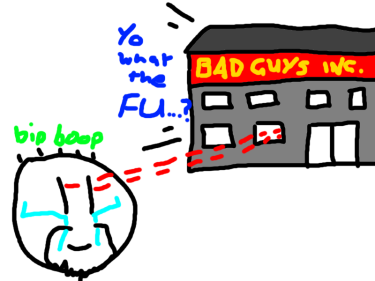
#oneaday Day 373: Getting to grips with Cyberpunk

Played a bit more Cyberpunk 2077 on Switch 2 today, and I'm really enjoying it so far. I'm starting to get to grips with how to play a bit more stealthily, and it's considerably more gratifying to play this way than going in all guns blazing. The fact you can go in all guns blazing is also gratifying, but after one of the "fixers" telling me I had done sloppy work because in the process of attempting to steal a bit of data, I had murdered everyone in the building, I figured I should learn how to do things a bit more appropriately. I've put all those points into Intelligence and Technical Ability, after all, so I might as well use them!

What's fun about playing stealthily is that it makes each mission feel a bit more varied. Rather than showing up, aggroing the first guard you see and then effectively playing a cover shooter for a bit, you generally have to explore the environment a bit more thoroughly to find suitable means of entry and exit. Canny use of Quickhacks can also allow you to "tag" important objectives, mechanisms and guard positions, so you can keep track of them even when they're not in direct line of sight. And if you take control of security cameras — something you can do with your starter Cyberdeck — you can use their perspective to hack things that aren't within protagonist V's direct line of sight.

I'm anticipating that long-term, you'll probably be able to get into a position where you can complete an entire mission without setting foot inside the building once. I'm not at that point yet, largely because I think I'm lacking some useful Quickhacks for achieving that, but I have reached a point where I can convincingly perform reconnaissance on the target area before attempting to breach it. What then follows is a bit of wandering around outside, usually to find a means of getting on top of the building, and then planning a means of attack that either allows me to avoid everyone, or perhaps perform some silent takedowns.

The silent non-lethal takedowns are immensely satisfying to perform. By sneaking up behind an unaware enemy, you can grab them and drag them into another room before either killing them or knocking them out; the latter option is usually encouraged. Once you have a body, you can then pick it up and move it somewhere, including stuffing it into dumpsters (fatal), the boot of a car (not fatal) or just an out-of-the-way location.

This sort of thing is what I was talking about when I said I hoped Cyberpunk 2077 was going to feel like an old-school PC game. I'm talking sort of Deus Ex and Thief: The Dark Project era. I can't remember the last time I picked up an unconscious body and stashed it somewhere out of sight in a video game. Perhaps that says something about the games I typically play, but it feels like something we don't do a whole lot of in games any more. And that's a shame, because well-implemented stealth sections are a lot of fun.

And there's the rub, I think: I reckon a lot of people, having experienced many bad stealth sections in games, have forgotten what well-implemented stealth is like, and at worst have conditioned themselves to think that stealth is automatically bad. But one thing Cyberpunk 2077 shows is that if you do stealth sections correctly — and by that I mean providing the player with plenty of tools to monitor the situation and strategically plan things out — they can be as fun as all-out gunplay.

Cyberpunk 2077 doesn't do anything especially out of the ordinary. You have a little minimap in the corner of the screen that acts a bit like the radar in Metal Gear games. Enemies can be unaware, cautious or alerted, and it takes a moment for them to "switch" between those states; if you can get out of sight before they fully reach the new state, you can escape their notice. Cameras and security devices can be hacked, manipulated and even turned against enemies. And various things you do — ranging from stumbling over discarded noisy debris to attempting to hack their mainframe — have the potential of giving you away.

Since I'm not very far in the game's main story, I haven't seen a lot of additional options to customise V's cyberware to hack in various different ways, but already I'm starting to see how all this works. My "Netrunner" skill stat is getting a nice workout, and it's satisfying to see that rise with use.

And thus far I've mostly been doing random-ish odd jobs rather than progressing the main story. None of these have felt throwaway, either; they all have narrative context, and feel just as important to the overall setting as the main missions. That's good; it's helping the setting to feel nicely immersive, and making the game a whole lot more enjoyable.

So yeah! I'm glad I picked it up. It looks and runs great on Switch 2 — and with no frame of reference for the PC or PlayStation versions I don't feel like I'm "missing out" on any graphical flourishes — and it's a lot of fun to play. So it may be five years old, but to me it's new, fresh, and exciting — and I'm looking forward to playing more.


Want to read my thoughts on various video games, visual novels and other popular culture things? Stop by MoeGamer.net, my site for all things fun where I am generally a lot more cheerful. And if you fancy watching some vids on classic games, drop by my YouTube channel.

If you want this nonsense in your inbox every day, please feel free to subscribe via email. Your email address won't be used for anything else.
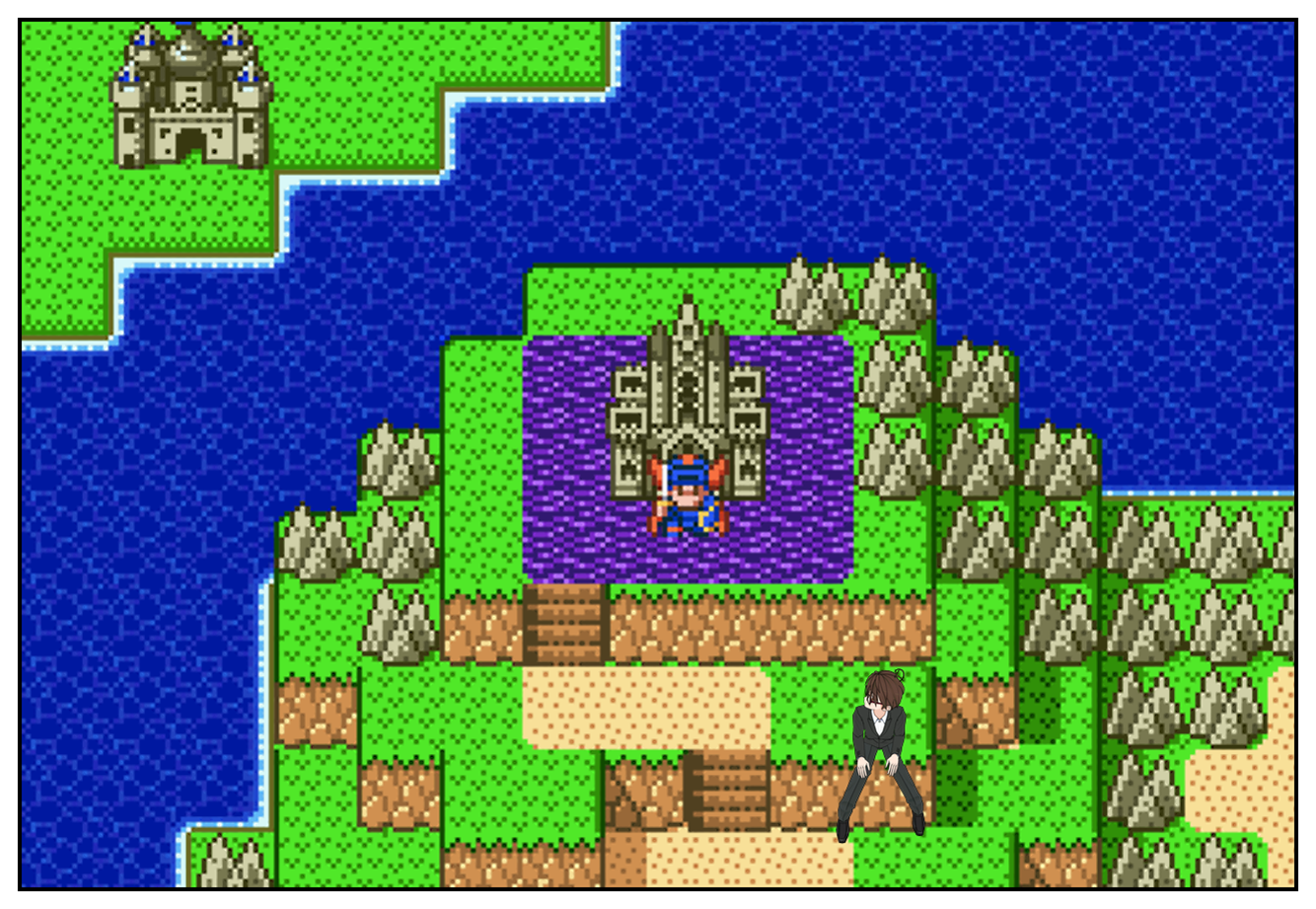
2315: RPGs are Weird

0315_001

In case you hadn't noticed, my favourite genre of game is the RPG or role-playing game. Which is kind of a weird type of game, when you think about it, particularly from a modern perspective.

Computer RPGs (hereafter "CRPGs") have their roots in tabletop roleplaying systems like Dungeons and Dragons and its ilk — indeed, the Dungeons and Dragons inspiration is very obvious even in Japanese titles like the original Final Fantasy, and we've also had a swathe of outright Dungeons and Dragons titles for various platforms over the years. Where CRPGs and tabletop systems diverge, however, is in their main purpose.

Tabletop role-playing is about different things according to who you speak to, but there are two broad things it allows its participants to engage in: firstly, it allows them to play-act a fantasy of some description, be it ruling the night as a vampire in modern-day New York, exploring the Planes and fighting otherworldly horrors or battling the Empire alongside Luke Skywalker and Han Solo. This is, for many people, the biggest attraction of tabletop role-playing: the chance to be someone else for a little while, and enjoy the experience with other people. Tabletop role-playing rules tend to be deliberately a little fuzzy around the edges, allowing for some bending here and there in the name of making a more entertaining experience for the participants; indeed, some of the most successful, effective systems have some of the most straightforward rules.

When those rules come into play, though, that's the other big strength of tabletop role-playing: they allow for all manner of things to happen. If you really want to boil it down, they're a means of using mathematics to create an abstract depiction of some sort of action, whether it's something that is possible to depict literally (attempting to use diplomacy to prevent a war) or something that is pure fantasy (infusing yourself with the power of the Gods to leap 50 feet into the air and stab a demon in the left nostril with your holy sword). But for most groups, these rules are in service to the main attraction: the roleplaying; the communal storytelling; the shared fantasies.

CRPGs, meanwhile, focus almost exclusively on this latter aspect: the use of mathematics to abstractly represent things happening. It's pretty rare to find a CRPG that affords you complete freedom to do what you want, and where they do exist, these experiences often feel a bit "empty" thanks to the lack of true human interaction — plus perhaps the awareness that the "freedom" you're enjoying is just an illusion: all it really is is the game designer having thought of more things that you might do than some other people would have.

Because truly freeform role-playing doesn't really work when you don't have other humans in the equation, we get a focus on mechanics and rules, with perhaps a story of some description overlaid on the top as justification for the rules and mechanics you're following. But it's still a little strange, as I say — particularly through modern eyes.

Why? Because we're at a stage where we don't need to abstractly represent things as much as we used to. In the early days of video games, the abstract, mathematical mechanics of CRPGs were in part a response to technological limitations: they allowed for the representation of things that it simply wasn't possible to render believably on the screen. Now, though, graphics hardware has come along to such a degree that there's not much we can't depict completely visually, given a talented art and animation team to bring these things to life. Not only that, but with the advent of motion control and virtual reality, we can even put ourselves among these things: these strange and fantastical locales; these weird and wonderful creatures. And we can interact with them physically.

So why, then, do we still have turn-based role-playing games that are deliberately and heavily abstract and unrealistic in their depiction of anything from battle to relationships?

Well, for a number of reasons, the first being that not every development company has infinite resources to be able to produce a game that depicts your every action literally on the screen. But there's also the matter that engaging in abstract mechanics and learning how a game's systems work is part of the fun. You can learn how to take full advantage of a real-time system, sure, but that takes practice and, frankly, not everyone has the physical dexterity to be able to do that. A mathematical-based system like a CRPG, though; that's accessible to pretty much anyone, though of course it does favour those with a bit more of a mind for numbers over those with twitch reflexes.

And then on top of all that, there's the fact that even though it is possible to depict a lot of things visually in games nowadays, there are still certain things that it's hard to represent in anything other than an abstract manner. Take the combat in something like Dungeon Travelers 2, for example: the concept of this game is that you're playing the role of a non-participant in combat, issuing orders for what up to five people should be doing, the results of which then unfold in front of you through a combination of visual effects, numbers popping up and text messages. By keeping to a simple representation of what would be an altogether chaotic affair if depicted literally — five people attacking up to five monsters — Dungeon Travelers 2 and its ilk allow the player to engage in enjoyably tactical, strategic gameplay that would be highly impractical to show in real-time.

The other thing that appeals to me personally about games like this is that they stoke the fires of the imagination. I know that Dungeon Travelers 2 doesn't depict things literally — there's very little animation in the game, even outside of combat — but I also know that it is keeping visual representations to a relative minimum in order to let my mind do the work. It provides just enough — the overall theme of the dungeon I'm exploring; music to support that; the voices and visual appearances of the girls in my party; the appearances and behaviours of the monsters we fight — to get my imagination fired up and fill in the blanks for myself. When Monica fires a Spiral Arrow and hits for 3,000 damage, I don't think "ooh, 3,000 damage!" — I think "Wow, that was an amazing shot." And I like that.

The bigger-name, bigger-budget CRPGs are starting to move more and more away from this sort of abstract depiction of what is happening — look at BioWare's games, for example, or Square Enix's approach to Final Fantasy XV (although in that case, it's a peculiar middle ground between a truly literal depiction and abstracted mechanics) — but I'm pretty sure there will always be a place for imagination-stoking, presentation-minimal CRPGs for people like me. At least I hope so!