Customer service is something that you would think we'd have nailed at this point. So why is it that everyone dreads having to contact an organisation's support department? It is, of course, because we emphatically have not nailed it.
I'd like to tell you the saga of my Ikea chair. One of the legs broke on it a few weeks back, so I've been attempting to get it replaced under its guarantee — something which shouldn't be a problem. So I contacted the support department through their chat facility — there's no means of emailing them, and I do not like talking to people on the phone — and, after several minutes of attempting to make the stupid AI chatbot understand what it was I was enquiring about, I was transferred to someone that was supposedly a human being.
I explained to the person that the chair leg had broken, and that the problem was with the point where the leg attached to the chair's base. As such, I needed the base of the chair replacing rather than the leg itself.
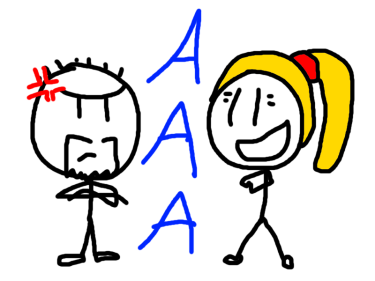
It was at this point that I first ran into a phenomenon that I'm sure you've all encountered at some point in the recent past: the Acknowledge, Align, Assure approach to customer service. I first became aware of this when I worked at the Apple Store between 2007 and 2009, and it still appears to very much be standard practice when dealing with any large corporation today.
Here's how it works. You explain your complaint. The person you complain to then repeats your complaint back to you verbatim, which is them Acknowledging there is a problem. They then say something along the lines of "I'm sorry" or "I understand that this might be frustrating", which is them Aligning with your viewpoint, attempting to demonstrate that they empathise with your plight. They then tell you what they are going to do, and Assure you that everything is going to be all right.
This happened by the book in my first contact with Ikea's support agency. The person on the other end of the chat said that they were sorry my chair leg had broken, and that the problem was with the point where the leg attached to the chair's base, and that I needed the base of the chair replacing rather than the leg itself. They explained that they understood how frustrating this must be, and then told me that a replacement would be with me within 14 working days.
Just to ensure that I wasn't about to be sent nothing but a chair leg in the post within 14 working days, I reiterated very carefully and clearly that the problem was with the chair's base, and that that was the part which needed replacing. I was told "don't worry" and that everything would be resolved within 14 working days.
At some point within the next 14 working days, I received a small package through the post from the Netherlands. Inside the package was a single chair leg.
Of course, I immediately contacted support again, and told them the situation. I was once again told how sorry the chat operator was that I had been sent a leg and not the whole chair base that I had asked for, and that they appreciated how frustrating this may be. I was told once again "don't worry" — those exact words — and assured that the base of the chair would be with me within 14 days, that it would be coming via DHL and that I would get a phone call the morning it would be arriving.
Another 14 working days passed. I received no further packages from the Netherlands, no phone call from DHL, and indeed no indication whatsoever that anything had been done at all. So today I got back on the chat and asked to know what on Earth was going on.
After telling me how sorry that they were that the chair on my leg was broken, and that I needed the base of my chair replacing, and that I had been sent nothing but an individual replacement leg of the chair and no indication that a new chair base was, in fact, on the way to me, and explaining how they understood how frustrating this was, they were about to assure me that everything was okay before I stopped them.
"Just please replace the entire chair if that's easier," I said.
They are coming on Wednesday to pick up the old chair and provide me with a new one. At least, that's what's supposed to be happening, anyway. We shall see whether or not that actually happens.
The thing with Acknowledge, Align, Assure is that it's one of those things that looks and sounds perfectly fine in theory and when you're training people, but in the real world it comes across as insincere and patronising. Surely, you'd think, who wouldn't want to feel like the person manning the support channels wasn't on your side? Having them say they understand how frustrating things are humanises them, surely, and thus that makes them more likely to be believed when they offer assurances that everything is, in fact, going to be all right when it emphatically is not.
I understand why it happens. It's because of corporate policy and procedure, and it is primarily there to protect both the company and the individual support agent. In theory, it prevents the support agent promising things the company will not be able to fulfil, and it ensures the support agent themselves is not held responsible as an individual if something goes wrong amid the process.
But it's completely and utterly dehumanising for everyone involved. There's a reason why people still like going to little, local mom-and-pop shops, and that's because that's where you get real customer service; that's where you get people being genuine, where you feel like they really want to help you and ensure that you walk away happy. Because while a single unhappy customer is a drop in the ocean for a huge corporation, for a small, local company it could be the difference between life and death.
Ikea, Apple and any number of other huge corporate entities obsessed with policy and procedure aren't going to change their ways any time soon, and I don't have any particularly comforting words about that. I guess the ideal answer is that we all make a commitment to shopping with small, local businesses rather than multinational corporations — but I think we all know that simply isn't possible for a lot of us, for one reason or another. It sucks, but it is the world we've inadvertently created for ourselves, so now we have to live with it.
I'm sorry that it sucks and that it's the world we've inadvertently created for ourselves, so now we have to live with it. This must be very frustrating. But please don't worry.
Because nothing is going to get any better, ever. Happy Monday!
Want to read my thoughts on various video games, visual novels and other popular culture things? Stop by MoeGamer.net, my site for all things fun where I am generally a lot more cheerful. And if you fancy watching some vids on classic games, drop by my YouTube channel.
If you want this nonsense in your inbox every day, please feel free to subscribe via email. Your email address won't be used for anything else.
 Have you tried to get a job recently? It's a massive, huge pain in the arse, and nothing to do with crowbars this time. The reason for it being such a pain in the arse is the sheer amount of bullshit that flies around with job advertisements, as I believe I alluded to in passing yesterday.