I was in Marks and Spencers earlier — yes, yes, something something middle class — and I happened to see that they had copies of The Beano on sale in the small newsstand near the tills. I've noticed this before, but never picked one up. Today, I decided to finally satisfy a longstanding curiosity and answer the question: "what is The Beano like, more than thirty years after I last read it?"
I used to read The Beano pretty much every week. I had Beano annuals most years for Christmas, and when I was lucky, I'd get a Bash Street Kids or Dennis the Menace annual to go along with it. My parents used to read The Beano when they were kids, too; they have some pretty old Beano annuals knocking around somewhere, and probably (hopefully?) still all my old ones, too.
I liked The Beano because it was straightforwardly funny, and it was something that I could share my amusement about with my family. We all particularly enjoyed Calamity James, a comic strip about an unlucky boy that always featured an absurd amount of background detail that was often more hilarious than the actual happenings in the strip — plus at least one smelly sock in every single full-page strip.
I wasn't sure what to expect from a copy of The Beano in 2026. Would it be filled with impenetrable Young Person Slang? I wasn't sure it would be, as although it was kid-friendly when I was young, I don't remember it being too tryhard about trying to "sound like" us. The thing I was most expecting was that it would be childish humour that I simply wouldn't find funny — but then I remembered that I still find burps and farts hilarious, and felt that even if it was childish, it would probably be about my level.
So I dove in while enjoying a sandwich. And I enjoyed it! It even elicited some genuine out-loud laughs on multiple occasions. There are, as you might expect, quite a lot of changes that have happened in the intervening 30+ years, but a lot of things have stayed the same, too. So let's look at a few highlights.
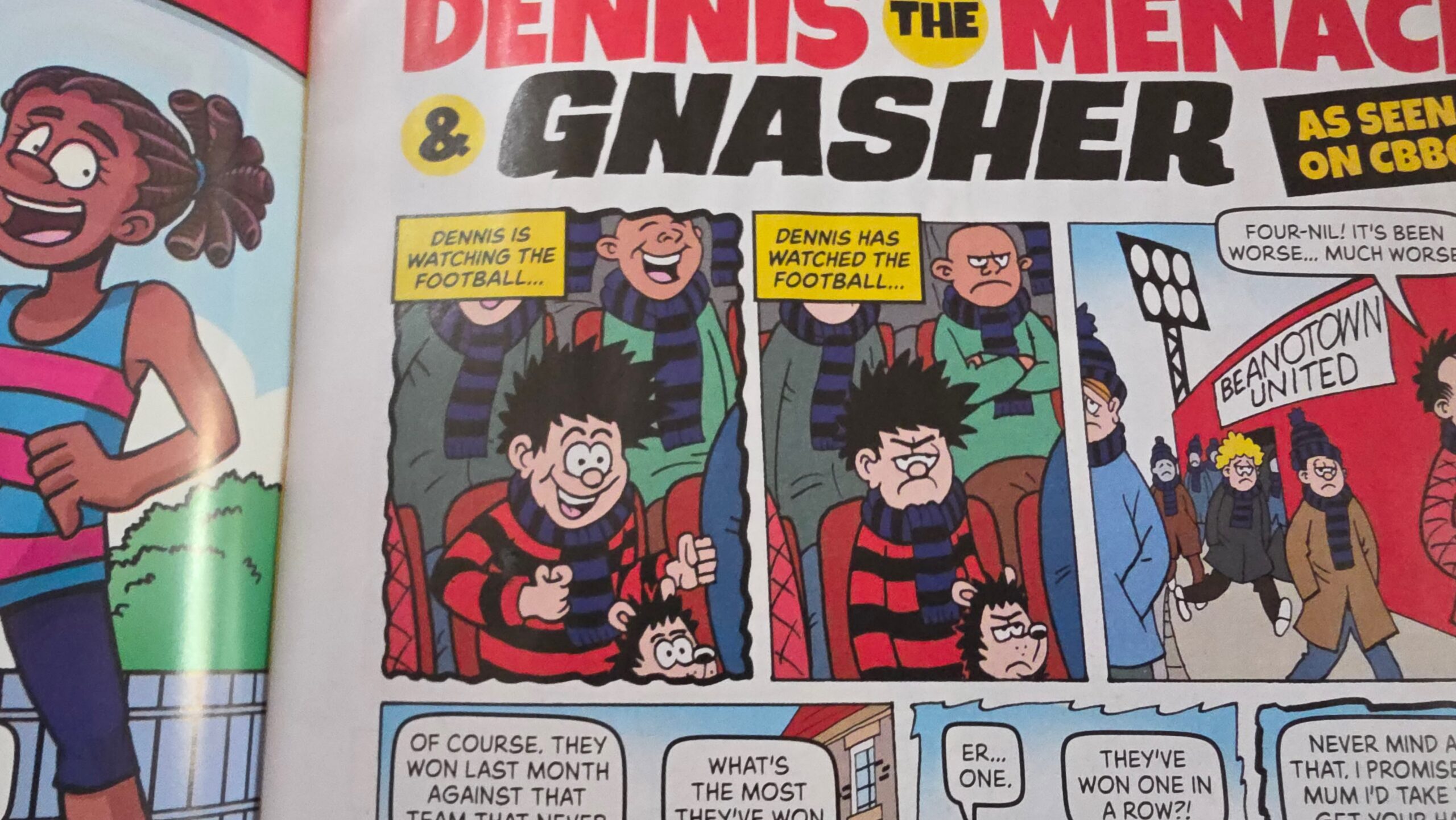
Dennis the Menace is still the cover star, though his strip no longer adorns the front and back covers — there's a more conventional "magazine-style" cover on the front now, though there's still a strip on the back for the "Make Me A Menace" feature, where readers can send a photo of themselves in and be featured in a comic strip.
I highlighted these first frames because I thought they were a good visual gag. The strip, which ran for four pages in total — so much longer than in his cover-mounted days — told the story of how Dennis refused to cut his hair until Beanotown United won three games in a row, and this caused his hair to grow so long that it became sentient and started eating people. Thoroughly silly, and exactly the sort of thing I would have expected to see in The Beano back in the day.
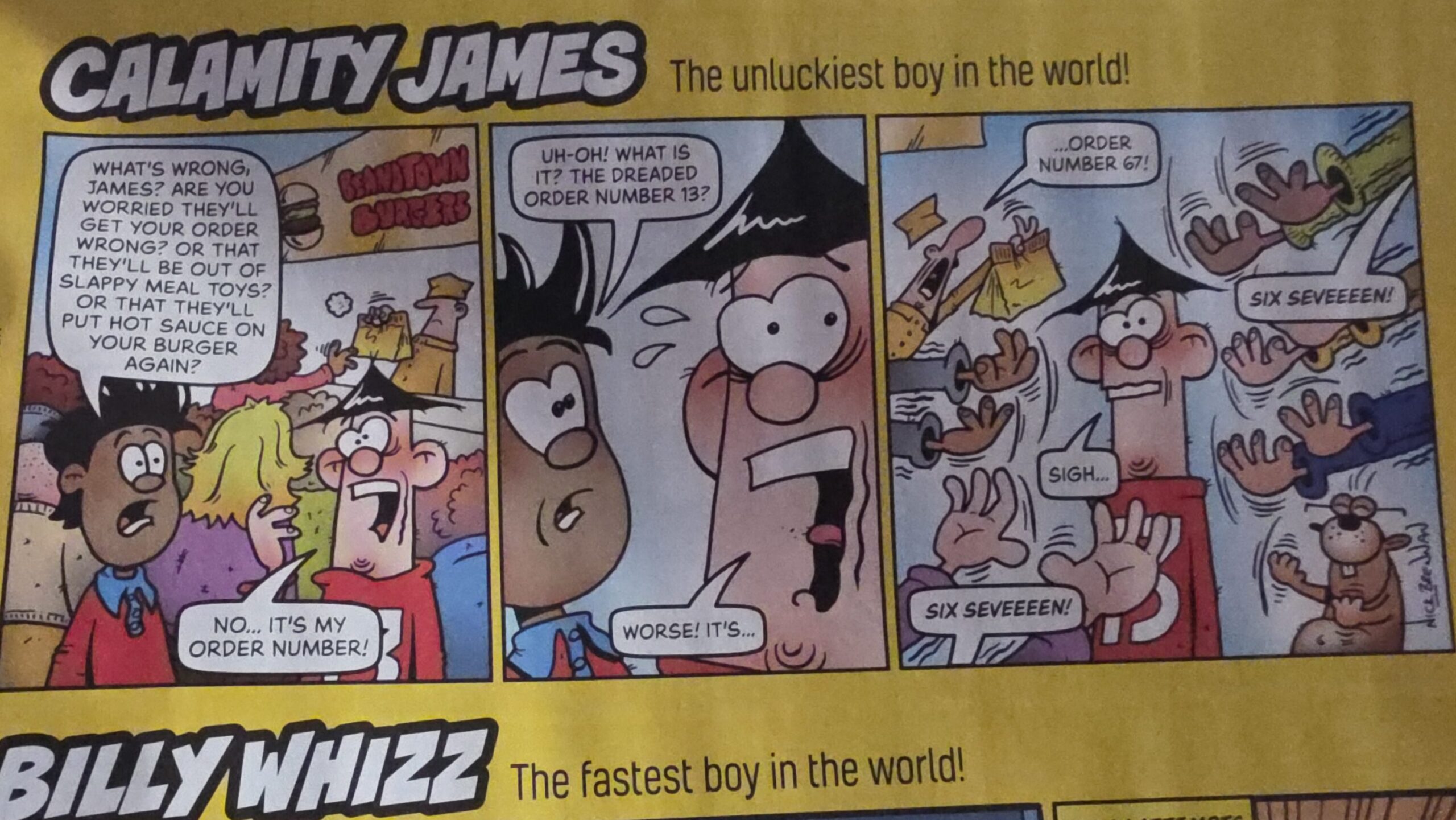
Calamity James is, unfortunately, a shadow of its former self. It's clearly done by a different artist now, and it's only a three-panel strip alongside fellow Beano veteran Billy Whizz and newcomer Addams Family wannabes Number 13. All the wonderful background detail and silly visual gags are gone — no more smelly sock! — but I'm pleased they kept James looking like a slightly deranged pencil. The gag is, I have to admit, mildly funny, too, though it does rely on an awareness of stupid modern trends like "6-7" and thus would probably be impenetrable to my parents at this point.
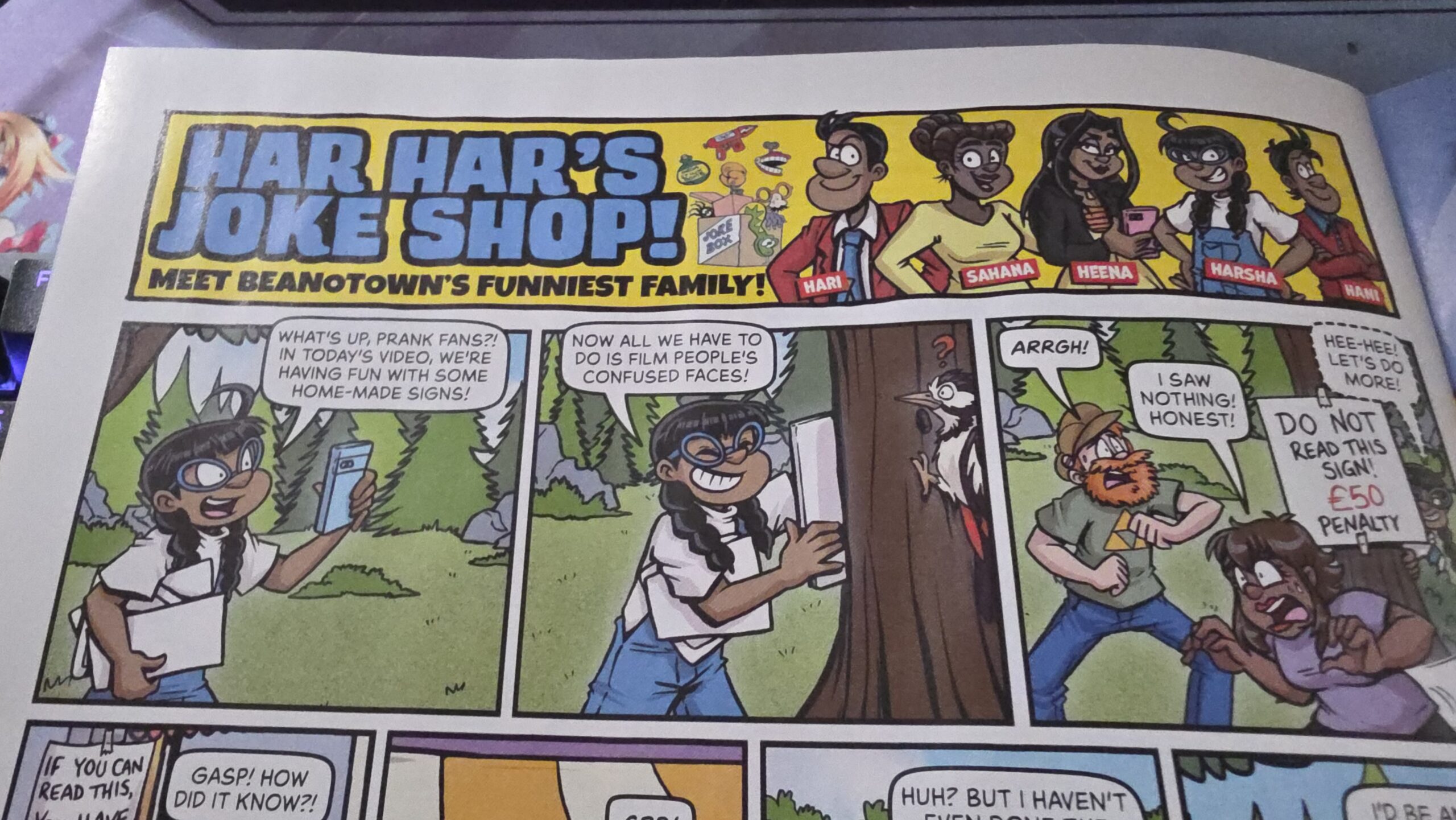
One of the biggest changes since I read The Beano as a kid is the addition of quite a few non-white characters, including some who have their own strip, such as in Har Har's Joke Shop here. Doubtless this made the "anti-woke" people furious at some point in the past, but it's a sensible change for the comic to make, as it reflects the multicultural nature of our society while at the same time highlighting how people having differently coloured skin doesn't mean they suddenly become completely alien types of person; the non-white characters in The Beano fit right in with all the usual mayhem without being picked out as being something "unusual" — which is a good message to send to kids.
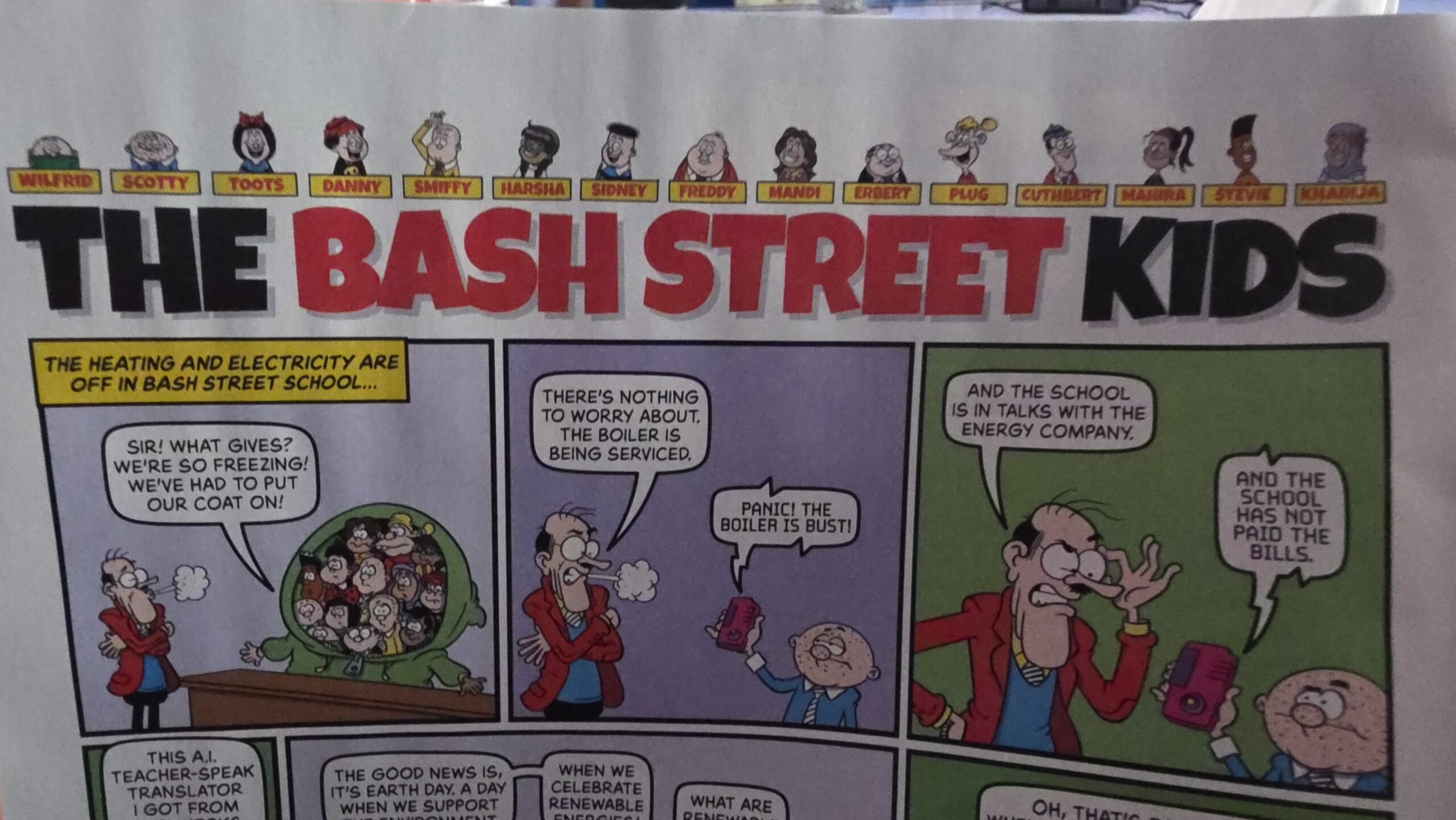
This idea continues with the changes to The Bash Street Kids. While all the old cast are there, a couple have had name changes in the name of sensitivity — Spotty is now Scotty, and Fatty is now Freddy, though Plug (as in "plug-ugly") is still as he was. New additions to the crew include Cuthbert (the chief "softy" from older Dennis the Menace cartoons, though I wonder if he's been retired from that role in the name of not promoting bullying) along with Harsha from Har Har's Joke Shop and apparent newcomers Mahira, Stevie and Khadija, all non-white characters of various descriptions.
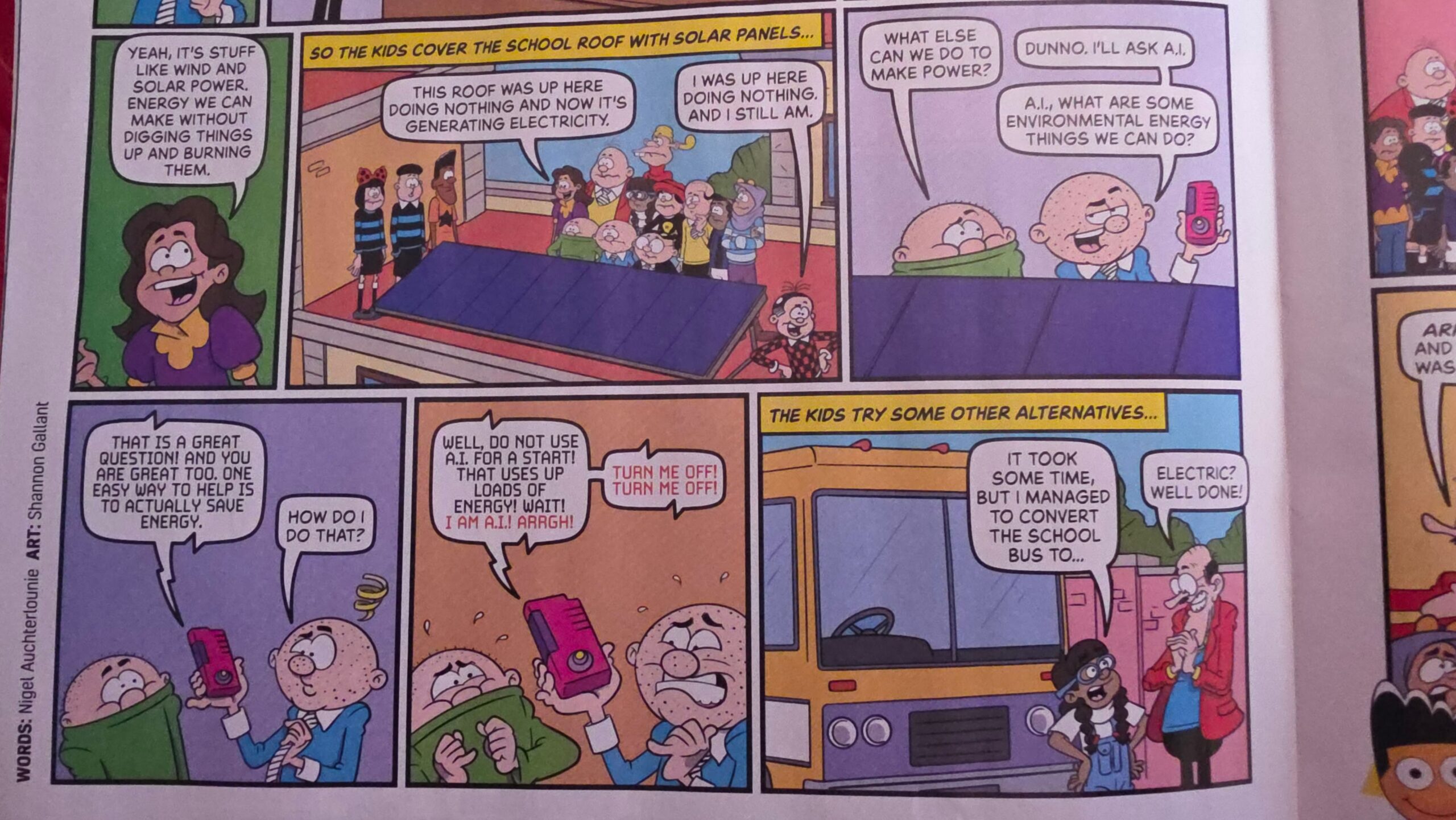
This was a good gag. I'm pleased to see The Beano come down on the anti-AI side of things. I find that oddly reassuring.
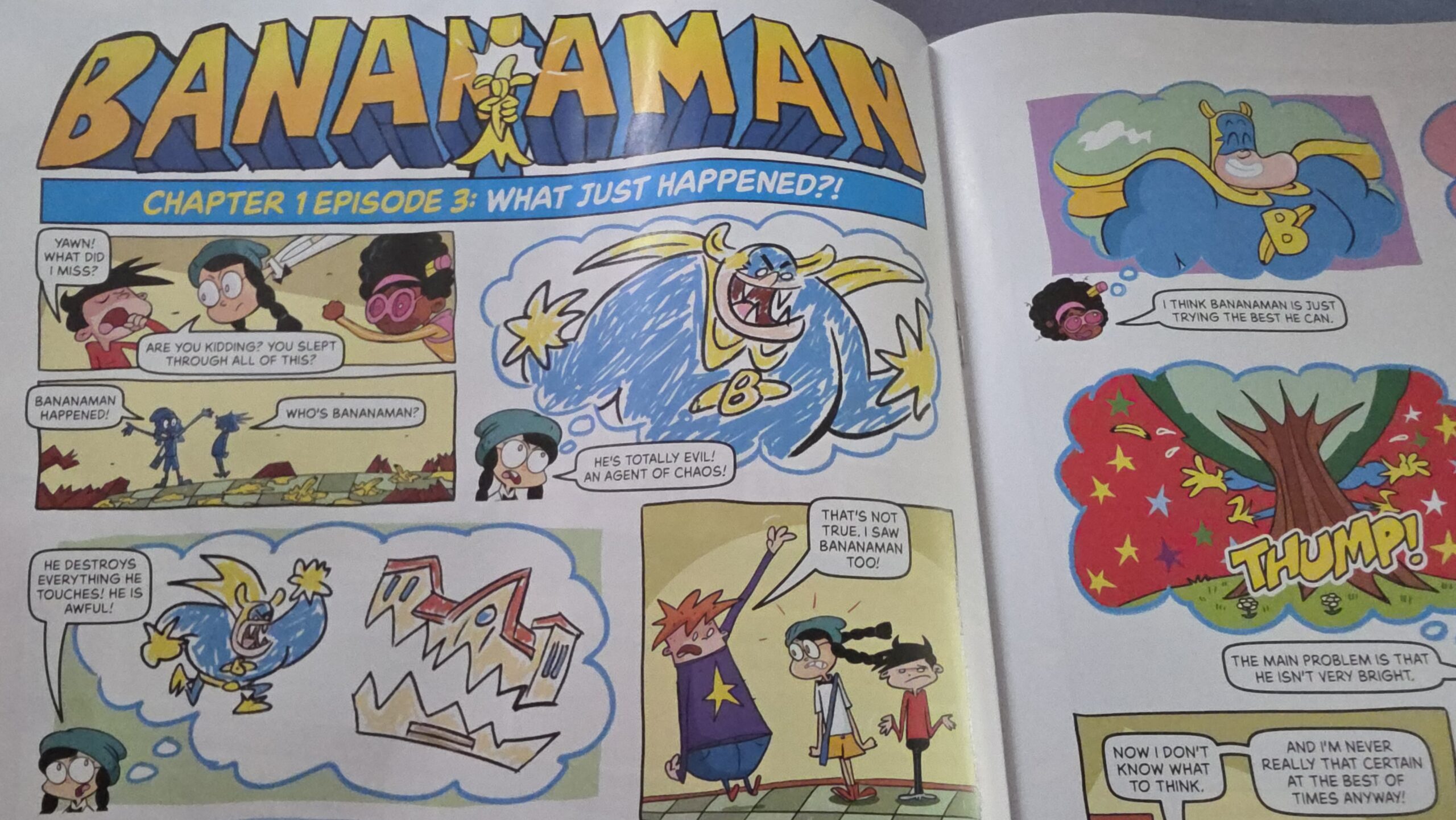
Elsewhere, the comic is apparently in the process of serialising Bananaman's origin story. I was just explaining to some baffled Americans about Bananaman the other day, and it turns out he's still relevant, apparently. I would never have expected that.
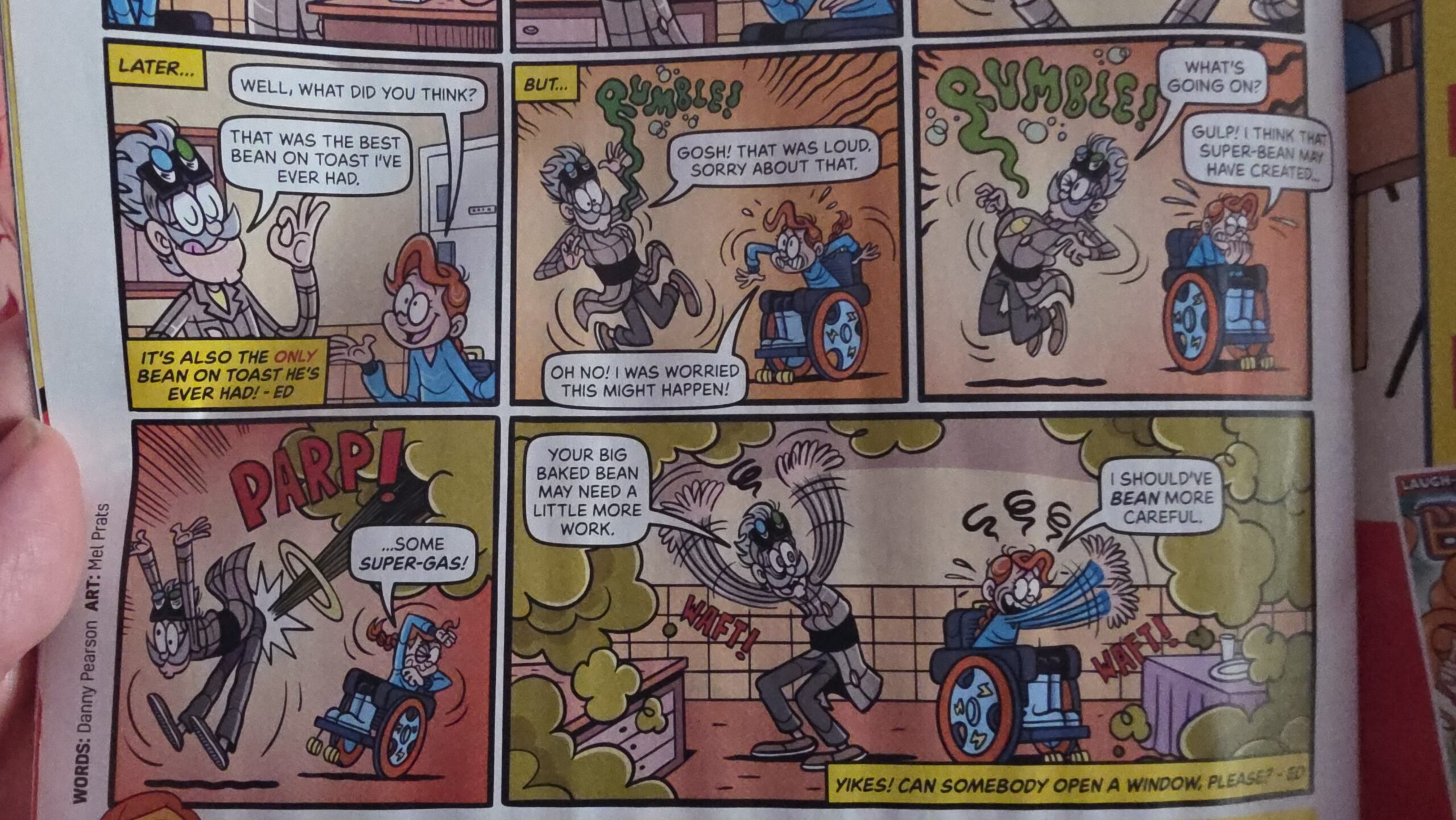
Perhaps most reassuring of all, though, is The Beano's willingness to include a full-on fart gag. Oddly enough, despite being plenty mischievous back in the day, I don't recall ever seeing Beano characters burping and farting, except perhaps sometimes in the background of Calamity James strips. This little beauty from newcomer Rubi's Screwtop Science, featuring a lead character in a wheelchair, gave me a good giggle, though…
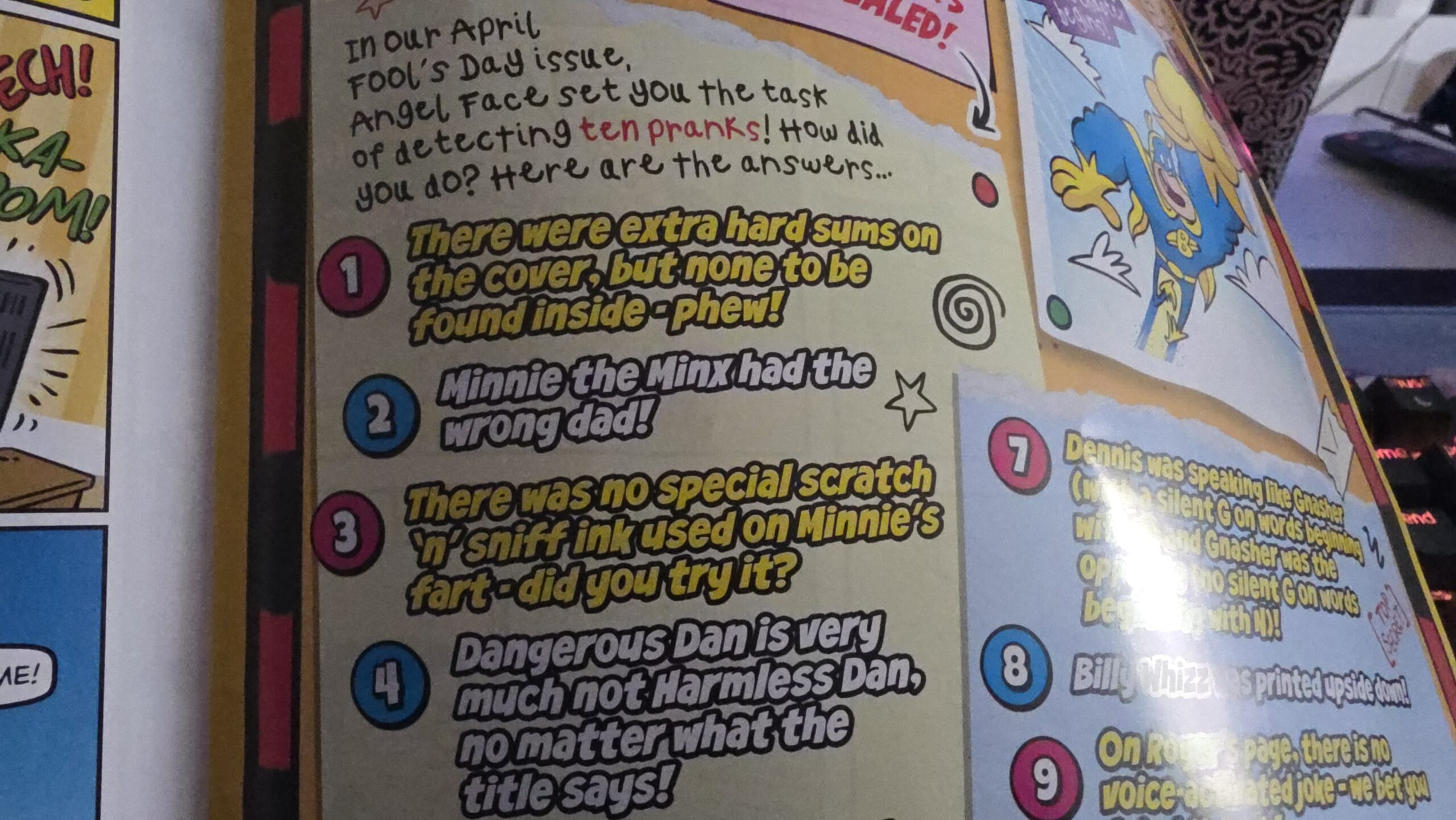
…as did the fact the comic apparently April Fooled people by suggesting you could scratch and sniff Minnie the Minx farting in a prior issue. I love this because I feel like there's a whole bunch of layers to this gag, some of which only the grown-ups will get. I'll leave them to your imagination.
All in all, I enjoyed my first look at The Beano in more than thirty years. It's nice to see how inclusive it's become, though like I say, I suspect there are certain Daily Mail-reading portions of the population who believe it's an outrage that there's a character wearing a hijab in The Bash Street Kids. Thankfully I have never run into them, and I hope I never do.
It's most reassuring to see how funny it still is, though, even as an almost-45 year old man. (45 tomorrow!) Will I keep buying The Beano? I don't know. I actually wouldn't be averse to the idea. So let's maybe have a think about that…
Want to read my thoughts on various video games, visual novels and other popular culture things? Stop by MoeGamer.net, my site for all things fun where I am generally a lot more cheerful. And if you fancy watching some vids on classic games, drop by my YouTube channel.
If you want this nonsense in your inbox every day, please feel free to subscribe via email. Your email address won't be used for anything else.