2307: The Trip

0307_001

When I can't sleep or am otherwise in a position where I am too mentally impaired to do anything active — in other words, all I want to do is stare dumbly at a screen — rather than, as some people do, put the TV on and just watch it, even if I'm not interested in what's on, I like to trawl Netflix for things I've never seen and haven't even heard of before, but which sound interesting.

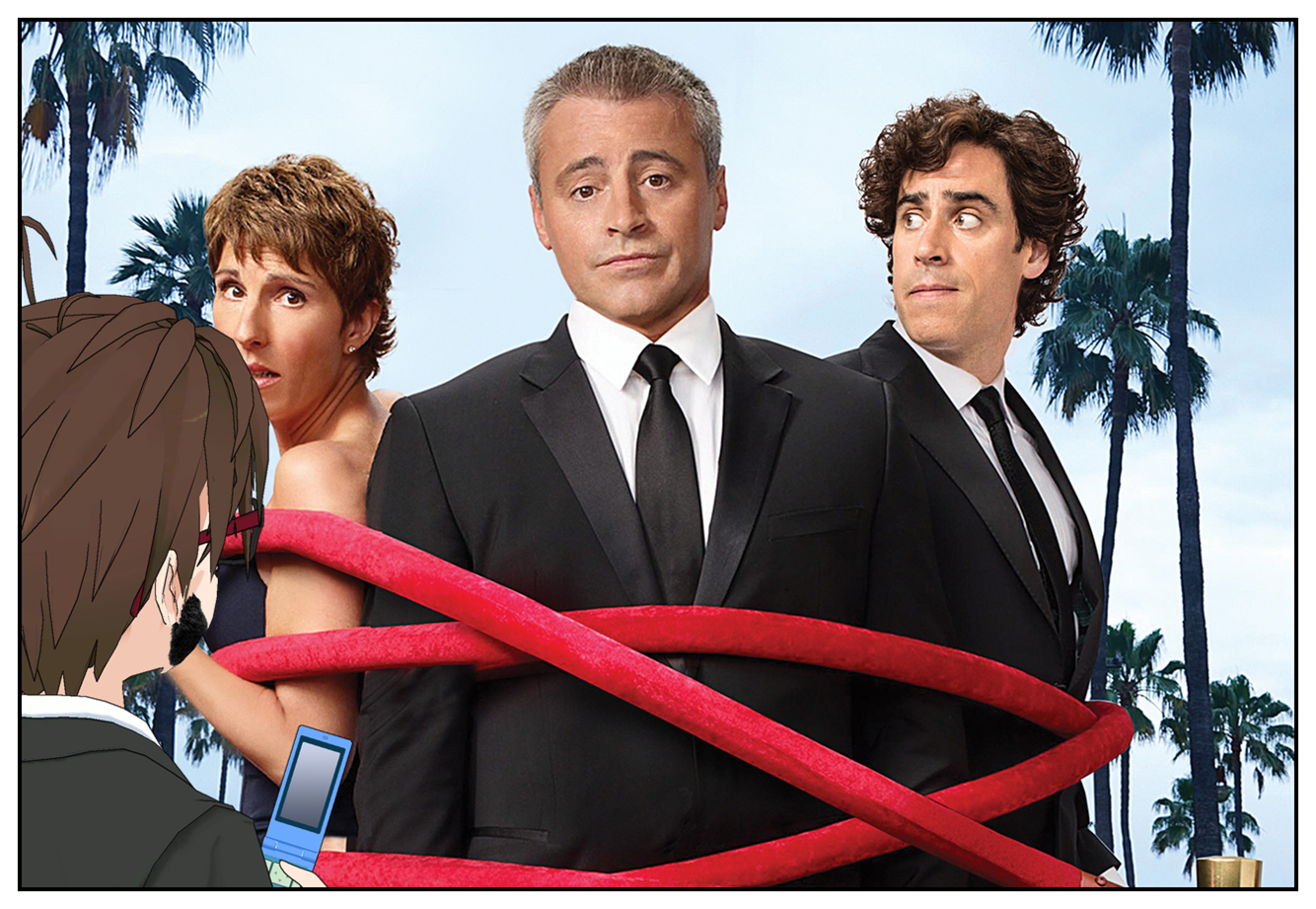
I've discovered a bunch of interesting things this way, the last of which was the rather wonderful (if cringeworthy) W1A, and more recently I've been watching a show called The Trip, starring Steve Coogan and Rob Brydon.

The Trip is an interesting concept that builds on the fashionable "fake docudrama" trend that began with The Office. Casting Coogan and Brydon as fictionalised, exaggerated versions of themselves, the series follows them as they take a tour of the North of England, stopping at some of the supposed best restaurants in the region with a mind to writing an article for The Observer Magazine. Coogan's original plan for the trip was to take it as a romantic getaway with his American girlfriend Misha, and still be able to use it as paying work, but prior to the start of the series, she moves back to the States to pursue her own career dreams in Hollywood, leaving Coogan more distraught and lonely than he'd care to admit, only inviting Brydon seemingly as a last resort.

The pair's trip across the North is largely irrelevant to the main point of the show, though it does take in some of Northern England's most spectacular sights, a number of which I hadn't heard of before. Instead, the main aspect of the show is the relationship between Brydon and Coogan, and more specifically how Brydon's easygoing nature and sense of contentment with his life — even as he is, according to Coogan's standards, less successful than his friend — gradually draws out Coogan's true feelings about his situation.

Brydon lives in a small but comfortable family home with his wife and children; Coogan lives in a fancy apartment in London by himself now that Misha is gone. Brydon enjoys his life and calls his wife just to hear her voice, flirt with her and occasionally get a bit down and dirty with her; Coogan calls Misha in the States, sometimes forgetting the timezone difference, sometimes not respecting what she wants, perpetually unusure of what he wants. Brydon brings a sense of levity to any situation he's in, often filling uncomfortable silences with his (admittedly impressive) impersonations of famous people — something which Coogan is forever frustrated that he's just not quite as good at as Brydon; Coogan takes everything much too seriously, sometimes admonishing Brydon for his happy-go-lucky approach to life, sometimes clearly wanting to say what's really on his mind and on one — only one — occasion frustrating a for-once quiet Brydon, who just wants to enjoy the scenery, with a lengthy geological explanation of how the Malham Cove limestone pavement came to be.

The contrast between Coogan and Brydon is potent; it shows two ways you can approach modern life. You can follow Brydon's path, which is arguably the most traditional, straightforward, unambitious path, and enjoy a happy, contented life while never quite attaining true dizzy heights of, say, stardom or being the top of your field. Or you can follow Coogan's path, which is a much more significant gamble: throw everything you have into trying to be the best in your field that you can be, and run the risk of being frustrated that other people can't see what you know about yourself. Coogan's frustration — outright depression, at times — at his situation is downright heartbreaking; his gamble hasn't at all paid off, though he does have the opportunity to make one final one by moving to the States with Misha to do a pilot TV show for HBO. By the end of the first season, however, Brydon has clearly rubbed off on him: after what is clearly an agonising session of soul-searching, he decides not to take that gamble, and instead — presumably — to focus on making himself happy rather than continually being let down by his life and the people he thought he cared about.

The Trip is a funny show; it's a comedy at heart, and the interactions between Brydon and Coogan are well-written, snappy and genuinely amusing. But there are considerably more tragic undertones with Coogan's own personal journey as the titular trip continues. While Coogan comes across as an arrogant dickhead at the start of the show — and still bears this character trait to a certain extent at the end — as the episodes proceed and we get an occasional glimpse into what he's really thinking and feeling, it's hard not to feel bad for him, and the contrast between how his and Brydon's respective lives have turned out is certainly thought-provoking.

I haven't yet watched the second season, but on the strength of the first, I'm very interested to. If you like well-written, fairly gentle, character-driven comedy drama with more than a slight tinge of pathos — as many other good comedies have — then The Trip is well worth your time to take on.

2290: The Excruciating Accuracy of W1A

0290_001

The other night, I was randomly trawling Netflix for something to watch while I couldn't sleep, and I stumbled across a BBC show I'd never seen before called W1A. I later discovered that this was the follow-up to Twenty Twelve (which I also haven't seen yet), and is one of the most effective "fake documentary" series I've seen since the original British version of The Office.

W1A focuses on the BBC itself, which is a pretty ballsy move given how scathing the show is of BBC corporate culture. Casting Hugh "Downton Abbey" Bonneville in the role of Ian Fletcher, the BBC's new Head of Values, the show follows Fletcher's efforts to make sense of the waffling business-speak world that one of the world's most celebrated broadcasters has become in the last few years. Fletcher is by no means a blameless character in all this, but he, by far, comes across as one of the most "normal" and relatable characters in the cast.

The reason for this is that the rest of the cast members are exaggerated parodies of various office archetypes. I would say that they are exaggerated to the degree of absurdity, but not far through the first episode I realised that I had met and interacted with each and every one of these archetypes at various points in my professional life — in education, in office work and in retail — and suddenly it didn't feel quite so absurd after all. It was still amusing, but in a tragic sort of way; the realisation hit me that this is what the world has become these days.

One of the most frequent character traits on display is relentless, unnecessary positivity, even when it's completely inappropriate. It's not unusual to see serious issues being raised in meetings, with the only responses from around the table being a chorus of "Brilliant." "Great." "Well then." "Marvellous." and "Okay then." Likewise, to my chagrin, I've caught myself using some of the character traits of intern Will, most notably his blind agreeing (and declaration that it's "cool" and "no worries") with everything that people say, only to admit that he didn't actually hear what he just agreed to just a moment later.

While I find W1A pretty excruciating to watch — particularly when Jessica Hynes and her painfully millenial PR company "Perfect Curve" are on screen — it's nonetheless rather compelling and almost reassuring in a strange sort of way: a viewer's initial reaction to these seeming caricatures — their repetitiveness and their relentless, inappropriate cheerfulness — as them being absurd in some way is entirely deliberate. The writers of the show know how ridiculous and absurd the situation is, along with all the nonsense that goes on in modern corporate culture — which more often than not cares more about outward appearances than actually making life good for its employees and clients — and the show itself acts as a means of people who are tired of this aspect of modern life to come together, point and laugh, then perhaps go and have a little cry in the corner.

You're not alone in hating the way the world has turned out, says W1A. We hate it too; we've just decided to laugh at it, because what's the alternative?

2238: Mobile Games Aren't Always Shit: Mister Smith Edition

0238_001.png

A lot of mobile games are shit. Some are just a little bit shit. Some are really shit. The upside of this unfortunate situation is that when something enjoyable and fun comes along, it's all the more noteworthy as it becomes as a sparkling diamond, floating majestically atop the sea of shit that is the mobile games marketplace in 2016.

The trouble with a lot of mobile games is that they try to be something they're not: they try to be big-budget, triple-A experiences — inevitably using the term "console quality" somewhere in their description — but then more often than not ruin the experience in two major ways: firstly, by hobbling the player experience by making it free-to-play and consequently limiting their enjoyment unless they repeatedly pay up (or, in some cases, grind until they want to kill themselves), and secondly, by using god-awful touchscreen approximations of joypad controls, which never, ever work because touchscreens don't have buttons you can feel and consequently you can't do the "muscle memory" thing you can do with an actual controller in your hand.

No indeed, the best mobile games out there make the best use of the platform that they're on and the context in which people use them. Mobile phones these days are used 1) when you don't want to talk to people around you, 2) when you're on the toilet, 3) when you're waiting for some form of public transport and/or friends to arrive and 4) when you can't sleep. As such, the ideal mobile gaming experience is something that you can do during any of these activities without having to think too much, display any sort of manual dexterity beyond tapping a few clearly indicated things with your fat, greasy fingers or commit yourself to any sort of lengthy play session — that train might turn up any minute, after all, despite the automated announcement assuring you that it is "very sorry" for the delay to this service.

Anyway. I found a good mobile game the other evening while I couldn't sleep. It's called Mister Smith and His Adventures, it's published by Ayopa Games and penned by Scotland-based comedy writer Steven McDade whose work, in his own words, "hasn’t quite crossed the line to allow for fame, fortune, adulation or comedy legend status". Based on Mister Smith, however, McDade should have a bright future ahead of him, as his breezy, conversational writing style is immediately appealing, and an excellent fit for a game such as Mister Smith and His Adventures.

But what is Mister Smith and His Adventures? Put simply, it's a very straightforward interactive novel with quizzes. Telling the story of Mr Mister Smith [sic], it unfolds over the course of several distinct stories, during which you have the opportunity to make a number of choices to determine how things unfold, and how farcical the outcome of Mister Smith's various adventures will be. Along the way, based on your choices, you'll be presented with a number of quiz questions in various categories, which will ultimately score you in the fields of Knowledge, Bravery, Friendship and Love and present you with a final score for the story based on how many questions you got correct and how quickly you answered.

To be honest, the quizzes seem a little forced at times, but McDade recognises this and lampshades them effectively during the narrative, and given the light-hearted, silly tone to the narration, it's not a big problem; it gives the game a degree of replay value, after all, particularly as it's riddled with achievements for making different choices and answering certain particularly challenging questions correctly. For those who particularly enjoy the quizzes, there are some "stories" that focus exclusively on the quiz aspect, though these are still written in McDade's distinctive authorial voice, which makes them a lot more entertaining than other, drier quiz apps on the App Store and Google Play.

McDade's business model for the game is a good one: you can download it for free, and play the tutorial and first story without paying a penny, after which you have a few choices. You can unlock new stories by repeatedly playing the ones you've already done to earn "Smiths", which can be spent on the new stories and quiz packs currently available. You can purchase bundles of Smiths to selectively purchase stories without grinding. Or you can slip McDade a couple of quid to unlock the game completely, remove all advertising (mostly for itself) and gain immediate access to all new stories as McDade writes and publishes them into the game through automatic updates.

After playing the first two stories, I was more than happy to take the latter option; McDade's writing is very readable (although there are a couple of typos here and there), the game presents it in short, easily digestible sections with endearing stylised illustrations, and each story is enjoyable and self-contained while helping us to build up a more complete picture of who Mister Smith (and Paul) really is as a person.

It's an extremely simple idea, and one that works very effectively. It's a well put together, well-presented game that uses the mobile format well, and I hope to see a lot more of in the coming months; I sincerely hope that McDade finds some success with it, and that it helps him to kickstart his comedy career.

You can download Mister Smith and His Adventures for iOS here, or Android here.

2084: Too Soon?

0084_001

In response to The Daily Post's writing prompt: "Too Soon?"

Can anything be funny, or are some things off limits?

There isn't an easy response to this question, because there are so many variables involved that it's simply impossible to state with certainty that "X is always okay to joke about, Y is never okay to joke about".

There are certain topics that are commonly accepted as being "taboo" for joking about, but even these have contexts in which they're appreciated or even welcomed. Jokes about AIDS, 9/11, rape, cancer, disabilities — all of these are fair game in the right context, so part of it is a matter of knowing your audience and determining whether or not now would be an appropriate time to deliver that zinger you've had brewing in your mind for months now. By the same token, of course, one person's completely inoffensive, "safe" subject matter might be shocking and offensive to another person — this is a particularly hot-potato issue when it comes to anything involving religion.

Just to complicate matters, whether or not a joke is "appropriate" for a particular context isn't simply a matter of "don't make jokes using a subject that is personally relevant to the person you're talking to", because that ignores the existence of "black" or "gallows" humour, whereby humour is used as a means of coping with difficult, even horrific things. Just because someone has AIDS, say, doesn't mean that you shouldn't joke about AIDS with them, though naturally your relationship with that person should be at such a point whereby you're absolutely sure they won't mind you making a joke about AIDS with them. To simply make a joke about one of these "taboo" subjects without establishing whether or not your prospective (and perhaps unwitting) audience is okay with you is insensitive, and can leave you looking like a complete asshole.

Aside from this consideration, though, I honestly don't think that anything is particularly "off-limits" for comedy in general. I personally wouldn't pepper my own conversation with words like "faggot" and "nigger", but there are people out there who do, and manage to be genuinely amusing — i.e. not just provoking shock value — in the process. Louis C.K., for example, does a great bit about the words "faggot", "cunt" and "nigger", which tend to be regarded as the most awful words in the English language, at least in part due to the baggage that at least two of them carry from history.

And I say that I wouldn't pepper my own conversation with words like that; I mean I wouldn't pepper my own conversation with words like that if I was with people that I didn't feel particularly comfortable being offensive with. When I'm with my closest friends, meanwhile, all bets are off; we hurl the most hideously offensive insults at one another while we're playing games or just hanging out, but none of us mean any of them, nor do the things we say reflect the way we actually feel about issues such as racism and homophobia — it's simply something we do to let off steam when we're around each other. Modern society — particularly these days — is so concerned with the appearance of propriety and not offending anyone that it can actually be quite liberating to just let rip with a string of the most awful, horrible, disgusting things you can think of when you're in an environment where it's safe to do so. It is, of course, when you start taking those words seriously or using them in inappropriate contexts that you need to take a bit more of a look at what you're doing.

So my answer to the question, then? Yes, anything can be funny, given the right context. Nothing is off-limits — or nothing should be off-limits, anyway. Because if you can't laugh at awful things, the world would be a very depressing place indeed.

1773: Panel Beater

It was fashionable a while back to hate on that staple of British TV, the comedy panel show. I'm not entirely sure what there was to complain about — aside from the sheer number of this type of show on our screens, of course — but I never quite fell in line with what appeared to be popular (well, Twitter) opinion.

Why? Well, because I really enjoy panel shows. They're simple, enjoyable, lightweight, eminently disposable entertainment that are perfect for vegging in front of the TV, watching over dinner or falling asleep in front of. They don't place any particular demands on the audience, though if they're a topical show they can be one means of viewing the week's happenings, albeit through a comedically skewed lens.

And some of them have been running for a very long time indeed, which is impressive in itself. Have I Got News For You is, I believe, one of the most long-running examples, but I was surprised to discover the other day that music quiz Never Mind the Buzzcocks has been running for double-digit years, too.

These shows have remained fairly true to their original format over the years, though Never Mind the Buzzcocks has degenerated into chaos in an extremely enjoyable manner as the years have passed, with the latest series fronted by Rhod Gilbert being more like a bunch of slightly drunk mates sitting around pissing about than an organised game show.

The format has given us some true greats of television in more recent years, too. Few could deny that the show now most readily associated with the plummy tones of Stephen Fry — Q.I., of course — is an absolute classic of entertaining, educational television that masterfully combines cheeky humour with genuinely interesting facts about the world we live in and the people we share it with.

I've even pondered experimenting with the format myself in the form of a video games podcast in the panel show style. I still think it has a ton of unexplored potential in non-mainstream TV spaces, and think it would be an interesting thing to do at some point. It would also require a ton of preparation, however, so I'm not sure how practical it would be to do on a regular basis. Something to ponder, though!

1748: Have You Met Ted?

Page_1Finally watched the end of How I Met Your Mother tonight — I'd managed to remain completely unspoiled on exactly what happens in the final two episodes, although I knew that quite a few people were a bit cheesed off about it when it originally aired.

How do I feel? Well, I don't necessarily feel that it was a bad ending as such, but it did feel like it was somewhat rushed.

Spoilers ahead, obviously.

As Ted's kids point out in the final moments of the final episode, Ted's ten-year long story about how he met their mother actually wasn't about how he met their mother at all: instead, it was about all the other things that happened over the course of his life — events that happened to culminate in him meeting their mother Tracy, having children with her, marrying her and eventually having to say goodbye to her as illness took her from him and the world. (This latter aspect was glossed over disappointingly quickly; there was the potential for some gratuitous but nonetheless effective tearjerking here, and the show blew it somewhat — though in the process it only proved Ted's kids' point that the story really wasn't about Tracy at all.)

In particular, it was a show about relationships. Not just the extremely rocky Ross and Rachel-style "will they, won't they" nature of the relationship between Ted and Robin — which ultimately reached a somewhat hasty resolution in the very last moments of the last episode, but which nonetheless provided some closure on the overall story — but also the dynamics between the various elements of the whole group.

Marshall and Lily are presented as the most grounded members of the group; they're already in a relationship when the show begins, and the other characters clearly look up to them as some sort of "gold standard" of what to strive for when seeking a successful relationship with another person. They're far from perfect, though; they fight, they're often unreasonable with one another and, in the last couple of seasons in particular, they keep things of such magnitude from one another that it puts the very foundation of their marriage at risk. They always manage to come through, though; ultimately, their role is to provide the stable basis for the rather more chaotic other members of the group.

Barney and Robin's relationship was an interesting case. Barney falling in love with and eventually wanting to marry Robin was an abrupt about-face for the character, but it demonstrated a certain degree of personal growth on his part, and it was fun to see him struggling between his old life and his new, one-woman future as the final series depicted the last few hours before their wedding day. While their subsequent breakup and divorce in the final episodes acknowledged the fact that even the most fairy-tale of relationships don't always last even a couple of years — believe me, I know that all too well from firsthand experience — it was a tad disappointing for this aspect, again, to be glossed over somewhat hastily.

As for Ted and Robin, the tension over whether or not they'd ever end up together formed the backbone of the show to a certain degree. While it all being wrapped up neatly with them coming together in the final moments — and, presumably, living happily ever after — was predictable and, to a certain degree, satisfying, I can't help but find myself wishing that things had gone just a little bit differently.

The ending, I feel, would have been a lot more effective had we seen more of Tracy's final moments. It's abundantly clear that, although Ted loved Robin, he genuinely loved Tracy too, and even though she wasn't directly involved in much of the overall story until towards the end — the fact his kids point out — the show generally did a good job of teasing a few tantalising pieces of information about her as it progressed — the yellow umbrella; the fact she was always out of sight for the longest time; the fact we never found out her name until the final episode. The show did a great job of building up their relationship, of making the audience feel that everything that had come before had somehow led Ted to this moment — Destiny, Fate, whatever you want to call it — and then squandered it somewhat with a throwaway comment about her getting sick, and Ted ending up with Robin.

I'm a sucker for a bittersweet, borderline tragic ending, but I feel it would have made a fitting end to the series; although ostensibly a "sitcom", the show had more than its fair share of genuinely heartfelt, emotional moments, and the passing of Tracy at the end of the final episode would have proven a fitting finale — and perhaps a way of bringing "the gang" all back together in shared grief after they all go their separate ways following Robin and Barney's doomed wedding.

Still, I didn't write the show so it can't be changed, and overall, despite my criticisms above, I enjoyed the whole thing pretty consistently. It's definitely one of the strongest American comedies that has been on TV in the last few years; while I'm not sure it'll ever quite occupy the same place in my heart as Friends does, I'm certainly glad I watched it, and I'm glad it managed to come to conclusion, even if it wasn't quite the one I would have gone for. It's just a pity the two-part last episode felt so utterly rushed; while it's not enough to spoil my memories of the show as a whole, I can understand why some people felt it was a letdown.

Onwards, though; I guess now it's time to find a new show to watch!

1592: Funnymen

I really enjoy a good bit of stand-up comedy — emphasis on the good — and so it was with some delight that I recently discovered the work of Louis C.K.

Louis C.K. is someone whom I'd heard mentioned before — mostly by my American friends — but I'd never checked out his material before. I'm always oddly wary of American stand-up — I think it's because I'm conscious that a number of stand-ups from the British Isles have struggled to make an impact in the States, so I find myself wondering if the reverse is true, too. Past experience — the best example I can think of being Bill Hicks — has demonstrated that good American comedy can very much still be funny on this side of the Atlantic, though, so I'm aware I'm being irrational; it's just one of those things.

Anyway, Louis C.K. is extremely funny. I've watched two of his stand-up shows on Netflix and the first episode of his TV show Louie to date, and all of them have had me properly laughing out loud. He seems to strike a good balance between shocking — his discussion of the words "faggot" and "cunt" during the opening section of one of his shows is a particularly good example of this — and witty, intelligent, observational comedy with just a touch of cynicism. Meanwhile, Louie appears to show that he's a good character actor, too, with some wonderfully deadpan scenes throughout — my favourite being "…can you stop smiling exactly the same way at me every time I look at you?" "…No." — coupled with just the occasional dip into absurdity. I'll have more to say about that when I've watched a few more episodes, I'm sure.

The reason why discovering Louis C.K. is such a pleasure is because I feel UK comedy isn't in a particularly good place right now — at least not the stuff you generally see on TV. There's still stuff like Dara O'Briain and Russell Howard being shown on repeat-centric channels such as Dave, of course, but the main face of British comedy right now appears to be Russell Kane, whom I just simply don't find particularly funny. I don't know if it's because I'm getting older or simply because I don't like his style, but I find the show he comperes — BBC Three's Live at the Electric — fairly excruciating to watch, not only for Kane's sequences, which are by far the strongest element of the show (which isn't saying much) but for the truly dreadful, painfully unfunny sketches and skits that punctuate the format.

Louis C.K., meanwhile, has a style that I very much like. There's an air of seemingly defeated cynicism about a lot of it, with occasional crescendos into furious anger about something or other. He never seems to take it too far, though; the rants tend to stop before they become too preachy, and any tension built up through the yelling is usually defused nicely by a pithy comment or a reminder of what he was talking about beforehand. It's a style I really like.

Anyway, if you've never checked out the comedy of Louis C.K. and you've been meaning to, I'd encourage you to do so at the next opportunity. I've really enjoyed what I've seen, and I hope there's more material out there to discover. In the meantime, I'll be enjoying the Louie series.

1552: An American Workplace

Finally reached the end of the American incarnation of The Office today, and I was very pleased with how it all wrapped itself up. I was very pleasantly surprised with the series as a whole, in fact — though the early stages of the first series where it was literally nothing more than a word-for-word remake of the English version were… not poor, but disappointing; and the latter part of the complete run did perhaps drag on a little longer than it needed to. Still, the finale was good, and the nine seasons of episodes meant that by the end you have a very strong understanding of all the characters involved.

I liked the balance it struck between some genuinely touching stories and somewhat formulaic character comedy. Many of the characters in the show almost had a "catchphrase" — not literally, but an iconic means of behaving — but the show, on the whole, managed to ensure that these party tricks weren't used so much that the people using them became one-dimensional joke machines. Angela's prim and proper attitude was subverted by what happened to her in the later seasons with regard to her relationships, for example, while the seemingly alcoholic Meredith points out in the last episode that the side of her captured on film — the side that drank too much, frequently got her tits out and behaved completely inappropriately — was only part of the entire picture.

And this was part of the point, really. As a spoof "docudrama", both the English and American versions of The Office play with the idea that it's possible to steer a narrative that you have no external influence on through careful, selective editing and manipulation after the fact. It's a common trick in reality TV; some shows even supposedly have disclaimers that you may not be portrayed entirely accurately if you appear on them, because the footage will be edited to fit the "script" rather than to give a truthful picture of what actually happened.

In the case of The Office, of course, the whole thing was scripted and planned out from start to finish, and it was, at times, hard to forget that side of things. Jim and Pam's romance was a little too perfect at times — even with the several pieces of tension introduced in the final season. Similarly, characters such as Dwight, Erin and Andy were almost too much of a caricature to be truly "believable" at times; this certainly didn't hurt the show if you treated it as an ongoing comedy drama rather than attempting to suspend your disbelief and treat it as an ongoing documentary, but it did lose a little of the magic that the English original had.

That said, thinking back to the English original version, David Brent was an obvious caricature that, on many occasions, behaved far too ridiculously to be "believable" as a real person. The difference is that alongside his obvious nonsense, everything else was a lot more understated. The Tim and Dawn possible romance was constantly left dangling — something the American version simply couldn't do with the considerably larger number of episodes it boasted — and even when it seemed to "wrap things up" had a certain degree of ambiguity about it. Not so much with Jim and Pam — though again, this isn't necessarily a bad thing; Jim and Pam's relationship and how they overcame their difficulties and stuck together was a pleasantly heartwarming tale when all's said and done.

On the whole, then, I really enjoyed the whole series, and the last couple of episodes were an excellent finale to the entire run. It's a very distinct beast from the English original — I'm not sure if it's better overall, but it certainly managed to maintain our attention for nine seasons of twentysomething episodes each rather than the original's two seasons of six episodes each.

It's a good watch, then; less dependent on outright uncomfortable comedy than the British original, and more focus on slow, gradual character development over time. The whole run could have possibly stood to be a couple of seasons shorter — things dragged a little in the middle — but it started and finished very strong, and I'm very glad I took the time to watch it from start to finish.

The question is, then, what's next?

1486: Funny Ha-Ha

As I type this, a Dave broadcast, repeat, whatever (probably repeat) of a Frank Skinner stand-up show has just finished. It made me laugh rather a lot. I haven't watched a Frank Skinner show for quite some time and I was pleased to see he doesn't appear to have changed all that much — he still primarily tells imagery-heavy stories about sexual encounters, and in doing so paints quite the vivid picture with his words.

Catching this show got me thinking a bit. I haven't watched a whole lot in the way of stand-up comedy for a long time, whereas it used to be something I really enjoyed doing. I think part of this is due to the fact that I don't really know who's good these days — and the little modern stand-up I have seen doesn't really appeal all that much. This may partly be due to the fact that you tend to catch stuff like this on Dave or BBC3, the latter of which in particular is aimed at young and stupid people.

Comedy goes in cycles and phases, and the comedians who are popular at any given moment give a good snapshot of culture at the time. A few years back when Eddie Izzard was popular, for example, that kind of fast-paced, clever humour was fashionable — everything tying together. Today, it seems that one fashionable style of comedy is the string of unrelated one-liners, one after another — funny, sure, but it doesn't quite "click" with me as much as the intertwining threads of something like Izzard's comedy.

I haven't seen a lot of musical comedy of the the kind best exemplified by Bill Bailey and Tim Minchin recently, either. This is a real shame, because both of these performers are clearly very skilled musicians as well as witty comedians. Both still occasionally show up on comedy panel shows — a good means of catching favourite comedians long after their standup isn't seen quite so often on the television — but, you know, I'd pay good money for a new Bill Bailey show.

I saw Bill Bailey live when I went to the Edinburgh Festival from university, and it was a magical experience. I, and many of my companions who were also in attendance, immediately fell in love. Many of us were familiar with Bailey's work on TV shows, but perhaps not his stand-up; after that, meanwhile, it wasn't long before all of us went and picked up all his DVDs.

I don't really have a point to all this. Perhaps I'm asking in a roundabout way whether there are any good comedians out there who are worth seeking out. For reference, I enjoy stuff like Bill Bailey, Eddie Izzard, Dara O'Briain and that sort of thing. (I've even been known to enjoy Michael McIntyre, though as I recall you're not supposed to admit that sort of thing. But ah, fuck it.) Any must-see comedians out there that I'm missing out on?

1421: APPLAUSE

One of the things I find quite interesting when watching my favourite comedy shows from over the years — something I like to do over dinner, or when I just want to switch off my brain and zone out for a bit — is how the role of the "audience" has evolved. Specifically, how we've gone from prominent canned laughter, applause and other reactions to, in many cases, the complete opposite — the total absence of audience noise.

I say this because it took me nearly eight seasons of How I Met Your Mother to notice that that show has a laugh track in the background, albeit a very quiet one. It's nowhere near as pronounced as in, say, Friends, which, in turn, was less pronounced than shows that were very proud of the fact that they were filmed in front of a live studio audience such as The Cosby Show. (I'm probably dating myself somewhat there, but eh. Whatever. The Cosby Show gave us the word "zurbit" to describe the act of blowing a raspberry on someone's stomach, so it clearly had an important impact on culture at large.)

I remember back when I still lived at home and we started to get the first wave of new comedy shows that didn't have laugh tracks in the background. They were often described as "comedy dramas" rather than sitcoms, and initially they made somewhat uncomfortable viewing because it was never quite obvious whether or not you were "supposed" to be laughing. I remember the first time I saw Spaced on TV, for example; it may be one of my favourite shows of all time now, but when it was first on TV and there was no easily recognisable prompt that you should laugh here, here and here, it was a little confusing.

This may sound strange to those of you reading this who have never known anything but shows without an audience track in the background, but it's true. Nowadays, I've adjusted to the norm of there not being a laugh track — so much so that it's jarring when you do notice it in shows like How I Met Your Mother.

That said, while the absence of a "live" audience has worked well for sitcoms and "comedy dramas," it doesn't work universally well. Game shows that unfold without a live studio audience are a curiously lifeless experience, for example, as anyone who has ever watched Eggheads or Only Connect will tell you. There's nothing inherently wrong with the format of either of these shows (though the combination of smarmy presenter and the titular "eggheads" on Eggheads infuriates me beyond belief) — they just feel a bit "wrong" without, say, applause at the end of a round, or people laughing when someone cracks a joke.

I remember for a while some video games experimented with having a laugh track. The strangest one I remember was the N64 version of Mystical Ninja Starring Goemon, which was extremely Japanese and rather poorly translated, which meant the moments when the canned laughter kicked in were often… bizarre, to say the least. (Still, it was a great game; I recall enjoying it more than Zelda at the time.) It's not something that ever really took off, though, and now that laugh tracks are the exception rather than the rule in other forms of media, it's something I don't really see games going back to any time soon — unless they're specifically trying to capture the feeling of '80s or early '90s sitcoms.

Anyway. I didn't really have a point to make with all this. I just thought it was mildly interesting.