#oneaday Day 674: A product of its time

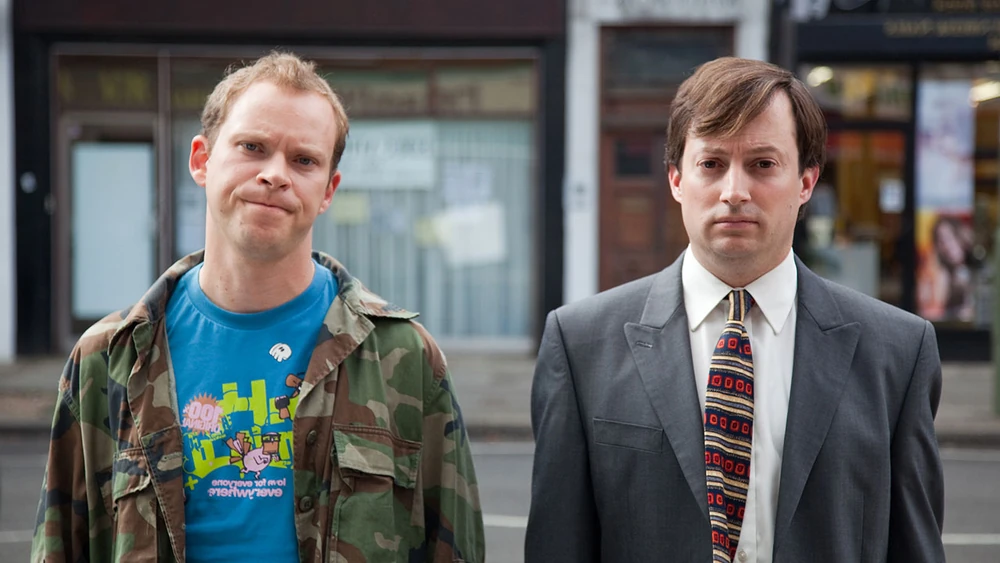
For some reason, I decided to start re-watching the Channel 4 comedy show Peep Show recently. I say re-watch; I'm not sure I've ever watched it all the way through, but it is a show that I always used to like, and as the show that shot David Mitchell and Robert Webb to stardom (or at the very least "household name" status), it's something I've always considered to be fairly evergreen, even if its somewhat "cringe comedy" nature makes it unpalatable to some folks — my wife being one of them.

I was dismayed to discover upon starting my rewatch that Peep Show is over twenty fucking years old. I don't know why, given that I remember having DVDs of it just after my time at university, but I've always thought of it as a relatively "recent" show. But no! It's a show that pre-dates smartphones and flatscreen TVs and monitors; it's a show that is old enough to come with one of those "this show was made in 2003 and is not representative of today's values" disclaimers that you normally see on shit from the 1920s.

The source of this particular warning is a scene early in the second series that is essentially blackface. I say "essentially" because the scene in question is actually criticising blackface, particularly in the context of using it as something to be deliberately provocative — or even a fetish — but it still involves Robert Webb with his skin painted a darker colour and thus I appreciate that to some, it may be hard to defend.

I do find the whole "today's values" thing mildly interesting, and occasionally annoying. I find it especially grating when people start talking about how a piece of dialogue is "problematic", when the dialogue in question is supposed to be depicting a character that is a piece of shit. There's a certain subset of people, many of whom have grown up with what passes for cultural critique on asinine platforms like TikTok, who have a very black-and-white (no pun intended, given the above) view of morality in fiction. These people tend to find it especially "problematic" — a word I've always hated, if that wasn't already clear — when "villains" of the piece act in a villainous manner. Who would have thought it?

I mean, sure. You probably can get across the fact that a person is a piece of shit without resorting to actions and utterances that are offensive by modern standards. But at the same time, I do feel writers should be able to depict characters who are offensive in some way or another — otherwise your critique of them and their actions lacks a bit of bite. It's like all the people on YouTube who bleep out any time they say words like "sex" or "death". It's a bit too much, y'know?

Obviously I'm not advocating for black-and-white minstrel shows and racial slurs 24/7, but I feel like there comes a point where you can wrap modern audiences in cotton wool just a little too much, and the result is an entire cohort of people who cannot cope with being challenged by fiction even a little bit. We already see this on "BookTok" (ugh). Don't even get me started on those idiots.

I guess, thinking rationally, the solution Channel 4 took with this Peep Show episode is probably as good as one can expect right now; the episode itself is untouched, it just has a warning before you watch it. And, as far as I'm aware, that hasn't caused any particular scandals around the place online. So perhaps we should just keep quiet, acknowledge these when they exist and just get on with things. Because the alternative is a dark place for the creative arts, as we're already starting to get a hint of in some places.


Want to read my thoughts on various video games, visual novels and other popular culture things? Stop by MoeGamer.net, my site for all things fun where I am generally a lot more cheerful. And if you fancy watching some vids on classic games, drop by my YouTube channel.

If you want this nonsense in your inbox every day, please feel free to subscribe via email. Your email address won't be used for anything else.
#oneaday Day 449: Revisiting Teachers

Back in the dim, distant past before streaming video services were a thing, and in a wonderful time before the apparently collective decision that if you're not continually "consuming new content" you're Doing It Wrong, there were several DVD series I had on my shelf that were in almost continual rotation in my DVD player. Spaced, Black Books, Peep Show, Big Train, that sort of thing; a particular brand of British comedy, almost always originally broadcast on Channel 4, and in many cases involving the exact same cast members.

(Aside: a fair few of these have been sullied a little in recent years by their association with Graham "I Hate Trans People… Wait, Why Do You All Hate Me Now" Linehan, but I do try my best not to let that bother me too much, because these series — and the work of the actors therein, most of whom do not subscribe to Linehan's odious bigotry — will always be special to me.)

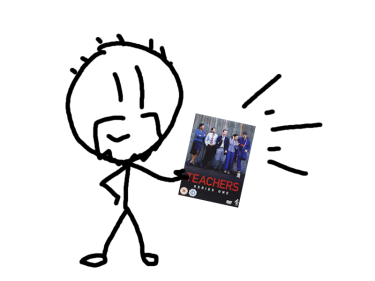
One of my absolute favourites was Teachers, which was a thoroughly interesting show. I've just re-acquired the DVDs of the complete season, and I watched the first episode last night for the first time in a very long while.

Teachers, if you're unfamiliar, is probably best described as a comedy-drama rather than an out-and-out comedy. It initially focuses on the life of a 27 year old English teacher named Simon, who works at a comprehensive school in Bristol. In later series, several of the original cast members (including Andrew Lincoln, who played Simon) depart to make way for a new ensemble cast, so as a complete run it's more of a snapshot of a moment in a group of people's lives rather than a particularly "personal" story as such. There are a few constants along the way, though.

One of the most interesting things about Teachers is its heavily stylised nature. A trademark of the show is how each episode looks at several days across a typical week, and the introduction to each week is done diegetically through the name of the day appearing on something in the world — on a billboard, on a sheet of paper being photocopies, on a computer display, that sort of thing. This is just the beginning of things, though.

There's an almost hallucinogenic quality to certain sequences in Teachers, which certainly in the initial series is intended to reflect the somewhat turbulent state of mind that our hero, Simon, is in. Simon, you see, is a bit stressed out and starting to have significant doubts over whether he actually wants to be a teacher, and his rather rocky relationship with his peer in the English department, a stern woman named Jenny (played with great enthusiasm by Nina Sia), certainly doesn't make things any easier.

Sometimes these stylised sections are very obvious, such as when Simon returns to school the night after a drunken night out, during which he and his friends broke into the school and let a sheep in, among other things, and starts hallucinating that a full-on forensics team is dusting down his classroom for prints. At others, they are subtle, such as peculiar things happening in the background of scenes — the aforementioned sheep continually shows up throughout the series, for example — or little sound effects, such as when Jenny aggressively touches Simon on the shoulders with her fingertips while admonishing him, and you can hear the sound of sizzling.

One of the best things about the show is the ensemble of Kurt and Brian, played by Navin Chowdhry and Adrian Bower respectively. This pair are, in many ways, the worst of the worst. They're male chauvinist pigs constantly obsessing over people's arses, they always do their best to avoid getting out of having to do anything, they're utterly irresponsible, and they're absolute pranksters.

And yet you can't help but love them. Their behaviour towards women, which might initially seem winceworthy in the somewhat more enlightened world we supposedly live in today, is endearingly, amusingly pathetic in light of the fact that the pair of them seemingly get no action whatsoever for the vast majority of the run (that and the female members of the cast are more than capable of standing up for themselves); their irresponsibility actually comes across as a relatively healthy method of coping with the potentially overwhelming stress of working as a teacher; and their pranks… well, they're always amusing.

Probably the absolute best thing about the show, though, is its use of music, which almost exclusively consists of late '90s/early '00s Britpop and indie rock. In some respects it dates the show enormously — as does the fact that a plot point of the first episode is that teachers are no longer allowed to smoke in the school building in the "smoking room" — but in others it forms an absolutely core part of the show's identity.

Teachers is great because it tells some believably human stories about a distinctly down-to-earth cast of characters and doesn't get hung up on high drama — which is something that subsequent school-based TV shows, like Waterloo Road, could be accused of — and focuses on just being entertaining. Watching Teachers is like being included in this little friendship group of characters; you get to see them at their best and, more frequently, their worst — but that "worst" is never anything particularly serious — and it's always a joy to be among them.

It's definitely a show that is very much "of its time", but after revisiting the first episode earlier, I'm looking forward to watching some more.


Want to read my thoughts on various video games, visual novels and other popular culture things? Stop by MoeGamer.net, my site for all things fun where I am generally a lot more cheerful. And if you fancy watching some vids on classic games, drop by my YouTube channel.

If you want this nonsense in your inbox every day, please feel free to subscribe via email. Your email address won't be used for anything else.

2492: Fresh Meat

0492_001

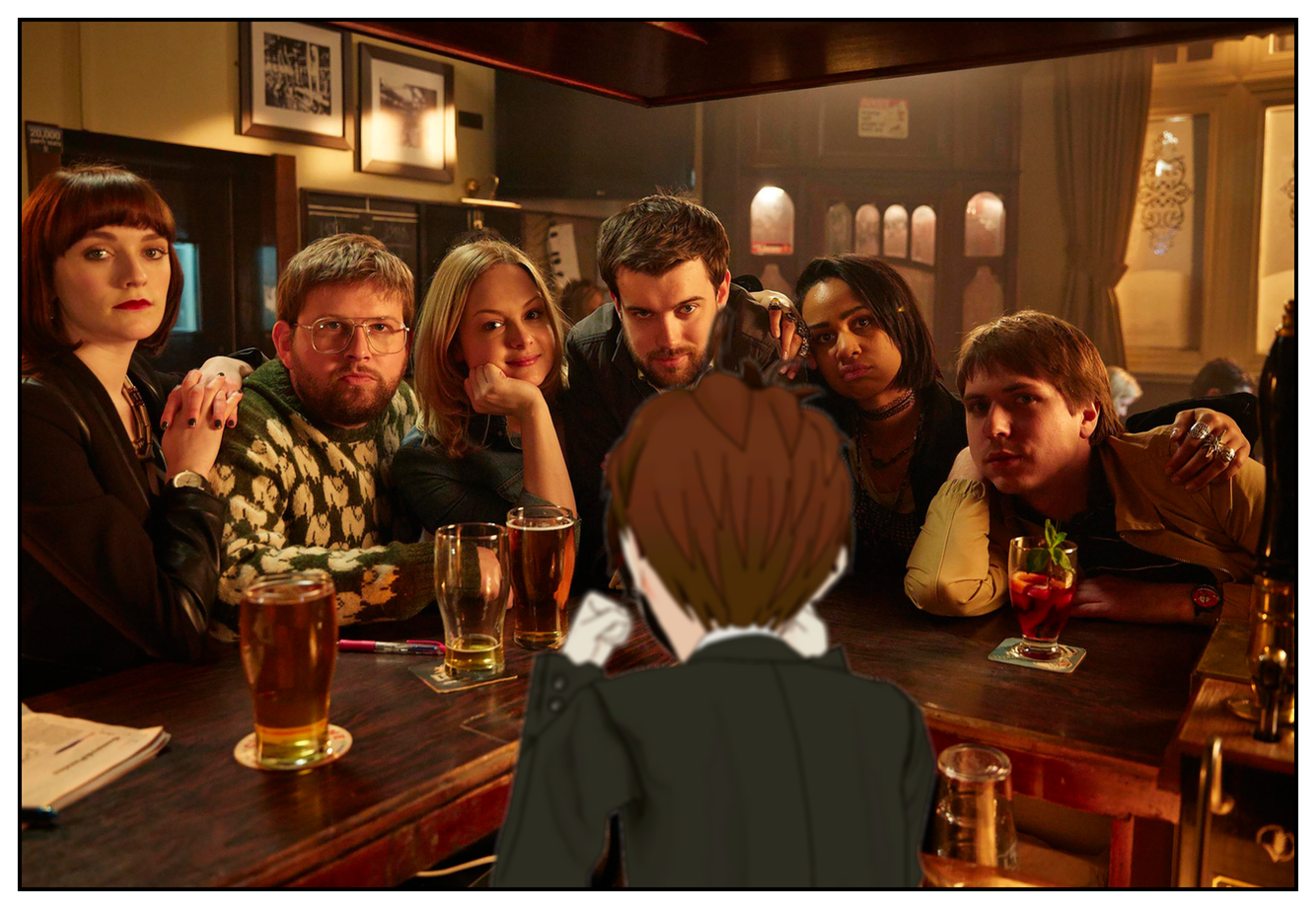
Fresh Meat is a show by Jesse Armstrong and Sam Bain, of Peep Show fame. Across four seasons, it concerns the lives of a houseful of university students from their initial arrival at university through to the end of their final exams.

I remember watching the first few episodes of the first season and really enjoying it, but for one reason or another I never finished watching that season. More recently, however, I've been watching the complete run on Netflix and enjoying it a great deal; much like one's university life, it evolves and changes over the course of the three years/four seasons, but it manages to maintain enough coherence throughout to feel like a convincing serialised story rather than simply an episodic comedy-drama, which it could have easily turned into.

Part of the reason for its feeling of coherence is the fact that it managed to keep its core cast together for the entire run, and said cast is an excellent lineup. All of them are flawed to one degree or another, but none of them are so far beyond redemption as to become dislikeable. On the contrary, the show frequently demonstrates that behind prominent displays of bravado, there is often someone crying for help or struggling to express themselves.

One of the first characters we see in Fresh Meat is Greg McHugh's portrayal of Howard. His first appearance is wearing only a jumper, no trousers or underpants, and drying some dead poultry on a washing line across the kitchen using a hairdryer. It would have been easy for the show to keep Howard as a deranged character, only coming out for comedy relief or gross-out factor, but even within the first episode, we quickly see that he's been designed with a lot more thought behind him. Across the entire run, Howard actually becomes a character that it is easy to sympathise and empathise with, since in many regards he's the character who makes the biggest strides outside his comfort zone — particularly with regard to social situations and taking perceived "risks" like asking a girl he likes out — and who manages to pick himself up repeatedly after numerous setbacks.

Zawe Ashton's portrayal of Vod is also noteworthy, as Vod initially comes across as an arrogant, dislikeable young woman with an attitude problem. Her abrasive edge doesn't dull throughout the entire run of the series, keeping her as a formidable person that most people would probably find tough to get close to, but piece by piece, we start to understand the difficulties she's endured through her life and why she has ended up as the person she is. Most people probably won't end up liking Vod as such, but we certainly understand her pretty well and can sympathise with her by the series' end.

Kimberley Nixon's Josie subverts the "sensible girl" trope often found in series of this nature. While initially appearing to be the cast member who has it together the most among the group, Josie's character goes into a downward spiral early in the series, succumbing to a combination of alcoholism, stress and depression that sees her getting kicked off her dentistry course for drunkenly putting a drill through a woman's cheek, moving to Southampton, moving back to Manchester in the hope of a relationship with fellow cast member Kingsley, and from there seemingly repeatedly sabotaging her own potential for happiness. Outwardly, Josie is one of the most cheerful, optimistic-seeming characters, but as the show progresses, she becomes one of the most tragic figures in it.

Joe Thomas' depiction of Kingsley initially appears almost identical to his portrayal of Simon in The Inbetweeners — mostly due to his trademark rather sardonic delivery — but over time Kingsley becomes a distinctive character in his own right. Whereas Simon was fairly aloof and detached from the idiocy of the rest of the group in The Inbetweeners, Kingsley becomes a character who consistently tries too hard and often finds himself coming a cropper as a result. His relationship with Josie is initially set up to be the "Ross and Rachel" of the show through its on-again, off-again nature, but in the latter seasons in particular it becomes clear that the two are simply not right for one another. Kingsley repeatedly puts across the impression that he desperately wants to "grow up" but isn't entirely sure how, with his attempts ranging from developing an interest in composing his own rather emo music to growing an ill-advised and rather pathetic soul patch. His desires are perhaps most explicitly demonstrated in the final season, when he gets together with an older woman and is initially ecstatic about the prospect, even when it becomes abundantly clear that she is not going to treat him well.

Charlotte Richie's portrayal of Oregon is one of the strongest performances in the show, ironically because of how understated a lot of her delivery is. Oregon, or Melissa as she's really called, desperately wants to appear cool and it's immediately apparent from the outset that she's attempted to "reinvent" herself for university life after a privileged upbringing. She has a habit of getting drawn into positions that initially seem like a good idea at the time, but which quickly turn sour. In the first season, this is exemplified through her relationship with her English tutor Professor Shales; in the final season, we see her mount a successful campaign to become Student Union president only to be lumbered with massive debt, impending legal action and the realisation that she's little more than a "ribbon cutter" for the people who actually have power. To her credit, Oregon always tries to fight her way out of these situations and is often successful in doing so; while the adversity she encounters throughout the series is usually of her own creation — perhaps deliberately so, given the life of privilege she grew up with — she doesn't ever buckle under the pressure, and usually comes out stronger and having learned something from her experiences. Of all the characters, she's probably the least overtly "tragic" in one way or another; in many ways, she becomes the most admirable after initially being one of the biggest fakers there is.

Finally, Jack Whitehall's depiction of J.P. largely consists of Jack Whitehall playing an exaggerated version of himself, but it really works, at least partly because J.P. is written as more than a one-dimensional "posho" laughing stock of a character. Over the course of the four seasons, we come to understand J.P. as a deeply confused, conflicted young man who doesn't understand how the world works — like Oregon, he grew up with a life of privilege, but unlike her, he initially makes no attempt to reinvent himself, instead preferring to try and solve his problems by throwing money at them. In an early episode, he learns the folly of this approach when he gets taken advantage of to a ridiculous degree by his former schoolmates, and from here his growth as a character begins. Each time he proclaims that he wants to have "a large one" or that he is desperate to be regarded as "a legend", it rings a little less true; inside, he's a man who sees his future looming ahead, but he can't see what lies beyond the veil at the end of his university life. That's a scary feeling, and not just limited to university students; J.P.'s struggle to understand how life as a whole works is something that a lot of us can relate to.

All in all, Fresh Meat is an excellent (if occasionally mildly unrealistic) look at student life in the early 21st century. It captures both the soaring highs — the excitement of meeting new people and striking up relationships that may last the rest of your life; the nights out that seem like the most enjoyable, fun times ever — and the crippling lows — mounting debt; loneliness; the uncertainty of your (and everyone else's) future — and in the process manages to depict a collection of flawed but interesting, likeable characters as they work through one of the most turbulent periods in their respective lives.

1338: Educating Everywhere

I watched an episode of Channel 4's docusoap/fly on the wall show Educating Yorkshire earlier and, as I could have predicted, I found it most enjoyable.

You see, despite my unpleasant experiences at the chalkface a few years back, I still find myself interested in the world of education. I find schools to be fascinating places, with their collection of hundreds or even thousands of diverse people thrown together and expected to survive without killing each other. They're a great source of stories, both from the perspective of the teachers and the pupils, and I am constantly fascinated by fiction set in schools. (This explains my love of the following things: Buffy the Vampire Slayer; appalling high school drama movies; slice of life anime; visual novels)

Educating Yorkshire is set up well to tell some of these supposedly real stories, and it tells them well. Over the course of the single episode I watched today, we learned about the school's headteacher and his ideals; the students' attitudes towards him; the "back stories" of two persistent troublemakers; and a few other things besides. Although everything that happened was mundane to the max, these stories were presented in a compelling manner that made them interesting.

One image I absolutely could not get out of my head, though, was how much typical disciplinary proceedings at a school resemble a police interrogation — or at least one as depicted in the media. Before long, I was picturing Cole Phelps from L.A. Noire yelling at a kid ("[DOUBT] You did it, didn't you, you sick son of a bitch!") and pondering if there might be a market for a video game in which you play a teacher and have to investigate these incredibly mundane transgressions.

Well, I'd play it, even if no-one else would. Though given some of the creative interactive experiences we're starting to get today, now, I can't help but feel I might not be alone!

#oneaday Day 631: Meaty Goodness

A lot of people, both inside and outside the UK, assume that the best TV comes from the BBC. Sure, Doctor Who is great and there have been some great drama series from our publicly-funded friends over the years, but on balance, it's clearly Channel 4 that has the best stuff.

Spaced, Black Books, Brass Eye, Peep Show — there's a veritable plethora of excellent shows out there, most of them in the comedy genre, and the vast majority of which involve –and are written by — the same people.

The latest Channel 4 show to be up and coming is Fresh Meat, a new show from the creators of Peep Show. Peep Show is known for featuring that uniquely British brand of uncomfortable humour, and Fresh Meat continues that tradition suitably aptly, though with something of a more surreal edge at times.

The show is based around a small ensemble cast of first-year students, and is mostly set in their shared house where they've been thrown together as tends to happen in the early days of university. The setup is perfect for some character-based comedy, and writers Jesse Armstrong and Sam Bain take full advantage of this fact. The characters have some great chemistry between them, and each of them is just bizarre enough to be memorable without crossing the line into complete stupidity. Highlight of the show has to be Howard, a Scotsman of indeterminate age who has lived in the shared house for longer than he perhaps should have. Howard is introduced drying off some chickens (if I remember correctly) with a hair-dryer, while not wearing any pants.

Ironically, throughout the subsequent episodes, it's Howard that turns out to be, if anything, the most normal, sensible of the characters. Man-eating Vod regularly overindulges in various chemical substances and isn't quite aware of what she's doing; Oregon is self-consciously trying not to be lame (and ends up regularly cracking those jokes that no-one ever laughs at); Josie and Kingsley have an infuriating will they-won't they relationship and Jack Whitehall's JP character is endearingly obnoxious.

If nothing else, it's nice to see a show based around a cast of students which doesn't take itself too seriously. It's all too easy for shows to get caught up in interpersonal relationships and betrayal and whatnot, and before you know it you're Hollyoaks. And no-one wants to be Hollyoaks. Thankfully, Fresh Meat is not Hollyoaks.

It's early days for the new show as yet, but early indications are promising. It's amusing and filled with entertainingly puerile gags in a Peep Show/The Inbetweeners sort of style, but has a good sense of an unfolding plot, strong characters and a pleasing cameo appearance from Robert Webb.

If you haven't had a chance to check out the show yet, UK residents can catch up with it on YouTube.

#oneaday, Day 260: In Between

I don't watch much TV, unless you count DVD box sets of favourite series like Buffy the Vampire Slayer and Angel. British TV has three main types: utterly terrible (Last of the Summer Wine, Dad's Army, anything involving Eamon Holmes), moderately inoffensive (usually involving people wandering around houses going "hmm, it's got character") and bloody brilliant (Spaced, Black Books, The IT Crowd, QI). One of the latter category I will always make an effort to watch is The Inbetweeners from Channel 4.

For the uninitiated, The Inbetweeners is a show about a group of four sixth formers (college-age 16-18 year olds, to the Americans among you). And it doesn't pull any punches whatsoever. Rather than being the sanitised view of school/college life that you see in most shows, this show is how it is. At least if you grew up in the late 90s or beyond. Possibly before; I couldn't say, since I only went through my late teens once and did so in the late 90s.

By "realistic", I mean "foul-mouthed, disgusting and sex-obsessed". And yet the characters involved are somehow likeable despite being, in many cases, terrible human beings. It's the contrasts that work well; there's Will the "specky twat", Simon, who is relatively normal despite stropping at his parents every five seconds, Jay the sex-obsessed, lying arsehole and Neil who is so very, painfully stupid. They're the perfect comic foils to each other, and the best thing about the show is that I know (or have at least met) all four of them at some points in my life. And no, I shan't be sharing who each one of them reminds me of!

The other thing that works so well is the variety of scrapes that they all get into. They're all situations that will be familiar to anyone who remembers being a sixth former. Getting your first car and it being crap. Panicking over sexual encounters. Taking advice from your friends even when you know they're a bunch of complete fucking idiots. And finding your place in the world.

I'm probably making this sound deeper than it actually is; mostly it's a comedy show with a wide variety of gross-out humour and a foul mouth. But despite its extremeness at times, it remains consistently entertaining, hilarious and, at times, horrifically uncomfortable.

If I didn't know so many people who loved watching it, I'd say it was perfect viewing for an exclusive audience of teenage boys… or at least those who remember being teenage boys. But judging from my Twitter feed there are a wide variety of people who love the show and feel much like I do; they'll make a specific effort to watch it and will happily quote it at every opportunity.

Channel 4, despite being the home of Big Brother for so long, has long been the home of awesome shows like this. Let's hope there are many more like it in the future; and that audiences around the world get to enjoy them too. With the content as it is, I couldn't say if it would ever make it onto American TV (tonight's episode featured Simon punching himself in the dick whilst shouting "GET BIG, YOU CUNT!" for example) but for those of you across the pond who like the idea of "kids talking like kids" and doing things that kids do, be sure to check it out.

One A Day, Day 42: TV Time Machine

Jane and I have been watching some old TV recently, thanks to the magic of YouTube Shows, YouTube's new(ish) section that now contains TV shows officially uploaded by the broadcasters, and not broken into 9-minute chunks. Okay, there are irritating adverts at the beginning, midpoint and end that inexplicably always freeze at exactly the same moment, but it's a small price to pay for a huge amount of content from Channel 4 and, should you have ever found anything worth watching on there, Five. The big plus over the BBC's iPlayer service is that it's not just for catching up on programmes up to seven days after they've been broadcast. No, the new YouTube page is a replacement for Channel 4's old 4OD (aka "4 On Demand") service, which used to only work on PCs via Windows Media Player and some proprietary software to log in to the service. The move to YouTube means that you can watch these programmes on anything that can "get" YouTube, including devices like the PS3 and Wii.

I've been watching a few different things on there, including Whose Line Is It Anyway's gradual change from British comedy showcase (including early sightings of Stephen Fry, John Sessions and numerous others) to the almost-fixed cast of Colin Mochrie, Ryan Stiles and the rotating "other two" that is more familiar to those who picked up on it quite late.

Most recently, though, Jane and I have been watching Drop The Dead Donkey, a satirical newsroom-based sitcom which ran from 1990-1998. It was prepared and broadcast at incredibly short notice so it could always be bleeding-edge topical. Each episode on YouTube helpfully starts with a brief summary of that week's news events, so when the characters name-check the things that went on (as they frequently do) you have at least a vague idea what they're talking about.

The funny thing about …Donkey is that, despite being twenty years old (a fact which my wife is not at all happy about) a lot of the things in there are still just as relevant today. In particular, we have the interfering management busybody "Gus", who habitually shows up with a smarmy "Hello! Remember, I'm not here. I am just a sort of managemental support unit" whom is a fine example of everything that is wrong with corporate usage of the English language these days. We also have roving reporter Damien's blatant attempts to "spice up" his on-location reports, including one wonderfully perverse sequence where he is being bothered by people wandering past in the background waving, so he borrows a grenade from a passing soldier and lobs it into the background to cause a panic.

These things are still relevant today, as Charlie Brooker's Newswipe (all of which can also be "unofficially" found online – with the full knowledge and appreciation of Mr Brooker, I might add – thanks to this fine chap on YouTube) frequently comments on. It's always nice to find something that is still entertaining after a good few years, particularly if you never got the chance to catch it first time around, like I didn't. …Donkey clearly had such a low budget (both in terms of time and money) that it is all about the characters and the situations, and that's what makes it such a success. There's no special effects to laugh at, and everyone's hairstyle and clothes are (relatively) normal. These things make it somewhat timeless – so if you've never seen it, why not give it a shot?

On a side note, if you want yet another online TV site to check out, you can do far worse than check out SeeSaw, which also has a ton of content from the BBC, Channel 4 and Five. ITV's content is conspicuously absent from both SeeSaw and YouTube, but that's no great loss, given the fact that most programmes on ITV are enough to make you want to kill yourself.