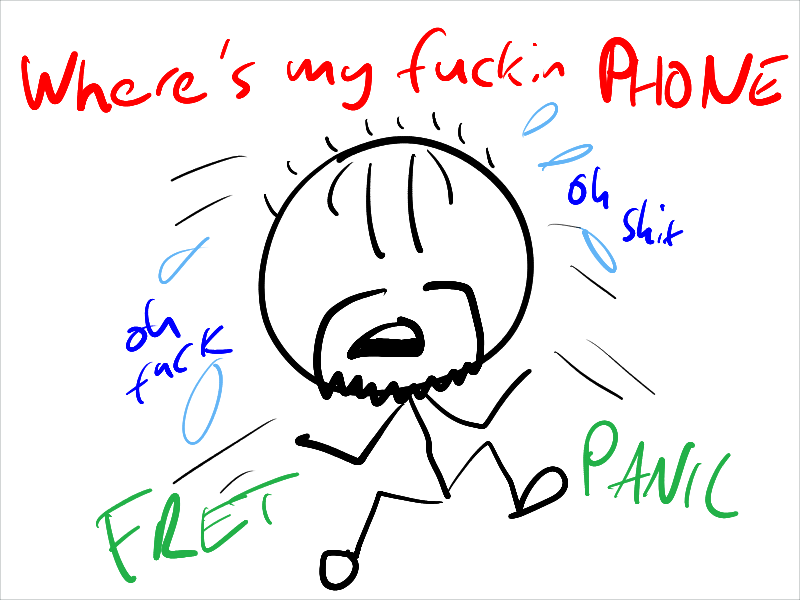
#oneaday Day 826: No-one needs to take their phone into a swimming pool. No-one!

I remember a few years back, the very thought of taking a camera-equipped mobile phone into a swimming pool would have immediately — and quite rightly — branded you as some sort of perverted weirdo. And yet for the last few times Andie and I have been at Center Parcs, we have witnessed the eyeroll-inducing rise in frequency of people who just cannot be away from their black slab of plastic for more than five minutes, and the concurrent increase in prevalence of the waterproof phone lanyard.

Now, I'm sure at least some of the people obsessed with their phones who can't even leave it behind to go swimming think they have some sort of valid reason for bringing it along — be it keeping a record of a family holiday, sharing a video no-one cares about on TikTok or filling up their Google Photos with things that they'll never look at ever again. But I'm also sure I'm not the only one who isn't entirely comfortable with phones being around in an environment where everyone is quite vulnerable due to the fact they're not wearing very much.

And yet this just seems to have sort of… become okay at some point. For pretty much as long as I can remember, those signs next to municipal pools would have "NO PHOTOGRAPHY" as part of the usual "NO DUCKING, NO BOMBING, NO HEAVY PETTING" lineup, but I guess we just… don't care about that any more? Center Parcs' pool does at least have signs saying that photography is strictly prohibited in the changing and shower area, so that's something, I guess, but I still… just don't feel entirely comfortable with this.

To me, it just seems like yet another example of people refusing to just live in the moment without there being some sort of permanent record of it attached to their online profiles. Our brains are amazing things; they can maintain memories of things we loved for a very long time indeed, as I have hopefully demonstrated numerous times on this blog. Hell, I have memories of coming to Center Parcs as a kid that are still incredibly vivid — and I didn't need a camera to keep those memories safe and sound.

I won't be completely hypocritical here; I do often browse back through my Google Photos library, which has become a nice sort of "album" of "what happened when" in many ways — but also at the same time, I know there are times where I will regret having viewed the whole thing on a mobile phone screen. Aside from the fact that I cannot think of a reason why I would actually want to film myself or Andie in the swimming pool, I have always felt that going swimming — particularly if it's at an interesting, fun pool like the ones at Center Parcs — is something best experienced in the moments, and then you carry the memories with you.

Maybe I'm wrong though. Maybe I'm the weird one. Maybe I should just invest in a waterproof phone lanyard and bring my phone into the pool next time.

Nah, I don't think so. I don't want to look like a pervert. And whatever reason people might have for bringing their phones into the pool, I still think they look like perverts. You do not need your phone in the swimming pool. Leave it in your sodding locker like a normal person!


Want to read my thoughts on various video games, visual novels and other popular culture things? Stop by MoeGamer.net, my site for all things fun where I am generally a lot more cheerful. And if you fancy watching some vids on classic games, drop by my YouTube channel.

If you want this nonsense in your inbox every day, please feel free to subscribe via email. Your email address won't be used for anything else.

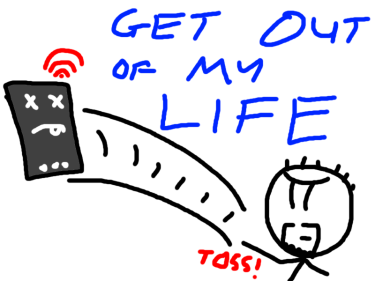
#oneaday Day 298: Can you give up your phone?

I watched a good video earlier, and I recommend you do too if you have a spare 46 minutes and 4 seconds. It's by a chap called Eddy Burback, who makes videos that are just… about stuff. He always puts in a decent amount of research to the topics he talks about, he makes his discussions both interesting and personally relevant, and he's genuinely entertaining. If you've never watched his stuff before, this video is a great place to get to know him.

For those too lazy or disinclined to click that video and actually watch it, his aim was to go 30 days with his smartphone locked up in a safe so he couldn't use it at all. He wasn't denying himself access to the Internet, social media or anything like that, and he set up an old Mac laptop in the corner of his living room to access iMessage if he needed it, but only allowed himself a cumulative total of 5 minutes across the entire month to check it. He found, among other things, that after checking it once, he decided he didn't really need to check it at all.

The other things he did were deliberate, conscious steps "backwards". He set up a landline with an on-device answering machine. He made plans with friends over the phone, and then just showed up at the place he said he'd be at the time he said he'd be there, rather than constantly checking in via text or chat. He navigated by looking things up on the computer at home, then either writing things down in a notepad or just remembering them. He bought a physical pre-payment card to ride the bus rather than using an app. He handled electronic "tickets" for events and facilities such as the cinema by printing out a hardcopy.

And he seemed happy. I'm sure part of this was to aid with the storytelling — you tend to go into a project like this with a hypothesis that you kind of want to prove — but I don't doubt that spending a month without habitually, obsessively checking one's phone is a healthy thing to do. And as time goes on, I increasingly find myself wanting to do just that.

There are, as Burback talks about in the video, drawbacks. If you're not someone who likes talking on the phone, a landline isn't going to do you much good — and likewise if your friends tend to interact with you primarily via text message or chat applications. On top of that, landlines attract spam calls even more than mobiles do. This means you can very easily find yourself feeling even more isolated than you were already, which is probably counter-productive to the intent of the experiment: the aim is to get off your phone so that you can enjoy living your life a little more, and part of that is spending time with friends. If you can't get in touch with those friends via any means other than a text or chat message, that's a problem.

Most other things, there are ways round, though. For navigation, you can still print out maps and directions from sites like Google Maps and Mapquest (which, yes, still exists!). For convenient payments, most places accept contactless cards now, particularly since the pandemic almost outlawed cash altogether. For public transport, pre-paid cards exist, even if you have to go digging to a retailer who actually remembers where they keep them after not selling one for a decade or more. And for making arrangements with friends? Well, if they're good friends, they'll respect your lifestyle decision and be willing to interact with you and make plans via whatever means you are allowing, such as the phone; the fact that people were perfectly fine with adapting to his situation is one of the things Burback seemed most surprised about.

One thing Burback found was that without the constant connectivity a phone in your pocket brings, he was much less likely to cancel plans on a moment's notice or suddenly decide he wasn't in the mood for something. Instead, if he'd made plans, he'd made a commitment to another person, and not showing up for that commitment would be letting them down. Of course, sometimes these things are unavoidable — but that's why you still have means of communicating like the landline or email. It's not like locking your smartphone away completely cuts you off from society altogether. It just means that you are reachable on your own terms.

And I think that's the important thing. It allows you to really take control of your own life. It means you are not beholden to social media algorithms and the arbitrary schedules of whether or not "interesting" people are online posting mindless content that doesn't really enrich your life in any way. It means you're more likely to pick up a book and read it all the way through, instead of scrolling through 50 TikTok videos, not taking anything in from any of them.

Completely getting rid of your phone is obviously a drastic option. But the conclusion Burback came to was that while there are undoubted conveniences — and pleasures — to having a smartphone accessible at all times, having a month completely disconnected from it allowed him to develop a more healthy relationship with it. He was less inclined to doomscroll through social media, less inclined to experience the world through a camera app rather than his own eyes, and more inclined to having fewer but more meaningful interactions with the people who are important to him. And that, in turn, left a lot more time for doing things that he found enjoyable and pleasurable: watching movies, reading books, all that sort of thing.

I won't lie: that sounds nice. I have already cut back on using my phone a lot compared to what I used to do with it, but there are still times when I really resent its presence. Perhaps I should try a similar experiment sometime.


Want to read my thoughts on various video games, visual novels and other popular culture things? Stop by MoeGamer.net, my site for all things fun where I am generally a lot more cheerful. And if you fancy watching some vids on classic games, drop by my YouTube channel.

If you want this nonsense in your inbox every day, please feel free to subscribe via email. Your email address won't be used for anything else.