2071: Eschatos

0071_001

The other day, I talked a bit about shoot 'em up Cardinal Sins. Today, I've been spending some time with its follow-up (or, more accurately, the follow-up to Judgement Silversword) Eschatos.

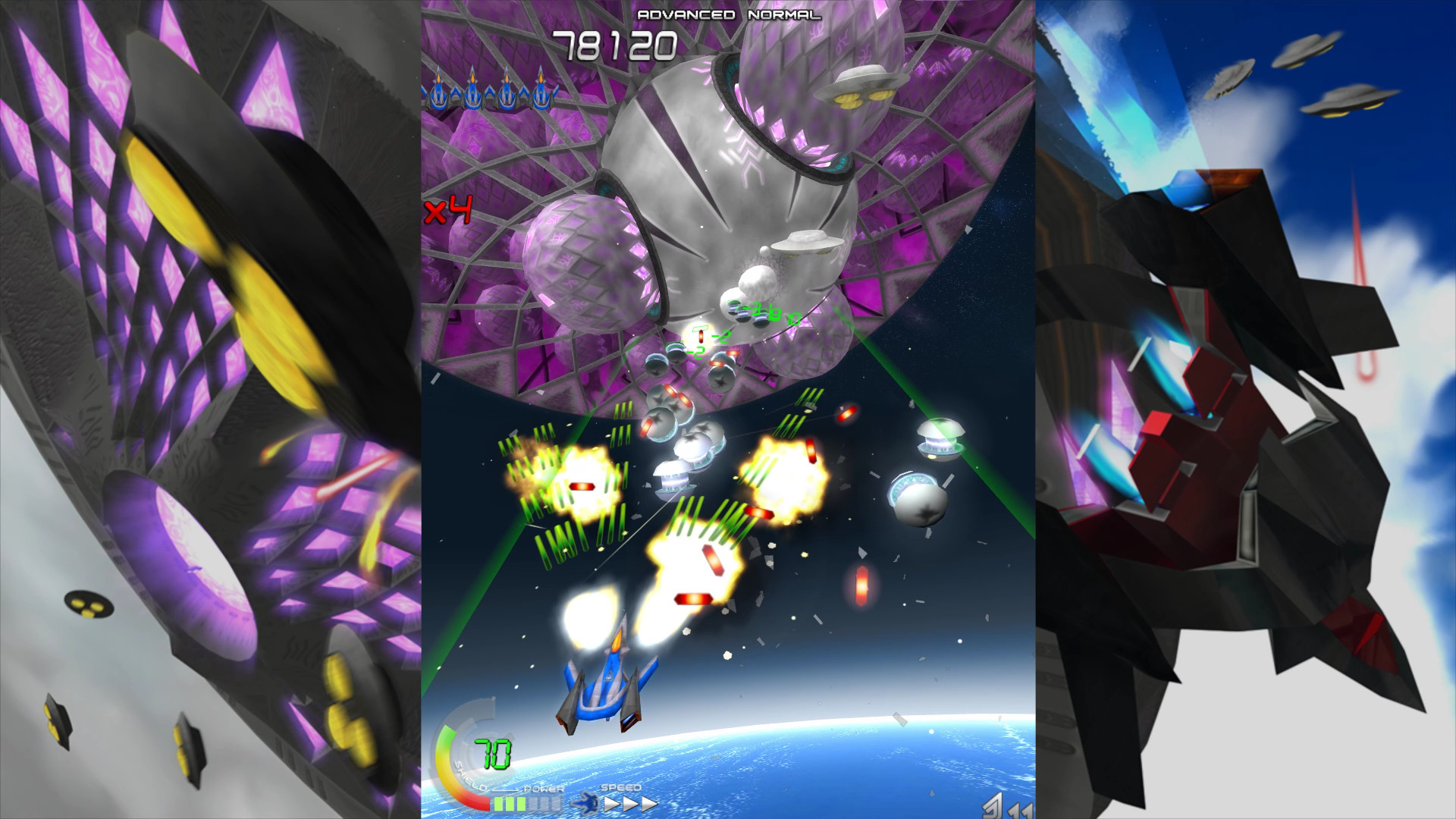
Eschatos is very obviously cut from the same cloth as its predecessors, since it plays almost identically. Its main difference is the fact that it's a considerably more technically advanced game, boasting dynamic camera angles, full 3D polygonal graphics and all manner of other goodies. It's not the most stunning game you'll ever see, but it looks good for a game of this type, and it runs gloriously smoothly, which is of vital importance to the genre.

(At least, the original Xbox 360 version of Eschatos runs gloriously smoothly; at the time of writing the newly translated PC version has some framerate issues on nVidia cards, but the devs are working on resolving this.)

Eschatos is a shoot 'em up that understands that shoot 'em ups should be thrilling theme park rides: exciting and surprising at first, predictable after a few goes. That "predictable" part is important: the essence of getting good at a game of this type is learning what the game is going to throw at you and then dealing with it accordingly, which is something you can only do with practice.
eschatos

Eschatos makes the learning process quite straightforward by splitting each of its stages into areas, and each of its areas into waves. In order to get the best scores, you need to completely clear waves in succession (which increases your score multiplier) as quickly as possible (which nets you a time bonus, multiplied by your multiplier). Even boss encounters are broken down in this way, making it relatively straightforward to learn what to expect, with the challenge then coming from correctly and consistently dealing with it.

It's particularly nice to note that the scoring system is easy to understand and parse, even on the game's "Advanced" mode; having largely come to modern shoot 'em ups through Cave games, which tend to have some of the most complicated scoring mechanics known to man, this is a very pleasant surprise indeed, because it makes it easy to understand how to get better at the game: destroy more stuff more quickly, simple as that. (This is where someone chimes in and points out it's actually much more complicated than that, naturally…)

I'm a fan. I must confess the 360 version had been on my shelf for a while unplayed, but the event release of the Steam version (and the realisation it could do with a patch) inspired me to dig it out again. I'm once again reminded that Japanese devs really are the masters of their craft… and, apparently, of glorious FM synthesis music that sounds like it's straight out of a Mega Drive game.

Time to go chase some high scores!
2069: Cardinal Sins

0069_001

In between some lengthy Grisaia sessions today — I'm tackling Michiru's route now, and my goodness is there going to be a lot to talk about there — I decided to check out some shoot 'em ups that hit Steam the other day: Eschatos and Judgement Silversword, previously available on Xbox 360 and, in the case of Judgement Silversword, the WonderSwan Color, of all things.

Judgement Silversword comes with a spinoff game called Cardinal Sins, and it's actually that I've spent the most time playing today. Cardinal Sins takes the basic gameplay of Judgement Silversword and, instead of pushing you through a sequence of stages with difficulty that gradually ramps up (with a few big spikes along the way, if the first boss is anything to go by!) it challenges you to complete various objectives in the stage.

The game is themed around the Seven Deadly Sins, with each of the seven stages being named after one of them and providing you with a different means of attaining a strong grade or "judgement" at the end of the game. The first stage Envy, for example, tasks you with simply destroying as many enemies as possible, with your grade dependent on the percentage of all the available enemies you destroyed. Sloth, meanwhile, tasks you with simply grabbing as many extra life pickups as you can (and you can destroy them, so you have to actually ease off the shooting a bit), while Greed tasks you with "gathering data" on enemies by fulfilling various hidden conditions.

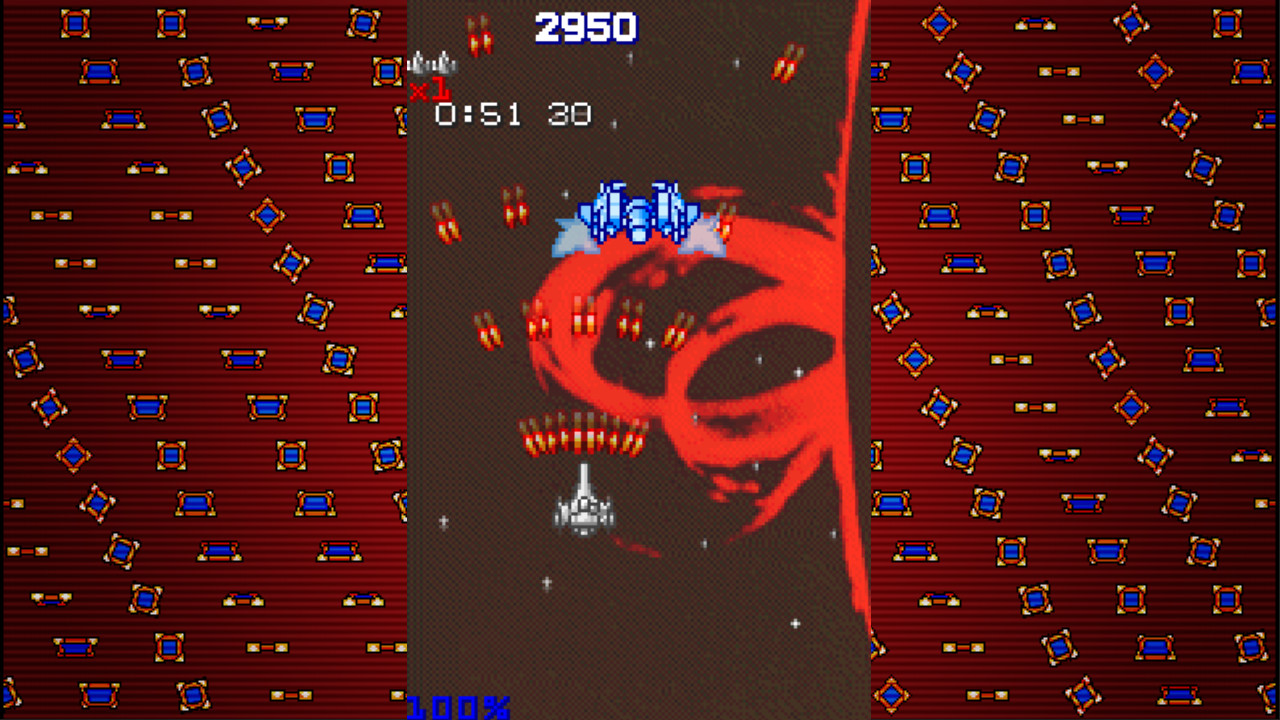
cardinal1

Greed is perhaps the most interesting of the stages as well as the most thematically appropriate, because getting too greedy for the "data" will result in your untimely destruction; instead, you need to learn moderation (or at least master the peculiar "shield" ability your ship has, which allows you to cancel bullets, but only from the front of your ship) in order to succeed.

After Greed comes Pride, where your job is to raise your score multiplier to x100 by destroying enemies as efficiently as possible — your multiplier increases by one for every enemy destroyed, but also drops by one every second or so. Following this is Lust, where you must clear as many enemy waves as possible; Gluttony, where you must destroy enemies for collectibles; and finally Wrath, where you are graded according to how many times your ship is destroyed during a horrid boss fight.

Interestingly, Cardinal Sins doesn't kick you out to a Game Over screen if you run out of lives at any point; you always play through the seven levels in order, with your lives being reset at the start of each stage. Run out of lives and you simply get a "failing" F-grade on that stage, but you can carry on. There's incentive not to do this, however; get through all the stages without any failures and you'll be presented with the final battle, initially against a series of small but strong bullet-spewing enemies, and subsequently against a larger version with some seriously unpleasant bullet patterns to fend off. Only by defeating this "Mirror of Cardinal Sins" can you clear the game and sit back with a satisfied expression on your face.

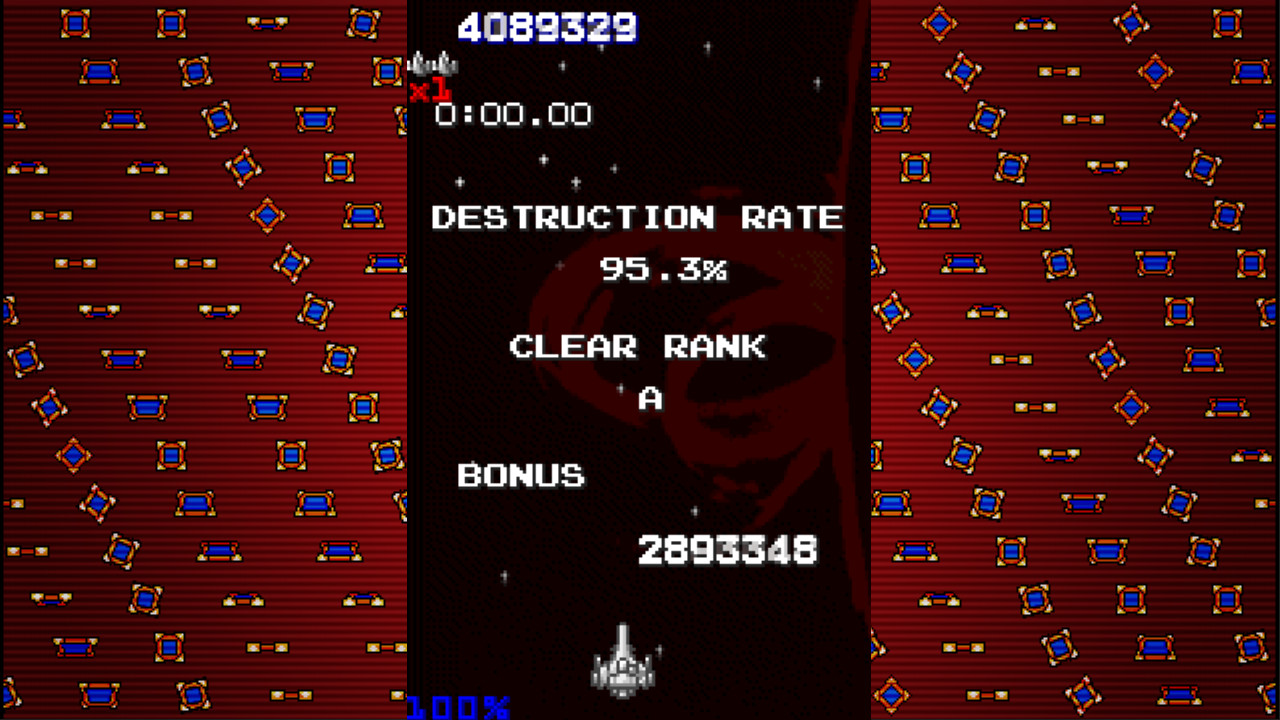
cardinal2

I really like this game for a number of reasons. Firstly, it's nice to play a game that is genuinely retro rather than the fashionable faux-retro of much of the indie scene today; the game features some simple but deliciously crunchy chiptune music and sound effects as well as some limited but effective and clear visuals.

Secondly, it's damn fun. The difference in structure from the usual shoot 'em up format of "survive as long as you can" makes it immediately stand out for me, and I'm a sucker for anything with an interesting grading and scoring system.

Thirdly, I'd never heard of it before, and now it's on Steam a whole bunch of newcomers — including me — will get to experience it for the first time, along with its companion game Judgement Silversword and its pseudo-sequel Eschatos.

With Cave shoot 'em ups apparently on the way to PC via Steam soon, it's starting to look increasingly likely I can finally retire the Xbox 360, which had previously been my shmup machine due to Japan's bizarre rejection of the platform for everything except fantastic arcade shooters.