#oneaday Day 634: Revelations... too

With all the talk over Resident Evil Requiem recently, I thought it about time I resumed my efforts to catch up on the series. When I last left off, I had played all of the mainline games (in the form of their most recent incarnations/remakes) up to and including the first "episode" of Resident Evil Revelations 2, which means after that I still have Resident Evil 6, 7, Village and now Requiem still to go also.

I forget why I pressed pause on Revelations 2, because returning to it now, I'm enjoying it a lot. I remember when Resident Evil 4 was first announced, I was skeptical about the series' apparent shift towards being more action-oriented, but the two Revelations games are underappreciated examples of this working really well, having shed the clunkiness from the original incarnations of Resident Evil 4 and 5 to behave a bit more like how we today understand a conventional third-person shooter to play.

That said, Revelations 2 doesn't feel like a relentless third-person shooter; it's nicely paced, with a nice ebb and flow between moments of quiet menace and dread, and moments of all-out action. It's still got enough "survival horror" in its DNA to make it so that if a zillion enemies are coming your way, the best thing to do is, in fact, to run rather than attempt to fight them all off, since standing your ground will almost certainly result in you running out of ammunition.

The two story threads, visiting many of the same locations six months apart, work well and are intriguing enough to keep things interesting, but the game never lets its narrative aspect overwhelm the gameplay side of things; this is a game where it feels like playing the game is the important bit, and a snippet of story is your reward for succeeding. Over the years, I've had changing thoughts about the relationship between story and narrative, and I'm still not sure I have one, single coherent position — it generally depends what mood I'm in — but at the moment, I'm very much enjoying the fact that in Resident Evil Revelations 2, you spend the majority of your time actually doing stuff.

Also the game fully embraces the cheese factor. One of the first lines in the game features an admirably excruciating pun about terrorism that part of me can't quite believe made it into the final script, and frequently throughout the rest of the game, characters reference some of the most notorious moments in the early games' terrible dialogue sequences. Yes, that includes "master of unlocking" and "Jill sandwich" — albeit it's "Claire sandwich" here.

Another nice thing about Resident Evil Revelations 2 is that, much like earlier entries in the series, the whole thing has no shame whatsoever about being a video game. Finish an episode and you unlock special "Countdown" and "Invisible" modes, challenging you to make it through the same scenarios with special conditions. The real long-term appeal comes from the "Raid" mode, though, which is a development of something introduced in the first Revelations. Here, you take control of a character in a series of completely narrative-free, arcade-style challenges and battle for high scores, power-ups and goodies. You can play it multiplayer, too, and I bet it's a ton of fun to do so — maybe one day I might actually get to try it with someone, although nailing anyone down for a multiplayer session of something these days is, much like anything else involving social interaction, like pulling teeth.

Anyway, regardless, I'm having a lot of fun with Revelations 2 right now. I'm just about to start the fourth and final episode this evening, then after that I'll have to decide if I want to fiddle around with some of the extra modes, or move right on to Resident Evil 6. I know people don't like Resident Evil 6 very much, but I am curious to play it — and if I'm doing the whole series, I might as well give the less popular entries a chance. (For the record, so far my least favourite by far has been Resident Evil 5, which does not surprise me, given its less than stellar reputation. But I was at least open to trying it, and I didn't hate it by any means.)

On that note, then, it's time to go… back to the mansion! Wait, no, that's something else.


Want to read my thoughts on various video games, visual novels and other popular culture things? Stop by MoeGamer.net, my site for all things fun where I am generally a lot more cheerful. And if you fancy watching some vids on classic games, drop by my YouTube channel.

If you want this nonsense in your inbox every day, please feel free to subscribe via email. Your email address won't be used for anything else.
2330: Play It Again

0330_001

So many games these days are designed to be played once and then put aside — or, in some cases, played forever and ever and ever and ever — that it's been quite a refreshing feeling playing through Ys Origin for a second time on a harder difficulty with a different playable character. It's making me quite nostalgic for the PlayStation 1 era in particular, and is reminding me somewhat of one of the earliest games I recall taking this sort of approach: Resident Evil 2.

Resident Evil 2 was actually really neat when it came to its multiple playthroughs. You'd play it once as one of the two lead characters, then play it again as the other lead to see what they were doing while the first lead was doing their thing. Then you'd start a new game as the other lead character, then play it again as the first lead character to see what they were doing while the other lead was doing their thing. Naturally this was a nightmare for continuity and meant that there wasn't really a "definitive" version of the story, but it didn't really matter: it meant you could go through the game four times and have a somewhat (albeit marginally) different experience each time.

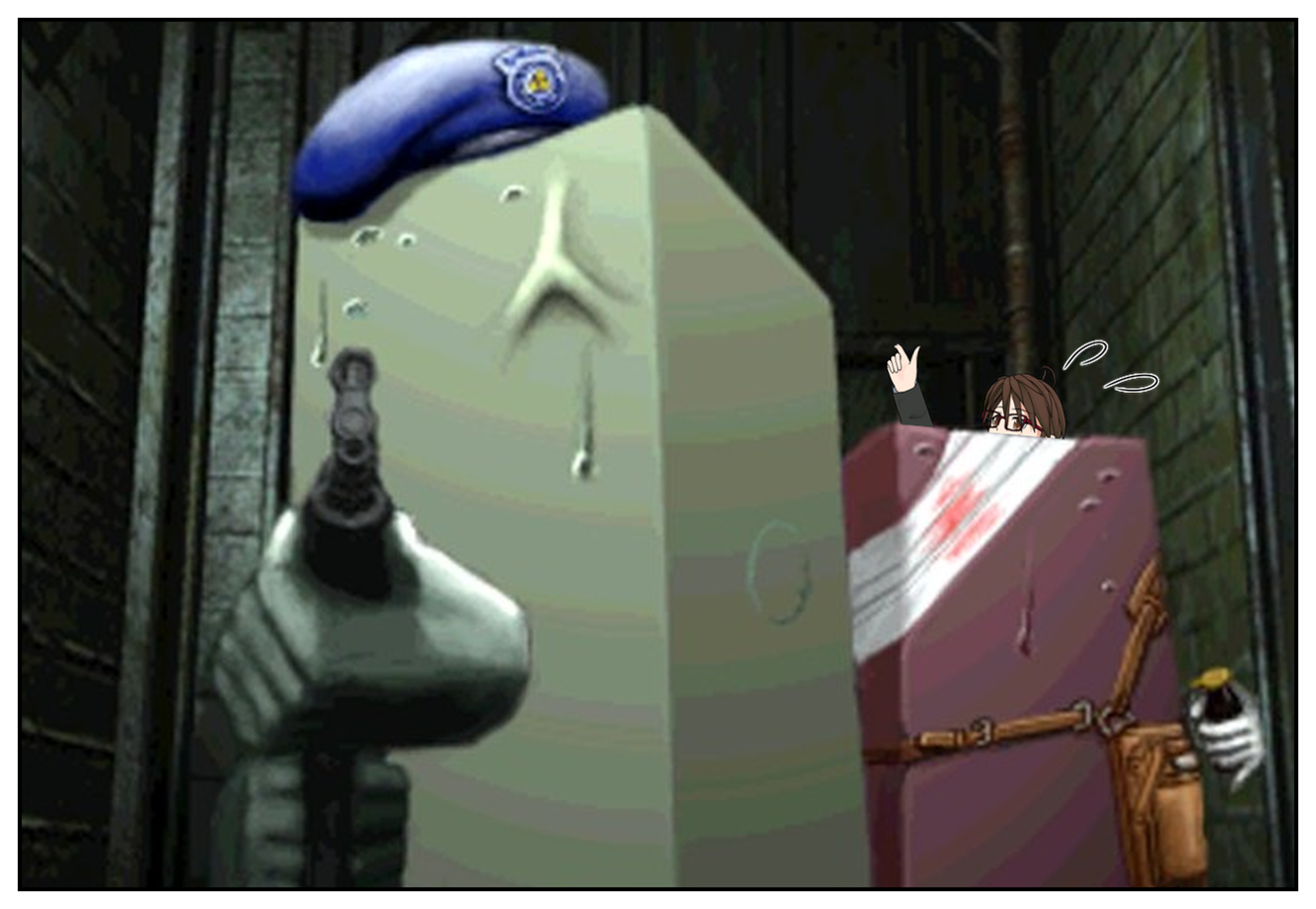
But Resident Evil 2 — and indeed Ys Origin — didn't stop there. No, there were unlockable secrets, once the preserve of the mysterious tips pages in games magazines, but these days discovered by people with a lot of time on their hands in seemingly minutes flat. And they're significant secrets, too: Resident Evil 2 allows you to play an entirely new scenario as a character called Hunk as well as, rather oddly, a large block of tofu, while Ys Origin unlocks a third playable character after your first playthrough, then unlocks Time Attack, Boss Rush and Arena Modes after that, meaning that — assuming you want to carry on — the game is far from over when you've beaten the final boss with all the characters and seen all the story. And then there's the various difficulty modes and achievements to play with, too — it ultimately makes the whole game considerably better value than it might first appear, with its 6-10 hour playtime for a single runthrough.

I kind of miss this approach. There was a feeling of discovery and excitement as you worked to unlock secrets and extras in games, and you felt good when you achieved it, finally, because it was the result of actually achieving something in the game. These days, however, extra modes and stories are all too often the preserve of DLC, which just doesn't have the same magic at all, largely because you have to 1) pay for it and 2) don't have to earn it to unlock it.

I know not everyone likes having to unlock things to be able to enjoy it all, but it's always been something I've liked, and a fundamental part of many gaming experiences. Ys Origin — and, I anticipate, the other Ys games I'm yet to work my way through — is proving to be a pleasantly enjoyable reminder of The Good Old Days in more ways than one, and just another reason I'm becoming increasingly enamoured with both the series and Falcom as a developer.

#oneaday Day 548: Capcommotion

I'm a bit surprised by the way Capcom have been acting recently. I always used to figure them for a company that had their collective heads screwed on pretty well, and with their Capcom Unity (geddit?) site showing a much greater effort than many publishers to engage with fans, it looked like they were getting 21st century marketing right.

Then came the Mega Man Legends 3 project, where the community would be able to play an active role in the making of the game. The Capcom Dev Room page allowed users to submit ideas — many of which would end up in the final game — as well as see how the development of a game progressed from start to finish, complete with all the trials and tribulations it faced along the way.

The other day, the project got cancelled on the grounds that its transparency was proving to be "quite concerning" for the rest of the company. This, to me, is somewhat worrying, and suggests that Capcom has something to hide. It could be something as simple as the fact that they actually haven't done any real work on Mega Man Legends 3 since Keiji Inafune left last year, or it could be something altogether more sinister along the lines of the Team Bondi fiasco.

This isn't the only mis-step Capcom have made recently, either. The Resident Evil: The Mercenaries 3D save game issue stank from start to finish. To say that it's "not possible" to erase a save file on a 3DS game card is absolute nonsense — erasing a file involves writing to the card, and in order for the save to be on there in the first place the card must be written to. So there is absolutely no way that it would not be possible to reset the save data, yet Capcom persisted in perpetuating a lie to the community.

And today we learn that there's an "Ultimate" edition of Marvel vs. Capcom 3 on the way, featuring 12 new characters, 8 new stages and a spectator mode. But existing DLC characters aren't included in the package, naturally. And the "Ultimate" edition is a standalone retail product for $40, not a DLC expansion, which it really should be. I should be excited by the fact that Capcom have finally added Phoenix Wright to the game after a considerable amount of fan requesting, but instead I'm left with a bitter taste in my mouth due to them re-releasing a slightly-enhanced version of a game which only came out in February.

Sadly, this practice is becoming more and more common with this generation of consoles. And while I perhaps wouldn't go quite as far as my friend Mr Peter Skerritt in saying that this generation "sucks" — there's a lot to like, after all — I do believe that the obnoxious business practices that more and more publishers are starting to adopt are going to come back and bite both game companies and consumers in the ass at some point in the very near future.

I mentioned something along these lines on Twitter the other day in reference to Rockstar's comments that L.A. Noire still isn't finished despite having released its "final" piece of DLC. The response I got was surprising; the practice was defended on the grounds of it making good business sense. If we're at this stage already where blatant money-grabbing and the cutting of content from games in order to hold it back for subsequent DLC or new retail editions is defended by the community because it makes good business sense, it's a sad situation indeed. We gamers are supposed to be giving money to the software companies we want to support because we like their products, not bending over and asking in what ways they can violate us next. I'm quite happy to buy a game and never resort to piracy, but with more and more early adopters being punished by having to pay full whack for a product and then being stung for DLC down the line, it's understandable if people feel disillusioned by the whole thing.

That said, not all hope is lost — since picking up a gaming PC I've been using the consoles far less. And while there is DLC for PC titles, many PC gamers are a lot less patient with this sort of bullshit — largely because there's an enormous and active modding community out there more than willing to provide content of a higher quality than Activision's $15 map packs for free. And there aren't many PC games I've played recently where there's a big hole for some DLC — I intend on going back through Mass Effect 2 at some point, so I may feel differently after that, though.

The most frustrating thing I find is that people don't seem to realise or care that they are being taken advantage of. We can complain all we like about Capcom releasing the same game twice in the space of nine months, but we all know that there are enough people out there who will happily part with their cash and give Capcom the sales figures they need to justify rolling out this obnoxious business practice again and again. We can bitch all we like about paying $15 for Call of Duty map packs, but people pay it, again showing Activision that it's Okay to Do This. And we can point our fingers and say L.A. Noire's add-on cases should have been in the game in the first place, but I bet most players picked them all up just out of curiosity if anything, giving Rockstar the green light to do more in the future.

It's refreshing to see that not all of the industry is operating in this way, though. Indie developers are flourishing — and the community is taking to them. Indie RPGs Breath of Death VII and Cthulhu Saves the World along with awesome roguelike Dungeons of Dredmor topped the Steam sales charts on their day of release, and in less than a week on sale BoD/CStW has equalled its sales from a year and a half on Xbox Live Indie Games. Minecraft continues to go from strength to strength. And Frozen Synapse proves more popular than its developers could have ever dreamed.

Right now, I'm thankful that the indies exist, because with every day that passes, each new "teaser reveal", each new embargo, I'm losing more and more respect for the big publishers.