#oneaday Day 723: The Atari 8-bit doesn't get its dues

Hello. I am Pete, and I love the Atari 8-bit range of computers. You probably knew that already, but I wanted to talk about it a bit today.
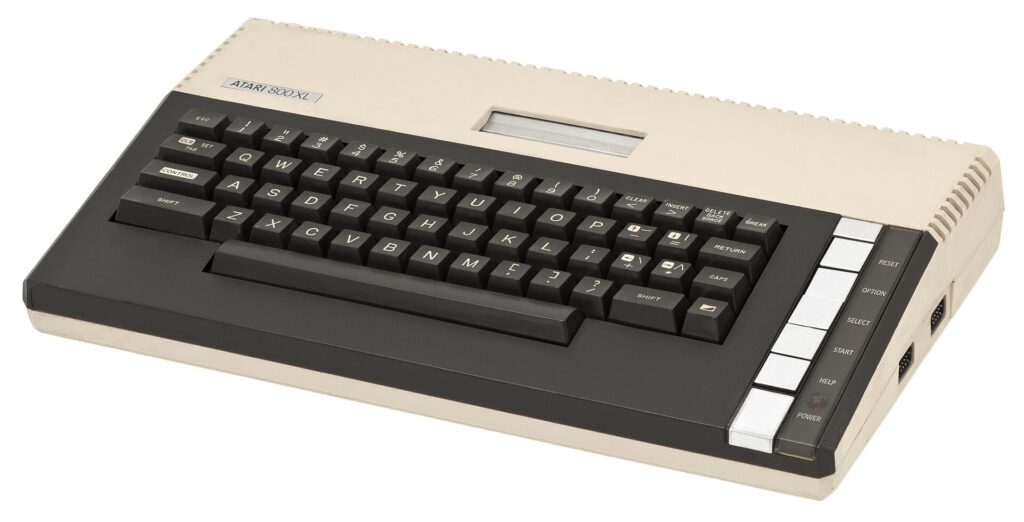
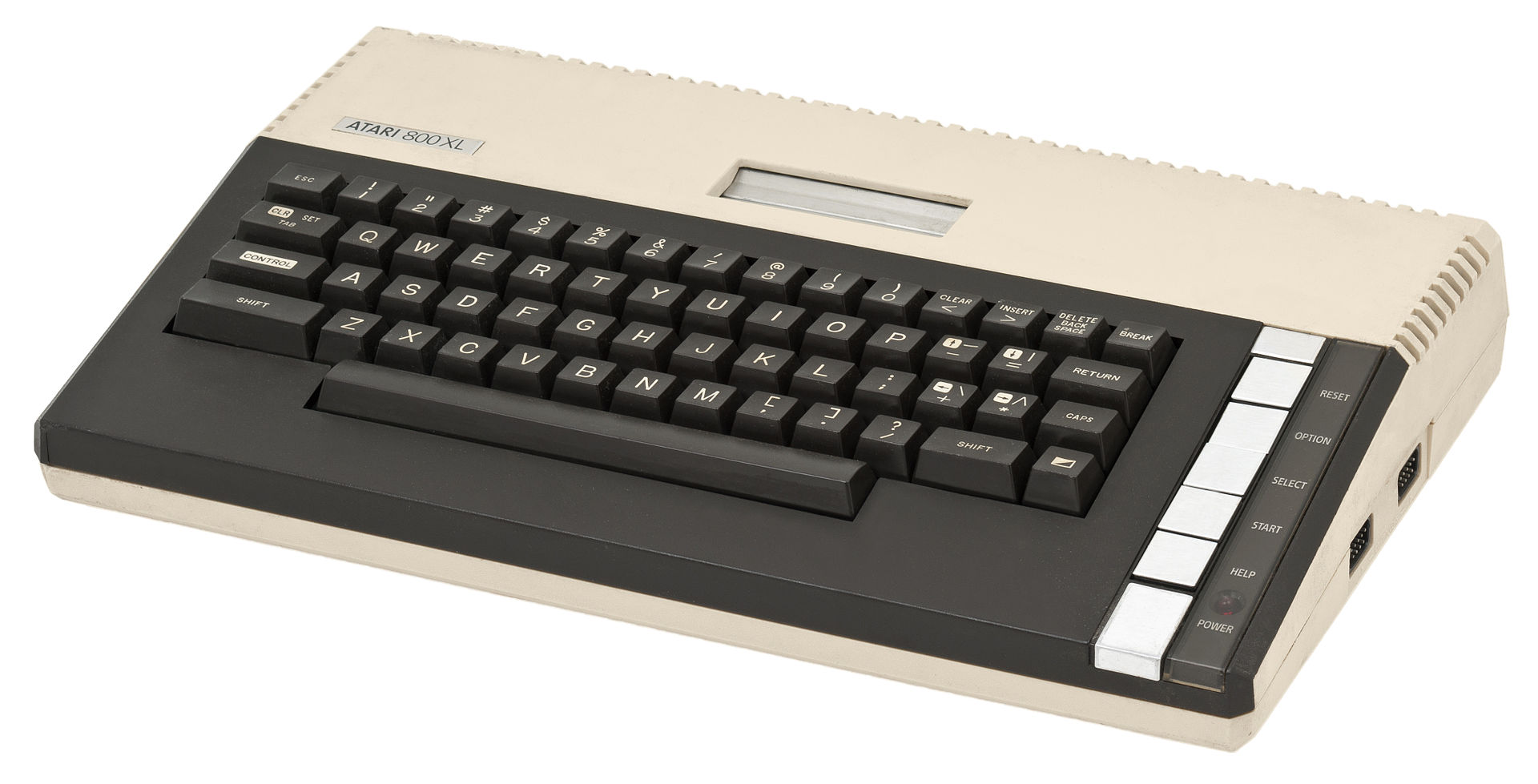
By Evan-Amos – Own work, CC BY-SA 3.0, https://commons.wikimedia.org/w/index.php?curid=18553927

I think I'm probably going to make a video along these lines sometime soon — although my prior video on the announcement of The400 Mini a while back covers a lot of the points I'd want to cover — but it's on my mind today, so that's what we're talking about today.

One of the reasons I want to talk about Atari 8-bit computers is because I don't feel they get nearly enough respect. No, they were by no means as popular as the Commodore 64 and Spectrum — the former of which is the subject of a cover feature in Retro Gamer magazine this month — but I also feel like they had a significantly stronger foothold in the market than other "failed" micros from the era. Not only that, but they are historically very significant for a number of reasons, some of which I'll try and outline today.

This is going to be a bit of a stream-of-consciousness sort of probably autistic infodump, because I'm just banging this out as I feel like it. If and when I do decide to make a video about all this, there will probably be a bit more structure, research, that sort of thing. Like I say, this was just rattling around in my head today, though, so I wanted to at least get some thoughts down on paper. So here it is.


For the unfamiliar, the Atari 8-bit range consists of several models:

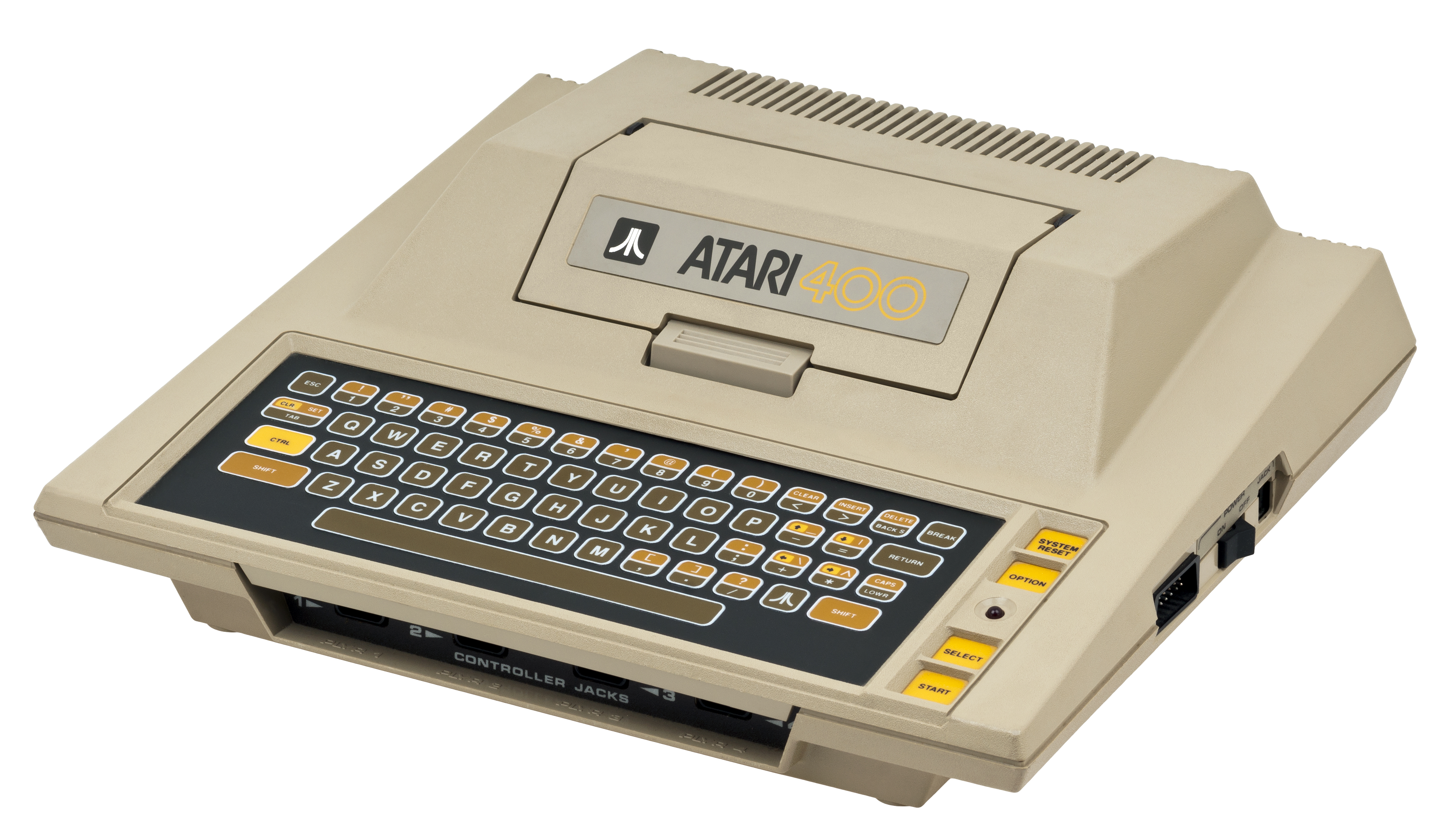
  • The Atari 400, which released in 1978, and initially features 8 kilobytes of RAM, though later revisions bumped this up a bit. This was marketed in some areas as a games machine, as it was the cheaper of the two models to release in 1978, had four joystick ports and sported a flat, supposedly spill-proof membrane keyboard to make it suitable for "family" use.
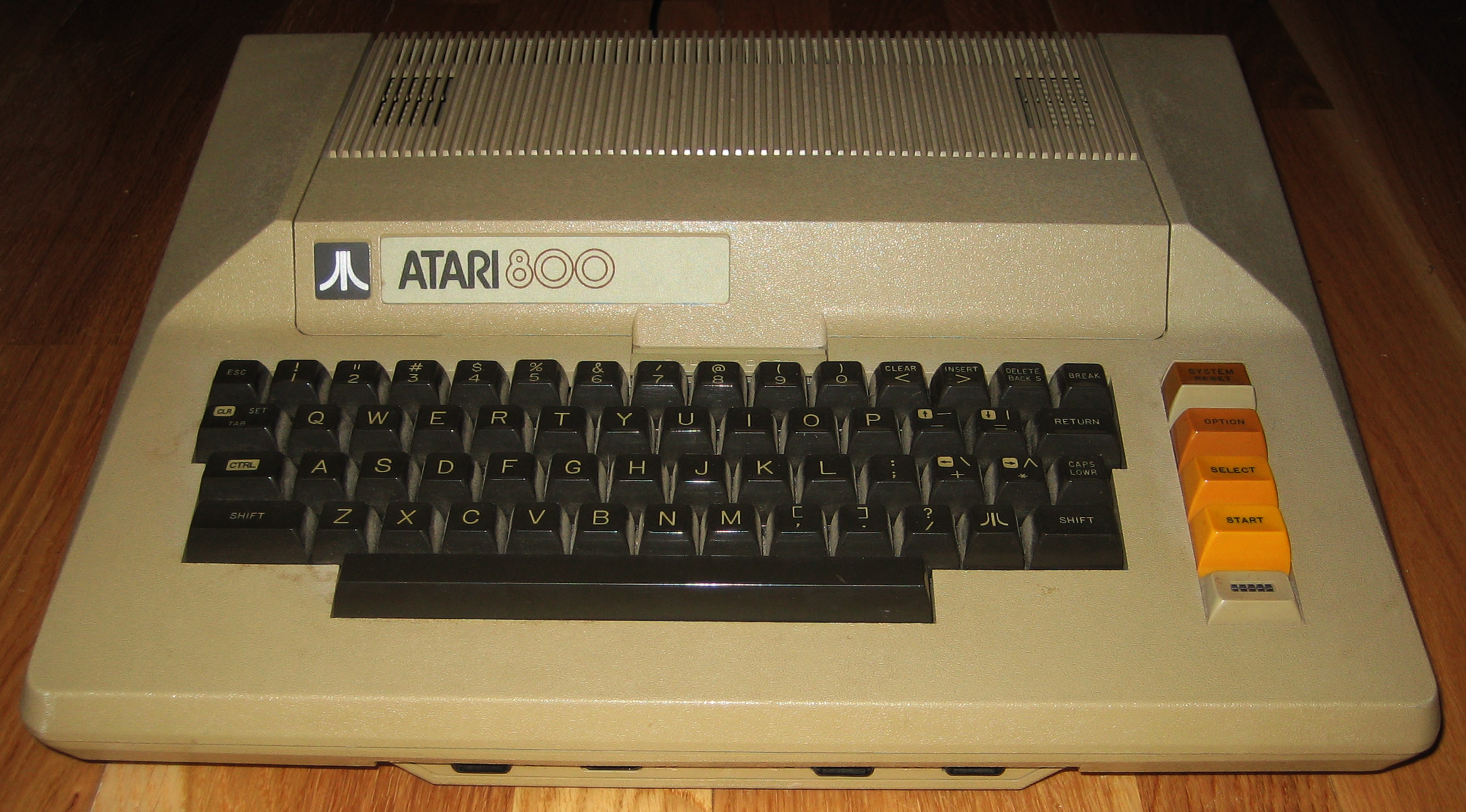
  • The Atari 800, which released alongside the 400 in 1978, and was positioned as a more "serious" machine. It had a "normal" keyboard, user-upgradable RAM (up to a maximum of 48 kilobytes) and two cartridge slots instead of one (though there were very few releases that took advantage of this) — and it cost considerably more.
  • The Atari 1200XL was the first step in a refresh of the Atari 8-bit line in 1983, intended to replace the 800. It came with 64 kilobytes of RAM, a completely redesigned case, built-in self-test features and a rather nice keyboard. It was also much too expensive and had a number of issues, causing Atari to pull it from sale before long, and to not release it in PAL territories at all.
  • The Atari 800XL (pictured above) was a do-over of the 1200XL project. It also had 64 kilobytes of RAM, the newly designed case (now not quite so deep), built-in self-test features and lovely keyboard, but also added built-in BASIC to the mix along with revisions to the operating system. It was Atari's best-selling 8-bit home computer.
  • The Atari 600XL was a cost-reduced version of the 800XL, which had an even slimmer case and only 16 kilobytes of RAM. With the 800XL replacing the 800, this was effectively the replacement for the 400, but it did not sell very well compared to its big brother.
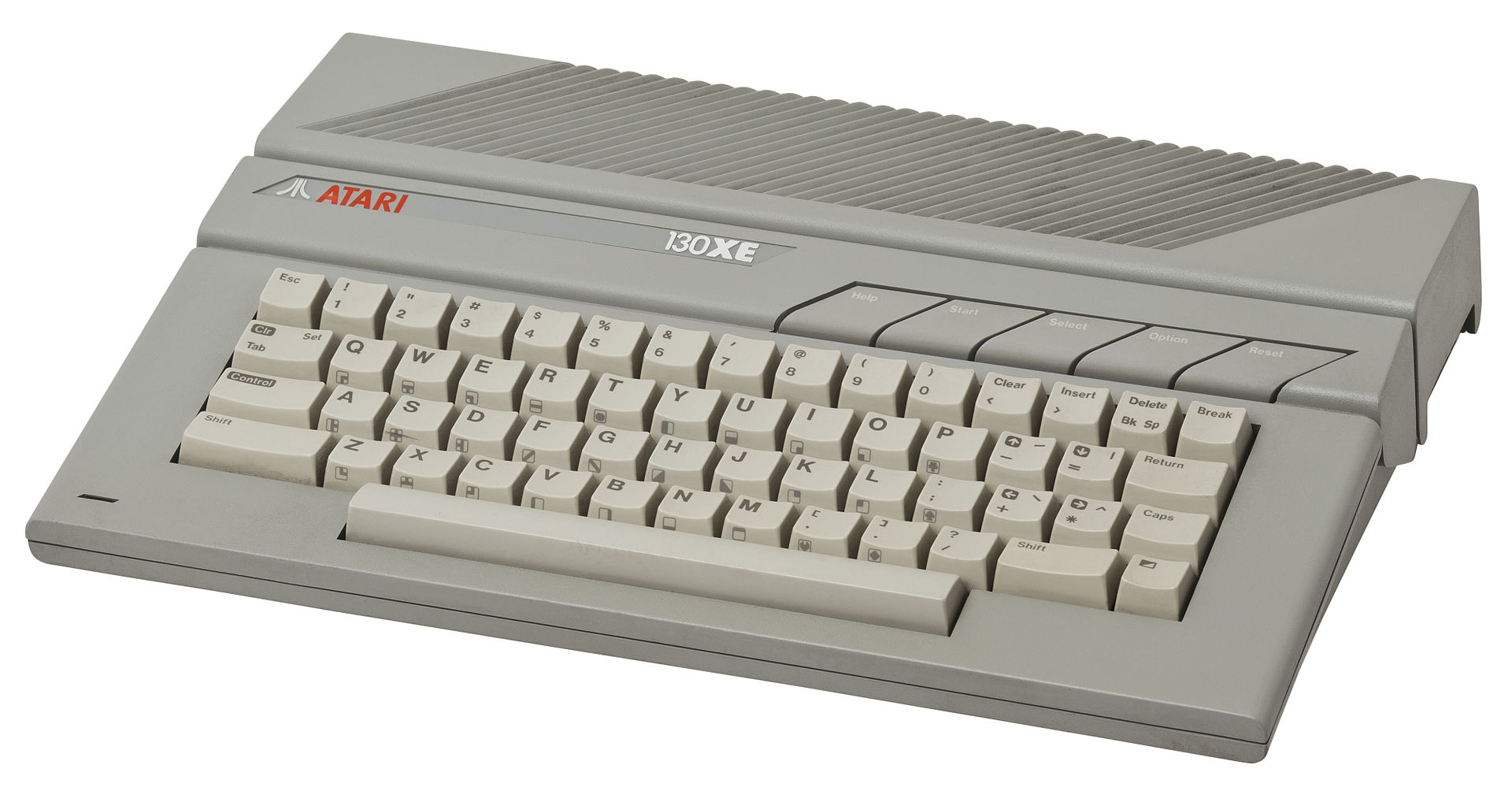
  • The Atari 130XE was launched in 1985, after Jack Tramiel took over Atari, and was designed to look like a "little brother" to the 16-bit Atari ST. It featured 128 kilobytes of RAM, new revisions of the operating system and BASIC and a new case design, but otherwise didn't bring anything significantly new to the table. It is a nice machine, though, and my Atari 8-bit of choice.
  • The Atari 65XE was essentially identical to the 130XE, only with 64 kilobytes of RAM instead of 128.
  • The Atari XEGS was a 65XE in a console-style case with a detachable keyboard. It was positioned primarily as a games console, even more explicitly than the 400 back in 1978, but was a fully functional computer that would work with all Atari 8-bit peripherals.

Broadly speaking, these models are all cross-compatible with one another, aside from obvious exceptions such as programs that need a particular amount of RAM to run properly. There are a few compatibility issues between very early pieces of software that were designed for the 400 and 800 and the later XL/XE models, but these can usually be got around by using a "translator" program to temporarily load in an older version of the operating system, and the Atari community at large has also been hard at work patching many games to work universally on all Atari 8-bit systems.

Like most other 8-bit computers, the Atari 8-bit had three means of loading software: ROM cartridge, cassette tape or 5.25" floppy disk. ROM cartridges are incredibly simple: plug them in, turn on the machine and the software is there, ready to go. These were primarily used for games, particularly in the early days of the platform, but there are some pieces of utility or productivity software that run from cartridge, too. Notably, using a cartridge effectively allows the ROM within to "extend" the Atari's capabilities; a good example of this is the SpartaDOS X package, which adds an MS-DOS style command line for manipulating files on floppy disks.

Cassette tapes were certainly used by Atari enthusiasts, but not to the same extent as on the Commodore 64 and ZX Spectrum. The reason for this is that the tape loading system in the Atari 8-bit was significantly slower than on its main rivals, resulting in load times of half an hour or more for games that would take just a few minutes on other platforms. That said, the Atari 8-bit could make innovative use of the tape medium by playing back audio during a program — a good example of this is the Conversational Language series of packages, which teach French, German, Italian and Spanish through interactive lessons, with recorded speech coming straight off the tape and being played back through the TV speakers at the appropriate moments.
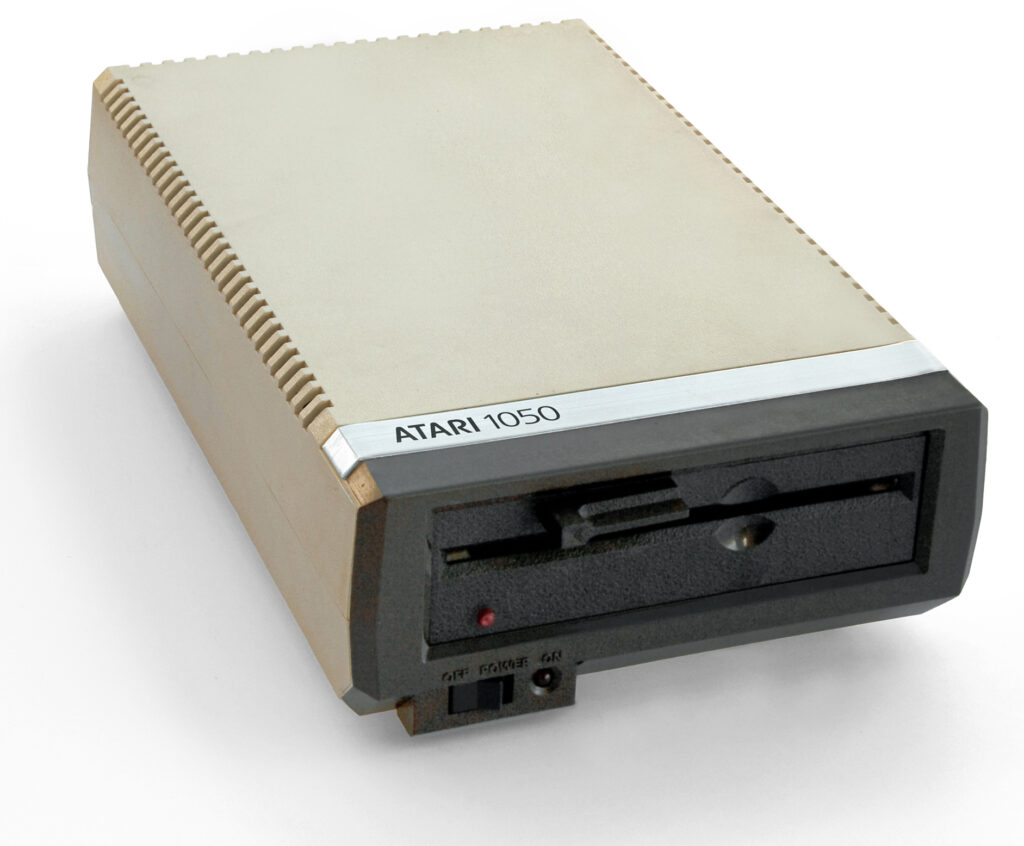
By Bilby – CC BY 3.0, https://commons.wikimedia.org/w/index.php?curid=48108881

Instead, disk drive use was very popular. There were two main disk drives in the prime of the Atari 8-bit's lifespan: the original Atari 810, which followed the design language of the 400 and 800, and the Atari 1050, which was designed to fit in alongside a 600XL or 800XL setup. There was an even later XF551 drive, but this didn't really catch on for various reasons, and these drives are a lot harder to find today.

You connected a tape deck or disk drive to the Atari via its proprietary Serial Input/Output (SIO) port, and this brings us to one of the most historically significant things about the range: SIO was designed as a universal connector for all manner of different peripherals, not just media storage devices. Sound familiar? That's right; it's very much a precursor to modern USB; Joe Decuir, who created this architecture, holds patents on USB.

SIO had a few differences to modern USB, most notably the fact that devices could be daisy-chained together. This means that even though the system only had one SIO port, you could connect multiple devices simply by linking them together. Obviously this was dependent on the device in question having a suitable port — and not every device did — but in theory you could keep on linking as required, making it easy to have, for example, setups that used multiple disk drives, and even cassette and disk simultaneously if you so desired.

Using a disk drive with the Atari 8-bits required one extra step: the use of a Disk Operating System, or DOS. Atari made its own DOS that underwent several revisions over the lifespan of the Atari 8-bit models, and although closed source and distributed under a proprietary license agreement, it could be redistributed. Good job, too, because in order to actually boot something from disk, DOS needed to be loaded first. If you wanted to be able to save BASIC programs to disk, you also needed to boot DOS from disk before starting to write your program.

The most commonly seen versions of Atari's DOS from back in the day used a menu-driven interface that allowed various disk functions such as copying and deleting files as well as locking/protecting them, loading executable files that were not set up to automatically boot when turning the computer on, formatting disks and creating new DOS disks.

Programming on the Atari used, like most of its contemporaries, a dialect of BASIC. Unlike many other BASICs at the time, it is not a version of the popular Microsoft BASIC (although this was available) and thus had a number of its own unique Atari-specific commands. Carrying out many functions, particularly relating to graphics, that would require POKEs on other platforms could be done with dedicated commands on the Atari, but conversely Atari BASIC lacked the ability to create arrays in string variables. It was, on the whole, a well-liked language, and the two main Atari magazines of the era, Page 6 and Atari User (which later merged to become New Atari User), typically printed type-in listings for all manner of programs in every issue. Not just games, either; both magazines were keen to position the Atari computers as capable, multi-function devices that were far more than just sources of entertainment.

Other programming languages were, of course, available. Those keen to get their hands dirty could write programs using 6502 assembler, while as the years went by, speedy languages such as Action! and Turbo BASIC XL came along and offered compelling alternatives to the built-in or cartridge-based BASIC that was, for many, the foundation of programming on the Atari range. These languages could be compiled into executable binaries, too, meaning that an end user would not need a copy of the language to run a program written in it.

The Atari's audio-visual capabilities were very solid. The dual ANTIC and GTIA graphics chips offered hardware scrolling, built-in "player-missile" sprites, and a wealth of different graphics modes allowing various balances between memory usage, resolution and colour depth. The POKEY chip offered four-channel audio with a good amount of customisation — although not quite as flexible as the SID chip found in the Commodore 64. It also handled a lot of the Atari 8-bit's input/output, meaning the system has the charming feature of making blippity bloop sounds when loading and saving from/to disk or tape rather than the horrific screeching heard on other platforms.

And then we come to the games. While some of the high-profile software houses — notably outfits like Ocean, Imagine, Ultimate and suchlike — refused to support the Atari 8-bit, others, like Electronic Arts and Activision, did, at least in the early days, and the budget companies like Mastertronic, Atlantis, Zeppelin and Alternative had a good presence on the platform, too. The end result of this from a 2026 perspective is that the Atari 8-bit library is largely unique, with many titles not being found on any other platforms — and in the case of multiplatform affairs, the Atari release often being a particularly good version. (There are exceptions, of course; the Atari 8-bit versions of Action Biker and The Last V8 are woeful compared to the C64 releases.)

There's also the fact that a lot of games which went on to worldwide success on a variety of platforms often originated on Atari 8-bit. All-time classics like Boulder Dash, M.U.L.E., Miner 2049'er and Spelunker debuted on Atari before spreading to other platforms, and esteemed creators like Archer Maclean were really able to make the system sing with games like Dropzone.

The only thing the library is lacking compared to its more successful 8-bit counterparts is a library of solid arcade conversions from the years following the initial early '80s "golden age"; those early '80s titles are well-covered, however, with excellent versions of Pac-Man, Dig Dug, Pole Position, Qix and plenty more — and a wealth of "unofficial" clones, too.

So why doesn't this system get anywhere near the love and attention that the Commodore 64 and ZX Spectrum do? I honestly don't really know, because although the platform undoubtedly sold considerably less than both of its main rivals, I don't think one can in any respect call it a "failure". Its longest-lasting magazine published its final issue in 1998, for heaven's sake — and said magazine was including material for the Atari 8-bit right up until that very final issue. Not only that, the modern "homebrew" scene is incredibly active and vibrant to this day, with some truly amazing new games being released for the platform on a regular basis, along with some excellent ports of C64 and Spectrum games that never made it to Atari back in the day.

I would love to see the Atari 8-bit get more acknowledgement. There are some YouTubers who do give it its dues — Kim Justice is a good example — but I do wish the field of "gaming history" would, more broadly, pay attention to the Atari 8-bit: a platform that still has a lot to offer, which is a hell of a lot of fun to have been involved with since its original inception, and which is dead easy to explore today with solutions like Altirra for software emulation, and the excellent Atari800 core for MiSTer if you're an FPGA person.

Still, that's a big reason my YouTube channel exists. So I will continue to champion the system how I can — and at least then I know that I have done my part in remembering this wonderful platform and the many amazing journeys it has taken me on over the years.


Want to read my thoughts on various video games, visual novels and other popular culture things? Stop by MoeGamer.net, my site for all things fun where I am generally a lot more cheerful. And if you fancy watching some vids on classic games, drop by my YouTube channel.

If you want this nonsense in your inbox every day, please feel free to subscribe via email. Your email address won't be used for anything else.

2453: A Meeting of Generations

0453_001

After a bit of fiddling around and faffing (and eventually giving up on the OSX side of things) I managed to get a 35-year old Atari 800XL talking to a modern-day Windows computer. Not only talking, but even reading and writing files back and forth.

The secret to this black magic is twofold. Firstly, you need a bit of kit called an SIO2PC module, which converts the signal from the Atari computer's SIO hardware — used for communicating with peripherals such as disk drives and cassette decks — into something which can be interpreted by modern systems, since SIO was a proprietary format and cable type. The SIO2PC module I had was serial-based, so I then had to run it into a modern computer using an RS232 to USB converter cable, since many computers these days don't come with serial COM ports as standard. The cable effectively sets up a "virtual" COM port via USB, tricking the serial device into thinking it's plugged into an actual serial port on the PC.

Once you've got that bit sorted, you need some software. There are three pieces of software I've experimented with today. Firstly, SIO2OSX just didn't work at all. I don't know if I didn't set it up correctly or if the Mac simply didn't have the appropriate drivers to set up the virtual serial port — though said virtual port certainly appeared for selection — but eventually I gave up and switched to my laptop PC, which has been gathering dust for a little while now.

Second up was Atari Peripheral Emulatoror APE for short. This Windows-based tool emulates a stack of Atari disk drives, printers and modems, allowing you to mount disk images and (theoretically, anyway) boot from them. I had trouble getting this part of the program to function correctly, but what did work was a separate application distributed as part of the APE package called ProSystem. This is a much simpler tool that allows you to either "rip" Atari disks to .ATR disk image files, or take an .ATR disk image and write it to a physical 5.25" disk to use in the Atari disk drive. While APE failed to do what it was supposed to, ProSystem had no problems whatsoever, reading from and writing to my ageing Atari 1050 disk drive with no problems whatsoever.

The final tool I tried was AspeQt, which is still in active development. AspeQt is pretty much an open-source tool that does most of the things APE does — APE is shareware — but I found it to work much more reliably than APE for simply mounting disk images and using the PC as a "virtual disk drive" for the Atari. AspeQt also has an excellent feature that I was specifically looking for: the ability to extract individual files from .ATR disk images and save them as standalone files on the PC filesystem. It even automatically converts from ATASCII — Atari's proprietary take on the now-standard ASCII character set — to standard ASCII, meaning that files such as AtariWriter documents can be easily transferred to PC for dumping into other applications with all the requisite line breaks and suchlike intact rather than being replaced with special characters.

My current Atari setup, then, is a bit of a kludgey mess, using ProSystem to rip and write complete disk images and AspeQt to mount and use individual files on a disk or image — ideally APE would act as an integrated solution for all of this — but it works, by God. And, boy, was it exciting to hear the 1050 snark into life when I clicked a button on my Windows PC. Just to prove it really worked, I downloaded a disk image for the AtariAge forums' current High Score Club games and wrote it to a blank disk. A few minutes later, I had a bootable floppy disk that you'd never know I'd downloaded from the Internet running on original Atari hardware. Black magic, I tell ye.

Getting all this working opens up all manner of exciting possibilities, and I'm sure I'll be exploring them more in the coming weeks.

2450: Original Hardware

0449_001

Emulators are great and all, but there's something indescribably wonderful about playing old games — or using old applications — on their original hardware.

I hooked up my Atari 800XL to an old-fashioned CRT TV/monitor today, attached the 1050 disk drive and booted up a few old favourites from my childhood. And it's been marvellous.

One thing that's struck me with the retro scene of today is that you often hear the same game names coming up time after time, and they're more often than not console titles. For my money, while the consoles of the '80s were technologically superior — most notably with regard to scrolling and sprite work, which were done in hardware as opposed to the home computers, which required extensive poking around in RAM to accomplish the same goal — the games were far, far more creative.

I guess this is kind of a reflection of the situation we have today, where all the blockbusters come out on consoles, but the truly creative, weird indie games tend to hit PC first and perhaps consoles a bit later if we're lucky and/or the developers feel like jumping through Microsoft, Sony or Nintendo's respective hoops to publish their titles. The only difference is that home computers of today are regarded as the pinnacle of gaming technology, while the consoles represent the "affordable" option.

One thing I find especially interesting about the Atari 8-Bit scene in particular — and I'm sure it's the same for the Spectrum and Commodore 64; I just don't know those systems nearly as well — is that some of the most creative, interesting games were put out for free(ish) as type-in listings for magazines. All Atari systems could run the programming language Atari BASIC: early models had it on a ROM cartridge, while later models had it built in so that you'd just turn the machine on and it was ready to obey your every command.

The fact that absolutely everyone had access to this easy to learn (albeit not very efficient or speedy) programming language meant that magazines were able to publish complete programs sent in by readers or composed by staff members. Type the program listings into your computer using BASIC, save them to disk or cassette and voila: a free game or application for you!

Because these games weren't beholden to the fickle whims of publishers — not that even commercial games were particularly restricted in this regard at the time — the authors were free to be as batshit crazy as they wanted with them. And oh, they were: some of the greatest games on the Atari are some of the most abstract, in which the answer to the question "why does that happen?" is simply "because it's more fun and interesting that way".

Take a game called Duck Dash, published by renowned Database publication Atari User in July of 1987. This is a game in which you play a farmer (inexplicably represented by a green diamond) as he runs around his farmyard trying to gather up his ducks in preparation for Hurricane Harriet. A simple enough concept, you might think. But there are two farmer-eating spiders wandering around the farmyard. And the ground is so muddy that you dig out bottomless pits behind you with every step you take, meaning you can't retrace your steps.

Or how about Doctor Boris, from the same publication a few months later? So confident was Atari User in the quality of this game — written entirely in BASIC — that they declared it "Game of the Year" on their front cover, promising "the ultimate challenge". In Doctor Boris you play the eponymous doctor, a recent graduate from medical school who has come to his new hospital in the North of England only to find that it's still a building site, so it's up to the good doctor to finish the building work himself. Also there are unexploded bombs scattered around the area. And your supervisor has skin so bad it is fatal to the touch. And there are radioactive skulls buried everywhere.

Ridiculous and insane-sounding, right? Obviously. But the thing is, these games play really well. They're simple, they have clear goals, they're well designed and their rules are self-explanatory. Above all, they've been designed with fun and challenge in mind, not realism, and for this reason they've aged better than a lot of other games I could mention, even with their primitive graphics and sound, not to mention their slow initialisation routines thanks to them being written in BASIC.

We have games that are this silly these days, of course, but when it happens today it always feels very much like they're being designed as wacky YouTube-bait — that they're trying a bit too hard to be funny. Neither Duck Dash nor Doctor Boris are trying to be funny or ridiculous; their premises and setup are pretty much irrelevant once you start playing, and the focus is entirely on providing a satisfying, enjoyable and challenging experience for the player. To put it another way, they "play it straight" rather than the whole thing being infused with the feeling that the game is going "HEY! HEY! LOOK AT ME! I'M HILARIOUS!" that you get with modern "creative" titles like, say, Shower With Your Dad Simulator and suchlike.

Anyway. So far it's been an absolute pleasure to boot up these games — many of which are often neglected and forgotten by the broader retro scene thanks to them not being commercial releases — and I anticipate there are plenty more treasures hiding in the disk boxes full of not-at-all-pirated-games-honest that I happen to have standing by. You can probably count on hearing about a few more in the near future!

2425: Life in the 8-Bit Era

0425_001

I've been on a proper nostalgia trip with my old magazines and retro machine emulation recently, so I thought I'd share some memories and factoids about growing up in a household filled with home computers rather than games consoles.

This post was inspired by a conversation with my friend Chris earlier today, who noted that it's an area of gaming history that he's not as familiar with as the consoles of the time.

I'm writing this from the perspective of someone who grew up with the Atari 8-Bit range of home computers. Your experiences may vary if you were a Commodore 64 or Spectrum child!

The early machines were massive

The Atari 400 and 800, the first models of home computer released by Atari, were absolute behemoths — the size and weight of a typewriter. The reason for this was that due to FCC regulations regarding signal leakage protection, their innards had to be encased in solid aluminium.

This is the Atari 400.

SONY DSC

And this is the Atari 800.

atari_800_closed

There were a few differences between the two. The 400 was originally set to ship with 4K RAM and the 800 with 8K, but by the time they hit the market, the price of RAM had already come down enough to outfit them both with 8K. The 800, which had expandable memory, eventually underwent numerous upgrades to end up with a then-massive 48K of RAM.

The 400 had a horrible membrane keyboard (which many users, including our family, replaced with mechanical keys) while the 800 had mechanical keys as standard. Both featured a then-revolutionary bit of kit called Serial Input/Output or SIO, which could be regarded as a modern precursor to USB in that it allowed the connection of multiple, automatically configuring devices to the computer. It was mostly use to connect tape decks and disk drives.

The later machines were smaller and looked a bit nicer

Here's the 64K 800XL, probably the most direct competitor to the Commodore 64:

1920px-atari-800xl

And the 128KB 130XE, whose extra power went largely unused due to it coming out pretty late in the 8-Bit life cycle; its resemblance to the 16-bit Atari ST is no coincidence.

1920px-atari-130xe

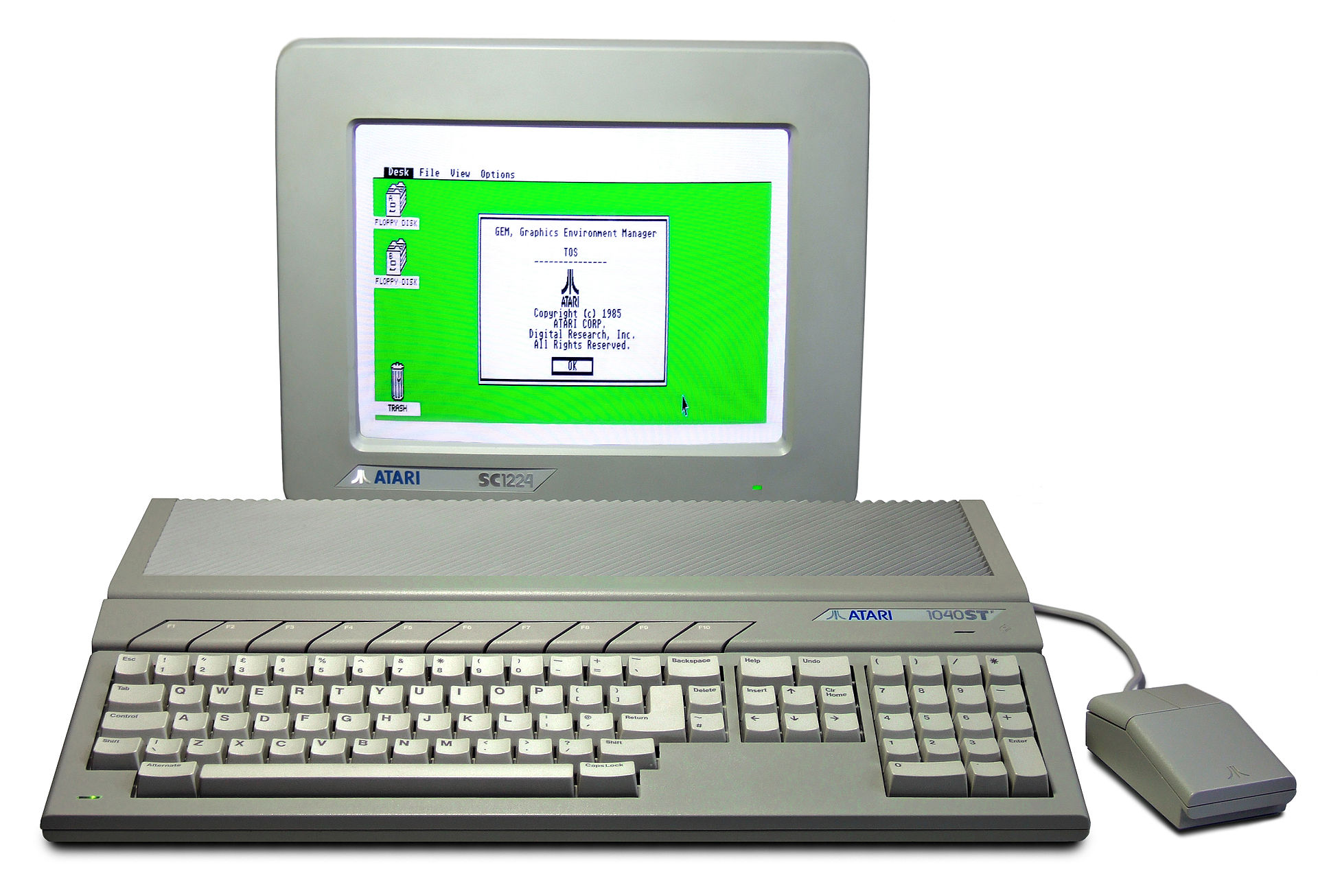
(Here's the ST, for comparison's sake:)

1920px-atari_1040stf

Early games came on cartridge

Part of the thinking behind the early systems was that they should be as user-friendly as possible. With that in mind, the very simplest method of getting a program up and running on the 400 and 800 — and indeed all subsequent Atari 8-Bits — was to plug in a ROM cartridge, turn on the power and enjoy the instantaneous load times of the format.

Many of the 8-Bit's earliest and most well-regarded games — most notably the excellent Star Raiders, one of the first 3D space sims, and still a great game today — came on cartridge, but eventually games got big enough that they needed to be distributed on cassette tape or 5.25" floppy disk instead.

The 400 and 800 had four joystick ports

…but very few games used them. However, one of the very best games on the system, Electronic Arts' highly competitive strategy game M.U.L.E., allowed for four players simultaneously. Later versions of the Atari 8-bit only had two joystick ports, so true four-player titles remained rare.

Programming for the Atari and other 8-Bit machines was a big British industry

A lot of the software companies that are doing proud business today — Eutechnyx (formerly Zeppelin Games), Rare (formerly Ultimate Play the Game), Codemasters (still Codemasters) and Electronic Arts began their lives in the 8-bit era, and many of them (all of the above except EA, among others) started in Britain.

The 8-Bit era saw the birth of what we would now call the indie games industry. Single programmers or small teams of friends would assemble games in school holidays or during free time and release them on cassette at budget prices. Many would go on to become hugely popular. And many of them chose to create extremely creative titles rather than lazy copycat clones of arcade shoot 'em ups — though make no mistake, there were plenty of lazy clones around, too.

The reason why so many people got into programming on their Atari is that when you booted it up you were straight into Atari BASIC and could start writing code straight away. Granted, BASIC wasn't the speediest language in the world, but learning it formed a great foundation for discovering more complex languages.

Loading from tape took ages

This can't be overstated. It's a well-known fact that loading a game from cassette took a long time, but really. It took a long time. In the case of the Atari, you'd have to ensure the system going "BURRRRRRRRR, BURRRRRRRRRR!!" over and over while the data loaded from the cassette.

Loading from disk made a great noise

One thing I really miss from the original 8-Bit days when using an emulator is the sound that loading things from disk made. There was this weird farting sound when the machine started up, then loading combined the whirring snark of the drive's mechanisms with a weird "BLBLBLBLBLBLBLBLBL" noise, punctuated by zurbits from the drive. I was always a bit disappointed when developers poked the appropriate memory location to make loading quieter. (And yes, "poke" actually is the technical term.)

And of course someone's made a YouTube video featuring that noise. It's number 4 in this video:

Magazines were a key part of the ownership experience

Getting copies of Analog, Antic, Atari User and Page 6 each month meant that we were never short of toilet reading material. And as I noted yesterday, the articles you got in these old mags ran the gamut from in-depth technical explorations of the systems themselves (and how to harness that technology) to the sort of game reviews we're familiar with today.

The Atari sound chip was awesome

Commodore's SID chip gets all the love these days, but Atari's POKEY was no slouch either. Here's a selection of fine tunes from renowned composer Adam Gilmore.

Piracy was rife

It's a wonder we didn't kill the fledgling games industry completely in the '80s, since very few people seemed to purchase original games; I know it was certainly a rare treat in our household.

Instead, bootleg cassette tapes and floppy disks did the rounds in the schoolyard, at workplaces and even at gatherings specifically for people to swap dodgy copies of the latest goodness. I was too young to attend at the time, but I remember my father and brother attending a local "computer club", which was the source of most of the boxes full of floppy disks I still own today.

Interesting, for the pirates themselves, piracy was less about getting something for free and instead all about proving their worth. "Cracked" games often came with elaborate introduction sequences (typically including some great chiptune music) and made use of advanced compression technologies to fit multiple games on a single floppy disk. Today, retro enthusiasts are as keen to preserve cracked versions of games as they are originals.

The systems weren't as powerful as consoles, but they tried hard

Being general-purpose computers rather than dedicated games machines, the Atari 8-Bit range struggled to keep pace with the specialist machines from Sega and Nintendo, but that didn't mean developers would rest on their laurels. Particularly late in the 8-Bit's lifespan, developers were squeezing every possible ounce of graphical power they could out of the little machine's chips, and the results could be both impressive and heavily stylized. Check out Lucasfilm's games in particular, which featured full 3D fractal landscapes and detailed sprites.

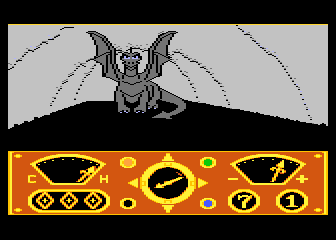
Here's strange action adventure The Eidolon, in which you travelled through time, fought mushrooms and battled rather arrogant-looking dragons:

eidolon_4

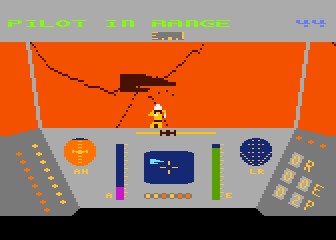
Here's wonderful flight sim/first-person Defender-alike Rescue on Fractalus, surprisingly one of the most terrifying games in existence for reasons I'll leave you to discover if you ever play it:

rescue_on_fractalus_atari_us_8

And here's the rather strange (but impressive) Koronis Rift:

koronis_6


I don't think it's an exaggeration to say that the 8-Bit era was probably one of my favourite times to be into computers. It was exciting, it was accessible and it felt like these machines could do anything; there was none of the cynicism or taking things for granted that we have today.

Oh to go back, eh.