Horatio Spankington was one of several children to a Serf, and a credit to his family. He had brown eyes, curly red hair and a dark complexion, lending him a somewhat distinctive look that his father often joked would probably "end him up in some freak show somewhere".
He joined the ranks of the Paladins at an early age, and by the time he was 18 he had determined that it was time to go dungeon-delving. He rented a room in a small village above a notorious dungeon, and prepared for the long quest ahead.
One morning, he awoke, and his God spoke to him, granting him the power to detect evil things. Rushing straight for the stairs down into the dungeon, he was eager to try out his new power. Concentrating as hard as he could, he prayed fervently for sight beyond sight, to see where the evil things dwelled.
The effort caused him to faint out cold for a few minutes. When he awoke, all was as it was before, though he wasn't in a hurry to ask his God for anything else for a little while.
He pulled out the makeshift weapons and armour that he had acquired, and lit his torch. He looked around.
"What a boring place," he thought.
He looked around the room he found himself in and found a curious scrap of paper on the floor. It read "pro redam."
"Pro redam," he said out loud. Suddenly, he felt more knowledgeable, and figured that he could probably figure out exactly what the next thing he looked at was, whatever it might turn out to be. He stowed the magic scroll in his pack and headed for a tunnel in the wall nearest to him.
The tunnel was quite long, and went around several twisting corners, but eventually led him to a long, narrow room. There was a curious smell in the room. He gazed around, looking for the source of the stench and eventually found it in the form of a patch of grey mould. Figuring that he may as well cleanse the dungeon of filth as well as evil, he strode boldly toward the grey mould, broadsword in hand.
The mould let out a cloud of spores, which tickled his nose and made him sneeze. Undeterred, he whacked the patch of mould with the flat of his sword, dispersing it.
He looked around the room. There was nothing of interest here, save several tunnels in the walls. He chose one and strode valiantly into it.
After a couple of twists and turns, he came to a closed door. Trying the handle, he found it to be unlocked, so he opened it carefully and peered into the room beyond. He couldn't see anything in there, so he stepped through the archway and took a look around.
The room was pretty dark, so he walked along the walls, using the light from his torch to get his bearings. His first impressions were correct; there was little of note here. In fact, the room was more of a wide corridor, with two tunnels leading off in different directions at one side, and another closed door at the other.
He tried the handle on the door, and found it to be locked. Pulling out a safety pin he always kept for emergencies such as this, he inserted it into the lock and fumbled around inexpertly and to his surprise, succeeded in opening the door. He stepped through the doorway cautiously, unsure what he might find beyond.
The corridor beyond the door extended for a short distance and turned a few corners before opening up into a large, light room. This, too, was empty of interesting details, but there were tunnels leading off in a number of directions, along with another door in one wall.
Figuring that the doors hadn't steered him wrong yet, he headed for the door and tried the handle. It was locked, but again he tried his safety-pin trick and to his surprise, it worked.
Beyond the door was a long, twisting and turning corridor that seemed to go on forever. Eventually, it opened up into a long, thin room, and there was that terrible smell again. Another patch of mould sat waiting for him. Feeling bold, he charged for it.
Suddenly, an acrid black smoke filled his nostrils and stung his eyes. He tried to brush it away, but he couldn't. He tried to blink his eyes clear, but he couldn't see anything. The smoke was too thick. He staggered around blindly, setting off the trap several more times, stinging his eyes more and more each time.
The stench of the mould was getting stronger and stronger. He flailed wildly at the mould, trying to destroy it, but he felt the spores blow up his nose, into his throat, filling his lungs. He began to feel sick.
Something crawled on him. It felt blubbering and icky, and he heard a chewing sound. He still couldn't see, and the foul smell and darkness were confusing him.
He felt weak. Finally, coughing up blood and vomit, he barged head-first into a granite wall, collapsed onto his back and whimpered.
Horatio Spankington died just 50 feet below the surface of the earth. Few people mourned his passing, least of all the family of the drooling village idiot he claimed to have "accidentally" killed upon leaving a shop one morning.
The dungeon lay unconquered still. Many had come to tackle its dangers. None had survived so far.
Try it for yourself if you can stomach a bit of hardcore ASCII dungeon-crawling. Download Angband here.
 The
The 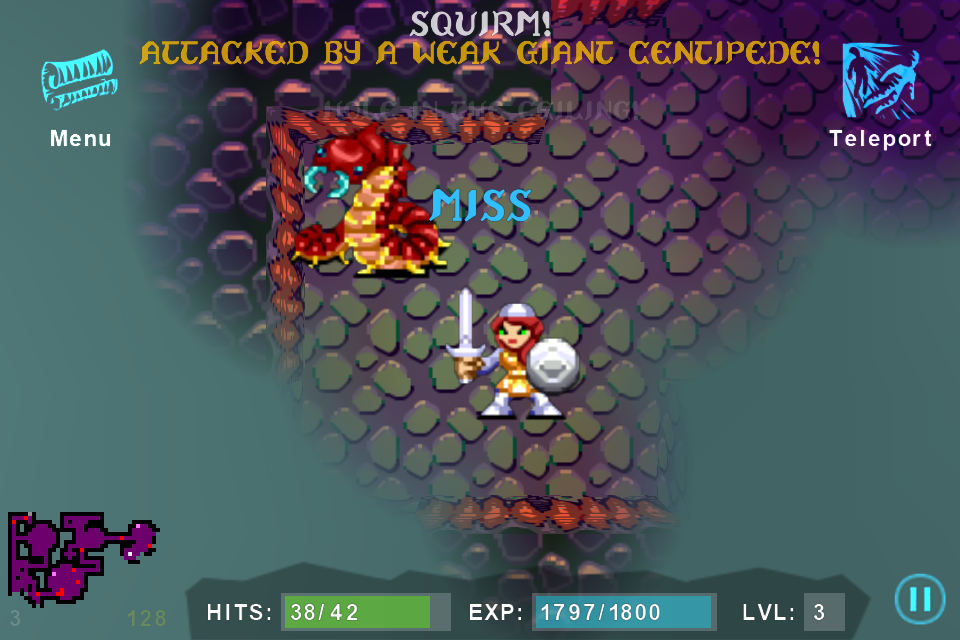 Sword of Fargoal is actually a remake of an old Commodore 64-era title which didn't look like the picture above. No, it looked like this:
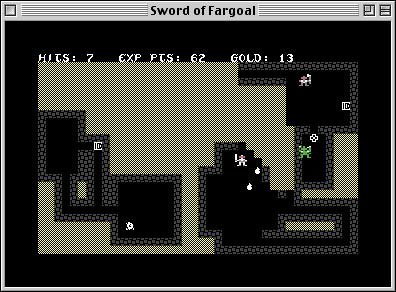 The best thing about Sword of Fargoal is its simplicity coupled with a surprising amount of hidden depth. While Angband is rather intimidating to get started with, with pretty much every key on the keyboard (shifted and non-shifted) mapped to something, Fargoal simply requires that you get to grips with moving and using a context-sensitive button in the top-right corner. And keeping an eye on the text display at the top of the screen for hints and cues, too. Combat is a case of running into an enemy—the player and monster will then take turns bashing each other until one or the other falls over or one runs away. Gold is collected to sacrifice at altars throughout the dungeon for experience point bonuses. And the rest is left to the player to discover. The more you play, the more you start to notice little graphical details and cues tipping you off to the location of traps or treasure.
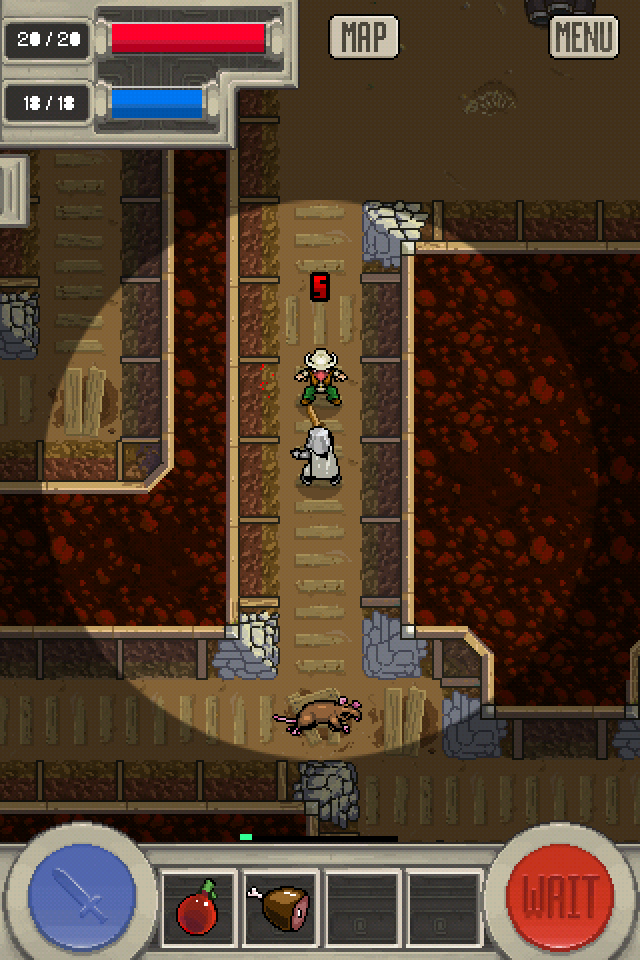 Then we have 100 Rogues, which takes a slightly different approach to that of Sword of Fargoal. While Fargoal's quest is lengthy, 100 Rogues can potentially be beaten in one sitting. Key word here being "potentially". 100 Rogues is particularly brutal, fond of surrounding the player and battering them to a pulp. Fortunately, the player also has a Diablo-style skill tree at their disposal, including a number of attacks that can beat back several enemies at the same time.
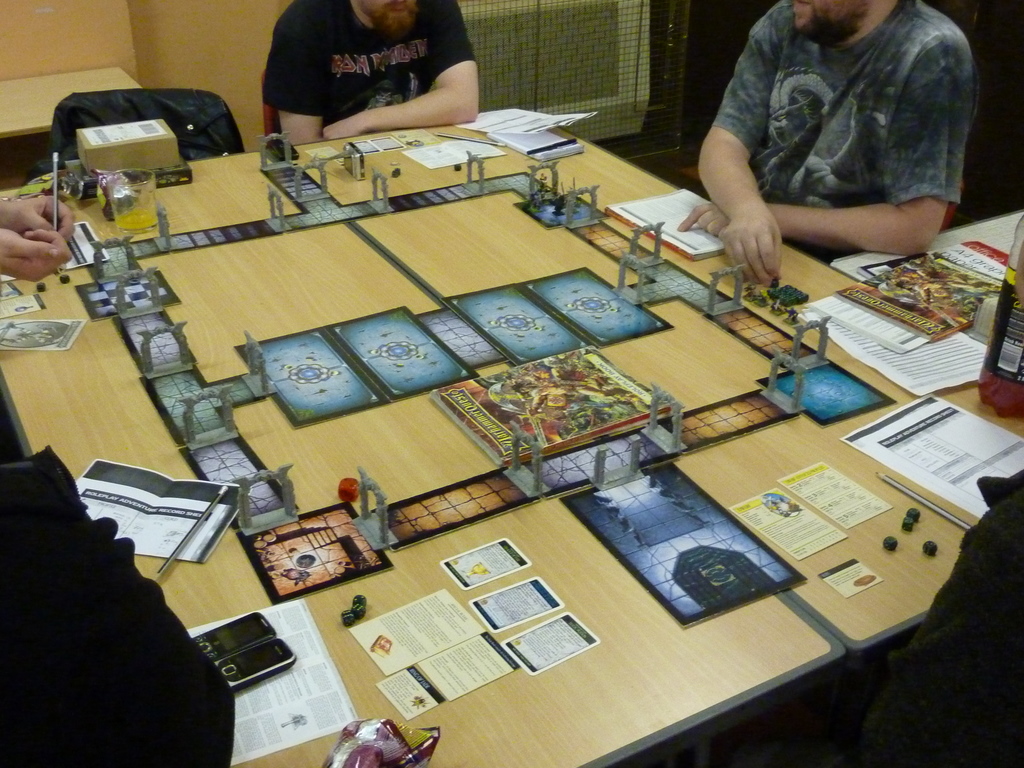 Finally, one of my favourite roguelikes of all time is Warhammer Quest, a game that involves you having people you actually don't mind being in the same room with. Featuring all the genre staples—a randomly generated dungeon, permadeath, brutal difficulty, vast amounts of phat lewt—it's very much the board game equivalent of Rogue et al. Even better, everyone gets to join in on the fun—there's no need for a Game Master player (unless you really want to use one) as the rules cater fully for monster "behaviour".