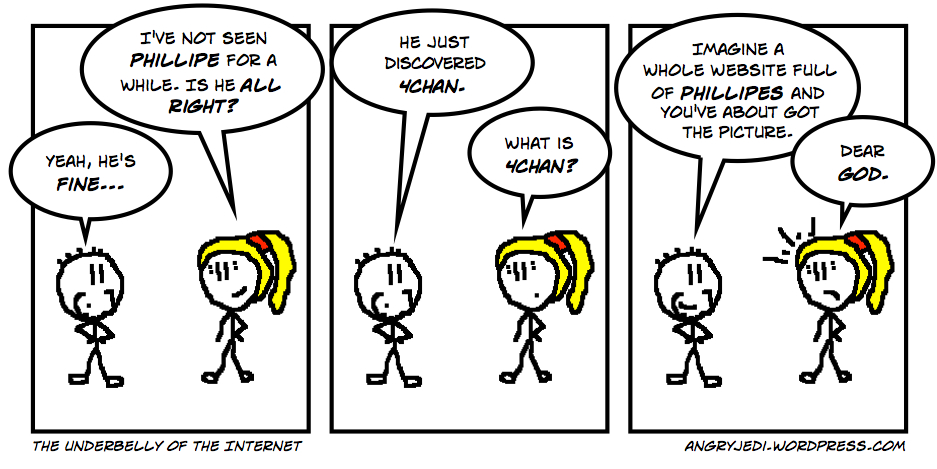
 I find Internet culture endlessly fascinating and, at times, more than a little terrifying.
One of the most interesting things about Internet culture is how small it makes the world seem at times. I recall when online connectivity was just starting to become a thing — beyond the old-school world of direct-dial bulletin board systems, that is — and as well as the obnoxious phrase "information superhighway" being coined, a second, lesser-known but rather accurate phrase came into brief usage: "global village".
The concept of the Internet — or, perhaps more accurately, the Web — as a global village is an interesting one, and if you spend some time wandering around online, you'll come to recognise the village's various haunts. There's the village hall that hosts everything from coffee mornings to neo-Nazi rallies (Facebook). There's the pub where everyone is always talking over everyone else and no-one's really listening to one another (Twitter). There's the deceptive village shop that looks small but actually carries a frighteningly comprehensive array of products of all descriptions (Amazon). There's the coffee shop where socialites of all descriptions like to hang out and have in-depth discussions about everything from literature to their sexual conquests (Reddit). And there's that dark, unlit back alley that very few people go down, but down which you'll find either an army of like-minded outcasts or a horde of terrifying monsters, depending on your outlook (4chan and its successor 8chan).
There's far more to the Internet than this, of course; the global village has become more of a town over the years, but it's never really lost that sense of having "landmarks" around the place: easily recognisable places from which you can easily get your bearings and which, should you choose to make them your regular hangouts, provide a sense of comfortable (or sometimes uncomfortable) familiarity.
They've all evolved over time, too. Take Facebook; when it originally launched, it was designed for college students. Then it expanded to take in young, cool people in general, and allow them to keep in touch with their close personal network of friends easily. Then it expanded again to become more public and open. And today, of course, almost everyone is on Facebook to some degree or another, regardless of age, gender, interests and even level of computer literacy.
Change hasn't always been for the positive, of course — although how you regard these changes, positive or negative, is partly down to your own individual feelings and how you want to communicate online. Twitter and I, for example, parted ways when it was becoming increasingly apparent that the microblogging service was being used by a lot of people more as a broadcast medium — and sometimes an echo chamber — than a means of communicating effectively. Its inherent limitations started to strain at the seams as people, for some inexplicable reason, started to think that it was an appropriate medium for having in-depth debates about complex issues. (It really isn't.) Then the marketers found it, trying to encourage us to tweet using the hashtags for their products seen on adverts or TV shows — who does this? And over time the noise built and built and built until, much like Facebook, it was not what it once was. For some people, it's still fun; for me, it had lost much of the charm that caused me to use it a great deal in the first place.
There's a lot going on behind the scenes in a lot of places, too. Take Wikipedia, for example; at face value, it appears to be a perfectly reputable source containing a vast array of information about pretty much anything you would care to name. Ostensibly being a reference work, much of it is written in an impartial, unbiased manner — though there are exceptions. And it's in those exceptions you start to see that yes, this is something that is put together and constantly maintained by humans, many of whom are doing it simply because they enjoy doing it. Dig further and take a peek at the inner workings of Wikipedia and you'll see that it's far from a solo effort; teams of editors are constantly discussing, debating, arguing and even fighting over the most peculiar of topics; in order to deal with such situations, the site has formed its own quasi-government to arbitrate disputes, with unfortunate instances going through strict, formal procedures managed not by Wikipedia creator Jimmy Wales, but by councils of users. It's fascinating to observe.
There are billions of people on the planet, a significant proportion of whom now have some form of access to the Internet. With that in mind, it's kind of crazy how small the Internet feels sometimes. That "global village" really is a thing and, while just like any other village, not everyone gets along with everyone else, the virtual world we've all helped build together is a fascinating thing indeed.
Just be careful if you venture into some of those dark corners. You might not like what you find… but on the other hand, there's always the possibility of being pleasantly surprised, too. Explore at your own risk!
 I was watching a programme called It's Only A Theory the other night. It's an entertaining and thought-provoking show hosted by Andy Hamilton and Reginald D Hunter in which they bring on a series of experts, get them to argue the case for their theory then make an arbitrary ruling on whether to accept or reject it.
 Someone had "tipped off" Hot Topic that "Rage Guy" was actually a racist comic featuring a guy called "Race Guy" and promptly set about creating a lengthy back catalogue of racist comics. Hot Topic, as a company in the public eye, did the only thing that they could do in the situation—withdrew the stock.
 As mildly amusing as all this was, it goes some distance to showing that user-generated media is probably never going to topple properly-produced, accredited and protected media. Both will undoubtedly exist side by side. But while the children of the Internet fight over what is "theirs", play childish pranks on each other, throw their toys out of their respective prams and call each other "faggots", the professionals will continue doing their thing, the same as they've always done, and be paid accordingly. Those with nothing better to do will tear each others' eyes out over who came up with the concept of producing shitty comics in MS Paint first.
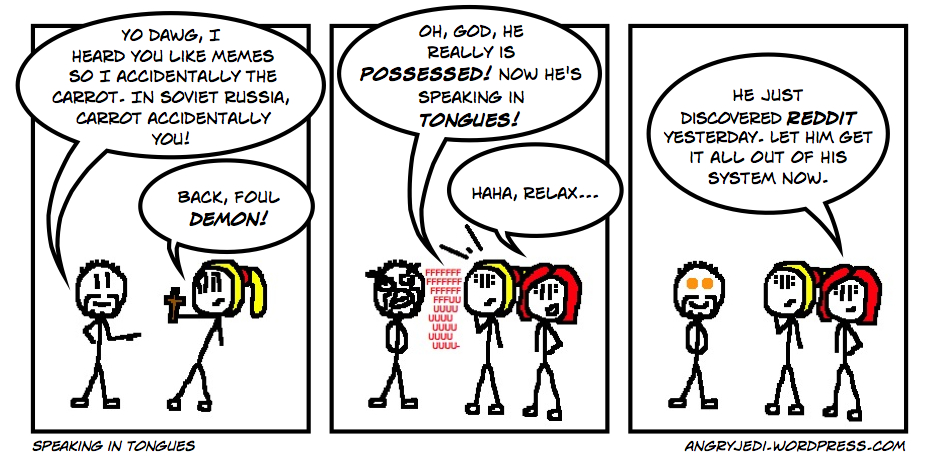 I've been on
 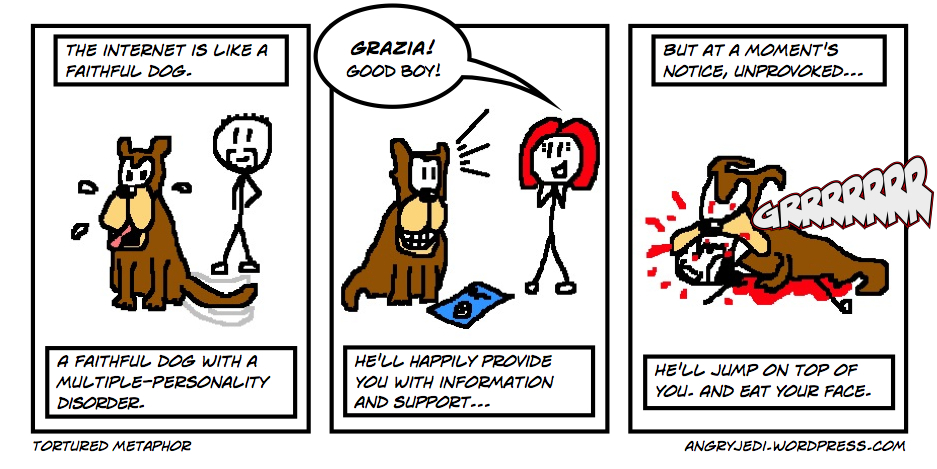 The Internet is, as I've said a number of times on this blog, a fabulous invention. I certainly wouldn't be without it and the friends I've found because of it, the things I've learned from it, and all manner of other good stuff.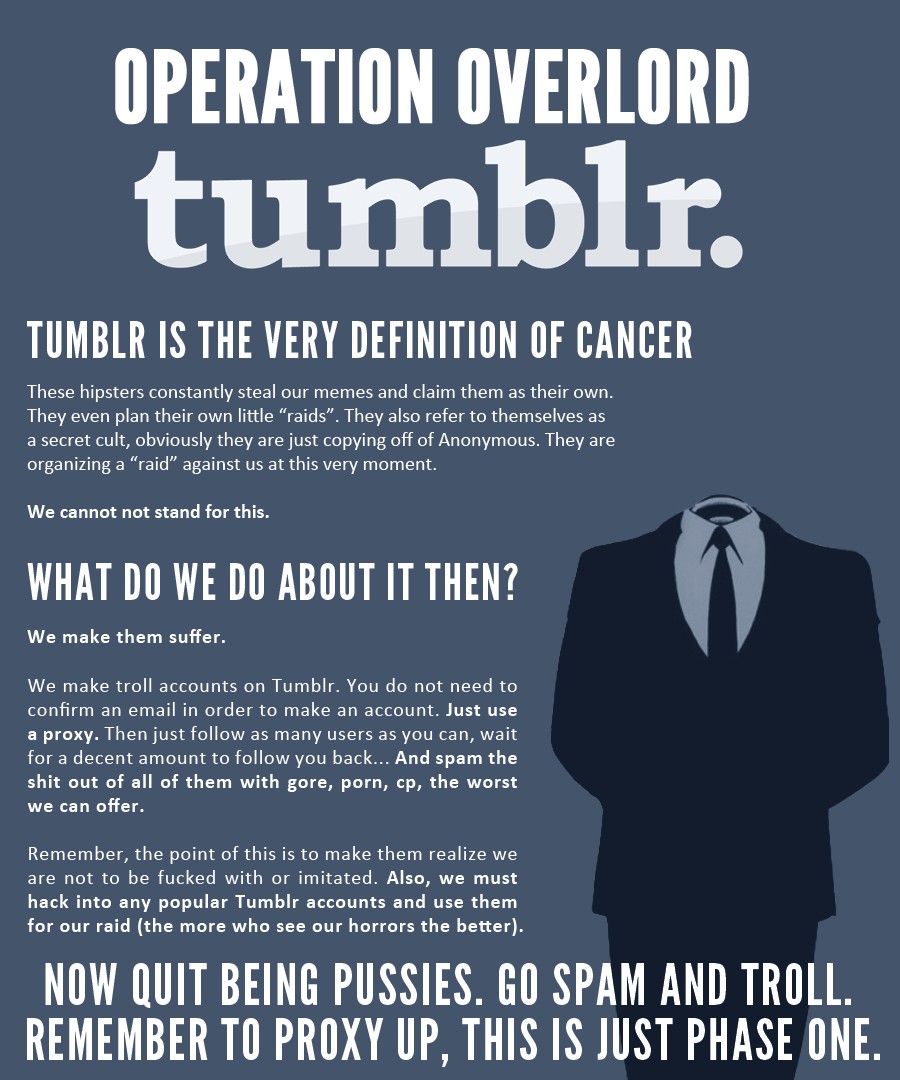
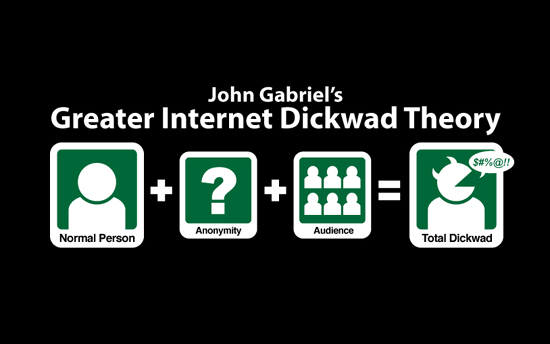 Basically, Internet, you're capable of showing the very best and/or worst the human race has to offer at a moment's notice. So it should hopefully go without saying by now that the words you should live your life by are very simple: always follow