It's becoming increasingly important to remember that the Internet -- and social media in particular -- presents a grossly distorted vision of how things actually are.

Photo by Liza Summer on Pexels.com

People love to complain. This is a trait traditionally and historically associated with the British, but it's most definitely not an exclusively British thing. Perhaps it once was, but it most certainly isn't any more. And as with so many things, we can probably blame the way in which the Internet has brought people together — something which should, inherently, be a good thing, but which has somehow become corrupted along the way.

As I've noted elsewhere, I'm not spending a ton of time on Twitter any more due to a combination of the horrible atmosphere that seeps from every pore of that website and the constant ridiculous changes Elon Musk keeps making on a seemingly daily basis. But occasionally, I can't help myself from clicking on one of the Trends out of sheer curiosity.

The other day, I happened to see that Evri was trending. Evri, if you're unfamiliar, is the new name that the courier company formerly known as Hermes decided to adopt for themselves a while back. I don't know the reasons for the rebrand and honestly I really don't care, because they're inevitably absolute bullshit and everyone knows that Evri is "really" Hermes anyway, so it's largely irrelevant.

However, what I found when looking at the Evri trend was that everyone was complaining about Evri. Everyone had the same stories to tell of parcels being lobbed over their fence, of packages arriving broken or tampered with, or generally some tale of misfortune and woe related to getting their package delivered from this one specific carrier.

Here's the thing: I've never had a problem with Evri or Hermes. I spent a brief period working for them while I was looking for a proper job and I know what it's like "from the inside" also. While it was a time-consuming, underpaid and largely thankless task for the couriers, it was a reasonably well-run operation in general, and there were various ways in which said couriers were encouraged to do a good job, up to and including being "watched" through the scanny things they're supposed to carry around with them.

As fortune would have it, for some reason during my brief time with the company I never actually got a scanny thing, so I never had to worry about such things — not that I had anything to particularly worry about anyway. But I digress.

I'm not saying no-one has ever had a problem with Evri or Hermes. But if you were to look at that trend on Twitter, the conclusion it would be easy to come to would be that they were a company that should be absolutely, completely and without doubt avoided at all cost, because literally every delivery they do is the absolute worst possible thing that has ever happened to someone, and they have ruined too many Christmases and children's birthdays to count.

This is nonsense. While it's foolish to assume that they're completely without fault — in any sort of "gig economy" sort of situation, you have a risk of bad apples, but this is also true for more formally structured corporations — it's also ridiculous to put across the impression that they're a complete failure that should never be trusted.

It's just one of many examples of the Internet painting the worst possible picture of something. And I could provide plenty of other examples at this point, but I'll refrain from doing so for the sake of time.

What I will urge you to do, however, is that if you see any sort of seemingly universally negative reaction towards something — particularly on any sort of standards-free platform such as social media or user reviews — then be cautious. Chances are the thing that is being ranted and raved about is nowhere near as bad as people are trying to put across — because let's face it, people are a whole lot more likely to complain about something than post about how they had no problems whatsoever with a company or service.

Perhaps we should change our outlook on such things. Perhaps we should start posting positive comments when a company does the right thing and does what is expected of them. Or perhaps that's ridiculous — after all, a service that is being provided to you conforming to your exact expectations should not be particularly worthy of comment at all, because, well, it's what you expected.

But then that means the negativity will always win, because the complainers will always speak up, while the satisfied customers will just quietly get on with their day, thinking nothing more of the company they've interacted with or the service they've received.

Perhaps the answer is just not to listen to anyone and make your own mind up.

I thought your teenage years were the time to not conform, but as I get older, non-conformity becomes more appealing.

Photo by Dmitry on Pexels.com

As the stereotype of growing up goes, when you're a teenager you're supposed to decide that you want to "rebel" and be something other than the person that your parents took great effort attempting to craft you into.

For me, I don't think that really happened. I mean, sure, I had plenty of the obligatory stroppy teenager moments, when I'd get angry with my parents for what I saw as irrational or unfair decisions, but I never really stepped into the realms of what I'd describe as "counterculture" in any way other than that which I already was: a computer nerd.

And, in our household, that wasn't really counterculture or rebellion at all; our whole family were interested in computers and video games, since they'd been part of our culture at home since before I was born. Not only that, but my father and my brother regularly contributed to the Atari magazine Page 6 (later New Atari User) — and as I moved into my teenage years, I started to contribute a bit also.

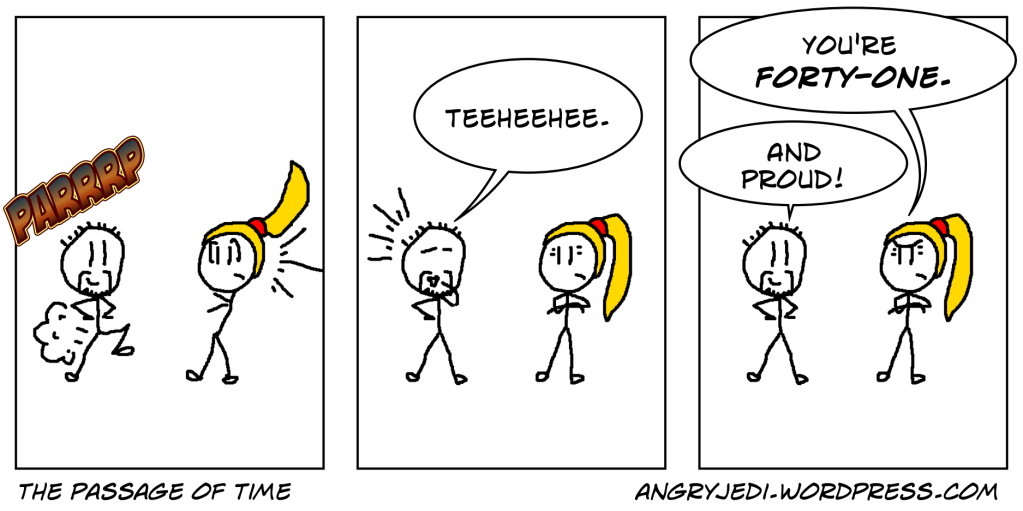
But I digress. Nostalgia for times gone by isn't the point of what I want to talk about today. Instead, I want to talk about how homogeneous "Internet culture" has made people today — and how, at the age of forty-one years old, I crave nothing more than rebellion against that homogeneous culture, and feel nothing but frustration at the hordes of people all acting and talking the exact same way.

I'm sure this has always happened in some form or another, but the global nature of the Internet makes it feel like people are losing their own unique (often local) identities. Now, wherever you go, it feels like everyone describes things in the same way, and uses the same often nonsensical turns of phrase.

Every opinion is someone "lowkey thinking" something, even though that doesn't really make any sense.

Every misunderstanding is confronted with "Tell me you haven't [done thing] without telling me you haven't [done thing]."

Every vaguely energetic YouTube video is accompanied by people going "me on the way to school [doing something urgent]."

I feel constant embarrassment at the prospect of linguists of the future looking back at this age and seeing people unironically using the word "pog" at every opportunity.

And there are myriad more, which I'm sure you can think of yourself if you're in a similar position to me.

I can understand why everyone wants to "conform". It's the thing of not wanting to be the outlier, and of wanting to be understood by everyone. But it's boring. If everyone talks about things the same way online — and often has the same opinions, spoon-fed to them by their favourite YouTuber, as often happens — then speaking to one person is much like speaking to any other. You might as well not bother.

Which is why I find myself making a point of very deliberately making use of outdated, very local British slang whenever possible. Yes, it's contrarian, yes, it's childish and stupid, but it's my own little way of feeling like I'm actually my own person rather than being subsumed by the festering, slimy monster that is "Internet culture". Even though I completely recognise that what I'm doing is essentially the exact same thing, only using '90s games magazines as my model.

I think also part of it stems from my Asperger's. Since my diagnosis a few years back, and understanding what that means for my mental health, I feel like I've become much more conscious of the things that sort of "set me off", as it were. And one of those things happens to be predictable, formulaic, repetitive structures, particularly in speech and written communication.

YouTube videos that are always the same drive me bonkers. RuPaul's Drag Race drives me insane for the same reason. And, as I've described, people who all communicate in the exact same way frustrate me also.

I guess in some ways we should perhaps celebrate the way in which people have found how to be near-universally understood online, but I can't help just finding it a bit dull and annoying. I'll keep describing bad things as "bobbins", thank you very much, and replacing the phrase "okay, I understand" with "bonza, Toadie". And there's nothing you can do about it!

My Twitter replacement

Photo by daniyal ghanavati on Pexels.com

Those who have been following the saga of social media for a while will know that Twitter is a right old mess right now. Between Elon Musk's incredible ego and a series of bizarre policy changes and introductions (most of which are likely related to Musk's ego in some form or another) it's certainly been interesting to watch the world's most popular social media platform (for how much longer?) go through some trials and tribulations.

But those of you who have been following me for a while will know that Twitter hasn't been much fun for a long time now. When I first joined (which must have been around 2007 or so, maybe?) it was a great place to make new friends, enjoy good conversation and just generally have a good time. But as the years have gone on — and particularly since the significant online upheavals that can be at least partly attributed to the "Gamergate" mess of 2014 — it's become a less and less desirable hangout, for a variety of reasons.

Chief among them for me is the combative, confrontational tone the site as a whole has taken on. While it is still possible to have civil conversations there, it feels like it's much more likely that if you post an opinion of your own someone will come along and shout it down before long. Even if your opinion is not, in the grand scheme of things, particularly important or worth getting upset over.

Anger seems to be the default state for many posters on Twitter, and this is often expressed through some seriously unpleasant behaviour. Anyone who is into Japanese games, for example, will doubtless have seen the disgusting vitriol that gets thrown the way of localisation staff (more specifically, female localisation staff) on a fairly regular basis, regardless of whether or not any "mistakes" have been made. And the same is true in all fields; the quote-tweet dunk is a universal constant, and it does not make for a friendly environment where one wants to hang out.

But alongside all this, Twitter itself has been changing in functional, mechanical terms. The rise of "The Algorithm" on all manner of social sites — with the most notorious being YouTube, of course — has meant that no longer can you count on your social media experience being your own, if indeed it ever was. Rather than showing you the things that your friends have been posting in the order that they were posted, you now get shit you didn't sign up for pushed into your feed as "recommendations", based on the ill-defined assumptions that Twitter makes about "quality content".

I never signed up to Twitter for "quality content". I signed up to chat with folks from a forum we all used to frequent that we weren't able to use any more due to the site's closure. That's all I really wanted. And that's emphatically not what the site provides these days.

So between the change in atmosphere, the change in the way the whole site works and the whole Musk fiasco, I've come to the conclusion that it's simply not worth wasting time pissing around on Twitter any more — if indeed it ever was. Rather, I think it's high time that I brought this blog back, since it's a much better means for me to express myself — plus the comments section is a much nicer way to hold a conversation in most cases. (Unless those people find their way here, but you know how it is.)

So that's what I'm going to do. I'll be keeping my Twitter account open because it's still useful for things like news aggregation and PR contacts, but pretty much all I'll be posting on there is links to stuff I've done, either for work or for pleasure. When I want to actually talk about something, I'll do it here, like in the good old days.

I'm not making any grand promises about posting frequency or anything like that, this is just going to be an "as and when I feel like it" sort of thing. I'm also not going to commit to doing silly comics or anything, even though I know one particular reader (whom I hope is doing well, given that I haven't heard from her for a while) is a big fan! This is my scratch pad, my brain dump and my place to express myself. No "algorithm" rules the roost here, and as such it's a much better means of getting to know me than the toxic bird site.

So see you around here, I hope!

Gaming Comfort Food

Just recently I have been suffering from what mental health professionals tend to refer to somewhat euphemistically as "low mood" — which is to say I've been feeling really fucking depressed. Video games have long been a part of my own personal coping mechanism for times like this, but I've been somewhat surprised of late as to the specific experiences I've found myself gravitating towards.

In the past, I'd historically try and immerse myself in a thoroughly involving game with a good story to try and get away from feeling bad about everyday life. And don't get me wrong, that's still very much appealing, and something I will absolutely continue with until the end of time. But specifically during my most recent depressive episode, I've found no greater joy than that which I have discovered in the depths of really old video games. Specifically, Atari 2600 and Intellivision titles.

I didn't grow up with the Atari 2600 — it was always the poor cousin to the Atari 8-bit home computers that were in our household during my childhood — but in more recent years I've come to regard the classic system with considerable fondness. This is a result of a combination of factors: the number of times I've watched Mark Bussler's "Classic Game Room" videos on YouTube, where he seems to hold even the very worst Atari 2600 games with a considerable degree of affection, and the Atari A to Z Flashback project I did myself on YouTube, which involved playing through 150 Atari games, many of which were 2600 titles.

The Intellivision, meanwhile, is not a system I had any contact with whatsoever growing up, but having explored it through a combination of Intellivision Lives! on PS2 and the two Evercade Intellivision compilations — both of which I was heavily involved with the production of on the documentation and testing side of things — I have also come to regard it with some fondness. And there are a few games I find myself continually coming back to.

So just for a bit of fun today, I thought I'd pick out a few games that I've been drawing distinct comfort from recently. And if you're open to the idea of really old games — I realise they're an acquired taste for many — then I encourage you to give these a go when you're feeling low. They might just give you the lift you need.

Motocross (Intellivision)

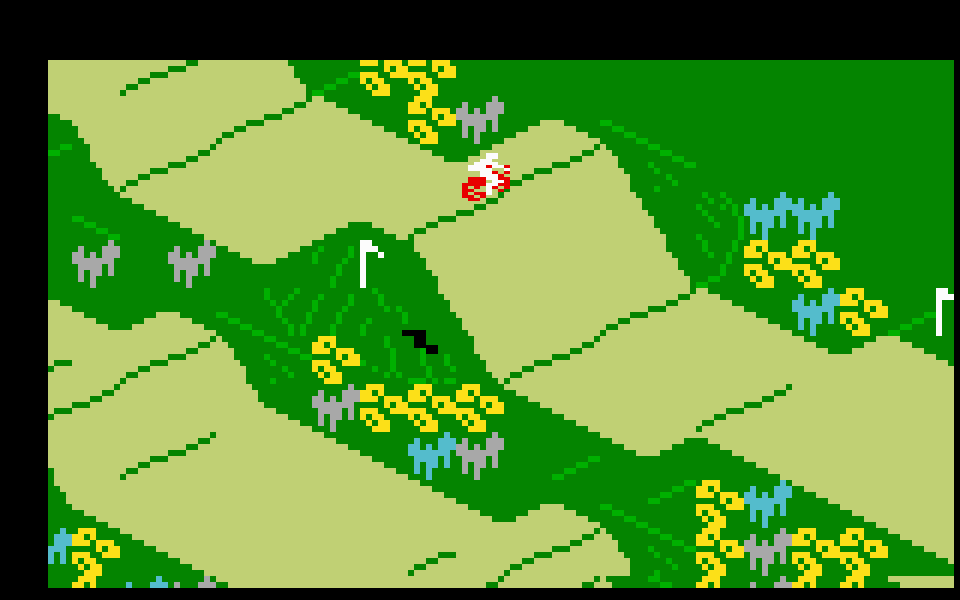
When I first saw Motocross, I thought it looked like a load of old shit. When I first played Motocross, I thought it was a load of old shit. And yet this is probably the Intellivision title I've found myself returning to most frequently of late — there's an undeniably addictive quality to simply chasing your own best times around the three included courses, and on top of that there's a course editor included for you to make your own challenges.

Motocross is an isometric perspective racing game that was noteworthy at the time of its original release for its relatively realistic physics — indeed, the programmer used to troll people in the office by turning the gravity down really low then giggling as people launched themselves into the stratosphere from the various jump ramps.

It's slow and sluggish to play and the scrolling is terrible — the Intellivision wasn't great at that — but once you look past the surface-level ugliness there's a game that strikes a good balance between accessibility and being technically demanding underneath. I've been finding it a great comfort of late.

Enduro (Atari 2600)

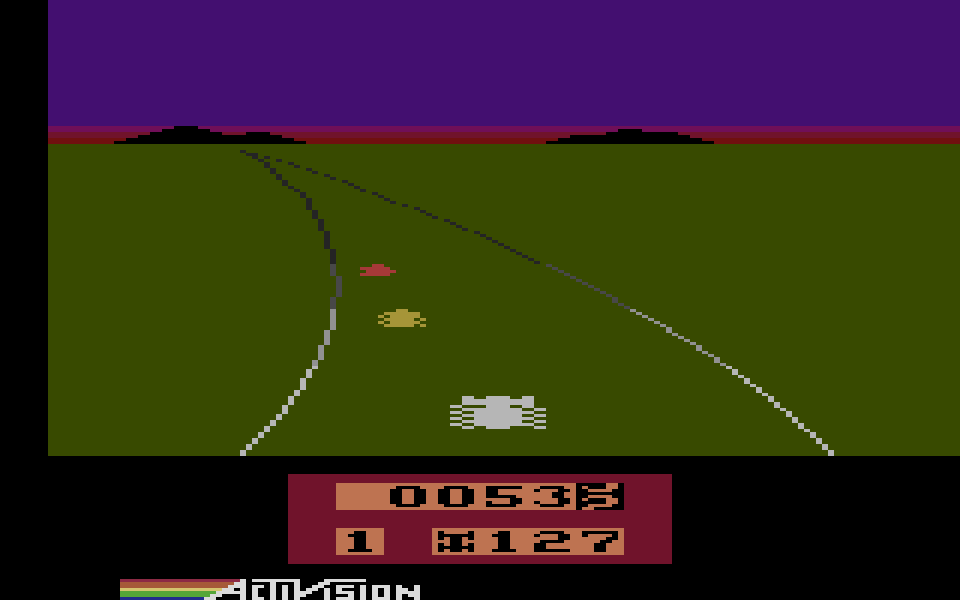
The spiritual precursor to The Great American Cross-Country Road Race, Enduro from Activision is an all-time classic for Atari 2600. The concept is simple: you simply have to overtake a set number of cars over the course of a virtual in-game day. If you succeed, you get to keep racing for another day; fail and your race is over. Your aim is simply to record as high a distance as possible on the satisfyingly "rolly numbers" odometer at the bottom of the screen.

Enduro is cool because it's a simple, early vanishing point racer that plays to the Atari 2600's strengths and doesn't try to do anything too ambitious in terms of gameplay. Presentation is another matter, however; this was a noteworthy game back in the day for incorporating a full day-night cycle, variable weather conditions and even a rudimentary form of lighting simulation.

Enduro is simple enough to pick up and play, but massively addictive because of that. You always feel like you might be able to push yourself just that little bit further — and that's just what you need when you're feeling a bit low.

Berzerk (Atari 2600)

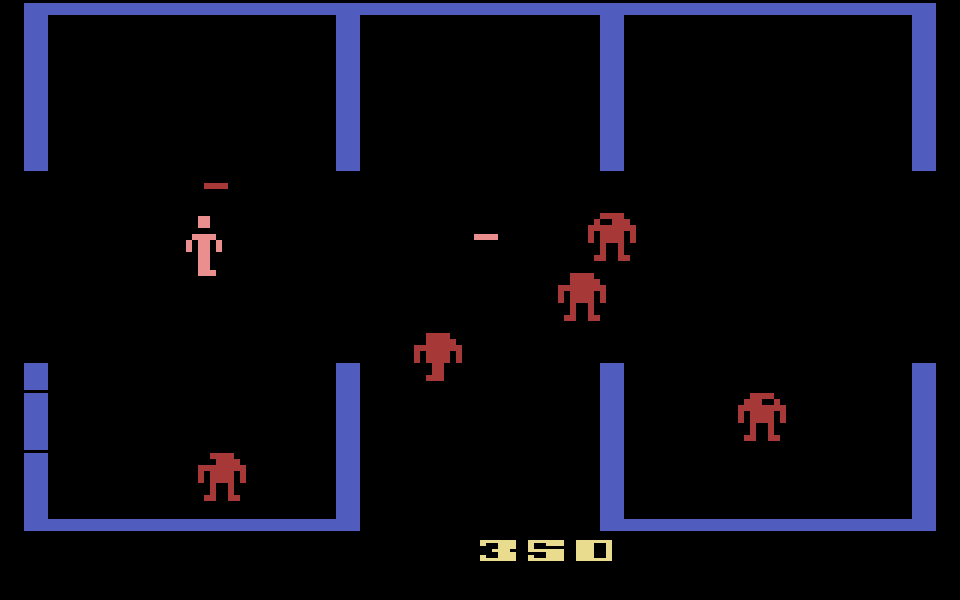
It may not be the prettiest or best version of Berzerk — the Atari 8-bit version is rather more authentic to the arcade machine, complete with digitised speech — but the 2600 version has a distinct character all of its own, and it's a ton of fun to play.

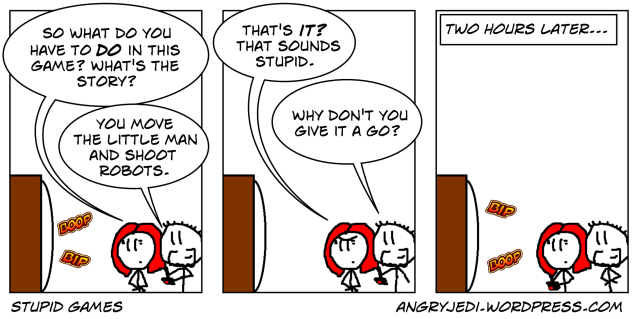
For the unfamiliar, Berzerk involves nothing more than moving your little man around and shooting the robots. Clear a room full of robots and you get some bonus points, but stick around too long and Evil Otto comes chasing you down. Like most 2600 games, it's simple but effective, and it really keeps you on your toes as the pace gradually increases.

Cloudy Mountain (Intellivision)

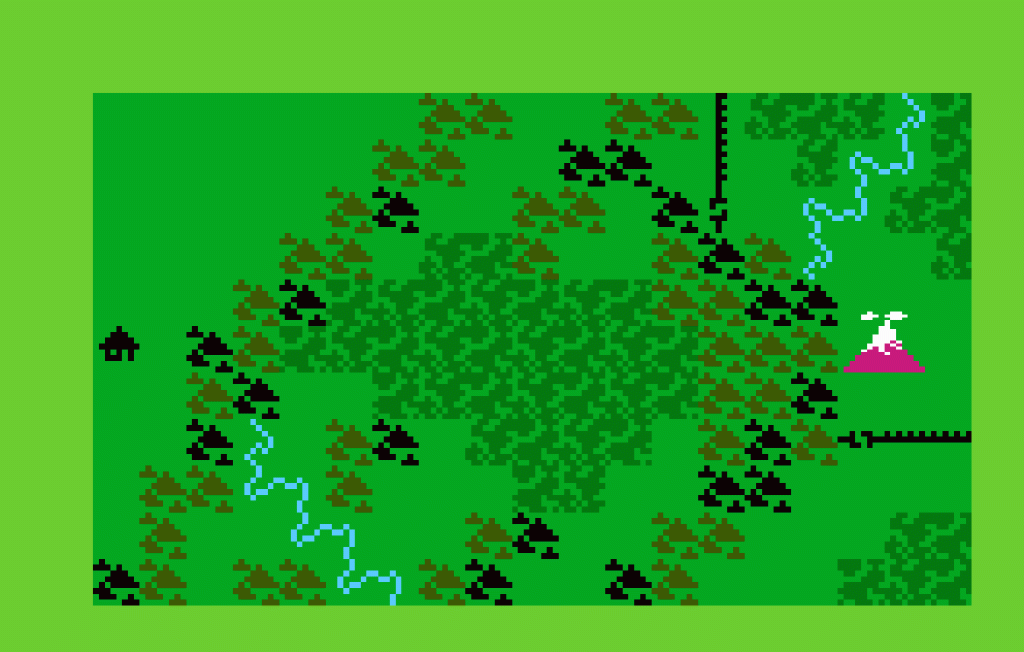
The Intellivision Collection 2 cartridge for Evercade contains two of the platform's best and most ambitious games: Cloudy Mountain (formerly Advanced Dungeons & Dragons Cartridge) and Tower of Doom. Both of these are games that I find myself coming back to regularly, but Cloudy Mountain is probably the one I turn to more often if my brain isn't quite functioning quite correctly and I just want something to fiddle around with for a few minutes.

In Cloudy Mountain, your aim is simple: get your party of three bow-wielding warriors from the little house on the left of the map to the eponymous mountain on the right side of the map. Once there, defeat the two winged dragons guarding the two halves of the Crown of Kings, then grab said Crown and enjoy your well-earned sense of victory. Along the way, you'll have to explore randomly generated dungeons and find helpful items to traverse the various obstacles on the map, with your only defence being your dwindling stock of arrows.

Cloudy Mountain is one of those games that looks and sounds like it might be quite complex when you first try it, but it's actually quite simple — and as such it's a great game to jump into if you just want to play something that doesn't make too many demands of the player.

Missile Command (Atari 2600)

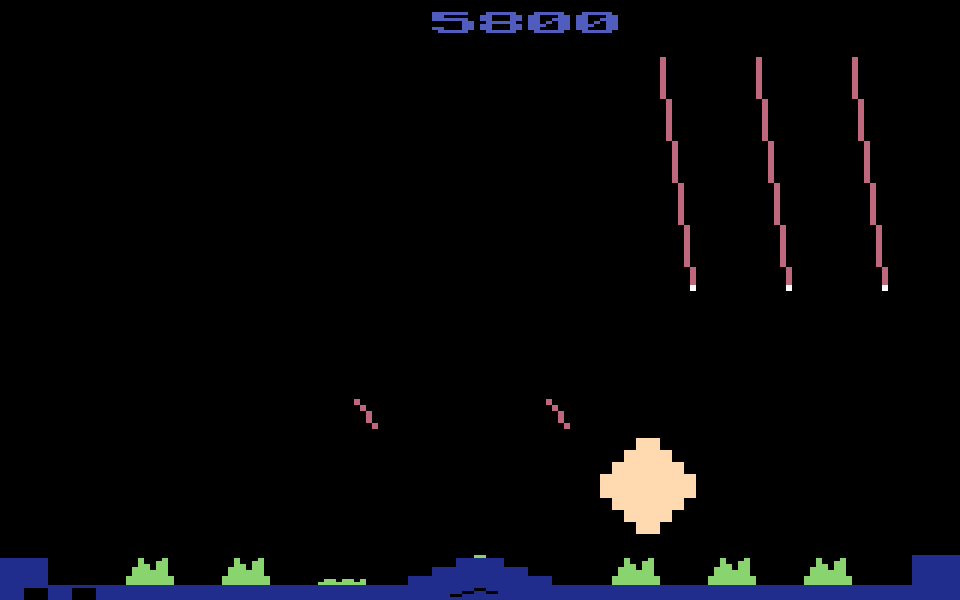
Missile Command is an inherently stressful game, particularly in its arcade incarnation, but I've found the Atari 2600 version on its default difficulty level to strike a good balance between challenge and accessibility. Despite lacking a few features from the arcade game, it plays really well and is an enjoyable game to pick up when I'm not in a great mood.

Most of you reading this probably know Missile Command already, but in case you don't: missiles fly in from the top of the screen, and you have to blast them by setting off explosions in the sky and catching the "heads" of the missile trails in them. Clear out a wave and you get bonus points and the action accelerates. You lose when the six cities you're supposed to be defending get nuked — an inevitability in a game like this, as Missile Command is at least in part a depiction of the futility of nuclear war.

I didn't enjoy Missile Command a ton when I was younger — and I would have probably written the 2600 version off purely for being on the 2600 — but in more recent years I've come to really love this version, and it's a great stress reliever, as well as something of a stress-causer at its higher levels!


So there you go. I'm not going to pretend these games will appeal to everyone these days — for some, they're just too old to be enjoyable, either mechanically or in terms of presentation — but I've been drawing specific comfort from all of these just lately. So if you've found yourself in a similar position, consider returning to your roots and seeing what some of the very earliest games have to offer — you might just find yourself surprised.

What Strange Times We Live In

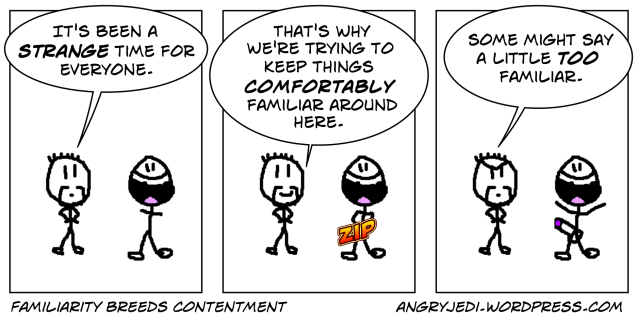
It's been a peculiar time of late. The Big News at the time of writing is the fact that Her Majesty, Queen Elizabeth II, has died. Opinions are violently polarised on this around the Internet, and I'm not here to start any fights or anything, but I will say that I err on the side of "mildly upset" about it.

The Queen, you see, was a sort of comfortingly familiar presence who had been there my whole life — more than any of the other Royals. Very little she did had any direct impact on my own life, and yet I still found her presence oddly reassuring. She was a constant pillar amid the swirling mists of change; a storm that only feels like it's been building in intensity over the course of my entire life, until we reach today — a time when the whole world very much feels like it's at breaking point.

The Queen was not someone I especially trusted, nor was she someone that I thought was doing a good job of "running the country" — as deliberately disconnected from politics as I have remained for most of my life, I was under no illusions as to whether or not the monarchy had any real power whatsoever. And yet somehow, whenever anyone complained about "our tax money supporting those royal spongers" or whatever the complaint du jour happened to be, I didn't feel like I could get on board with it. Just like I don't feel I can get on board with the people celebrating her passing now.

Because yes, there absolutely are people celebrating her passing, and even people wishing that she suffered. Not just weirdoes on the Internet, either — people who move in some of the same circles as I do, though thankfully not people I'd particularly call "friends" at this point, and especially not after some of the vitriol I've seen them spouting.

Regardless of your feelings on a public figure that has passed, it feels fundamentally disrespectful to spit on their grave in such a manner, particularly so soon after their passing. And honestly, as bleeding-heart as this might make me, I tend to extend this courtesy to the people that the world commonly regards as "evil" also. I didn't whoop and holler and cheer when people like Saddam Hussein and Osama bin Laden died; I could celebrate the reaching of a milestone in a conflict or a victory for the supposed "good guys" without taking joy in the death of another human being.

And sure. There are plenty of criticisms one could level at the Queen — though I suspect in the majority of the cases she's more the one who simply rubber-stamped any controversial decisions rather than actually "doing" things herself — but I cannot and will not think that, in any way, justifies some of the genuinely horrible things I've seen people saying over the course of the last couple of days.

The monarchy may be outdated, irrelevant, useless and a waste of money — but she was still our Queen, and a lot of us took an odd amount of pride in her, and drew comfort from her presence. I am, by no means, what you might call a royalist — I take precisely zero interest in what Harry, William and co are up to, for example — but I do feel an important part of our culture has taken that big step into becoming history rather than the present. And things are never quite going to be the same again.

Acknowledging When You Need Help, or At Least When You Need to Change

I'm going to share some stuff today that I'm a bit uncomfortable about sharing, but attempting to deal with it in private hasn't been going so well, so I'm hoping that making things a bit more "public" might help me somehow.

I'm not sure how yet — perhaps simply making people aware of what I'm dealing with might make me feel a bit better about it, or perhaps I need some sort of support. Exactly what form that support might take, I have no idea, but… anyway, enough preamble, let me just get into it before I talk myself out of sharing this.

As those who have known me for a while will know, I have struggled for a long time with my weight. It has been on a steadily upward spiral for pretty much my entire adult life and, barring an extremely successful stint with Slimming World a few years back, I have had great difficulty shedding weight and keeping it off. This has been a particular problem during the COVID years, since just general activity was pretty much a no-go for quite some time.

This is a fairly significant problem, not just for the obvious reasons, but also because I have been suffering with an extremely painful hernia for the past few years — and the doctors refuse to do anything about it unless I lose some weight, because apparently if I get it fixed in the state I'm in right now, it's very likely to just come back. It doesn't help, of course, that I am terrified of hospitals in general and surgery especially, but I'm kind of sort of coming to terms with the fact that at some point it will be necessary to confront that. But not yet.

This is extremely difficult and embarrassing to admit, but I hope that sharing it might help some people to understand why I find some things a bit of a struggle — things that "normal" folks would likely take in their stride on a daily basis. Things like, say, walking down to the shops in a group at lunchtime to get a sandwich; I just can't keep up with people.

I entirely accept that the situation I'm in is my own fault, but that doesn't make it any less embarrassing. If anything, it makes it more embarrassing.

I currently weigh over 28 stone. I do not like admitting this because it's utterly shameful, but I'm putting it out there just so you understand where I'm coming from.

This is obviously extremely unhealthy and I am perfectly aware of that. It disgusts me to see myself in the mirror. None of my clothes fit properly. And any time someone in the street insults me for my weight (which has happened rather more often than I'd like) I have a hard time accepting that they're being unreasonable and unpleasant; part of me feels like I "deserve" the abuse.

I am taking measures to attempt to reduce that — specifically, my wife Andie and I are following the WeightWatchers (or "WW" as they prefer to call it now) plan. This means that we track our food intake daily according to various items' "points" values and, in doing so, both learn to think about what we're putting in our mouth and control what we're eating.

Trouble is, of late we (and particularly I) have been struggling with motivation to such a degree that it's tough to make it through a whole week staying "on plan". WW has a certain amount of flexibility built into it in that you can earn points "back" by eating vegetables and doing exercise, but that doesn't exactly cancel out a day when you eat way too much of the things you shouldn't be eating.

My trouble is, I have what I'd probably describe as an addiction, having been in a position to care for and be with people who have had other types of addiction. My addiction is not to alcohol or drugs, though; it's to food.

Food is my coping mechanism. If I'm sad, I want to eat. If I'm anxious, I want to eat. And when I want to eat, I don't want to "grab a handful of salad" or "enjoy this healthy treat packed with veggies" — I want chocolate, cake, bread, crisps, sugary drinks, that sort of thing. And I often find the urge to eat those things completely irresistible — even if we have none of them in the house. Living near a Tesco Express will do that to you.

Unfortunately, this leads to something of a vicious cycle. I am sad and anxious and angry because of my weight. Because I'm sad and anxious and angry, I eat, which makes my weight problem worse. I feel guilty about screwing my own body up, which makes me feel sad and anxious and angry, which… you get the idea. It is unhealthy coping mechanisms and an unhealthy relationship with food that has got me into this position, but I am having a real tough time breaking out of it.

The reason why I'm feeling particularly anxious about it right now is because in combination with the symptoms of "long COVID", I feel a complete wreck on a daily basis. All my joints ache. It hurts to sit down for too long. It hurts to stand up for too long. If I lie on my side for too long in the night, the knee on the bottom ends up in excruciating pain for a few minutes. I'm perpetually tired, and no amount of sleep seems to fix that.

I know very well that fixing all this is going to be a long and slow process — but that it is possible. The one light at the far-off end of an extremely long tunnel is that I know I've had success with this before. I've never felt so good in my adult life as when I was successful at Slimming World — but unfortunately a variety of both personal and professional stresses caused me to well and truly fall off the wagon, putting me in a worse situation than I've ever been in my life.

I don't want to hurt any more. I don't want to be sad any more. And I don't want to die before my time. I don't really know if or how anyone reading this is able to help, but I just want to put it out there that I could do with some help — even if it's simply a bit of consideration and understanding for the situation I'm in, and the knowledge that there are people out there not judging me negatively and harshly for ending up in such a horrible (albeit self-inflicted) situation, but who will be there to support and encourage me as I attempt to rescue myself from it.

Thanks for your time.

The Missing Years

I suspect your experience with what I'm about to describe will probably vary quite a bit according to your own age — but speaking as a forty-one year old man, I have to say, I find it mildly disconcerting that a number of years just sort of seem to have gone missing.

I don't mean that I've forgotten them or anything, or that I'm suffering some sort of debilitating brain injury (not to my knowledge, anyway, ayooo, etc.) but rather that there's a definite period of my life that feels like it just sort of passed by in a flurry without really very much to show for it.

Said period covers pretty much from the end of my time at university up until right now, which is a good twenty years or so. That's a not-insignificant amount of time to feel like you've just sort of "lost", which is why it occasionally weighs on my mind like this. Are there better ways I could have spent that last twenty years? Almost certainly, but at the same time that twenty years taught me a lot of helpful life lessons that have enabled me to just about survive to where I am now.

I think therein lies the core of why I feel like many of those years sort of "went missing" — the fact that I'm unconvinced of their value to my life as a whole.

Out of those twenty years, I spent several attempting to make a career out of teaching, before a nervous breakdown convinced me that probably wasn't a great idea.

Then I did some retail work with a mind to building up both my creative and technical skills in the computing field, which was going great until the management of the job I was working — and loving, up until that point, I should say — decided to ruin the lives and careers of several of us for no apparent reason.

Then terrible things happened in my personal life that I'm keen to forget and mostly have at this point. That took a good year or so, probably a little more, but as I was coming out of that I started developing what looked like a promising career in online games journalism. That eventually came to fruition… until the publication I was working on (and getting paid well for) closed down relatively without warning, leaving me adrift once again.

After that, I spent some time writing about mobile and social games, which was utterly soul-destroying but paid astronomically well for the amount of effort it took, so I wasn't going to complain too much about that. Then came USgamer, which was great until I was, once again, fucked over without any control of the situation. A brief stint working a "normal" job for energy company SSE, who — again — completely boned me to such a degree it had a severe impact on my mental health and, after a bit of a tense period… well, here we are.

So I guess that accounts for the last twenty years or so, just about. It's just strange how a lot of those years have just sort of all merged into one another; I can't remember a lot of specific details about many of them, at least partly because I probably don't want to. That would make sense.

It's just a little odd that I can still vividly remember, say, something like my mother happening to see me at playtime on the primary school field (aged about 7, probably) thinking that I was hitting a girl in my class with a stick when we were actually playing make-believe and having a thoroughly lovely time, and yet what should theoretically be more "important", defining periods in my life are becoming almost "lost" to me.

I guess you hold on to the memories that are actually important to you for one reason or another. And what your subconscious thinks is "important" doesn't necessarily make a whole lot of sense. Maybe it's not worth trying to understand it; just enjoy those memories that your mind has decided to hang on to!

The Ravages of Age

Andie and I are suffering from what appears to be colloquially known as "long COVID". That is to say, having had COVID earlier in the year, neither of our bodies have quite recovered from the experience, leaving us feeling way shittier than we really should be when we're otherwise "healthy". I use the term loosely because neither of us are exactly "healthy", but we're not actively afflicted with any illnesses, so far as I'm concerned.

According to the NHS, the symptoms of long COVID include being achey, tired all the time and generally feeling crap. I can confirm that all of those things are present and correct in my own body; the whole experience has left me feeling about thirty years older than I actually am, and I'm rather keen to leave this feeling behind now. I don't feel I should be feeling intense pain when sitting down for too long, or standing up for too long, or just generally existing at my age, but, well, I'm sure this is at least partly my own fault.

We're not doing nothing about it, mind; both of us are following WeightWatchers in an attempt to shed some excess baggage, because that will probably help the symptoms we're suffering. And while it's slow going — at least partly because with both OG COVID and long COVID we've found ourselves struggling with motivation, because the last thing you want to do when you feel like crap is diet — things are going relatively well. We just need to try and stick with it over the long term. Which is easier said than done, of course, particularly when you're feeling pretty exhausted and all you want to do is eat in the vain attempt that you might regain some energy and vigour.

After the last couple of years — and after the whole news over the "cost of living crisis" we're presently enduring here in the UK — it sort of feels like we need to resign ourselves to life being shitty in general, so what, really, is a bit of physical suffering to go along with feelings of existential crisis, a sense that you don't really belong in the modern world and a quite genuine feeling that the world is actually in the process of ending right now?

There's a cheery thought for your Thursday afternoon, now, isn't it? So I think I'm off to go and live my life in denial with either some Final Fantasy XIV, Tower of Fantasy or both. At least in those worlds I can do something about the things that are Wrong, both with myself and with the world at large!

Homecoming

A fine morning to you, everyone. I've decided to come back to this blog on an occasional basis, as writing here always used to provide good "therapy" when I really needed it — and after the last couple of years we've all had I don't think anyone in the world would deny the need for some sort of outlet for all the stresses we've been having to deal with.

I'm not going to make any bold commitments about posting every day or anything like that — largely because my day job over at Rice Digital means that I'm writing every day anyway, so the whole "keeping in practice" thing isn't really necessary. Instead, I'm just going to write here when I feel like it, just for the sake of expressing myself and perhaps sharing something of myself with those of you reading.

This might also be an opportunity to rekindle some friendships that kind of fell by the wayside when I moved away from posting regularly on this blog in favour of my other projects such as MoeGamer and my YouTube channel. So if you're seeing this in your inbox or feed reader for the first time in a while, be sure to say hi — it'd be lovely to hear from some of you.

I'm not going to go straight into babbling on too much about the living nightmare that is life in 2022; we'll save that for another day. For today, I just wanted to say hello, remind you all that I exist — and let you know that you'll once again be seeing a bit of me around here now and again. That'll probably do for now — but expect more soon!

Calling it a day on Patreon

Hi folks. I've been thinking long and hard about this for some time, but I think it's probably time to hang up this Patreon account.

Frankly, it's just not really been working out for me the way it hoped; it's been near-impossible to attract new subscribers, even with regular mentions of it on socials, at the end of videos and in other such places, and in recent months I've been shedding subscribers. My income from Patreon this month is literally less than half of what it was last month.

My original intent for this account was to see if it was possible to turn MoeGamer (and, later, my video work) into something self-sustainable — particularly while I was struggling to find full-time employment. Now, I thankfully have full-time employment, so that "pressure" isn't there any more — and I just find myself responding to a lot of things about Patreon not with excitement, but with anxiety.

I don't like logging in to see people have left; it makes my heart sink and my mind feel like I've done something wrong. This isn't anyone's fault, I hasten to add; it's my own mental health talking. I know from my own experience of cancelling and moving pledges around that not everyone is able to stick around for all eternity, so of course it would be exactly the same for me, too. Still, it's hard not to feel like you've somehow "failed" when subscribers disappear.

And in some ways, I feel like I have failed to make good use of this account. I've never felt like I've been able to offer meaningful benefits to subscribers, and apparently "just supporting someone you enjoy the work of" isn't enough incentive to convince much of the Internet-going public into opening their wallets. It's hard enough to even get people to comment on stuff these days.

Fact is, though, I've never had the time or the resources to be able to plug into making Patron-exclusive stuff — had I managed to grow my membership beyond its peak (I never did quite crack $100 a month) I suspect I would have been able to make time for Patron-exclusive things, but as it stands it's never felt like something I could spend too much time on in good conscience.

And when you can't even get your own friends — either IRL or Internet — to chip in a dollar a month to help you out a bit… well, that's pretty demoralising.

So I'm going to hang it up and remove just one more stressor from my life. I may well do something like open up YouTube Memberships, as providing benefits like emojis and stickers are easy to do and actually meaningful to the platform on which the work people are supporting is hosted. But from today, I will be pausing Patreon memberships indefinitely, and likely not turning them back on again.

I would like to say a very, very sincere "thank you" to those of you who have supported me, whether you're a new member or someone who has stuck around for a very long time.

There are quite a few of you here in the members list who have stuck with me for literally years at this point, and believe me, your support has helped me survive some very tough times indeed — if not financially then most definitely through the knowledge that there are genuinely kind people out there. I'm not exaggerating when I say that the knowledge you were there helped keep me hanging on through some particularly difficult years.

Plus I'm legitimately grateful to those of you who have become friends as well as just Patreon supporters — I'd like to give a particular shout-out to Ken, who helped me get my hands on the Atari ST version of Rod Land that I so dearly wanted as a child, and to Digger Dan, whom hopefully many of you know the story of already! And, of course, my dear friend and podcasting partner-in-crime Chris.

So here's what's going to happen:

After I post this publicly, I'm going to pause all memberships, which means you will not be charged for any further months. Doing it this way rather than simply deleting my account means that you should still have access to any Patron-exclusive stuff you might care to look back on. Right now, I have no intention of unpausing, so don't feel you have to cancel; I may still post occasional things here, so remaining a paused member should mean you still get updates.

If you would like to continue to support me in some way after this Patreon gets paused, you can do so in a few ways:

Ko-Fi allows you to make one-time donations in a variety of ways. You can do that here. This is purely a "tip jar" if you want to flip me a couple of quid if you enjoyed something; I have no intention of posting anything exclusive there.

Alternatively, my YouTube channel now has access to Super Thanks, which appears in the form of a "Thanks" button in the same row of buttons as the Like/Dislike, Share and other buttons on a video. Using Super Thanks, you can flip me a one-off tip and leave a comment, which will be specially highlighted as a means of thanking you for your donation. Like Ko-Fi, there's no long-term commitment there and likewise no exclusive content; it is just, as the name suggests, a means of saying "thanks".

I will also look into YouTube Memberships, and if there's a means of implementing some sort of benefits that won't take too much time away from my actual work on the channel and the day job — like the aforementioned emoji and stickers — I'll turn those on as a means of offering recurring support. If I do this, there is of course no obligation to join up and there likely won't be any "members only" videos; it will simply be a means of showing your support directly on YouTube.

Once again, I'd like to say a very sincere thank you to all of you reading this who are both current or past supporters. It's been a fun journey, but I feel like it's ultimately for the best for my creative endeavours if I'm not feeling stressed over whether or not I'm providing for those kind enough to drop me some money each month!

Thank you for taking the time to read all this. If you'd like to follow me elsewhere online, you can find me on Twitter at @MoeGamer, and Discord at MoeGamerPete#2465. And don't forget to read my stuff every day over at Rice Digital! It's like MoeGamer, only I get paid for it and have a team of writers supporting me!